Despite unprecedented challenges, 2022 also opened windows of opportunity to move the needle around critical anti-corruption issues, such as anti-money laundering, asset recovery, beneficial ownership, and renewable energy. Credit: Shutterstock.
Sanjeeta Pant, Jan 25 2023 (IPS) – The G20 India Presidency is marked by unprecedented geopolitical, environmental, and economic crises. Rising inflation threatens to erase decades of economic development and push more people into poverty. Violent extremism is also on the rise as a result of increasing global inequality, and the rule of law is in decline everywhere. All of these challenges impact the G20’s goal of realizing a faster and more equitable post-pandemic economic recovery.
But as India prioritizes its agenda for 2023, it is corruption that is at the heart of all of these other problems- and which poses the greatest threat to worldwide peace and prosperity.
An Idea Whose Time Has Come
Although the G20 has repeatedly committed to the Financial Action Task Force’s (FATF) anti-money laundering standards, member countries have been slow to implement policy reforms
Despite unprecedented challenges, 2022 also opened windows of opportunity to move the needle around critical anti-corruption issues, such as anti-money laundering, asset recovery, beneficial ownership, and renewable energy. When global leaders meet during the G20 Indian Presidency , they must prioritize and build on this progress, rather than make new commitments around these issues that they then fail to implement.
According to the UN, an estimated 2-5% of global GDP, or up to $2 trillion, is laundered annually. Although the G20 has repeatedly committed to the Financial Action Task Force’s (FATF) anti-money laundering standards, member countries have been slow to implement policy reforms. In the wake of the Russian invasion of Ukraine and ineffective economic sanctions against Russian oligarchs, governments have started reexamining existing policy and institutional gaps, especially recognizing the role of Designated Non-Financial Businesses and Professions (DNFBPs), also known as “gatekeepers.”
G20 member countries are responding to concerns and criticisms from their national counterparts regarding failures to adopt FATF recommendations and clamp down on “dirty money.” Grappling with the need to be able to prosecute money-laundering cases and recover billions of dollars worth of frozen assets, they are also amending national laws to be able to do so.
Lack of beneficial ownership transparency is also aiding the flow of laundered money globally. The G20 recognizes beneficial ownership data as an effective instrument to fight financial crime and “protect the integrity and transparency of the global financial system.”
The Russian invasion helped drive home this message, especially among countries that are popular destinations for those buying luxury goods and assets. FATF’s amendment of its beneficial ownership recommendations in early 2022 was timely. Member countries are also introducing new reporting rules, and fast-tracking policies and processes to set up beneficial ownership registers. While there are still gaps in the proposed policies – as identified here– these are important first steps.
Similarly, the transition to renewable energy, initially raised as an environmental issue and then as a national security concern is increasingly gaining attention from a resource governance perspective. Given the scale of the potential investment, there is a need to tackle corruption in the energy sector to avoid potential pitfalls resulting from a lack of open and accountable systems as we transition to a net zero economy.
The cross-cutting nature of the industry means a wide range of issues– from procurement and conflict of interest in the public sector to beneficial ownership transparency- need to be considered. The global energy crisis and the Indonesian Presidency’s prioritization of the issue have helped build momentum around corruption in the renewable energy transition, and this focus must continue.
Calling on India
Corruption-related issues identified here are transnational in nature and have global implications, including for India. For instance, with money laundering cases rising in India, it cannot afford to regard it as a problem limited to safe havens like the UK or the US. The same is true for the lack of beneficial ownership transparency or corruption in the renewable energy transition, which fuels illicit financial networks in India and beyond, and which often transcend national borders.
Finally, corruption has a disproportionate impact on the global poor. Almost 10% of the global population lives in extreme poverty, many of whom live in countries such as India. The G20, under the Indian Presidency, provides a unique opportunity to ensure the voices of the most vulnerable are heard at the global level. By prioritizing the anti-corruption agenda and building on past priority issues and commitments, the Indian government can lead efforts to bridge the North-South divide.
Sanjeeta Pant is Programs and Learning Manager at Accountability Lab. Follow the Lab on Twitter @accountlab
IE 11 is not supported. For an optimal experience visit our site on another browser.
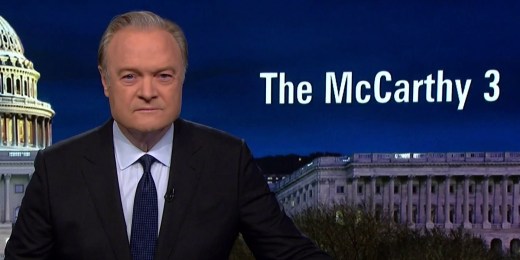
Lawrence on McCarthy: No speaker has ever reached so low for so little
07:30
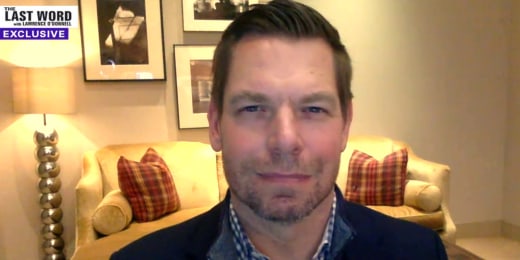
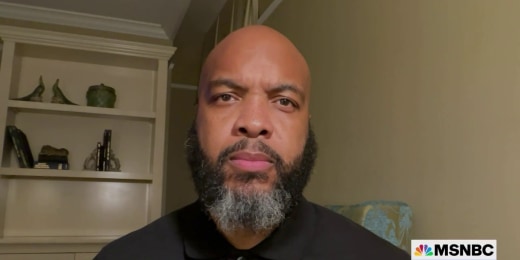
Rep. Swalwell: McCarthy is abusing his power ‘to exact political vengeance’
07:49
Now Playing
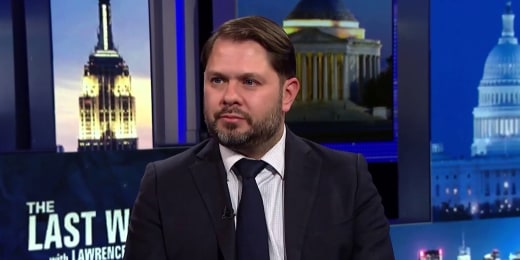
Exclusive: Rep. Ruben Gallego on why he’s challenging Sen. Kyrsten Sinema
04:17
UP NEXT
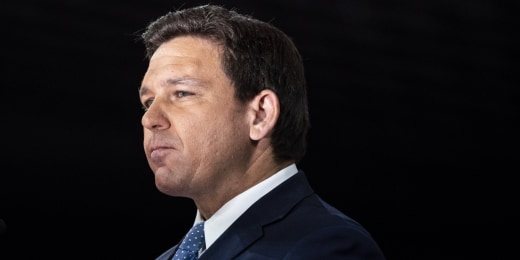
‘Shocked & disappointed’: Ron DeSantis blocks African American studies course
04:56
Sen. Smith: Overturning Roe v. Wade was just ‘the beginning’ for GOP
04:53
Velshi: Trump’s diminished status in GOP could make him a greater threat to democracy
07:45
Lawrence on SCOTUS leak report: What about Ginni Thomas?
09:11
Joyce Chisale: Students of Malawi ‘still moving’ to reach their dreams
08:21
Tribe: What matters is SCOTUS abortion decision, not the leak
03:30
Lawrence: Insurrectionists are in charge of the House of Representatives
13:26
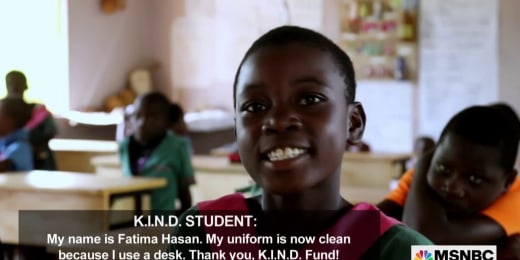
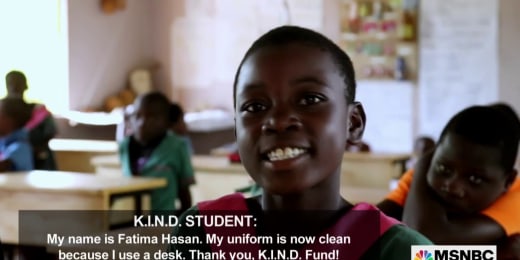
K.I.N.D. students say ‘zikomo!’
03:26
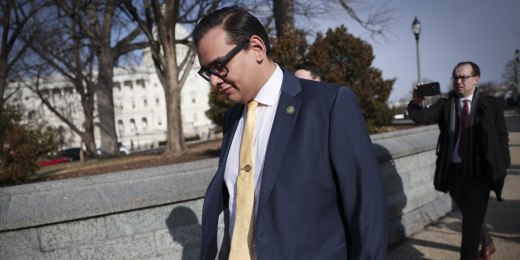
Lawrence: Why Santos is ‘a perfect fit’ for Speaker McCarthy’s House
05:28
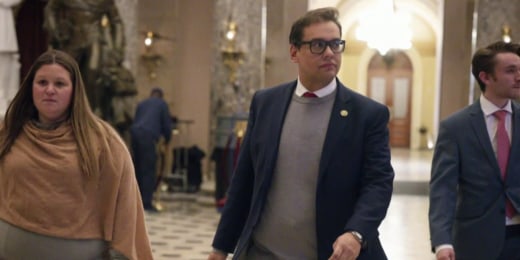
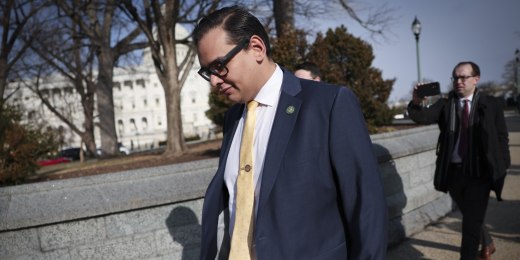
George Santos’s multiple aliases ‘fit with mystery surrounding his background’
02:39
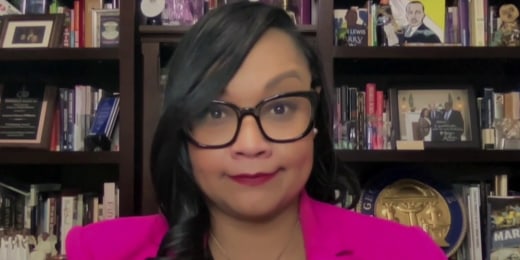
GA Dem. Party Chair: ‘I am the beneficiary’ of MLK’s legacy
02:39
Trymaine Lee Previews MSNBC Town Hall on Racial Healing
03:55
George Santos’s old roommates say he stole shirts, checks & a designer scarf
05:33
McQuade: Trump deposition suggest he’s worried about more accusations
02:37
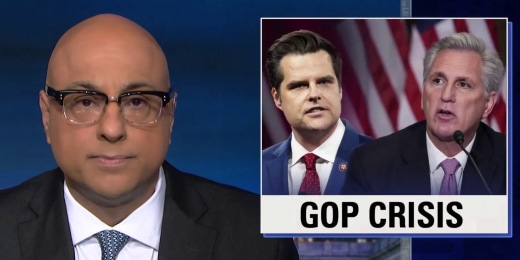
Ali Velshi: Republicans are taking the debt ceiling hostage
08:15
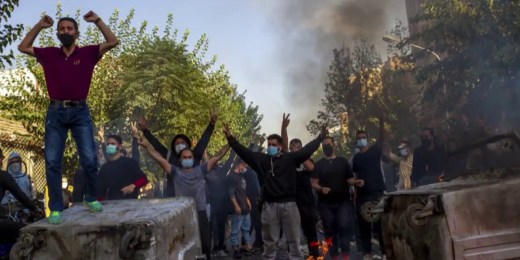
‘This is just the beginning’: Activist says Iran protests are now a revolution
07:06
Rep. Swalwell torches Speaker McCarthy’s corrupt bargain with George Santos
02:54
04:17
Share this –
Congressman Ruben Gallego of Arizona joins MSNBC’s Lawrence O’ Donnell in his first nationally televised interview since announcing his run for Arizona Senate in 2024. Rep. Gallego is the first Democrat to challenge Sen. Sinema, who he says “abandoned” working class families in Arizona.Jan. 24, 2023
Lawrence on McCarthy: No speaker has ever reached so low for so little
07:30
Rep. Swalwell: McCarthy is abusing his power ‘to exact political vengeance’
07:49
Now Playing
Exclusive: Rep. Ruben Gallego on why he’s challenging Sen. Kyrsten Sinema
04:17
UP NEXT
‘Shocked & disappointed’: Ron DeSantis blocks African American studies course
04:56
Sen. Smith: Overturning Roe v. Wade was just ‘the beginning’ for GOP
04:53
Velshi: Trump’s diminished status in GOP could make him a greater threat to democracy
IE 11 is not supported. For an optimal experience visit our site on another browser.
‘Shocked & disappointed’: Ron DeSantis blocks African American studies course
04:56
Sen. Smith: Overturning Roe v. Wade was just ‘the beginning’ for GOP
04:53
Now Playing
Velshi: Trump’s diminished status in GOP could make him a greater threat to democracy
07:45
UP NEXT
Lawrence on SCOTUS leak report: What about Ginni Thomas?
09:11
Joyce Chisale: Students of Malawi ‘still moving’ to reach their dreams
08:21
Tribe: What matters is SCOTUS abortion decision, not the leak
03:30
Lawrence: Insurrectionists are in charge of the House of Representatives
13:26
K.I.N.D. students say ‘zikomo!’
03:26
Lawrence: Why Santos is ‘a perfect fit’ for Speaker McCarthy’s House
05:28
George Santos’s multiple aliases ‘fit with mystery surrounding his background’
02:39
GA Dem. Party Chair: ‘I am the beneficiary’ of MLK’s legacy
02:39
Trymaine Lee Previews MSNBC Town Hall on Racial Healing
03:55
George Santos’s old roommates say he stole shirts, checks & a designer scarf
05:33
McQuade: Trump deposition suggest he’s worried about more accusations
02:37
Ali Velshi: Republicans are taking the debt ceiling hostage
08:15
‘This is just the beginning’: Activist says Iran protests are now a revolution
07:06
Rep. Swalwell torches Speaker McCarthy’s corrupt bargain with George Santos
02:54
Lawrence on Trump’s ‘blaring pathological lies’ about docs probe
09:25
How House Democrats could avert GOP debt ceiling disaster
04:14
Rep. Schiff: McCarthy sees intel. committee ‘as his political plaything’
02:47
07:45
Share this –
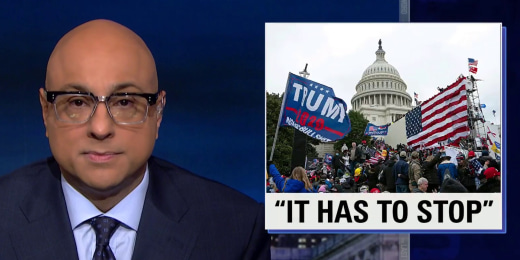
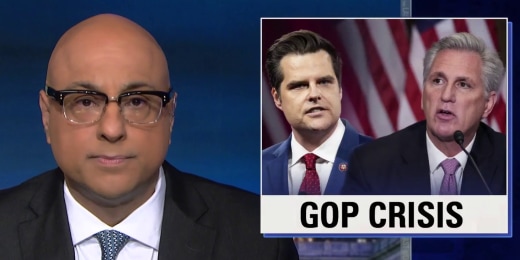
MSNBC’s Ali Velshi discusses how the waning influence and legal peril former president Donald Trump is facing could make him even more extreme in his efforts to capture attention and voters’ support.Jan. 21, 2023
‘Shocked & disappointed’: Ron DeSantis blocks African American studies course
04:56
Sen. Smith: Overturning Roe v. Wade was just ‘the beginning’ for GOP
04:53
Now Playing
Velshi: Trump’s diminished status in GOP could make him a greater threat to democracy
07:45
UP NEXT
Lawrence on SCOTUS leak report: What about Ginni Thomas?
09:11
Joyce Chisale: Students of Malawi ‘still moving’ to reach their dreams
08:21
Tribe: What matters is SCOTUS abortion decision, not the leak
Samson Kambalu is a Malawian conceptual artist, writer and academic, whose sculpture Antelope was installed on the Fourth Plinth in Trafalgar Square in London in September 2022. The Fourth Plinth was originally designed for a large scale equestrian statue of a British monarch but is now reserved for a contemporary sculpture, chosen every two years. This is is the most significant public sculpture award in the UK. Antelope is a bronze sculpture depicting two figures: John Chilembwe, a Baptist preacher and Pan-Africanist who in 1915 led the first uprising against the British occupation and colonial rule of Malawi (then Nyasaland), and his friend, a British missionary named John Chorley. Its sheer scale and subject matter provide a powerful counterpoint to the imperial iconography of Trafalgar Square. Historian Susan Williams discusses the work with Kambalu.
How did you arrive at the choice of Chilembwe?
Chilembwe’s photograph from 1914 chose me. When I moved to Oxford to pick up a professorship at Ruskin School of Art, the first thing I did was to visit Weston Library, where British colonial bureaucrats deposited documentation of their lives in the colonies. The Malawi-related archives produced the mysterious photograph of Reverend John Chilembwe, of Providence Industrial Mission, wearing a white hat, standing next to a white man, John Chorley, of Zambezi Industrial Mission.
I had wondered why Reverend Chilembwe drew attention to his hat. He is wearing it sideways for effect. It turns out that Africans were forbidden to wear hats in the presence of white people during colonial times, and Chilembwe had created this photograph at the opening of his church as an act of defiance, with support from his friend. Africans were also forbidden to run a mission. Chilembwe would be killed months later, in an uprising against colonial injustices.
When the London Mayor’s office got in touch asking me to propose for the Fourth Plinth, I had the photograph as wallpaper on my phone. I immediately decided that I would propose a work based on the photograph. For me, it is his killing by colonial police months later that dictated the final look of the sculpture. Chilembwe looms over his white friend like a ghost.
Why is it called Antelope?
Chilembwe’s name means “antelope”. It alludes not only to the animal, but also to the Chewa principal mask, Kasiya Maliro, a womb disguised as an antelope. For the Chewa people of Malawi, it’s a symbol of radical generosity. Chilembwe’s photograph very much recalls aspects of Nyau masking, a Chewa secret society marked by prodigious gift giving through play, the Gule Wamkulu. Often transgressive, their purpose is to speak truth to power. Chilembwe hangs on to his African heritage even as he steps forward as a modern Malawian.
Malawi society, where I’m from, is heavily inspired by masking, and Nyau masking is all about critical thinking. When the masks come out from their secretive workshops (or dambwes) in the ancestral graveyards, received knowledge is questioned in unorthodox performances and prodigious gifts, opening up new ways of looking at the world.
Antelope shares Trafalgar Square with other statues which celebrate Britain’s imperial and military conquests, such as Nelson’s Column. The iconography of Antelope might be anti-imperialist, but it is also very much a piece of British history.
What remains of Chilembwe’s memory?
Chilembwe features on Malawi’s banknotes and he is remembered in a public holiday every year on 15 January – Chilembwe Day. But as I grew up in Malawi, the then President for Life, Hastings Kamuzu Banda, rendered Chilembwe as a peripheral figure in the fight for Malawi’s independence.
A revisiting of Chilembwe during the research for this sculpture revealed to me a man who was much more critical to the birth of Malawi as a nation. He was the first Malawian to resist colonial rule beyond tribal lines.
Why does this work of art matter today?
The statue will remain on the Fourth Plinth for two years. After that I think it would look good at the Smithsonian National Museum of African American History and Culture in Washington DC. Chilembwe was sponsored by many black churches in America, and taking this sculpture to America after its stay on Trafalgar Square would be Chilembwe returning the gift of liberty, freedom, to the American people. I’d like a copy too in Malawi, and another copy in Britain, and in Europe.
Chilembwe, who trained as a Baptist minister in the US before returning to Nyasaland in 1901, is believed to have influenced Pan-Africanists such as Marcus Garvey. But whereas they are widely known, Chilembwe has remained an obscure figure outside Malawi. I think Antelope will change this.
I hope we can now begin to detail the African colonial experience beyond generalisations of African or black.
Women receive food rations at a food distribution site in Herat, Afghanistan. Credit: UNICEF/Sayed Bidel
NEW YORK, Jan 12 2023 (IPS) – Can you imagine what it would be like if women were simply not allowed to step outside of their homes, let alone to work for a living? When women choose to do so, and they can afford it, then it is a matter of choice. When women mostly cannot, as is the case in Afghanistan now, not only is half the population imprisoned, but children go hungry, and communities sink deeper into poverty.
World Bank data (as incomplete as it is), indicates that the average number of female-headed households (i.e. households where women are the primary – if not the only – breadwinners), is around 25%.
What that means is, that on average, a quarter of all households around the world depend on women earning an income. Children, families, communities, and nations –depend on women’s work, to the tune of a quarter of their labour force.
Economists are still pointing to the obvious challenges of counting female labour, which often lies disproportionately on the frontiers of the formal economy, such that women continue to serve as reserve armies of labour and frontline workers during industrialization.
Economists who work to document these specificities, also point out that as soon as these frontiers expand or change, women are expelled or relegated to the shadows of the informal economy and piece-rate labour, identifying this as an all too frequent failure to recognize the importance of the kind of work many women engage in, which both keeps an economy running, and enables its expansion and growth.
The Covid-19 Pandemic should have resulted in a clear realisation that all hands are necessary on deck, with so many women actually needed as first responders–the backbone of the public health crisis – everywhere in the world.
As economies take a nosedive and the realities of recession hit many of us, all economies need to be kept running, if not to expand and grow.
And beyond these very real challenges to counting women’s work – and making that work count – there is another very critical reality: culture. Lest we think only of the vagaries of women who take over “men’s jobs” (whatever that means in today’s world), we need to stop being blind to the fact that women are needed to serve other women.
In fact, in many parts of the world, including the supposedly liberal and ‘egalitarian’ Western world, many women still prefer to receive life-saving direct services from other women – in public health, in sanitation, in all levels of education, in nutritional spaces, and many, many others.
Now let us pause a moment and consider humanitarian disaster zones, where women and girls often need to be cared for – and this can only be done by and through other women.
Then let us envision a reality one step further – let’s call it a socially conservative country, which is facing humanitarian disaster, and is heavily dependent on international organisations (governmental and non- governmental) for the necessary humanitarian support.
How is it conceivable that in such a context, women can be excluded from serving? And yet this is precisely what the Taliban have decreed on December 24, when it barred women from working in national and international NGOs. And this is after they banned women from higher education.
Many international NGOs halted their work in Afghanistan, explaining that they cannot work without their women staff – as a matter of principle, but also as a question of practical necessity. Yet, the United Nations – the premier multilateral entity – continues to see how they could compromise with the Taliban rule, for the sake of ‘the greater good – real humanitarian needs’.
Thank goodness they are letting the UN continue to work with their women employees, runs one way of thinking. We will not fail to deliver humanitarian needs, runs another UN way of thinking.
Of course, humanitarian needs are essential to human survival – and thus, should never be held hostage. But why is the United Nations being accountable for humanitarian needs only?
Meanwhile, the Taliban claim that these edicts about womens’ work and education are a matter of religious propriety, a claim which, as of this moment, is not strongly challenged by another multilateral entity – the Organisation of Islamic Cooperation (OIC), encompassing 56 governments and members of the United Nations.
While individual governments have spoken out, this multilateral entity has remained relatively silent on the Islamic justice of such a decree. Is it because this multilateral religious entity sees no need to speak to humanitarian needs?
Or is it because it sees no value to hard economic realities where women’s agency plays a central role? Or perhaps it is because there is no unanimity on the Islamic justification behind such decrees?
Multilateralism is supposed to be the guarantor of all human rights and dignity, for all people, at all times. But as governmental regimes weaken, so do traditional multilateral entities heavily reliant on those governments. Time for community based transnational networks based on intergenerational, multicultural, gender sensitive leaders.
Rev Dr Chloe Bryer is Executive Director, Interfaith Center of New York; Prof Azza Karam is Secretary General, Religions for Peace; Ruth Messinger is Social Justice Consultant, Jewish Theological Seminary; and Negina Yari is Country Director, Afghans4Tomorrow
The U.S.-Africa Leaders Summit held in Washington has placed African-American diaspora at the core for strengthening multifaceted relations with Africa. The White House and African leaders have also stressed the importance of Africa’s voices, advocated for incorporating professional Africans distinctively within the institutional structures to deal with various bilateral issues and for making further inroads into Africa.
Over the years, African leaders have been engaging with their diaspora, especially those excelling in sports, academia, business, science, technology, engineering and other significant fields that the continent needs to optimize its diverse potentials and to meet development priorities. These professionals primarily leverage into various sectors, act as bridges between the United States and Africa.
As explicitly reiterated at the mid-December African leaders’ gathering, the overarching message was to focus on “deepening and expanding the long-term U.S.-Africa partnership and advancing shared priorities, amplifying African voices to collaboratively meet this era’s defining challenges.”
Corporate Council on Africa is the leading U.S. business association focused on connecting business interests between the United States and Africa. The United States has helped close more than 800 two-way trade and investment deals across 47 African countries for a total estimated value of over $18 billion, and the American private sector has closed investment deals in the continent valued at $8.6 billion since 2021, the White House said.
The United States is not only the undisputed leader of the free world, but also home to the most dynamic African diaspora. The African diaspora ranks amongst the most educated immigrant group and is found excelling and making invaluable contributions in all sectors of life-business, medicine, healthcare, engineering, transportation and more. The contribution of the African diaspora is not negligible, we see more of them appointed to senior government positions by President Biden like Wally Adeyemo, US Deputy Treasury Secretary, and Dr John Nkengasong Global AIDS Coordinator and Special Representative for Health Diplomacy.
Beyond engagement with Biden administration, African leaders express the vision, dynamism and humility to engage with their diaspora. They are excelling in sports, academia, business, science, technology, engineering and all those other sectors that the continent needs to beef up to optimize its potential and meet development priorities. In addition, it is in Africa’s high interest to embrace them.
Since its inception more than two decades ago, the African Growth and Opportunity Act (AGOA) has offered Africans the opportunity to engage and establish business networks from Africa to the United States and vice versa. It has been one surest way working towards an integrated relations, and in uplifting relations unto a higher appreciable stage.
Speaking at a U.S. Export-Import Bank conference, U.S. Trade Representative Katherine Tai told the gathering there that they needed more investment in addition to market access. The duty-free access for nearly 40 African countries has boosted development, fostered more equitable and sustainable growth in Africa.
The AGOA offered promise as a “stepping stone to address regional and global challenges,” especially with Africa’s young and entrepreneurial population. The future is Africa, and engaging with this continent is the key to prosperity for all of us,” Tai said.
According to World Bank Statistics, remittance inflows to sub-Saharan Africa soared 14.1 percent to $49 billion in 2021 following an 8.1 percent decline in the previous year due coronavirus pandemic. Beyond remittances, Africa stands to benefit largely from the input of its diaspora considered as progressive in the United States.
Welcoming African entrepreneurs, Africa-American and African leaders for a reception, Secretary of State Antony Blinken said the United States was guided by the principle of close overwhelming partnership with Africa.
“We can’t solve any of the really big challenges we face if we don’t work together. So it’s about what we can do with African nations and its people,” Blinken said. “We welcome all other members of the international community, including the United States, to join us in the global efforts to help Africa.”
In featuring prominently integrative aspects and cultural familiarity within the African diaspora, New York Mayor Eric Adams said that the success of African Americans showed the need for Africans to “walk differently.”
On disapora came Greg Meeks, the Chairman of the House Foreign Affairs Committee. The main strategy was rooted in one key word – partnership – and in recognition of shared priorities and working together. There were also many African and American youth leaders, students in the United States and Africa who are tuning in virtually – most spoke vividly on strengthening the bonds between African countries and the United States.
The strategy recognizes the immense role that the African diaspora members and young people will play in shaping and strengthening that partnership. One young leader, who has mobilized climate finance to make the water sector more resilient in South Africa, is now sharing the lessons that she learned at a U.S. government agency. Another, fresh off her experience fighting infectious disease in Malawi, was sharing her insights with nonprofits and businesses in the United States.
Others were expanding educational opportunities for children, conducting environmental research, creating job opportunities for youth in both African countries and the United States, and demonstrating exactly why the diaspora is such an unparalleled asset for people on both continents. It’s these interconnections, the back and forth, and the benefits that flow to Africa and the United States alike that is so incredibly powerful.
The United States practically is committed to ensuring that young people continue to bring their talents and hard work to the tremendous benefit of people across the continent and to the benefit of people in the United States. The Times Higher Education index indicated that approximately 43,000 Africans have currently enrolled into and are studying in American universities.
In addition, Barack Obama started the Young African Leaders Initiative (YALI) which brings every year a group of young Africans to the White House. Until today, YALI continues to run various educational and training programs including short professional courses, conferences and seminars for Africans. It has a number of other economic development programs, like the Academy for Women Entrepreneurs program. Now, since its inception in 2019, this program has provided more than 5,400 women throughout Africa with the training and networks that they need to start and to scale small businesses.
Late December, additional investments were announced to make it easier for students to participate in exchange programs from African countries, to increase trade opportunities for members of the African diaspora, and to support African entrepreneurs and small businesses. Each of these investments is guided by one overarching goal: to continue building partnership in order to better address the shared challenges facing Africa.
The adopted strategy reflects diversity, its influence, and the ingenuity of its young people. There are also training programs to attract young African talents to research, tech-innovation and development in the United States. Those youth are a growing part of the continent’s population – and also the world’s. Today, more than 60 percent of Africa’s population is under the age of 25.
By 2030, two in every five people on this planet will be African. These rising generations are powering dynamic economic growth in their countries and far beyond. 2016 – just a few years ago – African startups raised $350 million dollars in investment; last year, they raised $5 billion in investment – and that’s a curve that’s going to keep going up and up and up.
An African-American Yvonne Orji once wrote that, “Nigeria made me. America raised me.” It is often said that one of America’s greatest strengths is cultural diversity – there are few greater testaments to that than the immense contributions of the African diaspora community.
The United States is investing in the infrastructure that provides the foundation for African entrepreneurship. That means creating more pathways for the free flow of ideas, of information, of investment, which in the 21st century requires one thing: digital connectivity.
Interesting to note that Africa has around twice as many internet users as the United States, yet the continent has only a fraction of our data center space. What does that mean? Slower, less reliable connectivity. That’s why U.S. Development Finance Corporation is investing $300 million in building data centers across the continent – because there is the need for networks that can keep up with the lightening pace of new ideas.
Second, investing in rising enthusiastic leaders. Since President Barack Obama created the Young African Leaders Initiative, nearly 5,800 trailblazers from every country in sub-Saharan Africa have come to the United States for academic and leadership training – developing skills, career guidance, and education relationships that are going to last for a lifetime and to the benefit of their communities.
Many of the Mandela Washington Fellows are entrepreneurs, and has until today thousands of graduates. For example, Abel Hailegiorgis from Ethiopia has a company building bicycles and wheelchairs from bamboo, which is stronger than steel – sustaining the planet, supporting local farmers and local manufacturers. The forthcoming years will involve frequent exchanges directed at contributing substantially to the network of professionals from African countries.
After the U.S.-Africa leaders summit, the National Basketball Association (NBA) has signed agreements to open branches and further expand American sports across Africa. With its African headquarters in Johannesburg, South Africa in 2010, additional offices are planned in Dakar, Lagos, Accra, Nairobi and Cairo in 2023. The league is committed to expanding efforts to make the game of basketball and the NBA more accessible across the continent.
With the dynamic team headed by Amadou Gallo Fall, sports diplomacy and the Basketball Africa League will become a strong contender as a success story for its bridge-building role between the United States and Africa.
The biggest takeaway is to stage a world-class events in Africa, have the talents and certainly the fan interest especially now that the NBA and FIBA coming together to launch the Basketball Africa League. Amadou Gallo Fall, from a business standpoint, noted to continue drawing world-class partners who are interested in supporting the league because what they would be doing is bigger than basketball. The feedback is very tremendous, an indication that the future is extremely bright.
“The African Diaspora continues expressing high interest in engaging with the league. We want to be drivers of this positive social change. For us, basketball has been the catalyst and our work on the continent has been focused on building the capacity and empowering youth. We think by engaging with young people and inspiring young people, we are going to elevate their communities. We have already seen the increasing interest among the youth across Africa,” he underlined.
Sports and brands promotion are indivisible part of the game. The National Basketball Association (NBA) Africa and the Basketball Africa League (BAL) continue to attract world class marketing partners, including the BAL Foundational Partners Rwanda Development Board (RDB), NIKE, Jordan Brand, and Wilson, alongside NBA Africa’s recent collaborations with ESPN Africa, Afrosport, KFC Africa (Pan-Africa), Africell (Angola), Stanbic Bank (South Sudan), and Maven Developments (Egypt).
Perhaps that’s not all. In September, the U.S. African Development Foundation teamed up with the Tony Elumelu Foundation to create a new program to provide financing, technical assistance, and mentorship to emerging young innovators in Africa. He recently launched another initiative to connect up-and-coming climate entrepreneurs with American companies.
Third, there is a program for fostering greater engagement by American companies. The U.S. private sector already invests more than $4 in Africa for every dollar that the government allocates to the region in foreign assistance – and it wants to do more. That’s the objective of the Office of Global Partnerships, which will take a U.S. private sector delegation to Ghana in February. It’s the goal of the Prosper Africa initiative – which is marshalling agencies from across the government to help more U.S. companies and inventors – investors to do business in Africa, and do it in a way that promotes inclusive growth – growth that’s sustainable for the planet.
Prosper Africa’s institutional investor delegation invests more than $85 million in an African fund that will provide financing to small businesses and entrepreneurs.
Through a partnership with Prosper Africa, Pierre’s company – Yolélé – is distributing fonio and other products made by small farmers in the region to markets in the United States. In a region where it’s getting harder to grow crops due to a warming climate, fonio’s deep roots make it virtually drought-resistant. Now, in West Africa, it’s said that “Fonio never embarrasses the cook” which is good news.
Despite some negative criticisms, African leaders continue sourcing different kinds of economic assistance and support provided by the United States. It explicitly shows the United States remains an indispensable power and will, by and large, play its appreciable role in the emerging the new world order. It has the structures, mechanism, experience and confidence to influence the future.
The African diapora leaders are mostly western-oriented, support the global status quo, admire the incomparable never-failing practical soft-power of the United States and in turn, maintain long-term geopolitical interest with the West. Within the context of the geopolitical realities, the United States and its leadership still have strong sustainable political, economic and cultural ties with African countries.
President Joe Biden has signed an executive order for the creation of African Diaspora Advisory Council as part of the presidency. According reports, the post-summit large-scale projects and programs will be coordinated, monitored and implemented jointly by the president administration, the White House, State Dept of African Affairs and the African Diaspora Advisory Council. It will also engage non-government corporate business organizations such Africa House and the Corporate Council on Africa.
With emerging challenges and geopolitical changes in the multipolar world, it is certainly true that U.S.-Africa inter-connectivity has become more important as it opens new opportunities for building relationships, and this requires working closely together to deepen and fortify America’s strategic partnerships with African diaspora – partnership that has shaped the past, is shaping present, and will shape future multi-dimensional relations, in the interests of sustaining a meaningful stability between Africa and the United States.