It Takes Listening to Children to End Violence

Civil Society, Education, Featured, Global, Global Governance, Headlines, Human Rights, Inequity, IPS UN: Inside the Glasshouse, Poverty & SDGs, TerraViva United Nations
Opinion

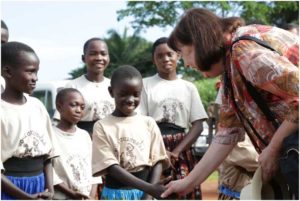
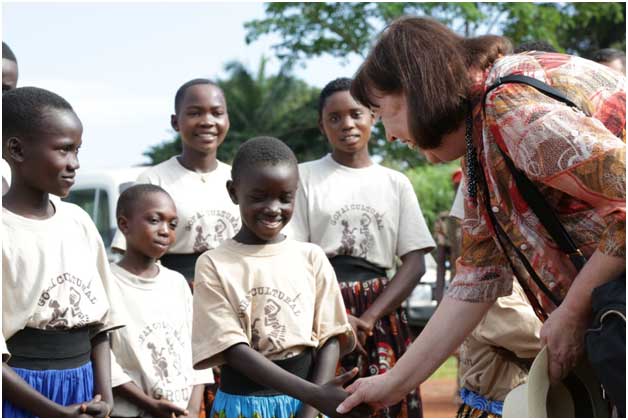
NEW YORK, Jul 22 2019 (IPS) – We see many challenges that affect children around the world. Child marriage, corporal punishment, voting ages, air pollution, teachers going on strike…


It’s been great to speak and have world leaders at the UN listen when we talk about these issues. It’s been clear that leaders are open to hearing from children and learning what kids have to say.

But even then, it doesn’t always seem like leaders are ready to move from talking to action. It’s weird that there are all these urgent issues to tackle, but leaders aren’t acting right away.

When we talked with [Special Representative of the Secretary-General on Violence against Children] Najat Maalla M’jid, she said she’s going to try and change this. She will push the United Nations to work to end violence against children. She also offered to listen to children’s ideas, recommendations, and solutions.

Governments must make changes to end violence and stop child marriage. And it’s really important for governments to listen to children’s voices and stop underestimating our abilities. Children can offer ideas too, and its children who are the next generation.

Last week, we learned that every country is connected together, and issues that affect one country often affect others as well. Even though countries have different languages, cultures, and ways of learning, many problems that affect children are the same.

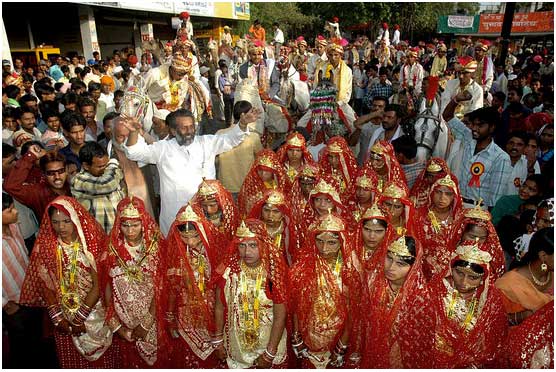
Child marriage and sexual abuse affect children all over the world. Child marriage is a horrific form of violence. It violates girls’ rights and negatively affects their ability to access education and health.

In Lesotho and many other countries, girls are forced to marry due to poverty, property grabbing, sexual abuse, premarital pregnancies and neglect. The laws that protect children are not effectively implemented and enforced.

We also need to stop thinking that punishing kids by hitting them is an acceptable discipline method. Just like child marriage, we need to realise that psychological abuse and corporal punishment of students is a problem in many countries, and maybe by working all together it will be easier to stop it.
Often governments have put some good laws in place, but they don’t always work because people don’t know about them. Adults need to be told about the new laws, otherwise they’re going to keep breaking them and the violence is only going to continue.

Children and teachers, for instance, need to know that there are rules about how children can be treated in schools. Sometimes the laws don’t match up, and so old marriage laws need to be updated so they don’t have lower ages than child protection laws.

When children get involved, they can help. For example, many children are born and live their life without having a birth certificate. Many countries make it hard for them to access their basic rights or go to school without a birth certificate.

In one village in Indonesia, many children were rejected when they wanted to register at school because they did not have a birth certificate. Thankfully, the child parliament was able to work with the village government to get a birth certificate for all children.

They arranged a “mass birth certificate” campaign and finally, 100% of the children in the village have birth certificates.

Children can help create the necessary changes in communities, but we need to be informed in order to do so. Child parliaments and youth groups can help raise community awareness about child protection laws and give us a space to share about our experiences.

Before sessions, not many girls knew that child marriage is against the law. After our meetings, children are more aware and have a better understanding of violence.

Every child has a right to participate. We hope our examples show how the voices of children are important and can help. If the government wants the world free from violence, involve us.

The main target of ending violence against children is a child. Therefore, the voices of children should be heard. If violence against children is stopped, we will have a better life, and we need this now, not in the future.

*As a general rule, World Vision doesn’t share the last names of children under 18.
 

Finland’s Education System Leads Globally

Civil Society, Education, Featured, Global, Global Governance, Headlines, Human Rights, IPS UN: Inside the Glasshouse, TerraViva United Nations

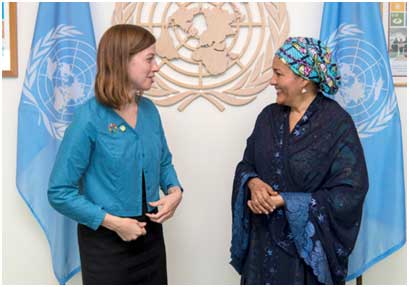
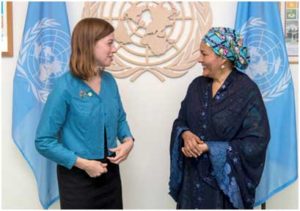
Deputy Secretary-General Amina Mohammed (right) meets with Li Andersson, Minister of Education of Finland.
18 July 2019. Credit: United Nations, New York

UNITED NATIONS, Jul 22 2019 (IPS) – Finland has garnered attention for its top-notch education, and the newly appointed Minister of Education for Finland is planning to continue with the success of her country’s education system through various and innovative approaches.


“In education, Finland has the lead according to many international comparisons,” Li Andersson, the newly appointed Minister of Education for Finland, said at a briefing at the Finnish consulate in New York on July 19.

Most recently, she pointed out, the London-based Economist ranked Finland as number one in delivering future-oriented skills through education.

“Thereby, Finland is best equipped to adapt education system to deliver skills for problem-solving and collaboration, as well as foster creativity, civic-awareness and participation,” she added.

The briefing was hosted by the Consulate General of Finland, with a guest speaker from Columbia University.

Andersson said investment in education is key to all of the successes “we have seen in Finnish society, so it is key for social cohesion, it is key for equality, and it is key for building economic progress and for economic growth.”

“The Finnish education system is one of the top performing education systems in the world,” she declared

Finland has been ranked as one of the happiest and successful countries in the world, and most recently having been ranked as the number one country for higher education by The Economist.

And in terms of data, in results released by the Programme for International Students Assessment (PISA), a test taken by pupils across the globe, Finland scored 550 points higher than any of their counterparts, including Sweden, Norway and the US, among others.

When asked whether the size of small schools that are abundant in Finland have anything to do with Finland’s success, Dr. Samuel Abrams, Director of the National Center for the Study of Privatization in Education at the Teachers College, Columbia University, told IPS: “I would not focus on the size of schools. That is not, as I said, a Finnish innovation”.

He said there has been a robust movement for small schools in the United States for a long time with many fine examples of excellent small public schools across the country.

“I merely brought up small schools as a part of the recipe for excellent schooling in Finland that may be threatened by financial pressure, generated in part by pension obligations”.

Because the pension obligations in an aging country like Finland are substantial, he said, budget cuts must be found. “Some of those budget cuts mean merging schools to achieve economies of scale.”

However, in terms of what other countries, such as the United States should learn from Finland, he had this to say: “We should follow Finland in testing only small samples of students rather than testing all students”.

“Our approach forces teachers to teach to the test. As we test all students in reading and math in grades 3-8, we generate undue stress for students, teachers, and parents alike”.

Moreover, he pointed out, “in focusing on reading and math, we crowd out time for history, science, music, art, crafts, and physical education. And students need those subjects as well as plenty of play for a well-rounded education.”

“Second, we should follow Finland in preparing teachers with high-quality master’s programs in pedagogical theory and practice.

Third, we should follow Finland in paying teachers well and giving them significant autonomy,” he added.

“Finally, we should follow Finland in funding our schools fairly. That means more money per student at schools in disadvantaged neighborhoods, not less. We base funding on property taxes, which means wealthy districts have significantly more money to spend per pupil than poor districts”.

None of this is rocket science. But that does not make it easy.

“We must follow in Finland’s path in altering the way we think about children and their future. This requires, one, thinking about child development through the eyes of the child, which means a well-rounded curriculum; two, reconceiving our social contract to ensure a high-quality education for all children; and three, esteeming teachers as pillars of the community.” Dr. Abrams concluded.

With that said, the education system in Finland has much room for improvement. “We see growing disparities in the learning results.” Andersson said, in terms of learning results.

“There is a difference between boys and girls and also some growing regional differences, and also a stronger difference where the pupils home background will affect the learning results more than before.”

“Inequality hampers growth and otherwise,” she added.

To combat these worrisome findings, Andersson and the Finnish government have set three main priorities to be tackled in the coming years.

“The first of these priorities is raising the educational level of the whole population.” Andersson said.

“We are also seeing a tendency where we are seeing the growing level of education has actually stopped.” She went on to cite that the generation of the 1970’s, and in Finland it is the current generation that has the highest level of education.

“The second priority of the government is reducing inequality gaps in education referring to what I said about earlier about the worrisome trends, and the third priority is focusing on continuous education…. learning should be something that we do all the time, and we should have the possibility to engage in all the time, no matter whether if we are working or outside working life or studying.”

For raising the level of education, Andersson plans on ensuring that all students have a degree on the upper secondary level and plans on raising the amounts of adults on the third educational level (post-secondary education) to 50% by 2030.

In order to implement this, Andersson intends on devising a Road Map, and a document that will reach Parliament.

She also highlighted the importance of addressing the equality gaps and strengthening the whole Finnish education system, from early childhood education to primary school.

She also intends on raising the compulsory education age to 18 years old. “16% of the overt generations in Finland are without a degree on the secondary level.” She noted.

“We know that the employment rate of people with only primary education backgrounds is around 40% at the moment, and that has been going down all the time.”

She cited the changing labor market, and how that calls for a change in the education system.

In terms of closing education gaps, Andersson cited a significant focus on early childhood development, as that is key.

Such actions to help assist this goal is to reduce group sizes for children over 3 years old and ensuring that every child has the right to at least 40 hours a week to early childhood education and care “no matter if their parents are working or unemployed.”

Andersson is also piloting a two- year preschool to see how it will affect participation rates in early childhood care, as well as to observe the effects it will have on learning results in primary education.

Furthermore, Andersson plans on providing support for maternity and childhood clinics.

For continuing education and the future of work, Andersson is unsure, as the labor market is drastically changing but noted that “It is clear that the knowledge requirement will grow.”

“Education is the best tool we have, and we should think of it as an investment not an expenditure.” She concluded.

She added that students should “just focus on things you’re motivated about, not too get too stressed, I think it is a shame there is a lot of pressure on the students now, with their stress with finances etc.”

But she offered encouragement and stated that students should “not think too much about what government is saying about how fast you should study and finally, “use the possibilities you have at the university”


How Governments Still Allow Violence Against Children

Civil Society, Development & Aid, Education, Featured, Global, Global Governance, Headlines, Human Rights, Inequity, IPS UN: Inside the Glasshouse, Poverty & SDGs, TerraViva United Nations

Opinion

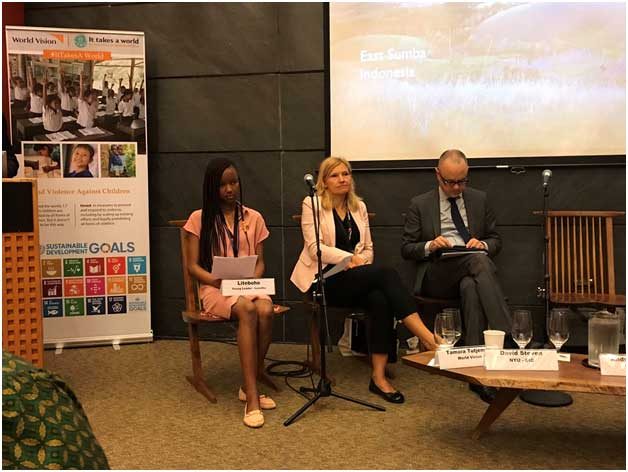
Tamara Tutnjevic Gorman is Policy Manager – Ending Violence against Children, World Vision

World Vision believes that it takes each and every one of us to end violence against children.

NEW YORK, Jul 16 2019 (IPS) – Despite what you might have heard, things are getting better, every year. We are making amazing progress on fighting diseases, reducing the preventable deaths of children, and investing huge amounts to advance medicine and knowledge and to create better living conditions.


However, this progress is too slow for some of the world’s most vulnerable children; those who have yet to experience the progress of the past 20 years. It’s hard to believe, but governments still allow violence against children to continue.

Approximately 1.7 billion children still experience some form of violence every year. To understand the reasons why, World Vision has investigated the commitments by 20 governments to address violence against children and has found that, while there has been tremendous progress in prohibiting violence, there are still too many gaps in legislation.

Cracks in laws, data, coordination, accountability and funding are becoming big gaps that ruin children’s lives and futures.

As a global community, we made exciting promises to end violence against all children 30 years ago when we adopted the United Nations Convention on the Rights of the Child. In those 30 years, we’ve developed laws and policies, come to better understanding about the complexity of violence and its forms, discovered and agreed to evidence-based solutions, and created a movement that has shone a spotlight on the issue.

We renewed our commitment to ending violence against children by committing to the Sustainable Development Goals four years ago. Yet, the inconsistent stats we have and self-reported data show that violence against children is not reducing at the pace necessary to meet the important target of ending all forms of violence against children.

This means today’s children, and their children, will live with violence’s life-long consequences – pushing them to life at the margins of society: severe health problems, difficulties acquiring an education and a decent job, and relationship issues. The lack of decisive action to end violence against children is simply not good enough.

Where legal bans exist, they do not yet cover all forms of violence. Ambitious declarations about National Plans of Action are not followed by the resources necessary to implement them. Fragmented initiatives are not enough to support victims, or more importantly, to ensure prevention.

There is some reporting on progress, but far too little new data to report on. And out of all the children experiencing violence, far too few have been consulted on the policies that affect their lives.

World Vision believes that it takes each and every one of us to end violence against children. A critical step in the right direction is for governments to make all forms of violence illegal and to put in place a comprehensive set of national laws and policies that provide for strong prevention and response measures.

The lack of commitment to zero tolerance is perhaps the most worrying. Government policies often turn a blind eye to socially or traditionally acceptable corporal punishment in schools, beating at home, child marriage and more.

Millions of children are unnecessarily drawn into a cycle of violence because of the failure to prevent it. When a child survives such violence and doesn’t get justice or appropriate support, the message they receive from authorities is that violence is permitted, or even condoned by those in power. This sends a powerful message that as society we have agreed to accept certain levels of violence.

Moreover, when families or communities experience crisis due to conflicts or natural disasters, the boundaries of what violence is considered acceptable tend to stretch. This makes it difficult to stop. Before we know it, violence can become a way of life. As a global community, we all must do more to plug the gaps that persist.

As governments at the High-Level Political Forum (July 16-19) present on progress so far and work on plans for the future, it is important that they address the seven cracks that have been identified in current efforts to end violence against children. This means they must commit to:

      1. Prohibiting all forms of violence against children in all settings.
      2. Investing in prevention programs and reporting mechanisms.
      3. Being a global champion for the prevention of violence against children.
      4. Increasing funding and transparency in budgets allocated to interventions to end violence against children.
      5. Prioritising and investing in regular data collection.
      6. Mandating, resourcing and planning for child consultations in policy development, reviews, monitoring and reporting.
      7. Increasing government delivery of community education and awareness campaigns.

    The 193 UN Member States have incredibly diverse energy, expertise and resources. We are calling for each and every one of them to join us and become champions for ending violence against children. It takes political leadership, and the time to drive action is now

    To read the full report Small Cracks, Big Gaps: How governments allow violence against children to persist click here.


    How NGOs in Rich Countries Control their Counterparts in Poor Countries..and Why they Refuse to Resolve it

    Aid, Civil Society, Development & Aid, Featured, Global, Headlines, Regional Categories, TerraViva United Nations

    Civil Society

    Paul Okumu is head of secretariat for the Africa Platform on Governance, Responsible Business and the Social Contract. He is also head of strategy at the Internet of Things Solutions Africa.

    2.1 percent is the total amount of global funding that goes directly to civil society in the Global South. The remaining 97.9 percent is given directly to International Civil Society Organizations, who then sub contract 87 percent of the project delivery to Civil Society in the Global South to deliver on projects. Credit: Priyanka Borpujari/IPS

    NAIROBI, Jul 12 2019 (IPS) – Many NGOs around the world are fighting inequality between the rich and the poor, between the policies that make rich countries richer, and poor countries poorer. So while Civil Society Organizations claim to be equal and are are fighting together to secure space for engagement and to work, the bigger NGOs should also ask themselves why they are unwilling to let others who are less resourced take up the space where their voice can be heard. Why are they unwilling to fight policies that keep rich NGOs richer?


    Here are some numbers to show you why this is a battle no Global NGOs is willing to take on.

    2.1%

    The total amount of global funding that goes directly to civil society in the Global South. The remaining 97.9% is given directly to International Civil Society Organizations, who then sub contract 87% of the project delivery to Civil Society in the Global South to deliver on projects.

    This is according to the UN Office for Coordination of Humanitarian Affairs, and analysis based on working statistics from the OECD Data on allocation of funds to Civil Society and the DAC and CRS Code list.

    Despite attempts by Southern Civil Society Organizations to reverse this trend, Northern NGOs have had the standard response for the past ten years “We acknowledge its a problem, but its more complicated than you think.” (Read the latest debate here during the Humanitarian Summit in 2016.)

    Attempts to change for Humanitarian NGOs under the Grand Bargain campaign, has hit a deadlock because of very curious reason- disagreement on who is “local”.  These goes to demonstrate just how embedded the INGOs are with their Governments.in one classic study, it was found that “while Syrian humanitarian actors were responsible for delivering 75% of the humanitarian assistance in 2014, they received only 0.3% of the direct and 9.3% of the indirect cash funding available for the overall Syria response. Despite their crucial role, Syrian NGO’s struggled to get their most basic costs covered in the sub-contracting and partnership agreements they have with international agencies. While international actors are all committed to transparency, 30% of the known funding remains unknown in terms of which humanitarian actor actually received the funding.” (Read Full study here)

    $21,500

    The average annual Salary of a Chief Executive from the Global South. This is equivalent to the average salary of a Junior Project Officer from any civil society Organization from the Europe or North America (including those working in the Global South) and is 11.6 times less than the average salary of a Chief Executive of the Civil Society in the North.

    This is according to data derived from IRS Returns of NGOs in the US (Charity Navigator), the Report of the Charity Pay Study by the Third Sector , UK, studies in pay gap between local and international staff by Massey University, studies by Science Direct, Pay studies in developing countries such as Kenya, and analysis of advertised salaries for locals and international staff posted on the UN information and recruitment website Relief Web.

    Chief Executives of Southern Civil Society that are considered International in Scope earn just slightly over $35,000 in annual pay-with one exception, BRAC. BRAC is an exception in that while it is technically a Southern NGO, it is considered the largest NGO in the world, and the most well funded, with a vast catalogue of social enterprises, government of Bangladesh Funding and Foreign Government grants for its mainly MDG-type development agenda.

    According to a study by Global to Local “The issue of large salary differences between local and international NGOs/agencies 22 have a direct negative impact on capacity and capacity building for local organisations – not least when it comes to crucial staff positions such as project and finance staff. Continuously building the capacity of their staff, just to see them leave for better-paid positions with INGO’s and UN agencies (their so-called partners) is an uphill battle for local actors. One that continues to keep them locked into an ‘underdog’ position vis-à-vis international actors. This kind of continuous “brain drain” is global.”

    90%

    Percentage of local staff out of the total humanitarian workers in Syria who die in line of duty, according to a study mainly. This is mainly because the poor pay means local actors cannot afford the security measures needed to keep them safe, but also because being their community they tend to be closer to the conflict and respond with greater passion because International NGO Staff are either not in the field, or restrict their movements to security zones in conflict countries.This trend is noted in several other conflict areas around the world

    99.1%

    These studies also show that a record 99.1 % of NGOs in the Global South (that is nearly all of them) are working on a sub-grant basis by the International NGOs, meaning they effectively do not have an agenda of their own and must conform to what is known in the Development Sector as “Shifts in Donor Interests”. Hence, less than 10% of local NGOs are truly local. The negative impact of this on legitimacy, independence and objectivity of local Civil Society Organizations have been analyzed and documented. When asked why they do not give directly to local NGOs, Foreign Governments (commonly known as Donors) have given these five reasons since 1999 (they keep repeating it…See here in this article by BOND, for example;

    ·         Lots of southern and smaller CSOs do not have the capacity to fill in all our forms, let alone spend our money effectively.

    ·         We do not have the administrative capacity to give smaller amounts of money.

    ·         We need to channel money through a few, trusted partners so that we can manage risk and comply with our own rules.

    ·         We have strict anti-terror and anti-money laundering rules that make giving directly difficult.

    ·         We are under domestic political pressure to fund through CSOs in our home country.

    17.3%

    The number of NGOs from the Global South that have access and resources to attend Global Platforms such as UN Meetings, OECD Sessions, World Trade Organization meetings or World Bank Meetings. Most Global Platforms are still a preserve of Northern NGOs.

    If you include attendance by Global South sub grantees who generally represent the voice and Agenda of the main International NGO sub granter, this figure falls to less than 3%, meaning Global Advocacy is still for and about a Northern Agenda. For example, over 3000 NGOs engaged with the Intergovernmental process leading the development of the Agenda 2030 for Sustainable Development (commonly known as the SDGs). Of these less than 100, or 3.3% were from the Global South.

    And this was only possible because of the push by Southern Member states for ECOSOC to dedicate special funding for Civil Society Organizations from the Global South. Interestingly this concern was analyzed as way back as 1999 by the Global Policy Forum. The CARDOSO Report raised a similar concern, even offering proposals, way back in 2004.Civil Society Organizations in the Global South are still waiting to have it resolved!

    $300,000

    The size of a project beyond which most European Governments require Southern Civil Society Organization to receive funding through a European NGO, and must have a European Staff to oversee all or part of the leadership of the project, paid for by the grant, at European Rates. This not only significantly depletes the resources available to the Southern Civil Society to implement projects, but forces to recruit European staff with discrepancy pay while deliberately undermining the ability of local Organizations to build their capacity.

    8

    The number of Governments and Philanthropists that account for 87.6% of Total Funding to Civil Society around the world.This is according to OECD figures and figures from Philanthropic Organizations. Within the OECD, five countries account for nearly 70% of AID to Civil Society Organizations. In 2018 these were the US, Germany,the UK, Japan (mainly to its own NGOs), and, France (primarily to NGOs in its former colonies).

    Critiques have raised concern that with so few Governments controlling such a large number of Civil Society Organizations,they are likely to exert undue influence over Policies and advocacy, especially in the knowledge of the fact that all AID is intended to achieve the ever shifting terms for what is essentially a 3D Agenda as a form of soft power (Development, Defense and Diplomacy). Over the last ten years, the concerns have heightened, with Northern Governments accused of hiding behind Aid to control and shape friendly economic and social policies under the new AID Tendering system known as Request for Proposals (RFPs).

    11.1%

    The total number of Civil Society from the Global South that can afford the $4000 Travel and Accommodation Budget needed to attend WEF (the individual fee of $75,000 and annual institutional fee of $675,000 is waived for Civil Society). Most Southern Organizations have budgets that are tied to specific projects, making it almost impossible to get the extra funding needed to attend advocacy spaces such as WEF

    So while Civil Society Organizations are fighting together to secure space for Civil Society, we who are already inside should also ask ourselves why we are unwilling to let others who are less resourced take up the space where their voice can be heard.


    Prejudice and Discrimination, the Uncured Ills of Leprosy

    Civil Society, Democracy, Development & Aid, Editors’ Choice, Headlines, Health, Human Rights, Latin America & the Caribbean, Population, Regional Categories

    Health

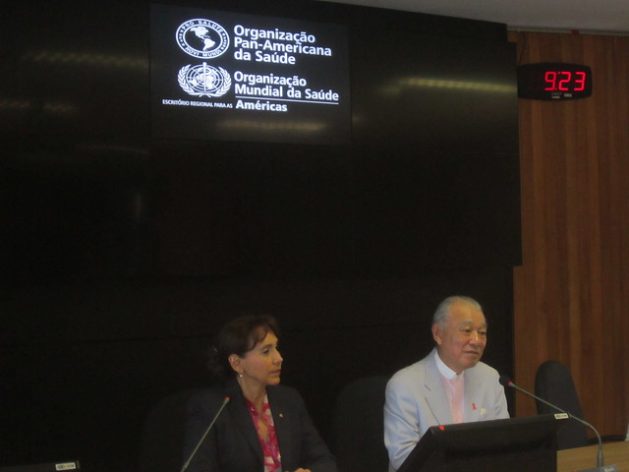
    Nippon Foundation President Yohei Sasakawa and Socorro Gross, Pan American Health Organisation representative in Brazil, hold a press conference in Brasilia at the end of a 10-day visit to this country by the Japanese activist who is also World Health Organisation Goodwill Ambassador for Leprosy Elimination. Credit: Mario Osava/IPS

    Nippon Foundation President Yohei Sasakawa and Socorro Gross, Pan American Health Organisation representative in Brazil, hold a press conference in Brasilia at the end of a 10-day visit to this country by the Japanese activist who is also World Health Organisation Goodwill Ambassador for Leprosy Elimination. Credit: Mario Osava/IPS

    BRASILIA, Jul 11 2019 (IPS) – “The ambulance team refused to take my sick friend to the hospital because he had had Hanseniasis years before,” said Yohei Sasakawa, president of the Nippon Foundation, at one of the meetings held during his Jul. 1-10 visit to Brazil.


    His friend was completely cured and had no visible effects of the disease, but in a small town everyone knows everything about their neighbours, he said.

    This didn’t happen in a poor country, but in the U.S. state of Texas, only about 20 years ago, Sasakawa pointed out to underline the damage caused by the discrimination suffered by people affected by Hansen’s Disease, better known as leprosy, as well as those who have already been cured, and their families.

    “The disease is curable, its social damage is not,” he said during a meeting with lawmaker Helder Salomão, chair of the Human Rights Commission in Brazil’s lower house of Congress, to ask for support in the fight against Hanseniasis, the official medical name for the disease in Brazil, where the use of the term leprosy has been banned because of the stereotypes and stigma surrounding it.

    The highlight of the mission of Sasakawa, who is also a World Health Organisation (WHO) Goodwill Ambassador for Leprosy Elimination, was a meeting on Monday Jul. 8 with President Jair Bolsonaro, who posted a message on Facebook during the meeting, which had nearly 700,000 hits as of Thursday Jul. 11.

    In the 13-and-a-half minute video, Bolsonaro, Sasakawa, Health Minister Luiz Mandetta and Women, Family and Human Rights Minister Damares Alves issued a call to the authorities, organisations and society as a whole to work together to eradicate the disease caused by the Mycobacterium Leprae bacillus.

    A preliminary agreement emerged from the dialogues held by the Japanese activist with members of the different branches of power in Brasilia, to hold a national meeting in 2020 to step up the fight against Hanseniasis and the discrimination and stigma faced by those affected by it and their families.

    The idea is a conference with a political dimension, with the participation of national authorities, state governors and mayors, as well as a technical dimension, said Carmelita Ribeiro Coriolano, coordinator of the Health Ministry’s Hanseniasis Programme. The Tokyo-based Nippon Foundation will sponsor the event.

    Brazil has the second highest incidence of Hansen’s Disease in the world, with 27,875 new cases in 2017, accounting for 12.75 percent of the world total, according to WHO. Only India has more new cases.

    The government established a National Strategy to Combat Hanseniasis, for the period 2019-2022, in line with the global strategy outlined by the WHO in 2016.

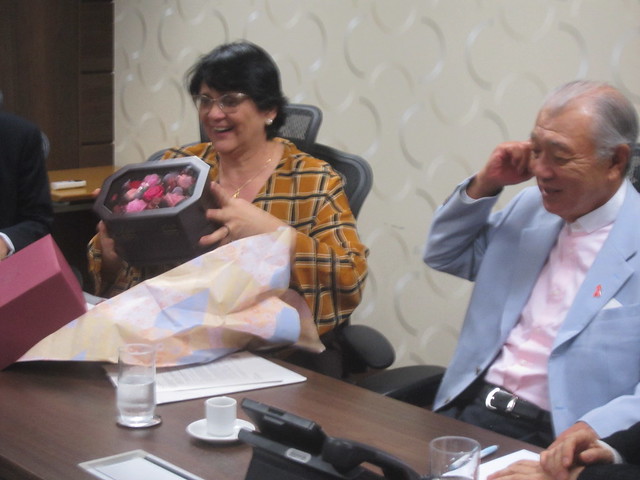
    Brazilian Minister of Women, Family and Human Rights Damares Alves receives a gift from Yohei Sasakawa, president of the Nippon Foundation, at the beginning of a meeting in Brasilia, in which the minister promised to strengthen assistance to those affected by Hansen's Disease, including the payment of compensation to patients who were isolated in leprosariums or leper colonies in the past. Credit: Mario Osava/IPS

    Brazilian Minister of Women, Family and Human Rights Damares Alves (L) receives a gift from Yohei Sasakawa, president of the Nippon Foundation, at the beginning of a meeting in Brasilia, in which the minister promised to strengthen assistance to those affected by Hansen’s Disease, including the payment of compensation to patients who were isolated in leprosariums or leper colonies in the past. Credit: Mario Osava/IPS

    Extensive training of the different actors involved in the treatment of the disease and plans at the state and municipal levels, tailored to local conditions, guide the efforts against Hansen’s Disease, focusing particularly on reducing cases that cause serious physical damage to children and on eliminating stigma and discrimination.

    Before his visit to Brasilia, Sasakawa, who has already come to Brazil more than 10 times as part of his mission against Hansen’s Disease, toured the states of Pará and Maranhão to discuss with regional and municipal authorities the obstacles and the advances made, in two of the regions with the highest prevalence rate.

    “In Brazil there is no lack of courses and training; the health professionals are sensitive and give special attention to Hanseniasis,” said Faustino Pinto, national coordinator of the Movement for the Reintegration of People Affected by Hanseniasis (MORHAN), who accompanied the Nippon Foundation delegation in Brasilia.

    “Promoting early diagnosis, to avoid serious physical damage, and providing better information to the public and physical rehabilitation to ensure a better working life for patients” are the most necessary measures, he told IPS.

    Pinto’s case illustrates the shortcomings in the health services. He was not diagnosed as being affected with Hansen’s Disease until the age of 18, nine years after he felt the first symptoms. It took five years of treatment to cure him, and he has serious damage to his hands and joints.

    His personal plight and the defence of the rights of the ill, former patients and their families were outlined in his Jun. 27 presentation in Geneva, during a special meeting on the disease, parallel to the 41st session of the Human Rights Council, the highest organ of the Office of the United Nations High Commissioner for Human Rights.

    Pinto is an eloquent advocate of the use of Hanseniasis or Hansen’s Disease, rather than leprosy, a term historically burdened with religious prejudice and stigma, which aggravates the suffering of patients and their families, but continues to be used by WHO, for example.

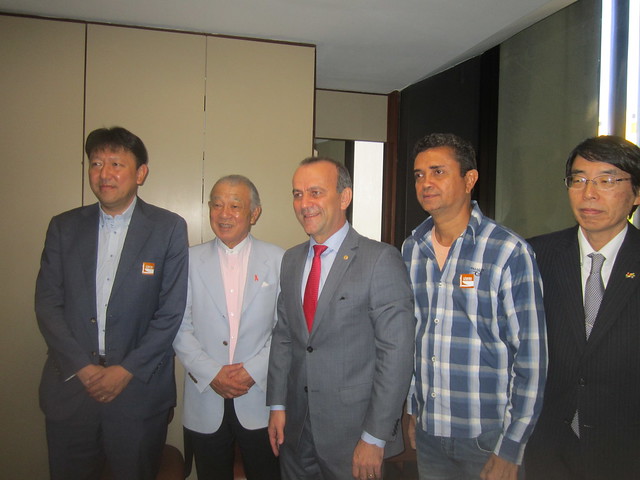
    Yohei Sasakawa (2nd-L), president of the Nippon Foundation, accompanied by two members of his delegation, took part in a meeting with Congressman Helder Salomão (C), chair of the Human Rights Commission of the Brazilian Chamber of Deputies, who pledged to support initiatives to eliminate leprosy in his country. Faustino Pinto (2nd-R), national coordinator of the Movement for the Reintegration of Persons Affected by Hanseniasis (MORHAN), also participated. Credit: Mario Osava/IPS

    Yohei Sasakawa (2nd-L), president of the Nippon Foundation, accompanied by two members of his delegation, took part in a meeting with Congressman Helder Salomão (C), chair of the Human Rights Commission of the Brazilian Chamber of Deputies, who pledged to support initiatives to eliminate leprosy in his country. Faustino Pinto (2nd-R), national coordinator of the Movement for the Reintegration of Persons Affected by Hanseniasis (MORHAN), also participated. Credit: Mario Osava/IPS

    Discrimination against people with the disease dates back to biblical times, when it was seen as a punishment from God, said Sasakawa during his meeting with Minister Damares Alves, a Baptist preacher who describes herself as “extremely Christian”.

    In India there are 114 laws that discriminate against current or former Hansen’s Disease patients, banning them from public transport or public places, among other “absurdities”, he said.

    In India, they argue that these are laws that are no longer applied, which justifies even less that they remain formally in force, he maintained during his meetings in Brasilia to which IPS had access.

    Prejudice and misinformation not only subject those affected by the disease to exclusion and unnecessary suffering, but also make it difficult to eradicate the disease by keeping patients from seeking medical care, activists warn.

    His over 40-year battle against Hansen’s Disease has led Sasakawa to the conclusion that it is crucial to fight against the stigma which is still rife in society.

    He pressed the United Nations General Assembly to adopt in 2010 the Resolution for the Elimination of Discrimination against Persons Affected by Leprosy and their Families.

    He said these attitudes and beliefs no longer make sense in the light of science, but persist nonetheless.

    Treatment making isolation for patients unnecessary in order to avoid contagion has been available since the 1940s, but forced isolation in leprosariums and leper colonies officially continued in a number of countries for decades.

    In Brazil, forced segregation officially lasted until 1976 and in practice until the following decade.

    With multi-drug treatment or polychemotherapy, introduced in Brazil in 1982, the cure became faster and more effective.

    Information is key to overcoming the problems surrounding this disease, according to Socorro Gross, the Pan American Health Organisation (PAHO) representative in Brazil who also held meetings with the Nippon Foundation delegation.

    “Communication is essential, the media has a decisive role to play” to ward off atavistic fears and to clarify that there is a sure cure for Hansen’s Disease, that it is not very contagious and that it ceases to be so shortly after a patient begins to receive treatment, Gross, a Costa Rican doctor with more than 30 years of experience with PAHO in several Latin American countries, told IPS.


    A Lifelong Battle Against the “Disease of Silence”

    Civil Society, Development & Aid, Editors’ Choice, Featured, Headlines, Health, Latin America & the Caribbean, Population, Poverty & SDGs, Regional Categories

    Health

    Mario Osava interviews YOHEI SASAKAWA, president of the Nippon Foundation

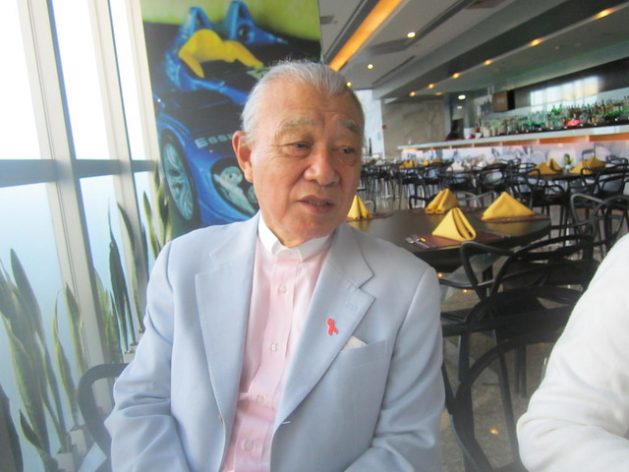
    Yohei Sasakawa, president of the Nippon Foundation, is interviewed by IPS in the Brazilian capital, where he concluded a tour of the country aimed at promoting the elimination of Hansen's Disease, better known as leprosy, and also the stigma that make it the "disease of silence.” Credit: Mario Osava/IPS

    Yohei Sasakawa, president of the Nippon Foundation, is interviewed by IPS in the Brazilian capital, where he concluded a tour of the country aimed at promoting the elimination of Hansen’s Disease, better known as leprosy, and also the stigma that make it the “disease of silence.” Credit: Mario Osava/IPS

    BRASILIA, Jul 10 2019 (IPS) – Yohei Sasakawa has dedicated half of his 80 years of life to combating the “disease of silence” and is still fighting the battle, as president of the Nippon Foundation and World Health Organisation (WHO) goodwill ambassador for elimination of leprosy, formally known as Hansen’s Disease.


    His current emphasis is on combating the discrimination, prejudice and stigma that aggravate the suffering of people with leprosy, their families and even those who have already been cured. They also stand in the way of treatment, because people with the disease keep silent out of fear of hostility, he told IPS in an interview in the Brazilian capital.

    “I travel around the world and speak out against the discrimination that marginalises those affected by the disease. But these are prejudices that have existed for 2,000 years; they cannot be overcome in two or three years. Many share my viewpoint and accompany me in the struggle. One day the discrimination will end. It is more difficult to cure the disease that plagues society than the illness itself. My effort is to hold a dialogue with presidents and ministers, people in positions of leadership, so that my message acquires political strength and can lead to a solution.”

    Sasakawa visited Brazil Jul. 1 to 10, as part of his activism aimed at reducing the prevalence and social impacts of a disease stigmatised since biblical times. In Brasilia, he mobilised President Jair Bolsonaro, legislators and health and human rights officials to promote more intense efforts against the disease.

    The idea of holding a national conference on Hansen’s Disease emerged from the meetings, with the political objective of disseminating knowledge and bolstering the disposition to eradicate prejudice, and the technical goal of improving strategies and efforts against the disease.

    Brazil is second only to India with respect to the number of new infections diagnosed each year. The country implemented a National Strategy to Combat Hanseniasis from 2019 to 2022, with plans also at the level of municipalities and states, tailored to the specific local conditions.

    The Tokyo-based Nippon Foundation is funding several projects and is preparing to support new initiatives in Brazil.

    Brazil and Japan abolished the word leprosy from their medical terminology, due to the stigma surrounding it, and adopted the term Hanseniasis to refer to the disease caused by the Mycobacterium leprae bacillus. Sasakawa used this name during his interview with IPS, even though the WHO continues to employ the term leprosy.

    IPS: Why did you choose as your mission the fight against Hansen’s Disease and the different kinds of harm it causes to patients and their families?

    YOHEI SASAKAWA: It started with my father, the founder of the Nippon Foundation, who as a young man fell in love with a young woman who suddenly disappeared when she was taken far away and put in isolation. My father was appalled by the cruelty and, driven by a spirit of seeking justice, he started this movement. No one discussed the reason she was taken away, but I sincerely believe it was because she had Hanseniasis.

    Later my father built hospitals in different places, including one in South Korea, where I accompanied him to the inauguration. On that occasion I noticed that my father touched the hands and legs of the patients, even though they had pus. He hugged them. That impressed me.

    I was surprised for two reasons. It frightened me that my father so easily embraced people in those conditions. Besides, I wasn’t familiar with the disease yet. I saw people with a sick, unhealthy pallor. They were dead people who were still alive, the living dead, abandoned by their families.

    I was filled with admiration for my father’s work and immediately decided that I should continue it.

    IPS: What are the main difficulties in eradicating Hanseniasis?

    YS: In general, when faced with a problem specialists and intellectuals come up with 10 reasons why it’s impossible to solve. I have the strong conviction that it is possible, and that’s why I address the problem in such a way that I can identify it and at the same time find a solution.

    The people who find it difficult generally work in air-conditioned offices pushing around papers, studying the data. The most important thing is to have the firm conviction that the problem can be solved and then begin to take action.

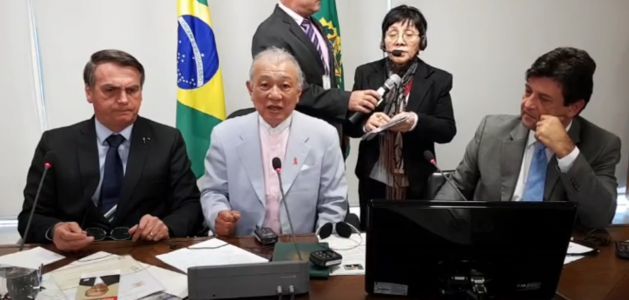
    The president of the Nippon Foundation, Yohei Sasakawa (C) is seen meeting with the president of Brazil, Jair Bolsonaro (L), in an IPS screen capture from the video that the president broadcast on Facebook to raise public awareness about the importance of eliminating Hansen's Disease, better known as leprosy, and eradicating the prejudice faced by patients and their families. Credit: IPS

    The president of the Nippon Foundation, Yohei Sasakawa (C) is seen meeting with the president of Brazil, Jair Bolsonaro (L), in an IPS screen capture from the video that the president broadcast on Facebook to raise public awareness about the importance of eliminating Hansen’s Disease, better known as leprosy, and eradicating the prejudice faced by patients and their families. Credit: IPS

    Since the 1980s more than 16 million people have been cured of Hansen’s Disease. Today, 200,000 patients a year are cured around the world.

    IPS: What role do prejudice, stigma and discrimination play in the fight against this disease?

    YS: That is a good question. After working for many years with the WHO, focusing mainly on curing the disease, I realised that many people who had already been cured could neither find work nor get married; they were still suffering the same conditions they faced when they were sick.

    I concluded that Hanseniasis was like a two-wheeled motorcycle – the front one is the disease that can be cured and the back one is the prejudice, discrimination and stigma that surround it. If you don’t cure both wheels, no healing is possible.

    In 2003, I submitted to the United Nations Commission on Human Rights a proposal to eliminate discrimination against Hanseniasis. After seven years of paperwork and procedures, the 193-member General Assembly unanimously approved a resolution to eradicate this problem that affects the carrier of the disease as well as those who have been cured, and their families.

    But this does not mean that the problem has been solved, because prejudice and discrimination are the disease plaguing society.

    People believe that Hanseniasis is a punishment from God, a curse, a hereditary evil. It’s hard to eradicate this judgment embedded in people’s minds. Even today there are many patients who have recovered and are totally healed, who cannot find a job or get married. In spite of the new laws, their conditions do not improve, because of the prejudice in people’s hearts.

    In Japan, several generations of the family of someone who had the disease were unable to marry. This is no longer the case today.

    That’s why I travel the world and speak out against the discrimination that marginalises those affected by the disease. But these are prejudices that have existed for 2,000 years; they cannot be overcome in two or three years.

    Many share my viewpoint and accompany me in the struggle. One day the discrimination will end. It is more difficult to cure the disease that plagues society than the illness itself.

    My effort is to hold a dialogue with presidents and ministers, people in positions of leadership, so that my message acquires political strength and can lead to a solution.

    IPS: How did Japan manage to eradicate Hansen’s Disease?

    YS: One way was the collective action of people who had the disease. Long-term media campaigns were conducted to spread knowledge about the disease. Movies, books and plays were also produced.

    In Japan, Hanseniasis ceased to be the ‘disease of silence’. The nation apologised for the discrimination and compensated those affected. But in other countries, people affected by the disease have not yet come together to fight. Brazil, however, does have a very active movement.

    IPS: As an example of what can be done, you cite Brazil’s Movement for the Reintegration of People Affected by Hanseniasis, MORHAN. Are there similar initiatives in other countries?

    YS: Morhan really stands out as a model. Organisations have been formed by patients in India and Ethiopia, but they still have limited political influence. The Nippon Foundation encourages such movements.

    IPS: You’ve visited Brazil more than 10 times. Have you seen any progress on this tour of the states of Pará and Maranhão, in the north, and in Brasilia?

    YS: On that trip we couldn’t visit patients’ homes and talk to them, but we did see that the national, regional and local governments are motivated. We will be able to expand our activities here. In any country, if the highest-level leaders, such as presidents and prime ministers, take the initiative, solutions can be accelerated.

    We agreed to organise a national meeting, promoted by the Health Ministry and sponsored by the Nippon Foundation, if possible with the participation of President Jair Bolsonaro, to bolster action against Hanseniasis.

    We believe that this would generate a strong current to reduce the prevalence of Hanseniasis to zero and also to eliminate discrimination and prejudice. If this happens, my visit could be considered very successful.

    IPS: What would you emphasise about the results of your visit?

    YS: The message that President Bolsonaro spread directly to the population through Facebook during our meeting, with his view addressed to all politicians, to his team and and to all government officials on the need to eliminate the disease. I feel as if I have obtained the support of a million people who will work with us.