UN Pact for the Future Requires Global Solidarity and Localized Solutions

Civil Society, Development & Aid, Featured, Global, Headlines, Humanitarian Emergencies, Sustainable Development Goals, TerraViva United Nations
IPS UN: Inside the Glasshouse

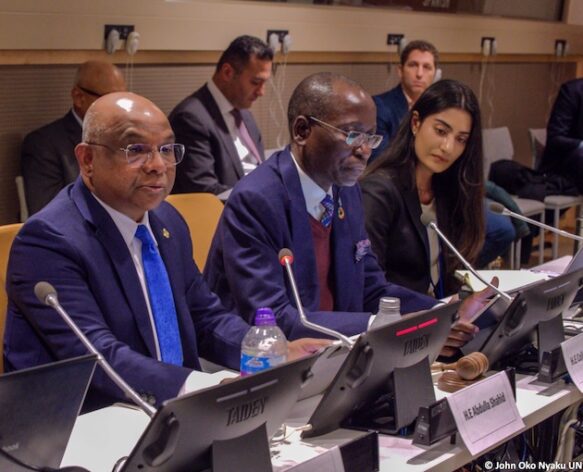
H.E. Abdulla Shahid (left), former President of the UN General Assembly, and Collen Kelapile (center), former UN ambassador to Botswana and former vice-president of the UN Economic and Social Council, speak as panelists at the launch event of ICO's flagship report. Credit: John Okyo Nyaku/UN

H.E. Abdulla Shahid (left), former President of the UN General Assembly, and Collen Kelapile (center), former UN ambassador to Botswana and former vice-president of the UN Economic and Social Council, speak as panelists at the launch event of ICO’s flagship report. Credit: John Okyo Nyaku/UN

UNITED NATIONS, Dec 9 2025 (IPS) – More than one year since its adoption, the UN Pact for the Future is held up as a critical framework for countries to address today’s issues through global cooperation. Its agenda for global governance and sustainable development is ambitious, and it is for this reason the Pact poses implementation challenges when it comes to the direct impact on local communities. It will require the joint efforts of governments, civil society and international organizations to achieve the goals laid out in the Pact.


The efforts of the International Communities Organisation (ICO), a UK-based international NGO, demonstrate what implementing the Pact would look like. Since 2016, ICO has worked to empower minority communities in conflict-affected areas through education and capacity-building opportunities. ICO focuses on directly supporting efforts to build up underrepresented groups’ involvement in community initiatives and diplomatic dialogue and address systemic, societal inequalities.

On December 3, ICO launched its flagship report, For Our Future: Best Practice for the Implementation of the UN Pact for the Future, at the UN Headquarters in New York, presenting a practical framework to support UN member states in advancing the objectives outlined in the Pact for the Future. Several Permanent Missions to the UN, including Bahrain, Guyana, Hungary, Kuwait, Samoa, Singapore, Tajikistan, Tonga, and Uganda, co-sponsored the event.

The UN Pact for the Future represents a shared set of global commitments to sustainable development, peace and security, and redefining global governance for member states. While its adoption marks a decisive moment of global consensus, there remains the challenge of translating the Pact’s guiding principles into meaningful action at the national and regional levels.  Through its ‘Best Practices’ blueprint, the ICO report distills their findings into an adaptable methodology designed to equip policymakers with the tools they need to implement the Pact’s goals effectively.

James Holmes, ICO founder and Secretary General, said, “The Pact reminds us that the strength of nations is measured not only by the power of their armies or the size of their economies, but also by the inclusiveness of their societies and the recognition of all who live within.” “How we treat minority peoples, those who are few in number, vulnerable, or historically marginal, is the true test of our progress and the true test of whether the fact for the future is being successful.”

H.E. Abdulla Shahid, ICO International Ambassador and former President of the 76th United Nations General Assembly, said it was crucial for the world to unite.

“The UN Pact for the Future calls for renewed unity in tackling humanity’s greatest challenges. This report demonstrates that lasting peace is built not only at negotiation tables but also through empowering communities themselves, ensuring that no group is left behind.”

“As UN Secretary-General António Guterres noted at the opening of the ‘Summit of the Future’ in September 2024, ‘21st-century challenges require 21st-century solutions: frameworks that are networked and inclusive and that draw on the expertise of all humanity.’

He added that the ICO’s report embodies this principle, showing how global aspirations can intersect with local action.

Prominent UN diplomats and civil society members were present at the launch event, demonstrating and remarking on their commitment to the Pact for the Future, and specifically to ICO’s work on the ground. Current and former high-ranking UN officials were also in attendance.

“One year after the adoption of the Pact, this discussion is timely,” said Themba Kalua, the UN Director, Pact for the Future Implementation Kalua remarked during the event. “While the world has grown more complex since the adoption of the Pact for the Future, the Pact continues to be central in realizing multilateralism, navigating the current geopolitical complexities and shaping our collective action on the global agenda.”

Kalua noted the efforts made by the UN system towards the Pact, including global panels on the governance of artificial intelligence (AI) and the political declarations that emerged from UN conferences on social development in Qatar and financing for development in Spain. He expressed that the Pact was a “strategic priority” for the UN and its Secretary-General, António Guterres.

“From our side in the UN system and the Secretariat, we are committed to doing our part in supporting the implementation of the Pact,” Kalua told IPS.

Presenting the report, ICO’s UN Programme Manager Mia Sawjani broke down its findings and recommendations. She emphasized that countries would need to empower and promote the agency of local actors. This includes building up their capacity and skills to enact positive change in their communities. Countries must recognize adaptability in assessing situations on the ground, particularly in conflict settings that transform institutions and structures.

“The implementation of the Pact can be tangibly realized for all, but particularly to serve marginalized communities. It’s a transformative opportunity and it is our collective responsibility to follow through,” said Sawjani.

After the event, Holmes was heartened by the outpouring of support for ICO’s work, noting that many more countries had agreed to partner with them for future projects. By maintaining their focus on working with minority communities, ICO can “play a major global role” in implementing the Pact for Future.

“I have a big vision, and I have a lot of ambition for ICO,” Holmes told IPS. “We already have a global team, and I see that growing, and I see us having a bigger and bigger role in helping to implement the Pact.”
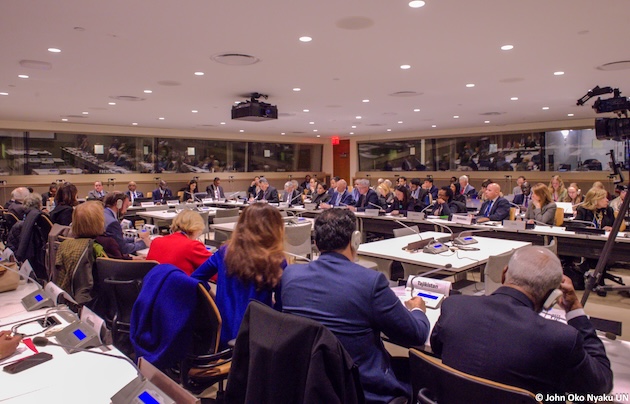
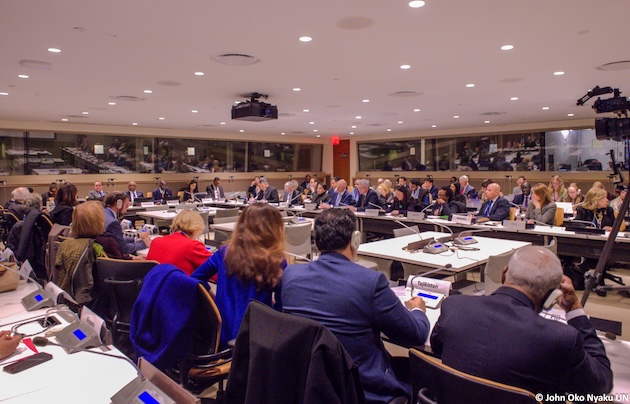
The launch event of ICO's flagship report on the UN Pact for the Future at UNHQ in New York. The event was attended by high-ranking UN diplomats. Credit: John Okyo Nyaku/UN

The launch event of ICO’s flagship report on the UN Pact for the Future at UNHQ in New York. The event was attended by high-ranking UN diplomats. Credit: John Okyo Nyaku/UN

Local actors and stakeholders, namely governments, academia, the private sector and civil society, would play a key role in implementing the Pact’s agenda. Organizations like ICO could serve as a bridge to translate the issues to the national context.

“The more we are able to bridge communities, the more successful it will be for states to deal with Track I diplomacy,” Shahid said to IPS, referencing the formal channel of diplomacy between governments on international issues.

Implementing the Pact for the Future must also mean recognizing the specific needs and challenges that these countries face. Island states like Samoa and Tonga, for example, are uniquely impacted by climate change, energy, and the global financial structures that need to better serve developing countries.

“For us in the Pacific, progress is measured not by rhetoric, but by real improvements that are felt in our villages, outer islands and vulnerable communities,” said Viliami Va’inga Tōnē, the Permanent Representative of Tonga.

Accountability and transparency will also be crucial to ensure countries follow through on the promises of the Pact. This must be present at all levels. Participants at the event emphasized the need for monitoring mechanisms that would measure progress.

The timing of the report coincides with the ongoing reform negotiations under the UN80 Initiative introduced this year. Discussions around the Pact went hand in hand with recognizing the critical step toward reforming the UN system that will optimize its ability to live up to its founding principles and the Pact’s promises.

If the Pact represents ‘what’ the UN and member states need to achieve in the global agenda, then UN80 represents ‘how’ the UN can implement the agenda.

“The UN80 initiative is really part of the UN response to how it can deliver on the ground,” said Fatumanava-o-Upolu III Dr. Pa’olelei Luteru, the Permanent Representative of Samoa. He said to IPS, “When you look at all the individual actions that need to be taken, these are at the global level, the UN [level], regional level, and national level. They’re all important, because we can’t continue to work in silence. Everything is interconnected now. So we need to make those connections and work together, and you don’t want duplication.”

While New York hosts reform discussions around the UN and its mandates, the organization’s impact will ultimately be felt by local communities across the world.

Dr. Agnes Mary Chimbiri-Molande, Permanent Representative of Malawi, told IPS that the people who serve in multilateral systems like the UN need to “renew or even rebuild trust” with local communities. At a time when people are questioning the UN’s relevance, she said, these discussions must be held and all perspectives need to be respected.

“We need to hear the voices of the local people. Because here we are working for them. We are not working for ourselves,” Chimbiri-Molande said. “So in fact, to be hearing the voices of those peoples, it’s very, very important to inform our work here, whether we are making an impact or we are making differences in the lives of the people in the community.”

Shahid reiterated that the decisions made in the halls of UN Headquarters will affect local communities, adding that the UN’s success is also contingent on its partnerships with civil society and how important it is for civil society to recognize the UN’s relevance.

During his time as President of the General Assembly from 2021-2022, the world was in the midst of the COVID-19 pandemic. His ‘presidency of hope’ championed the progress made by the international system despite the challenges brought on by the pandemic. He also made efforts to promote inclusivity by opening the General Assembly to more participants, including civil society groups.

Shahid invited young diplomats from underrepresented member states to the President’s office to witness international diplomacy firsthand.

Even after his presidency ended, he told IPS, he wanted to continue to deliver on the ideals that defined his tenure.

“I thought that there’s no need to end the presidency of hope after one year. Let us keep delivering the message of hope through other platforms. And ICO provides me the platform, because it is a platform through which I can actually reach out to communities at [the] household level and inspire them not to give up. Keep working, keep aiming to change the status.”

IPS UN Bureau Report
  Source

UN Pact for the Future Requires Global Solidarity and Localized Solutions

Civil Society, Development & Aid, Featured, Global, Headlines, Humanitarian Emergencies, Sustainable Development Goals, TerraViva United Nations

IPS UN: Inside the Glasshouse

H.E. Abdulla Shahid (left), former President of the UN General Assembly, and Collen Kelapile (center), former UN ambassador to Botswana and former vice-president of the UN Economic and Social Council, speak as panelists at the launch event of ICO's flagship report. Credit: John Okyo Nyaku/UN

H.E. Abdulla Shahid (left), former President of the UN General Assembly, and Collen Kelapile (center), former UN ambassador to Botswana and former vice-president of the UN Economic and Social Council, speak as panelists at the launch event of ICO’s flagship report. Credit: John Okyo Nyaku/UN

UNITED NATIONS, Dec 9 2025 (IPS) – More than one year since its adoption, the UN Pact for the Future is held up as a critical framework for countries to address today’s issues through global cooperation. Its agenda for global governance and sustainable development is ambitious, and it is for this reason the Pact poses implementation challenges when it comes to the direct impact on local communities. It will require the joint efforts of governments, civil society and international organizations to achieve the goals laid out in the Pact.


The efforts of the International Communities Organisation (ICO), a UK-based international NGO, demonstrate what implementing the Pact would look like. Since 2016, ICO has worked to empower minority communities in conflict-affected areas through education and capacity-building opportunities. ICO focuses on directly supporting efforts to build up underrepresented groups’ involvement in community initiatives and diplomatic dialogue and address systemic, societal inequalities.

On December 3, ICO launched its flagship report, For Our Future: Best Practice for the Implementation of the UN Pact for the Future, at the UN Headquarters in New York, presenting a practical framework to support UN member states in advancing the objectives outlined in the Pact for the Future. Several Permanent Missions to the UN, including Bahrain, Guyana, Hungary, Kuwait, Samoa, Singapore, Tajikistan, Tonga, and Uganda, co-sponsored the event.

The UN Pact for the Future represents a shared set of global commitments to sustainable development, peace and security, and redefining global governance for member states. While its adoption marks a decisive moment of global consensus, there remains the challenge of translating the Pact’s guiding principles into meaningful action at the national and regional levels.  Through its ‘Best Practices’ blueprint, the ICO report distills their findings into an adaptable methodology designed to equip policymakers with the tools they need to implement the Pact’s goals effectively.

James Holmes, ICO founder and Secretary General, said, “The Pact reminds us that the strength of nations is measured not only by the power of their armies or the size of their economies, but also by the inclusiveness of their societies and the recognition of all who live within.” “How we treat minority peoples, those who are few in number, vulnerable, or historically marginal, is the true test of our progress and the true test of whether the fact for the future is being successful.”

H.E. Abdulla Shahid, ICO International Ambassador and former President of the 76th United Nations General Assembly, said it was crucial for the world to unite.

“The UN Pact for the Future calls for renewed unity in tackling humanity’s greatest challenges. This report demonstrates that lasting peace is built not only at negotiation tables but also through empowering communities themselves, ensuring that no group is left behind.”

“As UN Secretary-General António Guterres noted at the opening of the ‘Summit of the Future’ in September 2024, ‘21st-century challenges require 21st-century solutions: frameworks that are networked and inclusive and that draw on the expertise of all humanity.’

He added that the ICO’s report embodies this principle, showing how global aspirations can intersect with local action.

Prominent UN diplomats and civil society members were present at the launch event, demonstrating and remarking on their commitment to the Pact for the Future, and specifically to ICO’s work on the ground. Current and former high-ranking UN officials were also in attendance.

“One year after the adoption of the Pact, this discussion is timely,” said Themba Kalua, the UN Director, Pact for the Future Implementation Kalua remarked during the event. “While the world has grown more complex since the adoption of the Pact for the Future, the Pact continues to be central in realizing multilateralism, navigating the current geopolitical complexities and shaping our collective action on the global agenda.”

Kalua noted the efforts made by the UN system towards the Pact, including global panels on the governance of artificial intelligence (AI) and the political declarations that emerged from UN conferences on social development in Qatar and financing for development in Spain. He expressed that the Pact was a “strategic priority” for the UN and its Secretary-General, António Guterres.

“From our side in the UN system and the Secretariat, we are committed to doing our part in supporting the implementation of the Pact,” Kalua told IPS.

Presenting the report, ICO’s UN Programme Manager Mia Sawjani broke down its findings and recommendations. She emphasized that countries would need to empower and promote the agency of local actors. This includes building up their capacity and skills to enact positive change in their communities. Countries must recognize adaptability in assessing situations on the ground, particularly in conflict settings that transform institutions and structures.

“The implementation of the Pact can be tangibly realized for all, but particularly to serve marginalized communities. It’s a transformative opportunity and it is our collective responsibility to follow through,” said Sawjani.

After the event, Holmes was heartened by the outpouring of support for ICO’s work, noting that many more countries had agreed to partner with them for future projects. By maintaining their focus on working with minority communities, ICO can “play a major global role” in implementing the Pact for Future.

“I have a big vision, and I have a lot of ambition for ICO,” Holmes told IPS. “We already have a global team, and I see that growing, and I see us having a bigger and bigger role in helping to implement the Pact.”

The launch event of ICO's flagship report on the UN Pact for the Future at UNHQ in New York. The event was attended by high-ranking UN diplomats. Credit: John Okyo Nyaku/UN

The launch event of ICO’s flagship report on the UN Pact for the Future at UNHQ in New York. The event was attended by high-ranking UN diplomats. Credit: John Okyo Nyaku/UN

Local actors and stakeholders, namely governments, academia, the private sector and civil society, would play a key role in implementing the Pact’s agenda. Organizations like ICO could serve as a bridge to translate the issues to the national context.

“The more we are able to bridge communities, the more successful it will be for states to deal with Track I diplomacy,” Shahid said to IPS, referencing the formal channel of diplomacy between governments on international issues.

Implementing the Pact for the Future must also mean recognizing the specific needs and challenges that these countries face. Island states like Samoa and Tonga, for example, are uniquely impacted by climate change, energy, and the global financial structures that need to better serve developing countries.

“For us in the Pacific, progress is measured not by rhetoric, but by real improvements that are felt in our villages, outer islands and vulnerable communities,” said Viliami Va’inga Tōnē, the Permanent Representative of Tonga.

Accountability and transparency will also be crucial to ensure countries follow through on the promises of the Pact. This must be present at all levels. Participants at the event emphasized the need for monitoring mechanisms that would measure progress.

The timing of the report coincides with the ongoing reform negotiations under the UN80 Initiative introduced this year. Discussions around the Pact went hand in hand with recognizing the critical step toward reforming the UN system that will optimize its ability to live up to its founding principles and the Pact’s promises.

If the Pact represents ‘what’ the UN and member states need to achieve in the global agenda, then UN80 represents ‘how’ the UN can implement the agenda.

“The UN80 initiative is really part of the UN response to how it can deliver on the ground,” said Fatumanava-o-Upolu III Dr. Pa’olelei Luteru, the Permanent Representative of Samoa. He said to IPS, “When you look at all the individual actions that need to be taken, these are at the global level, the UN [level], regional level, and national level. They’re all important, because we can’t continue to work in silence. Everything is interconnected now. So we need to make those connections and work together, and you don’t want duplication.”

While New York hosts reform discussions around the UN and its mandates, the organization’s impact will ultimately be felt by local communities across the world.

Dr. Agnes Mary Chimbiri-Molande, Permanent Representative of Malawi, told IPS that the people who serve in multilateral systems like the UN need to “renew or even rebuild trust” with local communities. At a time when people are questioning the UN’s relevance, she said, these discussions must be held and all perspectives need to be respected.

“We need to hear the voices of the local people. Because here we are working for them. We are not working for ourselves,” Chimbiri-Molande said. “So in fact, to be hearing the voices of those peoples, it’s very, very important to inform our work here, whether we are making an impact or we are making differences in the lives of the people in the community.”

Shahid reiterated that the decisions made in the halls of UN Headquarters will affect local communities, adding that the UN’s success is also contingent on its partnerships with civil society and how important it is for civil society to recognize the UN’s relevance.

During his time as President of the General Assembly from 2021-2022, the world was in the midst of the COVID-19 pandemic. His ‘presidency of hope’ championed the progress made by the international system despite the challenges brought on by the pandemic. He also made efforts to promote inclusivity by opening the General Assembly to more participants, including civil society groups.

Shahid invited young diplomats from underrepresented member states to the President’s office to witness international diplomacy firsthand.

Even after his presidency ended, he told IPS, he wanted to continue to deliver on the ideals that defined his tenure.

“I thought that there’s no need to end the presidency of hope after one year. Let us keep delivering the message of hope through other platforms. And ICO provides me the platform, because it is a platform through which I can actually reach out to communities at [the] household level and inspire them not to give up. Keep working, keep aiming to change the status.”

IPS UN Bureau Report

  Source

Hungary’s LGBTQI Amendment an Affront to Human Rights, Say Activists

Active Citizens, Civil Society, Editors’ Choice, Europe, Featured, Freedom of Expression, Gender, Headlines, Human Rights, Inequality, LGBTQ, Sustainable Development Goals, TerraViva United Nations

LGBTQ

An amendment to Hungary’s constitution includes the banning and criminalisation of Pride marches and their organisers, with penalties including large fines and, in certain cases, imprisonment. Credit: Sara Rampazzo/Unsplash

An amendment to Hungary’s constitution includes the banning and criminalisation of Pride marches and their organisers. Credit: Sara Rampazzo/Unsplash

BRATISLAVA, May 13 2025 (IPS) – A controversial amendment to Hungary’s constitution has left the country’s LGBTQI community both defiant and fearful, rights groups have said.


The amendment, passed by parliament on April 14, includes, among others, the banning and criminalisation of Pride marches and their organisers, with penalties including large fines and, in certain cases, imprisonment.

It also allows for the use of real-time facial recognition technologies for the identification of protestors.

It has been condemned by domestic and international rights groups and members of the European Parliament (MEPs) as an assault on not just the LGBTQI community but wider human rights.

And there are now fears it will lead to a rise in violence against LGBTQI people whose rights have been gradually eroded in recent years under populist prime minister Viktor Orban’s authoritarian regime.

“There is serious concern that this legislative package could lead to an increase in threats, harassment, and violence against LGBTI communities in Hungary. When authorities criminalise Pride organisers and create a chilling effect on peaceful assembly, it not only emboldens hostile rhetoric but also signals impunity for those who wish to intimidate or harm LGBTI people,” Katja Štefanec Gärtner, Communications and Media Officer, ILGA-Europe, told IPS.

“The risks are not theoretical. Pride marches have long been a target for extremist groups, and this legal crackdown sends a dangerous message: that state institutions may no longer protect those marching but instead criminalise them. This creates an unsafe and unpredictable environment for all those standing up for human rights and democratic freedoms,” she added.

The amendment codifies legislation already passed in March banning LGBTQI events. It was met with widespread outrage in the LGBTQI community in Hungary. But there was also defiance, with Pride organisers insisting the event would go ahead.

Budapest’s mayor, Gergely Karácsony, also backed the organisers, pledging last month to help them find a way to hold the event despite the new legislation.

But while LGBTQI activists have said they will not give in to the new law, groups working with the community say some LGBTQI people have been shaken by the legislation.

“Depending on who you speak to, the mood now among the LGBTQI community is one of fear and worry or defiance,” Luca Dudits, press spokesperson for the Hatter Society, one of Hungary’s largest LGBTQI NGOs, told IPS.

“We will see how the new provisions [in the amendment] will affect the lives of LGBTQI people in the upcoming months, especially in June, which is Pride month, with the march taking place on the 28th,” she added, noting that after legislation was passed in 2021 banning the depiction and promotion of “diverse gender identities and sexual orientations” to under 18s, there had been  “a wave of violence and discrimination against LGBTQI people”.

“I’m hoping this will not be the case this time. A lot of people have expressed their solidarity and said that they will attend the Pride March for the first time because of this shameful constitutional amendment,” Dudits said.

Outside Hungary, organisations and politicians have also raised the alarm over the legislation.

In a letter sent to the European Commission (EC) on April 16, dozens of LGBTQI and human rights organisations demanded the EC take immediate action to ensure the event can go ahead and that people can safely attend.

They said the ban on LGBTQI events was an attack on EU fundamental rights of freedom of peaceful assembly and freedom of expression and that its provisions marked a significant infringement on privacy and personal freedoms protected under EU law.

Meanwhile, MEPs among a delegation which visited Hungary from April 14-16 attacked the ban and said they were calling on the EC to request the European Court of Justice to suspend the law pending further legal action.

One of the MEPs, Krzysztof Smiszek, of the Polish New Left, said the new law had led to a rise in violent attacks and hate crimes against the LGBTQI community in Hungary.

The government has defended the amendment, with Orban saying after the vote in parliament that it was designed to “protect children’s development, affirming that a person is born either male or female, and standing firm against drugs and foreign interference”.

The amendment also declares that children’s rights take precedence over any other fundamental right (except the right to life) and codifies in the Constitution the recognition of only two sexes – male and female – essentially denying transgender and intersex identities.

It also allows for the suspension of Hungarian citizenship for some dual nationals if they are deemed to pose a threat to Hungary’s security or sovereignty.

Many observers see the ban and the other measures included in the amendment as part of a wider attempt by Orban’s regime to suppress dissent and weaken rights protections as it looks to consolidate its grip on power by scapegoating parts of the population, including not just LGBTQI people but migrants and civil society groups, to appeal to conservative voters.

“Authoritarian governments around the world have discovered a playbook for keeping in power – it involves vilifying certain communities. That’s the logic behind attacks on LGBTQI communities and that’s what’s behind this. I don’t think Orban cares one way or the other about LGBT people; it’s just that they are an easy target,” Neela Ghoshal, Senior Director of Law, Policy, and Research at LGBTQI group Outright International, told IPS.

“Once you prohibit one form of protest or dissent, it becomes easier to prohibit all forms of dissent. I really do think Orban wants to prohibit all forms of dissent. He is seeking absolute power; he is not interested in the traditional architecture of democracy, i.e., checks and balances and accountability,” she added.

Dudits also pointed out the absurdity of the reasoning behind the government’s defence of the amendment.

“It is true that a large majority of society are either male or female. However, there are some people who have sex characteristics (chromosomes, hormones, external and internal sex organs, and body structure) that are common to both sexes. Intersex conditions occur in many different forms and cover a wide range of health conditions. The amendment is therefore even scientifically unsound, contradicting the very biological reality that it claims to be defending so belligerently,” she said.

If picking up voter support is behind the regime’s attacks on its perceived critics, it is unclear to what extent this policy is working.

Parliamentary elections are due to be held in Hungary in April next year and current polls put Orban’s Fidesz party – which has been in power since 2010 – behind the main opposition party, Tisza, amid voter concerns about a struggling economy, a crumbling healthcare system, and alleged government corruption.

Meanwhile, although some MEPs have publicly condemned the amendment, since the parliamentary vote the EC has said only that it needs to analyse the legislative changes to see if they fall foul of EU law but would not hesitate to act if necessary.

Rights groups say EU bodies must take action or risk allowing even greater curbs on freedoms in Hungary under Orban.

“From scapegoating LGBT people to suspending Hungarian citizenship of dual citizens, the Hungarian government is cementing a legal framework that is hostile to the rule of law, equality, and democracy in blatant violation of EU law,” Hugh Williamson, Europe and Central Asia director at Human Rights Watch, said in a press release.

“Orban has shown once more his willingness to trample rights and shred protections, and there is no reason to think he won’t continue on this authoritarian path. EU institutions and member states should stand in solidarity with those in Hungary upholding EU values and do everything they can to halt the downward spiral toward authoritarianism,” he added.

Ghoshal said, though, that whatever happens, the LGBTQI community in Hungary would not give up their rights.

“The community has been through cycles of oppression and freedom. The younger members might not be able to remember it, but older members of the community will know what it is like to live under an authoritarian regime; it is in the country’s history. They have also had a taste of freedom too and they will not want to give that up.

“I think there will be a Pride march and I think there could be state violence and arrests there, but the community will remain defiant no matter what,” she said.

IPS UN Bureau Report

  Source



