Vibrant Civil Society Essential for Sustainable Development in Iran

Civil Society, Development & Aid, Featured, Gender, Headlines, Human Rights, Middle East & North Africa, Peace, TerraViva United Nations

Opinion

Sohrab Razzaghi is Executive Director of Volunteer Activists Institute a non-profit, non-governmental, non-political and independent institute, whose primary aim is capacity building among activists and civil society organizations for democracy, human rights and peace building within Iranian society and communities in the MENA region.

 
Masana Ndinga-Kanga is MENA Advocacy Lead at CIVICUS, an alliance of 7000 civil society partners around the world.
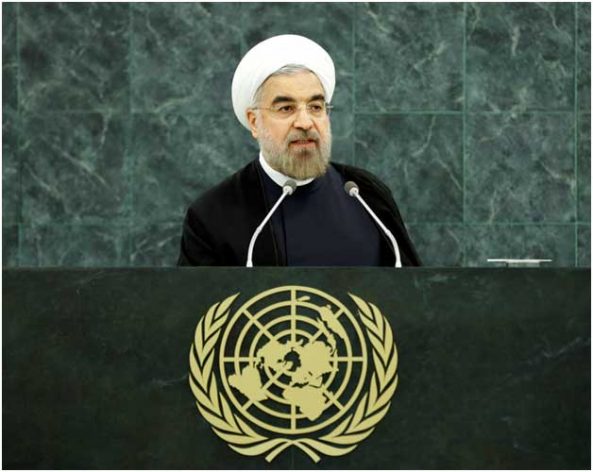
President Hassan Rouhani of Iran

JOHANNESBURG / AMSTERDAM, Oct 15 2019 (IPS) – 2019 has not been a good year for Iranian human rights activists. At a time where civic space had completely closed, many watched in disbelief as the regime mounted even more restrictions on civil society. Over recent months, many activists have been arrested, like Noushin Javari (a photographer), Marzieh Amiri (a journalist), and Javad Lal Mohammadi (teacher).


As the UN Third Committee prepares to meet in October 2019, it will be worth following whether the General Assembly will take proactive steps to respond to the crisis in Iran or continue to avert its eyes in the face of complicated global politics that have emboldened President Rouhani in his regressive anti-western crackdown on civil society.

During the UN General Assembly on 25 September 2019, Iranian President Rouhani’s called for the creation of a ‘coalition of hope’ in the Gulf region, that would focus on “peace, stability, progress and welfare” and working to “invest on hope towards a better future rather than in war and violence [sic],” with the aim of restoring justice and peace.

However, the civic space track record of Iran and many of its Gulf neighbours demonstrates that oftentimes the state is the perpetrator of violence and restrictions in-country, curtailing the very justice and peace it aims to implement.

It then begs the question, how can a regional coalition of hope be developed, when the state so frequently responds to human rights defenders with violence – excluding the language of human rights from even sustainable development goals.

Many civil society actors have been detained – deemed enemies of the state and foreign agents. As Iranian communities reel under the pressure of yet another bout of sanctions, it is worth begging the question ‘does the closure of civic space serve the interests of sustainable development in Iran?’

Contrary to what policymakers responsible for civic space closure might think, these restrictions ultimately hurt sustainable development. Human rights activists around the world, including in Iran, are oftentimes the critical purveyors of equitable ‘sustainability’ in the development process, campaigning for environmental justice, worker’s rights and the respect for the dignity and humanity of all.

In 2018, the Ayatollah Khamenei’s official website published a draft 50-year vision for “progress.” The document, entitled the Islamic-Iranian Pattern for Progress (IIPP), sets out a set of objectives to be met by 2065, covering a vast range of issues, among them the economy, justice and poverty – still to be approved by parliament.

The plan focuses on addressing poverty, the economy and the justice system. It seeks further alignment of religion and the sociopolitical system in the country, but also includes provisions for “prompting independence, accountability and specialization in the judiciary” and “enhancing women’s position and providing equal opportunities for them, with emphasis on their role as mothers.”

Critics of the regime would not be wrong to look at these policy objectives with concern, especially as the regime has a narrowed position on the role of women in society and has repeatedly failed to guarantee independence of the judiciary – where human rights defenders and political dissenters are subject to numerous violations of the International Convention on Civil and Political Rights (to which Iran is party).

According to a recent comparative report on Sustainable Development, Iran is in 82nd place among 156 countries. This lower-than-average score, however, is not surprising. Iran has not committed to the indexes of sustainable development, meaning people in Iran are not participating in a systematic and organized manner in the process of development. Instead, policymaking and development is a top-down process steered by the government.

In fact, most involvement of Iranians in this process is decorative. As a solution, Iranians have been organizing themselves in civil society to combine their voices and make sure they are heard. This, however, is counteracted by repression from the state, resulting in the country being rated as closed on the Civicus Monitor.

Countless activists who have been advocating for the true meaning of sustainable development have paid the price. Civil society activists, especially environmental activists, labor union and teacher union activists, as well as human rights defenders have been wrongfully persecuted.

Eight environmental activists are sitting in prison on charges of espionage, four of whom are additionally charged with “sowing corruption on earth”. If convicted, they will face death penalty. Another environmental expert, Dr. Kavous Seyed Emami, died in detention, and the circumstances of his death are unclear.

According to the Iranian Constitution, citizens are permitted to set up associations and assemblies; yet this clause is not implemented. Few, if any, groups have permission to freely form associations, including socio-political groups or ethnic/religious minorities. Last month for example, Omid Mehr foundation was closed by government authorities. When asked about the reason for closure, authorities said that Omid Mehr foundation was advocating Western values, which does not fit in Iran.

The false claim that campaigning for human rights is equal to advocating Western values is an adage used by repressive regimes to silence dissent and put forward a development agenda that excludes minorities and others on the margins. But development is not sustainable if they are excluded.

For example, the regime frequently equates the campaigns of women to determine their dress codes as acts against the state, threats to national security or prostitution. Despite the peaceful protest (handing out flowers in commemoration of International Women’s Day) against the hijab by Yasaman Aryani and Monireh Arabshahi, they were sentenced to 16 years imprisonment after being subject to enforced disappearance. Such lengthy sentences and gross human rights violations do not equate sustainability nor development.

The government not only fails to safeguard the freedom of associations and civil society organizations, but actively creates non-independent organizations (or Governmental NGOs, GONGOs) to put forward an inaccurate picture of civic engagement by the state.

Only CSOs that support the agenda of the state are accepted by the government, strengthening the top-down, government-centered way of working. The Organization for Defending Victims of Violence (ODVV), one of many GONGOs, attends international meetings, including UNHRC meetings.

Actively curating a counter-narrative of progress through GONGOs shows the vulnerability of the state to international pressure in an interconnected global political economy. The state recognizes its reliance on international partnerships for the advancement of its economic objectives.

But instead it fails to align its internal policy processes to international human rights conventions – channeling resources that could be spent on authentic engagement with civil society in country to its image. As a result, tensions in Iran are mounting at the dire state of socioeconomic affairs.

For instance, in January 2018, mass protests against poverty and economic difficulties erupted in the country. Rather than engage with citizens, the state responded through 4,967 arrests and any assembly was strictly and heavily repressed.

Among those arrested were activists, women, workers, students and teachers. Many of the arrestees have been sentenced to long imprisonment terms. Many more are critical to the realization of sustainable development in Iran.

Rather than supporting socioeconomic development, the state-imposed limitations on freedom of assembly and association in Iran, have weakened and decapacitated citizen engagement, and prevented their participation in the process of achieving sustainable development. It is short-term thinking that creates enemies of civil society and sustainable development.

In fact, a dynamic, vibrant, democratic and development-oriented association landscape is an important requirement for sustainable development. By releasing activists and opening the civic space, Iran can truly begin the process of social change for the upliftment of all.

  Source

Watchdog Pushes U.S. to Publish ‘Duty to Warn’ Khashoggi Files

Civil Society, Editors’ Choice, Featured, Global Governance, Headlines, Human Rights, IPS UN: Inside the Glasshouse, Middle East & North Africa, Press Freedom, Regional Categories, TerraViva United Nations

Press Freedom

The Committee to Protect Journalists (CPJ) seeks disclosure of files under the U.S. intelligence community’s “duty to warn” obligations, which demand officials alert folks in imminent danger. The CPJ wants to know if they knew about an assassination plot against Jamal Khashoggi. Photo by Sam McGhee on Unsplash

UNITED NATIONS, Sep 30 2019 (IPS) A media watchdog has asked United States intelligence agencies to reveal whether they knew about an assassination plot against Jamal Khashoggi and failed to warn the Saudi journalist he was in mortal danger.

A legal brief, filed in a Washington DC district court by the Committee to Protect Journalists (CPJ), comes almost exactly one year after a Saudi hit squad butchered the renegade writer inside the Saudi consulate in Istanbul on Oct. 2.

CPJ’s advocacy manager Michael DeDora told IPS that his lawsuit against the U.S. government “asks a simple question: did the intelligence community know of yet fail to warn Jamal Khashoggi of threats to his life?”

Khashoggi, a U.S.-based Washington Post columnist, who was once a royal Saudi insider and had grown critical of the regime, was reportedly lured to the Saudi consulate in Istanbul in an elaborate and brutal plot to silence him.

Khashoggi was allegedly killed, dismembered and removed from the building; his remains were never found. The CIA reportedly assessed that crown prince Mohammad bin Salman, known as MBS, had ordered the operation.

The CPJ seeks disclosure of files under the U.S. intelligence community’s “duty to warn” obligations, which demand officials alert folks in imminent danger. The brief, filed Thursday, follows the Trump administration’s rejection of a previous CPJ disclosure request.

“Nearly one year after Khashoggi’s murder, disclosure of these documents would provide transparency and help efforts to secure accountability,” DeDora told IPS in an email.

“But this lawsuit has broader implications: journalists around the world should have the security of knowing that the U.S. will not ignore threats to their lives.” 

Khashoggi’s assassination sparked global outrage, blighted MBS’ global standing and undercut his ambitions to improve the kingdom’s poor human rights record and diversify its economy away from hydrocarbons. 

Saudi officials, who initially said Khashoggi had left the consulate unharmed, now say he was killed in a rogue operation that did not involve the prince. A domestic Saudi trial of 11 suspects is widely viewed as a sham.

Speaking with IPS among a small group of journalists in New York this month, Hatice Cengiz, Khashoggi’s former fiancée, explained how she was saddened by the lack of global pressure on Riyadh to come clean about the affair.

MBS has not visited Europe or the U.S. since the murder. While the prince was briefly shunned by foreign leaders, Riyadh’s long-standing diplomatic support from the U.S., Britain and others has largely resumed.

“This silence and inertia created huge disappointment on my side,” said Cengiz. 

“Countries could have demonstrated a more honourable attitude instead of remaining silent, particularly the United Nations, the European Union and the five members of the U.N. Security Council.”

Cengiz was joined at an event on the sidelines of the U.N. General Assembly by Agnes Callamard, the U.N. rapporteur on extrajudicial, summary or arbitrary executions who investigated the killing and concluded it was a “deliberate, premeditated execution,” and called for MBS and other officials to be probed.

Callamard, a French academic, said she knew that achieving justice for Khashoggi’s murder would be an uphill struggle, given Riyadh’s deep pockets, clout in the world energy markets and powerful friends in Washington, London and elsewhere.

“This single year [since Khashoggi’s death] is just the first phase in our journey for accountability and justice. And that means that it will demand and deserve patience, resilience, and time,” said Callamard.

“Early on, I could see that justice for Jamal Khashoggi would have to be found beyond the usual path and beyond our usual understanding of accountability.”

Callamard urged the CIA to publish its files, while also calling for an FBI investigation and a public inquest in Turkey. Meanwhile, a draft U.S. law on human rights and accountability, if enacted, would unmask and sanction the culprits and send “ripple effects” towards accountability around the world.

  Source

NYC Library Ditches Controversial Saudi Royal MBS’ Event

Active Citizens, Armed Conflicts, Civil Society, Crime & Justice, Editors’ Choice, Featured, Global Governance, Headlines, Human Rights, IPS UN: Inside the Glasshouse, Middle East & North Africa, North America, Peace, Press Freedom, Regional Categories, TerraViva United Nations

Human Rights

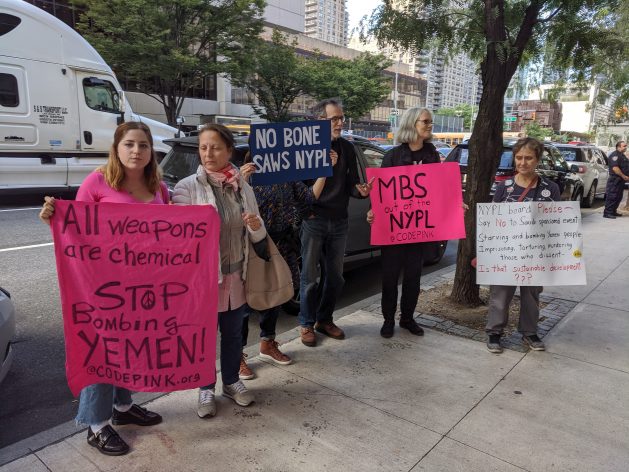
Protestors rallied outside a library building in Manhattan on Wednesday, carrying placards about Saudi Arabia’s war in Yemen and referencing the “bone saw” that was reportedly used to dismember Jamal Khashoggi, a prominent critic of Saudi prince Mohammad bin Salman. Credit: James Reinl/IPS

UNITED NATIONS, Sep 19 2019 (IPS) A New York library appeared to bow to pressure this week when it canceled an event that was being co-hosted by Saudi Arabia’s crown prince Mohammad bin Salman, who is accused of a range of human rights abuses.


On Wednesday, the New York Public Library (NYPL) said it was scrapping the so-called Misk-OSGEY Youth Forum, a workshop on Sept. 23 that was being co-hosted by bin Salman’s Misk Foundation and U.N. youth envoy Jayathma Wickramanayake. 

The event had been blasted by Human Rights Watch (HRW) and other campaign groups, who said it served to whitewash bin Salman’s reputation after the killing of Saudi journalist Jamal Khashoggi in October last year — reportedly on the crown prince’s orders. 

Evan Chesler, chairman of the NYPL board, said that dropping the workshop was the “appropriate thing to do” after weeks of protests and an online petition that had garnered more than 7,000 signatures.

In a statement, the library said it had cancelled the “space rental” amid “concerns about possible disruption to library operations as well as the safety of our patrons” amid “public concern around the event and one of its sponsors”. 

It remains unclear whether the Misk Foundation will seek an alternative venue for the workshop at short notice. A U.N. spokesman told IPS it was “up to Misk to provide information on whether the event will take place elsewhere or not”.

Saudi Arabia’s mission to the U.N. and the Misk Foundation declined to comment on the controversy.

Protestors rallied outside a library building in Manhattan on Wednesday, carrying placards about Saudi Arabia’s war in Yemen and referencing the “bone saw” that was reportedly used to dismember Khashoggi, a prominent critic of bin Salman. 

“This week’s protests show that the public will not keep quiet while the leadership of the NYPL, a treasured repository of civilisation, hires our library out to the butcherer of Khashoggi,” Matthew Zadrozny, president of the Committee to Save the New York Public Library, told IPS.

“The NYPL leadership must explain to the public it serves who signed the deal with bin Salman’s foundation and why.”

Kenneth Roth, director of HRW, blasted the “repression-whitewashing event” on Twitter and asked U.N. secretary-general Antonio Guterres to scrap the partnership between his youth envoy, Wickramanayake, and the crown prince’s charity. 

Suzanne Nossel, CEO of rights group PEN America, said the library had made the “right choice”, addiing bin Salman’s government had “orchestrated the murder and dismemberment of journalist Jamal Khashoggi”.

“Hosting this event just days before the anniversary of Jamal’s killing would have been particularly appalling not just for his family, friends, and colleagues, but also for those currently being persecuted in the kingdom.”

Nossel also noted that the library “is the crown jewel of the literary community in New York” and it stands for “free exchange of ideas and free expression, qualities that the crown prince has repeatedly disdained in both words and actions”.

The NYPL event was set to see some 300 budding young entrepreneurs learn about green themes, corporate responsibility and other parts of the U.N.’s Sustainable Development Goals (SDG) agenda.

Khashoggi, a U.S.-based journalist who frequently criticised the Saudi government, was killed and dismembered on Oct. 2 last year after visiting the Saudi consulate in Istanbul, where he collecting documents for his wedding.

The CIA assessed that bin Salman had ordered Khashoggi’s killing. U.N. expert Agnes Callamard has described the death as a “premeditated execution,” and called for bin Salman and other high-ranking Saudis to be investigated.

Officials in Riyadh, who initially said Khashoggi had left the premises unharmed, now say the journalist was killed by a rogue hit squad that did not involve bin Salman. Activists have since pushed for accountability over the killing.

  Source

U.N. Criticised for Link-up with Saudi Prince MBS

Armed Conflicts, Civil Society, Crime & Justice, Editors’ Choice, Featured, Global, Global Governance, Headlines, Human Rights, IPS UN: Inside the Glasshouse, Middle East & North Africa, Peace, Press Freedom, Regional Categories, TerraViva United Nations

Human Rights

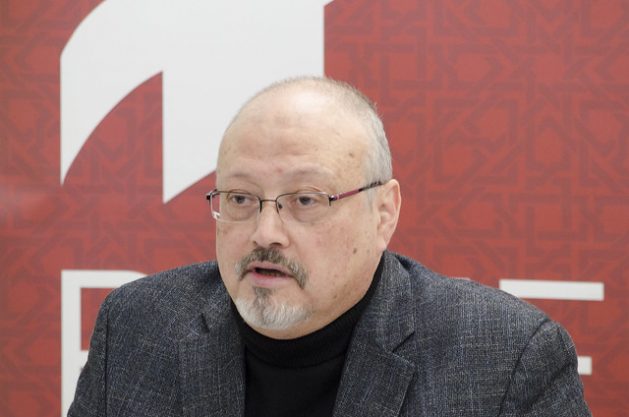
Jamal Kahshoggi, a US-based journalist who frequently criticised the Saudi government, was killed while visiting the Saudi consulate in Istanbul, where he was collecting papers for his wedding. Courtesy: POMED/CC by 2.0

UNITED NATIONS, Sep 4 2019 (IPS) The United Nations is under growing pressure to scrap an event it is co-hosting with the private foundation of Saudi Arabia’s crown prince Mohammad bin Salman, who has been linked to the killing of journalist Jamal Khashoggi.


On Tuesday, Sunjeev Bery, director of Freedom Forward, became the latest leader of a campaign group to press the U.N. to cancel the Sept. 23 event, saying it would help repair bin Salman’s reputation over the Khashoggi murder. 

The event, known as the Misk-OSGEY Youth Forum, is a partnership between the U.N.’s youth envoy, Jayathma Wickramanayake, and the Misk Foundation, a culture and education foundation chaired by bin Salman, who is better known as MBS.

“No one — especially not the U.N. — should be partnering with MBS or his personal Misk Foundation,” Bery told IPS.

“Saudi Arabia’s brutal crown prince is responsible for the deaths of thousands of Yemeni children. His thugs imprisoned leading women’s rights activists and murdered Jamal Khashoggi.”

Kenneth Roth, the director of Human Rights Watch, a campaign group, last week accused the world body of helping to “whitewash” MBS’s record; Mandeep Tiwana, from Civicus, a rights group, called the event “disturbing”.

The U.N. youth envoy’s office declined to comment on the row. U.N. spokesman Stephane Dujarric said the world body had repeatedly issued “very strong statements … calling for accountability” in Khashoggi’s killing.

The Misk-OSGEY Youth Forum will take place in New York only 10 days before the first anniversary of Khashoggi’s murder on Oct. 2 last year, when Saudi government agents killed and dismembered the journalist inside the country’s consulate in Istanbul.

The CIA later determined that MBS had personally ordered the hit. Saudi officials, who initially said Khashoggi had left the consulate alive, now say the journalist was killed in a rogue operation that did not involve MBS.

Saudi Arabia’s mission to the U.N. did not answer requests for comment from IPS.

The four-hour workshop for 300 young people at the New York Public Library will occur on the sidelines of the U.N. General Assembly and promote green themes, corporate responsibility and other aspects of the U.N.’s Sustainable Development Goal (SDG) agenda.

It will feature Alexandra Cousteau, an environmentalist and granddaughter of French explorer Jacques-Yves Cousteau; and Bart Houlahan, an entrepreneur who promotes sustainable business practices.

Other speakers include Andrew Corbett, an expert on entrepreneurship at Babson College, Paul Polman, former CEO of consumer goods firm Unilever, and Ann Rosenberg, an author and U.N. technology expert.

Dr. Reem Bint Mansour Al-Saud, a Saudi princess and an envoy to U.N. headquarters in New York, who advocates for empowering women and development in the Gulf kingdom, will also speak at the workshop.

Khashoggi, a United States-based journalist who frequently criticised the Saudi government, was killed while visiting the Saudi consulate in Istanbul, where he was collecting papers for his wedding.

U.N. expert Agnes Callamard issued a report in June that described the assassination as a “deliberate, premeditated execution,” and called for MBS and other Saudi officials to be probed.

The Misk-OSGEY Youth Forum comes after years of tensions between the U.N. and Riyadh over the war in Yemen, where Saudi Arabia is leading a military coalition against the country’s Houthi rebels. 

The conflict has killed tens of thousands of people and caused led to a major humanitarian crisis. 

“The crown prince and his violent government must be held accountable for their human rights crimes,” said Bery, who advocates for the U.S. to cut ties with Saudi Arabia and other authoritarian regimes.

“Instead, misguided U.N. staff are absurdly giving the crown prince a public relations platform as he attempts to wipe away the blood of so many dead Yemeni children.”

  Source

Five Million Palestinians Deserve Better!

Civil Society, Editors’ Choice, Featured, Global, Headlines, Human Rights, IPS UN: Inside the Glasshouse, Middle East & North Africa, Migration & Refugees

Opinion

Ian Williams is a former President of the UN Correspondents Association (UNCA) and author of “UNtold: The Real Story of the United Nations in Peace and War

Secretary-General Guterres can still ameliorate the crisis—first, of course, by inviting Krähenbühl’s immediate departure, but then by a resounding public declaration of how essential UNRWA’s work is

Credit: UN

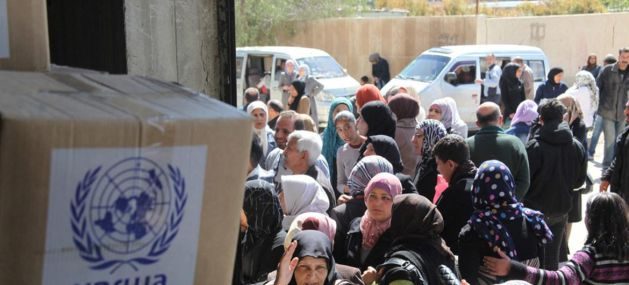
UNITED NATIONS, Aug 12 2019 (IPS) – An old adage passed on by veteran U.N. staff to younger recruits is, “Do nothing whenever possible. It’s safer.” For a junior officer that might indeed be career-enhancing. 


But—in the face of persistent hostility from the U.S. and Israeli Prime Minister Binyamin Netanyahu’s friends around the world—for the secretary-general of the U.N., or even the commissioner general of UNRWA, it is a recipe for disaster.

And sometimes doing a little is even worse.

Antonio Guterres announced the appointment of Christian Saunders as deputy commissioner general of UNRWA but the U.N secretary-general failed to explain what had happened to Saunders’ predecessor,  Sandra Mitchell, let alone the chain of circumstances that led to her departure.

Saunders is experienced and well-respected, but making him deputy commissioner general while leaving Pierre Krähenbühl, the person primarily responsible for the scandal, as commissioner-general for UNRWA is like throwing a sardine into a school of sharks. It has, predictably, just whetted the appetites of UNWRA’s enemies—but has not provided sustenance for its friends.

The secretary-general is presumably aware that after Al Jazeera (and the Washington Report) began its investigation into the UNRWA Ethics Office’s report on Krähenbühl’s management (see Aug./Sept. 2019 Washington Report, p. 17), Krähenbühl in quick succession lost three senior staff members, including both his chef de cabinet and deputy commissioner.

Major donors, not least, Krähenbühl’s own Swiss government pulled their funding because of the Report, which called for his immediate dismissal.

All those countries have been loyal friends of the U.N. and of UNRWA, and their defunding shows clearly that the Ethics Office report made a compelling case to them. It is also clear that the governments concerned are trying to send signals to the U.N., whose response to the crisis has been a textbook case of complacent bureaucratic ineptitude.

After this writer’s report on UNWRA corruption came out in Al Jazeera, former U.S. Ambassador to the U.N. Nikki R. Haley wrote on Twitter, “This is Exactly [sic] why we stopped their funding.”

In fact, that was an outright lie. The Trump administration only did as Israel asked and pulled its contribution to UNRWA for malicious reasons having nothing to do with Commissioner General Krähenbüh’s love life or travel arrangements.

 Secretary-General Guterres can still ameliorate the crisis—first, of course, by inviting Krähenbühl’s immediate departure, but then by a resounding public declaration of how essential UNRWA’s work is

Credit: UN

Instead it was because UNRWA’s continuing existence is a persistent institutional reminder of U.S. complicity in Israel’s dispossession of some six million Palestinians. Admittedly, it was also because a particular subset of ambitious Republicans looks for large campaign donations from a coterie of very rich right-wing donors who consistently display their disdain for Palestinian rights by helping fund Jewish-only settlements in the Israeli-occupied West Bank.

There is no need for the secretary-general to take advice from countries whose oft-condemned actions created and perpetuated so many decades of misery for the Palestinians

However, knowing that both Washington and Tel Aviv entertain such sentiments makes the insouciance of both Secretary-General Guterres and Krähenbühl even more egregious.  The ethics report detailing the managerial failings and turpitude in UNRWA was delivered to the secretary-general’s office back in December 2018.

The UNRWA staff who had contributed to it fretted that no action was being taken after many of them had risked their livelihoods and pensions.

They were amazed that such a compelling dossier from the organization’s own Ethics Department would be ignored, and it was only after months had passed that some of them leaked it to me, in the hope that media inquiries about the report would prompt pre-emptive action by the U.N., and that the commissioner general would lance the boil before the pustulent Trump/Netanyahu axis began to fester on it.

Ambassadors and senior U.N. officials were approached to press the secretary-general’s office for the action necessary, but to no avail.

Faced with such a damning indictment from his own ethics office, Krähenbühl could have, and should have, resigned or stepped aside for the good of the organization.  The secretary-general could have suspended or fired him and announced a genuinely independent inquiry, enlisting donors and others concerned with the welfare of UNRWA and the Palestinians.

Predictably, the failures of the commissioner general and U.N. headquarters to take action—of any kind—has set off a feeding frenzy among the enemies of the Palestinians and UNRWA, who want to punish refugees for the ethical failings of bureaucrats foisted on them by an international community that oversaw their dispossession. 

An unannounced internal investigation by the U.N.’s own Office of Internal Oversight Services (OIOS)—whose reputation is far from stellar even inside the U.N.—is a politically disastrous course of action. It took repeated questioning before we even discovered the investigation was under way—at a time when the secretary-general’s office denied it had even seen the report.

It was conceivable that, without media publicity, the OIOS report could have been a bland procedural whitewash, as have been too many about recent scandals involving senior U.N. staff.

But the media exposure means that Krähenbühl has little or no support from his present and recent senior staff, and certainly not from the donors.  His rigor mortis-like grip on office is profoundly damaging to UNWRA, to the U.N., and to the more than five million Palestinians it serves.

In any case, confronted with such a manifest managerial failure, a traditional international civil servant should have accepted responsibility and resigned: by clinging to office Krähenbühl is giving succour to his agency’s enemies.

One could add that the scandal reflects an erosion of the concept of an ethical international service under a constant corrosive drip of short-term contracts and outsourcing urged by those experts who brought us the 2008 financial crisis.    

Even so, Secretary-General Guterres can still ameliorate the crisis—first, of course, by inviting Krähenbühl’s immediate departure, but then by a resounding public declaration of how essential UNRWA’s work is.

Persuading a senior diplomat or U.N. figure to take over from Krähenbühl is a bit like fitting someone for a crown of thorns, but there are people out there who care enough about the Palestinians and who are prepared to stand up to the barrage of bile from worldwide Friends of Likud.

Above all, there is no need for the secretary-general to take advice from countries whose oft-condemned actions created and perpetuated so many decades of misery for the Palestinians.

He would, however, do well to invite donors and other humanitarian organizations to examine the agency and recommend much needed managerial and structural reforms, without pandering to those whose solution to the refugee problem is to leave them homeless and hungry while declaring them no longer to be refugees.

The original story appeared in the Washington Report on Middle East Affairs. 

  Source