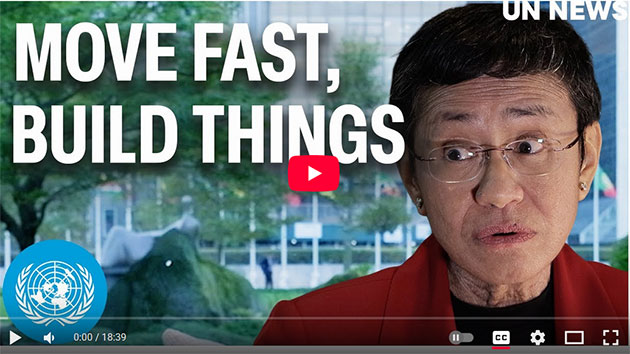
NEW YORK, Sep 30 2025 (IPS) – DANGER – WARNING – ALARM: Nobel Peace Prize Laureate Maria Ressa is warning that lies are being weaponized deliberately to manipulate people around the world. Big, profit-oriented, and technology-enabled companies are now disregarding or trampling over the sanctity and veracity of facts and information to speed up disinformation, (using AI) in ways that quickly erase truth and leave people manipulated.
Even democratic elections are getting manipulated to the extent that some 72 per cent of the world is now living under illiberal or authoritarian regimes that have been “democratically” elected. Journalism, fact-checking, and public trust are under attack from this deliberate subversion of information integrity.
Enjoy this interview I conducted with Ms Ressa, (produced, directed and edited by my UN News and Media colleagues, Paulina Kubiak and Alban Mendes De Leon).
[embedded content]
Ben Malor is the Chief Editor, UN Dailies, at UN News.
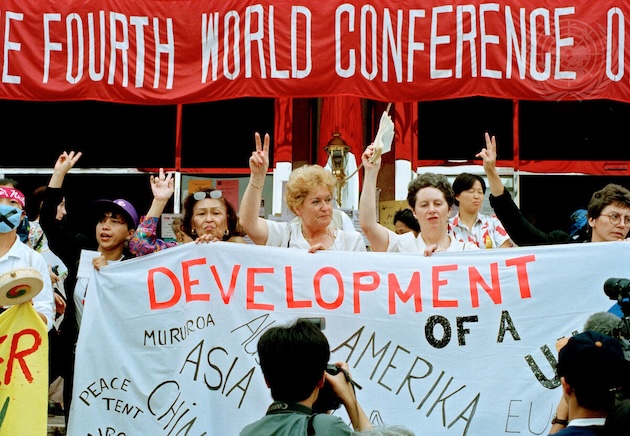
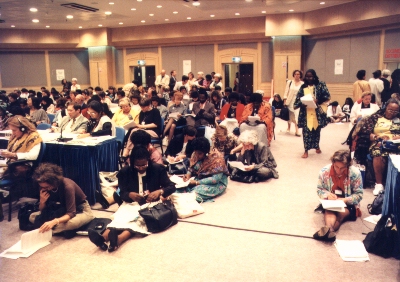
Participants at the Non-Governmental Organizations Forum meeting held in Huairou, China, as part of the United Nations Fourth World Conference on Women held in Beijing, China, on 4-15 september 1995. Credit: UN Photo/Milton Grant
UNITED NATIONS, Sep 30 2025 (IPS) – Thirty years since the UN Fourth World Conference on Women in Beijing, the resolve that defined and united the world toward a global agenda for gender equality make it just as relevant in 2025.
The Beijing Conference represents a turning point for the global movement in gender equality. It is marked by the adoption of the Beijing Declaration and Platform for Action, which is still held up as a landmark document in presenting a comprehensive blueprint to achieve gender equality.
The Beijing Conference was just “one stop in a long and continuing journey of feminist advocacy,” said Sia Nowrojee, a Kenyan women’s rights advocate with more than thirty years’ experience.
“Even though it’s thirty years later, it’s absolutely relevant. It was the culmination of twenty years of advocacy and gender equality.” Nowrojee is the UN Foundation’s Associate Vice President of their Girls and Women Strategy division.
The Beijing Conference was the first time that the international community integrated gender equality into the global development and rights agenda. It was recognition that securing the rights and dignities for all women and girls would be integral to achieving widespread development. This was key for the countries that had emerged in the post-colonial era.
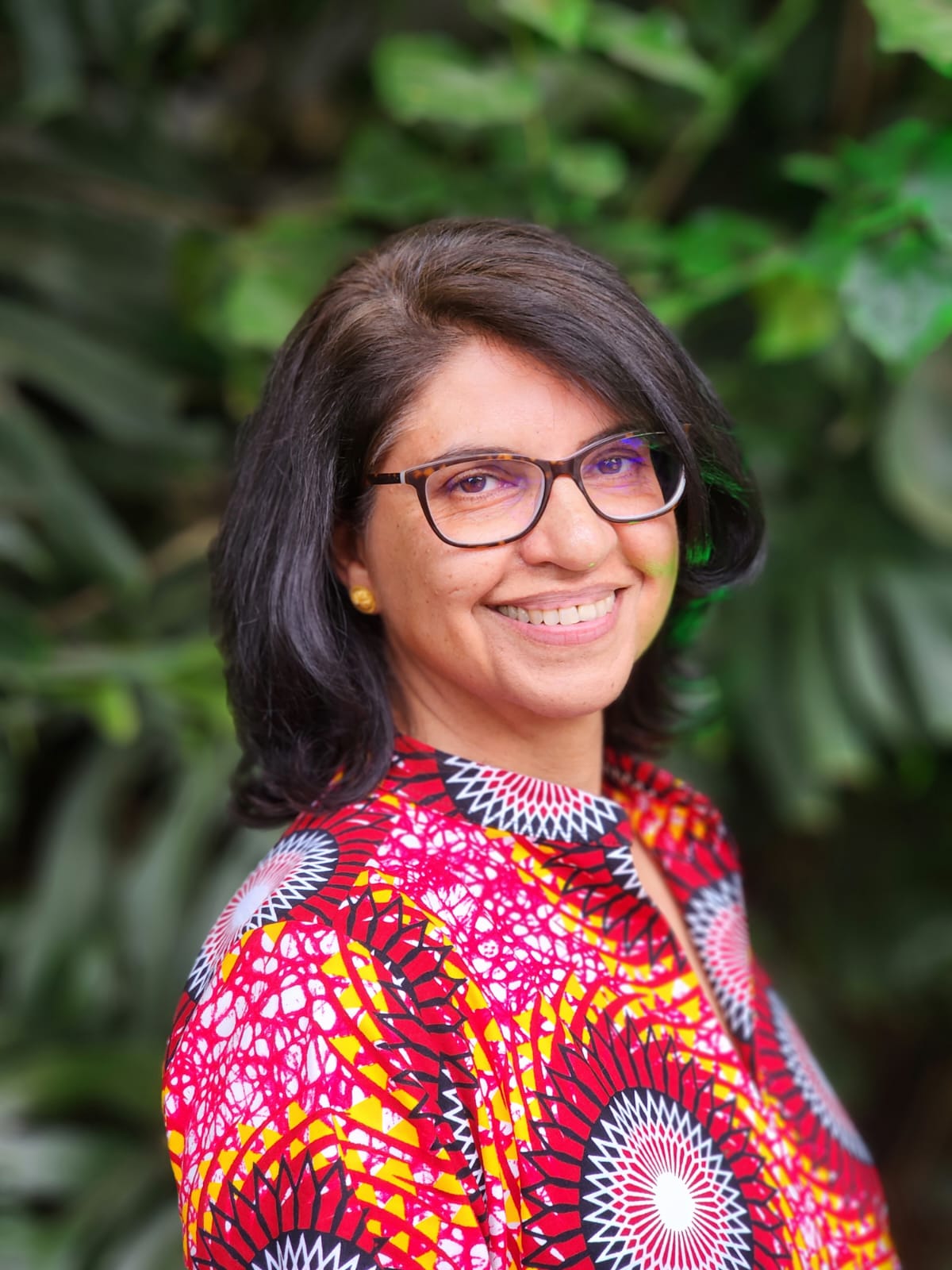
Sia Nowrojee, UN Foundation’s Associate Vice President of Girls and Women Strategy. Credit: UN Foundation
The leadership of advocates from the Global South was instrumental to the Beijing PoA. Representatives from Africa, Asia, and Latin America pushed for the measures that make the framework as inclusive as it is. Nowrojee gave the example of girls’ rights being recognized thanks to the efforts of African feminists in the lead-up to Beijing.
Hibaaq Osman, a Somali human rights activist and founder of El-Karama, considers that the Global South activists had been uniquely prepared to participate as they had lived through their countries’ great political upheavals against colonialism and racism.
Osman attended Beijing 1995 as part of the Center of Strategic Initiatives of Women, a civil society network.
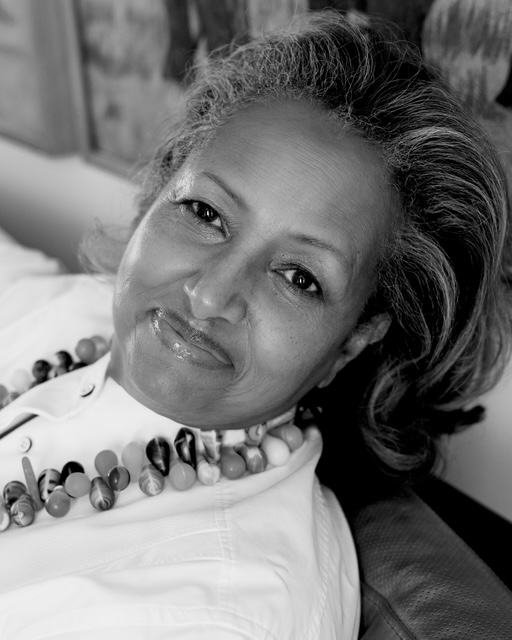
Hibaaq Osman, a Somali human rights activist and founder of El-Karama. Credit: UN Foundation
“For me, as a young woman, I was shocked by the things that I heard. I was raised to believe that everything was a privacy. But to hear a woman speaking for herself and sharing things that I never thought you could share with others, including violence against women… It absolutely opened my eyes and made me see, ‘Oh my god, I can actually share things with other women,’” Osman told IPS.
For Osman, the Beijing conference represented the possibilities of what could be achieved through a shared agenda and a shared sense of hope. The unique energy from that conference drove her advocacy work through groups like the Strategic Initiative for Women in the Horn of Africa (SIHA) and then El-Karama, which is working to end violence against women in the Arab region and South Sudan.
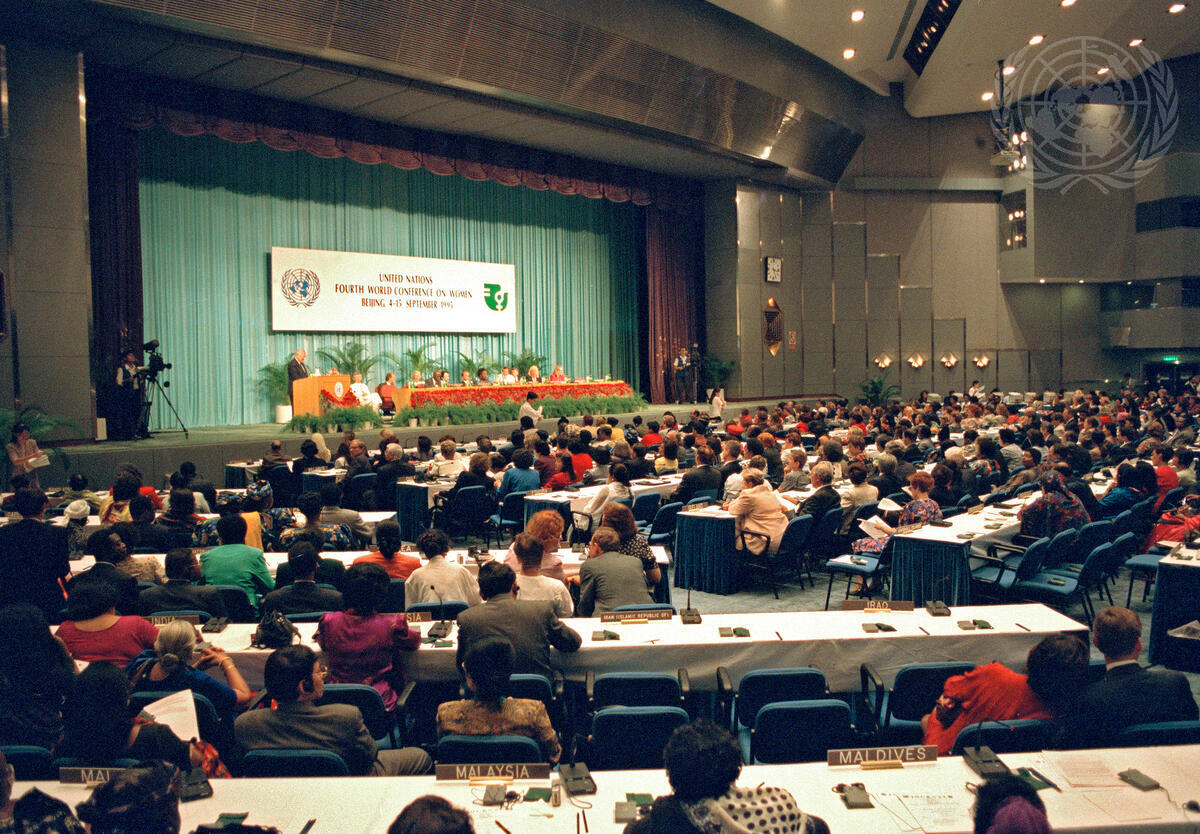
General view of the opening session of the Fourth World Conference on Women in Beijing. Credit: UN Photo/Milton Grant
Beijing 1995 also provided the expectation of accountability from governments and policy makers if they did not implement the PoA. “That had never happened before. There was a mechanism for the first time…,” said Osman. “You can hold governments and policymakers accountable. But you also have the connection with grassroots. That it was no longer the individual woman that could claim that she was the leader, but having accountability to your own people, I think that whole thing was fantastic.”
“I think the legacy of Beijing 1995 honestly, it gave us a legacy of getting out of our corners and just wide open to the rest of the women. And I think that vision, that framework is still working.”
Delegates working late into the night to draft the Beijing Declaration and Platform for Action. Credit: UNDP/Milton Grant
The success of the Women’s Conferences also demonstrated the UN’s role as a space to build up the gender equality movement, Nowrojee remarked. The UN has also served as a platform for emerging countries to raise their issues to the international community and to shape global agendas on their terms.
Prior to Beijing, the UN World Conference on Women had previously been held in Nairobi (1985), Copenhagen (1980) and Mexico City (1975). These were also key forums for people from all parts of the world to build relationships and for there to be a “cross-pollination of ideas and experiences”, laying down the groundwork for what was later achieved in Beijing.
Nowrojee was 18 years old when she attended the Nairobi 1985 Conference as part of a school/youth delegation. The experience was formative in listening to women’s activists from the region impart their wisdom and insights.
“To see the world’s women come to my home and talk about the fact that we mattered was life-changing for me,” Nowrojee said. “I made friends who I still work with and love and see today. And I think there is that sort of personal part, which is both personally sustaining, but it’s a critical part of feminist movement building.”
Each conference built up momentum that saw no sign of slowing down. Osman and Nowrojee explained that as gains were being made at local, national and global levels, this encouraged those in the movement to act with urgency and go further. This provided them the spaces to learn how to refine the messages for local contexts.
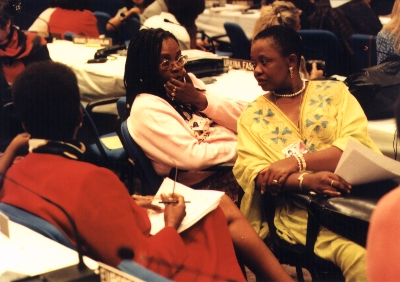
Delegates at the Fourth UN World Conference on Women in Beijing 1995. Credit: UNDPI /UN Women
The gains towards gender equality should be noted: the codification of women’s rights around the world, their increased participation in politics and in peace negotiations. Evidence has shown that investing in women’s participation in society through health, education and employment leads to economic growth and prosperity. More women in the workforce mean greater economic gains and stability. Increased social protections for women lead to more stability in communities.
And yet, there was backlash to the momentum. Recent years have seen the rise of anti-rights and anti-gender movements gain greater traction, combined with increasing attempts to strip women of their rights. UN Women has warned that one in four countries are reporting a backlash to women’s rights.
Nowrojee remarked that the autocratic leaders that champion these movements target women’s rights because it threatens their own agenda. “If you are silencing half the human family, and you are hampering their ability to make decisions about their bodies, to participate in political process… these are very, very effective ways of undermining democracy, development, peace and the achievement of all the goals and values that we hold dear.”
“They understand that if you bring women down, you are bringing society down, because women are the core of society,” Osman added.
The modern movements are also well-funded and well-organized. But there is an irony to it in that they use the same tactics that feminist movements have been using for decades by organizing at the grassroots level before moving their influence up to the national level and beyond. But this should not be where activists fall to despair. Instead they should understand, Osman and Nowrojee remarked, that women in this space already know what actions need to be taken to regain lost momentum.
“I’m sure that Sia and I and many, many others who were part of that are also thinking about today and what’s happening, and we know the space for civil society is shrinking,” Osman said. “The space for democracy, human rights, justice, reproductive rights, for all of that, there is absolutely a rollback, But it’s not going to delay us. We are just going to be more sophisticated and ask ourselves “Where are the blocks, how do we build… diverse constituencies?”… So it is hard, but we are not slowing down whatsoever.”
Today, it may seem the pursuit of gender equality is an ongoing struggle that faces the threat of autocratic movements that sow distrust and division. For the people who championed the women’s rights movement and can recall a time before the Beijing PoA, they are all too aware of what is at stake. The leaders in modern movements today need to look back to the past to take lessons, and to take courage.
NEW YORK, Sep 30 2025 (IPS) – Last week, the United Nations (UN) marked its 80th anniversary against the backdrop of an unprecedented global crisis. With the highest number of active conflicts since 1946, trust in multilateralism is faltering.
Yet the UN’s founding vision, rooted in the principle of ‘We the Peoples,’ remains as urgent as ever; affirming that peace, human rights, and development cannot be achieved by governments alone. From the very beginning, civil society has been integral to this vision, a role formally recognised in Article 71 of the UN Charter, which underscores the value of NGOs in shaping international agendas.
“Article71: The Economic and Social Council may make suitable arrangements for consultation with non-governmental organisations which are concerned with matters within its competence. Such arrangements may be made with international organisations and, where appropriate, with national organisations after consultation with the Member of the United Nations concerned.”
Yet despite this important provision, multilateral processes have increasingly become state-centric, turning global governance into a top-down exercise detached from the people it is meant to serve.
Excluding civil society and global citizens from policy-making not only produces laws and policies out of touch with local needs but also undermines community-driven practices that are often best placed to identify challenges and craft solutions.
At worst, silencing those who hold governments accountable empowers authoritarian regimes to flout international law, restrict human rights, and erode the rules-based international order. While the UN may recognise the role of civil society in principle, why does practice remain so distant from this commitment?
One area for reflection is the extent to which international spaces mirror national realities. Many see the multilateral system as an all-powerful body safeguarding humanity from the scourge of war. In reality it is a regrouping of national actors, the same ones responsible for shrinking civic space at home.
According to the CIVICUS Monitor, more than 70 percent of the global population lives in countries where freedoms of expression, association, and assembly are severely restricted. For many human rights defenders (HRDs), even raising their voices at the UN has led to reprisals at home, including surveillance and imprisonment.
By privileging repressive states and sidelining accountability actors, multilateral institutions replicate domestic restrictions globally, leaving abuses unchecked and defenders excluded.
A second challenge is how money dictates priorities. The collapse of the global aid sector has forced many to confront this reality again. The UN is funded largely by member states through mandatory and voluntary contributions. Over time, earmarking of funds and shifting UN priorities have led to chronic underinvestment in human rights.
Today, the human rights pillar receives just five percent of the UN’s regular budget, and with the upcoming UN80 budget cuts, this already underfunded area faces further risk. When human rights are deprioritised through budget cuts and underfunding, the message to member states is clear- resources and political will are better placed elsewhere. This dynamic discourages collaboration with civil society and reinforces their marginalisation.
A third challenge is the unequal access granted to civil society at UN headquarters. Negotiation rooms are closed to most organisations, and draft resolutions are often circulated only among those with close ties to diplomats, leaving others without privileged access unable to provide timely input. Meaningful participation is impossible without timely information.
During high-level weeks in New York, even side event spaces can only be booked through a member state, effectively controlling who speaks and what is discussed. Major processes such as the Summit of the Future or Financing for Development rarely engage civil society at the national level in time to influence outcomes.
Even when hundreds of civil society organisations submit feedback on policy documents, there is little transparency on how their contributions are used. These opaque practices erode trust and leave committed groups questioning whether investing their scarce time and resources in multilateral spaces is worthwhile.
Despite these glaring challenges, which have turned the system into “we the member states,” the UN is not without tools to ensure it is inclusive of the people it was created to serve. First, existing tools such as the UN Guidance Note on the Promotion and Protection of Civic Space provide a clear framework for action through the “three P’s”: participation, protection, and promotion. To move this document beyond paper, the task force assigned to implement it must act urgently.
Accreditation processes may get civil society past the security desk after years of hurdles, but it does not guarantee meaningful engagement. What matters in the long run is meaningful participation across the UN system, not just at headquarters, in order to achieve political and practical impact.
Second, a focus on accountable leadership. When funding is slashed and political will abandoned, the UN inadvertently strengthens authoritarian regimes, enabling them to silence voices, restrict rights, and openly flout international law. This erosion of support for human rights contributes to shrinking civic freedoms worldwide and leaves many losing trust in the multilateral system.
In this context, civil society engagement is not optional, it is key to steering the UN’s future leadership toward defending human rights and global freedoms.
With conversations on the next Secretary-General already gaining momentum, civil society’s role must be a central test for every candidate. Town halls with nominees should be used to demand clear commitments to meaningful participation of civil society, as well as sustained funding and protection for human rights programmes.
This is not about tokenistic symbolism; meaningful civil society engagement is a fundamental condition for development progress, the protection of human rights, and the survival of a rules-based international order- including multilateral organisations like the UN.
As the UN enters its ninth decade, its relevance depends on accountability to the people, not just the states. Civil society must be recognized as independent partners, with their constructive input embedded across decision-making, financing, and oversight. Only by centering people and their rights can the UN restore trust, strengthen multilateralism, and truly fulfill its founding promise: a world grounded in peace, development, and human rights.
Jesselina Rana, a human rights lawyer, is the UN Advisor at CIVICUS’ New York Hub.