The White House is moving swiftly to tighten legal immigration reviews after two National Guard members were shot in Washington, D.C. last week, escalating scrutiny on asylum seekers, green card holders and refugees already living in the U.S. U.S. strikes on alleged drug boats in the Caribbean are under growing scrutiny, as some lawmakers warn one attack may constitute a war crime. And Ukraine enters a new round of negotiations without its top negotiator, after a corruption scandal forces out President Zelensky’s powerful chief of staff.
Want more comprehensive analysis of the most important news of the day, plus a little fun? Subscribe to the Up First newsletter.
<
p class=”readrate” data-rr=”18″ data-pm-slice=”1 1 []”>Today’s episode of Up First was edited by Anna Yukhananov, Tara Neill, Miguel Macias, Mohamad ElBardicy and Lisa Thompson.
<
p class=”readrate” data-rr=”18″>
<
p class=”readrate” data-rr=”18″>It was produced by Ziad Buchh, Nia Dumas and Christopher Thomas.
<
p class=”readrate” data-rr=”18″>
<
p class=”readrate” data-rr=”18″>We get engineering support from Stacey Abbott. And our technical director is Carleigh Strange.
Regional leaders say the outcome of the ‘mixed bag’ climate talks once again overlooks the real and mounting threats faced by Caribbean countries.
A coastal community in the Eastern Caribbean. Small island states say their extreme climate vulnerability is still not reflected in global finance decisions made at COP30. Credit: Alison Kentish/IPS
CASTRIES, St Lucia, Dec 1 2025 (IPS) – Caribbean small island states say this year’s UN climate conference has once again failed to deliver the urgency and ambition needed to tackle escalating climate devastation across the region. From slow-moving climate finance to frustrating political gridlock, leaders say COP30 did not reflect the realities that small islands are living through every day.
Jamaica is recovering from Hurricane Melissa, which left over 30 percent of the country’s GDP in losses and billions of dollars in damage. While the country has been able to respond rapidly thanks to a suite of innovative developmental finance tools, including a USD 150 million catastrophe bond, parametric insurance and a disaster savings fund, its Minister for Water, Environment and Climate Change, Matthew Samuda, warns that the vast majority of Caribbean islands do not have similar mechanisms.
Speaking at a press conference organized by Island Innovation and themed “Islands, the Climate Finance Gap, and COP30 Reflections,” Samuda said this is precisely why global negotiations must center the lived experiences of SIDS.
“I think I perhaps may be a little more disappointed than I am usually at the end of a COP because seeing what Jamaica is going through, seeing what Vietnam is going through, seeing extreme weather events pop up all around the world over the last 10 days, you would think that the urgency and the facts staring us in the face would have brought about greater ambition,” he said, adding that “unfortunately, the global geopolitical landscape didn’t allow for us to go much further.”
A Struggle Just to be Heard?
For many small islands and territories, simply participating meaningfully at COP30 was an uphill battle. The British Virgin Islands, like other Caribbean territories, had to rely on partners, including the Organisation of Eastern Caribbean States and the Caribbean Community Climate Change Centre for accreditation and access to the negotiations.
“We try to split up and cover as much as we can,” said Dr. Ronald Berkeley, Permanent Secretary in the Ministry of Environment, Natural Resources and Climate Change. “Our reliance on partners shows how limited our reach still is.”
Berkeley said that despite the Caribbean’s visible and worsening climate impacts, it remains difficult to get major emitters to understand the region’s urgency.
“For small islands, this is real. I’m not sure a lot of the big players believe us,” he said. “Until you live through being almost blown to smithereens by a Category Five hurricane, you will never understand.”
The BVI recently established its own climate trust fund, currently funded with about US$5.5 million, to address some financing shortfalls, but Berkeley emphasized that this cannot make up for reliable, large-scale climate funding.
Barriers to Pledges
Caribbean officials are echoing the same concern—that climate finance exists on paper but rarely reaches small, vulnerable nations at the speed or scale required.
“At COP there were positive commitments, about US$1.3 trillion annually by 2035 for climate action, the tripling of adaptation finance and operationalizing the Loss and Damage Fund,” said Dr. Mohammad Rafik Nagdee, Executive Director of the Caribbean Centre for Renewable Energy and Energy Efficiency (CCREEE).
“But the elephant in the room is the global finance gap,” he said. “Even where access exists, it’s not accessible at the speed the climate crisis demands. Processes are lengthy, requirements heavy and small governments simply don’t have the technical capacity.”
Nagdee said the region needs “greater predictability, simpler pathways and finance that is actually ready to disburse.”
Living Through it—Not Debating it
For Jamaica, which is emerging from one of the most devastating storms in its history, the mismatch between climate impacts and climate action is glaring.
“In the past four years, Jamaica has had its hottest day on record, its wettest day on record, its worst droughts, two tropical storms, a Category 4 hurricane and now what could be classified as a Category 6,” Samuda said. “That’s climate change in reality. That’s not an academic debate for us.”
Caribbean leaders widely described COP30 as a ‘mixed bag,’ with negotiations with incremental progress overshadowed by inadequate urgency.
“We cannot talk about building back better if the resources arrive slowly,” Nagdee said.
For small island states living on the frontlines of warming seas, rising temperatures and record-breaking storms, the message from COP30 is clear and becoming all-too familiar—that climate change is accelerating and the price of delay is already being paid.
This feature is published with the support of Open Society Foundations.
…..CDEDI introduces free-toll line on suspected corrupt practices in Malawi
…Simply dial 4384 for free on both Airtel and TNM mobile networks
LILONGWE-(MaraviPost)-The country’s civil rights Centre for Democracy and Economic Development Initiatives (CDEDI) is demanding accountability on the business venture between Greenbelt Initiative Greenhouses Limited (GBIGL) and Greenbelt Authority and Inosselia amid public funds abuse allegations.
CDEDI regrets “to inform the nation that during the previous Democratic Progressive Party regime government paid $5 million to Inosselia, an Israeli firm registered in Cyprus, to construct an intensive high value vegetable farm on some 30 hectares of land near Kamuzu International Airport in Lilongwe. At that time, the cost of one green house was estimated at $100,000 at most.
“To date, Malawians may wish to know that only 16 fullyfledged green houses have been constructed while four others were constructed for training. But it is sad to report that the said training no longer takes place”.
Addressing the news conference on Monday, December 1, 2025, CDEDI Executive Director Sylvester Namiwa says the grouping has written the Secretary to Treasury (ST) Cliff Chiunda and the Chief Secretary Justin Saidi, demanding an immediate recovery of the much-sought-after foreign exchange that is in the hands of Inosselia.
Namiwa adds, “Apart from the $5 million, the Malawi Government also pumped in K2.2 billion and K2.7 billion respectively, in respect of the beginning of what is known as the Greenbelt Initiative Greenhouses Limited (GBIGL), a purported joint venture between Greenbelt Authority and Inosselia.
“These funds pumped in the project, on 9th June 2021, through the then Acting GBA Chief Executive Officer Amon Mluwira, the Malawi Congress Party-led government signed an agreement with Inosselia, committing Malawians to what is known as management fees, pegged at $25,000 per month”.
The grouping observes further, “Despite that huge investment, the GBA, let alone the Ministry of Finance, has never been involved in the day-to-day running of the farm, and there has been no public declaration of sales from the farm.
CDEDI has invoked the Access to Information (ATI) Act, demanding the following information; GBIGL to make public its audited accounts for the six years it has been operational. GBIGL to make a detailed account of foreign exchange accrued from the vegetable exports declared to the Reserve Bank of Malawi.
“We want Malawi government to provide a detailed exit plan, including details on how the company will pay back Malawians’ money before leaving the country, since it is clear that Inosselia has breached its contract with the Malawi Government.
“Government to conduct a forensic audit of GBIGL in order to have a fair and clear view of how much Inosselia owes the people of Malawi. CDEDI appeals to government through the new Finance MinisterJoseph Mwanamvekha to review the greenhouses’ initial contract in order to serve the interest of Malawians,” appeal Namiwa.
Meanwhile, CDEDI has established a toll-free line that will enable the general public to participate in this noble initiative.
“CDEDI hereby informs the people of Malawi that it has embarked on a serious course to follow up on all monies and other resources that the country received in the name of its citizens in the form of grants, loans, royalties, fines, forfeiture and taxes.
“Well-meaning citizens are hereby advised that they can blow the whistle to anonymously report to us suspected corrupt practices, fraud, abuse of power or office, and violation of human rights by simply dialing 4384 for free on both Airtel and TNM mobile networks,” says Namiwa.
Share this:
Like this:
LikeLoading…
Discover more from The Maravi Post
Subscribe to get the latest posts sent to your email.
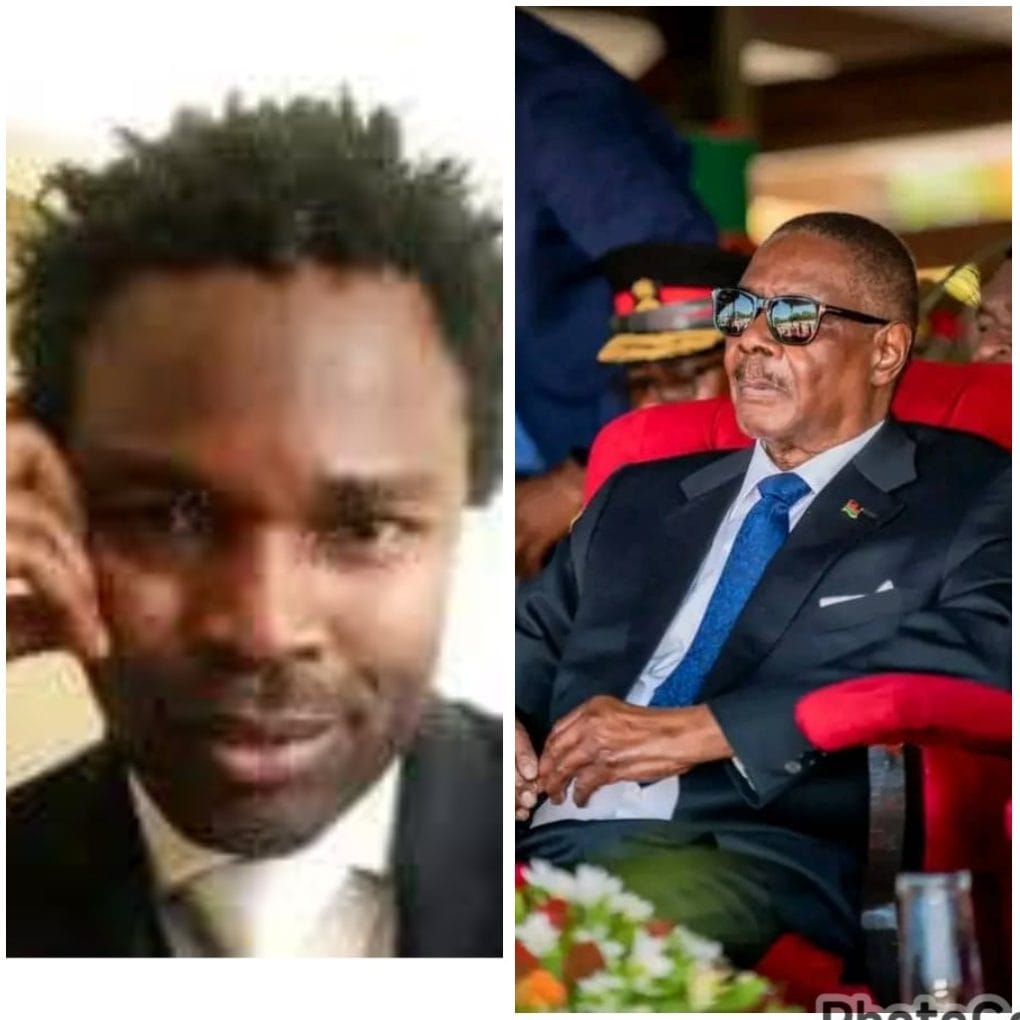
The Head of State Professor Arthur Peter Mutharika has announced a “private visit.”But here is the question Malawi must ask without fear: How can the President’s trip be “private” to the very nation he governs?
A president is not a tourist. His movements are not personal errands. His absences are not family outings. Every time he leaves the country, the entire machinery of the state shifts around that moment.
There is no such thing as “private” when the presidency itself is public property.
So when an 80-year-old president quietly slips out under the veil of “private visit,” the nation is expected to pretend not to know what is happening.
But the truth is simple: At that age, a presidential “private visit” is almost always a medical appointment.
And that matters. Deeply.
Because a President’s health is not his private business. It is a matter of:National security; Succession clarity; Policy continuity; Investor confidence; Public stability; Geopolitical assurance
A president’s heartbeat is tied to the heartbeat of the nation. If he falters, the country feels it. If he weakens, the system trembles. If he becomes incapacitated, the entire nation enters a legitimacy crisis.
This is why mature democracies disclose the health of their leaders.
Not because they enjoy gossip; but because a nation cannot be governed from behind a medical curtain.
When a president hides behind the phrase “private visit,” he is essentially saying this to his people:
“You must trust me with your lives, but I will not trust you with the truth about mine.”
That is not leadership. That is paternalistic secrecy. And as Malawi approaches a critical election, transparency is not a favour. It is an obligation.
Malawians deserve to know: Is the man asking for five more years physically capable of carrying the burden of the presidency?
That question cannot be hidden behind euphemisms. Not anymore. The presidency is public. The consequences are public. Therefore the truth must be public.
Because when a leader’s health becomes “private,” the nation’s anxiety becomes public.
Share this:
Like this:
LikeLoading…
Discover more from The Maravi Post
Subscribe to get the latest posts sent to your email.