
How ‘Emily in Paris’ Season 5 Honored Assistant Director After Death on Set

Emily in Paris offered a solemn tribute to assistant director Diego Borella, who died during production on season 5.

“In memory of Diego Borella,” a title card read at the end of the season finale, which dropped on Netflix earlier this month.

Us Weekly confirmed in August that Borella died at the age of 47 while the show filmed scenes in Venice, Italy.

“We are deeply saddened to confirm the sudden passing of a member of the Emily in Paris production family,” a spokesperson for Paramount Television Studios told Us in a statement. “Our hearts go out to the individual’s family and loved ones during this incredibly difficult time.”

Will There Be ‘Emily in Paris’ Season 6? What We Know So Far

Borella had collapsed while the crew were preparing a scene at Venice’s Hotel Danieli, according to multiple local outlets at the time. In light of Borella’s passing, the show briefly halted production. Lily Collins, who plays the titular Emily, and her costars resumed filming two days later.

Emily in Paris follows an American marketing executive after she moves from the United States to Paris to begin a new job at a luxury marketing agency. By the end of season 4, Emily was tasked with leading a branch of the company in Rome with new love interest Marcello (Eugenio Franceschini) in tow.

After a whirlwind on-off romance, Emily and Marcello traveled to Venice in the season finale for the city’s fashion week — and the debut of Marcello’s eponymous line. Despite a successful presentation, the couple ended up breaking up when Marcello revealed his plans to move back to Italy to assume control of his family’s fashion house. Emily, for her part, wasn’t ready to say au revoir to the City of Lights.

Diego-Borella_64511027_2430981597133380_7967702600023991733_n
Courtesy of Diego Borella/ Instagram

The final episode further hinted that Emily could reconcile with ex-boyfriend Gabriel (Lucas Bravo), who sent her a postcard to “meet [him] in Greece.”

‘Emily in Paris’ Burning Questions Answered After [Spoiler]’s Proposal

“Gabriel is important. He’s part of the DNA of the show,” series director and executive producer Andrew Fleming exclusively told Us about the chances of reconciliation for the fan-favorite pair. “When he and Emily are in a scene together, something undefinable happens. They have this chemistry. They do. There’s just something about the two of them that’s very watchable.”

Fleming further teased that there’s more to Emily and Gabriel’s story if Emily in Paris gets renewed for a season 6.

“Looking ahead, they’re part of each other’s journey. Who is to say who Emily is going to end up with, but Emily and Gabriel are going to interact with each other,” the director told Us. “Stuff is going to happen [but] I really can’t say anything about what’s going to happen next season.”

Bravo’s Gabriel left his job running the Michelin-winning L’esprit de Gigi restaurant to serve as the private chef on a British businessman’s yacht.

‘Emily in Paris’ Season 5 Ending Explained: Who Is Engaged? Who Broke Up?

“We want to go on a journey,” Fleming said of Bravo’s story arc. “At no point was Luke ever leaving the show permanently.”

Bravo, 37, previously had been critical about his onscreen character, leading to speculation about whether Gabriel would be written off the show.

“The ‘sexy chef’ was very much part of me in season 1 and we grew apart season after season because of the choices he makes and because of the direction they make him take,” Bravo told IndieWire in October 2024. “I’ve never been so far away from him. … There is only so much I can do in the limits of a script. I tried for seasons to bring nuances but we don’t have much liberty on set. We cannot change a word or an emotion. They know what they want and we just have to comply.”

Emily in Paris season 5 is currently streaming on Netflix.


Discover more from The Maravi Post

Subscribe to get the latest posts sent to your email.

The Maravi Post

Britney Spears Kisses Sam Asghari Lookalike on a Boat

Well, look what Britney Spears has under the tree this year … a new dude who looks a lot like her old one, ex-husband Sam Asghari. Brit and the mystery man enjoyed a fun day off the California coast … Tuesday night she posted a video of her and…


Discover more from The Maravi Post

Subscribe to get the latest posts sent to your email.

The Maravi Post

Breaking New! MCP SG Chimwendo Banda granted bail

LILONGWE-(MaraviPost)-The High Court in Lilongwe has granted bail to Malawi Congress Party (MCP) Secretary General Richard Chimwendo Banda.

The court delivered the ruling today through email to the lawyers

This comes after earlier reserving its decision following a bail hearing in an attempted murder case in which Chimwendo Banda is a suspect.

Details of the bail conditions are yet to be made public.

Chimwendo Banda’s legal team had argued that his continued detention was unlawful as there was no formal charge before the court, and also cited humanitarian grounds, noting that he is currently receiving medical treatment.

The State had indicated it would be ready to formally commit the matter in the weeks beginning January 5, 2026.

Source: Times360


Discover more from The Maravi Post

Subscribe to get the latest posts sent to your email.

The Maravi Post

MCP SG Richard Chimwendo Banda to spend Christmas in cell?

LILONGWE-(MaraviPost)-The opposition Malawi Congress Party (MCP) Secretary General Richard Chimwendo Banda will remain in police custody as he awaits a ruling from High Court Judge Mzondi Mvula on his bail application.

It means Chimwendo will spend Christmas in cell unless the court grants him bail by close of business today.

The bail application came up for hearing today at the High Court, where lawyers representing Chimwendo Banda presented their arguments, while the State also responded.

After hearing submissions from both sides, the court adjourned the matter for a ruling.

The judge indicated that the ruling will be delivered via email once it is ready.

During today’s court bail proceedings, State lawyer Dzikondianthu Malunda has asked the court not to release Richard Chimwendo Banda, arguing that the applicant is a person of influence and is capable of influencing or intimidating witnesses, thereby jeopardizing the case.

Chimwendo Banda’s lawyer George Kadzipatike has asked the court to release his client, arguing that the State has so far failed to formally charge
him.

Kadzipatike adds that the client is not a flight risk and is currently admitted at the hospital, where he is receiving medical treatment.

The MCP SG is accused of attempting to kill Frank Chiwanda in 2022 in Dowa.


Discover more from The Maravi Post

Subscribe to get the latest posts sent to your email.

The Maravi Post

A Grim Year for Democracy and Civic Freedoms – but in Gen Z There Is Hope

Active Citizens, Armed Conflicts, Civil Society, Climate Change, Crime & Justice, Democracy, Economy & Trade, Environment, Featured, Gender, Global, Headlines, Human Rights, Inequality, LGBTQ, TerraViva United Nations

Opinion

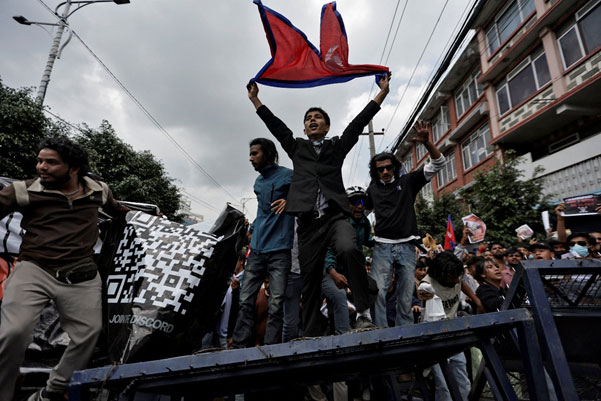
People take part in an anti-corruption protest in Kathmandu, Nepal on 8 September 2025. Credit: Navesh Chitrakar/Reuters via Gallo Images

NEW YORK, Dec 24 2025 (IPS) – 2025 has been a terrible year for democracy. Just over 7 per cent of the world’s population now live in places where the rights to organise, protest and speak out are generally respected, according to the CIVICUS Monitor, a civil society research partnership that measures civic freedoms around the world. This is a sharp drop from over 14 per cent this time last year.


Civic freedoms underpin healthy democracies, and the consequences of this stifling of civil society are apparent. At the end of the first quarter of the 21st century, the world is experiencing 19th century levels of economic inequality. The wealth of the richest 1 per cent is surging while some 8 per cent of the world’s population – over 670 million people – suffer from chronic hunger. Weapons-producing firms, closely intertwined with political elites, are reaping windfall profits as death and destruction rains down in Gaza, Myanmar, Sudan, Ukraine and many other places. It should surprise no one that the political leaders fomenting these conflicts are also squashing civic freedoms to avert questions about their motivations.

From Lima to Los Angeles, Belgrade to Dar es Salaam and Jenin to Jakarta, far too many people are being denied the agency to shape the decisions that impact their lives. Yet these places have also been the site of significant protests against governments this year. Even as authoritarianism appears to be on the march, people are continuing to pour onto the streets to insist on their freedoms. As we speak people in Sofia in Bulgaria are demonstrating in large numbers against endemic corruption which recently forced the government to resign.

History shows that mass demonstrations can lead to major advances. In the 20th century, people’s mobilisations helped achieve women’s right to vote, liberation of colonised peoples and adoption of civil rights legislation to address race-based discrimination. In the 21st century, advances have been made in marriage equality and other LGBTQI+ rights, and in highlighting the climate crisis and economic inequality through protests. But in 2025, the right to protest, precisely because it can be effective, is under assault by authoritarian leaders. Around the world, the detention of protesters is the number one recorded violation of civic freedoms, closely followed by arbitrary detentions of journalists and human rights defenders who expose corruption and rights violations.

This backsliding is now happening in major established democracies. This year, the CIVICUS Monitor downgraded Argentina, France, Germany, Italy and the USA to an ‘obstructed’ civic space rating, meaning the authorities impose significant constraints on the full enjoyment of fundamental rights. This regression is being driven by anti-rights nationalist and populist forces determined to degrade constitutional checks and balances and advance ballot box majoritarianism that denies minorities a fair say in economic, political and social life.

The push to degrade democracy by anti-rights forces now coming to fruition has been many years in the making. It accelerated this year with the return of Donald Trump. His administration immediately withdrew support to international democracy support programmes and instead built links to politicians responsible for crushing civic freedoms and committing grotesque human rights violations. Trump has laid out of the red carpet to El-Salvador’s Nayib Bukele, Hungary’s Victor Orbán, Israel’s Benjamin Netanyahu, Russia’s Vladimir Putin and Saudi Arabia’s Mohammed bin Salman, ushering in a new era of values-free might-is-right diplomacy that threatens to undermine decades of painstaking progress achieved by civil society.

The fallout is clear. Many wealthy democratic governments that traditionally fund civil society activities have significantly reduced their contributions. At the same time, they have linked their remaining support for civil society to narrowly defined strategic military and economic interests. In doing so, they have played directly into the hands of powerful authoritarian states such as China, Egypt, Iran, Nicaragua and Venezuela that seek to discredit domestic calls for accountability. Countries including Ecuador and Zimbabwe have introduced laws to limit the ability of civil society organisations to receive international funding.

All these developments are negatively impacting on civil society efforts for equality, peace and social justice. Yet the story of 2025 is also one of persistent resistance, and some successes. The courage demonstrated by Generation Z protesters has inspired people around the world. In Nepal, protests triggered by a social media ban led to the fall of the government, offering hope for a much-needed political reset. In Kenya, young protesters continued to take to the streets to demand political reform despite state violence. In Moldova, a cash-rich disinformation campaign run by a fugitive oligarch failed to sway the course of the national election away from human rights values. In the USA, the number of people joining the No-Kings protests just keeps on growing.

With over 90 per cent of the world’s population living with the institutional denial of full civic freedoms, anti-rights forces must be feeling pretty smug right now. But democratic dissent is brewing, particularly among Generation Z, denied political and economic opportunities but understanding that another world – one more equal, just, peaceful and environmentally sustainable – is possible. It’s far from game over yet, and even in difficult times, people will demand freedoms – and breakthroughs may be just around the corner.

Mandeep S Tiwana is Secretary General of CIVICUS, the global civil society alliance.

  Source

Greg Biffle’s Holiday Card Arrives In Mail After Family Dies in Plane Crash

Greg Biffle and his wife sent their holiday card in the mail before they died in a fatal plane crash … and the season’s greeting is just now showing up in mailboxes of relatives and friends. One of Biffle’s friends, a restaurant owner in North…


Discover more from The Maravi Post

Subscribe to get the latest posts sent to your email.

The Maravi Post