



Stephen A. Smith was on the ESPN airwaves Tuesday morning when he had quite the slip of the tongue while breaking down the Texans’ playoff win over the Steelers … mistakenly referring to Houston’s star wide receiver as Charlie Kirk. “We saw…
Stephen A. Smith was on the ESPN airwaves Tuesday morning when he had quite the slip of the tongue while breaking down the Texans’ playoff win over the Steelers … mistakenly referring to Houston’s star wide receiver as Charlie Kirk. “We saw…


LILONGWE-(MaraviPost)-FDH Bank plc has given maize flour worth K50 million to the Beautify Malawi Trust (BEAM) to help address the food shortages facing families affected by the recent floods across the country.
The donation was handed over to the First Lady of Malawi and BEAM Matron, Gertrude Mutharika, during a ceremony held at Kamuzu Palace in Lilongwe on Monday.
The consignment comprises 2,820 bags of maize flour, including 1,420 bags of five kilogrammes each and 1,400 bags of 10 kilogrammes each.
The maize flour will be distributed to flood-affected households through BEAM’s humanitarian response programme.
Speaking at the handover ceremony, FDH Managing Director, Noel Mkulichi said the Bank was moved to act following the First Lady’s call for support to assist Malawians who have been severely affected by the floods.
“The heavy and persistent rains have caused widespread destruction, leaving many families without homes and food. As a responsible corporate citizen, FDH felt compelled to come forward and contribute towards easing the suffering of the affected communities,” said Mkulichi.
He said FDH Bank views its role as extending beyond financial services to national development and the welfare of Malawians.
“We believe that our responsibility goes far beyond banking. We are partners in national development and the wellbeing of our people. When communities suffer, we all feel the impact, and when they recover, the whole nation becomes stronger,” he said.
In her remarks, Mutharika commended FDH Bank for demonstrating compassion and urgency in assisting flood-affected families.
“I am grateful to FDH Bank for responding so promptly. This contribution will make a real difference to families who are struggling to put food on the table after losing so much to the floods,” she said
Mutharika added that BEAM is mobilising resources to deliver immediate relief as affected communities work to recover.
“Our goal is to ensure that no family is left without support in this period of hardship. With partners like FDH Bank, we are able to extend help to more people and restore a sense of dignity to those in need,” she said.

LILONGWE-(MaraviPost)-The High Court seating in Lilongwe on Tuesday adjourned to March 10 2026 a case in which wildlife crimes and money laundering convict Lin Yinhua is answering seven charges of corrupt practices with public officers and abuse of public offices.
High court judge Redson Kapindu made the adjournment when he was making directions in the case, indicating that the case would run for three days from March 10 to 13, 2026.
Judge Kapindu ruled that within 14 days the defence should identify a competent interpreter for client and counsel engagement.
“Make sure that within seven days assistant registrar of the court should engage Messrs Maele Law Practice to file a written notice that it no longer represents the accused”, Kapindu orders.
The judge also rules further, “Make sure that within 14 days the prosecution should ensure that the high court file contains all disclosures which shall be served to the defence with the materials”.
Anti-Corruption Bureau principal legal and prosecution officer Peter Sambani therefore told the court that the state is ready for the full trial.
Sambani hinted that the state will parade its 16 witnesses against the suspect on corruption and public officers abuses’ charges.
Among others, Lin is accused of offering K30 million to Aaron Ganyavu Kaunda who was the officer In charge of Maula Prison to engage then chief resident Magistrate Violet Chipao who was presiding over his wildlife and money laundering case, to give him a lesser sentence while he was on remand at Maula Prison in 2019.
This means Lin will remain on remand at Dedza Prison until full trial.
On November 7, 2025 High Court Judge Redson Kapindu rejected Lin’s applications discharge on unlawful detention and bail application.

Kapindu cited the suspect being flight risk and the serious offences he committed might compromise the court proceedings.
The case arose shortly after Lin’s controversial presidential pardon in July, this year which was followed by his re-arrest by ACB
Civil Society, Climate Change, Development & Aid, Environment, Featured, Global, Headlines, Humanitarian Emergencies, Sustainable Development Goals, TerraViva United Nations
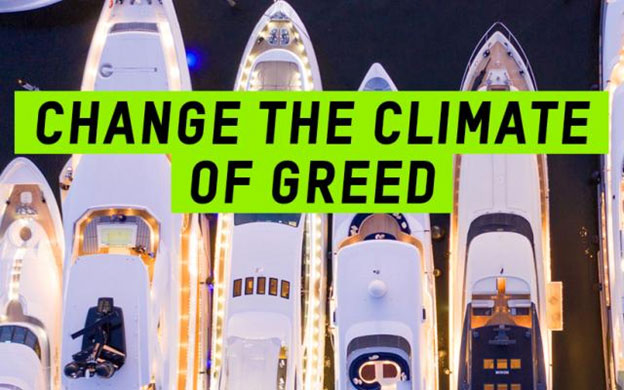
Credit: Oxfam
– The richest 1% have exhausted their annual carbon budget – the amount of CO2 that can be emitted while staying within 1.5 degrees of warming – only ten days into the year, according to new analysis from Oxfam. The richest 0.1% already used up their carbon limit on the 3rd January.
This day – named by Oxfam as ‘Pollutocrat Day’ – highlights how the super-rich are disproportionately responsible for driving the climate crisis.
The emissions of the richest 1% generated in one year alone will cause an estimated 1.3 million heat-related deaths by the end of the century. Decades of over consumption of emissions by the world’s super rich are also causing significant economic damage to low and lower-middle income countries, which could add up to $44 trillion by 2050.
To stay within the 1.5 degrees limit, the richest 1% would have to slash their emissions by 97% by 2030. Meanwhile, those who have done the least to cause the climate crisis – including communities in poorer and climate-vulnerable countries, Indigenous groups, women and girls – will be the worst impacted.
“Time and time again, the research shows that governments have a very clear and simple route to drastically slash carbon emissions and tackle inequality: by targeting the richest polluters.
By cracking down on the gross carbon recklessness of the super-rich, global leaders have an opportunity to put the world back on track for climate targets and unlock net benefits for people and the planet,” said Oxfam’s Climate Policy Lead Nafkote Dabi.
On top of their lifestyle emissions, the super-rich are also investing in the most polluting industries. Oxfam’s research finds that each billionaire carries, on average, an investment portfolio in companies that will produce 1.9 million tonnes of CO2 a year, further locking the world into climate breakdown.
The wealthiest individuals and corporations also hold disproportionate power and influence. The number of lobbyists from fossil fuel companies attending the recent COP summit in Brazil, for example, was more than any delegation apart from the host nation, with 1600 attendees.
“The immense power and wealth of super-rich individuals and corporations have also allowed them to wield unjust influence over policymaking and water down climate negotiations.” Dabi added.
Oxfam calls on governments to slash the emissions of the super-rich and make rich polluters pay through:
Increase taxes on income and wealth of the Super-rich and proactively support and engage on the negotiations for the UN Convention of International Tax Cooperation to deliver a fairer global architecture.
Excess profit taxes on fossil fuel corporations. A Rich Polluter Profits Tax on 585 oil, gas and coal companies could raise up to US $400 billion in its first year, equivalent to the cost of climate damages in the Global South.
Ban or punitively tax carbon-intensive luxury items like super-yachts and private jets. The carbon footprint of a super-rich European, accumulated from nearly a week of using super yachts and private jets, matches the lifetime carbon footprint of someone in the world’s poorest 1 percent
Build an equal economic system that puts people and planet first by rejecting dominant neoliberal economics and moving towards an economy based on sustainability and equality.
The International Court of Justice (ICJ), the world’s highest court, has confirmed that countries have a legal obligation to reduce emissions enough to protect the universal rights to life, food, health, and a clean environment.
IPS UN Bureau
Civil Society, Featured, Global, Global Governance, Headlines, International Justice, IPS UN: Inside the Glasshouse, TerraViva United Nations
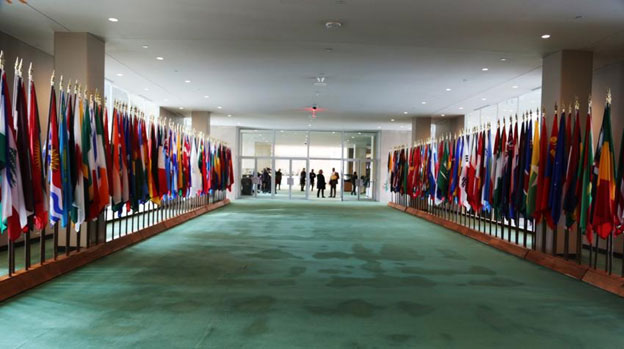
Credit: United Nations
– Judging by the mass US withdrawal from 66 UN entities, including UN conventions and international treaties, is it remotely possible that the unpredictable Trump administration may one day decide to pull out of the UN, and force the Secretariat out of New York– despite the 1947 UN-US headquarters agreement?
Besides the 66, the withdrawals also include the pullouts from the Human Rights Council, the WHO, UNRWA and UNESCO– while imposing drastic reductions in funding for the remaining UN entities the US has not yet formally exited.
So, will the United Nations, which has come under heavy fire, be far behind?
That possibility is strengthened by the critical views of the UN both by President Trump and senior US officials.
Dr Stephen Zunes, Professor of Politics, University of San Francisco, who has written extensively on issues relating to the United Nations, told IPS even the U.S. presidents most hostile to the United Nations– like Ronald Reagan and George W. Bush– recognized the importance of the world body in terms of advancing U.S. interests, including understanding the importance of maintaining the UN system as a whole, even while violating certain legal principles in particular cases.
Similarly, he pointed out, the United States was willing to participate in various UN bodies in an effort to wield influence, even while disagreeing with some of their policies or even their overall mandates.
“The Trump administration, however, appears to be rejecting the post-WWII international legal system as a whole. His statements, particularly since the attack on Venezuela, appear to be a throwback to the 19th-century imperial prerogatives and a rejection of modern international law.”
“As a result, it is possible that Trump could indeed pull the United States out of the United Nations and force the UN out of New York”, declared Dr Zunes.
Addressing the General Assembly last September, Trump remarked, “What is the purpose of the United Nations? It’s not even coming close to living up to [its] potential.”
Dismissing the U.N. as an outdated, ineffective organization, he boasted, “I ended seven wars, dealt with the leaders of each and every one of these countries, and never a phone call from the United Nations offering to help in finalizing the deal.”
Martin S. Edwards, Associate Dean of Academic and Student Affairs, School of Diplomacy and International Relations at Seton Hall University, told IPS “this is dubious language about cutting inefficiency and fighting diversity wrapped up in red meat to feed President Trump’s base”.
It’s a ploy to use foreign affairs to distract voters for whom he has yet to deliver. The fact that the actual follow-up documents haven’t been received by the Secretary General tells you everything here. It fits a pattern of the President carving out maximalist positions and then getting very little in the end, he pointed out.
But it’s a bigger challenge, he said, on two fronts:
1. This is going to continue to REDUCE US influence at the UN rather than increase it. Stable foreign relations are based on credibility. The US continues to squander its reserves, and other countries will step into the vacuum.
2. This policy might have been a good social media post for voters, but makes little sense in practice. What the White House wants is a line-item veto over every single aspect of UN operations. But assessed contributions are not an ala carte menu, declared Edwards.
Mandeep S. Tiwana, Secretary General, CIVICUS, a global alliance of civil society organizations, told IPS retreat from international institutions by the Trump Administration is an attack on the legacy of President Franklin D. Roosevelt who gave the people of the United States the New Deal and envisioned a bold framework for the establishment of the UN to overcome the horrors of the Second World War.
“Many of the impacted international institutions were built through the blood, sweat and tears of Americans. Pulling out of these institutions is an affront to their sacrifices and reverses decades of multilateral cooperation on peace, human rights, climate change and sustainable development,” he said.
Meanwhile, the attacks on the UN have continued unabated.
In an interview with Breitbart News, U.S. Representative to the United Nations Ambassador Mike Waltz said, “A quarter of everything the UN does, the United States pays for”.
“Is there money being well spent? I’d say right now, no, because it’s being spent on all of these other woke projects, rather than what it was originally intended to do, what President Trump wants it to do, and what I want it to do, which is focus on peace.”
Historically, the United States has been the largest financial contributor, typically covering around 22% of the UN’s regular budget and up to 28% of the peacekeeping budget.
Still, ironically, the US is also the biggest defaulter. According to the UN’s Administrative and Budgetary Committee, member states currently owe $1.87 billion of the $3.5 billion in mandatory contributions for the current budget cycle.
The former US House Republican Conference Chair Elise Stefanik of New York, a one-time nominee for the post of US Ambassador to the UN, was quoted as saying, “In the UN, Americans see a corrupt, defunct, and paralyzed institution more beholden to bureaucracy, process, and diplomatic niceties than the founding principles of peace, security, and international cooperation laid out in its charter.”
Meanwhile, in a veiled attack on the UN, Secretary of State Marco Rubio said, “What we term the “international system” is now overrun with hundreds of opaque international organizations, many with overlapping mandates, duplicative actions, ineffective outputs, and poor financial and ethical governance.”
Even those that once performed useful functions, he pointed out, have increasingly become inefficient bureaucracies, platforms for politicized activism or instruments contrary to our nation’s best interests, he said.
“Not only do these institutions not deliver results, they obstruct action by those who wish to address these problems. The era of writing blank checks to international bureaucracies is over,” declared Rubio
IPS UN Bureau Report
By Zakeyu Mamba
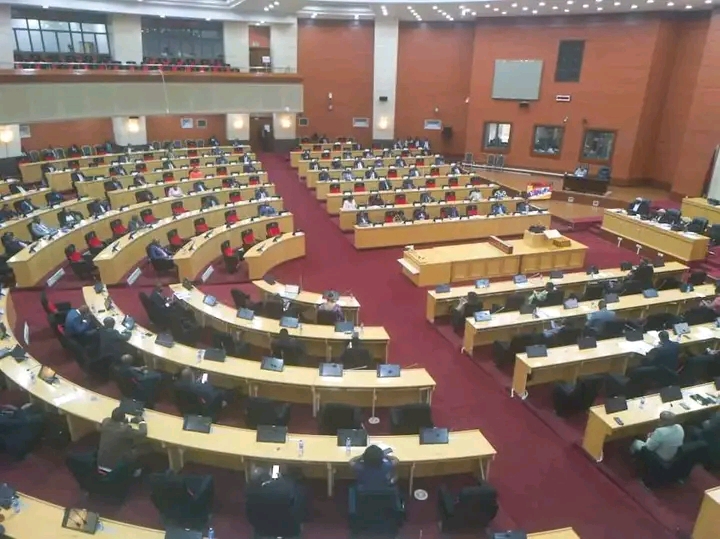
LILONGWE-(Maravi-Post)-Public debate has intensified following President Professor Arthur Peter Mutharika’s decision not to assent to the Constituency Development Fund (CDF) Bill that was passed by Members of Parliament last year.
Rather than focusing solely on political disagreements, analysts say the move highlights broader concerns about governance, accountability, and economic management.
Governance expert Latimu Matenje argues that the President’s stance reflects adherence to democratic principles, particularly the need to safeguard public resources and ensure that development initiatives genuinely benefit citizens.
Matenje notes that through the Ministries of Justice and Finance, the CDF framework requires careful scrutiny to ensure transparency and effectiveness.
He believes that, if properly managed, the fund has the potential to transform lives by bringing development closer to communities, but only under strong oversight mechanisms.
Another analyst, Joseph Kandiyesa, has taken a more cautious view, suggesting that the country should first assess the practical outcomes of the proposed law before drawing firm conclusions.
He says the legislation is still new and untested, making it important to evaluate whether it would achieve its intended goals without creating financial strain.
Kandiyesa also pointed out that the President’s refusal to sign the bill may have significant implications.
According to him, the concerns raised by Mutharika are largely centred on protecting Malawi’s economic interests and ensuring fiscal discipline at a time when the country faces serious economic challenges.
Overall, commentators agree that the debate over the CDF Bill goes beyond partisan politics.
Instead, it raises critical questions about how development funds should be managed, who should control them, and how best to balance decentralised development with national economic stability.






