Katy Perry is turning to music after upheaval in her personal life.
The pop star, 41, dropped her powerful new song, “Bandaids,” and its self-deprecating music video on Thursday, November 6, marking her first release since her split from ex-fiancé Orlando Bloom.
In the video, a down-on-her-luck Perry finds herself in a series of near-death situations. It begins with the singer washing dishes (a nod to her viral “Call Her Daddy” comment last year about Bloom getting his “d*** sucked” whenever he did chores) when her ring suddenly falls down the drain. As Perry sticks her hand in the sink to retrieve the gold band, she accidentally turns on the garbage disposal, leaving her bloodied and screaming.
As the visual progresses, Perry’s misfortune only gets worse: Her shoelace gets caught in the escalator at a shopping mall, causing her to face-plant; the lid comes off her coffee cup while she’s driving, spilling all over her lap and burning her; and she sinks into quicksand after narrowly avoiding an oncoming train.
The video is filled with Easter eggs, from a daisy growing in the middle of the train tracks (Perry and Bloom’s 5-year-old daughter is named Daisy) to the Grammy nominee’s 2024 single “Woman’s World” playing before a gas station explosion in the final scene, signaling the end of her 143 era and the beginning of another.
“Bandaids” features candid lyrics about Perry’s “broken heart” that offer a glimpse into her mindset after her breakup. She sings in the first verse, “Hand to God, I promise I tried / There’s no stone left unturned / It’s not what you did / It’s what you didn’t / You were there, but you weren’t.”
Later, Perry references Daisy as one of the positive things that came out of the relationship, singing, “If I had to do it all over again / I would still do it all over again / The love that we made was worth it in the end.”
The release comes after several major changes in Perry’s personal life. Us Weekly confirmed her separation from Bloom, 48, in June after nearly 10 years together. A source revealed at the time that it was “a long time coming,” as things between the now-exes had “been tense for months.”
Nonetheless, Perry and Bloom remain cordial as they moved forward with their focus on their daughter.
“They are still very much in touch and coparenting Daisy together,” an insider told Us in June. “It’s not messy between them.”
Katy PerryCynthia Parkhurst
The source noted that Perry and Bloom were “prioritizing stability and consistency for Daisy” as the family adapted to their new normal.
In the aftermath of the split, the Pirates of the Caribbean star emphasized his healthy coparenting dynamic with his ex.
“I’m so grateful. We have the most beautiful daughter,” he said on the Today show in September. “You know, when you leave everything on the field, like I did in [the movie The Cut], I feel grateful for all of it.”
He added, “We’re great. We’re going to be great. It’s nothing but love.”
After her breakup from Bloom, Perry moved on with former Canadian Prime Minster Justin Trudeau, to whom she has been linked since July. At the time, the pair — who “have a few mutuals in the music industry” — were spotted on a “casual” dinner date in Canada after being “in touch for the last month,” according to a source.
Although Perry does not “have a lot of extra time” at the moment due to her ongoing Lifetimes Tour, the insider told Us, “This is all new to her, as she hasn’t dated in so many years, and it’s been exciting to put herself out there again. … Katy is excited to move on but isn’t looking for anything serious.”
In October, a source revealed that Perry and Trudeau, 53, are staying under the radar while pursuing their connection.
“Katy is really into it. She’s very happy,” the insider told Us. “She’s trying to keep it low-key, and they’ve spent a lot of private time together. She’s not looking to publicize this relationship.”
Share this:
Like this:
LikeLoading…
Discover more from The Maravi Post
Subscribe to get the latest posts sent to your email.
The executive secretary of the Convention on Biological Diversity, Elizabeth Maruma Mrema, highlighted on Friday Dec. 16 the results of the Nagoya Protocol on access to genetic resources and fair benefit sharing at an event during COP15 in the Canadian city of Montreal. But the talks have not reached an agreement on the digital sequencing of genetic resources. CREDIT: Emilio Godoy/IPS
By Emilio Godoy MONTREAL, Dec 16 2022 (IPS)
In addition to its nutritional properties, quinoa, an ancestral grain from the Andes, also has cosmetic uses, as stated by the resource use and benefit-sharing permit ABSCH-IRCC-PE-261033-1 awarded in February to a private individual under a 15-month commercial use contract.
But it also sets restrictions on the registration of products obtained from quinoa or the removal of its elements from the Andean nation, to prevent the risk of irregular exploitation without a fair distribution of benefits, in other words, biopiracy.”The scientific community is willing to share benefits through simple mechanisms that do not unfairly burden researchers in low- and middle-income countries.” — Amber Scholz
The licensed material may have a digital representation of its genetic structure which in turn may generate new structures from which formulas or products may emerge. This is called digital sequence information (DSI), in the universe of research or commercial applications within the CBD.
The summit has brought together some 15,000 people representing the 196 States Parties to the CBD, non-governmental organizations, academia, international bodies and companies.
The focus of the debate is the Post-2020 Global Framework on Biodiversity, which consists of 22 targets in areas including financing for conservation, guidelines on digital sequencing of genetic material, degraded ecosystems, protected areas, endangered species, the role of business and gender equality.
Like most of the issues, negotiations on DSI and the sharing of resulting benefits, contained in one of the Global Framework’s four objectives and in target 13, are at a deadlock, on everything from definitions to possible sharing mechanisms.
Except for the digital twist, the issue is at the heart of the Nagoya Protocol on Access to Genetic Resources and the Fair and Equitable Sharing of Benefits Arising from their Utilization, part of the CBD, signed in that Japanese city in 2010 and in force since 2014.
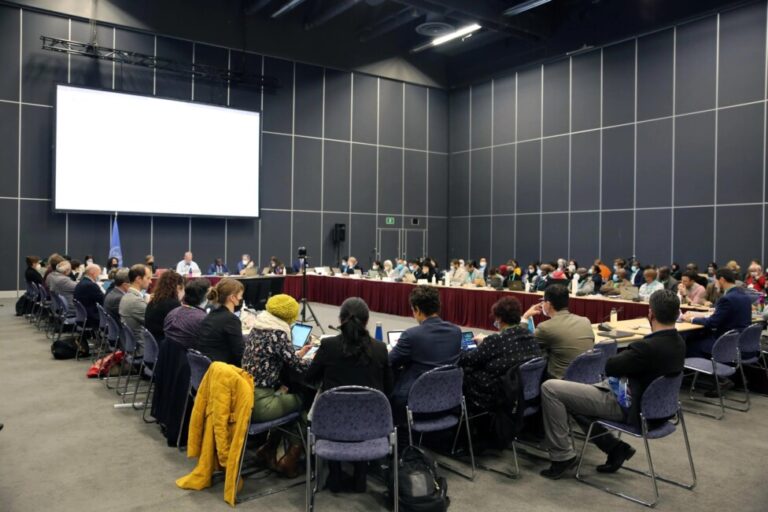
The delegations of the 196 States Parties to the Convention on Biological Diversity have failed to make progress at COP15 in the negotiations on new targets for the protection of the world’s natural heritage, in the Canadian city of Montreal. In the picture, a working group reviews a proposal on the complex issue. CREDIT: IISD/ENB
Amber Scholz, a German member of the DSI Scientific Network, a group of 70 experts from 25 countries, said there is an urgent need to close the gap between the existing innovation potential and a fair benefit-sharing system so that digital sequencing benefits everyone.
“It’s been a decade now and things haven’t turned out so well. The promise of a system of innovation, open access and benefit sharing is broken,” Scholz, a researcher at the Department of Microbial Ecology and Diversity in the Leibniz Institute’s DSMZ German Collection of Microorganisms and Cell Cultures, told IPS.
DSI stems from the revolution in the massive use of technological tools, which has reached biology as well, fundamental in the discovery and manufacture of molecules and drugs such as those used in vaccines against the coronavirus that caused the COVID-19 pandemic.
The Aichi Biodiversity Targets, adopted in 2010 in that Japanese city during the CBD COP10, were missed by the target year, 2020, and will now be renewed and updated by the Global Framework that will emerge from Montreal.
The targets included respect for the traditional knowledge, innovations and practices of indigenous and local communities related to the conservation and sustainable use of biological diversity, their customary use of biological resources, and the full and effective participation of indigenous and local communities in the implementation of the CBD.
Lack of clarity in the definition of DSI, challenges in the traceability of the country of origin of the sequence via digital databases, fear of loss of open access to data and different outlooks on benefit-sharing mechanisms are other aspects complicating the debate among government delegates.
Through the Action Agenda: Make a Pledge platform, organizations, companies and individuals have already made 586 voluntary commitments at COP15, whose theme is “Ecological civilization: Building a shared future for all life on earth”.
Of these, 44 deal with access and benefit sharing, while 294 address conservation and restoration of terrestrial ecosystems, 185 involve partnerships and alliances, and 155 focus on adaptation to climate change and emission reductions.
Genetic havens
Access to genetic resources for commercial or non-commercial purposes has become an issue of great concern in the countries of the global South, due to the fear of biopiracy, especially with the advent of digital sequencing, given that physical access to genetic materials is not absolutely necessary.
Although the Nagoya Protocol includes access and benefit-sharing mechanisms, digital sequencing mechanisms have generated confusion. In fact, this instrument has created a market in which lax jurisdictions have taken advantage by becoming genetic havens.
Around 2,000 gene banks operate worldwide, attracting some 15 million users. Almost two billion sequences have been registered, according to statistics from GenBank, one of the main databases in the sector and part of the U.S. National Center for Biotechnology Information.
Argentina leads the list of permits for access to genetic resources in Latin America under the Protocol, with a total of 56, two of which are commercial, followed by Peru (54, four commercial) and Panama (39, one commercial). Mexico curbed access to such permits in 2019, following a scandal triggered by the registration of maize in 2016.
The largest providers of genetic resources leading to publicly available DSI are the United States, China and Japan. Brazil ranks 10th among sources and users of samples, according to a study published in 2021 by Scholz and five other researchers.
The mechanisms for managing genetic information sequences have become a condition for negotiating the new post-2020 Global Framework for biodiversity, which poses a conflict between the most biodiverse countries (generally middle- and low-income) and the nations of the industrialized North.
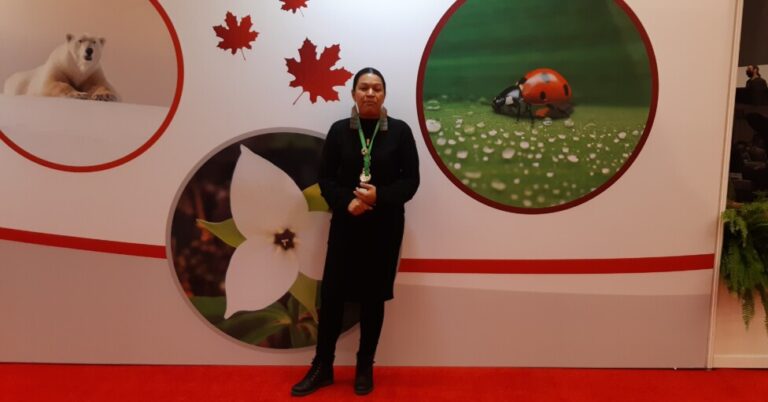
Brazilian indigenous activist Cristiane Juliao, a leader of the Pankararu people, calls for a fair system of benefit-sharing for access to and use of genetic resources and their digital sequences at COP15, being held at the Palais des Congrès in the Canadian city of Montreal. CREDIT: Emilio Godoy/IPS
“We don’t look at one small element of a plant. We look at the whole context and the role of that plant. All traditional knowledge is associated with genetic heritage, because we use it in food, medicine or spiritual activities,” she told IPS at COP15.
Therefore, she said, “traceability is important, to know where the knowledge was acquired or accessed.”
In Montreal, Brazilian native organizations are seeking recognition that the digital sequencing contains information that indigenous peoples and local communities protect and that digital information must be subject to benefit-sharing. They are also demanding guarantees of free consultation and the effective participation of indigenous groups in the digital information records.
Thanks to the system based on the country’s Biodiversity Law, in effect since 2016, the Brazilian government has recorded revenues of five million dollars for permits issued.
The Working Group responsible for drafting the new Global Framework put forward a set of options for benefit-sharing measures.
They range from leaving in place the current status quo, to the integration of digital sequence information on genetic resources into national access and benefit-sharing measures, or the creation of a one percent tax on retail sales of genetic resources.
Scholz suggested the COP reach a decision that demonstrates the political will to establish a fair and equitable system. “The scientific community is willing to share benefits through simple mechanisms that do not unfairly burden researchers in low- and middle-income countries,” she said.
For her part, Juliao demanded a more inclusive and fairer system. “There is no clear record of indigenous peoples who have agreed to benefit sharing. It is said that some knowledge comes from native peoples, but there is no mechanism for the sharing of benefits with us.”