COP30 Fails the Caribbean’s Most Vulnerable, Leaders Say: ‘Our Lived Reality Isn’t Reflected’

Climate Change Finance, Climate Change Justice, Conferences, COP30, Development & Aid, Editors’ Choice, Environment, Featured, Headlines, International Justice, Latin America & the Caribbean, Small Island Developing States, Sustainable Development Goals, TerraViva United Nations
COP30


Regional leaders say the outcome of the ‘mixed bag’ climate talks once again overlooks the real and mounting threats faced by Caribbean countries.
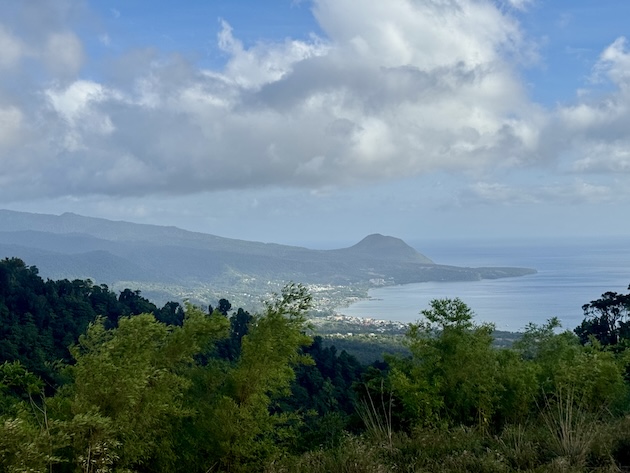
A coastal community in the Eastern Caribbean. Small island states say their extreme climate vulnerability is still not reflected in global finance decisions made at COP30. Credit: Alison Kentish/IPS

A coastal community in the Eastern Caribbean. Small island states say their extreme climate vulnerability is still not reflected in global finance decisions made at COP30. Credit: Alison Kentish/IPS

CASTRIES, St Lucia, Dec 1 2025 (IPS) – Caribbean small island states say this year’s UN climate conference has once again failed to deliver the urgency and ambition needed to tackle escalating climate devastation across the region. From slow-moving climate finance to frustrating political gridlock, leaders say COP30 did not reflect the realities that small islands are living through every day.


Jamaica is recovering from Hurricane Melissa, which left over 30 percent of the country’s GDP in losses and billions of dollars in damage. While the country has been able to respond rapidly thanks to a suite of innovative developmental finance tools, including a USD 150 million catastrophe bond, parametric insurance and a disaster savings fund, its Minister for Water, Environment and Climate Change, Matthew Samuda, warns that the vast majority of Caribbean islands do not have similar mechanisms.

Speaking at a press conference organized by Island Innovation and themed “Islands, the Climate Finance Gap, and COP30 Reflections,” Samuda said this is precisely why global negotiations must center the lived experiences of SIDS.

“I think I perhaps may be a little more disappointed than I am usually at the end of a COP because seeing what Jamaica is going through, seeing what Vietnam is going through, seeing extreme weather events pop up all around the world over the last 10 days, you would think that the urgency and the facts staring us in the face would have brought about greater ambition,” he said, adding that “unfortunately, the global geopolitical landscape didn’t allow for us to go much further.”

A Struggle Just to be Heard?

For many small islands and territories, simply participating meaningfully at COP30 was an uphill battle. The British Virgin Islands, like other Caribbean territories, had to rely on partners, including the Organisation of Eastern Caribbean States and the Caribbean Community Climate Change Centre for accreditation and access to the negotiations.

“We try to split up and cover as much as we can,” said Dr. Ronald Berkeley, Permanent Secretary in the Ministry of Environment, Natural Resources and Climate Change. “Our reliance on partners shows how limited our reach still is.”

Berkeley said that despite the Caribbean’s visible and worsening climate impacts, it remains difficult to get major emitters to understand the region’s urgency.

“For small islands, this is real. I’m not sure a lot of the big players believe us,” he said. “Until you live through being almost blown to smithereens by a Category Five hurricane, you will never understand.”

The BVI recently established its own climate trust fund, currently funded with about US$5.5 million, to address some financing shortfalls, but Berkeley emphasized that this cannot make up for reliable, large-scale climate funding.

Barriers to Pledges

Caribbean officials are echoing the same concern—that climate finance exists on paper but rarely reaches small, vulnerable nations at the speed or scale required.

“At COP there were positive commitments, about US$1.3 trillion annually by 2035 for climate action, the tripling of adaptation finance and operationalizing the Loss and Damage Fund,” said Dr. Mohammad Rafik Nagdee, Executive Director of the Caribbean Centre for Renewable Energy and Energy Efficiency (CCREEE).

“But the elephant in the room is the global finance gap,” he said. “Even where access exists, it’s not accessible at the speed the climate crisis demands. Processes are lengthy, requirements heavy and small governments simply don’t have the technical capacity.”

Nagdee said the region needs “greater predictability, simpler pathways and finance that is actually ready to disburse.”

Living Through it—Not Debating it

For Jamaica, which is emerging from one of the most devastating storms in its history, the mismatch between climate impacts and climate action is glaring.

“In the past four years, Jamaica has had its hottest day on record, its wettest day on record, its worst droughts, two tropical storms, a Category 4 hurricane and now what could be classified as a Category 6,” Samuda said. “That’s climate change in reality. That’s not an academic debate for us.”

Caribbean leaders widely described COP30 as a ‘mixed bag,’ with negotiations with incremental progress overshadowed by inadequate urgency.

“We cannot talk about building back better if the resources arrive slowly,” Nagdee said.

For small island states living on the frontlines of warming seas, rising temperatures and record-breaking storms, the message from COP30 is clear and becoming all-too familiar—that  climate change is accelerating and the price of delay is already being paid.

This feature is published with the support of Open Society Foundations.

IPS UN Bureau Report


Latin America Is Lagging in Its Homework to Meet the SDGs

Civil Society, Conferences, Development & Aid, Editors’ Choice, Featured, Global, Global Governance, Headlines, IPS UN: Inside the Glasshouse, Latin America & the Caribbean, Regional Categories, Sustainable Development Goals

Sustainable Development Goals

A view of the Altos de Florida neighborhood in Bogotá, Colombia. Overcoming poverty is the first of the Sustainable Development Goals, and in the Latin American and Caribbean region there is not only slow progress but even setbacks in the path to reduce it. CREDIT: Freya Mortales / UNDP

A view of the Altos de Florida neighborhood in Bogotá, Colombia. Overcoming poverty is the first of the Sustainable Development Goals, and in the Latin American and Caribbean region there is not only slow progress but even setbacks in the path to reduce it. CREDIT: Freya Mortales / UNDP

CARACAS, Sep 15 2023 (IPS) – The Latin American and Caribbean region is arriving at the Sustainable Development Goals Summit on the right track but far behind in terms of progress, at the halfway point to achieve the SDGs, which aim to overcome poverty and create a cleaner and healthier environment.


“We are exactly halfway through the period of the 2030 Agenda for Sustainable Development, but we are not half the way there, as only a quarter of the goals have been met or are expected to be met that year,” warned ECLAC Executive Secretary José Manuel Salazar-Xirinachs.

“We are exactly halfway through the period of the 2030 Agenda for Sustainable Development, but we are not half the way there, as only a quarter of the goals have been met or are expected to be met that year.” — José Manuel Salazar-Xirinachs

However, the head of the Economic Commission for Latin America and the Caribbean (ECLAC) stressed, in response to a questionnaire submitted to him by IPS, that “the percentage of targets on track to be met is higher than the global average,” partly due to the strengthening of the institutions that lead the governance of the SDGs.

The 17 SDGs include 169 targets, to be measured with 231 indicators, and in the region 75 percent are at risk of not being met, according to ECLAC, unless decisive actions are taken to forge ahead: 48 percent are moving in the right direction but too slowly to achieve the respective targets, and 27 percent are showing a tendency to backslide.

The summit was convened by UN Secretary-General António Guterres for Sept. 18-19 at the United Nations headquarters in New York, under the official name High-Level Political Forum on Sustainable Development.

The stated purpose is to “step on the gas” to reach the SDGs in all regions, in the context of a combination of crises, notably the COVID-19 pandemic, inflation, new wars, and the climate and food crises.

The SDGs address ending poverty, achieving zero hunger, health and well-being, quality education, gender equality, clean water and sanitation, affordable and clean energy, decent work and economic growth, industry, innovation and infrastructure, and reducing inequalities.

They also are aimed at sustainable cities and communities, responsible production and consumption, climate action, underwater life, life of terrestrial ecosystems, peace, justice and strong institutions, and partnerships to achieve the goals.

Drinking water is distributed from tanker trucks in the working-class Petare neighborhood in eastern Caracas. Access to safe drinking water and sanitation is another of the goals that are being addressed with a great variety of results within Latin American and Caribbean countries, and there is no certainty that this 2030 Agenda target will be reached in the region. CREDIT: Caracas city government

Drinking water is distributed from tanker trucks in the working-class Petare neighborhood in eastern Caracas. Access to safe drinking water and sanitation is another of the goals that are being addressed with a great variety of results within Latin American and Caribbean countries, and there is no certainty that this 2030 Agenda target will be reached in the region. CREDIT: Caracas city government

Progress is being made, but slowly

“In all the countries of the region progress is being made, but in many not at the necessary rate. The pace varies greatly and we are not where we would like to be,” Almudena Fernández, chief economist for the region at the United Nations Development Program (UNDP), told IPS from New York.

Thus, said the Peruvian economist, “there is progress, for example, on some health or energy and land care issues, but we are lagging in achieving more sustainable cities, and we are not on the way to achieving, regionally, any of the poverty indicators.”

Salazar-Xirinachs, who is from Costa Rica, said from Santiago that “the countries that have historically been at the forefront in public policies are the ones that have made the greatest progress, such as Uruguay in South America, Costa Rica in Central America or Jamaica in the Caribbean. They have implemented a greater diversity of strategies to achieve the SDGs.”

A group of experts led by U.S. economist Jeffrey Sachs prepared graphs for the UN on how countries in the various developing regions are on track to meet the goals or still face challenges – measured in three grades, from moderate to severe – and whether they are on the road to improvement, stagnation or regression.

According to this study, the best advances in poverty reduction have been seen in Brazil, El Salvador, Guyana, Paraguay, the Dominican Republic and Uruguay, while the greatest setbacks have been observed in Argentina, Belize, Ecuador and Venezuela.

In the fight for zero hunger, no one stands out; Brazil, after making progress, slid backwards in recent years, and the best results are shown by Caribbean countries.

In health and well-being, education and gender equality, there are positive trends, although stagnation has been seen, especially in the Caribbean and Central American countries.

In water and sanitation, energy, reduction of inequalities, economic growth, management of marine areas, terrestrial ecosystems, and justice and institutions, Sachs’ dashboard shows the persistence of numerous obstacles, addressed in very different ways in different countries.

Many countries in Central America and the Caribbean are on track to meet their climate action goals, and in general the region has made progress in forging alliances with other countries and organizations to pave the way to meeting the SDGs.

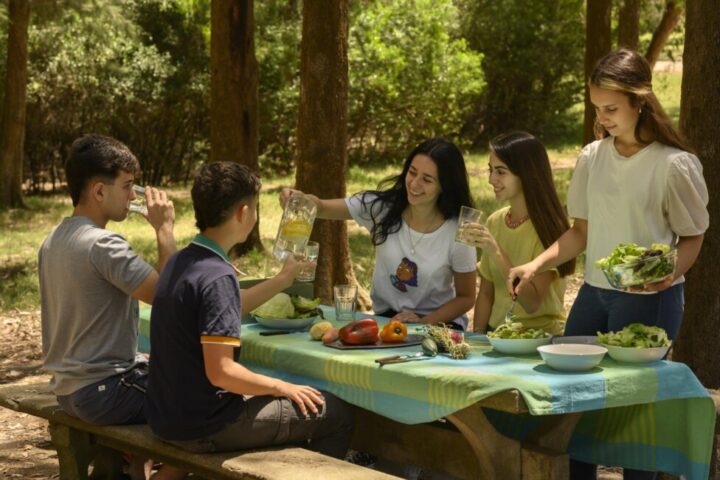
Young people in a Latin American country share a vegetable-rich meal outdoors. The notion of consuming products produced with environmentally sustainable techniques is gaining ground, and a private sector whose DNA is embedded in the search for positive environmental and social repercussions is flourishing. CREDIT: Pazos / Unicef

Young people in a Latin American country share a vegetable-rich meal outdoors. The notion of consuming products produced with environmentally sustainable techniques is gaining ground, and a private sector whose DNA is embedded in the search for positive environmental and social repercussions is flourishing. CREDIT: Pazos / Unicef

A question of funds

Even before the pandemic that broke out in 2020, Fernández said, the region was not moving fast enough towards the SDGs; its economic growth has been very low for a long time – and remains so, at no more than 1.9 percent this year – and growth with investment is needed in order to reduce poverty.

In this regard, Fernández highlighted the need to expand fiscal revenues, since tax collection is very low in the region (22 percent of gross domestic product, compared to 34 percent in the advanced economies of the Organization for Economic Cooperation and Development), “although progress will not be made through public spending alone,” she said.

Salazar-Xirinachs pointed out that “in addition to financial resources, it is very important to adapt actions to specific areas to achieve the 2030 Agenda. The measures implemented at the subnational level are of great importance. Specific problems in local areas cannot always be solved with one-size-fits-all policies.”

Fernández underlined that the 2030 Agenda “has always been conceived as a society-wide agenda, and the private sector plays an essential role, particularly the areas that are flourishing because it has a positive social and environmental impact on their DNA, and there are young consumers who use products made in a sustainable way.”

ECLAC’s Salazar-Xirinachs highlighted sensitized sectors as organized civil society and the private sector, for their participation in sustainable development forums, follow-up actions and public-private partnerships moving towards achievement of the SDGs.

Finally, with respect to expectations for the summit, the head of ECLAC aspires to a movement to accelerate the 2030 Agenda in at least four areas: decent employment for all, generating more sustainable cities, resilient infrastructure that offers more jobs, and improving governance and institutions involved in the process.

ECLAC identified necessary “transformative measures”: early energy transition; boosting the bioeconomy, particularly sustainable agriculture and bioindustrialization; digital transformation for greater connectivity among the population; and promoting exports of modern services.

It also focuses on the care society, in response to demographic trends, to achieve greater gender equality and boost the economy; sustainable tourism, which has great potential in the countries of the region; and integration to enable alliances to strengthen cooperation in the regional bloc.

In summary, ECLAC concludes, “it would be very important that during the Summit these types of measures are identified and translate into agreements in which the countries jointly propose a road map for implementing actions to strengthen them.”