Haiti: Transitional Administration Faces Stern Test

Civil Society, Crime & Justice, Featured, Gender Violence, Headlines, Human Rights, Latin America & the Caribbean, TerraViva United Nations

Opinion

Credit: Bruna Prado/POOL/AFP via Getty Images

LONDON, Jun 14 2024 (IPS) – There’s been recent change in violence-torn Haiti – but whether much-needed progress results remains to be seen.

Acting prime minister Garry Conille was sworn in on 3 June. A former UN official who briefly served as prime minister over a decade ago, Conille was the compromise choice of the Transitional Presidential Council. The Council formed in April to temporarily assume the functions of the presidency following the resignation of de facto leader Ariel Henry.


Upsurge in violence

Haiti has seen intense and widespread gang violence since the assassination of President Jovenel Moïse in July 2021. Henry was finally forced out as the conflict escalated still further. In February, two major gang networks joined forces. The gangs attacked Haiti’s main airport, forcing it to close for almost three months and stopping Henry returning from abroad.

Gangs took control of police stations and Hait’s two biggest jails, releasing over 4,000 prisoners. The violence targeted an area of the capital, Port-au-Prince, previously considered safe, where the presidential palace, government headquarters and embassies are located. Haitian citizens paid a heaver price: the UN estimates that around 2,500 people were killed or injured in gang violence in the first quarter of this year, a staggering 53 per cent increase on the previous quarter.

Henry won’t be missed by civil society. He was widely seen as lacking any legitimacy. Moïse announced his appointment shortly before his assassination, but it was never formalised, and he then won a power struggle thanks in part to the support of foreign states. His tenure was a blatant failure. It was when the gangs seemed on the verge of taking full control of Port-au-Prince that Henry finally lost US support.

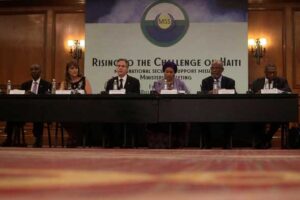
Now the USA, other states and the Caribbean Community (CARICOM) have thrown their weight behind the Council and a Kenya-led international police force, which has recently begun to deploy.

Contested developments

Gang leaders can be expected to maintain their resistance to these developments. The most prominent, ex-police officer Jimmy Chérizier, demands a role in any talks. But this looks like posturing. Chérizier likes to portray himself as a revolutionary, on the side of poor people against elites. But the gangs are predatory. They kill innocent people, and it’s the poorest who suffer the most. The things the gangs make their money from – including kidnapping for ransom, extortion and smuggling – benefit from weak law enforcement and a lack of central authority. Gang leaders are best served by maximum chaos for as long as possible, and when that ends will seek an accommodation with favourable politicians, as they’ve enjoyed before.

Political squabbling suits the gangs, which makes it a concern that it took extensive and protracted negotiations to establish the Council. The opaque process was evidently characterised by self-interested manoeuvring as politicians jockeyed for position and status.

The resulting body has nine members: seven with voting rights and two observers. Six of the seven come from political groupings, with the seventh a private sector representative. One observer represents religious groups and the other civil society: Régine Abraham, a crop scientist by profession, from the Rally for a National Agreement.

The Council’s formation was shortly followed by the arrival of an advance force of Kenyan police, with more to follow. It’s been a long time coming. The current plan for an international police force was adopted by a UN Security Council resolution in October 2023. The government of Kenya took the lead, offering a thousand officers, with smaller numbers to come from elsewhere. But Kenya’s opposition won a court order temporarily preventing the move. Henry was in Kenya to sign a mutual security agreement to circumvent the ruling when he was left stranded by the airport closure.

Many Haitians are rightly wary of the prospect of foreign powers getting involved. The country has a dismal history of self-serving international interference, particularly by the US government, while UN forces have been no saviours. A peacekeeping mission from 2004 to 2017 committed sexual abuse and introduced cholera. This will be the 11th UN-organised mission since 1993, and all have been accused of human rights violations.

Civil society points to the Kenyan police’s long track record of committing violence and rights abuses, and is concerned it won’t understand local dynamics. There’s also the question of whether resources spent on the mission wouldn’t be better used to properly equip and support Haiti’s forces, which have consistently been far less well equipped than the gangs. Previous international initiatives have manifestly failed to help strengthen the capacity of Haitian institutions to protect rights and uphold the rule of law.

Time to listen

Haitian civil society is right to criticise the current process as falling short of expectations. It’s an impossible task to expect one person to represent the diversity of Haiti’s civil society, no matter how hard they try. And that person doesn’t even have a vote: the power to make decisions by majority vote is in the hands of political parties many feel helped create the current mess.

The Council is also a male-dominated institution: Abraham is its only female member. With gangs routinely using sexual violence as a weapon, the Council hardly seems in good shape to start building a Haiti free of violence against women and girls.

And given the role of international powers in bringing it about, the Council – just like the Kenya-led mission – is open to the accusation of being just another foreign intervention, giving rise to suspicions about the motives of those behind it.

The latest steps could be the start of something better, but only if they’re built on and move in the right direction. Civil society is pushing for more from the government: for much more women’s leadership and civil society engagement. For the Kenya-led mission, civil society is urging strong human rights safeguards, including a means for complaints to be heard if the mission, like all its predecessors, commits human rights abuses. This shouldn’t be too much to ask.

Andrew Firmin is CIVICUS Editor-in-Chief, co-director and writer for CIVICUS Lens and co-author of the State of Civil Society Report.

  Source

Venezuela’s Opportunity for Democracy

Civil Society, Crime & Justice, Democracy, Featured, Headlines, Human Rights, Latin America & the Caribbean, Press Freedom, TerraViva United Nations

Opinion

Credit: Jimmy Villalta/VW Pics/Universal Images Group via Getty Images

MONTEVIDEO, Uruguay, Jun 10 2024 (IPS) – Venezuela’s 28 July presidential election could offer a genuine chance of democratic transition. Despite an array of challenges, the opposition is coming into the campaign unified behind a single candidate. Many Venezuelans seem prepared to believe that voting could deliver change.

But the authoritarian government is digging in its heels. The opposition reasonably fears the election could be suspended or the government could suppress the opposition vote. Large-scale fraud can’t be ruled out.


All credible opinion polls show that authoritarian president Nicolás Maduro, in power since the death of Hugo Chávez in 2013 and seeking a third term in office, is highly unpopular. But his United Socialist Party of Venezuela (PSUV) extensively controls the state apparatus. Electoral authorities aren’t neutral and the election system is riddled with irregularities. A recent decision by the government-controlled National Electoral Council (CNE) excluded from voting over five million Venezuelans who’ve emigrated.

If the opposition defeats the PSUV at the polls, the government will only accept the results if the costs of repression outweigh the costs of withdrawal. This means some form of exit guarantees will need to be agreed. An agreement to coexist would also be needed for a transition period that could last several years, during which PSUV supporters would continue to hold important positions and the party would need to be given the chance to reinvent itself as a participant in democratic processes.

Civil society in resistance mode

Venezuelan civil society has long played a key role in promoting democracy and defending human rights. But civic space has increasingly been shut down, with activists and journalists routinely subjected to threats, harassment, intimidation, raids, arrests, detention and prosecution by courts lacking any independence.

Many civil society organisations (CSOs) and media outlets have closed and others self-censor or have changed their focus to avoid reprisals. Numerous journalists, academics and activists have joined the exodus to other countries.

The government give repression legal cover through a barrage of laws and regulations, supposedly on grounds such as the defence of sovereignty and the fight against terrorism. Many of these, starting with the 2010 National Sovereignty and Self-Determination Law, sought to restrict access to funding to financially suffocate civil society.

In 2017, the state introduced the Constitutional Law Against Hatred, for Tolerance and Peaceful Coexistence, known as the Anti-Hate Law, imposing heavy punishments, including lengthy jail sentences, for inciting hatred or violence through electronic means, including social media. The law leaves the definition of what constitutes hate speech to the government-aligned courts.

In 2021, the government passed an International Cooperation Act that includes a mandatory register of CSOs and an obligation to provide sensitive information.

The government has doubled down ahead of the election. In January, the National Assembly approved the first reading of a draft law known as the Anti-NGO Law, which would prohibit CSOs from engaging in vaguely defined ‘political activities’. The National Assembly is also currently discussing a law against fascism, aimed at banning and criminalising ideas, expressions and activities it deems to be ‘fascist’.

A united opposition

Over the years, the opposition has found it hard to present a unified front and a credible alternative. But this has changed in the run-up to the 2024 election, with the opposition agreeing to select a single presidential candidate.

María Corina Machado emerged as a consensus candidate with over 90 per cent of the vote at the October 2023 primary election. More than two million people were said to have taken part, defying threats from the authorities, censorship and physical attacks on candidates.

In an attempt to regain the initiative, the government sought to stir up nationalist sentiment by activating its dispute over Essequibo Guiana, a large territory in Guyana claimed by Venezuela. In December 2023 it held and predictably won a consultative referendum on the issue.

A week after the opposition primary, the Supreme Court suspended the process and results. In December, Machado filed a Supreme Court writ, but instead the court ratified her disqualification. So on 22 March, three days before the deadline for candidate registration, she announced 80-year-old academic Corina Yoris-Villasana as her replacement.

The government couldn’t find any excuse to disqualify Yoris, so instead it blocked the registration website. Right up to the deadline, the automated system had selective technical issues that affected opposition candidates.

Following an international press conference in which Machado denounced the manoeuvre, support came from two unlikely allies, the leftist governments of Brazil and Colombia. The CNE eventually authorised a 12-hour extension to register its candidates.

As a result of further negotiations in April, all registered opposition candidates withdrew apart from one. The compromise candidate was former diplomat Edmundo González Urrutia, a moderate few could object to.

International community’s role

Some countries, notably European Union (EU) members and the USA, have supported the Venezuelan opposition and urged the government to respect human rights and hold free and fair elections.

Anything the USA does is open to the accusation of imperialist interference, but the EU has been able to supply a credible set of proposals on how to hold fair elections. Recommendations of its report following 2021 regional and municipal elections included strengthening the separation of powers, abolishing disqualifications, holding a public voter education campaign, allowing balanced media coverage, repealing the Anti-Hate Law and ensuring enough properly trained and accredited polling station officials are available on election day.

However, the EU’s role in the upcoming election remains in doubt. After the European Parliament passed a resolution condemning Machado’s disqualification, the National Assembly leader said the EU wouldn’t be allowed to do election observation.

A key step in the right direction was taken in October 2023, just ahead of the primary, when government and opposition representatives met in Barbados and signed an agreement on the right of political organisations to choose their presidential candidates, an electoral timetable and a set of procedural guarantees.

The day after the signing of the Barbados Agreement, the US government eased its oil and gas sanctions but warned it would reinstate them if the government didn’t honour its commitments; in April 2023, it brought them back. The Venezuelan government immediately breached the agreement’s first point, as it initiated legal proceedings against the opposition primary.

Upon the signing of the agreement, the US Secretary of State also said that political prisoners were expected to be released by November. Five were immediately freed, but many more remain behind bars. Their release is a key opposition demand ahead of the election.

Two months before the big day, everything hangs in the balance. The unofficial campaign is well underway. Machado and González are touring the country, promising orderly and peaceful change. The government has launched an aggressive smear and disinformation campaign against González. Relentless harassment follows Machado wherever she goes. Local activists are routinely arrested following opposition rallies in their area.

There are surely many more twists and turns ahead. The Venezuelan government is used to ignoring international criticism, but it’s harder when calls to respect the democratic process come from leftist Latin American leaders. They can play a key role in urging Venezuela to let genuine elections happen and accept the results. The logic of democracy is that sooner or later Maduro will have to go. It would be wise for him to start negotiating the how.

Inés M. Pousadela is CIVICUS Senior Research Specialist, co-director and writer for CIVICUS Lens and co-author of the State of Civil Society Report.

  Source

India’s Election: Cracks Start to Show in Authoritarian Rule

Asia-Pacific, Civil Society, Crime & Justice, Featured, Headlines, Human Rights, Press Freedom, Religion, TerraViva United Nations

Opinion

Credit: Himanshu Sharma/picture alliance via Getty Images

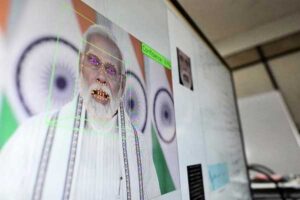
LONDON, Jun 7 2024 (IPS) – India’s Hindu nationalist strongman Narendra Modi has won his third prime ministerial term. But the result of the country’s April-to-June election fell short of the sweeping triumph that seemed within his grasp.

Modi’s Bharatiya Janata Party (BJP) has shed seats compared to the 2019 election, losing its parliamentary majority. Modi remains prime minister thanks to coalition partners. It’s a long way from the 400-seat supermajority Modi proclaimed he wanted – which would have given him power to rewrite the constitution.


The outcome may be that Modi faces more checks on his power. If so, that can only be good news for those he’s consistently attacked – including civil society and India’s Muslim minority.

Modi’s crackdown

Under Modi, in power since 2014, civic space conditions have deteriorated. India’s election was accompanied by the usual headlines about the country being the world’s largest democracy. But India’s democracy has long been underpinned by an active, vibrant and diverse civil society. Modi has sought to constrain this civic energy, seeing it as a hindrance to his highly centralised and personalised rule.

Modi’s government has repeatedly used repressive laws, including the draconian Unlawful Activities Prevention Act, to harass, intimidate and detain activists and journalists on fabricated charges. Law enforcement agencies have raided numerous civil society organisations and media companies. In October 2023, for example, police raided the homes of around 40 staff members of the NewsClick portal and detained its editor.

This was one of many attacks on media freedoms. Independent journalists routinely face harassment, intimidation, threats, violence, arrests and prosecution. Last year, the government banned a BBC documentary on Modi, followed by tax investigation raids on the corporation’s Indian offices.

The authorities have also used the Foreign Contribution Regulation Act to block access to international funding for civil society organisations, targeting those critical of their attacks on human rights. In 2020, the government amended the law to make it even stricter, extending powers to freeze bank accounts. Since the start of 2022, the authorities have cancelled registrations of almost 6,000 organisations.

The authorities have also unleashed violence against protesters. In 2019, citizenship legislation created a way for undocumented migrants to become Indian citizens – but only if they weren’t Muslim. Despite India’s secular constitution, the law introduced religious criteria into the determination of citizenship. The passage of this discriminatory law brought tens of thousands to the streets. Security forces responded with beatings, teargas and arrests, accompanied by internet shutdowns.

It was the same when farmers protested in 2020 and 2021, believing new farming laws would undermine their ability to make a living. The farmers ultimately triumphed, with Modi repealing the unpopular laws. But several farmers died as a result of the authorities’ heavy-handed response, including when a minister’s car ploughed into a crowd of protesters. Once again, the authorities shut down internet and mobile services, and police used batons and teargas and arrested many protesters.

As the new citizenship law made clear, those who have least access to rights are the ones most under attack. Muslims are the BJP’s favourite target, since it seeks to recast the country as an explicitly Hindu nation. The party’s politicians have consistently stoked anti-Muslim hatred, including over the wearing of hijabs, interfaith marriage and the protection of cows – a revered animal in Hinduism.

Modi has been accused of spreading anti-Muslim hate speech and conspiracy theories, including on the campaign trail. During the election, he called Muslims ‘infiltrators’ and alluded to India’s version of a narrative often advanced by far-right parties – that a minority population is out to replace the majority through a higher birthrate and the conversion of partners.

The BJP’s populist rhetoric has encouraged hatred and violence. In 2020, Delhi saw its worst riots in decades, sparked by violence at a protest against the citizenship law. Groups of Hindus and Muslims fought each other and 53 people were killed, most of them Muslims.

Top-down institutional violence followed the unilateral revocation of Jammu and Kashmir’s special autonomous status in 2019. The removal of constitutional protections for this Muslim-majority region was accompanied by a military occupation, curfew, public meeting ban, movement restrictions and one of the world’s longest-ever internet shutdowns. Indian government authorities have detained thousands of Kashmiri activists and criminalised countless journalists.

Disinformation thrives

Ahead of the election, the state detained key opposition politicians such as Delhi’s Chief Minister Arvind Kejriwal and froze opposition bank accounts, including of the main opposition party, Congress. Almost all politicians investigated by the government’s Enforcement Directorate are from the opposition.

Indian elections always take several weeks, given the huge logistical challenge of allowing up to 969 million people to vote. But this one, spread over 82 days, was unusually long. This allowed Modi to travel the country and make as many appearances as possible, representing a campaign that put his personality front and centre.

Disinformation was rife in the campaign. BJP politicians spread claims that Muslims were engaged in what they called a ‘vote jihad’ against Hindus, accompanied by accusations that the opposition would favour Muslims. Congress leader Rahul Gandhi was a particular target, with false allegations of links to China and Pakistan and doctored videos in circulation.

But despite the many challenges, the opposition coalition performed better than expected. The result suggests at least some are tired of the Modi personality cult and politics of polarisation. And for all the BJP’s attempts to emphasise economic success, many voters don’t feel better off. What matters to them are rising prices and unemployment, and they judged the incumbent accordingly.

It’s to be hoped the result leads to a change in style, with less divisive rhetoric and more emphasis on compromise and consensus building. That may be a tall order, but the opposition might now be better able to play its proper accountability role. Modi has lost his sheen of invincibility. For civil society, this could open up opportunities to push back and urge the government to stop its onslaught.

Andrew Firmin is CIVICUS Editor-in-Chief, co-director and writer for CIVICUS Lens and co-author of the State of Civil Society Report.

  Source

North Macedonia Turns Back the Clock

Civil Society, Crime & Justice, Economy & Trade, Europe, Featured, Headlines, Press Freedom, TerraViva United Nations

Opinion

Credit: Robert Atanasovski/AFP via Getty Images

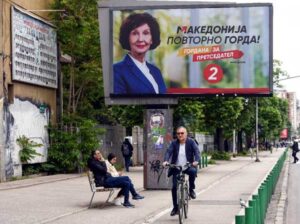
LONDON, May 23 2024 (IPS) – The old guard is back in North Macedonia, as the former ruling party – the Internal Macedonian Revolutionary Organization – Democratic Party for Macedonian National Unity (VMRO-DPMNE) – returns to parliamentary and presidential power.


Long the country’s dominant political force, the right-wing VMRO-DPMNE had been out of power since 2016. But this month, the political alliance it leads came first in the parliamentary election, taking 58 of 120 seats. In the presidential election runoff, its candidate triumphed with 61 per cent of the vote. In both cases the centre-left, pro-Europe Social Democratic Union of Macedonia (SDSM), which had led the governing coalition and held the presidency, came a distant second. In parliament, its political alliance lost 28 of its 46 seats with only 14 per cent of the vote.

VMRO-DPMNE made its way back to office by harnessing widespread public frustration over the country’s attempt to join the European Union (EU), which has moved slowly, been dogged by controversy and forced the government to make numerous compromises. SDSM stood on a platform of rapid constitutional reform to accelerate progress, but VMRO-DPMNE, while claiming to support EU membership, opposes further changes. Its return signals a turn away from Europe, and a likely worsening of civil society conditions.

Rocky road towards the EU

North Macedonia has been an official candidate to join the EU since 2005. Negotiations are always lengthy, but North Macedonia’s road has been particularly bumpy. Before it could begin formal negotiations, it had to change the country’s name. Any existing EU member can block a non-member’s accession, and Greece stood in the way. The country shared its name with a region of Greece, which the Greek government saw as implying a territorial claim.

The hugely controversial issue brought extensive protests as name-change negotiations reached their conclusion in 2018. A referendum intended to approve the change failed when a boycott left turnout well below the level required; VMRO-DPMNE urged its supporters to reject the deal. The referendum was non-binding, and parliament went on to change the constitution regardless in January 2019.

Then Bulgaria intervened. The Bulgarian government insists its North Macedonian counterpart must do more to prevent the spread of anti-Bulgarian sentiments and protect the rights of the country’s Bulgarian minority. This heated issue, inflamed by much disinformation, helped force a political crisis in Bulgaria in 2022 when the government collapsed.

The two sides finally struck a deal to allow North Macedonia to begin EU negotiations in July 2022, but disputes still flare. In 2023 Bulgaria’s parliament warned it could halt the process again. North Macedonia’s outgoing government failed to win the two-thirds parliamentary majority needed to change the constitution to recognise the Bulgarian minority.

Relations with Bulgaria played their part in the campaign. Some think the government has gone too far in compromising, and VMRO-DPMNE characterised the SDSM-led government’s actions as a surrender.

As a consequence of all the delays and compromises, public support for joining the EU has fallen.

A troubling return

VMRO-DPMNE led the government for a decade from 2006 to 2016, with Nikola Gruevski prime minister throughout. The party also held the presidency, a less powerful role, from 2009 to 2019.

Gruevski and his party fell from grace in 2016 amid allegations that he and many more of his party’s politicians were involved in a wiretapping scandal affecting over 20,000 people. Mass protests followed. VMRO-DPMNE still came first in the 2016 parliamentary election but couldn’t form a coalition, so power passed to an SDSM-led government. SDSM retained power in the 2020 election, and its candidate won the presidency in 2019.

Gruevski’s fall was swift. In 2018, he was sentenced to two years in prison for corruption, but he fled to Hungary, where the government of his authoritarian friend Viktor Orbán granted him political asylum. Further convictions followed, including a seven-year sentence for money laundering and illegal acquisition of property.

From exile, Gruevski has continued to criticise the government that replaced him. And while relations with VMRO-DPMNE’s current leader are hostile, ideologically VMRO-DPMNE still carries his fingerprints and the networks Gruevski developed among supportive media, the private sector and criminal groups remain. Under Gruevski, the party took a nationalist, pro-Russia and anti-west direction, promoting identity politics that hark back to the ancient Macedonian Empire.

For civil society, this makes the results concerning news. Conditions deteriorated during VMRO-DPMNE’s decade in power. The party’s identity politics fuelled a polarised environment. Nationalist groups physically attacked several journalists. Civil society leaders were among those subjected to illegal surveillance. Using the same tactics as Orbán, the government hurled abuse at civil society groups receiving funding from Open Society Foundations, accusing them of colluding with foreign governments. It subjected critical organisations to financial audits and raided their offices.

The election was held in an atmosphere of intense polarisation and proliferating disinformation, some originating in Russia, which doesn’t want any more countries joining the EU. There’s now a risk of a return to the politics of division, which would bring a resumption of attacks on civil society and independent media. VMRO-DPMNE has already made clear it’s looking for confrontation. New president Gordana Siljanovska-Davkova upset Greece by using North Macedonia’s old name during her inauguration ceremony.

The EU impasse wasn’t the only reason voters were unhappy. People haven’t seen any progress in combating corruption or improving economic conditions and public services. In country after country, there’s a broader pattern of electoral volatility as voters, unhappy with the performance of incumbents in difficult economic conditions, shop around for anything that looks different. Populist and nationalist parties – even long-established ones such as VMRO-DPMNE – are doing best at making an emotional connection with voters’ anger, offering deceptively simple answers and promising change.

For civil society, that means there’s now work to be done in depolarising the debate, building consensus and defending civic freedoms: a tall order, but a vital one, for which it’ll need a lot of support.

Andrew Firmin is CIVICUS Editor-in-Chief, co-director and writer for CIVICUS Lens and co-author of the State of Civil Society Report.

  Source

Panama’s Elections: Has Impunity Prevailed?

Civil Society, Climate Change, Crime & Justice, Economy & Trade, Education, Featured, Headlines, Labour, Latin America & the Caribbean, Migration & Refugees, TerraViva United Nations

Opinion

Credit: Johan Ordoñez/AFP via Getty Images

MONTEVIDEO, Uruguay, May 21 2024 (IPS) – Regional experts called it Panama’s most important election since the 1989 US invasion that deposed de facto president General Manuel Noriega. Panamanians went to the polls amid high inflation and unemployment, with a stagnating economy. Endemic corruption was also high on their long list of concerns, along with access to water, education and a collapsing social security system.


The winner, conservative lawyer José Raúl Mulino, was a stand-in for former president Ricardo Martinelli, disqualified from running due to a money laundering conviction. Martinelli remains popular regardless and managed to transfer his popularity to his less charismatic substitute. For those who backed Mulino, nostalgia for the economic stability and growth that marked Martinelli’s pro-business administration seemed to outweigh his proven record of corruption.

On the face of it, the election results seemed to demonstrate the primacy of economic considerations in voters’ minds, with hopes for growth trumping corruption fatigue. But that’s not the whole story.

Free, fair and uncertain

On 5 May, Panamanians went to the polls to elect a president and vice-president, 71 National Assembly members, 20 Central American Parliament deputies and local representatives.

The elections were undoubtedly clean and transparent, with integrity guaranteed by the participation of civil society in the National Scrutiny Board. Results were announced quickly and all losing candidates accepted them. But the pre-voting context was far less straightforward. Until the very last minute the now president-elect wasn’t sure he’d be allowed to run.

Mulino served as security minister in Martinelli’s government between 2009 and 2014. Ten years later, largely unknown to the electorate, he entered the race as Martinelli’s running mate for Achieving Goals (Realizando Metas, RM), a party Martinelli founded in 2021.

In July 2023, Martinelli was convicted of money laundering and sentenced to 10 years in prison, making him ineligible to run. He appealed, but the Electoral Tribunal didn’t make a final decision on his disqualification until March. To avoid jail, he sought asylum in the Nicaraguan embassy in Panama City. Mulino took his place, but his presidential candidacy was also challenged. For two months, he became the centre of attention as the Electoral Tribunal and Supreme Court debated whether he could ran. The positive court ruling came on 3 May, just two days before voting. Mulino also received a lot of help from Martinelli, who campaigned for him online while holed up in the Nicaraguan embassy.

A fragmented vote

Eight candidates contested the presidency, a five-year position with no possibility of a second consecutive term. With no runoff, a fragmented vote was likely to produce a winner with far less than half the vote. Mulino’s winning total of 34.2 per cent wasn’t unusual: two previous presidents received similarly low shares, including the outgoing centre-left president, Laurentino Cortizo of the Democratic Revolutionary Party (Partido Revolucionario Democrático, PRD).

Mulino’s closest competitor, on 24.6 per cent, was Ricardo Lombana, a centre-right anti-corruption outsider. In third place was Martin Torrijos, another former president and Martinelli’s immediate predecessor, now distanced from his original party, the PRD, and running on the ticket of the Christian democratic People’s Party (Partido Popular, PP). Fourth was Rómulo Roux, of the centre-right Democratic Change (Cambio Democrático, CD), the party Martinelli founded and used as a vehicle for the presidency, but which he abandoned in 2020 amid leadership disputes.

The parties that once dominated the political landscape fared badly. The Panameñista Party didn’t even have a presidential candidate; instead, its leader joined Roux as his running mate. The PRD, which led three of the last six governments, fell below six per cent.

Independents on the rise

In 1998, Martinelli’s CD was the first to challenge the dominance of traditional parties. Later changes to the electoral law allowed independent candidates to stand. Their growing prominence reflects widespread dissatisfaction with traditional parties and the political class.

In the 5 May congressional elections, independent candidates won more seats than any political party – 20, up from just five. Mulino’s new RM party took 14 seats. The PRD lost a whopping 22, retaining only 13. The new composition of the National Assembly speaks of a thirst for renewal that doesn’t match the choice for corruption and impunity the presidential results might suggest.

Spotlight on the economy

For the three decades before the pandemic, the Panamanian economy grew by around six per cent a year, helped by income from the Panama Canal and construction and mining booms. But then challenges started piling up. The economy slowed down. Jobs disappeared. Inflation rose.

Activity in the Panama Canal has been severely affected by the impacts of climate change, with a drop in water levels. Drought has also reduced access to drinking water in some regions. Meanwhile an unprecedented rise in the numbers of migrants travelling through the Darién Gap, the treacherous stretch of jungle at the border with Colombia, has stretched the resources of the humanitarian assistance system.

Mulino campaigned on promises to improve the economy by attracting investment, developing infrastructure and creating jobs. He pledged to improve access to safe water and promised to ‘shut down’ the Darién Gap.

Mulino’s voters may have accepted the bargain he appeared to offer – prosperity in exchange for impunity – but many more people voted against him than for. He was able to win because the vote against was so fragmented. The number of independents who entered Congress is just one of many indicators of widespread dissatisfaction with politicians like him.

Mulino will have to deliver on his promises to attract investment and create jobs. He’ll need to reduce inequalities and deal with growing insecurity, the situation in the Darién Gap and a pensions system on the brink of insolvency. Last but not least, he’ll need to strengthen institutions and tackle corruption – which begs the question of what he’ll do about Martinelli.

The challenges are many and great, and Mulino won’t have anything close to a legislative majority. The National Assembly is so fragmented that a high-level deal with one or two parties won’t be enough. Mulino seemed to recognise this on election night when he called for national unity and said he was open to dialogue and consensus. This was a first step in the direction he should keep following.

Inés M. Pousadela is CIVICUS Senior Research Specialist, co-director and writer for CIVICUS Lens and co-author of the State of Civil Society Report.

  Source

Solomon Islands: A Change More in Style than Substance

Asia-Pacific, Civil Society, Crime & Justice, Democracy, Economy & Trade, Featured, Global, Headlines, Human Rights, Press Freedom, TerraViva United Nations

Opinion

Credit: Saeed Khan/AFP via Getty Images

LONDON, May 16 2024 (IPS) – There’s change at the top in Solomon Islands – but civil society will be watching closely to see whether that means a government that’s grown hostile will start doing things differently.


Jeremiah Manele is the new prime minister, emerging from negotiations that followed April’s general election. He’s part of OUR Party, led by outgoing four-time prime minister Manasseh Sogavare. The party came first, winning 15 of 50 constituencies, but several incumbents who stood for it lost their parliamentary seats, and Sogavare only narrowly held his. Weakened, Sogavare stood aside to allow Manele to prevail as the consensus candidate of the post-election coalition his party stitched together.

China in the spotlight

Voters had to wait to have their say. The election was supposed to be held in 2023 but the government postponed it. It claimed it couldn’t afford to hold the election and host the Pacific Games in the same year, and temporarily suspended constitutional provisions through a parliamentary vote. The opposition accused Sogavare of a power grab and questioned his commitment to democracy.

Political debate in recent years has been dominated by the government’s relations with China, a major funder of the 2023 Pacific Games. Sogavare pivoted towards China shortly after becoming prime minister for the fourth time in 2019. Until then, Solomon Islands was among the small number of states that still recognised Taiwan instead of China. The move was controversial, made with no consultation after an election in which it hadn’t been an issue.

Sogavare then signed a series of agreements with China, including a highly secretive security cooperation deal. For civil society, this raised the concern that Solomon Islands police could be trained in the same repressive techniques used in China, and Chinese security forces could be deployed if unrest broke out. The country has experienced several bouts of conflict, including ethnic unrest and violent protests started by young unemployed men, with some violence targeting people of Chinese origin. Such conflict followed controversial post-2019 election manoeuvres that returned Sogavare to power, and surged again in 2021 over the government’s relations with China. Sogavare blamed ‘foreign powers’ for the 2021 unrest.

China is making extensive economic diplomacy efforts to encourage states to switch allegiance and has developed a keen interest in Pacific Island nations, long neglected by western powers. Its efforts are paying off, with Kiribati and Nauru also abandoning Taiwan in recent years. The Pacific Islands cover a vast oceanic territory, and a major Chinese foreign policy objective is to break up the island chains it sees as encircling it and constraining its reach. It’s long been suspected of coveting a naval base in Solomon Islands.

Further, while the populations may be small, each state has an equal vote in the United Nations, and the more allies China has, the more it can shield itself from criticism of its many human rights violations.

China didn’t just help pay for the Games. It provides direct funding to pro-government members of parliament, and has been accused of outrightly trying to bribe politicians. Daniel Suidani, a strong opponent of deals with China, claims to have been offered bribes to change his position. Suidani was premier of Malaita Province, until 2023, when he was ousted in a no-confidence vote following the central government’s apparent intervention. Police then used teargas against protesters who supported him.

China’s attempts to exert influence extend to the media. Last year, it was reported that the Solomon Star newspaper had received funding from the Chinese state in return for agreeing to publish pro-China content.

Disinformation favourable to China also circulated during the campaign. A Russian state-owned news agency falsely reported that the US government was planning what it called an ‘electoral coup’, a lie repeated by the Chinese Communist Party’s Global Times newspaper. During the campaign, Sogavare also doubled down on his support for China, heaping praise on its political system and suggesting that democracy might open the door to same-sex marriage, which he portrayed as incompatible with his country’s values.

At the same time as China’s media influence has grown, the Solomon Islands government has gained a reputation for attacking media freedoms. It took full control of the public broadcaster, the Solomon Islands Broadcasting Corporation, giving itself the power to directly appoint the broadcaster’s board, and made an attempt to vet all of its news and current affairs programmes, which it dropped after backlash. Following an investigation of relations with China by Australia’s public broadcaster, the government threatened to bar foreign journalists from entering the country if they run stories it deems ‘disrespectful’, accusing media of spreading ‘anti-China sentiments’.

Following criticism, the government also threatened to investigate civil society and accused civil society organisations of fraudulently receiving funds. It’s clear that the other side of the coin of closer relations with China has been growing hostility towards dissent.

Looking forward

China was far from the only issue in the campaign, and many voters emphasised everyday concerns such as the cost of living, the state of education, healthcare and roads, and the economy. Some criticised politicians for spending too much time talking about foreign policy – and will be judging the new government by how much progress it makes on these domestic issues.

The good news is that the vote appears to have been competitive, and so far there’s been no repeat of the post-election violence seen after the 2019 vote. That’s surely a positive to build on.

But Sogavare isn’t gone from politics, taking a new position as finance minister. Meanwhile, Manele, foreign minister in the old government and viewed as another pro-China figure, is unlikely to take a new foreign policy direction. But there’s some hope, at least for civil society, that he’ll be a less polarising and more conciliatory politician than Sogavare. The first test will be how the new government handles its relations with civil society and the media. The government should prove it isn’t in China’s pocket by respecting civic freedoms.

Andrew Firmin is CIVICUS Editor-in-Chief, co-director and writer for CIVICUS Lens and co-author of the State of Civil Society Report.

  Source