Americans By Force

Civil Society, Democracy, Headlines, Human Rights, North America, TerraViva United Nations
Opinion

The explanation for black Americans endemic discrimination is the contrast between their implantation in the United States and the way the rest of the public settled in the “American dream.” Almost everyone came to this idea that is the United States of free will.

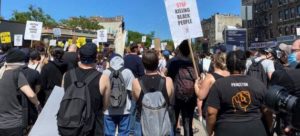
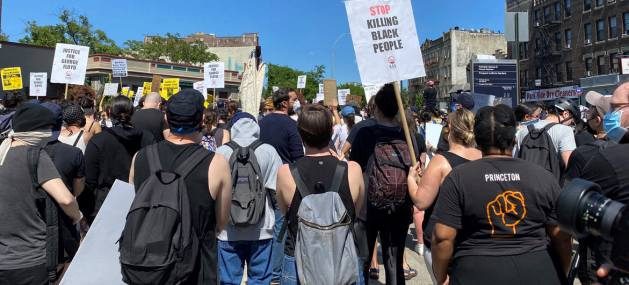
Protests have been taking place in cities across the United States. Credit: UN News/Shirin Yaseen

MIAMI, Sep 4 2020 (IPS) – Why, in the United States, where change is the most pronounced hallmark, do some aspects never change? Why do many bad habits resist giving way to novelties that prove to be the basis of the success of the most developed country on earth and still the leading power?  Why is the explanation for that leadership due to a few factors? Why does Trump profess a visceral opposition to immigration, knowing that it is the key to the country’s success? Because millions of his compatriots interpret the sinew of American DNA as a threat to their comparative social advantage.


Meanwhile, in this drama, blacks continue to bear the brunt of it all. The explanation for their endemic discrimination is the contrast between their implantation in the United States and the way the rest of the public settled in the “American dream.” Almost everyone came to this idea that is the United States of free will.

No one can say that their grandparents were forced to change residence. Although it can be argued that hunger, religious persecution, and the desire for economic improvement were important factors in driving emigration from Europe, Africa, or Asia, it is also true that voluntary americanization is the key to the success of the United States.
Joaquín Roy

This country is the most genuine example of national construction opposed to that based on ethnicity, religion, race. America is the most definite specimen of the nation of choice, based on personal conviction.

It is not by chance that theorists of nationalism call this alternative “liberal.” The “American dream” explains its survival. As long as millions of citizens of other continents answer Ernest Renan’s question with a negative vote every night in his imaginary “daily plebiscite”, and decide to opt for the residency trick, the United States will exist.

The day a majority of Americans vote negative for residency, the country would be deserted. There is nothing that unites Americans, except their desire to be. Their religion is summarized in the offer provided by the Declaration of Independence: life, liberty and the pursuit of happiness. He does not give them a guarantee, but a promise. And it is enough for them.

However, the absence of a residency obligation has two crucial exceptions: black and indigenous minorities. These two sectors contrast in their implementation in what for them is, more than a dream, an “American nightmare.”

Although it can be argued that hunger, religious persecution, and the desire for economic improvement were important factors in driving emigration from Europe, Africa, or Asia, it is also true that voluntary americanization is the key to the success of the United States.

The original owners of the immense territory, although their immemorial ancestors crossed the Straits of Alaska at the dawn of North America, have been reduced to their reservations, marginalized, eaten away by poverty and alcoholism. Even in the sporadic mythos in Hollywood movies, Sitting Bull and his imitators do not overcome the mystique of Buffalo Bill.

The blacks were unfortunately marked by the original sin of not having booked a ticket for the forced trip to the United States. Their implantation has been resisted from the beginning by themselves and by the descendants of the merchants who deposited them in America.

With their emancipation and its disastrous execution, the peculiarity of their residence became more apparent. When they were stripped of the benefits that they had given away to their owners for free, their value was lost in Wall Street.

The successive corrective measures of discrimination and segregation only made the division of society even more evident. Despite the actions of Martin Luther King, who paid for his daring with his life, legal advances supercharged racist resentment from a part of society that resisted reform. “Affirmative Action” and food stamps multiplied the opposition.

Simultaneously, the black community, which had ceased to call itself “colored,” to take a curious journey back to being classified as “African,” watched with amazement as other newcomers from other continents were climbing ranks.

Latin Americans began to outnumber blacks not only in economic resources, but in numbers. As a result of the new census parameters, while whites held 63%, Hispanics (15%) and Asians (10%) cornered blacks (13%).

Internally, the new “African-Americans” decided to opt for a peculiar nationalism: they defended themselves with their signs of “black is beautiful”, they enthroned their peculiar English inherited from their owners, and they monopolized some entertainment professions.

Some were more fortunate and co-opted the rosters of basketball teams. For their part, some managed to settle on the ladders of power as senators and congress people, thanks in part to the restructuring of electoral districts.

Then they even aimed, with the decisive support of white sectors, to opt for the incredible: the presidency of the United States. It was already too much and the opposition to this impudence did not forgive Obama or the rest of the community, and even less the Democrats and liberals.

The mirage of the election of the first black president bypassed the resistance of deep America and the withdrawal of the “silent majority” that Nixon tried to awaken. Now Trump has reinvented it.

It was forgotten that only about a third of the electorate voted for Obama, while another third chose the Republican candidates. Another third stayed home. Among those 60-70% of Americans who abstained from voting on the traditional electoral correction, crouched was the mostly white sector, both high-income and lower-middle-class that followed the sounds of the piper Trump.

Those who rejected the candidate Hillary Clinton believed, and still believe, that their faltering economies have been pierced by the rise of the historically vanquished. They now believe that their pristine suburbs, real or imagined, are threatened by the “socialist” hordes of predominantly Latino origin, and the “terrorists” who insist on protesting against what they consider dangerous interference by the security forces in daily life.

The only thing missing is that the statistical evidence of the black overpopulation of the prisons and the number of crime victims of the same origin is “enriched” with sad deaths of blacks at the hands of white policemen.

Joaquín Roy is Jean Monnet Professor and Director of the European Union Center at the University of Miami
  Source

It is Time for a Democratic Global Revolution

Civil Society, Climate Change, Democracy, Editors’ Choice, Featured, Global, Global Governance, Headlines, Human Rights, IPS UN: Inside the Glasshouse, TerraViva United Nations

Opinion

Daniel Jositsch is a Member of the Swiss Senate and President, Democracy Without Borders-Switzerland, and Andreas Bummel is Executive Director, Democracy Without Borders. Twitter: @democracywb

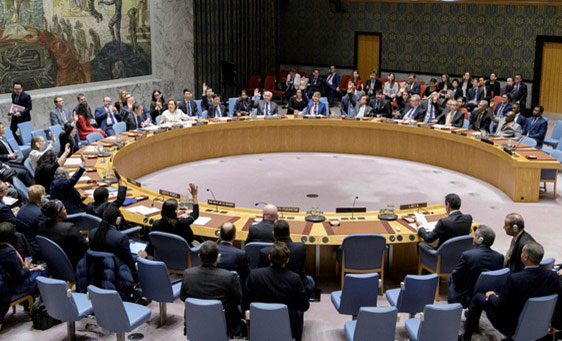
The UN’s Security Council, in particular, is suffering from a dysfunctional decision-making method that grants the five victors of the Second World War and official nuclear powers not only a permanent seat but also a veto right. Credit: United Nations

BERLIN / BERNE, Aug 28 2020 (IPS) – The people of the world need to seize the moment and bring about a democratic global revolution. It is time for a global parliament and real representation.

More than 21 million people got infected with the novel coronavirus and over 770,000 have died. Never before did the world witness similar collective lockdowns of social and economic activity that had to be enforced to contain the pandemic.


For many, the corona-related global crisis exacerbates a situation that was already critical before the outbreak of the virus.

The climate crisis is unfolding with record temperatures in Siberia, Greenland, the Antarctic and other places like the Middle East. The new climate apartheid is characterized by whether you can afford to shield yourself from such heat or not. Most cannot.

135 million people are facing crisis levels of hunger. There are currently more than 70 million displaced people who have fled war, persecution and conflict. It’s the worst humanitarian and refugee crisis in seventy years.

There is a global inequality crisis. Productivity gains and globalization disproportionately benefit the affluent. Financial assets in the trillions are hidden in offshore accounts from tax authorities. The world’s 26 richest billionaires own as much as the poorest 3.8 billion people on the planet.

While global surveys confirm that people across all world regions strongly believe in democracy, there is in fact a democratic retreat. Confidence in the actual performance of democratic governments is waning. Populist nationalism and authoritarianism has been advancing, aided and abetted by social media platforms and the internet. Major arms control treaties are crumbling, geopolitical tensions are rising and multilateralism is under attack.

Civil society and citizens across the world are fighting back, though. Pro-democracy movements are at an all-time high as widespread protests in dozens of countries now and in recent times demonstrate. Freedom and justice have lost no appeal. At the same time, millions of citizens joined climate protests around the world and called for quick and effective action in this critical field.

The present issues are symptoms of a crisis of global governance. There is a scale mismatch between a political world order that is based on 200 states and territories and issues that demand decisive global action.

As the UN celebrates its 75th anniversary this year, the organization continues to lose significance and impact. The UN is only as strong and effective as its member states allow it to be. The same applies to all intergovernmental organizations and forums, including the World Health Organization that had to launch an investigation into its handling of the Covid-19 pandemic.

The UN’s Security Council, in particular, is suffering from a dysfunctional decision-making method that grants the five victors of the Second World War and official nuclear powers not only a permanent seat but also a veto right.

If long-lasting solutions are to be achieved, this scale mismatch must be tackled. It is not enough to call on individual governments to change their policies. The way how the world is governed must be changed. What is needed is a new vision of a democratic world order that is based on shared sovereignty on global issues, a clear commitment to human rights, the principle of subsidiarity and complete disarmament.

When the UN was founded it was recognized that this should only be a beginning and that changes would be required. Article 109 of the Charter provides that a conference to review the Charter should be held by 1955. The UN’s member states did not deliver on that promise. Now is the time to hold them to account.

The world’s people need an actual say in global affairs that is not intermediated by national governments and their diplomats. The key ingredient of a new UN should be a democratically elected world parliament that complements intergovernmental bodies such as the UN General Assembly.

The creation of a new democratic world organization that has actual powers seems to be a gigantic project that raises numerous questions. How is a global democracy to be created while major states themselves are not democratically organised? Can decisions of a world parliament be enforced against the will of individual states? How is it possible that states will agree to the creation of a superior political unit?

These questions show the way forward: The people of the world themselves need to embrace and call for global democracy. Eventually, they are the sovereigns not only in their individual states but on the planet as a whole, too.

A global democratic revolution needs to push for a legitimate, inclusive and representative global body that will deal with these questions in a serious way. The creation of a UN Parliamentary Assembly could be an important stepping stone to launch a global constitutional process and a transformation of global governance.

This global democratic revolution will be peaceful because it is not about destroying structures or conquering territories, but about opening up a political level that is lying idle. Supranational integration cannot be imposed by force. It will happen because the people want it.

If existing movements in the fields of climate, environment, peace, disarmament, democracy, social justice and others join forces, the global democratic revolution will become very real.

This may sound visionary. But the big issues troubling this planet and its people will remain, and worsen, unless the root cause is addressed. A democratic global government is not a mind game in some ivory tower. It is the most important question on the agenda of humanity today.

  Source

Religion & the Pandemic: A Call Beyond the Here & Now

Civil Society, Featured, Global, Headlines, Health, Human Rights, Humanitarian Emergencies, Inequity, Religion, TerraViva United Nations

Opinion

Prof. Azza Karam is Secretary General, Religions for Peace International

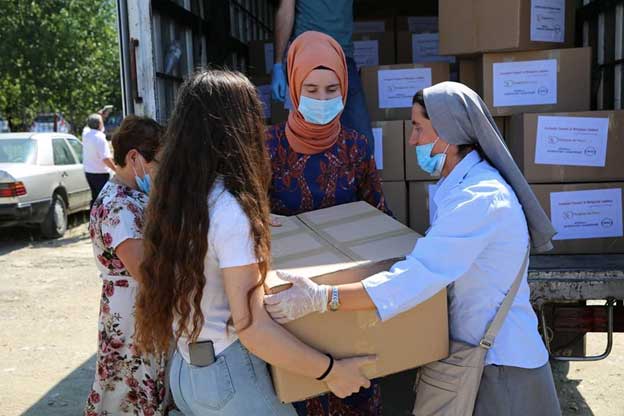
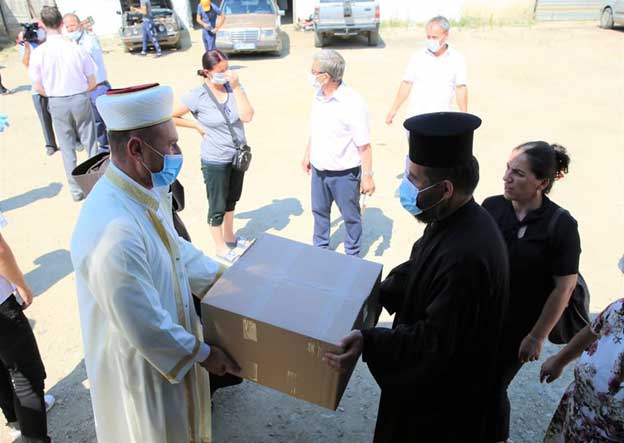
Religions for Peace Interreligious Council of Albania distributing Covid relief supplies from the Multi-religious Humanitarian Fund. Credit: Erzen Carja

NEW YORK, Aug 4 2020 (IPS) – — I have never been interested in religion or spirituality before, but I found myself tuning in to all sorts of on-line religion and spirituality related forums “in search of something.”


These are the words of a 30-something single young, middle class man (born into a Protestant-Catholic family background) in a European country.

The latter is known more for turning several churches into museums or shopping centers, prior to the Covid-19 pandemic. When people are afraid, lonely and alone – they tend to seek “something” beyond science.

A quarter of Americans say their faith has become stronger because of the pandemic, according to a Pew survey conducted during April 20-26, 2020, of 10,139 U.S. adults.

But this is to be contrasted with the experiences of those from an older generation (60+) in the southern hemisphere, like my own 85-year old Muslim father, who lives to pray. For him, the mosque has, over the last decade since my mother’s death, become both his spiritual hub and social club.

His cohort is differing ages of retirees, who, in spite of very different political perspectives in a Middle Eastern country reflecting the now normal of intense polarization, treasure their prayerful community spaces. This middle class (an endangered species to be sure) of retirees, share a sense of deep faith informing their social and political convictions.

For many of them, the lockdown was experienced primarily s an inability to go to the mosque, and thus as almost physically painful. None of them countenanced the idea of on-line prayers, that doesn’t make any sense, they maintained. Their sense of depression was almost palpable throughout the lockdown period, as was their joy at the reopening of some mosques.

The coronavirus presents barriers to caring for the sick and to performing certain death and burial rites which are core religious practices, and especially needed in a pandemic that has already claimed nearly hundreds of thousands of lives.

In Sri Lanka for example, public health measures for safe burial practices have already challenged traditional rites, wherein authorities mandated cremations for Covid-19-linked deaths, despite the fact that cremation is supposed to be forbidden in Islam.

Covid-19 also complicates Jewish and Muslim burial practices of washing and cloaking bodies before burial, given concerns about transmission. Innovative religious responses seeking to reconcile public health policies with traditional burial practices have been taking place.

In Israel, for example, bodies are wrapped in plastic before burial, and before that, ritual washing is completed while wearing full protective gear. Some Islamic scholars are providing exegesis and guidance on how the ritual of washing the body prior to burials, could be conducted safely whilst following Islamic principles.

Religions for Peace Interreligious Council of Albania distributing Covid relief supplies from the Multi-religious Humanitarian Fund. Credit: Erzen Carja

This echoes what occurred during the Ebola crisis in West Africa. In fact, while COVID-19 differs from HIV/AIDS, Malaria, Tuberculosis, and Ebola, there are nevertheless some important similarities.

In cases of dealing with diseases where transmission affects large numbers of people, and vaccines and medication remain relatively hard to find and/or provide to all affected, beyond the health inequities which are underscored during such times, there are critical lapses by national and international authorities in acknowledging and supporting the role of religious leaders.

In fact, during previous outbreaks of HIV/AIDS (around the world), and of Ebola in Central and West Africa, the strengths of religious communities were rarely incorporated into public policy – until national and international secular authorities lose the plot.

In Religions for Peace (the only multi religious organization representing all religious institutions and communities around the world with 90 national and 6 regional Inter-Religious Councils/IRCs), a founding mantra is that caring for the most vulnerable is deeply embedded in all faith traditions.

As a result, religious institutions, communities, and faith-inspired/based NGOs (or FBOs as they are often referred to), have historically served as the original providers of essential social services. In fact, FBOs are the first responders in most humanitarian emergencies. Their work includes providing spiritual sustenance for sure, but also hunger relief, heath care, and shelter.

This is not only a feature of the developing world. Samaritan’s Purse set up a health center at the height of the pandemic in Central Park – an icon of New York city. Caritas, at one point, was feeding 5,000 people a day, in Geneva, Switzerland.

For 50 years, Religions for Peace worked to equip its IRCs (through the respective religious institutions and services) to seek peace through advocating for human rights (including the rights of Indigenous Peoples, as well as women, religious minorities, the disabled, elderly, and youth), mediating conflicts, providing emergency humanitarian relief, and contributing to sustainable development efforts (including health, nutrition, sanitation, education and environmental sustainability).

The defining feature of Religions for Peace IRCs is multi-religious collaboration. The main principles of this collaboration are representativity and subsidiarity. In the case of the former, each IRC earns Religions for Peace affiliation by ensuring its governance represents each and all of the nations religious institutions, and communities. In return, each IRC is guaranteed its independence to determine its national/regional priorities, and its modus operandi.

Half a century of collaboration with several United Nations entities at different moments in time, provides a comparative context to enable an assessment of how the UN works with some religious actors.

At the very least, this historical time-line of partnership efforts on peace and security, sustainable development and human rights, provides a learning context. It is with that in mind that we can say that UN efforts in seeking partnerships with faith-based NGOs in facing the Covid-19 implications, are noticeably on the increase relative to pre-Covid dynamics.

Entities like UNHCR, UNICEF, UNAIDS, WHO, and even non-operational entities like the Secretary-General’s own office, as well as UN Office of Genocide Prevention and Responsibility to Protect, have, respectively, issued statements specifically calling on religious leaders and actors to uphold their unique influences (noted above), sought religious input on and in Covid Guidance documents, and (are) hosting multiple consultations to strengthen myriad joint responses.

Working with multiple stakeholders, Religions for Peace research is revealing that while some religious charities are struggling to find resources to continue their services for communities, other FBOs are able to raise more resources for pandemic relief, than anticipated.

This is particularly the case for Hindu, Muslim and Buddhist organisations in countries in Asia, but also Muslim and Christian charities in Africa and the Middle East.

Almost 90% of Religions for Peace IRCs reported a 100% increase in engagement (asks) of their advocacy and messaging efforts from/by national governments, particularly as of May and June 2020 – as compared to this time last year.

This is evidenced through national campaigns during religious occasions and holidays, as well as local awareness raising efforts by religious leaders in particular, as opposed to faith-based NGOs.

Out of the Covid response efforts tracked by 25 Religions for Peace IRCs in 4 regions, thanks to the Multi-Religious Humanitarian Fund administered by RfP, multi-religious efforts are, on average, much harder to encourage than efforts administered by Ecumenical or single religion organisations.

A rough estimate shows that out of the nearly 100 humanitarian assistance projects being tracked by RfP in 40 countries in parts of Africa and Asia, only 1 percent involve multi-religious efforts. Several IRCs have also reported finding it harder to even advocate for multi religious collaboration to provide pandemic assistance (food and medicine packages) in conflict impacted countries (i.e. more than it normally is to seek to mediate some of the conflicts and/or work with governments in mediation efforts).

While it is now almost a cliche to call for more partnerships with religious, or faith-based actors, this is simply not good enough. FBOs, like many NGOs fully immersed in relief efforts, are finding several (good) excuses not to work together.

Faced with a global pandemic, even the FBOs – ostensibly inspired by religious calls for serving all, including the most vulnerable – are less keen on collaborating across their multiple differences (institutional, theological, structural, financial and political), as they continue to serve millions.

Is it enough to serve all who need regardless of religious affiliation (the current bar against which religious NGOs are often measured by the UN and other international entities), or should a pandemic inspire more, and better collaboration among multi-religious partners?

One can but wonder what the relative lack of religious NGO collaboration may foretell for social coexistence after the pandemic, not to mention what this lack of collaboration spells for the legitimacy of the so-called prophetic voice many of them speak of.

  Source

Reflections on the Charter of the United Nations on its 75th Anniversary

Civil Society, Climate Change, Development & Aid, Gender, Global, Headlines, Human Rights, Humanitarian Emergencies, IPS UN: Inside the Glasshouse, TerraViva United Nations

Opinion

Mona Juul is the seventy-fifth President of the Economic and Social Council and Permanent Representative of Norway to the United Nations.

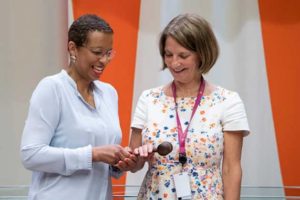
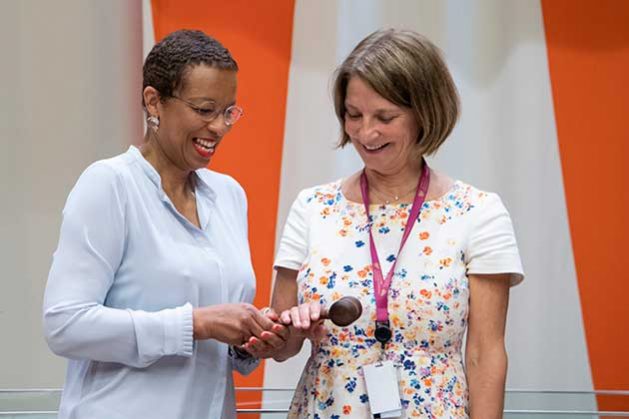
Inga Rhonda King (left), Permanent Representative of Saint Vincent and the Grenadines to the United Nations and seventy-fourth President of the Economic and Social Council (ECOSOC), hands over the gavel to Mona Juul, Permanent Representative of Norway to the United Nations and newly-elected seventy-fifth President of ECOSOC, at the opening meeting of the 2020 session of ECOSOC. New York, 25 July 2019. Credit: UN Photo/Eskinder Debebe

NEW YORK, Jul 29 2020 (IPS) – This year we celebrate the 75th anniversary of the Charter of the United Nations, written and signed during a period of great global change. Today, the world is again shifting beneath our feet. Yet, the Charter remains a firm foundation for our joint efforts.


These uncertain times of global disruption shine a light on the interdependences of our world. The COVID-19 pandemic, and the inequality it has exposed, are a global challenge that we must solve through global solutions. These solutions call for more, not less, cooperation across national borders.

Global cooperation is the enduring promise of the Charter of the United Nations. I am honoured to preside over the Economic and Social Council (ECOSOC), one of the principal organs of the United Nations, at its 75th anniversary.

In January 1946, 18 members gathered for the inaugural meeting of ECOSOC under the leadership of its first President, Sir Ramaswami Mudaliar of India. ECOSOC was vested with a powerful mandate, to promote better living for all ¬¬by fostering international cooperation on economic, social and cultural issues.

The Charter recognizes the value of social and economic development as prerequisites for stability and well-being. In a 1956 speech, Secretary-General Dag Hammarskjöld said that “while the Security Council exists primarily for settling conflicts […] the Economic and Social Council exists primarily to eliminate the causes of conflicts.”

For me, this is a reminder that sustainable peace and prosperity rely on global solidarity and cooperation.

Today, this unity of purpose to reach those furthest behind first is also the spirit of the Sustainable Development Goals (SDGs). The 2030 Agenda is our shared road map to transform the world as we recover better, protect our planet and leave no one behind. With ECOSOC serving as the unifying platform for integration, action, follow-up and review of the SDGs, our promise to eradicate poverty, achieve equality and stop climate change must drive our actions.

ECOSOC has the unique convening power to make this happen. It brings together valuable constituencies such as youth and the private sector to enhance our work and discussions. ECOSOC also remains the gateway for civil society engagement with the United Nations. Civil society has been central to progress on international economic, social and environmental cooperation, from the small but critical number of organizations present in San Francisco when the Charter was signed in 1945, to the 5,000-plus non-governmental organizations with ECOSOC consultative status today.

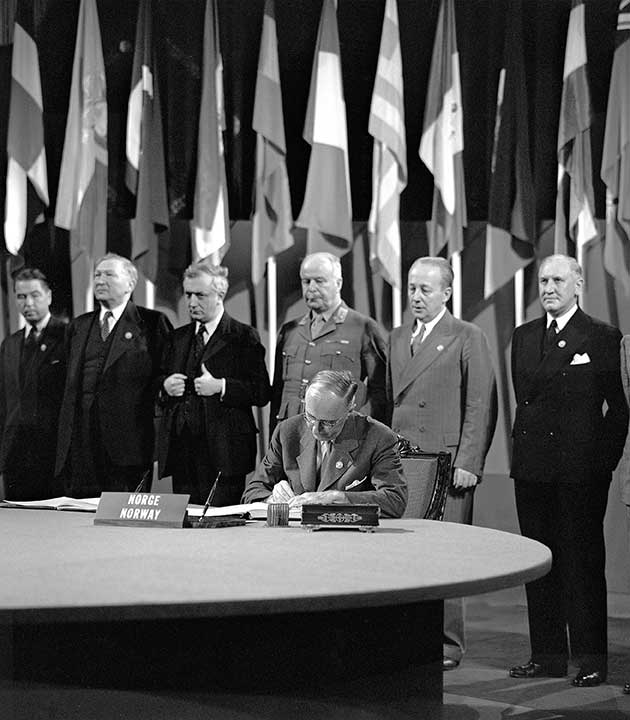
Wilhelm Munthe Morgenstierne, Ambassador to the United States, member of the delegation from Norway, signing the Charter of the United Nations at the Veterans’ War Memorial Building in San Francisco, United States, on 26 June 1945. Credit: UN Photo/McLain

The Charter also outlines that ECOSOC should promote universal respect and observance of human rights and fundamental freedoms for all, without distinction as to race, sex, language or religion. While much has shifted in our world, this mandate remains just as important today as in 1945. After all, human rights are a part of the foundation of the United Nations, quite literally. When Trygve Lie, the first Secretary-General and fellow Norwegian, laid the cornerstone of United Nations Headquarters at Turtle Bay in October 1949, it contained, together with the Charter, a copy of the Universal Declaration of Human Rights.

Human rights have always been a part of the work of ECOSOC. The former United Nations Commission on Human Rights was one of the first functional commissions created within ECOSOC and was charged with drafting the Universal Declaration. Today, ECOSOC remains committed to playing its part to promote all rights: civil and political, as well as economic, social and cultural rights.

In stark contrast to the 18 men who formed the first meeting of ECOSOC in 1946, I am proud to be the third consecutive female president of ECOSOC and one of five female presidents in its 75-year history. Although slow, this is progress, especially compared to 1945, when out of the 850 international delegates that convened in San Francisco to establish the Charter of the United Nations, only eight were women, and only four of them were signatories to the Charter. Today, the Secretary-General has achieved gender parity in all senior United Nations positions, and the Commission on the Status of Women is perhaps the highest profile part of the work of ECOSOC. The Commission’s annual session is instrumental in promoting women’s rights, documenting the reality of women’s lives throughout the world and shaping global standards on gender equality and the empowerment of women.

ECOSOC must work to place gender equality at the heart of all our work. Women’s rights and gender equality are imperative to a just world. In all my endeavours, I strive to promote and advance these rights with a vision of a more prosperous, peaceful and fair world, for the benefit of women and girls—and men and boys alike.

Before the current crisis, more people around the world were living better lives compared to just a decade ago. More people have access to better health care, decent work and education than ever before. Nevertheless, inequality, climate change and the lasting negative impacts of the COVID-19 pandemic are threatening to undo these gains. While we have technological and financial resources at our disposal, unprecedented changes will be needed to align resources with our sustainable development objectives. The United Nations must remain at the forefront of our collective efforts guided by our commitment to the Charter.

The true test of our success will be whether persons, communities and countries experience improvement in their lives and societies. The United Nations must be of value to people. To our family. To our neighbours. To our friends. Unless we achieve this, our credibility is at stake.

As we celebrate the 75th anniversary of the Charter of the United Nations, let us remind ourselves of the promise it embodies, to help the world become a more prosperous, just, equitable and peaceful place.

To me, the opening words of the Charter, “WE THE PEOPLES OF THE UNITED NATIONS”, are a humble and empowering reminder of our capability to overcome current and future challenges. Even in troubling times, there remains great hope in the power of working together. That is the founding spirit of the United Nations—and in this 75th anniversary year, as we face grave and global challenges, it is the spirit we must summon today.

This article was first published by the UN Chronicle on 26 June 2020.

  Source

Are We Going from San Francisco?

Armed Conflicts, Conferences, Democracy, Economy & Trade, Featured, Global, Headlines, Human Rights, Peace, TerraViva United Nations

Opinion

SYDNEY and KUALA LUMPUR, Jun 30 2020 (IPS) – Seventy-five years ago, on 26 June 1945, before the Japanese surrender ending the Second World War, fifty nations gathered at San Francisco’s Opera House to sign the United Nations (UN) Charter.


UN Charter
Nations pledged “to practice tolerance and live together in peace …, and to ensure … that armed force shall not be used, save in the common interest, and to employ international machinery for the promotion of the economic and social advancement of all peoples”.

Anis Chowdhury

They sought “to save succeeding generations from the scourge of war, … and to reaffirm faith in fundamental human rights, in the dignity and worth of the human person, in the equal rights of men and women and of nations large and small, and to … promote social progress and better standards of life in larger freedom”.

The Charter’s contents reflected some contradictions inherent in framing an international organization recognizing national sovereignty as its organizing principle, and various other compromises, often influenced by the convening host nation.

Although the conduct of Member States often falls short of the UN’s lofty goals, its Charter was nonetheless a monumental achievement, providing the foundation for a rules-based international order.

San Francisco Conference
Forty-six Allied countries, including the four sponsors – the United States, the United Kingdom, the Soviet Union and China – were originally invited to the San Francisco Conference.

The conference itself invited four other States – the Byelorussian and Ukrainian Soviet Socialist Republics, newly-liberated Denmark and Argentina. Poland did not send a representative as its new government was still uncertain.

Of the fifty participating states, only four were African and nine Asian. Latin American countries, independent since the mid-19th century, were present and active in deliberations.

The Conference was not only one of the most significant international gatherings in history, but perhaps the longest ever. The two month long Conference was attended by 3,500 people, including 850 delegates, their advisers, staff and the secretariat, plus more than 2,500 from the media and other observers.

Jomo Kwame Sundaram

The Conference opened on April 25, 1945 with great fanfare, despite the sudden death of its principal architect and presumed host, US President Franklin Delano Roosevelt, on 12 April. The task of carrying on fell to his Vice-President Harry Truman who had become President.

Truman often quoted English poet Alfred Lord Tennyson’s Locksley Hall, carried in his wallet, bewildering colleagues, senators and staffers who doubted his commitment to international peace. Tennyson foresaw that nations, realizing they could destroy one another, might agree to form “the Parliament of Man”, to resolve disputes peacefully.

Clashes and compromises
Many serious differences of opinion triggered crises, even at the preparatory stage. For example, the Soviet Union proposed that all 16 Soviet republics should have UN membership to balance the influence of US allies: the US countered by proposing membership for all its 50 states!

A compromise was struck, allowing membership for the Soviet republics of Belarus and Ukraine; the Soviet Union then withdrew its opposition to Argentina, which had supported the Axis powers.

The most important deliberations concerned the UN Security Council (UNSC), initially composed of five permanent members (US, UK, USSR, China, France) and six elected members. The P5’s right to veto provoked a long and heated debate.

Others feared that when one of the P5 threatens the peace, the UNSC would be ineffectual. But the P5 collectively insisted that as the main responsibility for maintaining world peace would fall most heavily on them, the veto provision was vital.

Australia proposed that no permanent member should be allowed to veto when involved in a Chapter VII dispute over threats to peace. The US delegation blocked this and a Soviet proposal allowing P5 vetoes on procedural matters, e.g., discussion of disputes in which it may be involved.

While US officials saw the UN General Assembly (UNGA) primarily as a ‘talk shop’, the USSR tried to limit it from discussing sensitive political matters. However, recognizing its importance for legitimacy, the compromise reached permits the UNGA to discuss any issues “within the scope of the Charter”.

Colonialism was not supposed to be discussed at the Conference to avoid alienating the European imperial powers, whom the US needed to isolate the Soviet Union. But the handful of Asian and African countries attending wanted countries still under the colonial yoke to attain freedom and independence as soon as possible.

Although not on the original Conference agenda, after much debate, Chapters XI, XII and XIII provided some norms for colonial administration and pathways for decolonization. Nonetheless, these ambiguous, at best, pronouncements greatly disappointed anti-colonialists around the world.

US hegemonic from outset
Despite some compromises inherent in framing such an agreement, the UN Charter favoured the US. It promised to protect freedom of action and national sovereignty, as desired by the US, but contained no open-ended commitment to preserve other countries’ territorial integrity, like the League of Nations Covenant’s Article 10.

Article 2(7) placated American sovereigntists and nationalists, declaring: “Nothing contained in the present Charter shall authorize the United Nations to intervene in matters essentially within the domestic jurisdiction of any state.”

The US and the UK also got what they wanted for existing and new regional and plurilateral arrangements, including defence and mutual assistance organizations.

Some US officials were concerned the UN might threaten the Monroe Doctrine privileging the US in the Western hemisphere, while limiting its ability to intervene elsewhere. Some clever drafting of Chapter VIII provided blanket endorsement to regional organizations, also seen as reflecting the principle of subsidiarity.

Article 51 enshrined the principle of “self-defense against armed attack, either individual or collective”. Although not fully appreciated in 1945, such provisions later helped legitimize various US and other post-colonial security pacts in Europe, Asia and the Americas against the Soviet Union during the Cold War.

Conference participants also considered a proposal for compulsory jurisdiction for a World Court, but the US Secretary of State recognized this would jeopardize Senate ratification. Delegates compromised, agreeing to let countries decide whether to accept the International Court of Justice (ICJ)’s jurisdiction.

Unsurprisingly, the US has had an uneasy relationship with the ICJ from the outset, never submitting to its authority, and reacting negatively to Court decisions seen as adverse to the US.

From Truman to Trump
Presiding at the closing ceremony, Truman cautioned that the success of the new world body would depend on collective self-restraint. “We all have to recognize – no matter how great our strength – that we must deny ourselves the license to do as we please. This is the price each nation will have to pay for world peace.”

Truman is probably turning in his grave watching Trump’s jingoist ‘America First’ policy undermine the UN and multilateralism. Are multilateralism and the UN now doomed as Trump belies Tennyson’s hope and leads the US to up-end the Roosevelt-Truman legacy?


Global Solidarity & Effective Cooperation in the Face of COVID-19

Aid, Civil Society, Development & Aid, Economy & Trade, Featured, Global, Headlines, Human Rights, Poverty & SDGs, TerraViva United Nations

Opinion

Charlotte Petri Gornitzka is Assistant Secretary-General and UNICEF Deputy Executive Director, Partnerships; Robert Piper is Assistant Secretary-General, Director of Development Coordination Office; and Ulrika Modéer is Assistant Administrator of UNDP & Director of Bureau of External Relations and Advocacy.

Coronavirus pandemic threatens crises-ravaged communities as UN appeals for global support. Credit: United Nations

UNITED NATIONS, Jun 9 2020 (IPS) – The COVID-19 pandemic upended almost every aspects of life as we know it. Even those countries that are supposed to have the means to manage the spread and mitigate the effects are struggling.


Besides the $5 trillion stimulus package that the G20 economies agreed to deal with the pandemic, individual countries are also devising various measures to shore up their health care systems, stabilize their economies, and assist affected workers and businesses.

Even before the full brunt of the coronavirus outbreak reached some of the poorest countries, the economic impacts are already being felt. With declining global demand for raw materials, breakdown of global supply chain, and mounting debt burden, the economic impact of the COVID-19 pandemic is estimated to exceed $220 billion.

The urgent shouldn’t crowd out the important

With greater uncertainty and fear of global recession looming large, governments are looking for resources needed to lessen the socio-economic pains of the crisis. In this process, official development assistance (ODA) won’t be spared and could come under increased scrutiny.

Decisions made now will have potentially devastating – or transformative – impact for years to come. Despite the economic and political pressure, we must protect ODA, which is needed more than ever.

The spread of COVID-19, especially in places with weak governance and health infrastructures, is expected to be overwhelming if the international community does not act now.

For example, in Sub-Saharan Africa, many countries have the lowest number of physicians per capita in the world while some experience ongoing conflicts, making it difficult to fight the virus.

Credit: UNFPA

The collateral impact of COVID-19 on health, education and nutrition systems will be extremely damaging, and in many cases irreversible, for children and society at large. And when the world opens up again, the resilience of the weakest health systems will dictate how well we do against future threats.

The UN Secretary General argued that “this human crisis demands coordinated, decisive, inclusive and innovative policy action—and maximum financial and technical support for the poorest and most vulnerable people and countries.”

It is critical for the international community to fulfil the humanitarian appeal for COVID-19 response while protecting existing commitments to long-term development and other ‘silent’ emergencies.

Doing so will help protect the most vulnerable people from being exposed to the effects of COVID-19 and preserve hard-earned development gains in fighting global poverty and expanding basic services.

Left to their own devises, fragile nations may risk the breakdown of socio-political order, civil unrest and state collapse, further exacerbating the dire situation.

Flexible funding key to tackling COVID-19

COVID-19 is not only a humanitarian crisis, but also a development crisis. Development agencies are supporting countries to prepare for, respond to, and recover from the crisis.

The effectiveness of their response to certain degree depends on the flexibility afforded to them in funding and operational procedures.

To tackle this uniquely complex health and development crisis, the adequacy and flexibility of funding to development agencies are pivotal. Flexible “core” funding is already making a difference in the COVID-19 response to reach people in need faster, empower local actors, deploy essential supplies to the frontline, and protect the most vulnerable – children, refugees, women.

This enabled the affected communities to practice due diligence and self-driven discretion to immediately respond to threats of the pandemic, while waiting for the pledged assistance to arrive. For instance, in Nigeria, funding flexibility allowed UNICEF to come up with an innovative solution to fight misinformation around COVID-19 while UNDP was able to support the government double the ventilator capacity in the country.

Collaboration, not competition

The COVID-19 pandemic is a devastating crisis in history. But it also posits an opportunity to remind the global community why multilateralism is vital to securing the world’s peace, security, and prosperity.

We witness how the health crisis of today’s globalized world interlinks global economy, geopolitics, and social values. Our effective response to the public health crisis should be seen as key to resolving the ensuing economic, humanitarian, and development challenges.

Understanding this interlinked and complex reality of COVID-19, governments need to work together closely to take coordinated actions and share scientific information, resources and expertise.

It is this strong motion for collaboration that underpins the UN agencies commitment to reinforce the humanitarian-development nexus to jointly respond to the COVID-19 crisis, working closely through the UN Crisis team, humanitarian response plan, UN Response and Recovery Fund for COVID-19.

For example, in Guinea-Bissau, WHO, UNICEF, UNDP, and IOM joined hands to help build isolation facilities and triage space, and procure necessary equipment for COVID-19, both for the national hospital as well as for the re-modelling of the UN clinic.

With strong solidarity and effective cooperation, the international community will not only arrest COVID-19, but also use the emergency to build back better health systems and a more inclusive and sustainable economy.

  Source