Central America – Fertile Ground for Human Trafficking

Civil Society, Crime & Justice, Democracy, Editors’ Choice, Featured, Gender, Gender Violence, Headlines, Human Rights, Latin America & the Caribbean, Migration & Refugees, Regional Categories, Special Report

Crime & Justice

This is part of a series of features from across the globe on human trafficking. IPS coverage is supported by the Riana Group.
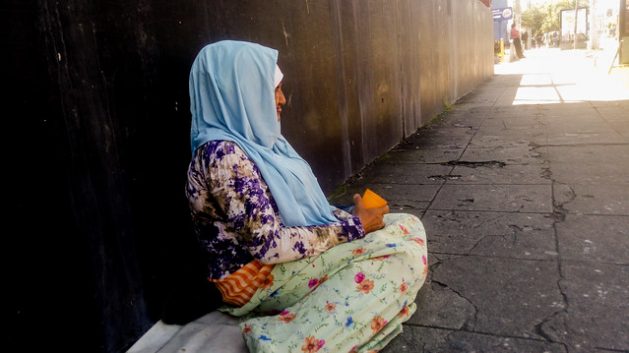
An older woman panhandles on a street in San Salvador. Criminal trafficking groups take advantage of vulnerable people, such as the destitute, to force them to beg. But in Central America, 80 percent of the victims of trafficking are women and girls, for purposes of sexual exploitation. Credit: Edgardo Ayala/IPS

An older woman panhandles on a street in San Salvador. Criminal trafficking groups take advantage of vulnerable people, such as the destitute, to force them to beg. But in Central America, 80 percent of the victims of trafficking are women and girls, for purposes of sexual exploitation. Credit: Edgardo Ayala/IPS

SAN SALVADOR, Nov 8 2019 (IPS) – Central America is an impoverished region rife with gang violence and human trafficking – the third largest crime industry in the world – as a major source of migrants heading towards the United States.


Human trafficking has had deep roots in Central America, especially in Guatemala, Honduras and El Salvador, for decades, and increasingly requires a concerted law enforcement effort by the region’s governments to dismantle trafficking networks, and to offer support programmes for the victims.

The phenomenon “has become more visible in recent years, but not much progress has been made in the area of more direct attention to victims,” Carmela Jibaja, a Catholic nun with the Ramá Network against Trafficking in Persons, told IPS.

“We know that El Salvador, Honduras and Guatemala are countries with a heavy flow of undocumented migrants, which puts them at risk of becoming victims of trafficking.” — Carlos Morán

This Central American civil society organisation forms part of the Talita Kum International Network against Trafficking in Persons, based in Rome, which brings together 58 anti-trafficking organisations around the world.

Jibaja pointed out that “the biggest trafficking problem is at the borders, because El Salvador is a country that expels migrants,” as well as in tourism areas. The most recognised form of trafficking in the region is sexual exploitation, whose victims are women.

Carlos Morán, Interpol security officer and a member of the Honduran police Cybercrime Unit, concurs .

“We know that El Salvador, Honduras and Guatemala are countries with a heavy flow of undocumented migrants, which puts them at risk of becoming victims of trafficking,” Morán told IPS while participating in a regional forum on the issue, hosted Nov. 4-8 by San Salvador.

The “Regional Seminar on Investigation Techniques and Protection of Victims of Trafficking in Persons” brought together officials from the office of the public prosecutor, police officers, legal experts and other key actors and experts from Guatemala, El Salvador and Honduras, the countries that make up the so-called Northern Central American Triangle.

The objective is to strengthen capacities and good practices in the investigation of trafficking, especially when the crime is transnational in nature.

Morán and other participants in the meeting declined to talk about figures on the extent of trafficking in the region, due to the lack of reliable data.
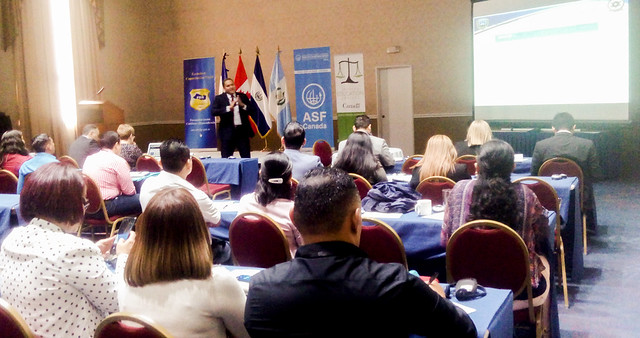
Prosecutors, police officers, government officials, experts and representatives of social organisations from Central America are participating in a special seminar on human trafficking Nov. 4-8 to identify and coordinate joint efforts. Credit: Edgardo Ayala/IPS

Prosecutors, police officers, government officials, experts and representatives of social organisations from Central America are participating in a special seminar on human trafficking Nov. 4-8 to identify and coordinate joint efforts. Credit: Edgardo Ayala/IPS

Civil society supports victims

In the countries of the Northern Triangle there are government efforts to develop victim care programmes, but they are insufficient and civil society organisations have had to take up the challenge.

Mirna Argueta, executive director of the Association for the Self-Determination of Salvadoran Women (AS Mujeres), told IPS that “the problem is serious, because we are facing networks with great economic and political influence, and victims are not being protected,” and there are very few programmes to help with their reinsertion in society.

Her organisation has been working since 1996 with victims of trafficking, offering psychological and medical support, and is also an important ally of the Attorney-General’s Office in victim protection work.

AS Mujeres collaborates with the police and prosecutors when victims have to be moved from one place to another, in the most secretive way possible, especially when judicial cases against organised crime networks are underway.

In the past it has also offered shelter to women victims of trafficking, but now the prosecutor’s office does, said Argueta, who is also coordinator in El Salvador of the Latin American Observatory on Trafficking in Persons, which brings together 15 countries.

AS Mujeres’ victim care programme includes, in addition to psychological support, medical assistance which incorporates non-traditional techniques such as biomagnetism, performed by a physician specialising in this area, as well as massage and aromatherapy.

“Experience has shown us that with the combination of these three techniques, recovery is more effective, and care is more integral,” said Argueta.

She added that since the programme’s inception in 1996, it has served some 600 trafficking victims.

They currently offer support to five women, who IPS could not speak to because they are under legal protection, and providing their names or a telephone number for them has criminal consequences.

For the same reason, the public prosecutor’s office also vetoed conducting interviews with victims under its protection.

AS Mujeres also promotes a self-care network.

“When the victim has gone through different stages, we integrate her with other women and they can share their experiences, making it less painful, and helping them with their reinsertion in society,” Argueta added.

She said many victims feel they are “damaged,” or worthless, and they turn to prostitution.

Victims can spend anywhere from six months to two and a half years in the programme, depending on the complexity of each case. For example, there are women with acute problems of depression, suicidal thoughts and persecutory delusions.

According to figures from the United Nations office in Honduras, released in July, 80 percent of the victims of human trafficking in Central America are women and girls.

In El Salvador, 90 percent of cases involve sexual exploitation, according to official figures provided by the public prosecutor’s office during the regional forum in San Salvador.

However, other types of trafficking have been detected, such as labour exploitation, forced panhandling and others.

So far this year, the prosecution has reported 800 victims, cases that are still open.
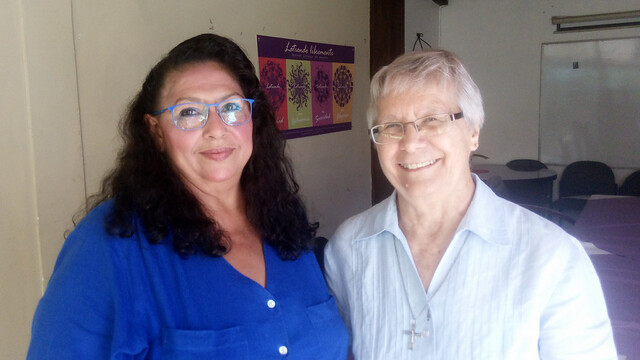
Mirna Argueta (L), executive director of the Association for the Self-Determination of Salvadoran Women, and Catholic nun Carmela Jibaja, of the Central American Network against Trafficking in Persons, are two activists working to provide care for victims of trafficking, who are mostly women. Credit: Edgardo Ayala/IPS

Mirna Argueta (L), executive director of the Association for the Self-Determination of Salvadoran Women, and Catholic nun Carmela Jibaja, of the Central American Network against Trafficking in Persons, are two activists working to provide care for victims of trafficking, who are mostly women. Credit: Edgardo Ayala/IPS

In Guatemala, in 2018, the Public Prosecutor’s Office detected 478 possible victims of human trafficking, four percent more than the previous year. There were 276 reported cases, also an increase of four percent.

Children and adolescents continue to be vulnerable to trafficking, as 132 children and adolescents were detected as possible victims of human trafficking, 28 percent of the total, 111 of whom were rescued.

They were victims of illegal adoptions, labour exploitation, forced marriage, forced panhandling, sexual exploitation and forced labour or services. But the most invisible form of trafficking, according to the prosecutor’s office, is the recruitment of minors into organised crime.

Gangs involved in people trafficking

Experts consulted by IPS point out that many trafficking cases are the product of a relatively new phenomenon: involvement in trafficking by the gangs that are responsible for the crime wave in the three Northern Triangle countries.

The gangs have mutated into bona fide organised crime groups, with tentacles in the illicit drug trade, extortion rackets, “sicariato” or murder for hire and now human trafficking, among other criminal activities.

In El Salvador, it is common to hear stories in neighborhoods and towns controlled by gangs about young girls who gang leaders “ask for”, to be used as sex toys by the leaders and other members of the gang, and the families hand them over because they know that they could be killed if they don’t.

But the gangs go farther than that, forcing their victims to provide sexual services for profit, another aspect of trafficking.

Official figures from the National Council against Trafficking in Persons, which brings together government agencies to combat the phenomenon, indicate that in 2018 there were 46 confirmed victims, 43 police investigations and 38 judicial proceedings.

The trials led to four convictions and two acquittals. The rest are still winding their way through court, according to the Council’s Work Report 2018.

The document also reported that the attention to victims included programmes to help them launch small enterprises, as well as measures of integral reparations for families of children and adolescents in the shelters.

Emergency response teams were also coordinated to provide assistance to victims, whether the women are foreigners or nationals.

El Salvador is part of the Regional Coalition against Trafficking in Persons and Smuggling of Migrants, along with Belize, Costa Rica, Guatemala, Honduras, Mexico, Nicaragua, Panama and the Dominican Republic.

Honduras has also provided support for economic reinsertion, offering seed capital to set up small jewelry businesses, among others, said Interpol’s Morán.

At least 337 people from Honduras have been rescued since 2018, including 13 in Belize and Guatemala, according to a report by the Inter-Institutional Commission Against Commercial Sexual Exploitation and Trafficking in Persons in Honduras.
  Source

Vibrant Civil Society Essential for Sustainable Development in Iran

Civil Society, Development & Aid, Featured, Gender, Headlines, Human Rights, Middle East & North Africa, Peace, TerraViva United Nations

Opinion

Sohrab Razzaghi is Executive Director of Volunteer Activists Institute a non-profit, non-governmental, non-political and independent institute, whose primary aim is capacity building among activists and civil society organizations for democracy, human rights and peace building within Iranian society and communities in the MENA region.

 
Masana Ndinga-Kanga is MENA Advocacy Lead at CIVICUS, an alliance of 7000 civil society partners around the world.

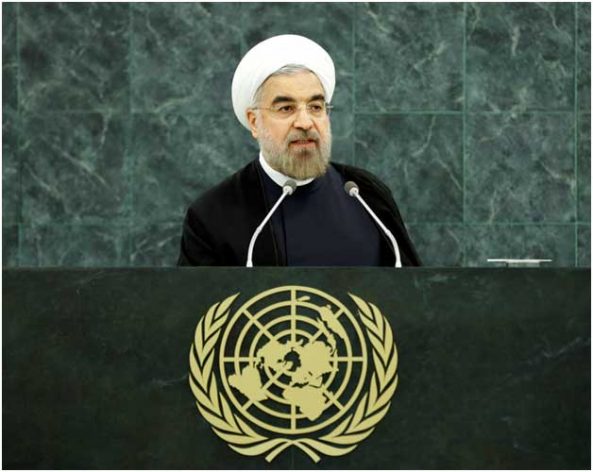
President Hassan Rouhani of Iran

JOHANNESBURG / AMSTERDAM, Oct 15 2019 (IPS) – 2019 has not been a good year for Iranian human rights activists. At a time where civic space had completely closed, many watched in disbelief as the regime mounted even more restrictions on civil society. Over recent months, many activists have been arrested, like Noushin Javari (a photographer), Marzieh Amiri (a journalist), and Javad Lal Mohammadi (teacher).


As the UN Third Committee prepares to meet in October 2019, it will be worth following whether the General Assembly will take proactive steps to respond to the crisis in Iran or continue to avert its eyes in the face of complicated global politics that have emboldened President Rouhani in his regressive anti-western crackdown on civil society.

During the UN General Assembly on 25 September 2019, Iranian President Rouhani’s called for the creation of a ‘coalition of hope’ in the Gulf region, that would focus on “peace, stability, progress and welfare” and working to “invest on hope towards a better future rather than in war and violence [sic],” with the aim of restoring justice and peace.

However, the civic space track record of Iran and many of its Gulf neighbours demonstrates that oftentimes the state is the perpetrator of violence and restrictions in-country, curtailing the very justice and peace it aims to implement.

It then begs the question, how can a regional coalition of hope be developed, when the state so frequently responds to human rights defenders with violence – excluding the language of human rights from even sustainable development goals.

Many civil society actors have been detained – deemed enemies of the state and foreign agents. As Iranian communities reel under the pressure of yet another bout of sanctions, it is worth begging the question ‘does the closure of civic space serve the interests of sustainable development in Iran?’

Contrary to what policymakers responsible for civic space closure might think, these restrictions ultimately hurt sustainable development. Human rights activists around the world, including in Iran, are oftentimes the critical purveyors of equitable ‘sustainability’ in the development process, campaigning for environmental justice, worker’s rights and the respect for the dignity and humanity of all.

In 2018, the Ayatollah Khamenei’s official website published a draft 50-year vision for “progress.” The document, entitled the Islamic-Iranian Pattern for Progress (IIPP), sets out a set of objectives to be met by 2065, covering a vast range of issues, among them the economy, justice and poverty – still to be approved by parliament.

The plan focuses on addressing poverty, the economy and the justice system. It seeks further alignment of religion and the sociopolitical system in the country, but also includes provisions for “prompting independence, accountability and specialization in the judiciary” and “enhancing women’s position and providing equal opportunities for them, with emphasis on their role as mothers.”

Critics of the regime would not be wrong to look at these policy objectives with concern, especially as the regime has a narrowed position on the role of women in society and has repeatedly failed to guarantee independence of the judiciary – where human rights defenders and political dissenters are subject to numerous violations of the International Convention on Civil and Political Rights (to which Iran is party).

According to a recent comparative report on Sustainable Development, Iran is in 82nd place among 156 countries. This lower-than-average score, however, is not surprising. Iran has not committed to the indexes of sustainable development, meaning people in Iran are not participating in a systematic and organized manner in the process of development. Instead, policymaking and development is a top-down process steered by the government.

In fact, most involvement of Iranians in this process is decorative. As a solution, Iranians have been organizing themselves in civil society to combine their voices and make sure they are heard. This, however, is counteracted by repression from the state, resulting in the country being rated as closed on the Civicus Monitor.

Countless activists who have been advocating for the true meaning of sustainable development have paid the price. Civil society activists, especially environmental activists, labor union and teacher union activists, as well as human rights defenders have been wrongfully persecuted.

Eight environmental activists are sitting in prison on charges of espionage, four of whom are additionally charged with “sowing corruption on earth”. If convicted, they will face death penalty. Another environmental expert, Dr. Kavous Seyed Emami, died in detention, and the circumstances of his death are unclear.

According to the Iranian Constitution, citizens are permitted to set up associations and assemblies; yet this clause is not implemented. Few, if any, groups have permission to freely form associations, including socio-political groups or ethnic/religious minorities. Last month for example, Omid Mehr foundation was closed by government authorities. When asked about the reason for closure, authorities said that Omid Mehr foundation was advocating Western values, which does not fit in Iran.

The false claim that campaigning for human rights is equal to advocating Western values is an adage used by repressive regimes to silence dissent and put forward a development agenda that excludes minorities and others on the margins. But development is not sustainable if they are excluded.

For example, the regime frequently equates the campaigns of women to determine their dress codes as acts against the state, threats to national security or prostitution. Despite the peaceful protest (handing out flowers in commemoration of International Women’s Day) against the hijab by Yasaman Aryani and Monireh Arabshahi, they were sentenced to 16 years imprisonment after being subject to enforced disappearance. Such lengthy sentences and gross human rights violations do not equate sustainability nor development.

The government not only fails to safeguard the freedom of associations and civil society organizations, but actively creates non-independent organizations (or Governmental NGOs, GONGOs) to put forward an inaccurate picture of civic engagement by the state.

Only CSOs that support the agenda of the state are accepted by the government, strengthening the top-down, government-centered way of working. The Organization for Defending Victims of Violence (ODVV), one of many GONGOs, attends international meetings, including UNHRC meetings.

Actively curating a counter-narrative of progress through GONGOs shows the vulnerability of the state to international pressure in an interconnected global political economy. The state recognizes its reliance on international partnerships for the advancement of its economic objectives.

But instead it fails to align its internal policy processes to international human rights conventions – channeling resources that could be spent on authentic engagement with civil society in country to its image. As a result, tensions in Iran are mounting at the dire state of socioeconomic affairs.

For instance, in January 2018, mass protests against poverty and economic difficulties erupted in the country. Rather than engage with citizens, the state responded through 4,967 arrests and any assembly was strictly and heavily repressed.

Among those arrested were activists, women, workers, students and teachers. Many of the arrestees have been sentenced to long imprisonment terms. Many more are critical to the realization of sustainable development in Iran.

Rather than supporting socioeconomic development, the state-imposed limitations on freedom of assembly and association in Iran, have weakened and decapacitated citizen engagement, and prevented their participation in the process of achieving sustainable development. It is short-term thinking that creates enemies of civil society and sustainable development.

In fact, a dynamic, vibrant, democratic and development-oriented association landscape is an important requirement for sustainable development. By releasing activists and opening the civic space, Iran can truly begin the process of social change for the upliftment of all.

  Source

Reforms Will Grant Nationality to Children of Iranian Women

Civil Society, Editors’ Choice, Featured, Gender, Global, Global Governance, Headlines, Human Rights, IPS UN: Inside the Glasshouse, TerraViva United Nations

Opinion

Rothna Begum is Senior Researcher, Women’s Rights Division at Human Rights Watch

GENEVA, Oct 7 2019 (IPS) – After more than a decade of women’s rights activism, Iran’s Guardian Council has finally approved an amendment that would grant Iranian citizenship to the children of Iranian women married to foreign men.


The Guardian Council was the last body needed to approve this long overdue reform to Iran’s discriminatory citizenship law.

Previously, Iran’s civil code granted children and spouses of Iranian men citizenship automatically, while children born in Iran to Iranian women and foreign fathers must live in Iran at least until they are 19 before they can apply.

It is unclear how many children in Iran have Iranian mothers and foreign fathers. However, the issue has come to prominence in recent years because of tens of thousands of registered and unregistered marriages between Iranian women and Afghan men whose children are unable to obtain citizenship on an equal basis.

Rothna Begum

Research in other countries has shown that such discrimination can harm children’s access to education, health care, housing, and employment when they become adults.

The latest attempt to reform the law was inspired by Maryam Mirzakhani, a world-renowned Iranian mathematician and Fields Medal recipient who passed away from cancer in 2017. Because her husband is not Iranian, her daughter cannot obtain Iranian nationality.

In May, Iran’s Parliament finally adopted the proposed reform, but it went back and forth from the Guardian Council, a body of 12 Islamic jurists, to determine whether it is in accordance with Iran’s Constitution and Sharia (Islamic law). They approved the amendment last week.

While this is a long-awaited victory for Iranian women, the newly-amended law does not equalize access to citizenship completely. Iranian women must apply for nationality for their children, while children of Iranian men are granted nationality automatically.

Children who turn 18 can apply for nationality themselves. A security check is required in both cases.

Most concerning is that that the amended law requires the Intelligence Ministry or the Intelligence Organization of the Islamic Revolutionary Guard Corps (IRGC) to certify that there is no “security problem” before approving citizenship in these specific applications.

This vaguely defined provision can be used to arbitrarily disqualify applicants if they or their parents are seen as critical of the government, particularly in eastern and western border areas where cross-border marriages are more common and where authorities keep a tight grip over peaceful activism.

In a matter of weeks, Iran’s newly-amended law will finally see children of Iranian women able to apply for the same benefits that children of Iranian men have.

But Iran should remove the remaining obstacles to ensure that children of Iranian citizens, whether men or women, are granted citizenship on an equal basis. They are all, after all, Iranian children.

  Source

Watchdog Pushes U.S. to Publish ‘Duty to Warn’ Khashoggi Files

Civil Society, Editors’ Choice, Featured, Global Governance, Headlines, Human Rights, IPS UN: Inside the Glasshouse, Middle East & North Africa, Press Freedom, Regional Categories, TerraViva United Nations

Press Freedom

The Committee to Protect Journalists (CPJ) seeks disclosure of files under the U.S. intelligence community’s “duty to warn” obligations, which demand officials alert folks in imminent danger. The CPJ wants to know if they knew about an assassination plot against Jamal Khashoggi. Photo by Sam McGhee on Unsplash

UNITED NATIONS, Sep 30 2019 (IPS) A media watchdog has asked United States intelligence agencies to reveal whether they knew about an assassination plot against Jamal Khashoggi and failed to warn the Saudi journalist he was in mortal danger.

A legal brief, filed in a Washington DC district court by the Committee to Protect Journalists (CPJ), comes almost exactly one year after a Saudi hit squad butchered the renegade writer inside the Saudi consulate in Istanbul on Oct. 2.

CPJ’s advocacy manager Michael DeDora told IPS that his lawsuit against the U.S. government “asks a simple question: did the intelligence community know of yet fail to warn Jamal Khashoggi of threats to his life?”

Khashoggi, a U.S.-based Washington Post columnist, who was once a royal Saudi insider and had grown critical of the regime, was reportedly lured to the Saudi consulate in Istanbul in an elaborate and brutal plot to silence him.

Khashoggi was allegedly killed, dismembered and removed from the building; his remains were never found. The CIA reportedly assessed that crown prince Mohammad bin Salman, known as MBS, had ordered the operation.

The CPJ seeks disclosure of files under the U.S. intelligence community’s “duty to warn” obligations, which demand officials alert folks in imminent danger. The brief, filed Thursday, follows the Trump administration’s rejection of a previous CPJ disclosure request.

“Nearly one year after Khashoggi’s murder, disclosure of these documents would provide transparency and help efforts to secure accountability,” DeDora told IPS in an email.

“But this lawsuit has broader implications: journalists around the world should have the security of knowing that the U.S. will not ignore threats to their lives.” 

Khashoggi’s assassination sparked global outrage, blighted MBS’ global standing and undercut his ambitions to improve the kingdom’s poor human rights record and diversify its economy away from hydrocarbons. 

Saudi officials, who initially said Khashoggi had left the consulate unharmed, now say he was killed in a rogue operation that did not involve the prince. A domestic Saudi trial of 11 suspects is widely viewed as a sham.

Speaking with IPS among a small group of journalists in New York this month, Hatice Cengiz, Khashoggi’s former fiancée, explained how she was saddened by the lack of global pressure on Riyadh to come clean about the affair.

MBS has not visited Europe or the U.S. since the murder. While the prince was briefly shunned by foreign leaders, Riyadh’s long-standing diplomatic support from the U.S., Britain and others has largely resumed.

“This silence and inertia created huge disappointment on my side,” said Cengiz. 

“Countries could have demonstrated a more honourable attitude instead of remaining silent, particularly the United Nations, the European Union and the five members of the U.N. Security Council.”

Cengiz was joined at an event on the sidelines of the U.N. General Assembly by Agnes Callamard, the U.N. rapporteur on extrajudicial, summary or arbitrary executions who investigated the killing and concluded it was a “deliberate, premeditated execution,” and called for MBS and other officials to be probed.

Callamard, a French academic, said she knew that achieving justice for Khashoggi’s murder would be an uphill struggle, given Riyadh’s deep pockets, clout in the world energy markets and powerful friends in Washington, London and elsewhere.

“This single year [since Khashoggi’s death] is just the first phase in our journey for accountability and justice. And that means that it will demand and deserve patience, resilience, and time,” said Callamard.

“Early on, I could see that justice for Jamal Khashoggi would have to be found beyond the usual path and beyond our usual understanding of accountability.”

Callamard urged the CIA to publish its files, while also calling for an FBI investigation and a public inquest in Turkey. Meanwhile, a draft U.S. law on human rights and accountability, if enacted, would unmask and sanction the culprits and send “ripple effects” towards accountability around the world.

  Source

World Summit of Nobel Peace Laureates Calls for Decisive Action, With No Time to Waste

Armed Conflicts, Civil Society, Featured, Global, Global Governance, Headlines, Human Rights, Peace, TerraViva United Nations

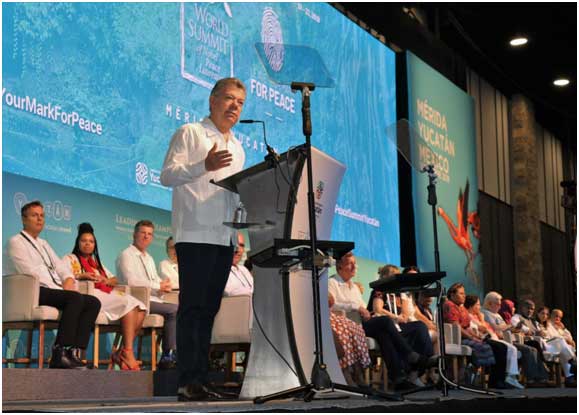
Nobel Peace Laureate and Former President of Colombia Juan Manuel Santos, opens the summit with other Laureates onstage (David Dickstein/Prose & Comms Inc.)

MERIDA, Mexico, Sep 23 2019 (IPS) – In a world of increasing fragility and declining resources, can the world foster peace? With a looming climate crisis, is war inevitable? Will nuclear war be the final result? Are women the ultimate peace builders? How do we train and engage youth to promote peace?


These are some of the questions posed during last week’s three-day World Summit of Nobel Peace Laureates in Merida, Mexico which brought together 1,200 youth and 30 Nobel Peace Laureates — individual and organizations — Juan Manuel Santos, Former President of Colombia; F.W. De Klerk, former President of South Africa; Lord David Trimble, Northern Ireland; and Lech Walesa, former President of Poland.

Women continue to claim a larger seat at the Nobel Peace table. In attendance were Rigoberta Menchu Tum for her work promoting the rights of indigenous peoples; Jody Williams, awarded for her work to eradicate landmines; Shirin Ebadi, for the struggle for women and children’s rights; Tawakkol Karman of Yemen; and Leymah Gbowee of Liberia.

A few key takeaways:
Former President of Colombia, Juan Manuel Santos, awarded a Nobel Peace Prize for work with FARC to negotiate peace and end a brutal civil war, noted positive developments at home, but said some segments are taking steps backwards.

However, he remained steadfast in his commitment to peace: “For each terrorist blinded by hate, there are millions of youth that wish to preserve it. We are not here to say everything is fine, but we are here to leave our mark for peace.”

Discussing the social and economic dimensions of peace, Nobel Laureate Jody Williams railed on the world’s grotesque amounts of income disparity, and called for a total restructuring of the world’s socioeconomic systems.

While many citizens move to massive cities — megalopolises — to access employment, education and health care, they end up encountering racism. “How do we move forward on the common good?” she asked, noting that in America alone, 57 percent of the US disposable budget is spent on the military and weapons, while only 6 percent goes to health and education.

Nobel Laureate Lord David Trimble of Northern Ireland expressed concern over several regions in the world where conflicts continue, such as the Mideast, where there are proxy wars, as well as Iran’s moves to become a hegemonic state.

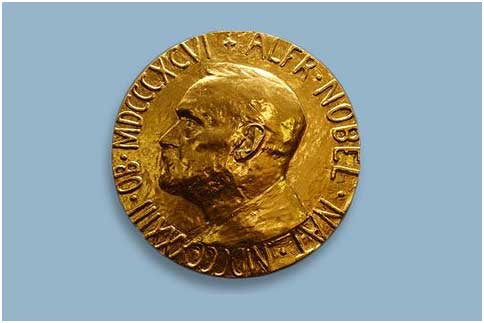
Photographic reproduction of the Nobel Peace Medal. Credit: UN Photo/John Isaac

There are dangers in the South China sea, and threats of a US-China trade war – all of it having a ripple effect, with a potential to greatly impact business and other activities.

Things are getting worse on the democracy front, according to Trimble. “It is not going as well as we would like,” he said, referring to the elections last week in Russia, where the state coerced and manufactured results, producing outcomes that were presented as democratic, but were far from it.

Highlighting the danger of technology controlled in the hands of a few mega corporations, Nobel Laureate Kailash Satyarti called for democratization of tech, and added that, the world has globalized everything, but that it needed to “globalize the compassion that exists in all of us.”

Bernice King, CEO of the King Center, and the youngest daughter of civil rights leader Martin Luther King, challenged all those who came to the summit. “ All of you have a passion to see positive change in our world. We all want peace but it has to be intentional on a daily basis,” she said. Her practical advice? Peace builders need to find an accountability partner to support them when frustrated or depressed.

King offered a message of hope: just like her father: “The only way our world is going to change, is that we have it in our hearts to be love, compassion, strength, nurturing and kindness,” she said, adding that Martin Luther King said that the children of darkness were much more determined than the children of light.

In a panel on nuclear disarmament, Jonathan Granoff, President of the Global Security Institute, and UN Representative of the Permanent Secretariat of the World Summits of Nobel Peace Laureates, posed the question: “Is it legal to annihilate the future?” Because with the power of today’s nuclear weapons, they are a quick end,” he said.

Humanity has come very close to another nuclear war but has been unbelievably lucky, according to Dr. Ira Helfand, co-chair of the Physician’s for Social Responsibility’s nuclear weapons abolition committee.

“Sooner or later our luck will run out. It is no longer a question of when there will be a nuclear war, not if there will be one,” he said, adding that youth today did not understand the enormity of the threat – greater in power and numbers. Put simply, today’s nuclear weapons can annihilate the planet in short order.

In a nod to youth’s achievements, Mohamad Al Jounde was awarded the Turner Social Change Prize, and local student Saskia Niño de Rivera was given the Leave Your Mark for Peace Award.

During closing ceremonies, delegates stated that human rights are non-negotiable. The final document, the Merida Declaration states that: “As long as basic freedoms are violated and gross corruption, violence, extreme poverty, inequality, racism, modern-day slavery and trafficking of persons, discrimination, and discrimination phobias exist, there can be no true peace. We proclaim that true peace is inseparable from the achievement of true justice.”

To learn more and watch archived panel discussions, please visit the Facebook group at World Summit of Nobel Peace Laureates. Also, The World Summit of Nobel Peace Laureates.

  Source

NYC Library Ditches Controversial Saudi Royal MBS’ Event

Active Citizens, Armed Conflicts, Civil Society, Crime & Justice, Editors’ Choice, Featured, Global Governance, Headlines, Human Rights, IPS UN: Inside the Glasshouse, Middle East & North Africa, North America, Peace, Press Freedom, Regional Categories, TerraViva United Nations

Human Rights

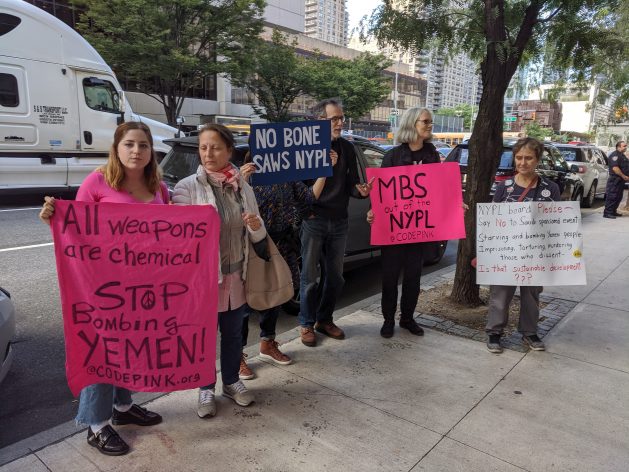
Protestors rallied outside a library building in Manhattan on Wednesday, carrying placards about Saudi Arabia’s war in Yemen and referencing the “bone saw” that was reportedly used to dismember Jamal Khashoggi, a prominent critic of Saudi prince Mohammad bin Salman. Credit: James Reinl/IPS

UNITED NATIONS, Sep 19 2019 (IPS) A New York library appeared to bow to pressure this week when it canceled an event that was being co-hosted by Saudi Arabia’s crown prince Mohammad bin Salman, who is accused of a range of human rights abuses.


On Wednesday, the New York Public Library (NYPL) said it was scrapping the so-called Misk-OSGEY Youth Forum, a workshop on Sept. 23 that was being co-hosted by bin Salman’s Misk Foundation and U.N. youth envoy Jayathma Wickramanayake. 

The event had been blasted by Human Rights Watch (HRW) and other campaign groups, who said it served to whitewash bin Salman’s reputation after the killing of Saudi journalist Jamal Khashoggi in October last year — reportedly on the crown prince’s orders. 

Evan Chesler, chairman of the NYPL board, said that dropping the workshop was the “appropriate thing to do” after weeks of protests and an online petition that had garnered more than 7,000 signatures.

In a statement, the library said it had cancelled the “space rental” amid “concerns about possible disruption to library operations as well as the safety of our patrons” amid “public concern around the event and one of its sponsors”. 

It remains unclear whether the Misk Foundation will seek an alternative venue for the workshop at short notice. A U.N. spokesman told IPS it was “up to Misk to provide information on whether the event will take place elsewhere or not”.

Saudi Arabia’s mission to the U.N. and the Misk Foundation declined to comment on the controversy.

Protestors rallied outside a library building in Manhattan on Wednesday, carrying placards about Saudi Arabia’s war in Yemen and referencing the “bone saw” that was reportedly used to dismember Khashoggi, a prominent critic of bin Salman. 

“This week’s protests show that the public will not keep quiet while the leadership of the NYPL, a treasured repository of civilisation, hires our library out to the butcherer of Khashoggi,” Matthew Zadrozny, president of the Committee to Save the New York Public Library, told IPS.

“The NYPL leadership must explain to the public it serves who signed the deal with bin Salman’s foundation and why.”

Kenneth Roth, director of HRW, blasted the “repression-whitewashing event” on Twitter and asked U.N. secretary-general Antonio Guterres to scrap the partnership between his youth envoy, Wickramanayake, and the crown prince’s charity. 

Suzanne Nossel, CEO of rights group PEN America, said the library had made the “right choice”, addiing bin Salman’s government had “orchestrated the murder and dismemberment of journalist Jamal Khashoggi”.

“Hosting this event just days before the anniversary of Jamal’s killing would have been particularly appalling not just for his family, friends, and colleagues, but also for those currently being persecuted in the kingdom.”

Nossel also noted that the library “is the crown jewel of the literary community in New York” and it stands for “free exchange of ideas and free expression, qualities that the crown prince has repeatedly disdained in both words and actions”.

The NYPL event was set to see some 300 budding young entrepreneurs learn about green themes, corporate responsibility and other parts of the U.N.’s Sustainable Development Goals (SDG) agenda.

Khashoggi, a U.S.-based journalist who frequently criticised the Saudi government, was killed and dismembered on Oct. 2 last year after visiting the Saudi consulate in Istanbul, where he collecting documents for his wedding.

The CIA assessed that bin Salman had ordered Khashoggi’s killing. U.N. expert Agnes Callamard has described the death as a “premeditated execution,” and called for bin Salman and other high-ranking Saudis to be investigated.

Officials in Riyadh, who initially said Khashoggi had left the premises unharmed, now say the journalist was killed by a rogue hit squad that did not involve bin Salman. Activists have since pushed for accountability over the killing.

  Source