Belarus: A Prison State in Europe

By Andrew Firmin
LONDON, Mar 15 2023 (IPS)

Last October, Ales Bialiatski was awarded the Nobel Peace Prize. He was one of three winners, alongside two human rights organisations: Memorial, in Russia, and the Center for Civil Liberties in Ukraine. The Nobel Committee recognised the three’s ‘outstanding effort to document war crimes, human rights abuses and the abuse of power’.


But Bialiatski couldn’t travel to Oslo to collect his award. He’d been detained in July 2021 and held in jail since. This month he was found guilty on trumped-up charges of financing political protests and smuggling, and handed a 10-year sentence. His three co-defendants were also given long jail terms. There are many others besides them who’ve been thrown in prison, among them other staff and associates of Viasna, the human rights centre Bialiatski heads.

Crackdown follows stolen election

The origins of the current crackdown lie in the 2020 presidential election. Dictator Alexander Lukashenko has held power since 1994, but in 2020 for once a credible challenger slipped through the net to stand against him. Sviatlana Tsikhanouskaya ran against Lukashenko after her husband, democracy activist Sergei Tikhanovsky, was arrested and prevented from doing so. Her independent, female-fronted campaign caught the public’s imagination, offering the promise of change and uniting many voters.

Lukashenko’s response to this rare threat was to arrest several members of Tsikhanouskaya’s campaign staff, along with multiple opposition candidates and journalists, introduce additional protest restrictions and restrict the internet. When all of that didn’t deter many from voting against him, he blatantly rigged the results.

This bare-faced act of fraud triggered a wave of protests on a scale never seen under Lukashenko. At the peak in August 2020, hundreds of thousands took to the streets. It took a long time for systematic state violence and detentions to wear the protests down.

Everything Lukashenko has done since is to suppress the democracy movement. Hundreds of civil society organisations have been forcibly liquidated or shut themselves down in the face of harassment and threats. Independent media outlets have been labelled as extremist, subjected to raids and effectively banned.

Jails are crammed with inmates: currently it’s estimated Belarus has 1,445 political prisoners, many serving long sentences after trials at biased courts.

Lukashenko’s only ally

Lukashenko’s repression is enabled by an alliance with an even bigger pariah: Vladimir Putin. When the European Union and democratic states applied sanctions in response to Lukashenko’s crackdown, Putin provided a loan that was crucial in helping him ride out the storm.

This marked a break in a long strategy of Lukashenko carefully balancing between Russia and the west. The effect was to bind the two rogue leaders together. That’s continued during Russia’s war on Ukraine. When the invasion started, some of the Russian troops that entered Ukraine did so from Belarus, where they’d been staging so-called military drills in the days before. Belarus-based Russian missile launchers have also been deployed.

Just days after the start of Russia’s invasion, Lukashenko pushed through constitutional changes, sanctioned through a rubber-stamp referendum. Among the changes, the ban on Belarus hosting nuclear weapons was removed.

Last December Putin travelled to Belarus for talks on military cooperation. The two armies took part in expanded military training exercises in January. Following the constitutional changes, Putin promised to supply Belarus with nuclear-capable missiles; Belarus announced these were fully operational last December.

Belarussian soldiers haven’t however been directly involved in combat so far. Putin would like them to be, if only because his forces have sustained much higher-than-expected losses and measures to fill gaps, such as the partial mobilisation of reservists last September, are domestically unpopular. Lukashenko has struck a balance between belligerent talk and moderate action, insisting Belarus will only join the war if Ukraine attacks it.

That may be because Belarus’s enabling of Russia’s aggression has made people only more dissatisfied with Lukashenko. Many Belarussians want no involvement in someone else’s war. Several protests took place in Belarus at the start of the invasion, leading to predictable repression similar to that seen in Russia, with numerous arrests.

Crucially, Belarus’s security forces stuck by Lukashenko at the peak of protests; if they’d defected, the story could have been different. Full involvement in the war would likely see even Lukashenko loyalists turn against him, including in the military. Soldiers might refuse to fight. It would be a dangerous step to take. As Russia’s war drags on, Lukashenko could find himself walking an increasingly difficult tightrope.

Two countries, one struggle

It’s perhaps with this in mind that Lukashenko’s latest repressive move has been to extend the death penalty. State officials and military personnel can now be executed for high treason. This gives Lukashenko a gruesome new tool to punish and deter defections.

As well as worrying about their safety, Belarus’s activists – in exile or in jail – face the challenge of ensuring the cause of Belarussian democracy isn’t lost in the fog of war. They need continuing solidarity and support to make the world understand that their struggle against oppression is part of the same campaign for liberty being waged by Ukrainians, and that any path to peace in the region must also mean democracy in Belarus.

Andrew Firmin is CIVICUS Editor-in-Chief, co-director and writer for CIVICUS Lens and co-author of the State of Civil Society Report.


!function(d,s,id){var js,fjs=d.getElementsByTagName(s)[0],p=/^http:/.test(d.location)?’http’:’https’;if(!d.getElementById(id)){js=d.createElement(s);js.id=id;js.src=p+’://platform.twitter.com/widgets.js’;fjs.parentNode.insertBefore(js,fjs);}}(document, ‘script’, ‘twitter-wjs’);  

Source

Racist Political System Thwarts Candidacy of Mayan Woman in Guatemala

Thelma Cabrera and Jordán Rodas launch their candidacy for the presidency and vice presidency of Guatemala in December 2022, which has been vetoed by the courts, in a maneuver that has drawn criticism from human rights groups at home and abroad. CREDIT: Twitter

Thelma Cabrera and Jordán Rodas launch their candidacy for the presidency and vice presidency of Guatemala in December 2022, which has been vetoed by the courts, in a maneuver that has drawn criticism from human rights groups at home and abroad. CREDIT: Twitter

By Edgardo Ayala
SANTA CATARINA PALOPÓ, Guatemala, Mar 4 2023 (IPS)

Centuries of racism and exclusion suffered by indigenous peoples in Guatemala continue to weigh heavily, as demonstrated by the denial of the registration of a political party that is promoting the presidential candidacy of indigenous leader Thelma Cabrera in the upcoming general elections.


On Mar. 2, the Guatemalan Constitutional Court ruled against Cabrera’s party, the leftist Movement for the Liberation of the Peoples (MLP), which had appealed a Feb. 15 Supreme Court resolution that left them out of the Jun. 25 elections.“There is a racist system and structure, and we indigenous people have barely managed to start climbing the steps, but with great difficulty and zero opportunities.” — Silvia Menchú

Cabrera’s candidacy and that of her vice-presidential running-mate Jordán Rodas are now hanging by a thread, with their hopes depending on a few last resort legal challenges.

The deadline for the registration of candidates is Mar. 25.


A centuries-old racist system

Guatemala’s political and economic elites “are looking for ways to keep her (Cabrera) from registering; everyone has the right to participate, but they are blocking her,” Sonia Nimacachi, 31, a native of Santa Catarina Palopó, told IPS. The municipality, which has a Cachiquel Mayan indigenous majority, is in the southwestern Guatemalan department of Sololá.

“We would like a person with our roots and culture to become president, I think it would help our people,” added Nimacachi, standing by her street stall in the center of town.

Nimacachi, a Cachiquel Mayan woman, sells “granizadas” or snow cones: crushed ice sweetened with syrup of various flavors, perfect for hot days.

“There is a racist system and structure, and we indigenous people have barely managed to start climbing the steps, but with great difficulty and zero opportunities,” Silvia Menchú, director of the K’ak’a Na’oj (New Knowledge, in Cachiquel) Association for the Development of Women, told IPS.

The organization, based in Santa Catarina Palopó, carries out human rights programs focused on indigenous women.


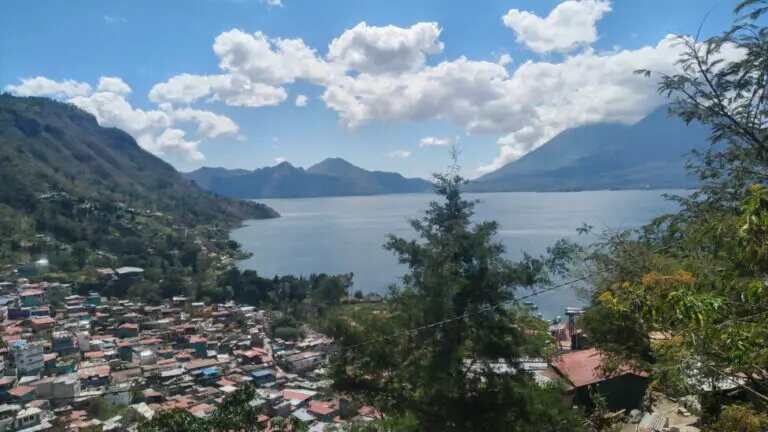
Santa Catarina Palopó, a picturesque Cachiquel Mayan town located on the shore of Lake Atitlán in the southwestern Guatemalan department of Sololá, is preparing for the upcoming general elections, where voters will choose a new president, vice president, 160 members of Congress, 20 members of the Central American Parliament, as well as 340 mayors. CREDIT: Edgardo Ayala/IPS

Santa Catarina Palopó, a picturesque Cachiquel Mayan town located on the shore of Lake Atitlán in the southwestern Guatemalan department of Sololá, is preparing for the upcoming general elections, where voters will choose a new president, vice president, 160 members of Congress, 20 members of the Central American Parliament, as well as 340 mayors. CREDIT: Edgardo Ayala/IPS


“Racism has prevailed, we are mistreated everywhere by the government and the authorities, we are seen as people with little capacity,” said Menchú, of the Maya Quiché ethnic group.

An alleged illegality attributed to Rodas, the vice-presidential candidate, was the cause for denying the MLP the right to register for the elections.

Analysts and social organizations perceive obscure maneuvering on the part of the powers-that-be, who cannot accept the idea that an indigenous woman is trying to break through the barriers of the country’s rigid, racist political system.

Cabrera is a 51-year-old Mayan Mam woman who is trying for a second time to run in the unequal fight for the presidency of this Central American country of 14.9 million inhabitants.

Of the total population, 43.7 percent identify as indigenous Mayan, Xinca, Garífuna and Afro-descendant peoples, according to the 2018 census.

In the 2019 elections Cabrera came in fourth place, winning 10 percent of the total votes cast.

In the Jun. 25 general elections voters will choose a new president for the period 2024-2028, as well as 160 members of Congress and 20 members of the Central American Parliament, and 340 mayors.

In Guatemala, the ancient Mayan culture was flourishing when the Spanish conquistadors arrived in the 16th century.

The descendants of that pre-Hispanic civilization still speak 24 different autochthonous languages, most of which are Mayan.

Years of exclusion and neglect of indigenous rural populations led Guatemala to a civil war that lasted 36 years (1960-1996) and left some 250,000 dead or disappeared.


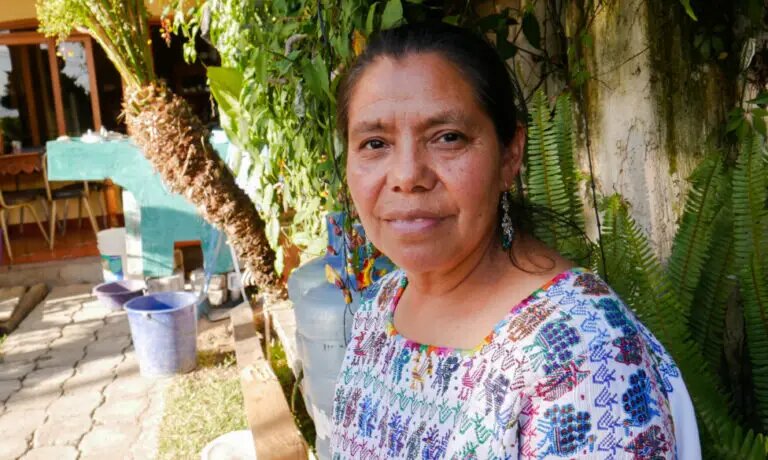
The presidential candidacy of Thelma Cabrera, of the Movement for the Liberation of the Peoples (MLP), must be allowed by the Guatemalan authorities, so that the indigenous population is represented in the Jun. 25 elections, says Silvia Menchú, director of the K’ak’a Na’oj (New Knowledge, in Cachiquel) Association for the Development of Women. CREDIT: Edgardo Ayala/IPS

The presidential candidacy of Thelma Cabrera, of the Movement for the Liberation of the Peoples (MLP), must be allowed by the Guatemalan authorities, so that the indigenous population is represented in the Jun. 25 elections, says Silvia Menchú, director of the K’ak’a Na’oj (New Knowledge, in Cachiquel) Association for the Development of Women. CREDIT: Edgardo Ayala/IPS


A blatant maneuver

The Supreme Electoral Tribunal’s (TSE) rejection of the MLP arose from a complaint against Rodas, who served between 2017 and 2022 as head of the Office for the Defense of Human Rights.

In that office, Rodas strongly questioned alleged acts of corruption by the current government of Alejandro Giammattei, who took office in January 2020.

The criminal complaint against the vice-presidential candidate was filed on Jan. 6 by the current head of the Office for the Defense of Human Rights, Alejandro Córdoba.

After Cabrera and Rodas attempted to register as candidates, Córdoba said he had “doubts” about some payments allegedly received by his predecessor in the Office for the Defense of Human Rights.

His “doubts” apparently had to do with some alleged illegality on the part of Rodas, but since Córdoba has not described it in detail, his statements have been nothing but a weak half-hearted accusation.

However, that was enough for the Supreme Electoral Tribunal to reject the MLP on Feb. 2, which triggered protests by rural and indigenous people, who blocked roads in at least 12 parts of the country.

According to Guatemalan law, all candidates for popularly elected positions must have a document that attests that they have no pending legal issues.

But analysts have pointed out that this document should only take into account actual legal rulings handed down by courts, and not “doubts” vaguely expressed by some government official.

By vetoing Rodas, the TSE automatically bars his presidential runningmate Cabrera, who may actually be the ultimate target of the maneuver, since she is the one who is trying, once again, to win the votes of the indigenous population.

On Feb. 15, the MLP runningmates filed a provisional injunction with the Supreme Court, so that it would take effect immediately and overrule the TSE’s decision, while the Supreme Court studied and resolved the matter in depth.

But the injunction was rejected, so the MLP appealed the next day to the Constitutional Court, asking it to review the case and order the Supreme Court to admit the provisional injunction, to allow the fight for the registration of Cabrera and Rodas to continue forward.

But the appeal was denied Thursday Mar. 2 by the Constitutional Court.

However, the Supreme Court has not yet issued a final ruling on the injunction, but only a provisional stance. This means that when it is finally issued, if it goes against the MLP, Cabrera and Rodas could once again turn to the Constitutional Court, in a last-ditch effort.

But it seems as if the die is already cast.

In a tweet on Thursday Mar. 2, Rodas wrote: “The constitutional justice system has denied my constitutional right to be elected and denies the population the right to choose freely. We await the Supreme Court ruling on the injunction and the position of the @IACHR (Inter-American Commission on Human Rights). Our fight continues.”


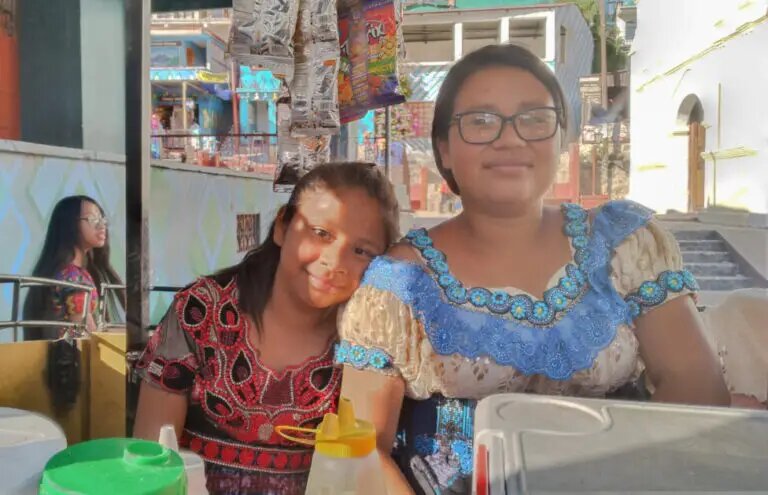
Guatemala's political and economic elites are determined to block the candidacy of indigenous leader Thelma Cabrera, says Sonia Nimacachi, a Cachiquel Mayan woman selling snowcones in Santa Catarina Palopó, in the country's southwest. She would vote for Cabrera again, if her candidacy is finally allowed. CREDIT: Edgardo Ayala/IPS

Guatemala’s political and economic elites are determined to block the candidacy of indigenous leader Thelma Cabrera, says Sonia Nimacachi, a Cachiquel Mayan woman selling snowcones in Santa Catarina Palopó, in the country’s southwest. She would vote for Cabrera again, if her candidacy is finally allowed. CREDIT: Edgardo Ayala/IPS


Cabrera’s second attempt

This is Cabrera’s second attempt to run for the presidency. Her first was in the 2019 elections, when she failed to fully capture the indigenous vote.

“I would dare to think that the majority of the indigenous population did not vote for her because of those instilled prejudices: that she is a woman and also indigenous, not a professional, are issues that have nothing to do with the dignity and the quality of a person,” argued Silvia Menchú.

She added that the right-wing parties have been allies of the country’s evangelical churches, through which they keep in submission segments of the indigenous population that end up supporting conservative parties, rather than a candidate who comes from their Mayan culture.

To illustrate, she said that in Santa Catarina Palopó, a town of 6,000 people, there is only one school to cover primary and middle-school education, “but there are about 15 evangelical churches.”

The TSE’s veto of the registration of Cabrera and Rodas puts the credibility of the elections at risk, Human Rights Watch (HRW) and the Washington Office on Latin America (WOLA) warned on Feb. 27.

In a joint statement, the two organizations said the electoral authority’s rejection of aspiring candidates “is based on dubious grounds, puts political rights at risk, and undermines the credibility of the electoral process.”

“The electoral process is taking place in the context of a decline in the rule of law, in which the institutions responsible for overseeing the elections have little independence or credibility,” they stated.

In addition to Cabrera and Rodas, the TSE also rejected the registration of right-wing candidate Roberto Arzú, because he allegedly began campaigning too early.

HRW and Wola added that “efforts to exclude or prosecute opposition candidates create unequal conditions that could prevent free and fair elections from taking place.”

Meanwhile, the TSE did endorse, on Feb. 4, the presidential candidacy of Zury Ríos, daughter of General Efraín Ríos Montt, who governed de facto between 1982 and 1983.

In 2013 the general was found guilty of genocide and crimes against humanity for the massacre of more than 1,400 indigenous Ixil people in the north of the country.

He was sentenced to 80 years in prison, but the Constitutional Court later revoked the ruling. Ríos Montt died in April 2018.

Article 186 of the Guatemalan constitution prohibits people involved in coups d’état, or their relatives, for running for president.

Meanwhile, snowcone vendor Sonia Nimacachi said in the central square of Santa Catarina Palopó that she still held out hope that Cabrera would be able to register as a candidate.

“If they let her participate, I would vote for her again,” she said, while serving a customer.

Source

Nicaragua: An Opportunity for Democratic Solidarity

By Inés M. Pousadela
MONTEVIDEO, Uruguay, Feb 22 2023 (IPS)

On 9 February, Nicaragua’s dictator, Daniel Ortega, unexpectedly ordered the release of 222 political prisoners, including several former presidential candidates, opposition party leaders, journalists, priests, diplomats, businesspeople and former government supporters branded as enemies for expressing mild public criticism.


Also released were several members and leaders of civil society organisations (CSOs) and social movements, including student activists and environmental, peasant and Indigenous rights defenders. Some had been arrested on trumped-up charges for taking part in mass protests in 2018 and stuck in prison for more than four years.

But the Ortega regime didn’t simply let them go – it put them on a charter flight to the USA and before their plane had even landed permanently stripped them of their Nicaraguan nationality and their civil and political rights. The government made clear it wasn’t recognising their innocence; it was only commuting their sentences.

The rise of a police state

Ever since being re-elected in a blatantly fraudulent election in November 2021, Ortega has sought to make up for his lack of democratic legitimacy by establishing a police state. The regime effectively outlawed all civil society and independent media, closing more than 3,000 CSOs and 55 media outlets. It subverted the judicial system to falsely accuse, convict and imprison hundreds of critics and intimidate everyone else into compliance.

Political prisoners have been treated with purposeful cruelty, as though they’re enemy hostages – kept in isolation, either in the dark or under permanent bright lighting, given insufficient food and refused medical care, subjected to constant interrogations, denied legal counsel and allowed only irregular visits by family members, if at all. Psychological torture has been a constant, and many have been also subjected to physical torture.

The release of some prisoners hasn’t signalled any improvement in conditions or move towards democracy, as made clear by the treatment experienced by one political prisoner, Catholic bishop Rolando Álvarez, who refused to board the plane to the USA.

In retaliation for his refusal to leave the country, his trial date was brought forward and held immediately, in the absence of any procedural safeguards. It predictably resulted in a 26-year sentence. Álvarez was immediately sent to prison, where he remains alongside dozens of others.

Stripped of citizenship

The constitutional amendment stripping the 222 released political prisoners of their citizenship states that ‘traitors to the homeland shall lose the status of Nicaraguan nationals’ – even though the constitution establishes that no national can be deprived of their nationality.

It was an illegal act on top of another illegal act. No one can be deported from their own country: what the regime called a deportation was a banishment, something against both domestic law and international human rights standards.

On 15 February, the regime doubled down: it stripped 94 more people of their nationality. Those newly declared stateless included prominent political dissidents, civil society activists, journalists and the writers Gioconda Belli and Sergio Ramírez, both of whom had held government positions in the 1980s. Most of the 94 were already living in exile. They were declared ‘fugitives from justice’.

Mixed reactions

By rendering 326 people stateless, the Nicaraguan dictatorship fuelled instant international solidarity. On 10 February, the Spanish government offered the 222 just-released prisoners Spanish citizenship – an offer many are bound to accept. On 17 February, more than 500 writers around the world rallied around Belli and Ramírez and denounced the closure of civic space in Nicaragua.

In Argentina, the Roundtable on Human Rights, Democracy and Society sent an open letter to President Alberto Fernández to request he offer Argentinian nationality to all Nicaraguans stripped of theirs.

But Argentina, alongside most of Latin America, has looked the other way. Its silence suggests that democratic consensus across the region is more fragile and superficial than might be hoped, with willingness to condemn rights violations depending on the ideological leanings of those who carry them out.

Currently all the region’s big democracies – Argentina, Brazil, Chile, Colombia and Mexico – have governments that define themselves as left-wing. But only one of their presidents, Chile’s Gabriel Boric, has consistently criticised Nicaragua’s authoritarian turn. In response to the latest developments he tweeted a personal message of solidarity with those affected, calling Ortega a dictator. The rest have either issued mild official statements or simply remained silent.

Now what?

The Nicaraguan government insisted that releasing the prisoners was its own decision. The fact it was accompanied by further violations of released prisoners’ rights was meant as a demonstration of power.

But the move looks like it was made in the expectation of receiving something in return. The Nicaraguan government has long demanded that US sanctions be lifted; at a time when one of its closest ideological allies, Russia, is unable to provide any significant support, Nicaragua needs the USA more than ever. But the US government has always said the release of political prisoners must be the first step towards negotiations.

Given this, the unilateral surrender of people it considers dangerous conspirators to the state it proclaims is its worst enemy doesn’t seem much like a show of force. And if it isn’t, then it’s a valuable advocacy opportunity. The international community must push for the restoration of civic space and the return of free, fair and competitive elections. The first step should be to support the hundreds who’ve been expelled from their own country, as the future builders of democracy in Nicaragua.

Inés M. Pousadela is CIVICUS Senior Research Specialist, co-director and writer for CIVICUS Lens and co-author of the State of Civil Society Report.


!function(d,s,id){var js,fjs=d.getElementsByTagName(s)[0],p=/^http:/.test(d.location)?’http’:’https’;if(!d.getElementById(id)){js=d.createElement(s);js.id=id;js.src=p+’://platform.twitter.com/widgets.js’;fjs.parentNode.insertBefore(js,fjs);}}(document, ‘script’, ‘twitter-wjs’);  

Source

Venezuela: The End of Civil Society as We Know It?

Civil Society, Crime & Justice, Featured, Gender Violence, Headlines, Human Rights, Latin America & the Caribbean, TerraViva United Nations

Opinion

MONTEVIDEO, Uruguay, Feb 16 2023 (IPS) – In late January, the UN High Commissioner for Human Rights, Volker Türk, finished an official visit to Venezuela. He said he’d found a fragmented society in great need of bridging its divides and encouraged the government to take the lead in listening to civil society concerns and responding to victims of rights violations.


But Venezuelan civil society had hoped for more. Two days before his arrival, the National Assembly, Venezuela’s congress, had approved the first reading of a law aimed at further restricting and criminalising civil society work. International civil society urged the High Commissioner to call for the bill to be shelved. Many found the UN’s response disappointing.

Another turn of the screw

The bill imposes further restrictions on civil society organisations (CSOs). If it becomes law, CSOs will have to hand over lists of members, staff, assets and donors. They’ll be obliged to provide detailed data about their activities, funding sources and use of financial resources – the kind of information that has already been used to persecute and criminalise CSOs and activists. Similar legislation has been used in Nicaragua to shut down hundreds of CSOs and arrest opposition leaders, journalists and human rights defenders.

The law will ban CSOs from conducting ‘political activities’, an expression that lacks clear definition. It could easily be interpreted as prohibiting human rights work and scrutiny of the government. There’s every chance the law will be used against human rights organisations that cooperate with international human rights mechanisms. This would endanger civil society’s efforts to document the human rights situation, which produces vital inputs for the UN’s human rights system and the International Criminal Court, which has an ongoing case against Venezuela.

The law-making process has been shrouded in secrecy: the draft bill wasn’t made publicly available and wasn’t discussed at the National Assembly before being approved. The initiative was immediately denounced as a tool to control, restrict and potentially shut down CSOs and criminally prosecute their leaders and staff. If implemented, it could mean the end of civil society as we know it in Venezuela.

The UN and Venezuela

The previous High Commissioner, Michelle Bachelet, visited Venezuela in September 2019. She was criticised for taking a cautious approach. Moreover, most of the commitments in the agreement the government signed with her were never fulfilled.

Following that visit, the UN Human Rights Council established the Independent International Fact-Finding Mission on the Bolivarian Republic of Venezuela (FFMV), tasked with investigating alleged human rights violations. In September 2022, the FFMV issued a report detailing the involvement of Venezuela’s intelligence agencies in repressing dissent, including by committing human rights violations such as torture and sexual violence.

But intimidation only grew as Türk’s visit approached, with some protest leaders put under surveillance, followed and detained.

Venezuelan CSOs called for a more energetic approach, but Türk followed his predecessor’s footsteps. His visit was characterised by secrecy and brevity, particularly in terms of the time dedicated to engaging with civil society.

Bachelet’s agreement with the government had included the presence of a two-person UN team to monitor the human rights situation and provide assistance and advice. This has now been extended for two years, but the details haven’t been made public.

Civil society activists have continued to work closely with the UN field office and wouldn’t want to risk its presence in the country, so to some extent they understand Türk’s caution in dealing with the Venezuelan government. But they also view his visit as a missed opportunity.

Türk’s statement to the media at the end of his visit was very much focused on the political and economic crises and healing divisions in society, with human rights ‘challenges’ occupying third place on his list of major concerns.

Alerta Venezuela, a Colombia-based human rights group, recognised the references Türk made to ‘new issues’ – such as the need for Venezuela to sign the Escazú Agreement on environmental rights and decriminalise abortion – alongside ongoing human rights violations such as extrajudicial executions, arbitrary arrests and torture. But it criticised crucial omissions and the UN’s apparent willingness to take government data at face value.

On the anti-NGO bill, the High Commissioner said he’d asked the government to take into account his comments but didn’t provide any information about their content, so it isn’t clear whether he advocated for amendments to a law that can only remain deeply flawed or for it to be shelved – which is what civil society wanted him to do.

The Venezuelan government has all along paid only lip service to cooperation with the UN and hasn’t kept its promises. Repression is only going to intensify in the run-up to the presidential election scheduled for 2024. Any strategy that involves trusting the government and hoping it will change its position seems doomed to failure.

High-level human rights advocacy needed

More energetic criticism came from the independent and less politically constrained FFMV, which expressed ‘deep concerns’ about the potential implications of the draft NGO law for civic and democratic space.

That is the stance civil society would like the High Commissioner for Human Rights to have taken. They want the office holder to be a human rights champion standing independent of states and unafraid of causing a stir.

Türk is only five months into his four-year term. Civil society will keep doing its best to engage, in the hope that the UN High Commissioner for Human Rights can become the human rights advocate the world – and Venezuela – need.

Inés M. Pousadela is CIVICUS Senior Research Specialist, co-director and writer for CIVICUS Lens and co-author of the State of Civil Society Report.

  Source

China and Russia Fail to Defund UN Human Rights Work

Civil Society, Global, Global Governance, Headlines, Human Rights, Humanitarian Emergencies, TerraViva United Nations

Opinion

UN Human Rights Council meeting in Geneva

NEW YORK, Feb 15 2023 (IPS) – United Nations member states agreed to fully fund UN human rights mechanisms that China, Russia, and their allies had sought to defund in the 2023 budget. This should set a precedent for UN human rights funding in the future.


Human Rights Watch has warned for years about China and Russia-led efforts to slash funding for UN human rights work, which was aimed at undermining decisions by the UN Human Rights Council, General Assembly, and Security Council.

During the General Assembly’s budget negotiations in late 2022, China, Russia and allies proposed a resolution to defund human rights investigations in Sri Lanka, Iran, Venezuela, Russia, Ukraine, Nicaragua, North Korea, Belarus, Syria, and Eritrea. Ethiopia proposed a resolution to defund an investigation of war crimes and abuses in Ethiopia itself.

Israel also urged states to deny funding for an International Court of Justice advisory opinion on the legal consequences of its 55-year occupation of Palestinian territory.

All these efforts failed. The Czech Republic, as European Union president, countered by proposing full funding for human rights mechanisms at the level proposed by Secretary-General António Guterres. The resolution passed by a sizable majority.

There’s more good news. Not only did the defunding efforts fail, the highly problematic recommendations put forward by the UN Advisory Committee on Administrative and Budgetary Questions (ACABQ) were rejected.

The Advisory Committee is supposed to be an independent body of experts, but in recent years, its “experts” from countries like China and Russia have been pushing their governments’ anti-human rights agendas and advocating for sharp cuts in funding for human rights work, with no good reasons.

Due to divisions between Western countries and developing states, the standard UN funding compromise had become accepting the non-binding Advisory Committee recommendations. For example, if its recommendations had been adopted, the staff and budget for the Iran commission of inquiry would have been cut in half.

UN member countries should treat the successful UN budget outcome as a blueprint for the future. The job of the Fifth Committee – which oversees UN budget matters – is to allocate resources, not question mandates approved by UN legislative bodies.

They should also reform or replace the Advisory Committee on Administrative and Budgetary Questions with an advisory body staffed by genuinely independent experts, not diplomats doing the bidding of their governments.

Meanwhile, UN delegations should build on this success and ensure reliable full funding for all UN human rights mandates.

Louis Charbonneau is UN Director Human Rights Watch

IPS UN Bureau

  Source

Outlook for 2023: Children in ‘Polycrisis’

Armed Conflicts, Civil Society, Global, Global Governance, Headlines, Human Rights, Humanitarian Emergencies, TerraViva United Nations

Opinion

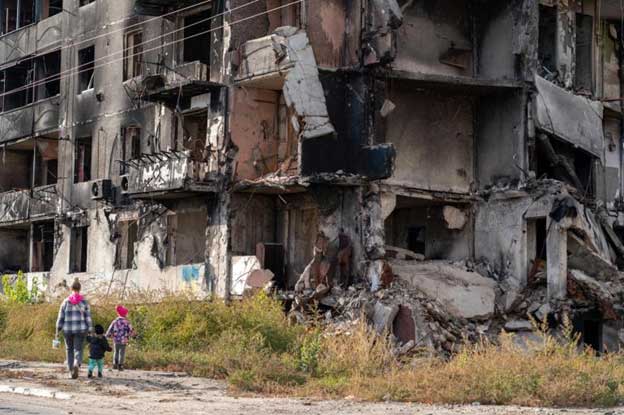
A family walks past a heavily damaged building in Borodianka, Ukraine. Multiple threats are converging to leave families reeling. But putting children at the centre of the response can help shape a brighter future. Credit: UNICEF/UN0765276/Filippov

UNITED NATIONS, Feb 14 2023 (IPS) – The year 2022 was incredibly difficult for people around the world. We were confronted by a series of major crises, including a continuing pandemic, a major war in Europe, an energy crisis, rising inflation and food insecurity.


These events hit children particularly hard, compounding the already severe impacts of the COVID-19 pandemic. Millions of children had to flee their homes because of conflict or extreme weather events. At the same time, child malnutrition and the number of children in need of humanitarian assistance rose.

The war in Ukraine, for example, has led to higher food and energy prices, which in turn has contributed to rising global hunger and inflation. Efforts to address inflation through rising interest rates in the US have driven up the value of the dollar against other currencies, making developing countries’ imports, debt repayments and their ability to access external financing more difficult.

As we explain in our new report, ‘Prospects for Children in the Polycrisis: A 2023 Global Outlook’, these realities have added up to what has been termed a ‘polycrisis’ – multiple, simultaneous crises that are strongly interdependent.

As we look to 2023, it’s clear that the polycrisis is likely to continue shaping children’s lives. The effects of these intertwined and far-reaching trends will be difficult to untangle, and solutions will be difficult to find as policymakers struggle to keep up with multiple urgent needs.

The situation is particularly dire in economically developing countries. Higher food and energy prices have contributed to a rise in global hunger and malnourishment, with children among the most affected.

The polycrisis is also limiting access to healthcare for many children, making it harder for them to receive treatment and routine vaccinations. Recovery from learning losses caused by the closure of schools will be slow and felt for years to come, while the shift to remote learning has left children from low-income families facing the greatest challenges in catching up.

At the same time, the combination of higher financing needs, soaring inflation and a tighter fiscal outlook will widen the education financing gap needed to achieve the Sustainable Development Goals.

Climate change, too, is also a part of this polycrisis, with visible effects, including devastating floods in Pakistan and droughts in East Africa, making it harder for children to access education, food and healthcare, and causing widespread displacement of populations.

All these factors have led UNICEF to estimate that 300 million children will be in need of humanitarian assistance this year. This staggering number highlights the urgency for international organizations and governments to step in and provide assistance.

But the polycrisis doesn’t have to lead to further instability or, ultimately, systemic breakdown. Some of the stresses we saw in 2022 have already weakened, and new opportunities may arise to alleviate the situation.

For example, food and oil prices have dropped from their peaks, and good harvests in some countries may help to lower global food prices. Fortunately, we know there are solutions and strategies that work.

One potential solution is to increase investment in social protection programmes, such as cash transfers and food assistance, which can help alleviate the immediate economic impacts of the polycrisis on families. These programmes can also help to build resilience and reduce vulnerabilities.

The establishment of learning recovery programmes will help tackle the learning losses and prevent children from falling further behind. And early prevention, detection and treatment plans for severe child malnutrition have been effective in reducing child wasting.

Ultimately, a coordinated and collective effort is needed to protect the rights and well-being of children. This includes not only providing immediate assistance but also addressing the underlying causes of the polycrisis and building resilience for the future.

This cannot be achieved without a more coordinated and collective effort from international organizations and governments to help mitigate the effects of the polycrisis and protect children’s futures.

And, crucially, we must listen to children and young people themselves so that we can understand the future they want to build and live in. In fact, we followed this approach when we were assessing trends for ‘Prospects for Children in the Polycrisis’, asking young people from across the world age 16 to 29 to give us their views on some of the challenges their generation faces.

It’s critical that we take action to protect the most vulnerable among us. The future may be uncertain, but by working together we can help to build a better future for our children.

Jasmina Byrne is Chief of Foresight and Policy, UNICEF Innocenti – Global Office of Research and Foresight.

Prospects for Children in the Polycrisis: A 2023 Global Outlook’, produced by UNICEF Innocenti – Office of Global Research and Foresight, unpacks the trends that will impact children over the next 12 months.

Source: UNICEF

IPS UN Bureau

  Source