Imagery, Algorithms, and the Ballot: What Takaichi’s Victory Says About Youth Politics in the Digital Age

Active Citizens, Asia-Pacific, Democracy, Development & Aid, Economy & Trade, Headlines, Labour, Peace, TerraViva United Nations, Youth, Youth Thought Leaders
Opinion

Imagery, Algorithms, and the Ballot: What Takaichi’s Victory Says About Youth Politics in the Digital Age

Image: Hiroshi-Mori-Stock / shutterstock.com and 内閣広報室 / Cabinet Public Affairs Office / Wiki Commons

Mar 3 2026 (IPS) –  
Sanae Takaichi’s electoral victory in February marks a historic turning point in Japanese politics. As Japan’s first female prime minister and the leader of a commanding parliamentary majority, she represents change in both symbolic and strategic terms. Conventional wisdom long held that younger Japanese voters leaned progressive, were sceptical of assertive security policies, and disengaged from ideological nationalism. Yet a segment of digitally active youth rallied behind a politician associated with constitutional revision, expanded defence capabilities, and a more unapologetic articulation of national identity. This shift cannot be reduced to a simple conservative swing. Rather, Takaichi’s rise reflects a deeper transformation in how democratic politics is constructed in the digital age: the growing power of imagery, digital mobilisation, and algorithm-driven branding in shaping political choice—particularly among younger voters.


Takaichi’s approval ratings among voters aged 18–29 approached 90 per cent in some surveys, far surpassing those of her predecessors. Youth turnout also rose, suggesting that Japanese youth are not politically apathetic. On the contrary, they are paying attention—but the nature of that engagement has changed. Viral images, short video clips, hashtags, and aesthetic cues travelled faster and farther than policy briefings. For many younger voters, engagement began—and sometimes ended—with the visual and emotional appeal of the candidate. This pattern is not uniquely Japanese. However, the scale of its impact in this election suggests that political communication has entered a new phase in which digital imagery can shape electoral outcomes as much as—or more than—substantive debate.

A New Phase of Digital Politics in Japan

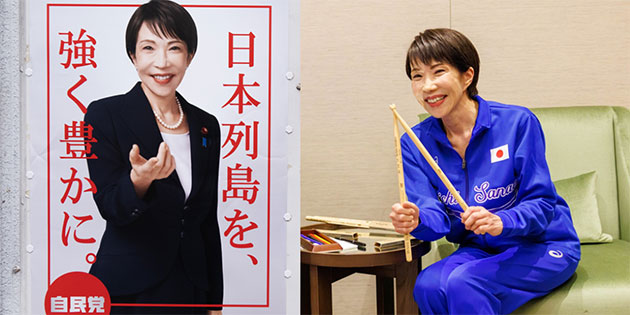
In the months leading up to the election, Takaichi’s image proliferated across social media platforms. Supporters circulated clips highlighting her confident demeanour and historic candidacy. A cultural trend sometimes described as ‘sanakatsu’ or ‘sanae-mania’ framed political support as a form of fandom participation. Hashtags multiplied. ‘Mic-drop’ moments went viral. Even personal accessories—her handbags and ballpoint pens—became symbolic conversation pieces.

Political enthusiasm has always contained emotional and symbolic elements. What is new is the speed and scale at which digital platforms amplify them. Algorithms reward content that provokes reaction—admiration, anger, excitement. A charismatic clip often outperforms a detailed explanation of fiscal reform. For younger voters raised in scroll-based media environments, political information increasingly arrives as curated snippets. Policy complexity competes with—and often loses to—aesthetic immediacy.

Post-election surveys and interviews suggested that many first-time voters struggled to articulate specific policy distinctions between parties. Instead, they cited impressions—strength, change, decisiveness, novelty—suggesting that digital engagement does not automatically translate into policy literacy. Political identity can form through repeated exposure to imagery and narrative rather than sustained examination of legislative proposals. When campaigns are optimized for shareability, they are incentivized to simplify. Nuance compresses poorly into short-form video.

The Politics of Strength in an Age of Uncertainty

Japan’s younger generation has grown up amid prolonged economic stagnation, regional insecurity, and global volatility. China’s rise, tensions over Taiwan, North Korean missile launches, and persistent wage stagnation form the backdrop of their political participation. For many, the future feels uncertain and structurally constrained.

In such an environment, Takaichi’s assertive rhetoric carried emotional resonance. Her emphasis on strengthening national defence, revisiting aspects of the postwar settlement, and making Japan “strong and rich” projected clarity rather than ambiguity. Where institutional politics can appear technocratic or slow, decisive messaging offered the voters psychological reassurance.

At the core of her appeal is a narrative of restoring a ‘strong’ Japan. Calls for constitutional revision and expanded defence capabilities are framed as steps toward recovering national self-confidence. For younger Japanese fatigued by protracted historical disputes and what some perceive as externally imposed guilt, language emphasising pride and sovereignty resonates more readily than complex historical debates. This may not signal a rejection of peace. Rather, it may reflect a generational reframing of peace itself—understood not solely as pacifism, but as deterrence, defence capability, and strategic autonomy. Messages stressing ‘sovereignty’, ‘strength’, and ‘normal country’ can circulate more effectively in shareable digital formats than nuanced and complex historical analysis.

A Global Pattern: Virtual Branding, a Democratic Crossroads

Japan’s experience mirrors a broader transformation in democratic politics: the rise of virtual branding as the central organizing principle of electoral strategy. In earlier eras, campaigns revolved around party platforms and televised debates. Today, strategy increasingly begins with platform optimization. Campaigns are designed not only to persuade, but to perform within algorithmic systems. The guiding question is no longer only “What policies do we stand for?” but “What content travels?”

The election of Donald Trump in the United States illustrated how virtual media strategy can reshape political competition. Memorable slogans and emotionally charged posts dominated attention cycles, often eclipsing policy detail. Scholars have described this as “attention economics in action”: the candidate who captures digital attention shapes political reality before formal debate even begins. More recently, figures such as Zohran Mamdani have demonstrated how youth-centered digital branding can mobilize support with remarkable speed. Campaigns became participatory; supporters did not merely consume messaging but actively distributed political identity.

Takaichi’s recent victory reflects the evolving mechanics of digital democracy. Her leadership will ultimately be judged not by imagery but by governance — by whether her policies deliver economic stability, regional security, and social cohesion. The broader question, however, transcends any single administration. It means political decisions have migrated into digital environments optimised for speed and visual communication. In an age where images travel faster than ideas, democratic choice risks being guided more by what is seen than by what is discussed. In such an environment, political campaigns will be forced to adapt, and produce content that performs well within these algorithmic constraints. Over time, this may reshape voter expectations and politics will begin to resemble influencer culture. Campaigns that fail to master digital branding risk will appear outdated. Those that succeed can mobilize youth at scale.

Democracy has always balanced emotion and reason. The challenge today is ensuring that emotion does not eclipse reason entirely. The future of informed citizenship may depend on restoring that balance. This does not suggest that previous eras were immune to personality politics. What has changed is the proportion. The digital environment magnifies symbolic cues and compresses policy discussion. If democracies wish to maintain robust deliberation, they must consciously rebalance image and substance. This requires civic education focused on media literacy, virtual platform incentives that elevate substantive debate and political leadership willing to engage in depth, not just virality. And the responsibility is collective—voters, educators, media institutions, and candidates alike. The question facing democracies is whether this transformation can coexist with substantive deliberation or whether branding will increasingly overtake it.

Related articles:
Japan Stumbles: The Taiwan Fiasco
The New Takaichi Administration: Confronting Harsh Realities on the International Stage
Middle Powers After Davos

Ria Shibata is currently a Senior Research Fellow at the New Zealand Centre for Global Studies, and the Toda Peace Institute in Japan. She also serves as a Visiting Scholar at the University of Auckland. Her research focuses on identity-driven conflicts, reconciliation, nationalism and the role of historical memory in shaping interstate relations and regional stability in Northeast Asia.

This article was issued by the Toda Peace Institute and is being republished from the original with their permission.

IPS UN Bureau
  Source

A New World Order Where Might is Right

Armed Conflicts, Civil Society, Crime & Justice, Democracy, Featured, Global, Headlines, Human Rights, International Justice, IPS UN: Inside the Glasshouse, TerraViva United Nations

A New World Order Where Might is Right

Credit: Global Centre for the Responsibility to Protect

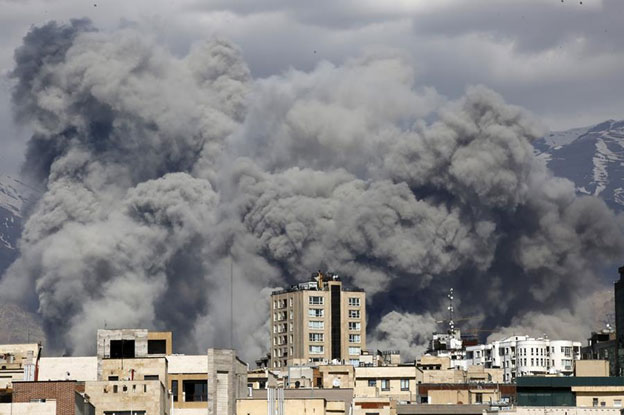
UNITED NATIONS, Mar 3 2026 (IPS) – As the build-up for a proposed “new world order” continues, a lingering question remains: will the country with the most powerful military reign supreme?

The United Nations remains politically impotent. The UN charter is in tatters. The sovereignty of nation states and their territorial integrity have been reduced to political mockery. And the law of the jungle prevails—be it Palestine, Ukraine, Venezuela or Iran.


What’s next: Colombia? Cuba? Greenland? North Korea?

The widespread condemnation of the ongoing conflicts – including charges of war crimes and genocide— has continue to fall on deaf ears.

UN Secretary-General Antonio Guterres told the Security Council that under Article 2 of the UN Charter, all member states shall “refrain in their international relations from the threat or use of force against the territorial integrity or political independence of any state.”

But is anybody out there listening?

Norman Solomon, executive director, Institute for Public Accuracy and national director, RootsAction.org, told IPS killing from the sky has long offered the sort of detachment that warfare on the ground can’t match. Far from its victims, air power remains the height of modernity

Reliance on overwhelming air power is key to what the U.S. is doing in tandem with Israel. Bombing from the skies while not attacking with ground forces is the ultimate way of killing without suffering many casualties.

This reduces political blowback at home in a political and media culture that values American lives but sees the lives of “others” as readily expendable, he pointed out.

“This flagrant war of shameless aggression, launched by the United States and Israel, cannot be contained — much less rolled back — by the typical diplomatic euphemisms and caution.”

The U.S. and Israeli governments, said Solomon, are too completely run by psychopathic leaders who adhere only to the “principle” that might makes right. If ever there were a time that the vaunted “international community” should step up and confront an alliance of reckless outlaw governments, this is it.

The European allies of the United States, he said, should stop their cowardly vagueness and finally step up to demand a halt to this aggression that is setting the Middle East tinderbox on fire. The EU should be threatening huge countermeasures against the United States and Israel unless that pair of sociopathic governments immediately halts their assault on Iran.

“Playing evasive games with Washington makes the leaders in London, Paris, Berlin and elsewhere accomplices to methodical ongoing war crimes”, declared Solomon, author of “War Made Invisible: How America Hides the Human Toll of Its Military Machine”

According to the Global Centre for the Responsibility to Protect, the US-Israeli act of aggression against Iran was undertaken in violation of international law and the UN Charter, as they exercised use of force without authorization from the UN Security Council (UNSC) or without a demonstrated threat to their security that would trigger the right to self-defense under Article 51 of the UN Charter.

“The attack came amid ongoing nuclear talks between the US and Iran and just hours after Oman’s Foreign Minister – a key mediator in the negotiations – shared details on progress achieved and announced that a breakthrough was near. The attack also mirrors the recent unlawful actions undertaken by the US in Venezuela on 3 January, culminating in the kidnapping of the head of state and setting in motion profound uncertainty for the region and the global order.”

Meanwhile, the Geneva-based UN refugee agency, the UNHCR, said it is deeply concerned about the escalation of conflict in the Middle East and its impact on civilians and further displacement in the region.

“Many affected countries already host millions of refugees and internally displaced people. Further violence risks overwhelming humanitarian capacities and placing additional pressure on host communities”.

“We echo the UN Secretary-General’s urgent call for dialogue and de-escalation, respect for human rights, the protection of civilians and full adherence to international law”.

James Jennings, President of Conscience International, told IPS the joint US-Israeli attack on Iran was misguided, illegal, and based on lies. It will retard, not advance, any future nuclear agreement, perhaps for decades.

It was illegal, he pointed out, because it violates both the US constitution and international law as enshrined in the UN Charter. It was based on lies because the nuclear watchdog groups have clearly indicated in essence that “There’s nothing to see here.”

“Trump regularly claims that June’s joint “Operation Midnight Hammer” obliterated Iran’s nuclear capability, yet his weak case for the current “Operation Epic Fury” war rests on the idea that perhaps someday in the future Iran might get a bomb. Several US administrations have worked diplomatically to prevent that, yet Trump tore the agreement up”.

Trump claims to be limited by no law, constitution, or the UN Charter. Guided only by his own morality, as he said recently, he followed Israel obediently in launching a massive war against a sleeping country of 92 million people, said Jennings.

“All the while, his amateur diplomats were negotiating deceptively for a compromise like Imperial Japan did in the run-up to the WW II Pearl Harbor attack. Ask the parents of the more than l00 schoolgirls killed on the first horrifying day of joint US-Israel bomb attacks at Minaj, Iran, and they will probably not see Mr. Trump as particularly moral”.

George W. Bush called himself “The Decider, so he foolishly decided to take the US into two unwinnable wars that most politicians in Washington, and even Trump himself, now consider monumental mistakes. Trump campaigned vigorously on keeping the US out of mistaken Middle East wars that became “Forever Wars,” said Jennings.

“Yet here he is being pulled around by the nose by Mr. Netanyahu. According to a classic rule when launching a war, one must recognize that two things cannot be changed: one is history and the other is geography. It is stunning that the leader of the United States is cavalier about going to war without understanding that or clearly stating the mission’s purpose or end game.”

Pundits and TV reporters are calling the attack on Iran “a war of choice,” said Jennings.

“Why not call it what it really is–a war of naked aggression? Nobody knows when will it end. Trump’s claim that the war will be over in a few days is a cruel joke. The other side gets a vote. Iran celebrated its 2,500th anniversary in 1971. Maybe people who have been around so long know a few things about survival,” declared Jennings.

IPS UN Bureau Report

  Source

Cuba Has its Back Against the Wall

Civil Society, Featured, Global Governance, Headlines, IPS UN: Inside the Glasshouse, Latin America & the Caribbean, TerraViva United Nations

Opinion

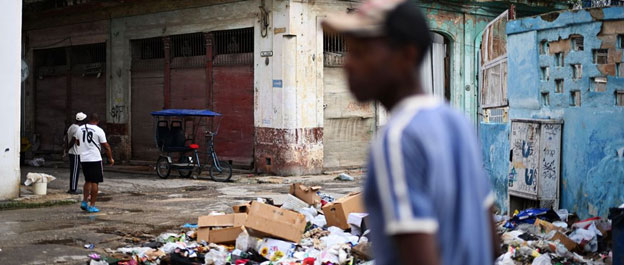
BERLIN, Germany, Mar 2 2026 (IPS) – The crisis could scarcely be more dramatic. The US is blocking practically all oil deliveries to Cuba. The island depends on imports for all diesel, petrol and kerosine. Without diesel trucks cannot move, food cannot reach Cuban towns and hospitals will not get any oxygen.


The airports are already without kerosine and several airlines have already suspended flights to and from Havana. The strategy is clear: strangulation. The US extreme right is jubilant; at last, they have found the ‘choking point’ that may finally bring Havana to its knees, 67 years after Fidel Castro’s revolution.

Trump says that negotiations are already under way, outside of declaring that Cuba is a ‘failed state’ and the government there needs to make a deal. But Trump says a lot of things. Even a sober look at the alternatives, however, is fairly terrifying. There are basically four scenarios:

Scenario 1: Cuba continues to be denied oil deliveries. The government can impose austerity measures and commit itself to heroic resistance. But without new petrol or diesel the current crisis will become a humanitarian catastrophe within weeks. Havana could pin the blame for this on the US and with complete justification. For all its own faults, no other Caribbean island could withstand such an oil embargo, whatever its political system. But what good would playing the blame game do in the end? The social and human costs would be horrendous. Without diesel even international humanitarian aid deliveries couldn’t get from the ports to the towns that need them.

Moscow says that it is willing to supply Cuba with oil, but so far it hasn’t followed through.

Scenario 2: Some oil tankers reach the island, perhaps from Moscow, from spot market purchases or from other sources. This could relieve the worst of it, no doubt. But the question remains, to what degree? And for the foreseeable future? Trump’s threats of punitive tariffs and the seizure of proscribed tankers are already sufficient deterrent.

Even Mexico had to pull its support under pressure from Washington. But who else is up for incurring America’s wrath? Moscow says that it is willing to supply Cuba with oil, but so far it hasn’t followed through.

On top of that, Russian airlines are bringing their passengers home and suspending flights. Up until the US military strikes on Maduro on 3 January Venezuela had provided 70 per cent of Cuba’s oil imports. Instead of demanding hard currency payments, it settled for Cuban medical personnel. Who will take over this role?

Scenario 3: The desperate situation intensifies, leading to protests, unrest and the fall of the government. This is what the hardliners in Miami have been dreaming of. But for all the pent-up frustration Washington’s own policy is stymying mobilisation. Already in Venezuela Trump and Rubio ignored the opposition and made deals only with the post-Maduro elite.

If Trump is now saying that negotiations with Havana are already going on and the regime will fall of its own accord, who on the island will be inclined to put themselves on the line in demonstrations or protests? No doubt there’ll be outbreaks of desperation, windows may be smashed and sporadic looting.

But if the message is that only the power struggle between Washington and Havana really counts it makes more sense for the populace to see how things develop, waiting until things have been decided by those at the top.

Scenario 4: The US oil blockade could be lifted in the course of negotiations. But even though Havana has resumed communications with Washington dialogue remains a distant prospect. Some possible steps seem realistic. The Cuba government could order the release of hundreds of prisoners, held in the protests of 11 July 2021.

It could also remove particularly controversial sections of the penal code, push ahead with market reforms or improve investment possibilities for Cuban emigrees. And all without undermining the foundations of the system. This would not only serve US interests, but also many of the civilian population. In return, Washington could permit a resumption of oil deliveries to Cuba from Mexico and elsewhere. Restrictions on remittances from US Cuban expats could be lifted. A first milestone would be reached.

Never been weaker

Nevertheless, it is difficult to imagine what kind of common denominator could be found that would ease the tension and usher in some kind of new normal. Cuba has been a worldwide symbol for the left since the revolution in 1959. But the same could be said for the right in the US.

Indeed, the latter would like nothing better than to see it fall. Trump won’t say what kind of deal he wants. But rest assured it will involve Cuba once more within the US sphere of influence and a US-friendly government in Havana.

Cuba really has its back against the wall. Its negotiating position has never been weaker. Venezuela has shown, however, that the US wants more than political alignment and access to resources. It also desires stability. The government in Caracas may have changed, but the military and the police, the state apparatus and even para-military forces remain intact.

Cuba isn’t a complete match in this respect, but if the US doesn’t want to put boots on the ground it will continue to need the state’s existing forces of order: police, military and administration. This gives the Cuban side at least something to bring to the negotiating table.

Nevertheless, Havana will have to cross a lot of red lines to reach an agreement with this US administration. And what’s more, under the constant shadow of the latent threat that Washington will again turn off the oil tap. The US government would be well advised to be pragmatic enough to allow the other side to save face.

But this is unlikely given the intoxicating fantasy of omnipotence by which Washington is currently spellbound. Cuban-born hardliners in the US Congress are already demanding that the Department of Justice bring the 94-year-old Raúl Castro to trial.

Or perhaps everything will be resolved very quickly. The power bloc around Raúl Castro’s family and its associated network controls not just the military and the security apparatus, but also by far the biggest business entity in the country, the military holding GAESA. The profound crisis of recent years has enabled them to invest with grim determination in the expansion of luxury hotels, transferring state-run restaurants into private management and acquiring stakes in lucrative online supermarkets that emigrants in Miami and elsewhere use to support their families on the island.

Could the upshot be a form of capitalism that maintains their economic privileges, with American partners in the hotels, while the old networks retain control?

None of the four scenarios seem entirely credible, but surely one of them, or some combination, will be realised in the not-too-distant future. But maybe not, if all those who are currently mute in fear of falling victim to Trump’s random impulses actually come together. Not out of nostalgia for the Cuban revolution, but to stand up and be counted as the Washington regime calls into question the basic norms of coexistence between peoples and states, whether in Cuba or Greenland.

Professor Dr Bert Hoffmann is Lead Research Fellow at the GIGA German Institute for Global and Area Studies in Hamburg and Honorary Professor at Freie Universität Berlin.

Source: International Politics and Society, Brussels

IPS UN Bureau

  Source

Over 25,500 Palestinians Killed: Absence of Accountability is Nothing Short of Shameful

Armed Conflicts, Civil Society, Crime & Justice, Democracy, Headlines, Human Rights, IPS UN: Inside the Glasshouse, Middle East & North Africa, TerraViva United Nations

Opinion

Over 25,500 Palestinians Killed: Absence of Accountability is Nothing Short of Shameful

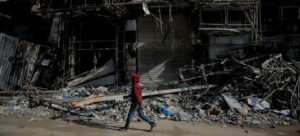
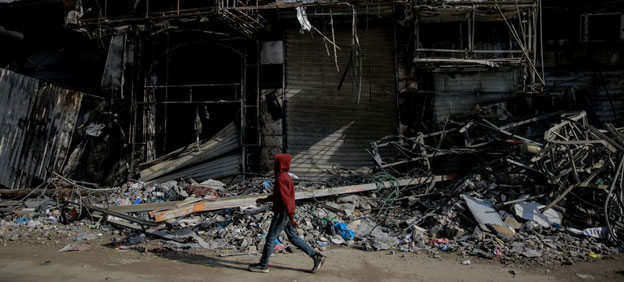
A boy walks through a destroyed neighbourhood in Gaza City. Credit: UNICEF/Omar Al-Qattaa

 
UN High Commissioner for Human Rights, Volker Türk’s remarks to the Interactive Dialogue on the human rights situation in the Occupied Palestinian Territory, at the 61st session of the Human Rights Council in Geneva on February 26 2026.

GENEVA, Feb 27 2026 (IPS) – The situation in the Occupied Palestinian Territory is a human-made disaster.

The report before you sets out events between 1 November 2024 and 31 October 2025 that show Israel’s utter disregard for human rights in Gaza and the West Bank, and the serious violations also committed by Hamas and other Palestinian armed groups.


The evidence gathered by my Office reveals a consistent pattern of gross violations and abuses of human rights, serious violations of international humanitarian law and atrocity crimes – that remain unpunished.

Israel’s continued attacks on residential buildings and makeshift tents, destroying entire neighbourhoods, caused mass civilian deaths. More than 25,500 Palestinians were killed, including entire families, and more than 68,800 were injured during the reporting period.

Among those killed were many Palestinian journalists. My Office has verified that 292 were killed in Israeli operations since 7 October 2023.

Israel’s militarization of humanitarian aid, through the Gaza Humanitarian Foundation, also led to large-scale killings. Between late May and 8 October 2025, my Office recorded 2,435 Palestinians killed by the Israeli military near food collection points — mostly young men and boys.

In August 2025, famine was declared in Gaza, affecting more than half a million people. According to the Palestinian Ministry of Health, at least 463 Palestinians, including 157 children, died from starvation. This was the direct result of Israel’s blocking of humanitarian aid and other deliberate actions.

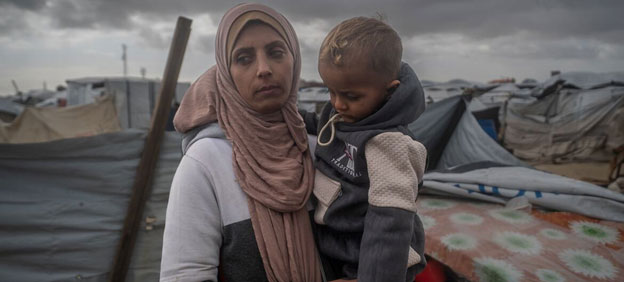
A woman holds a child as a storm approaches Khan Younis in Gaza. Credit: WFP/Maxime Le Lijour

Israeli forces continued to kill humanitarian and medical personnel during this period, and to make mass arrests of Palestinians across Gaza and the West Bank. These arrests often amounted to arbitrary detention, and included enforced disappearances.

Since 7 October 2023, my Office has verified that at least 89 Palestinians have died in Israeli custody. Torture and other ill-treatment of Palestinians in Israeli detention remain widespread.

Israeli operations destroyed some 80 percent of civilian infrastructure in Gaza – including homes, schools, hospitals, cultural sites, and water treatment plants.

During the reporting period, Israel continued to forcibly displace Palestinians, into ever-shrinking areas of the Gaza strip. Over the course of 2025, Hamas and other Palestinian armed groups continued to hold hostages in blatant violation of international law.

Fifty-one hostages who were seized on 7 October 2023 were returned to their loved ones. On their release, the hostages recounted their traumatic ordeals, including sexual and gender-based violence, torture, beating, and prolonged confinement underground.

In June, there were reports that armed men, allegedly affiliated with Hamas, summarily executed 12 Palestinians associated with the Gaza Humanitarian Foundation. In the West Bank, including East Jerusalem, Israeli security forces continued to launch airstrikes and use unlawful force, killing hundreds of Palestinians.

In January 2025, Israeli forces launched Operation Iron Wall in the northern West Bank, which is still ongoing. So far, they have forced 32,000 Palestinians from their homes.

Meanwhile, Palestinian security forces increased the use of unnecessary or disproportionate force, resulting in the unlawful killing of at least 8 Palestinians. They also arbitrarily detained and ill-treated more than 300 Palestinians.

The ceasefire of 11 October 2025 brought some measure of relief. But we must not mistake this for peace or safety. People are still dying in Gaza from Israeli fire, cold, hunger, and treatable diseases and injuries.

Since the ceasefire, Israeli attacks in Gaza have killed more than 600 Palestinians and injured more than 1,600, according to the Palestinian Ministry of Health. Anywhere else, this would be considered a major crisis.

My Office has also recorded at least 80 reported killings of Palestinians by Hamas since the ceasefire, mostly by summary executions and in clashes with rival factions. Gaza now has the highest number of amputee children per capita in the world.

Israel continues to destroy civilian infrastructure and forcibly transfer Palestinians within the Occupied Palestinian Territory. The humanitarian situation is still extremely precarious, as Israel continues to impede the humanitarian community’s ability to bring in food, shelter, fuel, medical supplies, and other essential items.

Since the ceasefire, at least 11 children have died from hypothermia. I deplore Israel’s decision at the end of last year to suspend some 37 aid groups from Gaza. I also deplore the ban on UNRWA operations and the demolition of its premises in East Jerusalem in blatant violation of international law.

Today, the situation in the West Bank is particularly disturbing. Recent Israeli measures expanding land expropriation consolidate the annexation of Palestinian territory. This is in flagrant breach of the Palestinian right to self-determination.

Israeli security forces continue to use unnecessary and disproportionate force, and have killed 1,020 Palestinians since 7 October 2023, according to figures verified by my Office.

Taken together, Israel’s actions appear aimed at making a permanent demographic change in Gaza and the West Bank, raising concerns about ethnic cleansing.

The absence of accountability for the egregious violations committed is nothing short of shameful. Instead, there are efforts to obstruct accountability. The unilateral sanctions imposed on 11 judges and prosecutors of the International Criminal Court are completely unacceptable.

As are those imposed on the Special Rapporteur on the Occupied Palestinian Territory, appointed by this Council. Time and again, I stand before this Council and brief on the litany of violations. I make recommendations, plead for accountability, and for respect for international law.

I do so again today, because it is crucial. The ongoing violations of international law in Gaza must stop. I need to issue a stark warning about the rapidly deteriorating situation in the West Bank. Israel must end its unlawful occupation, in line with the conclusion of the International Court of Justice. And Israel must lift undue restrictions on the flow of humanitarian aid.

We have thought a lot about the contribution my Office can make to shift the trajectory of this awful situation. It may seem incongruous or inappropriate to talk about reconstruction as the suffering continues unabated.

But we have a responsibility to think about what is needed to break this senseless cycle. To talk about lasting peace. Human rights have been crushed in the Occupied Palestinian Territory.

Any realistic effort to rebuild and move toward lasting stability will have to be anchored in human rights. And this is urgent. The reconstruction of Gaza is not a logistics exercise.

Rebuilding Gaza and restoring human rights throughout the Occupied Palestinian Territory requires focusing on what people have lived through over many generations and cutting through the contested narratives.

I see five elements that can help us get there.

First, there need to be meaningful steps towards accountability for all human rights violations and abuses. My Office’s reports form part of this record. Continued monitoring and reporting of the human rights situation is critical.

Second, there must be the long-overdue realization of Palestinians’ right to self-determination, including full responsibility for their own governance and control over their land and resources. Palestinians must be able to shape their own futures and lead reconstruction efforts in Gaza.

Third, security is more than weapons and walls. Unequal treatment is feeding grievances. People can only feel safe when they have faith in equal justice and the rule of law. All segregationist laws and policies that resemble the kind of apartheid system we have seen before must be dismantled.

Fourth, Palestinian and Israeli civil society organizations and human rights defenders that are trusted by their communities need to be central partners in safeguarding human rights going forward. They need the support and protection of the international community.

And finally, we need understanding and healing among Palestinian communities, and between Palestinians and Israelis. This means working to undo the dehumanization which has fuelled this decades-long conflict.

The voices of peace movements – Palestinian, Israeli, and those that bring together Palestinians and Israelis – must be heard and heeded. This can strengthen the constituency for dialogue and increase the space for shared narratives.

The international community needs to step into the moral vacuum and seize the moment – not to return to the pre-October 2023 status quo, but to finally address the underlying causes of this conflict.

Member States need to pursue a path to sustainable peace — one in which Palestine and Israel live side by side in equal dignity and rights, in line with UN resolutions and international law.

IPS UN Bureau

  Source

Will Palestine Preside Over the Next UN General Assembly?

Civil Society, Featured, Global, Global Governance, Headlines, International Justice, IPS UN: Inside the Glasshouse, TerraViva United Nations

Will Palestine Preside Over the Next UN General Assembly?

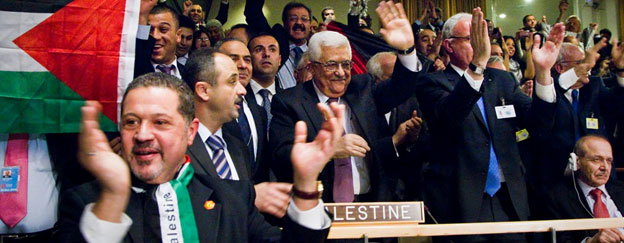
The General Assembly adopted a resolution in 2012 granting Palestine the status of non-member observer State in the United Nations. Credit: UN Photo/Rick Bajornas

UNITED NATIONS, Feb 26 2026 (IPS) – The 193-member General Assembly, the highest-ranking policy-making body at the United Nations, is most likely to elect Palestine as its next President in an unprecedented move voting for a “non-member observer state”—a state deprived of a country to represent.


The Secretariat has received three nominations for the position of President of the General Assembly beginning mid-September. In accordance with the established regional rotation, the President of the 81st session will be elected from the Asia-Pacific Group.

The election will be held on June 2, with three nominations so far: Md. Touhid Hossain (Bangladesh), Andreas S. Kakouris (Cyprus) and Riyad Mansour (Palestine).

According to geographical rotation, it will be the turn of the Asia-Pacific Group to nominate a candidate– with the final election by the General Assembly.

The current front-runner, according to diplomatic sources, is Palestine. In virtually all UN resolutions relating to Palestine, it has continued to receive an overwhelming majority of votes in the General Assembly.

The political support for Palestine among member states has always remained constantly strong. And the election of Palestine will also defy a hostile White House.

In November 2012, the General Assembly voted to upgrade Palestine to a “non-member observer state” with a majority of 138 votes in favor, 9 against, and 41 abstentions.

    • Votes in Favor (138): Supported by a majority of UN member states.
    • Votes Against (9): Canada, Czech Republic, Israel, Marshall Islands, Micronesia (Federated States of), Nauru, Palau, Panama, and the United States.
    • Abstentions (41): Countries that did not vote for or against.

Last December the General Assembly overwhelmingly adopted a draft resolution reaffirming the Palestinian people’s right to self-determination, including the right to an independent State of Palestine.

The draft resolution was approved by a majority of 164 member states (out of 193), with eight countries voting against it, namely Israel, the US, Micronesia, Argentina, Paraguay, Papua New Guinea, Palau, and Nauru.

Nine countries abstained: Ecuador, Togo, Tonga, Panama, Fiji, Cameroon, the Marshall Islands, Samoa, and South Sudan.

Dr Stephen Zunes, Professor of Politics at the University of San Francisco and director of Middle Eastern Studies, told IPS a broad international consensus in support for the establishment of a viable independent Palestinian state in the occupied West Bank and Gaza, and naming a Palestinian as the next president of the UN General Assembly would send a strong message to the Israeli government and its supporters in Washington that the State of Palestine, now recognized by 164 of the UN’s 193 states, should be treated like any other nation.

It would also underscore that Palestine is represented by the Fatah-led Palestine Authority, not by Hamas, which forcibly seized power in Gaza in 2007, he said.

“If Palestine is elected to the General Assembly presidency, the position would likely go to Riyad Mansour, a U.S.-educated diplomat who currently serves as the country’s UN ambassador”.

Mansour, he pointed out, has spent most of his life in the United States, has worked with Youth4Peace and other groups promoting peacebuilding, has no association with terrorism, and is generally considered a moderate.

“Nevertheless, his selection will likely result in an angry backlash from Washington, which opposes any formal role by anyone representing Palestine”.

In 2017, during his first term, the Trump administration blocked the appointment of former prime minister Salam Fayyad, also a well-respected moderate and reformer, from leading the U.N. political mission in Libya to try to end that country’s civil war simply because he was Palestinian, declared Dr Zunes.

Dr Ramzy Baroud, a Palestinian-American author and editor of The Palestine Chronicle, told IPS
two international campaigns are unfolding simultaneously: a US-led effort aimed at legitimizing Israel while it is still actively attempting to exterminate the Palestinian people, and a General Assembly–championed track aimed at legitimizing Palestine, Palestinian rights, and the Palestinian struggle.

The push to elect Palestine as the next UN General Assembly president — though the State of Palestine remains an observing member and lacks actual sovereignty on the ground — is taking place against this stark backdrop: one campaign normalizing and shielding a genocidal state, the other seeking to affirm the rights and political standing of a dispossessed nation, he pointed out.

“Nothing could be more immoral than Washington’s attempt to rehabilitate Israel diplomatically amid genocide. And nothing could be more just than the effort by Palestine’s allies to anchor Palestinian rights within international legitimacy” he said..

Yet a difficult question remains: while the US is gradually chipping away at Israel’s isolation, is much of the international community offering Palestinians little more than symbolic victories?, he noted.

“If the legitimization of Palestine at the General Assembly is to move beyond symbolism, it must translate into concrete recognition of Palestinian territorial rights, sovereignty, and freedom. Legitimacy must not remain rhetorical; it must become political and material,” Dr Baroud argued.

“This requires that the UN General Assembly states that support Palestine in international forums carry that support onto the ground — by isolating Israel diplomatically, severing ties, imposing sanctions, and adopting meaningful accountability measures. While some states have taken such steps, others continue to pursue a precarious “balance,” appeasing Washington and Tel Aviv while paying lip service to Palestine.”

Palestinians are winning what Richard Falk, the former UN Special Rapporteur on Palestine, has called the legitimacy war. But legitimacy as an intellectual or moral category is not enough. At this historical juncture, it must be transformed into enforceable political reality — into sovereignty, protection, and freedom on the ground, said Dr Baroud.

“We hope that the continued centering of Palestine at the UN and across global institutions strengthens the growing current of solidarity worldwide. More importantly, we hope that symbolic recognition will soon give way to decisive and tangible action,” he declared.

Samir Sanbar, a former UN Assistant Secretary-General and head of the Department of Public Information, told IPS the Inalianble rights of the Palestinian people, confirmed repeatedly by the General Assembly, would offer an opportunity for the Permanent Observer Mission to offer a candidate for the President of the General asembly.

Ambassador Riyad Mansour has served at the United Nations post longer than many current “Permanent Representatives” and would most likely attract wide support, particularly at these challenging times with the tragic humanitarian situation in Gaza, he said.

IPS UN Bureau Report

  Source

After a Brutal Winter, Millions of Ukrainians Face Deepening Displacement and Uncertainty

Armed Conflicts, Civil Society, Crime & Justice, Democracy, Europe, Headlines, Human Rights, IPS UN: Inside the Glasshouse, TerraViva United Nations

Opinion

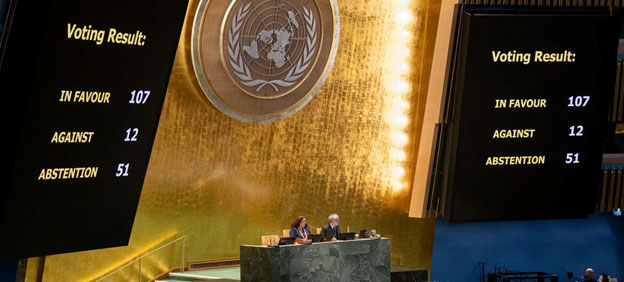
Result of the General Assembly vote on the draft resolution “Support for lasting peace in Ukraine” adopted during the emergency special session. 24 February 2026
Four years after Russia launched its full-scale invasion of Ukraine, the UN is marked the day with high-level debate and renewed calls to end the war – including in the General Assembly which passed a resolution reaffirming its strong commitment to the sovereignty, independence and territorial integrity of Ukraine. Credit: UN Photo/Manuel Elías

GENEVA, Feb 25 2026 (IPS) – After surviving the harshest winter in a decade, millions of displaced Ukrainians are confronting a growing crisis marked by hardship and ongoing attacks as peace prospects remain distant.


Inside Ukraine, repeated attacks on housing, energy systems and essential services throughout the winter left millions without heating or electricity for prolonged periods. While temperatures are slowly rising, the damage remains. An estimated 10.8 million people inside the country need humanitarian assistance in 2026, and 3.7 million are internally displaced.

At the same time, 5.9 million Ukrainians remain refugees abroad. Across Europe, host countries have provided protection and opportunities at an unprecedented scale, giving refugees access to education, healthcare and employment. This has helped millions regain stability and contribute to host communities.

As the war continues, however, more is needed to support refugees from a displacement crisis with no clear end. Alongside Temporary Protection, States should explore options for alternative arrangements for longer stay. These can bring stability for the most vulnerable in particular, for whom return may not be immediately possible even after the war.

Evidence shows that meaningful inclusion delivers results and refugees significantly boost host country economies. In Poland, analysis by UNHCR and Deloitte showed that Ukrainian refugees’ net impact amounted to 2.7 per cent of the Polish GDP, in 2024. With increased language training and wider recognition of credentials, access to decent work and self-reliance can improve for refugees across the region.

Inside Ukraine, communities continue to repair homes, restore services and rebuild livelihoods, with the support of UNHCR and NGO partners. But after four years of war, resilience has limits. Sustained humanitarian assistance remains essential, alongside scaled-up recovery and reconstruction support to prevent further displacement and enable safe conditions for return.

When conditions allow, gradual and voluntary returns will be critical for Ukraine’s recovery. UNHCR is working with the Government and partners to restore people’s documents, support rehabilitation of social infrastructure and repair war-damaged homes. UNHCR also works with partners to analyse refugees’ intentions, forecast return movements and support Ukraine’s recovery planning.

Since the start of the full-scale war, UNHCR and partners have supported 10 million people with emergency aid, protection services and psychosocial support. In 2026, UNHCR plans to assist a further 2 million people inside the country, subject to sufficient funding. Across the region, UNHCR and partners are supporting 1.7 million refugees and the States hosting them, with a focus on inclusion and self-reliance.

As winter fades, the humanitarian crisis does not. We must support the people of Ukraine with humanitarian relief and recovery inside the country, and with safety and self-reliance abroad.

Philippe Leclerc is UNHCR’s Regional Director for Europe and Regional Refugee Coordinator for the Ukraine Situation

IPS UN Bureau

  Source