South-South Cooperation Now Triangulates with the North

Civil Society, Conferences, Development & Aid, Editors’ Choice, Featured, Global, Global Governance, Globalisation, Headlines, IPS UN: Inside the Glasshouse, Latin America & the Caribbean, Poverty & SDGs, Regional Categories, TerraViva United Nations
South-South

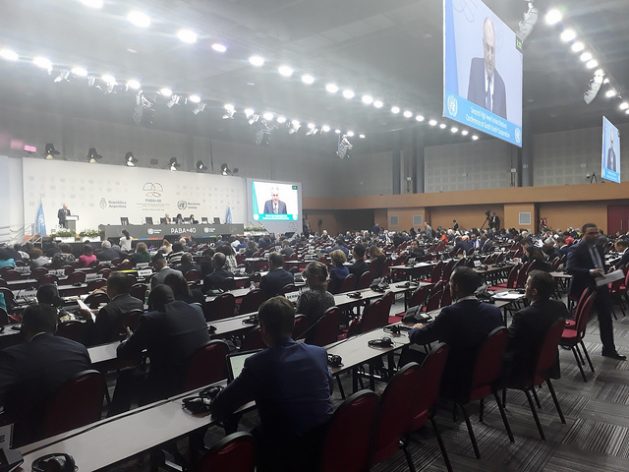
The Second High-Level United Nations Conference on South-South Cooperation was held at the Exhibition and Convention Centre in the Argentine capital, forty years after the Conference on Technical Cooperation among Developing Countries produced the Buenos Aires Plan of Action (BAPA) in 1978. Credit: Daniel Gutman/IPS

The Second High-Level United Nations Conference on South-South Cooperation was held at the Exhibition and Convention Centre in the Argentine capital, forty years after the Conference on Technical Cooperation among Developing Countries produced the Buenos Aires Plan of Action (BAPA) in 1978. Credit: Daniel Gutman/IPS

BUENOS AIRES, Mar 23 2019 (IPS) – It sounds like a contradictory play on words, but the countries of the industrialised North are currently the big supporters of South-South cooperation, as was demonstrated at the United Nations Second High-Level Conference on this subject, held in the Argentine capital.


If there is one thing that the three-day meeting in Buenos Aires, which ended on Friday Mar. 22, made clear, it is that the space created 40 years ago as an arena for mutual assistance and exchange of experiences among countries of the South, aimed at mutually promoting their development, no longer belongs only to them and has in fact become triangular.

Francisco Quintanar is a Salvadoran engineer who was in the Argentine capital to participate in the conference – not as a representative of El Salvador, but as part of the German delegation attending the meeting, which brought together 1,500 representatives from 193 countries.

“In the past, triangular cooperation was seen simply as a way of adding funding to South-South collaborative projects, but in which donors were passive actors. Now, instead, we do joint projects.” — Noel González Segura

He came to tell the story of an energy efficiency project born in February 2016, which benefited 10 textile, chemical and other companies in El Salvador and Nicaragua. The initiative was developed with technical assistance from Mexican experts and German funding.

“The Salvadoran companies were able to reduce their energy consumption by the equivalent of 2.5 million dollars a year thanks to this project, so the positive result was not only economic but also environmental,” Quintanar told IPS.

“This is an example of triangular cooperation: Germany provided the resources, Mexico provided technical expertise, and El Salvador and Nicaragua were the beneficiaries,” he added.

Hundreds of similar projects were exhibited at events parallel to the conference, which was inaugurated on Wednesday, Mar. 20 by U.N. Secretary General Antonio Guterres, along with Argentine President Mauricio Macri, and featured South-South/North triangular cooperation.

The meeting took place forty years after the U.N. Conference on Technical Cooperation among Developing Countries, held in 1978 also in Buenos Aires, when the last military dictatorship of this South American country (1976-1983), responsible for serious human rights violations, was at the height of its power.

In the midst of the Cold War, that conference was characterised as an effort by countries in Africa, Latin America, the Caribbean and Asia, aimed at strengthening their negotiating power and making their voices heard more on the international stage, while at the same time promoting mutual cooperation between their countries and regions.

The result of the 1978 conference was the Buenos Aires Plan of Action (BAPA), which built a bridge of political collaboration and economic and social cooperation among developing countries in what is now called the global South.
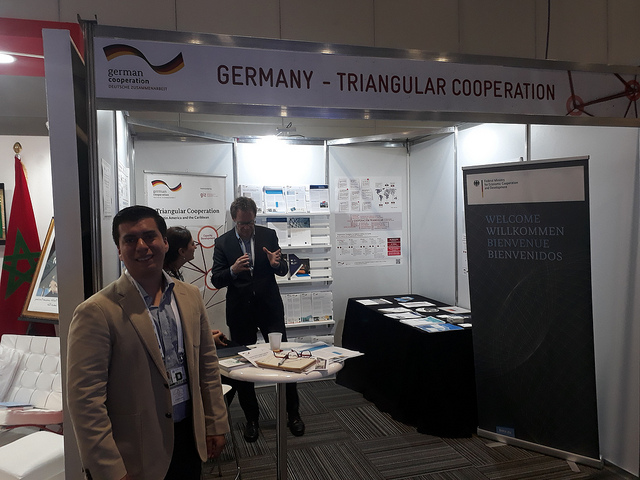
Salvadoran engineer Francisco Quintanar (L) was part of the German delegation that attended the South-South Cooperation Conference in Buenos Aires. His project on energy efficiency is an example of triangular cooperation between countries of the South, with the support of one or more countries of the industrialised North. Credit: Daniel Gutman/IPS

Salvadoran engineer Francisco Quintanar (L) was part of the German delegation that attended the South-South Cooperation Conference in Buenos Aires. His project on energy efficiency is an example of triangular cooperation between countries of the South, with the support of one or more countries of the industrialised North. Credit: Daniel Gutman/IPS

Forty years later, in the gigantic lobby of the Buenos Aires Exhibition and Convention Centre, a two-storey underground building inaugurated less than two years ago, it looked like just another international meeting, similar to any other major U.N. conference.

On the stage of the High Level Conference, known in U.N. slang as BAPA+40, the sober suits of the diplomats from Japan, Norway or Switzerland contrasted with the colourful outfits of the African representatives.

And in the exhibition hall the participants could visit the stands of the Spanish or German development aid agencies, or the stand of Argentina’s Foreign Ministry, since it does not have a cooperation agency.

“The United Nations Sustainable Development Goals (SDGs) and the climate agenda make it necessary for the world to work in a very different way than it has in the past,” said Marc-André Blanchard, Canada’s permanent representative to the U.N.

“Neither the North nor the South can do it alone. That’s why Canada was so eager to be here,” he told IPS.

“Think of foreign aid to emerging countries. It is essential for them, but it is only two percent of the money needed to implement Agenda 2030 for Sustainable Development,” which is articulated in the 17 SDGs, he added.

Blanchard concluded: “We need to find the remaining 98 percent and we can only do that with new forms of collaboration. That’s why countries in the South need countries like Canada as partners.”
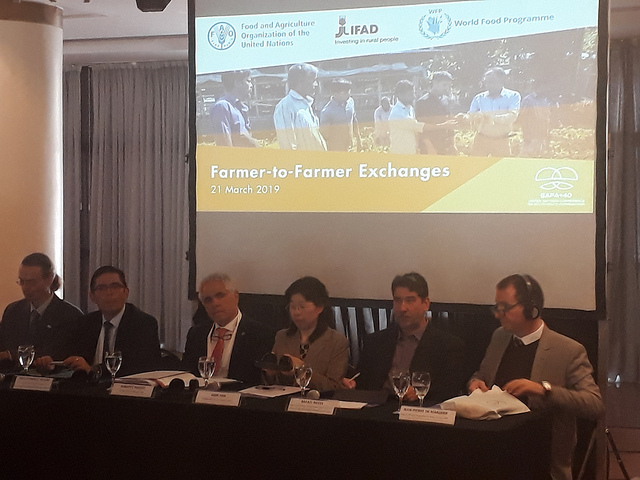
The South-South Cooperation Conference was accompanied by a number of parallel events, organised for example by the Food and Agriculture Organisation (FAO), the International Fund for Agricultural Development (IFAD) and the World Food Programme (WFP), which discussed how to promote direct farmer-to-farmer cooperation among developing countries. Credit: Daniel Gutman/IPS

The South-South Cooperation Conference was accompanied by a number of parallel events, organised for example by the Food and Agriculture Organisation (FAO), the International Fund for Agricultural Development (IFAD) and the World Food Programme (WFP), which discussed how to promote direct farmer-to-farmer cooperation among developing countries. Credit: Daniel Gutman/IPS

“We have knowledge or financial resources, but they are limited,” admitted Noel González Segura, director of planning at the Mexican Agency for International Development Cooperation.

“So through triangular cooperation with a traditional partner like the United States, Germany or Spain, we can multiply our capacity for action in favour of third countries,” he told IPS.

According to González Segura, “in the past, triangular cooperation was seen simply as a way of adding funding to South-South collaborative projects, but in which donors were passive actors. Now, instead, we do joint projects.”

“So, for example, the Germans come with money, knowledge and proposals, we add an international organisation and together we build a stronger partnership,” he said.

The Final Document of the Buenos Aires Conference, which unusually was distributed before the beginning of the meeting, speaks of the need to “better understand triangular cooperation and to provide more evidence and rigorous information on its magnitude, scope and effects.”

The text, signed by heads of delegations and senior government representatives, argues that triangular cooperation “offers an adaptable and flexible approach to the evolving problems of development.”

One of the cases reported during the conference was the cooperation of technicians from the National Institute of Agricultural Technology (INTA) of Argentina to help rural Haitians improve their ability to grow food after the devastation caused by Hurricane Jeanne, which in 2004 left more than 3,000 dead in the Caribbean island nation.

“After the tragedy there was a tremendous lack of fresh food. We traveled and worked there with Haitian technicians and 4,000 volunteers, 60 percent of whom were women,” said Francisco Zelaya, a technician at INTA, which depends on the Secretariat of Agroindustry.

“We reached 40,000 families and developed 13 local species of seeds,” he told IPS.

Zelaya said that “Argentina did not have the financial capacity to collaborate on a project like this. So the initiative was planned with Canada, which acted as a funder because it has a particular interest in Haiti, since it tends to receive many migrants from that country.”

For Roberto Ridolfi, assistant to the Director-General of the U.N. Food and Agriculture Organisation (FAO), “we must abandon the idea that two countries in the South can make a wonderful agreement and then ask a third country to foot the bill.”

“What we need are triangles, in which everyone brings something and takes something away. Innovative forms of South-South cooperation must be found. If we want to replicate North-South collaboration projects, it will be difficult,” he told IPS.

“It is about finding ways to combine skills, money and human resources from the three sides of the triangle. We don’t want to measure everything by money, but development is supported by investment,” Ridolfi said.
 

People Affected by Leprosy in Latin America Unite for Their Rights and Their Voice

Active Citizens, Civil Society, Conferences, Development & Aid, Editors’ Choice, Featured, Global Governance, Headlines, Health, Human Rights, IPS UN: Inside the Glasshouse, Latin America & the Caribbean, Population, Regional Categories, TerraViva United Nations

Health

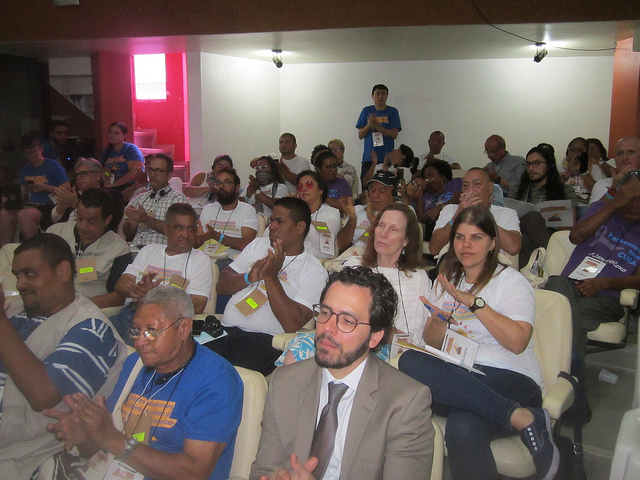
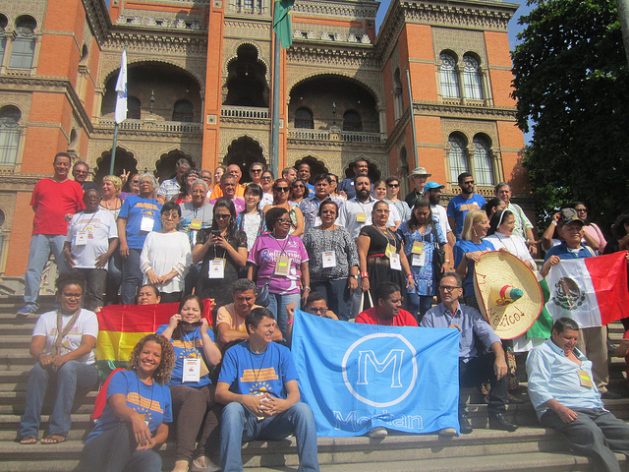
Family photo of part of the 111 participants in the First Latin American and Caribbean Assembly of Organisations of People Affected by Hansen's Disease, on the steps of the Morisco Palace, the headquarters of the Oswaldo Cruz Foundation, which hosted the three-day meeting in Rio de Janeiro, Brazil. Credit: Mario Osava/IPS

Family photo of part of the 111 participants in the First Latin American and Caribbean Assembly of Organisations of People Affected by Hansen’s Disease, on the steps of the Morisco Palace, the headquarters of the Oswaldo Cruz Foundation, which hosted the three-day meeting in Rio de Janeiro, Brazil. Credit: Mario Osava/IPS

RIO DE JANEIRO, Mar 14 2019 (IPS) – With the decision to found a regional coalition to promote rights and greater participation in national and international forums and decisions, the First Latin American and Caribbean Assembly of Organisations of People Affected by Hansen’s disease, popularly known – and stigmatised – as leprosy, came to an end.


The final session of the meeting, on Mar. 14, approved 40 of the 58 proposals presented by the 111 participants in three days of debates at the headquarters of the Oswaldo Cruz Foundation, a renowned scientific, medical and epidemiological research centre in Rio de Janeiro, Brazil.

José Picanço, 46, separated from his family and taken as a newborn to an orphanage because his parents were diagnosed with the disease in 1972, is one of those affected whose right to reparations remains unfulfilled. His three siblings are in the same situation.

When the family was reunited eight years later, the father turned his back on the children. The mother took them in, but died shortly afterwards. “I only lived with her, a saint, for five months,” Picanço recalled, barely managing to hold in his tears while giving testimony at the meeting.

“Humiliated as the children of lepers, suffering bullying and sexual harassment, many of the other children who were with me at the orphanage fell into drug abuse and alcoholism. It was a holocaust,” he said. “I hit my brother on the head, not knowing he was my own brother.”

“Of the 15,000 to 20,000 children separated from their families, more than 80 percent suffer from depression,” said Picanço in an interview with IPS, detailing some of the damage caused by the old rule of segregating the people then called “lepers”.

Mandatory isolation was widespread around the world, during different historical periods, and continues in some countries, even though it is known that the disease is curable and that patients cease to be contagious shortly after starting treatment.

Officially, Brazil abolished this practice in 1976, although it actually lasted 10 more years. Its direct victims were compensated starting in 2007, but their children were not. The activists gathered in Rio de Janeiro called for working for policies of reparations for children separated from their families.

Their complaints and proposals will be taken to the World Congress of associations of people affected by leprosy in Manila in September, which will also receive contributions from Africa and Asia, approved at recent similar regional assemblies.

“The goal is to form a large network of activists, to strengthen the movement” for the eradication of the disease and for care and reparations for those affected, said Kiyomi Takahashi of the independent Nippon Foundation, which is driving this international process of debate and cooperation.

The meeting in Rio de Janeiro fostered “a high-level dialogue, the result of Morhan and Felehansen’s long history of activities,” the Japanese expert told IPS, referring to the Movement for the Reintegration of People Affected by Hanseniasis (Morhan) in Brazil, and the National Federation of Entities Affected by Leprosy or Hansen’s Disease (Felehansen) in Colombia, the two organisers of the regional meeting.

Brazilian activists José Picanço (front) and Evelyne Leandro testified about how Hansen's disease affected them during a Latin American and Caribbean meeting in Rio de Janeiro. Picanço was separated from his parents when they were diagnosed with leprosy when he was born in 1972 and was only reunited with them eight years later, shortly before his mother died. Leandro wrote a book about the difficulties of being diagnosed with the disease in Germany, where she lives. Credit: Mario Osava/IPS

Brazilian activists José Picanço (front) and Evelyne Leandro testified about how Hansen’s disease affected them during a Latin American and Caribbean meeting in Rio de Janeiro. Picanço was separated from his parents when they were diagnosed with leprosy when he was born in 1972 and was only reunited with them eight years later, shortly before his mother died. Leandro wrote a book about the difficulties of being diagnosed with the disease in Germany, where she lives. Credit: Mario Osava/IPS

“Morhan is my safe haven, to preach that separated children should be heard and have opportunities,” said Picanço, who explained that he joined the movement in 1992. Today he gives talks on the direct and indirect effects of the stigma still surrounding the disease, that is suffered by those affected and their families.

A blessing

The disease “was a blessing for me,” Isaias Dussan Weck, 50, the vice-president of the Colombian association Felehansen, told IPS without hesitation.

The diagnosis in 2006 destroyed him, he said. He lost the desire to work or to go out, he let his business of supplying cleaning products to companies go bankrupt, he even contemplated suicide. He ignored the stains on his body that did not prevent him from working and traveling, until they spread to his face, and he noticed that parts of his body were going numb.

He received treatment and was cured, left with only slight numbness in one arm and pains in his left leg.

But everything went badly for him until he was invited to meetings with other people affected by leprosy. “I began to understand, when I heard their testimonies and tears, why a young black girl with severe disabilities said that leprosy was a blessing to her,” Dussan said.

Activism for the benefit of those affected, against the stigma and the damage caused by the disease, in the association of the department of Huila, in southwestern Colombia, allowed him “to gain new meaning for life and to understand and practice love for my neighbour.”

“Helping and seeing a patient’s life improve is a wonderful emotion, and you help other people want to live,” he concluded. That new passion led him to Felehansen, where he took on leadership roles in the federation.

Irma Romero, 42, president of the Nuevo Amanecer Foundation in Barranquilla, on Colombia’s northern coast, had a similar experience. Her lengthy odyssey to a specialist’s diagnosis five years ago reveals the medical system’s shortcomings when it comes to detecting and treating the disease, also known as hanseniasis, which is still viewed by many as “a divine punishment.”

Romero stopped working in the textile industry due to disability and depression. “I couldn’t even walk,” she recalled. “I even denied God,” she told IPS.

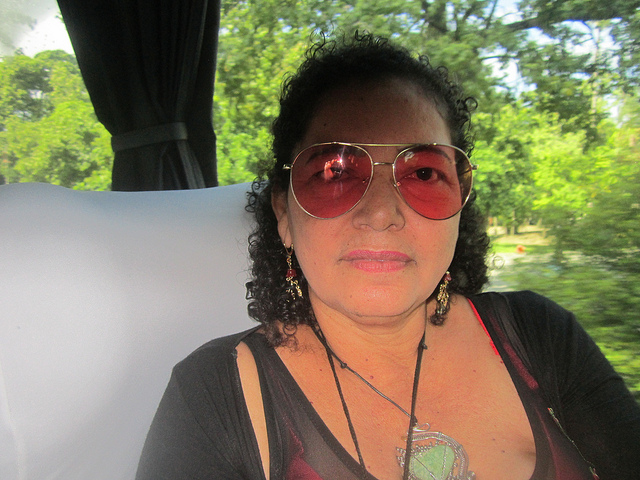
Colombian activist Irma Romero, a native of the city of Barranquilla, sitting on the bus that transported the participants of the First Latin American and Caribbean Assembly of Organisations of People Affected by Hansen's Disease, held Mar. 12-14 in Rio de Janeiro, Brazil. Credit: Mario Osava/IPS

Colombian activist Irma Romero, a native of the city of Barranquilla, sitting on the bus that transported the participants of the First Latin American and Caribbean Assembly of Organisations of People Affected by Hansen’s Disease, held Mar. 12-14 in Rio de Janeiro, Brazil. Credit: Mario Osava/IPS

Treatment using medicinal herbs, self-medication, rejection by relatives, attempts to separate her from her two children and abandonment by her husband all formed part of her suffering, which did not end with her treatment and cure.

The only permanent physical effects are numbness in her hands and feet, and sciatic nerve pain. But the discrimination continued.

“My life changed when I joined the association of affected people” four years ago, she said. “There I found people who had things in common with me, and a newfound love of my neighbour that I did not feel before,” said the activist, who became president of the Foundation the following year and reconciled with God.

Her foundation currently has 60 members. In Barranquilla she estimates that there are “about 200 affected people, but many more are hidden.”

The foundation is one of the 10 associations that make up Felehansen, eight of which call the disease hanseniasis or Hansen’s disease, one of which uses the term leprosy, and another of which refers to disabled people and is made up of patients who received a very late diagnosis.

The World Health Organisation (WHO) defines leprosy – the term it uses – as an infectious and chronic disease “transmitted by air through droplets from the nose and mouth, during close and frequent contacts with untreated cases.” It also specifies that leprosy is “one of the least infectious diseases.”

WHO reports that in 2017 there were 211,009 new cases worldwide, according to official data from 159 countries. That amounts to 0.3 cases per 10,000 inhabitants, which means it classifies as having been “eliminated,” according to WHO criteria.

Change of name: another recommendation

Proposing hanseniasis as the official name for the disease is one of the proposals that came out of the Latin American meeting, headed by Brazil, which has already adopted it, even prohibiting the mention of leprosy in the health system since 1995.

They are different concepts, because leprosy and leper have very negative connotations of “dirt, plague, impurities and divine punishment,” strengthened by numerous mentions with that moral burden in the Bible, argued Faustino Pinto, one of Morhan’s national coordinators.

But the activists from Colombia are not convinced. “People only know leprosy, they don’t know it’s Hanseniasis. To explain the issue to the population, you have to mention leprosy,” argued Romero.

“It will be necessary to educate the new generations about the concept of Hansen,” the Norwegian doctor Gerhard Hansen who discovered the bacillus that causes the disease, because adults are not likely to forget the stigma, said Dussan. “It’s harder to unlearn than to learn,” he added.

Another proposal of the Latin American Assembly is to extend the current Committee for Assistance to Brazilian Immigrants Affected by Hanseniasis to all Latin Americans and people from the Caribbean, in addition to extending it to other regions.

The reference point in this is Evelyne Leandro, a 37-year-old Brazilian who has lived in Germany for nine years and had a lot of difficulties getting diagnosed with the disease in a country where it is very rare and where very few doctors are familiar with it.

She was helped by her mother’s suspicion, awakened in Brazil by an outreach campaign on the disease, and by the Institutes of Tropical Medicine in Germany.

Her case and those of other immigrants in Europe are recounted in her book “The Living Death: the struggle with a long forgotten disease”.


People Affected by Leprosy Still Face Stigma in Latin America

Civil Society, Conferences, Development & Aid, Editors’ Choice, Featured, Global Governance, Headlines, Health, Human Rights, IPS UN: Inside the Glasshouse, Latin America & the Caribbean, Population, Regional Categories, TerraViva United Nations

Health

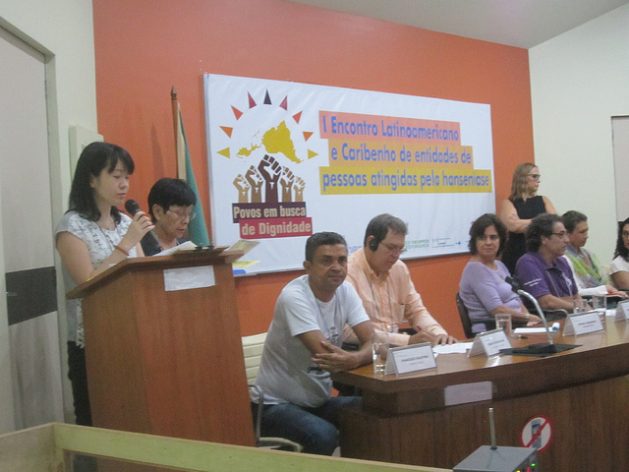
Kiyomi Takahashi of the independent Nippon Foundation explains the international movement for the rights of the victims of leprosy during the opening session of the First Latin American and Caribbean Meeting of Organisations of People Affected by Hansen's Disease, held in the Brazilian city of Rio de Janeiro. The foundation is backing the process for the World Congress on Leprosy to be held in September. Credit: Mario Osava/IPS

Kiyomi Takahashi of the independent Nippon Foundation explains the international movement for the rights of the victims of leprosy during the opening session of the First Latin American and Caribbean Meeting of Organisations of People Affected by Hansen’s Disease, held in the Brazilian city of Rio de Janeiro. The foundation is backing the process for the World Congress on Leprosy to be held in September. Credit: Mario Osava/IPS

RÍO DE JANEIRO, Mar 12 2019 (IPS) – The First Latin American and Caribbean Meeting of Organisations of People Affected by Hansen’s Disease, more widely known as leprosy, seeks to exorcise stigma and discrimination. The meeting has brought together around a hundred activists in Brazil.


The rights and participation of these people in all aspects of the World Health Organisation‘s (WHO) Global Leprosy Strategy 2016-2020 are the themes of the meeting, taking place in Rio de Janeiro from Mar. 12-14.

The gathering will establish this region’s proposals, as did recent regional assemblies in Asia and Africa.

The goal is for all the experiences and proposals to converge towards the World Congress on Leprosy that will take place in the Philippines in September, Kiyomi Takahashi, of the independent Nippon Foundation, which is backing the entire process, stressed during the opening session.

Brazil is at the forefront of the debate because it is considered the only country that has failed to eliminate the disease and has the highest incidence worldwide, with 25,000 to 30,000 new cases each year, 95 percent of the total in the Americas, according to official data.

This is an unacceptable figure for “a curable disease that is treated free of charge in the public health system,” said Artur Custodio, coordinator of the Brazilian Movement for the Reintegration of People Affected by Hanseniasis (Morhan), which organised the Latin America meeting together with the Federation of Organisations of People Affected by Leprosy in Colombia.

In addition, Brazil stands out for abolishing the word leprosy, because it is historically laden with prejudice. Since 1995, Hanseniasis or Hansen’s disease is the official name of the disease, although the WHO and the United Nations in general tend to use the term leprosy.

Brazil is not considered to have “eliminated” the disease – a classification that is defined when the incidence is reduced to less than one case per 10,000 inhabitants, said Claudio Salgado, president of the Brazilian Hansenology Society.

The statistics distort the reality of a disease that remains hidden. The organisation points out that the number of cases dropped from 5.3 million in 1980 to 597,000 in 2001, to meet the WHO target of elimination by the year 2000.

Official data indicate that from 2003 to 2005 the number of cases fell 64.17 percent worldwide to 169,709, a result that is “impossible in epidemiology,” Salgado told IPS.

When a disease like hanseniasis is properly fought, its incidence falls steadily, but slowly and regularly, not abruptly, he noted.

What is hidden behind the figures, according to the expert, is shown by the case of Palmas, capital of the central Brazilian state of Tocantins, where an early diagnosis effort raised the incidence from 41.9 per 10,000 inhabitants to 219 per 10,000 between 2013 and 2016.

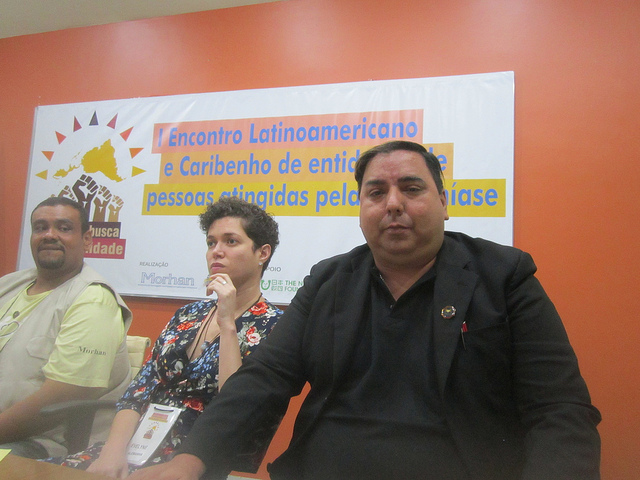
Participants at the First Latin American and Caribbean Meeting of Organisations of People Affected by Hansen's Disease, from seven countries in the region, as well as international organisations. This is the first time that regional activists have met to propose policies in defence of the dignity of those affected by leprosy. Credit: Mario Osava/IPS

Participants at the First Latin American and Caribbean Meeting of Organisations of People Affected by Hansen’s Disease, from seven countries in the region, as well as international organisations. This is the first time that regional activists have met to propose policies in defence of the dignity of those affected by leprosy. Credit: Mario Osava/IPS

This means, he argued, that when there is a clear decision to seriously address the disease, the numbers of people affected rise.

Another indicator from Brazil highlights an additional problem: there is 39 percent of “spontaneous demand” for treatment, which points to a lack of information and assistance. This is because spontaneous consultations occur in “advanced cases, with already apparent effects,” which are difficult to overcome, and sometimes incapacitating, Salgado said.

“The goal of elimination in 2000 had a positive effect of spurring initiatives and stimulating information and assistance. But declaring that it had been achieved led to an abandonment of commitments and actions,” said Salgado, a professor at the Federal University of Pará, in the northern Amazon region of Brazil.

“With that we are even losing knowledge, with reduced research in universities and reduced services. Compounded by the stigma of hanseniasis, a vicious circle is created and the tendency is for the incidence of the disease to grow again,” he concluded.

“There is a lack of research,” even to explain why the disease affects so many people in Brazil and why the prevalence drops when you cross the border, said Jorge Dominguez Sobrino, of Peru’s Health Ministry, which is working to fight leprosy in the province of Alto Amazonas, on the border with Ecuador.

“Perhaps genetic differences are a cause,” he told IPS.

In Peru the number of new cases points to “elimination,” but there is high prevalence in some provinces, especially in small towns. “There is a high hidden prevalence,” Dominguez Sobrino acknowledged.

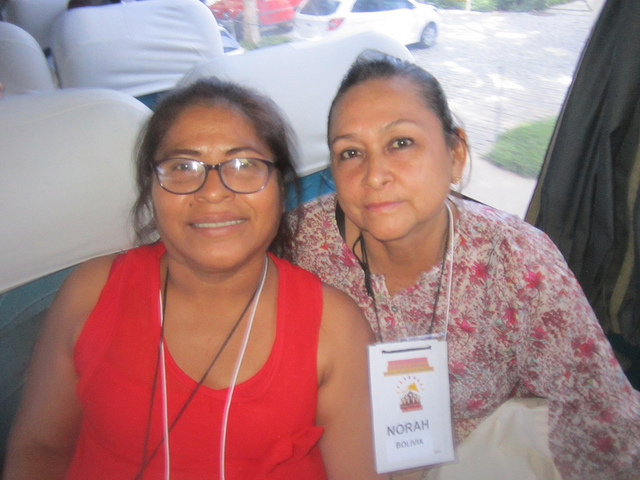
Norah Salcedo of Bolivia (R) and Silvia Uieacu of Peru, who took part in the first meeting of people affected by Hansen's disease or leprosy, complained about the poor care in their countries for people who have the disease. Credit: Mario Osava/IPS

Norah Salcedo of Bolivia (R) and Silvia Uieacu of Peru, who took part in the first meeting of people affected by Hansen’s disease or leprosy, complained about the poor care in their countries for people who have the disease. Credit: Mario Osava/IPS

Early diagnosis is the primary right in relation to leprosy, agreed Salgado and Custodio. It will be necessary to revise and change some of the bases of the strategies to actually eliminate the disease, while some speak of “eradication”, with the reduction of new cases to zero.

One concern of the specialists is the identification of many cases in children, indicating contagion through undiagnosed family members or other people close to them.

A contradiction in the official data is precisely that many countries where “elimination” of leprosy has been declared, with a rate of less than one case per 10,000 inhabitants, have a worrying number of affected children.

In addition, where the prevalence is lower, such as in southern Brazil and other Latin American countries, the damage to affected persons is more serious due to late diagnosis, when effects such as loss of peripheral nerves, fingers or entire limbs are already irreversible.

Leprosy, a disease that has been present since time immemorial, is infectious and chronic, caused by the Mycobacterium leprae bacterium, as defined by the WHO, which specifies that it mainly affects the skin, peripheral nerves, the mucosa of the upper respiratory tract, the eyes and other structures.

Norah Salcedo, from the city of Santa Cruz de la Sierra, Bolivia, suffered irreversible damage to limbs and needs crutches. “There is no adequate treatment in my country, the sick continue to decline, without assistance,” she complained to IPS.

Bolivia is a country that “eliminated” leprosy, according to official data. Salcedo, as well as Silvia Uieacu of Peru, acknowledged that there is a great lack of knowledge about the disease.

Seven Latin American countries are represented at this first Regional Meeting, which brings together health officials and representatives of international entities, such as the Pan-American Health Organisation, and institutions from Japan – especially the Nippon Foundation – Germany and the United States.

Brazil also attracts international attention for compensating the victims of the segregation system in the so-called leprosariums where the sick were isolated. This practice was maintained by law in the country until 1986, although the possibility of a cure had been known since 1941 and it was clear that with treatment, the people affected by the disease were no longer contagious.

Since 2007, the Brazilian state has been compensating people who were isolated, but now the Morhan organisation is seeking to extend reparation to children who were separated from their parents. It is estimated that around 16,000 children suffered this forced separation.

These policies are of interest to similar movements in other Latin American countries, participants explained during the first day’s debates.

Many of the people segregated in these “colonies” continue to live in them, even after they were no longer isolated, because they have no chance of returning to their places of origin or rebuilding their lives, activists say.