NEW YORK, Mar 11 2026 (IPS) – I have often been asked a simple but important question: How can we make it sustainable if we are not being compensated for it?
That question sits at the heart of a conversation we do not address enough. Somewhere between exposure and exploitation lies a line we still have not learned to draw clearly. And perhaps that is exactly where the real conversation on “inclusion” begins.
The cost of being seen, is probably the heaviest cost youth have to bear in pursuit of carrying the passion and aspirations they strive for when trying to make an impact.
As conversations around the 2030 Agenda and the SDGs continue to grow, one question remains: how far have we really come in shaping perspectives, and not just numbers?
Too often, inclusion is measured by attendance, representation, and diversity metrics. But inclusion is not just about presence. It is about value. It is about whether people are acknowledged, respected, and taken seriously for their contribution. Inclusion does not live in the excel sheets we fill or the rooms we temporarily occupy during events.
It begins where age, gender, ethnicity, and job titles are not weighed before credibility is given. This matters even more for young people.
A single voice, a single appearance, or a single statement is often framed as an opportunity. And sometimes, it is. But when visibility becomes a substitute for fair compensation, authorship, decision-making power, or real support, exposure stops being empowered and starts becoming exploitative.
Exposure on its own is not empowerment. Visibility can open doors, but it cannot replace fair structures. Being seen is meaningful only when it is followed by trust, ownership, opportunity, and value.
Too often, young people are handed advice when what they really need is access. They are mentored, encouraged, and told to keep going, yet rarely sponsored in the spaces that shape outcomes. If we want inclusion to move beyond symbolism, we must build cultures where support does not end at guidance.
It must extend into advocacy. Because for many underrepresented voices, the issue is not a lack of talent or preparation. It is the absence of someone willing to open the right door and say, this person belongs here.
The goal is not to reject exposure. Exposure can be powerful. But it cannot be the only thing being offered. Real inclusion begins when participation is respected, contribution is valued, and visibility leads to something more lasting. Being seen may open the door, but being valued is what makes inclusion real.
Bisma Qamar is Pakistan’s Youth Representative to the UN & USA chapter under the Prime Minister’s Youth Programme (PMYP). Her work is centered towards learning and development and capability building initiatives, with a strong emphasis on creating inclusive and sustainable opportunities through “Bridging talent with opportunities” by upskilling individuals focusing on SDG 4 ( Education ) and SDG 5 ( Gender Equality )
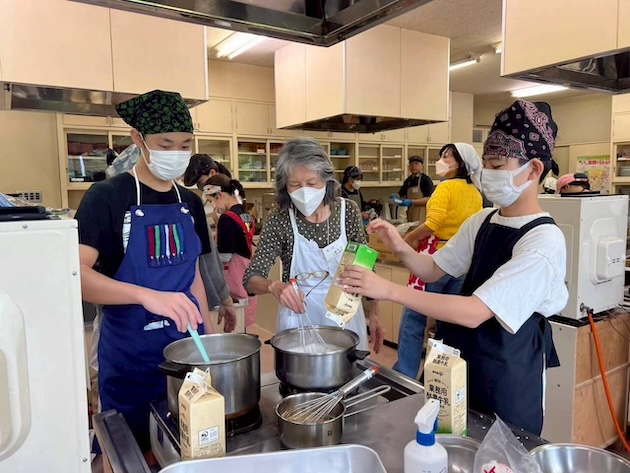
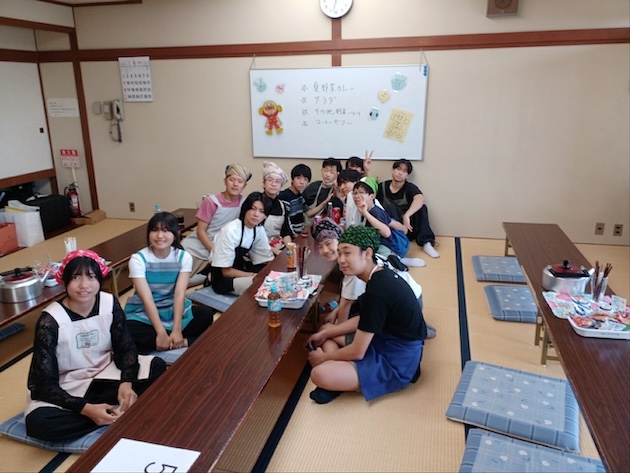
Cooking food to distribute free to children. The meals are made with food that is close to its expiry date. Workshop with Karuizawa Food Bank. Credit: Ippei Takemura
MIYAGI PREFECTURE, Japan, Mar 6 2026 (IPS) – I recently came across a statistic that stopped me in my tracks.
At the same time, the number of children who do not attend school is rising every year. In 2023, Japan’s Ministry of Education reported that more than 340,000 elementary and junior high school students were chronically absent—a record high. These two realities are not separate problems. They are deeply connected.
Truancy is often misunderstood as a lack of motivation or discipline. In reality, it is rooted in complex emotional and psychological struggles that cannot be reduced to a single cause. Rather than treating truancy itself as the problem, society must ask a deeper question: Are we creating environments where young people feel safe, accepted, and understood?
I know this struggle firsthand. I began missing school just three days after entering junior high. My family had lived overseas for many years due to my parents’ work, and returning to Japan left me emotionally exhausted. I found comfort in playing online games with close friends I had made abroad, but while I was holding on to those connections, I missed the chance to build new ones at my new school. Before I realized it, I was caught in a cycle of frequent absences that lasted nearly three years.
What helped me break that cycle was not a dramatic intervention but a small and unexpected turning point. I joined a monthly, off-campus workshop focused on the Sustainable Development Goals (SDGs). To my surprise, students from my school were also participating. Because we shared a genuine interest in global issues, conversation came naturally as we worked together on projects. Eventually, we began spending time together outside the workshop. For the first time in a long while, I started looking forward to going to school again.
That experience taught me a powerful lesson: shared interests and common ground are the foundation of human connection.
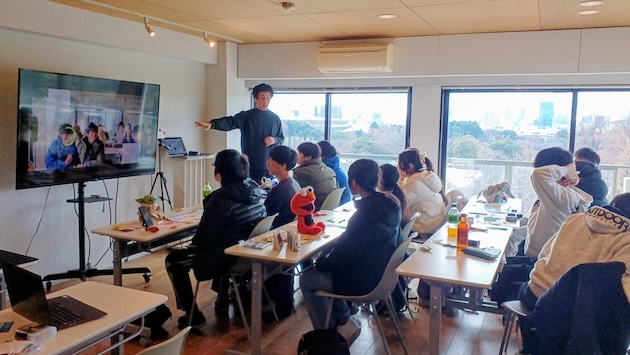
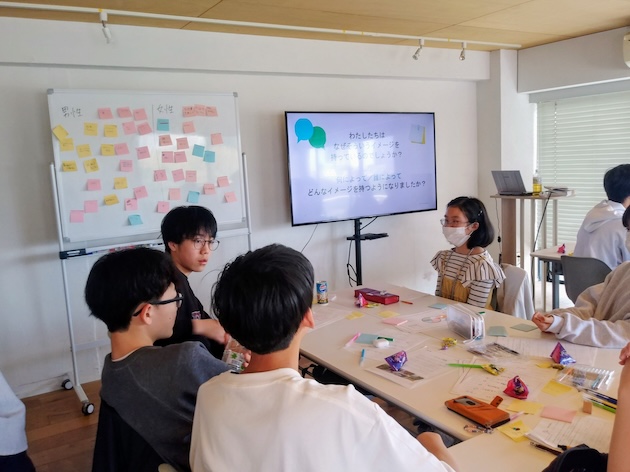
Learn about the Internet of Things (IoT) using a toy. ‘Let’s upcycle’ workshop with the One Smile Foundation. Credit: Ippei Takemura
What’s the importance of gender in Japan? Workshop with Plan International, Japan. Credit: Ippei Takemura
Provide children with free meals made from food that is close to its expiry date. Workshop with Karuizawa Food Bank. Credit: Ippei Takemura
A place where someone feels safe and comfortable is different for everyone. Sociologist Ray Oldenburg describes this idea through the concept of a “Third Place”—a space that exists beyond home (the first place) and school or work (the second place). Third places allow people to relax, connect, and simply be themselves. Finding such a place was the catalyst that inspired me to want to create similar spaces for others.
Social connection is not optional for human beings. It is essential for mental and physical health, helping to reduce stress, strengthen cognitive function, and foster a sense of belonging. However, people connect at different speeds. Some are naturally outgoing, while others need time and distance before they feel ready to engage. A truly inclusive third place respects these differences.
Based on my experiences, I believe there are three key elements that make a third place successful. First, it must include both spaces for solitude and spaces for interaction, with a clear separation between the two. Some people need time to observe and feel comfortable before speaking. A quiet area allows them to exist without pressure and to join others when they are ready.
Second, there should be shared activities. When people gather around common interests—whether environmental issues, crafts, or sports—conversation becomes easier, and relationships develop more naturally.
Finally, many people struggle to take the first step socially. Having facilitators or mentors who can gently initiate activities or conversations can make a huge difference.
One place that embodies these principles is the Moriumius Summer Camp in Miyagi Prefecture, which I have attended since elementary school. In high school, I joined for the first time as a staff intern. The organizers intentionally build community by using shared work as a catalyst for connection.
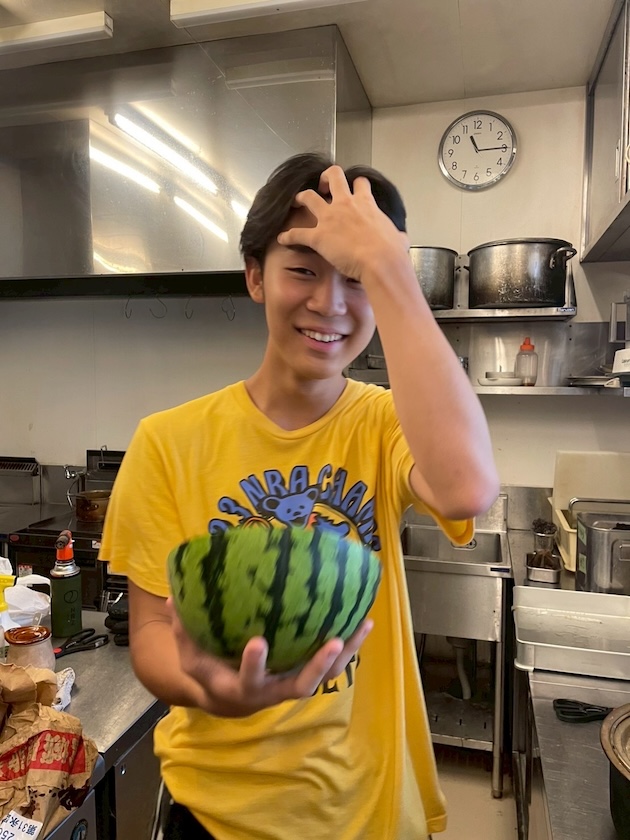
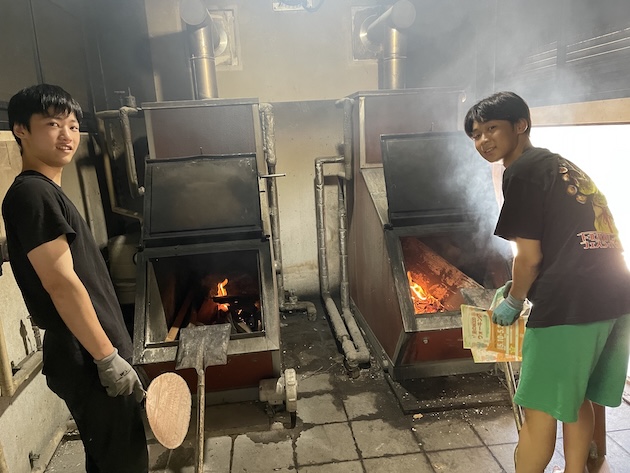
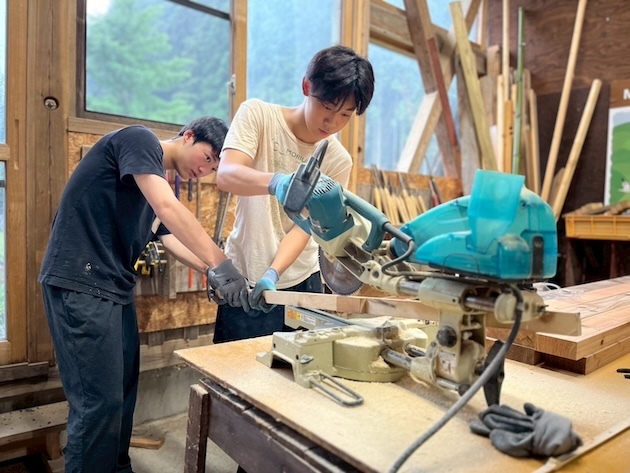
Campers collaborate on everyday tasks such as cooking (photo ①), preparing fish, starting fires (photo ②), and cleaning. These shared responsibilities create trust and a sense of equality. Beyond that, participants can deepen relationships through activities aligned with their interests, including crafts (photo ③), marine sports, gardening, and farming. During one workshop, I befriended an elementary school student who was making a bamboo fishing rod and shaping slate into a knife. We connected naturally through our shared love of creating things. Because everyone at the camp already enjoys outdoor life, friendships form more easily—and shared hobbies strengthen them even further.
Campers help with cooking. Credit: Ippei Takemura
Campers can collaborate on starting fires and cleaning. Credit: Ippei Takemura
Participants can deepen relationships through activities aligned with their interests, including crafts. Credit: Ippei Takemura
A place can be more than just an escape. It can be the first step toward healing, renewed confidence, and hope. When young people find a space where they feel safe enough to be themselves, they often rediscover the courage to reconnect—with others, with learning, and with their own sense of possibility.
This is why I want to continue supporting the creation of spaces that can become “someone’s own place”—places where young people feel seen, valued, and free to grow at their own pace. Sometimes, finding the right space is all it takes for someone to realize that they belong.
Yet this need for belonging is not unique to one school or one country. Around the world, young people are facing increasing isolation, academic pressure, and mental health challenges. Rising youth suicide rates and growing school disengagement reflect a global crisis. When young people are left without spaces where they feel safe, heard, and supported, the consequences extend far beyond classrooms and households—they shape the future of entire societies.
Creating and protecting “third places,” therefore, is not merely a personal or local effort; it is a global responsibility. Governments, schools, communities, and international organizations must work together to invest in inclusive environments where young people can connect through shared interests, express themselves without fear, and rebuild a sense of belonging. Doing so directly supports the Sustainable Development Goals, particularly SDG 3 (Good Health and Well-Being) and SDG 4 (Quality Education), by addressing mental health, social inclusion, and equitable access to supportive learning spaces.
Every young person deserves a place where they feel safe enough to take their first step forward. By listening to youth voices and turning commitment into action, we can move from awareness to impact—and from isolation to hope. The future depends not only on how we educate young people but also on whether we give them places where they truly belong.
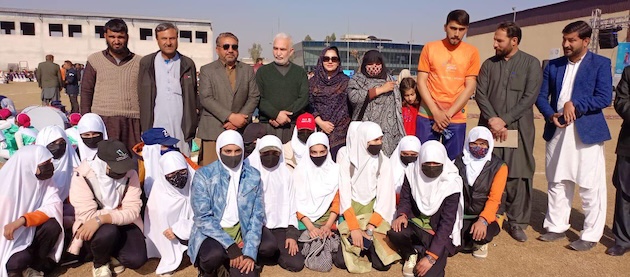
The photo shows an all-girls cricket team from Dir that made it to the finals of the inter-regional games, all without coaching, back in 2023. “Imagine what they can achieve with the right facilities and proper training,” said Noorena Shams, also from Dir. Courtesy: Noorena Shams
KARACHI, Pakistan, Mar 4 2026 (IPS) – “I was very happy to see the way Aina Wazir was playing cricket,” says 28-year-old Noorena Shams, a professional squash player, when she saw the seven-year-old’s video. The clip, which spread rapidly across social media, drew widespread praise for the young girl’s remarkable talent.
But the events that unfolded were like reliving her past.
“It was like watching my younger self,” said Shams, who belongs to Dir, in Khyber Pakhtunkhwa (KP), bordering Afghanistan, close to where Aina lives in North Waziristan. Both are part of Pakistan’s tribal region.
“Aina, like me, does not have a father to fight the world for her,” she said quietly.
The video also caught the attention of Javed Afridi, CEO of Peshawar Zalmi, who expressed interest in inducting Aina into the upcoming Zalmi Women League. In a post on X, he requested her contact details, promising her cricket equipment and training facilities.
“We couldn’t have imagined the video would get so much attention,” said her cousin, requesting anonymity, speaking to IPS by phone from Shiga Zalwel Khel, a village along the Pakistan-Afghanistan border in North Waziristan. “We were overjoyed; it meant new opportunities and a brighter future for her.”
But the joy was short-lived.
Caught Between Militancy and Military
The video caught the attention of local militants.
Angered by the public display of a girl playing sport, the militants abducted Zafran Wazir—a local teacher who had filmed and uploaded the video with the family’s consent—and forced him to issue a public apology for violating “Islamic values and Pashtun traditions”. It has been reported that he was tortured.
The militants have warned the family that Aina cannot leave the village and that the girl must not accept any offers from anyone. “They said she can play cricket,” said her cousin, “But there should be no videos.”
“Ordinary people in the region are caught between a rock and a hard place—trapped between militant groups and the Pakistan army’s ongoing armed operations,” said Razia Mehsood, 36, a journalist from South Waziristan. “The Taliban tolerate no dissent, and our once-peaceful region is now scarred by landmines on the ground and quadcopters and drones overhead. People are living under constant psychological strain,” she added.
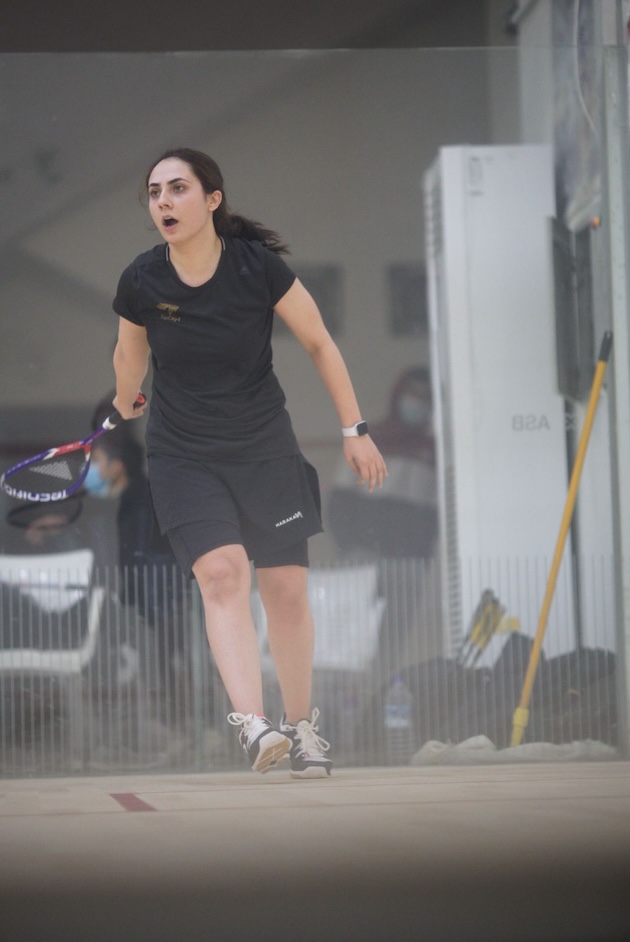
Noorena Shams, a professional squash player, has shown her support for Aina Wazir. Courtesy: Noorena Shams
Defying the Odds
“I hope she [Aina] can leave the place,” said Maria Toorpakai, 35, the first tribal Pakistani woman who went to play in international squash tournaments, turning professional in 2007.
“Whenever there is a talented girl, every effort should be made to remove her from the toxic environment—even if it means a huge sacrifice from the family,” she said, who belongs to neighbouring South Waziristan but was speaking to IPS from Toronto, where she now resides.
Both Toorpakai and Shams had to leave their homes to escape relentless scrutiny. Belonging to a conservative and patriarchal region, they had to disguise themselves as boys to pursue sports.
Toorpakai cut her hair short, dressed like a boy, and renamed herself “Genghis Khan” to participate in competitive sports.
Shams, meanwhile, was hesitantly allowed to play badminton because it was deemed “more appropriate for young women”.
Despite her parents’ support, she watched boys playing in the only cricket club in Dir, founded by her father.
But theirs is not the only journey fraught with hurdles because of a patriarchal mindset and a rigid tribal background where women’s visibility itself is contested.
“The greatest tragedy is that women’s voices are silenced and excluded from representation, while traditions disguised as religion persist, tying honour and dishonour to women,” said Mehsood. Both Toorpakai and Shams know all this too well. Their families faced constant social rebuke and accusations for bringing dishonour to their villages and tribes, all for playing a sport.
They are not alone.
Athletes like Sadia Gul (former Pakistan No. 1 in squash), Tameen Khan (who in 2022 was Pakistan’s fastest female sprinter), and Salma Faiz (cricketer) relocated from districts including Bannu, D.I. Khan, and Karak to Peshawar, the provincial capital—not just for better opportunities but to escape constant scrutiny.
“If you’re lucky enough that your grandfather, father, or brother doesn’t put a stop to your dreams, then it will be your uncles,” said Salma Faiz, the only sister among six brothers. “And if not them, the neighbours will start counting the minutes you take to get home. They’ll question why you train under male coaches, who watches your matches, and even what you wear beneath your chador. And if it’s still not them, then the villagers will whisper behind your back or land at your doorstep, convincing your parents that girls shouldn’t play sports at all.”
Faiz endured opposition from her elder brother but never gave up cricket. She eventually got selected for the national women’s cricket team.
“Aina is fortunate to receive such overwhelming applause,” said Faiz, now 40, living in Peshawar and working as a lecturer in health and physical education at Shaheed Benazir Bhutto Women University.
“I urge her parents not to surrender to social pressure; they should stand by her and encourage her. She has extraordinary talent—I’ve seen the way she plays,” Faiz pointed out.
Safe Spaces for Women Athletes
Each of these women is now creating ways for their younger counterpart to access the opportunity they lacked.
Faiz has opened her home to girls from tribal regions pursuing sport. When space runs out, she arranges hostel accommodation to ensure they get a shot at opportunities that would likely never reach their village.
Toorpakai, through the Maria Toorpakai Foundation, has, over the years, built a strong network, providing safe spaces for young sportswomen from her region.
But now she wants to go beyond providing temporary support. Her vision to build a state-of-the-art Toorpakai Sports School—a residential facility where girls like Aina Wazir can train seriously, study properly, and live without fear—remains a dream.
“All I want from the state is six acres of land near Islamabad,” she said. “Far enough from tribal hostility but accessible to girls from across Pakistan and international coaches I intend to rope in. I can manage the rest. I can raise funds.”
For over two years, her proposal has been stalled by bureaucratic red tape. “It tells you everything,” she said. “The state simply isn’t interested.”
Shams, too, like Toorpakai, runs the Noorena Shams Foundation, currently supporting four women athletes by giving them a monthly stipend for their training, transport and rent. But if anyone else needs equipment, tuition fees, or house rent, her foundation is able to furnish those needs. She even helped construct two cricket pitches for Faiz’s university.
As the first female athlete elected to the executive committees of the Provincial Squash Association, the Sports Management Committee, the Olympic Association, and the Pakistan Cycling Federation, she has championed young athletes—especially sportswomen— ensuring their concerns are heard.
“I continue to bring to the table issues of athletes’ mental and physical health, the need for international-level coaching, the safety and harassment women face, and the importance of integrating competitive sports into school curricula.”
Using Religion to Quash Dreams
Social media may have provided Aina Wazir with a platform to showcase her talent, but it has also exposed her to hostility.
“We are not against a child playing cricket,” said 27-year-old Mufti Ijaz Ahmed, a religious scholar from South Waziristan. “But she must stop once she becomes a woman. It is against our traditions for women to run around in pants and shirts in public. It is vulgar. If Aina is allowed to do this, every girl will want to follow—and we cannot accept that.”
“The mera jism, meri marzi (my body, my choice) slogan will not work here,” Ahmed went on, referring to a popular slogan that has been chanted since March 8, 2018, and which came under heavy criticism for being a rebellion against the cultural values and Islam.
“Who is he to declare that Aina can’t play?” retorted an incensed Maria Toorpakai, who also serves on the International Olympic Committee’s (IOC) Women in Sport Commission. “Whenever a girl picks up a bat or a ball, Islam is said to be endangered,” she added.
“I would respect them if they confronted and condemned the real ills in my region—drug abuse, child marriage, bacha bazi (the exploitation of adolescent boys coerced into cross-dressing, dancing, and sexual abuse), and the spread of HIV and AIDS. Instead, they obsess over distorted ideas of honour and dishonour. They neither understand the world we live in nor the true essence of Islam. Moreover, they have done nothing for our people.”
National responsibility
Ultimately, she argued, the responsibility lies with the state. It cannot afford to look away while intimidation silences young girls with talent and ambition. It is not only a personal tragedy but also a national loss when talent in remote villages is stifled before it can surface.
“It is the government’s duty to deal firmly with such elements,” she said. “And if it cannot protect its daughters, then it must ask itself why it is in power at all.”
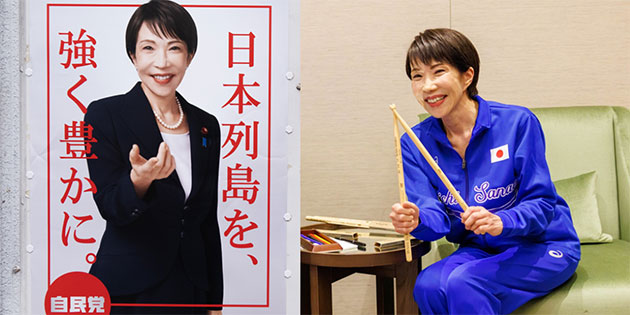
Image: Hiroshi-Mori-Stock / shutterstock.com and 内閣広報室 / Cabinet Public Affairs Office / Wiki Commons
Mar 3 2026 (IPS) – Sanae Takaichi’s electoral victory in February marks a historic turning point in Japanese politics. As Japan’s first female prime minister and the leader of a commanding parliamentary majority, she represents change in both symbolic and strategic terms. Conventional wisdom long held that younger Japanese voters leaned progressive, were sceptical of assertive security policies, and disengaged from ideological nationalism. Yet a segment of digitally active youth rallied behind a politician associated with constitutional revision, expanded defence capabilities, and a more unapologetic articulation of national identity. This shift cannot be reduced to a simple conservative swing. Rather, Takaichi’s rise reflects a deeper transformation in how democratic politics is constructed in the digital age: the growing power of imagery, digital mobilisation, and algorithm-driven branding in shaping political choice—particularly among younger voters.
Takaichi’s approval ratings among voters aged 18–29 approached 90 per cent in some surveys, far surpassing those of her predecessors. Youth turnout also rose, suggesting that Japanese youth are not politically apathetic. On the contrary, they are paying attention—but the nature of that engagement has changed. Viral images, short video clips, hashtags, and aesthetic cues travelled faster and farther than policy briefings. For many younger voters, engagement began—and sometimes ended—with the visual and emotional appeal of the candidate. This pattern is not uniquely Japanese. However, the scale of its impact in this election suggests that political communication has entered a new phase in which digital imagery can shape electoral outcomes as much as—or more than—substantive debate.
A New Phase of Digital Politics in Japan
In the months leading up to the election, Takaichi’s image proliferated across social media platforms. Supporters circulated clips highlighting her confident demeanour and historic candidacy. A cultural trend sometimes described as ‘sanakatsu’ or ‘sanae-mania’ framed political support as a form of fandom participation. Hashtags multiplied. ‘Mic-drop’ moments went viral. Even personal accessories—her handbags and ballpoint pens—became symbolic conversation pieces.
Political enthusiasm has always contained emotional and symbolic elements. What is new is the speed and scale at which digital platforms amplify them. Algorithms reward content that provokes reaction—admiration, anger, excitement. A charismatic clip often outperforms a detailed explanation of fiscal reform. For younger voters raised in scroll-based media environments, political information increasingly arrives as curated snippets. Policy complexity competes with—and often loses to—aesthetic immediacy.
Post-election surveys and interviews suggested that many first-time voters struggled to articulate specific policy distinctions between parties. Instead, they cited impressions—strength, change, decisiveness, novelty—suggesting that digital engagement does not automatically translate into policy literacy. Political identity can form through repeated exposure to imagery and narrative rather than sustained examination of legislative proposals. When campaigns are optimized for shareability, they are incentivized to simplify. Nuance compresses poorly into short-form video.
The Politics of Strength in an Age of Uncertainty
Japan’s younger generation has grown up amid prolonged economic stagnation, regional insecurity, and global volatility. China’s rise, tensions over Taiwan, North Korean missile launches, and persistent wage stagnation form the backdrop of their political participation. For many, the future feels uncertain and structurally constrained.
In such an environment, Takaichi’s assertive rhetoric carried emotional resonance. Her emphasis on strengthening national defence, revisiting aspects of the postwar settlement, and making Japan “strong and rich” projected clarity rather than ambiguity. Where institutional politics can appear technocratic or slow, decisive messaging offered the voters psychological reassurance.
At the core of her appeal is a narrative of restoring a ‘strong’ Japan. Calls for constitutional revision and expanded defence capabilities are framed as steps toward recovering national self-confidence. For younger Japanese fatigued by protracted historical disputes and what some perceive as externally imposed guilt, language emphasising pride and sovereignty resonates more readily than complex historical debates. This may not signal a rejection of peace. Rather, it may reflect a generational reframing of peace itself—understood not solely as pacifism, but as deterrence, defence capability, and strategic autonomy. Messages stressing ‘sovereignty’, ‘strength’, and ‘normal country’ can circulate more effectively in shareable digital formats than nuanced and complex historical analysis.
A Global Pattern: Virtual Branding, a Democratic Crossroads
Japan’s experience mirrors a broader transformation in democratic politics: the rise of virtual branding as the central organizing principle of electoral strategy. In earlier eras, campaigns revolved around party platforms and televised debates. Today, strategy increasingly begins with platform optimization. Campaigns are designed not only to persuade, but to perform within algorithmic systems. The guiding question is no longer only “What policies do we stand for?” but “What content travels?”
The election of Donald Trump in the United States illustrated how virtual media strategy can reshape political competition. Memorable slogans and emotionally charged posts dominated attention cycles, often eclipsing policy detail. Scholars have described this as “attention economics in action”: the candidate who captures digital attention shapes political reality before formal debate even begins. More recently, figures such as Zohran Mamdani have demonstrated how youth-centered digital branding can mobilize support with remarkable speed. Campaigns became participatory; supporters did not merely consume messaging but actively distributed political identity.
Takaichi’s recent victory reflects the evolving mechanics of digital democracy. Her leadership will ultimately be judged not by imagery but by governance — by whether her policies deliver economic stability, regional security, and social cohesion. The broader question, however, transcends any single administration. It means political decisions have migrated into digital environments optimised for speed and visual communication. In an age where images travel faster than ideas, democratic choice risks being guided more by what is seen than by what is discussed. In such an environment, political campaigns will be forced to adapt, and produce content that performs well within these algorithmic constraints. Over time, this may reshape voter expectations and politics will begin to resemble influencer culture. Campaigns that fail to master digital branding risk will appear outdated. Those that succeed can mobilize youth at scale.
Democracy has always balanced emotion and reason. The challenge today is ensuring that emotion does not eclipse reason entirely. The future of informed citizenship may depend on restoring that balance. This does not suggest that previous eras were immune to personality politics. What has changed is the proportion. The digital environment magnifies symbolic cues and compresses policy discussion. If democracies wish to maintain robust deliberation, they must consciously rebalance image and substance. This requires civic education focused on media literacy, virtual platform incentives that elevate substantive debate and political leadership willing to engage in depth, not just virality. And the responsibility is collective—voters, educators, media institutions, and candidates alike. The question facing democracies is whether this transformation can coexist with substantive deliberation or whether branding will increasingly overtake it.
Ria Shibata is currently a Senior Research Fellow at the New Zealand Centre for Global Studies, and the Toda Peace Institute in Japan. She also serves as a Visiting Scholar at the University of Auckland. Her research focuses on identity-driven conflicts, reconciliation, nationalism and the role of historical memory in shaping interstate relations and regional stability in Northeast Asia.
This article was issued by the Toda Peace Institute and is being republished from the original with their permission.
DHAKA, Bangladesh, Jan 8 2026 (IPS) – As many of you know, out of the blue, I have been called in to assist the Interim Government led by Nobel Laureate Professor Muhammad Yunus in stabilising the economy left in ruins by the fallen autocratic-kleptocratic regime that looted the banks, stole public money and robbed small investors in the capital market to siphon off billions of dollars out of the country. I had never served in a government; neither had I ever expected this opportunity. However, my UN experience and political economy understanding have been handy.
Anis Chowdhury
Reflecting back the year that we have just passed, I trust, you have been well as we wished each other at the start of 2025 the best of our health and spirit. Unfortunately, despite our earnest wish, the world was not peaceful during 2025.
Hopes and global disorder
Hopes kindled briefly for justice for the Palestinians as the European powers, including Australia (a European settler colony) were forced to recognise the Palestine State, and Narcissist Trump pushed for some peace in both Ukraine and Gaza in his mad desperation for a Nobel Peace Prize.
Yet Gaza is still being bombarded with Israel’s genocidal intent, making a mockery of deranged Trump’s rhetorical claim of achieving “peace in the Middle East for the first time in 3,000 years”, and the illegal occupation of the West Bank along with settler violence continues unabated with complete immunity in blatant violations of international laws.
Narcissist Trump sanctioned the International Criminal Court (ICC) and International Court of Justice (ICJ) in his desperate attempt to save Israeli war criminals, including Benjamin Netanyahu and justify Israel’s genocide and settler violence. Trump upended his assault on the rule-based order with arbitrary so-called ‘reciprocal tariff’.
Bangladesh
As for the post-fascist Hasina Bangladesh, the year 2025 began with high expectations. And as for me, the year 2025 has been extra-ordinary.
Today, I am pleased to say that we have been able to avert a full-blown crisis. Heart-felt thanks to our ‘remittance fighters’ who whole-heartedly trusted the Interim Government’s various reform initiatives. Expatriate Bangladeshis sent a record $30.04 bn in remittances in the 2024–25 fiscal year, the highest amount ever received in a single fiscal year in the country’s history. Forex reserves surged to $33 bn, hitting 3-year high as December remittances crossed $3bn. You can get a report card by Finance Advisor, Dr. Salehuddin and myself, published in the Daily Star on 18 August 2025.
Of course, not everything has been rosy. The much-hoped systemic transition remains full of uncertainty. I see systemic transition as the process of total transformation of a caterpillar inside a cocoon. We still do not know whether the ‘caterpillar in the cocoon’ will turn out to be a butterfly or a moth. People are genuinely worried as the past systemic transition opportunities were wasted.
I myself found road-blocks at every turn. Bureaucratic inertia and resistance have frustrated my efforts for genuine reforms. It has been a real-life experience of the classic British political satire, “Yes, Minister”. Like Sir Humphrey Appleby, the bureaucrats will display outwardly extra-ordinary humbleness, but will politely defy citing rules of business. Bureaucratic resistance is the main stumbling block for achieving coordination, coherence and integration in policy making and implementation, thus, causing wasteful duplications, inefficiency and lack of effectiveness.
Nevertheless, I achieved some success. One of them is the agreement to expand the voluntary Bangladesh National Cadet Corps programme to cover ALL youths (aged 18) in 10-12 years, so that we can have a disciplined workforce to be readily deployed during any national emergency. Needless to say, that this is an imperative to realise demographic dividend. We are hoping to roll out the programme from July 2026 to coincide with the July Revolution anniversary.
Despite frustrations and uncertainties, I am hopeful as I can see a seismic shift in the political dynamics of the country. This coincides with the demographic shift – the youth (15-30 years) representing nearly 30% of the population. These youths have a different vocabulary of politics; they want justice, inclusion, self-respect, and dignity – they are fiercely nationalist.
Recently martyred Hadi is their embodiment. The establishment is understandably threatened and tried to silence the youth by assassinating Hadi; but they failed to extinguish the flame, instead, everyone has become a Hadi, standing unwavering in their commitment to carry out Hadi’s mission of building a just nation where citizens can live with dignity, free from fear, subjugation, and oppression. Hadi re-centred our national conscience on Insaf: justice, dignity, and fairness not as rhetorical slogans, but as non-negotiable ethical foundations of the State and society.
In an era of moral drift, Hadi reminded the nation that no political order can last without justice at its core. He ignited a generation with civic courage and moral responsibility. Free from fear, patronage, or transactional politics, young people saw in Hadi a new model of leadership: ethical, principled, and accountable. In doing so, he reshaped the future political character of Bangladesh and moved national thinking beyond entrenched legacy power structures toward people-centric, principled governance. He challenged the inevitability of corruption and coercion, insisting instead that politics could be reclaimed as a moral vocation. His life poses an enduring question to those who seek power: Will you serve justice, or merely rule?
Let me end this year-end message with my personal tribute to Khaleda Zia, who has recently passed away after a long illness imposed on her by the vindictive Hasina regime, falsely convicting her and imprisoning in a substandard cell. Like her husband, Shaheed President Zia, she was thrust into the whirlpool of history. They never sought power; but when the responsibility fell on their shoulders, they carried out their duties to the nation whole-heartedly and selflessly; thus, they became a true statesman (woman), winning hearts and minds of their people.
Perhaps Khaleda Zia’s most enduring legacy lies in her extraordinary restraint and dignified disposition, even under severe and prolonged adversity. Her self-restraint, rooted in grace rather than weakness, distinguished her from many of her contemporaries and offers a powerful lesson for today’s often abrasive and confrontational political culture.
The iconic Cape Town Minstrel Carnival returns to the Mother City on 5 January 2026.
Now known as the Hollywoodbets Cape Town Street Parade, this annual event is the longest existing carnival in the city and is an integral part of the city’s cultural heritage. Historically this celebration took place on 2 January aka Tweede Nuwe Jaar and the minstrels were to referred to as the Kaapse Klopse – this celebration the Mother City’s biggest event to usher in the New Year.
What To Expect at the Cape Town Minstrel Carnival
Thousands of minstrels in glittery uniforms from a variety of troupes with face paint, hats and parasols march through the city’s roads, playing their signature “ghoema” music on banjos, trumpets and drums. The troupes are spaced out so that each performance happens separately, allowing onlookers to hear each troupe. There is also a structure to each troupe, with non-instrument playing members called “voorlopertjies” leading the way with extravagant dance moves while the band provides the backing soundtrack.
Among this year’s troupe lineup you will see Original D6 Hanover Minstrels, Mitchells Plain Young Tycoons, Phantoms Community Development, Ashwin Willemse Orient Community Development, Young Wild Comanches, Manenberg Superstars, Carnival Boys Youth Development (also known as Crystal Palace), Wild Apache, Baruch Entertainers, CPT Hawkers, Fabulous Seawind Entertainers, and many more.
Experience The Magic
The parade is set to attract a crowd of 80,000 to 100,000 spectators, eager to experience over 16 minstrel troupes and 20,000 performers.
The parade will begin at the corner of Somerset Rd and Dixon St. The route will follow along Somerset Rd all the way to the DHL Stadium.
Road Closures
To accommodate the parade and ensure public safety, several roads will be closed from 6am on Monday, 5 January to Tuesday, 6 January 2026.
Affected streets include:
Street/Road
Restriction
Between
Closure Time
Opening Time
Main Rd
Full Closure (residential access lane between Upper Portswood Rd & Highfield Rd)
York Rd
Buitengracht Street
06h00
23h59
Prestwich Street
Full Closure
Alfred St Granger
Chiappini Street
06h00
23h59
Somerset Road
East Bound closure
Bay Blvd Granger
Granger Bay Blvd
06h00
23h59
Fritz Sonnenberg
Full Closure
Bay Blvd Granger
Rd Portswood
06h00
23h59
Somerset Road
Full Closure
Bay Blvd
Buitengracht St
06h00
23h59
Ebenezer Road
Full Closure (Hotel Access only)
Prestwich St Javis
RD Somerset
06h00
23h59
De Smit Street
Full Closure
St Napier St Javis
Somerset RD
06h00
23h59
Moreland Terrace
Full Closure
St Schiebe St
Somerset RD
06h00
23h59
Napier Street
Full Closure
Dixon St
Somerset RD
06h00
23h59
Alfred Street
Full Closure
Prestwich St
Somerset RD
06h00
23h59
Dixon Street
Full Closure
Strand St
Javis St
06h00
23h59
Chiappini Street
Full Closure
Prestwich St
Somerset RD
06h00
23h59
Chiappini Street
Full Closure
Napier St Liddle
Somerset RD
06h00
23h59
Alfred Street
Full Closure (Hotel Access only)
St Beach Rd
Schiebe St
06h00
23h59
Prestwich Street
Full Closure
Portswood Rd
St Alfred
06h00
23h59
Cobern St
Full Closure
Granger Bay Blvd
Somerset Rd
06h00
23h59
Granger Bay Blvd
East Bound Carriage Closure
Helen Suzman
Helen Suzman
06h00
23h59
Fort Wynyard St
Full Closure
Blvd
Granger Bay Blvd
12h00
23h59
Fritz Sonnenberg
Full Closure
Beach Rd
Vlei Road
Full Closure
Fritz Sonnenberg Rd
12h00
23h59
Local access and permit holders:
Street/Road
Restriction
Between
Closure Time
Opening Time
Main Road
Permit Holders Only
Granger Bay Blvd
Three Anchor Bay Blvd
06h00
23h59
Granger Bay Blvd
Permit Holders Only
Helen Suzman Blvd
York Rd
06h00
23h59
Ebenezer Road
Permit Holders Only
Port RD
Prestwich St
06h00
23h59
Bennett Street
Permit Holders Only
Port RD
Prestwich St
06h00
23h59
Hudson Street
Permit Holders Only
Waterkant Street
Somerset RD
06h00
23h59
Hudson Street
Local Access Only
Hudson St
Strand St
06h00
23h59
Vos Street
Local Access Only
Vos St
Strand St
06h00
23h59
Rose Street
Local Access Only
Rose St
Strand St
06h00
23h59
Waterkant
Local Access Only
Buitengracht St
Waterkant St
06h00
23h59
Cavalcade Road
Local Access Only
York Rd
Upper Portswood Rd
06h00
23h59
Thornhill Road
Local Access Only
Cavalcade Rd
Upper Portswood Rd
06h00
23h59
Entry
The HollywoodBets Cape Town Street Parade is free for the public. Follow Cape Town Street Parade on Facebook, Instagram, and X, for the latest updates on the start route and other information.