


CopyRight @2009 The Maravi Post , An Eltas EnterPrises INC Company Since @2005. Publishing and Software Consulting company
Contact us: contact@maravipost.com
CopyRight @2009 The Maravi Post , An Eltas EnterPrises INC Company Since @2005. Publishing and Software Consulting company
Contact us: contact@maravipost.com

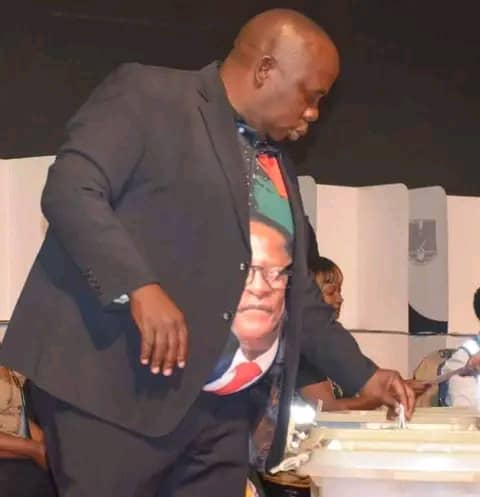
LILONGWE-(MaraviPost)-The state is ready to take Malawi Congress Party (MCP) Secretary General Richard Chimwendo Banda to court once his health improves, according to Dzikondianthu Malunda, Director of Litigation in the Ministry of Justice.
Malunda told Maravi Post that Chimwendo Banda is currently receiving medical care, and it’s reported that his health is not in good shape.
“It will be inhumane to drag a sick person to court,” Malunda said, indicating that the state is waiting for Chimwendo Banda’s health to improve before proceeding with the case.
Chimwendo Banda’s lawyer, Khwima Mchizi, confirmed that his client’s health is indeed not satisfactory.
Chimwendo Banda handed himself over to the police on December 12, and he is currently awaiting a bail ruling from the court.
The MCP Secretary General is facing murder charges, and the state’s decision to wait for his health improvement before taking him to court reflects a balance between ensuring justice is served and respecting the rights of the accused.
The case has garnered significant attention in Malawi, with many following the developments closely. The MCP has been vocal about Chimwendo Banda’s situation, and the party’s supporters are eagerly awaiting the outcome of the case.
As the situation unfolds, the court is expected to deliver a ruling on Chimwendo Banda’s bail application, which will determine whether he will be granted bail or remain in custody until the trial begins.
The state’s readiness to proceed with the case once Chimwendo Banda’s health improves underscores its commitment to ensuring that justice is served, regardless of the accused’s health status or political affiliation.
The case against Chimwendo Banda serves as a reminder of the importance of upholding the rule of law and ensuring accountability for one’s actions, even for those in positions of influence or leadership.
As the people of Malawi await the next developments in the case, it is clear that the outcome will have significant implications for the country’s political landscape and the pursuit of justice.
In related news, the MCP has expressed concerns about the treatment of Chimwendo Banda while in custody, calling for transparency and fairness in the handling of the case.
The party’s leadership has also urged supporters to remain calm and peaceful, emphasizing the importance of respecting the rule of law and allowing the judicial process to take its course.
As the story continues to unfold, Maravipost will provide updates and insights into the case, ensuring that our readers are informed about the latest developments.


Civil Society, Environment, Headlines, Latin America & the Caribbean, Multimedia, TerraViva United Nations, Video
– “We moved from a context of socio-environmental exclusion to one of environmental justice,” said Dionê Castro, coordinator of the Sustainable Oceanic Region Program which led Brazil’s largest nature-based solutions project.
Having won national and global awards, the Orla Piratininga Park (POP) built 35,000 square meters of filtering gardens and improved the water quality of the Piratininga lagoon, in the oceanic south of Niterói, a municipality in metropolitan Rio de Janeiro, across the Guanabara Bay.
The project, named after the late Brazilian environmentalist Alfredo Sirkis, began in 2020, and aims to environmentally restore an area of 680,000 square meters on the lagoon’s shores whose waters cover an area of 2.87 square kilometers.
[embedded content]
At the heart of the project are the treatment systems for the waters of the Cafubá, Arrozal, and Jacaré rivers, which flow into the lagoon. Sedimentation and pollution were deteriorating the water resource and the quality of life in the surrounding area.
A weir, which receives the river flow, a sedimentation pond, which removes solid waste, and the filtering gardens make up the chain that partially cleans the water before releasing it into the lagoon, reducing environmental impacts, in a process called phytoremediation.
The gardens are small reservoirs where aquatic plants called macrophytes are planted, which feed on the nutrients from the pollution, explained Heloisa Osanai, the biologist specialized in environmental management of the Sustainable Oceanic Region Program (PRO Sustainable).
Three polluted water treatment stations are in the neighborhoods crossed by the rivers, based on natural resources, “without the use of electrical energy, chemicals, or concrete,” explained Castro, the coordinator of PRO Sustainable.
Furthermore, some macrophytes produce abundant flowers. Only native Brazilian species are planted, with priority given to biodiversity, added Osanai.
Along with these water treatment systems, 10.8 kilometers of bike paths, 17 recreation centers, a 2,800-square-meter Eco-Cultural Center, and other environmental works with social goals were built.
The bike path, generally along a pedestrian sidewalk, caters to physical and leisure activities but is also a factor in protecting the lagoon shoreline by blocking urban occupation and real estate invasions, explain the officials.
The area where the water system was built at the mouth of the Cafubá river was highly degraded by an open-air dump and flooding. A reformed “belt channel,” in some sections also reinforced by macrophyte islands, corrected the waterlogging.
On the other side of the lagoon, 3.2 kilometers of bioswales improve the drainage of rainwater. They are trenches with pipes, stones, and other materials, plus vegetation, that accelerate drainage and prevent pollutants from reaching the lagoon.
The main result, according to Castro, reconciled the local population with the lagoon. The old houses that “turned their backs on the lagoon” are joined by new buildings facing the water, some with balconies overlooking the new landscape, said Mariah Bessa, the engineer in charge of hydraulic aspects of the project.
The local population was highly involved in the design and construction of the new environmental and social facilities that transformed the lagoon shoreline. This led to new attitudes, such as not littering on the ground or in the water and preventing others from doing so, according to Castro.
The Ecocultural Center promotes permanent environmental education, with films, children’s games, audiovisual resources, and a large space for visits and classes.
“We moved from a context of socio-environmental exclusion to one of environmental justice,” said the coordinator of PRO Sustainable.

Protesters in Minneapolis return to the streets as federal agents take over the investigation into the killing of a Minnesota woman by an ICE agent, while Portland officials condemn another immigration-related shooting.
A review of immigration related shootings under President Trump shows a rising pattern of violence as federal agents carry out increasingly aggressive and public operations in U.S. cities.
And President Trump signals the U.S. could run Venezuela “much longer” than expected, as oil executives head to the White House to discuss America’s expanded oversight of the country’s future.
Want more analysis of the most important news of the day, plus a little fun? Subscribe to the Up First newsletter.
Today’s episode of Up First was edited by Gigi Douban, Rebekah Metzler, Mohamad ElBardicy, and Alice Woelfle.
It was produced by Ziad Buchh, Milton Guevara and Christopher Thomas.
We get engineering support from Zo van Ginhoven. Our technical director is Stacey Abbott.
Our Executive Producer is Jay Shaylor.
(0:00) Introduction
(01:54) Minneapolis Protests
(05:29) Immigration Enforcement Shootings
(09:04) Running Venezuela
Learn more about sponsor message choices: podcastchoices.com/adchoices

Africa, Climate Change, Climate Change Justice, Conferences, COP30, Development & Aid, Editors’ Choice, Featured, Food and Agriculture, Food Systems, Global, Headlines, Latin America & the Caribbean, Population, Sustainable Development Goals, TerraViva United Nations | Analysis
Food solutions were on display everywhere around COP30—from the 80 tonnes of local and agroecological meals served to concrete proposals for tackling hunger—but none of this made it into the negotiating rooms or the final agreement. —Elisabetta Recine, IPES-Food panel expert

Agriculture is both a challenge and a solution for climate change. Busani Bafana/IPS
– As they ate catered meals, COP30 negotiators had no appetite for fixing broken food systems, a major source of climate pollution, experts warn.
Food systems are the complete journey food takes—from the farm to fork—which means its growing, processing, distribution, trade and consumption and even the waste.
The International Panel of Experts on Sustainable Food Systems (IPES-Food) warns that the final COP30 agreement risks deepening climate and hunger crises. It failed to address global warming emissions from food systems and the escalating damages caused by fossil-fuel-dependent industrial agriculture.
Food appears only once in the negotiated text, as a narrow indicator on ‘climate resilient food production’ under the Global Goal on Adaptation, IPES-Food pointed out.
“There is no mention of food systems, no roadmap to tackle deforestation, and no recognition that industrial agriculture drives nearly 90 percent of forest loss worldwide,” noted the think tank, emphasizing that negotiators also weakened language in the Mitigation Work Programme from addressing the ‘drivers’ of deforestation to vague ‘challenges.’
IPES-Food argued that the omission of food systems in the COP30 agreement was in stark contrast to the summit itself, which was held in the heart of the Amazon. Thirty percent of all food served during COP30 came from agroecological family farmers and traditional communities, and concrete public policy proposals for a just transition of food systems were on full display, IPES-Food said.
By not supporting a transition to environmentally friendly and low-emission agriculture, the agreement has left the global food system—and the billions who depend on it—highly vulnerable to the very climate shocks it helps cause, experts said.
“Food solutions were on display everywhere around COP30—from the 80 tonnes of local and agroecological meals served to concrete proposals for tackling hunger—but none of this made it into the negotiating rooms or the final agreement,” said Elisabetta Recine, IPES-Food panel expert and president of the Brazilian National Food and Nutrition Security Council (Consea), in a statement.
“Despite all the talk, negotiators failed to act, and the lived realities of people most affected by hunger, poverty, and climate shocks went unheard.”
Big Oil and Big Ag, Bigger voice
More than 300 industrial agriculture lobbyists were registered as delegates to COP30. They are blamed for influencing discussions and promoting false solutions to climate change.
“COP30 was supposed to be the Implementation COP—where words turned into action,” Danielle Nierenberg, an expert on sustainable agriculture and food issues and President of Food Tank, told IPS. “But once again, corporate interests won over people, nature, and the future of our food and agriculture systems as part of the solution to the climate crisis.”
Raj Patel, IPES-Food panel expert and professor at the University of Texas, argues that agribusiness lobbyists captured COP30 to influence outcomes favoring industrial agriculture and big oil interests.
“Food systems are second only to oil and gas as a driver of the climate crisis, and unlike oil wells, they are also the first victim of the chaos they create, Patel noted.
Obstacles and Opportunities
Scientists have warned that carbon emissions, including those from agriculture, must be cut considerably if the world is to meet the goals of the Paris Agreement to limit global warming to 2°C or less.
Even if fossil fuel emissions were eliminated immediately, emissions from the global food system alone would make it impossible to limit warming to 1.5°C and difficult even to realize the 2°C target, scientists have said.
Selorm Kugbega, a Research Fellow at the Stockholm Environment Institute, agrees that despite many promises made to tackle agriculture-linked emissions, COP30 turned out to be a damp squib for agrifood systems.
Initiatives such as RAIZ to restore 500 million hectares of degraded agricultural land by 2030 and TERRA to scale out climate solutions for smallholder farmers through blended finance, which were launched at COP30 omitted to highlight the effects of industrial food systems. Over 300 industrial agriculture lobbyists participated in discussions at COP30, leading to accusations of swaying the outcomes.
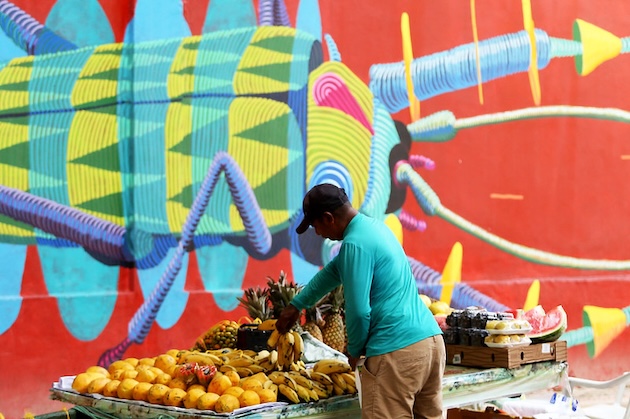
Analysts warn the final agreement at COP30 in Belém, Brazil, risks deepening climate and hunger crises. Credit: Raimundo Pacco/COP30
Kugbega observed that after several years of slow progress and momentum in integrating food systems in climate negotiations, COP30 should have been the opportunity to seal agriculture’s centrality in future COPs. However, it ended with no clear agreements on grant-based public finance for adaptation in agriculture or redirection of public funds that subsidize industrial systems.
The climate negotiations demonstrated power inequality in climate negotiations with the implicit protection of industrial agriculture interests, which weakened the credibility of any global efforts at mitigating agriculture-based emissions, Kugbega observed, highlighting that smallholders bear a high burden of climate risks and have little adaptation financing.
Kugbega argued the most powerful countries, which are generally less dependent on agriculture, tend to prioritize sectors such as energy and transport in climate negotiations. However, many least developed countries, particularly in Africa, are highly dependent on agriculture for employment and economic stability and face urgent climate risks.
“Yet these countries often lack the political influence to elevate agriculture and food systems as central issues in COP negotiations,” he said. “COP30 in Brazil presented a major opportunity to shift this imbalance, making the failure to position food systems at the center of the climate agenda particularly troubling.”
Frugal Financing for Food and Farmers
According to the Climate Policy Initiative (CPI) and the UN’s Standing Committee on Finance, agriculture receives a small and insufficient share of total global climate finance.
Of the available approximate total global climate finance of USD 1.3 trillion per year on average, agriculture gets around USD 35 billion per year. This is a huge shortfall given that food systems are estimated to be responsible for roughly one-third of global greenhouse gas emissions and are one of the sectors most vulnerable to climate impacts, according to the CPI. Worse still, smallholder farmers, who produce up to 80 percent of food in developing countries, only receive 0.3 percent—a striking imbalance, yet they feed the world and are more exposed to climate impacts.
Will COP31 Deliver?
While COP30 highlighted the need to tackle climate change impacts through the transformation of food systems, such as highlighted in the Belém Declaration on Hunger, Poverty and Human-Centered Climate Action, it remains to be seen if COP31 will deliver a positive outcome on food systems.
Waiting for COP31 to save the world is surrendering because agribusiness lobbyists do not take holidays, argues IPES-Food panel’s Raj Patel.
“The test is not whether diplomats can craft better language in Antalya, but whether farmers’ movements, indigenous movements, and climate movements can generate enough political pressure to make governments fear inaction more than they fear confronting corporate power,” he said.
COP31, to be hosted by Turkey with Australia as negotiations president in 2026 , is expected to prioritize an action agenda centered on adaptation finance, fossil fuel phase-out, adaptation in Small Island Developing States, and oceans.
While this agenda aligns with broader climate justice goals, it means food systems risk becoming indirectly addressed rather than explicitly championed, Kugbega said.
Given the stalled negotiations on financing sustainable agriculture transitions and the postponement of the Sharm el-Sheikh Joint Work on Agriculture, Kugbega said COP31 will likely focus more on developing new roadmaps and agreements than on full-scale implementation.
COP32 could be a greater opportunity for the implementation of the work program under Ethiopia’s COP32 presidency, given the country’s direct exposure to climate risks in agriculture, he noted.
“COP31 will likely shape whether the world arrives at COP32 ready to implement and operationalize sustainable food systems or once again be forced to renegotiate what is already known.”
This feature is published with the support of Open Society Foundations.
IPS UN Bureau Report


Meghan Trainor’s husband Daryl Sabara is denying there’s any drama between his wife and Ashley Tisdale … claiming there’s no beef from his side and wishing the actress all the best. We caught up with the former child star while he was leaving…






