The UN is Being Undermined by the ‘Law of the Jungle’

Armed Conflicts, Civil Society, Crime & Justice, Democracy, Featured, Global, Headlines, Human Rights, IPS UN: Inside the Glasshouse, TerraViva United Nations
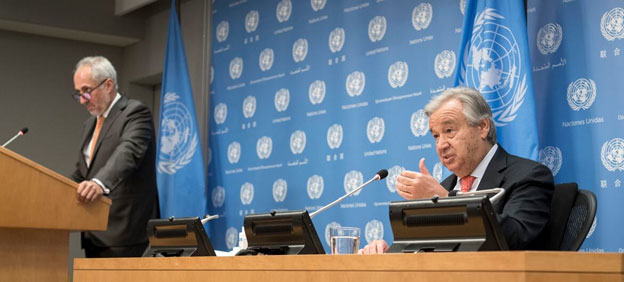
UN Secretary-General António Guterres (seated at right) speaks to reporters at a press conference at UN Headquarters, in New York. UN Photo/Mark Garten

UNITED NATIONS, Jan 30 2026 (IPS) – UN Secretary-General Antonio Guterres was dead on target when he told the Security Council last week that the rule of law worldwide is being replaced by the law of the jungle.

“We see flagrant violations of international law and brazen disregard for the UN Charter. From Gaza to Ukraine, and around the world, the rule of law is being treated as an à la carte menu,” he pointed out, as mass killings continue.


“The New York Times on January 28 quoted a recent study pointing out the four-year war between Russia and Ukraine has resulted in over “two million killed, wounded or missing”. The study published last week by the Center for Strategic and International Studies in Washington says nearly 1.2 million Russian troops and close to 600,000 Ukrainian troops have been killed, wounded or are missing.

In the war in Gaza, over 70,000 Palestinians, mostly civilians, including women and children, have been killed since October 7, 2023, with figures reaching over 73,600 by early January 2026, according to various reports from the Gaza Health Ministry and human rights organizations.

These killings have also triggered charges of war crimes, genocide and violations of the UN charter, as in the US invasion of Venezuela and the takeover threats against Greenland.

Guterres said in an era crowded with initiatives, the Security Council stands alone in its Charter-mandated authority to act on behalf of all 193 Member States on questions of peace and security. The Security Council alone adopts decisions binding on all.

No other body or ad hoc coalition can legally require all Member States to comply with decisions on peace and security. Only the Security Council can authorize the use of force under international law, as set out in the Charter. Its responsibility is singular. Its obligation is universal, declared Guterres.

Dr Ramzy Baroud, Editor of Palestine Chronicle and former Managing Editor of the London-based Middle East Eye, told IPS the statement by the Secretary-General is long overdue.

Too often, he said, UN officials resort to cautious, euphemistic language when describing egregious violations of international law—especially when those responsible are UN Security Council veto holders, states that have ostensibly sworn to uphold the UN Charter and the core mission of the international system.

Unfortunately, the UN itself has become a reflection of a rapidly shifting world order—one in which those with overwhelming military power sit at the top of the hierarchy, abusing their dominance while steadily hollowing out the very institutions meant to restrain them, he pointed out.

“We must be honest with ourselves and acknowledge that this crisis did not begin with the increasingly authoritarian misuse of law by the Trump administration, nor is it limited to Israel’s absolute disregard for the international community during its two-year-long genocide in Gaza.”

The problem is structural. It is rooted in the way Western powers have long identified—and exploited—loopholes within the international legal system, selectively weaponizing international law to discipline adversaries while shielding allies and advancing their own strategic agendas, he declared.

Responding to a question at the annual press briefing on January 29, Guterres told reporters it is obvious that members of the Security Council are themselves violators of international law –and it doesn’t make life easy for the UN in its efforts.

Unfortunately, he said, there is one thing that we miss. “It’s leverage. It’s the power that others eventually have, to force countries and to force leaders to abide by international law. But not having the power, we have the determination, and we’ll do everything possible with our persuasion, with our good offices, and building alliances to try to create conditions for some of these horrible tragedies we are witnessing. And from Ukraine to Sudan, not to mention what has happened in Gaza, we will be doing everything we can for these tragedies to stop”.

Dr Jim Jennings, President of Conscience International, told IPS the global humanitarian situation described by the Secretary-General is grim but very real. The climate crisis, natural disasters, numerous ongoing and expanding conflicts, and the impact of new technologies, all add to today’s global economic instability and affect every person on earth.

While President Trump continues bombing countries and strutting the world stage with his adolescent dream of US territorial expansion, a major readjustment of the global power balance among China, the US, Europe, and the BRICS nations is underway, he noted.

Stripping life-giving aid away from the poorest countries on earth to benefit those already rich, as his policies guarantee, is a recipe for even more global suffering and violence.

“Clearly one of the most blatant and harmful reasons for the present disastrous situation worldwide is the reduction of funding for UN agencies by the United States, which has traditionally paid a high percentage of their costs”.

With the further curtailment of The Department of State-USAID’s enormous support for people in critical need in almost every country in the world, the Trump administration’s one-two punch has already threatened to make a challenging set of problems unmanageable.

What is to be done? People and governments everywhere must stand up, speak out, and act against the colossal forces now arrayed against some of the world’s most vulnerable populations. How to do that has never been easy, Dr Jennings argued.

Put in the simplest terms, Secretary-General Guterres was merely pointing out the glaring fact of the true global situation and appealing for the critical need UN agencies have for support if their mission is not to fail. The answer is straightforward— more private funding.

Why not raise the level of our individual, corporate, and foundation donations to the UN Agencies and other aid organizations while continuing to advocate for responsible government backing for the irreplaceable United Nations agencies? he asked.

Dr Palitha Kohona, a former Chief of the UN Treaty Section, told IPS international relations, for a very long time, were dependent on the whims of powerful states and empires. Might was right and disputes were settled by using force. Land inhabited for centuries was annexed to empires and native populations were dispossessed or even exterminated.

From such fractured beginnings, an orderly world governed by agreed rules began to emerge gradually, although most of the rules were established by the powerful.

Thousands of treaties were concluded, customary rules were respected and a rudimentary judicial structure began to be established. The world rejoiced in the establishment of the United Nations.

Though lacking in proper enforcement mechanisms and largely dependent on voluntary mutually beneficial compliance, a rule based international order was beginning to emerge.

“Many, including the present writer, wrote enthusiastically about the consolidation of a rules-based international order. The violence that was commonplace in international dispute resolution prior to the Second World War appeared to be limited to distant parts of the world.”

But like a cozy dream being shattered in mid-sleep, he said, the USA has rudely disrupted the illusion of a new international rules-based world order of which it was once a champion. The trade rules, so painfully developed, have been ditched. Mutual deal making has resurfaced, he said.

“Now it would seem that the powerful would determine the rules, based on self-interest. Rules relating to sovereignty, territorial integrity and rights of people would now seem to depend on the whims of the powerful. The weak will draw their own conclusions. Acquire counterattack capabilities that would make an aggressor think twice”.

“Unless the medium powers and powerless band together and resolve to maintain the international rule of law, we may be entering an era of extreme uncertainty in international relations”, declared Dr Kohona, a former Permanent Representative of Sri Lanka to the UN and Ambassador to China.

Dr Baroud also pointed out that the 2003 US-British invasion of Iraq stands as a textbook example, but the same pattern has repeated itself in Libya, Syria, and across large parts of the Middle East and beyond. In each case, international law was either manipulated, ignored, or retroactively justified to accommodate power rather than principle.

Israel’s genocide in Gaza, the war in Ukraine, and the ongoing atrocities in Sudan and elsewhere are not aberrations. They represent the culmination of decades of legal erosion, selective enforcement, and the systematic degradation of the international legal order.

While I agree—and even sympathize—with Canadian Prime Minister Mark Carney’s comments at the World Economic Forum in Davos, in which he expressed criticism of the new power dynamics that have rendered the international political system increasingly defunct, one cannot help but ask why neither he nor other Western leaders are willing to confront their own governments’ historical role in creating this reality.

Without such reckoning, calls to defend international law risk sounding less like principled commitments and more like selective outrage in a system long stripped of credibility.

European powers that are critical of Trump have not raised their voice with the same intensity and vigor against Netanyahu for doing a lot worse than anything that Trump has done or threatened to do.

This also begets the same question about the latest comments by the UN Secretary-General. He should offer more specifics than generalized decrying the collapse of international morality.

“Moreover, we expect a roadmap that will guide us in the process of re-establishing some kind of a sane global system in the face of the growing authoritarianism, dictatorship, and criminality all around”, declared Dr Baroud.

IPS UN Bureau Report
  Source

Was it viable for Malawi Speaker Suleiman to blow dollars on RSA training amid austerity measures plea?

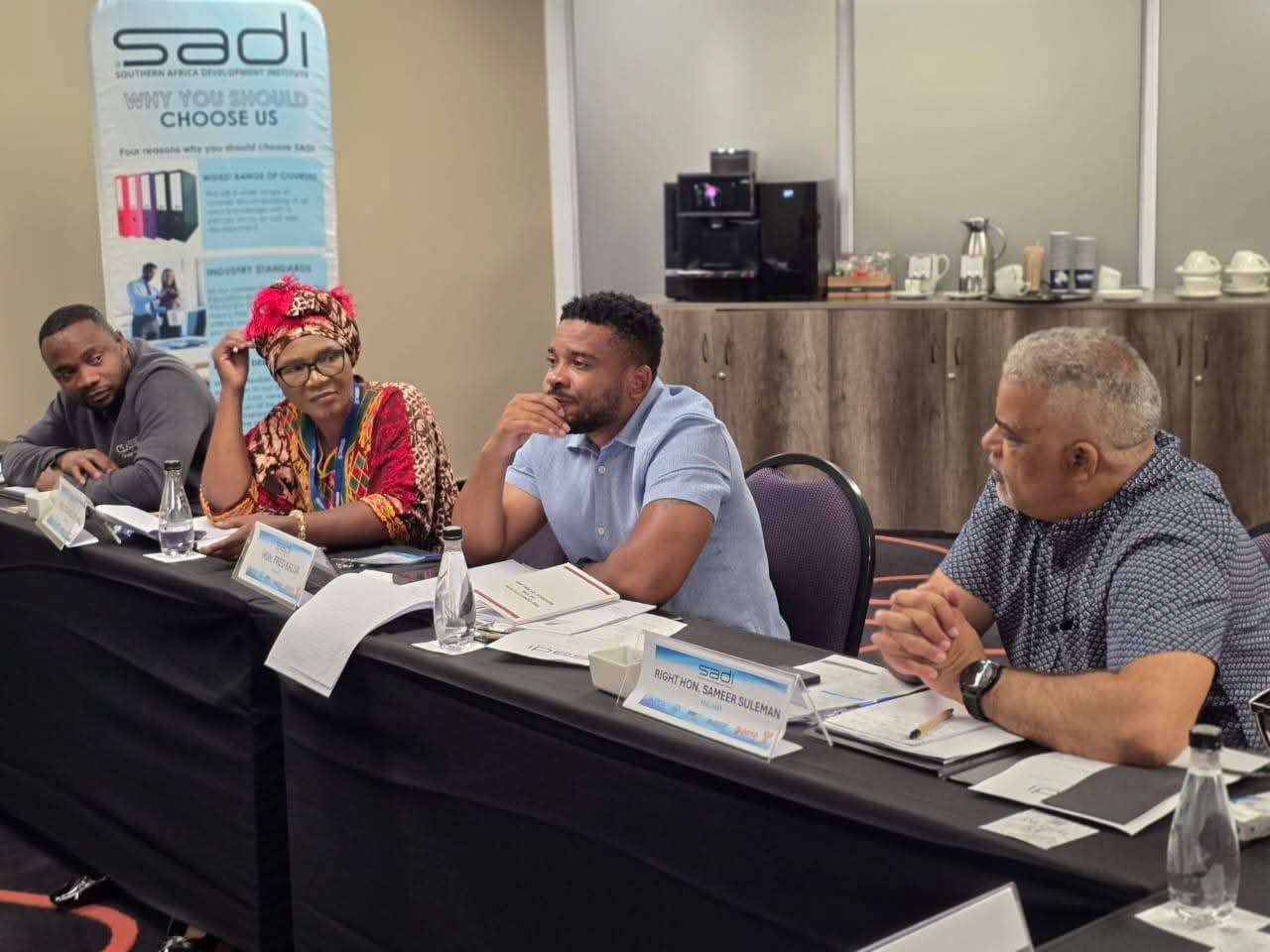
LILONGWE-(MaraviPost)-The Centre for Social Accountability and Transparency (CSAT) has demanded a justification from Malawi Parliament on decision to hold a leadership training programme outside Malawi, arguing the move contradicts the government’s austerity measures.

Kambwandira has said this following an ongoing Leadership Development Programme for the Parliamentary Service Commission in Sandton, South Africa, officially opened by Speaker of Parliament Sameer Suleman on Tuesday.

Kambwandira told Zodiak online that the decision financially irresponsible, saying the training could have been held in Malawi at far lower cost.

However, Parliament spokesperson Ian Mwenye, has described the matter as speculative.

Parliament of Malawi facebook page quotes the Speaker highlighting the training, running from January 22 to 31, will build leadership skills and strengthen competencies and governance principles within Parliament.

The Maravi Post

Senate Funding Vote, ICE Family Detention Protest, Fed Holds Interest Rates

Senate Democrats are threatening a partial government shutdown unless Republicans agree to new limits on immigration enforcement by Friday’s deadline.
A protest at an ICE family detention center in South Texas turned confrontational as demonstrators demanded the release of a five-year-old boy and his father taken from Minnesota and held at the facility hundreds of miles away.
And despite pressure from President Trump to lower interest rates, the Federal Reserve is holding steady to fight lingering inflation and rising prices.

Want more analysis of the most important news of the day, plus a little fun? Subscribe to the Up First newsletter.

Today’s episode of Up First was edited by Kelsey Snell, Susanna Capelouto, Rafael Nam, Mohamad ElBardicy, and Alice Woelfle.

It was produced by Ziad Buchh, Nia Dumas, Ava Pukatch and Christopher Thomas.

We get engineering support from Neisha Heinis. Our technical director is Stacey Abbott.

Our deputy Executive Producer is Kelley Dickens.

(0:00) Introduction
(01:58) Senate Funding Vote
(05:41) ICE Family Detention Protest
(10:28) Fed Holds Interest Rates

Learn more about sponsor message choices: podcastchoices.com/adchoices

NPR Privacy Policy

The Maravi Post

‘Since the Coup, Factory Employers Have Increasingly Worked with the Military to Restrict Organising and Silence Workers’

Active Citizens, Asia-Pacific, Child Labour, Civil Society, Crime & Justice, Economy & Trade, Featured, Gender Violence, Headlines, Health, Human Rights, Labour, TerraViva United Nations

Jan 28 2026 (IPS) –  
CIVICUS speaks to the Business and Human Rights Centre (BHRC) about labour rights abuses in Myanmar’s garment industry since the 2021 military coup.


Myanmar’s garment sector, which employs hundreds of thousands of workers, is in deep crisis. Since the coup, labour protections have collapsed, independent unions have been dismantled and workers who try to organise face intimidation, dismissal and arrest. Inside factories, reports show multiple cases of child labour, forced overtime, harassment, poverty wages and unsafe conditions. At the same time, rising living costs and US tariffs are pushing many workers further into insecurity as factories close and layoffs become more common. Garment workers, most of them women, are trapped between exploitation, repression and a rapidly shrinking industry.


How have conditions inside Myanmar’s garment factories changed since the coup?

Our monitoring between February 2021 and October 2024 shows a sharp rise in both the number and severity of pre-existing labour rights abuses. Since the coup, factory employers have increasingly worked with the military to restrict organising and silence workers. This collaboration has led to threats, arrests and violent attacks against workers. In one case, security forces carried out joint military and police raids on the homes of workers who demanded unpaid wages and limits on overtime.

Factories have also expanded surveillance. Workers report invasive searches, phone confiscation and installation of CCTV inside factories, including near toilets. Employers also force workers to lie during audits. These practices aim to hide abuses and have exacerbated the abuses workers already faced.

What abuses do garment workers suffer in the workplace?

Factories force workers to meet extreme production targets through excessive and often unpaid overtime. Many workers must stay overnight until dawn, often without enough food, water or ventilation, leading to exhaustion and health problems. Managers threaten and abuse workers who refuse to work overtime or fail to meet targets. We have documented a case where supervisors denied workers food and water as punishment for not meeting targets.

Health and safety conditions have worsened. Workers report dirty, insufficient toilets, poor food quality and unsafe drinking water. They’ve also reported blocked emergency exits, inadequate ventilation and leaking roofs that put lives at risk. Factory-provided transport creates further dangers, as they are often overcrowded and suffer frequent road accidents. In one case, a major crash involving a worker shuttle left several workers badly hurt, including one who needed abdominal surgery.

Women workers face particularly severe abuses, including hair-pulling, physical assault, sexual harassment and verbal attacks. In one case, supervisors punched and kicked women workers and called them ‘dogs’.

What happen to workers who try to speak out or organise?

Workers who dare speak out face brutal reprisals. After the military declared 16 labour unions and labour rights organisations illegal, arrests, home raids and surveillance increased, particularly against union leaders and activists linked to the Civil Disobedience Movement. The movement began after the coup and brings together workers who refuse to cooperate with military rule through strikes and other forms of non-violent resistance.

Inside factories, employers threaten and dismiss union leaders on false grounds. In one case, a factory reopened and refused to reinstate union members and publicly humiliated them. Employers have also created Workplace Coordination Committees to replace independent unions, denying workers the right to choose their representatives and silencing their complaints. Prominent union leaders such as Myo Myo Aye have been arrested multiple times simply for continuing to organise.

What should international brands be doing in this context?

Under the United Nations Guiding Principles on Business and Human Rights, brands operating in conflict settings must carry out heightened, conflict-sensitive due diligence and demonstrate, with independent and verifiable evidence, that it works. In Myanmar’s current context, where surveillance and violent repression run through all the supply chain, this standard is exceptionally hard to meet.

Any brand that stays must deliver clear and demonstrable improvements in working conditions. Brands that can’t meet this threshold must carry out a responsible exit, working with workers and their representatives and taking steps to reduce harm, rather than adding to the instability garment workers already face under military rule.

GET IN TOUCH
Website
BlueSky
Facebook
LinkedIn
Twitter
YouTube

SEE ALSO
Myanmar’s junta tightens its grip CIVICUS Lens 12.Dec.2025
Historic wins and hard truths at International Labour Conference CIVICUS Lens 27.Jun.2025
Business and Human Rights Treaty: a decade of struggle for corporate accountability CIVICUS Lens 08.Mar.2025

  Source

Cuts Stall Clinical Trials, Scientists Warn US Risks Losing Its Research Edge

Civil Society, Democracy, Food Systems, Headlines, Health, North America, TerraViva United Nations

Opinion

Science, research, and scientific discoveries provide solutions to the pressing challenges our society faces and can improve people’s lives. Credit: Shutterstock - Science funding cuts are stalling clinical trials and disrupting research training in the US. Scientists argue the way forward is clearer communication, stronger public trust, and durable funding frameworks to protect innovation and lives

Science, research, and scientific discoveries provide solutions to the pressing challenges our society faces and can improve people’s lives. Credit: Shutterstock

URBANA, Illinois, US, Jan 27 2026 (IPS) – Scientists across the U.S., including me, are stressed after a year marked by several changes and challenges, including cuts to science funding that have stalled clinical trials and studies that could improve and save lives. Without funding, scientists worry about how they will support ongoing research and train America’s future workforce, including the next generation of innovators.


In the past, U.S. scientific research has greatly contributed to the country’s economic and military strength, helping the U.S. become a superpower. Through scientific research, several discoveries, innovations, scientific breakthroughs, and technologies, including artificial intelligence, have been realized.

These scientific advances have supported agricultural and healthcare advances, expanding U.S. life expectancy by almost 20 years. From vaccines to early disease detection to novel drugs, the returns on funding science are substantial.

We need science. Moments like the challenges of today call for reflection and offer opportunities to readjust, evolve, and move forward, including finding new ways to engage with the public and policymakers and to fund and conduct science creatively

Science, research, and scientific discoveries, after all, provide solutions to the pressing challenges our society faces and can improve people’s lives. Science guides us through these challenges, inspires us, and unites many curious minds.

We need science. Moments like the challenges of today call for reflection and offer opportunities to readjust, evolve, and move forward, including finding new ways to engage with the public and policymakers and to fund and conduct science creatively.

So how do we adjust? What actions can scientists take now?

First, scientists need to keep showing up and find creative ways to communicate science and the solutions being generated to the public, policymakers, and government administrators.

This includes unpacking how science solutions address the issues everyday people face, including their economic future, and how science advancements align with the challenges people face now.

Communicating science and research outcomes to the broader public, policymakers, and other stakeholders in the science enterprise is not easy. However, scientists have continued to develop creative ways to improve how we communicate science. Specifically, scientists are using multiple formats, including storytelling, infographics, animations, and interactive games and graphics.

These efforts must continue to expand, tapping into the many available ways to communicate science, including podcasts, blogs, social media, radio, TV, and op-eds.

To ensure maximum participation by scientists, universities and research institutions should find innovative ways to incentivize students and scientists to engage with the public and share their research.

Complementing these efforts, universities and research institutions, along with professional societies to which scientists belong, can continue to offer workshops and training to help scientists become better communicators.

For example, between 2008 and 2022, the American Association for the Advancement of Science offered several science communication workshops.

The Entomological Society of America, through its Science Policy and Advocacy initiative, trains and equips its members to advocate more effectively for entomology. Other science communication training opportunities include those offered by the Alan Alda Center for Communicating Science at Stony Brook University, The OpEd Project, the American Geophysical Union, ComSciCon, and COMPASS.

Alongside these efforts, professional societies have also recognized elected officials who have continued to champion the role of science in addressing persistent societal challenges. For example, in 2025, ESA recognized Senator Susan Collins of Maine as the society’s 2025 Champion of Entomology for her continued support for science and research funding and for introducing several bills that are still pending Senate and House votes.

Second, we need to continue strengthening public and policymakers’ trust in science by improving peer review processes and ensuring that science remains transparent, rigorous, and repeatable, and that the credibility of published science remains intact. In recent years, there has been a rapid increase in the number of paper mills producing fraudulent scientific papers. These science integrity challenges undermine scientific enterprises and create distrust among the public.

Strengthening public trust in science and scientists can take many forms, including convening town halls and public forums. Other creative ways include involving the public in citizen science research and fieldwork, allowing the public to be involved from the outset, including building the research project goals and a compelling justification for why the research question being addressed is important.

Engaging the public and involving them in shaping the scientific questions scientists pursue can not only strengthen public trust in science but also enrich outcomes by incorporating local or experiential knowledge. In doing so, public engagement helps ensure that the solutions generated by these shared projects address and solve challenges that are grounded, relevant, and meaningful to communities and the public we aim to serve.

For example, in my research on plant-microbe-insect interactions, which aims to help feed a growing population sustainably amid changing environments and to strengthen plant resilience against biotic and abiotic stressors such as insects, drought, and flooding, collaborating with farmers can directly shape the pests and crops I study and guide the questions I pursue. By doing so, the resulting research insights become responsive to the current agricultural challenges American farmers face.

Third and most importantly, there is an urgent need to develop a long-term vision and establish unbreakable funding frameworks for science to ensure that the gains we have made so far are preserved. Scientists, national academies of science, government administrators, elected officials, policymakers, the military, industry, NGOs, the public, think tanks, foundations, and all stakeholders in the science enterprise must work together to chart a new path forward.

Without bending back too far, scientists can stop, reflect, and find their path forward.

It is necessary to bring together all stakeholders in the science enterprise to create new science funding frameworks that are both acceptable and reasonable. Otherwise, the value of science and research, along with the gains made to date, could be lost.

It’s time for scientists to extend the olive branch, redouble our efforts to communicate science to society, and chart a path forward that brings everyone on board.

Esther Ngumbi, PhD is Assistant Professor, Department of Entomology, African American Studies Department, University of Illinois at Urbana-Champaign

  Source

Malawi students challenged to join inter-university debates to drive national transformation

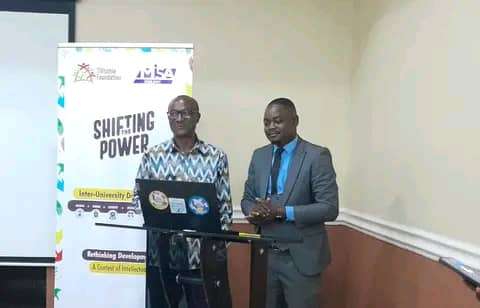
BLANTYRE-(MaraviPost)-The Media Institute of Southern Africa (MISA) Malawi has called on university students to participate in the 2026 Shift the Power inter-university debates, aimed at generating ideas to drive national transformation.

Speaking with Maravipost, Golden Matonga, Chairperson for MISA Malawi, said the debates offer young people a vital platform to propose practical solutions to some of the country’s most pressing issues.

“The debates are an opportunity for students to challenge dominant development narratives and promote locally driven solutions to Malawi’s development challenges,” Matonga said.

The participating institutions include Malawi University of Science and Technology (MUST), University of Malawi (UNIMA), Lilongwe University of Agriculture and Natural Resources (LUANAR), Mzuzu University, Malawi University of Business and Applied Sciences (MUBAS), and the Catholic University of Malawi.

Robert White, Chief Executive Officer for Tilitonse Foundation, expressed hope that students will take part enthusiastically in the debates scheduled for February 2026.

“The winning teams will go on to compete with youth from Zambia and Ghana, providing a unique opportunity for our students to showcase their skills and ideas on a regional stage,” White said.

The debates are part of efforts to empower young Malawians to contribute to the country’s development and promote critical thinking, creativity, and problem-solving skills.

MISA Malawi and Tilitonse Foundation are partnering to organize the event, which is expected to bring together students from across the country to engage in discussions on key development issues affecting Malawi.

The Maravi Post