Over 25,500 Palestinians Killed: Absence of Accountability is Nothing Short of Shameful

Armed Conflicts, Civil Society, Crime & Justice, Democracy, Headlines, Human Rights, IPS UN: Inside the Glasshouse, Middle East & North Africa, TerraViva United Nations
Opinion

Over 25,500 Palestinians Killed: Absence of Accountability is Nothing Short of Shameful

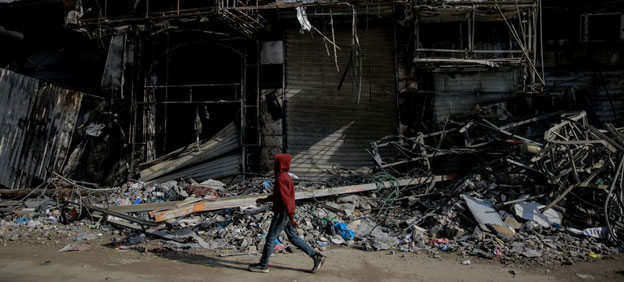
A boy walks through a destroyed neighbourhood in Gaza City. Credit: UNICEF/Omar Al-Qattaa

 
UN High Commissioner for Human Rights, Volker Türk’s remarks to the Interactive Dialogue on the human rights situation in the Occupied Palestinian Territory, at the 61st session of the Human Rights Council in Geneva on February 26 2026.

GENEVA, Feb 27 2026 (IPS) – The situation in the Occupied Palestinian Territory is a human-made disaster.

The report before you sets out events between 1 November 2024 and 31 October 2025 that show Israel’s utter disregard for human rights in Gaza and the West Bank, and the serious violations also committed by Hamas and other Palestinian armed groups.


The evidence gathered by my Office reveals a consistent pattern of gross violations and abuses of human rights, serious violations of international humanitarian law and atrocity crimes – that remain unpunished.

Israel’s continued attacks on residential buildings and makeshift tents, destroying entire neighbourhoods, caused mass civilian deaths. More than 25,500 Palestinians were killed, including entire families, and more than 68,800 were injured during the reporting period.

Among those killed were many Palestinian journalists. My Office has verified that 292 were killed in Israeli operations since 7 October 2023.

Israel’s militarization of humanitarian aid, through the Gaza Humanitarian Foundation, also led to large-scale killings. Between late May and 8 October 2025, my Office recorded 2,435 Palestinians killed by the Israeli military near food collection points — mostly young men and boys.

In August 2025, famine was declared in Gaza, affecting more than half a million people. According to the Palestinian Ministry of Health, at least 463 Palestinians, including 157 children, died from starvation. This was the direct result of Israel’s blocking of humanitarian aid and other deliberate actions.
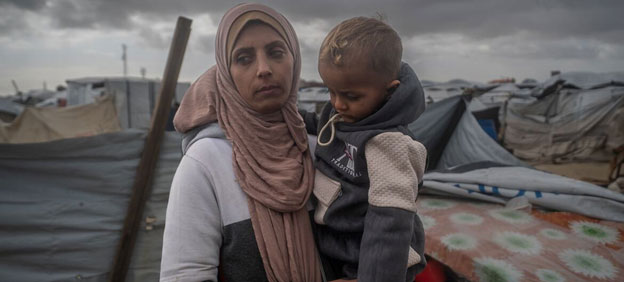
A woman holds a child as a storm approaches Khan Younis in Gaza. Credit: WFP/Maxime Le Lijour

Israeli forces continued to kill humanitarian and medical personnel during this period, and to make mass arrests of Palestinians across Gaza and the West Bank. These arrests often amounted to arbitrary detention, and included enforced disappearances.

Since 7 October 2023, my Office has verified that at least 89 Palestinians have died in Israeli custody. Torture and other ill-treatment of Palestinians in Israeli detention remain widespread.

Israeli operations destroyed some 80 percent of civilian infrastructure in Gaza – including homes, schools, hospitals, cultural sites, and water treatment plants.

During the reporting period, Israel continued to forcibly displace Palestinians, into ever-shrinking areas of the Gaza strip. Over the course of 2025, Hamas and other Palestinian armed groups continued to hold hostages in blatant violation of international law.

Fifty-one hostages who were seized on 7 October 2023 were returned to their loved ones. On their release, the hostages recounted their traumatic ordeals, including sexual and gender-based violence, torture, beating, and prolonged confinement underground.

In June, there were reports that armed men, allegedly affiliated with Hamas, summarily executed 12 Palestinians associated with the Gaza Humanitarian Foundation. In the West Bank, including East Jerusalem, Israeli security forces continued to launch airstrikes and use unlawful force, killing hundreds of Palestinians.

In January 2025, Israeli forces launched Operation Iron Wall in the northern West Bank, which is still ongoing. So far, they have forced 32,000 Palestinians from their homes.

Meanwhile, Palestinian security forces increased the use of unnecessary or disproportionate force, resulting in the unlawful killing of at least 8 Palestinians. They also arbitrarily detained and ill-treated more than 300 Palestinians.

The ceasefire of 11 October 2025 brought some measure of relief. But we must not mistake this for peace or safety. People are still dying in Gaza from Israeli fire, cold, hunger, and treatable diseases and injuries.

Since the ceasefire, Israeli attacks in Gaza have killed more than 600 Palestinians and injured more than 1,600, according to the Palestinian Ministry of Health. Anywhere else, this would be considered a major crisis.

My Office has also recorded at least 80 reported killings of Palestinians by Hamas since the ceasefire, mostly by summary executions and in clashes with rival factions. Gaza now has the highest number of amputee children per capita in the world.

Israel continues to destroy civilian infrastructure and forcibly transfer Palestinians within the Occupied Palestinian Territory. The humanitarian situation is still extremely precarious, as Israel continues to impede the humanitarian community’s ability to bring in food, shelter, fuel, medical supplies, and other essential items.

Since the ceasefire, at least 11 children have died from hypothermia. I deplore Israel’s decision at the end of last year to suspend some 37 aid groups from Gaza. I also deplore the ban on UNRWA operations and the demolition of its premises in East Jerusalem in blatant violation of international law.

Today, the situation in the West Bank is particularly disturbing. Recent Israeli measures expanding land expropriation consolidate the annexation of Palestinian territory. This is in flagrant breach of the Palestinian right to self-determination.

Israeli security forces continue to use unnecessary and disproportionate force, and have killed 1,020 Palestinians since 7 October 2023, according to figures verified by my Office.

Taken together, Israel’s actions appear aimed at making a permanent demographic change in Gaza and the West Bank, raising concerns about ethnic cleansing.

The absence of accountability for the egregious violations committed is nothing short of shameful. Instead, there are efforts to obstruct accountability. The unilateral sanctions imposed on 11 judges and prosecutors of the International Criminal Court are completely unacceptable.

As are those imposed on the Special Rapporteur on the Occupied Palestinian Territory, appointed by this Council. Time and again, I stand before this Council and brief on the litany of violations. I make recommendations, plead for accountability, and for respect for international law.

I do so again today, because it is crucial. The ongoing violations of international law in Gaza must stop. I need to issue a stark warning about the rapidly deteriorating situation in the West Bank. Israel must end its unlawful occupation, in line with the conclusion of the International Court of Justice. And Israel must lift undue restrictions on the flow of humanitarian aid.

We have thought a lot about the contribution my Office can make to shift the trajectory of this awful situation. It may seem incongruous or inappropriate to talk about reconstruction as the suffering continues unabated.

But we have a responsibility to think about what is needed to break this senseless cycle. To talk about lasting peace. Human rights have been crushed in the Occupied Palestinian Territory.

Any realistic effort to rebuild and move toward lasting stability will have to be anchored in human rights. And this is urgent. The reconstruction of Gaza is not a logistics exercise.

Rebuilding Gaza and restoring human rights throughout the Occupied Palestinian Territory requires focusing on what people have lived through over many generations and cutting through the contested narratives.

I see five elements that can help us get there.

First, there need to be meaningful steps towards accountability for all human rights violations and abuses. My Office’s reports form part of this record. Continued monitoring and reporting of the human rights situation is critical.

Second, there must be the long-overdue realization of Palestinians’ right to self-determination, including full responsibility for their own governance and control over their land and resources. Palestinians must be able to shape their own futures and lead reconstruction efforts in Gaza.

Third, security is more than weapons and walls. Unequal treatment is feeding grievances. People can only feel safe when they have faith in equal justice and the rule of law. All segregationist laws and policies that resemble the kind of apartheid system we have seen before must be dismantled.

Fourth, Palestinian and Israeli civil society organizations and human rights defenders that are trusted by their communities need to be central partners in safeguarding human rights going forward. They need the support and protection of the international community.

And finally, we need understanding and healing among Palestinian communities, and between Palestinians and Israelis. This means working to undo the dehumanization which has fuelled this decades-long conflict.

The voices of peace movements – Palestinian, Israeli, and those that bring together Palestinians and Israelis – must be heard and heeded. This can strengthen the constituency for dialogue and increase the space for shared narratives.

The international community needs to step into the moral vacuum and seize the moment – not to return to the pre-October 2023 status quo, but to finally address the underlying causes of this conflict.

Member States need to pursue a path to sustainable peace — one in which Palestine and Israel live side by side in equal dignity and rights, in line with UN resolutions and international law.

IPS UN Bureau
  Source

Will Palestine Preside Over the Next UN General Assembly?

Civil Society, Featured, Global, Global Governance, Headlines, International Justice, IPS UN: Inside the Glasshouse, TerraViva United Nations

Will Palestine Preside Over the Next UN General Assembly?

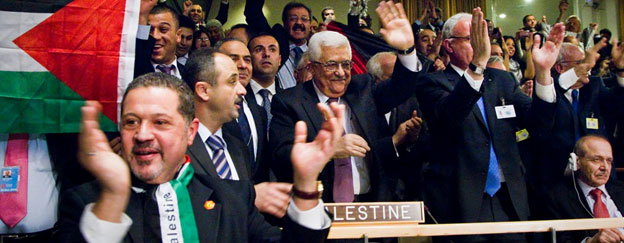
The General Assembly adopted a resolution in 2012 granting Palestine the status of non-member observer State in the United Nations. Credit: UN Photo/Rick Bajornas

UNITED NATIONS, Feb 26 2026 (IPS) – The 193-member General Assembly, the highest-ranking policy-making body at the United Nations, is most likely to elect Palestine as its next President in an unprecedented move voting for a “non-member observer state”—a state deprived of a country to represent.


The Secretariat has received three nominations for the position of President of the General Assembly beginning mid-September. In accordance with the established regional rotation, the President of the 81st session will be elected from the Asia-Pacific Group.

The election will be held on June 2, with three nominations so far: Md. Touhid Hossain (Bangladesh), Andreas S. Kakouris (Cyprus) and Riyad Mansour (Palestine).

According to geographical rotation, it will be the turn of the Asia-Pacific Group to nominate a candidate– with the final election by the General Assembly.

The current front-runner, according to diplomatic sources, is Palestine. In virtually all UN resolutions relating to Palestine, it has continued to receive an overwhelming majority of votes in the General Assembly.

The political support for Palestine among member states has always remained constantly strong. And the election of Palestine will also defy a hostile White House.

In November 2012, the General Assembly voted to upgrade Palestine to a “non-member observer state” with a majority of 138 votes in favor, 9 against, and 41 abstentions.

    • Votes in Favor (138): Supported by a majority of UN member states.
    • Votes Against (9): Canada, Czech Republic, Israel, Marshall Islands, Micronesia (Federated States of), Nauru, Palau, Panama, and the United States.
    • Abstentions (41): Countries that did not vote for or against.

Last December the General Assembly overwhelmingly adopted a draft resolution reaffirming the Palestinian people’s right to self-determination, including the right to an independent State of Palestine.

The draft resolution was approved by a majority of 164 member states (out of 193), with eight countries voting against it, namely Israel, the US, Micronesia, Argentina, Paraguay, Papua New Guinea, Palau, and Nauru.

Nine countries abstained: Ecuador, Togo, Tonga, Panama, Fiji, Cameroon, the Marshall Islands, Samoa, and South Sudan.

Dr Stephen Zunes, Professor of Politics at the University of San Francisco and director of Middle Eastern Studies, told IPS a broad international consensus in support for the establishment of a viable independent Palestinian state in the occupied West Bank and Gaza, and naming a Palestinian as the next president of the UN General Assembly would send a strong message to the Israeli government and its supporters in Washington that the State of Palestine, now recognized by 164 of the UN’s 193 states, should be treated like any other nation.

It would also underscore that Palestine is represented by the Fatah-led Palestine Authority, not by Hamas, which forcibly seized power in Gaza in 2007, he said.

“If Palestine is elected to the General Assembly presidency, the position would likely go to Riyad Mansour, a U.S.-educated diplomat who currently serves as the country’s UN ambassador”.

Mansour, he pointed out, has spent most of his life in the United States, has worked with Youth4Peace and other groups promoting peacebuilding, has no association with terrorism, and is generally considered a moderate.

“Nevertheless, his selection will likely result in an angry backlash from Washington, which opposes any formal role by anyone representing Palestine”.

In 2017, during his first term, the Trump administration blocked the appointment of former prime minister Salam Fayyad, also a well-respected moderate and reformer, from leading the U.N. political mission in Libya to try to end that country’s civil war simply because he was Palestinian, declared Dr Zunes.

Dr Ramzy Baroud, a Palestinian-American author and editor of The Palestine Chronicle, told IPS
two international campaigns are unfolding simultaneously: a US-led effort aimed at legitimizing Israel while it is still actively attempting to exterminate the Palestinian people, and a General Assembly–championed track aimed at legitimizing Palestine, Palestinian rights, and the Palestinian struggle.

The push to elect Palestine as the next UN General Assembly president — though the State of Palestine remains an observing member and lacks actual sovereignty on the ground — is taking place against this stark backdrop: one campaign normalizing and shielding a genocidal state, the other seeking to affirm the rights and political standing of a dispossessed nation, he pointed out.

“Nothing could be more immoral than Washington’s attempt to rehabilitate Israel diplomatically amid genocide. And nothing could be more just than the effort by Palestine’s allies to anchor Palestinian rights within international legitimacy” he said..

Yet a difficult question remains: while the US is gradually chipping away at Israel’s isolation, is much of the international community offering Palestinians little more than symbolic victories?, he noted.

“If the legitimization of Palestine at the General Assembly is to move beyond symbolism, it must translate into concrete recognition of Palestinian territorial rights, sovereignty, and freedom. Legitimacy must not remain rhetorical; it must become political and material,” Dr Baroud argued.

“This requires that the UN General Assembly states that support Palestine in international forums carry that support onto the ground — by isolating Israel diplomatically, severing ties, imposing sanctions, and adopting meaningful accountability measures. While some states have taken such steps, others continue to pursue a precarious “balance,” appeasing Washington and Tel Aviv while paying lip service to Palestine.”

Palestinians are winning what Richard Falk, the former UN Special Rapporteur on Palestine, has called the legitimacy war. But legitimacy as an intellectual or moral category is not enough. At this historical juncture, it must be transformed into enforceable political reality — into sovereignty, protection, and freedom on the ground, said Dr Baroud.

“We hope that the continued centering of Palestine at the UN and across global institutions strengthens the growing current of solidarity worldwide. More importantly, we hope that symbolic recognition will soon give way to decisive and tangible action,” he declared.

Samir Sanbar, a former UN Assistant Secretary-General and head of the Department of Public Information, told IPS the Inalianble rights of the Palestinian people, confirmed repeatedly by the General Assembly, would offer an opportunity for the Permanent Observer Mission to offer a candidate for the President of the General asembly.

Ambassador Riyad Mansour has served at the United Nations post longer than many current “Permanent Representatives” and would most likely attract wide support, particularly at these challenging times with the tragic humanitarian situation in Gaza, he said.

IPS UN Bureau Report

  Source

Culture to Do: Feb. 25, 2026

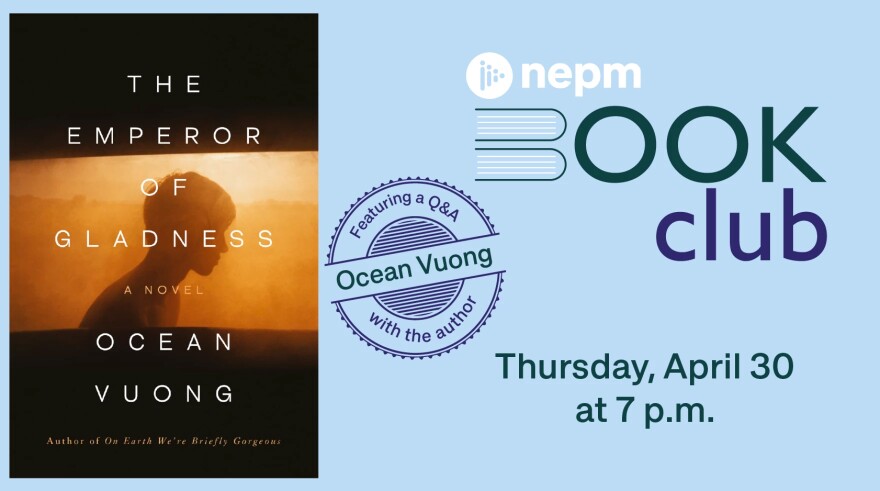
NEPM Book Club: The Emperor of Gladness
Thursday, April 30 at 7 p.m. on Zoom
Author Ocean Vuong will be joining us at the next NEPM Book Club virtual meet-up to talk about his second novel, The Emperor of Gladness. It tells the story of 19-year-old Hai who, on a late summer evening in a post-industrial Connecticut town, stands on the edge of a bridge in pelting rain, ready to jump, when he hears someone shout across the river. The voice belongs to Grazina, an elderly widow succumbing to dementia, who convinces him to take another path. Bereft and out of options, he quickly becomes her caretaker.

Corey Harris
Bombyx, Florence
Friday, Feb. 27 at 7 p.m.
Corey Harris is a guitarist, vocalist, songwriter and band leader who has carved out his own niche in blues. He began his career as a New Orleans street singer. In his early twenties he lived in Cameroon, West Africa for a year. In 2007, he was awarded a MacArthur Fellowship — commonly referred to as a “genius award.” Insurrection Blues, Harris’ 20th album, is full of topical relevance, yet steeped in tradition and informed by his musical explorations over the decades. Recorded in Italy under shutdown conditions, the album returns to the solo acoustic format that’s been his base since his early days as a street singer.

Smith College Orchestra Spring Concert
Sweeney Concert Hall, Smith College
Friday, Feb. 27 at 7:30 p.m.
The Smith College Orchestra presents a preview concert of its forthcoming performance at the College Orchestra Directors Association (CODA) national conference at the University of Rhode Island. Conducted by Jonathan Hirsh, the program features 2026 Concerto Competition winner Olivia Hwang ‘28 performing the first movement of Piano Concerto in A minor, op. 54 by Robert Schumann. Also works by Brahms, Valerie Coleman and Gabriela Ortiz.

Mount Holyoke Symphony Orchestra: Tr-ans-for-mat-ions
Abbey Memorial Chapel, Mount Holyoke College
Friday, Feb. 27 at 8 p.m.
The Mount Holyoke Symphony Orchestra, welcomes lyric baritone Lucas Bouk, for a program of transformations, including Peteris’ Vasks haunting Symphony No.1 focusing on global change and Bedrich Smetana’s iconic tone poem depicting the Vltava or the Moldau river as it flows through the Czech Republic. Lucas Bouk made his Lincoln Center debut with New York City Opera in the World Premiere of Ian Bell and Mark Campbell’s Stonewall in 2019. Lucas is a regular collaborator with the composer-librettist team Felix Jarrar and Bea Goodwin. In 2018, the duo created the mezzo-soprano role of Tristan Tzara in Tabula Rasa to celebrate Lucas’ coming out as a transgender man.

Paul Taylor Dance Company
Tillis Performance Hall, UMass
Friday, Feb. 27 at 8 p.m.
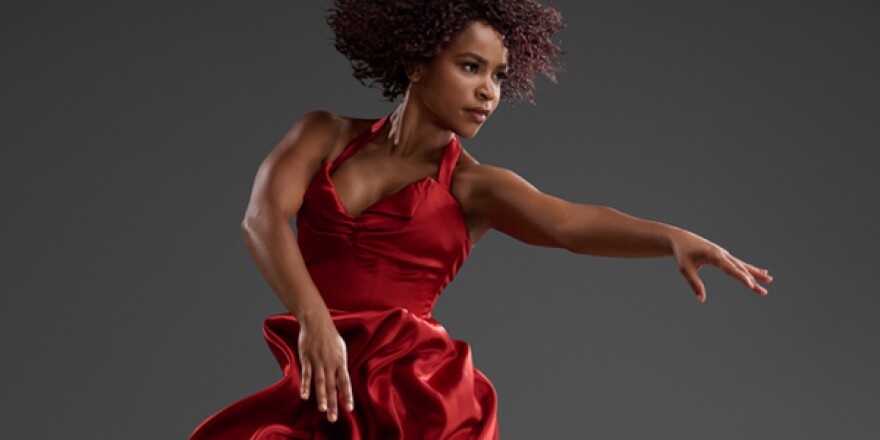
The Paul Taylor Dance Company has been a presence in Fine Arts Center seasons since 1978. One of the most revered and dynamic ensembles in modern dance, the company has been innovating and transforming dance since 1954. For this performance, the company will bring us a classic work by its founder, Speaking in Tongues (1988), along with How Love Sounds, a 2025 commission by Hope Boykin, whose celebrated career as a dancer includes twenty years with the Alvin Ailey American Dance Theater.

Norman Rockwell: The Human Touch
Norman Rockwell Museum, Stockbridge
On view Saturday, Feb. 28 – Monday, May 25
Beneath their familiar narratives, Rockwell’s illustrations are grounded in empathy. His art established a shared sense of national identity that was embraced by audiences who shared his vision and recognized their own aspirations in the stories he chose to tell. At the same time, his work acknowledges life’s many contradictions. The artworks in this exhibition highlight Rockwell’s enduring commitment to portraying people not as heroes or villains, but as individuals rich with emotion and inner life.

Policy Playhouse Playwriting & Film Festival
Smith College’s Julia Child Campus Center, Smith College
Saturday, Feb. 28 from 2 – 5 p.m.
Founded by Mary Clare Michael, The Policy Playhouse is a nonprofit arts organization dedicated to connecting policymakers and constituents through the power of storytelling and performance. The festival will bring together 22 artists, community members, and local civic leaders to explore pressing policy issues through short plays, films, and a live public forum. The event will conclude with a community reception and artist awards.

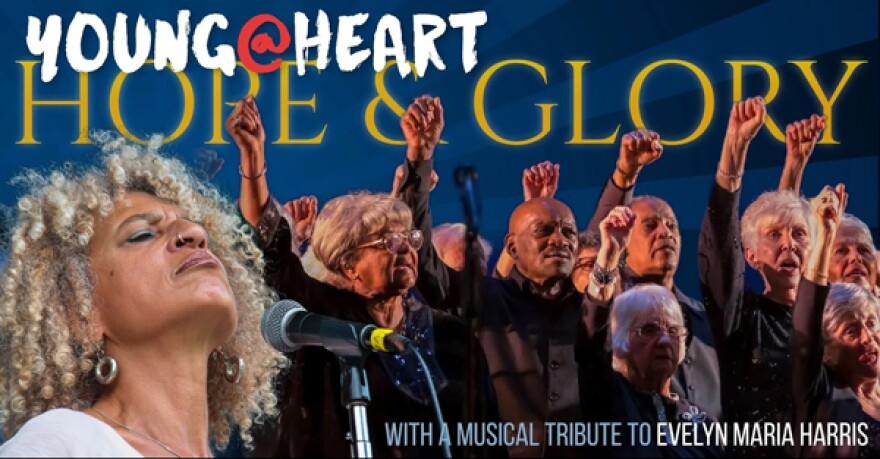
Young@Heart: Hope & Glory
A Tribute to Evelyn Harris
Hope Center for the Arts, Springfield
Saturday, Feb. 28 at 4 p.m.
The Young@Heart Chorus returns to Springfield for a special tribute to the life and legacy of Evelyn Harris, whose artistry and activism left an indelible mark on our region, the nation, and the world. The program will feature special guest appearances by Sweet Honey in the Rock and Yasmeen Betty Williams. Students and faculty of the HOPE Center will perform alongside Young@Heart, embodying the Center’s mission to foster creativity, mentorship, and shared purpose through the arts.

Mtali Banda
De La Luz, Holyoke
Saturday, Feb. 28 at 7 p.m.
A native of Amherst, Mtali Banda is the son of a Malawian refugee father and an African American mother. His work uses performance and autoethnography to explore Black history in the global African diaspora. His use of musical composition and personal narrative help to bridge Black experiences throughout the diaspora, with an emphasis on Malawian history.

Cochemea
MASS MoCA, North Adams
Saturday, Feb. 28 at 8 p.m.
This performance is part of MASS MoCA’s series highlighting some of the best and brightest in contemporary jazz. For over 25 years, multi-instrumentalist and composer Cochemea has built a distinct career as a soloist, section player, and composer/arranger, collaborating with artists across genres — from his long tenure with Sharon Jones & the Dap-Kings to work with Kevin Morby, Run The Jewels, Jon Batiste, Amy Winehouse, The Roots, Archie Shepp, Mark Ronson, and Quincy Jones, among others.

Ms. Lisa Fischer & Grand Baton
Iron Horse, Northampton
Sunday, March 1 at 7 p.m.
Ms. Lisa Fischer spent much of her career as an elite backup singer for artists such as Luther Vandross, the Rolling Stones, Sting, Tina Turner or Nine Inch Nails. But when her story was featured in the 2013 documentary “20 Feet From Stardom,” Fischer experienced a course-changing epiphany. “The film gave me a chance to take stock and realize I could start defining my own path.” Seizing the moment, Fischer partnered with string wizard and arranger JC Maillard’s Grand Baton, a group capable of following her in just about any musical direction.

UMass Symphony Orchestra Concerto Winners 2026
Tillis Performance Hall
Monday, March 2 at 7:30 p.m.
UMass Director of Orchestral Studies Gonzalo Alexander Hidalgo Ardila will conduct a program featuring three winners from the UMass 2025-26 concerto competition. Steven Hu will play the third movement from Elgar’s Cello Concerto; Rishi Ramsingh will plat the first movement of Prokofiev’s Piano Concerto No. 2; Jonathan Maginnis will play Debussy’s Rhapsody for Clarinet.

Powerful Pairings—A Conversation with Claudia Friddell and Kip Wilson
Kittredge Center, Holyoke Community College
Wednesday, March 4 at 6:30 p.m.
The Massachusetts Center for the Book presents an engaging, behind-the-scenes conversation with acclaimed YA and middle grade authors Claudia Friddell and Kip Wilson. They’ll explore their latest books, show how they research and build new stories, and share how their experiences as educators continue to shape their work. It promises to be a lively evening of history, creativity, and inspiration.

Madison Curbelo
The Drake, Amherst
Thursday, March 5 at 8 p.m.
Madison Curbelo is a singer songwriter with Latin roots based in Massachusetts. Her warm vocals and storytelling earned her a spot in the Top 9 of Season 25 of The Voice, Madison currently tours across the U.S. with her band, connecting with audiences in venues ranging from intimate rooms to large outdoor stages. Influenced by Olivia Dean, Stevie Nicks, Bruno Mars, and Paul Simon, Madison writes songs that feel like scenes in motion, drawing listeners into her world through clear, intentional lyrics.

A City in Flux: Reflecting on Venice
Smith College Museum of Arts
On View through Sunday March 22
This installation celebrates the enduring but ever-changing allure of Venice in art. Curated by undergraduate students at the University of Massachusetts Amherst, it draws from the Five Colleges’ vast collections of historic and contemporary drawings, photographs, prints, and paintings. Other exhibits to check out: “Don’t Mind if I Do,” a collaborative experiment demonstrating how temporary changes in power structures create pathways of access; “Crafting Worlds: Japanese Decorative Arts from the 18th through 21st Centuries; and more.

COMING SOON

Easthampton Theater Company: Enchanted April
Williston Theater, Easthampton
Saturday, March 14 – Sunday, March 22
In this his heartwarming and witty play based on the beloved novel by Elizabeth von Arnim, four very different women rediscover laughter, hope and their own voices during an impulsive seaside getaway. Directed by Gilana Chelimsky, this production is packed with regional talent on and behind the stage.

Valley Classical: “A Far Cry” Chamber Orchestra
Sweeney Hall, Smith College
Saturday, March 21 at 3 p.m.
A Far Cry is known for its innovative and compelling programs, stellar communication, and a democratic process that is the group’s north star. The March 21 program includess “SAY,” Shelley Washington’s searing response to being of mixed race in contemporary America; Aaron Copland’s Appalachian Spring in its original chamber scoring; and an 1811 string sextet arrangement of Beethoven’s 6th symphony, “Pastoral,” re-expanded for the full string orchestra.

Hayato Sumino
Bowker Auditorium, UMass
Thursday, March 26 at 7:30 p.m.
Hayato Sumino is a preternaturally talented risk taker who brings both charm and humor to his work. He grew up in Tokyo, started playing piano at age three. At twenty-three, he won the Grand Prix at the PTNA Piano Competition. At twenty-four, he won third prize at the Lyon International Piano Competition. And at twenty-six, he was semi-finalist in the International Chopin Piano Competition, drawing a record 45,000 online viewers with his second-round performance.

Back Porch Festival
Northampton
Friday, March 27 – Sunday March 29
The Back Porch Festival is returning for its 12th year. The “Ramble Pass” gets you access to 50+ artists performing in venues all over downtown Northampton over three days. And, every night there’s a ticketed show at the Academy of Music: Bertha: Grateful Drag on Friday, the Bluegrass Spectacular on Saturday, and I’m with Her on Sunday.

Yagódy
Bombyx, Florence
Thursday, April 16 at 7 p.m.
The Ukrainian band Yagódy was founded in 2016 in Lviv to revive and reinterpret folk songs. In 2020 they released their debut album along with a music video for the song “Kalyna-Malyna.” The ensemble consists of three vocalists, an accordionist, a bass guitarist, a drummer, and a cimbalist.

NEPM’s Smart & Funny People: An Evening with Fran Lebowitz
Academy of Music, Northampton
Saturday, April 18, at 8 p.m.
NEPM is rolling out a new event series called “NEPM’s Smart & Funny People.” In a cultural landscape filled with endless pundits and talking heads, Fran Lebowitz stands out as one of our most insightful social commentators. Lebowitz’s essays and interviews offer her acerbic views on current events and the media — as well as pet peeves including tourists, baggage-claim areas, after-shave lotion, adults who roller skate, children who speak French, or anyone who is unduly tan. Now, she’s one of NEPM’s Smart & Funny People.

Source

The Venice Biennale Announces 111 Artists for Its 2026 Edition, Koyo Kouoh’s “In Minor Keys”

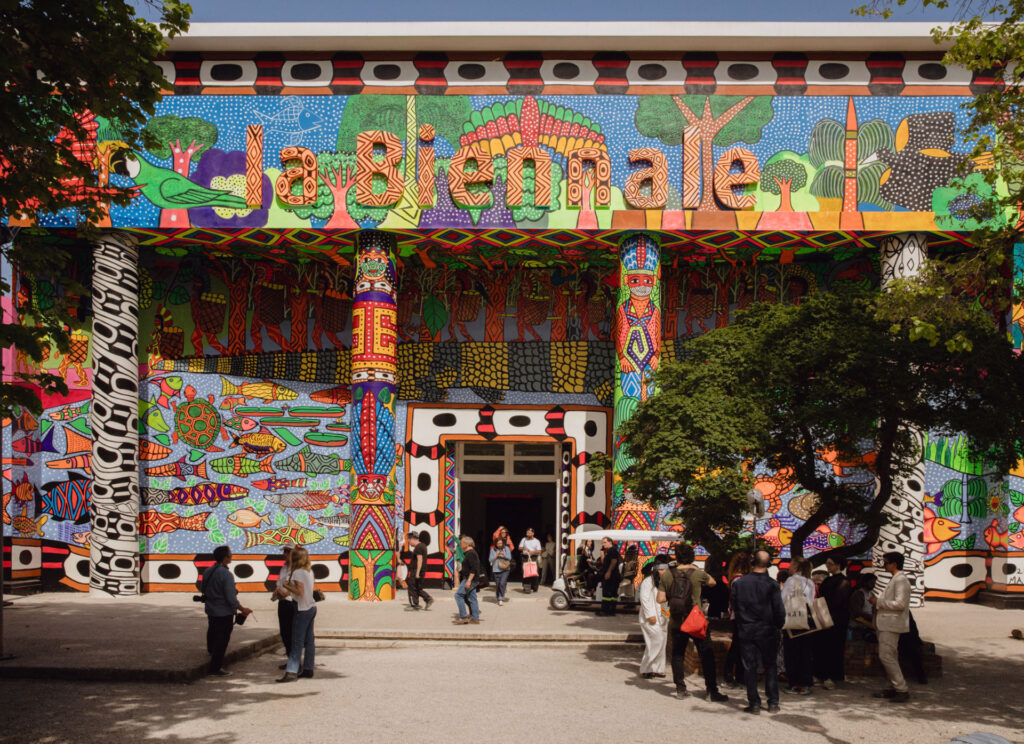
Exterior of a building covered by a colorful wall painting
Kouoh’s framework proposed a Biennale that “refuses orchestral bombast,” inviting viewers to slow down and inhabit moments of contemplation. Photo by AVZ. Courtesy of La Biennale di Venezia.

After the sudden and tragic passing of curator Koyo Kouoh, it was unclear whether the 2026 Venice Biennale would go ahead and, if so, whether it would still reflect her vision. Ultimately, the organizing body chose to move ahead with Kouoh’s curatorial concept “as she designed it, as she imagined it,” president Pietrangelo Buttafuoco said at a May 2025 press conference. Today (Feb. 25), La Biennale announced the 111 artists who will take part in the 61st edition of the longest-running and most important international exhibition. The list is truly global and expansive, with names well known in international art circles, particularly within the institutional system, alongside more regionally rooted pioneers. Yet the former are notably more prominently represented, suggesting “In Minor Keys” will lean less toward marginal or historically overlooked voices outside the system and more firmly toward the contemporary art discourse of the present moment.

While the selection leans visibly toward institutional, socially engaged and research-based practices, many of the included artists are represented by established galleries and maintain an active presence in the commercial ecosystem. And although throughout her career Kouoh tirelessly championed African artists—becoming the first woman from the continent selected to curate the Venice Biennale—the list of 2026 Biennale artists reflects a more balanced and globally distributed constellation of voices, positioning the continent as an integral presence within a wider interconnected field of discourse addressing shared concerns. As for historical figures, the Biennale will celebrate the rebel genius of Marcel Duchamp in what is shaping up to be an especially high-profile year for the avant-garde artist, with major surveys scheduled at the Museum of Modern Art and the Philadelphia Museum of Art.

The 2026 Venice Biennale artists will each respond to Kouoh’s “In Minor Keys”—a concept carried forward by the multicultural team of advisors who worked closely with her from the outset, including curators Gabe Beckhurst Feijoo, Marie Hélène Pereira and Rasha Salti, critic and editor-in-chief Siddhartha Mitter and assistant Rory Tsapayi. Kouoh had already submitted a full and comprehensive proposal before her death, writing in her curatorial essay that the exhibition she envisioned was going to be “a polyphonous assembly of art… convening and communing in convivial collectivity, beaming across the void of alienation and the crackle of conflict.” She also clarified that the 2026 Biennale would be “neither a litany of commentary on world events, nor an escape from compounding or continuously intersecting crises.”

What to expect from “In Minor Keys”

As the musically inspired title suggests, the curatorial framework for the upcoming edition of the biennial promises intimate and introspective moments of listening, contemplation and exchange, encouraging a form of embodied transpersonal understanding capable of countering the overwhelming overstimulation and saturation of our time. According to Rasha Salti, Kouoh envisioned a Biennale that “refuses orchestral bombast,” rejecting both the grandiosity of major global art events and society’s performative behaviors in favor of a call to decelerate—to “take a deep breath. Exhale. Drop your shoulders. And close your eyes.”

“The artists are channels to the minor keys,” said curatorial team member Rory Tsapayi during the announcement press conference, describing them as a collective score composed of practices operating at the boundaries of form. “These are artists whose practices seamlessly bleed into society.” Gabe Beckhurst Feijoo emphasized that the structure is “not abstractly determined… it is not organised in sections but in respect to undercurrent priorities.” The exhibition will unfold across thematic strands spanning the Arsenale and the Giardini: Shrines, Procession/Invocation, Schools, Enchantment, Physical and Spiritual Rest, the Threshold and the Creole Garden. In the Central Pavilion, “The Shrines” will create a suspended, sanctuary-like space, paying tribute to the late Senegalese artist Issa Samb and the late African American artist Beverly Buchanan.

Artists whose work resonates with the motif of Procession/Invocation include Nick Cave, Alvaro Barrington, Daniel Lind-Ramos, Ebony G. Patterson, Johannes Phokela, Tammy Nguyen and Kenya’s Kaloki Nyamai. “Visitors are invited to become part of these assemblies,” said curator Marie Hélène Pereira, underscoring the participatory dimension of this strand. “The Schools” section will foreground collective practices and organizations dedicated to sustaining artistic networks, including the Nairobi Contemporary Art Institute, the G.A.S. Foundation in Lagos founded by Yinka Shonibare and Denniston Hill in New York State. It reflects an approach that is becoming increasingly common among artists, particularly in emerging scenes, as a way to withstand the pressures of global circuits. “Performance and innovation” is another key curatorial thread, but there will also be space for more immaterial forms of art. Drawing inspiration from Kouoh’s Poetry Caravan, a 1999 voyage of nine African poets that she curated, a procession of poets will take place in the Giardini. “Poetry was to her the guiding light of curatorial gesture,” said Salti.

Special mention during the announcement conference was given to the catalogue, which will intentionally highlight a “collaborative mode of making,” as Siddhartha Mitter explained. Each artist will be featured in a four-page spread including sketches and photographs foregrounding studio spaces and working processes.

“I am tired. People are tired. We are all tired. The world is tired. Even art itself is tired,” wrote Kouoh in a 2022 text—evidence that she had long been aware of the need for a shift in how art is produced, circulated and experienced if it is to retain impact in today’s world. This was something she sought to pursue with this Biennale. “Perhaps the time has come. We need something else,” she wrote. “We need to heal. We need to laugh. We need to be with beauty, and lots of it. We need to play, we need to be with poetry. We need to be with love again. We need to dance. We need to rest and restore. We need to breathe. We need the radicality of joy. The time has come.”

“Can an exhibition on the scale of the Biennale offer a place to rest your body?” Rory Tsapayi asked during the conference, explaining how certain sections and clusters aim to create space for collective rituals of contemplation and embodied reconnection. Works by Wangechi Mutu, Otobong Nkanga, Carsten Höller and Sandra Knecht in the Creole Garden will help generate relational and spiritual currents between humans and other species.

With its focus on socially engaged and research-driven practices oriented toward a transpersonal conversation, the 2026 Venice Biennale promises to set the tone for broader collective reflection on the state of human existence in relation to everything else at this stage of civilization, encouraging shared practices of reflection and reconnection between individuals and the larger wholes to which they belong.

The full list of 2026 Venice Biennale artists

Pio Abad
Born 1983 in Manila, Philippines. Lives in London, U.K.

Philip Aguirre y Otegui
Born 1961 in Schoten, Belgium. Lives in Antwerp, Belgium.

Akinbode Akinbiyi
Born 1946 in Oxford, U.K. Lives in Berlin, Germany.

Laurie Anderson
Born 1947 in Chicago, IL, USA. Lives in New York City, NY, U.S.A.

Fabrice Aragno
Born 1970 in Neuchâtel, Switzerland. Lives in Lausanne, Switzerland.

Nancy Brooks Brody
Born 1962 in New York City, NY, USA. Lives in New York City, NY, U.S.A.

Joy Episalla
Born 1957 in Bronxville, NY, USA. Lives in New York City, NY, U.S.A.

Zoe Leonard
Born 1961 in Liberty, NY, USA. Lives in New York City, NY, U.S.A.

Carrie Yamaoka
Born 1957 in Glen Cove, NY, USA. Lives in New York City, NY, U.S.A.

Jo-ey Tang
Born 1978 in Hong Kong, China. Lives in New York City, NY, U.S.A.

Kader Attia
Born 1970 in Dugny, France. Lives in Berlin, Germany and Paris, France.

Sammy Baloji
Born 1978 in Lubumbashi, Democratic Republic of the Congo. Lives in Brussels, Belgium and Lubumbashi, Democratic Republic of the Congo.

Ranti Bam
Born 1985 in Lagos, Nigeria. Lives in Paris, France and Lagos, Nigeria.

Alvaro Barrington
Born 1983 in Caracas, Venezuela. Lives in London, U.K.

Éric Baudelaire
Born 1973 in Salt Lake City, UT, USA. Lives in Paris, France.

Sabian Baumann
Born 1962 in Zug, Switzerland. Lives in Zurich, Switzerland.

Beverly Buchanan
Born 1940 in Fuquay, NC, U.S.A. Lives in the U.S.A.

Seyni Awa Camara
Born 1945 in Oussouy, Senegal. Lives in Senegal.

Nick Cave
Born 1959 in Chicago, IL, U.S.A. Lives in Chicago, IL, U.S.A.

Carolina Caycedo
Born 1978 in London, U.K. Lives in Los Angeles, CA, U.S.A. and Caguas, Puerto Rico.

Annalee Davis
Born 1963 in St. Michael, Barbados. Lives in St. George, Barbados.

BuBu de la Madeleine
Born 1961 in Osaka, Japan. Lives in Nara, Japan.

Dawn DeDeaux
Born 1952 in New Orleans, LA, U.S.A. Lives in New Orleans, LA, U.S.A.

Nolan Oswald Dennis
Born 1988 in Lusaka, Zambia. Lives in Johannesburg, South Africa.

Bonnie Devine
Born 1952 in Toronto, Canada. Lives in Toronto, Canada.

Godfried Donkor
Born 1964 in Accra, Ghana. Lives in London, U.K. and Accra, Ghana.

Marcel Duchamp
Born 1887 in Blainville-Crevon, France. Lives in France.

Edouard Duval-Carrié
Born 1954 in Port-au-Prince, Haiti. Lives in Miami, FL, U.S.A.

Torkwase Dyson
Born 1973 in Chicago, IL, USA. Lives in Beacon, NY, U.S.A.

rana elnemr
Born 1974 in Hannover, Germany. Lives in Cairo, Egypt.

Theo Eshetu
Born 1958 in London, U.K. Lives in Berlin, Germany and Rome, Italy.

Rachel Fallon
Born 1971 in Dublin, Ireland. Lives in Dublin, Ireland.

Sofía Gallisá Muriente
Born 1986 in San Juan, Puerto Rico. Lives in Puerto Rico.

Adebunmi Gbadebo
Born 1992 in Livingston, NJ, U.S.A. Lives in Philadelphia, PA, USA and Newark, NJ, U.S.A.

Leonilda González
Born 1923 in Minuano, Uruguay. Lives in Uruguay.

Linda Goode Bryant
Born 1949 in Columbus, OH, U.S.A. Lives in New York City, NY, U.S.A.

Joana Hadjithomas
Born 1969 in Beirut, Lebanon. Lives in Beirut, Lebanon and Paris, France.

Khalil Joreige
Born 1969 in Moussaitbeh, Lebanon. Lives in Beirut, Lebanon and Paris, France.

Alexa Kumiko Hatanaka
Born 1988 in Toronto, Canada. Lives in Toronto, Canada, New York City, NY, U.S.A. and Japan.

Ayrson Heráclito
Born 1968 in Macaúbas, Bahia, Brazil. Lives in Salvador, Bahia, Brazil.

Clarissa Herbst
Born 1959 in Crailsheim, Germany. Lives in Zurich, Switzerland.

Dominique Rust
Born 1960 in Basel, Switzerland. Lives in Zurich, Switzerland.

Nicholas Hlobo
Born 1975 in Cape Town, South Africa. Lives in Johannesburg, South Africa.

Carsten Höller
Born 1961 in Brussels, Belgium. Lives in Stockholm, Sweden, Biriwa, Ghana and Tuscany, Italy.

Sohrab Hura
Born 1981 in Chinsurah, India. Lives in New Delhi, India.

Alfredo Jaar
Born 1965 in Santiago, Chile. Lives in Lisbon, Portugal.

Mohammed Joha
Born 1978 in Gaza, Palestine. Lives in Marseille, France.

Michael Joo
Born 1966 in Ithaca, NY, U.S.A. Lives in New York City, NY, U.S.A.

Nina Katchadourian
Born 1968 in Stanford, CA, U.S.A. Lives in New York City, NY, U.S.A. and Berlin, Germany.

Bodys Isek Kingelez
Born 1948 in Kimbembele Ihunga, Democratic Republic of the Congo. Lives in Democratic Republic of the Congo.

Sandra Knecht
Born 1968 in Buus, Switzerland. Lives in Buus, Switzerland.

Marcia Kure
Born 1970 in Kano State, Nigeria. Lives in Princeton, NJ, USA, Abuja and Kaduna, Nigeria.

Natalia Lassalle-Morillo
Born 1991 in San Juan, Puerto Rico. Lives in San Juan, Puerto Rico.

Florence Lazar
Born 1966 in Paris, France. Lives in Paris, France.

Dan Lie
Born 1988. Lives in Berlin, Germany.

Werewere Liking
Born 1950 in Mgombas, Cameroon. Lives in Abidjan, Côte d’Ivoire.

Daniel Lind-Ramos
Born 1953 in Loiza, Puerto Rico. Lives in Loiza, Puerto Rico.

Alice Maher
Born 1956 in Tipperary, Ireland. Lives in County Mayo, Ireland.

Maria Magdalena Campos-Pons
Born 1959 in Matanzas, Cuba. Lives in Nashville, TN, U.S.A.

Kamaal Malak
Born 1962 in Philadelphia, PA, U.S.A. Lives in Nashville, TN, U.S.A.

Senzeni Marasela
Born 1977 in Thokoza, South Africa. Lives in Johannesburg, South Africa.

Guadalupe Maravilla
Born 1976 in San Salvador, El Salvador. Lives in New York City, NY, U.S.A.

Manuel Mathieu
Born 1986 in Port-au-Prince, Haiti. Lives in Montreal, Canada and Paris, France.

Georgina Maxim
Born 1980 in Harare, Zimbabwe. Lives in Harare and Mutare, Zimbabwe.

Tiona Nekkia McClodden
Born 1981 in Blytheville, AR, U.S.A. Lives in Philadelphia, PA, U.S.A.

Big Chief Demond Melancon
Born 1978 in New Orleans, LA, U.S.A. Lives in New Orleans, LA, U.S.A.

Avi Mograbi
Born 1956 in Tel Aviv, Israel. Lives in Lisbon, Portugal.

Wangechi Mutu
Born 1972 in Nairobi, Kenya. Lives in New York City, NY, U.S.A. and Nairobi, Kenya.

Eustaquio Neves
Born 1955 in Juatuba, Brazil. Lives in Diamantina, Brazil.

Tuấn Andrew Nguyễn
Born 1976 in Sài Gòn, Việt Nam. Lives in Hội An, Việt Nam.

Tammy Nguyen
Born 1984 in San Francisco, CA, U.S.A. Lives in Easton, CT, U.S.A.

Otobong Nkanga
Born 1974 in Kano, Nigeria. Lives in Antwerp, Belgium and Uyo, Nigeria.

Kaloki Nyamai
Born 1985 in Nairobi, Kenya. Lives in Nairobi, Kenya.

Temitayo Ogunbiyi
Born 1984 in Rochester, NY, U.S.A. Lives in Lagos, Nigeria.

Pauline Oliveros
Born 1932 in Houston, TX, U.S.A. Lives in the USA.

Kambui Olujimi
Born 1976 in Brooklyn, New York City, NY, U.S.A. Lives in New York City, NY, U.S.A.

Hagar Ophir
Born 1983 in Jerusalem. Lives in Berlin, Germany.

Uriel Orlow
Born 1973 in Zurich, Switzerland. Lives in Lisbon, Portugal, London, U.K. and Basel, Switzerland.

Ebony G. Patterson
Born 1981 in Kingston, Jamaica. Lives in Kingston, Jamaica and Chicago, IL, U.S.A.

Rajni Perera
Born 1985 in Colombo, Sri Lanka. Lives in Toronto, Canada.

Marigold Santos
Born 1981 in Manila, Philippines. Lives in Calgary, Canada.

Thania Petersen
Born 1980 in Cape Town, South Africa. Lives in Cape Town, South Africa.

Alan Phelan
Born 1968 in Dublin, Ireland. Lives in Dublin, Ireland.

Johannes Phokela
Born 1966 in Johannesburg, South Africa. Lives in Johannesburg, South Africa.

Léonard Pongo
Born 1988 in Liège, Belgium. Lives in Brussels, Belgium and Kinshasa, Democratic Republic of the Congo.

Walid Raad
Born 1967 in Chbanieh, Lebanon. Lives in Medusa, NY, U.S.A.

Mohammed Z. Rahman
Born 1997 in London, U.K. Lives in London, U.K.

Tabita Rezaire
Born 1989 in Paris, France. Lives in Cayenne, French Guiana.

Guadalupe Rosales
Born 1980 in Redwood City, CA, U.S.A. Lives in Los Angeles, CA, U.S.A.

Yo-E Ryou
Born 1987 in Seoul, South Korea. Lives in Seoul and Jeju Island, South Korea.

Khaled Sabsabi
Born 1965 in Tripoli, Lebanon. Lives in Sydney, Australia.

Rose Salane
Born 1992 in New York City, NY, U.S.A. Lives in New York City, NY, U.S.A.

Issa Samb
Born 1945 in Dakar, Senegal. Lives in Senegal.

Amina Saoudi Aït Khay
Born 1955 in Casablanca, Morocco. Lives in Sousse, Tunisia.

Carrie Schneider
Born 1979 in Chicago, IL, U.S.A. Lives in New York City, NY, U.S.A.

Hala Schoukair
Born 1957 in Beirut, Lebanon. Lives in Beirut, Lebanon.

Berni Searle
Born 1964 in Cape Town, South Africa. Lives in Cape Town, South Africa.

Mmakgabo Mmapula Helen Sebidi
Born 1943 in Marapyane, South Africa. Lives in Johannesburg, South Africa.

Wardha Shabbir
Born 1987 in Lahore, Pakistan. Lives in Lahore, Pakistan.

Yoshiko Shimada
Born 1959 in Tokyo, Japan. Lives in Chiba, Japan.

Himali Singh Soin
Born 1987 in New Delhi, India. Lives in London, U.K. and New Delhi, India.

David Soin Tappeser
Born 1985 in Bonn, Germany. Lives in London, U.K. and New Delhi, India.

Buhlebezwe Siwani
Born 1987 in Johannesburg, South Africa. Lives in Amsterdam, Netherlands and Cape Town, South Africa.

Cauleen Smith
Born 1967 in Riverside, CA, U.S.A. Lives in Los Angeles, CA, U.S.A.

Vera Tamari
Born 1944 in Jerusalem, Palestine. Lives in Ramallah, Palestine.

Tsai Ming-liang
Born 1957 in Kuching, Malaysia. Lives in New Taipei City and Taipei, Taiwan.

Victoria-Idongesit Udondian
Born 1982 in Uyo, Nigeria. Lives in Lagos, Nigeria and New York City, NY, U.S.A.

Celia Vásquez Yui
Born 1960 in Pucallpa, Peru. Lives in Pucallpa, Peru.

Kemang Wa Lehulere
Born 1984 in Cape Town, South Africa. Lives in Cape Town, South Africa.

Kennedy Yanko
Born 1988 in St. Louis, MO, U.S.A. Lives in Miami, FL, U.S.A.

Raed Yassin
Born 1979 in Beirut, Lebanon. Lives in Beirut, Lebanon and Berlin, Germany.

Sawangwongse Yawnghwe
Born 1971 in Shan State, Myanmar. Lives in Zutphen, Netherlands and Chiang Mai, Thailand.

Billie Zangewa
Born 1973 in Blantyre, Malawi. Lives in Johannesburg, South Africa.

More in Art Fairs, Biennials and Triennials

Source

After a Brutal Winter, Millions of Ukrainians Face Deepening Displacement and Uncertainty

Armed Conflicts, Civil Society, Crime & Justice, Democracy, Europe, Headlines, Human Rights, IPS UN: Inside the Glasshouse, TerraViva United Nations

Opinion

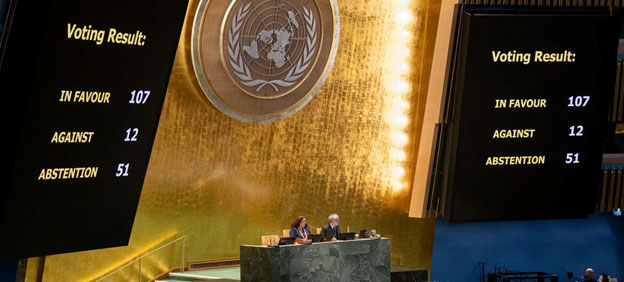
Result of the General Assembly vote on the draft resolution “Support for lasting peace in Ukraine” adopted during the emergency special session. 24 February 2026
Four years after Russia launched its full-scale invasion of Ukraine, the UN is marked the day with high-level debate and renewed calls to end the war – including in the General Assembly which passed a resolution reaffirming its strong commitment to the sovereignty, independence and territorial integrity of Ukraine. Credit: UN Photo/Manuel Elías

GENEVA, Feb 25 2026 (IPS) – After surviving the harshest winter in a decade, millions of displaced Ukrainians are confronting a growing crisis marked by hardship and ongoing attacks as peace prospects remain distant.


Inside Ukraine, repeated attacks on housing, energy systems and essential services throughout the winter left millions without heating or electricity for prolonged periods. While temperatures are slowly rising, the damage remains. An estimated 10.8 million people inside the country need humanitarian assistance in 2026, and 3.7 million are internally displaced.

At the same time, 5.9 million Ukrainians remain refugees abroad. Across Europe, host countries have provided protection and opportunities at an unprecedented scale, giving refugees access to education, healthcare and employment. This has helped millions regain stability and contribute to host communities.

As the war continues, however, more is needed to support refugees from a displacement crisis with no clear end. Alongside Temporary Protection, States should explore options for alternative arrangements for longer stay. These can bring stability for the most vulnerable in particular, for whom return may not be immediately possible even after the war.

Evidence shows that meaningful inclusion delivers results and refugees significantly boost host country economies. In Poland, analysis by UNHCR and Deloitte showed that Ukrainian refugees’ net impact amounted to 2.7 per cent of the Polish GDP, in 2024. With increased language training and wider recognition of credentials, access to decent work and self-reliance can improve for refugees across the region.

Inside Ukraine, communities continue to repair homes, restore services and rebuild livelihoods, with the support of UNHCR and NGO partners. But after four years of war, resilience has limits. Sustained humanitarian assistance remains essential, alongside scaled-up recovery and reconstruction support to prevent further displacement and enable safe conditions for return.

When conditions allow, gradual and voluntary returns will be critical for Ukraine’s recovery. UNHCR is working with the Government and partners to restore people’s documents, support rehabilitation of social infrastructure and repair war-damaged homes. UNHCR also works with partners to analyse refugees’ intentions, forecast return movements and support Ukraine’s recovery planning.

Since the start of the full-scale war, UNHCR and partners have supported 10 million people with emergency aid, protection services and psychosocial support. In 2026, UNHCR plans to assist a further 2 million people inside the country, subject to sufficient funding. Across the region, UNHCR and partners are supporting 1.7 million refugees and the States hosting them, with a focus on inclusion and self-reliance.

As winter fades, the humanitarian crisis does not. We must support the people of Ukraine with humanitarian relief and recovery inside the country, and with safety and self-reliance abroad.

Philippe Leclerc is UNHCR’s Regional Director for Europe and Regional Refugee Coordinator for the Ukraine Situation

IPS UN Bureau

  Source

Iran: A Regime with Nothing Left but Force

Active Citizens, Civil Society, Crime & Justice, Economy & Trade, Featured, Headlines, Health, Human Rights, Labour, Middle East & North Africa, Migration & Refugees, Press Freedom, TerraViva United Nations

Opinion

Iran: A Regime with Nothing Left but Force

Credit: Georgios Kostomitsopoulos/NurPhoto via Getty Images

MONTEVIDEO, Uruguay, Feb 24 2026 (IPS) – The Islamic Republic of Iran has put down another uprising, with a ferocity that makes previous crackdowns seem restrained. The theocratic regime has survived, but it has done so by substituting violence for the economic security it cannot provide and the political legitimacy it no longer has. Its show of force is also an admission of weakness.


The protests that began on 28 December were triggered by a specific event — the collapse of the rial to a record low — but rooted in years of accumulated grievances. The second half of 2025 alone saw at least 471 labour protests across 69 Iranian cities. Inflation stood at 49.4 per cent. The 12-day war with Israel in June sent the Tehran Stock Exchange down around 40 per cent and cost many people their jobs. The United Nations Security Council reimposed sanctions in September. The government cut fuel subsidies in November and slashed exchange-rate subsidies in December. Over 40 per cent of Iranian households now live below the poverty line and around half the population consume fewer than the recommended 2,100 calories per day.

It was this collapse that brought typically conservative bazaar merchants onto the streets. Within two weeks, the protests had spread to all of Iran’s 31 provinces, drawing in the urban middle class, working-class communities and people from rural provinces who had historically been among the regime’s most reliable supporters. What began as an economic stoppage rapidly became political defiance. For the millions who joined the striking merchants, the plummeting currency and rising cost of food were not market failures; they were proof of the regime’s corruption and ineptitude. Generation Z played a central role, demanding not reform but profound change. Lethal repression provided further confirmation the system was beyond reform.

The state’s response evolved. Initially it offered token economic concessions alongside its usual crowd control violence such as batons and teargas. When it became clear that a widespread movement with political demands had taken hold, it shifted to total attrition. On 8 January, authorities imposed a near-total internet shutdown and authorised security forces to use military-grade weapons against crowds. The Islamic Revolutionary Guard Corps (IRGC) – a parallel military structure, major political force and economic empire with a direct stake in the regime’s survival – spearheaded the crackdown, with its affiliated Basij paramilitary networks playing a central role in street-level violence.

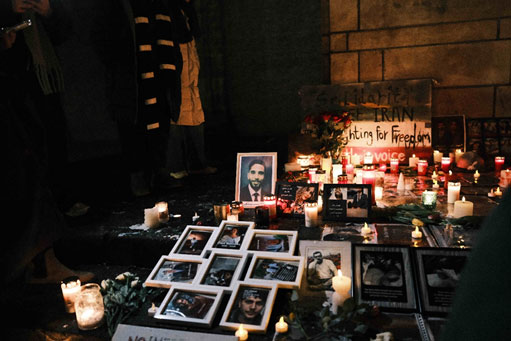
The casualty figures were deliberately obscured by the internet blackout, but all evidence points in the same direction. Hengaw Organisation for Human Rights reported that at least 3,000 civilians — including 44 children — were killed in the first 17 days. Iran Human Rights, citing Ministry of Health sources, documented a minimum of 3,379 deaths across 15 provinces. The US-based Human Rights Activists News Agency reported around 7,000 verified fatalities by mid-February, with 12,000 further cases under review. Time magazine cited hospital records suggesting the toll may have reached 30,000. Even the lowest of these figures vastly eclipses the 537 deaths recorded during the 2022-2023 Woman, Life, Freedom protests. Supreme Leader Ali Khamenei’s concession that ‘several thousand’ had been killed confirmed the order of magnitude.

By 16 January the streets had been cleared, but a quieter repressive campaign continued, with nighttime raids, enforced disappearances and mass detentions in unofficial holding sites outside the legal system, targeting not only protesters but also doctors who treated the wounded, lawyers who provided legal assistance, bystanders who helped and people who posted supportive statements online. Authorities have detained over 50,000 people. Revolutionary Courts have fast-tracked mass indictments through summary trials, often conducted online and lasting mere minutes, with defendants denied independent legal counsel and confessions extracted under torture. Eighteen-year-old Saleh Mohammadi, whose retracted confession was obtained after interrogators broke bones in his hand, has been sentenced to be publicly hanged at the site of his alleged crime. Dozens more face imminent execution.

The regime has, for now, held: its security forces have not fractured, there have been no significant elite defections, and the IRGC has maintained its capacity for suppression. But it rules over a country with a wrecked economy, a battered nuclear programme, weakened regional proxies and a population that has run out of reasons to comply. Each protest cycle has required a higher threshold of state violence to suppress, a sign the regime has no other tool left.

What prevents weakness from becoming collapse is the absence of any alternative. The international response briefly suggested external pressure might tell – but did not. Donald Trump told Iranian protesters that ‘help is on its way’. The European Union listed the IRGC as a terrorist organisation. The UK imposed fresh sanctions. The Iranian diaspora held at least 168 protests across 30 countries. But the international noise simply enabled the regime to spread the narrative that the uprising was foreign-directed.

The exiled opposition is fragmented along ethnic, ideological and generational lines, seemingly more consumed by internal rivalries than the task of converting widespread discontent into sustained political pressure. Inside Iran, the most credible opposition voices — Nobel laureate Narges Mohammadi, reformist politician Mostafa Tajzadeh and veteran leader Mir Hossein Mousavi — are imprisoned or cut off from public life.

A weakened regime facing a leaderless opposition can endure, but what it cannot do is reverse its decay. Violence may clear the streets, but it cannot rebuild the economy, restore trust or give Iran’s young people a reason to stay. The regime has bought time, at an ever-rising price, but the crisis it’s suppressed isn’t going away.

Inés M. Pousadela is CIVICUS Head of Research and Analysis, co-director and writer for CIVICUS Lens and co-author of the State of Civil Society Report. She is also a Professor of Comparative Politics at Universidad ORT Uruguay.

For interviews or more information, please contact research@civicus.org

  Source