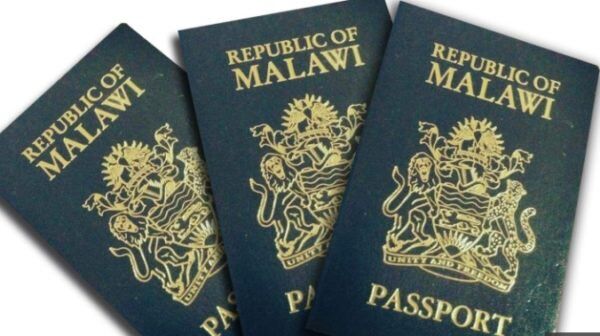
Passport printing challenges persists as Malawi Govt clings to discredited Indian firm Madras

By Draxon Maloya

MZUZU-(MaraviPost)-Questions continue to mount following President Peter Arthur Mutharika’s declaration during his State of the Nation Address in Parliament on Friday that his government will procure heavy-duty passport printing machines to ease the burden of producing travel documents locally.

Socioeconomic advocates have expressed concern that the government persists in relying on Madras Security Printers (MSP) of India—a company widely accused of corruption and failed projects—despite the enormous strain this continues placing the Department of Immigration in issuing passports to citizens.

Commentators argue that MSP secured its contract under the previous administration through the influence of then-Acting Director General of Immigration Ananchuma Kalindangoma and Principal Secretary for Homeland Security Steven Kayuni, allegedly sidelining other qualified competitors in favour of kickbacks.

Mervin Nxumayo, chairperson of the Young Human Rights Defenders Network (YHRDN), warned that procuring more machines will not resolve the crisis:

“Madras Security Printers pocketed about IS$12.8 million upfront before processing a single passport as part of the US$27 million deal. Yet today, the government is buying printers for them. What was that US$12.8 million for if not heavy-duty printers? Malawi is obsessed with procurement,” lamented Nxumayo.

It is reported elswhere, MSP faces serious allegations of corruption and failed projects across multiple countries, including Kenya, South Sudan, Mauritius, and India.

Bangladesh even banned the company over fraudulent practices involving tax stamps and stolen data.

In early 2025, then-Leader of Opposition Hon. George Chaponda urged the Malawi Congress Party-led government to cancel MSP’s contract after a severe passport printing crisis left thousands stranded.

“Reports indicate that MSP failed to roll out passport printing months after being paid over K8.7 billion. The company was alleged to have been awarded over K100 billion in contracts through secretive, non-transparent processes,” Chaponda told Parliament, pressing for a “reputable and scandal-free company.”

An informant within the Department of Immigration revealed that Malawi already possesses heavy-duty passport printers capable of producing 150,000 passports in two days—enough to clear the backlog.

He further alleged that despite objections, the Anti-Corruption Bureau (ACB) was pressured by senior MCP and State House officials to approve a US$35 million deal with MSP for blank national ID cards.

Homeland Security Minister Peter Mukhitho recently announced that three new heavy-duty machines destined for Mzuzu, Mangochi, and Blantyre are expected to arrive next week.

“The machines are part of a contract signed in February 2025 between the Malawi Government and MSP. By the time the current administration assumed office, only US$9 million had been paid out of the required US$17.9 million. This funding gap disrupted implementation and contributed to delays,” Mukhitho explained.

Critics argue that MSP continues to print passports in India despite receiving millions for “setup costs.” Local firm Technobrain, they note, managed to establish operations in two weeks at less than US$500,000, printing over 200,000 passports in under a year despite political hostility and limited capacity. MSP, by contrast, has printed fewer than 50,000.

Social media advocate Leonard Chimbanga criticized the government’s continued dealings with MSP:

“Here in Malawi, Lazarus Chakwera and Madame Colleen Zamba are happily handing them a aUS$29.9 million passport deal. What could go wrong? Maybe next, we shall let bank robbers handle our treasury,” he wrote.

Chimbanga further alleged that continuing to work with MSP amounts to direct government funding of the former ruling Malawi Congress Party, which initially offered the contract under undisclosed terms.

In 2024, Malawi transitioned to a secure e-passport system after a major system hack and the cancellation of the previous supplier left thousands stranded.

To stabilize the situation, the government engaged local firm E-Tech Systems under temporary contracts.

The upgraded system was capable of processing over 10,000 passports daily, offering express services within 1–2 days and ordinary processing within 10 days—a significant improvement compared to delays of up to 12 months.

Despite the availability of six heavy-duty printers, political interference prevented their integration into the system.

Instead, authorities pursued new procurement deals, reportedly 40 times costlier than local solutions and payable in USD, allegedly to secure campaign kickbacks.

Progress was further marred by corruption, poor contract management, and abrupt termination of agreements without proper transition.

This locked in over 200,000 processed applications, forcing citizens to reapply. Reports also suggested that senior officials demanded bribes from E-Tech Systems, undermining efforts to clear the backlog.

In March 2024, passport fees were revised to MK100,000 for a 64-page (10-year) booklet and MK50,000 for a 32-page (5-year) booklet.

Citizens were also introduced to an online application system allowing renewals and real-time tracking—developed under the emergency solution but later publicized as MSP’s package.

Observers warn that the government is once again being misled into endless procurement.

The real problem, they argue, is not printing capacity but processing inefficiencies, politicization, poor contract management, and lack of system transitions.


The Maravi Post

England King Charles III’s brother Andrew Mountbatten-Windsor arrested over office misconduct

LONDON-(MaraviPost)-Andrew Mountbatten-Windsor, brother of King Charles III of England, has been arrested on suspicion of misconduct in public office.

According to CNN, officers arrived at Mountbatten-Windsor’s home at Sandringham, King Charles’s estate in Norfolk, early Thursday morning.

Police said they were searching addresses in Norfolk and Berkshire, where the former prince lived until he left his home at Windsor this month.

Police had previously said the force was reviewing allegations that a woman was trafficked to the UK by Jeffrey Epstein to have a sexual encounter with Mountbatten-Windsor, and claims he shared sensitive information with the convicted sex offender while serving as the UK’s trade envoy.

Mountbatten-Windsor has denied all accusations against him and insisted that he never witnessed or suspected any of the behaviour of which Epstein was accused.

He has not commented on recent allegations of misconduct in public office.

The British loyal family is also yet to comment on the matter.

The Maravi Post

Collins Magalasi, Shonga Shonga’s corruption matter stalls a year after court found them a case to answer

Dorothy in Yellow during previous court session on corruption charges

LILONGWE-(MaraviPost)-About eleven months have passed since High Court Judge Patrick Chirwa, sitting as Chief Resident Magistrate ruled that former Malawi Energy Regulatory Authority (MERA) Chief Executive Officer Collins Magalasi, businesswoman Dorothy Shonga, and two other suspects have a case to answer in a high-profile corruption case.

The four were arrested in 2020 on allegations of abusing their positions to manipulate MERA’s Internal Procurement and Disposal Committee (IPDC) into awarding a lucrative MK186 million contract to Vink Enterprise, a company owned by Shonga. 

The deal, which sparked a major scandal, raised concerns about procurement irregularities within MERA.

Delivering his ruling in March 2025, Judge Chirwa stated that the prosecution had presented sufficient evidence to warrant the accused defending themselves in court. The ruling effectively dismisses any possibility of an immediate acquittal and sets the stage for the defence to present its arguments.

“This court has carefully examined the evidence submitted by the State, and it is clear that the accused have questions to answer regarding their involvement in the contract awarding process,” Chirwa said.

The case revolves around allegations that Magalasi, in collaboration with Shonga and the other accused, bypassed standard procurement procedures to unlawfully benefit Vink Enterprise.

The Anti-Corruption Bureau (ACB), which led the investigation, has argued that the deal was tailored to favour Shonga’s company at the expense of transparency and fairness.

Following the ruling, legal experts say the accused had the opportunity to challenge the evidence and present their defence.

If found guilty, they could face severe penalties, including imprisonment and financial restitution.

The case attracted significant public attention, as it underscores ongoing efforts to combat corruption in Malawi.

Civil society organizations and governance watchdogs welcomed the court’s decision, urging authorities to ensure that justice is served without bias.

But now with eleven months after the ruling was made in March 2025, the case has never seen a day in the court.

Both ACB and Judiciary public relations office are yet to give reasons why the case has stalled for a year.

Why could such a high profile case stall like that after the suspects were found a case to answer? Who is sitting on the case

The Maravi Post

Medics declare war on Mutharika’s private practice ban

LILONGWE-(MaraviPost)-Malawi’s medical professionals are up in arms over President Arthur Peter Mutharika’s executive order restricting their right to engage in private practice.

The order, which bans public sector healthcare workers from owning or holding interests in private clinics and pharmacies, has sparked outrage among medics who argue that it infringes on their economic rights.

The Human Resource for Health Coalition, which represents various medical professional bodies, has vowed to seek an injunction stopping the implementation of the order.

“We feel the approach in the second directive banning private practice is wrong,” said coalition chairperson Solomon Chomba. “We have agreed to take legal action because the decision infringes on our economic rights.”

Chomba argued that the private sector provides about 40% of medical care services in the country, thereby reducing distances between health facilities to meet World Health Organization recommendations.

He warned that if the order is enforced, some medical workers would prefer to resign rather than close their private clinics or pharmacies.

“We are working on it so that we obtain an injunction as soon as possible,” Chomba said. “It is an emergency.”

The Malawi Medical Council has also expressed concerns about the order, arguing that it could lead to a brain drain in the public health sector.

“Stopping them from having private clinics is subjecting them to abandon public facilities for private reasons,” said Dr. Victor Mithi, president of the Society of Medical Doctors.

Mithi pointed out that Kamuzu Central Hospital in Lilongwe may have only two neurosurgeons who operate on tumors free of charge, and that stopping them from having private clinics could lead to a loss of expertise in the public sector.

The Non-Medical Personnel Association has also criticized the order, saying that it is unfair to single out healthcare workers while other public officials with private business interests are not subject to similar restrictions.

The executive order was issued in response to a joint investigative journalism report that exposed malpractice in public hospitals, including soliciting payments for free services.

However, many are questioning the timing and motivation behind the order, with some accusing the president’s advisors of having ulterior motives.

The Health Rights and Education Program has argued that the country’s current healthcare system challenges stem from the 2003 human resources for health emergency, and that the temporary measure allowing public health workers to operate private clinics and pharmacies was introduced to tackle the brain drain affecting the country.

As the standoff continues, it remains to be seen how the government will respond to the medics’ demands. One thing is certain, however: the healthcare sector in Malawi will be watching closely to see how this drama unfolds.

The Maravi Post

‘Worrying’ War on Drugs Rhetoric Comes with Human, Financial Costs

Civil Society, Crime & Justice, Editors’ Choice, Featured, Freedom of Expression, Global, Headlines, Human Rights, TerraViva United Nations

Crime & Justice

Policing exhibit at the Museum of Weed. An IDPC report paints a picture of an increasingly punitive approach to drugs in some countries, but also highlights reforms. Credit: Bret Kavanaugh/Unsplash

Policing exhibit at the Museum of Weed. An IDPC report paints a picture of an increasingly punitive approach to drugs in some countries, but also highlights reforms. Credit: Bret Kavanaugh/Unsplash

BRATISLAVA, Feb 19 2026 (IPS) – Drug reform campaigners have called for an overhaul of global drug controls amid an increasingly complex and deadly drug situation in the world and as hardline anti-drug approaches are increasingly being used as cover for repression of civil society and human rights defenders.


A report released earlier this month by the International Drug Policy Consortium (IDPC) assessed progress made since the 2016 UN General Assembly Special Session (UNGASS) on drugs, widely viewed as a potential turning point in global drug policy.

It found that the promise of UNGASS remains largely unfulfilled – despite notable progress in some areas – and that punitive and prohibitionist approaches continue to dominate global drug control, despite their enormous human and financial cost.

“Punitive approaches [to drugs] are costing lives, undermining human rights and wasting public resources, while silencing the very communities that hold the solutions. This report shows why governments must move beyond rhetoric and commit to real structural reform,” Ann Fordham, IDPC Executive Director, said.

Advocates of drug policy reform have for decades pointed to evidence showing how hardline drug policies have completely failed.

The IDPC report documents how current prohibitive policies have, far from curbing drug markets, contributed to their massive expansion and diversification, while at the same time the number of people who use drugs continues to rise and is now estimated at 316 million worldwide – a 28 percent increase since 2016.

The group says repressive policies are also driving devastating and preventable harms. These include:  2.6 million drug use-related deaths between 2016 and 2021, with projections indicating further sharp increases since; mass incarceration – one in five people globally incarcerated are for drug offences – disproportionately affecting marginalised communities; over 150 countries report inadequate access to opioid pain relief due to overly restrictive controls on essential medicines;  expanding use of the death penalty for drug offences; and the displacement of illegal drug activities into remote and environmentally fragile regions, including Central America and the Amazon basin, as a result of interdiction and eradication efforts.

Despite this evidence, many countries continue to pursue hardline drug policies.

Fordham said this was because of “the vast vested interests in the status quo”.

“The prison industrial complex is a prime example of this. Our report documents that one in five people in prison are incarcerated for drugs globally, while evidence shows that this strategy has done nothing to reduce the scale of the illegal drug markets,” she told IPS.

The group has also highlighted a worrying return to prominence of ‘war on drugs’ rhetoric – popular in the 1970s and 1980s – which it says is increasingly being used to justify militarisation, repression and violations of international law, including the Trump Administration’s weaponising of ‘narco-terrorism’ narratives to legitimise extraterritorial force and roll back rights, health and development commitments enshrined in the UNGASS Outcome Document.

“Punitive and hard-on-drugs narratives serve other interests for populist leaders, with drug policies being used to scapegoat people who use drugs and other people involved in the illegal drug market for broader societal issues, including homelessness and increases in levels of violence.

“Drug control is also increasingly used to restrict civil society space by threatening or attacking civil society and community organisations promoting much-needed reforms and condemning their governments for egregious human rights violations,” said Fordham.

Other drug policy reform advocates and experts have said this trend has become increasingly evident in the last year.

“Over the last year, we can definitely see the emergence of some new [drug policy] trends. First of all, there has been a radical change of rhetoric and narratives under US President Donald Trump’s administration,” Anton Basenko, Executive Director of the International Network of People Who Use Drugs (INPUD), told IPS.

He also highlighted how governments are using drug policy as a cover for breaches of international law to further other political aims, citing the claim by the US administration that the recent abduction of Venezuelan leader Nicolás Maduro by US forces was connected to stopping illegal drugs from coming into America.

“Over the last year, there have been completely different narratives from leading countries [on drug policy], like the U.S. And of course, some countries politically are always looking to the U.S. and listening to what they are saying and they might try to replicate something similar politically, using America’s action as an example,” he said.

Other experts fear there is a real risk this could lead to a worsening of wider human rights problems in other countries.

“The shamelessness with which the US is now trampling on international law, using the war on drugs as cover for some of its most egregious violations, is deeply troubling. There is certainly a risk that it licenses other actors to be even more brazen in their abuses of international human rights law regarding drugs and more generally,” Steve Rolles, Senior Policy Analyst at the UK-based Transform Drug Policy Foundation, told IPS.

The IDPC report draws a set of conclusions emphasising the need for reform and modernisation of current UN drug control treaties as well as, among others, a reconfiguration of the global drug control system so that it is orientated on rights, health and development.

The group says this is especially important now as the United Nations prepares to implement system-wide reforms and an independent expert panel begins reviewing the international drug control regime, providing a rare opportunity to “correct course”.

But that call also comes at a time when, as the IDPC points out, the work of organisations which have been successful in driving drug policy reform, as well as the implementation of life-saving harm-reduction programmes, community advocacy and civil society are battling funding crises.

Cuts to foreign aid funding by major donor states, especially the US, over the last year have been devastating for civil society, including groups working  to combat HIV and help vulnerable communities, including drug users, around the world. Funding for harm reduction, which has historically been low, is now in crisis, campaigners say.

“In 2022, available harm reduction funding amounted to just 6% of the USD 2.7 billion needed annually. The Trump administration’s decision to halt funding for HIV and harm reduction in 2025 has turned the harm reduction funding crisis into a catastrophe,” said Fordham.

“State-funded and third-sector voluntary services are all feeling the pinch, and even services funded by philanthropy are seeing priorities shift towards emerging crises. Many services will struggle on as best they can, but inevitably there is a terrible cost when services proven to save lives are starved of funds or closed down,” added Rolles.

However, it is precisely because of these funding constraints that it is vital, IDPC argues, that its recommendations are taken on board by global policymakers.

“The funding constraints and current challenges faced by the UN and multilateralism more broadly make our recommendations all the more important. The current system is clearly outdated and harmful, only serving to undermine health, human rights, development, human security, and environment protection – all the key objectives that the UN was created to uphold in the first place,” said Fordham.

But while the IDPC report paints a picture of an increasingly punitive and prohibitive approach to drugs in some countries, it also highlights significant progress in the introduction of more progressive policies in a number of countries.

These include important policy shifts in many jurisdictions towards decriminalisation and the legal regulation of cannabis, both for medical and recreational purposes.

Hundreds of millions of people now live in jurisdictions where recreational cannabis is legal, with markets having been created in Africa, Asia, Europe, and the Americas. The IDPC report also suggests a renewed interest in psychedelics may soon drive a new wave of regulatory innovation.

“Just over 10 years ago, nowhere in the world had legally regulated adult-use cannabis. Today more than 500 million people live in over 40 jurisdictions with some form of legally regulated adult access… for me, this demonstrates how reforms that seemed impossible just a few years ago are now being realised on every continent,” said Rolles.

He added that there had been “notable progress [on drug policy reform] across the last decade, including the continuing wave of cannabis reforms across the Americas, the EU and much of the world; the spread of innovative harm reduction in response to the opioid epidemic; progress on decriminalisation in other jurisdictions; and an increasingly sophisticated reform narrative gaining traction in high-level forums – including endorsements for reform, including regulation of all drugs”.

“An increase in jurisdictions legalising and regulating cannabis feels inevitable. There are strong movements and political support for change in a number of Latin American and European countries,” Rolles said.

These reforms were driven in large part by non-state and civil society organisations – those same organisations which are seeing their funding and the freedom to press their case increasingly shrinking in many states.

But drug policy reform advocates are not expecting progress to stop despite the challenges such groups face.

“Almost all of the [cannabis legal regulation] reform has been driven by civil society advocacy, rather than top-down leadership from governments. Just as with harm reduction and decriminalisation reforms over the past decades, civil society is showing the leadership where elected politicians so often fall down. This will doubtless continue to be the case going forward. This is the moment to step up the fight, not to cower in the face of rising authoritarianism,” said Rolles.

IPS UN Bureau Report

  Source

Why AG Frank Mbeta allegedly approves to buy a sinking Amaryllis Hotel with public pension funds?

By Falles Kamanga

BLANTYRE-(MaraviPost)-The Public Service Pension Trust Fund (PSPTF), under the oversight of the governing Democratic Progressive Party (DPP) government, has acquired Amaryllis Hotel for a staggering K147 billion, nearly three times its original valuation of K47 billion, raising serious concerns about the prudence of the transaction with MK90 billion already paid towards the purchase.

The hotel, already struggling and failing to make profits, now sits at the center of controversy over the management of public servants’ retirement savings.

The acquisition received legal approval from Attorney General Frank Farouk Mbeta, who also represents Amaryllis Hotel a glaring conflict of interest critics describe as part of his long history of controversial legal interventions.

In a letter dated 28 December 2025 to the Malawi Law Society, Mbeta presented the findings of investigations into allegations surrounding the sale, stating that independent due diligence by FDH Bank Plc, Continental Asset Management Limited, and EMJ Advisory Public Accountants confirmed the transaction was viable.

He concluded that there was no evidence of corruption, abuse of office, or undue pressure on the Board, though he advised careful risk management.

Earlier, the Anti-Corruption Bureau (ACB) had issued a restriction notice in November 2025, temporarily halting the sale pending investigations.

By 18 December 2025, the ACB issued a letter clearing the transaction, stating that no fraudulent activities were found, effectively lifting the restriction quietly before the end of the year.

However, the Registrar of Financial Institutions at the Reserve Bank of Malawi sent a stern letter on 6 January 2026, warning that the transaction could expose pension fund members to undue financial risk.

The letter cautioned that the purchase could breach investment limits under the Financial Services Directive, cause liquidity mismatches, and increase concentration risk, putting systemically important pension assets in jeopardy.

The Registrar recommended that the Board reconsider the decision or provide clear safeguards for members’ funds.

Adding to the controversy is Frank Mbeta’s legal track record. While he has never been convicted, he has faced multiple allegations, arrests, and injunctions.

In 2015, the ACB sought to arrest him over bribery involving K2 million to an MRA employee, but a court injunction blocked the arrest.

He was also implicated in “judge-shopping” and judicial manipulation (2016–2017), and was mentioned in the Thomson Mpinganjira bribery trial (2019–2020), where testimony suggested he may have been involved in attempts to influence judges.

In February 2026, he further attracted criticism for approving a K51 million payout and a Toyota Fortuner to a politically aligned former Malawi Housing Corporation (MHC) lawyer, fueling accusations of favoritism and misuse of public funds.

Civil society organizations, including the Centre for Democracy and Economic Development Initiatives (CDEDI), have called for Mbeta’s resignation, citing the long-standing “shadow of allegations” undermining public trust.

As the PSPTF moves forward with the hotel acquisition, the clash between Mbeta’s clearance, the ACB’s quiet approval, and the Reserve Bank’s caution leaves Malawians asking whether pension funds are being safeguarded or gambled away for political and personal interests.

The Maravi Post