A group of military officers in Guinea-Bissau has seized control of the country, arresting President Umaro Sissoco Embaló and suspending the electoral process.
The move comes amid reports of gunfire in the capital, Bissau, and follows a disputed presidential election held on Sunday.
According to eyewitnesses, gunshots were heard near the presidential palace and the National Electoral Commission headquarters, prompting hundreds of people to flee the area.
General Denis N’Canha, head of the military household at the presidential palace, later appeared on state TV, announcing the formation of the “High Military Command for the Restoration of Order” and instructing the population to remain calm.
Embaló, who was elected in December 2019, had claimed victory in the presidential election, as had his closest rival, Fernando Dias.
The official results were expected to be announced on Thursday, but the military’s takeover has thrown the country’s future into uncertainty.
The arrested president confirmed his detention to Jeune Afrique magazine, stating that he was taken into custody without violence.
Other high-ranking officials, including the Chief of Defence Forces, General Biague Na Ntan, and Interior Minister Botché Candé, were also reportedly arrested.
Guinea-Bissau, a small West African nation with a population of under two million, has a history of instability, having experienced nine coups or attempted coups since 1980.
Embaló has previously survived multiple coup attempts, but critics accuse him of fabricating crises to crack down on dissent.
The international community has responded with concern, with the African Union and the Economic Community of West African States (ECOWAS) calling for respect for the electoral process and the release of detained officials.
The situation remains fluid, with the military’s intentions and the future of Guinea-Bissau’s government unclear.
Share this:
Like this:
LikeLoading…
Discover more from The Maravi Post
Subscribe to get the latest posts sent to your email.
LILONGWE-(MaraviPost)-Citizens anger continues to build as Malawians openly question why ordinary people are arrested for theft while high-profile leaders accused of mismanaging public resources walk free.
In a widely shared message, one citizen mockingly remarked that “this one has eaten uncooked maize,” suggesting boldness without fear of consequences.
Another commentator, Rick Dzida, raised a provocative question, asking why police arrest individuals found with stolen goods yet have not taken similar action against President Lazarus Chakwera for alleged failures connected to public resource management.
This sentiment reflects a growing perception that the justice system treats powerful individuals differently from ordinary citizens.
A third voice in the discussion argued that no one has misled Malawians more than leaders who mismanage taxes, insisting that those responsible for abusing public funds should face the law like anyone else.
The citizen further stated that Malawians are suffering because tax resources have been misused and those accused of wrongdoing appear to be shielded by the system.
The contributor stressed that the law must apply to everyone, including those who mishandled national revenue and betrayed public trust.
These comments highlight a broader national frustration over perceived selective justice, where accountability appears to fall heavily on ordinary people while political leaders escape scrutiny.
They also reflect mounting public demands for transparency, fairness, and equal application of the law in matters relating to corruption and tax abuse.
As the debate intensifies, citizens continue to call for a justice system that protects national resources and restores confidence in public governance.
Share this:
Like this:
LikeLoading…
Discover more from The Maravi Post
Subscribe to get the latest posts sent to your email.
A grand jury was reportedly convened to gather information on the death of Celeste Rivas. The grand jury heard evidence for several days in mid-November … this according to the Los Angeles Times. The Times reported the existence of the grand jury…
Share this:
Like this:
LikeLoading…
Discover more from The Maravi Post
Subscribe to get the latest posts sent to your email.
The mother of Anna Kepner — the 18-year-old who was murdered on a Carnival Cruise ship — is questioning the sleeping arrangements her daughter was placed in leading up to her tragic death. Heather Wright told Fox News she’s been villainized in…
Share this:
Like this:
LikeLoading…
Discover more from The Maravi Post
Subscribe to get the latest posts sent to your email.
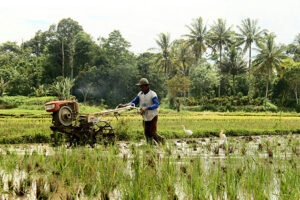
Local farmer ploughing a field in Indonesia. Credit: Unsplash
RIO DE JANEIRO, Brazil, Nov 26 2025 (IPS) – The UN climate talks at COP30 once again brought the critical issue of climate finance to the forefront of global discussions.
However, while much of the debate revolved around traditional forms of aid directed at developing countries most vulnerable to the impacts of climate change, a faster, more transformative approach lies in expanding access to carbon markets.
When emerging and developing economies (EMDEs) are equipped with the tools and knowledge needed to engage in these markets on their own terms, carbon finance can be generated and harnessed in ways that reflect their unique natural assets, governance, social contexts, and national priorities.
Achieving global climate and sustainable development goals depends on ensuring that those worst affected by climate change can fully participate in and benefit from this growing flow of finance.
EMDEs are on the frontlines of climate change — from rising sea levels threatening Pacific island nations to intensifying droughts and fires in the Amazon and Horn of Africa, and increasingly intense and frequent hurricanes in the Caribbean. These crises often hit hardest in regions that have contributed least to global emissions and in the most difficult position to react to them.
Yet, these same nations face a climate finance shortfall of $1.3 trillion per year. Carbon markets present an opportunity for these countries to bridge this gap by turning their natural advantages into climate finance assets.
Despite successful initiatives aimed at bolstering both high-integrity supply and demand for carbon credits, significant barriers to access persist, particularly for EMDEs. From fragmented policy landscapes to weak governance structures, limited institutional capacity, and low investor confidence, various obstacles prevent the vast potential of EMDEs to engage fully.
The Access Strategies Program — led by the Voluntary Carbon Markets Integrity Initiative — is a direct response to these challenges. It helps governments design and implement their own pathways into high-integrity carbon markets, enabling them to build the policies, institutional capacity, and investor confidence needed to meet their climate finance needs and transform their potential into progress.
Each country’s natural capital — from Brazil’s vast rainforest and agricultural landscapes, to the Caribbean’s blue carbon ecosystems, or Kenya’s grasslands and renewable energy potential — represents a unique competitive advantage, ready to be realised.
Simultaneously, no two countries share the same development goals or governance contexts. In some, carbon markets can drive forest conservation and biodiversity protection; while in others, they deliver the most impact by strengthening rural livelihoods or financing clean energy transitions.
The Access Strategies model recognises this uniqueness, tailoring its support to help countries use carbon finance in ways that align with their own specific economic and environmental strategies and goals.
For example, the Partnership for Agricultural Carbon (PAC) — developed with the Inter-American Institute for Cooperation on Agriculture (IICA) — is building capacity across Latin American and Caribbean agriculture ministries to participate in high-integrity carbon markets. It provides training, policy guidance, and decision-making tools that help governments and farmers identify viable carbon projects aligning with national agricultural and sustainability goals.
The collaboration has given small and medium producers a clearer route to investment, while positioning agriculture as a central player in regional climate strategies. Another example of the Access Strategies work is the recently launched Amazon Best Practices Guide, which will help Amazon state governments design and implement carbon market frameworks made specifically for their unique ecological and governance realities.
Moreover, in countries such as Kenya, Peru, and Benin, the Program has provided tailored support to develop policy and regulatory frameworks, strengthen institutional capacity, and attract responsible investment for high-priority climate mitigation projects — all in line with country-led goals.
These examples show what’s possible when governments have the tools and expertise to engage in high-integrity carbon markets on their own terms. More countries should seize this opportunity to tap into the growing flow of finance from carbon markets.
While carbon markets are not a silver bullet, they are one of the few scalable and self-sustaining tools available when grounded in integrity and tailored to each country’s needs.
Programs like Access Strategies do more than transfer technical knowledge — they build the enabling conditions for locally led action, drawing on countries’ unique ecological, social, and institutional insights to shape solutions that work in practice.
The focus of global climate action should not only be on new funding pledges, but on ensuring funding that is already available is effectively redirected for EMDEs countries to harness their own natural capital and promote social inclusion, while meeting their climate goals and reshaping their development pathway.
Building this kind of capacity is how we turn global ambition into lasting, locally owned progress, and moreover how carbon finance can become a true instrument of sustainable development.
Ana Carolina Avzaradel Szklo, Technical Director, Markets and Standards, Voluntary Carbon Markets Integrity Initiative (VCMI)
BLANTYRE-(MaraviPost)-Mighty Wanderers produced a dominant second-half performance to defeat Mighty Tigers 3–0 in a TNM Super League match played on Wednesday afternoon at Kamuzu Stadium, Blantyre.
The Nomads started the game on the front foot, enjoying long spells of possession but struggled to convert their early dominance into goals.
Tigers, meanwhile, looked disjointed and repeatedly lost the ball under pressure, offering little threat going forward.
Wanderers created several promising chances in the first half but lacked precision in the final third. Clement Nyondo and Muhammad Sulumba were among the players who failed to capitalise on good build-up play, while the Nomads also wasted multiple corner kicks.
Tigers’ only notable moment came when Martin Nsewa delivered a dangerous cross that went untouched in the box. The first half ended goalless despite Wanderers’ clear superiority.
After the break, Tigers showed brief signs of improvement but Wanderers quickly regained control. The deadlock was broken in the 55 minute when Rajab Nyirenda floated a well-weighted ball into the box, which Sulumba headed home to make it 1–0.
The goal energised Wanderers, who began attacking with more purpose and intensity. Substitutes Blessings Mwalilino and Sama Tanjong added fresh momentum, putting Tigers under constant pressure.
In the 75th minute, Wanderers doubled their lead through Blessings Mwalilino, who finished off a brilliant team move with a well-timed header from a Blessings Singini cross.
Wanderers sealed the victory six minutes later. Adam Wallace weaved his way into the box before delivering a low cross that found Isaac Kaliati at the far post. The winger calmly slotted home to make it 3–0, capping an excellent personal performance that later earned him the Man of the Match award.
Speaking after the match, Mighty Wanderers coach Bob Mpinganjira praised his players for their impressive display but downplayed talk of the title race, saying there are still seven games to be played.
On his remarks Tigers coach Trevor Kajawa admitted defeat but commended his players’ effort, expressing hope that they will perform better in their remaining fixtures.
The result leaves Tigers in 13th position with 26 points from 26 matches, while Wanderers remain top of the table with 55 points from 23 games, strengthening their push for the league title.
Share this:
Like this:
LikeLoading…
Discover more from The Maravi Post
Subscribe to get the latest posts sent to your email.