Africa is a family affair for the owners of Australia’s oldest travel specialist, Bench Africa, which turned 55 this year. The family-run company was founded by a Kenyan and owns ground operations in Africa. This proximity to the continent’s pulse, and the company’s practice of positioning its journeys within a broader ecological and social context, infuses the tourism experience. Visiting a chief’s homestead in Eswatini, for example, or meeting rangers involved in the restocking of depleted reserves in Malawi. See benchafrica.com
Budj Bim Cultural Landscape, south-west Victoria
Try the signature kooyang (eel) tasting plates at Tae Rak Aquaculture Centre & Cafe.Credit: Visit Victoria
For thousands of years, the Gunditjmara people have shaped south-west Victoria’s waterways and wetlands, creating channels and weirs for farming eel that are now recognised by UNESCO as one of the world’s oldest examples of aquaculture. At Tae Rak Aquaculture Centre & Cafe, part of Budj Bim Cultural Landscape at the end of the Great Ocean Road, a two-hour guided tour shares how Gunditjmara managed their country before European arrival, with a focus on the role of eels. After the tour, guests can try the signature kooyang (eel) tasting plates. Eel crackling is a highlight. See budjbim.com.au
Walkabout Cultural Adventures, Queensland
Learn spear throwing, collect pipis and catch mud crabs.Credit: Tourism and Events Queensland
Juan Walker has a gift. He’s a total natural when it comes to sharing his knowledge, his culture and his country with others, particularly those who have never seen Kuku Yalanji country, around Port Douglas, through the eyes of its traditional owners. Juan hosts tours that feel like a day out with your new best mate, a mate who takes you swimming in rivers, spearing mud crabs in the mangroves, looking for natural medicines in the rainforest, who tells you stories and even stops in at his mum’s place for some damper. If only every tour experience was as enjoyable. See walkaboutadventures.com.au
International African American Museum, South Carolina
Grisly history is balanced with stories of survival and triumph.Credit: International African American Museum
This poignant and important museum in Charleston opened in 2023 at the very spot where almost half of all African slaves entered North America. Their inhumane transport – shackled sardine-like in the bellies of ships – is powerfully depicted in the memorial garden, in a work called Tide Tribute. Inside the museum, the history is balanced with stories of survival and triumph. It takes several hours to explore the latest special exhibition and another nine galleries, which include an insight into the Gullah Geechee culture found in coastal areas of the Carolinas, Georgia and Florida. See iaamuseum.org
Canoe the Whanganui River, New Zealand
Owhango Adventures leads guests on canoe tours along the sacred river.Credit: Owhango Adventures
In 2017 the Whanganui River was the first river in the world to be recognised as a legal person, a battle that took 175 years. Owhango Adventures leads guests on canoe tours along the sacred river, explaining its importance to the Whanganui iwi (tribes), the history of their fight for recognition and what they are currently doing to protect the waterway even further. To paddle alongside these passionate and determined iwi, who now help other international rivers, including Australia’s Murray River, is to learn the Indigenous way of viewing human-landscape connections. Not just an immersive experience, but a life-changing one. See canoewhanganuiriver.com
Passchendaele Museum, Belgium
Passchendaele Museum … the closest you’ll (hopefully) get to experiencing what it was like to live through WWI.Credit: Getty Images
It’s one thing to see the white-cross-lined landscapes of World War I, it’s another entirely to visit this extraordinary museum, located right on the former frontline, and relive the horrors. With images of the fighting flashed onto walls accompanied by the sounds – the shouts, the screams, and even some of the smells – you’re transported back to those terrible times. And what was it really like to live through this? You hear the poignant letters the soldiers sent home, listen to their conversations and can wander through life-sized trenches yourself. This is the closest – thank God – you’ll ever get to WWI. See passchendaele.be/en/home-en
On Board Expeditions, Tasmania
Luxury catamaran Odalisque III and tender in Bathurst Harbour.
There are many parts to this experience – the luxury catamaran that takes just 12 guests, the talented Tasmanian chef and the sublime food, even the seaplane flight that delivers guests from Hobart to Port Davey in the Tasmanian wilderness. But in the end, it’s the On Board crew that completes the picture – such is their knowledge of this remote region and its unique landscape and seascape, its plants and wildlife, its Indigenous and European histories and the challenges those isolated cultures faced alone and when they clashed. It has guests feeling connected to the area and yearning to return. And don’t the best stories leave you wanting more? See onboardexpeditions.com.au
Abercrombie & Kent’s Okahirongo Elephant Lodge
Sunset at Okahirongo Elephant Lodge, Purros.Credit: Abercrombie & Kent
The design approach of luxury company Abercrombie & Kent assures that its lodges sensitively embrace the natural surrounds. None reflects this more than Okahirongo Elephant Lodge, an extraordinary retreat in the remote desertscape of north-west Namibia that was refurbished in 2023. Resembling a movie set on a futuristic planet, a series of whitewashed modules (seven suites and a family suite) extend along a ridge, directly overlooking the Hoarusib River Valley. The egg-shaped entrance pays homage to the local Himba people. Gourmet cuisine, wilderness drives and star gazing are also out of this world. See abercrombiekent.com.au
Traveller Awards contributors: Kate Armstrong, John Borthwick, Jim Darby, Anthony Dennis, Ben Groundwater, Julietta Jameson, Trudi Jenkins, Brian Johnston, Ute Junker, Katrina Lobley, Catherine Marshall, Rob McFarland, Justin Meneguzzi, Craig Platt, Jane Reddy, Jane Richards, Tim Richards, Craig Tansley, Lee Tulloch, Kerry van der Jagt, Penny Watson, Sue Williams
You’d think we get enough drama from news and social media—but honestly, we live for it. Netflix has stories of tortured romance; parental struggles; political victories; and all manner of triumphs and tragedies, whether entirely fictional or inspired by true events.
Past Lives (2023)
Greta Lee plays Nora, whose family emigrated from South Korea to the United States when she was a child. Years later, and then over the course of several years, she reunites with childhood friend Hae Sung (Teo Yoo), forcing an examination of her life as it is, and as it might have been. Certainly among the best of the last five years, the film’s exploration of roads not taken builds to a powerful emotional punch. You can stream Past Liveshere.
The Two Popes (2019)
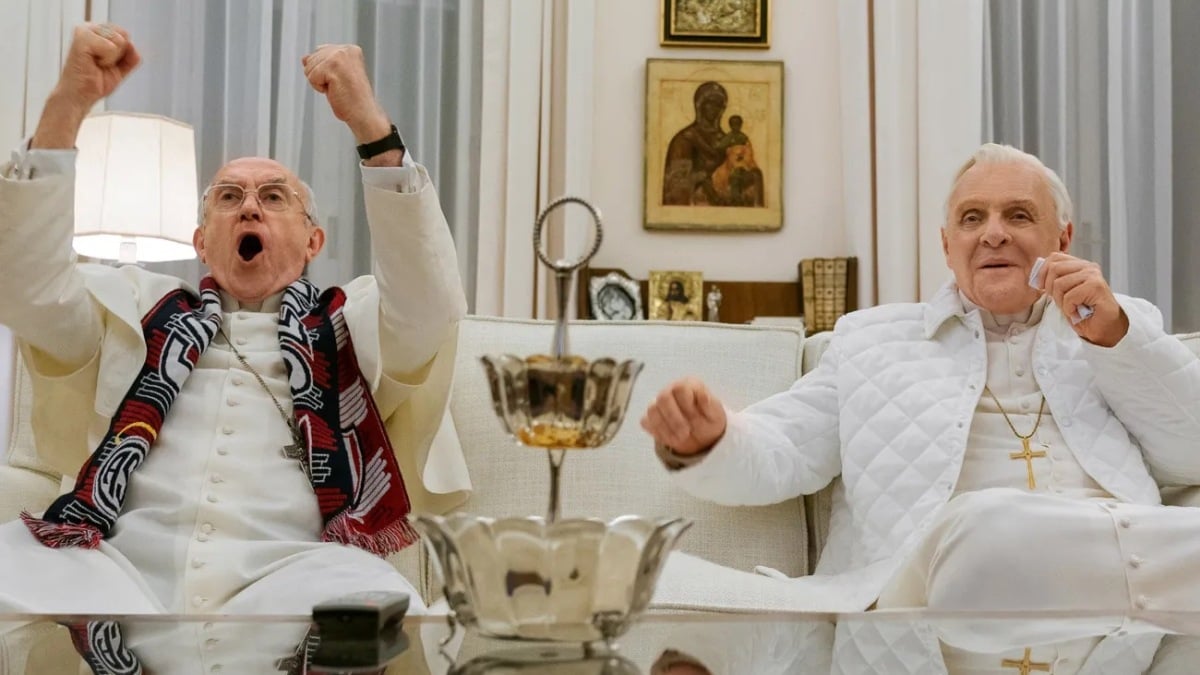
With a bit of extra relevance in recent days, this biographical film from director Fernando Meirelles (City of God) dramatizes a key period in the relationship between then-Pope Benedict XVI and his soon-to-be successor, Jorge Mario Bergoglio (later Francis). Following the Vatican leaks scandal of 2012, Benedict (Anthony Hopkins) finds himself weakened both physically and in terms of his authority—as he considers resigning the Papacy, he summons Bergoglio (Jonathan Pryce), the leading contender to replace him. The two debate theology and struggle with their own futures in a near two-hander than earned each of the actors Academy Award nominations. You can stream The Two Popes here.
The Six Triple Eight (2024)
Tyler Perry directs this war drama, and it’s likely his best movie yet, with a powerhouse lead performance from Kerry Washington as the real-life Major Charity Adams, commanding officer of the 6888th Central Postal Directory Battalion. During World War II, a backlog in mail delivery was causing tremendous harm to troop morale, and so this battalion of Black women was charged with getting letters delivered; Perry’s greatest achievement here is making an extremely convincing case for the significance of mail sorting. Once deployed to Germany, the women come under fire from enemy soldiers, as well as from fellow allied soldiers who see no place for women, and particularly Black women, in wartime. You can stream The Six Triple Eighthere.
The Long Game (2023)
The drama here is quietly understated, though the stakes are very real. Jay Hernandez heads up the cast here to tell the true story of a group of teens from Del Rio, Texas of the 1950s, who set out to play golf at a white country club as the San Felipe Mustangs. They could be caddies, of course—but to actually play?! The kids went on to win the 1957 Texas State High School Golf Championship, with Long Game dramatizing the triumphs, setbacks, and extremely overt racism on the road to that victory. You can stream The Long Gamehere.
Society of the Snow (2023)
The true story of the 1972 Uruguayan rugby team lost in the Andes following a plane crash has been the subject of multiple documentaries and two previous dramas (the best known being, almost certainly, Frank Marshall’s cannibalism-heavy Alive from 1993). For all that Andes-crash content, this is the best of all of them: a thoughtful and tasteful take on what’s sometimes been presented as a salacious drama, with director J. A. Bayona emphasizing both the physical perils faced by the team and the spiritual toll of survival. You can stream Society of the Snowhere.
Ma Rainey’s Black Bottom (2020)
Sweaty, smoky clubs; outspoken (often openly queer) women who accepted no bullshit—women like Bessie Smith, Lucille Bogan, Gladys Bentley, and, of course, Ma Rainey. The 1920s blues scene was a moment, and Wolfe’s movie goes a long way to resurrecting the era with its contained but explosive story of one stormy Chicago recording session. Based on August Wilson’s play, it’s packed with brilliant performances, led by Viola Davis and Chadwick Boseman in his final film role. You can stream Ma Rainey’s Black Bottomhere.
The Power of the Dog (2021)
Jane Campion came roaring back after an absence from the director’s chair of a decade or so, with this, the most acclaimed film of her career to date. Benedict Cumberbatch stars as Phil Burbank, as beguiling as he is cruel, who runs a family ranch in 1925 with his far gentler brother, George (Jesse Plemons). Phil’s callousness sparks into flame when George finds love with a local waitress (Kirsten Dunst), his brother’s happiness shifting their power dynamic uncomfortably, and leaving Phil to contemplate (or, rather, to avoid contemplating) his feelings for the man who taught him how to be a cowboy years earlier. You can stream The Power of the Doghere.
Shirley (2024)
A woman president? What’s next?! Academy Award winner John Ridley (screenwriter of 12 Years a Slave) directs this quite necessary biopic of sometimes-forgotten pioneer Shirley Chisholm. The first Black woman elected to Congress (in 1969), Chisolm ran a forcefully progressive campaign for president just three years later. Even if the movie is a bit formulaic, in the ways that these things sometimes are, Regina King (perhaps unsurprisingly) gives a moving, illuminating performance as the idiosyncratic trailblazer. You can stream Shirley here.
The Guernsey Literary and Potato Peel Pie Society (2018)
Charmingly unwieldy name aside, Guernsey is a cute and clever period drama based on the popular novel from Mary Ann Shaffer and Annie Barrows. Lily James stars as Juliet Ashton (pen name: Izzy Bickerstaff), a writer in 1946 who finds herself entranced by the titular society, formed during the German occupation of the island. Like the book before it, the quirkiness of the story’s characters masks dark undertones related to the horrors of the just-concluded war, lending the film a surprising emotional depth. Mike Newell (Four Weddings and a Funeral, Donnie Brasco) directs. You can stream The Guernsey Literary and Potato Peel Pie Societyhere.
Anyone but You (2023)
A loose spin on Much Ado About Nothing, Anyone But You stars Sydney Sweeney and Glen Powell as a couple who meet, hit it off for about a minute—and then immediately start to get on each other’s nerves. Until, of course, they need wedding dates and find themselves surrounded by scheming friends. As Shakespeare taught us, of such inauspicious beginnings are great romances sometimes born. It’s not wildly out there as rom-com premises go, but the movie is briskly directed and boasts strong chemistry (a must) between Sweeney and Powell. You can stream Anyone but Youhere.
Beginners (2010)
Better late than never: That’s the message of Beginners, in which Hal, played by Christopher Plummer (beginning his own late-career resurgence) comes out to his son, Oliver (Ewan McGregor). As Hal begins to live his life more openly and finds love with a younger man, he also develops a more honest relationship with his son. As a result, the two become closer than they ever were before, and their relationship inspires Oliver to pursue a new romance of his own—and to generally live life on his own terms. It’s a movie about how, sometimes, being true to yourself is the best way to be a good parent. You can stream Beginnershere.
Do the Right Thing (1989)
Director Spike Lee had his greatest triumph with this funny, quotable, and ultimately explosive film about the racial tensions percolating in a Brooklyn neighborhood on a hot summer day. Stylish, funny, humane, and, ultimately, a gut punch. You can stream Do the Right Thinghere.
Scoop (2024)
The reliably great Gillian Anderson plays real-life British journalist Emily Maitlis, who lead the BBC2 team that secured the disastrous interview with Prince Andrew (Rufus Sewell) that laid bare his associations with sex trafficker Jeffrey Epstein—and by “disastrous,” I mean that it was a disaster for the Prince, who couldn’t seem to stop himself from making things worse. A juicy and compelling true story. Keeley Hawes and Billie Piper also star. You can stream Scoop here.
Passing (2021)
This gorgeous black-and-white adaptation of the once-controversial 1929 novel explores the dramatized history of some light-skinned African-Americans attempting to pass as white. Ruth Negga and Tessa Thompson play old friends who reunite unexpectedly after years apart; one is married to a Black man and living in Harlem while the other is married to an odious, racist white doctor who has no idea his wife isn’t the woman he thinks she is. The fallout both women experience as a result of their chance encounter is an indictment of a society that would place so much value on skin color, yes, but it’s also a challenging consideration of the choices people will make for self-preservation, and it offers no easy answers. You can stream Passinghere.
May December (2023)
Todd Haynes directs this insightful, moving, and also deliberately campy story of an actress visiting the woman she’ll be playing in a film. The movie’s deft, and unexpected, blending of tones makes it pretty consistently fascinating, and the lead performances from Natalie Portman, Julianne Moore, and Charles Melton saw them all as Oscar nomination frontrunners, even if no actual nods were forthcoming. You can stream May Decemberhere.
0″>
What do you think so far?
Carol (2015)
The chemistry between Rooney Mara’s Therese and Cate Blanchett’s Carol is palpable from the moment their eyes meet across a crowded department store—but it’s the 1950s, and theirs is a love that dare not speak its name, even to one another. That’s just how things were back then (luckily, queerphobia has been entirely eradicated). The women suffer for their love in Todd Haynes’ modern classic, but the tears come less when things are going bad as when it starts to feel like they might just possibly start to go a little right. You can stream Carolhere.
Nyad (2023)
Annette Bening stars as the real-life Diana Nyad, who swam from Florida to Cuba in her 60s—powered largely by an unyielding willfulness. The movie succeeds in large part because of the performances from and chemistry between lead Annette Bening and Jodie Foster, both of whom received Oscar nominations for their work here. The movie makes a strong case that age is inevitably a weakness in many ways, but can also be a source of surprising strength. You can stream Nyadhere.
The Lost Daughter (2021)
Inspired, in part, by ancient Greek mythology, this psychological drama was probably never destined to be a crowd-pleaser—but it’s a genuinely confident, bold debut from writer/director Maggie Gyllenhaal. Olivia Colman (who got a Best Actress Oscar nomination for her trouble) plays Leda Caruso, a middle-aged college professor who develops a rather disturbing obsession with a woman and her young daughter while on holiday in Greece. Jessie Buckley also got an Oscar nod for playing a younger version of Leda, and Gyllenhaal picked up a nomination for her screenplay. You can stream The Lost Daughterhere.
The Boy Who Harnessed the Wind (2019)
Chiwetel Ejiofor wrote and directed (also co-starred) in the biographical, family-friendly (in the best sense) film based not he memoir of William Kamkwamba (played here by Maxwell Simba). Born to a family of farmers in Kasungu, Malawi, William barely manages to stay in school (essentially blackmailing a teacher in lieu of being able to afford tuition), but his persistence pays off: the young engineering prodigy develops a design for a windmill that might be able to save the village from the impacts of drought and a global economic downturn—but only if he can convince his family that the sacrifices required to build his machine will be worth it. You can stream The Boy Who Harnessed the Wind here.
Judy (2019)
Renée Zellweger won an Oscar for her portrayal of screen legend Judy Garland in this biopic that focuses on the last year of her life, contrasting the period of trial with scenes from her early life, and drawing straight lines between the treatment of a child actor with the troubles of an aging star. There are some biopic tropes here, and the film builds to a necessarily tragic conclusion, but there’s a great deal of heart and humanity here, and Zellweger offers up a very worthy performance. You can stream Judyhere.
Twilight (2008)
Say what you like about Catherine Hardwicke’s adaptation of the Stephenie Meyer’s novel: the movie was a blockbuster and a genuine pop culture phenomenon, touching on the drama and trauma of teen romance in grand, nearly operatic, style. The movie was released during the country’s last major economic downturn, and some sparkly vampires might be just the comfort watch you need in more recently troubling times. You can stream Twilighthere.
Goodfellas (1990)
Martin Scorsese’s epic take on the life of real-life mobster Henry Hill (Ray Liotta) is an indisputable classic of the genre—in fact, it’s the movie people think of first when you mention gangster movies. Scorsese has rarely been better, but the movie’s performances (from Liotta, Robert De Niro, Lorraine Bracco, and Joe Pesci) are where it soars. You can stream Goodfellashere.
Rustin (2023)
Colman Domingo gives a stellar performance (he earned a Best Actor Oscar nomination) as the title’s Bayard Rustin, the gay Civil Rights leader who planned the March on Washington. Domingo is all charm here as a man desperate to advance a movement focused on his skin color but is less certain how to treat his sexuality. Not only is it an intersectional corrective to our very straight-centered vision of the Civil Rights Movement, it’s a stylish and moving biopic in its own right. You can stream Rustin here.
The Boys in the Band (2020)
An update of the 1968 play (previously adapted to the screen by William Friedkin in 1970), Boys in the Band keeps its period setting and premise: Michael (Jim Parsons) is hosting a very gay birthday for his friend Harold (Zachary Quinto), joined by their friends Donald (Matt Bomer) and Larry (Andrew Rannells). Everyone’s ready to cut loose without the pressure of having to act straight—until they’re joined unexpectedly by married Alan (Brian Hutchison), and everyone has to decide how far they’re willing to shove themselves back in the closet. You can stream The Boys in the Bandhere.
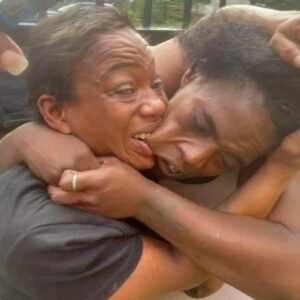
Two over grown African American ladies from Chicago have been caught on camera fighting like nobody’s business along the street.
The ladies, who are suspected to be whores, are now trending on social media after the video of them fighting goes viral on internet as the one bites the other’s face turned to dog’s fight.
The video has got people’s mixed reactions as other are blaming the man who was filming them and the other crackhead guy who was there cheering and commentating instead of separating them.
While others are blaming women for disrespecting themselves by solving their issues through fighting.
Netizens are now throwing their opinions in the comment box and some have commented as below:
“The fact that these bitches out here in their mid to late 50s, dressed in 20 year old attire, fighting says enough for me. The ghetto gone keep ghettoing”
“Just wondering how she managed to grab that part.”
“Smh this world really gone…people really stood there videotaping this shit instead of they break up it up…I don’t find this amusing or entertaining”
“So half way through the fight they turned into dogs”
A UN team inspects an unexploded 1,000-pound bomb lying on a main road in Khan Younis. Credit: OCHA/Themba Linden
SAN FRANCISCO, USA, Aug 21 2024 (IPS) – An observation from George Orwell — “those who control the present, control the past and those who control the past control the future” — is acutely relevant to how President Biden talked about Gaza during his speech at the Democratic convention Monday night.
His words fit into a messaging template now in its eleventh month, depicting the U.S. government as tirelessly seeking peace, while supplying the weapons and bombs that have enabled Israel’s continual slaughter of civilians.
“We’ll keep working, to bring hostages home, and end the war in Gaza, and bring peace and security to the Middle East,” Biden told the cheering delegates. “As you know, I wrote a peace treaty for Gaza. A few days ago, I put forward a proposal that brought us closer to doing that than we’ve done since October 7th.”
It was a journey into an alternative universe of political guile from a president who just six days earlier had approved sending $20 billion worth of more weapons to Israel. Yet the Biden delegates in the convention hall responded with a crescendo of roaring admiration.
Applause swelled as Biden continued: “We’re working around-the-clock, my secretary of state, to prevent a wider war and reunite hostages with their families, and surge humanitarian health and food assistance into Gaza now, to end the civilian suffering of the Palestinian people and finally, finally, finally deliver a ceasefire and end this war.”
In Chicago’s United Center, the president basked in adulation while claiming to be a peacemaker despite a record of literally making possible the methodical massacres of tens of thousands of Palestinian civilians.
Orwell would have understood. A political reflex has been in motion from top U.S. leaders, claiming to be peace seekers while aiding and abetting the slaughter. Normalizing deception about the past sets a pattern for perpetrating such deception in the future.
And so, working inside the paradigm that Orwell described, Biden exerts control over the present, strives to control narratives about the past, and seeks to make it all seem normal, prefiguring the future.
The eagerness of delegates to cheer for Biden’s mendaciously absurd narrative about his administration’s policies toward Gaza was in a broader context — the convention’s lovefest for the lame-duck president.
Hours before the convention opened, Peter Beinart released a short video essay anticipating the fervent adulation. “I just don’t think when you’re analyzing a presidency or a person, you sequester what’s happened in Gaza,” he said.
“I mean, if you’re a liberal-minded person, you believe that genocide is just about the worst thing that a country can do, and it’s just about the worst thing that your country can do if your country is arming a genocide.”
Beinart continued: “And it’s really not that controversial anymore that this qualifies as a genocide. I read the academic writing on this. I don’t see any genuine scholars of human rights international law who are saying it’s not indeed there. . . . If you’re gonna say something about Joe Biden, the president, Joe Biden, the man, you have to factor in what Joe Biden, the president, Joe Biden, the man, has done, vis-a-vis Gaza.
It’s central to his legacy. It’s central to his character. And if you don’t, then you’re saying that Palestinian lives just don’t matter, or at least they don’t matter this particular day, and I think that’s inhumane. I don’t think we can ever say that some group of people’s lives simply don’t matter because it’s inconvenient for us to talk about them at a particular moment.”
Underscoring the grotesque moral obtuseness from the convention stage was the joyful display of generations as the president praised and embraced his offspring. Joe Biden walked off stage holding the hand of his cute little grandson, a precious child no more precious than any one of the many thousands of children the president has helped Israel to kill.
Norman Solomon is the national director of RootsAction.org and executive director of the Institute for Public Accuracy. He is the author of many books including War Made Easy. His latest book, War Made Invisible: How America Hides the Human Toll of Its Military Machine, was published in 2023 by The New Press.
Central Downtown Astana with Bayterek tower. Credit: Wikimedia Commons
TOKYO/ASTANA, Aug 19 2024 (IPS) – In a world increasingly shadowed by the threat of nuclear conflict, Kazakhstan is stepping up its efforts in the global disarmament movement. On August 27-28, 2024, in collaboration with the United Nations Office for Disarmament Affairs (UNODA), Kazakhstan will host a critical workshop in Astana. This gathering, the first of its kind in five years, is set to reinvigorate the five existing Nuclear-Weapon-Free Zones (NWFZs) and enhance cooperation and consultation among them.
This initiative aligns with UN Secretary-General António Guterres’s Agenda for Disarmament, particularly Action 5, which emphasizes the strengthening of NWFZs through enhanced collaboration between zones, urging nuclear-armed states to respect relevant treaties, and supporting the establishment of new zones, such as in the Middle East. This effort reflects the global community’s ongoing push to reduce the nuclear threat and foster regional and global peace.
Kazakhstan’s Historical Commitment to Disarmament
Kazakhstan’s vision for a nuclear-free world is deeply rooted in its leadership in global disarmament efforts. This vision is not just aspirational; it is grounded in the country’s lived experience of the devastating impact of nuclear weapons. The Semipalatinsk Test Site in northeastern Kazakhstan, often referred to as “the Polygon,” was the site of 456 nuclear tests conducted by the Soviet Union between 1949 and 1989. These tests exposed over 1.5 million people to radiation, resulting in severe health consequences, including cancer and birth defects, as well as environmental degradation.
Kazakhstan’s dedication to disarmament is further highlighted by its initiative to establish August 29 as the International Day against Nuclear Tests, recognized by the United Nations. This date commemorates both the first Soviet nuclear test at Semipalatinsk in 1949 and the closure of the site in 1991, serving as a reminder of the horrors of nuclear testing and a call to action for the global community.
These zones prohibit the presence of nuclear weapons within their territories, reinforced by international verification and control systems. NWFZs play a crucial role in maintaining regional stability, reducing the risk of nuclear conflict, and promoting global disarmament.
Astana Workshop: A Critical Gathering for Disarmament
The upcoming workshop in Astana is a critical opportunity for states-parties to the five NWFZ treaties, alongside representatives from international organizations, to engage in vital discussions aimed at overcoming the challenges facing these zones. This gathering is particularly timely, given the escalating geopolitical tensions in regions where nuclear capabilities remain central to national security.
A key focus of the workshop will be on enhancing cooperation among the NWFZs, as outlined in the Secretary-General’s Agenda for Disarmament. This includes facilitating consultation between the zones and encouraging nuclear-armed states to adhere to the protocols of these treaties. The workshop builds on the 2019 seminar titled “Cooperation Among Nuclear-Weapon-Free Zones and Mongolia,” co-organized by UNODA and Kazakhstan in Nur-Sultan(Astana), which produced key recommendations aimed at revitalizing cooperation among NWFZs.
Participants will discuss strategies to advance the objectives of NWFZs, with an emphasis on strengthening security benefits for member states and fostering more robust consultation mechanisms. The workshop will also address the challenges posed by the reluctance of certain nuclear-armed states, particularly the United States, to ratify protocols related to several NWFZ treaties. Despite being a party to the Nuclear Non-Proliferation Treaty (NPT), the U.S. has yet to ratify protocols to treaties covering the South Pacific (Treaty of Rarotonga), Africa (Treaty of Pelindaba), and Central Asia. This reluctance has impeded the full realization of the security benefits these zones could offer.
Kazakhstan’s Leadership in the Treaty on the Prohibition of Nuclear Weapons (TPNW)
Kazakhstan’s role in nuclear disarmament extends beyond NWFZs to include leadership in the Treaty on the Prohibition of Nuclear Weapons (TPNW). In March 2025, Kazakhstan will host the 3rd Meeting of State Parties to the TPNW at the United Nations, further solidifying its position as a champion of nuclear disarmament.
Kazakhstan has been a vocal advocate of the TPNW and has actively pushed for the creation of an international fund to support victims of nuclear testing and remediate environments affected by nuclear activities, in line with Articles 6 and 7 of the treaty.
The Vienna Action Plan, developed during the First Meeting of States Parties to the TPNW(1MSP), outlines actions for implementing these articles, including exploring the feasibility of an international trust fund and encouraging affected states parties to assess the impacts of nuclear weapons use and testing and to develop national plans for implementation.
At the Second Meeting of States Parties (2MSP), co-chaired by Kazakhstan and Kiribati, progress was made, but challenges remain. The informal working group on victim assistance, environmental remediation, and international cooperation presented a report, and its mandate was renewed, with the goal of submitting recommendations for the establishment of an international trust fund at the 3rd Meeting of States Parties (3MSP). Kazakhstan’s leadership in this area underscores its commitment to addressing the humanitarian impacts of nuclear weapons, drawing from its own experience with the devastating consequences of nuclear testing at Semipalatinsk.
Civil Society’s Crucial Role
As a part of the two day event, Soka Gakkai International (SGI) from Japan and the Center for International Security and Policy (CISP) will hold a side event in the evening of September 28 to screen the documentary “I Want to Live On: The Untold Stories of the Polygon,” highlighting the survivors of nuclear testing at Semipalatinsk. This documentary, produced by CISP with SGI’s support, was first shown at the UN during the second meeting of state parties to the TPNW in 2023. This side event is part of a broader initiative by SGI and Kazakhstan, which have co-organized several events focusing on the humanitarian consequences of nuclear weapons at UN, Vienna, and Astana in recent years.
Also coinciding with the Astana workshop, the International Campaign to Abolish Nuclear Weapons (ICAN) will hold a conference convening civil society organizations and activists including Hibakusha from some countries. This confluence of governmental and civil society efforts in Astana marks a significant moment in the global disarmament movement. While diplomats and state representatives discuss policy and cooperation during the official workshop, the parallel activities organized by civil society will amplify the humanitarian message and emphasize the urgent need for a world free of nuclear weapons.
As global tensions rise, the Astana workshop represents a beacon of hope, a critical moment in the global journey toward disarmament. Through cooperation, dialogue, and a shared commitment to peace, the dream of a world free of nuclear weapons remains within reach. Kazakhstan, with the support of the international community, is at the forefront of this vital effort.
UNITED NATIONS, Aug 19 2024 (IPS) – Back in August 2003, the United Nations faced one of its violent tragedies when a terrorist attack on the UN headquarters in the Iraqi capital of Baghdad claimed the lives of 22 people.
Among those killed was Sergio Vieira de Mello of Brazil, the UN envoy in Iraq and High Commissioner for Human Rights, who had a long and distinguished UN career stretching over 30 years.
As the UN commemorated World Humanitarian Day on August 19, it continues to be confronted with rising death tolls among both its humanitarian workers and peacekeepers worldwide.
The commemorative day was established by the General Assembly in 2008 after the 2003 bomb attack in Baghdad.
At last count, at least 254 aid workers have been killed since the current 10-month-old war began in Gaza on Oct. 7 last year, and about 188 worked for UNRWA, the UN agency for Palestinian refugees.
According to the UN, “2023 was the deadliest year on record for humanitarian workers and 2024 is on track to be even worse”.
In a statement ahead of World Humanitarian Day, Dennis Francis, President of the193-member General Assembly said aid organizations – from all over the world – have united to call for the protection of civilians and humanitarian personnel, as well as to ensure their safe and unhindered access, including across conflict lines.
Footage of destruction of Al-Shifa hospital in Gaza, following an Israeli siege. The World Health Organization (WHO) reiterated that hospitals must be respected and protected; they must not be used as battlefields. Credit: UN News
Attacks on humanitarian workers and humanitarian assets must stop, as well as on civilians and civilian infrastructure, he said.
Besides the UN and its agencies, some of the world’s humanitarian organizations in war zones include Doctors Without Borders, CARE International, Save the Children and the International Committee of the Red Cross and the Red Crescent.
Last April, seven members from World Central Kitchen (WCK) were killed in an Israeli air strike in Gaza. The WCK said its team was traveling in a deconflicted zone in two armored cars branded with the WCK logo and a soft skin vehicle.
Despite coordinating movements with the Israeli Defense Force (IDF), the convoy was hit as it was leaving the Deir al-Balah warehouse, where the team had unloaded more than 100 tons of humanitarian food aid brought to Gaza on the maritime route.
“This is not only an attack against WCK, this is an attack on humanitarian organizations showing up in most dire situations where food is being used as a weapon of war. This is unforgivable,” said WCK CEO Erin Gore.
The seven killed were from Australia, Poland, United Kingdom, a dual citizen of the U.S. and Canada, and Palestine.
“I am heartbroken and appalled that we—World Central Kitchen and the world—lost beautiful lives because of a targeted attack by the IDF. The love they had for feeding people, the determination they embodied to show that humanity rises above all, and the impact they made in countless lives will forever be remembered and cherished,” said Gore.
According to the UN Office for the Coordination of Humanitarian Affairs (OCHA), more than half of the 2023 deaths were recorded in the first three months – October to December – of the hostilities in Gaza, mostly as a result of airstrikes.
Extreme levels of violence in Sudan and South Sudan have also contributed to the tragic death toll, both in 2023 and in 2024. In all these conflicts, most of the casualties are among national staff. Many humanitarian workers also continue to be detained in Yemen.
“The normalization of violence against aid workers and the lack of accountability are unacceptable, unconscionable and enormously harmful for aid operations everywhere,” said Joyce Msuya, Acting Under-Secretary-General for Humanitarian Affairs and Emergency Relief Coordinator.
“Today, we reiterate our demand that people in power act to end violations against civilians and the impunity with which these heinous attacks are committed.”
On this World Humanitarian Day, aid workers and those supporting their efforts around the globe have organized events to stand in solidarity and spotlight the horrifying toll of armed conflicts, including on humanitarian staff, she said.
In addition, a joint letter from leaders of humanitarian organizations will be sent to the Member States of the UN General Assembly asking the international community to end attacks on civilians, protect all aid workers, and hold perpetrators to account.
Everyone can add their voice by joining and amplifying the digital campaign using the hashtag #ActforHumanity.
Meanwhile, UN peacekeeping is considered virtually humanitarian—but with a military angle– in conflict ridden countries and war zones where they are also vulnerable to attacks.
At least 11 United Nations personnel — seven military personnel and four civilians — were killed in deliberate attacks in 2023, the United Nations Staff Union Standing Committee on the Security and Independence of the International Civil Service pointed out.
And 32 UN peacekeeping personnel — 28 military and four police, including one woman police officer — were killed in deliberate attacks in 2022, the United Nations Staff Union said.
For the ninth year in a row, the United Nations Multidimensional Integrated Stabilization Mission in Mali (MINUSMA) was the deadliest for peacekeepers with 14 fatalities, followed by 13 fatalities in the United Nations Organization Stabilization Mission in the Democratic Republic of the Congo (MONUSCO), four fatalities in the United Nations Multidimensional Integrated Stabilization Mission in the Central African Republic (MINUSCA) and one fatality in the United Nations Interim Force in Lebanon (UNIFIL).
The figures for preceding years are as follows: 2021 (25 killed); 2020 (15 killed); 2019 (28 killed); 2018 (34 killed); 2017 (71 killed); 2016 (32 killed); 2015 (51 killed); 2014 (61 killed); 2013 (58 killed); 2012 (37 killed); 2011 (35 killed); and 2010 (15 killed).
Roderic Grigson, who was with the UN Emergency Force (UNEF II) on the Egyptian- Israeli border, told IPS the duties of a peacekeeper are extremely hazardous.
“Our job as peacekeepers was to insert ourselves between two warring forces and keep them apart while peace negotiations were conducted at the UN HQ in New York or elsewhere”
Sometimes, he said, those negotiations took years to happen. “The environment we worked in was often a recent warzone, scattered with unexploded shells and mines and the detritus of war.”
“The opposing forces always considered the UN peacekeepers suspicious, and we had to work hard to earn their trust. When travelling through the front lines into the buffer zone, you had to keep your wits about you”.
“We were never alone and were always in touch with headquarters over UHF radios in the clearly marked UN vehicles,” said Grigson, currently a book coach based in Melbourne, who teaches, mentors and supports writers. while running a publishing house for authors who wish to self-publish their stories.
From personal experience, he said, “I can state that I have been shot at several times, had to wear a helmet and body armour while I was working, and have experienced shelling by the two opposing forces who wished to make a point during the ongoing negotiations.”
One of my colleagues was killed while driving the daily mail truck when the road was mined overnight, said Grigson,