“I Would Like To Be Remembered Positively” Michael Ibo Cooper, A Conversation Chronicling His Life, Music and Impact

I first met Michael “Ibo” Cooper in 1970 when the band leader and keyboard player for the Inner Circle band. At the time the band always practiced at the home of the Lewis brothers, Roger and Ian, near the campus University of the West Indies at Mona in Kingston. At that time, Inner Circle had two lead vocalists in the form of William “Bunny” Fielding-Clarke and Bruce Ruffin. Three years later, in 1973 Cooper, Coore, and Richard Daley formed the band Third World. Around 1976 Bunny joined the band replacing Milton “Prilly” Hamilton at which time his nickname transitioned into “Bunny Rugs”. Bunny – as I always called him – died two days before his birthday on February 2, 2014, and would later be posthumously awarded the Order of Distinction (Officer Class) by the Jamaican government for his contribution to the country’s music.

In 2005, Michael “Ibo” Cooper, alongside his former bandmate guitarist/cellist/vocalist Stephen “Cat” Coore, founders of the internationally famous Third Word band, received the Order of Distinction from the Government of Jamaica, in the rank of Officer (OD), for their contribution to the development of Jamaican music. Cooper who left the band in 1997, would later serve as head of the Caribbean, Latin American, and jazz department, now called Popular Music Studies, at the Edna Manley College of the Visual and Performing Arts in Kingston. He was also chairman of the Jamaica Reggae Industry Association (JARIA).

Michael died on Thursday, October 12 after a long battle with cancer, at the age of 71.  Two other sad losses took place in Cooper’s family this year with his wife Joy in September and his son Arif in March.

That year while I wrote and edited an online news magazine called JamaicansRUS.com, I interviewed both Ibo and Cat – separately by telephone – upon their receiving the prestigious award.
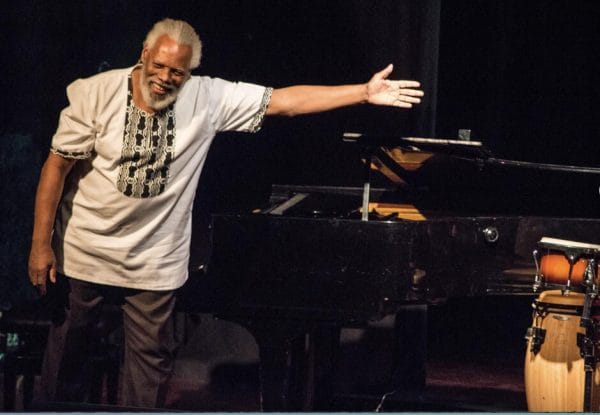
Michael “Ibo” Cooper, OD, how does that feel?

Well, I must say that I feel … glad  … a young boy from Spalding in Clarendon to be awarded one of the Orders of Distinction of Jamaica, in its independence, means that other young boys all across the country should hold hope that they can be recognized if they are disciplined, and dedicated to the skills that we have been blessed with and develop it towards nation building. So, basically, yeah, it is good that whichever party is in power is irrelevant, the government at the moment, feels it fit to say some people along the way have made contributions – and I am glad they are recognizing contributions in an area of innovation in Jamaica, which is the music.

Because, successive generations of us have helped to build an identity through the music, because of a unique style which became known as reggae, in its broader, but we know that reggae was only a part of the whole thing if you look at it in the local context. More so than just reggae, the culture that surrounds the music has brought its true identity to the nation.

So, I am glad I have been considered a part of that and, however, we have been working for the cause and not for the honor as much as I respect the honor – had it not happened it wouldn’t have stopped me from doing, and I will keep on doing.

And your brethren, “Cat,” who also received it with you…?

Yeah, man, deservingly so. Because, together, we created and maintained for a long time a group that has been recognized for its togetherness and its impact on the international music scene. One of the greatest moments for us as a band was in 1986, when we played at Giants Stadium at this international concert with an eclectic mix of musicians, at that time: Miles Davis, Fela, Ruben Blades, U2, Sting, Carlos Santana, to name only a few. There were 100,000 people in Giants Stadium – it was 1986 – and there were an estimated 26 million people watching on TV, [actor] Elliot Gould was the MC on MTV, at the end of the day when he was asked what he found most impressive. He said, “To be honest, the reggae group with the cello”. He didn’t remember the name of the band; we had played, like, second in the whole show. Which is really making a statement of Jamaica’s mix because we have ghetto man, sound man, classical music, reggae music – the whole mix is in there, those were some of the highlights. We kept that together for a long time.

Now, I’ve been called to do some teaching at the Edna Manley College of Visual and Performing Arts, a school where I run the popular music program. In that regard, I make that contribution, but, nonetheless, ‘Cat’ makes his contribution by keeping the band going. And, you know, musicians need people to look up to, so, his excellence as a guitarist, singer, cello player, and harmonica, to be there for youths to aspire to be like, you know what I mean? So, it’s definitely a contribution involved there. So, you see, you have different levels, you know what I mean?

Yeah. How has the teaching experience been for you?

Fantastic. Because, I think I have been able to influence the future of Jamaican music, positively. I have a set of youths, now, who have come through my program who have had my influence, seen what I have done with them, and what I have done before them, in the band, and so on. One of the groups that came out of the program is a young upcoming band called, C-Sharp, who have already been on tour with Tony Rebel as his backup band, right out of school – as a matter of fact, they were still in school when they did that. They have already been to Africa and Europe as Rita Marley’s backup band. They have just finished their album and trying to make a name for themselves now.

What are some of the other things you have been involved in since leaving Third World?

Well, I have been in Africa, observing what is going on there, and managing a  radio station in Malawi, which is owned by a Jamaican.

Managing a radio station?

Yes, and running a talk show and being a daytime DJ. Basically, influencing the African scene with positive reggae music. We used to run Morgan Heritage, Beres [Hammond], Luciano, Bob Marley – all the Marley’s – Third World, Buju [Banton], Culture.

When was that that, when you did that?

This was at the turn of the century, around 1999-2000 [period]. Willie [Stewart] and myself went into the studio after, and with some other musicians, we laid down some tracks – still haven’t released them yet – with some reggae-Jazz-flavored tracks. We were jamming with various people, helping with the product – we conducted the mass band for the Alpha 125th  anniversary because you know Alpha Boys’ School [has] produced some of the greatest [musicians], especially horn men of that era [of the 1960s], the birth of the ska, and all of that. So, what they did was put together a band of Alpha boys past and present and played all the much, as much as we could find that was composed by these Alpha boys. So, we had Don Drummond’s music, we had Skatalites’ music, we had David Madden’s music, Hector Sterling’s music, and son. It was all Alpha boys, present and past. It was like a sixty-piece band.

How big was this band, did you say?

Sixty.

That’s an [symphony] orchestra.

That’s what I’m saying, there were, like, ten trumpets, four trombones, a massive sax section – a big band – percussionist, drummer, acoustic bass, and electric bass. We had one woman in the mix, because, Pam Hall, is an Alpha Old Girl, so she came along and did a song backed up by the band.

Was anything recorded from that?

Yes, man, TVJ shows it all the time. They recorded the whole show. Right now, I am working on a project called Healthy Lifestyle which is part of a healthy lifestyle project, [which] we are aiming at children ages 7-to-12. A healthy lifestyle is more than exercising and food, but is peace, non-violence, conflict resolution, and sexual responsibility. So, those types of things keep me busy.

Do you miss Third World?

Yeah, without apology. Being out here now with other musicians, you realize what you have with these guys. Third World is a great bunch of musicians – irrespective of other things – and one thing that I really respect is, that, if after 24 years, people still care about their craft enough, that, I mean, if a man sings a bad note onstage, is going to cause an argument, and man will rehearse before he goes on a tour and you’re going to play the songs, that I miss, because when we used to step forward to the mic you could expect what I call ‘the wall of sound’. because it was reliable that everybody was going to kick in, you know what I mean? I have seen other musicians out here that don’t really have that cut, that precision work. However, I have also played with a bunch of great young guys who I have been, I’d say, I haven’t influenced them into that precision stuff. I also miss touring – suitcases and hotel rooms, I guess, are a part of your daily habit, after a while [chuckles].

What caused the break with you, Willie, and the band, I heard Cat’s version, what’s your version?

I don’t want to discuss it.

You don’t want to discuss it.

No.

I also heard Cat’s version of how you guys met, what’s your version?

Let me hear Cat’s version of the split-up.

Well, he said, essentially, it was amicable, so …

Well, I wouldn’t refute that. And it’s not irreconcilable, either. But, I think you know the root of it.

Yes. So, how did you guys meet, to begin with? How did it all start?

Well, in various ways.  I met [him] through Inner Circle. Let me take it in chronological order.  I had a band at school when we were around our O Levels time, or A Levels. It  [the band] was called Rhythms. At that time the Lewis brothers [Roger and Ian] had a steel band on campus. I remember when Roger got his first guitar and I showed him a few things and I used to write out things for the steel band, and so on. There was another keyboardist from Trinidad named, Peter Gray. He was not as accomplished as I was, but he could play reasonably well. Then they got some equipment, their father bought them some equipment for the band and Peter Gray was their keyboardist.

There was another guy named Gray from Wolmer’s [Boys’ High School] who was their lead guitarist who sort of knew more of the music thing than the rest of them, so, he kind of helped them out and became like the bandleader. My band broke up after A Levels because everyone was going off to university, I was going to UWI [the University of the West Indies, at Mona, Kingston] and my friends were going overseas so we so, the school thing, that’s it. I was, like, had my head focused, I was all about university, I even stopped doing classical training, I said, well, it’s all about university, I even stopped doing classical training, I said, well, “It’s all about university and a degree, math and physics thing, you know.

I was well focused on UWI and even stopped my classical training and was all about university and degree. One evening, I saw in the newspaper where there was a band called Memphis Underground playing at a place called The Circus, in Crossroads. So, I got ready to go watch this group … I had no idea who they were. While I was going out to the gate, Roger Lewis drove up to the gate and said to me, ‘Hey, what’re you doing these days?’

I said,  ‘Boy, jus’ campus, you don’t have any kind of band thing going on?’

He said, ‘Well, Peter Gray is going back to Trinidad and I don’t have a keyboardist’,  and he asked if I could fill in until they found somebody.

I said, ‘Well, boy, I’m focusing on [school] but, if it’s for a week or two, I guess it won’t kill me. Sure, yeah, I’ll do it.’

And he asked me where I was going that evening and I told him I was going down to the Circus to see some band called Memphis Underground, I don’t know who they are.

And, Roger said, ‘Well, that is us.’

So, I got into the car and he said, ‘Well, the gig is canceled this evening because the keyboardist is gone but, let’s talk about what’s going to happen.’

In any case, the next week I was in the band and they decided that the name – they never liked the name – so, they changed the name. A group had come to Jamaica called ‘Outer Limits.’ Someone joked and said, ‘If a group can be called Outer Limits then we can call our band Inner Circle.’ So, the name stuck.

So, in this band called Inner Circle, filling in for Peter Gray was Richie Gray as the bandleader and lead guitarist.

So, that’s how that came together.

Now, in the band already, was Willie Stewart, the drummer. I knew Willie long ago, from Wolmer’s in another band called Vision, but that had come apart, also. So, Willie was playing with them, so, Willie and I were in that band with Roger – the first draft of Inner Circle.

One night, we were in a place called The Tunnel, playing, and a guy comes up to me and says, ‘You know Fall In Love [“I’ll Never Fall In Love Again”] in D?’

I said, ‘Okay, but I can’t allow you to sing, you’ll have to talk to Richie, the bandleader.’  But Richie knew him before so he gave me a shout and said, ‘Yeah, man, he can sing, give him a try.’

So, we kicked Fall In Love in D and the man tear down the place, and, we said, ‘Well, boy, this brother has to be our big singer.’ Because, Tomorrow’s Children had a big singer in John Jones, you know, the [singer] who could sing the big voice tunes. We never had anybody like that. And so we had found our answer to John Jones, so to speak. Well, Bunny Rugs. That’s how I met Rugs. So, he joined the band.

Alright, Richard Gray left the band. During all of that time, Cat [Coore] used to come up down and sit down beside the bandstand every night and take us in. So, when Richie left the band – we used to call him ‘the youth’ – we said, ‘Boy, give the youth a chance.’  So, the youth took the guitar and filled the spot quite adequately, so that’s how Cat got into the band.

By this time, now, Inner Circle was me, Cat, Bunny Rugs, the two Lewis brothers, and Willie. So, that’s how we came together. And, when Richie left, of course, I was the man who knew all the music, so they said, ‘Alright, you take over as the bandleader.’

An Italian company called Farfisa started making portable organs. Now, if you remember, back in those days, the organ was a [wooden] thing where you need about two men to lift it up. So, here comes this portable organ from Italy, so the Lewis brothers went and bought one and carried it into Jamaica, the first one in the country. And guess what? It could tilt. The stand was built so the organ could be tilted. So rather than sit down at the side, I then put the organ in the middle of the band, tilted it, and started to stand up and play.

So, you changed that configuration?

No one else in Jamaica, I am the first person to ever do that. Neville Hinds from Byron Lee followed suit a few weeks later, but I am the first person to do it. The man who used to disco in the club came up to me and said, ‘Why are you doing that? It don’t look good.’ Because he wasn’t used to it.

But the worst question he asked me, was, ‘Who did you ever see do that, did you ever see Byron Lee do that?’ And that was it because we didn’t have to see anybody do anything. We were innovators. So, that was one of the things.

So, that was one of the things that was attractive about Inner Circle. We had an image, we had Bunny Rugs as a big vocalist, we had [Douglas] Guthrie as an alto sax player, and Cat was a wicked lead guitarist, and me as a crazy organist with a tilted organ, you know what I mean? So, that was that.

Well, Rugs left and went to New York, after a while – I think his family was going or something like that. Willie left and went off, too. So, we were there for a while, Cat and me, and Prilly replaced Bunny. We were kind of dissatisfied with the Top 40 format, you know, we wanted to do something more innovative, we wanted to write some songs and try a thing, you know what I mean? So, we left.

Actually, we were all leaving independently and, Cat mentioned to me that he wanted to start a band and he was thinking of Colin Leslie on bass and Willie on drums. So, I said, ‘Well, boy, you can’t leave me out of that.’ So, me and him and Prilly got together and we came up with Darren Green, who became the first manager. We got some equipment out of a store in Washington, DC, from a store called Chuck Levin’s Music, with a loan that we had gotten from the Workers Bank. That was the beginning of Third World.

The name Third World came up at a meeting we had at Clancy Eccles’ house. Clancy was one of the first people to put us on anywhere. We were put on at the Independence morning stage show at the Carib [Theatre], so you know the anniversary of the band because August 6th would be our first gig.

When was this?

Nineteen-seventy-three – August 6th, Carib Theatre. Carl Barovier on drums, me on keyboard, Cat on guitar, Colin Leslie never did make it to the stage, he rehearsed a few weeks and then dropped out and we got Richard Daley on bass, Prilly on vocals. That was the first draft of the band. So, we met at Clancy’s house,  trying to decide a name for the band. Clancy said, ‘Hold on there, Third World – Michael Manley and David Coore and those guys are always talking about the third world we have to call [the band] the ‘Sons of the Third World,’ man. So, the original name of the band was ‘Sons of the Third World,’ but in the first week we lost the Sons of  and it just became Third World [Laughs]. Basically, that’s how it evolved, and that was how the band started.

We went on with Prilly as the lead vocalist, we went to England in ‘75 where we met Chris Blackwell and got signed by Island Records. We did our first album, simply called Third World. By that time Cornell Marshal was on drums. And then we came back to Jamaica and did the Dream Concert with Bob Marley and Stevie Wonder. We accompanied Rita Marley, Bongo Herman, and Judy Mowatt.

Actually, we accompanied Rita [and Judy] some years before with the Michael Jackson [and the Jackson Five concert], but at the [Dream Concert] we played as our own act. Then in ‘76, we went to San Francisco, [on] our first American tour where we opened for Santana at the Orpheum Theatre. We got chased down the road in Boston because we got caught in the middle of the busing riots. Saw Marti Gras in New Orleans for the first time, and was on the David Susskind talk show. It was that time when we met up with Rugs again in New York – he met us on the road in New York. We were having some dissatisfaction with Prilly, so, by the summer of that year we changed him for Bunny.

When Rugs came to Jamaica that summer, he had it in his mind to be in the band, the man almost lived at my yard – I saw him every day. So, he came in. We came back from England and did the Dream Concert, with Cornell on drums, and then Cornell left that Christmas, and Willie joined us. So, Willie’s first gig was New Year’s Eve ‘76 going into ’77, at a place called Chela Bay, where the Playboy Club used to be, just before it closed down. So, Willie came with us as a drummer to San Francisco, that was his first tour with us. So, he did the American tour. During that summer, now, Rugs was the last man to join the band, because [percussionist] Carrot [Jarrett] was already in and Rugs came that summer. Rugs’ first gig was when we had Carifesta in Jamaica, in 1976, and we performed at the Carib for the Carifesta show. That was the first gig, Carifesta at Carib.  So, that was basically how we got together, that draft of the band, the Carifesta draft [which] continued until Carrot left in ‘84.

What was the reason for his departure?

In his case, just like with Marshie, they felt that they could do better for themselves. So, here we come to ’84, now, he’s out and the five of us continued for the rest of the time until ‘97.

When you and Willie left?

Yeah.

Why do you think that Third World has never won a Grammy after some nine nominations?

Third World is an interesting phenomenon, and the people who choose the Grammy would not give it to Third World.

Why do you think so?

The people who chose the Grammy are caught up in the rags-to-riches story. You see, they romanticize the poor Black people from the ghetto who are making it through the music. What Third World represents is a consciousness. Not that we were not poor, but, you see, people did not think of us as poor youth because of Cat, when he was the only one who came from a relatively wealthy background. Education is something that some of us have, like myself, and so on, musically and otherwise. Willie went to Wolmer’s, I went to Jamaica College, and Cat went to Priory. However, here we have Jamaica going to rot, now, because things like education have been looked down upon as a societal phenomenon for too long. So, what Third World is supposed to represent is a different drama. Whereas you have a rags-to-riches story where a man was a broke man and he gets some money and he gets rich.

People in this country are getting rich – sorry to philosophies a bit – in many instances, illegally. When they get there their having a problem. I have to quote Wayne Marshall in a recent song: ‘Hard to obtain, hard to maintain.’  People do not understand what it takes to maintain the dream that they think they need to have. So, they get the big house and the Pajero and realize that’s running up the cost of living and if you flop, you are going to look shameful, there are a whole set of things that comes with it. So, we romanticize the rags-to-riches story, but we don’t understand, as Bob Marley said, ‘Think you’re in heaven but you’re living in hell.’

So, what Third World is supposed to represent is, what do you do with education, what do you do with wealth? It’s the other side of the story that I don’t think we’ve grasped yet, [which] is why the whole nation is coming to rot. In other words, do you lay back in luxury and just rot? Then what was the point? Do you see what I’m saying? That is what Third World is supposed to represent: ‘Them man have education, they’ve made it, let’s see what they’re going to do with it.’

One of the things that is happening to third-world countries, like Africa, and so on, as you can see, is that they haven’t figured it out yet. Because they run off into drugs and loose behavior. There is no moderation or sense of responsibility and the thing is not spent doing the right thing, see what I’m saying?

You know, Singapore got independence the same year as Jamaica, ’62, and now Singapore is considered a First World country. The leader of Singapore once said, and many Caribbean leaders were pissed at him for saying so, and took him to task, he said, he thinks we play soca and reggae a little too much.

Yet, at the same time, Singapore also used Jamaica as a model …

Back in the day, but they passed us out. Look at my present situation, I am the only popular musician who has a set of youth who is trying to forge a future. And you wonder why the thing is rotten? And I can’t get Beanie Man or Elephant Man to come around the school and say “hello” to the youth them.

Why?

They won’t come. Do you see what I am saying? Everything is about promotion and popularity. Fame and riches are the end. You know when you’re going to get a scramble? You’re going to get a scramble and panic when they get older and the next generation comes and they are fading and then all of a sudden you see them appear, you see what I’m saying? Many of them have not honed their skills to a level where they could do what I am doing – in other words, they couldn’t become a teacher. Teaching is looked down on as a low profession, it’s looked down on as where the people who cannot do anything else go. I am one of the few people who are in it because it’s not that I flopped why I have to go there.

I am not bragging or boasting, but there are [quite a few] innovations I’ve pulled up … this is another level of innovation that I’ve gone to right now because I’m thinking ahead. “Cannonball” Bryan taught Dean Fraser, Mrs. Lois taught me – and you have no idea who she is. They never achieved what we achieved, but they gave unselfishly and caused us to be who we are, and many of us are not sitting down and saying, “Okay, so what happen?” So, the nation’s stuck! We blame the youths and say, “Why are the youth going on like that?” Nobody’s helping them to go anywhere, so they take a gunshot for it. Third World is supposed to represent that consciousness.

What do you think of the band’s [Third World] current output and sound?

[Laughs] Everybody reaches where they want to reach, so their sound has reached where it has reached. It’s achieving its purpose.

Are any of your children musically inclined?

Yes. Arif is producing, he’s also a very popular radio DJ, now, at Fame-FM.

Arif, as in Arif Mardin, the [Atlantic Records producer-engineer]?

As a matter of fact, that’s why I gave him the name.

Okay. That’s a great honor. What is your take on the Jamaican situation today, culturally, politically, and socially?

Well, I think Damian Marley’s album saved the day. Welcome to Jamrock is the kind of work I’m looking for in my youth, right now. It’s well thought out, excellent work, musically, poetically, everything. The only problem is that I don’t see anyone offering solutions; people make criticisms of the situation. If it’s artistically done, I appreciate that, but the youth still don’t know where to go. But, it’s an excellent piece of work and I think it saved the day because a lot of bullshit was going on. Dancehall is a party, but you can’t leave the one-drop. You see, every time people get into a tribulation the one-drop comes back. So, we have the one-drop and the Binghi Box to kind of clean up the mess. But dancehall is a party, you know how it goes, people talking about sex and slackness. A Saturday night and you have a Smirnoff Ice in your hand, you don’t want nothing heavy for the head, you’re in a club you wanna be gettin’ crazy.

This is the machine age, computer steady off the rhythm, but they’re going back into the studio and they are starting to play live. I must say, Willie had predicted this years ago, that they were going to go back to playing live again. Because there are certain nuances and acoustics of the live instrument that you’re not going to get from the machine. So, now we have the mixing of the machine and the live, which is cool.

I still predict great things for the country [Jamaica], and the music might still lead the way. Young Mr. Marley’s music really has us fired up.

What inspires you musically?

Well, as you’ve probably picked up, a Pan-African placard. We’re not going to let that go. We stand up for our people. It must be clear that this does not mean we’re against anyone, but the mess that black people are in universally, is close to my heart, and I think it’s our mess to clean up, and, so, the music can help in that regard.  I’m talking about fixing my house and I have a divine right to fix my house. And it was a very, very important part of Third World’s inspiration, and it still inspires me.

Where and when do you like to work creatively?

All the time. I still don’t like to sit down and talk to lawyers and accountants – I would live in the studio.

What’s your favorite Third World song?

If I really had to choose, I think I would go for “Melt With Everyone.” It’s a song that Rugs wrote some years ago.

What is your favorite reggae song, if there is one? I know that’s a big question.

Oooh! It would be quite possibly the Abyssinians’ “Declaration of Rights.”

And, your favorite [Bob] Marley song?

Talking Blues.

And your favorite Third World Album?

I think we hit the peak with the Journey to Addis album, the one that has ‘Now That We Found Love.’

For myself, I would say that album and 96 Degrees in the Shade.

A lot of people like 96 Degrees in the Shade. I won’t tell you why it is I give 96 Degrees second place, because it’s a self-criticism that would be very revealing. For something that you think is wrong, sometimes the public doesn’t hear it that way. But, with Journey, now, we were really, really flying. A whole lot of mystique went into that. [While] Melt With Everyone is my favorite Third World song, but when you talk about the Third World album, now, I am looking at Journey To Addis, the title track itself – not necessarily as a favorite song, in that regard, but I got total artistic satisfaction from it. You know when an artist stands back and looks at a masterpiece and he doesn’t care what anybody says, he feels good about that one.

Where would you like to see Jamaica in the not-too-distant-future?

I walk around to the schools and tell the youth anything that’s in a foreign [land] can be here. We have a challenge to build a peaceful society where lovers can hold hands and walk in the moonlight, and old people can retire after years of service and not have to worry that they’re going to suffer. [A] sense of humor is on people’s faces again, abundance of locally-grown food and appreciation for the beauty of our environment. So, the people who live outside want to come and visit every year, and when they do visit, they don’t want to leave. It’s a mix between our roots and the modern world, with modern conveniences like good roads, night hospitals, and good schools.

How do you feel about where the Rasta movement is today?

Beautiful, because the youths now are thinking. Just the other day a youth [who] made a song – last week I heard it on Irie-FM – that we need a more serious look at Rasta. And that means that I’m encouraged. Because that means the youths realize that it must evolve to another level. The whole Rasta movement is not religion, religion is static, and sometimes tradition is static. But being a movement, you can mold and change it, and yet it still has its foundation.

What is your take on the evolution of dreadlocks?

Well, I never did love the word “dread” because I don’t want anyone to dread I, you know. But remember that it’s a cultural statement. From what I see going now, it’s beautiful, because once upon a time people used to see it as ugly.

Do you have any plans for a book or biography?

I should do that, right? [Laughs]. I can’t be a vintage artist yet (ones that are already dead). I still feel fresh. I don’t mean that the book would stop me…

What are some of the ideas or things that you would like to be doing musically?

That’s wide, a lot of things. That is a whole new conversation. Definitely, an album is in the making. I would [like to] try a movie score.

Who are some of the influences in your music?

Definitely Mr. Marley – I don’t mean from when he broke internationally] but from early on, I liked what he was doing. In terms of vocalists, locally, Alton Ellis, Ken Booth, Leroy Sibbles, [The] Skatalites, the whole of that early era; jazz-wise: Miles, Herbie [Hancock], Dizzy [Gillespie]. Popwise: Stevie Wonder, Earth, Wind, and Fire – definitely Ray Charles. Jazz Crusaders, Weather Report. It’s wide, you know because I also like some of the early rock stuff like what Pink Floyd and them were doing.

When did you train at the London School of Music?

No. I have Royal School certificates and some interviewers misunderstood what I had said, that I went to the Royal School of Music.

There was a time where you never sang. When and how did you start?

Backing up Rugs, actually. [Laughs] Backing up Bunny. The song was Didn’t I Blow Your Mind This Time. He brought it on and there was a part where one of the guys sang the falsetto and Rugs could reach it, because it was in his range, but it didn’t have the same effect because we thought the voice was too heavy for the part, it lost sensitivity. So, they had Cat do that part, which is where he started singing in the band. Then we got to the harmony part [Sings.] “Didn’t I blow your mind this time …” Me and Cat used to chip in a do a three-part with Bunny, and that’s where it actually started.

That really defined the Third World sound, harmonically.

It was coming before Third World. It started in Inner Circle – the three of us – and after that, now, me and Cat, and started singing harmony with whichever vocalist there was. And there were other group tunes, the Temptations’ Papa Was A Rolling Stone. Where I did the bass part, Cat did the tenor, and so that became a distinct vibe. And then we moved that on to Third World where we started singing and playing, and that became again a distinct part of the image and sound.

How would you compare your earlier life to now in the popular music culture?

Earlier life in terms of which part?

How you were 30 years ago to now.

Oh, much improved. As a matter of fact, just tonight I was playing something when I remembered a certain musician carried it to me and asked me to accompany him and I was finding it very difficult because I was also very nervous because he was a big man in [music]. I look at it now and say, ‘Wait, was it this that I was … ?’ Nothing like maturity and time, you know? Exposure and experience.  I remember one time when I went to audition to be the Pantomime pianist and Sonny Bradshaw was running the band at the time – and I mean, this was Mr. Bradshaw and we were going to be on TV, and he was the big man – I mean, the [palms of my hand] became a river.

What would you say would be the highlight of your musical experience, to date?

So many of them. Giants Stadium is one, Universal Amphitheatre in Los Angeles, just because I used to sit in the audience and think, ‘One day I want to be up there.’ But, I’m trying to think of a musical event where the music just soared to a height. An early experience, opening for Bob Marley at the Lyceum Theatre in London.

Cat said that, too.

Because nobody knew us yet, we didn’t have a record over there yet. We stepped on the stage and done the place, as a new band. Because, again, we were doing some things that were not expected. [Cat] was playing cello – they found the mix unusual, because we were doing Stevie Wonder songs and reggae songs, and so on. In England you were either a soul band or a reggae band, for us, because we were into the versatility thing, you see. But we mashed up the place, still.

Another awesome moment was a thing called July Fest, in Richmond, Virginia. The American government used to have these summer festivals where they would subsidize it so they could carry the price down for the everyday guy and they blocked off the street. Because Richmond is a place where the promoters would tell you that we can’t get more than 400 people. And, yet, that July Fest there was Third World and Wailers – Bob had passed already – so it was the Wailers Band. They opened and the people, and, of course, out there were about 15,000 people and, the people sang along when they heard the Bob Marley tunes, [because] they knew those tunes.

The promoters always told us that we were not that [well-known] in the region, especially among the black people, But when we hit the stage, we didn’t have to sing anything. The 15,000 people knew every Third World tune word for word, you hear me? Blew me away, because I could not believe it. And it just goes to show how the whole thing was promoted because we were typically promoted that reggae was mainly known to white people and that blacks didn’t know it. But what’s been happening is that they were making the prices too high because the white promoters didn’t want to go into the black areas.

A similar situation happened at the Carter Barron Amphitheatre, in Washington, DC, again subsidized for the summer and it was us headlining with a little-known opening act. When the sound check was done and we were leaving the parking lot – not even a bicycle out there – and the Budweiser festival was down the street with Stevie Wonder and Earth, Wind and Fire, the Jamaica Independence [show] was up the road with Freddie McGregor, so, believe you me, we went [back] to the hotel to change and said, ‘We’re going to flop tonight.’ When we went back [to do the show], I nearly wet [myself], the place was sold out! When we took the stage – the same thing again – similar thing again, majority Black audience and every word of the tunes.

So, one of the things that was obvious to me was that we had a very strong black following in the United States which we probably didn’t get close to because of how the concert promotions were going. [Also,] I hear we have a big following in South Africa, too – we’ve never played there.

How would you like to be remembered?

Boy, that sounds too final, man.

I know. Whenever I ask people that, they tend to get nervous.

I guess, just being remembered is enough. But, given a choice, I would like to be positively remembered.

What is your take on where you think reggae is today?

Reggae came back and did not move Dancehall to come back.

What is your view on the current trends in the music industry, as a whole?

Download on the economics – don’t know how that one is going to go. The good thing is that e-commerce has made the whole world our marketplace, so the numbers you can reach directly without even accompanying the middle are greater, potentially. If there’s even a little piracy, you’re supposed to be able to make more.

The video world has changed music completely. I think I prefer the days when we were just aural. Seeing something with music in the background can distract from the musicality. So, now, we get what we call “the basic beat generation.” I shudder to say these things because it might sound like the whole generational thing, a youth might say, ‘Boy, just get with what’s going on.’ Yeah, but, you see, there are some absolutes. Things like pitch recognition is a skill that will die if they just put a beat in the background and watch some girl wind.

This is one craft where black people have an advantage, you know, believe it or not, because it is totally ear-generated.  The skill that is done, the craft, that is music. Too much visual can push it into the background. It can be used provisionally against the person while keeping the person still at a low intellectual level.

The music business can defeat music, but I have always trained my students that music is a craft and the music business can be craftiness. So, I’m still trying to train people to do craft.

Well, you can’t get away from craft.

Right. The good thing that happens today is that don’t care what the business does, the craft still seems to come through. Again, I go back to Jr. Gong, with all that’s going on, a good piece of work tends to flourish, no matter what.

And it stands the test of time.

Ah, you see it. Like his father’s work, or like Third World’s work, or like Jimmy Cliff’s work, you get me? The thing is, you’re also looking at the world as it changes, and when the world is in need of certain things, people reach out. We’re in the 21st Century … With what’s going on, the world needs meaning, now, people are looking for something deeper.

Olivier Stephenson is a journalist, playwright, screenwriter, poet, and author of “Visions and Voices: Conversations with Fourteen Caribbean Playwrights (Peepal Tree Press, 2013).

A co-founding member and former executive director of the Caribbean American Repertory Theatre (CART) in New York City; he has worked as a freelance writer in New York City where he was formerly a freelance writer at the New York Amsterdam News – a weekly Black-owned newspaper serving New York City and one of the oldest newspapers geared toward African Americans in the United States; KLAS-FM  Radio in Jamaica, The Jamaica Observer, The Gleaner –  a morning daily newspaper and the oldest continuously published newspaper in the Western Hemisphere – and as a columnist for that newspaper’s afternoon edition, The Star. He currently resides in the State of Florida, in the United States.

Photo – Geoffrey Philp on Facebook

Source

65 Third World Countries 2023: Beyond the Label

The term “Third World Countries” has been a topic of discussion for decades, evolving in meaning and context over time. Today, in 2023, it’s essential to understand the term’s historical significance, its modern implications, and the challenges and opportunities these countries face. As a researcher I aim to provide a comprehensive overview, backed by reputable sources, to shed light on the current state of Third World Countries.

Historical Context of the Term “Third World”

The term “Third World” has its roots in the Cold War era, a time of significant political tension and division. Understanding its origin provides clarity on its evolution and the shift in its meaning over time.

Origins of the Term

According to the World Population Review, the term “Third World” was originally coined by French historian Alfred Sauvy in 1952. It was part of the “three worlds” label system used to describe a country’s political alliances:

  • First World: Largely democratic NATO countries such as the United States, Japan, and much of Western Europe.
  • Second World: Communist Bloc countries, including the Soviet Union, China, and their allies.
  • Third World: Countries that remained neutral and allied with neither side.

Evolution of the Term

As I have read on study of JSTOR, over time, the meaning of “Third World” underwent a transformation. With the fall of the Soviet Union and the end of the Cold War in the early 1990s, the term lost its political root. Instead, it began to refer to economically poor and non-industrialized countries, as well as newly industrialized ones. This modern definition encompasses countries with high poverty rates, economic instability, and a lack of essential human resources compared to the rest of the world.

List Of Third World Countries

Country Third World Country Human Development Index (HDI)
South Sudan Yes 0.39 (Low Human Development)
Niger Yes 0.4 (Low Human Development)
Central African Republic Yes 0.4 (Low Human Development)
Burundi Yes 0.43 (Low Human Development)
Mali Yes 0.43 (Low Human Development)
Yemen Yes 0.46 (Low Human Development)
Burkina Faso Yes 0.45 (Low Human Development)
Mozambique Yes 0.45 (Low Human Development)
Guinea Yes 0.47 (Low Human Development)
Guinea-Bissau Yes 0.48 (Low Human Development)
Liberia Yes 0.48 (Low Human Development)
Sierra Leone Yes 0.48 (Low Human Development)
Democratic Republic of the Congo Yes 0.48 (Low Human Development)
Eritrea Yes 0.49 (Low Human Development)
Ethiopia Yes 0.5 (Low Human Development)
Madagascar Yes 0.5 (Low Human Development)
The Gambia Yes 0.5 (Low Human Development)
Lesotho Yes 0.51 (Low Human Development)
Malawi Yes 0.51 (Low Human Development)
Djibouti Yes 0.51 (Low Human Development)

1. South Sudan

  • Third World Country: Yes
  • Human Development Index: 0.39
  • HDI Tier: Low Human Development

South Sudan, the world’s youngest nation, has been embroiled in conflict since its inception. The country’s low HDI is indicative of its challenges in establishing stable governance, infrastructure, and social services.

2. Niger

  • Third World Country: Yes
  • Human Development Index: 0.4
  • HDI Tier: Low Human Development

According to USAID Niger, despite its rich cultural heritage, grapples with desertification, food insecurity, and high mortality rates. Its low HDI underscores the nation’s struggles with basic human needs and services.

3. Central African Republic

  • Third World Country: Yes
  • Human Development Index: 0.4
  • HDI Tier: Low Human Development

As per report from Global Focus The Central African Republic, abundant in natural resources, faces political unrest and violence. The nation’s low HDI highlights the disparity between its resource wealth and the well-being of its citizens.

4. Burundi

  • Third World Country: Yes
  • Human Development Index: 0.43
  • HDI Tier: Low Human Development

Burundi, recovering from a prolonged civil war, faces challenges in governance, infrastructure, and social services says the IMF. Its low HDI is a testament to the nation’s ongoing efforts to rebuild and stabilize.

5. Mali

  • Third World Country: Yes
  • Human Development Index: 0.43
  • HDI Tier: Low Human Development

Mali, known for its rich history and culture, has been grappling with political instability and extremist insurgencies according to JSTOR. The nation’s HDI reflects its challenges in ensuring the well-being of its citizens amidst these adversities.

6. Yemen

  • Third World Country: Yes
  • Human Development Index: 0.46
  • HDI Tier: Low Human Development

Yemen, embroiled in a devastating civil war, faces severe humanitarian crises. The nation’s low HDI underscores the dire situation of its citizens, with many lacking access to basic necessities.

7. Burkina Faso

  • Third World Country: Yes
  • Human Development Index: 0.45
  • HDI Tier: Low Human Development

Burkina Faso, a nation with a vibrant cultural scene, struggles with political unrest and extremist activities. Its HDI reflects the challenges the nation faces in ensuring a decent quality of life for its citizens.

8. Mozambique

  • Third World Country: Yes
  • Human Development Index: 0.45
  • HDI Tier: Low Human Development

Mozambique, despite its scenic beauty and resources, grapples with economic challenges and insurgent activities. The nation’s HDI highlights its struggles in ensuring the well-being of its populace.

9. Guinea

  • Third World Country: Yes
  • Human Development Index: 0.47
  • HDI Tier: Low Human Development

Report from KPMG says that Guinea is rich in mineral resources, and faces challenges in governance and infrastructure. The nation’s HDI underscores its efforts to improve the quality of life for its citizens.

10. Guinea-Bissau

  • Third World Country: Yes
  • Human Development Index: 0.48
  • HDI Tier: Low Human Development

Guinea-Bissau, with its rich biodiversity, has faced political instability and economic challenges over the years. The nation’s HDI reflects its ongoing struggles with governance, infrastructure, and social services.

11. Liberia

  • Third World Country: Yes
  • Human Development Index: 0.48
  • HDI Tier: Low Human Development

Liberia, Africa’s oldest republic, has been grappling with the aftermath of prolonged civil wars. The nation’s HDI underscores its efforts to rebuild and ensure a better quality of life for its citizens.

12. Sierra Leone

  • Third World Country: Yes
  • Human Development Index: 0.48
  • HDI Tier: Low Human Development

Sierra Leone, known for its scenic beaches and rich culture, has been recovering from a devastating civil war according to Blackpast. The nation’s HDI highlights its ongoing challenges in governance, healthcare, and education.

13. Democratic Republic of the Congo

  • Third World Country: Yes
  • Human Development Index: 0.48
  • HDI Tier: Low Human Development

The DRC, abundant in natural resources, has faced decades of political unrest and conflict. The nation’s low HDI is indicative of the disparity between its resource wealth and the well-being of its citizens.

14. Eritrea

  • Third World Country: Yes
  • Human Development Index: 0.49
  • HDI Tier: Low Human Development

JSTOR says that Eritrea, with its strategic location along the Red Sea, has faced challenges in governance and human rights. The nation’s HDI reflects its struggles in ensuring freedom and well-being for its citizens.

15. Ethiopia

  • Third World Country: Yes
  • Human Development Index: 0.5
  • HDI Tier: Low Human Development

Ethiopia, known for its ancient history and diverse culture, has been grappling with political challenges and regional conflicts. The nation’s HDI underscores its efforts to improve governance and social services.

16. Madagascar

  • Third World Country: Yes
  • Human Development Index: 0.5
  • HDI Tier: Low Human Development

GVI says that Madagascar, has most unique biodiversity. Country also faces economic challenges and environmental threats. The nation’s HDI reflects its struggles to balance conservation efforts with the well-being of its citizens.

17. The Gambia

  • Third World Country: Yes
  • Human Development Index: 0.5
  • HDI Tier: Low Human Development

The Gambia, with its picturesque landscapes, has faced political challenges over the years. The nation’s HDI highlights its efforts to ensure a stable governance structure and improve the quality of life for its citizens.

18. Lesotho

  • Third World Country: Yes
  • Human Development Index: 0.51
  • HDI Tier: Low Human Development

I read on World Atlas that Lesotho, an enclaved country within South Africa, grapples with economic challenges and health crises. The nation’s HDI underscores its struggles with healthcare infrastructure and social services.

19. Malawi

  • Third World Country: Yes
  • Human Development Index: 0.51
  • HDI Tier: Low Human Development

Malawi, known as the “Warm Heart of Africa,” relies heavily on agriculture. The nation’s HDI reflects its challenges in ensuringq food security, healthcare, and education for its citizens.

20. Djibouti

  • Third World Country: Yes
  • Human Development Index: 0.51
  • HDI Tier: Low Human Development

According to Global Village Space Djibouti, strategically located near some of the world’s busiest shipping lanes, has been leveraging its location for economic growth. However, the nation’s HDI indicates challenges in diversifying its economy, improving education, and ensuring healthcare for its citizens.

Remaining Countries:

  • Senegal
  • Sudan
  • Rwanda
  • Uganda
  • Togo
  • Nigeria
  • Pakistan
  • Haiti
  • Benin
  • Zambia
  • Syria
  • Kenya
  • Republic of the Congo
  • Zimbabwe
  • Myanmar
  • Cambodia
  • Angola
  • Cameroon
  • Comoros
  • Mauritania
  • Solomon Islands
  • Papua New Guinea
  • Ivory Coast
  • Tanzania
  • El Salvador
  • Bhutan
  • Nicaragua
  • East Timor
  • Laos
  • Namibia
  • São Tomé and Príncipe
  • Vanuatu
  • Honduras
  • Kiribati
  • India
  • Ghana
  • Guatemala
  • Federated States of Micronesia
  • Marshall Islands
  • Tuvalu
  • Eswatini
  • Equatorial Guinea
  • Nepal
  • Cape Verde
  • Bangladesh

Modern Implications and Controversies

The term “Third World” in its modern context has stirred debates and controversies, primarily due to its derogatory connotations. It’s crucial to address these concerns to promote a more inclusive and respectful discourse.

Misconceptions and Confusions

Tthere’s significant confusion regarding which countries can be termed “Third World” today. Historically, nations like Finland, Sweden, Ireland, and Switzerland were Third World countries as they weren’t aligned with NATO or the Communist Bloc. However, their current economic prosperity doesn’t align with the modern definition of the term.

Derogatory Connotations

In its modern context, “Third World” is often viewed as a derogatory term, degrading developing or poor countries. This combination of confusion and disrespect has rendered the term largely obsolete in many circles.

Alternatives to “Third World” and Current Classifications

As the term “Third World” faces criticism, alternative terms have emerged to describe countries based on their economic and developmental status. These terms aim to be more accurate and respectful.

Preferred Modern Terms

Instead of “Third World,” many now favor terms such as “developing countries” and “least-developed countries,” calculated by the United Nations Human Development Index. Another term in use is “low-income countries,” based on World Bank data.

Exclusions and Inclusions

According to the World Population Review, some United Nations Member States like Monaco, Nauru, North Korea, and Somalia are typically excluded from the Human Development Index. If included, all but Monaco would likely rank as developing or least-developed countries.

FAQ

1. What is the difference between “Third World” and “Developing” countries?

While both terms are often used interchangeably, “Third World” originated during the Cold War to describe countries not aligned with NATO or the Communist Bloc. “Developing” is a more modern term, focusing on the economic and infrastructural development of a country.

2. Why is the term “Third World” considered derogatory by some?

The term, in its modern context, is often associated with poverty, underdevelopment, and inferiority. Many believe it perpetuates negative stereotypes about these countries.

3. How is the Human Development Index (HDI) calculated?

The HDI is a composite index measuring average achievements in three basic dimensions of human development: health (life expectancy at birth), education (mean years of schooling and expected years of schooling), and standard of living (GNI per capita).

4. Are there other indices or metrics used to classify countries based on development?

Yes, other metrics include Gross National Income (GNI) per capita, the World Bank’s income classifications, and the Multidimensional Poverty Index (MPI).

5. How can a country improve its HDI ranking?

Improvements in education, healthcare, infrastructure, and economic stability can contribute to a higher HDI. Foreign investments, sustainable policies, and good governance also play crucial roles.

Final Words

Understanding the nuances of terms like “Third World” and the metrics that gauge a country’s development is essential in today’s interconnected world. While labels can often oversimplify complex realities, they also offer a starting point for deeper exploration and empathy. As global citizens, it’s our responsibility to stay informed, challenge stereotypes, and contribute positively to the global narrative.

Rerferences

  1. World Population Review
    • Referenced in relation to the origins of the term “Third World.” This source likely provides data and insights about global populations and country classifications.
  2. JSTOR
    • Mentioned multiple times, particularly in relation to the evolution of the term “Third World” and the challenges faced by countries like Mali and Eritrea. JSTOR is a digital library for scholars, researchers, and students.
  3. USAID Niger
    • Cited in the context of Niger’s challenges, including desertification, food insecurity, and high mortality rates. USAID provides foreign aid and assistance to countries in need.
  4. Global Focus
    • Referenced when discussing the Central African Republic’s political unrest and violence. Global Focus likely provides insights on global issues and crises.
  5. IMF
    • Mentioned in the context of Burundi’s challenges post a prolonged civil war. The International Monetary Fund (IMF) provides financial assistance and advice to member countries.
  6. KPMG
    • Referenced when discussing Guinea’s challenges in governance and infrastructure. KPMG is a global network of professional firms providing audit, tax, and advisory services.
  7. Blackpast
    •  Cited in relation to Sierra Leone’s recovery from a devastating civil war. Blackpast is an online reference center for African American history.
  8. GVI
    • Mentioned in the context of Madagascar’s unique biodiversity and its challenges. GVI offers international volunteering programs.
  9. World Atlas
    • Referenced when discussing Lesotho’s economic challenges and health crises. World Atlas provides maps, facts, and geographical information.
  10. Global Village Space
  • Cited in relation to Djibouti’s strategic location and its efforts for economic growth. Global Village Space likely covers global news and analysis.

Source

UN Chief Urged to Create Civil Society Envoy

Civil Society, Democracy, Featured, Global, Headlines, Human Rights, IPS UN: Inside the Glasshouse, Sustainable Development Goals, TerraViva United Nations

The high-level segment of the UN General Assembly in late September 2021 was attended by more than 100 world leaders and over a thousand delegates from 193 countries —despite the UN’s pandemic lockdown. But Civil Society Organizations (CSOs) were banned from the Secretariat building. Credit: UN Photo / Mark Garten

UNITED NATIONS, Oct 16 2023 (IPS) – When the United Nations commemorated the 75th anniversary of the UN Charter back in 2020, Secretary-General Antonio Guterres paid a supreme compliment to Civil Society Organizations (CSOs).


The CSOs, he pointed out, were a vital voice in the San Francisco Conference (where the UN was inaugurated). “You have been with us across the decades, in refugee camps, in conference rooms, and in mobilizing communities in streets and town squares across the world.”

“You are our allies in upholding human rights and battling racism. You are indispensable partners in forging peace, pushing for climate action, advancing gender equality, delivering life-saving humanitarian aid and controlling the spread of deadly weapons”.

And the world’s framework for shared progress, the Sustainable Development Goals (SDGs), is unthinkable without you’, he declared.

But in reality, CSOs are occasionally treated as second class citizens, with hundreds of CSOs armed with U.N. credentials, routinely barred from the United Nations, specifically when world leaders arrive to address the high-level segment of the General Assembly sessions in September.

The annual ritual where civil society is treated as political and social outcasts has always triggered strong protests. The United Nations justifies the restriction primarily for “security reasons”.

A coalition of CSOs– including Access Now, Action for Sustainable Development, Amnesty International, CIVICUS, Civil Society in Development (CISU), Democracy Without Borders, Forus, Global Focus, Greenpeace International, Human Rights Watch, Oxfam International, TAP Network, and UNA-UK— is now proposing the creation of a Special UN Civil Society Envoy to protect, advance and represent the interests of these Organizations.

Credit: United Nations

In a letter to Guterres, the coalition points out the disparity in access for civil society delegates viz. UN staff and members of government delegations who face no such restrictions stand as a critical reminder of the hurdles faced by accredited civil society representatives who travel great distances to contribute their perspectives at the UN.

“It is also a missed opportunity for civil society delegates to engage in key negotiations inside the UN headquarters and for policymakers to benefit from their critical and expert voices buttressed by lived experience in advancing the principles enshrined in the UN Charter,” the letter says.

Considering this recurring disparity, the letter adds, “we believe it’s vital to correct this injustice promptly to ensure opportunities for all stakeholders to contribute to discussions of global consequences”.

“This issue once again underscores the necessity for civil society to have a dedicated champion within the UN system, in the form of a Civil Society Envoy, who can help promote best practices in civil society participation across the UN and foster outreach by the UN to civil society groups worldwide, particularly those facing challenges in accessing the UN.”

“We would also like to express our support for the revision of modalities to ensure meaningful civil society participation at all stages of UN meetings and processes as well as Unmute Civil Society recommendations supported by 52 states and over 300 civil society organizations from around the world”.

“We believe that addressing the above concerns could lead to significant strides in advancing the ideal of a more inclusive, equitable, and effective UN in the spirit of ‘We the Peoples.’ “

Mandeep Tiwana, Chief Officer, Evidence and Engagement, at CIVICUS told IPS civil society representatives have long complained about asymmetries across UN agencies and offices in engaging civil society and have called for a champion within the UN system to drive best practices and harmonise efforts.

One such medium, he said, could be the appointment of a Civil Society Envoy along the lines of the UN Youth Envoy and Tech Envoy to drive key engagements.

Notably, a Civil Society Envoy could foster better inclusion of civil society and people’s voices in UN decision-making at the time when the UN is having to grapple with multiple crises and assertion of national interests by states to the detriment of international agreements and standards, he pointed out.

Five reasons why it’s time for a Civil Society Envoy:

    1. Without stronger civil society participation, the SDGs will not get back on track. The UN’s own assessment laments the lack of progress on the SDGs. We desperately need stronger civil society involvement to drive innovations in public policy, effectively deliver services that ‘leave no one behind’ and to spur transparency, accountability and participation. A Civil Society Envoy can catalyse crucial partnerships between the UN, civil society and governments.

    2. Civil society can help rebalance narratives that undermine the rules based international order. With conflicts, human rights abuses, economic inequality, nationalist populism and authoritarianism rife, the spirit of multilateralism enshrined in the UN Charter is at breaking point. Civil society representatives with their focus on finding global solutions grounded in human rights values and the needs of the excluded can help resolve impasses caused by governments pursuing narrow self-interests.

    3. A civil society envoy can help overcome UNGA restrictions on citizen participation and create better pathways to engage the UN. As it does every year, this September the UN suspended annual and temporary passes issued to accredited NGOs during UNGA effectively barring most civil society representatives from participating. Further, civil society access to the UN agencies and offices remains inconsistent. Reform minded UN leaders and states that support civil society can prioritise the appointment of an envoy for improved access.

    4. More equitable representation. The few civil society organizations who enjoy access to UNGA heavily skew toward groups based in the Global North who have the resources to invest in staff representation in New York, or the right passports to enter key UN locations easily. A UN civil society envoy would lead the UN’s outreach to civil society across the globe and particularly in underserved regions. Moreover, a civil society envoy could help ensure more diverse and equitable representation of civil society at UN meetings where decisions are taken.

    5. A civil society envoy is possible. Getting anything done at the UN requires adhering to what is politically feasible. A civil society special envoy is within reach. The Unmute Civil Society initiative to enable meaningful participation at the UN is supported by 52 states and over 300 civil society organizations. It includes among other things a call for civil society day at the UN and the appointment of a UN envoy.

Recent UN Special Envoys include:

IPS UN Bureau Report

  Source

Housing in Cuba, a Problem with no Solution in Sight

Civil Society, Development & Aid, Economy & Trade, Editors’ Choice, Featured, Headlines, Latin America & the Caribbean, Population, Poverty & SDGs, Regional Categories, TerraViva United Nations

Development & Aid

A "for sale" sign seen outside a house in Centro Habana. As you walk along the streets of the Cuban capital, you see a variety of "for sale" signs on a number of houses. The same is true in cities and towns in Cuba's 168 municipalities. CREDIT: Jorge Luis Baños / IPS

A “for sale” sign seen outside a house in Centro Habana. As you walk along the streets of the Cuban capital, you see a variety of “for sale” signs on a number of houses. The same is true in cities and towns in Cuba’s 168 municipalities. CREDIT: Jorge Luis Baños / IPS

HAVANA, Oct 16 2023 (IPS) – To emigrate to the United States and fulfill her hopes for a better life, Ana Iraida sold almost all of her belongings, including the apartment that, until her departure, saved her from the uncertainty of living in rented housing in Cuba, a country with an unresolved housing crisis.


“I inherited the apartment in Havana from my maternal grandmother, who passed away in 2015. It was small, but comfortable. I sold it for 6,000 dollars to pay for my documents, paperwork and airfare,” the philologist, who like the rest of the people interviewed preferred not to give her last name, told IPS.

“It is difficult to sell, because many people want to emigrate, and they are practically ‘giving away’ the houses. But at the same time hard currency is scarce and a person with thousands of dollars prefers to use them to leave the country.” — Elisa

From Houston, Texas in the U.S., where she now lives, the young woman said that, thanks to loans from friends, “I raised another 4,000 dollars. I got to Nicaragua in December 2022 and from there I continued by land to the U.S. border.”

Ana Iraida said she feels “fortunate” to have had a home that was “furnished and in good condition,” with which she covered her expenses. She said that others “have a more difficult time because they do not have a home of their own.”

In the last two years, emigration from Cuba has skyrocketed amidst the deterioration of the domestic economic situation, fueled by the COVID-19 pandemic, the tightening of the U.S. embargo, partial dollarization of the economy, the fall in the purchasing power of wages and pensions, shortages of essential products and inflation.

Errors and delays in the implementation of reforms to modernize the country and the ineffective monetary system implemented in January 2021 have also played a role.

In this country of 11 million people, in 2022 the exodus led some 250,000 people to the United States alone, the main receiving nation of migrants from this Caribbean island nation, from which it is separated by just 90 miles of sea.

To stem the wave of immigration, on Jan. 5 the U.S. government extended to nationals of Cuba, Nicaragua and Haiti a humanitarian temporary residency permit program, known as “parole”, similar to the one implemented in October 2022 for Venezuelans and previously for other nationalities.

As of the end of August, more than 47,000 Cubans had obtained the humanitarian permit, of whom 45,000 had already immigrated, according to U.S. Customs and Border Protection.

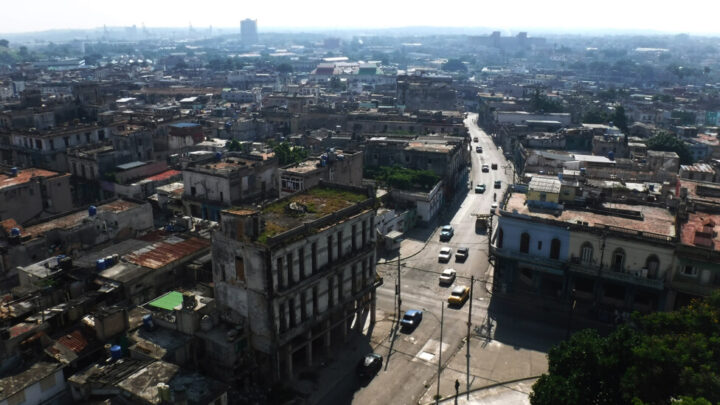
A view of Havana from Cerro, one of its 15 municipalities. This city of 2.2 million inhabitants, the biggest in the country, has the largest housing deficit in Cuba, exceeding 800,000 housing units. CREDIT: Jorge Luis Baños / IPS

A view of Havana from Cerro, one of its 15 municipalities. This city of 2.2 million inhabitants, the biggest in the country, has the largest housing deficit in Cuba, exceeding 800,000 housing units. CREDIT: Jorge Luis Baños / IPS

One of the requirements for the temporary residency permit is to have sponsors who are U.S. citizens or hold some other legal status, in addition to having the financial resources to support the beneficiary or beneficiaries.

Swapping or selling parole

Owning your own home can also be an opportunity allowing whole families to move abroad.

“People are swapping houses for parole status. A few weeks ago I facilitated the exchange of a house for five parole permits to the United States. And in another case, with a residence in Miramar (a wealthy neighborhood in western Havana), nine people were the beneficiaries,” said Damian, a historian who privately engages in buying and selling, for which he charges a commission.

Damián explained to IPS that “residents in the United States ask for 10,000 to 12,000 dollars to provide a guarantee for parole status. The number of people they give a guarantee for depends on the value of the house. When the process is completed, the property is sold to a relative or friend of that person in Cuba.”

Walking through the streets in the Cuban capital, the most varied signs reading “for sale” can be seen on crumbling or remodeled buildings. The same is true in other cities and towns of the country’s 168 municipalities.

On online sites and Facebook groups for buying and selling activities, there is a proliferation of advertisements with photos and information about the properties, such as the number of rooms, the presence of a landline telephone line or an electrical installation that allows the connection of 110 and 220 volt equipment.

Some negotiate the price with or without furniture, others negotiate with buyers who pay cash in hand, or who pay in dollars, euros or make the deposit abroad.

“It is difficult to sell, because many people want to emigrate, and they are practically ‘giving away’ the houses. But at the same time hard currency is scarce and a person with thousands of dollars prefers to use them to leave the country,” said Elisa, a lawyer who told IPS she is interested in settling with her husband and son in Spain.

She said she has been trying to sell her apartment in La Vibora, another Havana neighborhood, for a year. “I can’t find a buyer, not even now that I dropped the price to 10,000 dollars, half the initial price, and it’s furnished,” she complained.

In Cuba’s informal real estate market, offers range from 2,000 dollars or less to a million dollars. The lowest of these figures is far from the average monthly salary, equivalent to 16.50 dollars on the black market.

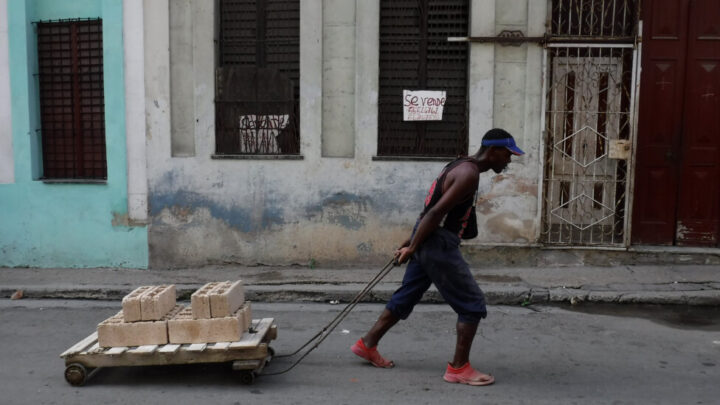
A man pulls a cart loaded with building blocks past a house for sale in the municipality of Centro Habana. In view of the government's diminished construction capacity and the decline of funds for housing, since 2010 the government authorized the free sale of various materials for construction, repairs, remodeling and expansion. CREDIT: Jorge Luis Baños / IPS

A man pulls a cart loaded with building blocks past a house for sale in the municipality of Centro Habana. In view of the government’s diminished construction capacity and the decline of funds for housing, since 2010 the government authorized the free sale of various materials for construction, repairs, remodeling and expansion. CREDIT: Jorge Luis Baños / IPS

Hurdles despite the reforms

Now, Cubans can sell their properties even to move away from the country, a situation very different from 15 years ago, when only swaps of houses between two or more owners were possible. Homes could only be sold to the government, and they were confiscated if the people living there emigrated.

Under laws passed in the early years after the 1959 revolution, most citizens became homeowners.

The Urban Reform Law of 1960 turned housing properties over to those who lived in them, prohibited their sale or lease, and abolished private construction and mortgages.

After decades of prohibitions, in October 2011 the 1988 General Housing Law was amended and the doors were opened to free purchase and sale between Cuban citizens and even foreign residents, endorsed before notaries and with the payment of taxes.

The law also eliminated certain formalities and official regulations on swaps.

Prior to the restitution of the right of ownership of residential units, in 2010 the government approved permits allowing people to build, repair or expand their own homes.

In view of the government’s reduced capacity for construction and the decline in housing funds in that same year, the free sale of cement, sand, gravel, cement blocks and corrugated iron bars was also authorized, which until then had been exclusively centrally allocated or sold in convertible pesos (CUC, a now defunct currency equivalent to the dollar).

The authorities promoted the granting of subsidies to vulnerable families, especially those affected by hurricanes, and micro-credits to build, expand or remodel homes.

These measures helped drive a boom in private construction and repairs.

As in other areas marked by the scarcity of materials, red tape and unequal purchasing power, the granting of housing and sale of materials is not exempt from corruption, theft and poor quality work, which has given rise to repeated complaints from the public.

There is still a housing deficit of more than 800,000 homes, while one third of Cuba’s 3.9 million homes are in fair or poor condition.

The largest deficits are concentrated in Havana, a city of 2.2 million inhabitants, as well as in Holguín, Santiago de Cuba and Camagüey, the other three most populated cities.

In 2019, a Housing Policy was launched, aimed at eliminating the housing shortage within a decade, based on the incentive of local production of construction materials and recyclable inputs, in addition to the contribution from the government and the centrally planned economy.

But the policy has run into hurdles as a result of the economic crisis, and multiple factors such as delays in paperwork and procedures, loss of material resources, unfinished subsidies and financial resources tied up in the banks.

The shortage of foreign currency and insufficient investment stand in the way of increasing production and incorporating equipment to boost construction capacity and sustainability.

Official data show that in 2022, more than 195 million dollars were dedicated to business services, real estate and rental activity, including hotel construction, which represented almost 33 percent of investment in the sector.

On the other hand, only 8.5 million dollars were allocated to housing construction, or 1.4 percent of the total, according to the government’s National Statistics and Information Office (ONEI).

Since 2019, 127,345 housing units were completed and 106,332 were remodeled or repaired, said Vivian Rodriguez, general director of Housing of the Ministry of Construction, during the most recent session of the Council of Ministers, on Oct. 1.

The authorities acknowledged that compliance with the year’s plan of 30,000 new units is under threat. Maintaining this pace would mean eliminating the housing deficit in more than 28 years.

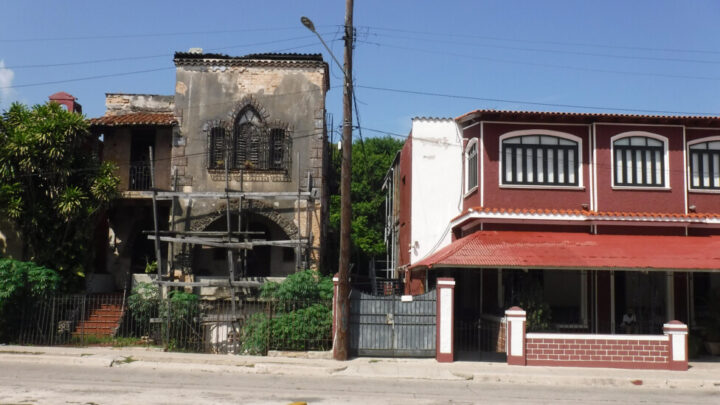
A rundown house stands next to a newly remodeled home on a street in the municipality of Playa, Havana. A third of Cuba's 3.9 million homes are considered to be in fair and poor condition. CREDIT: Jorge Luis Baños / IPS

A rundown house stands next to a newly remodeled home on a street in the municipality of Playa, Havana. A third of Cuba’s 3.9 million homes are considered to be in fair and poor condition. CREDIT: Jorge Luis Baños / IPS

No immediate solution

The lack of housing and the deterioration of existing homes continue without a viable solution in the short or medium term.

On many occasions, people of different generations are forced to live together in small homes, many of which are in a state of disrepair, putting a significant number of families at risk.

Access to housing has also been identified as a factor in the low birth and fertility rates that Cuba has been experiencing for decades.

There is also a problem after tropical cyclones and heavy rains, when centuries-old buildings that have never been remodeled or repaired collapse, or those vulnerable to strong winds are left roofless.

The private practice of professions such as architecture is also not allowed, and although since September 2021 the government has authorized the incorporation of micro, small and medium-sized companies, some of which specialize in the construction and repair of real estate, they still encounter obstacles to their practice.

“There could be many solutions, but in my opinion an essential one is that building materials must be available and at affordable prices; or that houses can be sold to workers so they can pay for them on credit. Otherwise, families will continue to be overcrowded, roofs and walls will collapse on us, or we will grow old without a place of our own,” Orlando, a prep school teacher living in Havana, told IPS.

  Source

Harvard Law Vs Yale Law And The Ranking Of Law School Rankings 2023/24

Which is better, the law school at Harvard or Yale? It’s a rivalry that stretches back 199 years, when Yale University established what has become one of the most selective academic institutions in the world. Harvard created a law department at the university in 1817, making Harvard Law School the oldest continuously operating law school in the United States.

Fortuna Admissions has just published the Ranking of U.S. Law School Rankings 2023/24, aggregating the results of the four major global subject rankings published every year by US News, Times Higher Education (THE), QS Quacquarelli Symonds, and ARWU (Shanghai).

The law schools at Yale and Harvard top the list ahead of Stanford, with NYU making the top 5 with the University of Chicago. You can see the full results of the top 25 US law schools here.

Rankings are one snapshot when comparing these two institutions.

If you ask Hollywood, Harvard Law School comes out on top. Though the Harvard campus scenes in Legally Blonde were filmed at UCLA and USC, the adventures of Reese Witherspoon’s character Elle nailing the LSAT, overcoming stereotypes and memorably pointing out the perils of prematurely washing permed hair during a courtroom cross-examination reinforced the idea that HLS was the place to go.

MORE FOR YOU

And though Meghan Markle’s Rachel Zane in Suits gained entry to Columbia Law School, for Harvey Specter and the rest of the partners at Pearson Specter Litt it was always about Harvard Law.

We only hire from Harvard,” Harvey tells Mike at their first impromptu meeting. “And you not only did not go to Harvard law school you haven’t even gone to any law school.”

While Ron Howard directed the story of a Yale Law School student heading back to his Ohio hometown in Hillbilly Elegy, and Batman’s alter ego Bruce Wayne was disclosed as a graduate in Detective Comics 439, Harvard Law School can point to the scenes of Professor Kingsfield in The Paper Chase, the Oscar-winning Love Story with Ryan O’Neill as the law student falling for Ali MacGraw, and Tom Cruise as a Harvard Law School graduate in The Firm. Cruise even sat in on a Harvard lecture 16 years later, sharing his own legal experiences in an hour-long class.

When it comes to alumni, there is not much to separate them though HSL might have a slight edge. Both have produced U.S. Presidents and a long list of influential legal professionals, including Supreme Court Justices, Senators and Representatives, academics and prominent attorneys.

Yale Law School alumni include Jane Matilda Bolin, the first African-American woman in the U.S. to become a judge. Both Bill Clinton and Hillary Rodham Clinton graduated in 1973, with Supreme Court Justices Clarence Thomas and Samuel Alito graduating in the two following years. Presidents of Germany, the Philippines and Malawi have studied law in New Haven, as well as poets and novelists, and the CEOs of Thomson Reuters, National Public Radio and the Boston Red Sox.

Harvard can point to Barack and Michelle Obama and political leaders in India, Taiwan and Ireland, 18 Supreme Court Justices including current Chief Justice John Roberts, Neil Gorsuch and Ketanji Brown Jackson, the first black woman to serve on the Supreme Court. They also have artists, spies, journalists, a scriptwriter for the Simpsons (brother-in-law of the late Steve Jobs) as well as a lengthy list of CEOs of Fortune 500 companies including Lloyd Blankfein at Goldman Sachs and the CEOs of Pfizer, Delta Airlines and CNBC.

In terms of career prospects, both Yale and Harvard law graduates enjoy strong employment outcomes, with high percentages securing prestigious clerkships, positions in top law firms, and government roles. However, Yale has a slightly higher percentage of graduates pursuing public interest and government careers, while Harvard has a larger number of alumni in the corporate sector.

Median earnings of Harvard Law graduates four years after graduation were estimated this year at $233,589, while for Yale Law graduates the figure is $204,668. Both are well behind the graduates at Columbia Law, who were on average earning $280,926, but with much higher levels of student loans still to pay off.

What about the learning environment? Both institutions boast an impressive faculty, with distinguished professors and legal scholars. Yale has a smaller student-to-faculty ratio, potentially allowing for more personalized attention. Harvard, on the other hand, has a larger faculty and offers a broader range of courses and specializations, providing students with an opportunity to explore various aspects of law. Yale, while also offering a diverse curriculum, is known for its commitment to public interest and human rights law.

Location and culture also have an impact, and HLS can argue that Cambridge and Boston across the Charles River give access to a thriving legal community and numerous opportunities for internships and clerkships. New Haven, Connecticut, is undoubtedly quieter and offers a more campus-focused environment for a close-knit and collegial atmosphere. so personal preferences make a difference on this one.

So which school is more selective? For last year’s coming class, the media LSAT at Yale was an eye-watering 175 and at Harvard 174, while median undergraduate GPA average at Yale Law School was 3.94 and 4.0 at Harvard Law School 3.92.

Find out how candidates to the top US law schools stand out beyond GPA and LSAT

But with the smaller class intake, Yale wins selectivity across the board. The law school admitted 178 of the 4,882 applicants for a yield of 4.7%. Harvard meanwhile admitted 559 of the 8,170 applicants for an acceptance rate of 6.8%.

Basically you’ve got a 1 in 21 chance of being admitted to Yale Law, and a 1 in 15 chance of being admitted to Harvard Law. But don’t be put off by the numbers – take inspiration from Elle in Legally Blonde.

“You got into Harvard Law?” asks her ex-boyfriend, Warner.

“What? Like, it’s hard?” she replies, before showing him and the rest of her Harvard classmates that she wasn’t to be underestimated.

With such high GPA and LSAT scores at the top schools, the personal statement can make the difference in your law school application. Check out the 7 key ingredients for law school personal statement success from the former law school admissions officers at Fortuna Admissions.

And finally, what do the rankings tell us? In November 2022, both Yale and Harvard announced that they would no longer participate in the US News Law School Rankings, citing flaws in the way the ratings are determined.

But since the first US News ranking published in 1991, Yale Law School has ranked #1 every single year, though they shared the #1 spot with Stanford Law in their final US News rankings appearance in 2022. But that means 31 years of rankings domination that is unmatched in any other graduate school and university rankings.

Advantage, Yale?

Not so fast. A look at the other leading media rankings of law schools sees Harvard Law at the #1 in the QS Quacquarelli Symonds subject ranking. And both schools come in behind behind Stanford and NYU in the Times Higher Education (THE) subject ranking.

To get a clearer picture of how law schools perform in the major rankings, Fortuna Admissions has published the first ever Ranking of US Law School Rankings 2023/24. This legal league table aggregates the results of US law schools across the big four – US News, THE, QS and ARWU Shanghai.

And in 2023/24, Yale Law School is the clear winner ahead of Harvard. Below you can see the results for the top 5 US law schools, with Stanford, NYU and the University of Chicago demonstrating great consistency.

The full results of the top 25 US law schools are here. From Austin and Boston to Minnesota and Nashville you can see how the top U.S. law schools have performed this year compared to five years ago. The Fortuna Ranking of US Law School Rankings 2023/24 compares performance with 2018, when Columbia Law School made the top 5 across the four rankings in place of NYU.

Whether Berkeley, UCLA, U Michigan and Cornell or Duke, Georgetown and U Penn, the Fortuna league table reinforces the rankings dominance of the Top Fourteen, or T14. This is an informal and unofficial category which refers to the law schools that have historically claimed the top 14 spots in the yearly US News ranking.

In fact there is only one of the T14 that didn’t make the top 14 in the Ranking of Rankings 2023/24. Which of course means that another law school did make the top 14, but which one – UT Austin, U Virginia, Vanderbilt…?

Selecting the right law school is a pivotal decision in the journey to becoming a successful attorney. Deciding between Yale and Harvard is not a matter of one being definitively better than the other. These two institutions along with the rest of the T14 offer a world-class legal education, outstanding faculty, and countless career opportunities.

The choice ultimately depends on your personal preferences, career goals, and learning style. It’s essential to conduct thorough research, visit the campuses if possible, and consider which school aligns most closely with your aspirations as a future attorney. In the end, your dedication and hard work will play a more significant role in your legal career success than the name on your diploma.

Source

Silent Struggles: Unraveling Korea’s Startling Elderly Suicide Surge

Active Citizens, Asia-Pacific, Development & Aid, Headlines, Human Rights, Humanitarian Emergencies, Population, TerraViva United Nations, Youth, Youth Thought Leaders

Opinion

In this, the fourth of IPS’ Youth Thought Leaders series, the author looks at suicide rates in older persons and concludes we should break barriers and celebrate the diversity each generation brings.

An image illustrating the ‘No-senior zone’ in a Korean café. Credit: The Nation

An image illustrating the ‘No-senior zone’ in a Korean café. Credit: The Nation

SEOUL, Oct 13 2023 (IPS) – Growing up in a culture that values respect for elders, I was acutely aware of the importance of caring for our aging population. However, my journey to understanding the gravity of this issue truly began with a personal anecdote. I watched my grandmother, a pillar of strength throughout my childhood, gradually withdraw from the vibrant world in which she once thrived. The cheerful twinkle in her eyes began to dim, replaced by an eerie sense of isolation.


This experience opened my eyes to a stark reality: a disturbing surge in elderly suicide rates hidden beneath the facade of cultural reverence for seniors in Korea and Japan. In 2021, these rates reached 61.3 deaths per 100,000 people in Korea, primarily driven by profound social isolation.

Suicide deaths in Korea. Credit: Statista

Suicide deaths in Korea. Credit: Statista

Some may argue that these figures are insignificant, but the persistence of a high suicide rate cannot be dismissed. Moreover, they are poised to become even more critical as we approach a world where, according to WHO, the elderly population over the age of 60 is expected to double by 2050, and those 80 years or older are projected to triple.

So how severe are the elderly suicide rates due to isolation in Korea and Japan? Well, research highlights that this is due to the significant rise in the elderly population. Such an increase has been concurrent with the rising elderly suicide rates. The Global Burden of Disease study emphasizes that the global elderly suicide rate is almost triple the suicide rates across all other age groups. For example, in South Korea alone, there has been a 300% increase in elderly suicide rates.

If the world’s elderly population has increased overall, why is it that the elderly suicide rates within Korea and Japan have been especially severe? This was particularly confusing as I believed that due to cultural and social standards of filial piety and respecting your elders, such suicide rates would be low. However, I found the answer to my own question when I visited Korea in July this year.

When I arrived in the country, one of the first things I did was to visit a cafe to meet with a friend. However, as I was about to enter the cafe, I saw a group of elderly men and women leaving the cafe while comforting each other, saying, “It’s okay; it’s not the first time we’ve been rejected.” As I later found out, this was because the cafe was a ‘no-senior zone.’

Similar to how some places are designated as ‘no-kid zones,’ this cafe, and others, did not allow people over the age of 60 to enter.  According to Lee Min-ah at Chung-Ang University, “The continuous emergence of ‘no-something zones’ in our society means that exclusion among groups is increasing, while efforts to understand each other are disappearing.”

I also discovered that age discrimination is also present in other aspects of the elderly’s life, more specifically, in the workplace. According to a survey by the National Human Rights Commission of Korea, in 2018, 59 percent of the Korean elderly found it difficult to be employed due to age restrictions, and a further 44 percent experienced ageism within their workplace. The increase in discrimination against the elderly has heightened their sense of isolation, eventually leading to cases of suicide in extreme circumstances.

Jung Soon Park, the Secretary General of World Smart Sustainable Cities Organization (WeGo) with the author Hyunsung (Julie) Lee.

Jung Soon Park, the Secretary General of World Smart Sustainable Cities Organization (WeGo) with the author Hyunsung (Julie) Lee.

Interview with Jung Soon Park, the Secretary General of WeGo at the Seoul Global Center

Interview with Jung Soon Park, the Secretary General of WeGo at the Seoul Global Center

I wanted to learn more about the current action being taken to help the elderly feel more included in our society, as I believed this would be key to preventing isolation-related suicide cases. To gain further insight, I decided to interview Jung Soon Park, the Secretary General of the World Smart Sustainable Cities Organization (WeGo).

WeGo is an international association of local governments, smart tech solution providers, and institutions committed to transforming cities worldwide into smart and sustainable cities through partnerships. I believe that by interviewing the Secretary General of WeGo, I would be able to learn more about the specific solutions that governments and organizations are implementing collaboratively.

Through my interview, I gained an understanding that the South Korean government and social organizations are currently focusing on addressing age discrimination, recognizing it as a key factor in isolationism.

Park mentioned that one specific approach to resolving this issue involves the use of ‘meta spaces’ and technological wristbands. She emphasized that in today’s technology-driven world, enabling the elderly to adapt to such technology could bridge the generation gap between the younger and older generations. She further explained that meta spaces, allowing for anonymous communication, and technological wristbands, which could include features like a metro card and direct access to emergency services, would facilitate the elderly’s integration into modern society. Park concluded that enabling the elderly to adapt efficiently to the current social setting could break down the generational barrier between youth and the elderly, fostering a direct connection between these two disparate groups.

During my research, I coincidentally came across a website called Meet Social Value (MSV). MSV is a publishing company that specializes in writing and publishing insightful articles about contemporary social issues. Their most recent article, titled ‘Senior,’ delves into the social challenges faced by the elderly in Korean society and explores solutions involving inclusive designs and spaces.

MSV serves as a prime example of how contemporary social organizations are taking steps to address the issue of elderly discrimination. This is especially significant because, through youthful and trendy engagement on social media, it becomes easier to raise awareness of this issue among younger generations.

Meet Social Value's most recent article, titled 'Senior,' delves into the social challenges faced by the elderly in Korean society and explores solutions involving inclusive designs and spaces.

Meet Social Value’s most recent article, titled ‘Senior,’ delves into the social challenges faced by the elderly in Korean society and explores solutions involving inclusive designs and spaces.

As I continued my research, I started pondering what I, as an 18-year-old, could do to contribute to resolving this issue. Even though I’m still a student, I wanted to find ways to make a difference, especially after witnessing age discrimination and its consequences firsthand.

I found the answer to my question when I learned about the initiatives undertaken by the government of Murakami City and the Murakami City Social Welfare Council to bridge the gap between the youth and senior citizens. They introduced the Murakami City Happy Volunteer Point System, which aimed to encourage more people to assist seniors through various volunteering activities such as nursing facility support, hospital transportation services, and operating dementia cafes, among others. The system rewarded volunteers with points that could be exchanged for prepaid cards, creating an incentive for more individuals to get involved in helping their senior citizens.

Taking this into consideration, I believe that the younger generation, especially students, may contribute by creating such an incentivization system. For example, students may create senior volunteering clubs within their schools and take turns volunteering and connecting with elderly citizens every weekend. By doing so, clubs may incentivize their members through points which may later be traded for a snack or lunch at the school cafeteria. Through small incentives, this may naturally encourage more students to participate and thus naturally allow for the youth to create a relationship with the elderly, hence contributing to mitigating the issue of elderly isolation.

The webpage of the Murakami City Happy Volunteer Point System containing the system’s details.

The webpage of the Murakami City Happy Volunteer Point System contains the system’s details.

In Korea’s battle against ageism, we find ourselves at a turning point. To navigate this societal shift successfully, we must recognize that age discrimination not only undermines the dignity of our elders but also hampers our collective progress. The solution requires a comprehensive approach. Policy reforms are crucial, emphasizing stringent anti-ageism measures in the public space and the workplace. Equally significant solutions are awareness campaigns to challenge stereotypes and foster inter-generational understanding.

However, true change starts with the youth. By confronting our biases and engaging in volunteering activities, we can break down barriers and celebrate the diverse experiences each age group brings. Through such efforts, we can create a society where age is not a determinant of worth but a source of strength and wisdom. It’s a journey demanding our collective commitment, but one that will lead us towards a more inclusive and harmonious future for all.

Edited by Hanna Yoon

IPS UN Bureau Report

  Source