Calls for Reform, Research and Reorganisation in Leprosy Healthcare

Active Citizens, Asia-Pacific, Civil Society, Conferences, Development & Aid, Featured, Global, Headlines, Health, Human Rights, Regional Categories, TerraViva United Nations
Human Rights

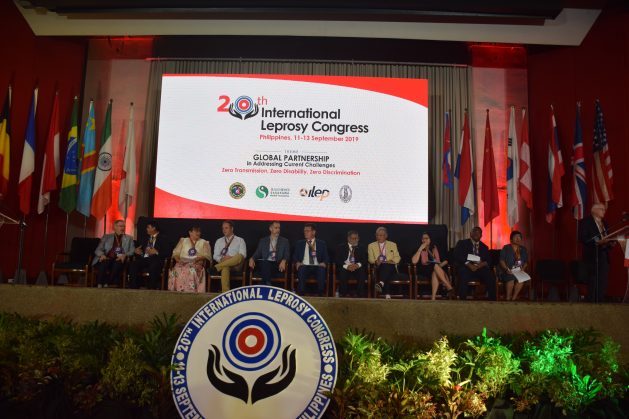
The 20th International Leprosy Congress (ILC) is being held Sept. 10 to 13 in Manila, Philippines. The conference is hosted every three years and was last held in China in 2016. Credit: Stella Paul/IPS

MANILA, Sep 12 2019 (IPS) – Rachna Kumari of Munger in Eastern India’s Bihar state is not yet 30. But she’s already been married at 18, abandoned by her husband after she was diagnosed with leprosy and become an award-winning advocate of the disease. She has traversed a long road. And this week she undertook another step in her journey to fly to Manila, Philippines, as a delegate at the 20th International Leprosy Congress (ILC).


The grassroots leader, who is employed by the International Leprosy Elimination Partnership (ILEP), has also previously traveled to Ethiopia and China to share stories about her life and her work.

Prior to attending the ILC yesterday Sept. 12, she participated in the Global Forum of People’s Organisations on Hansen’s Disease, an event co-organised by Japan’s  The Nippon Foundation (TNF) and Sasakawa Health Foundation (SHF). The global forum gave her valuable insights into the universal challenges of leprosy-affected and leprosy advocates such as stigma and lack of financial sustainability, Kumari said.

She said she also gained technical education and management skills, which she feels are crucial for success in advocacy.

She added that when she carries out her work in communities across Munger, she has no official identification to show many of the Hansen’s disease-affected persons she comes across, many of whom are weary of strangers as they continue to face discrimination and stigma.

This simple form of accreditation, Kumari said, played a huge role in advocacy against the disease.

“[In] my community, I have nothing to prove that I am an advocate, a knowledge builder. So, people doubt me, they don’t know if they [can] trust me. A simple document of identification can be a big step to build trust between a community worker and her community,” Kumari told IPS.

Maya Ranavare, who works as a treasurer in Association of People Affected by Leprosy (APAL), in western India’s Maharashtra state, says that partnerships among organisations must not remain in closed rooms but should instead result in collective action that reaches communities.

“There is a sense of competition among  people’s organisations. Instead, we must act collectively. Also, if it is a partnership, then there should not be duplicity. Tasks should be distributed evenly. If one organisation is doing mobilisation, other should work on technical education. This will increase everyone’s skill and ability,” Ranavare told IPS.

According to Dr Arturo Cunanan, the Chief Medical Officer of the Culion Sanitarium and General Hospital in the Philippines, there needs to be programmatic changes in the government public health system. Budgetary allocation, innovation, new research and sensitisation of healthcare workers are all needs of the hour.

“Leprosy elimination is now like a car that has run out of fuel. We need that fuel right now. The fuel is innovation. Take vaccination for example. Why is that even after centuries, we still don’t have a vaccination for universal application?

“Also, we need innovative, easier ways to diagnose leprosy. If you look at Tuberculosis, there are several ways to do a quick test and find out if a person has it. But for leprosy, we still have only clinical test. We need new tools, quicker ways and for all of that we need new investments in innovation, research,“ Cunanan told IPS.

The ILC started runs Sep 10 to 13. The congress will identify the priorities for a future course of action to end leprosy. Currently there are 200,000 new leprosy cases reported every year across the world, with 60 percent of those new cases originating in India.

According to the organisers, the congress will identify the priorities for the future course of action for achieving zero leprosy. The congress also emphasised the importance of partnerships and a new future partnership among the leprosy-affected people’s organisations has already started between HANDA – a Chinese NGO– and PERMATA, an NGO based in Indonesia.

HANDA, which has recently been recognised by the government of China for their skills in project management, finance management and organisational re-structuring, is set to share these crucial skills with PERMATA. 

“We will soon host a delegation from PERMATA in our Guanzhou office. They have a special interest in finance management and we are ready to share our expertise and experience in that area with them,” Sally Qi of HANDA told IPS.

SHF was instrumental in building this partnership and encouraged  both HANDA and PERMATA to start a dialogue on skill sharing, Qi added.
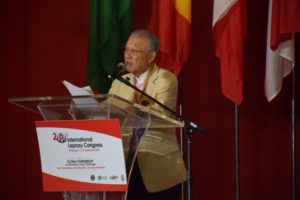
 

‘Conference Emphasises Need for Partnerships to Create a World Without Leprosy’

Active Citizens, Aid, Asia-Pacific, Civil Society, Conferences, Development & Aid, Editors’ Choice, Featured, Global, Headlines, Health, Human Rights, Regional Categories, TerraViva United Nations

Human Rights

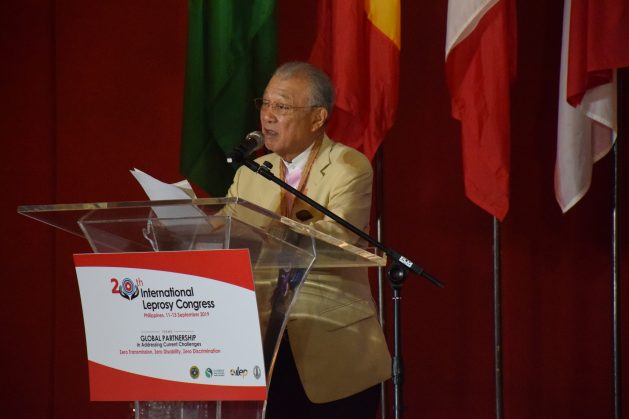
Yohei Sasakawa, chair of The Nippon Foundation and World Health Organisation (WHO) Goodwill Ambassador for Leprosy Elimination, delivered a keynote address at the 20th International Leprosy Congress (ILC). Credit: Stella Paul/IPS

MANILA, Sep 11 2019 (IPS) – Forty years ago, Yohei Sasakawa saw his father moved to tears after meeting and witnessing the suffering of people affected by leprosy – also known as Hansen’s disease. Not only did the patients have a physical illness, but they also suffered from social exclusion and discrimination. It made the young Sasakawa vow to work for the elimination of leprosy from the world – just as his father had been doing.


Decades later, after visiting 120 countries and having meetings with countless policy makers and state leaders, Sasakawa – now the World Health Organisation (WHO) Goodwill Ambassador  for Leprosy Elimination – is delivering on his promise.

At the first day of the 20th International Leprosy Congress (ILC), being held in Manila, Philippines, the chairperson ofThe Nippon Foundation (TNF) called for activists, scholars and those affected the globe over, to rally behind the goal of a world free of  stigma, discrimination and violation of human rights of those affected by leprosy. The ILC, which ends Sep 13, is supported by TNF sister organisation the Sasakawa Health Foundation (SHF).

Sharing his experiences, he recalled how he, TNF and SHF lobbied the United Nations to recognise the elimination of stigma against leprosy-affected people as a human rights issue.

Sasakawa reminded delegates that it was a tough journey against several odds as policy makers and diplomats  showed little interest in the human rights of leprosy-affected people. He told the congress how during a 2003 U.N. Human Rights Council meeting in Geneva, only five members attended the event to discuss stigma as a human rights violation in a room that could accommodate 50.

Not one to give up, Sasakawa kept pursuing the issue until finally in December 2010 the U.N. General Assembly unanimously adopted the resolution on elimination of discrimination against persons affected by leprosy and their family members and accompanying principle and guidelines was passed.

“I believe the elimination has been an important milestone in my journey,” Sasakawa said.

But despite the U.N. resolution and various local laws at country level worldwide abolishing policies like segregation and isolation of the leprosy-affected, society still stigmatises and discriminates against Hansen’s disease patients as well those who work within the field, like health care workers etc.

He said one example of this remains is the classification of leprosy as a neglected tropical disease.

“I would like to express my opposition to leprosy being considered as one of the neglected tropical diseases. Leprosy has never been neglected even for a moment by both persons affected and by people who have worked hard for their betterment. In my opinion, this medical terminology feels like it is looking down on the patients and also shows a lack of respect towards those are fighting against leprosy today. Leprosy is an ongoing issue.”

However, Sasakawa also acknowledged that in other areas — such as the partnerships and networking — there has been great progress. The Global Partnership for Zero Leprosy network was a significant step forward.

“The  collaboration will greatly enhance our work towards achieving ‘Zero Leprosy,’” he said, adding that the strengthening of these partnerships, especially with the governments, was crucial to reach the common goal of a leprosy-free world.

“Whenever I go abroad, I always meet with the national leaders of the countries. We cannot solve the issue of leprosy without their understanding and support. Without their support, we cannot secure the budget for activities to eliminate leprosy and the associated discrimination,” he reminded the congress.

Rachna Kumari, of International Federation of Anti-leprosy Associations or ILEP, who is based in Munger in Eastern India’s Bihar state, told IPS: “We cannot end stigma just by treating leprosy as a health issue.”

If only health workers are assigned to work on leprosy, they will work on medication. That is not enough to solve the problem we face. So, we need education. Government must include information on leprosy in school books. There must be billboards and large posters which can educate both patients and healthcare workers. Only with such a holistic approach we can win this,” Kumari said.

Earlier, delivering the keynote speech, the Philippine Secretary of Health Francisco Duque asserted that his government remains serious about respecting the rights of leprosy-affected people.

“The vision of our Universal healthcare for the Filipino people is deeply tied to the aspirations of the 2016-2020 global strategy for the leprosy and goal number 3 of the SDGs or the sustainable development goals. We remain committed to these goals and aspirations. We are committed to zero stigma, zero disability, zero transmission and  zero disease,” Duque told the congress.

Duque also stressed the importance of partnerships to achieve the goals yet unmet.

“We are only a  few months away form 2020 and our midterm strategy is only getting underway. We must work together. This year’s conference emphasises the need for partnerships to create a world without leprosy. And our success and your success may define the relations we have made and continue to make.

Acknowledging stigma as a “barrier for early detection and treatment“ of leprosy, Huong Thi Giang Tran, WHO’s Director for Disease Control in the Western Pacific also said that stigma limits the opportunity for life and leads to social and economic exclusion. She called for the addressing of stigma at the policy level.


The Emergence of a Global Voice for Hansen’s Disease Affected Persons

Active Citizens, Asia-Pacific, Civil Society, Conferences, Development & Aid, Featured, Global, Headlines, Health, Human Rights, Regional Categories, Sustainability, TerraViva United Nations

Human Rights

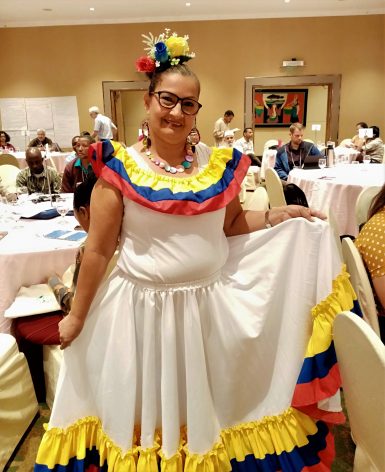
Her experience and the chance “to help strengthen Colombia, the world, and my family” through participating in the Global Forum of People’s Organisations on Hansen’s Disease, sponsored by the Nippon Foundation and the Sasakawa Health Foundation, was like “rising from the ashes” for Lucrecia Vazques from Felehansen Colombia. Vazques’ family was hit hard by leprosy, with not only herself, but her son and one-month-old granddaughter being afflicted. Credit: Ben Kritz/IPS

MANILA, Sep 10 2019 (IPS) – The Global Forum of People’s Organisations on Hansen’s Disease, which was attended by members of people’s organisations from 23 different countries, wrapped up in Manila, Philippines, today Sept. 10 after four days of discussion and deliberation.

The main outcome was a set of recommendations, which included participants stating that those affected by the disease should have more inclusive roles in the global campaign against leprosy.

Asked to share his impressions of the forum with his fellow participants, Joshua Oraga, who is a member of ALM Kenya, a local Hansen’s disease non-profit, told the audience, “We should all familiarise ourselves with the WHO [World Health Organisation] guidelines on strengthening the participation of persons affected by leprosy in leprosy services. That should be our creed, because if you look at that document, you will see that we are the only stakeholders who have an end-to-end role.”

He said that those affected by leprosy or Hansen’s disease had a role in overcoming stigma and discrimination.

“We have a role in the promotion of equity, social justice, and human rights, we have a role in addressing gender issues, we have a role in the dissemination of information, education, communication…. We have a role in advocacy, we have a role in counselling and psychological support, we have a role in training and capacity-building, we have a role in referral services, we have a role in resource mobilisation…. So, we are everywhere!”

Oraga’s enthusiastic impressions in a way defined the outcome of the forum organised by Japan’s Sasakawa Health Foundation (SHF) and The Nippon Foundation (TNF), which support elimination of the disease globally and provide information and awareness about the disease through their dedicated website titled Leprosy Today.

The recommendations will be presented on the first day of the International Leprosy Congress (ILC), which is also being held in Manila from Sept. 11 to 13. The recommendations addressed increasing awareness of Hansen’s Disease among the public and governments, calling for greater government support for people’s organisations’ advocacies, taking a larger role in helping to form anti-leprosy policy, and working to build sustainability and more effective networks among organisations spread around the world.

A true people’s forum

To Dr. Takahiro Nanri, Executive Director of SHF, the real value of the recommendations lies not in their details, but in the manner in which they developed.

Nanri noted that the forum’s carefully-planned agenda was quickly thrown off-schedule by the spirited discussions among the participants. “The people really led the forum, and did the work they wanted to do, and I am very happy about that.”

“The recommendations were good ones, but what I think is really important is the process we saw,” he added.

Oraga was likewise pleased and motivated by his experience. Oraga, who had leprosy as a youth, said, “This is the first time I have had the opportunity to take part in a meeting at this level, so imagine my excitement and happiness to be able to come here.”

Oraga also expressed his gratitude for the work that Yohei Sasakawa, World Health Organization’s (WHO) Goodwill Ambassador for Leprosy Elimination and chairperson of TNF, has done over the last four decades. Sasakawa’s foundations have contributed over USD200 million in financial support for the WHO’s Global Leprosy programme. He also advocated for discrimination and stigmatisation against people affected by Hansen’s disease to be included in the United Nations human rights agenda. The resolution was passed in 2010.

“He has done so much for leprosy around the world, and personally I am grateful. Just think of it, because of Mr. Sasakawa, in three years, maybe leprosy will just be like any ordinary sickness,” Oraga said.

Lucrecia Vazques of Felehansen, Colombia also felt the forum was an extraordinary experience. “It’s been wonderful,” she told IPS through a Spanish translator. “It is like resuscitating after a hard moment.”

Vazques’s bubbly personality belies her own difficult experience with Hansen’s disease, which not only afflicted her, but her one-month-old granddaughter and her son, who was diagnosed first.

“It was hard,” Lucrecia said. “I had no knowledge whatsoever.We thought we would die.”

“But there was something to fight for, and to live for, and here I am. This forum means rising from the ashes. And if I had the choice, I would rise from the ashes again, and I would be right here, to help strengthen Colombia, and the world, and my family,” she said.

Looking ahead

But there is much work to still do.

“Because this was a people-led forum, it gives us direction. As you know, our resources are not limitless. We have an obligation, but it is of course better if we can maximise our efforts, and the recommendations help,” Nanri said.

Nanri reiterated the value of the “process” that he saw evolve during the forum, particularly in the context of the Joint Campaign on World Leprosy Day 2020, which will be observed on Jan. 26 next year.

“This was a step. You don’t go from the ground to the 10th floor in one jump. So now the first step has been taken. The next step is to get the groups around the world to do the activities at the same time,” which is the goal of the joint campaign. “When these recommendations are presented at the ILC, the next step can begin,” he said.


The Business of Social Enterprise

Active Citizens, Asia-Pacific, Civil Society, Conferences, Development & Aid, Economy & Trade, Featured, Global, Headlines, Human Rights, Poverty & SDGs, Regional Categories, TerraViva United Nations

Human Rights

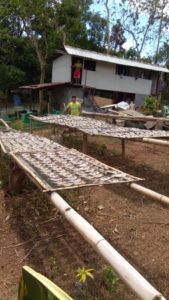
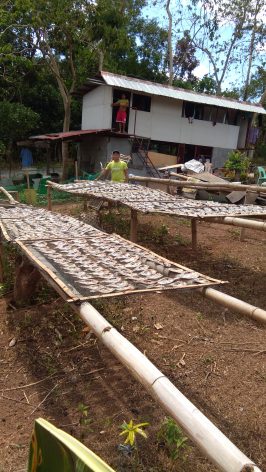
Ariel Lazarte of the Coalition of Leprosy Advocates of the Philippines (CLAP) shows off the dried fish production run by patients of a transient house operated by HD (Hope & Dignity) Philippines. Courtesy: Ariel Lazarte

MANILA, Sep 8 2019 (IPS) – Organisations supporting people affected by Hansen’s disease (leprosy) have social rather than capitalist aims, but they need to take a business-minded approach to their work if they wish to be sustainable, experts at a global conference in Manila, Philippines said.


In workshops conducted at the Global Forum of People’s Organisations on Hansen’s Disease in Manila on Saturday and Sunday, Sept. 7 and 8, representatives of organisations from Asia, Africa, and Latin America agreed that sustainability is the biggest challenge they face.

Every organisation faces some uncertainty over the continuity of donor or government financial support, so reducing or eliminating reliance on external funding is considered a critical priority.

Japan’s The Nippon Foundation (TNF) and Sasakawa Health Foundation (SHF), which sponsored the global forum and provided capacity support to the participating organisations, have long taken the view that sustainability should be the ultimate goal.

At a regional conference of people’s organisations held here in March, SHF Executive Director Dr. Takahiro Nanri stressed that his foundation’s goal was to see its beneficiaries become self-supporting. “In order to be truly sustainable, the organisation needs to develop an income-generating programme,” Nanri said at the time.

Dr. Marie Lisa Dacanay president of the Institute for Social Entrepreneurship in Asia (ISEA) outlined the fundamentals of effective social enterprises, which were derived from research conducted by ISEA in India, Indonesia, Bangladesh and the Philippines. Credit: Ben Kritz/IPS

Fundamentals of social enterprises

On Sunday Sept. 8, Dr. Marie Lisa Dacanay president of the Institute for Social Entrepreneurship in Asia (ISEA) outlined the fundamentals of effective social enterprises, which were derived from research conducted by the institute in India, Indonesia, Bangladesh and the Philippines.

Social enterprises have three common traits, Dacanay explained:

  • They are driven by a social mission instead of an enterprise mission;
  • Successful social enterprises are wealth-creating organisations that provide some form of marketable products or services; and
  • They follow a distributive enterprise philosophy in that profits are directed towards the social mission rather than being collected as return on investment.

In carrying out its mission, a social enterprise faces a number of external and internal challenges, Dacanay said.

External pressures come in the form of climate or environmental factors – a significant concern of agriculture-based enterprises; unfavourable government policies; harmful industry or market practises; inadequate government support for social programs; and institutional corruption.

Internal challenges include difficulty in accessing needed technology; securing initial financing; organisational and management capacity; production efficiency; and developing practical measures of the enterprise’s social impact.

Based on ISEA’s research, successful social enterprises can be organised following an entrepreneur non-profit model, a social cooperative model, a social business model, or what she described as “social entrepreneurship intervention,” which is a hybrid combining characteristics of all three models.
In determining which form of organisation is most suitable to the social mission, Dacanay told IPS, “I think everything starts with the reality. Every social entrepreneur starts with, ‘what are the needs, and the problem?’”

“The first step is really understanding the stakeholders you want to help,” Dacanay continued, “find out what they are doing already, and look at what gaps there are. That, along with the resources and capabilities available, define a way of moving forward, and then the organisational form will follow.”

Social business is still business

In the Saturday workshop, Earl Parreno, the chairman of the Philippines’ Altertrade Foundation, Inc. (ATFI) conducted a training in business planning basics for the assembled people’s organisations.

Defining a social enterprise as one that pursues a triple bottom line philosophy (financial, social, and environmental results), Parreno explained that the fundamentals of business planning must still be applied, but that organisations that are made up of people who are both the providers and beneficiaries of a social mission are often handicapped by a complete lack of capacity.

“Poverty is not just lack of financial resources,” Parreno told the workshop participants in his presentation, “It’s really incapability, a lack of knowledge.”

Developing the capabilities can be an arduous process, but is achievable. One of ATFI’s areas of focus in the Philippines is among poor farmworkers in Negros Province, a centre for sugar production. Parreno described the success of the social enterprise supported by ATFI in marketing Muscovado sugar – semi-raw sugar that was at one time considered “poor man’s sugar,” but is now a premium-priced staple in organic food stores.

“The business ideation is really critical,” Parreno explained to IPS. “We have a saying here in the Philippines: gaya-gaya puta maya, which means something like ‘copycat.’” A common problem among new social enterprises, Parreno said, is a lack of originality in the revenue-generating product or service they wish to pursue.

“What we stress to our social enterprise partners is that they should not conceive a product or service that’s just better, but one that is truly different and has a ‘solidarity market,’” Parreno said, such as the market of “mindful consumers” for organic Muscovado sugar discovered by the Negros sugar farmers. “That solidarity market is so important. It really gives the people’s organisation a fighting chance.”

According to Parreno, developing a sound business plan, from business ideation through resource mapping, feasibility study, and market analysis answers one of the key concerns expressed by many of the forum participants in the post-workshop discussion: The difficulty in securing initial funding to launch a social enterprise.

“The only difference between this kind of (social) business and a conventional business is where the profits go,” Parreno explained. “The discipline and the steps that need to be taken to develop it are very much the same, and if the result is a good business plan, the investors to get it off the ground will follow.”

A poultry and dried fish production project located in Baras, Rizal Province, east of the Philippine capital, employs about 10 people, all residents of a transient house for leprosy patients. It is a good example of a social enterprise that has proved successful.

Ariel Lazarte, a member of Coalition of Leprosy Advocates of the Philippines (CLAP) who runs the social enterprise, told IPS that sales have been good enough that his out-of-pocket expenses have been fully covered by the revenue, as well as providing much-needed funding for the transient house residents.
The social enterprise, part of HD (Hope and Dignity) Philippines, a non-profit managed by Lazarte, makes about 560 dollars a month.

Half of this is ploughed back into the social enterprise and the remainder is used to pay for the living expenses of the patients, including paying for medicines, transport, food, water, and vitamins.
“The only outside funding we had was for [the pen for the chickens],” Lazarte told IPS, noting that the Tikkun Olam Foundation, which supports Hansen’s disease in the country, provided the funding for this.

“The residents of the house who are capable help to tend the chickens, which are layers, and produce the dried fish. We then sell the eggs and fish in the local market.”

Part of the marketing advantage the poultry project has is that the eggs are organic. “We use organic feed for the chickens,” Lazarte said. “No synthetic feed.”


Global Network Key to Strengthening Leprosy Organisations

Active Citizens, Civil Society, Conferences, Development & Aid, Featured, Headlines, Health, Human Rights, Regional Categories

Human Rights

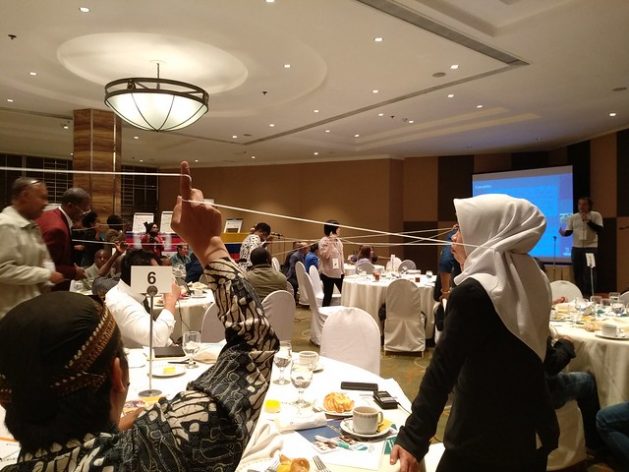
Participants at the first Global Forum of People’s Organizations on Hansen’s Disease which began on Sept. 7 in Manila, Philippines, play a game to build better connectivity among themselves. Credit: Stella Paul/IPS

MANILA, Sep 7 2019 (IPS) – Organisations of people affected by Hansen’s Disease or leprosy agree that a global network of volunteer groups is key to eradicating the disease, but concrete steps need to be taken to move the idea from an often-discussed concept to a reality.


“I don’t think anyone here is not convinced about the importance of a network,” Dr. Arturo Cunanan Medical Director of Culion Sanitarium and General Hospital told attendees following a workshop on volunteers and networking at the Global Forum of People’s Organisations on Hansen’s Disease in Manila on September 7. “But we need to put our foot forward.”

Artur Custodio Moreira de Sousa, who heads Brazil’s Movement for Reintegration of People Affected by Hansen’s Disease (MORHAN), led the workshop and firmly agreed with Cunanan’s observation, but was more upbeat.

“This forum exists because the network already exists,” Sousa said, speaking through an interpreter. “The idea exists, the network is created, the work needs to continue to solidify and formalise it.”

Sousa conducted the workshop at the forum organised by Japan’s Sasakawa Health Foundation (SHF) and The Nippon Foundation to share some ofMORHAN’s success in organising volunteers and networks in Brazil, encouraging the participating groups from Asia, Africa, and South America to consider ways in which they could contribute to an effective global network.

Making the most of volunteers

As Sousa described it, the development of a network is in a sense development of a volunteer organisation writ large. MORHAN, which was formed after the fall of Brazil’s dictatorship in 1981, is itself a network of local volunteer groups. Keeping these human resources organised and making the best use of individual talents and intentions is a significant focus area for MORHAN.

“Attracting the people (volunteers) is easy,” Sousa told the forum attendees. “Maintaining the people is very difficult.” Where MORHAN has been successful in this is by encouraging its volunteers to decide how they can contribute. “The people must be free to create,” Sousa said.

Morhan community outreach volunteer Glaucia Maricato, who was doing double duty at the forum as an English interpreter for her Portuguese-speaking colleagues, is a good example of how MORHAN uses volunteers to the best advantage for the individual and the organisation.

Maricato, an anthropologist, explained that she first was introduced to MORHAN in 2010, after the group made an agreement with a group of geneticists to reunite children who had been separated from their families due to leprosy – with either the children or the parents isolated in a sanitarium. “The idea was to use DNA testing to prove who the children’s parents were,” Maricato explained. “I was interested in the project so I got in touch with MORHAN, and then started doing fieldwork,” as the project was related to Maricato’s doctoral studies.

To Maricato, the volunteer work has far more significance than simply applying a person’s skills to a task. “MORHAN was born with democracy in Brazil [in 1981],” Maricato said. “And that spirit really carries on its work, in the DNA testing project and overall. It’s the sense of building equality, removing barriers between people.”

From local organisation to network

Organising volunteers into effective networks can greatly facilitate management of organisations and the services they provide, the chairperson of the Philippines’ Coalition of Leprosy Advocates of the Philippines (CLAP) Francisco Onde agreed.

“Our country is an archipelago, so traveling from one place to another to deal with situations is sometimes difficult,” Onde told the forum participants.

“For example, we had an issue between one of our groups and the administration of the Tala Sanitarium [located north of Manila], but we’re located in Cebu [in the central Philippines]. But through our network and our Luzon coordinator, we were able to get an attorney to assist our colleagues to resolve the problem.”

Scaling up that sort of effective communication and action to a global level is the aspiration of the people’s organisations gathered at the forum, with representatives from the various groups urging their colleagues to join the effort by applying the tools to organising volunteers discussed in the workshop. Kofi Nyarko, president of International Association for Integration, Dignity, and Economic Advancement (IDEA) Ghana stressed that the key to effective action was for people’s organisations “to first help themselves.”

“If we do this, we can do something for the public as much as the public can do something for us,” Nyarko said. “Inclusiveness is very important.”

Evidently encouraged by Cunanan’s call to not let the idea of a global network “be a talking network just within this four-cornered room,” representatives of the people’s organisations in attendance held an impromptu meeting led by Sousa and Cunanan following the workshop that ended the forum’s first day to discuss formalising efforts to create the global network, the initial details of which Cunanan told attendees he hoped would be available for presentation “at the next meeting”.


Festival Pays Tribute to Singer, Civil-Rights Icon Nina Simone

Active Citizens, Arts, Featured, Gender, Global, Headlines, Human Rights, TerraViva United Nations

Arts

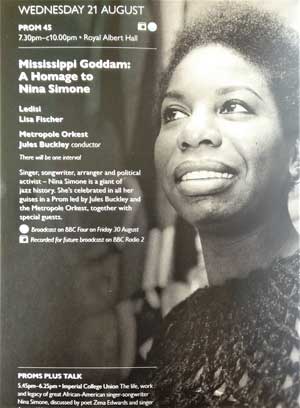
LONDON, Aug 29 2019 (IPS) – It must be a daunting prospect to sing songs made famous by the incomparable Nina Simone, but performers Ledisi and Lisa Fischer brought their individual style to a BBC Proms concert in London, honouring Simone and gaining admiration for their own talent.


The show, “Mississippi Goddam: A Homage to Nina Simone”, paid tribute to the singer, pianist and civil rights campaigner – a “towering musical figure” – at the Royal Albert Hall on Aug. 21, more than 16 years after Simone died in her sleep in southern France at the age of 70.



This was a celebration to recognise her “unique contribution to music history”, according to the Proms, an annual summer festival of classical music that also features genres “outside the traditional classical repertoire”.

The concert’s title refers to the song that marked a turning point in Simone’s career, when she composed it in fury and grief following the murder of civil rights activist Medgar Evers in Jackson, Mississippi, and the deaths of four African-American girls in the bombing of the 16th Street Baptist Church in Birmingham, Alabama, in 1963.

Performing the song at the tribute, New Orleans-born vocalist Ledisi held nothing back. She put all the anger and anguish that the lyrics required into her rendition, creating one of the high points of the concert.

The composition stood out particularly because of the contrast between the lyrics and the rhythm, and Ledisi – who’s also an actress and writer – emphasized this disparity. While the “tune has an almost fun-filled, pulsating vibe” (as conductor Jules Buckley put it in his written introduction to the show), the message itself is uncompromising.

“It speaks of murder, of dashed dreams and severe inequality, and it shattered the assumption that African-Americans would patiently use the legislative process to seek political rights,” Buckley wrote. Listeners got the full context, and they were reminded that some things have not changed much in the United States.

Conducting the Metropole Orkest, whose members played superbly, Buckley said that in putting together the programme he wanted to shine a light not only on Simone’s hits but also on a “few genius and lesser-known songs”. With the sold-out concert, he and the performers succeeded in providing the audience a clear idea of the range of Simone’s oeuvre.

The concert began with an instrumental version of “African Mailman” and segued into “Sinnerman”, the soulful track about the “wrongdoer who unsuccessfully seeks shelter from a rock, the river and the sea, and ultimately makes a direct appeal to God”, to quote Alyn Shipman, the author of A New History of Jazz who compiled the programme notes.

The orchestral introduction paved the way for Lisa Fischer’s arresting entrance. With her shaved head and flowing black outfit, she moved across the stage, singing “Plain Gold Ring” in her inimitable voice, evoking the image of an operatic monk. The two-time Grammy winner displayed the genre-crossing versatility for which she has become known, using her voice like a musical instrument and hitting unexpected lows before again going high. The audience loved it.

Fischer introduced Ledisi, who wore a scarlet gown (before changing to an African dress after the intermission), and the two women then took turns singing Simone’s repertoire, expressing love for the icon as well as appreciation for each other’s performances.

They both kept topping their previous song, and the temperature rose with “I Put a Spell on You” (Ledisi), “Don’t Let Me Be Misunderstood” (Fischer), “Ne me quitte pas” (poignantly rendered by Ledisi) and “I Loves You, Porgy” (memorably delivered by Fischer).

Then there was, of course, “Mississippi Goddam”, which followed a haunting, syncopated “Dambala”, a song made famous by Bahamian musician Tony McKay aka Exuma, who inspired Simone. Fischer performed “Dambala” with the requisite mysticism, getting listeners to shake to the beat.

Back-up vocalists LaSharVu, comprising three powerhouse singers, also contributed to the energy and success of the concert. Two of them joined Ledisi and Fischer for an outstanding and moving presentation of “Four Women” – Simone’s 1966 song about the lives of four African-American women that has become an essential part of her artistic legacy.

For other songs, LaSharVu teamed up with the orchestra to provide “percussive accompaniment” through clapping, and the orchestra’s skill on moving from reggae (“Baltimore”) to gospel underpinned the overall triumph of the show.

The concert ended with an encore, as Fischer and Ledisi performed “Feeling Good” to a standing ovation, and to comments of “fantastic”, “fabulous”, “amazing” and other superlatives.

The show was not the only part of the homage to Simone. Earlier in the day, the BBC’s “Proms Plus Talk” programme had featured a discussion of the “life, work and legacy” of the singer, with poet Zena Edwards and singer-musician Ayanna Witter-Johnson interviewed by journalist Kevin Le Gendre, author of Don’t Stop The Carnival: Black Music In Britain.

During this free public event, held at Imperial College Union, the three spoke of the impact Simone has had on their work and recalled her style and performances. They also discussed the abuse she suffered from her second husband and the painful relationship she had with her only daughter, Lisa, whom Simone in turn physically abused.

Witter-Johnson said that Simone had inspired her to feel empowered in performing different genres, so that she could sing and play music across various styles. “Her courage, outstanding musicianship and love of her heritage will always be a continual source of inspiration,” she said later.

In response to a comment from an audience member, a publisher, that Simone had been an extremely “difficult” person, Edwards stressed that Simone had been a “genius” and could be expected to not have an easy personality. Le Gendre meanwhile pointed to the difficulties Simone herself had experienced, with relationships, record companies, and the American establishment, especially after she began defending civil rights.

In an email interview after the tribute, Le Gendre said Simone’s music had had a “profound effect” on him throughout his life.

“There are so many anthems that she recorded it is difficult to know where to start, but a song like ‘Four Women’ can still move me to tears because it is such an unflinchingly honest depiction of the black condition that African-Americans, African-Caribbeans and black Britons can easily relate to,” he said.

“The way she broaches the very real historical issues of rape on a plantation, girls forced into prostitution and the internal battles based on skin shade affected me a great deal because, having lived in the West Indies and the UK and visited America several times, I know that what she is talking about is simply the truth,” he added.

“There is a war within the race as well as between the races, and we will only move beyond self-destruction if we firstly recognise these painful facts. I continue to be inspired by her ability to ‘keep it real’ as well as her great musicianship. Above all else she has made me think, as well as listen and dance.”

The BBC Proms classical music festival runs until Sept. 14 at the Royal Albert Hall in London. A concert on Aug. 29 features “Duke Ellington’s Sacred Music”, with conductor Peter Edwards, pianist Monty Alexander and tap dancer Annette Walker.

(This article is published by permission of Southern World Arts News – SWAN. You can follow the writer on Twitter: @mckenzie_ale)

  Source