New Constitution Would Declare Chile a Plurinational State

Civil Society, Democracy, Editors’ Choice, Featured, Headlines, Human Rights, Indigenous Rights, Latin America & the Caribbean, Regional Categories, TerraViva United Nations

Indigenous Rights

A Mar. 3 plenary session of the constitutional convention of Chile, where in long working days its members are drafting a new constitution, which must be completed by Jul. 4 at the latest. On Feb. 17, they approved by a large majority the new definition of Chile as a regional, plurinational and pluricultural State. CREDIT: Orlando Milesi/IPS

A Mar. 3 plenary session of the constitutional convention of Chile, where in long working days its members are drafting a new constitution, which must be completed by Jul. 4 at the latest. On Feb. 17, they approved by a large majority the new definition of Chile as a regional, plurinational and pluricultural State. CREDIT: Orlando Milesi/IPS

SANTIAGO, Mar 9 2022 (IPS) – Chile could change the course of its history and become a diverse and multicolored country this year with a “plurinational and intercultural state” that recognizes and promotes the development of the native peoples that inhabited this territory before the Spanish conquest.


By 112 votes in favor and 32 against, the constitutional convention approved this proposal which now forms part of the draft constitution that Chilean voters will approve or reject in an August or September referendum.

“The current Chilean constitution and the previous ones make no mention of the words Indian, native…indigenous peoples, or original peoples. Nothing. They are erased from the constitution because they were made invisible socially, culturally, economically, politically and militarily.” — Domingo Namuncura

The constitutional convention is debating and drafting a new constitution which is the result of the work of 155 constituents – half men and half women, with 17 indigenous members – elected by popular vote in October 2020 who began the task on Jul. 4, 2021. They have until Jul. 4 to finish their work.

In the country’s last census, in 2017, 2.18 million Chileans self-identified as indigenous people.

In other words, 12.8 percent of the 17.07 million inhabitants of Chile at that time (today the population stands at 19.4 million) were recognized as belonging to one of the indigenous peoples distributed throughout this long narrow South American country: the Mapuche (the largest native group), followed by the Aymara, Rapa Nui, Diaguita, Atacameño, Quechua, Colla, Kawesqar and Yagan.

Domingo Namuncura, a Mapuche social worker and professor at the Catholic University of Valparaíso, told IPS that “we are facing a very important historic event. The declaration of a plurinational State has always been a dream of the indigenous peoples of Chile.”

The creation of the constitutional convention was the response to months of protests and social unrest in 2019, the repression of which tainted the second term of right-wing President Sebastián Piñera, a businessman who had already governed the country between 2010 and 2014, and who will be succeeded as of Mar. 11 by the leftist Gabriel Boric, winner of the December elections.

Chile has been governed since 1980 by the constitution imposed by the dictatorship of General Augusto Pinochet (1973-1990), who used legislation to put in place a neoliberal and authoritarian economic and political regime, which democratic governments have only been able to partially dismantle since 1990.

The result is a country with a dynamic economy based on exports of mining and agricultural products, but with one of the most unequal societies in the world, which was at the basis of the 2019 demonstrations, as was the failure to fulfill promises of change, such as a new constitution, the reform of the educational system or improvements in social rights.
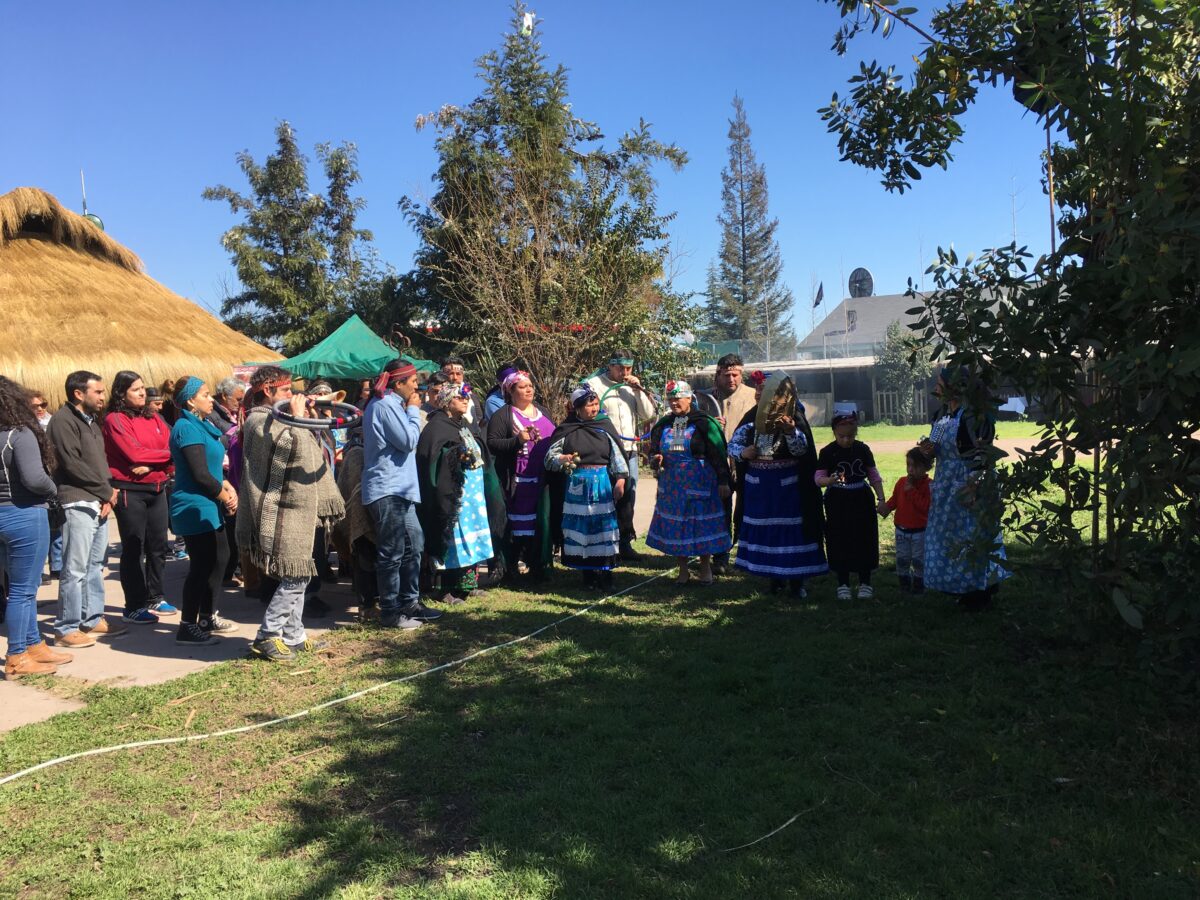
Mapuche Indians living in the metropolitan region. Data from 2021 indicate that the Mapuche, Chile's largest indigenous people, number 1.8 million, followed by the Aymara (156,000) and the Diaguita (88,000). CREDIT: Orlando Milesi/IPS

Mapuche Indians living in the metropolitan region. Data from 2021 indicate that the Mapuche, Chile’s largest indigenous people, number 1.8 million, followed by the Aymara (156,000) and the Diaguita (88,000). CREDIT: Orlando Milesi/IPS

Arguments of the constituents

No previous Chilean constitution has mentioned indigenous people and their rights, by contrast with other Latin American constitutions that have emerged since 1980. And the only precedent of declaring a “plurinational state” is that of neighboring Bolivia, which did so in its 2009 constitution.

“The current Chilean constitution and the previous ones make no mention of the words Indian, native…indigenous peoples, or original peoples. Nothing. They are erased from the constitution because they were made invisible socially, culturally, economically, politically and militarily,” said Namuncura.

Adolfo Millabur, Chile’s first Mapuche mayor, elected in 1996 in the southern town of Tirúa, resigned from his post to become a member of the constitutional convention, to occupy one of the seats reserved for Mapuche representatives. He maintained that “if Chile is transformed and defines itself as a plurinational state, what changes is its democratic vocation.”

“By acknowledging the peoples that lived here prior to the creation of the Chilean State, a collective actor is given value. Different forms of relations should begin to be established, especially in the area of political definition and participation,” he told IPS.

Lawyer Tiare Aguilera, a member of the constitutional convention from the Rapa Nui people, believes that “the most important thing is to reach the referendum with a citizenry that is informed about plurinationality and its implications.”

In her view, “through plurinationality, our country will finally be able to advance towards reparations for the native peoples of Chile.

“There is a great deal of ignorance among the public. If we correctly inform and educate the public about their meanings and implications, we believe that the changes in the definition of the State will be understood,” she told IPS.

The facade of the old National Congress, where since July 2021 the members of the constitutional convention have been debating the new form of State that will govern Chile starting this year, if the draft constition is approved in a referendum. CREDIT: Orlando Milesi/IPS

The facade of the old National Congress, where since July 2021 the members of the constitutional convention have been debating the new form of State that will govern Chile starting this year, if the draft constition is approved in a referendum. CREDIT: Orlando Milesi/IPS

Jaime Bassa, a member of the constitutional convention who was its vice-president until January, said “the normative proposals approved in commissions and in the plenary on plurinationality speak to us of a sense of reality, of accepting ourselves in legitimate diversity and coexistence, of recognizing our historical roots, of valuing ourselves based on our cultural identity.

“In comparative experiences, plurinationalism and multilingualism have brought about interesting cultural changes that have led to innovative and sustainable development alternatives,” he told IPS.

In his opinion, “the growth and development model we are moving towards within the framework of the constituent process that is underway should promote ethics and inter-territorial solidarity, care for the environment and sustainability, as foundations for political equality, and to ensure collaborative, resilient contexts of respect for rights that allow us to broaden and deepen our democracy.”

Bassa said the constitutional convention “is working on a proposal for a plurinational and decentralized legislative power in which there is equality, which would give rise to representation for the different territories, that would participate in the process of law-making, effectively representing the peoples and nations that coexist within the State.”

The regulation approved on Feb. 17 states that “Chile is a regional, plurinational and intercultural State made up of autonomous territorial entities, within a framework of equity and solidarity among all of them, preserving the unity and integrity of the State.”

According to Namuncura, who was the first Mapuche to serve as a Chilean ambassador, to Guatemala, “Chile has always been plurinational because it is constituted on the basis of different native populations that were already in this territory and that joined as native peoples or nations, by force or otherwise, in the construction of the national State.

“From the Aztec, Mayan, Inca and Mapuche cultures, before the arrival of the Spaniards, America was already a plurinational continent populated by more than 1,200 indigenous nationalities that were formed many centuries ago,” he pointed out.

The convention is also discussing other norms for indigenous peoples, such as their own courts of justice in coordination with the national justice system, a parliament with indigenous representation and a regime governing natural resources located in their territories.
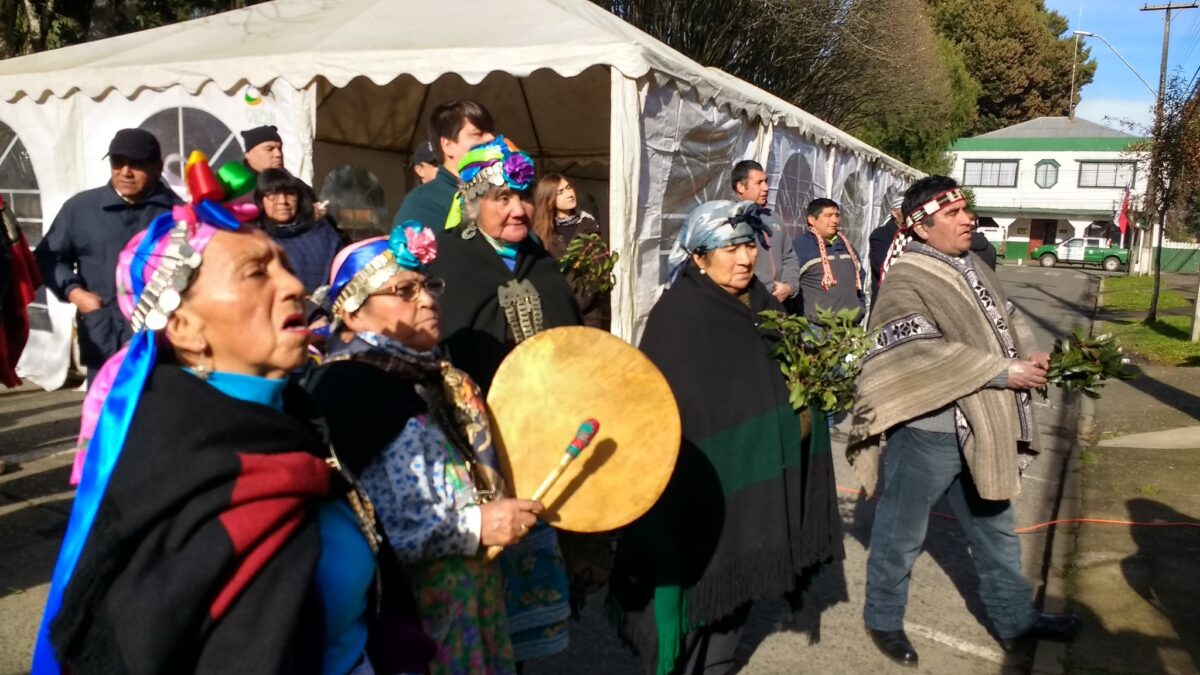
Representatives of the Mapuche, Lonko and Machi peoples take part in the raising of the flag in the Plaza de Armas in Vilcún, 700 km south of Santiago, in one of the many events held in Chile every Jun. 24, declared a national holiday for We Tripantu (new sunrise), the Mapuche New Year. CREDIT: Mirna Concha/IPS

Representatives of the Mapuche, Lonko and Machi peoples take part in the raising of the flag in the Plaza de Armas in Vilcún, 700 km south of Santiago, in one of the many events held in Chile every Jun. 24, declared a national holiday for We Tripantu (new sunrise), the Mapuche New Year. CREDIT: Mirna Concha/IPS

Business leaders unhappy

This process is of great concern to the business leaders grouped in the Confederation of Production and Commerce (CPC), whose board, headed by Juan Sutil, met several times with Mapuche representative Elisa Loncón, who was president of the convention until January, and her successor, María Elisa Quinteros.

The CPC was behind numerous Popular Standards Initiatives seeking to include its positions in the debate. It invited everyone to support these initiatives “that defend the values of freedom of thought and free enterprise,” among others, in order to achieve “a robust democracy” with public-private collaboration.

The CPC gathered 507,852 signatures and was able to submit 16 initiatives with its views on the constituent process. Three of them have already been rejected: “Free enterprise”, “Economic model, freedom of entrepreneurship and promotion of small and medium-sized enterprises”, and “Water for all”. One more is still being processed: “Towards sustainable mining for Chile”.

Business leaders have raised the tone of their opposition to the convention, which they accuse of distancing itself from the real Chile and from the work for a constitution for all.

“I am concerned that the constitution that is being drafted is not generating the proper balances and will not be a constitution that takes into account the sensibilities of all Chileans,” said Sutil.

Those sensitivities, he said, are especially from “a minority sector, which could be the center right, the right and even people from the center within the convention itself who are not being taken into consideration at all,” he told a local radio station.

“Chile is much more than what the constitutional convention reflects. The correlation of forces is very different in the real Chile than what is happening in the convention,” he argued.

According to Sutil, criticism of the convention is widespread and “this is bad not only because it jeopardizes the process, but also because it jeopardizes the future of the country from an institutional point of view, and from the point of view of its development and growth.”

Forestry companies own approximately 1.9 million hectares in an enormous area in the south, across three of the country’s regions. A significant part of these hectares are the ancestral lands of indigenous peoples.
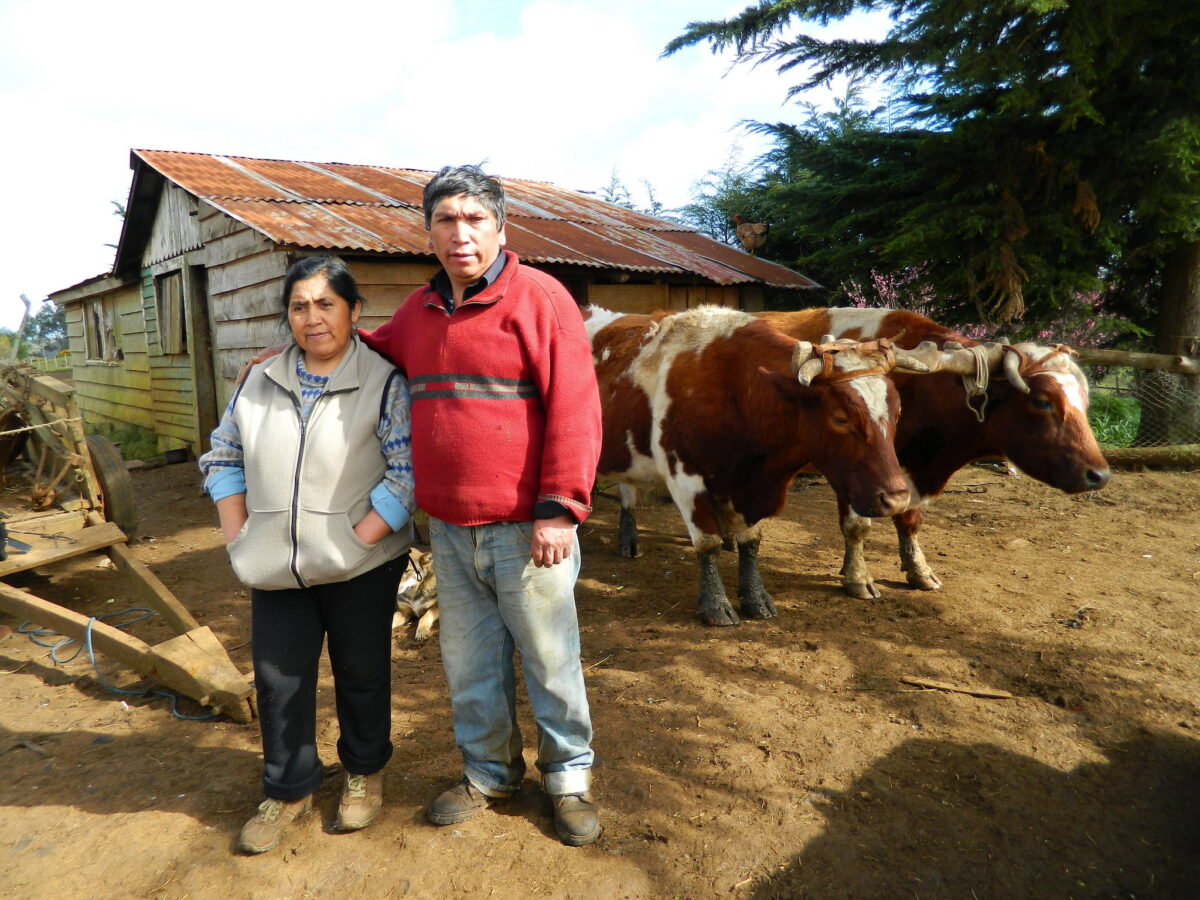
Catalina Marileo and Luis Aillapán, a Mapuche couple, stand in front of their home in Puerto Saavedra in the central Chilean region of La Araucanía. They have been among the many members of native peoples tried under an anti-terrorism law inherited from the dictatorship for acts such as, in their case, opposing the military for building a road on their land. Now Chile could be declared a plurinational State. CREDIT: Marianela Jarroud/IPS

Catalina Marileo and Luis Aillapán, a Mapuche couple, stand in front of their home in Puerto Saavedra in the central Chilean region of La Araucanía. They have been among the many members of native peoples tried under an anti-terrorism law inherited from the dictatorship for acts such as, in their case, opposing the military for building a road on their land. Now Chile could be declared a plurinational State. CREDIT: Marianela Jarroud/IPS

Precedents of a truth commission

The Historical Truth and New Deal with Indigenous Peoples Commission, created by then president Ricardo Lagos in 2001 and composed of 24 members with cross-cutting representation, found that 500,000 hectares were awarded to indigenous peoples between 1884 and 1929. This was verified after reviewing 413 titles issued in that time span.

The purpose of the Commission was to “correct the historical invisibility of native peoples, recognize their identity, repair the damage done to them and contribute to the preservation of their culture.”

In its final report, in 2003, the Commission proposed a hundred measures. In the area of land, it called for protecting lands belonging to indigenous peoples, demarcating and titling ancestral lands of native communities, and establishing a land reclamation mechanism.

Regarding natural resources, it proposed recognizing the indigenous peoples’ right of ownership, use, administration and benefit, the preferential right in State concessions, and the right of use, management and conservation.

So far, the greatest gesture by the State for the mistreatment of indigenous peoples was made by the current United Nations High Commissioner for Human Rights Michelle Bachelet, who as president of Chile (2006-2010 and 2014-2018) apologized in June 2017 to the Mapuche in a solemn official act for “the errors and horrors” committed against them.

Namuncura believes that a pending task is “to reach a political agreement with the large forestry companies so that a part of these lands, which today are their property, are returned to the indigenous peoples through a long-term political and financial commitment, with the possibility of considering the value of this restitution.”

The wording already approved for the first draft will now be analyzed by the Harmonization Commission, which will ensure “the concordance and coherence of the constitutional norms approved by the plenary.”

The version that emerges from that process will be voted by the plenary which, by two thirds, will define the text to be voted on by all Chileans in the referendum.

  Source

Conversation with a Media Icon: Dr. Roberto Savio

Civil Society, Democracy, Headlines, Human Rights, Press Freedom, TerraViva United Nations

Democracy

The Inter Press Service co-founder is part of a vanishing breed

Dr. Roberto Savio is somewhat unique as an eyewitness to history and builder of institutions, a man who turns his visions into reality

ROME, Feb 7 2022 (IPS) – We are sitting in the heart of Rome, Via Panisperna, where Dr. Roberto Savio has had his office for the last 58 years. His energy and activity, both mental and physical, belies his age. At 87, he walks the 7 kilometres from his house to his office building and climbs two flights of stairs to reach his office. When I caution him about the traffic on the roads of Rome as he walks home every evening, he is very relaxed about it. “Look here, Rome is over 2,000 years old, and these roads were meant for pedestrians, not cars.”


I have known Dr. Savio, arguably one of Europe and the Third World’s pre-eminent public intellectuals (he has Italian and Argentine nationality) for the last 35 years. He is probably the only living journalist who was witness to three major summits of the 20th Century: Bandung Afro-Asian Summit 1955; the meeting of Tito, Nasser and Nehru at Brioni, Yugoslavia in 1960, which laid the basis of the Non-Aligned Movement; and the 1978 first-ever North-South Summit at Cancun.

Injustice is supreme, during the Coronavirus pandemic, some people still got a $1 billion dollar bonus, with the 50 richest persons increasing their wealth by 27%, while over 500 million of the poorest, got pushed below the poverty line.

Dr. Roberto Savio

Dr. Savio also cofounded, with Pero Ivačić, the Non-Aligned Press Pool, apart from the first-ever Third World news agency, Inter Press Service (IPS), plus now the aptly named ‘Other News’.

Dr. Savio is somewhat unique as an eyewitness to history and builder of institutions, since he’s not just a man of ideas but also a man of action, a doer who has the will to translate his vision into reality. In 1964, four Western news agencies — Associated Press (AP), and United Press International (UPI), both American; Agence France Presse (AFP) and the British Reuters — jointly controlled 96% of the world’s free information.

It was a near total monopoly of how and what information was disseminated. It was in this context that Dr. Savio, along with an Argentinean journalist, founded the Inter Press Service, the first Third World News agency with its headquarters in Rome.

And IPS, guided by its guru, had the audacity to challenge this monopoly of news and information, which is a subject of a number of studies. Noam Chomsky calls it Manufacturing Consent and Media Control: Spectacular Achievements of Propaganda. Edward Said published a landmark study, Covering Islam: How the media and experts determine how we see the rest of the world.

It was thus no accident that major wars were started on the ‘big lie’ peddled by a pliant media by first ‘manufacturing consent’ so that wars would have political backing. The 1964 Gulf of Tonkin incident, which laid the groundwork for the Vietnam War, or the 2003 lie about Iraqi ‘weapons of mass destruction’ as a precursor to war, are both cases in point.

Dr. Savio was a hands-on boss at IPS (I know it because I worked for him at IPS for close to a decade!), personally presiding over editorial meetings at such locations as Manila, Bangkok and Rome, giving ideas and directions but always willing to listen and learn. He led IPS with a crusader’s passion to present a perspective that was different, and, at times, opposed to what the ‘mainstream’ Western media outlets were promoting. That idealism of the 1970s and 1980s has given way to pessimism and disappointment in Dr. Savio as the divisions, class and cultural, deepen amidst an increasingly polarised world.

He is deeply disappointed with two erstwhile democracies, the United States and India. “The America we knew no longer exists,” laments Dr. Savio wistfully. “That America has gone now.” In fact, he feels that political polarisation is so deep in the US, with 60 million evangelicals (the Religious Right) in the US pushing the country rightwards, that he’s convinced Donald Trump will be back with a bang in 2024!

Ever the empirical fact-checker that he is, Dr. Savio cites a PEW public opinion poll to corroborate his assertion. In the 1960s, he says, 8% of Democrats and 12% of Republicans didn’t want their children to get married to someone from the ‘other party’. Today, 88% of Democrats and 93% of Republicans have such beliefs, signifying an almost bridgeable political divide. No wonder, in the 2020 US Presidential elections, Biden won with 80 million popular votes while Trump came a close second with a record 75 million votes, most of whom are still convinced that the 2020 elections were ‘stolen’!

The other country that has disappointed Dr. Savio is India because “Nehru’s India has ceased to exist.” He adds that “Nehru was a very careful statesman, he didn’t want confrontation within India as he understood the diversity of people and the diversity of opinion that exists in India.” Dr. Savio then adds with a note of sorrow similar to his lament about the USA, “that Nehruvian India doesn’t exist any longer. Modi has divided India, Modi has marginalised Muslims.”

Looking at the global media, economic and political landscape, Dr. Savio feels three factors are going to be decisive in transforming the world in the 21st Century.

Considering the global media landscape, Dr. Savio sees the “print media as having a less and less of a role, as most of the print media is neither making money nor posting correspondents abroad, except perhaps El Pais, Le Monde, The Washington Post and the Guardian.

There was a time when Beirut had no less than 75 foreign correspondents.” He dismisses social media as “useless, dividing the world into bubbles, with 7 seconds as the average attention span of a teenager using the social media.” However, Dr. Savio understands how social media can be a ‘weapon of choice’ for some politicians, e.g. Donald Trump who has 86 million Twitter followers.

Dr. Savio adds in such a situation, “why should Trump bother about the American print media whose total daily circulation stands at 60 million, with quality print publications at less than 10 million.” Moreover, “media is now more local, no longer global.”

The second important change, in Dr. Savio’s view, is the crisis of capitalism, citing a quote of Nikita Khrushchev in 1960 that “capitalism cannot solve social problems.”

Dr. Savio adds that most of the capitalist West is also facing other crises, with conspiracy theories galore ranging from the anti-vaccine campaign to strange notions with 60 million Evangelicals in the USA convinced of the second coming of Christ, from QA Non to the ‘Birds Aren’t Real’ madcap conspiracy concoctions, which however have garnered support amongst a large section of Americans.

Despite the rightwing racist campaign against immigrants, Western economies increasingly won’t be able to function without foreign workers. Dr. Savio cites figures: “Germany needs 600,000 new migrant labour, while Canada needs 300,000” for skills and work that locals aren’t willing to do anymore. The core issue is that “society has lost its moral compass, with the culture of greed paramount” in the capitalist West.

Given this context of a ‘greed is good’ culture, Dr. Savio likens talk of Corporate Social Responsibility (CSR) on the part of big companies as “locking the stables after the horses have bolted.” Actually, Dr. Savio rightly concludes: “the capitalist system has collapsed.”

However, the third factor is Dr.Savio’s biggest worry: the future of Europe and the looming New Cold War. He is highly critical of NATO since “it’s a structure of war, always searching for new enemies, and pushing Russia closer to China.” Criticising NATO for adding China to its list of “major challenges and threats,”

Dr. Savio questions: “by which stretch of imagination is China part of the North Atlantic? This is an exercise in futility.” Moreover, he is convinced that “Trump will come back in 2024, and one thing is for sure, Trump is not interested in spending American money on war.” Perhaps the only silver lining in an otherwise gloomy scenario. With the exit of Merkel, Europe is leaderless.

Dr. Savio then quotes his late friend, the former UN Secretary General Dr. Boutrus Boutrus Ghali, as telling him “the Americans are lousy allies and terrible enemies,” and the biggest problem is that “the Americans don’t want to be told yes, they want to be told, yes sir!” Thankfully, in a world of multi-polarity requiring multilateralism, there are very few countries in today’s world who will simply acquiesce to US bidding with a nod of “Yes Sir!”

Dr Roberto Savio is actually part of a vanishing breed, the ‘last of the Mohicans,’ idealists who were builders in the quest for a better tomorrow, for whom the good fight is to present the truth, the unvarnished truth, while giving a voice to the voiceless, a task he has admirably performed. More power to his pen!

Senator Mushahid Hussain is an elected Senator from Pakistan’s Federal Capital, Islamabad. He is currently Chairman, Senate Foreign Affairs Committee. He has been Minister for Information, Tourism & Culture, Journalist, university teacher and political analyst. He has a Master’s degree from the Georgetown University’s School of Foreign Service in Washington, DC.

This story was originally published by the Wall Street International Magazine
 

  Source

The New Social Contract: an Opportunity for Deliberative Participation

Civil Society, Democracy, Global, Headlines, Human Rights, TerraViva United Nations

Opinion

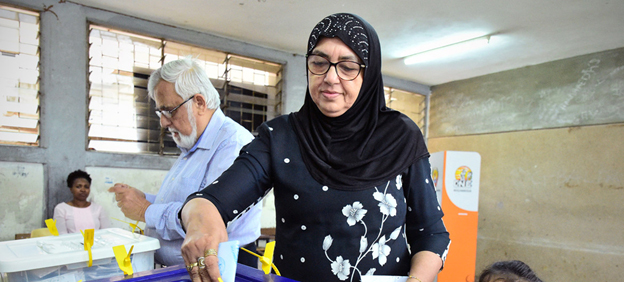
A woman, accompanied by a child, casts her vote during the general elections in Mozambique. Credit: UNDP/Rochan Kadariya

KATHMANDU, Nepal, Jul 9 2021 (IPS) – These days there hasn’t been certainly a shortage of reports portraying the decline of liberal democracy around the world.

With rising popularism and a divisive use of social media, we should not be surprised about a general malaise taking roots in most advanced liberal democracies.


From the Freedom in the World 2021 report published by the Freedom House to the Democracy Index 2020 released by the Economist Intelligence Unit to the IDEA’s Global State of Democracy Indices there is more and more evidence that liberal and representatives’ democracies are under duress.

Could the ongoing debate about a New Social Contract, a concept launched by UN Secretary General Antonio Guterres, help revive one of the essential elements of any democratic society, people’s interest and participation in the civic life?

If his recent re-election at the helm of the United Nations might have dissipated doubts that this new idea was just a fad, what are the chances for this debate surrounding the New Social Contract to become an opportunity to enhance public engagement at local levels without further dividing the gulf between classic liberal democracies on one side and other nations adopting less democratic, more authoritarian political systems?

Provocatively, could such debate instead help nearing such the gap?

To set aside any doubts, inevitably, the New Social Contract is not about enhancing democracy around the world.

This would clearly a utopian proposition for the Secretary General to embrace but rather an attempt to rethink and improve, regardless of the political system being adopted, the norms between citizens and the state.

Initially coined during the 18th Nelson Mandela Annual Lecture in 2020, Guterres made the case for a more just and inclusive society centered around the fights against inequalities and discriminations because, he said, “People want social and economic systems that work for everyone”.

Members of the Madheshi community of Biratnagar attend a political rally to demand autonomous federal regions and greater representation in parliament. Credit: UN Photo/Agnieszka Mikulska

“The New Social Contract, between Governments, people, civil society, business and more, must integrate employment, sustainable development and social protection, based on equal rights and opportunities for all”.

As vague as it is in terms of boundaries and ultimate goals, the New Social Contract can be seen as a framework that can, not only revitalize our societies but also build a fairer, cleaner and just economy able to overcome the multiple challenges created by the pandemic.

The Agenda 2030 and the Sustainable Development Goals attached to it, offer the blueprint upon which such idea can be built locally.

Being still a working in progress, the New Social Contract can offer an impetus not only at re-designing the relationships between social partners, governments, unions and businesses but it can also be a source to generate more interest among the population about public life.

Making sense of it especially from the perspective of youth can be challenging but it is essential doing so because we cannot imagine a renewed citizenry without including youth whose vast majorities are uninterested and disenchanted from the public discourse.

A possible pathway to generate new passions for civic life among youth would start from helping them being more informed about what is happening at local and national levels, something that can evolve to higher forms of deep interests.

The last stage of this continuum would be supporting them into embracing forms of direct engagement.

Engagement is driven by a strong interest for the public life and the willingness to turn such desire to know more into contributions, actions on the grounds.

Last year, UNV came up with a new volunteering framework that fully captures the different features and characteristics of giving your time, energies and skills for the public good.

Indeed, volunteerism with its different forms and dimensions, is one of the best tools to involve people and youth in particular in the public life.

That’s why it is not surprising that the upcoming UNV’s State of the World’s Volunteerism Report, is going to explain how volunteerism can be a true enabler for determinant for the New Social Contract.

More opportunities for public engagement will also generate more trust, an essential trait of any healthy and cohesive society and it is here where the ongoing efforts to localize the SDGs can make the difference by bringing people together for the common good, for achieving the goals at grassroots levels.

Achieving the SDGs at this level is not about just actions, about mobilization of resources of human, in kinds or financial nature. It is also about deliberation and here, after this long detour, I am reconnecting with the issue of democracy.

The design of a New Social Contract as a conducive platform to achieve the SDGs locally by involving people on the ground, can be a tool to elevate the quality of democratic discourse, generating platforms for a new form of shared decision making or shared governance.

Interestingly, while political parties wherever they operate, might become a hindrance to such change because their role as gatekeeper of public participation would be eroded, this conceptualization of shared governance might become of interest to nations not adhering to representative, parties dominated liberal systems.

In the field of political science there is a dynamic movement of social scientists exploring the concept of deliberative democracy that would allow, through different means, including sortition, to have new forms of real, rather than token, forms of public involvement and participation in the decision making.

It’s true that so far, most of the attempts putting in practice deliberative democracy have been applied in the contexts with solid liberal democratic traditions.

A diverse range of “experiments” have been carried out with the most successful probably being the Ostbelgien Modell adapted by the Parliament of the German-speaking Community of Belgium where there is a permanent Citizens’ Council that enable an ecosystem of Citizen’s Assemblies.

Ireland in the past used successfully some aspects of deliberative democracy to involve the general public in discussing and debating key constitutional issues that also helped generating consensus on gay marriage gender equality.

This legacy continues with a Citizens’ Assembly that recently submitted a report, after prolonged consultations and deliberations, on the issue of gender equality.

Iceland has been using a hybrid form of public deliberation, though led by a small number of elected citizens but with ample opportunities for people to crowdsource the nation’s constitution.

Other forms, with vary degree of success and with different level of inclusivity and decision-making power, were tried in two provinces of Canada, British Columbia and Ontario.

Within the growing area of deliberative democracy studies, there is now a great interest on the so-called “deliberative micro public” where a limited number of citizens gather to decide on certain issues of common interest.

If you have seen The Best of Enemies, a movie portraying an exercise of public deliberation about segregated learning in the Jim Crow’s United States in the early seventies, you get the idea about what these might look like.

Many of these lessons learned might also be of interest to policy makers whose political systems have not embraced democracy.

With the discussions still going on how the New Social Contract should look like at local levels and with the agenda of SDGs localization being recognized as instrumental to achieve the Agenda 2030, we could have an opportunity to advance stronger forms of public participation in the decision making locally and everywhere.

This would strengthen the meaning of good governance around the world while also creating new space for deliberations in contexts that normally shut them.

Perhaps deliberative participation, a term that might be easier to sell globally, if properly carried out at local levels, could become a cornerstone of the New Social Contract, reinvigorating classic democracy where already exists while creating space for others political systems to evolve and be more inclusive.

The Author, is the Co-Founder of ENGAGE, a not for profit in Nepal. He writes on volunteerism, social inclusion, youth development and regional integration as an engine to improve people’s lives.

  Source

Is the USA Fit to Rejoin the UN Human Rights Council?

Civil Society, Democracy, Featured, Global, Headlines, Human Rights, North America, TerraViva United Nations

Opinion

Emily Standfield is CIVICUS Member and data volunteer.

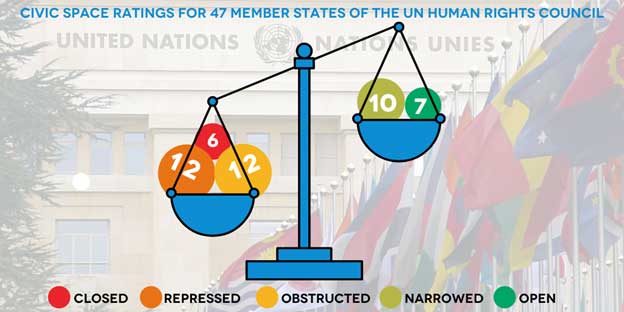
National civic space ratings from the CIVICUS Monitor, which uses up-to-date information and indicators to assess the state of freedom of association, peaceful assembly and expression for all UN Member States. Credit: CIVICUS Monitor

TORONTO, Canada, Feb 24 2021 (IPS) – A month into Joe Biden’s presidency, the U.S. has rejoined nearly all the multilateral institutions and international commitments that it withdrew from under Trump. These include the World Health Organization and the Paris Climate Accords.


Most recently, on February 8th, the U.S. announced it would also rejoin the United Nations Human Rights Council (HRC) as an observer. The U.S.’ role in the human rights forum looks different than it did four years ago in light of its recent track record on civil liberties.

The HRC has two primary functions: to draft and adopt new standards for human rights and to conduct investigations into specific human rights issues. In 2018, U.S. Ambassador to the UN Nikki Haley and U.S. Secretary of State Mike Pompeo announced that the U.S. would be leaving the HRC, claiming that it was a barrier to any genuine global human rights protection. The U.S. had two primary grievances.

First, that the HRC has an “unconscionable” and “chronic bias” against Israel. And second, that the HRC’s membership criteria allows chronic human rights abusers to have a seat on the Council. Neither of which are entirely baseless claims.

Israel remains the only country-specific agenda item covered at every HRC meeting and Russia, China, and Eritrea — to name a few — all currently hold seats on the Council and have some of the worst human rights records in the world.

Emily Standfield. Credit: CIVICUS

On Monday, the HRC’s 47 member states met for its 46th session, it’s third time meeting since the beginning of the pandemic. The further decline of political and civil rights as enshrined in international law will be an unavoidable hot topic.

The CIVICUS Monitor which rates UN member states’ track records of upholding the legal tenets of freedom of expression, freedom of peaceful assembly and freedom of association finds that 30 of the Council’s full member states routinely and severely restrict these rights.

And in the case of its newest observer state, the USA was recently downgraded to the Monitor’s third worst civic space rating of ‘Obstructed’. The body is a long way off from adequately representing its values.

In the case of the USA, the rating change and decline in rights is reflected by the police response to the Black Lives Matter (BLM) protest movement. During protests in 2020, law enforcement detained thousands of demonstrators, used teargas and projectiles to disperse crowds, and attacked journalists, despite the fact that most wore media credentials.

President Trump and other authority figures encouraged police officers to respond forcefully and, in some cases, requested such violent actions for their own benefit. In a perfect example of this, the Attorney General ordered the use of teargas against peaceful protesters so that President Trump could have a photo-op in front of a church.

While the BLM protests may have made the decline in civic freedoms abundantly clear, this rating change represents a longer deterioration of political and civil rights.

In response, in June the HRC unanimously passed a mandate that called for a report on ‘systemic racism’ targeted at individuals of African descent. Philonise Floyd, the brother of George Floyd, whose murder at the hands of white police officers began the mass protests, called on the human rights body to examine the U.S.’ history of racial injustice and police brutality.

In the end, the final resolution passed by the HRC called for an investigation of systemic racism globally and regrettably did not single out the U.S.

While Biden has rejoined the HRC as an observer, the U.S. must win elections in October 2021 if it wants to regain its seat on the Council. In 2019, Biden said, “American leadership on human rights must begin at home” and — in some ways — it has.

The BLM protests have sparked a degree of state and local level police reform, and Biden has made a commitment to achieving racial equity. While the U.S. should focus on improving freedoms within its borders, it should also not exempt itself from becoming a full member of the HRC again in October.

Former President Barack Obama ran for a seat on the Council because he believed the U.S. could do more to advance human rights as a member of the body. This turned out to be true— the U.S. supported the creation of several important international commissions of inquiry to investigate human rights violations.

If the rationale by Trump was that leaving the council would do more for human rights than holding a seat, it’s clear that this has not come to fruition. Whether it is freedom of speech or the right to peacefully protest, today more of the world’s population lives in ‘Closed’, ‘Repressed’ or ‘Obstructed’ countries as compared to four years ago, finds the CIVICUS Monitor.

Leadership is needed at the UN Human Rights Council on these issues, but it must come from those that have a full seat at the table and have a demonstrated track record of upholding their commitments. The U.S. is currently disqualified on both accounts. Credibility and moral leadership must come from somewhere else.

Instead, the U.S. must support other member states that are leading by example on these issues. Seven members of the HRC — Denmark, Germany, Uruguay, Netherlands, Marshall Islands, and Czechia — are rated ‘Open’ by the CIVICUS Monitor, the highest civic space rating a country can achieve.

These countries are adequately representing the values that the HRC is committed to defending. While there are surely other issues at the HRC that the U.S. will prove influential, the country is far from the inspirational example it often likes to present itself on these world stages.

At the current session of the HRC, which began on February 22nd, the U.S. should champion these members who have made meaningful progress on civil liberties and be prepared to take a backseat on issues that it so obviously falls short on.

  Source

Is This The End of Myanmar’s Quasi-Democracy?

Asia-Pacific, Civil Society, Crime & Justice, Democracy, Featured, Headlines, Human Rights, Migration & Refugees, TerraViva United Nations

NEW DELHI, India, Feb 22 2021 (IPS) – On February 1st, 2021 the military of Myanmar overthrew the country’s democratic government in a coup d’etat followed by arresting more than 40 government officials including Aung San Suu Kyi. The military declared a year-long state of emergency under the rule of it’s Commander-in-Chief Senior General Min Aung Hlaing. Troops took over the streets, a night-time curfew has been put into force. Tens of thousands of protestors have taken to the streets across Myanmar, in what is seen as the biggest street protests in more than a decade. The anti-coup demonstrators are undeterred by police attacks and increasing violence from the security forces.


Yasmin Ullah

According to this list, the military has arrested multiple members of civil society, including activists, writers, musicians, filmmakers. Monitoring group Assistance Association for Political Prisoners said “more than 384 people have been detained, in a wave of mostly night-time arrests”.

The first known casualty of the coup, Mya Thwe Thwe Khaing died on February 9 when a police officer opened fire with live ammunition, hitting her in the head while she was protesting in Naypyidaw. Two more protestors were killed in the city of Mandalay, marking Myanmmar’s bloodiest day since the military seized power. Myanmar’s minority community fears renewed violence after the military coup.

United Nations Secretary General António Guterres condemned the use of deadly violence in Myanmar, “The use of lethal force, intimidation & harassment against peaceful demonstrators is unacceptable. Everyone has a right to peaceful assembly. I call on all parties to respect election results and return to civilian rule,” António Guterres said.

The military in Myanmar alleges that the recent landslide election win by Aung San Suu Kyi was marred by fraud. Following the coup, the military has already announced replacements for a number of ministers.

Witnesses in Mandalay reported seeing soldiers from the 33rd Light Infantry Division, which led the deadly campaign against Rohingya Muslims in Rakhine state in 2017. The United Nations Special Rapporteur, Tom Andrews said, “The 33rd Light Infantry Division was reportedly involved in the lethal attacks in Mandalay today – the same division responsible for mass atrocity crimes against the Rohingya in 2017. A dangerous escalation by the junta in what appears to be a war against the people of Myanmar.”

“The very idea of Aung San Suu Kyi taking the trip to Hague at the end of 2019 to defend the actions of the military spoke volume about who she is as a person, and where she stands in her understanding of how democratic transition in Myanmar should progress,” says Yasmin Ullah, a Rohingya Social Justice Activist to IPS News.

“We have had three coups so far since 1962, and that memory still lives very deeply with a lot of Myanmar citizens. The pain and hurt that comes with it still reminds them of the glory that the country could never actually achieve.

“We have lived under a military regime for decades, without unifying, without taking to the streets, and making it known to the world that we reject this unconstitutional ceasing of power. The citizens are out on the streets because they will not have another chance at this, people are done with the fact that they will have to live under a culture of impunity where the military is untouched,” says Yasmin.

Following the coup in Myanmar, Washington has imposed sanctions on the military, urging other U.N members to follow suit. The UK too announced asset freezes and travel bans on three generals in Myanmar and is also going to be putting in place new measures to prevent UK aid. Singapore warned that there will be “serious adverse consequences” for Myanmar if the situation there continues to escalate. The European Union’s foreign affairs chief Joseph Borrell urged the military and “all security forces in Myanmar to immediately stop violence against civilians.”

Rights group Human Rights Watch in its report, Myanmar, Sanctions, and Human Rights said, “it supports the use of certain types of sanctions – including targeted sanctions and travel bans, and restrictions on military, trade, financial, economic, and other relations – as a means to condemn situations involving grave widespread human rights abuses or humanitarian law violations, to assert pressure to end those abuses, to hold those responsible to account, and as a means to deter other parties from becoming complicit in abuses.”

“We are calling on the United Nations Security Council to impose a global arms embargo. Separately, the UN General Assembly can also endorse individual governments or regional organizations imposing unilateral sanctions on Myanmar’s military, something the General Assembly has done in the past (e.g., during South Africa during apartheid.), the report stated.

International rights defenders have expressed concerns over grave human rights violations in Myanmar following the Feb. 1 military coup. “What we are witnessing in Myanmar didn’t just suddenly happen. You cannot leave the perpetrators of grave crimes under international law on the loose and then act surprised when they trample human rights again,” said Amnesty International’s Deputy Director of Advocacy Sherine Tadros.

“It was already ingrained in us Rohingyas to be intimidated, to fear the military, to fear authority, because that has always been the tactics used on us. The same kind of tactics we see now – the psychological warfare, night raids, shooting of people, arbitrary arrest, restrictions of movements – all of the things that the protestors are dealing with right now have been used on every single ethinic community and the Rohingyas,” says Yasmin.

It’s been thirty-three years since the uprising in 1988 in Myanmar against the military dictatorship, also known as the 8-8-88 Movement. The armed forces continued to rule until 2011, when a new government began a return to civilian rule. The military’s current threat to revoke the constitution only revealed the fact that it is willing to overturn any political – democratic system when its interests are threatened.

“Without a real change and reform within Myanmar to the very foundation to rip off the military power because they have infested different parts of the country that makes Myanmar what it is, without doing that there is no democracy that could take place,” says Yasmin.

The author is a journalist and filmmaker based out of New Delhi. She hosts a weekly online show called The Sania Farooqui Show where Muslim women from around the world are invited to share their views.

  Source

Italy and the Dubious Honor of Chairing the G20

Conferences, Democracy, Development & Aid, Economy & Trade, Featured, Global, Global Governance, Globalisation, Headlines, TerraViva United Nations

Opinion

ROME, Jan 11 2021 (IPS) – For 2021, Italy has been given chairmanship of the Group of 20, which brings together the world’s 20 most important countries. On paper, they represent 60% of the world’s population and 80% of its Gross Domestic Product (GDP). While the shaky Italian government will somehow perform this task (in the general indifference of the political system), the fact remains that this apparently prestigious position is in fact very deceiving: the G20 is now a very weak institution that brings no kudos to the rotating chairman. Besides, it is actually the institution which bears the greatest part of responsibility for the decline of the UN as the body responsible for global governance, a task that the G20 has very seldom been able to face up to.


Roberto Savio

Let us reconstruct how we arrive at the creation of the G20. It is a long story, that begins in 1975, when France invited the representatives of Germany, Italy, Japan, the United Kingdom and the United States, leading to the name Group of Six, or G6. The idea was to create a space where to discuss the international situation, not for decision making. Then it became the Group of Seven, with the addition of Canada in 1997. Russia was added in 1998, so the summit became known as the G8. And then, in 1980, the European Union was invited as a “nonenumerated participant”. In 2005 the UK government initiated the practice of inviting five leading emergency markets – Brazil, China, India, Mexico and South Africa. Finally, in Washington, in 2005, the world leaders from the group recognized the growth of more emerging countries, and they decided that a meeting of the 20 most important countries of the world would replace the G8 and become the G20.

At the meetings the United Nations, the European Union, and the major international monetary and financial institutions are also invited. Spain is a permanent invitee, together with leaders of the Asian, African Union, of the New Partnership for Africa’s Development, the Financial Stability Board, the International Labor Organization, the International Monetary Fund, the Organization for Economic Cooperation and Development, the World Bank Group, and the World Trade Organization.

Plus. The host country can invite some countries that it feels particularly associated with its foreign policy, at its year of presidency. Until now, 38 countries have been invited, from Azerbaijan to Chad, from Denmark to Laos, from Sweden to Zimbabwe. To complete, it is important to mention that Russia was suspended by the G8 in 2014, because of its annexation of Crimea. And was never readmitted. Trump, in his inexplicable deference to Putin, asked for its readmission to the G8, and this was refused by the other countries. The G7 has kept meeting, as “a steering group of the West”. At the same time, the G20 meets regularly, with Russia as part of his members.

So, Italy has the task to invite all those different actors, establish the agenda and planning and hosting a series of ministerial-level meetings, leading up to summit of head of governments. Italy has decided as agenda “The three P”: People, Planet and Prosperity. This imaginative and original agenda will be structured in 10 specialized meetings, like Finance (Venice July 9-10th); Innovation and Research (Trieste Aug. 5-8th); Environment, Climate, Energy (Naples, July 22nd), just to give a few examples. Beside these 10 specialized meetings, there will be 8 “engagement’s groups”, which will go from business to civil society, youth, etc.

The G20 is formed by countries that are involved in different and often contradictory groups. For instance, after Trump killed the TTP, (the Transatlantic Pacific Partnership), that Obama was able to put together excluding China, with a vast range of counters going from Australia to Mexico, from Canada to Malaysia, China was able to reciprocate, and crate the Regional Comprehensive Economic Partnership, which puts together the same countries plus some others and leave outside completely the United States. This commercial bloc is the largest ever created and has 30% of the world’s population, and 30% of the world GDP. But the European Union, (to which Italy belongs) has explicitly taken a path of European nationalism, to make the EU able to survive in the coming competition between China and the United States. European Union (and therefore Italy) are also members of NATO, where the United States is the indispensable and fundamental partner. And in the G20 China seats with India, which is the only country that has refused to join RCEP, and who is clearly taking an alternative path to China’s expansion in Asia. But this is also Japan’s policy, who is very active in G7, in the G20, and has entered RCEP, and considers, like South Korea, a priority to limit the Chinese expansionism.

Of course, there are a number of other pacts, agreements, treaties and alliances, that would be now boring and useless to enumerate. One country, like Italy, would therefore wear several hats at the same time. The point to make is, that since the arrival of Ronald Reagan as President of the United States in 1981, the multilateral system started to be under attack. Reagan, in Cancun’s Summit for the North-South dialogue, a few months after his election, questioned the idea of democracy and participation as the basis for international relations. Until then, the General Assembly resolutions were considered the basis for global governance. In 1973, the GA passed unanimously a resolution, calling for the reduction of the economic gap between the North and the South of the world, calling rich countries to their duties to establish a New International Economic Order, more just and based on the faster development of the poorer countries. Reagan denounced this as an anti-American maneuver. The US is not the same as Montecarlo, as he famously said (probably he intended Monaco, as Montecarlo is no state), and yet they have a vote each. So, this democracy coming from the UN, was in fact a straitjacket, and the US would proceed on the basis of bilateral relations, and not to be strained by multilateral mechanisms. Reagan was the first to talk of America first, He, together with Margaret Thatcher in Europe, dismantled all the social progress made in the world after the end of the Second World War. The market, with his invisible hand, would be the sole engine of society (that Thatcher said does not exist, only individuals). The State, that he called “the beast”, was the first enemy of the citizen. He declared: the most terrifying words in English are: I am from the Government, and I am here to help”. Any public or social cost was just a brake to the market. Reagan wanted to privatize even the ministry of Education: he and Thatcher left UNESCO, as a symbol of disengagement from the UN. Both he and Thatcher curtailed trade unions, privatized whatever possible, and started the era of neoliberal globalization, whose effect is now widely evident, and that Trump, Bolsonaro and Co. bless every day, because it has created a very large swath of disaffected citizens, who believe they will readdress their destiny.

Is important to note that Reagan did not have any real opposition, from the other rich countries. So, all this fragmentation of the world, with the creation of G7, G8, G20, and other exclusive clubs, was not an exclusive responsibility of Reagan and Thatcher. For forty years, the process of divesting the UN from its responsibility for the world’s peace, development, and democracy went on. Neoliberal globalization was based on finance and trade. Even before the end of the war, finance was delegated to the System of Bretton Wood, by the name of the site where it was founded. Let us just constate a fact: the Financial System was established in a such way, that Finance is the only sector of human activity that has no regulatory body. Today it has clearly separated by the general economy when its original function was to be at its service. And political institutions are not able to control its global structure.

The other engine of globalization was trading. United Nations had the UN Commission on Trade and Development, UNCTAD, which looked to trade as an instrument of development. The creation in 1995 of the World Trade Organization, as an independent organization, envisaging trade as an economic engine, divested the UN from trade too. And more the UN weakens, the easier is to decry its shortcomings.

The stroke of grace to multilateralism has been the arrival of Trump, the heir and an updated version of Ronald Reagan. But with a totally different agenda and vision. His basic idea is not “America First”, but “America Alone”. He pushes Regan’s idea of bilateralism versus multilateralism to the extreme of ignoring the concept of alliances. So, he declared, Europe is even worse than China. But there is a fundamental difference between them: Trump never pretended to be the President of all Americans. On the contrary, he tried immediately to divide and polarize the United States, and he leaves as a legacy the US that will take a very long time to become again a united and pacified country. And his strategy has been taken by several other leaders, from Bolsonaro to Orban, from Erdogan to Salvini.

It will be, therefore, difficult, for the UN to recover its function of the meeting place, to express plans of global governance, based on democracy and participation. It was a vision based on the lessons learned in the Second World War: let us avoid millions of deaths, terrible destruction, and to do so we need to work together. That lesson has been now forgotten. Just compare the kind of political leaders from that time, and the present one, to see the enormous change. Therefore, the expression of national egoisms will continue, with the richest countries in exclusives clubs, like OECD or the G20.

But there is a problem: those clubs are not efficient, because they gather together countries with very different agendas and priorities. Let us take a good example from the last G20, held last November under the very discredited chairmanship of Saudi Arabia. One of the points was the cancellation of the debt from poor countries, evidently urgent, because of the additional burden of the pandemic that is going to bring disproportionate damage. The Pope, the Secretary-General of the UN, Gutierres, pressed for that decision. All that the G20 was able to do, was to freeze the payment of the interest of the debt, for six months. And here, let us divagate for a useful learning exercise of the Third World Debt, and on the nobility of the rich countries.

If you take a loan that you repay over 20 years at 5%, or a mortgage, of 100, at the end you will have repaid 200. And during the first ten years, all you pay are the interest, and only in the second decade, you start to pay back, progressively, the capital. The result is that the poor countries several times renegotiated their debt and every time what they paid where the interest, to start again. And those interests were cumulative. During that process, they paid several times the amount of the capital that they received. But all that they paid went to the interests… At the university, you learn one good example of the perversity of cumulative interests. The old story is that a Dutch settler, Peter Minuit, bought the island of Manhattan from the Algonquin tribe. The price paid was $24 worth of beads, trinkets, a jar of Mayonnaise, two pairs of wooden clogs, a loaf of wonder bread and a carton of Quaker oats. If that amount was put in a loan at 5%with composite interest, it would be by now more than the estimated value of all of Manhattan, which exceeds three trillion dollars. So, the decision of the G20 to freeze interests for six months, amount to nothing. It is interesting to listen to insiders’ voices. The loans of the rich countries are computed in the DAC, Development Assistance Committee, established by OECD (the organizations that gathers all rich countries). The OECD engaged itself, in the old good day of multilateralism, to dedicated 1% of the members’ GDP to the development of the underdeveloped countries. This engagement was never kept, except for the Nordic Countries and Nederland. The US never went over 0,3%. Anyhow, any debt condonation goes into the official statistics of the DAC committee. But new loans are made, by countries that are not in the DAC committee, like China, which has made a very extensive number of loans, especially in Asia and Africa in not public conditions. For the OECD countries (basically the West), to cancel their loans could mean to unleash resources that could go to pay China loans, becoming so China funders. This is a good example of how competing interests, block the G20 from concerted actions.

Decisions on this issue are now expected from the next G20 Summit in Rome, in November. But before, the Global Health Summit, called from the G20 together with the EU in May, will be the occasion to verify what will happen. with vaccinations. But in the same month, Portugal has called for the very important Social Summit of the European Union. Portugal has taken the much more substantial chairmanship of the EU, and this is a very positive contribution to a positive 2021. Portugal is today probably the most civilized country of Europe, a place of tolerance, harmony and civic engagement, much like Sweden in the 80s. And is the only credible country on the issue of immigration. In the Social Summit Lisbon will push to strengthen social Europe, after so many decades of a solely economic Europe. The outgoing German chairmanship was fundamental in abandoning the austerity dogma and move to an unprecedented plan of solidarity and institutional strengthening, made also possible by the blessed departure of England, and its anti-European historical bias. The fact that vaccination is a European plan, and not a hotchpotch of national attempts, is great progress in term of vaccination. And if it will continue on the same path, on the issue of climate control, and technological development, it will recover much trust from the citizens, who felt Brussels an unaccountable institution, far from their priorities. Now the EU deals with unemployment, with the economic and social disaster brought by the virus. It is a tribute to the virtues of multilateralism, solidarity and development. And Portugal will try to complete what the German Presidency was unable to conclude.

But if we look to the obvious need for a world’s vaccination, the reality is much dimmer. Until now the rich countries have bought as many as possible vaccines. f. Europe, with 13% of the world population, has bought 51% of the total production. Israel is a case study. With a population of 9 million people, highly registered and organized in the health system, Netanyahu (who will do everything to stay in power), has bought the vaccines at an extra cost but is fast reaching all the population. Certainly, this cannot be the case of India, with nearly 1.4 billion people, and a very primitive system of health… Even the Pope has launched an appeal for distributing a free vaccine in the poor countries, and India and South Africa (which are a member of the G20), have asked the General Assembly of the World Health Organization for free distribution in poor countries. There has been strong opposition from the rich countries, that have financed at the tune of 10 billion dollars the development of the Pfizer and Moderna vaccines, which now they buy at market prices, several times higher than those of AstraZeneca… And then those two vaccines use a new technology, whose side effects are still unknown, unlike AstraZeneca, which uses a well-experimented technique.

But even if we take the cheaper vaccines, there is a very basic issue: under which ethical and human logic, patents and money can be made over public goods, as the Pope has repeatedly asked? The patent industry has been patenting seeds, rice, plants, which have been existing for hundreds of years, and those new peasants cannot use them without paying a royalty to the company who patented them. And then the pharmaceuticals tried to patent, parts of the human body… Citizens from several parts of the world have been setting up an association, Agorà for Humankind, that is conducting a campaign, for the elimination of patents and profits over public goods, as they belong to humankind. Also, an international alliance has been set up between the public and private sectors, the General Alliance for Vaccine Initiative, GAVI, which has the task to finance vaccination in 93 middle and poor countries. But funding is still far from coming. As things are now, at the end of 2021, only 30% of humankind will be vaccinated, basically from rich countries.

Yet, if there is something that should make all of us aware that we are in the same boat, is this pandemic. Until at least 70% of all humans will be vaccinated, the virus will continue to strike and kill. The British mutation, much more contagious, is a good example. The country with more cases is now Spain, which has no physical contact with the UK. But it went to Gibraltar, the British colony since 1713 in the South of Spain. And from there spread to the surrounding Spanish villages and towns. Did the realization that viruses does not know borders help to make the new treaty for relations between Gibraltar and Spain? The answer is not really: it is trade. Yet, it does not require a virologist to assume that trade spreads the virus…

So, after this long ride among different subjects, its thread should be clear. We have gone from an era when the lessons of the Second World War created a generation of politicians who made of peace and development the common ground for international relations, even during a very dangerous Cold War. Would Trump, Johnson and Putin be at Yalta, instead of Roosevelt, Churchill and Stalin, the outcome would have been very different. Most probably, we would have had no United Nations, no international organizations. Just think that the US, to push for the creation of the UN, agreed in its founding engagement, to pay 25% of its costs.

Then, beginning with Reagan and Thatcher, a profound change came. The interests of my country are more important than international cooperation, and the stronger I am, the more so. Multilateralism, cooperation, went under attack, and so the role of the State, its function of guarantor of social progress, equity and participation. Other organizations started to sprout, and weaken the UN, and the instruments of a social pact, like trade unions. From the spirit of the fall if the Berlin’ Wall, in 1989, a number of clubs of rich countries, like the G7, the G8, the G20, started to substitute the UN, and private clubs, like the World Economic Forum of Davos, attracted more important personalities than the General Assembly of the United Nations.

We are now in a third phase, whose symbol abounds: nationalism, xenophobia, and the illusion that sovereignty is more important than cooperation. Brexit is a notable example. But Trump sets up an unprecedented level of legitimacy to what was once considered the betrayal of civism and democracy: exploit and exasperate the divides of a country, racial, cultural, gender, and run without any compliance to rules and traditions. He is accompanied by a variegated assortment of autocratic, populist, and narcists kind of new political generation: Bolsonaro, Orban, Kacynski, Putin, Modi, Sissi, Nehayanu, Duterte, just to cite the most known, while others, like Salvini, are poised to take the power. The virus, instead of uniting citizens, has further divided them. To wear the mask, is a left-wing declaration, like to worry about the climate, which is a survival’ concern. Military expenses are on a continuous increase. In 2019 they have reached an unprecedented amount of 1917 billion dollars. Enough to solve all problems of food, health and education worldwide. The UN is still the only organization able to provide the world with plans of global significance. Its Agenda 2030 gives a plan for the solution of our most significant problems. It costs a fraction of the military expenses. The G20 has paid some lip services, to Agenda 30, but never anything significant. The new generations of politicians are under general scrutiny, and it is not positive at all… I would say that is representative of our crisis, books still get published on a world of conspiracy, like that the virus is used by Bill Gates to inoculate nanoparticles that will make it possible to control all human bodies, Or myths like the one on Bilderberg Club, one of the private’s clubs meeting, as the place where decisions are taken by a small elite on how to run the world. This, when more than ever is clear that the system has lost its compass, and even the tragedy of climate and soon two million deaths are not able to bring back cooperation and multilateralism… but the explosions of conspiracies is a good sign of the decline of democracy…

So, Italy enters now the chairmanship of the G20. It is a position without any significant weight, with the task to realize a coming Summit, of the head of States, from which nobody expects much. If Trump’s defeat has any significant meaning, by November the political situation could have improved, but we will have a Germany without Merkel, probably more nationalist, and the miraculous social engagement of the European Union, could come to a halt. Italy has a very fragile government, and the dubious distinction of having a very young minister of Foreign Affairs, whose only working experience was to be a steward at Naples’ stadium. On the Health Summit, he does not look particularly commanding respect and authority. This will be Italy’s first test. In May, it will be clear that without vaccination in the world, rich countries will not be out of danger. It should be easy to rally the 20 most important countries of the world, which include India and South Africa, to such obvious actions. But in those times, where interests and selfishness are the reality, it is legitimate to nourish many doubts… Anyhow, if 2021 will not be a year of regeneration and creation, we will be on an irreversible slipping decline… time is running out…

But it looks now like the solution to the problems is beyond the reach of the system…

Publisher of OtherNews, Italian-Argentine Roberto Savio is an economist, journalist, communication expert, political commentator, activist for social and climate justice and advocate of an anti-neoliberal global governance. Director for international relations of the European Center for Peace and Development. Adviser to INPS-IDN and to the Global Cooperation Council. He is co-founder of Inter Press Service (IPS) news agency and its President Emeritus.