Vibrant Civil Society Essential for Sustainable Development in Iran

Civil Society, Development & Aid, Featured, Gender, Headlines, Human Rights, Middle East & North Africa, Peace, TerraViva United Nations

Opinion

Sohrab Razzaghi is Executive Director of Volunteer Activists Institute a non-profit, non-governmental, non-political and independent institute, whose primary aim is capacity building among activists and civil society organizations for democracy, human rights and peace building within Iranian society and communities in the MENA region.

 
Masana Ndinga-Kanga is MENA Advocacy Lead at CIVICUS, an alliance of 7000 civil society partners around the world.
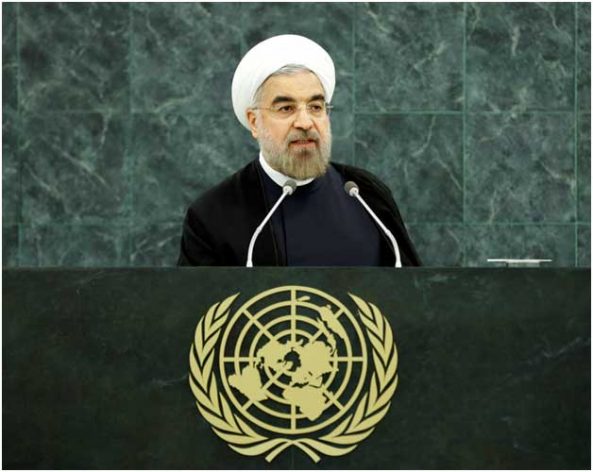
President Hassan Rouhani of Iran

JOHANNESBURG / AMSTERDAM, Oct 15 2019 (IPS) – 2019 has not been a good year for Iranian human rights activists. At a time where civic space had completely closed, many watched in disbelief as the regime mounted even more restrictions on civil society. Over recent months, many activists have been arrested, like Noushin Javari (a photographer), Marzieh Amiri (a journalist), and Javad Lal Mohammadi (teacher).


As the UN Third Committee prepares to meet in October 2019, it will be worth following whether the General Assembly will take proactive steps to respond to the crisis in Iran or continue to avert its eyes in the face of complicated global politics that have emboldened President Rouhani in his regressive anti-western crackdown on civil society.

During the UN General Assembly on 25 September 2019, Iranian President Rouhani’s called for the creation of a ‘coalition of hope’ in the Gulf region, that would focus on “peace, stability, progress and welfare” and working to “invest on hope towards a better future rather than in war and violence [sic],” with the aim of restoring justice and peace.

However, the civic space track record of Iran and many of its Gulf neighbours demonstrates that oftentimes the state is the perpetrator of violence and restrictions in-country, curtailing the very justice and peace it aims to implement.

It then begs the question, how can a regional coalition of hope be developed, when the state so frequently responds to human rights defenders with violence – excluding the language of human rights from even sustainable development goals.

Many civil society actors have been detained – deemed enemies of the state and foreign agents. As Iranian communities reel under the pressure of yet another bout of sanctions, it is worth begging the question ‘does the closure of civic space serve the interests of sustainable development in Iran?’

Contrary to what policymakers responsible for civic space closure might think, these restrictions ultimately hurt sustainable development. Human rights activists around the world, including in Iran, are oftentimes the critical purveyors of equitable ‘sustainability’ in the development process, campaigning for environmental justice, worker’s rights and the respect for the dignity and humanity of all.

In 2018, the Ayatollah Khamenei’s official website published a draft 50-year vision for “progress.” The document, entitled the Islamic-Iranian Pattern for Progress (IIPP), sets out a set of objectives to be met by 2065, covering a vast range of issues, among them the economy, justice and poverty – still to be approved by parliament.

The plan focuses on addressing poverty, the economy and the justice system. It seeks further alignment of religion and the sociopolitical system in the country, but also includes provisions for “prompting independence, accountability and specialization in the judiciary” and “enhancing women’s position and providing equal opportunities for them, with emphasis on their role as mothers.”

Critics of the regime would not be wrong to look at these policy objectives with concern, especially as the regime has a narrowed position on the role of women in society and has repeatedly failed to guarantee independence of the judiciary – where human rights defenders and political dissenters are subject to numerous violations of the International Convention on Civil and Political Rights (to which Iran is party).

According to a recent comparative report on Sustainable Development, Iran is in 82nd place among 156 countries. This lower-than-average score, however, is not surprising. Iran has not committed to the indexes of sustainable development, meaning people in Iran are not participating in a systematic and organized manner in the process of development. Instead, policymaking and development is a top-down process steered by the government.

In fact, most involvement of Iranians in this process is decorative. As a solution, Iranians have been organizing themselves in civil society to combine their voices and make sure they are heard. This, however, is counteracted by repression from the state, resulting in the country being rated as closed on the Civicus Monitor.

Countless activists who have been advocating for the true meaning of sustainable development have paid the price. Civil society activists, especially environmental activists, labor union and teacher union activists, as well as human rights defenders have been wrongfully persecuted.

Eight environmental activists are sitting in prison on charges of espionage, four of whom are additionally charged with “sowing corruption on earth”. If convicted, they will face death penalty. Another environmental expert, Dr. Kavous Seyed Emami, died in detention, and the circumstances of his death are unclear.

According to the Iranian Constitution, citizens are permitted to set up associations and assemblies; yet this clause is not implemented. Few, if any, groups have permission to freely form associations, including socio-political groups or ethnic/religious minorities. Last month for example, Omid Mehr foundation was closed by government authorities. When asked about the reason for closure, authorities said that Omid Mehr foundation was advocating Western values, which does not fit in Iran.

The false claim that campaigning for human rights is equal to advocating Western values is an adage used by repressive regimes to silence dissent and put forward a development agenda that excludes minorities and others on the margins. But development is not sustainable if they are excluded.

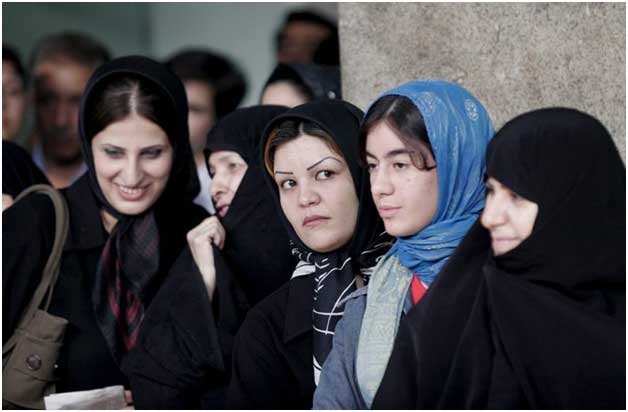
For example, the regime frequently equates the campaigns of women to determine their dress codes as acts against the state, threats to national security or prostitution. Despite the peaceful protest (handing out flowers in commemoration of International Women’s Day) against the hijab by Yasaman Aryani and Monireh Arabshahi, they were sentenced to 16 years imprisonment after being subject to enforced disappearance. Such lengthy sentences and gross human rights violations do not equate sustainability nor development.

The government not only fails to safeguard the freedom of associations and civil society organizations, but actively creates non-independent organizations (or Governmental NGOs, GONGOs) to put forward an inaccurate picture of civic engagement by the state.

Only CSOs that support the agenda of the state are accepted by the government, strengthening the top-down, government-centered way of working. The Organization for Defending Victims of Violence (ODVV), one of many GONGOs, attends international meetings, including UNHRC meetings.

Actively curating a counter-narrative of progress through GONGOs shows the vulnerability of the state to international pressure in an interconnected global political economy. The state recognizes its reliance on international partnerships for the advancement of its economic objectives.

But instead it fails to align its internal policy processes to international human rights conventions – channeling resources that could be spent on authentic engagement with civil society in country to its image. As a result, tensions in Iran are mounting at the dire state of socioeconomic affairs.

For instance, in January 2018, mass protests against poverty and economic difficulties erupted in the country. Rather than engage with citizens, the state responded through 4,967 arrests and any assembly was strictly and heavily repressed.

Among those arrested were activists, women, workers, students and teachers. Many of the arrestees have been sentenced to long imprisonment terms. Many more are critical to the realization of sustainable development in Iran.

Rather than supporting socioeconomic development, the state-imposed limitations on freedom of assembly and association in Iran, have weakened and decapacitated citizen engagement, and prevented their participation in the process of achieving sustainable development. It is short-term thinking that creates enemies of civil society and sustainable development.

In fact, a dynamic, vibrant, democratic and development-oriented association landscape is an important requirement for sustainable development. By releasing activists and opening the civic space, Iran can truly begin the process of social change for the upliftment of all.
  Source

Austerity, the “New Normal”

Civil Society, Conferences, Development & Aid, Economy & Trade, Featured, Financial Crisis, Global, Headlines, Health, Labour, TerraViva United Nations

Opinion

Isabel Ortiz is Director of the Global Social Justice Program at Joseph Stiglitz’s Initiative for Policy Dialogue at Columbia University, former Director at the International Labour Organization (ILO) and UNICEF, and senior official at the UN and at the Asian Development Bank.
 
Matthew Cummins is senior economist who has worked at UNDP, UNICEF and the World Bank.

WASHINGTON DC, Oct 11 2019 (IPS) – While this week Ministers of Finance and economists meet in Washington to confront global economic challenges at the IMF and World Bank Annual Meetings, the majority of the world population lives with austerity cuts and see their living standards deteriorating. World leaders must reverse this trend.


Isabel Ortiz

Since 2010, most governments in both high income and developing counties have been implementing austerity policies, cutting public expenditures. Surprisingly, this trend is expected to continue at least until 2024, according to a global study just published by the Initiative for Policy Dialogue at Columbia University, global trade unions and civil society organizations. Austerity has become “the new normal.”

Based on IMF fiscal projections, the study finds that a new fiscal adjustment shock will start in 2020. By 2021, government expenditures as a share of GDP will be declining in 130 countries, nearly three-fourths of which are in the developing world. The reach of austerity is staggering: nearly 6 billion persons will be affected by 2021.

How are governments cutting their budgets and implementing austerity reforms? In practice, the most commonly considered adjustment measures in 2018-19 include: pension and social security reforms (in 86 countries); cutting or capping the public sector wage bill, including the number and salaries of teachers, health workers and civil servants delivering public services (in 80 countries); labor flexibilization reforms (in 79 countries); reducing or eliminating subsidies (in 78 countries); rationalizing and/or further targeting social assistance or safety nets (in 77 countries); increasing regressive consumption taxes, such as sales and value added taxes (in 73 countries); strengthening public-private partnerships (PPPs) (in 60 countries); privatizing public assets/services (in 59 countries); and healthcare reforms (in 33 countries).

All of these measures have negative social impacts. As a result, in many countries older persons have lower pensions; there are not sufficient teachers, medical and care staff, and the quality of public services suffers; there are less jobs, and people work under more precarious conditions; prices increase while wages are stagnant; and the low and middle classes are squeezed and under pressure.

Matthew Cummins

In perspective, the macroeconomic and fiscal choices made by governments over the last decade are alarming. The G20 alone committed US$10 trillion to support the financial sector in response to the global financial crisis, and then passed the costs of adjustment to populations, with millions of people being pushed into poverty and lower living standards.

The worldwide drive toward austerity or fiscal consolidation can be expected to aggravate the growth and employment crisis and diminish public support at a time of high development needs, soaring inequalities and social discontent.

Austerity is also being used as a trojan horse to induce “Washington Consensus” policies to cut back on public policies and the welfare state. Once budgets are contracting, governments must look at policies that minimize the public sector and expand private sector delivery, including PPPs. There are clear winners and losers from this renewed Washington Consensus, and governments must effectively assess and question these policies.

Austerity and budget cuts do not need to be “the new normal.” There are alternatives, even in the poorest countries. Governments can find additional fiscal space to fund public services and development policies through at least eight options, which range from increasing progressive tax revenues, cracking down on illicit financial flows, improving debt management and using fiscal and foreign exchange reserves, to adopting more accommodative macroeconomic frameworks, reprioritizing public expenditures and -for lower income countries- lobbying for greater aid. All these options are endorsed by the United Nations and the international financial institutions.

It is time for world leaders to abandon the myopic scope of macroeconomic and fiscal policy decisions that benefit few and, instead, look for new fiscal space and financing opportunities to foster a robust global recovery and the achievement of long-term global prosperity for all.


The Role of Emerging Technologies in Military Conflicts

Armed Conflicts, Civil Society, Featured, Global, Global Geopolitics, Headlines, TerraViva United Nations

Opinion

Izumi Nakamitsu is UN High Representative for Disarmament Affairs*

Credit: UN peacekeeping

STOCKHOLM, Oct 10 2019 (IPS) – Throughout history, technology has transformed armed conflict. The carnage of First World War battlefields is a stark example of what happens when advances in weaponry outpace the normative frameworks around its use.


Today, we are experiencing a technological revolution that holds incredible promise for human development and welfare. From genome editing to quantum computing and artificial intelligence, emerging technologies offer us powerful new ways to achieve our shared commitments, including the Sustainable Development Goals.

Our networked society is promoting a “democratization” of technological dissemination. Ease of understanding and using technology is greater than ever before. Yet these benefits also bring with them clear risks for international peace and security.

Before I address the trends and consequences of the current technological context, I want to add my usual caveat: it is important not to be alarmist about the ramifications of technology, but at the same time not dismissive either.

With that, let me share with you some of the major trends in conflict risk as I see them and the implications they carry for international peace and security.

First, the application of technology to new means and methods of warfare is aggravating an arms-racing dynamic in both conventional and nuclear weapons. This dynamic is evident in the eye-watering amounts of money spent on weapons – some 1.8 trillion dollars last year, according to SIPRI – and the nuclear modernization campaigns that are, in effect, a qualitative nuclear arms race.

This is both exacerbated by, and in turn exacerbates, the absence of transparency and confidence in international relations. As States strive to develop newer and better weapons, it threatens to undermine stability and increase the prospects for unintended and potentially uncontrollable escalation.

This dynamic is not limited to States with advanced technological bases. The democratic characteristics of technological innovation provide for creative asymmetric responses – the digital IEDs, if you will.

The second trend I want to highlight is how technology is opening new potential domains for the conduct of hostilities.

Military operations using emerging technologies and in new domains can involve actions that are not easily classifiable or fall below traditional thresholds for an armed attack or an act of aggression.

This creates challenges for international peace and stability, as even non- permanent means of disrupting or disabling a military capability can prompt a conventional armed response.

Take, for example, what is commonly referred to as “cyber warfare”.

The frequency of malicious cyber incidents is growing, along with their severity. Such acts are contributing to diminishing trust and confidence among States and encouraging them to adopt offensive postures for the hostile use of these technologies.

The difficulty of attributing responsibility for cyber-attacks could result in unwarranted armed responses and escalation. Constraints agr the case of cyberattacks that do not cause physical damage and are not lethal.

New domains and methods of warfare will also change the impact on civilians in ways that are less kinetic but equally damaging. For example, “casualties” in a cyber conflict could include millions of people who have had their bank accounts wiped out by an offensive cyberattack.

Put differently, some of these new technologies could not only change the size and speed of destruction in conflict, but also the character and nature of destruction in war.

A third and related trend is how certain new technologies, in particular armed uncrewed aerial vehicles, are undermining civilian protections. Lower risks to armed forces and comparatively lower levels of physical violence risk lowering the threshold on the use of armed force in situations where it would not otherwise have been contemplated.

Such actions not only endanger civilians, but risk escalating conflict.

The fourth and final trend I want to draw attention to is the emerging nature of warfare enabled by networked militaries, autonomy, uncrewed vehicles, advanced sensors, and weapons that can attack at hypersonic speeds.

This form of warfare is not yet fully realized, but technological innovation, coupled with evolving military thinking, is trending the world in this direction with several significant risks.

So-called “hypersonic weapons” pose particular concerns because they could both reduce decision-making times while also adding ambiguities related to the nature of their targets and their own payloads, whether conventional or nuclear.

Increased adoption of Artificial Intelligence (AI) may lead to decision-making processes faster than human cognition and concern has been expressed about the potential for unpredictable and non-transparent behaviour by AI in armed conflict.

Increasing autonomy in the critical functions of weapons systems raises serious ethical and legal questions for existing frameworks and how to ensure human accountability for the use of force. The growing use of UAVs and increased autonomy could lead to perceptions of casualty-free warfare.

The possibility of third parties with malicious intent interfering in control systems to incite conflict cannot be discounted.

The potential for such advances to exacerbate political divisions and global tensions would be alarming even in the most benign of international environments.

However, we are currently mired in a geostrategic context defined by distrust, the militarization of international relations and a dearth of dialogue. Relations between the so- called “great powers” are eroding as the rules-based international order – including the disarmament and non-proliferation regime – is being challenged.

Other global issues – climate change, mass migration and social unrest – will also continue to affect the nature and conduct of armed conflict.

In this unsettling environment, where brakes on warfare are being removed, the utmost caution should be exercised in the deployment of technological innovations with disruptive ramifications.

Having said this, it is easy to list risks and challenges. It is a much harder task to elaborate solutions.

I would like to suggest today what might be some of the key elements, from the United Nations’ perspective, for our joint work ahead to elaborate possible solutions. Some of them relate to substance, others to the process and partnerships we must forge.

First, a few points related to the development of norms and their operationalization or implementation.

One of the most prominent debates in the governance of emerging technologies has been whether international frameworks can adequately contain new risks and concerns. There is divergence over whether existing law is sufficient or whether new legal instruments are required.

Some new technologies, such as armed drones, have prompted concerns about how they can tempt some to reinterpret international law.

What we need is an honest debate about how international law applies to any possible use of emerging technologies as weapons, how any such uses are constrained or prohibited by existing international law and where new approaches, including new law, is needed to mitigate foreseeable risks.

Increased transparency and accountability in the use of new technologies could help increase confidence in adherence to international law. When it comes to the weaponization of new technologies, broadened use and transparency of weapons reviews – those required under article 36 of Additional Protocol I to the 1949 Geneva Conventions – would build confidence about the legality of those weapons systems.

Regardless of where States sit on this debate, protecting civilians from the effects of armed conflict must continue to be a central concern when addressing the means and methods of warfare.

This is a tenet that we cannot lose sight of as States rush to utilize technological innovations in armed conflict.

We must reinforce mechanisms for the protection of civilians, including respect for and compliance at all times with applicable international law, including international humanitarian law.

While Member States will continue to have primary responsibility in matters of international peace and security, twenty-first century norm-making cannot be just straightforward treaty negotiations between States.

Much of the technology we have been discussing today is either dual-use or even enabling. Its creators need to be brought into the fold.

The importance of developing effective multi-stakeholder platforms that can bring together experts from Member States, industry, academia and civil society should be a priority.

This is important not only to ensure that intergovernmental deliberations are adequately informed, but also that technical communities are aware of the context and possible consequences of their work.

Modern norm-making should consider a broad spectrum of responses, from self-regulation such as code of conducts, to political initiatives such as transparency and confidence-building measures, to comprehensive and multifaceted efforts in the traditional intergovernmental negotiations.

Secondly, while each of these technologies will have a disruptive individual impact, it is at their convergence where the real challenges lie.

We need to generate a better understanding of the combined effects, especially of enabling technologies such as cyber and AI that will impact everything, not least each other. What, for example, will be the impact of autonomous malware?

I am particularly worried about how the combined use of technological innovations could upend strategic stability and lower the barriers to the use of a nuclear weapon.

Concepts such as “left of launch” missile defence – the disabling of nuclear command and control structures by cyber means – could create “use it or lose it” mentalities for first strikes.

Experts have raised the possibility of AI deep fakes to spoof command and control or early warning systems, as well the prospect of so-called “data poisoning”, the deliberate alteration of the data on which AI runs to produce unintended outcomes.

Because of such risks, Cold War concepts, including classical deterrence models, should be re-evaluated for the digital age where terms such as “cyber deterrence” could have dangerous escalatory consequences. In this era, instead of deterring conflict we need to better focus on preventing it.

In the UN context, we have made good progress to address some of the challenges posed by innovations in technology.

On autonomous weapons, States considering this issue within the Convention on Certain Conventional Weapons have produced three consensus reports. My office stands ready to support Member States to build on the commonalities identified in those reports, including by elaborating measures to ensure that humans remain in control of the use of force.

Five UN Group of Governmental Experts have agreed that international law applies to the use of ICTs and that the UN Charter applies in its entirety. In 2015, the GGE was able to forge 11 voluntary non-binding norms to reduce risks to international peace, security and stability. That work continues now in two forums – an Open-Ended Working Group that met earlier this month, and another GGE that will convene later this year.

To help facilitate responses to their potential risks, my office, together with the United Nations Institute for Disarmament Research, published a study on hypersonic weapons. The study makes the case for multilateral discussion of these weapons, the development of which cannot be seen in isolation from the current deterioration in strategic arms control. We have now convened two track 1.5 meetings to inform and explore its findings.

Member States have taken practical steps to preserve peace and security by developing and commencing the implementation of transparency and confidence-building measures in outer space activities.

Later this year, the First and Fourth Committees of the General Assembly will convene a third ad hoc meeting on possible challenges to space security and sustainability.

A GGE on the prevention of an arms race in outer space also met earlier this year. Unfortunately, it was unable to agree on a substantive report, but nevertheless had the most substantive dialogue since the item was introduced to the Conference on Disarmament in 1985.

As you can see, there have been good discussions taking place in various individual areas of new technology. It is important to start now in understanding what might be the possible combined impact of these technologies in today’s international security environment. This leads me to my third and final key issue.

The disruptive nature of technological innovations and the convergence between them has prompted calls for new thinking in disarmament, arms control and non-proliferation.

As the Secretary-General said in February this year: “We need a new vision for arms control in the complex international security environment of today.”

Any new vision would need to preserve the indispensable benefits of the existing frameworks but could address many of the issues I have already mentioned. It should encompass all kinds of nuclear weapons and their qualitative developments.

It could consider particularly destabilizing categories of weapons such as hypersonic weapons. It could take into account new developments in technology and the potential vulnerabilities these have exposed, as well as the convergences between them, and new models of governance.

It should preserve and further develop or strengthen measures for protection of civilians in any type of conflict. And it should enable the use of these technologies for our collective benefit, in conflict prevention and peace-building mechanisms, and also arms control, disarmament and non-proliferation.

The UN has the convening power to create different types of platforms and discussion mechanisms. It is uniquely situated to be an impartial convener and bring in non-government actors so that multiple stakeholders can learn from each other and develop creative, mutually beneficial solutions.

I believe that the UN system, due to its broad expertise, is also well-placed to act as a catalyst for innovative thinking. I believe the UN has to play a central role in bringing together the security and humanitarian discourses in a new vision for arms control and disarmament.

And I believe the UN should contribute creative ideas to maximize the benefits and minimize the challenges of disruptive technology.

The use of technology in warfare in ways that undermines our collective security is not a forgone conclusion. Through dialogue, transparency, negotiation and cooperation, we can build the normative framework that prevents the direst of scenarios from taking place. I look forward to working together to secure our common future.

*In an address to the fourth annual Stockholm Security Conference at the Stockholm International Peace Research Institute (SIPRI)

  Source

UN Women Ambassadors Rise to New Heights But Fall Short of Gender Parity

Civil Society, Editors’ Choice, Featured, Gender, Global, Global Governance, Headlines, IPS UN: Inside the Glasshouse, TerraViva United Nations

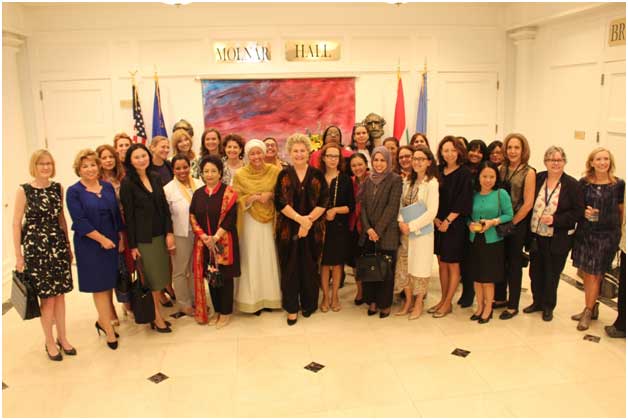
Circle of Women Ambassadors

UNITED NATIONS, Oct 8 2019 (IPS) – New York’s diplomatic community has continued to be enriched by a record number of women Permanent Representatives (PRUNs)—50 in all, as of October 2 – compared with about 15 to 20 back in the 1980s and early 1990s.


But the history-making number is still short of gender parity, falling far behind the 140 men who are PRUNs in the 193-member General Assembly, the highest policy-making body at the United Nations.

The remaining three women are designated Charge d’Affaires ad interim or acting heads of their respective diplomatic missions – and don’t hold the rank of PRUN.

https://protocol.un.org/dgacm/pls/site.nsf/files/HoM/$FILE/HeadsofMissions.pdf

The 50 PRUNs, who are also designated as Ambassadors, are members of an exclusive association called the “Circle of Women Ambassadors”— even as the circle has steadily kept widening.

The only other glass-shattering UN event took place in September 2014 when six of the 15 members of the UN Security Council– long monopolized by men– were women.

“It’s a little strange that it’s taken us this long,” Ambassador Sylvie Lucas of Luxembourg, was quoted as saying, more than five years ago.

UN Secretary-General Antonio Guterres told delegates last week that “no country in the world is on track to attain gender equality by 2030, and women continue to be hampered by discriminatory laws, unequal access to opportunities and protections, high levels of violence, and damaging norms and attitudes.”

So, gender parity among men and women ambassadors may be a long way off.

Ambassador Anwarul K. Chowdhury, former Permanent Representative of Bangladesh, and a one-time UN Under-Secretary-General told IPS: “To me any progress which manifests equality and representation of women’s recognized engagement is welcome.”

The fact that, at the moment, the number of women Permanent Representatives to the UN at its headquarters has reached the highest point ever is a development worthy of our attention, he said.

“However, we have a long way to go even to reach the numerical equality among 193 Member States”, said Ambassador Chowdhury, the initiator of UN Security Council Resolution (UNSCR) 1325 as President of the Security Council in March 2000: a resolution that underlined the important role of women in the prevention and resolution of conflicts, and on peace negotiations and peace-building.

“In this context, I recall the Call to Action by civil society (which I proudly co-signed) for the world leaders on 25 September 2013 as they converged in New York for the General Assembly’s high level meetings urging them to take action for equality of women’s participation at all decision-making levels in four areas”, he added.

    • 1. Appointment of a woman as the next UN Secretary-General. [reality: none out of 9 Secretaries-General in 74 years of UN history]
    • 2. Nomination of Women as future Presidents of the General Assembly by the Regional Groups. [reality: only 4 out of 74 Presidents]
    • 3. Election of More Women as Heads of Various UN Governing Bodies, [reality: overwhelmingly underrepresented by women]
    4. Appointment by Member-states of More Women as Ambassadors to the UN in New York and Geneva. [reality: overwhelmingly underrepresented by women]

On all four points, the UN community needs to do much more to call it history-making, said Ambassador Chowdhury.

Kshenuka Senewiratne, Sri Lanka’s trailblazing ambassador– her country’s first female permanent representative (PRUN) in over 63 years– told IPS that gender empowerment has continued to advance in her home country, even as women outnumber men in many walks of life, and particularly in higher education.

She said this is also reflected in the Sri Lankan foreign service where women have dominated over men in open competitive exams.

“And it is possible the same trends continue in many developing nations— even as the UN tries to advance its 2030 Development Agenda where gender empowerment remains one of the priorities.”

But still, “I have yet to hear my colleagues here say that it was a concerted gesture of gender balance that they got posted to New York,” she declared.

Barbara Crossette, a former UN Bureau Chief for the New York Times, told IPS: “My initial thought is that this phenomenon of more powerful women in diplomacy is not unlike women rising on their own in politics and not just by inheriting leadership as widows, daughters or other kin of men, such as Indira Gandhi, Sirimavo Bandaranaike, Benazir Bhutto, Chandrika Kumaratunga or Cristina Fernández de Kirchner”.

She pointed out there are now more Angela Merkels, Michelle Bachelets or Elizabeth Warrens, to name only a few.

“Women are also rising in international agencies and civil society organizations, gaining expertise in global affairs, geopolitics and armed conflict, often in uniform and wearing a peacekeeper’s beret”, said Crossette, the senior consulting editor and writer for PassBlue and the United Nations correspondent for The Nation.

Asked whether more female diplomats will aid the cause of greater gender equality, she said: “ I would say, not necessarily, unless the Secretariat and missions in the field come down harder on denigrators and abusers of women. And, as Louise Frechette (a former UN deputy Secretary-General) told me in an interview, only if member states chose the most competent, outstanding women when making nominations to fill appointments in the UN system. They should be the models”, she declared.

Reinforcing his arguments further, Ambassador Chowdhury said the political significance of this increase in the number of the women Ambassadors would be that their joint actions would draw more attention, bearing, of course, in mind that all Ambassadors to the UN act generally on the basis of instructions from their respective capitals.

“But, I believe, their coalition can join hands to focus on issues particularly those directly related to women’s empowerment and equality, like Goal 5 of SDG.”

They can also ask for greater engagement of Secretary-General’s leadership in the implementation of UNSCR 1325 on women and peace and security which has made the realization of women’s equal participation at all decision-making levels obligatory on all members of the United Nations and whose 20th anniversary is coming up in October 2020, he noted.

Realizing gender parity at the senior posts of the UN, both at headquarters and at field levels, could be another area for joint effort.

“Women Ambassadors could strategize to turn this newly gained numerical enhancement into an effective coalition to attain global objectives of women’s equality and empowerment,” he argued.

Apart from this increase in the number of women Ambassadors, another encouraging development had been that three consecutive women Ambassadors have been elected as President of the Economic and Social Council (ECOSOC) in 2017 –from the Czech Republic, 2018, from St. Vincent and the Grenadines, and 2019 from Norway.

This has improved somewhat ECOSOC’s dismal record of women Presidents, he said.

Since its beginning in 1946 and all the way upto 2003, ECOSOC’s practice of electing only men was challenged by Ambassador Marjatta Rassi of Finland as its first woman President, followed by second woman in 2009 before the successive three women Presidents – a total of 5 out of 74, said Ambassador Chowdhury.

“Given the unacceptably poor women’s representation as General Assembly and ECOSOC Presidents, women Ambassadors can continue their relentless efforts to improve gender parity in high offices,” he declared.

Meanwhile, addressing a working luncheon of the Circle of Women Ambassadors last April, the former President of the General Assembly Maria Fernanda Espinosa Garces said: “At the UN too – where we should be leading by example – only a quarter of Permanent Representatives are women. Only one of the General Assembly’s main committees is chaired by a woman. I hope that we, in this Circle, can encourage our colleagues to nominate more women to leadership positions in the General Assembly, and across the UN.”

In his annual report on “The Work of the Organization” released last week, UN Secretary-General Antonio Guterres claimed the world body continues to make significant progress towards gender parity.

For the first time in the history of the United Nations, “we have achieved gender parity in the Senior Management Group and among Resident Coordinators, and are almost at parity among the senior leadership ranks across the Organization, well ahead of my target date of 2021.”

The writer can be contacted at thalifdeen@ips.org

  Source

Reforms Will Grant Nationality to Children of Iranian Women

Civil Society, Editors’ Choice, Featured, Gender, Global, Global Governance, Headlines, Human Rights, IPS UN: Inside the Glasshouse, TerraViva United Nations

Opinion

Rothna Begum is Senior Researcher, Women’s Rights Division at Human Rights Watch

GENEVA, Oct 7 2019 (IPS) – After more than a decade of women’s rights activism, Iran’s Guardian Council has finally approved an amendment that would grant Iranian citizenship to the children of Iranian women married to foreign men.


The Guardian Council was the last body needed to approve this long overdue reform to Iran’s discriminatory citizenship law.

Previously, Iran’s civil code granted children and spouses of Iranian men citizenship automatically, while children born in Iran to Iranian women and foreign fathers must live in Iran at least until they are 19 before they can apply.

It is unclear how many children in Iran have Iranian mothers and foreign fathers. However, the issue has come to prominence in recent years because of tens of thousands of registered and unregistered marriages between Iranian women and Afghan men whose children are unable to obtain citizenship on an equal basis.

Rothna Begum

Research in other countries has shown that such discrimination can harm children’s access to education, health care, housing, and employment when they become adults.

The latest attempt to reform the law was inspired by Maryam Mirzakhani, a world-renowned Iranian mathematician and Fields Medal recipient who passed away from cancer in 2017. Because her husband is not Iranian, her daughter cannot obtain Iranian nationality.

In May, Iran’s Parliament finally adopted the proposed reform, but it went back and forth from the Guardian Council, a body of 12 Islamic jurists, to determine whether it is in accordance with Iran’s Constitution and Sharia (Islamic law). They approved the amendment last week.

While this is a long-awaited victory for Iranian women, the newly-amended law does not equalize access to citizenship completely. Iranian women must apply for nationality for their children, while children of Iranian men are granted nationality automatically.

Children who turn 18 can apply for nationality themselves. A security check is required in both cases.

Most concerning is that that the amended law requires the Intelligence Ministry or the Intelligence Organization of the Islamic Revolutionary Guard Corps (IRGC) to certify that there is no “security problem” before approving citizenship in these specific applications.

This vaguely defined provision can be used to arbitrarily disqualify applicants if they or their parents are seen as critical of the government, particularly in eastern and western border areas where cross-border marriages are more common and where authorities keep a tight grip over peaceful activism.

In a matter of weeks, Iran’s newly-amended law will finally see children of Iranian women able to apply for the same benefits that children of Iranian men have.

But Iran should remove the remaining obstacles to ensure that children of Iranian citizens, whether men or women, are granted citizenship on an equal basis. They are all, after all, Iranian children.

  Source

Watchdog Pushes U.S. to Publish ‘Duty to Warn’ Khashoggi Files

Civil Society, Editors’ Choice, Featured, Global Governance, Headlines, Human Rights, IPS UN: Inside the Glasshouse, Middle East & North Africa, Press Freedom, Regional Categories, TerraViva United Nations

Press Freedom

The Committee to Protect Journalists (CPJ) seeks disclosure of files under the U.S. intelligence community’s “duty to warn” obligations, which demand officials alert folks in imminent danger. The CPJ wants to know if they knew about an assassination plot against Jamal Khashoggi. Photo by Sam McGhee on Unsplash

UNITED NATIONS, Sep 30 2019 (IPS) A media watchdog has asked United States intelligence agencies to reveal whether they knew about an assassination plot against Jamal Khashoggi and failed to warn the Saudi journalist he was in mortal danger.

A legal brief, filed in a Washington DC district court by the Committee to Protect Journalists (CPJ), comes almost exactly one year after a Saudi hit squad butchered the renegade writer inside the Saudi consulate in Istanbul on Oct. 2.

CPJ’s advocacy manager Michael DeDora told IPS that his lawsuit against the U.S. government “asks a simple question: did the intelligence community know of yet fail to warn Jamal Khashoggi of threats to his life?”

Khashoggi, a U.S.-based Washington Post columnist, who was once a royal Saudi insider and had grown critical of the regime, was reportedly lured to the Saudi consulate in Istanbul in an elaborate and brutal plot to silence him.

Khashoggi was allegedly killed, dismembered and removed from the building; his remains were never found. The CIA reportedly assessed that crown prince Mohammad bin Salman, known as MBS, had ordered the operation.

The CPJ seeks disclosure of files under the U.S. intelligence community’s “duty to warn” obligations, which demand officials alert folks in imminent danger. The brief, filed Thursday, follows the Trump administration’s rejection of a previous CPJ disclosure request.

“Nearly one year after Khashoggi’s murder, disclosure of these documents would provide transparency and help efforts to secure accountability,” DeDora told IPS in an email.

“But this lawsuit has broader implications: journalists around the world should have the security of knowing that the U.S. will not ignore threats to their lives.” 

Khashoggi’s assassination sparked global outrage, blighted MBS’ global standing and undercut his ambitions to improve the kingdom’s poor human rights record and diversify its economy away from hydrocarbons. 

Saudi officials, who initially said Khashoggi had left the consulate unharmed, now say he was killed in a rogue operation that did not involve the prince. A domestic Saudi trial of 11 suspects is widely viewed as a sham.

Speaking with IPS among a small group of journalists in New York this month, Hatice Cengiz, Khashoggi’s former fiancée, explained how she was saddened by the lack of global pressure on Riyadh to come clean about the affair.

MBS has not visited Europe or the U.S. since the murder. While the prince was briefly shunned by foreign leaders, Riyadh’s long-standing diplomatic support from the U.S., Britain and others has largely resumed.

“This silence and inertia created huge disappointment on my side,” said Cengiz. 

“Countries could have demonstrated a more honourable attitude instead of remaining silent, particularly the United Nations, the European Union and the five members of the U.N. Security Council.”

Cengiz was joined at an event on the sidelines of the U.N. General Assembly by Agnes Callamard, the U.N. rapporteur on extrajudicial, summary or arbitrary executions who investigated the killing and concluded it was a “deliberate, premeditated execution,” and called for MBS and other officials to be probed.

Callamard, a French academic, said she knew that achieving justice for Khashoggi’s murder would be an uphill struggle, given Riyadh’s deep pockets, clout in the world energy markets and powerful friends in Washington, London and elsewhere.

“This single year [since Khashoggi’s death] is just the first phase in our journey for accountability and justice. And that means that it will demand and deserve patience, resilience, and time,” said Callamard.

“Early on, I could see that justice for Jamal Khashoggi would have to be found beyond the usual path and beyond our usual understanding of accountability.”

Callamard urged the CIA to publish its files, while also calling for an FBI investigation and a public inquest in Turkey. Meanwhile, a draft U.S. law on human rights and accountability, if enacted, would unmask and sanction the culprits and send “ripple effects” towards accountability around the world.

  Source