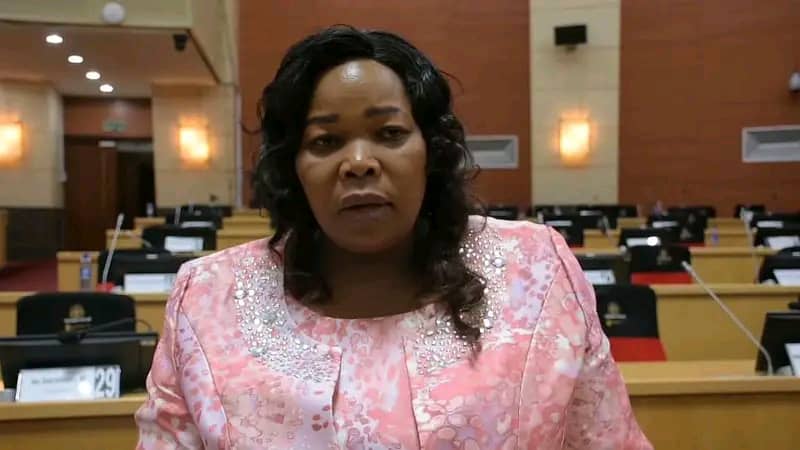
LILONGWE-(MaraviPost)-President Arthur Peter Mutharika has joined global leaders in commemorating World Children’s Day, marking the occasion with a message of hope, commitment, and responsibility toward the nation’s youngest citizens.
He said that as Malawi celebrates the profound gift of its children, it proudly aligns itself with this year’s global theme, “My Day, My Rights.”
The President emphasised that every child in the country deserves recognition, protection, and opportunities, stating that their voices are heard, their dreams cherished, and their rights remain non-negotiable.
He reaffirmed his administration’s unwavering commitment to building an environment where every child is safe, educated, healthy, and empowered to reach their full potential.
President Mutharika stressed that the future of the nation rests on the shoulders of its young people, and therefore it is the collective duty of parents, leaders, and communities to shape a society that respects and upholds the inherent rights of children.
He further urged Malawians to work together to ensure that every day becomes a day that affirms the dignity, rights, and aspirations of children across the country.
The President concluded his message by wishing all children a joyful World Children’s Day, reminding them that they remain at the heart of national progress and development.
His statement was posted on his official Facebook page as part of the global celebration.
Share this:
Like this:
LikeLoading…
Discover more from The Maravi Post
Subscribe to get the latest posts sent to your email.
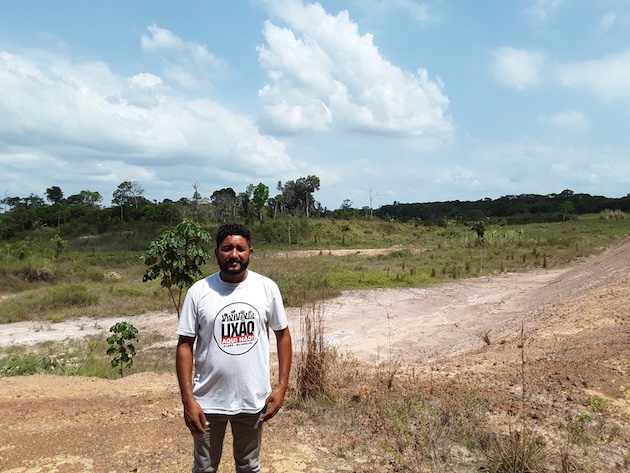
Fabio Nogueira, a leader of the Menino Jesus Quilombola Afro-descendant community, stands in front of a proposed landfill, which is 500m from their homes. Credit: Joyce Chimbi/IPS
BELÉM, Brazil, Nov 20 2025 (IPS) – Just 30 minutes from where the UN climate negotiations are unfolding in the port city of Belém, Afro-descendant communities are engaged in a fierce struggle for the full recognition and legal titling of their ancestral territories—critical as their security and livelihoods are compromised by businesses wanting to set up contaminating landfill sites and drug cartels.
A boat ride along the expansive Amazon basin takes you inside the forest. It is the largest rainforest in the world, estimated to be 5.5 to 6.9 million square kilometers and spanning eight countries.
In the forest are the Quilombos or communities founded by descendants of Africans who escaped enslavement. They have defended their rights for generations. Across Latin America and the Caribbean, they may be known by different names, but they are all Afro-descendant communities with shared histories.
Well over 130 million people in Latin America identify as Afro-descendant, descendants of those forcibly brought to the Americas during the transatlantic slave trade. In Brazil, Ecuador, Colombia, and Suriname, these communities collectively hold recognized management rights to nearly 10 million hectares, or nearly 24 million acres, of land.
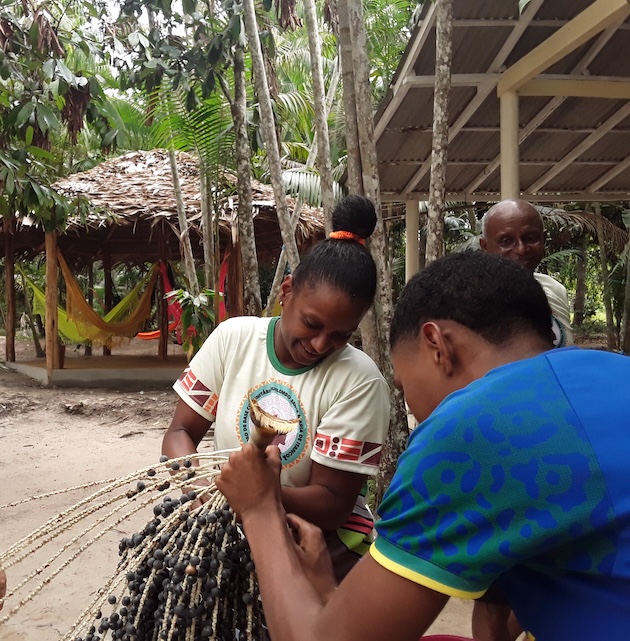
Açaí is harvested in an Afro-descendant community near Belém, Brazil, where COP30 is underway. Açaí is part of the daily diet and is historically known as a source of subsistence. Credit: Joyce Chimbi/IPS
But the Amazon is the backdrop for the struggle for the full recognition and legal titling of their ancestral territories, as guaranteed by the Brazilian Constitution of 1988.
IPS spoke to Fabio Nogueira, a leader among the Menino Jesus Quilombola community home to 28 families about their struggles and successes.
“Without titles, Quilombolas are exposed to invasion and displacement from big companies, ranchers, farmers and land grabbers.”
Alarmingly, criminal gangs target the Quilombola communities and their leaders for illegal activities.
Increased surveillance and drug seizures on direct routes from Latin America to Europe have turned the Amazon into a drug corridor. In Brazil, drug traffickers use ‘rios de cocaine,’ or cocaine rivers, jeopardizing the safety of the Quilombos along the Amazon rainforest.
Major rivers and remote areas in many Quilombola territories serve as key “cocaine corridors” for drug trafficking. The lack of state presence and land titling makes these communities soft targets.
Today, the Amazon rainforest is also the scene of a fierce struggle against landfills or sites for the disposal of waste material. He says landfills in the Amazon cause significant problems, including contaminating the soil and water with heavy metals and other toxins and releasing greenhouse gases like methane.
“We are currently 15 kilometers away from the lixão de Marituba landfill and it still pollutes our air and environment. Now they want to bring a landfill only 500 meters from our community. The landfill will be 200 hectares in size. We are saying no to landfills and have a case in court,” Nogueira said.
“The Menino Jesus quilombola community is in a legal dispute. We are resisting the proposed landfill project.”
Belém is a port city and gateway to Brazil’s lower Amazon region. A 30-minute boat ride through the expansive Amazon River takes you inside the forest. Credit: Joyce Chimbi/IPS
The project was planned without recognition of their existence or the impact it would have on them. The Public Defender’s Office of Pará has filed legal action and recommended the project’s suspension, citing that the land is public and part of the area traditionally occupied and claimed by the community for twenty years.
If the Brazilian State maintains the current pace of land regularization of quilombola territories, it will take 2,188 years to fully title the 1,802 processes currently open at the National Institute for Colonization and Agrarian Reform.
The slow pace of titling negatively affects forest preservation. Despite two studies indicating that the Quilombola play a crucial role in climate solutions, their ongoing struggle for basic recognition makes it difficult for them to secure their rights or access climate finance in formal spaces, such as COP30, according to Malungu, the coordinator of Associations of Remaining Quilombo Communities of Pará, which represents and advocates for the Quilombola communities in the state.
Two recent studies indicate that titling is a determining factor for the success of Quilombos in protecting the Amazon and titled territories maintain 91 percent of their forests, while non-titled territories preserve 76 percent.
“Alarmingly, self-declared territories that do not yet have certification (necessary for starting the titling process) had a rate of forest loss 400 percent higher than that of titled territories, highlighting the urgency of recognition to halt degradation.”
During COP30, a visit to the two Quilombos—Menino Jesus and Itaco-Miri—in the Amazon rainforest demonstrates the significance of communal land titling. It illustrates how this titling enhances the well-being of Afro-descendant peoples across the Amazon and how secure land tenure contributes to climate goals through carbon absorption, forest protection, and biodiversity preservation through traditional agriculture.
Throughout six generations, Quilombola communities stand out as caretakers and conservers of the Amazon rainforest’s biodiversity, using sustainable practices passed down through generations.
Menino Jesus and Itacoã-Miri territories and other Afro-descendant community lands ‘have high biodiversity and irrecoverable carbon and were associated with a 29 to 55 percent reduction in forest loss compared to control sites.’
Still, communities deliver better results with tenure security. Key data from Instituto Social Ambiental’s Study on Quilombo Territories in the Brazilian Amazon shows that while Quilombos face significant land tenure challenges, approximately 47 percent of mapped Quilombos lack even basic delimitation or fixing of boundaries, and over 49 percent of communities have not even passed the first step.
Along the Amazon basin, communities often live in houses facing the river. The forest is their backyard. Credit: Joyce Chimbi/IPS
Meanwhile, they remain outstanding in their conservation performance. They have preserved nearly 92 percent of mapped Quilombo territories, including forests and native vegetation. From 1985 to 2022, these territories lost only 4.7 percent of original forest cover, compared to 17 percent loss in private areas.
But political recognition has moved much more slowly than scientific recognition. Shortly before COP30, President Luiz Inácio Lula da Silva visited the Afro-descendant communities of Menino Jesus and Itacoã-Miri near Belém, Pará, as part of an agenda of preparatory meetings for the COP30 climate conference.
It has taken 30 COPs for a historic breakthrough, as COP30 has included the term ‘people of African descent’ in draft negotiating texts of the UN climate convention for the first time. This inclusion is a significant step toward formally recognizing this population in global climate policy.
The term ‘people of African descent’ has been incorporated into draft documents, including those related to the Just Transition and the Gender Action Plan. This had never happened in the history of the UN climate convention system, which has often been more technical and less focused on human rights and racial justice.
The Belém Declaration on Fighting Environmental Racism is a political commitment that was joined by 19 countries at the leaders’ summit before COP30 began. The text acknowledges the disproportionate exposure of people of African descent, Indigenous Peoples, and local communities to environmental harms and climate risks.
This declaration is an international agreement that seeks to foster a global dialogue on the intersection of racial equality, climate change, and environmental justice. The declaration recognizes the global ecological and racial justice crises as intertwined and proposes cooperative actions to overcome historical inequalities affecting access to environmental resources.
Its goals include reinforcing human rights and social justice in environmental policy, broadening the scope of equality in sustainable development, and building a more equitable future for all.
Coelho Teles from the Quilombo community told IPS that he is not aware of this recognition because they have “been sidelined. We do not know how to get involved and participate in COP30.”
Brazil identified forests and oceans as twin priorities and launched the Brazil-led Tropical Forests Forever Facility at COP30, seeking to compensate countries for preserving tropical forests, with 20 percent of funds reserved for Indigenous Peoples.
Science has shown communities keep forests standing. For the Tropical Forests Forever Facility to achieve desired results, those in Quilombo territories say their recognition and participation will need to be significantly more substantial.
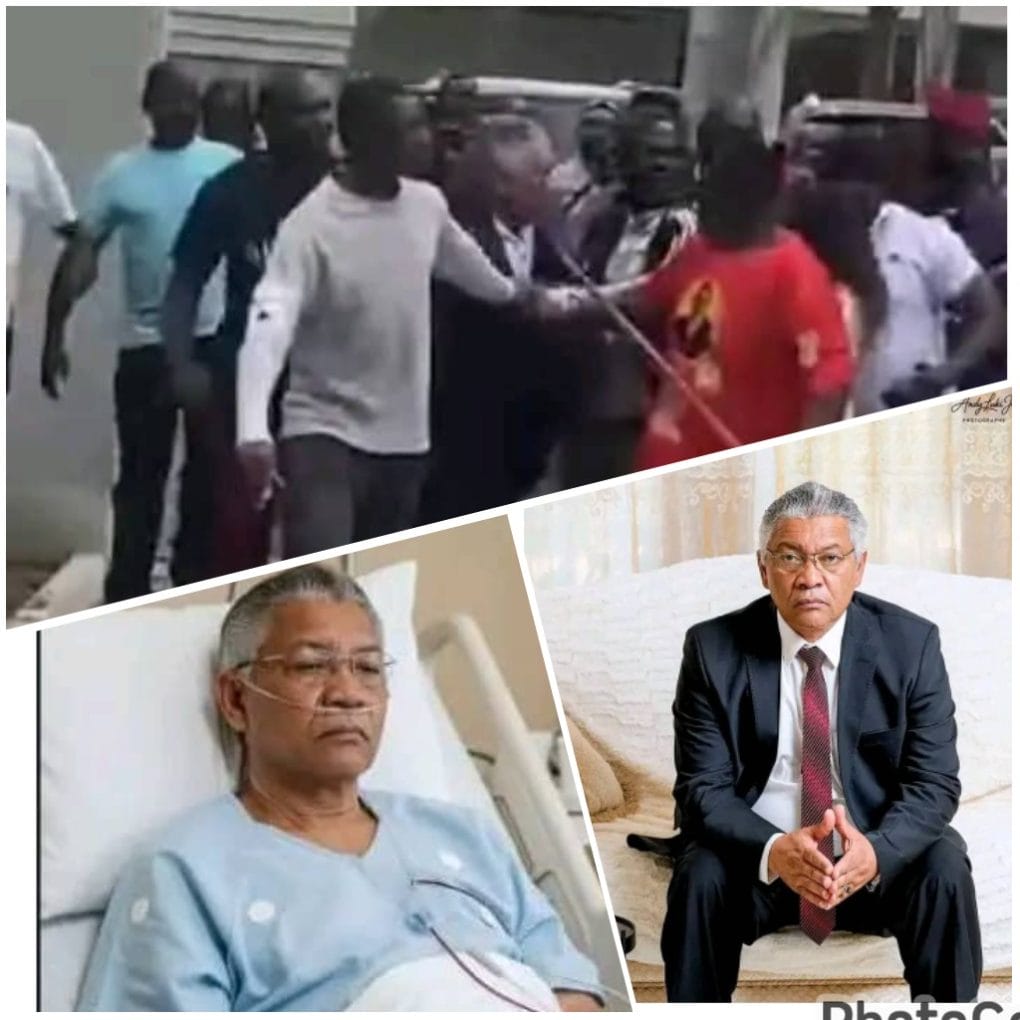
LUSAKA-(MaraviPost)-The Zambian governing United Party for National Development (UPND) cadres on Wednesday reportedly abducted former Justice Minister Given Lubinda, subjecting him to harassment before police officers intervened to rescue him.
UPND is a major political party in Zambia, currently in power, with Hakainde Hichilema as the current President of Zambia and the party leader.
The incident escalated quickly as the group confronted Lubinda in what appeared to be a politically motivated attack.
Eyewitnesses say the cadres surrounded him, shouting threats and insults while attempting to force him into a vehicle against his will.
The situation grew tense as the harassment intensified, drawing the attention of bystanders who feared the confrontation might turn deadly.
According to witnesses, the cadres accused Lubinda of undermining the ruling party and vowed to “teach him a lesson,” signalling a troubling rise in political intolerance.
Police officers who were alerted to the incident arrived promptly at the scene and managed to disperse the attackers before safely extracting Lubinda from their hold.
Law enforcement authorities confirmed the rescue, noting that the cadres had acted unlawfully and would be pursued for criminal conduct.
In their statement, police condemned the attack and warned that political violence would not be tolerated under any circumstances.
The rescue operation brought temporary relief, but it also sparked wider national concern about the growing pattern of political thuggery.
Several political commentators have criticized the incident, describing it as a dangerous reminder of how partisan violence threatens democratic stability.
Opposition figures have also condemned the attack, calling it a deliberate attempt to silence dissenting voices through intimidation.
Citizens across social media expressed outrage, urging authorities to take decisive action against perpetrators regardless of political affiliation.
Many observers have emphasized that political competition must never justify lawlessness, stressing the need for stronger protection of public figures.
Lubinda, though visibly shaken, was safely escorted to an undisclosed location where he is receiving support from colleagues and family members.
The incident has revived debate about Zambia’s political environment, with many calling for urgent reforms to curb cadre violence.
Analysts warn that the normalization of such attacks risks eroding public trust in law enforcement and institutional governance.
Others argue that unless perpetrators face real consequences, political violence will continue to grow and spread unchecked.
As investigations proceed, the public is demanding transparency, accountability, and meaningful action from both the police and the political leadership.
The attack on Lubinda serves as a stark reminder that democracy cannot thrive in an environment where fear replaces dialogue.
It also underscores the urgent need for political leaders to denounce cadre behaviour and promote a culture of peaceful engagement.
Zambia now watches closely as authorities take the next steps, hoping this incident marks a turning point in the fight against politically motivated violence.
Share this:
Like this:
LikeLoading…
Discover more from The Maravi Post
Subscribe to get the latest posts sent to your email.
The COP30 Presidency is urging all “negotiators to join in a true mutirão—a collective mobilization of minds, hearts, and hands,” saying this approach helps “accelerate the pace, bridge divides, and focus not on what separates us, but on what unites us in purpose and humanity.”
Negotiations take place throughout the day and now late into the night. Credit: UN Climate Change/Kiara Worth
BELÉM, Brazil, Nov 19 2025 (IPS) – At a Conference of the Parties, where science intersects with politics, reaching agreements is often a tricky business. What is inside the last-minute negotiations as the COP presidency tries to get the parties to agreement at the final plenary?
COP negotiators are diplomats and government officials who meet at the Conference of the Parties to negotiate and agree on how to address climate change. They are also often joined by COP delegates’ representatives from civil society, social movements and businesses.
As representatives of their respective countries that are parties to the UNFCCC treaty, they discuss, debate, and haggle over their preferred wording of texts and legally binding agreements regarding how to address climate change during closed-door sessions.
Windowless Closed-Door Meetings
These closed-door meetings are often also windowless, and negotiators often lose track of time as they work through extensive documentation and diverse national positions to form a final agreement towards the end of the COP summit schedule.
COP 30, Belém, is posting a daily photographic glimpse into the collective effort to build trust, dialogue, and cooperation to accelerate meaningful climate action and deliver its benefits to all. Many hope this message will permeate inside these rooms.
The UN climate summit has now entered its final stages. The Brazilian COP30 Presidency has extended working hours, scheduling late-night meetings for the last two nights—Monday and Tuesday, Nov 17 and 18, 2025.
Tonight might not be any different, as the COP30 Presidency pushes for a rapid compromise and conclusion of a significant part of negotiations to pave the way for a “plenary to gavel the Belém political package.”
After all, the COP is where the science of the Paris Agreement intersects with politics.
The Elusive True Mutirão
The COP30 Presidency is urging all “negotiators to join in a true mutirão—a collective mobilization of minds, hearts, and hands,” saying this approach helps “accelerate the pace, bridge divides, and focus not on what separates us, but on what unites us in purpose and humanity.”
But this is the point in the negotiations, even in a ‘COP of truth,’ as COP30 was staged to be, where the real claws come out amid accusations of protectionism, trade tensions and geopolitical dynamics as the worlds of business, politics and human survival intersect.
Even as UN officials urge parties to accelerate the pace, warning that “tactical delays and procedural obstructions are no longer tenable” and that deferring challenging issues to overtime results in collective loss, reconciling deep differences among nations is proving easier said than done even within the Global Mutirão—a concept championed by the COP30 presidency.
It calls for worldwide collective action on climate change, inspired by the Brazilian and Indigenous Tupi-Guarani tradition of mutirão, which means “collective effort.” The bone of contention at this juncture is what some parties see as weak climate commitments, insufficient financial pledges from the global North to South, and trade measures.
Protectionism
Trade measures are turning contentious and deeply debatable in Belém because of a difference of perspective—developing countries view them as protectionism, while some developed countries see them as necessary to level the playing field for their climate policies.
For developing countries, protectionism is a deliberate strategy by more developed countries to limit imports to protect their industries from foreign competition and therefore give them an undue advantage. Developing nations say this is unfair because it restricts their ability to export and gain access to larger markets.
The core of the debate at COP30 is the inclusion of issues like the EU’s Carbon Border Adjustment Mechanism (CBAM) in climate talks. For some countries, CBAM is a direct part of climate action and belongs at COP. Others say it is an agenda best discussed at the World Trade Organization.
The EU’s Carbon Border Adjustment Mechanism (CBAM) is a tool to put a price on the carbon emissions of certain imported goods, ensuring that the carbon price for imports is equivalent to that for domestic EU production. Its main goals are to prevent “carbon leakage,” or companies moving production to countries with weaker climate policies, encourage cleaner production globally, and protect EU businesses by creating a level playing field.
How to Go About a Just Transition?
The business of climate change is not the only thing that is complex and divisive. There are also small island states calling for rapid emissions cuts vis-à-vis the positions of major emerging economies. G77 and China are an intergovernmental coalition of 134 developing countries that work together to promote their collective economic and developmental interests within the United Nations framework.
China is not an official member and does not pay dues. It has been a partner since 1976, providing significant financial support and political backing to the G77. Developed countries such as the UK, Norway, Japan, and Australia are pushing back against their proposed global just transition, thereby prolonging the negotiations.
Developed nations are refusing the global just transition proposal by the G77 and China because they see it as a new and unnecessary mechanism and a duplication of existing structures. They refuse to accept the financial and technical support these countries are asking for to facilitate this transition. Simply put, they want a less strict framework that allows their own interpretations of existing institutions and funding structures for the just transition.
Where is the Adaptation Financing?
Finance for adaptation is similarly a sticking point. Developed nations are dragging their feet around committing sufficient funds to support developing nations to adapt to climate impacts and transition their energy systems. It is still not clear whether financial commitments will be embedded inside adaptation goals or remain as they are—separate.
Lobbyists and the Fossil Fuel Debate
Amidst growing tensions, it is also not clear whether this COP will phase out or phase down fossil fuels in the final agreement. The large delegation of fossil fuel lobbyists suggests it is too early to call. On the Global Goal on Adaptation (GGA), those who want indicators for measuring adaptation progress directly linked to financial commitments will not budge. The settlement of this matter could potentially take two years (or more).
Disagreements are ongoing about the mandate of the Mitigation Work Program, which seeks to raise ambitions on national emissions reduction. In general, insiders to the negotiations are saying general negotiation tactics are at play.
Some participants are employing delay tactics to buy time and ultimately weasel out of certain commitments; a lack of trust continues, as it has in previous COPs, along with generally slow progress on building consensus around various contentious issues.
This feature is published with the support of Open Society Foundations.
LILONGWE-(MaraviPost)-The government of Malawi has pledged to ensure that individuals found guilty of committing sexual abuse against children face severe punishment.
This commitment was made in response to the recent case involving a 12-year-old girl who was sexually assaulted by her father in Area 25, Lilongwe.
Officials emphasized that there should be no distinction between male and female offenders, underscoring the government’s stance on equality in justice.
Authorities expressed deep concern that such abusive behavior continues to affect the safety, wellbeing, and future prospects of vulnerable children across the country.
Memory Chisenga, head of the Child Advocacy Centre, spoke on the matter, affirming her agreement with the government’s position.
She highlighted that imposing long prison sentences on offenders is essential not only for justice but also as a deterrent to prevent others from engaging in similar crimes.
Chisenga stressed that ensuring perpetrators face significant consequences is a critical step in protecting children and promoting public confidence in the justice system.
The government and child protection agencies reiterated their commitment to safeguarding minors and preventing sexual abuse through strict enforcement of the law.
Share this:
Like this:
LikeLoading…
Discover more from The Maravi Post
Subscribe to get the latest posts sent to your email.
BLANTYRE-(MaraviPost )-The Blantyre Central Magistrate Court on Wednesday, November 19,2025 adjourned to Friday the case in which videographer and social media personality VJ Ken, real name Kenneth Makina, is answering charges of child abduction and engaging in a relationship with a minor.
Makina appeared before the court for the first time this morning following his arrest by Ndirande Police.
He is accused of unlawfully keeping a 15-year-old girl at his home.
The talented videograher pleaded not guilty to all charges.
His lawyer, Humphreys Makhalika, applied for bail, arguing that the accused was prepared to comply with all bail conditions the court might impose.
However, the court denied the application.
Senior Resident Magistrate Mercy Bonongwe ruled that bail could not be granted at this stage, citing concerns over possible interference with witnesses, who reside in the same community as the accused.
She added that the right to bail is not absolute, especially in matters involving serious allegations.
Makina is being charged with child abduction contrary to Section 264 of the Penal Code and engaging in a relationship with a minor contrary to Section 138.
Share this:
Like this:
LikeLoading…
Discover more from The Maravi Post
Subscribe to get the latest posts sent to your email.