VENEZUELA: ‘An Economically Stable Authoritarian Model Could Become Entrenched’

Active Citizens, Civil Society, Crime & Justice, Democracy, Economy & Trade, Energy, Featured, Headlines, Human Rights, Latin America & the Caribbean, Migration & Refugees, TerraViva United Nations

Mar 11 2026 (IPS) –  
CIVICUS discusses the situation in Venezuela following US intervention and the ousting of President Nicolás Maduro with Verónica Zubillaga, a Venezuelan sociologist who specialises in urban violence, state repression and community responses to armed violence.

Verónica Zubillaga

In late January, the interim government led by Delcy Rodríguez announced an amnesty for political prisoners, coinciding with a rapprochement with the USA driven by oil interests. It is unclear whether this represents the beginning of a genuine opening or is an attempt by the government to gain international legitimacy without relinquishing power. In a country with millions of migrants and exiles, a historically fragmented opposition and a civil society that has faced brutal repression for years, it remains to be seen whether recent changes will create space for democracy or lead to the consolidation of economically stable authoritarianism.

Is the recently announced amnesty a real opening or a strategic manoeuvre?

We are at an unprecedented crossroads. Venezuela and its Chavista regime, under US tutelage and despite two decades of anti-imperialist rhetoric, are reconfiguring themselves in such a way that some opening could result. However, there is still a risk that an authoritarian model will be consolidated, with economic and humanitarian concessions, but without real democratisation.

The release of political prisoners — a constant demand in all negotiations with international support, and a low-cost form of early opening for the interim government that has taken over from Maduro — could function as a stepping stone towards democratisation. The restoration of civil, political and social rights will be a difficult and lengthy struggle in this context of such deprivation, in which our rights have been violated for so long.

In the first half of February, there were partial and gradual releases, but hundreds of people remained in detention. The enactment of the Amnesty Law on 19 February has accelerated the releases.

The announcement was presented as a political concession, not as a recognition of the extensive human rights violations committed by Maduro’s government. There has been no mention yet of initiating processes to seek the truth, hold those responsible accountable, provide reparations or dismantle the repressive apparatus, which are urgent.

We therefore need to react with caution. The release of people deprived of their liberty for political reasons is essential, but it cannot replace a broader agenda of justice, reparation and institutional transformation.

How has civil society worked to keep this issue at the centre of the debate?

The cause of political prisoners is cross-cutting. There are detained people of different ages, social classes and political backgrounds. In a society as polarised as ours, this is one of the few causes around which there is broad consensus.

After the results of the presidential election of 28 July 2024, which the opposition clearly won, were disregarded, it was mainly people from the working classes who took to the streets to protest. Many young people, including teenagers, were arrested and imprisoned. This situation significantly deepened the social dimension of the problem, highlighted the break between the ruling party and its traditional base and consolidated the brutally authoritarian nature and illegitimacy of Maduro’s government.

There is also an important gender dimension. While many young men are in prison, it is women – mothers, sisters and other relatives – who have organised committees, vigils and public actions demanding their release. Symbolically, the figure of the grieving mother demanding the release of her children is particularly powerful. It is a symbol that appeals to the Latin American imagination about women and their cries for democratisation, justice and reparation in the context of crumbling authoritarian regimes.

Recently, the demand for the release of political prisoners has also been raised by the student movement in its call for a rally at the Central University of Venezuela. After a year and a half of brutal repression following the 2024 election, which emptied the streets and created a climate of widespread fear, any public demonstration is a significant sign that could trigger a chain of progressive demands and the vindication of civil, political and social rights.

What has been the impact of the USA’s renewed interest in Venezuelan oil?

It is clear that the Trump administration is fixated on oil and investment opportunities and completely disregards democracy and human rights. The part of the opposition represented by María Corina Machado has been stunned by its exclusion from key decision-making despite its efforts to gain Donald Trump’s attention. This exclusion has altered the internal political balance.

Historically, there has been tension within the Venezuelan opposition between those who favour resorting to external pressure and those who prioritise internal negotiation strategies. Since 2014, two main strategies have coexisted: one that is more confrontational, demanding the immediate end of the government, and another favouring negotiation or elections. Civil society mirrors these same divisions. One of the difficulties of the Venezuelan process is this constant fragmentation and internal disagreements within the opposition. As the government has become more authoritarian, these divisions have prevented more powerful coordinated political action. It is important for the opposition to coordinate strategies and, instead of wearing itself down in these disagreements, coordinate efforts to move strategically between confrontation and negotiation.

Whenever the opposition has managed to coordinate, as in the 2015 legislative and 2024 presidential elections, it made significant gains. During the 2024 campaign led by Machado, the opposition achieved an unprecedented level of coordination, generating enormous collective hope, particularly with regard to the prospect of family reunification in a country with over eight million migrants. This situation affects people of all social classes and political ideologies. But in response, the government redoubled its repression and consolidated the dictatorship. This led to frustration, demobilisation and further fragmentation. The opposition lacked a long-term strategy to sustain its gains and withstand setbacks. This is still one of the biggest challenges today.

What should the international community do to contribute to real democratisation?

The international community, and Latin American states in particular, could have taken a firmer stance after the 2024 electoral fraud. Silence and a lukewarm approach weakened the defence of democracy. Now it should not repeat that mistake. Beyond Maduro’s profound delegitimisation, the US military operation in Venezuela is a sign of what could happen to any Latin American country under the US government’s new national security strategy.

With the USA as an imperial power primarily concerned with its geostrategic interests and oil resources, demands for democratisation may take a back seat. An authoritarian model that is economically stable but without real democratisation could become entrenched.

In this context, the USA’s prioritisation of energy interests is worrying. It is an unprecedented scenario in which external intervention and the permanence of the ruling party in power coexist. The situation is highly volatile, and this has only just begun. A period of instability and political violence could follow if the civil-military coalition in power breaks down, which may happen given the tradition of anti-imperialist discourse rooted in the armed forces during the two and a half decades of Chavista rule.

Ironically, the USA’s focus on energy interests could result in the defence of sovereignty becoming a new unifying cause for the Venezuelan opposition, potentially leading to basic agreements between the ruling party post-Maduro and the opposition to defend Venezuelan oil interests. What’s at stake is recovering politics as an exercise involving conflict and struggle, as well as recognition and exchange for democratic coexistence — something we have lost, particularly over the past decade.

CIVICUS interviews a wide range of civil society activists, experts and leaders to gather diverse perspectives on civil society action and current issues for publication on its CIVICUS Lens platform. The views expressed in interviews are the interviewees’ and do not necessarily reflect those of CIVICUS. Publication does not imply endorsement of interviewees or the organisations they represent

GET IN TOUCH
LinkedIn
Twitter

SEE ALSO
‘Although the repressive architecture remains intact, a small window of hope has opened’ CIVICUS Lens | Interview with Luz Mely Reyes 05.Feb.2026
Venezuela: democracy no closer CIVICUS Lens 29.Jan.2026
‘We are seeing an economic transition, but no democratic transition’ CIVICUS Lens | Interview with Guillermo Miguelena 26.Jan.2026
  Source

International Women’s Day 2026: A Resistance Stronger than the Backlash

Active Citizens, Armed Conflicts, Civil Society, Crime & Justice, Featured, Gender, Gender Identity, Gender Violence, Global, Headlines, Human Rights, LGBTQ, TerraViva United Nations, Women’s Health

Opinion

International Women’s Day 2026: A Resistance Stronger than the Backlash

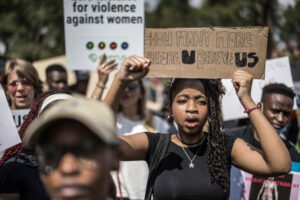
Credit: Marco Longari/AFP

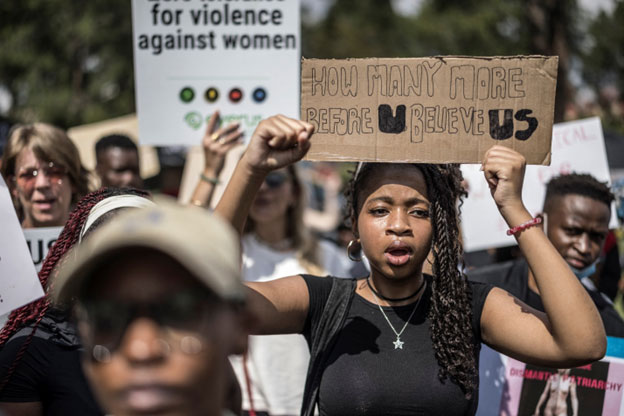
MONTEVIDEO, Uruguay, Mar 9 2026 (IPS) – Consider what International Women’s Day looked like a few years ago, and what it looks like now: the same date, the same global moment of reflection, but a vastly changed global landscape. Gender rights are facing the most coordinated and wide-ranging attack in decades. Anti-rights forces are dismantling protections secured after generations of struggle, destroying infrastructure built to address gender-based violence and realise reproductive rights and rewriting legal frameworks to roll back rights, with a specific focus on excluding transgender people. This is the result of a deliberate, carefully crafted, handsomely funded and globally coordinated strategy.


Fortunately, resistance is proving harder to extinguish than those driving the backlash had expected. Another International Women’s Day of mobilisation is here to prove it.

A regressive template

While attacks have been building for years, the global landscape shifted quickly in January 2025, when a newly inaugurated Donald Trump signed executive orders imposing a rigid binary classification of sex across federal law, stripping non-discrimination protections for LGBTQI+ people in healthcare and housing, and banning diversity, equity and inclusion policies across the federal government. Because the USA had been the world’s largest bilateral donor, the simultaneous dismantling of USAID and expansion of the global gag rule — blocking US funding to organisations that provide abortions or advocate for abortion rights — had immediate effects on women and girls all over the world, with particularly deadly consequences in conflict zones, rural areas and the world’s poorest countries.

Elsewhere, regressive forces were already mobilising – and Trump’s example only emboldened them. Hungary banned Pride marches and authorised surveillance to enforce compliance. Slovakia and the UK redefined sex as exclusively biological, stripping legal recognition from non-binary and transgender people. Burkina Faso criminalised same-sex relations and their ‘promotion’. Trinidad and Tobago’s Court of Appeal reinstated colonial-era penalties for homosexuality of up to 25 years in prison. Kazakhstan introduced a Russian-style ban on positive LGBTQI+ representation in education, media and online platforms.

It’s striking how consistent the underlying logic is across different political and regional contexts: gender equality is framed as a dangerous ‘ideology’, feminism is demonised as a foreign imposition, LGBTQI+ visibility is portrayed as a threat to children. The similarities reflect a coordinated effort to manufacture cultural conflict to consolidate hierarchies, strengthen elite authority and deflect attention from economic and political failures.

The backlash has reached the international institutions that have long served feminist movements as key arenas for developing a common language, setting a shared agenda and coordinating action across borders. A milestone in anti-rights advances was observed at the United Nations Commission on the Status of Women’s 69th session last year, where a well-organised anti-rights bloc succeeded in stripping longstanding references to sexual and reproductive health and rights from the meeting’s Political Declaration.

What resistance looks like

Yet regression is not going uncontested: not in the streets, not in the courts and not even in the world’s most repressive settings.

In Hungary, tens of thousands defied the Pride ban in Budapest, risking prosecution to assert their right to be visible in public space. In South Africa, sustained civil society pressure, including over a million signatures demanding action, compelled the government to declare gender-based violence and femicide a national disaster. In St Lucia, the Eastern Caribbean Supreme Court struck down colonial-era laws criminalising same-sex relations. Courts in Malawi and Nigeria recognised the right to safe abortion for sexual violence survivors. The UK finally repealed a Victorian-era law that had continued to criminalise abortion in England and Wales. Denmark and Norway improved access to abortion services. Marriage equality came into force in both Liechtenstein and Thailand. At least three European Union member states — the Czech Republic, France and Poland — adopted consent-based definitions of rape.

Even in the most difficult of circumstances, under Afghanistan’s system of gender apartheid, women are maintaining underground schools, keeping solidarity networks alive and documenting abuses, setting their sights on future justice processes.

While the list of advances is impressive, some of the most important contemporary victories are invisible: stalled bills, softened provisions, laws not passed because civil society refused to stand aside. An attempt to repeal The Gambia’s ban on female genital mutilation was blocked. Kenya’s anti-LGBTQI+ Family Protection Bill remains stalled. In Latvia, when conservative forces moved in October 2025 to withdraw from the Istanbul Convention on violence against women, large-scale protests and a civil society petition won what could be a crucial delay. These defensive successes rarely make headlines, but they result from sustained, unglamorous advocacy and coalition work. Without them, the most extreme proposals would advance much further and faster.

Rising to the challenge

Recognition of rights is never permanent. It’s won through sustained struggle and can be reversed through organised opposition from those who perceive other people’s rights as a threat to their privilege. Backlash isn’t a historical anomaly but a predictable counter-mobilisation, and civil society has met it as such, by organising, mobilising, litigating and refusing to concede ground.

This is precisely what CIVICUS’s 2026 State of Civil Society Report, set for release on 12 March, sets out to document. The report examines the state of the world and civil society action throughout 2025 and early 2026 – including a dedicated chapter on women’s and LGBTQI+ people’s rights – and reveals strong patterns of resistance. Across regions and political contexts, it shows how civil society understands the scale of the attack and is responding in every possible way.

As this International Women’s Day will once again make clear, the backlash is organised and strong. But so is the resistance.

Inés M. Pousadela is CIVICUS Head of Research and Analysis, co-director and writer for CIVICUS Lens and co-author of the State of Civil Society Report. She is also a Professor of Comparative Politics at Universidad ORT Uruguay.

For interviews or more information, please contact research@civicus.org

  Source

International Women’s Day 2026: For Girls in Pakistan’s Tribal Belt, Women’s Sports Come at a Cost

Asia-Pacific, Civil Society, Editors’ Choice, Featured, Gender, Gender Violence, Headlines, Human Rights, Sustainable Development Goals, TerraViva United Nations, Youth

Gender

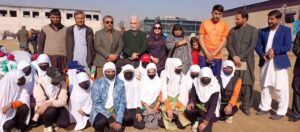
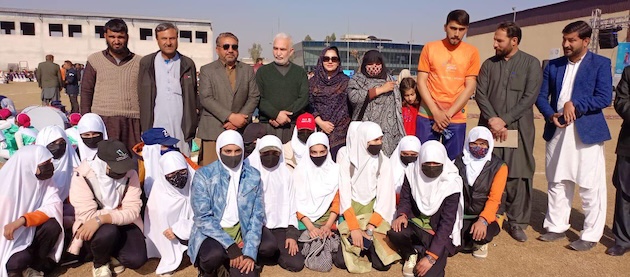
The photo shows an all-girls cricket team from Dir that made it to the finals of the inter-regional games, all without coaching, back in 2023. "Imagine what they can achieve with the right facilities and proper training," said Noorena Shams, also from Dir. Courtesy: Noorena Shams

The photo shows an all-girls cricket team from Dir that made it to the finals of the inter-regional games, all without coaching, back in 2023. “Imagine what they can achieve with the right facilities and proper training,” said Noorena Shams, also from Dir. Courtesy: Noorena Shams

KARACHI, Pakistan, Mar 4 2026 (IPS) – “I was very happy to see the way Aina Wazir was playing cricket,” says 28-year-old Noorena Shams, a professional squash player, when she saw the seven-year-old’s video. The clip, which spread rapidly across social media, drew widespread praise for the young girl’s remarkable talent.


But the events that unfolded were like reliving her past.

“It was like watching my younger self,” said Shams, who belongs to Dir, in Khyber Pakhtunkhwa (KP), bordering Afghanistan, close to where Aina lives in North Waziristan. Both are part of Pakistan’s tribal region.

“Aina, like me, does not have a father to fight the world for her,” she said quietly.

The video also caught the attention of Javed Afridi, CEO of Peshawar Zalmi, who expressed interest in inducting Aina into the upcoming Zalmi Women League. In a post on X, he requested her contact details, promising her cricket equipment and training facilities.

“We couldn’t have imagined the video would get so much attention,” said her cousin, requesting anonymity, speaking to IPS by phone from Shiga Zalwel Khel, a village along the Pakistan-Afghanistan border in North Waziristan. “We were overjoyed; it meant new opportunities and a brighter future for her.”

But the joy was short-lived.

Caught Between Militancy and Military

The video caught the attention of local militants.

Angered by the public display of a girl playing sport, the militants abducted Zafran Wazir—a local teacher who had filmed and uploaded the video with the family’s consent—and forced him to issue a public apology for violating “Islamic values and Pashtun traditions”. It has been reported that he was tortured.

The militants have warned the family that Aina cannot leave the village and that the girl must not accept any offers from anyone. “They said she can play cricket,” said her cousin, “But there should be no videos.”

“Ordinary people in the region are caught between a rock and a hard place—trapped between militant groups and the Pakistan army’s ongoing armed operations,” said Razia Mehsood, 36, a journalist from South Waziristan. “The Taliban tolerate no dissent, and our once-peaceful region is now scarred by landmines on the ground and quadcopters and drones overhead. People are living under constant psychological strain,” she added.

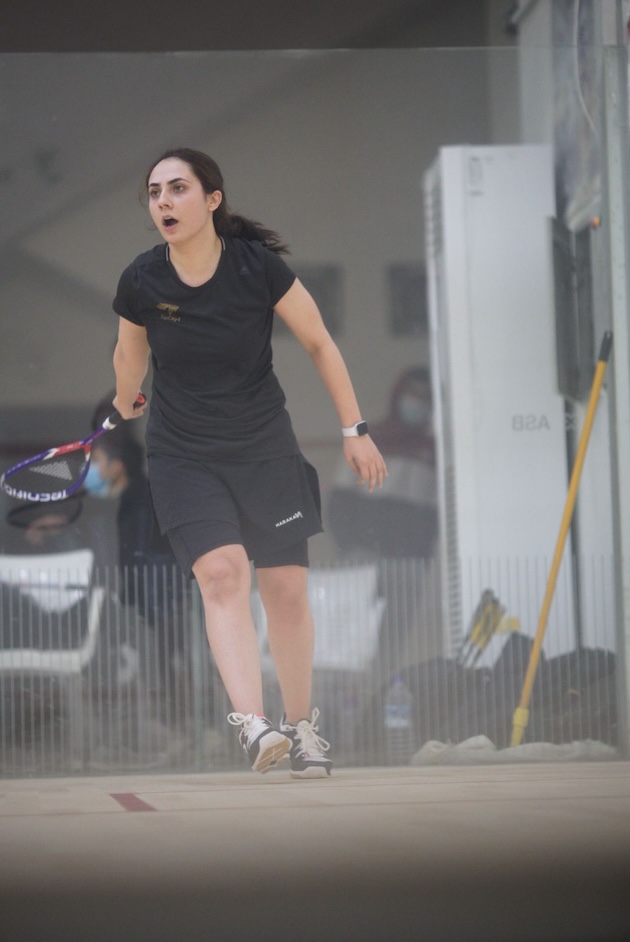
Noorena Shams, a professional squash player, has shown her support for Aina Wazir. Courtesy: Noorena Shams

Noorena Shams, a professional squash player, has shown her support for Aina Wazir. Courtesy: Noorena Shams

Defying the Odds

“I hope she [Aina] can leave the place,” said Maria Toorpakai, 35, the first tribal Pakistani woman who went to play in international squash tournaments, turning professional in 2007.

“Whenever there is a talented girl, every effort should be made to remove her from the toxic environment—even if it means a huge sacrifice from the family,” she said, who belongs to neighbouring South Waziristan but was speaking to IPS from Toronto, where she now resides.

Both Toorpakai and Shams had to leave their homes to escape relentless scrutiny. Belonging to a conservative and patriarchal region, they had to disguise themselves as boys to pursue sports.

Toorpakai cut her hair short, dressed like a boy, and renamed herself “Genghis Khan” to participate in competitive sports.

Shams, meanwhile, was hesitantly allowed to play badminton because it was deemed “more appropriate for young women”.

Despite her parents’ support, she watched boys playing in the only cricket club in Dir, founded by her father.

But theirs is not the only journey fraught with hurdles because of a patriarchal mindset and a rigid tribal background where women’s visibility itself is contested.

“The greatest tragedy is that women’s voices are silenced and excluded from representation, while traditions disguised as religion persist, tying honour and dishonour to women,” said Mehsood. Both Toorpakai and Shams know all this too well. Their families faced constant social rebuke and accusations for bringing dishonour to their villages and tribes, all for playing a sport.

They are not alone.

Athletes like Sadia Gul (former Pakistan No. 1 in squash), Tameen Khan (who in 2022 was Pakistan’s fastest female sprinter), and Salma Faiz (cricketer) relocated from districts including Bannu, D.I. Khan, and Karak to Peshawar, the provincial capital—not just for better opportunities but to escape constant scrutiny.

“If you’re lucky enough that your grandfather, father, or brother doesn’t put a stop to your dreams, then it will be your uncles,” said Salma Faiz, the only sister among six brothers. “And if not them, the neighbours will start counting the minutes you take to get home. They’ll question why you train under male coaches, who watches your matches, and even what you wear beneath your chador. And if it’s still not them, then the villagers will whisper behind your back or land at your doorstep, convincing your parents that girls shouldn’t play sports at all.”

Faiz endured opposition from her elder brother but never gave up cricket. She eventually got selected for the national women’s cricket team.

“Aina is fortunate to receive such overwhelming applause,” said Faiz, now 40, living in Peshawar and working as a lecturer in health and physical education at Shaheed Benazir Bhutto Women University.

“I urge her parents not to surrender to social pressure; they should stand by her and encourage her. She has extraordinary talent—I’ve seen the way she plays,” Faiz pointed out.

Safe Spaces for Women Athletes

Each of these women is now creating ways for their younger counterpart to access the opportunity they lacked.

Faiz has opened her home to girls from tribal regions pursuing sport. When space runs out, she arranges hostel accommodation to ensure they get a shot at opportunities that would likely never reach their village.

Toorpakai, through the Maria Toorpakai Foundation, has, over the years, built a strong network, providing safe spaces for young sportswomen from her region.

But now she wants to go beyond providing temporary support. Her vision to build a state-of-the-art Toorpakai Sports School—a residential facility where girls like Aina Wazir can train seriously, study properly, and live without fear—remains a dream.

“All I want from the state is six acres of land near Islamabad,” she said. “Far enough from tribal hostility but accessible to girls from across Pakistan and international coaches I intend to rope in. I can manage the rest. I can raise funds.”

For over two years, her proposal has been stalled by bureaucratic red tape. “It tells you everything,” she said. “The state simply isn’t interested.”

Shams, too, like Toorpakai, runs the Noorena Shams Foundation, currently supporting four women athletes by giving them a monthly stipend for their training, transport and rent. But if anyone else needs equipment, tuition fees, or house rent, her foundation is able to furnish those needs. She even helped construct two cricket pitches for Faiz’s university.

As the first female athlete elected to the executive committees of the Provincial Squash Association, the Sports Management Committee, the Olympic Association, and the Pakistan Cycling Federation, she has championed young athletes—especially sportswomen— ensuring their concerns are heard.

“I continue to bring to the table issues of athletes’ mental and physical health, the need for international-level coaching, the safety and harassment women face, and the importance of integrating competitive sports into school curricula.”

Using Religion to Quash Dreams

Social media may have provided Aina Wazir with a platform to showcase her talent, but it has also exposed her to hostility.

“We are not against a child playing cricket,” said 27-year-old Mufti Ijaz Ahmed, a religious scholar from South Waziristan. “But she must stop once she becomes a woman. It is against our traditions for women to run around in pants and shirts in public. It is vulgar. If Aina is allowed to do this, every girl will want to follow—and we cannot accept that.”

“The mera jism, meri marzi (my body, my choice) slogan will not work here,” Ahmed went on, referring to a popular slogan that has been chanted since March 8, 2018, and which came under heavy criticism for being a rebellion against the cultural values and Islam.

“Who is he to declare that Aina can’t play?” retorted an incensed Maria Toorpakai, who also serves on the International Olympic Committee’s (IOC) Women in Sport Commission. “Whenever a girl picks up a bat or a ball, Islam is said to be endangered,” she added.

“I would respect them if they confronted and condemned the real ills in my region—drug abuse, child marriage, bacha bazi (the exploitation of adolescent boys coerced into cross-dressing, dancing, and sexual abuse), and the spread of HIV and AIDS. Instead, they obsess over distorted ideas of honour and dishonour. They neither understand the world we live in nor the true essence of Islam. Moreover, they have done nothing for our people.”

National responsibility

Ultimately, she argued, the responsibility lies with the state. It cannot afford to look away while intimidation silences young girls with talent and ambition. It is not only a personal tragedy but also a national loss when talent in remote villages is stifled before it can surface.

“It is the government’s duty to deal firmly with such elements,” she said. “And if it cannot protect its daughters, then it must ask itself why it is in power at all.”

IPS UN Bureau Report

  Source

A New World Order Where Might is Right

Armed Conflicts, Civil Society, Crime & Justice, Democracy, Featured, Global, Headlines, Human Rights, International Justice, IPS UN: Inside the Glasshouse, TerraViva United Nations

A New World Order Where Might is Right

Credit: Global Centre for the Responsibility to Protect

UNITED NATIONS, Mar 3 2026 (IPS) – As the build-up for a proposed “new world order” continues, a lingering question remains: will the country with the most powerful military reign supreme?

The United Nations remains politically impotent. The UN charter is in tatters. The sovereignty of nation states and their territorial integrity have been reduced to political mockery. And the law of the jungle prevails—be it Palestine, Ukraine, Venezuela or Iran.


What’s next: Colombia? Cuba? Greenland? North Korea?

The widespread condemnation of the ongoing conflicts – including charges of war crimes and genocide— has continue to fall on deaf ears.

UN Secretary-General Antonio Guterres told the Security Council that under Article 2 of the UN Charter, all member states shall “refrain in their international relations from the threat or use of force against the territorial integrity or political independence of any state.”

But is anybody out there listening?

Norman Solomon, executive director, Institute for Public Accuracy and national director, RootsAction.org, told IPS killing from the sky has long offered the sort of detachment that warfare on the ground can’t match. Far from its victims, air power remains the height of modernity

Reliance on overwhelming air power is key to what the U.S. is doing in tandem with Israel. Bombing from the skies while not attacking with ground forces is the ultimate way of killing without suffering many casualties.

This reduces political blowback at home in a political and media culture that values American lives but sees the lives of “others” as readily expendable, he pointed out.

“This flagrant war of shameless aggression, launched by the United States and Israel, cannot be contained — much less rolled back — by the typical diplomatic euphemisms and caution.”

The U.S. and Israeli governments, said Solomon, are too completely run by psychopathic leaders who adhere only to the “principle” that might makes right. If ever there were a time that the vaunted “international community” should step up and confront an alliance of reckless outlaw governments, this is it.

The European allies of the United States, he said, should stop their cowardly vagueness and finally step up to demand a halt to this aggression that is setting the Middle East tinderbox on fire. The EU should be threatening huge countermeasures against the United States and Israel unless that pair of sociopathic governments immediately halts their assault on Iran.

“Playing evasive games with Washington makes the leaders in London, Paris, Berlin and elsewhere accomplices to methodical ongoing war crimes”, declared Solomon, author of “War Made Invisible: How America Hides the Human Toll of Its Military Machine”

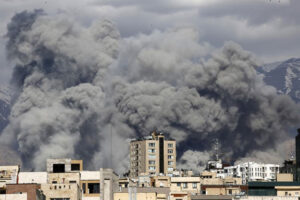
According to the Global Centre for the Responsibility to Protect, the US-Israeli act of aggression against Iran was undertaken in violation of international law and the UN Charter, as they exercised use of force without authorization from the UN Security Council (UNSC) or without a demonstrated threat to their security that would trigger the right to self-defense under Article 51 of the UN Charter.

“The attack came amid ongoing nuclear talks between the US and Iran and just hours after Oman’s Foreign Minister – a key mediator in the negotiations – shared details on progress achieved and announced that a breakthrough was near. The attack also mirrors the recent unlawful actions undertaken by the US in Venezuela on 3 January, culminating in the kidnapping of the head of state and setting in motion profound uncertainty for the region and the global order.”

Meanwhile, the Geneva-based UN refugee agency, the UNHCR, said it is deeply concerned about the escalation of conflict in the Middle East and its impact on civilians and further displacement in the region.

“Many affected countries already host millions of refugees and internally displaced people. Further violence risks overwhelming humanitarian capacities and placing additional pressure on host communities”.

“We echo the UN Secretary-General’s urgent call for dialogue and de-escalation, respect for human rights, the protection of civilians and full adherence to international law”.

James Jennings, President of Conscience International, told IPS the joint US-Israeli attack on Iran was misguided, illegal, and based on lies. It will retard, not advance, any future nuclear agreement, perhaps for decades.

It was illegal, he pointed out, because it violates both the US constitution and international law as enshrined in the UN Charter. It was based on lies because the nuclear watchdog groups have clearly indicated in essence that “There’s nothing to see here.”

“Trump regularly claims that June’s joint “Operation Midnight Hammer” obliterated Iran’s nuclear capability, yet his weak case for the current “Operation Epic Fury” war rests on the idea that perhaps someday in the future Iran might get a bomb. Several US administrations have worked diplomatically to prevent that, yet Trump tore the agreement up”.

Trump claims to be limited by no law, constitution, or the UN Charter. Guided only by his own morality, as he said recently, he followed Israel obediently in launching a massive war against a sleeping country of 92 million people, said Jennings.

“All the while, his amateur diplomats were negotiating deceptively for a compromise like Imperial Japan did in the run-up to the WW II Pearl Harbor attack. Ask the parents of the more than l00 schoolgirls killed on the first horrifying day of joint US-Israel bomb attacks at Minaj, Iran, and they will probably not see Mr. Trump as particularly moral”.

George W. Bush called himself “The Decider, so he foolishly decided to take the US into two unwinnable wars that most politicians in Washington, and even Trump himself, now consider monumental mistakes. Trump campaigned vigorously on keeping the US out of mistaken Middle East wars that became “Forever Wars,” said Jennings.

“Yet here he is being pulled around by the nose by Mr. Netanyahu. According to a classic rule when launching a war, one must recognize that two things cannot be changed: one is history and the other is geography. It is stunning that the leader of the United States is cavalier about going to war without understanding that or clearly stating the mission’s purpose or end game.”

Pundits and TV reporters are calling the attack on Iran “a war of choice,” said Jennings.

“Why not call it what it really is–a war of naked aggression? Nobody knows when will it end. Trump’s claim that the war will be over in a few days is a cruel joke. The other side gets a vote. Iran celebrated its 2,500th anniversary in 1971. Maybe people who have been around so long know a few things about survival,” declared Jennings.

IPS UN Bureau Report

  Source

Over 25,500 Palestinians Killed: Absence of Accountability is Nothing Short of Shameful

Armed Conflicts, Civil Society, Crime & Justice, Democracy, Headlines, Human Rights, IPS UN: Inside the Glasshouse, Middle East & North Africa, TerraViva United Nations

Opinion

Over 25,500 Palestinians Killed: Absence of Accountability is Nothing Short of Shameful

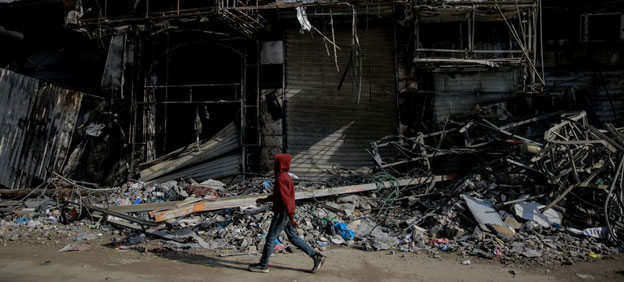
A boy walks through a destroyed neighbourhood in Gaza City. Credit: UNICEF/Omar Al-Qattaa

 
UN High Commissioner for Human Rights, Volker Türk’s remarks to the Interactive Dialogue on the human rights situation in the Occupied Palestinian Territory, at the 61st session of the Human Rights Council in Geneva on February 26 2026.

GENEVA, Feb 27 2026 (IPS) – The situation in the Occupied Palestinian Territory is a human-made disaster.

The report before you sets out events between 1 November 2024 and 31 October 2025 that show Israel’s utter disregard for human rights in Gaza and the West Bank, and the serious violations also committed by Hamas and other Palestinian armed groups.


The evidence gathered by my Office reveals a consistent pattern of gross violations and abuses of human rights, serious violations of international humanitarian law and atrocity crimes – that remain unpunished.

Israel’s continued attacks on residential buildings and makeshift tents, destroying entire neighbourhoods, caused mass civilian deaths. More than 25,500 Palestinians were killed, including entire families, and more than 68,800 were injured during the reporting period.

Among those killed were many Palestinian journalists. My Office has verified that 292 were killed in Israeli operations since 7 October 2023.

Israel’s militarization of humanitarian aid, through the Gaza Humanitarian Foundation, also led to large-scale killings. Between late May and 8 October 2025, my Office recorded 2,435 Palestinians killed by the Israeli military near food collection points — mostly young men and boys.

In August 2025, famine was declared in Gaza, affecting more than half a million people. According to the Palestinian Ministry of Health, at least 463 Palestinians, including 157 children, died from starvation. This was the direct result of Israel’s blocking of humanitarian aid and other deliberate actions.

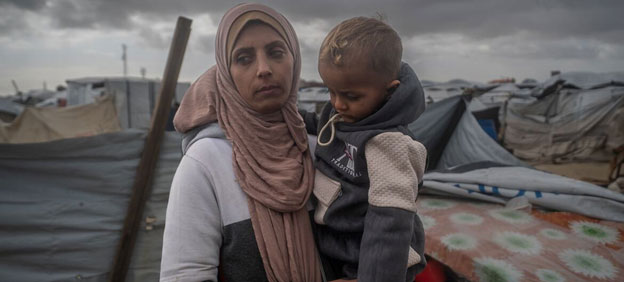
A woman holds a child as a storm approaches Khan Younis in Gaza. Credit: WFP/Maxime Le Lijour

Israeli forces continued to kill humanitarian and medical personnel during this period, and to make mass arrests of Palestinians across Gaza and the West Bank. These arrests often amounted to arbitrary detention, and included enforced disappearances.

Since 7 October 2023, my Office has verified that at least 89 Palestinians have died in Israeli custody. Torture and other ill-treatment of Palestinians in Israeli detention remain widespread.

Israeli operations destroyed some 80 percent of civilian infrastructure in Gaza – including homes, schools, hospitals, cultural sites, and water treatment plants.

During the reporting period, Israel continued to forcibly displace Palestinians, into ever-shrinking areas of the Gaza strip. Over the course of 2025, Hamas and other Palestinian armed groups continued to hold hostages in blatant violation of international law.

Fifty-one hostages who were seized on 7 October 2023 were returned to their loved ones. On their release, the hostages recounted their traumatic ordeals, including sexual and gender-based violence, torture, beating, and prolonged confinement underground.

In June, there were reports that armed men, allegedly affiliated with Hamas, summarily executed 12 Palestinians associated with the Gaza Humanitarian Foundation. In the West Bank, including East Jerusalem, Israeli security forces continued to launch airstrikes and use unlawful force, killing hundreds of Palestinians.

In January 2025, Israeli forces launched Operation Iron Wall in the northern West Bank, which is still ongoing. So far, they have forced 32,000 Palestinians from their homes.

Meanwhile, Palestinian security forces increased the use of unnecessary or disproportionate force, resulting in the unlawful killing of at least 8 Palestinians. They also arbitrarily detained and ill-treated more than 300 Palestinians.

The ceasefire of 11 October 2025 brought some measure of relief. But we must not mistake this for peace or safety. People are still dying in Gaza from Israeli fire, cold, hunger, and treatable diseases and injuries.

Since the ceasefire, Israeli attacks in Gaza have killed more than 600 Palestinians and injured more than 1,600, according to the Palestinian Ministry of Health. Anywhere else, this would be considered a major crisis.

My Office has also recorded at least 80 reported killings of Palestinians by Hamas since the ceasefire, mostly by summary executions and in clashes with rival factions. Gaza now has the highest number of amputee children per capita in the world.

Israel continues to destroy civilian infrastructure and forcibly transfer Palestinians within the Occupied Palestinian Territory. The humanitarian situation is still extremely precarious, as Israel continues to impede the humanitarian community’s ability to bring in food, shelter, fuel, medical supplies, and other essential items.

Since the ceasefire, at least 11 children have died from hypothermia. I deplore Israel’s decision at the end of last year to suspend some 37 aid groups from Gaza. I also deplore the ban on UNRWA operations and the demolition of its premises in East Jerusalem in blatant violation of international law.

Today, the situation in the West Bank is particularly disturbing. Recent Israeli measures expanding land expropriation consolidate the annexation of Palestinian territory. This is in flagrant breach of the Palestinian right to self-determination.

Israeli security forces continue to use unnecessary and disproportionate force, and have killed 1,020 Palestinians since 7 October 2023, according to figures verified by my Office.

Taken together, Israel’s actions appear aimed at making a permanent demographic change in Gaza and the West Bank, raising concerns about ethnic cleansing.

The absence of accountability for the egregious violations committed is nothing short of shameful. Instead, there are efforts to obstruct accountability. The unilateral sanctions imposed on 11 judges and prosecutors of the International Criminal Court are completely unacceptable.

As are those imposed on the Special Rapporteur on the Occupied Palestinian Territory, appointed by this Council. Time and again, I stand before this Council and brief on the litany of violations. I make recommendations, plead for accountability, and for respect for international law.

I do so again today, because it is crucial. The ongoing violations of international law in Gaza must stop. I need to issue a stark warning about the rapidly deteriorating situation in the West Bank. Israel must end its unlawful occupation, in line with the conclusion of the International Court of Justice. And Israel must lift undue restrictions on the flow of humanitarian aid.

We have thought a lot about the contribution my Office can make to shift the trajectory of this awful situation. It may seem incongruous or inappropriate to talk about reconstruction as the suffering continues unabated.

But we have a responsibility to think about what is needed to break this senseless cycle. To talk about lasting peace. Human rights have been crushed in the Occupied Palestinian Territory.

Any realistic effort to rebuild and move toward lasting stability will have to be anchored in human rights. And this is urgent. The reconstruction of Gaza is not a logistics exercise.

Rebuilding Gaza and restoring human rights throughout the Occupied Palestinian Territory requires focusing on what people have lived through over many generations and cutting through the contested narratives.

I see five elements that can help us get there.

First, there need to be meaningful steps towards accountability for all human rights violations and abuses. My Office’s reports form part of this record. Continued monitoring and reporting of the human rights situation is critical.

Second, there must be the long-overdue realization of Palestinians’ right to self-determination, including full responsibility for their own governance and control over their land and resources. Palestinians must be able to shape their own futures and lead reconstruction efforts in Gaza.

Third, security is more than weapons and walls. Unequal treatment is feeding grievances. People can only feel safe when they have faith in equal justice and the rule of law. All segregationist laws and policies that resemble the kind of apartheid system we have seen before must be dismantled.

Fourth, Palestinian and Israeli civil society organizations and human rights defenders that are trusted by their communities need to be central partners in safeguarding human rights going forward. They need the support and protection of the international community.

And finally, we need understanding and healing among Palestinian communities, and between Palestinians and Israelis. This means working to undo the dehumanization which has fuelled this decades-long conflict.

The voices of peace movements – Palestinian, Israeli, and those that bring together Palestinians and Israelis – must be heard and heeded. This can strengthen the constituency for dialogue and increase the space for shared narratives.

The international community needs to step into the moral vacuum and seize the moment – not to return to the pre-October 2023 status quo, but to finally address the underlying causes of this conflict.

Member States need to pursue a path to sustainable peace — one in which Palestine and Israel live side by side in equal dignity and rights, in line with UN resolutions and international law.

IPS UN Bureau

  Source

After a Brutal Winter, Millions of Ukrainians Face Deepening Displacement and Uncertainty

Armed Conflicts, Civil Society, Crime & Justice, Democracy, Europe, Headlines, Human Rights, IPS UN: Inside the Glasshouse, TerraViva United Nations

Opinion

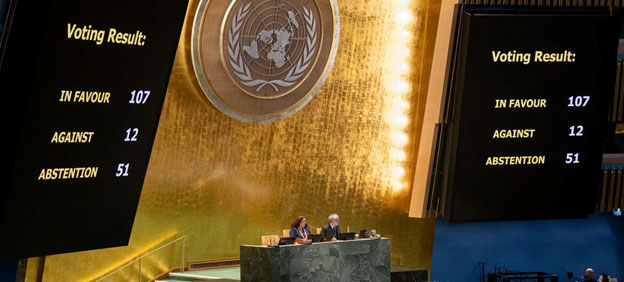
Result of the General Assembly vote on the draft resolution “Support for lasting peace in Ukraine” adopted during the emergency special session. 24 February 2026
Four years after Russia launched its full-scale invasion of Ukraine, the UN is marked the day with high-level debate and renewed calls to end the war – including in the General Assembly which passed a resolution reaffirming its strong commitment to the sovereignty, independence and territorial integrity of Ukraine. Credit: UN Photo/Manuel Elías

GENEVA, Feb 25 2026 (IPS) – After surviving the harshest winter in a decade, millions of displaced Ukrainians are confronting a growing crisis marked by hardship and ongoing attacks as peace prospects remain distant.


Inside Ukraine, repeated attacks on housing, energy systems and essential services throughout the winter left millions without heating or electricity for prolonged periods. While temperatures are slowly rising, the damage remains. An estimated 10.8 million people inside the country need humanitarian assistance in 2026, and 3.7 million are internally displaced.

At the same time, 5.9 million Ukrainians remain refugees abroad. Across Europe, host countries have provided protection and opportunities at an unprecedented scale, giving refugees access to education, healthcare and employment. This has helped millions regain stability and contribute to host communities.

As the war continues, however, more is needed to support refugees from a displacement crisis with no clear end. Alongside Temporary Protection, States should explore options for alternative arrangements for longer stay. These can bring stability for the most vulnerable in particular, for whom return may not be immediately possible even after the war.

Evidence shows that meaningful inclusion delivers results and refugees significantly boost host country economies. In Poland, analysis by UNHCR and Deloitte showed that Ukrainian refugees’ net impact amounted to 2.7 per cent of the Polish GDP, in 2024. With increased language training and wider recognition of credentials, access to decent work and self-reliance can improve for refugees across the region.

Inside Ukraine, communities continue to repair homes, restore services and rebuild livelihoods, with the support of UNHCR and NGO partners. But after four years of war, resilience has limits. Sustained humanitarian assistance remains essential, alongside scaled-up recovery and reconstruction support to prevent further displacement and enable safe conditions for return.

When conditions allow, gradual and voluntary returns will be critical for Ukraine’s recovery. UNHCR is working with the Government and partners to restore people’s documents, support rehabilitation of social infrastructure and repair war-damaged homes. UNHCR also works with partners to analyse refugees’ intentions, forecast return movements and support Ukraine’s recovery planning.

Since the start of the full-scale war, UNHCR and partners have supported 10 million people with emergency aid, protection services and psychosocial support. In 2026, UNHCR plans to assist a further 2 million people inside the country, subject to sufficient funding. Across the region, UNHCR and partners are supporting 1.7 million refugees and the States hosting them, with a focus on inclusion and self-reliance.

As winter fades, the humanitarian crisis does not. We must support the people of Ukraine with humanitarian relief and recovery inside the country, and with safety and self-reliance abroad.

Philippe Leclerc is UNHCR’s Regional Director for Europe and Regional Refugee Coordinator for the Ukraine Situation

IPS UN Bureau

  Source