Global Data Community’s Response to COVID-19

Civil Society, Democracy, Development & Aid, Economy & Trade, Editors’ Choice, Featured, Global, Global Governance, Globalisation, Headlines, Health, Human Rights, IPS UN: Inside the Glasshouse, Population, Poverty & SDGs, TerraViva United Nations

Opinion

Francesca Perucci is Chief, Development Data and Outreach Branch at the United Nations
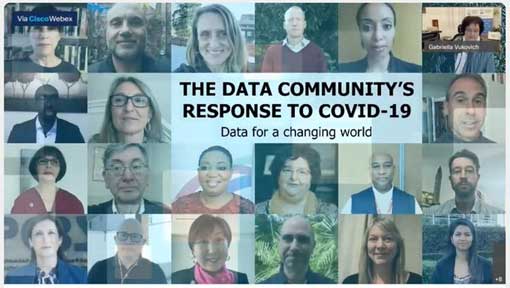
Data Community’s Response to Covid-10. Credit: UNWDF Secretariat, UN Statistics Division

UNITED NATIONS, Oct 28 2020 (IPS) – The world is currently counting more than 42 million confirmed cases of the COVID-19 and over 1 million deaths since the start of the pandemic.1


The first quarter of 2020 saw a loss equivalent to 155 million full-time jobs in the global economy, a number that increased to 495 million jobs in the second quarter, with lower- and middle-income countries hardest hit.2

The pandemic is pushing an additional 71 to 100 million people into extreme poverty and, in only a brief period of time, has reversed years of progress on poverty, hunger, health care and education, disrupting efforts to realize the 2030 Agenda for Sustainable Development.3

While the virus has impacted everyone, it has affected the world’s poorest and most vulnerable people the most.

The pandemic has also demonstrated that timely, reliable and disaggregated data is a critical tool for governments to contain the pandemic and mitigate its impacts.

In addition, data on the social and economic impact have been essential to develop support programmes to reach those in need and start planning for a recovery that leads to a safer, more equal, inclusive and sustainable world for all.

Data and statistics are more urgently needed than ever before. While many countries are finding innovative ways to better data, statistical operations have been significantly disrupted by the pandemic.

According to a survey conducted in May 2020, 96 per cent of national statistical offices partially or fully stopped face-to-face data collection at the height of the pandemic.4
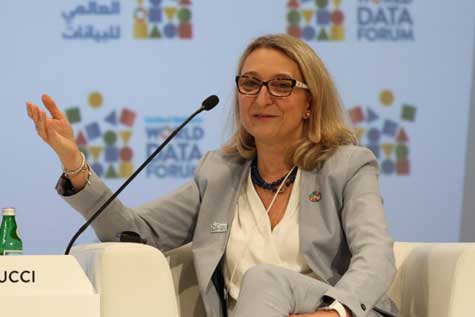
Francesca Perucci, UN Statistics Division. Credit: IISD/EBN | Kiara Worth

Approximately 150 censuses are expected to be conducted in 2020-2021 alone, a historical record. Yet, to address the urgent issues brought by the pandemic, some countries have diverted their census funding to national emergency funding.5

Seventy-seven out of 155 countries monitored for Covid-19 do not have adequate poverty data, although there have been clear improvements in the last decade.6

Behind these numbers there is a tremendous human cost. Despite an increasing awareness of the importance of data for evidence–based policymaking and development, data gaps remain significant in most countries, particularly in the ones with fewer resources.

In addition, the lack of sound disaggregated data for vulnerable groups, such as persons with disabilities, older persons, indigenous peoples, migrants and others, exacerbates their vulnerabilities by masking the extent of deprivation and disparities and making them invisible when designing policies and critical measures.

The 2030 Agenda, with the principle of “leaving no-one behind” at its heart, underlines the need for new approaches and tools to respond to an unprecedented demand for high quality, timely and disaggregated data.

The UN World Data Forum

The UN World Data Forum was established as a response to the increased data demands of the 2030 agenda and as a space for different data communities to come together and find the best data solutions leveraging new technology, innovation, private sector and civil society’s contributions and wider users’ engagement.

The first and second World Data Forums in Cape Town and Dubai resulted in the Cape Town Global Action Plan for Sustainable Development Data and the Dubai Declaration.

These two forums addressed the new approaches required to the production and use of data and statistics not only by official statistical systems, but across broader data ecosystems where players from academia, civil society and the private sector play an increasingly important role.

This year, the UN World Data Forum, initially to take place in Bern, Switzerland, was held on a virtual platform because of the pandemic.

The virtual event allowed for a very broad and inclusive participation, with over 10,000 participants from 180 countries to showcase their answers to the challenges posted by the COVID-19 crisis, share their latest experiences and innovations, and renew the call for intensified efforts and political commitments to meet the data demands of the COVID-19 crisis and for delivering on the sustainable development Goals (SDGs) while also addressing trust in data, privacy and governance.

The programme of the Forum included three high-level plenaries on leaving no one behind, on data use and on trust in data. Together and under one virtual roof, the forum launched the Global Data Community’s response to COVID 19 – Data for a changing world.

This is a call for increased support for data use during COVID-19, focusing on the immediate needs related to the pandemic and for increased political and financial support for data throughout the COVID 19 pandemic and beyond.

Showcased in 70 live-streamed, 30 pre-recorded sessions and 20 virtual exhibit spaces, many innovative solutions to the data challenges of the 2030 Agenda were proposed and partnerships were formed, including:

    • Lessons learned in using data to track and mitigate the impact of COVID-19, at the global, national and local level;
    • Better ways to communicate data and statistics;
    • Use of maps and spatial data to improve the lives of communities;
    • Lessons learned from the use of AI algorithms;
    • Challenges in balancing data use and data protection;
    • How to secure more funding for data.

The next World Data Forum is scheduled to take place from 3 to 6 October 2021 in Bern, Switzerland, hosted by the Federal Statistical Office and the United Nations.

What next?

The Covid-19 pandemic has sadly confirmed that without timely, trusted, disaggregated data there cannot be an adequate response to the many challenges of dealing with the crisis and ensuring a sustainable, inclusive and better future for all.

Clearly, the time is now to recognize that we need data for a changing world. The time is now to accelerate action on the implementation of the Cape Town Global Action Plan and the Dubai declaration to respond more effectively to the COVID-19 pandemic and to put us back on track towards the achievement of the SDGs and to build stronger and more agile and resilient statistical and data systems to respond to future disasters.

World leaders need to recognize that increased investments are more urgently needed than ever to address the data gap and to close the digital divide and data inequality across the world.

To ensure the political commitment and donor support necessary to prioritize data and statistics, it is critical that the data community is able to demonstrate the impact and value of data.

The UN World Data Forum will continue to strive towards these objectives. It will also remain the space for knowledge sharing and launching new initiatives and collaborations for the integration of new data sources into official statistical systems and for promoting users’ engagement and a better use of data for policy and decision-making.

1 WHO Coronavirus Disease (COVID-19) Dashboard
2 ILO Monitor: COVID-19 and the world of work. Sixth edition
3 United Nations, The Sustainable Development Goals, Report 2020
4 United Nations Statistics Division, COVID-19 widens gulf of global data inequality, while national statistical offices step up to meet new data demands, 5 June 2020. https://covid-19-response.unstatshub.org/statistical-programmes/covid19-nso-survey/
5 PARIS21 Partner Report on Support to Statistics 2020
6 The World Bank
  Source

Mahatma’s Non-Violence: Essence of Culture of Peace for New Humanity

Armed Conflicts, Civil Society, Crime & Justice, Democracy, Education, Featured, Gender, Global, Global Governance, Headlines, Human Rights, Inequity, IPS UN: Inside the Glasshouse, Peace, TerraViva United Nations, Women in Politics

Opinion

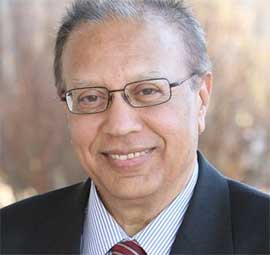
Ambassador Anwarul K. Chowdhury, former Under-Secretary-General and High Representative of the United Nations and Founder of The Global Movement for The Culture of Peace (GMCoP), was the keynote speaker at the observance of the International Day of Non-Violence on the 15th Mahatma Gandhi Day Celebration, organized virtually by the Gandhi International Institute for Peace (GIIP)

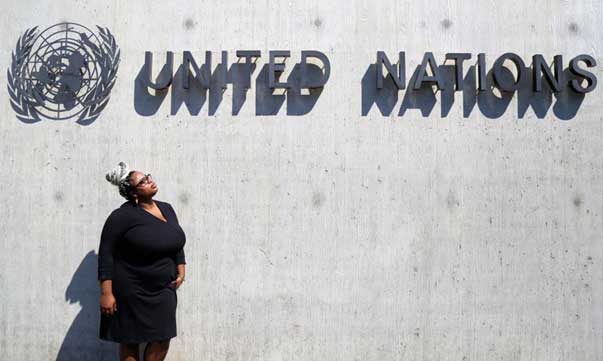
Credit: United Nations

HONOLULU, Hawaii, Oct 22 2020 (IPS) – I will begin by presenting to you excerpts from the message from UN Secretary-General António Guterres on the International Day of Non-Violence.


I quote: “In marking the birthday of Mahatma Gandhi, this International Day highlights the remarkable power of non-violence and peaceful protest. It is also a timely reminder to strive to uphold values that Gandhi lived by: the promotion of dignity; equal protection for all; and communities living together in peace.

On this year’s observance, we have a special duty: stop the fighting to focus on our common enemy: COVID-19. There is only one winner of conflict during a pandemic: the virus itself. As the pandemic took hold, I called for a global ceasefire. Now is the time to intensify our efforts. Let us be inspired by the spirit of Gandhi and the enduring principles of the UN Charter.” End of quote

At the outset, let me thank the Gandhi International Institute for Peace (GIIP) and its dynamic President Mr. Raj Kumar for organizing the observance of the International Day of Non-Violence and of the 15th Mahatma Gandhi Day Celebration by the Institute.

The theme of my keynote speech today is “Mahatma’s Non-Violence: Essence of The Culture of Peace for New Humanity”

The Mahatma affirmed that he was not a visionary but a practical idealist. He affirmed that “Non- violence is the law of our species, as violence is the law of the brute. The spirit lies dormant in the brute and he knows no law but that of physical might. The dignity of man requires obedience to a higher law – to the strength of the spirit.”

It is said that “he was the first in human history to extend the principle of non-violence from the individual to the social and political plane.” He entered politics for the purpose of experimenting with non-violence and establishing its validity.

Ambassador Chowdhury

The Mahatma had said that “Nonviolence is the greatest and most active force in the world. One cannot be passively nonviolent … One person who can express ahimsa in life exercises a force superior to all the force of brutality.” I believe whole-heartedly that Mahatma Gandhi’s principle of nonviolence or Ahimsa has found true reflection in the life of a great son of the United States, Dr. Martin Luther King Jr.’s own struggle for equality and justice.

Dr. King considered his Nobel Peace Prize as “a profound recognition that nonviolence is the answer to the critical political and racial questions of our time – the need for man to overcome oppression without resorting to violence“. I reiterate this mainly to highlight the need for revisiting those words in view of what is happening in many parts of our world, including in this country.

As I have stated on many occasions, my life’s experience has taught me to value peace and non-violence as the essential components of our existence. Those unleash the positive forces of good that are so needed for human progress. Peace is integral to human existence — in everything we do, in everything we say and in every thought we have, there is a place for peace.

It is important to realize that the absence of peace takes away the opportunities that we need to prepare ourselves, to empower ourselves to face the challenges of our lives, individually and collectively. This intellectual and spiritual inspiration is implanted in me through the Mahatma’s life and his words.

The United Nations Charter emerged in 1945 out of the ashes of the Second World War. The UN Declaration and Programme of Action on Culture of Peace was born in 1999 in the aftermath of the Cold War. I was the chair of the nine-month-long negotiations from 1998 to 1999 that produced the Programme of Action on Culture of Peace.

For more than two decades, I have continued to devote considerable time, energy and effort to realizing the implementation of this landmark, norm-setting decision of the UN. For me, this has been a realization of my personal commitment to peace inspired by the Mahatma and my humble contribution to humanity.

My work took me to the farthest corners of the world and I have seen time and again how people – even the humblest and the weakest – have contributed to building the culture of peace in their personal lives, in their families, in their communities and in their countries – all these contributing to global peace one way or the other.

The focus of my work and advocacy has been on advancing the culture of peace which aims at making peace and non-violence a part of our own self, our own personality – a part of our existence as human beings. I believe this will empower ourselves to contribute more effectively to bring inner as well as outer peace.

In simple terms, the Culture of Peace as a concept means that every one of us needs to consciously make peace and nonviolence a part of our daily existence. We should know how to relate to one another without being aggressive, without being violent, without being disrespectful, without neglect, without prejudice.

We should not isolate peace as something separate or distant. More so, in today’s world so full of negativity, tension, poverty and suffering, the culture of peace should be seen as the essence of a new humanity, a new global civilization based on inner oneness and outer diversity.

In my keynote address on “Human Security – an Essential Element for Creating the Culture of Peace” at the Victoria University in Wellington, New Zealand, in August 2007, inspired by Mahatma’s eternal words “Be the change that you want to see in the world,” I underscored that “Peace is a prerequisite for human development.… We all must undertake efforts to inculcate the culture of peace in ourselves. We cannot expect the world to change if we do not start first and foremost with changing ourselves – at the individual levels.”

The objective of the culture of peace is the empowerment of people, as has been underscored by the global leader for peace and Buddhist philosopher Daisaku Ikeda. As we say “Peace does not mean just to stop wars, but also to stop oppression, injustice and neglect”. The culture of peace can be a powerful tool in promoting a global consciousness that serves the best interests of a just and sustainable peace.

I am encouraged that the 2030 Agenda for Sustainable Development adopted by the UN in 2015 includes, among others, the culture of peace and non-violence as well as global citizenship as essential components of today’s education.

This realization has now become more pertinent in the midst of the ever-increasing militarism and militarization that is destroying both our planet and our people. The Mahatma asserted that “One thing is certain. If the mad race for armaments continues, it is bound to result in a slaughter such as has never occurred in history. If there is a victor left, the very victory will be a living death for the nation that emerges victorious. There is no escape from the impending doom save through a bold and unconditional acceptance of the nonviolent method with all its glorious implications.”

Dr. King had advised us rightly, “… I suggest that the philosophy and strategy of nonviolence become immediately a subject for study and for serious experimentation in every field of human conflict, by no means excluding the relations between nations.”

The last decades of violence and human insecurity should lead to a growing realization in the world of education today that children should be educated in the art of peaceful, non-violent, non-aggressive living.

Never has it been more important for the next generation to learn about the world and understand and respect its diversity. I want to underscore one particular aspect in this context. In the culture of peace movement, we are focusing more attention on children because that contributes in a major way to the sustainable and long-lasting impact on our societies. As the Mahatma’s words highlight, “Real education consists in drawing the best out of yourself.”

An essential message that I have experienced from my work for the culture of peace is that we should never forget that when women – half of world’s seven plus billion people – are marginalized, there is no chance for our world to get sustainable peace in the real sense.

Women bring a new breadth, quality and balance of vision to a common effort of moving away from the cult of war towards the culture of peace. “Without peace, development cannot be realized, without development, peace is not achievable, but without women, neither peace nor development is possible.”

I believe the culture of peace is not a quick-fix. It is a movement, not a revolution.

Let us remember that the work for peace is a continuous process. Each one of us can make a difference in that process. The culture of peace cannot be imposed from outside; it must be realized from within.

  Source

The Plight of Domestic Workers in Brazil

Civil Society, Development & Aid, Economy & Trade, Featured, Gender, Global Governance, Headlines, Human Rights, IPS UN: Inside the Glasshouse, Labour, Latin America & the Caribbean, Population, Poverty & SDGs, TerraViva United Nations, Women & Economy

Opinion

Waldeli Melleiro is a project manager at the Brazil Office of Friedrich-Ebert-Stiftung (FES) and Christoph Heuser is the resident representative at the FES Brazil Office.

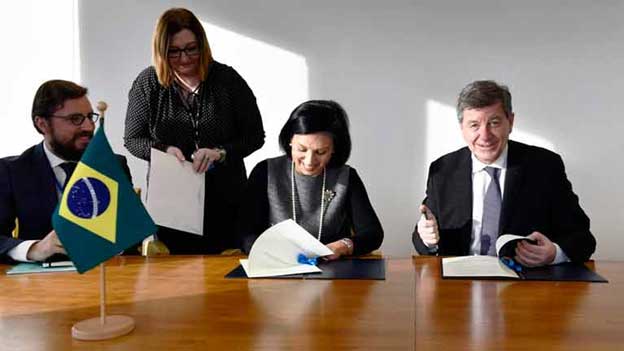
On 31 January 2018, the Government of Brazil deposited the formal instrument of ratification with the International Labour Office for ratification of the Convention on Decent Work for Domestic Workers, 2011 (No. 189) . Accordingly, Brazil became the twenty-fifth member State of the ILO and the fourteenth member State in the Americas region to ratify this Convention. It is estimated that there are about seven million domestic workers in Brazil, six million of them women, and more than in any other country in the world. Moreover, the majority of domestic workers are women, with indigenous peoples and persons of African descent being over-represented in the domestic work sector. But how has the Convention been implemented?. Credit: International Labour Organization (ILO), Geneva

SAO PAULO, Brazil, Oct 21 2020 (IPS) – The inclusivity of Brazilian society is put to the test as the coronavirus pandemic highlights a labour sector ripe with historical and structural inequality: domestic work.


The first death of COVID-19 in Rio de Janeiro was emblematic of the country’s inequities: a domestic worker who caught the new coronavirus from her employer. Much has since been written about the Brazilian government and its catastrophic inaction during the pandemic.

But the new normal also highlights a sector that has always been present in Brazil but with little public attention. A sector, in which the historical and structural inequality in Brazil is very much represented: domestic work.

With about 6 million female workers, domestic work is the second-largest occupation for women in Brazil. They are mostly black (about 65 per cent) and many are over 45 years old (46.5 per cent).

They start working sometimes as teenagers or even children, and because they lack access to most labour rights and social protection, even after 50 years or more of continuous work they still do not have the right to retirement and well-deserved rest.

They live far from their workplaces, often earn less than the legal minimum wage of around 200 USD per month, and are nonetheless often responsible (45 per cent of them) for the income of their families.

Among the poorest of these workers (less than 1,5 USD/day), 58.1 percent are heads of household, which gives an indication of the extreme poverty in which their families live.

The lack of labour protection

Domestic workers have long been fighting for recognition of the value of their work and for labour rights. The struggle in Brazil goes back to the 1930s, with the founding of the Professional Association of Domestic Employees of Santos.

In 1988 the new Constitution guaranteed paid leave and a 13th month of salary, among others. But domestic workers continued to have fewer rights than those in other professions.

Several further rights were only obtained in 2013 under the former administration of Dilma Rousseff, including the limiting of working hours to eight per day and 44 per week, the right to recognition of overtime, and paid retirement.

Despite these advances, many female workers are still excluded from many of those rights, which are guaranteed only to those who work at least three days a week in the same job. And even where the conditions are met, many employers persistently fail to respect workers’ rights, while monitoring compliance is difficult.

Those who work for the same employer for one or two days a week, known as day workers, remain completely unassisted by the law and social protection.

Furthermore, the degree of informality in domestic work is very high: In 2018, only 27 percent of women workers had a formal contract, if we are adding those paying individually even without having a formal contract, only 39 percent contributed to social security.

Thus, the vast majority of female domestic workers are not entitled to unemployment insurance, sickness benefit and retirement.

The new normal of work during and after the pandemic

Domestic work is one of the occupations most affected by the pandemic.

Many workers are in high-risk age groups; their working conditions expose them to more possibilities of contamination; they use public transportation over long distances; they care for elderly people or children with unavoidable physical proximity; and they often have to work without proper protective masks, gloves, or alcohol gel.

Or even worse: in order to keep their jobs and limit contamination, some stay for days and weeks on end in the homes where they work, away from their families.

As the pandemic took hold, the government allowed employers of domestic workers to suspend the contract for up to two months, with two months of secure employment after the suspension. It also allowed partial employment.

But this only helped the minority of domestic workers with such a contract. Most have precarious positions and many of those, especially day workers, have been dismissed and left without income and vulnerable.

The government also started paying 600 reals (around 109 USD) per month for those in need, for example informal workers, rising to 1,200 reals (218 USD) per month for some cases, for example single mothers. However, many women had difficulty in registering and accessing this aid.

Despite the pandemic, domestic workers are standing firm in the fight for labour rights. In March 2020 Fenatrad (National Federation of Domestic Workers) launched a campaign under the slogan “Take care of those who take care of you, leave your domestic worker at home, with paid wages.”

According to Luiza Batista, president of Fenatrad, there was good coverage in social networks, but in practice there was little adhesion by employers. Fenatrad has been carrying out an intense programme of denunciation and negotiation.

The group has also campaigned against a controversial measure by some state governments, for example Pará, to declare domestic work as an essential service during lockdown, forcing workers to continue working.

This measure was reversed after pressure from Fenatrad to specify what functions within domestic work are essential. The category was refined to include only nannies, careers for the elderly, and those caring for people with special needs and whose employers are keyworkers, e.g. in the health or security sectors.

Still the question remains: if domestic work is essential why it is not valued? It is fundamental work, but it is marginalized and carries the prejudices of a society in which social rights are not within reach for everyone.

The pandemic stresses the importance of domestic work and at the same time showed its precariousness as well as the inequality within the Brazilian society. It is time to reflect on the need for change in paid domestic work, aiming at a fair and inclusive society.

The new normal should recognize and value domestic work, including adequate labour rights as an important step on the long way to a more just society.

Source: Friedrich-Ebert-Stiftung (FES), Brazil

  Source

Amid COVID-19, What is the Health of Civic Freedoms?

Active Citizens, Civil Society, Democracy, Editors’ Choice, Featured, Global, Global Governance, Headlines, Human Rights, Inequity, IPS UN: Inside the Glasshouse, Population, Poverty & SDGs, TerraViva United Nations

Opinion

Marianna Belalba Barreto is the Civic Space Research Lead at CIVICUS: World Alliance for Citizen Participation & Aarti Narsee is a Civic Space Research Officer at CIVICUS: World Alliance for Citizen Participation

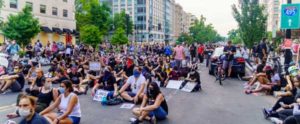
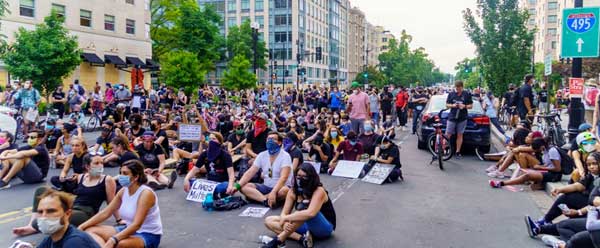
Black Lives Matter Protests, Washington DC, June 2020. Credit: Ted Eytan

JOHANNESBURG, South Africa, Oct 16 2020 (IPS) – More than half a year after the World Health Organization declared the COVID-19 outbreak a pandemic, governments are continuing to waste precious time and energy restricting human rights rather than focusing on fighting the virus.


Civic freedoms, including the freedom to associate, express views and peacefully assemble, are under threat, with states using broad and restrictive legislation to snuff out dissent.

But people are organising and mobilising to demand rights. In the face of restrictions, civil society continues to fight back, often taking to the streets to do so.

Even before the pandemic freedom of expression was under threat. In 2019, the CIVICUS Monitor reported that censorship was the most common violation during that year, occurring across 178 countries.

Now, under the guise of stopping the spread of what they characterise as ‘fake news’, many governments continue to target the media.

Free-flowing information and unrestricted speech are vital during a pandemic. People need to receive accurate and up-to-date information on the emergency, not least so they can protect themselves and their families.

As frontline workers, journalists have a crucial role to play in disseminating important information, often putting their own lives at risk. But during the pandemic they have faced harassment, arbitrary detention and censorship from governments determined to silence critical reporting about their response to COVID-19.

Often such attempts have been carried out under the guise of tackling so-called ‘fake news’ on the virus.

Even before the pandemic, Turkey was the number one jailer of journalists in the world, with about 165 journalists currently behind bars. The government’s crackdown on the media has continued, with journalists being jailed on charges of ‘causing people to panic and publishing reports on coronavirus outside the knowledge of authorities’.

Thousands of social media accounts have also been placed under surveillance for comments about COVID-19, with citizens being detained for ‘unfounded and provocative’ posts that cause worry among the public, incite them to fear, panic and target persons and institutions’.

People expect to be able to question their government’s handling of the crisis and hold it to account over the decisions made. But governments are resisting this. In Zimbabwe, investigative journalist Hopewell Chin’ono was detained and charged for his critical reporting on the government’s COVID-19 procurement.

The need for this was clear when Zimbabwe’s health minister was dismissed and arrested for alleged corruption in medical procurement. But while Chin’ono has been released on bail, the persecution against him continues, despite calls from local and international media watchdog bodies for all charges to be dropped.

Despite these restrictions, people have continued to mobilise and fight for their rights. The pandemic pushed activists to come up with new and innovative forms of protests. Health workers across the world staged socially distanced protests to highlight the challenges within the medical system which have been further exposed by the pandemic; around the world, people found innovative ways to get their voices across.

In Palestine, feminist organisations organised balcony protests against the surge of gender-based violence during the pandemic. Videos show people standing on their balconies, banging pots and pans and hanging banners to show solidarity.

In Singapore in April, young climate activists from the Fridays for Future global school strike movement held solo protests in order to sidestep the country’s restrictive laws on peaceful assembly.

In June in Brazil, human rights groups organised peaceful interventions to denounce the scale of the COVID-19 crisis; protesters in the capital Brasilia put up 1,000 crosses to pay tribute to COVID-19 victims on the lawn in front of key government buildings, calling out President Jair Bolsonaro for his denials of the pandemic’s gravity.

Protests against racial injustice have been staged in all corners of the globe, following the killing of George Floyd by the Minneapolis police on 25 May 2020. Floyd’s death sparked massive protests against police brutality in the USA, under the banner of Black Lives Matter.

As the movement expanded, people from different continents, in countries as diverse as Senegal, Sri Lanka and Sweden, chanted “No Justice, No Peace”, and held placards reading “racism is a virus” to show they had no choice but to protest amid a global pandemic.

But in some countries these protests were dispersed by police using excessive force, with the reasoning that protests would lead to a further spread of COVID-19.

CIVICUS continues to document civic space restrictions, and while many governments are taking advantage of the crisis to suppress criticism, civil society continues to resist, to fight back, and to make their voices heard.

As part of this, journalists are playing a vital role in fighting censorship and sharing information about the pandemic.

What is very clear is that civil society has and will continue to play a vital role in addressing the urgent needs of the people during this crisis. Without a healthy civic space and an enabling environment for activists, civil society and journalists, we will not be able to effectively tackle the spread of the virus and the prospect for rebuilding a more equal and just society will be limited.

This is why people will continue to organise, mobilise and protest.

  Source

To Achieve Gender Equality Within, the UN Must Do More to Tackle Sexual Harassment

Civil Society, Development & Aid, Editors’ Choice, Featured, Gender, Global, Global Governance, Headlines, IPS UN: Inside the Glasshouse, TerraViva United Nations

Opinion

Antonia Kirkland is Global Lead on Legal Equality & Access to Justice at Equality Now*

Credit: Equality Now, Tara Carey

NEW YORK, Sep 30 2020 (IPS) – In September 2017, Secretary-General António Guterres launched the “System-wide strategy on gender parity”, which set the goal of reaching gender parity within the United Nations by 2028 and outlined a strategy on how to achieve this, including the introduction of special measures, senior appointments, targets and accountability, amongst other things.


Three years have passed and it is heartening to hear that the UN has made significant progress towards this goal by achieving gender parity within its senior management. We look forward to the organization hopefully achieving this at all levels by 2028, or preferably sooner.

The principle of equal rights for women and men is one of the pillars upon which the UN was founded. It is rooted in the recognition that gender equality is a fundamental human right and that empowering all women is essential for a peaceful, prosperous, and sustainable world.

The blueprint to achieving this was outlined by the UN in 2015 with the 2030 Agenda for Sustainable Development, which enshrines the ambition in Sustainable Development Goal 5 to “achieve gender equality and empower all women and girls”.

As an agenda-setting organisation that plays an influential role on the world stage, the UN has a responsibility to lead by example in advocating for gender equality from the inside out. This entails ensuring that women from a variety of backgrounds are equally represented at all levels of the UN system, and is necessary for both its credibility and effectiveness in applying a gender lens to its policies and programs.

An inclusive, gender-balanced and culturally diverse workforce, operating within a system that support’s women’s equal access to decision-making, will enable the UN to carry out its mandate more successfully.

Although gender parity is an important component of achieving gender equality within the UN, what is also needed is a frank examination and enhancement of the organizational culture and ways of working. The UN has spoken of the need to “create a working environment that embraces equality, eradicates bias, and is inclusive of all staff.”

Whilst it is encouraging to see the progress being made at the UN, there are still areas where commitments must be translated into effective action, and this pertains particularly to the handling of sexual abuse and harassment within the work environment, even as the workplace itself is evolving in response to the COVID-19 pandemic.

In 2018, UN Women appointed an Executive Coordinator and Spokesperson on Sexual Harassment and Discrimination. This office was tasked with “supporting States, government administrations and the private sector to ensure actions are taken to respond to women’s experiences of sexual harassment.”

It contributed to the adoption of the UN System Model Policy on Sexual Harassment by the Chief Executives Board, as well as promoting much-needed awareness raising and open discussion of the issue at the highest levels of the UN itself.

Unfortunately, this office has just been closed permanently, undermining the Secretary-General’s “zero-tolerance” policy on sexual harassment and putting into question the UN’s commitment to priortizing this as in important issue in need of addressing.

Greater attention and improvement are required regarding the handling of sexual harassment and abuse cases involving UN staff, including those in senior management. A staff survey investigating sexual harassment within the organization was carried out in 2018.

Only 17.1 percent of staff responded but of those who did, a third reported they had experienced harassment, with junior and temporary staff being particularly targeted. 12 percent of the perpetrators were in senior leadership positions and incidents were cited in which offenders were not punished or condemned, despite numerous charges being levied against them.

This type of failure was clearly illustrated when the UN’s own internal Dispute Tribunal called the “accountability gap deplorable” in a recent case involving compensation for sexual harassment committed by a previous chair of the International Civil Service Commission against a UN staff member who worked under him.

Although the chair was a UN official elected by the UN General Assembly, he was deemed to be outside the jurisdiction of the UN Secretary-General and as such, no action was taken by the Tribunal. This demonstrates a systemic failure in dealing with cases of this kind.

Sexual harassment and abuse thrive where there is a culture that fosters a lack of accountability that enables perpetrators to act with impunity. Tackling it requires clear and effective leadership to ensure the implementation of adequate safeguarding measures.

Senior management must enact changes to embed transparency across the board, tackle the continuing problem of under-reporting, and provide better support to victims and whistle-blowers who disclose allegations. Only then, will the UN truly be on course to achieve gender equality within its own ranks and stand as a role model for others.

For media enquiries and interview requests please contact Tara Carey at tcarey@equalitynow.org; +44 (0)20 7304 6902; +44 (0)7971 556 340.

*Equality Now is an international human rights organisation that works to protect and promote the rights of women and girls around the world by combining grassroots activism with international, regional and national legal advocacy. It’s international network of lawyers, activists, and supporters achieve legal and systemic change by holding governments responsible for enacting and enforcing laws and policies that end legal inequality, sex trafficking, sexual violence, and harmful practices such as female genital mutilation and child marriage.

For details of current campaigns, go to www.equalitynow.org, Facebook @equalitynoworg, and Twitter @equalitynow.

  Source

After 75 Years, UN Claims 50:50 Gender Parity, But Falls Short of its Ultimate Goals

Civil Society, Development & Aid, Editors’ Choice, Featured, Gender, Global, Global Governance, Headlines, IPS UN: Inside the Glasshouse, TerraViva United Nations

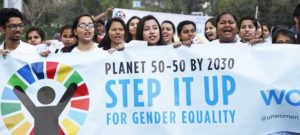
While women have come a long way since the adoption of the Beijing Platform for Action nearly 25 years ago, they still lag behind on virtually every Sustainable Development Goal (SDG). Credit: UN Women, India

UNITED NATIONS, Sep 18 2020 (IPS) – When the United Nations was dominated by men, holding some of the highest positions in the staff hierarchy, women staffers were overwhelmingly administrative secretaries seen pounding on their Remington typewriters seated outside their bosses’ enclosed offices.


A legendary story circulating in the 1960s recounts the plight of a woman candidate being interviewed for a job. She had superlative credentials, including work experience as a political analyst, and was armed with a post-graduate degree from a prestigious university in the US.

The male UN director from human resources, however, had one final question at the end of the interview: “But can you type?”

Mercifully, that was a bygone era. But since then, the UN has made significant progress trying to conform to an age-old General Assembly resolution calling for gender parity system-wide.

As Secretary-General Antonio Guterres tweeted last week: “The #COVID19 pandemic is demonstrating what we all know: millennia of patriarchy have resulted in a male-dominated world with a male-dominated culture which damages everyone – women, men, girls & boys.”

As the UN commemorates its 75th anniversary, the world body claims it has achieved 50:50 gender parity in the higher ranks of its administrative hierarchy.

But it still falls short of reaching “full parity at all levels” of the Organization —even as two recent staff surveys in New York and Geneva raised several lingering questions, including the largely system-wide absence of women of color, widespread racism in the Organization and the lack of equitable geographical representation of staffers from the developing world.

In a letter to staffers on September 2, Guterres singles out the efforts made shortly after he took office: ”Nearly four years into this effort, I can report that we have come a long way”.

In 2019, for the first time in United Nations history, he said; “we reached parity in the Senior Management Group and among Resident Coordinators. On 1 January 2020, and well ahead of schedule, we attained this milestone by reaching parity among all full-time senior leaders, comprising 90 women and 90 men at the level of Assistant and Under-Secretaries-General.”

“In addition to the commitment to reach parity and diversify in our senior leadership by 2021, I have committed to achieving parity at all levels of the Organization by 2028”.

“We are on track to meet this target, but progress is uneven and inconsistent. Our greatest challenge is in field missions, where the gap is the largest and the rate of change is slowest”, he added.

Prisca Chaoui, Executive Secretary of the 3,500-strong Staff Coordinating Council of the UN Office in Geneva (UNOG), told IPS that in the past, despite the existence of competent women in the UN, it has largely been the reality that when women do achieve career progression, it tends to be mostly women belonging to certain geographical groups or regions.

“There are concerns that implementation of the UN’s Gender Parity Strategy may follow a similar pattern. It is crucial that this important initiative ensures a diverse gender parity that includes women from the global South, women of colour, and women from developing and underrepresented countries,” she noted.

The Organization can do better at bringing the valuable and creative talents of diverse women together to help bridge the gender gap. This can only help the UN better deliver on its mandate – especially in these challenging times.

“Gender and geographic diversity should not be mutually exclusive. We can implement the Gender Parity Strategy while ensuring improved geographical representation and diversity,” Chaoui declared.

Meanwhile, the lack of geographical diversity is reflected in the absence of staffers from some 21 member states, according to the latest December 2017 figures released in a report to the UN’s Administrative and Budgetary Committee.

The 21 “unrepresented” countries among staffers, mostly in the developing world, include Afghanistan, Lao People’s Democratic Republic Saint Lucia, Andorra, Liechtenstein, Saint Vincent and the Grenadines., Angola, Marshall Islands, Sao Tome and Principe, Belize, Monaco, Timor-Leste, Equatorial Guinea, Nauru, Tuvalu, Kiribati, Palau United Arab Emirates, Kuwait, Qatar and Vanuatu.

Ian Richards, former President of the Coordinating Committee of International Staff Unions and Associations, and an economist at the Geneva-based UN Conference on Trade and Development (UNCTAD), told IPS that last year Guterres asked the UN’s member states at the General Assembly to let him change the staff regulations to allow the quotas and promotion and recruitment bans based on gender that he had been seeking for a while. But they refused his request.

“It seems they felt it went against Article 8 of the UN Charter on non-discrimination and Article 101 on merit”.

However, this year, while the pandemic and Covid-19 recovery efforts drew attention elsewhere, it seems he made the changes anyway, albeit through a type of executive order called an “administrative instruction”, complained Richards.

Firstly, is the executive order legal if it contradicts the staff regulations? he asked. Lawyers have apparently been looking at this. And, secondly, is it wise to provoke our member states by disregarding their instructions at a time when some are trying to cut our funding? There seems to be some disquiet.

“We all want to advance gender balance and we are all impatient. But I hope our efforts to do so doesn’t backfire because of this”.

A further question is why aren’t the General Service staff included?. They are staff like everyone else and form the backbone of our organization,” asked Richards.

Currently, the UN has a global staff of about 34,170, according to the latest figures from the Chief Executives Board for Coordination.

While the Secretariat staff in New York is estimated at over 3,000, the five largest UN agencies worldwide include the UN children’s agency UNICEF (12,806 staffers), the Office of the UN High Commissioner for Refugees (9,740), the World Health Organization (8,049), the UN Development Programme (7,177) and the World Food Programme (6,091).

Purnima Mane, a former UN Assistant Secretary-General and Deputy Executive Director of the UN Population Fund (UNFPA), told IPS it is indeed heartening to hear that the UN has reached gender parity among its senior leadership.

The Secretary-General further promises that steps will be taken to ensure parity at all levels of the organization by 2028 which is most welcome, she said.

“It is also heartening to note that there is attention to the reality that it is not just about numbers but also about a shift in organizational culture. There obviously needs to be transparency on what this shift implies in terms of its goals, how they will be achieved, and how success will be measured.”

While equitable recruitment is one way to measure gender parity, number of male and female staff obviously cannot be the sole measure of success in achieving gender equality, she argued.

“Parity in numbers is one, critical part of ensuring gender equality in the UN but it needs to be matched with efforts that address the quality of work life. Recognizing the demands on the lives of women and men today and building flexibility in work life policies is a key part of ensuring this quality and equality,” she added.

Attention will have to be paid to other critical areas of work life, such as parity in retention, rate of promotion, salary, benefit package including adequate and flexible work arrangements especially those related to maternity (and paternity) leave, and support and mentoring of women, Mane said.

Targets will not only need to be set for each of these areas but also reported on to ensure transparency and accountability that gender parity is successful in a comprehensive and meaningful way, in the long run, she declared.

Ben Phillips, author of ‘How to Fight Inequality’ and former Campaigns Director for Oxfam and for ActionAid, told IPS there is a growing unity amongst grassroots groups across the world fighting intersecting inequalities.

That is what ‘we the peoples‘ really means. It is that united push that is driving a long-overdue reckoning across institutions of every kind, said Phillips who co-founded the Fight Inequality Alliance.

  Source