How Cities Can Turn COVID-19 Crisis into an Opportunity to Build Better

Civil Society, Development & Aid, Editors’ Choice, Featured, Global, Global Governance, Headlines, IPS UN: Inside the Glasshouse, Poverty & SDGs, TerraViva United Nations

Opinion

Johnny Miller is a photographer, documentary maker and UN-Habitat Champion based in Cape Town South Africa.

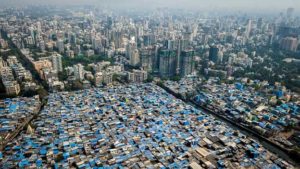
High rise apartments & green spaces contrast with the adjacent sprawling slum area in Mumbai, India. Credit: Johnny Miller

CAPE TOWN, South Africa, Jun 12 2020 (IPS) – From shocking death tolls to widespread job losses, there is no understating the severity of the COVID-19 pandemic’s impact on the world’s cities.

Health care systems, economies, and social lives have been upended by a virus for which the world was totally unprepared.


But even as cities struggle with basic needs like providing a safe environment for all, there is as an opportunity for long-lasting changes to make our cities both more prosperous and equitable and less vulnerable to future shocks such as highly contagious diseases.

Cities and local governments should be recognized for steps they are already taking to build public health, social, and economic resilience during this crisis. They are disinfecting public transport and are keeping public spaces clean.

They are mobilizing both professional and volunteer networks to source, make, and distribute personal protective equipment for frontline workers. They are making sure food reaches older persons who are self-isolating for their own safety and struggling families with children who are no longer going to school, being challenged equally by new ways of working such as home schooling and home office.

This unprecedented moment requires emergency action and social solidarity. We can seize on this brief window to “retro-fit” and make permanent improvements by both delivering the fundamentals of sustainable cities from the pre-pandemic era and adopting the measures that are likely to be necessary in the post-pandemic era.

Our future cities need to be resilient, sustainable, inclusive and equitable. They need to be forward-thinking, able to innovate and better positioned to withstand shocks and catastrophes like the Covid-19 pandemic.

To do this they will need to respect core human values of dignity and care, and invest in citizens’ health along with decent shelter, clean water, and free education. They will recognize that diversity is a strength, and that achieving equality of outcomes for all means safeguarding the rights of expression and culture.

Future cities must rethink and reorganize their built environment using the lenses of equity and access. COVID-19 has exposed the reality of profoundly divided populations. Regenerating neglected urban areas can bring healthy, sustainable benefits to local communities, which in turn increases city resilience as a whole.

Connecting communities with people-friendly parks, green spaces, and community-aligned infrastructure allows neighborhoods to prosper and thrive once more.

We see some cities embrace the “new normal’. Lyon has a plan to more permanently house 1,500 homeless people who were offered temporary shelter during France’s lockdown. Cities around the world have closed streets to cars in order to provide more space for pedestrians and cyclists.

Already, Seattle and Paris have said some of those changes will be made permanent. Bogota, one of South America’s most cycle-friendly cities and already a leader in sustainable transport, just dedicated over 70 more kilometers of bike lanes on top of the 550 that already exist.

With the disruption of global supply chains and long-distance air travel, it is possible that future cities will look and act more locally, with localized and self-sustaining networks of food production, green spaces, and even power generation.

By moving away from a reliance on overseas producers, we can unlock the true value of neglected assets and resources within communities which currently lie dormant.

At the same time, the cities of the future will be more reliant on digital technology and the wide utilization of the internet even as children learning from home eventually go back to school and knowledge workers connecting remotely will eventually return to spending more time in the offices again.

Even in the poorest regions of the world, city dwellers are beginning to rely on the internet for education, business, banking, and social relationships. COVID-19 has already opened our eyes to a world where only those with the freedom and privilege to be able to access the online world are the ones able to access all society has to offer.

The current crisis provides an opportunity for cities to ensure that digital services are available to everyone, but they need to take a proactive approach to digital technologies.

This could include investing in community broadband and free public wi-fi, providing digital literacy and skills to older people and marginalized communities and making websites and online platforms accessible to people with disabilities. Bridging the digital divide, already a pre-pandemic challenge, will be essential to building back better neighborhoods.

The good news is that many cities already see the benefits of resilient, inclusive societies, and some areas like Kerala state in India are weathering the COVID-19 storm well even without massive financial resources.

This is showing that focusing on public health delivery in a compassionate, equitable way, is just as important as economic stimulus to the recovery of a region once the pandemic is over.

The choices we make in the next year will define our societies for an entire generation and perhaps beyond. Let’s use this opportunity as a fulcrum to leverage the future that we know we can build together.
  Source

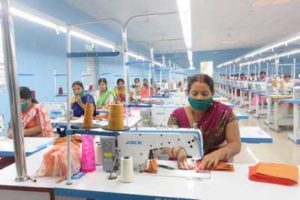
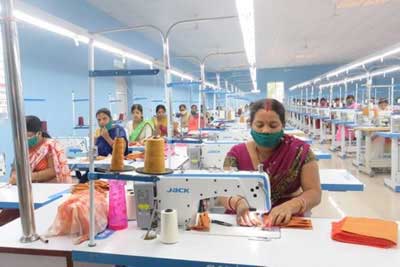
COVID-19 & its Impact on Textile & Garment Supply Chains in Developing Nations

Civil Society, Development & Aid, Editors’ Choice, Featured, Global, Global Governance, Headlines, IPS UN: Inside the Glasshouse, Poverty & SDGs, TerraViva United Nations

Opinion

Antonella Teodoro is Senior Consultant at the UN Conference on Trade and Development (UNCTAD) & Luisa Rodriguez is Economic Affairs Officer, UNCTAD

GENEVA, Jun 11 2020 (IPS) In the first quarter of 2020, the coronavirus pandemic led to a 3% drop in global trade values. COVID-19 could trigger the biggest economic contraction since World War II, affecting all industries from finance to hospitality.


As there is significant uncertainty about how the epidemiological and economic situation will evolve, assessing the duration and the gravity of the pandemic seems like an impossible task.

However, recent forecasts suggest: trade volumes decreasing between 13% and 32% in 2020 (WTO, 2020), global growth falling to -3% (IMF, 2020) and different maritime seaborne scenarios ranging from a return to sector average (around 3% p.a.) after 2022 to growth rates falling by 17% by 2024 (Stopford,2020)[i].

Industries whose operations are more globalized (and particularly those that rely on Chinese inputs for production) were most exposed to initial supply chain disruption due to COVID-19. This was the case for precision instruments, machinery, automotive and communication equipment (UNCTAD, 2020).

Given its non-essential nature, the fashion industry faces significant risks. Indeed, in times of COVID-19, as consumers around the world remain in lockdown, they no longer need new products. This industry is characterised by a highly integrated global supply chain.

In it, many developing countries play the role of the supplier of low-cost inputs. This article highlights some of challenges and concerns that some of these countries face, many of which are dependent on textile and garment exports.

The textile industry supply chains, trade logistics and developing countries

The accession of China to the WTO (2001) and the expiry of the WTO Agreement on Textiles and Clothing (which ended a 10-year trade regime managed through quotas) on 1st January 2005 contributed to making China an important centre of textile and clothing global value chains (GVCs).

These two developments led to shift apparel production and sourcing (by globalized retailers and producers) to China and other Asian countries because of low labour costs (UNCTAD, 2005), following the cost-reducing logic of GVCs.

As wages gradually rose in China and Chinese plants moved to produce higher-value goods, countries like Bangladesh, Pakistan and Vietnam, with lower wages costs started attracting factories to relocate their production from China.

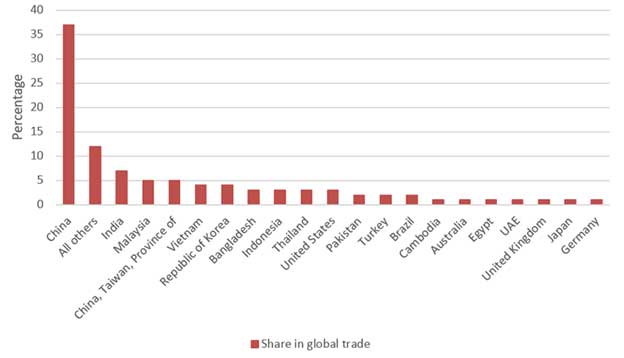
At the global level, China remains an important supplier of fashion goods (as shown in Figure 1) but has also become an important consumer of this industry.

Figure 1: Top 20 exporting countries of fashion goods*
(share in global exports), estimated TEU 2019

* SITC, 2-digit categories including: Textile fibres, Textiles & made-up articles, Clothing & accessories. (Source: MDS Transmodal, March 2020)

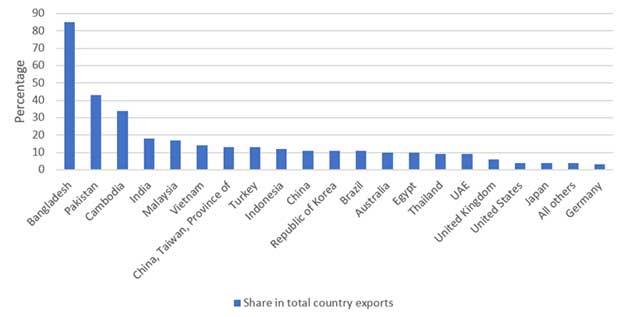
Major exporters of fashion goods for whom exports in the sector represent a significant share of export earnings are shown in Figure 2. Consequently, the Asian country most badly affected by the disease outbreak could be Bangladesh where circa 85% of its exports include fashion goods, as shown in Figure 2.

Figure 2: Top 20 exporting countries of fashion goods*
(share in total country exports), estimated TEU 2019

* SITC, 2-digit categories including: Textile fibres, Textiles & made-up articles, Clothing & accessories. (Source: MDS Transmodal, March 2020)

Given the globalized nature of the industry, companies and retailers must transport their goods and raw materials across many countries. Besides China, other countries play an important role as key hubs around which trade of fashion products takes place.

This is the case for the United States (as the most important retail market), and some European countries (such as Belgium, Germany, France and UK), with ports such as Rotterdam and Antwerp featuring prominently in this trade. (CO, 2018).

From a logistics point of view, the textile, apparel and garments industry is considered a time-sensitive industry. Irregularities in making goods reach a particular place at a specified location on time can lead to reduced (or no) profits for the textile owner.

In addition, clothing collections change quickly: their lifecycle is short (as perishable products) and their commercialization is characterized by strong seasonal peaks. In this sense, textile logistics are characterized by small stocks and short delivery times.

These goods and raw materials are usually transported using a combination of land, sea, and air. Within this trade logistics context, strong multimodal interlinkages are key to ensure Just in Time delivery.

E-commerce developments have further accentuated time-related logistics requirements, such as next day delivery, as well as the capacity of handling a large volume of returns and offering the possibility for manufacturers and dealers to check the location of their articles at any time.

Emerging concerns related to COVID19 from the perspective of developing countries

The COVID-19 outbreak led to production stops in China first, followed by closures of shops elsewhere around the world.

For the moment, European and American retailers, the two destination markets for this sector, are still cancelling their orders. Cancelled orders are a cause for concern in many sourcing countries.

As shippers are increasingly invoking ‘force majeure’ clauses within their contracts to halt their payments, on 8 April, the Sustainable Textile of Asian Region (STAR) Network, the body, which brings together representatives of the producing associations from Bangladesh, Cambodia, China, Myanmar, Pakistan and Vietnam, released a joint statement on the issue.

It urged brands and retailers to consider the impact that their purchasing decisions during the coronavirus pandemic could have on workers and small businesses in the supply chain and, therefore, to honour their contracts with their suppliers.

In their statement, the STAR Network invited global businesses to “support business partners in the supply chain as much as possible, and aim at a long-term strategy of business continuity, supply chain unity and social sustainability.”

Supply chain disruption: the reduced production perspective

The evolution of local epidemiologic situation in key sourcing countries, has impacted workforce availability and production, as well as multimodal logistics underpinning global value chains.

One of the concerns in this respect is that production of fashion goods could be moved away to other sourcing countries that are resuming activities faster in the Asian region or that are closer to retailers to diversify their supply chain risk.

Governments in developed countries around the world are implementing unprecedented actions to ease the effect on their economies from measures put in place to limit the spread of the pandemic.

Most developing countries do not have similar financial means, health systems or social safety nets to respond to the COVID-19 pandemic crisis and its economic impacts.

In this context, various assistance packages have been announced by IMF, the World Bank and others with a view to supporting economies, including emerging market economies.

Transport connectivity impact

Observable changes derived from the pandemic concerning maritime transport networks include, for example a reduction in service frequency (blank sailings and idle fleet) and changes in routing affecting particularly Asia-Northern Europe services, a key axis in the trade of fashion goods.

Shipping lines are reducing the number of port calls in the maritime services they offer to adapt to declining demand and cargo imbalances (JOC, 2020).

This is likely to affect the liner shipping connectivity of sourcing countries both in terms of intercontinental as well as intra-regional feeder calls and, if this situation persists, could make economic recovery even harder.

The fashion industry is undoubtedly under pressure in these uncertain times. Depending on the role that countries play in the supply chain, building resilience could entail different needs and approaches.

Prospects appear particularly bleak for low-cost sourcing countries that are highly dependent on textile and garments exports for revenues, concurrently faced with the challenge of limited financial means and less developed health systems and social safety nets to cope with the socio-economic effects of the pandemic.

In the short-term, lockdowns around the world have thrown a spotlight on risks associated with high supply chain interconnectedness and challenges associated with global sourcing.

This has also had an impact on trade logistics, as the glue that holds global value chains together. Observable changes introduced in maritime transport services to cope with reduced demand and cargo imbalances illustrate this.

The key question is what will this mean in the longer term, after surviving this unplanned humanitarian and financial crisis, particularly for the weakest links of the chain?

Driven by growing pressure towards more environmentally friendly lifestyles, the fashion industry was already confronted, before the pandemic, with increased concerns regarding its sustainability footprint, particularly consumption patterns associated with ‘fast fashion’ (increasing levels of expenditures and waste disposal) and associated production patterns (workplace conditions, environmental impact of textiles processing).

Will the current crisis accelerate a transformation in consumption patterns, inducing structural changes to the industry supply chain?

For example, could it lead to generalize new models such as ‘seasonless designs’ or lead to shorter value chains (i.e. increased local or regional sourcing)? Certainly, moving away from the “just in time” or “made- to- order” business models will have an impact on trading and transport patterns.

  Source

Housing is Both a Prevention & Cure for COVID-19

Civil Society, Development & Aid, Editors’ Choice, Featured, Global, Global Governance, Headlines, IPS UN: Inside the Glasshouse, Poverty & SDGs, TerraViva United Nations

Opinion

Maimunah Mohd Sharif is United Nations Under-Secretary-General and Executive Director of UN-Habitat & Leilani Farha is the former UN Special Rapporteur on the Right to Adequate Housing, and Global Director of The Shift.

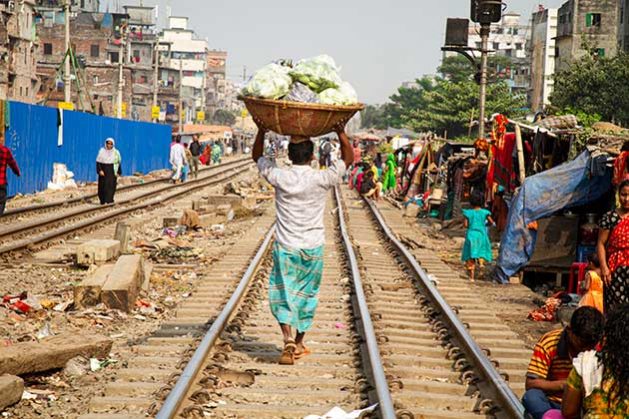
The Bijoy Sarani Railway Slum in Dhaka, Bangladesh. Credit: UNHabitat/Kirsten Milhahn

NAIROBI, Kenya, May 13 2020 (IPS) – Public health officials are calling the “stay home” policy the sacrifice of our generation. To flatten the curve of COVID-19 infections, this call of duty is now emblazoned on t-shirts, in street art and a celebrity hashtag.


But for the 1.8 billion people around the world living in homelessness and inadequate shelter, an appeal to “stay home” as an act of public health solidarity, is simply not possible. Such a call serves to highlight stark and long-standing inequalities in the housing market. It underscores that the human right to shelter is a life or death matter.

Throughout this global pandemic, governments are relying on access to adequate housing to slow the viral spread through self-isolating or social distancing policies. Yet, living conditions in poor or inadequate housing actually create a higher risk of infection whether from overcrowding which inhibits physical distancing or a lack of proper sanitation that makes regular hand-washing difficult.

At the most extreme, people experiencing homelessness must choose between sleeping rough or in shelters where physical distancing and adequate personal hygiene are almost impossible. Homeless populations and people living in inadequate housing often already suffer from chronic diseases and underlying conditions that make COVID-19 even more deadly.

It is now clear, housing is both prevention and cure – and a matter of life and death – in the face of COVID-19. Governments must take steps to protect people who are the most vulnerable to the pandemic by providing adequate shelter where it is lacking and ensuring the housed do not become homeless because of the economic consequences of the pandemic.

These crucial measures include stopping all evictions, postponing eviction court proceedings, prohibiting utility shut-offs and ensuring renters and mortgage payers do not accrue insurmountable debt during lockdowns.

In addition, vacant housing and hotel rooms should be allocated to people experiencing homelessness or fleeing domestic violence. Basic health care should be provided to people living in homelessness regardless of citizenship status and cash transfers should be established for people in urgent need.

Steps should be quickly taken to establish emergency handwashing facilities and health care services for at-risk and underserved communities and informal settlements.

In many cities and countries, emergency measures are already moving in this direction.

Berlin opened a hostel to temporarily house up to 200 homeless people, catering to all nationalities. The Welsh government pledged GBP10 million to local councils for emergency homeless housing by block booking empty lodging like hotels and student dormitories.

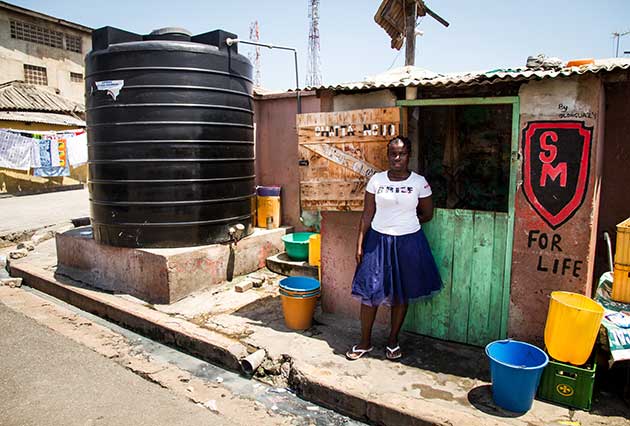
A woman outside a community run water facility in Old Town, Accra Ghana. Credit: UNHabitat/Kirsten Milhahn

In South Africa where under half of all households have access to basic handwashing facilities and in Kenya, where it is under a quarter of households, governments are increasing access to water for residents living in rural areas and informal settlements by providing water tanks, standpipes, and sanitation services in public spaces.

Many jurisdictions, such as Canada’s province of British Columbia, have suspended evictions. The eviction ban means landlords cannot issue a new notice to end a tenancy for any reason and existing orders will not be enforced.

Spain, France, the United Kingdom and the United States have announced mortgage postponements in an effort to curb potential defaults.

National and local governments are also working with the private sector to tackle housing issues. For example, Singaporean firms with government backing are providing accommodation for Malaysian workers who had been commuting to Singapore daily.

And as they are no tourists in Barcelona, the city has agreed with the Association of Barcelona Tourist Apartments to allocate 200 apartments for emergency housing for vulnerable families, homeless people and those affected by domestic violence.

Some cities are leveraging citizen solidarity. Residents of Los Angeles are making hand-washing stations for homeless people living in a depressed area known as Skid Row which are installed and maintained by a local community centre.

All of these urgent measures and more are desperately needed and demonstrate the way in which housing is inherently connected to our collective public health. These successful interventions also show concrete ways that governments and communities can effectively tackle the pre-existing global housing crisis – a crisis which affected at least 1.8 billion people worldwide, even before the pandemic.

In 2018 the European Federation of National Organisations Working with the Homeless reported that homelessness had skyrocketed across the continent. In the United States, 500,000 people are currently homeless, 40 per cent of whom are unsheltered.

In April last year, the Organization for Economic Cooperation and Development (OECD) warned that rent is currently the biggest expense for households accounting on average for one-third of their income. In the last two decades, housing prices have grown three times faster than incomes.

The current global housing system treats housing as a commodity. In times of crisis, the inefficiencies of the market are clear with the public sector expected to absorb liabilities.

This is not sustainable and many cities are struggling to find shelter for their citizens. COVID-19 has brought into sharp relief the housing paradox – in a time when people are in n desperate need for shelter, apartments and houses sit empty. This market aberration needs correcting.

Governments are at a crossroads. They can treat COVID-19 as an acute emergency and address immediate needs without grappling with hard questions and fundamental questions about the global housing system.

Or they can take legislative and policy decisions to address immediate needs, while also addressing the present housing system’s structural inequalities, putting in place long term ‘rights-based’ solutions to address our collective right to adequate shelter. Housing must be affordable, accessible and adequate.

COVID-19 is unlikely to be the last pandemic or global crisis that we face. What we do now will shape the cities we live in, and how resilient we will be in the future.

  Source

Coronavirus Worsens Yemen’s Long Tale of Woe

Armed Conflicts, Civil Society, Crime & Justice, Editors’ Choice, Featured, Global, Global Governance, Headlines, Human Rights, IPS UN: Inside the Glasshouse, Middle East & North Africa, Peace, TerraViva United Nations

Opinion

Abdul Mohammed is a humanitarian worker for Oxfam Yemen

Credit: United Nations

SANA’A, Yemen, Mar 26 2020 (IPS) – In every room in Yemen’s Al-Saba’een hospital, patients in critical condition waited on chairs, and still others laid on the bare ground. I saw women and girls sharing beds in pairs, and children laying close together being treated.


This is Sana’a, Yemen’s best-supplied and capital city, on what has become an ordinary day. Coronavirus hasn’t arrived in Yemen yet.

As I watch the destruction that the novel coronavirus is wreaking on wealthy and peaceful countries with developed health systems, I fear for Yemen. If cholera, diphtheria, and malnutrition can overwhelm our war-stricken health system, I can only imagine the devastation that this fast-spreading, uncurable virus could unleash.

The impact of COVID-19 would mirror the impact of the war to date: no one would be safe, but the most vulnerable would bear a disproportionate share of the burden.

Credit: UNOCHA

The world is now getting a glimpse of the reality we have faced in Yemen for the past five years since war here escalated: life-threatening illness, deepening economic pressure, fewer and worse options for parents and caregivers, and a dizzyingly constant change in routine.

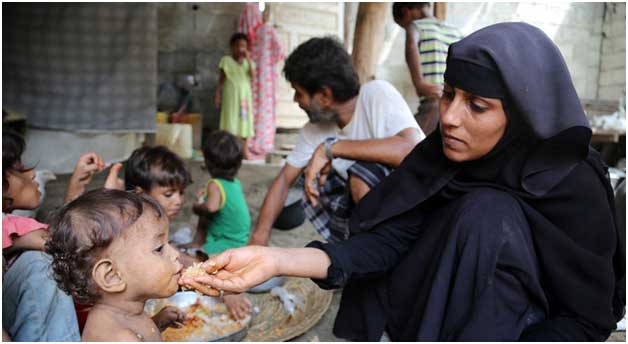
Millions now live in overcrowded shelters, without safe water, proper nutrition or proper health care. The basic steps others are taking to curtail the spread of COVID-19 are virtually impossible here. Should it take hold, the results would be unthinkable.

Public health crises don’t just threaten the well-being of the afflicted; their impacts ripple widely across families and societies. I think about Ahmed, a young man from Ibb, who lost his father to cholera, and then was suddenly thrust into the role of sole provider and caregiver for his entire family.

“I am not ready for this,” he shared in desperation. Feeling ill-equipped but required to take on extraordinary responsibilities – and with little time for grief or sentiment – is one that most Yemenis can identify with.

As we mark five years since a US-backed, Saudi-led coalition intervened and escalated the war in our country, we find ourselves defenseless against even basic maladies like diphtheria and cholera. These stone-age pathogens are held at bay in most societies by taking basic public health measures, drinking safe water, and eating nutritious food.

But parties to this on-going fighting since 2015 – have damaged or destroyed more than half of Yemen’s hospitals and other health facilities through bombing and shelling. The fighting has destroyed water and sanitation infrastructure in an already water-poor country, leaving more than two-thirds of the country with only unsafe water to drink.

As a result, Yemen now has the unenviable distinction of having experienced the world’s worst diphtheria outbreak in 30 years and the largest cholera outbreak ever recorded.

Even when it comes to critical patients who can be saved, this protracting war shown no mercy. Tens of thousands of Yemenis with life-threatening but manageable conditions have sought medical treatment abroad.

But the Saudi-led coalition, which has controlled Yemeni airspace on behalf of Yemen’s recognized government, has shut down commercial air traffic in and out of Sana’a. Only this year did the government and coalition consent to allow a long-promised medical air bridge to Cairo. 24 patients have been transported thus far. Tens of thousands have died waiting.

Credit: United Nations

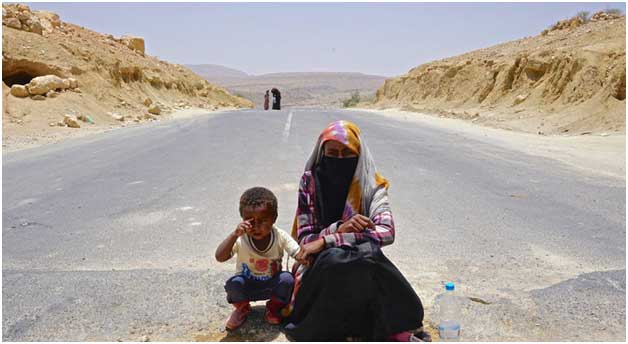
Millions of Yemenis have already been forced from their homes, some of them multiple times to escape violence or pursue scarce opportunities for work. But even basic sanitation and health care in camps for displaced people are often unavailable.

Even with a massive aid response, as the conflict continues, we are fighting a rising tide. It goes without saying that in these cramped quarters, where social distancing is a fanciful notion and suppressed immunity the norm, a single infection would lead to countless deaths. The coronavirus epidemic would write new stories of suffering in Yemen’s already long tale of woe.

The conflict in Yemen must end before it claims any more lives. Yemen’s military and political leaders have shown too often these past five years that they are not willing to make even small compromises for the sake of their country and its people.

And the international community, so far, has failed to muster the resolve to demand the ceasefire and political settlement that can bring the life-saving peace that Yemen’s people demand.

With coronavirus knocking on Yemen’s door, we need humanitarian aid to restore our health systems, tackle the diseases currently ravaging our people, and prevent a new catastrophe. We cannot afford to wait for the next crisis to hits.

  Source

Could the Coronavirus Pandemic have been Avoided if the World Listened to Indigenous Leaders?

Active Citizens, Climate Change, Editors’ Choice, Environment, Featured, Global, Headlines, IPS UN: Inside the Glasshouse, Regional Categories, TerraViva United Nations

Climate Change

William Clark Enoch of Queensland. Aboriginal and Torres Strait Islander people, who comprise only 2.5 percent of Australia’s nearly 24 million population, are part of the oldest continuing culture in the world. At a Covering Climate Now panel in New York on Friday, indigenous leaders reiterated the need for the world to listen to them in addressing climate concerns. Credit: Neena Bhandari/IPS

UNITED NATIONS, Mar 19 2020 (IPS) Mina Setra remembers the story clearly. As a Dayak Pompakng indigenous person from Indonesia, when  visitors from the city who came into her community; brought bottled water with them because they were worried about the water not being suitable for drinking. 

Setra, who is the deputy secretary-general of the Indigenous Peoples’ Alliance of the Archipelago (AMAN), recalls one of the elders telling the visitors, “This is the problem of you city people: You eat and drink all the dead things. Like the water that is already in a bottle? It is dead water. The vegetables that you buy from the freezer in the supermarket, they’re all dead plants.”

The anecdote sums up a much bigger conversation that is relevant today: how climate change is linked to coronavirus, and why it’s important to listen to indigenous leaders on the matter.

Setra shared the story with IPS when asked about links between climate change and coronavirus, during a panel talk by Covering Climate Now in New York on Friday, where indigenous leaders reiterated the need for the world to listen to them in addressing climate concerns — and reminding them how climate change can lead to or exacerbate a global health crisis as grave as the current virus. 

The talk took place as global communities scrambled to take effective measures against the deadly virus, and just as the U.S. announced a global emergency while struggling to contain its coronavirus cases. More than two months since the world became aware of coronavirus — and increasingly learned of its alarming implicants — the pandemic has globally claimed 8,810 lives, with more than 218,800, cases. 

While global conversations have mainly focused on the issue of death rate, or the racism attached to the virus, or different countries’ isolation methods (or lack thereof), little has been said about the link to climate change.

This remains a much bigger conversation that indigenous leaders want people to be aware of: how climate change can exacerbate the dangers of something like the coronavirus, and why the world should’ve been listening to indigenous leaders to avoid such a catastrophic spread.  While many believe that coronavirus started with a bat, experts argue it’s not so black and white. A February report established what the leaders discussed at the talk: how deforestation can lead to a loss of habitat for many wild animals and species. As a result, they move to habitat that brings them to closer proximity to humans which can lead to repeated contact between them.  

“The inequilibrium of our planet is not just about climate change, but it’s also about the global economy,” Levi Sucre Romero, a member of the BriBri indigenous community from Costa Rica, told IPS at the panel talk. “So coronavirus is now telling the world what we have been saying for thousands of years: that if we do not help protect biodiversity and nature, that we will face this and worse future threats.”

Romero, a coordinator of the Mesoamerican Alliance of Peoples and Forests, further highlighted a United Nations’ statement for why it’s important for global communities to work with indigenous leaders and learn from their knowledge. United Nations for Indigenous Peoples did not respond to the IPS’ request for comments. 

While wild animals and species are forced to find a home in close proximity to humans as a result of deforestation, another crucial concern is the treatment of animals by people from commercial hubs and cities that can act as a catalyst for such a global crisis.

“Our animals are not contaminated by themselves. They get contaminated by people,” Tuxá said in response to IPS’ question about the link between coronavirus and climate change. “And the proof is that these viruses start in the commercial centres of the world. There is a direct correlation between this and coronavirus and other pandemics that are to come.”

Tuxá added the next pandemic’s cure can be found in the diversity of indigenous peoples’ lands. 

“That’s why it’s really important to demarcate and recognise our lands, to protect our lands and our biodiversity because future life depends on it,” he said.

  Source

The 2020 NPT Review Conference: From the Sublime to the Ridiculous

Armed Conflicts, Civil Society, Featured, Global, Global Geopolitics, Global Governance, Headlines, IPS UN: Inside the Glasshouse, Nuclear Energy – Nuclear Weapons, Peace, TerraViva United Nations

Opinion

VIENNA, Mar 12 2020 (IPS) – This year marks the 50th anniversary of the nuclear Non-Proliferation Treaty (NPT) and coincidentally the tenth quinquennial (five yearly) review conference is scheduled to be held at the United Nations in New York from 27 April to 22 May.


With 191 States parties, the NPT is the cornerstone of the global regime for nuclear non-proliferation, nuclear disarmament and peaceful uses of nuclear energy.

An unexpected complication is that of the novel coronavirus (COVID-19) and its impact on the NPT review conference – thus far, there is an inexplicable thundering silence from the UN regarding the postponement of the conference.

COVID-19

Yesterday, the World Health Organization (WHO) declared the COVID-19 to be a global pandemic affecting more than 114 countries with 118,000 people infected, 4,291 fatalities and many thousands more fighting for their lives in hospitals.

The WHO stated that this is the first pandemic caused by a coronavirus and that never before has there been a pandemic that can be controlled.

In the United States, according to the Centres for Disease Control and Prevention (CDC), the total number of cases as of 11 March is 938, total deaths 29, in 38 states and the District of Columbia). The New York State Department of Health is reporting 52 cases in New York City and 164 in the State.

Thus, it is clear that New York City is affected by COVID-19 and there is a high risk of the further spread of the virus. Add to this, the expected arrival of more than 400 delegates from all parts of the world, to attend the NPT conference, including obviously from countries and regions already afflicted with the corononavirus.

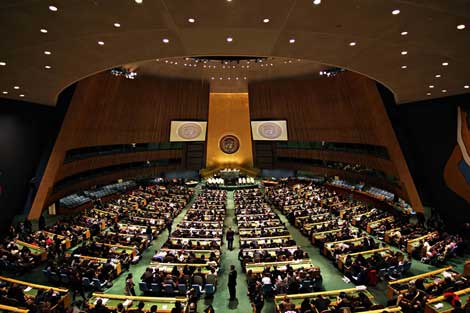
Should this transpire, it would not take a virologist or a rocket scientist to predict a rapid transmission of the virus to many of the delegates all concentrated in the UN General Assembly chamber for several days and in other large meeting rooms for another three weeks.

Furthermore, the US may restrict entry to delegates coming from countries afflicted with coronavirus and either deny visas or place them under quarantine for two weeks or more? In fact, President Donald Trump already has suspended all travel from mainland Europe for 30 days starting on Friday.

So, why has not the UN ordered the postponement of all large conferences till the virus infections subside and the environment is safe again for large and small congregations of people drawn from all corners of the world?

And, why have not the diplomats accredited to the UN in New York, from States parties to the NPT, already decided to postpone the NPT review conference? What is it about COVID-19 that they do not understand and why are they delaying taking the common sense decision to postpone the event?

The UN Secretary-General’s “Message on COVID 19” is limited to bulleted points such as, “All of us face a common threat – the coronavirus – COVID 19. Today’s declaration of a pandemic is a call to action – for everyone, everywhere”, which is not reassuring!

UN General Assembly President Tijjani Muhammad-Bande, on the other hand, has stated that the coronavirus will only be tackled “through a multilateral response” in which the UN “must lead by example” and that the UN should take a “coordinated and coherent approach” regarding decisions on whether major meetings can go ahead.

He added that at the UN Secretariat “we have started the process looking at scaling down, postponing and/or cancelling meetings, as appropriate”. Well, it’s high time to do so – the sooner the better!

Options for the NPT Review Conference

Reportedly, “options” are being considered but no decision has been taken as yet. One option seemingly gathering support, and reportedly pushed by some States, is to convene the NPT Review Conference as scheduled on 27th April but then to immediately prorogue (or adjourn) it to August or later this year after possibly adopting a statement or declaration commemorating 50 years of the NPT.

The stated rationale being that the NPT conference is a scheduled quinquennial event according to the Treaty and therefore must be convened – if only for a day under present circumstances – going from the sublime to the ridiculous!

The logic of such a bizarre “option” can only emanate from New York and capitals, as oftentimes they tend to be oblivious to the calendars of events and meetings in other UN capitals that deal with nuclear matters, namely Vienna (Austria) and Geneva (Switzerland).

Not surprisingly, the reaction in Vienna and Geneva has tended to be one of shock and disbelief. What were these diplomats/officials thinking? Are they not aware that the third session of the Conference on Disarmament in Geneva is scheduled for 3 August to 18 September?

And, do they not realize that in Western Europe the civilized practice of annual vacation in August is nearly sacrosanct! Just because in the United States the concept of taking an annual vacation is generally frowned upon is no reason to subject others to this stress of giving up their vacation time.

Postpone to 2021 and Convene in Vienna

As I have recommended earlier this month, there is only one sound course of action: that to postpone the NPT review conference to 2021 (possibly 26 April to 21 May) and to convene it from then on in Vienna. The following are the reasons for my recommendation, which is beginning to get some traction:

    1. The year following an NPT review conference always is a gap year; hence there should not be any impediment to moving it to next year. No important decisions need to be taken this year and the 50th anniversary of the NPT can be marked by speeches and statements by ministers in capitals, New York, Geneva and Vienna.
    2. At present, there are no prospects for any progress on nuclear disarmament – a key element of the NPT. Both the Russian Federation and the United States are engaged in modernization of their nuclear weapons; and the United States is pursuing a policy of steadily abandoning treaties, multilateralism and striking out in favour of unilateral nationalistic policies. Last year, the United States abandoned the 1987 Intermediate- and Shorter-Range Nuclear Forces (INF) Treaty as well as the Joint Comprehensive Plan of Action (JCPOA) limiting Iran’s peaceful nuclear programme; earlier in 2002 it pulled out of the Anti-Ballistic Missile (ABM) Treaty that formed the basis of strategic stability between Russia and the United States. In addition, thus far, the United States has not indicated any interest in extending the 2010 New START Treaty limiting strategic nuclear weapons that will expire in February 2021, and in preserving the Open Skies Treaty that permits confidence-building aerial overflights. In addition, some officials now are openly verbally attacking those in countries who promote fulfilling the nuclear disarmament obligations under the NPT. Thus, postponing the NPT conference to 2021 provides a respite of a year with the possibility of an improved climate in 2021?
    3. The technical and policy expertise for nuclear verification, safety and security, and peaceful uses always has resided in Vienna (Austria) at the International Atomic Energy Agency (IAEA). The IAEA provides secretariat support and expertise to the NPT review conference on two of the three pillars of the NPT – nuclear non-proliferation and peaceful uses.
    4. The expertise and experience for negotiating multilateral nuclear arms control resides at the Conference on Disarmament in Geneva (Switzerland) – the third pillar of the NPT.
    5. UN New York has no diplomatic or technical expertise related to the NPT; it is basically a political talk shop. Negotiations on resolutions on nuclear arms control matters in the First Committee of the UN General Assembly, as well as in the UN Disarmament Commission, normally are conducted by diplomats coming over to New York from Geneva and from capitals.
    6. Staff from the UN Office for Disarmament Affairs (ODA) in New York, together with IAEA staff form the “secretariat” for NPT review conferences and their preparatory committees. UN ODA New York staff travel to Vienna and Geneva, respectively, to service the preparatory committee sessions held there along with UN ODA staff based in these two European cities. Thus, UN ODA New York staff can easily support the review conference held in Vienna.
    7. The claim that participation in NPT review conferences held in New York is higher as all Member States of the United Nations are represented there is not credible. Of the 191 States Parties to the NPT, generally not more than 150 attend review conferences and then too small delegations only make a showing on the first and last days in order to be listed in the official list of participants. It need not be a burden for small States to attend review conferences in Vienna.
    8. Given concerns about the effect on the climate from air travel and current tendency to minimize long distance travel by air to reduce the carbon footprint; convening the review conference from 2021 onwards in Vienna also can have a positive impact in reducing the carbon burden of attendance. The geographic location of Vienna in Central Europe will greatly reduce distances to be travelled by delegates from Asia, Africa and Oceania, as well as of course by European countries – these regions put together comprise the largest number of countries in the world. Only the North and South American delegates will have increased travel distances, but these obviously are a minority compared to those from the regions noted above.
    9. It is obvious that costs of hotel accommodation in New York are inordinately high with tax upon taxes, as are the high costs of food and meals. Hotel and food costs in Vienna are much cheaper than in New York or Geneva, as are hotel costs. Thus, significant savings can be incurred by foreign ministries in connection with participation in the review conference held in Vienna. Such savings would be even more beneficial for civil society representatives, who obviously cannot draw upon tax payer funding as can official delegates.
    10. Finally, there is now no rationale to hold NPT review conferences at any location in any nuclear-weapon State (NWS), especially since 25 years after the indefinite extension of the NPT the deficit in nuclear disarmament remains significant, nuclear weapons are being modernized in some NWS, the threshold of possible use of nuclear weapons has been lowered, and existing treaties are under threat. Better to hold review conferences in a “neutral” country such as Austria that is a strong champion on nuclear non-proliferation and nuclear disarmament.

Decide Now

The longer this decision is delayed to move the NPT review conference to 2021 in Vienna, the higher the costs incurred this year in cancelling New York flights and hotel rooms. While government delegates may well be able to afford such penalties as tax dollars pay for their expenses, for civil society participants cancellation costs would be onerous and unaffordable as they either self-finance or rely on charitable donations.

Thus, as I have described in some detail above, there are no compelling reasons at all to convene the presently scheduled NPT review conference in New York this year. It makes eminent common and fiscal sense to convene it next year in April-May and to hold it in Vienna – the historic capital location of important conferences for more than two centuries and imbued with the intangible “spirit of Vienna” that encourages harmony and compromise.

* Tariq Rauf has attended all nuclear Non-Proliferation Treaty (NPT) meetings since 1987 as a delegate, including as senior adviser to the chair of Main Committee I (nuclear disarmament) in 2015 and to the chair of the 2014 preparatory committee; as alternate head of the International Atomic Energy Agency delegation to the NPT; and as a non-proliferation expert with the Canadian delegation from 1987. Personal views are expressed here.

  Source