Civil Society Under Attack in Name of Counterterrorism

Active Citizens, Civil Society, Conferences, Development & Aid, Editors’ Choice, Featured, Global, Global Governance, Headlines, Human Rights, IPS UN: Inside the Glasshouse, Peace, Population, Regional Categories, TerraViva United Nations

Civil Society

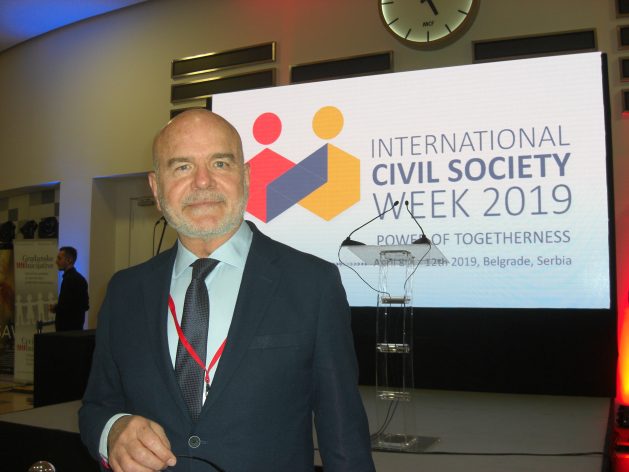
This article is part of a series on the current state of civil society organisations (CSOs), which was the focus of International Civil Society Week (ICSW), sponsored by CIVICUS, and which took place in Belgrade, April 8-12.
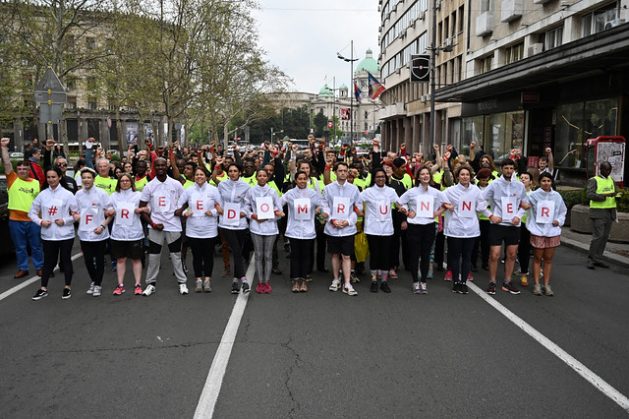
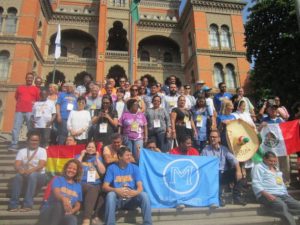
More than 200 civil society leaders and human rights activists from some 100 countries took to the streets of Belgrade, Serbia in solidarity with those whose basic freedoms are at risk. They participated in the International Civil Society Week (ICSW), sponsored by CIVICUS, which took place in Belgrade, April 8-12. Courtesy: CIVICUS

UNITED NATIONS, Apr 15 2019 (IPS) – Counterterrorism measures are not only affecting extremist groups, but are also impacting a crucial sector for peace and security in the world: civil society.


Civil society has long played a crucial role in society, providing life-saving assistance and upholding human rights for all.

However, counterterrorism measures, which are meant to protect civilians, are directly, and often intentionally, undermining such critical work.

“Civil society is under increased assault in the name of countering terrorism,” Human Rights Watch’s senior counterterrorism researcher Letta Tayler told IPS, pointing to a number of United Nations Security Council resolutions as among the culprits.

“Nearly two decades after the September 11 attacks, we are seeing a very clear pattern of overly broad counterterrorism resolutions. We are seeing a clear pattern of violations on the ground that are being carried out in the name of complying with binding Security Council counterterrorism resolutions,” she added.

Just two weeks after September 11, 2001, the UN Security Council unanimously adopted Resolution 1373 which called states to adopt and implement measures to prevent and combat terrorism.

Since then, more than 140 countries have adopted counterterrorism laws.

The newly approved Resolution 2462, passed at the end of March, requires member states to criminalise financial assistance to terrorist individuals or groups “for any purpose” even if the aid is indirect and provided “in the absence of a link to a specific terrorist act.”

While the resolution does include some language on human rights protections, Tayler noted that it is not sufficient.

“It is not sufficiently spelled out to make very clear to member states what they can and cannot do that might violate human rights on the ground,” she said.

Blurred Lines

Among the major issues concerning these resolutions is that there is no universal, legal definition of terrorism, allowing states to craft their own, usually broad, definitions. This has put civil society organisations and human rights defenders (HRDs) alike at risk of detention and left vulnerable populations without essential life-saving assistance.

“I think it is irresponsible of the Security Council to pass binding resolutions that leave up to States to craft their own definitions of terrorism…that’s how you end up with counterterrorism laws that criminalise peaceful protest or criticising the state,” Tayler said.

Oxfam’s Humanitarian Policy Lead Paul Scott echoed similar sentiments to IPS, stating: “The Security Council, by being overly broad, is just giving [governments] the tools to restrict civil society.”

According to Front Line Defenders, an Irish-based human rights organisation, 58 percent of its cases in 2018 saw HRDs charged under national security legislation.

Special Rapporteur on the promotion and protection of human rights while countering terrorism Fionnuala Ní Aoláin found that 67 percent of her mandate’s communications regarding civil society were related to the use of counter-terrorism, and noted that country’s counterterrorism laws are being used as a “shortcut to targeting democratic protest and dissent.”

In April 2018, thousands of people took to the streets in Nicaragua to protest controversial reforms to the country’s social security system.

According to the Office of the UN High Commissioner for Human Rights, over 300 people have been killed, more than 2,000 injured, and 2,000 arrested—some of whom were reportedly subject to torture and sexual violence when detained.

Many of those arrested will also be tried as terrorists due to a new law that expanded the definition of terrorism to include a range of crimes such as damage to public and private property.

At least 300 people, including human rights defenders, face charges of terrorism.

The Central American country said that the law was passed to comply with the Financial Action Task Force (FATF), an intergovernmental body that works alongside the Security Council to combat terrorist financing.

A Civil Society Facing Uncivility

Tayler also pointed to the lack of consequences for States that pass counterterrorism laws that do not abide by their obligations under international law.

In Resolution 2462, member states are told to comply with international humanitarian law when cracking down on terrorist financing but does not require countries to consider the effect of such measures on humanitarian activities such as providing food and medical care.

“In the zeal to be as tough looking as they can possibly can, governments have overlooked very very easy ways to protect those of us who are providing life-saving aid,” Paul told IPS.

The lack of protections for civil society and its impacts was most visible during the 2011 famine in Somalia.

In an effort to restrict “material support” to terrorist groups, countries such as the United States enacted counterterrorism legislation which blocked aid into areas controlled by Al-Shabab.

This not only impeded local and international organisations from doing their job, but one report noted that the constraints contributed to the deaths of over 250,000 people in the East African nation.

The problem has only gotten worse since then, Paul noted.

“The measures imposed by governments are unnecessarily broad and they prevent us from working in areas that are controlled by designated terrorist entities. What they have essentially done is criminalise humanitarian assistance,” he said.

Tunisia has used its terrorism financing laws to shut down a number of civil society organisations.

According to the Euro-Mediterranean Human Rights Monitor, approximately 200 organisations were dissolved and almost 950 others were delivered notices, referring them to courts on charges of “financial irregularities” or “receiving foreign funds to support terrorism” despite the lack of substantive evidence.

Many of the dissolved organisations provided aid and relief for orphans and the disabled.

All Eyes on Deck

Tayler highlighted the importance of the UN and civil society to monitor how counterterrorism resolutions such as Resolution 2462 are used on the ground.

“While we would love to see amendments to this resolution, pragmatically the next best step is for all eyes—the eyes of civil society, the UN, regional organisations—to focus on just how states implement this resolution to make sure that overly broad language is not used by states to become a tool of repression,” she said.

“The UN and leaders of countries around the world should use International Civil Society Week as an opportunity to take stock of the risk that this trend has posed on both to life-saving aid organisations and human rights defenders and to reverse this dangerous trend,” Tayler added.

Paul pointed to the need to educate both the public and policymakers on counterterrorism and its spillover effects as well as the importance of civil society in the global system.

“Civil society is a key part of effective governance. We don’t get effective public services, we don’t get peace, we don’t get to move forward with the anti-poverty agenda if civil society actors aren’t strong and empowered,” he said.

“If governments aren’t careful about protecting our right to stand up for marginalised and vulnerable populations, everyone will hurt. Not just those populations. It will have an effect broadly on our societies,” Paul added.
 

Shining a Spotlight on the Strengths & Challenges of Civil Society in the Balkans

Armed Conflicts, Civil Society, Development & Aid, Europe, Headlines, Human Rights, Population, Press Freedom, TerraViva United Nations

Opinion

This article is part of a series on the current state of civil society organisations (CSOs), which is the focus of International Civil Society Week (ICSW), sponsored by CIVICUS, and scheduled to conclude in Belgrade, April 12.

 
Lysa John, Secretary-General of CIVICUS, in her opening address to the International Civil Society Week (ICSW)

Credit: CIVICUS

BELGRADE, Apr 11 2019 (IPS) – It is an incredible privilege to welcome you all to the ‘International Civil Society Week’. I am going to remind us of the reasons that make it so important for us to be here in Belgrade this week.


This is our 16th global convening of civil leaders and 4th edition of the International Civil Society Week in particular – following on from events held in South Africa, Colombia and Fiji.

Our first World Assembly, as it was known then, was held in Hungary in 1997, and this time we have gathered in the Balkans – and we are very grateful to our peers in Serbia for hosting us.

Serbia currently features on the CIVICUS Monitor’s “Watch List” which draws attention to countries where there are serious and ongoing threats to civic space.

By hosting ICSW 2019 in Serbia, we hope to shine a spotlight on the strengths and challenges of civil society in this region, and find ways to amplify and support their efforts.

Civic freedoms are currently under attack in 111 countries. In other words, over six billion people face serious challenges in the exercise of freedoms of expression, association and peaceful assembly which are essential to an empowered and enabled civil society.

There is a continuing crisis facing civil society organisations and activists across the world – a global civic space emergency. Our job is to find ways to ensure this does not become the ‘new normal’.

We cannot be the generation that lost the fight to protect civic freedoms and democratic values. We owe the citizens, civic leaders and communities of the future a significantly stronger basis to organise for and achieve their rights.

There aren’t many people in the world who can genuinely claim to wake up every morning thinking about how to make the world a more just, more honest and more compassionate place. And yet, we have close to 1,000 people in this very room who do just that.

With over 900 delegates from 100+ countries gathered here, you can safely expect to meet every major form of civil society that works to defend and promote human rights worldwide – ranging from community groups, social entrepreneurs, academic organizations, campaigning networks, think tanks and foundations — in one place over the next few days.

We have the opportunity to connect lessons and inspirations while we are together here. Yet it is the changes that we will test and activate when we return to our personal and professional spaces that make being here worthwhile.

This could be refreshed strategies to challenge discrimination and exclusion or new ways to demonstrate innovation and accountability as a sector.

Our deliberations must reflect the urgency and intent required to make the changes we need to see in the real world – and in this gathering right here we have exactly the kind of determination and optimism needed to see this through. Thank you for being here – we wish you a truly inspired week!

I cannot end without thanking again our hosts in Serbia, Civic Initiatives and the Balkans Civil Society Network, for their warm and generous hospitality without which we wouldn’t be here.

A special mention is also due to the hosts of the previous ICSW held in Fiji – the Pacific Island NGO Forum – who are also here. Thank you for the lessons and achievements of our last gathering, which has enabled us to be more prepared and more ambitious this year.


Attacks on Media in the Balkans Sound Alarm Bells for Democracy

Armed Conflicts, Civil Society, Development & Aid, Europe, Featured, Headlines, Human Rights, Population, Press Freedom, TerraViva United Nations

Opinion

This article is part of a series on the current state of civil society organisations (CSOs), which is the focus of International Civil Society Week (ICSW), sponsored by CIVICUS, and scheduled to conclude in Belgrade, April 12.

 
Susan Wilding is the head of the Geneva office at CIVICUS, a global alliance of civil society organisations.

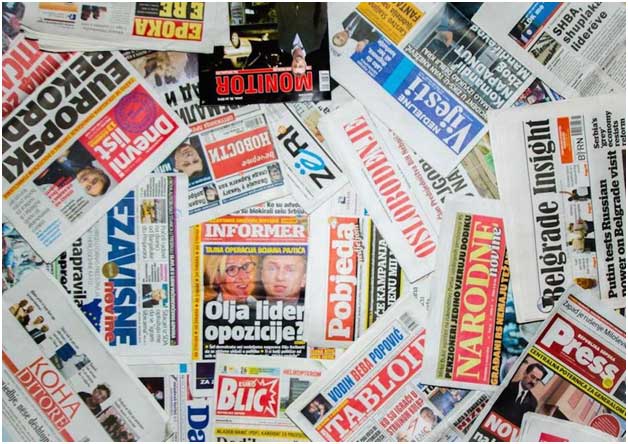
GENEVA, Apr 11 2019 (IPS) – Anti-government protesters invading Serbia’s state-owned television station, demanding that their voices be heard. Journalism bodies writing to the Albanian prime minister over plans to censor online media outlets. A Belgrade corruption-busting reporter forced to flee his house that had been torched; a Montenegrin investigative journalist shot in the leg outside her home.


These are just some of the violations emerging from the western Balkans as a clampdown on media freedom – and civil liberties – undermines Serbia’s and Montenegro’s bids to join the European Union.

It’s little wonder that Serbia tumbled 10 spots to rank 76th on the 2018 Reporters without Borders Press Freedom Index, which states bluntly: “Serbia has become a country where it is unsafe to be a journalist.” Its neighbours fare little better: Albania is in 75th place, Kosovo is ranked 78th and Montenegro is a dismal 103rd.

Smear campaigns against courageous journalists; impunity for those assaulting media players; collusion between politicians and brown-envelope reporters; high levels of concentration of media ownership in a few hands; threats of cripplingly expensive litigation; the chilling effect of self-censorship on reportage. The list of media abuses in the Balkans goes on and on.

Belgrade, Serbia is playing host to International Civil Society Week, running thro Friday April 12, bringing together over 900 delegates to debate solutions to some of the world’s most pressing challenges. Some of the questions on the agenda will be: What more can we, as civil society, do to ease this stranglehold on free expression? How can we raise our voices to protect individual and media liberties?

Such restrictions on the media are incompatible with participatory democracy, which depends on three fundamental human rights – freedom of peaceful assembly, freedom of association and freedom of expression – which are also protected under international law. Any government that claims to have free and fair elections, and claims to be a democracy, cannot deny its citizens access to information and the right to be heard.

According to findings by the CIVICUS Monitor, an online platform that tracks threats to civil society in 196 countries, states are generally using two types of tactics to restrict civic freedoms, and the crack down on media freedoms is no exception.

The first is legal: imposing or enforcing laws that restrict democratic freedoms and criminalise free speech. For example, this includes bringing trumped-up judicial charges against journalists or media houses, thereby diverting energy and resources from watchdog journalism.

The second type comes in the form of extrajudicial means and are even more contemptible: including intimidating the media into submission through carefully coordinated smear campaigns and public vilification, and sometimes through physical intimidation and outright repression.

While such states may make an elaborate show of using (or abusing) the laws of the land to rein in the media, such censorship is clearly a perverse parody of democracy – an expression of a growing trend in which the ‘rule by law’ replaces the rule of law.

Sometimes these attacks on media are coming from “strongmen” leaders with the ambition of concentrating power and eliminating any checks and balances. In other instances, we see these kinds of restrictions imposed by governments that feel threatened and see media clampdowns as another way to hold onto power.

A weakened state or leaders who came to power through dubious means or with a small majority are likely to mute the civic space to cling to power. It may therefore, not be surprising that it’s happening in the Balkans, given the area’s fraught political history.

When popular dissent swells against unpopular policies and actions, a vulnerable state’s first target is the media, because of their potential role in unseating power. It is also something we see as a classic copy-and-paste tactic: questionable leaders see their regional neighbours getting away with it, with few if any repercussions, and follow suit.

Even the online space – the ultimate democratic arena of the 21st century, where the gladiatorial thrust and parry of views is essential to robust debate – is not being spared in this battle to seize ideological control of the marketplace of ideas.

Some countries have already shown that it’s entirely possible to shut down or control social media platforms, denying citizens their fundamental right to participate in debate and in policymaking.

The reasons that States give for silencing media vary but often include similar statements such as journalists are writing “defamatory” articles or disseminating “fake news”. Often, they maintain, the reportage is “unpatriotic”, “goes against our culture or values” or “does not advance our nationalist agenda”.

With the restrictions on media freedoms increasing in the Balkans, we should be highlighting the situation and sharing tried and tested strategies for pushing back and opening the space for a free and independent media.

We should be concerned that the world so easily shifted its attention away from the region after the terrible conflict that claimed so many lives 20 years ago. Why did we not linger a while to monitor the aftermath? Do we turn a blind eye to human rights abuses, as is the case in China and elsewhere, as long as there is peace, development and economic prosperity?


Smears, Laws, Lack of Cooperation: Tools Against Activists

Active Citizens, Civil Society, Conferences, Europe, Featured, Global, Headlines, Human Rights, IPS UN: Inside the Glasshouse, Population, Regional Categories, TerraViva United Nations

Civil Society

This article is part of a series on the current state of civil society organisations (CSOs), which will be the focus of International Civil Society Week (ICSW), sponsored by CIVICUS, and scheduled to take place in Belgrade, April 8-12.

Michel Forst, Special Rapporteur on the situation of human rights defenders next report will focus on impunity, as only about 5 percent of attacks on rights defenders have been investigated and the perpetrators “brought to justice”. Credit: AD McKenzie/IPS

BELGRADE, Apr 10 2019 (IPS) – The murder of Brazilian politician and human rights activist Marielle Franco just over a year ago and attacks on other rights activists around the world have galvanised civil society organisations, with the United Nations heightening its own strategy to protect rights defenders.


However, some countries aren’t interested in cooperating with civil society or international governmental bodies and even actively engage in smear campaigns against rights advocates.

“An increasing number of states have now refused to cooperate with the UN,” said Michel Forst, Special Rapporteur on the situation of human rights defenders, in the Office of the United Nations High Commissioner for Human Rights.

“They don’t want to invite any more special rapporteurs to visit the countries or to produce reports,” he told journalists at a press briefing during International Civil Society Week (ICSW 2019), an annual gathering of civil society leaders, activists and citizens taking place in the Serbian capital this week, Apr. 8-12.

The meeting – co-hosted by the Johannesburg-based global civil society alliance CIVICUS – has brought together more than 850 delegates who are focusing on issues ranging from “the crackdown on media freedom to emergency assistance for NGOs under attack”. It is also addressing the “power” of solidarity alongside greater accountability.

Forst said he was attending the event to learn from the participants. His next report, to be presented during the UN General Assembly in the fall, will focus on impunity, as only about 5 percent of attacks on rights defenders have been investigated and the perpetrators “brought to justice”, he told journalists.

A growing problem in protecting rights defenders is the way in which some states try to defame activists, Forst said. In regions from Europe to Latin America, there are on-going campaigns to discredit rights advocates, and public opinion can be influenced by the derogatory terminology.
“These campaigns are dangerous for defenders,” he said. “They are called ‘enemies of the state’, they are called ‘promoters of western values’, they are (said to be) ‘against development’.”

In some countries, activists are also accused of having links to terrorism and of opposing progress when they try to block projects that are disastrous for the environment or for indigenous peoples.

“What is also a matter of concern for me is that these campaigns are led by politicians, by political actors, prime ministers, ministers of foreign affairs, ministers of defence,” Forst added.

He said the Belgrade ICSW meeting was important for activists to see that what is happening in their home country or region may also be taking place elsewhere, so that they can try to build bridges and strengthen links.

The meeting has in fact highlighted similarities in methods of repression around the world – methods that include not only physical attacks, but surveillance, travel bans, on-line harassment and the use of government structures and legislation to try to suppress freedoms.

Even as the ICSW meeting takes place, rights organisations elsewhere have been issuing alarms about breaches of civic and media rights. Separately from the event in Belgrade, rights organisation PEN America on Apr. 9 warned that the “Trump administration’s targeting of journalists has reached a new level”.

The group pointed to reports from the U.S.-Mexico border (and leaked documents from a Department of Homeland Security whistle-blower) indicating that “U.S. government agencies have been tracking and monitoring over 50 individuals, mostly journalists and immigration advocates, as they report on the humanitarian situation” at the U.S. southern border.

Government entities have reportedly participated in the “tracking and monitoring of these journalists, including the creation of a U.S. government database containing sensitive personal information”, PEN America said. The group called the database “a shocking and unwarranted violation of journalists’ First Amendment rights” and “an appalling violation of press freedom”.

In France, meanwhile, the national branch of Amnesty International criticised a French “anti-riot” law that could threaten freedom of assembly and expression. The law, adopted by parliament, would allow police to systematically search protestors, and, despite certain assurances, it “remains a serious infringement on public freedom and the balance of power”, Amnesty France stated Apr. 9.

The law comes as France’s Gilets Jaunes (or Yellow Vests) continue their protests, with thousands marching on Apr. 6 in Paris and other cities for the 21st weekend in a row. Certain lawmakers say the legislation is necessary to prevent further destruction of property and life-threatening fires started by protestors during some of the demonstrations.

But France also uses other legislation “to target those defenders who are trying to help and rescue migrants coming to Europe via the Mediterranean sea,” said Forst, who is French.
“We’re seeing more and more the criminalisation of (rights) defenders”, through the use of the law, he said.

In Serbia, anti-government demonstrators are set to intensify their actions Apr. 13 — the day after ICSW 2019 ends — with what promises to be the biggest gathering since protests began last December.

Protestors are calling for free and fair elections and greater media freedom. (Last month some forced their way into the offices of Serbia’s state-run television network, to show dissatisfaction with what they called one-sided reporting.)

At the opening ceremony of ICSW, Serbian activists slammed President Aleksandar Vučić for repressive policies, often without naming him, and some called for protection of the media.

“We will stand up for freedom of journalists… the freedom not to be threatened in any way,” said Maja Stojanovic, of Serbian organisation Civic Initiatives, a co-host of the meeting.

Ahead of ICSW, Serbia was added to a watchlist of “nations where civic freedoms are under serious threat”. The watchlist – released by the CIVICUS Monitor, an online platform that tracks threats to civil society across the globe – said Serbian authorities have “orchestrated a smear campaign against demonstrators, labelling government opponents as ‘paid’ activists working against Serbian interests”.

The confused and disquieting developments in many countries further highlight the need to find cross-border solutions and to create links between rights defenders, Forst said.

The European Union, for instance, has guidelines for embassies of member states abroad on “how to protect rights defenders”, and funding is available for embassies to relocate individuals at risk, Forst told reporters. In addition, a network of shelter cities exists (the number of these is growing with continued attacks).

But it is difficult to relocate at-risk female activists who may have children, and here, too, there is often lack of cooperation or agreement on asylum requests.

While some countries can effectively help rights defenders in far-off regions, they seem powerless when it comes to their own neighbours.

Still, defenders are becoming “more efficient” in forming local, national and international networks, Forst said. “It is a battle … solidarity is important.”

He said the good news is that some countries that were “blocked in the past” are now granting access to international bodies to help protect defenders and to end impunity.

In contrast to states like the Philippines that are dangerous for rights defenders and don’t wish to “do anything to solve the problem”, other countries “like Mexico, Colombia, Honduras, Brazil now – maybe – do recognise, because of the number of killings … that they need to solve the problem,” Forst added.

In Brazil, meanwhile, activists and others are still asking: who killed Marielle Franco?


People Affected by Leprosy in Latin America Unite for Their Rights and Their Voice

Active Citizens, Civil Society, Conferences, Development & Aid, Editors’ Choice, Featured, Global Governance, Headlines, Health, Human Rights, IPS UN: Inside the Glasshouse, Latin America & the Caribbean, Population, Regional Categories, TerraViva United Nations

Health

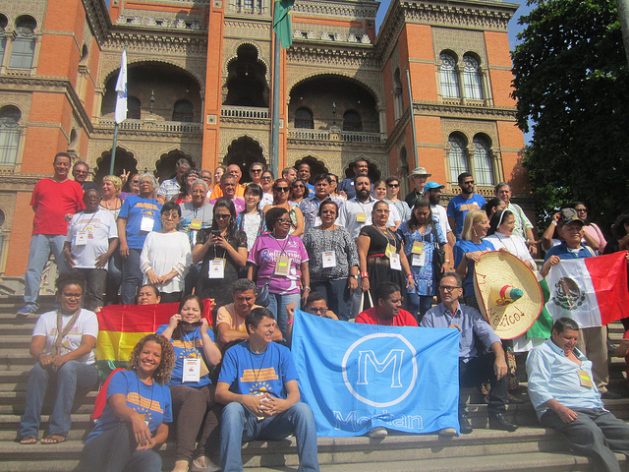
Family photo of part of the 111 participants in the First Latin American and Caribbean Assembly of Organisations of People Affected by Hansen's Disease, on the steps of the Morisco Palace, the headquarters of the Oswaldo Cruz Foundation, which hosted the three-day meeting in Rio de Janeiro, Brazil. Credit: Mario Osava/IPS

Family photo of part of the 111 participants in the First Latin American and Caribbean Assembly of Organisations of People Affected by Hansen’s Disease, on the steps of the Morisco Palace, the headquarters of the Oswaldo Cruz Foundation, which hosted the three-day meeting in Rio de Janeiro, Brazil. Credit: Mario Osava/IPS

RIO DE JANEIRO, Mar 14 2019 (IPS) – With the decision to found a regional coalition to promote rights and greater participation in national and international forums and decisions, the First Latin American and Caribbean Assembly of Organisations of People Affected by Hansen’s disease, popularly known – and stigmatised – as leprosy, came to an end.


The final session of the meeting, on Mar. 14, approved 40 of the 58 proposals presented by the 111 participants in three days of debates at the headquarters of the Oswaldo Cruz Foundation, a renowned scientific, medical and epidemiological research centre in Rio de Janeiro, Brazil.

José Picanço, 46, separated from his family and taken as a newborn to an orphanage because his parents were diagnosed with the disease in 1972, is one of those affected whose right to reparations remains unfulfilled. His three siblings are in the same situation.

When the family was reunited eight years later, the father turned his back on the children. The mother took them in, but died shortly afterwards. “I only lived with her, a saint, for five months,” Picanço recalled, barely managing to hold in his tears while giving testimony at the meeting.

“Humiliated as the children of lepers, suffering bullying and sexual harassment, many of the other children who were with me at the orphanage fell into drug abuse and alcoholism. It was a holocaust,” he said. “I hit my brother on the head, not knowing he was my own brother.”

“Of the 15,000 to 20,000 children separated from their families, more than 80 percent suffer from depression,” said Picanço in an interview with IPS, detailing some of the damage caused by the old rule of segregating the people then called “lepers”.

Mandatory isolation was widespread around the world, during different historical periods, and continues in some countries, even though it is known that the disease is curable and that patients cease to be contagious shortly after starting treatment.

Officially, Brazil abolished this practice in 1976, although it actually lasted 10 more years. Its direct victims were compensated starting in 2007, but their children were not. The activists gathered in Rio de Janeiro called for working for policies of reparations for children separated from their families.

Their complaints and proposals will be taken to the World Congress of associations of people affected by leprosy in Manila in September, which will also receive contributions from Africa and Asia, approved at recent similar regional assemblies.

“The goal is to form a large network of activists, to strengthen the movement” for the eradication of the disease and for care and reparations for those affected, said Kiyomi Takahashi of the independent Nippon Foundation, which is driving this international process of debate and cooperation.

The meeting in Rio de Janeiro fostered “a high-level dialogue, the result of Morhan and Felehansen’s long history of activities,” the Japanese expert told IPS, referring to the Movement for the Reintegration of People Affected by Hanseniasis (Morhan) in Brazil, and the National Federation of Entities Affected by Leprosy or Hansen’s Disease (Felehansen) in Colombia, the two organisers of the regional meeting.

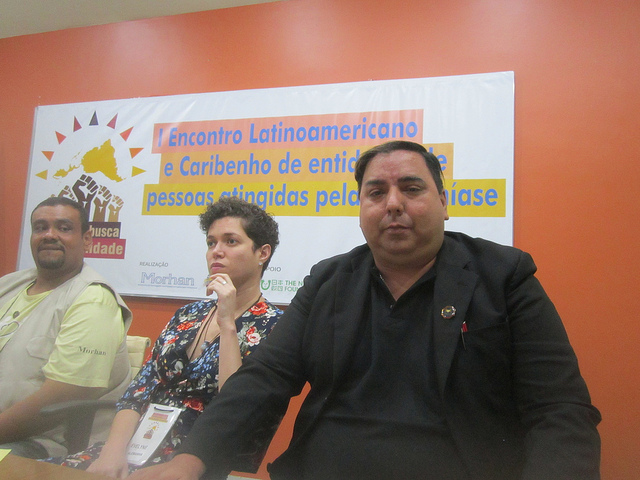
Brazilian activists José Picanço (front) and Evelyne Leandro testified about how Hansen's disease affected them during a Latin American and Caribbean meeting in Rio de Janeiro. Picanço was separated from his parents when they were diagnosed with leprosy when he was born in 1972 and was only reunited with them eight years later, shortly before his mother died. Leandro wrote a book about the difficulties of being diagnosed with the disease in Germany, where she lives. Credit: Mario Osava/IPS

Brazilian activists José Picanço (front) and Evelyne Leandro testified about how Hansen’s disease affected them during a Latin American and Caribbean meeting in Rio de Janeiro. Picanço was separated from his parents when they were diagnosed with leprosy when he was born in 1972 and was only reunited with them eight years later, shortly before his mother died. Leandro wrote a book about the difficulties of being diagnosed with the disease in Germany, where she lives. Credit: Mario Osava/IPS

“Morhan is my safe haven, to preach that separated children should be heard and have opportunities,” said Picanço, who explained that he joined the movement in 1992. Today he gives talks on the direct and indirect effects of the stigma still surrounding the disease, that is suffered by those affected and their families.

A blessing

The disease “was a blessing for me,” Isaias Dussan Weck, 50, the vice-president of the Colombian association Felehansen, told IPS without hesitation.

The diagnosis in 2006 destroyed him, he said. He lost the desire to work or to go out, he let his business of supplying cleaning products to companies go bankrupt, he even contemplated suicide. He ignored the stains on his body that did not prevent him from working and traveling, until they spread to his face, and he noticed that parts of his body were going numb.

He received treatment and was cured, left with only slight numbness in one arm and pains in his left leg.

But everything went badly for him until he was invited to meetings with other people affected by leprosy. “I began to understand, when I heard their testimonies and tears, why a young black girl with severe disabilities said that leprosy was a blessing to her,” Dussan said.

Activism for the benefit of those affected, against the stigma and the damage caused by the disease, in the association of the department of Huila, in southwestern Colombia, allowed him “to gain new meaning for life and to understand and practice love for my neighbour.”

“Helping and seeing a patient’s life improve is a wonderful emotion, and you help other people want to live,” he concluded. That new passion led him to Felehansen, where he took on leadership roles in the federation.

Irma Romero, 42, president of the Nuevo Amanecer Foundation in Barranquilla, on Colombia’s northern coast, had a similar experience. Her lengthy odyssey to a specialist’s diagnosis five years ago reveals the medical system’s shortcomings when it comes to detecting and treating the disease, also known as hanseniasis, which is still viewed by many as “a divine punishment.”

Romero stopped working in the textile industry due to disability and depression. “I couldn’t even walk,” she recalled. “I even denied God,” she told IPS.

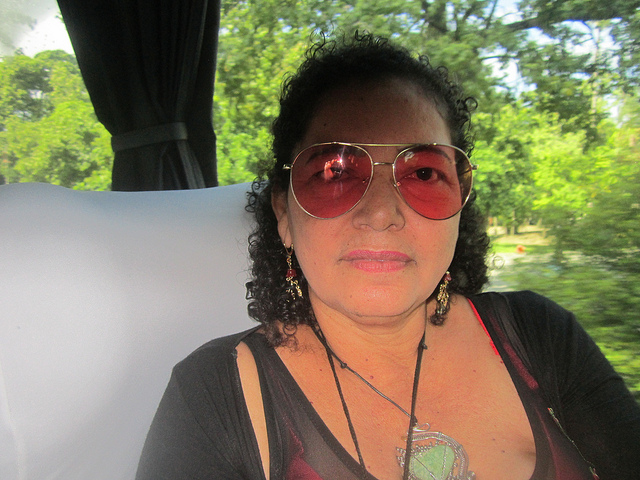
Colombian activist Irma Romero, a native of the city of Barranquilla, sitting on the bus that transported the participants of the First Latin American and Caribbean Assembly of Organisations of People Affected by Hansen's Disease, held Mar. 12-14 in Rio de Janeiro, Brazil. Credit: Mario Osava/IPS

Colombian activist Irma Romero, a native of the city of Barranquilla, sitting on the bus that transported the participants of the First Latin American and Caribbean Assembly of Organisations of People Affected by Hansen’s Disease, held Mar. 12-14 in Rio de Janeiro, Brazil. Credit: Mario Osava/IPS

Treatment using medicinal herbs, self-medication, rejection by relatives, attempts to separate her from her two children and abandonment by her husband all formed part of her suffering, which did not end with her treatment and cure.

The only permanent physical effects are numbness in her hands and feet, and sciatic nerve pain. But the discrimination continued.

“My life changed when I joined the association of affected people” four years ago, she said. “There I found people who had things in common with me, and a newfound love of my neighbour that I did not feel before,” said the activist, who became president of the Foundation the following year and reconciled with God.

Her foundation currently has 60 members. In Barranquilla she estimates that there are “about 200 affected people, but many more are hidden.”

The foundation is one of the 10 associations that make up Felehansen, eight of which call the disease hanseniasis or Hansen’s disease, one of which uses the term leprosy, and another of which refers to disabled people and is made up of patients who received a very late diagnosis.

The World Health Organisation (WHO) defines leprosy – the term it uses – as an infectious and chronic disease “transmitted by air through droplets from the nose and mouth, during close and frequent contacts with untreated cases.” It also specifies that leprosy is “one of the least infectious diseases.”

WHO reports that in 2017 there were 211,009 new cases worldwide, according to official data from 159 countries. That amounts to 0.3 cases per 10,000 inhabitants, which means it classifies as having been “eliminated,” according to WHO criteria.

Change of name: another recommendation

Proposing hanseniasis as the official name for the disease is one of the proposals that came out of the Latin American meeting, headed by Brazil, which has already adopted it, even prohibiting the mention of leprosy in the health system since 1995.

They are different concepts, because leprosy and leper have very negative connotations of “dirt, plague, impurities and divine punishment,” strengthened by numerous mentions with that moral burden in the Bible, argued Faustino Pinto, one of Morhan’s national coordinators.

But the activists from Colombia are not convinced. “People only know leprosy, they don’t know it’s Hanseniasis. To explain the issue to the population, you have to mention leprosy,” argued Romero.

“It will be necessary to educate the new generations about the concept of Hansen,” the Norwegian doctor Gerhard Hansen who discovered the bacillus that causes the disease, because adults are not likely to forget the stigma, said Dussan. “It’s harder to unlearn than to learn,” he added.

Another proposal of the Latin American Assembly is to extend the current Committee for Assistance to Brazilian Immigrants Affected by Hanseniasis to all Latin Americans and people from the Caribbean, in addition to extending it to other regions.

The reference point in this is Evelyne Leandro, a 37-year-old Brazilian who has lived in Germany for nine years and had a lot of difficulties getting diagnosed with the disease in a country where it is very rare and where very few doctors are familiar with it.

She was helped by her mother’s suspicion, awakened in Brazil by an outreach campaign on the disease, and by the Institutes of Tropical Medicine in Germany.

Her case and those of other immigrants in Europe are recounted in her book “The Living Death: the struggle with a long forgotten disease”.


People Affected by Leprosy Still Face Stigma in Latin America

Civil Society, Conferences, Development & Aid, Editors’ Choice, Featured, Global Governance, Headlines, Health, Human Rights, IPS UN: Inside the Glasshouse, Latin America & the Caribbean, Population, Regional Categories, TerraViva United Nations

Health

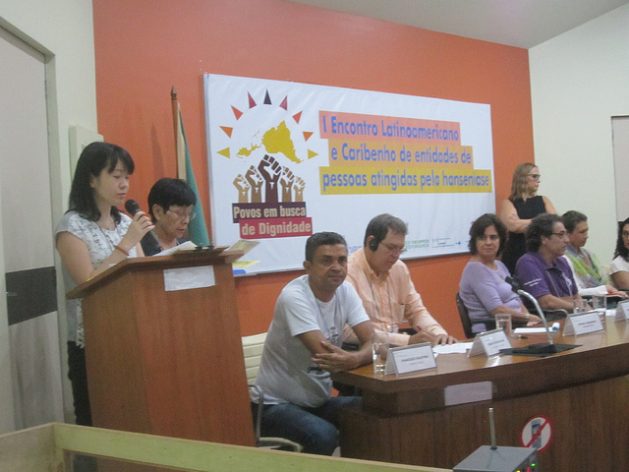
Kiyomi Takahashi of the independent Nippon Foundation explains the international movement for the rights of the victims of leprosy during the opening session of the First Latin American and Caribbean Meeting of Organisations of People Affected by Hansen's Disease, held in the Brazilian city of Rio de Janeiro. The foundation is backing the process for the World Congress on Leprosy to be held in September. Credit: Mario Osava/IPS

Kiyomi Takahashi of the independent Nippon Foundation explains the international movement for the rights of the victims of leprosy during the opening session of the First Latin American and Caribbean Meeting of Organisations of People Affected by Hansen’s Disease, held in the Brazilian city of Rio de Janeiro. The foundation is backing the process for the World Congress on Leprosy to be held in September. Credit: Mario Osava/IPS

RÍO DE JANEIRO, Mar 12 2019 (IPS) – The First Latin American and Caribbean Meeting of Organisations of People Affected by Hansen’s Disease, more widely known as leprosy, seeks to exorcise stigma and discrimination. The meeting has brought together around a hundred activists in Brazil.


The rights and participation of these people in all aspects of the World Health Organisation‘s (WHO) Global Leprosy Strategy 2016-2020 are the themes of the meeting, taking place in Rio de Janeiro from Mar. 12-14.

The gathering will establish this region’s proposals, as did recent regional assemblies in Asia and Africa.

The goal is for all the experiences and proposals to converge towards the World Congress on Leprosy that will take place in the Philippines in September, Kiyomi Takahashi, of the independent Nippon Foundation, which is backing the entire process, stressed during the opening session.

Brazil is at the forefront of the debate because it is considered the only country that has failed to eliminate the disease and has the highest incidence worldwide, with 25,000 to 30,000 new cases each year, 95 percent of the total in the Americas, according to official data.

This is an unacceptable figure for “a curable disease that is treated free of charge in the public health system,” said Artur Custodio, coordinator of the Brazilian Movement for the Reintegration of People Affected by Hanseniasis (Morhan), which organised the Latin America meeting together with the Federation of Organisations of People Affected by Leprosy in Colombia.

In addition, Brazil stands out for abolishing the word leprosy, because it is historically laden with prejudice. Since 1995, Hanseniasis or Hansen’s disease is the official name of the disease, although the WHO and the United Nations in general tend to use the term leprosy.

Brazil is not considered to have “eliminated” the disease – a classification that is defined when the incidence is reduced to less than one case per 10,000 inhabitants, said Claudio Salgado, president of the Brazilian Hansenology Society.

The statistics distort the reality of a disease that remains hidden. The organisation points out that the number of cases dropped from 5.3 million in 1980 to 597,000 in 2001, to meet the WHO target of elimination by the year 2000.

Official data indicate that from 2003 to 2005 the number of cases fell 64.17 percent worldwide to 169,709, a result that is “impossible in epidemiology,” Salgado told IPS.

When a disease like hanseniasis is properly fought, its incidence falls steadily, but slowly and regularly, not abruptly, he noted.

What is hidden behind the figures, according to the expert, is shown by the case of Palmas, capital of the central Brazilian state of Tocantins, where an early diagnosis effort raised the incidence from 41.9 per 10,000 inhabitants to 219 per 10,000 between 2013 and 2016.

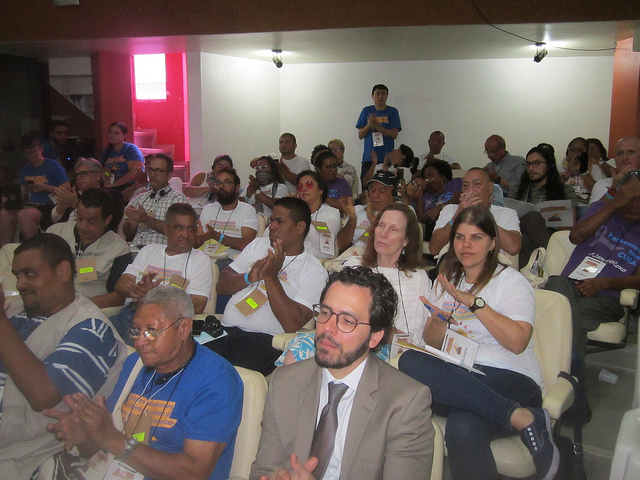
Participants at the First Latin American and Caribbean Meeting of Organisations of People Affected by Hansen's Disease, from seven countries in the region, as well as international organisations. This is the first time that regional activists have met to propose policies in defence of the dignity of those affected by leprosy. Credit: Mario Osava/IPS

Participants at the First Latin American and Caribbean Meeting of Organisations of People Affected by Hansen’s Disease, from seven countries in the region, as well as international organisations. This is the first time that regional activists have met to propose policies in defence of the dignity of those affected by leprosy. Credit: Mario Osava/IPS

This means, he argued, that when there is a clear decision to seriously address the disease, the numbers of people affected rise.

Another indicator from Brazil highlights an additional problem: there is 39 percent of “spontaneous demand” for treatment, which points to a lack of information and assistance. This is because spontaneous consultations occur in “advanced cases, with already apparent effects,” which are difficult to overcome, and sometimes incapacitating, Salgado said.

“The goal of elimination in 2000 had a positive effect of spurring initiatives and stimulating information and assistance. But declaring that it had been achieved led to an abandonment of commitments and actions,” said Salgado, a professor at the Federal University of Pará, in the northern Amazon region of Brazil.

“With that we are even losing knowledge, with reduced research in universities and reduced services. Compounded by the stigma of hanseniasis, a vicious circle is created and the tendency is for the incidence of the disease to grow again,” he concluded.

“There is a lack of research,” even to explain why the disease affects so many people in Brazil and why the prevalence drops when you cross the border, said Jorge Dominguez Sobrino, of Peru’s Health Ministry, which is working to fight leprosy in the province of Alto Amazonas, on the border with Ecuador.

“Perhaps genetic differences are a cause,” he told IPS.

In Peru the number of new cases points to “elimination,” but there is high prevalence in some provinces, especially in small towns. “There is a high hidden prevalence,” Dominguez Sobrino acknowledged.

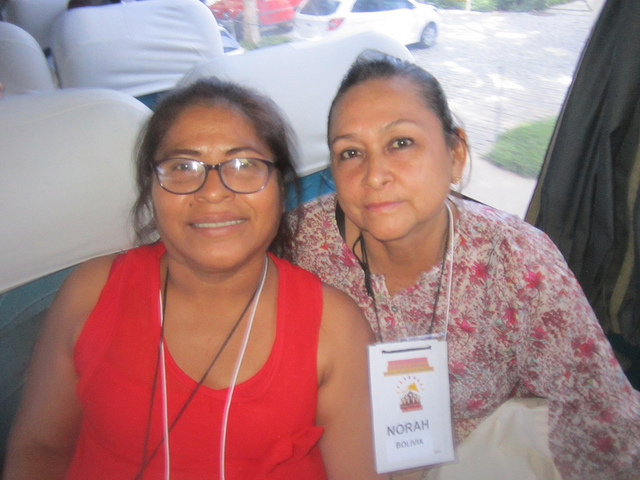
Norah Salcedo of Bolivia (R) and Silvia Uieacu of Peru, who took part in the first meeting of people affected by Hansen's disease or leprosy, complained about the poor care in their countries for people who have the disease. Credit: Mario Osava/IPS

Norah Salcedo of Bolivia (R) and Silvia Uieacu of Peru, who took part in the first meeting of people affected by Hansen’s disease or leprosy, complained about the poor care in their countries for people who have the disease. Credit: Mario Osava/IPS

Early diagnosis is the primary right in relation to leprosy, agreed Salgado and Custodio. It will be necessary to revise and change some of the bases of the strategies to actually eliminate the disease, while some speak of “eradication”, with the reduction of new cases to zero.

One concern of the specialists is the identification of many cases in children, indicating contagion through undiagnosed family members or other people close to them.

A contradiction in the official data is precisely that many countries where “elimination” of leprosy has been declared, with a rate of less than one case per 10,000 inhabitants, have a worrying number of affected children.

In addition, where the prevalence is lower, such as in southern Brazil and other Latin American countries, the damage to affected persons is more serious due to late diagnosis, when effects such as loss of peripheral nerves, fingers or entire limbs are already irreversible.

Leprosy, a disease that has been present since time immemorial, is infectious and chronic, caused by the Mycobacterium leprae bacterium, as defined by the WHO, which specifies that it mainly affects the skin, peripheral nerves, the mucosa of the upper respiratory tract, the eyes and other structures.

Norah Salcedo, from the city of Santa Cruz de la Sierra, Bolivia, suffered irreversible damage to limbs and needs crutches. “There is no adequate treatment in my country, the sick continue to decline, without assistance,” she complained to IPS.

Bolivia is a country that “eliminated” leprosy, according to official data. Salcedo, as well as Silvia Uieacu of Peru, acknowledged that there is a great lack of knowledge about the disease.

Seven Latin American countries are represented at this first Regional Meeting, which brings together health officials and representatives of international entities, such as the Pan-American Health Organisation, and institutions from Japan – especially the Nippon Foundation – Germany and the United States.

Brazil also attracts international attention for compensating the victims of the segregation system in the so-called leprosariums where the sick were isolated. This practice was maintained by law in the country until 1986, although the possibility of a cure had been known since 1941 and it was clear that with treatment, the people affected by the disease were no longer contagious.

Since 2007, the Brazilian state has been compensating people who were isolated, but now the Morhan organisation is seeking to extend reparation to children who were separated from their parents. It is estimated that around 16,000 children suffered this forced separation.

These policies are of interest to similar movements in other Latin American countries, participants explained during the first day’s debates.

Many of the people segregated in these “colonies” continue to live in them, even after they were no longer isolated, because they have no chance of returning to their places of origin or rebuilding their lives, activists say.