Nations pledge $3.9bn to Global Environment Facility as Race to Meet 2030 Goals Tightens

Biodiversity, Climate Action, Combating Desertification and Drought, Conferences, Development & Aid, Editors’ Choice, Environment, Featured, Global, Headlines, IPS UN: Inside the Glasshouse, Least Developed Countries, Natural Resources, Ocean Health, Sustainable Development Goals, TerraViva United Nations

Environment

This replenishment sends a clear message: the world is not giving up on nature even in a time of competing priorities. Our donor countries have risen to the challenge and made bold commitments towards a more positive future for the planet. – Claude Gascon, Interim CEO and Chairperson of the GEF
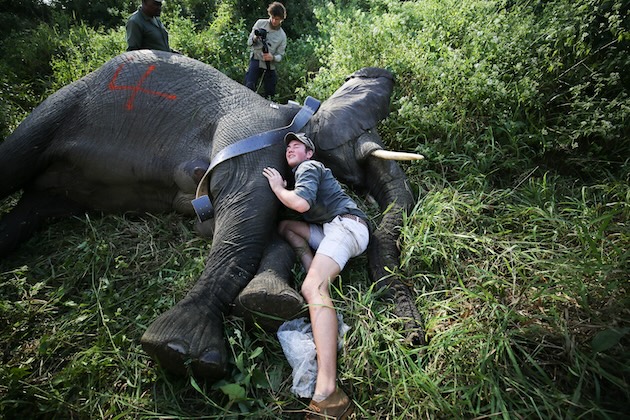
The Global Environment Facility (GEF) announced that donor countries ​p​ledged an initial ​U​SD 3.9 billion to ​the facility for the ninth replenishment cycle​, indicating that nature remains a priority, as in this image, where a veterinary team applies a collar to a sedated elephant​ in KwaZulu-Natal​, South Africa, as part of an ambitious project aimed at conserving the animals. Credit: Dan Ingham/IPS

The Global Environment Facility (GEF) announced that donor countries ​p​ledged an initial ​U​SD 3.9 billion to ​the facility for the ninth replenishment cycle​, indicating that nature remains a priority, as in this image, where a veterinary team applies a collar to a sedated elephant​ in KwaZulu-Natal​, South Africa, as part of an ambitious project aimed at conserving the animals. Credit: Dan Ingham/IPS

SAINT LUCIA, Apr 9 2026 (IPS) – With just four years left to meet a series of global environmental targets, governments are committing to shore up one of the world’s main environmental funds, the Global Environment Facility (GEF), with a $3.9 billion pledge.


The funding will form the backbone of the GEF’s ninth replenishment cycle, known as GEF-9, a four-year financing round running from July 2026 to June 2030. Those years are widely seen as decisive for slowing biodiversity loss, tackling pollution and keeping climate goals within reach.

While the $3.9 billion pledge signals renewed momentum, it comes at a moment of deepening environmental strain. Ecosystems are continuing to decline, coral reefs are bleaching at scale and small island states are already grappling with the economic and social fallout of environmental change.

“This replenishment sends a clear message: the world is not giving up on nature,” said Claude Gascon, the GEF’s interim chief executive. He noted that donor countries had “risen to the challenge and made bold commitments towards a more positive future for the planet” despite competing global priorities.

“The coming four years of the GEF-9 cycle will reflect this high-ambition push to achieve the 2030 environmental goals,” he said.

The GEF, the world’s largest multilateral environmental fund, supports developing countries in meeting commitments under major global agreements on climate change, biodiversity, land degradation, chemicals, and ocean governance. Since its establishment, it has provided more than $27 billion in grants and mobilised a further $155 billion in co-financing.

The GEF announced it had raised USD 3.9 billion for its ninth replenishment cycle to meet international environmental goals. Credit: Kea Mowat/Unsplash

GEF’s next funding round, its ninth replenishment cycle, aims to scale investment and mobilise private capital to close widening environmental financing gaps. Credit: Kea Mowat/Unsplash

Rewiring Economies Around Nature

At the centre of the new funding cycle is a push toward what the GEF calls “nature-positive development”. It is an effort to embed environmental value into economic decision-making rather than treating it as a secondary concern.

That includes reworking systems that drive environmental degradation, such as food production, energy, urban development and public health, so they operate within ecological limits.

The strategy also leans heavily on attracting private investment. Around 25% of GEF-9 resources are expected to be used to mobilise private capital, reflecting a growing recognition that public funding alone cannot close the global environmental financing gap.

Focus on the Most Vulnerable

The allocation of funds carries a clear political signal.

At least 35 percent of resources are expected to go to Least Developed Countries and Small Island Developing States (SIDS), countries that contribute least to environmental degradation but face some of its most severe impacts. A further 20% is earmarked for Indigenous Peoples and local communities.

For Caribbean nations, where coastal erosion, stronger storms and coral reef loss are already reshaping economies, the funding could prove significant if it translates quickly into action on the ground.

“We need multilateral cooperation more than ever to protect our planet for future generations,” said Niels Annen, describing the replenishment as a “joint effort” between countries in the Global North and South. “Environmental action and sustainable development have to go hand in hand. In GEF-9, we see Germany’s priorities very well reflected: innovative finance for nature and people, better cooperation with the private sector and stable resources for the most vulnerable countries.”

Support for the funding round has also come from Spain and Mexico, with Inés Carpio San Román emphasising the importance of “effective multilateralism” and Mexico backing “country-driven solutions” to global environmental challenges.

Calls to Deliver Results

Civil society groups have welcomed the increased emphasis on inclusion, particularly the allocation for Indigenous Peoples and local communities.

“This will strengthen a whole-of-society approach,” said Faizal Parish, Chair of the GEF’s Civil Society Organization Network, while Aliou Mustafa, of the GEF’s Indigenous Peoples Advisory Group, said the shift reflects efforts to place Indigenous groups “at the centre of decision-making.”

Still, expectations are high and time is short.

“The environmental crises we face are accelerating,” said Richard Bontjer. He described the  replenishment as “a vote of confidence” while stressing that “every dollar must count.”

“This replenishment will sharpen the GEF’s focus on impact, drive greater efficiency and mobilize private finance alongside public investment. It will also strengthen support to SIDS and LDCs and give recognition to the importance of supporting Indigenous Peoples and local communities.”

With the 2030 deadline fast approaching, the success of this funding round will ultimately be judged not by the size of the pledges but by how quickly they translate into measurable gains—restored ecosystems, protected coastlines and more resilient economies.

For countries on the frontlines, including those in the Caribbean, the $3.9 billion is not just another funding cycle.

It is a narrowing window of opportunity.

Additional pledges are expected before the end-of-May GEF Council meeting, when countries will lock in the final size and ambition of the four-year funding round.

The 71st GEF Council meeting will be held in Samarkand, Uzbekistan, from May 31 to June 3, 2026. The meeting will take place in advance of the Eighth GEF Assembly, when individual country pledges will be publicly announced.

Note: This feature is published with the support of the GEF. IPS is solely responsible for the editorial content, and it does not necessarily reflect the views of the GEF.

IPS UN Bureau Report


Equal Footing: Building Pathways for Landlocked Developing Countries to Participate in Global Economy

Conferences, Development & Aid, Economy & Trade, Editors’ Choice, Featured, Headlines, Human Rights, Inequality, IPS UN: Inside the Glasshouse, Landlocked Developing Countries, Least Developed Countries, Small Island Developing States, Sustainable Development Goals, TerraViva United Nations, Trade & Investment

Conferences

The raised flags of Turkmenistan and the United Nations marked the official opening of the Third UN Conference on Landlocked Developing Countries (LLDC3). Credit: Joyce Chimbi/IPS

The raised flags of Turkmenistan and the United Nations marked the official opening of the Third UN Conference on Landlocked Developing Countries (LLDC3). Credit: Joyce Chimbi/IPS

AWAZA, Turkmenistan, Aug 5 2025 (IPS) – Heads of State, ministers, investors and grassroots leaders are gathered in Awaza on Turkmenistan’s Caspian coast for a once-in-a-decade UN conference aimed at rewiring the global system in support of 32 landlocked developing countries whose economies are often ‘locked out’ of opportunity due to their lack of access to the sea.


Geography has long dictated the destiny of landlocked nations. Trade costs are up to 74 percent higher than the global average. It can take twice as long to move goods across borders compared to coastal countries. As a result, landlocked nations are left with just 1.2 percent of world trade and are at great risk of being left furthest behind amid global economic shifts.

Speaking during the opening plenary and in the context of implementing the Sustainable Development Goals (SDGs), President of Turkmenistan Serdar Berdimuhamedow stated that his country believes “in the need to accelerate the process of ensuring transport connectivity, as well as to bring fresh ideas and momentum to this process.”

“In connection with this, last year at the World Government Summit in Dubai, Turkmenistan proposed creating a new partnership format, namely a global atlas of sustainable transport connectivity. I invite all foreign participants to carefully consider this initiative.”

The Third UN Conference on Landlocked Developing Countries, or LLDC3, is pushing for freer transit, smarter trade corridors, stronger economic resilience, and fresh financing to boost development prospects for the estimated 600 million people living in those countries.

The UN Secretary-General António Guterres stressed that the conference is centered on reaffirming a fundamental truth: that “geography should never define destiny.”

“Yet,” Guterres continued, “For the 32 landlocked developing countries across Africa, Asia, Europe, and South America, geography too often limits development opportunities and entrenches inequality.”

Rabab Fatima, Under-Secretary-General and High Representative for the Least Developed Countries, Landlocked Developing Countries and Small Island Developing States, and Secretary-General of the Third United Nations Conference on Landlocked Developing Countries, said, “For too long, LLDCs have been defined by the barriers of geography, remoteness, inaccessibility, and the fact that they do not have a sea. But that is only part of the story.”

She stressed that LLDCs may be landlocked, but they are not opportunity locked, as they are rich in resources, resilience, and ambition. These countries seek to lean into these resources and strong partnerships to counter challenges such as an infrastructure financing shortfall of over USD 500 billion.

For these countries, goods take 42 days to enter and 37 days to exit their borders. Paved road density stands at just 12 percent of the global average. Internet access is only 39 percent. To address these constraints, the Awaza Programme of Action proposes a new facility for financing infrastructure investments. This new initiative aims to mobilize capital in large quantities to bridge the gaps and construct roads.

Meanwhile, as these daunting challenges prevail, Guterres said debt burdens are rising to dangerous and unsustainable levels. And one-third of LLDCs are grappling with vulnerability, insecurity, or conflict. Despite representing 7 percent of the world’s population, LLDCs account for just over one percent of the global economy and trade—a stark example of deep inequalities that perpetuate marginalization.

Guterres emphasized that these inequalities are not inevitable. They are the result of an unfair global economic and financial architecture unfit for the realities of today’s interconnected world, compounded by systemic neglect, structural barriers, and—in many cases—the legacy of a colonial past.”

“Recent shocks—from the COVID-19 pandemic to climate disasters, supply chain disruptions, conflicts and geopolitical tensions—have deepened the divide, pushing many LLDCs further away from achieving the SDGs.”

Further stressing that the conference is not about obstacles but solutions that include launching a new decade of ambition—through the Awaza Programme of Action and its deliverables—and fully unlocking the development potential of landlocked developing countries.

Fatima said the Awaza Programme of Action is a bold and ambitious blueprint to transform the development landscape for the 32 landlocked developing countries for the next decade. The theme of the conference, ’Driving Progress Through Partnerships,’ captures a collective resolve to unlock that potential. It underscores the new era of collaboration where LLDCs are not seen as isolated or constrained but as fully integrated.

Emphasizing that the Awaza Programme of Action provides “the tools to unlock the full potential of LLDCs and turn their structural challenges into transformative opportunities. The implementation of the Programme of Action has begun. We arrive in Awaza with momentum on our side. We have put together a UN system-wide development and monitoring framework with clear milestones and outcomes, comprising over 320 complete projects, programs, and activities.”

“Over the course of the week, we will see here the launch of many new partnerships and initiatives that will bring fresh momentum to its implementation. As we take this process forward, allow me to highlight three strategic priorities that will guide our work in Awaza. First, bridging the infrastructure and connectivity gap remains our top priority,” she said.

Heads of state and governments, including the presidents of the Republic of Uzbekistan, the Republic of Armenia, Tajikistan, the Republic of Kazakhstan, and His Majesty King Mswati III from the Kingdom of Eswatini, stressed the significance of the conference for the group of landlocked developing countries in terms of identifying priority areas for further efforts with a focus on addressing modern challenges the international community is facing.

Mswati III said the conference reaffirms a shared commitment to having the structural barriers that hinder LLDCs from participating in the global economy, offering a platform to chart a path of resilience, innovation and inclusive growth. The leaders also shared many of the successes they have achieved amidst daunting challenges.

“To build resilience and ensure sustainable growth, Eswatini is diversifying beyond traditional sectors. We are promoting investment in agroprocessing, tourism, renewable energy, ICT, creativity, industries and private enterprise. This strategy broadens our economic base, creates jobs and supports inclusive development, aligning with our national priorities for 2030 and 2063,” he said.

Shavkat Mirziyoyev, President of the Republic of Uzbekistan, said that his country was “demonstrating strong momentum towards greater openness and transparency in logistics. Complex measures are being implemented to facilitate the digitalization of trade and transport processes. Structural transport and logistics spaces are the basis for dynamic transport implementation.”

Mirziyoyev stated that today, a single transport and logistics space is being established in the region. Comprehensive programs and projects are being implemented to transform Central Asia into a fully-fledged transit hub between East and West and North and South. Recently, mutual trade volumes have grown 4.5-fold, investments have doubled, and the number of joint ventures has increased 5-fold.

“This year, jointly with our partners, we have started construction of the China-Kyrgyzstan-Uzbekistan railway. Freight traffic on the Uzbekistan-Turkmenistan-Iran-Turkey transport corridor has increased significantly. In today’s world, it is crucial to have concrete, feasible, and institutionally supported solutions to overcome common threats and challenges,” he stated.

Fatima, the Secretary-General of the Conference, said the challenges are many, varied and complex, requiring investing in robust implementation tools and partnerships at all levels.

“Our mapping confirms that every target adopted here in Awaza advances inclusive, resilient and sustainable development. But policy alignment alone is not enough. We need a whole-of-society approach,” she expounded.

“This Conference marks a turning point in that regard. For the first time, LLDC3 features dedicated platforms for civil society, the private sector, youth, women leaders, parliamentarians, and South-South partners – each playing a critical role in making the APOA people-centered and responsive.”

Overall, she urged the global community to seize the present moment—with ambition, unity, and purpose—to chart a new path for the LLDCs: one of prosperity, resilience, and full global integration. She stressed that the true legacy of the ongoing conference will not be measured by declarations, but by the real and lasting change that is delivered on the ground.

IPS UN Bureau Report



