LILONGWE-(MaraviPost)— As the world marked International Anti-Corruption Day, two of Malawi’s leading governance watchdogs urged national leaders to treat corruption not as a routine governance challenge but as a national emergency requiring urgent, decisive action.
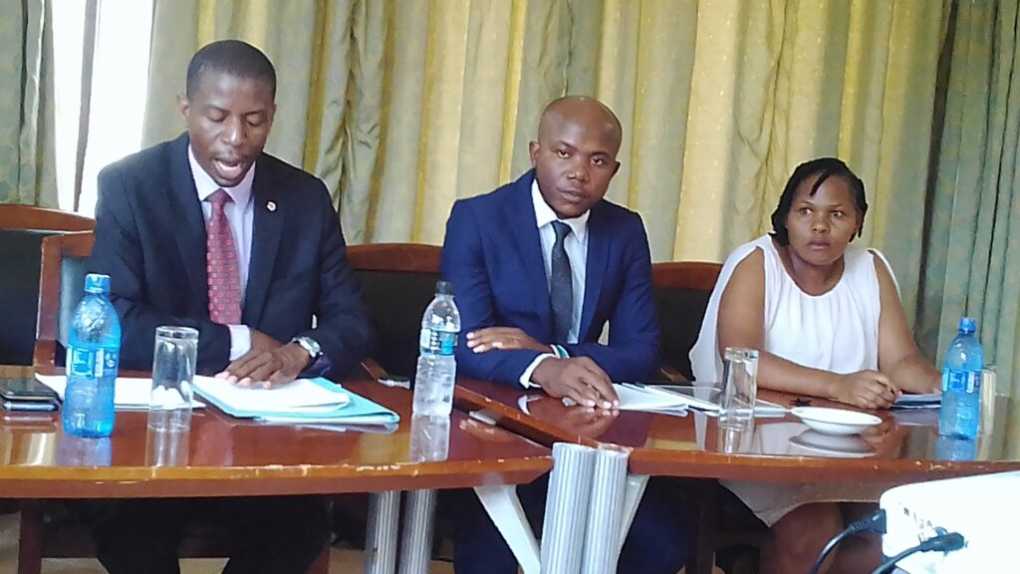
In a joint statement, National Advocacy Platform (NAP) Executive Director Benedicto Kondowe and Civil Society Accountability Taskforce (CSAT) Executive Director Willy Kambwandira stressed that Malawi’s political leadership must convert anti-corruption commitments into tangible reforms that strengthen accountability across all sectors.
“Corruption must be confronted, not accommodated. Accountability must be enforced, not negotiated,” the statement reads, underscoring the urgency with which the two organizations believe Malawi must respond.
NAP and CSAT emphasized that a renewed culture of integrity is possible one anchored in institutions that operate independently and free from fear, political interference, or personal interests.
They also highlighted the critical role of young people, describing them as the “forefront generation capable of demanding and defending transparency,” and essential contributors to building a more accountable Malawi.
The two organizations reaffirmed their commitment to work collaboratively with government bodies, communities, and stakeholders to ensure that Malawi’s anti-corruption pledges become actionable realities.
“Only when commitments become lived realities will Malawi deliver a future where integrity is not aspirational but expected,” the statement adds.
This year’s commemoration is themed at “Uniting with Youth Against Corruption: Shaping Tomorrow’s Integrity”.
Share this:
Like this:
LikeLoading…
Discover more from The Maravi Post
Subscribe to get the latest posts sent to your email.
BLANTYRE-(MaraviPost)-The National Advocacy Platform (NAP) and the Centre for Social Accountability and Transparency (CSAT) have marked International Anti-Corruption Day 2025 with a strong appeal for Malawi to translate political commitments into concrete action.
In a statement signed by NAP Chairperson Benedicto Kondowe and CSAT Executive Director Willy Kambwandira, the two organisations warned that corruption remains one of the country’s most severe obstacles to development and urged leaders to match their words with decisive steps that restore public trust.
This year’s commemorations are being observed under the theme “uniting with youth against corruption: shaping tomorrow’s integrity.”
According to NAP and CSAT, the theme reflects a growing demand from young Malawians for honesty, fairness and accountability values the organisations say must shape the country’s future governance systems.
The statement notes that corruption continues to divert public resources, undermine service delivery and weaken democratic institutions.
While acknowledging recent commitments from national leaders, including President Professor Arthur Peter Mutharika’s renewed zero tolerance declaration and efforts to revive long stalled cases, NAP and CSAT stress that Malawi can no longer rely on promises alone.
The organisations highlight the need for decisive follow-through on the revived cases, calling for credible investigations and timely, non-selective prosecutions.
They argue that no individual or institution should enjoy protection from accountability and insist that the Anti-Corruption Bureau (ACB) must operate without interference if the country is to make meaningful progress.
NAP and CSAT further emphasise that strengthening the ACB requires more than public statements. They call for full financial independence for the bureau, recruitment of specialised staff and legislative reforms that close loopholes enabling procurement fraud, illicit enrichment, political financing abuses and influence peddling.
They caution that parliament must not undermine anti-corruption efforts, and should exercise its oversight role in good faith, free from partisan motivations.
The statement places particular focus on the role of young people, describing them as essential drivers of a new culture of integrity. NAP and CSAT argue that youth must be empowered to demand transparency, challenge impunity and actively participate in accountability initiatives within their communities and workplaces.
The two organisations urge the ACB to pursue both revived and new cases without fear or favour. They appeal to the executive to respect and protect institutional independence and to the ministry of justice to accelerate reforms that align with global best practices.
They also encourage parliament to uphold accountability rather than shield wrongdoing and call on the judiciary to prioritise corruption cases to ensure timely resolution.
NAP and CSAT conclude by describing corruption as a national emergency that demands strong institutions and unwavering commitment. They stress that Malawi’s anti-corruption promises must translate into a lived reality for citizens, especially the youth who will inherit the consequences of today’s decisions.
The organisations reaffirm their readiness to work with all institutions and communities to support a national shift towards accountability and integrity.
Share this:
Like this:
LikeLoading…
Discover more from The Maravi Post
Subscribe to get the latest posts sent to your email.
Ansah rallies Malawians to defend national integrity
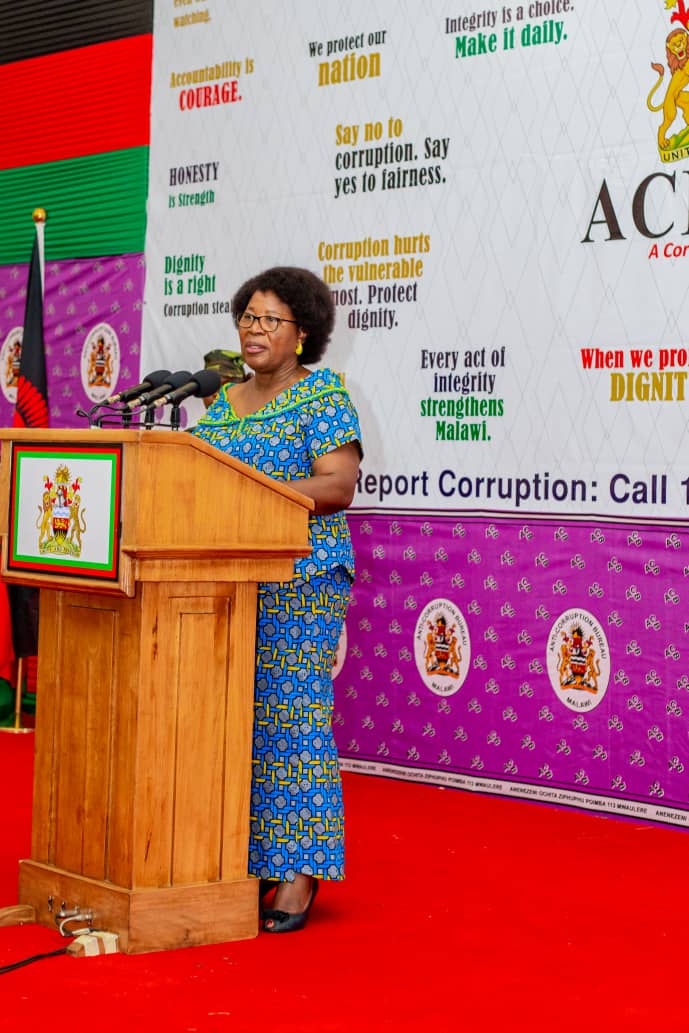
LILONGWE-(MaraviPost)-Malawi’s Vice President Jane Ansah has called for a stronger and more unified national commitment to defeating corruption, stressing that safeguarding integrity is central to restoring the dignity of every citizen.
Delivering remarks at the International Anti-Corruption Day commemoration held at the Bingu International Convention Centre (BICC) in Lilongwe, Ansah spoke on behalf of President Professor Arthur Peter Mutharika and highlighted that corruption must be confronted not only as a crime, but as a direct attack on human dignity.
She said this year’s theme—placing human dignity at the centre of anti-corruption efforts—resonates with a global push to involve young people in shaping ethical and accountable societies.
With more than 1.8 billion young people across the world, she said, empowering them to reject corruption is crucial for building countries anchored in honesty and fairness.
The Vice President reminded the gathering that every corrupt act deprives ordinary Malawians of essential services such as education, healthcare, and development opportunities.
She urged the Anti-Corruption Bureau (ACB) and the Ministry of Justice to revisit and reform practices in public institutions that compromise fairness and transparency.
Dr Ansah described corruption as a destructive force that weakens democracy, erodes public trust, and steals the future of the nation.
She reaffirmed government’s unwavering commitment to the Zero Tolerance Policy, promising continuous reforms to bolster the ACB’s autonomy, operational strength, and credibility.
Recognising the Bureau’s struggles in recent years, she commended its determination to uphold its independence despite pressures aimed at frustrating its work.
In her message to the nation, Dr Ansah encouraged collective responsibility in combating graft, urging citizens, religious groups, civil society, the media, and development stakeholders to rally behind efforts to build a corruption-free Malawi.
Responding to concerns raised during a panel session, she reminded Malawians that rejecting corruption requires individual bravery, especially when faced with direct temptation.
She encouraged citizens to use their mobile phones to record and report corrupt behaviours, noting that accountability cannot depend solely on the presence of officials or courts.
The Vice President closed her address by calling for courage, vigilance, and a renewed personal commitment from every Malawian to defend the country’s integrity and protect the dignity of its people.
Share this:
Like this:
LikeLoading…
Discover more from The Maravi Post
Subscribe to get the latest posts sent to your email.
Girl, 18, arrested for stabbing boyfriend to death in Lilongwe
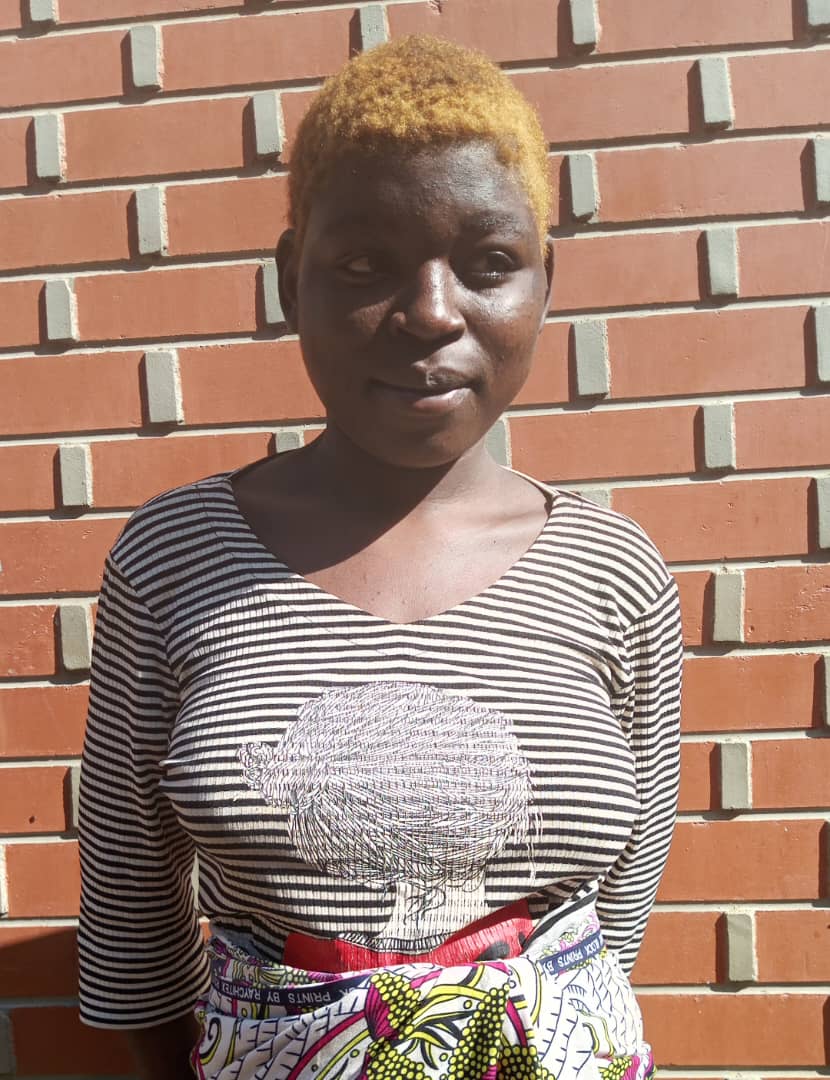
LILONGWE-(MaraviPost)-Malawi Police at Area 3 station in Lilongwe are keeping in custody Prisca Leman, 18 years old for allegedly stabbing to death her boyfriend, Kingsley Magombo, aged 25, using a pair of scissors following a quarrel.
According to Lilongwe Police Spokesperson Inspector Hestings Chigalu,the incident occurred on Saturday, December 6, 2025, at around 06:00 hours at Katantha Village in Area 38.
Chigalu added that on the fateful day, after spending a night together at a drinking joint in Kaphiri, the two proceeded to the deceased’s home, where he operated a shebeen.
Upon arrival, the deceased’s mother confronted the suspect, demanding that she leave the premises immediately, saying she was not pleased with the relationship between her son and the suspect.
However, both Kingsley and Prisca allegedly ignored the confrontation and entered the makeshift tent.
A few minutes later, a fight broke out between the two, during which Prisca is said to have produced a pair of scissors and stabbed Kingsley in the chest.
He was rushed to Kamuzu Central Hospital, where he was pronounced dead upon arrival.
Medical personnel confirmed that his death resulted from excessive loss of blood.
Following the incident, police swiftly intervened to rescue the suspect from an angry mob that had descended on her home to avenge Kingsley’s death.
Prisca Leman will appear in court to answer a case of murder.
The suspect comes from Jomcho Village, Traditional Authority (T.A) Mazengera, in Lilongwe District.
Share this:
Like this:
LikeLoading…
Discover more from The Maravi Post
Subscribe to get the latest posts sent to your email.
Two years ago, a Karam tree branch brought from another district was being planted in the SAMS office premises along the Shyamnagar-Munshiganj road, but it didn’t survive. Credit: Rafiqul Islam Montu/IPS
SATKHIRA, Bangladesh, Dec 9 2025 (IPS) – A dried karam tree branch stands on the bank of a pond in a field in Datinakhali village adjacent to the Sundarbans. Despite many efforts, the tree could not be saved.
For two years, the Munda community in Bangladesh’s Sundarbans had been fighting to save the Karam tree so that they could bring back their traditional Karam festival—once the biggest festival in their community. Many trees are unable to survive due to the effects of salinity—this list includes the Karam tree, which is the main ingredient in celebrating the festival.
Bhakta Sardar, a priest from the Munda community, says the festival of the indigenous Munda community would be incomplete without the branches of the Karam tree
“We believe that our prosperity and well-being are hidden in the branches of the Karam tree. We pray to God to achieve our prosperity around this festival. But frequent cyclones and salinity have killed the Karam trees.”
“Now we celebrate this festival in its name only for the prosperity of the community. We cannot leave the festival for the next generation,” added Bhakta Sardar, referring to a smaller festival where the community uses fig tree branches as an alternative.
While the debate about how to integrate non-economic losses and damages due to the impact of climate change continued during the 30th Conference of the Parties to the UNFCCC (COP30) in Belém, Brazil, the Munda community is looking for ways to revive the Karam festival, a symbol of their prosperity. A recent study emphasized that these non-economic losses and damages included the loss of religious and cultural practices.
The study says that climate risks are increasing on the coast of Bangladesh. The risk is even higher in the southwest. If this situation continues in the future, small communities like the indigenous Munda community will be in even greater crisis. The study called for policy and financial reform to assist communities like this to adapt to the impacts of climate change.
In Search of the Karam Tree
The scientific name of the Karam tree is Mitragyna parvifolia. This tree in the Asian region is also known as Kelikadam. It mainly blooms before the monsoon. As the Karam tree has disappeared, the indigenous Munda community of Bangladesh now celebrates a similar festival on a smaller scale, with branches of a fig tree. The scientific name of this tree is Ficus religiosa.
There were once many Karam trees in the villages of southwestern Bangladesh. Datinakhali, adjacent to the Sundarbans in the Shyamnagar upazila (subdistrict) of Satkhira district, is one such village. This village celebrated the Karam festival with a grand event, with people from the Munda community from different areas joining in.
In addition to their time-honored religious tradition, the community in this village on the banks of the Chuna River faces economic difficulties.
The indigenous Munda community lives in several villages adjacent to the Sundarbans in Koyra upazila (sub-district) of Khulna district in southwestern Bangladesh.
Shukkuri Rani Munda used to attend the Karam festival organized in the courtyard of Fulsingh Munda’s house in Uttar Haztakhali village.
“To everyone now, the festival feels like a myth. A storm has swept away the entire festival. The next generation will forget the name of the Karam festival,” she says.
Munda Young Balai Krishna Sardar (38), president of the Sundarban Adivasi Unnayan Sangstha of that village, cannot recall attending the festival. Rangalal Munda’s 60-year-old father, Fulsingh Munda, witnessed a small-scale celebration five years ago. After Fulsingh’s death a year ago, no one in the village now knows how to initiate the Karam festival.
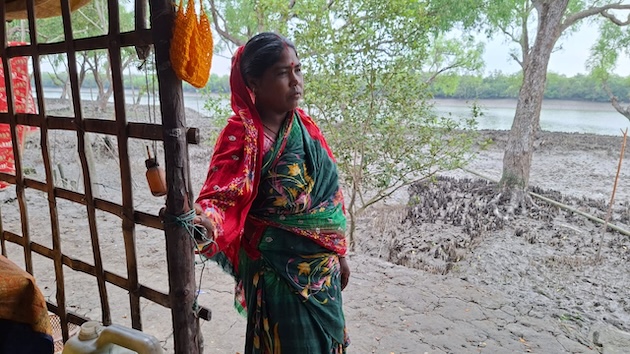
Geeta Rani Munda, 42, lives precariously in Datinakhali village, adjacent to the Sundarbans. She wants the Karam festival to return for her prosperity. Credit: Rafiqul Islam Montu/IPS
‘A Symbol of Our Faith’
The Munda community holds the belief that the branches of this tree conceal prosperity and well-being. They believe that the Karam festival ensures their good health and the well-being of future generations. Various tribal communities in Jharkhand, West Bengal, and Bihar, India, celebrate this festival with the same beliefs. Indigenous communities like Munda, Mahato, Kurmi, Matato, Santal, Orao, Baraik, Singh, Pahan, Mahali, Bhumij, etc., all celebrate the Karam festival.
“The Karam festival is our faith. Perhaps our economic condition is gradually deteriorating because we cannot follow our religious instructions,” said Anandini Rani Munda of Datinakhali village, articulating the belief that religious and economic wellbeing are intrinsically interlinked.
Nilkant Pahan, a priest of Burigoalini village in Shyamnagar upazila (sub-district), had been conducting the puja (religious ceremony) of the Munda community for eight years. He has organized the Karam festival several times following the ancestral tradition. But they were small events.
“Celebrating the Karam festival is our religious tradition. Our ancestors observed this tradition. We are trying to maintain its continuity. We are facing a much greater socio-economic and cultural crisis than before. We do not know what this crisis is because we cannot observe religious traditions,” Pahan says.
Impact of salinity
During Cyclone Aila in 2009, the entire area was submerged in the wave of salt water that broke the dam. The land was submerged in salt water for a long time, and the Karam trees could no longer survive. Many elderly Munda citizens believe that not only Aila but also other cyclones, especially a strong cyclone that hit the region in 1988, helped reduce the number of Karam trees.
GM Mostafizur Rahman, Chief Scientific Officer of Khulna Soil Resources Institute, said, “Both the intensity and extent of salinity in soil and water are increasing due to climate change; 81 percent of land in Shyamnagar is affected by varying degrees of salinity.”
Professor Saleh Ahmed Khan, Department of Botany, Jahangirnagar University, said, “The tree that the Munda community calls the ‘Karam’ tree is ‘Kelikadam.’ We did not find it among the 528 species under our research. The tree may not have survived due to the spread of salinity.”
Fight To Bring Back the Karam Festival
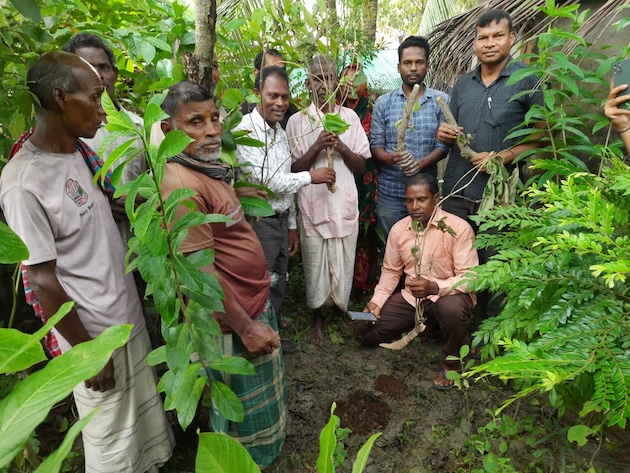
The Sundarbans Adivasi Munda Sangstha (SAMS) and leading members of the Munda community are working to bring back the Karam tree. They are trying to bring back the Karam festival by bringing branches of the Karam tree from other districts.
Two years ago, a branch of the Karam tree was planted in the SAMS office premises on the Shyamnagar-Munshiganj road, and another branch was planted in the Munda-dominated Datinakhali village. But it was not possible to save the tree. They will try again next year.
“We celebrate the Karam festival for our prosperity. We are trying to save the Karam trees for the festival. But due to salinity in the soil, the Karam trees cannot be saved. As an alternative, we use the branches of the fig (Ficus religiosa) tree,” said Geeta Rani Munda of Datinakhali village.
Krishnapada Sardar, Executive Director of SAMS, said it wasn’t enough that this festival only survives in the stories of elders.
“It was a major event in the rural culture of this community, which is proud of its identity. Climate change has changed the food habits of the Munda community, and the opportunities for livelihood have narrowed. The families of the community are facing an extreme economic crisis.
“Our lost festivals can be brought back by restoring the Karam tree. We want to return to our lost traditions. We want to return to our roots.”
President Trump heads to Pennsylvania to defend his record on affordability as polls show voters increasingly blame his policies for high prices. The Supreme Court appears poised to grant presidents far greater power over independent agencies, signaling a major shift in how the federal government operates. And Indiana lawmakers move toward a congressional map that could eliminate the state’s last two Democratic seats, intensifying a nationwide battle over mid-cycle redistricting.
Want more comprehensive analysis of the most important news of the day, plus a little fun? Subscribe to the Up First newsletter.
<
p class=”readrate”>Today’s episode of Up First was edited by Rebekah Metzler, Krishnadev Calamur, Kelsey Snell, Mohamad ElBardicy and Alice Woelfle.
<
p class=”readrate”>
<
p class=”readrate”>It was produced by Kaity Kline, Nia Dumas and Christopher Thomas.
<
p class=”readrate”>
<
p class=”readrate”>We get engineering support from Stacey Abbott. And our technical director is Carleigh Strange.
<
p class=”readrate”>
<
p class=”readrate”>And Our Senior Supervising Producer is Vince Pearson.