Kenyan Court Restores Seed Freedom: Landmark Ruling Boost for Food Security and Sovereignty

Active Citizens, Africa, Biodiversity, Civil Society, Development & Aid, Economy & Trade, Environment, Featured, Food and Agriculture, Food Systems, Natural Resources, TerraViva United Nations, Trade & Investment
Food Systems

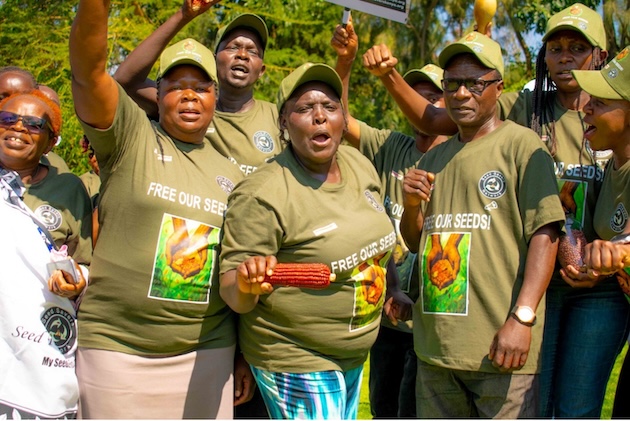
Farmers celebrate in Gilgil town in Kenya, after a court ruling that decriminalized the sharing of indigenous seeds. Credit: Jackson Okata/IPS

Farmers celebrate in Gilgil town in Kenya, after a court ruling that decriminalized the sharing of indigenous seeds. Credit: Jackson Okata/IPS

NAIROBI, Dec 18 2025 (IPS) – For years, smallholder farmers across Kenya have been engaged in a legal battle with the government over a law that criminalizes the practice of saving, sharing and exchanging indigenous seeds.


In 2022, a group of 15 Kenyan smallholder farmers petitioned the country’s High Court, seeking to compel the government to review sections of a law that bans the sharing and exchange of uncertified and unregistered seeds.

Rural smallholder farmers in Kenya rely on informal farmer-managed systems to acquire seeds through seed saving and sharing, but the Seeds and Plant Varieties Act limited their access.

Kenya’s government enacted the law in 2012 to develop, promote, and regulate a modern and competitive seed industry, but farmers are calling for its review.

The informal farmer-managed seed system allows farmers to store a portion of their seeds after harvesting, which guarantees them seeds for the next planting season.

Victory for Farmers

In a decisive victory for food sovereignty and climate justice, the High Court on November 27, 2025, ruled in favor of smallholder farmers, declaring punitive sections of the Seed and Plant Varieties Act unconstitutional.

The judgment effectively decriminalizes the age-old practice of saving, sharing, and exchanging indigenous seeds, affirming that Farmer-Managed Seed Systems (FMSS) are a protected right, not a criminal activity.

Under the punitive law, farmers faced jail terms of up to two years and a fine of 1 million shillings (about 7,800 USD) for selling or exchanging unregistered seeds.

Farmer rights defenders had argued that the law gave control of the country’s food system to multinational corporations.

In her judgment, Justice Rhoda Rutto declared unconstitutional sections of the Act that gave seed inspectors sweeping powers to raid seed banks and seize seeds meant for the next harvest, made it illegal for farmers to process or sell seeds unless they were registered seed merchants, gave extensive proprietary rights to plant breeders and none to farmers, and made it illegal for farmers to save or share seeds from their harvest without prior knowledge of seed proprietors.

Samuel Wathome, a smallholder farmer who was a petitioner in the case, says that “just like his grandmother did, he can now freely save seeds for his grandchildren without fear of police or prison.”

According to Elizabeth Atieno, a Food Campaigner at Greenpeace Africa, the court ruling affirmed the long-known tradition of seed sovereignty.

“The court ruling removed shackles from Kenya’s farmers.  This is not just a legal win; it is a victory for our culture, our resilience, and our future,” Atieno told IPS.

She added, “By validating indigenous seeds, the court has struck a blow against the corporate capture of our food system. We can finally say that in Kenya, feeding your community with climate-resilient, locally adapted seeds is no longer a crime.”

Protecting Biodiversity

According to Gideon Muya, Programs Officer, Biodiversity and Biosafety Association of Kenya, the judgment is a shield for the country’s biodiversity.

“Indigenous seeds are the library of life because they hold the genetic diversity we need to withstand droughts, pests, and a changing climate. The court has recognized that you cannot patent nature’s heritage. We have reclaimed the right to choose what we plant and what we eat, free from the coercion of commercial seed monopolies,” Muya told IPS.

Claire Nasike, an agroecologist, noted that the judgment indicates that the seed is life, and it is sovereign, and whoever controls it influences the lifeline of a generation.

Nasike observes that the ruling is a big boost for biodiversity, climate resilience and food sovereignty since indigenous seeds tend to be well adapted to local conditions like soil types, rainfall patterns, pests and disease traits that are often lost in uniform, certified commercial seeds.

“By enabling farmers to save, exchange and diversify their seed stock, communities can preserve genetic diversity, a key buffer against climate shocks like droughts and pests, as well as a safeguard for long-term food security.”

IPS UN Bureau Report

  Source

Trump Addresses Nation, Congress ACA Vote, Venezuela Oil Tankers

<

p dir=”ltr”>In a nationwide address, President Trump says the U.S. is poised for an economic boom and that high prices are falling rapidly. Four Republicans joined Democrats to force a vote on a three year extension of the enhanced healthcare subsidies. And, President Trump has ordered a ban on all sanctioned oil tankers going to and from Venezuela.

Want more analysis of the most important news of the day, plus a little fun? Subscribe to the Up First newsletter

<

p dir=”ltr”>Today’s episode of Up First was edited by Rebekah Metzler, Kelsey Snell, Andrew Sussman, Lisa Thomson and Alice Woelfle.

<

p dir=”ltr”>It was produced by Ziad Buchh, Nia Dumas and Christopher Thomas. We get engineering support from Stacey Abbott. Our technical director is Carleigh Strange.And our deputy Executive Producer is Kelley Dickens.

Learn more about sponsor message choices: podcastchoices.com/adchoices

NPR Privacy Policy


Discover more from The Maravi Post

Subscribe to get the latest posts sent to your email.

The Maravi Post

NBM plc spends MK120 million so far in ‘12 Days of Christmas’ initiative

BLANTYRE-(MaraviPost)-National Bank of Malawi (NBM) plc has donated MK120 million worth of food and non-food items to health, education and social welfare institutions across the country in the first half of its annual ‘12 Days of Christmas’ initiative.

The donations are part of the Bank’s broader K250 million festive season package, which is running from December 5 to 22.

Under the initiative, each of the 12 participating service centres is making a K20 million donation every day, with a final K30 million package scheduled at the close of the campaign.

During half of this donation period, St Martin’s Health Centre in Mwanza received medical equipment and supplies to strengthen maternal and general health services from Mwanza Service Centre, while Wells of Joy Orphan Care in Blantyre benefited from food and livelihood-support items, including sewing machines and basic commodities courtesy of Chichiri Mall Service Centre.

In the education sector, schools in Chazunda and Mpemba in Blantyre, Mpapa and Dwangwa Primary in Kasungu, and Liwonde Secondary in Machinga benefited from desks, textbooks, teaching and learning materials, as well as sports equipment, aimed at improving learning environments and promoting holistic education through Top Mandala, Kasungu, and Liwonde Service Centres respectively.

Learners with visual impairments at Makande Primary School in Ngabu, Chikwawa, also received learning and nutritional support, including Perkins brailles and food items from Nchalo Service Centre.

NBM plc Marketing and Corporate Affairs Manager Akossa Hiwa said the initiative reflects the Bank’s appreciation for the communities that continue to support its growth.

“Every year, this initiative reminds us of the true meaning of the festive season, reaching out, sharing, and standing with those who need a helping hand.”

 “We are deliberate in ensuring that our support responds to real needs on the ground and brings dignity and encouragement to the communities we serve,” said Hiwa.

Liwonde Secondary School learners’ representative, Faith Pasulani commended NBM plc saying the donation of desks had significantly improved learning conditions at the school.  

“Previously, some learners were missing classes, especially during examinations, because they had to sit on the floor. This support has restored our dignity as learners,” said Pasulani.

Makande Primary School Head teacher, Francis Thomas said the donation had addressed a long-standing challenge at the school’s resource centre for visually impaired learners.

“We previously had only two working braillers for 24 learners. The additional brailles and food support will greatly improve both learning and welfare,” said Thomas.

NBM plc says the ‘12 Days of Christmas’ initiative remains one of its flagship CSR programmes, supporting national development through targeted investments in education, health and community wellbeing.


Discover more from The Maravi Post

Subscribe to get the latest posts sent to your email.

The Maravi Post

A trailblazing leader: Netumbo Nandi-Ndaitwah’s rise to presidency in Namibia

Netumbo Nandi-Ndaitwah’s ascension to the presidency of Namibia in March 2025 marks a significant milestone not only for her country but also for the Southern African Development Community (SADC) region.

She has become the first female President of Namibia and the fourth woman in SADC history to hold the office.

This achievement is a testament to her dedication, perseverance, and leadership abilities, which have propelled her through the ranks of Namibian politics.

Nandi-Ndaitwah’s background is reminiscent of Zimbabwe’s Joice Teurairopa Mujuru, a veteran of the liberation struggle and a prominent politician.

Like Mujuru, Nandi-Ndaitwah was not a combatant but played a crucial role in the struggle for independence.

Her husband, Epaphras Denga Ndaitwah, a former commander of the Namibian Defence Force, adds to the parallels between the two leaders.

Both women have held various ministerial positions and have demonstrated strong leadership skills.

However, the similarities between Nandi-Ndaitwah and Mujuru diverge when it comes to their party dynamics.

While Mujuru fell out with her party leadership and was eventually pushed out, Nandi-Ndaitwah has maintained her position within the party structure and continued to rise through the ranks.

This strategic navigation of party politics has undoubtedly contributed to her success.

Before assuming the presidency, Nandi-Ndaitwah served as Deputy Prime Minister and later as Vice President, showcasing her versatility and ability to work within the government’s administrative framework.

Namibia’s unique system, where the President serves as both Head of State and Head of Government, and the Prime Minister acts as a presidential appointee, has provided Nandi-Ndaitwah with a distinct platform to demonstrate her leadership skills.

The Namibian President’s role as Head of State and Government, coupled with the Prime Minister’s coordinating function, underscores the significance of Nandi-Ndaitwah’s experience as Deputy Prime Minister and Vice President.

Her familiarity with the system and her ability to work within it have likely contributed to her seamless transition into the presidency.

Nandi-Ndaitwah joins an elite group of women leaders in SADC who have broken the glass ceiling to assume the highest office in their respective countries.

The other three trailblazers are Joyce Banda of Malawi, Ameenah Gurib-Fakim of Mauritius, and Samia Suluhu Hassan of Tanzania.

These women have demonstrated exceptional leadership, resilience, and determination, paving the way for future generations of female leaders.

As Namibia’s first female President, Nandi-Ndaitwah has a unique opportunity to shape the country’s future and leave a lasting legacy.

Her experience, leadership skills, and understanding of the government’s administrative framework position her well to tackle the challenges facing Namibia and drive progress in the SADC region.

Netumbo Nandi-Ndaitwah’s rise to the presidency is a testament to her hard work, dedication, and strategic leadership.

She has become an inspiration to women and girls in Namibia and across the SADC region, demonstrating that with perseverance and determination, anyone can achieve their goals and make a meaningful impact.

As she embarks on this new chapter, the region will be watching her every move, eager to see the impact she will have on Namibia and the broader SADC community.


Discover more from The Maravi Post

Subscribe to get the latest posts sent to your email.

The Maravi Post

My Niece Was Killed Amid Mexico’s Land Conflicts. The World Must Hold Corporations Accountable

Civil Society, Headlines, Human Rights, Indigenous Rights, IPS UN: Inside the Glasshouse, Latin America & the Caribbean, TerraViva United Nations

Opinion

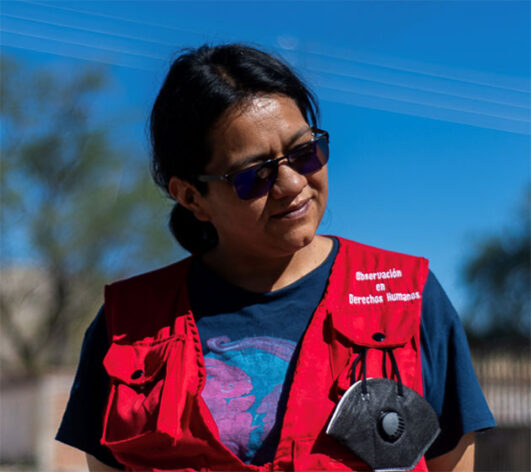
My Niece was Killed Amid Mexico’s Land Conflicts.

Claudia Ignacio Álvarez in San Lorenzo de Azqueltan, Jalisco, Mexico. Credit : Eber Huitzil

MICHOACÁN, Mexico , Dec 18 2025 (IPS) – My niece Roxana Valentín Cárdenas was 21 years old when she was killed. She was a Purépecha Indigenous woman from San Andrés Tziróndaro, a community on the shores of Lake Pátzcuaro in the Mexican state of Michoacán.


Roxana was killed during a peaceful march organised by another Indigenous community commemorating the recovery of their lands. Forty-six years earlier, three people had been murdered during that same land struggle. This time, the commemoration was once again met with gunfire.

Roxana was not armed and was not participating in the march. She encountered the demonstration and was struck by gunfire. Her death was deeply personal, but it took place within a broader context of long-standing violence linked to land and territory.

That violence has intensified in Michoacán recently, where the assassination of a mayor in November this year underscored how deeply insecurity has penetrated public life and how little protection exists for civilians, community leaders and local authorities alike.

Across Mexico, Indigenous people are being killed for defending land, water and forests. What governments and corporations often describe as “development” is experienced by our communities as dispossession enforced by violence – through land grabbing, water theft and the silencing of those who resist.

A way of life under threat
I come from San Andrés Tziróndaro, a farming, fishing and musical community. For generations, we have cared for the lake and the surrounding forests as collective responsibilities essential to life. That way of life is now under threat.

In Michoacán, extractive pressure takes different forms. In some Indigenous territories, it is mining. In our region, it is agro-industrial production, particularly avocados and berries grown for export. Communal land intended for subsistence is leased for commercial agriculture. Water is extracted from Lake Pátzcuaro through irregularly installed pipes to irrigate agricultural fields, depriving local farmers of access.

Agrochemicals contaminate soil and water, forests are deliberately burned to enable land-use change, and ecosystems are transformed into monocultures that consume vast amounts of water. This is not development. It is extraction.

Violence as a method of enforcement
When Indigenous communities resist these processes, violence follows.

Two cases illustrate this reality and remain unresolved.

José Gabriel Pelayo, a human rights defender and member of our organisation, has been forcibly disappeared for more than a year. Despite an urgent action issued by the United Nations Committee on Enforced Disappearances, progress has been blocked. Authorities have delayed access to the investigation file, and meaningful search efforts have yet to begin. His family continues to wait for answers.

Eustacio Alcalá Díaz, a defender from the Nahua community of San Juan Huitzontla, was murdered after opposing mining operations imposed on his territory without consultation. After his killing, the community was paralysed by fear, and it was no longer possible to continue human rights work safely.

Together, these cases show how violence and impunity are used to suppress community resistance.

Militarisation is not protection
It is against this backdrop of escalating violence and impunity that the Mexican state has once again turned to militarisation. Thousands of soldiers are being deployed to Michoacán, and authorities point to arrests and security operations as indicators of stability.

In practice, militarisation often coincides with areas of high extractive interest. Security forces are deployed in regions targeted for mining, agro-industrial expansion or large infrastructure projects, creating conditions that allow these activities to proceed while community resistance is contained.

Indigenous people experience this not as protection, but as surveillance, intimidation and criminalisation. While companies may claim neutrality, they benefit from these security arrangements and rarely challenge the violence or displacement that accompanies them, raising serious questions about corporate complicity.

A global governance failure
Indigenous territories are opened to extractive industries operating across borders, while accountability remains fragmented. Corporations divide their operations across jurisdictions, making responsibility for environmental harm and human rights abuses difficult to establish.

Voluntary corporate commitments have not prevented violence or environmental degradation. National regulations remain uneven and weakly enforced, particularly in regions affected by corruption and organised crime. This is not only a national failure. It is a failure of global governance.

International responsibility, now
In this context, I have recently spent ten days in the United Kingdom with the support of Peace Brigades International (PBI), meeting with parliamentarians, officials from the Foreign, Commonwealth and Development Office, and civil society organisations.

These discussions are part of a broader international effort to ensure that governments whose companies, financial systems or diplomatic relationships are linked to extractive activities take responsibility for preventing harm and protecting those at risk.

While the UK is only one actor, its policies on corporate accountability and support for human rights defenders have consequences far beyond its borders.

Why binding international rules are necessary
For years, Indigenous peoples and civil society organisations have called for a binding United Nations treaty on business and human rights. The urgency of this demand is reflected in the lives lost defending land and water and in the defenders who remain disappeared.

A binding treaty could require mandatory human rights and environmental due diligence across global supply chains, guarantee access to justice beyond national borders, and recognise the protection of human rights defenders as a legal obligation. It could make Free, Prior and Informed Consent enforceable rather than optional.

Such a treaty would not prevent development. It would ensure that development does not depend on violence, dispossession and impunity.

Defending life for everyone
Indigenous peoples are not obstacles to progress. We are defending ecosystems that sustain life far beyond our territories. Indigenous women are often at the forefront of this defence, even as we face extraordinary risks.

When defenders disappear, when others are murdered, and when young women like my niece lose their lives, it is not only our communities that suffer. The world loses those protecting land, water and biodiversity during a deep ecological crisis.

Defending life and land should not come at the cost of human lives.

Claudia Ignacio Álvarez is an Indigenous Purépecha feminist, lesbian, and environmental human rights defender from San Andrés Tziróndaro, Michoacán. Through the Red Solidaria de Derechos Humanos, she supports Indigenous and rural communities defending their territories from extractive industries and organised crime. Her work has been supported by Peace Brigades International (PBI) since 2023.

IPS UN Bureau

  Source

David Harbour Takes a Guy’s Hat in Bizarre Bar Incident

David Harbour was captured on video doing some “Stranger Things” in Encinitas, California over the weekend … the actor appeared to take a man’s hat and make a run for it. The head-scratching incident appears to have gone down Saturday at a…


Discover more from The Maravi Post

Subscribe to get the latest posts sent to your email.

The Maravi Post