LILONGWE-(MaraviPost)-Minister of Homeland Security Peter Mukhito has confirmed that police have made arrests in connection with the shooting death of Dr Victoria Nnesa Bobe at her home in Chigumula, Blantyre.
Speaking in Parliament on Thursday, Mukhito told lawmakers that investigations are progressing and that police continue to follow leads provided by members of the community.
The minister noted that matters involving ongoing investigations are guided by strict ethical, legal, and privacy considerations, making it impossible to release further details at this stage.
He commended investigators for their diligence and professionalism as they work to uncover the truth behind the killing.
Mukhito was responding to a question from Dedza Kasina legislator Joshua Malango, who requested an update after the issue was raised in the House last week due to its national importance.
Dr Victoria Bobe, who served as a gynaecologist at Queen Elizabeth Central Hospital and lectured at the Kamuzu University of Health Sciences (KUHES), was fatally shot by unknown assailants at her home at around 11 p.m.
The murder sent shockwaves across the country, with many Malawians expressing grief, anger, and deep concern over rising cases of violent crime.
Citizens have continued to demand answers and have appealed to law enforcement agencies to ensure that those responsible are identified and prosecuted.
The progress update from the Minister has offered some reassurance, although the public continues to await a full account of what happened on the night of the killing.
Many Malawians maintain that justice must be served promptly to honour Dr Bobe’s legacy and restore public confidence in the country’s security systems.
Share this:
Like this:
LikeLoading…
Discover more from The Maravi Post
Subscribe to get the latest posts sent to your email.
LILONGWE-(MaraviPost)-Malawi Vice President Jane Ansah has issued a passionate appeal to all Malawians to strengthen their collective resolve in ending violence against women and girls as the nation joins the global observance of the International Day for the Elimination of Violence Against Women.
In her message, the Vice President reminds the country that no woman or girl should ever live under fear, abuse, or silence. She stresses that this annual commemoration is not a routine observance but a serious reminder of the realities many women still face across Malawi.
Ansah calls on families, schools, workplaces, religious communities, and traditional leaders to actively confront harmful attitudes and practices that tolerate violence or discourage survivors from seeking help.
She warns that silence remains one of the strongest tools protecting perpetrators while deepening the trauma of victims. The Vice President therefore urges Malawians to stand with survivors, speak out against abuse, and demand accountability at every level.
Highlighting the broader implications, Ansah notes that violence against women does not only affect individuals but undermines family stability, weakens communities, and slows national development. “A nation cannot progress when its women and girls remain unsafe,” she emphasises.
She calls for stronger legal protections, better enforcement, and increased support for community programmes that prevent violence and assist survivors. Justice, she says, must be accessible and free from intimidation so that survivors can confidently seek help.
Ansah stresses that public institutions must fulfil their responsibility to protect women and girls if Malawi is to build a future rooted in fairness and equality.
Despite the challenges, the Vice President expresses optimism in the nation’s ability to change. She envisions a Malawi where every woman and girl can pursue her goals without fear of violence or discrimination.
Ansah concludes by reaffirming her commitment to advancing the rights and wellbeing of women and girls and urges every Malawian to play a role in building a safer, more equal society.
Share this:
Like this:
LikeLoading…
Discover more from The Maravi Post
Subscribe to get the latest posts sent to your email.
VICTORIA, Seychelles, Nov 25 2025 (IPS) – When the world gathered in Glasgow for COP26, the mantra was “building back better.” Two years later, in Sharm El Sheikh, COP27 promised “implementation.”
This year, in Belém, Brazil, COP30 arrived with a heavier burden: to finally bridge the chasm between lofty rhetoric and the urgent, measurable steps needed to keep 1.5 °C alive.
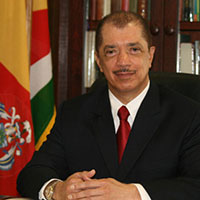
James Alix Michel
What Was Expected of COP30 were modest yet critical. After the disappointments of Copenhagen (2009) and the optimism sparked by Paris (2015), developing nations, small island states, Indigenous groups and a swelling youth movement demanded three things:
1. Binding phase out timelines for coal, oil and gas. 2. A fully funded Loss and Damage Facility to compensate vulnerable countries already suffering climate impacts. 3. Scaled up adaptation finance—tripling the $120 billion a year pledge and ensuring it reaches the frontline communities that need it most.
However the negotiations evolved into a tug of war between ambition and inertia. Wealthier nations, still reeling from economic shocks, offered incremental increases in adaptation funding and a new Tropical Forests Forever Facility (TFFF) worth $125 billion, with 20 percent earmarked for Indigenous stewardship. The Global Implementation Accelerator—a two year bridge to align Nationally Determined Contributions (NDCs) with 1.5 °C—was launched, alongside a Just Transition Mechanism to share technology and financing.
However, the text on fossil fuel phase out remained voluntary; the Loss and Damage Fund was referenced but not capitalised; and the $120 billion adaptation pledge fell short of the $310 billion annual need.
But there were Voices That Could Not Be Ignored.
Developing Nations (the G77+China) reminded the plenary that climate justice is not a charity—it is a legal obligation under the UNFCCC. They demanded that historic emitters honor their “common but differentiated responsibilities.”
Island States(AOSIS) warned that sea level rise is no longer a future scenario; it is eroding coastlines and displacing entire cultures. Their plea: “1.5 °C is our survival, not a bargaining chip.”
Indigenous Peoples highlighted the destruction of Amazon and Boreal forests, urging that 30 percent of all climate finance flow directly to communities that protect 80 percent of biodiversity.
Youth — The Gen Z generation, marched outside the venue, chanting “We will not be diluted” demanding binding commitments and accountability mechanisms.
The Legacy of Copenhagen, Paris, and the Empty COPs –
I attended COP15 in Copenhagen (2009), where the “Danish draft” was rejected, and the summit collapsed amid accusations of exclusion. The disappointment lingered until Paris (2015), where the 1.5 °C aspiration was enshrined, sparking hope that multilateralism could still work. Since then, COPs have been a carousel of promises: the Green Climate Fund fell $20 billion short; the 2022 Glasgow Climate Pact promised “phasing out coal” but left loopholes. Each iteration has chipped away at trust.
COP30 was billed as the moment to reverse that trend.
And the result? Partial progress, but far from the transformational shift required.
Did We Achieve What We Hoped For?
In blunt terms: No. The pledges secured are insufficient to limit warming to 1.5 °C, and critical gaps—binding fossil fuel timelines, robust loss and damage funding, and true equity in finance—remain unfilled.
Yet, there are glimmers. The tripling of adaptation finance, the first concrete allocation for Indigenous led forest protection, and the creation of an Implementation Accelerator signal that the architecture for change exists. The challenge now is to fill it with real money and accountability.
Let us look at ‘What Must Happen Next’
1. Full Capitalisation of Loss and Damage Fund – G20 nations must commit 0.1 % of GDP and disburse within 12 months. 2. Binding Fossil Fuel Phase out – Coal, oil and gas with just transition financing for workers. 3. Scale Adaptation Finance to $310 billion/yr – Re channel subsidies from fossil fuels to resilience projects. 4. Direct Funding for Indigenous and Youth Initiatives – Allocate 30 % of climate finance to community led stewardship. 5. Strengthen Accountability – Mandate annual NDC updates with independent verification and penalties for non compliance.
But for all this to become reality there must be a determined effort to achieve Future Actions. We have watched promises fade after every COP, yet the physics of climate change remains unforgiving. The urgency is not new; the window to act is shrinking. But hope endures – in the solar panels lighting remote villages, in mangroves being restored to buffer storms, in the relentless energy of young activists demanding a livable planet.
Humanity has the knowledge, technology, and resources. What we need now is the collective political will to use them. Let COP30 be remembered not as another empty summit, but as the turning point where the world chose survival over complacency.
The future is not written; we write it with every decision we make today.
James Alix Michel, Former President Republic of Seychelles, Member Club de Madrid.
LILONGWE-(MaraviPost)-Member of Parliament (MP) for Mulanje Central, Kondwani Nankhumwa on Tuesday brought the sons of the late comedy icons, Izeki and Jakobo, to the National Assembly as part of preparations for a memorial show scheduled for this coming Saturday.
The children of the two legendary comedians whose real names were John Nyanga (Izeki) and Eric Mabedi (Jakobo)are expected to host a special tribute performance that aims to honour their fathers’ contribution to Malawi’s entertainment industry.
The show, which will feature joint performances by the sons, is designed to revive the duo’s legacy and celebrate their unique comedic style that captivated Malawians for decades.
Speaking in Parliament, Nankhumwa said he felt it was important to introduce the children to the august House to seek support from Members of Parliament and the wider public.
He emphasized that the late comedians played a significant role in promoting local arts, culture, and social commentary, and therefore deserved national recognition even after their passing.
“Izeki and Jakobo made Malawi laugh during difficult times. Supporting their children in continuing the legacy is one way of honouring these fallen heroes,” Nankhumwa said.
The sons William Nyanga and Maziko Mabedi expressed gratitude for the opportunity, saying the upcoming show will not only celebrate their fathers’ work but also mark the beginning of new artistic collaborations between their families.
They appealed to Malawians to attend in large numbers, promising a performance that blends nostalgia with fresh talent.
The memorial show is expected to attract fans, artists, and cultural stakeholders who have followed the iconic pair’s journey over the years.
Nankhumwa also called for improved welfare systems for athletes and entertainers, stressing that many of them die in poverty because they lack medical insurance, pension schemes, and proper rehabilitation support.
Nankhumwa urged government and stakeholders in the creative sector to establish structures that can protect sports and arts personalities during and after their careers.
Share this:
Like this:
LikeLoading…
Discover more from The Maravi Post
Subscribe to get the latest posts sent to your email.
HARARE-(MaraviPost)-The Premier Soccer League (PSL) of Zimbabwe has agreed in principle to expand the top-flight league following a proposal by the Zimbabwe Football Association (ZIFA) aimed at increasing the number of participating teams and restructuring the country’s football system.
The development was announced in a statement signed by PSL Communications and Media Liaison Officer, Kudzai Bare,the PSL confirmed that it had convened an Extraordinary General Meeting to discuss ZIFA’s proposal.
ZIFA recommended that the league expand from 18 to 20 teams starting from the 2026 season, alongside the establishment of a National First Division League.
According to the PSL, the meeting resolved to suspend relegation for the 2025 season.
This decision will allow the league to accommodate newly promoted teams, resulting in a temporary expansion to 22 teams for the 2026 campaign.
The transitional measure is meant to ensure a smooth shift into the new structure.
The PSL further indicated that after the conclusion of the 2026 season, the league will revert to the proposed 20-team format beginning in 2027.
This marks a significant milestone in the long-term restructuring of Zimbabwe’s football leagues.
In addition to the expansion, the PSL has proposed a phased approach to implementing the National First Division League.
The body expressed optimism that the new division could become fully operational within the next three years, representing a major step toward strengthening the country’s football development pathways.
Bare reiterated the league’s commitment to working closely with national football authorities to ensure the success of the reforms.
The changes are expected to reshape the competitive landscape of Zimbabwean football, offering more opportunities for clubs while aligning the domestic league structure with broader development goals.
Share this:
Like this:
LikeLoading…
Discover more from The Maravi Post
Subscribe to get the latest posts sent to your email.
BLANTYRE-(MaraviPost)-Bashir Sharriff and Sheila Chinkhandwe were crowned champions in the men’s and women’s divisions respectively; at the inaugural National Bank of Malawi plc (NBM) Seniors Golf Competition held at the Country Club Limbe on Saturday.
With a handicap of 20, Sharriff topped the field with a gross score of 90 and a net 70 points, earning him K200,000 and the trophy.
He was followed by NBM plc Pension Administration Limited (PAL) Chief Executive Officer (CEO), William Mabulekesi, who returned a gross of 84 and a net of 70 points to claim K150,000, while Mac Hanjahanja finished third with a gross of 87 and a net 71 to walk away with K100,000.
In her category, Chinkhandwe led with a gross score of 108 and a net 85, earning her K200,000, followed by Khungekile Madise who posted a gross of 124 and a net 89, receiving K150,000.
The tournament also recognised specialty performances, with Hanjahanja winning the nearest-to-the-pin prize and High Court Judge Justice Masauko Msungama taking the longest-drive award.
They both received K50,000 for their achievements.
Reflecting on his victory, Sharriff expressed his appreciation to NBM plc and his playing partners for a memorable day on the course.
“I have been playing this game for about 45 to 48 years. Today, I had the privilege to play with the sponsor, and I enjoyed my day on the course. I scored 45 on the front nine and 45 on the back nine. With my handicap of 20, I ended up with a net score of 70, which made me the winner of this National Bank Seniors Championship today,” said Sharriff.
Chinkhandwe, while celebrating her win, also encouraged greater participation of senior lady golfers.
“Only two ladies participated, which I found really disappointing. There are many senior lady golfers in Malawi, but for different reasons, most were unable to attend. I hope that next year we will have more women joining the competition,” said Chinkhandwe.
Speaking on the motivation behind NBM plc’s sponsorship, Mabulekesi, stressed the Bank’s commitment to wellness and active ageing.
“The National Bank takes the well-being of people seriously. We established the Wellness Programme to encourage physical activity and help people unwind from stress. When we looked at the Senior Golfers Society of Malawi, we saw retirees who needed a space to remain active, interact, and build bonds. Participating in golf keeps them physically fit and mentally engaged, helping them manage conditions like hypertension, high blood pressure, diabetes, and dementia,” said Mabulekesi.
Chairman and Captain of the Senior Golfers Society of Malawi, Eric Chinkanda, applauded NBM plc for its support of the event.
“One of our key challenges is securing sponsorships for our exclusive tournaments. Reaching out to corporate entities has been difficult, but in Blantyre we have received support from a few organisations, with the National Bank being one of the notable sponsors,” said Chinkanda.
The event was supported through a K11.2 million sponsorship package from NBM plc, which included cash prizes and golf apparel, further demonstrating the Bank’s commitment to sport, wellness, and community engagement.
Share this:
Like this:
LikeLoading…
Discover more from The Maravi Post
Subscribe to get the latest posts sent to your email.