Harare based Flamboyant preacher Edd Branson has congratulated American Baptist pastor and politician Sen. Raphael Warnock who defeated Republican challenger Herschel Walker in a Georgia runoff election Tuesday, ensuring Democrats an outright majority in the Senate for the rest of President Joe Biden’s current term and capping an underwhelming midterm cycle for the GOP in the last major vote of the year.
Edd Branson took to Twitter to congratulate fellow preacher saying, “Congratulations @ReverendWarnock A win for one preacher is a win for all preachers.”
This comes at a time when preachers and men of God are getting more involved in politics and business leadership across the globe.
Assemblies of God preacher Reverend Lazarus Chakwera won elections in Malawi to become the nation’s President.
Raphael Warnock is a preacher at Ebenezer Baptist Church. Currently congress has 7 ordained preachers who won elections to serve in congress.
In last month’s election, Warnock led Walker by 37,000 votes out of almost 4 million cast, but fell short of the 50% threshold needed to avoid a runoff. The senator appeared to be headed for a wider final margin in Tuesday’s runoff, with Walker, a football legend at the University of Georgia and in the NFL, unable to overcome a bevy of damaging allegations, including claims that he paid for two former girlfriends’ abortions despite supporting a national ban on the procedure.
The first speaker of the U.S. House of Representatives, Frederick Muhlenberg of Pennsylvania, was a Lutheran minister. Muhlenberg, who served in Congress from 1789-1797, was one of at least nine ministers or pastors to serve in the Continental Congress. The others were Benjamin Contee of Maryland, Abiel Foster of New Hampshire, James Manning of Rhode Island, Joseph Montgomery of Pennsylvania, Jesse Root of Connecticut, Paine Wingate of New Hampshire, John Witherspoon of New Jersey and John Joachim Zubly of Georgia. Contee, Foster, Muhlenberg and Wingate went on to serve in the U.S. Congress.
The first African American to serve in Congress was a minister in the African Methodist Episcopal Church (AME). In 1870, less than five years after the end of the Civil War, the Rev. Hiram Rhodes Revels was elected by the Mississippi Legislature to fill a vacant seat in the U.S. Senate as a Republican. Democrats in Congress tried to block Revels from taking office, arguing, among other things, that Revels had not been a U.S. citizen until the 14th Amendment was adopted in 1868. Revels’ own party rallied around him, however, and he was finally sworn in on Feb. 25, 1870. He served until his term expired in 1871
At least 10.5 million children have been orphaned by covid-19. David Cox reports on the global efforts to recognise and secure a future for them
As soon as the covid-19 pandemic began, John Bridgeland and Gary Edson knew that it would leave a hidden toll.
The two former US government officials, who had played an instrumental role in coordinating President George W Bush’s emergency plan for AIDS relief in sub-Saharan Africa, were well aware of the consequences that a deadly infectious disease can wreak on the lives of children. It was the estimated 14.9 million children orphaned by AIDS that they had in mind when co-founding Covid Collaborative, an organisation bringing together experts in health, education, and economics to shape the US response to the pandemic.1
“John and Gary knew early on that there were going to be orphans with this pandemic, both globally and within the US,” says Catherine Jaynes, who leads the collaborative’s initiative to support covid bereaved children. “Since then, we have been working not only with the White House, but members of Congress and key partners on the ground to try to help these families and connect them to resources.”
The collaborative commissioned a 2021 report, Hidden Pain,2 which provided some of the first concrete details on children orphaned by covid-19. To date, there are at least 10.5 million of these children worldwide,3 with studies showing that the burden has fallen heaviest on low income nations. One report in May 2022 revealed that an estimated 40.9% of covid-19 orphans are in South East Asia and 23.7% in Africa.4 Egypt, India, Indonesia, Nigeria, and Pakistan are the five countries bearing the brunt of the crisis.4
In high income nations, it is ethnic minorities that have been hit hardest. The Hidden Pain report revealed that in the US, American Indian, Alaska Native, Native Hawaiian, and Pacific Islander children were four times more likely to have been orphaned than their white counterparts, with Black and Hispanic children two and a half times more likely. The fate of these children will represent some of the most profound long term consequences of the pandemic.
Three decades of research on AIDS orphans has shown that losing a caregiver places the bereaved children at increased risk of abuse,5 as well as mental health problems such as depression, anxiety, and suicide.6 Other long term consequences include higher rates of alcohol and other substance use disorders, worse peer relationships, and reduced employment opportunities, often as a result of dropping out of school.2
But it has also provided years of learning which could be used to establish policies to help.
“We literally have the research to show what works,” says Susan Hillis, co-chair of the Global Reference Group on Children Affected by Covid-19 in Crisis, a non-governmental organisation (NGO) linked to the World Health Organization which was established in July 2021 to develop up-to-date evidence of children affected by covid-19 associated orphanhood. “We have models that we could quickly implement if there were political will at a national, regional, and global level.”
Finding the vulnerable
One of the first challenges is identifying these vulnerable children—and very few countries have an adequate solution.
Five years ago, Brazil, with an estimated 158 600 covid-19 orphans,7 introduced a box on all death certificates which indicates if a child under 18 has been left behind, making it easier for services to check on their welfare. Hillis says that this identification system has already proven invaluable for answering basic questions such as whether the child in question is safe, still in school, and has sufficient food, and could be easily adopted elsewhere.
“There are several countries interested in copying this system,” she says. “For example, I’m going to Malawi and Zambia to meet with government leaders and Unicef to begin to have those discussions.”
Even the US has no systematic way of tracking children who have lost a parent or caregiver. The Covid Collaborative is planning a pilot study in Utah within the next two months, which will aim to use various administrative datasets, such as birth records, to automatically detect whether there are children left behind after someone has died.
“Utah has a significant number of indigenous populations, and we know that American Indians in particular, have been hit hard by this pandemic,” says Jaynes. “We’re choosing a place which allows us to learn how something like this could work, but we hope to expand geographies in the next year or two.”
Securing their future
After finding orphans, there is the question of securing their future. Charles Nelson, a Harvard University neuroscientist best known for his research on institutionalised children in Romania,8 says that it is vital to avoid sending them to orphanages.
“We need to move with alacrity to get these children into stable, supportive environments,” he says. “At all costs we should avoid institutional care and aim for some kind of family care. If a relative isn’t possible, then a permanent family rather than multiple foster care placements. The bottom line is that institutional care derails development, and the longer children remain in such care, the worse the outcomes.”
In India, where there are more than two million covid-19 orphans,9 NGOs are now putting pressure on local governments to release data on the number of children in orphanages, as well as the number who could be legally adopted, which could make it easier for other families to take those children into their care.
Hillis is looking at models around the world in which faith communities collaborate with social services to identify children in need and help find them new homes. She cites the example of Brownsville, Texas, where African American pastors have formed a partnership with the local school and social workers to help covid-19 orphans. “They have years of history of being able to help identify relatives who might be good bets,” she says. “We’re now seeing that collaboration between local government and faith leaders replicated in 27 states.”
But simply relocating these children is not enough. Researchers say there is also an imperative to provide them with sufficient financial assistance to meet their needs. Hillis says that in three quarters of cases, orphaned children have lost their father to the virus, resulting in a substantial income deficit for the family.
“Evidence shows that kin care is the absolute best option for these children,” says Lucie Cluver, professor of child and family social work at the University of Oxford. “But those families are now under extreme stress, and effective policies are cash transfers to help families look after children.”
Legacy
So far, Mexico, Peru, and South Africa have all committed to providing nationwide monetary support to children orphaned by covid-19 in the form of grants or monthly stipends, while at least 11 states and some major cities across Brazil have either passed laws or are considering bills which promise to do the same.10 Colombia is on the way to incorporating covid-19 orphans specifically into their national child action plan priorities, creating a single national registry for these children and a comprehensive care plan which will include a periodic monetary transfer.
In some particularly impoverished nations like Zambia, however, such is the crisis wreaked first by AIDS and now covid-19 that Hillis is calling on external organisations to step in and provide financial assistance. “Zambia has the highest prevalence of AIDS orphanhood in the world, and it now has 45 800 covid-19 orphans,” she says. “In Zambian culture, neighbouring families tend to try to take care of the children, but there are some communities where the pandemic has decimated the employment options to such an extent that nobody really has the resources to feed anyone other than their own.”
At the same time, researchers are growing frustrated that higher income countries with the resources to do more have yet to commit to specific programmes to help their own orphans. While the UK’s 15 600 covid-19 orphans11 will come under existing NHS social care, there is disappointment that no specific initiatives have been announced to provide these children with targeted psychological support or counselling. “Sadly, we aren’t aware of any specific initiatives planned in the UK,” says Juliette Unwin, a researcher at Imperial College London school of public health. “We would encourage existing schemes to seek out and support these children.”
In California, the state government has allocated $100m to create trust funds, known as baby bonds, which will provide a financial safety net for covid-19 orphans from low income backgrounds, when they reach adulthood.12 However, while the White House has recognised the plight of these children through a US presidential memorandum, no official support plan has been put in place at the federal level.
“We’re pushing the administration to do more,” says Jaynes. “We think that this is a topic that should resonate with President Biden—he lost his first wife and his children were left without a mother. We’re hoping that through President Biden’s State of the Union or his next budget, we can have some language that would provide for some of these opportunities.”
Hillis says it is vital that more countries start investing in more expansive schemes to help bereaved children. “We need to figure out better ways of combining the economic support with psychosocial support.”
“We’re already seeing an Ebola outbreak in Uganda, where mortality is around 50%—half of these victims will be leaving behind orphaned children,” she adds. “And this will happen again.”
Footnotes
Competing interests: I have read and understood BMJ policy on declaration of interests and have no relevant interests to declare.
Commissioned, not externally peer reviewed
This article is made freely available for personal use in accordance with BMJ’s website terms and conditions for the duration of the covid-19 pandemic or until otherwise determined by BMJ. You may download and print the article for any lawful, non-commercial purpose (including text and data mining) provided that all copyright notices and trade marks are retained.
Testing new approaches for preventing gender-based violence to galvanize more and new partners and resources. Credit: UN Women
UNITED NATIONS, Nov 30 2022 (IPS) – How are the multiple shocks and crises the world is facing changing how we respond to gender-based violence? Almost three years after the COVID-19 pandemic triggered high levels of violence against women and girls, the recent Sexual Violence Research Initiative Forum 2022 (SVRI) shed some light on the best ways forward.
Bringing together over 1,000 researchers, practitioners, policymakers and activists in Cancún, Mexico, the forum highlighted new research on what works to stop and address one of the most widespread violations of human rights.
While some participants candidly – and bravely – shared that their initiatives did not have the intended impact, many discussed efforts that transformed lives, in big and small ways.
After 5 days of the forum one thing was clear; a lack of evidence is not what is standing in the way of achieving a better future. It is a lack of opportunities and the will to apply that evidence.
Among the many shared findings, UNDP presented its own evidence.
Since 2018, the global project on Ending Gender-based Violence and Achieving the Sustainable Development Goals (SDGs), a partnership between UNDP and the Republic of Korea, and in collaboration with United Nations University International Institute for Global Health, has tested new approaches for preventing and addressing gender-based violence, to galvanize more and new partners, resources, and support to move from rhetoric to action.
Three key strategies have emerged.
1. We need to integrate
Gender-based violence (GBV) intersects with all areas of sustainable development. That means that every development initiative provides a chance to address the causes of violence and to transform harmful social norms that not only put women disproportionately at risk for violence, but also limit progress.
Bringing together diverse partners to jointly incorporate efforts to end GBV into “non-GBV” programmes has been central to the Ending GBV and Achieving the SDGs project. Pilots in Indonesia, Peru and the Republic of Moldova integrated a GBV lens into local development planning.
The results were local action plans that focused on needs and solutions identified by the communities themselves, including evidence-based GBV prevention programming such as the Common Elements Treatment Approach, which has been proven to reduce violence along with risk factors such as alcohol abuse. This approach is growing, opening up new and more spaces for this work.
2. We need to elevate
While evidence is crucial to creating change, the work doesn’t stop there. We also need to elevate this evidence to policy makers and to support them in putting the findings into action. In our global project, we went about this in different ways.
In Peru women’s rights advocates and the local government worked together to draft a local action plan to address drivers of violence in the community of Villa El Salvador (VES). By working collaboratively and building trust between key players, the project was able to take a more holistic approach and to create stronger alliances to boost its sustainability and impacts.
In particular, the local action plan was informed by cost analysis research that showed that this approach would pay for itself if it prevented violence for only 0.6 percent of the 80,000-plus women in VES who are at risk for violence every year.
Since the pilot’s launch, more than 15 other local governments have expressed interest in the model, and it has already been replicated in three.
3. We need to finance
Less than 1 percent of bilateral official development assistance (ODA) and philanthropic funding is given to prevent and address GBV, despite the fact that roughly a third of women have experienced physical or sexual violence.
The “Imperative to Invest” study, funded by the EU-UN Spotlight Initiative and presented at the SVRI Forum, shows just what can be achieved with a US$500 million investment. The study highlights that Spotlight’s efforts will have prevented 21 million women and girls from experiencing violence by 2025.
The Ending GBV and Achieving the SDGs project also finds positive results when financing local plans. Through pilot initiatives in Peru, Moldova and Indonesia, it was possible to mobilize funds when different municipal governments take ownership of participatory planning processes at an early stage.
The local level is a key, yet an often overlooked, entry point to identifying community needs and, through participatory, multi-sectoral partnerships, to translate them into funded solutions.
In Moldova the regional government of Gagauzia assigned funds to create the region’s first safe space, with the support of the community.
The SVRI Forum was living proof that a better future is possible. It offered profound moments for thoughtful exchange, learning with partners and peers, and deepened our own reflections on the outcomes and next steps for this global project.
As we approach the final countdown to meeting the SDGs, including SDG5.2 on eliminating violence against women and girls, it has never been more urgent to take all this evidence and turn it into action against gender-based violence. Let’s act today.
Jacqui Stevenson is Research Consultant UNU International Institute for Global Health, Jessica Zimerman is Project Specialist, Gender-based Violence, UNDP, and Diego Antoni is Policy Specialist Gender, Governance and Recovery, UNDP.
UNITED NATIONS, Nov 28 2022 (IPS) – A sign outside the United Nations reads, perhaps half-seriously, that it is a “No Drone Zone”—and “launching, landing or operating Unmanned or Remote-Controlled aircraft in this area is prohibited”.
The “warning” comes even as Unmanned Aerial Vehicles (UAVs) – or drones – are some of the new weapons of war deployed mostly by the US, and more recently, by Iran, Ukraine and Russia in ongoing military conflicts.
But the unarmed versions continue to be deployed by UN peacekeeping forces worldwide and by national and international humanitarian organizations.
In a recently-released report, the UN Population Fund (UNFPA says for women in Botswana, especially those living in remote communities where medical supplies and blood may not be in stock, giving birth can be life-threatening.
In 2019, the country recorded a maternal mortality rate of 166 deaths per 100,000 births, more than double the average for upper-middle-income countries.
Lorato Mokganya, Chief Health Officer in the Ministry of Health and Wellness, is quoted as saying that when a woman has lost a lot of blood during childbirth and may need to be transferred to a bigger medical facility, she first needs to be stabilized where she is before being driven out of that place. Timely delivery of blood can be lifesaving.
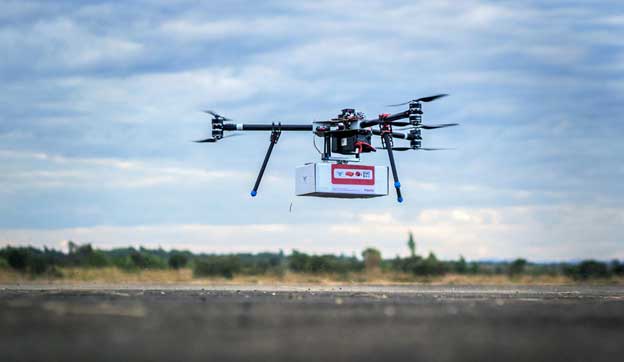
“A drone can be sent to deliver the blood so that the patient is stabilized,”
In an effort to curb the country’s preventable maternal deaths and overcome geographical barriers this innovative initiative will revolutionize the delivery of essential medical supplies and services across Botswana, says UNFPA.
Joseph Chamie, a former director of the UN Population Division and a consulting demographer., told IPS the increased use of drones for humanitarian and peacekeeping missions of the United Nations is certainly a good idea and should be encouraged.
“Why? Simply because the numerous benefits from the use of drones greatly outnumber the possible disadvantages”.
As is the case with all new technologies, he pointed out, resistance to the use of drones is to be expected. The public’s distrust in the use of drones is understandable given their use in military operations and surveillance activities.
Also, it should be acknowledged that drones could be misused and efforts are needed to ensure privacy, security and safety, said Chamie.
“In brief, the use of drones should be promoted and facilitated in the work of the UN’s humanitarian and peacekeeping operations as it will greatly enhance the effectiveness of their vital work,” he declared.
Credit: United Nations
Drones have been deployed in several UN peacekeeping missions, including the Democratic Republic of Congo (DRC), Rwanda and Uganda—going back to 2013.
Although this technology is not a magic solution, “the promise of drones is really tremendous,” says Christopher Fabian, principal advisor on innovation at the UN Children’s Fund (UNICEF).
For UNICEF and other humanitarian and development agencies, he said, in an interview with UN News, drone technology can make a big difference in three ways.
First, drones can leapfrog over broken infrastructure in places where developed transportation networks or roads do not exist, carrying low-weight supplies.
Second, UAVs can be used for remote sensing, such as gathering imagery and data, in the wake of natural disasters like mudslides, to locate where the damage is and where the affected peoples are.
Third, drones can extend wi-fi connectivity, from the sky to the ground, providing refugee camps or schools with access to the Internet.
As big as a Boeing 737 passenger jet and as small as a hummingbird, a huge variety of drones exist. According to research firm Gartner, total drone unit sales climbed to 2.2 million worldwide in 2016, and revenue surged 36 per cent to $4.5 billion.
Although UNICEF’s use of drones has been limited, the agency is exploring ways to scale up the use of UAVs in its operations, Fabian said.
“Hardware itself does not violate human rights. It is the people behind the hardware,” said Fabian, stressing the need to “make sure that any technology we bring in or work on falls within the framing of rights-based documents,” such as the Convention on the Rights of the Child.
UNICEF has a set of guiding principles for innovation, which includes elements like designing with the end-user.
For drone applications to spread further, Fabian said, the UN has a strong role in advocating this technology and ensuring that policy is shared with different governments.
In addition, governments have to clearly define why they need drones and what specifically they will be used for, while also building up national infrastructure to support their use.
The private sector must understand that the market can provide them real business opportunities.
In 10 to 20 years, drones might be “as basic to us as a pen or pencil,” said Fabian.
“I believe this technology will go through a few years of regulatory difficulty but will eventually become so ubiquitous and simple that it’s like which version of the cell phones you have rather than have you ever use the mobile phone at all,” he said.
Meanwhile, armed UAVs are being increasingly used in war zones in the Middle East, Asia, Africa and most recently Ukraine.
The US has launched drone strikes in Pakistan, Syria, Yemen, Somalia, Iraq, Libya and Afghanistan targeting mostly terrorist groups. But the negative fallout has included the deaths of scores of civilians and non-combatants.
In recent months, the use of drones by both Russia and Ukraine has triggered a raging battle at the United Nations while Iran has launched drone attacks inside Iraq.
The US, France, UK and Germany have urged the UN to investigate whether the Russian drones originated in Iran. But Russia has denied the charge and insisted the drones were homemade.
Russia’s First Deputy Permanent Representative to the UN, Ambassador Dmitry Polyanskiy, urged Secretary-General António Guterres and his staff on October 25 not to engage in any “illegitimate investigation” of drones used in Ukraine.
Meanwhile, going back to 2017, Malawi, in partnership with UNICEF, launched Africa’s first air corridor to test the humanitarian use of drones in Kasungu District.
Also with UNICEF, Vanuatu has been testing the capacity, efficiency and effectiveness of drones to deliver life-saving vaccines to inaccessible, remote communities in the small Pacific- island country, according to the United Nations.
Vanuatu is an archipelago of 83 islands separated over 1,600 kilometres. Many are only accessible by boat, and mobile vaccination teams frequently walk to communities carrying all the equipment required for vaccinations – a difficult task given the climate and topography.
To extend the use of drones, UNICEF and the World Food Programmes (WFP) have formed a working group.
In addition, UNICEF, together with the Office of the UN High Commissioner for Refugees (UNHCR), chairs the UN Innovation Network, an informal forum that meets quarterly to share lessons learned and advance discussions on innovation across agencies, the UN points out.
“Drones are also used in other parts of the UN system. The International Atomic Energy Agency (IAEA) and its partners have introduced a new quadcopter drone to visually map gamma radiation at Japan’s Fukushima Daiichi nuclear plant, which was damaged by the devastating 2011 tsunami”.
ROMEO, or the Remotely Operated Mosquito Emission Operation, met the competition’s aim of improving people’s lives. It was designed to transport and release sterile male mosquitoes as part of an insect pest birth control method that stifles pest population growth.
Some UN peacekeeping missions, such as those in the Democratic Republic of the Congo, Mali and the Central African Republic, have deployed unarmed surveillance UAVs to improve security for civilians, according to the UN.
The UN, however, warns that drone technology can be a double-edged sword. UN human rights experts have spoken out against the lethal use of drones.
This article is part of IPS coverage of the International Day for the Elimination of Violence against Women on Nov. 25.
“Not one woman less, respect our lives” writes a Peruvian woman on the effigy of a woman in a park in front of the courthouse, before a demonstration in Lima over the lack of enforcement of laws against femicides and other forms of violence against women. CREDIT: Mariela Jara/IPS
LIMA, Nov 24 2022 (IPS) – Violence against women has failed to decline in the Latin American region after the sharp rise recorded during the COVID-19 pandemic, while preventing the causes of such violence remains a major challenge.
“We attack the problem but not its causes. I have been talking for 30 years about the importance of preventing violence against women by fostering major cultural changes so that girls and boys are raised in the knowledge that it is unacceptable in any form.” — Moni Pizani
This date, established in 1999 by the United Nations, was adopted in 1981 at the first Latin American and Caribbean feminist meeting held in Colombia to promote the struggle against violence against women in a region where it continues to be exacerbated by high levels of ‘machismo’ or sexism.
The day was chosen to pay tribute to Patria, Minerva and Maria Teresa Mirabal, three sisters from the Dominican Republic who were political activists and were killed on Nov. 25, 1960 by the repressive forces of the regime of dictator Rafael Trujillo.
“It is not possible to confirm a decrease in gender violence in the region at this post-pandemic moment,” said Venezuelan lawyer Moni Pizani, one of the region’s leading experts on women’s rights. “I could say, from the information I have gathered and empirically, that the level has remained steady after the significant increase registered in the last two years.”
Pizani, who retired from the United Nations, currently supports the UN Women office in Guatemala after a fruitful career advocating for women’s rights. She was twice representative in Ecuador for UN Women and its predecessor Unifem, then worked for East and Southeast Asia and later opened the UN Women Office for Latin America and the Caribbean in Panama City as regional director.
“Before the pandemic we used to talk about three out of 10 women having suffered violence, today we say four out of 10. The other alarming fact is that the impact is throughout the entire life cycle of women, including the elderly,” she told IPS in a conversation in Tegucigalpa, Honduras during a Central American colloquium on the situation of women.
UN Women last year measured the “shadow pandemic” in 13 countries in all regions, a term used to describe violence against women during lockdowns due to COVID.
Seven out of 10 women were found to have experienced violence at some time during the pandemic, one in four felt unsafe at home due to increased family conflict, and seven out of 10 perceived partner abuse to be more frequent.
The study also revealed that four out of 10 women feel less safe in public spaces.
Pizani said the study showed that this violation of women’s human rights occurs in different age groups: 48 percent of those between 18 and 49 years old are affected, 42 percent of those between 50 and 59, and 34 percent of women aged 60 and over.
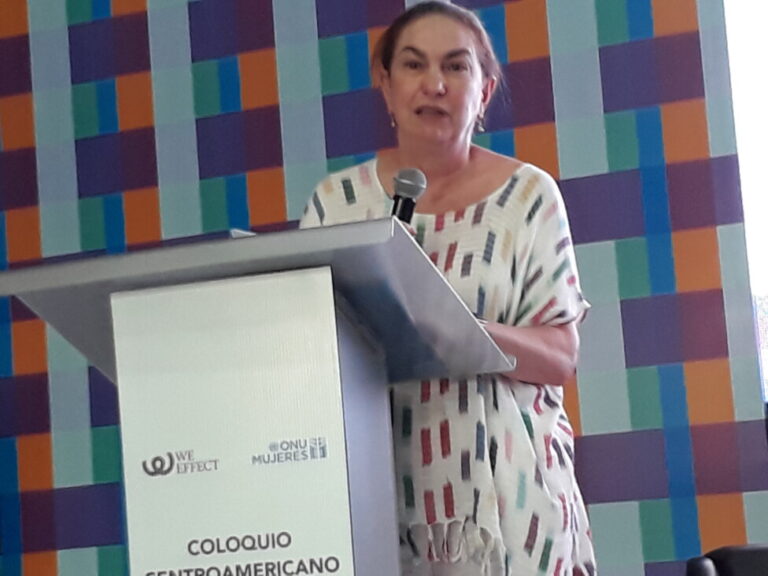
Venezuelan lawyer Moni Pizani, one of Latin America’s leading experts on gender issues, with a long career at UN Women and its predecessor Unifem, takes part in a Central American colloquium in Tegucigalpa on sustainable recovery with gender equality in the wake of the COVID pandemic. CREDIT: Mariela Jara/IPS
According to the same study, unemployed women are the most vulnerable: 52 percent of them experienced violence during the pandemic.
And with regard to mothers: one out of every two women with children also experienced a violation of their rights.
The expert highlighted the effort made by many countries to adopt measures during the pandemic with the expansion of services, telephone hotlines, use of new means of reporting through mobile applications, among others. But she regretted that the efforts fell short.
This year, the region is home to 662 million inhabitants, or eight percent of the world’s population, slightly more than half of whom are girls and women.
Peru is an example of similar situations of gender violence in the region.
It was one of the countries with the strictest lockdowns, paralyzing government action against gender violence, which was gradually resumed in the second half of 2020 and which made it possible, for example, to receive complaints in the country’s provincial public prosecutors’ offices.
The Public Prosecutor’s Office Crime Observatory reported 1,081,851 complaints in 2021 – an average of 117 per hour. The frequency of complaints returned to pre-pandemic levels, which in 2020 stood at around 700,000, because women under lockdown found it harder to report cases due to the confinement and the fact that they were cooped up with the perpetrators.
Cynthia Silva, a Peruvian lawyer and director of the non-governmental feminist group Study for the Defense of Women’s Rights-Demus, told IPS that the government has failed to reactivate the different services and that the specialized national justice system needs to be fully implemented to protect victims and punish perpetrators.
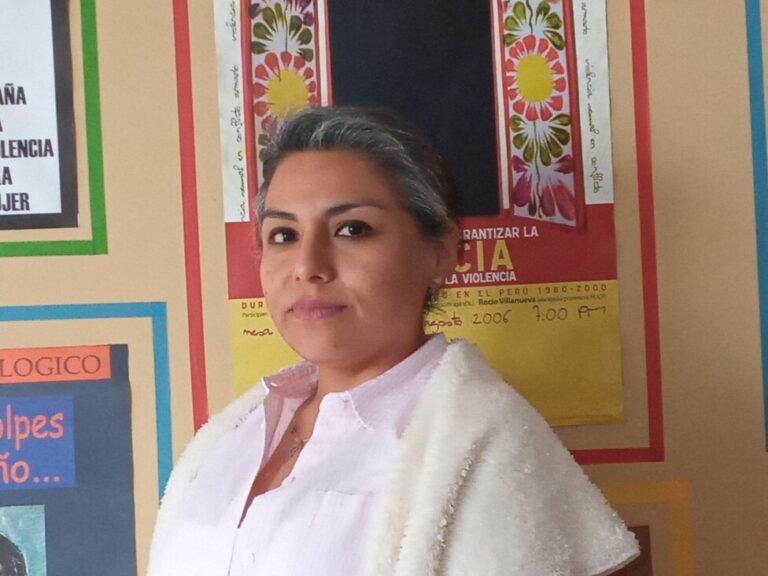
Lawyer Cynthia Silva, director of the Peruvian feminist institution Demus, poses for a picture at the headquarters of the feminist organization in Lima. She stresses the need for government action against gender violence to include not only strategies for attending to the victims, but also for prevention in order to eradicate it. CREDIT: Mariela Jara/IPS
She stressed the importance of allocating resources both for addressing cases of violence and for prevention. “These are two strategies that should go hand in hand and we see that the State is not doing enough in relation to the latter,” she said.
Silva urged the government to take action in measures aimed at the populace to contribute to rethinking socio-cultural patterns and ‘machista’ habits that discriminate against women.
Based on an experience they are carrying out with girls and adolescents in the district of Carabayllo, in the extreme north of Lima, she said it’s a question of supporting “deconstruction processes” so that egalitarian relations between women and men are fostered from childhood.
On Nov. 26 they will march with various feminist movements and collectives against machista violence so that “the right to a life free of violence against women is guaranteed and so that not a single step backwards is taken with respect to the progress made, particularly in sexual and reproductive rights, which are threatened by conservative groups in Congress.”
Adolescent women and men in Lima, the Peruvian capital, wave a huge banner during the march for the International Day for the Elimination of Violence against Women on Nov. 25, 2019, before the outbreak of the COVID-19 pandemic that exacerbated such violence in Latin America. CREDIT: Mariela Jara/IPS
An equally serious scenario
Argentina is another example of gender violence – including femicides – in Latin America, the region with the highest levels of aggression against women in the world, the result of extremely sexist societies.
The problem is that these laws are seriously flawed in their implementation, especially in the interior of the countries, agree UN Women, regional organizations and national women’s rights groups.
Rosaura Andiñach, an Argentine university professor and head of community processes at the Ecumenical Regional Center for Counseling and Service (CREAS), said it is worrying that in her country there are still high rates of femicide, despite the progress made in terms of legislation.
Between January and October 2022, there were 212 femicides and 181 attempted gender-based homicides in the country of 46 million people, according to the civil society observatory “Ahora que sí nos ven” (Now that they do see us).
She said the government still owes a debt to women in this post-pandemic context, as it fails to guarantee women’s rights by not adequately addressing their complaints.
“We do not want the same thing to happen as with a recent case: Noelia Sosa, 30 years old, lived in Tucumán and reported her partner in a police station for gender violence. They ignored her and she committed suicide that afternoon because she did not know what else to do. We are very concerned because the outlook is still as serious as ever in terms of violence against women,” Andiñach said.
It was precisely in Argentina that the #NiunaMenos (Not one woman less) campaign emerged in 2015, which spread throughout the region as a movement against femicides and the ineffectiveness of the authorities in the enforcement of laws to prevent and punish gender-related murders, because femicides are surrounded by a very high level of impunity in Latin America.
Moni Pizani, from UN Women, stressed that the prevention of gender violence should no longer fall short in the region.
“We attack the problem but not its causes. I have been talking for 30 years about the importance of preventing violence against women by fostering major cultural changes so that girls and boys are raised in the knowledge that it is unacceptable in any form,” she underlined.
This strategy, she remarked, “involves investing in youth and children to ensure that the new generations are free from violence, harassment and discrimination, with respect for a life of dignity for all.”