Civil Society Under Attack in Name of Counterterrorism

Active Citizens, Civil Society, Conferences, Development & Aid, Editors’ Choice, Featured, Global, Global Governance, Headlines, Human Rights, IPS UN: Inside the Glasshouse, Peace, Population, Regional Categories, TerraViva United Nations

Civil Society

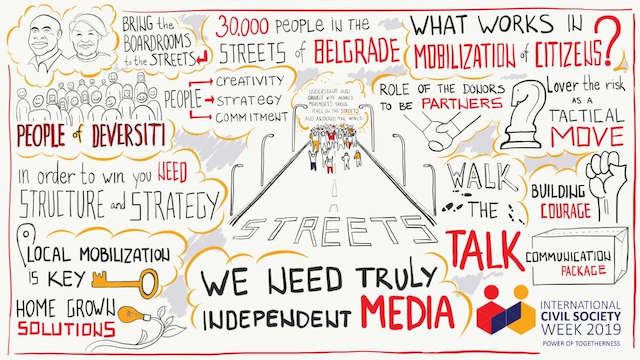
This article is part of a series on the current state of civil society organisations (CSOs), which was the focus of International Civil Society Week (ICSW), sponsored by CIVICUS, and which took place in Belgrade, April 8-12.
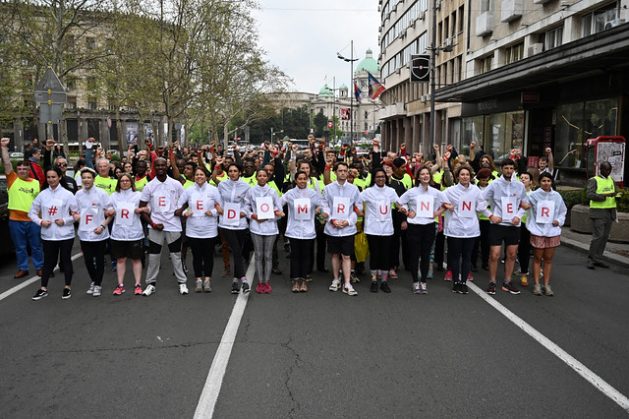
More than 200 civil society leaders and human rights activists from some 100 countries took to the streets of Belgrade, Serbia in solidarity with those whose basic freedoms are at risk. They participated in the International Civil Society Week (ICSW), sponsored by CIVICUS, which took place in Belgrade, April 8-12. Courtesy: CIVICUS

UNITED NATIONS, Apr 15 2019 (IPS) – Counterterrorism measures are not only affecting extremist groups, but are also impacting a crucial sector for peace and security in the world: civil society.


Civil society has long played a crucial role in society, providing life-saving assistance and upholding human rights for all.

However, counterterrorism measures, which are meant to protect civilians, are directly, and often intentionally, undermining such critical work.

“Civil society is under increased assault in the name of countering terrorism,” Human Rights Watch’s senior counterterrorism researcher Letta Tayler told IPS, pointing to a number of United Nations Security Council resolutions as among the culprits.

“Nearly two decades after the September 11 attacks, we are seeing a very clear pattern of overly broad counterterrorism resolutions. We are seeing a clear pattern of violations on the ground that are being carried out in the name of complying with binding Security Council counterterrorism resolutions,” she added.

Just two weeks after September 11, 2001, the UN Security Council unanimously adopted Resolution 1373 which called states to adopt and implement measures to prevent and combat terrorism.

Since then, more than 140 countries have adopted counterterrorism laws.

The newly approved Resolution 2462, passed at the end of March, requires member states to criminalise financial assistance to terrorist individuals or groups “for any purpose” even if the aid is indirect and provided “in the absence of a link to a specific terrorist act.”

While the resolution does include some language on human rights protections, Tayler noted that it is not sufficient.

“It is not sufficiently spelled out to make very clear to member states what they can and cannot do that might violate human rights on the ground,” she said.

Blurred Lines

Among the major issues concerning these resolutions is that there is no universal, legal definition of terrorism, allowing states to craft their own, usually broad, definitions. This has put civil society organisations and human rights defenders (HRDs) alike at risk of detention and left vulnerable populations without essential life-saving assistance.

“I think it is irresponsible of the Security Council to pass binding resolutions that leave up to States to craft their own definitions of terrorism…that’s how you end up with counterterrorism laws that criminalise peaceful protest or criticising the state,” Tayler said.

Oxfam’s Humanitarian Policy Lead Paul Scott echoed similar sentiments to IPS, stating: “The Security Council, by being overly broad, is just giving [governments] the tools to restrict civil society.”

According to Front Line Defenders, an Irish-based human rights organisation, 58 percent of its cases in 2018 saw HRDs charged under national security legislation.

Special Rapporteur on the promotion and protection of human rights while countering terrorism Fionnuala Ní Aoláin found that 67 percent of her mandate’s communications regarding civil society were related to the use of counter-terrorism, and noted that country’s counterterrorism laws are being used as a “shortcut to targeting democratic protest and dissent.”

In April 2018, thousands of people took to the streets in Nicaragua to protest controversial reforms to the country’s social security system.

According to the Office of the UN High Commissioner for Human Rights, over 300 people have been killed, more than 2,000 injured, and 2,000 arrested—some of whom were reportedly subject to torture and sexual violence when detained.

Many of those arrested will also be tried as terrorists due to a new law that expanded the definition of terrorism to include a range of crimes such as damage to public and private property.

At least 300 people, including human rights defenders, face charges of terrorism.

The Central American country said that the law was passed to comply with the Financial Action Task Force (FATF), an intergovernmental body that works alongside the Security Council to combat terrorist financing.

A Civil Society Facing Uncivility

Tayler also pointed to the lack of consequences for States that pass counterterrorism laws that do not abide by their obligations under international law.

In Resolution 2462, member states are told to comply with international humanitarian law when cracking down on terrorist financing but does not require countries to consider the effect of such measures on humanitarian activities such as providing food and medical care.

“In the zeal to be as tough looking as they can possibly can, governments have overlooked very very easy ways to protect those of us who are providing life-saving aid,” Paul told IPS.

The lack of protections for civil society and its impacts was most visible during the 2011 famine in Somalia.

In an effort to restrict “material support” to terrorist groups, countries such as the United States enacted counterterrorism legislation which blocked aid into areas controlled by Al-Shabab.

This not only impeded local and international organisations from doing their job, but one report noted that the constraints contributed to the deaths of over 250,000 people in the East African nation.

The problem has only gotten worse since then, Paul noted.

“The measures imposed by governments are unnecessarily broad and they prevent us from working in areas that are controlled by designated terrorist entities. What they have essentially done is criminalise humanitarian assistance,” he said.

Tunisia has used its terrorism financing laws to shut down a number of civil society organisations.

According to the Euro-Mediterranean Human Rights Monitor, approximately 200 organisations were dissolved and almost 950 others were delivered notices, referring them to courts on charges of “financial irregularities” or “receiving foreign funds to support terrorism” despite the lack of substantive evidence.

Many of the dissolved organisations provided aid and relief for orphans and the disabled.

All Eyes on Deck

Tayler highlighted the importance of the UN and civil society to monitor how counterterrorism resolutions such as Resolution 2462 are used on the ground.

“While we would love to see amendments to this resolution, pragmatically the next best step is for all eyes—the eyes of civil society, the UN, regional organisations—to focus on just how states implement this resolution to make sure that overly broad language is not used by states to become a tool of repression,” she said.

“The UN and leaders of countries around the world should use International Civil Society Week as an opportunity to take stock of the risk that this trend has posed on both to life-saving aid organisations and human rights defenders and to reverse this dangerous trend,” Tayler added.

Paul pointed to the need to educate both the public and policymakers on counterterrorism and its spillover effects as well as the importance of civil society in the global system.

“Civil society is a key part of effective governance. We don’t get effective public services, we don’t get peace, we don’t get to move forward with the anti-poverty agenda if civil society actors aren’t strong and empowered,” he said.

“If governments aren’t careful about protecting our right to stand up for marginalised and vulnerable populations, everyone will hurt. Not just those populations. It will have an effect broadly on our societies,” Paul added.
 

No Story Worth Dying For?

Active Citizens, Civil Society, Conferences, Editors’ Choice, Featured, Headlines, TerraViva United Nations

Civil Society

This article is part of a series on the current state of civil society organisations (CSOs), which will be the focus of International Civil Society Week (ICSW), sponsored by CIVICUS, and scheduled to take place in Belgrade, April 8-12.

Infringements of press freedom and the targeting of journalists is one of the topics being discussed at the International Civil Society Week (ICSW 2019) – an annual gathering of civil society leaders, activists and engaged citizens taking place in the Serbian capital Apr. 8-12. Courtesy: CIVICUS

BELGRADE, Apr 11 2019 (IPS) – “Stay safe. There’s no story worth dying for.”
That’s the message to journalists from Nada Josimovic, programme coordinator of Amsterdam-based media rights organisation Free Press Unlimited.


Most journalists would agree with her. But beyond the threat of physical harm, women reporters and journalists of colour run another risk: being harassed online, with the spouting of sexist and racist venom.

This, of course, happens to rights defenders as well, all over the world. But in the case of women, the harassment is “sexualised … sometimes with threats of rape,” said Josimovic.

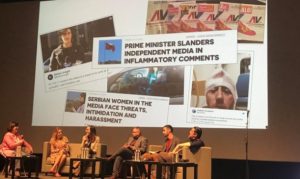
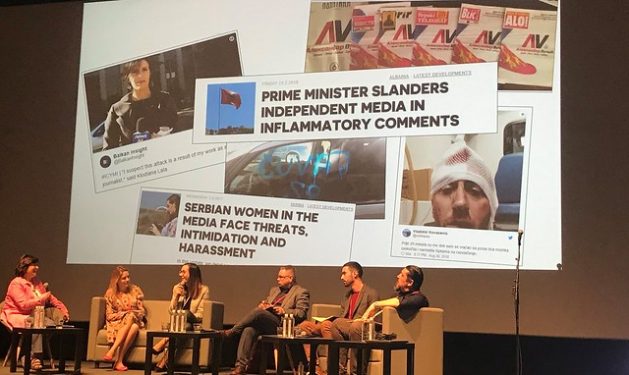
“How does one protect oneself?” she asked, during a panel discussion on press freedom at International Civil Society Week (ICSW 2019) – an annual gathering of civil society leaders, activists and engaged citizens taking place in the Serbian capital Apr. 8-12.

Co-hosted by the Johannesburg-based global civil society alliance CIVICUS, the meeting is focusing on a range of issues that include infringements of press freedom and the targeting of journalists.

As the event took place, news surrounding the deaths of media workers continued. On Apr. 11, the Director-General of the United Nations Educational, Scientific and Cultural Organisation (UNESCO), Audrey Azoulay, issued a statement condemning the killing of a sports reporter in the north-western Mexican town of Salvador Alvarado on Mar. 24.

“I condemn the killing of Omar Iván Camacho Mascareño,” stated Azoulay. “I trust the investigation underway will enable the authorities to bring the perpetrator of this crime to justice.”

Mascareño, of local radio broadcaster Chavez Radiocast, was found dead with signs of severe head trauma and injuries indicating that he had been beaten to death, according to media reports.
UNESCO issues its “condemnations” on a regular basis, given the frequency of attacks.

The UN agency has the mandate to promote the safety of journalists and does so “through global awareness-raising, capacity building and a range of actions, notably the UN Plan of Action on the Safety of Journalists and the Issue of Impunity”, according to the organisation.

This includes a module on Combatting Online Abuse: When Journalists and Their Sources are Targeted, but Josimovic and others stress that enough isn’t being done to end the specific harassment of women journalists.

“I think that media outlets don’t have good support systems for this kind of attacks,” she told IPS. “The legal aspect is also complicated.”

Social media companies, for instance, will not reveal the address of the perpetrators when the targeted individual complains, she said. Additionally, there is sometimes a lack of solidarity from editors and colleagues who have never experienced the harassment.

“Because it’s not happening in the real world, people kind of minimise the effect,” she added. “But women in general face more harassment on-line. In every sector, it’s there.”

Anyone who has doubts about this has only to look at some of the reports via the International Women’s Media Foundation, she said.

Rights activists say that broad coalitions were needed to promote the protection of rights and that journalists and human rights advocates need to work together. Courtesy: CIVICUS

Because of the similarity in methods used to attack rights defenders globally, press freedom groups and civil society organisations should increase ways of working together, said some delegates at the ICSW meeting.

Vukasin Petrovic, senior director for programme strategy at Washington DC-based rights monitoring organisation Freedom House, said that broad coalitions were needed to promote the protection of rights.

“Journalists and human rights advocates are the centrepiece of any strategy,” he told IPS. “The protection of freedom of expression and freedom of assembly are in the interests of both.”

Responding to a question about required journalistic “distance” and impartiality, he acknowledged that sometimes the relationship between the media and civil society can become too close.

“We do need transparency and accountability on all sides,” he said. “But building coalitions can make advocacy more powerful.”

For Dragan Sekulovski, executive director of the Association of Journalists of Macedonia – a country that’s “a champion when it comes to wiretapping” – part of the defence of media needs to come from the sector itself.

That includes promoting quality journalism and “leaving this to the audience to judge”, he said. In this way, public opinion may swing in favour of the media, helping to deter attacks and harassment.

“Quality” journalism requires resources, however, and as various media groups point out, the sector has been ravaged over the past years by job losses, low pay, copyright abuses and other ills.

This is compounded by declining public trust – because of a range of factors, including smear campaigns, accusations of purveying “fake news”, journalists’ own behaviour, and, of course, calling media “the enemy of the people” as American President Donald Trump has done.

According to the Committee to Protect Journalists, many of Trump’s tweets so far as president has “insulted or criticised journalists and outlets, or condemned and denigrated the news media as a whole”.

It has thus become an uphill battle to get some sections of the public to see the importance of journalists’ work, and to engage actively in protecting media freedom, said activists at the ICSW meeting.

“Media organisations need to engage with citizens to make them understand why (citizens) need them,” said Josimovic.

Whether this would stop the attacks and harassment, especially of women journalists, is anyone’s guess. The issue will no doubt be raised again during discussions May 1-3, when the “main celebration” of UNESCO’s World Press Freedom Day takes place in Addis Ababa, Ethiopia.


Smears, Laws, Lack of Cooperation: Tools Against Activists

Active Citizens, Civil Society, Conferences, Europe, Featured, Global, Headlines, Human Rights, IPS UN: Inside the Glasshouse, Population, Regional Categories, TerraViva United Nations

Civil Society

This article is part of a series on the current state of civil society organisations (CSOs), which will be the focus of International Civil Society Week (ICSW), sponsored by CIVICUS, and scheduled to take place in Belgrade, April 8-12.

Michel Forst, Special Rapporteur on the situation of human rights defenders next report will focus on impunity, as only about 5 percent of attacks on rights defenders have been investigated and the perpetrators “brought to justice”. Credit: AD McKenzie/IPS

BELGRADE, Apr 10 2019 (IPS) – The murder of Brazilian politician and human rights activist Marielle Franco just over a year ago and attacks on other rights activists around the world have galvanised civil society organisations, with the United Nations heightening its own strategy to protect rights defenders.


However, some countries aren’t interested in cooperating with civil society or international governmental bodies and even actively engage in smear campaigns against rights advocates.

“An increasing number of states have now refused to cooperate with the UN,” said Michel Forst, Special Rapporteur on the situation of human rights defenders, in the Office of the United Nations High Commissioner for Human Rights.

“They don’t want to invite any more special rapporteurs to visit the countries or to produce reports,” he told journalists at a press briefing during International Civil Society Week (ICSW 2019), an annual gathering of civil society leaders, activists and citizens taking place in the Serbian capital this week, Apr. 8-12.

The meeting – co-hosted by the Johannesburg-based global civil society alliance CIVICUS – has brought together more than 850 delegates who are focusing on issues ranging from “the crackdown on media freedom to emergency assistance for NGOs under attack”. It is also addressing the “power” of solidarity alongside greater accountability.

Forst said he was attending the event to learn from the participants. His next report, to be presented during the UN General Assembly in the fall, will focus on impunity, as only about 5 percent of attacks on rights defenders have been investigated and the perpetrators “brought to justice”, he told journalists.

A growing problem in protecting rights defenders is the way in which some states try to defame activists, Forst said. In regions from Europe to Latin America, there are on-going campaigns to discredit rights advocates, and public opinion can be influenced by the derogatory terminology.
“These campaigns are dangerous for defenders,” he said. “They are called ‘enemies of the state’, they are called ‘promoters of western values’, they are (said to be) ‘against development’.”

In some countries, activists are also accused of having links to terrorism and of opposing progress when they try to block projects that are disastrous for the environment or for indigenous peoples.

“What is also a matter of concern for me is that these campaigns are led by politicians, by political actors, prime ministers, ministers of foreign affairs, ministers of defence,” Forst added.

He said the Belgrade ICSW meeting was important for activists to see that what is happening in their home country or region may also be taking place elsewhere, so that they can try to build bridges and strengthen links.

The meeting has in fact highlighted similarities in methods of repression around the world – methods that include not only physical attacks, but surveillance, travel bans, on-line harassment and the use of government structures and legislation to try to suppress freedoms.

Even as the ICSW meeting takes place, rights organisations elsewhere have been issuing alarms about breaches of civic and media rights. Separately from the event in Belgrade, rights organisation PEN America on Apr. 9 warned that the “Trump administration’s targeting of journalists has reached a new level”.

The group pointed to reports from the U.S.-Mexico border (and leaked documents from a Department of Homeland Security whistle-blower) indicating that “U.S. government agencies have been tracking and monitoring over 50 individuals, mostly journalists and immigration advocates, as they report on the humanitarian situation” at the U.S. southern border.

Government entities have reportedly participated in the “tracking and monitoring of these journalists, including the creation of a U.S. government database containing sensitive personal information”, PEN America said. The group called the database “a shocking and unwarranted violation of journalists’ First Amendment rights” and “an appalling violation of press freedom”.

In France, meanwhile, the national branch of Amnesty International criticised a French “anti-riot” law that could threaten freedom of assembly and expression. The law, adopted by parliament, would allow police to systematically search protestors, and, despite certain assurances, it “remains a serious infringement on public freedom and the balance of power”, Amnesty France stated Apr. 9.

The law comes as France’s Gilets Jaunes (or Yellow Vests) continue their protests, with thousands marching on Apr. 6 in Paris and other cities for the 21st weekend in a row. Certain lawmakers say the legislation is necessary to prevent further destruction of property and life-threatening fires started by protestors during some of the demonstrations.

But France also uses other legislation “to target those defenders who are trying to help and rescue migrants coming to Europe via the Mediterranean sea,” said Forst, who is French.
“We’re seeing more and more the criminalisation of (rights) defenders”, through the use of the law, he said.

In Serbia, anti-government demonstrators are set to intensify their actions Apr. 13 — the day after ICSW 2019 ends — with what promises to be the biggest gathering since protests began last December.

Protestors are calling for free and fair elections and greater media freedom. (Last month some forced their way into the offices of Serbia’s state-run television network, to show dissatisfaction with what they called one-sided reporting.)

At the opening ceremony of ICSW, Serbian activists slammed President Aleksandar Vučić for repressive policies, often without naming him, and some called for protection of the media.

“We will stand up for freedom of journalists… the freedom not to be threatened in any way,” said Maja Stojanovic, of Serbian organisation Civic Initiatives, a co-host of the meeting.

Ahead of ICSW, Serbia was added to a watchlist of “nations where civic freedoms are under serious threat”. The watchlist – released by the CIVICUS Monitor, an online platform that tracks threats to civil society across the globe – said Serbian authorities have “orchestrated a smear campaign against demonstrators, labelling government opponents as ‘paid’ activists working against Serbian interests”.

The confused and disquieting developments in many countries further highlight the need to find cross-border solutions and to create links between rights defenders, Forst said.

The European Union, for instance, has guidelines for embassies of member states abroad on “how to protect rights defenders”, and funding is available for embassies to relocate individuals at risk, Forst told reporters. In addition, a network of shelter cities exists (the number of these is growing with continued attacks).

But it is difficult to relocate at-risk female activists who may have children, and here, too, there is often lack of cooperation or agreement on asylum requests.

While some countries can effectively help rights defenders in far-off regions, they seem powerless when it comes to their own neighbours.

Still, defenders are becoming “more efficient” in forming local, national and international networks, Forst said. “It is a battle … solidarity is important.”

He said the good news is that some countries that were “blocked in the past” are now granting access to international bodies to help protect defenders and to end impunity.

In contrast to states like the Philippines that are dangerous for rights defenders and don’t wish to “do anything to solve the problem”, other countries “like Mexico, Colombia, Honduras, Brazil now – maybe – do recognise, because of the number of killings … that they need to solve the problem,” Forst added.

In Brazil, meanwhile, activists and others are still asking: who killed Marielle Franco?


People Affected by Leprosy in Latin America Unite for Their Rights and Their Voice

Active Citizens, Civil Society, Conferences, Development & Aid, Editors’ Choice, Featured, Global Governance, Headlines, Health, Human Rights, IPS UN: Inside the Glasshouse, Latin America & the Caribbean, Population, Regional Categories, TerraViva United Nations

Health

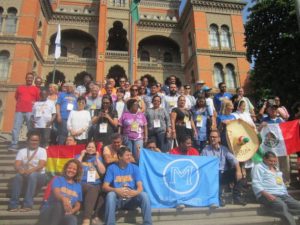
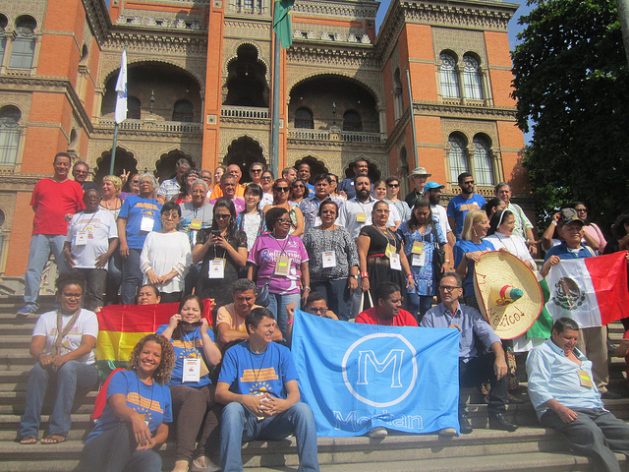
Family photo of part of the 111 participants in the First Latin American and Caribbean Assembly of Organisations of People Affected by Hansen's Disease, on the steps of the Morisco Palace, the headquarters of the Oswaldo Cruz Foundation, which hosted the three-day meeting in Rio de Janeiro, Brazil. Credit: Mario Osava/IPS

Family photo of part of the 111 participants in the First Latin American and Caribbean Assembly of Organisations of People Affected by Hansen’s Disease, on the steps of the Morisco Palace, the headquarters of the Oswaldo Cruz Foundation, which hosted the three-day meeting in Rio de Janeiro, Brazil. Credit: Mario Osava/IPS

RIO DE JANEIRO, Mar 14 2019 (IPS) – With the decision to found a regional coalition to promote rights and greater participation in national and international forums and decisions, the First Latin American and Caribbean Assembly of Organisations of People Affected by Hansen’s disease, popularly known – and stigmatised – as leprosy, came to an end.


The final session of the meeting, on Mar. 14, approved 40 of the 58 proposals presented by the 111 participants in three days of debates at the headquarters of the Oswaldo Cruz Foundation, a renowned scientific, medical and epidemiological research centre in Rio de Janeiro, Brazil.

José Picanço, 46, separated from his family and taken as a newborn to an orphanage because his parents were diagnosed with the disease in 1972, is one of those affected whose right to reparations remains unfulfilled. His three siblings are in the same situation.

When the family was reunited eight years later, the father turned his back on the children. The mother took them in, but died shortly afterwards. “I only lived with her, a saint, for five months,” Picanço recalled, barely managing to hold in his tears while giving testimony at the meeting.

“Humiliated as the children of lepers, suffering bullying and sexual harassment, many of the other children who were with me at the orphanage fell into drug abuse and alcoholism. It was a holocaust,” he said. “I hit my brother on the head, not knowing he was my own brother.”

“Of the 15,000 to 20,000 children separated from their families, more than 80 percent suffer from depression,” said Picanço in an interview with IPS, detailing some of the damage caused by the old rule of segregating the people then called “lepers”.

Mandatory isolation was widespread around the world, during different historical periods, and continues in some countries, even though it is known that the disease is curable and that patients cease to be contagious shortly after starting treatment.

Officially, Brazil abolished this practice in 1976, although it actually lasted 10 more years. Its direct victims were compensated starting in 2007, but their children were not. The activists gathered in Rio de Janeiro called for working for policies of reparations for children separated from their families.

Their complaints and proposals will be taken to the World Congress of associations of people affected by leprosy in Manila in September, which will also receive contributions from Africa and Asia, approved at recent similar regional assemblies.

“The goal is to form a large network of activists, to strengthen the movement” for the eradication of the disease and for care and reparations for those affected, said Kiyomi Takahashi of the independent Nippon Foundation, which is driving this international process of debate and cooperation.

The meeting in Rio de Janeiro fostered “a high-level dialogue, the result of Morhan and Felehansen’s long history of activities,” the Japanese expert told IPS, referring to the Movement for the Reintegration of People Affected by Hanseniasis (Morhan) in Brazil, and the National Federation of Entities Affected by Leprosy or Hansen’s Disease (Felehansen) in Colombia, the two organisers of the regional meeting.

Brazilian activists José Picanço (front) and Evelyne Leandro testified about how Hansen's disease affected them during a Latin American and Caribbean meeting in Rio de Janeiro. Picanço was separated from his parents when they were diagnosed with leprosy when he was born in 1972 and was only reunited with them eight years later, shortly before his mother died. Leandro wrote a book about the difficulties of being diagnosed with the disease in Germany, where she lives. Credit: Mario Osava/IPS

Brazilian activists José Picanço (front) and Evelyne Leandro testified about how Hansen’s disease affected them during a Latin American and Caribbean meeting in Rio de Janeiro. Picanço was separated from his parents when they were diagnosed with leprosy when he was born in 1972 and was only reunited with them eight years later, shortly before his mother died. Leandro wrote a book about the difficulties of being diagnosed with the disease in Germany, where she lives. Credit: Mario Osava/IPS

“Morhan is my safe haven, to preach that separated children should be heard and have opportunities,” said Picanço, who explained that he joined the movement in 1992. Today he gives talks on the direct and indirect effects of the stigma still surrounding the disease, that is suffered by those affected and their families.

A blessing

The disease “was a blessing for me,” Isaias Dussan Weck, 50, the vice-president of the Colombian association Felehansen, told IPS without hesitation.

The diagnosis in 2006 destroyed him, he said. He lost the desire to work or to go out, he let his business of supplying cleaning products to companies go bankrupt, he even contemplated suicide. He ignored the stains on his body that did not prevent him from working and traveling, until they spread to his face, and he noticed that parts of his body were going numb.

He received treatment and was cured, left with only slight numbness in one arm and pains in his left leg.

But everything went badly for him until he was invited to meetings with other people affected by leprosy. “I began to understand, when I heard their testimonies and tears, why a young black girl with severe disabilities said that leprosy was a blessing to her,” Dussan said.

Activism for the benefit of those affected, against the stigma and the damage caused by the disease, in the association of the department of Huila, in southwestern Colombia, allowed him “to gain new meaning for life and to understand and practice love for my neighbour.”

“Helping and seeing a patient’s life improve is a wonderful emotion, and you help other people want to live,” he concluded. That new passion led him to Felehansen, where he took on leadership roles in the federation.

Irma Romero, 42, president of the Nuevo Amanecer Foundation in Barranquilla, on Colombia’s northern coast, had a similar experience. Her lengthy odyssey to a specialist’s diagnosis five years ago reveals the medical system’s shortcomings when it comes to detecting and treating the disease, also known as hanseniasis, which is still viewed by many as “a divine punishment.”

Romero stopped working in the textile industry due to disability and depression. “I couldn’t even walk,” she recalled. “I even denied God,” she told IPS.

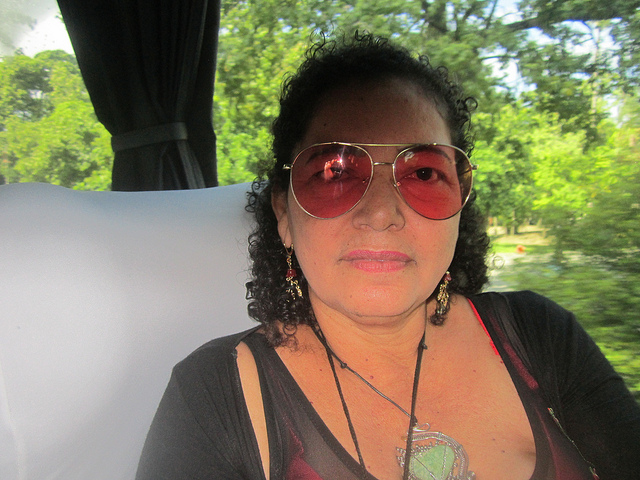
Colombian activist Irma Romero, a native of the city of Barranquilla, sitting on the bus that transported the participants of the First Latin American and Caribbean Assembly of Organisations of People Affected by Hansen's Disease, held Mar. 12-14 in Rio de Janeiro, Brazil. Credit: Mario Osava/IPS

Colombian activist Irma Romero, a native of the city of Barranquilla, sitting on the bus that transported the participants of the First Latin American and Caribbean Assembly of Organisations of People Affected by Hansen’s Disease, held Mar. 12-14 in Rio de Janeiro, Brazil. Credit: Mario Osava/IPS

Treatment using medicinal herbs, self-medication, rejection by relatives, attempts to separate her from her two children and abandonment by her husband all formed part of her suffering, which did not end with her treatment and cure.

The only permanent physical effects are numbness in her hands and feet, and sciatic nerve pain. But the discrimination continued.

“My life changed when I joined the association of affected people” four years ago, she said. “There I found people who had things in common with me, and a newfound love of my neighbour that I did not feel before,” said the activist, who became president of the Foundation the following year and reconciled with God.

Her foundation currently has 60 members. In Barranquilla she estimates that there are “about 200 affected people, but many more are hidden.”

The foundation is one of the 10 associations that make up Felehansen, eight of which call the disease hanseniasis or Hansen’s disease, one of which uses the term leprosy, and another of which refers to disabled people and is made up of patients who received a very late diagnosis.

The World Health Organisation (WHO) defines leprosy – the term it uses – as an infectious and chronic disease “transmitted by air through droplets from the nose and mouth, during close and frequent contacts with untreated cases.” It also specifies that leprosy is “one of the least infectious diseases.”

WHO reports that in 2017 there were 211,009 new cases worldwide, according to official data from 159 countries. That amounts to 0.3 cases per 10,000 inhabitants, which means it classifies as having been “eliminated,” according to WHO criteria.

Change of name: another recommendation

Proposing hanseniasis as the official name for the disease is one of the proposals that came out of the Latin American meeting, headed by Brazil, which has already adopted it, even prohibiting the mention of leprosy in the health system since 1995.

They are different concepts, because leprosy and leper have very negative connotations of “dirt, plague, impurities and divine punishment,” strengthened by numerous mentions with that moral burden in the Bible, argued Faustino Pinto, one of Morhan’s national coordinators.

But the activists from Colombia are not convinced. “People only know leprosy, they don’t know it’s Hanseniasis. To explain the issue to the population, you have to mention leprosy,” argued Romero.

“It will be necessary to educate the new generations about the concept of Hansen,” the Norwegian doctor Gerhard Hansen who discovered the bacillus that causes the disease, because adults are not likely to forget the stigma, said Dussan. “It’s harder to unlearn than to learn,” he added.

Another proposal of the Latin American Assembly is to extend the current Committee for Assistance to Brazilian Immigrants Affected by Hanseniasis to all Latin Americans and people from the Caribbean, in addition to extending it to other regions.

The reference point in this is Evelyne Leandro, a 37-year-old Brazilian who has lived in Germany for nine years and had a lot of difficulties getting diagnosed with the disease in a country where it is very rare and where very few doctors are familiar with it.

She was helped by her mother’s suspicion, awakened in Brazil by an outreach campaign on the disease, and by the Institutes of Tropical Medicine in Germany.

Her case and those of other immigrants in Europe are recounted in her book “The Living Death: the struggle with a long forgotten disease”.


New Regional Secretariat to Advance Leprosy Advocacy in Asia

Active Citizens, Asia-Pacific, Conferences, Development & Aid, Featured, Headlines, Health, Human Rights, Population, Regional Categories, TerraViva United Nations

Health

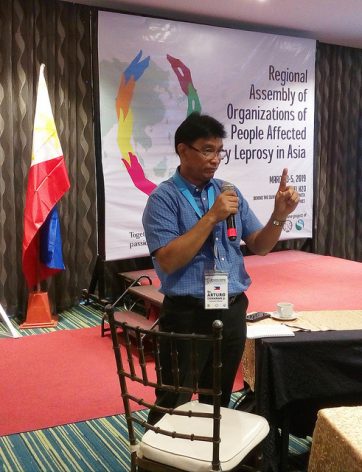
Culion Sanitarium and General Hospital Medical Director Dr. Arturo Cunanan urged delegates to the Regional Assembly of Organisations of People Affected by Leprosy in Asia to “put our partnership beyond these walls” and act on the strategies discussed at the three-day conference. Credit: Ben Kritz/IPS

MANILA, Mar 5 2019 (IPS) – Organisations of people affected by leprosy in Asia have agreed to form a regional-level secretariat to support national advocacies and represent their collective agenda at a world conference to be held later this year.


This was the most significant development to emerge from the Regional Assembly of Organisations of People Affected by Leprosy in Asia held in Manila from Mar. 3 to 5. The Coalition of Leprosy Advocates of the Philippines (CLAP) was selected by the delegates to serve as the first regional secretariat.

Sasakawa Memorial Health Foundation (SMHF) Executive Director Dr. Takahiro Nanri requested that the first major initiative of the secretariat be the formulation by June of a “road map” encompassing the Assembly’s consensus agenda, which would then be used by the SMHF and it’s parent body the Nippon Foundation (TNF) to help develop the programme for the world leprosy conference to be held in September.

SMHF and TNF convened the regional assembly in partnership with CLAP and the Culion Sanitarium and General Hospital (CSGH).

From theory to practise

CSGH chief Dr. Arturo C. Cunanan told the delegates assembled for the final day of the conference that, “putting our partnerships beyond these walls, putting it into action, is the big challenge” faced by the national organisations, who represented the Philippines, Indonesia, Nepal, China, and Kiribati.

Cunanan, who is considered the Philippines’ foremost leprosy expert, was particularly upbeat about the conference’s focus on improving communications to stakeholders.

“One of the most valuable things to come out of this conference is the learning about social marketing, and what interventions we can use,” Cunanan stressed to the attendees.

Another key takeaway from the conference, Cunanan said, was the recognition of economic opportunity as a vital component of social inclusion strategies for people affected by leprosy.

“I think an important thing that has emerged here is the idea that poverty is really the root of stigmatisation and prejudice,” Cunanan told IPS. “When people have financial resources, the discrimination goes away. Obviously, providing economic opportunity should be a priority for the various national organisations.”

Cunanan pointed out that priority complemented the focus on organisational sustainability, which was an emergent theme at the conference. “It is very similar to the same thinking that organisations need to find income-generating programmes to be sustainable,” Cunanan said. Reiterating the point he made to the assembly, he added that the goal for the organisations should be to put “theory into practise” and develop practical actions from what they learned.

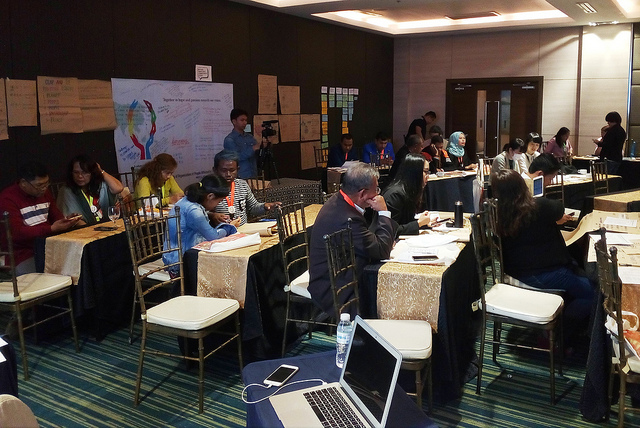
Representatives of participating organisations discussed various national and regional objectives for leprosy advocacy in Asia. A significant outcome of the conference was the formation of a regional secretariat to coordinate and represent the Asian agenda at an upcoming world leprosy congress. Credit: Ben Kritz/IPS

Clear consensus

Starting with an overall theme of “improving social inclusion,” the Regional Assembly of Organisations of People Affected by Leprosy in Asia at the outset identified four areas for discussion: Preserving the history of leprosy and its treatment; defending human rights and eliminating the stigma associated with leprosy; improving the delivery of public health services; and sustainability of the organisations.

The consensus among the participating organisations was that sustainability was indeed a critical priority, and perhaps the most significant challenge faced by leprosy advocacies at the national level.

Another key national-level agenda item agreed by the conference attendees was the need to improve networking with their respective governments, as well as other key organisations. In line with this, developing strategies to improve organisations’ public image, branding, and their marketing efforts was also acknowledged as an important objective for national organisations. During the conference, the importance of understanding and developing effective social marketing was stressed, both through the use of social media and more conventional practises.

The development of a regional secretariat was considered the most important objective at a collective level. The conference participants echoed the sentiments of CSGH’s Cunanan that the shared ideas developed over the three days of talks should not be allowed to “dissolve” when the organisations return to their home countries.

Conference attendees also agreed that creating a “sustainable development strategy” on a regional basis should be prioritised going forward, taking into account the need to strengthen national organisations as well as the regional group. Just what that strategy would entail, however, is still subject to discussion among the various groups. 

Capacity building, improving the organisational and managerial capabilities of national organisations, also emerged as a regional agenda. During the conference, capacity building was expressed as a significant concern for many organisations, since many of their members lack relevant work experience or education. A regional strategy could help pool talent resources among the Asian organisations, at least until some of their own people could gain more experience.

The development of a regional framework and individual national agendas made the first Regional Assembly of Organisations of People Affected by Leprosy in Asia a success, conference facilitator Joseph “Boyet” Ongkiko told IPS.

“What excites me is to see the coming together of different groups, and their coming away with unity of heart and purpose,” Ongkiko said. “With leprosy, there is a commonality in the stories, but what we saw and heard are people moving from victims to victors.”

Nanri told IPS that much still needs to be done.

“There’s a big difference between elimination and eradication. As of today, most countries have eliminated leprosy, but it has not been eradicated yet as new cases continue to appear. To eradicate, what we need is one last big push – or re-activate public attention to leprosy,” he said, adding that until now the information around leprosy has not been well presented.

“If we can better package it, forge better partnership with media and if we can get greater political commitment, we can make that reactivation of people’s attention can happen.”

*Additional reporting by Stella Paul in Manila 


Q&A: Leprosy-affected People Live Not at the Bottom, but Outside the Social Pyramid

Active Citizens, Aid, Asia-Pacific, Civil Society, Conferences, Development & Aid, Featured, Headlines, Health, Human Rights, Population, Poverty & SDGs, Regional Categories, Sustainability, TerraViva United Nations

Health

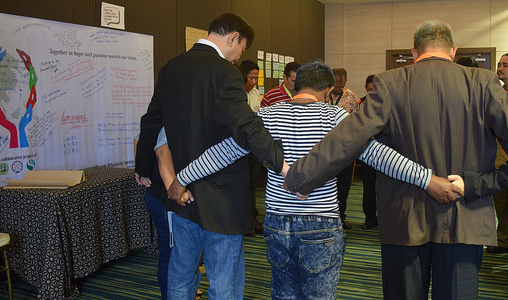
Takahiro Nanri (left – black jacket), Executive Director of Sasakawa Memorial Health Foundation, joins hands with a leprosy survivor (right). Credit: Stella Paul/IPS

MANILA, Mar 5 2019 (IPS) – Takahiro Nanri is the Executive Director of Sasakawa Memorial Health Foundation which has been supporting the global fight against leprosy for almost five decades. Since 2014, Nanri has been leading the foundation’s leprosy projects across the world and has deep insights into the challenges faced by the people affected by leprosy as well as the organisations that work with them.


He also shares the dream of Yohei Sasakawa – the chairman of Nippon Foundation – to see a leprosy-free world and believes that despite several challenges and roadblocks, this dream is indeed possible to realise.

In an exclusive interview with IPS, Nanri talks about the idea behind the regional assembly of leprosy-affected people in Asia that was held in Manila.

He also tells how people who are affected by leprosy  are treated as social outcasts and why they must be integrated with the rest of the society. Finally, Nanri shares his views on how and why leprosy-affected people’s organisations should become sustainable.  Excerpts of the interview follow:

Takahiro Nanri is the Executive Director of the Sasakawa Memorial Health Foundation which has been supporting the global fight against leprosy for five decades. Credit: Stella Paul/IPS

Inter Press Service (IPS): Is there a reason behind Mr Sasakawa’s personal interest in leprosy? Why has the foundation continued even when it is not a big global threat anymore?

Takahiro Nanri (TN): As far as I know it was in the 1960s [when the Sasakawa family] visited leprosariums in some countries like Korea, South Korea, Nepal and at that time there was no Multidrug Therapy ( MDT) and the situation in the sanatoriums was very severe. So they had decided to fight against leprosy and launched the leprosy elimination programme and even established the Sasakawa Memorial Health Foundation.

I am very proud of the fact that this foundation has continued to work on the same issue for 50 years because, although compared to other diseases, this may have decreased, but there is still no end to leprosy.

IPS: How long have you been working on leprosy and what has been your biggest observation?

TN: I have been working on leprosy since 2014. But I have been working on poverty issues for the past 25 years. People affected by leprosy are really poor. So, working for leprosy is in a way working on poverty too.
Several years ago, there was the concept of the bottom of the pyramid; and we talked of the people living at the bottom of the pyramid and how to uplift them. We talked of using microfinance, social business approach etc. But I have realised that the people living with leprosy are actually living outside of the pyramid. That is why I feel integration is very, very important.

IPS: How did you come up with the idea of the Regional Assembly of Organisations of Leprosy- Affected People in Asia?

TN: Last September, we had a small meeting. We invited and had a discussion with some of the people’s organisations from India, Indonesia, Brazil and Ethiopia on what could be done. This September, there will be the World Congress on Leprosy where there will be academics, experts, governments. The congress is a crucial event but often organisations of the affected people are left behind. So, we came up with the idea of organising a pre-congress event where the affected people’s organisations so that it can also be a way for preparing themselves for the congress.

IPS: Why is sustainability still such a big issue for organisations of leprosy–affected people?

TN: Sustainability is not only an issue of leprosy affected people, but also for all the NGOs of the world. I don’t really have an answer here. It depends on each organisation, each leader. Every NGO, every organisation has to find its own way and its own strategy to sustain itself. Should they approach foundations, survive on external grants, seek membership fees, donations , do social business—it’s up to them. As foundations we can provide financial grant, but not forever. What we can do, however, is think together on what could be the next step.

IPS: There are many hidden cases in the world of leprosy. Can you share an example of a good action by a government that tried to act on this.

TN: In India, the government made a very brave decision. In 2016 they started a campaign to identify the endemic leprosy cases all over the country. And since then, every year, they do case detection camps. It has brought in the open many new cases that were previously hidden. It also resulted in an increase in the number of leprosy cases in the country, but after that it started to decrease as the cases were treated . So, this is an example I feel other governments can also follow.

IPS: How are you feeling now that the assembly has concluded?

TN: My expectation is very simple: this venue is for the people affected by leprosy. They should be able to discuss whatever they want to and decide whatever they want to decide.
Here, we saw is they are trying to be more pro-active, opening up,coming up with some issues, some ideas on how they can strengthen their partnership, soI am happy.