Unpaid Caregivers, a Symbol of Inequality in Chile

Civil Society, Development & Aid, Economy & Trade, Editors’ Choice, Featured, Headlines, Human Rights, Labour, Latin America & the Caribbean, Regional Categories, Sustainable Development Goals, TerraViva United Nations, Women & Economy

Women & Economy

On International Women's Day on Mar. 8, thousands of Chilean women of all ages took to Santiago's central Alameda avenue to demonstrate peacefully for several hours and turn the Chilean capital into a stage for protest and demands for their rights. Some of them were women caregivers accompanied by dependent women. CREDIT: Orlando Milesi / IPS - In Chile, like elsewhere in Latin America, unpaid caregivers—mostly women—bear the responsibility of caring for individuals with disabilities, the elderly, and children, often leaving them without access to paid work or personal time

On International Women’s Day on Mar. 8, thousands of Chilean women of all ages took to Santiago’s central Alameda avenue to demonstrate peacefully for several hours and turn the Chilean capital into a stage for protest and demands for their rights. Some of them were women caregivers accompanied by dependent women. CREDIT: Orlando Milesi / IPS

SANTIAGO , Mar 20 2024 (IPS) – In Chile, as in the rest of Latin America, the task of caring for people with disabilities, the elderly and children falls to women who, as a result, do not have access to paid jobs or time for themselves.


Unpaid domestic and care work is crucial to the economies of the region, accounting for around 20 percent of gross domestic product (GDP).

Measurements by the Economic Commission for Latin America and the Caribbean (ECLAC) found that in 16 Latin American countries, women spend between 22.1 and 42.8 hours per week on unpaid domestic and care work. Men only spend between 6.7 and 19.8 hours.

Ana Güezmes, director of ECLAC’s Division for Gender Affairs, told IPS that “in most countries women work longer total hours, but with a lower proportion of paid hours.”

“This work, which is fundamental for sustaining life and social well-being, is disproportionately assigned to women. This situation impacts women’s autonomy, economic opportunities, labor and political participation and their access to leisure activities and rest,” Güezmes said at ECLAC headquarters in Santiago.

The situation is far from changing as it is replicated in young women who devote up to 20 percent of their time to unpaid work.
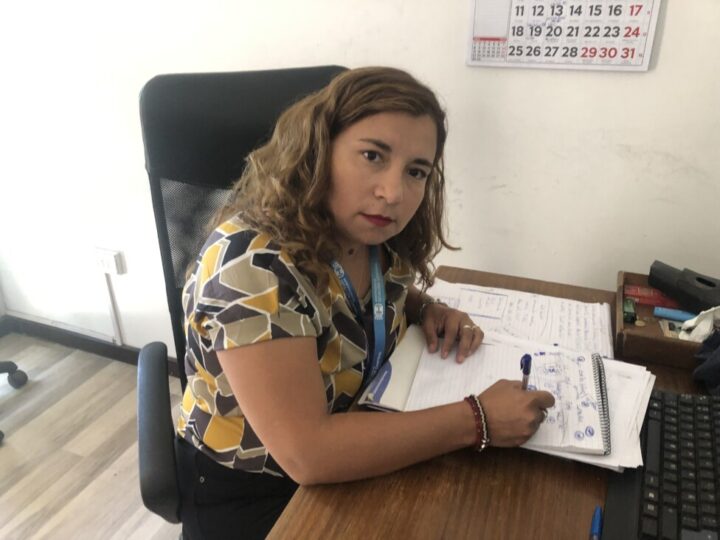
Paloma Olivares, president for Santiago of the women's organization Yo Cuido, works in her office in the working-class municipality of Estación Central, in the northeast of the Chilean capital. CREDIT: Orlando Milesi / IPS

Paloma Olivares, president for Santiago of the women’s organization Yo Cuido, works in her office in the working-class municipality of Estación Central, in the northeast of the Chilean capital. CREDIT: Orlando Milesi / IPS

Women left on their own as caregivers

Paloma Olivares, 43, chairs the Yo Cuido Association in Santiago, Chile, which brings together 120 members, only two of them men.

“Women caregivers are denied the right to participate on equal terms in society because we are forced to choose between exercising our rights or doing caregiving work. And we cannot choose because it is a job we do for a loved one, for a family member.” — Paloma Olivares

“Women caregivers are denied the right to participate on equal terms in society because we are forced to choose between exercising our rights or doing caregiving work. And we cannot choose because it is a job we do for a loved one, for a family member,” she told IPS.

“We are left in a position of inequality, of absolute vulnerability because you have to devote your life to supporting someone else at the expense of your personal life,” she said.

Olivares stopped working to care for Pascale, her granddaughter, who was born with cerebral palsy and hydrocephalus.

Three days after her birth, a bacterium became lodged in her central nervous system. She was hospitalized for almost a year and became severely dependent.

At the time, she was given a seven percent chance of survival. Today she is eight years old, goes to school and lives an almost normal life thanks to the work of her caregivers.

She is now cared for by her mother Valentina, who had her at the age of 15. Paloma was able to return to paid work, but her daughter abandoned her studies to take care of Pascale.

“When you start being a caregiver, friendships end, because no one can keep up. Even the family drifts away. That’s why most caregiving families are single-parent, the woman is left alone to care because the man can’t keep up with the pace and the emotional and economic burden,” she said.

Olivares participated from Mar. 12 to 14 in a public hearing, digital and in person, on the right to care and its interrelation with other rights, in a collective request of several social organizations and the governments of Chile and other Latin American countries before the Inter-American Court of Human Rights (IACHR Court), based in San Jose, Costa Rica,

In the request for an opinion from the IACHR Court, “we asked the Court to take a stance on the right to care and how the rights of women in particular have been violated because there are no public policies in this regard. We want the Court to pronounce itself on the right to care and how the States should address it so that this right is guaranteed and so the rights of caregivers are no longer violated,” she explained.

It is expected that the Court’s pronouncement on the matter will come out in April and could establish minimum parameters regarding women caregivers for Chile and other Latin American countries.

Critical situation for women caregivers

Millaray Sáez, 59, told IPS by telephone from the southern Chilean city of Concepción that her son Mario Ignacio, 33, “is no longer the autonomous person he was. Since 2012 he has become a baby.”

She chairs the AML Bío Bío Corporación, an association of women in the Bío Bío region created in 2017 to address the question of female empowerment and today dedicated to the issue of caregivers.

“I have been a caregiver for 30 years for my son who has refractory epilepsy. He became prostrate in 2012 as a result of medical negligence,” said the international trade engineer who has become an expert in public policies on care with a gender perspective.

Sáez said “the situation of women caregivers is very bad, very precarious. There is a single cause, which is the work of caregiving, but the consequences are multidimensional…. from physical deterioration to the lack of legislation to protect against forms of violence, and ranging from the family to what society or the State adds.”

She also pointed to the economic consequences of dependent care.

She cited cases in which caregivers spend over 150 dollars a month on diapers alone for a person who needs them. And she pointed out that the government provides an economic aid stipend of just 33 dollars a month.
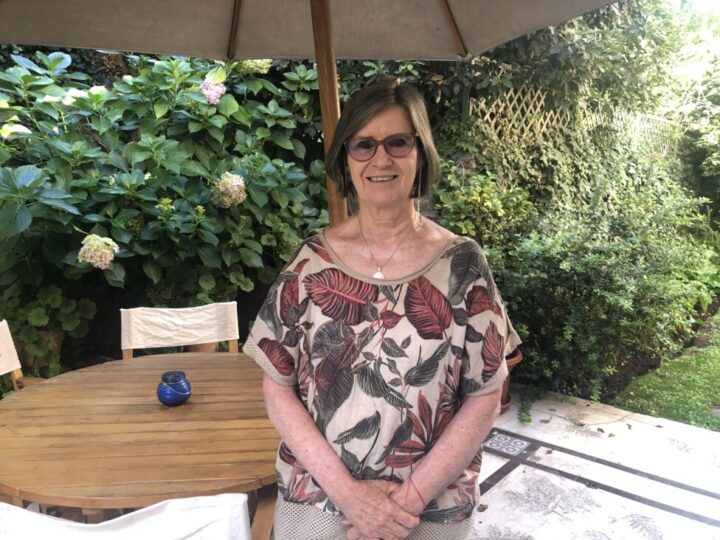
Teresa Valdés, head of the Gender and Equity Observatory of the Catholic University of Chile, praises the new registry of caregivers promoted by the Chilean government, but underlines the importance of municipal experiences and initiatives that promote homes and care centers to facilitate the lives of women caregivers. CREDIT: Orlando Milesi / IPS

Teresa Valdés, head of the Gender and Equity Observatory of the Catholic University of Chile, praises the new registry of caregivers promoted by the Chilean government, but underlines the importance of municipal experiences and initiatives that promote homes and care centers to facilitate the lives of women caregivers. CREDIT: Orlando Milesi / IPS

The magnitude of the problem

It is a pending task to determine the number of women caregivers in Chile.

The government of leftist President Gabriel Boric created a system for caregivers to register and receive a credential that gives them access to public services.

“The credential is the gateway to the Chile Cuida System. With it we seek to make them visible in services and institutions and to reward them for their work by saving them waiting time in daily procedures,” the Minister of Women and Gender Equity, Antonia Orellana, explained to IPS.

So far, there are 85,817 people registered, of whom 74,650 are women, or 87 percent of the total, and 11,167 are men, according to data provided to IPS on Mar. 14 by the Undersecretariat of Social Services of the Ministry of Social Development and Family.

But Chile has 19.5 million inhabitants, and “17.6 percent of the adult population has some degree of disability and, therefore, requires the daily care and support of other people in the home,” the minister said.

That means 3.4 million Chileans depend on a caregiver.

According to Orellana, facing the care scenario projected by the aging of the population will require the collaboration of everyone to “create and sustain an economic and productive system that generates decent work and formal employment, leaving no one behind.”

Other urgent demands by women

Sociologist Teresa Valdés, head of the Gender and Equity Observatory, told IPS that there are many social problems facing Chilean women today, “especially those related to access to health care, social security, unequal pay and access to different goods and services.”

Valdés regretted that the term “women caregivers” is used to refer to the role that women play and the tasks that are culturally assigned to them as a priority.

“We are all caregivers, all women work double shifts. The time-use survey shows that we work an additional 41 hours per week of so-called unpaid reproductive care work,” she said.

According to Valdés, the main advance in this problem is to include it in the debate because these are policies that require a lot of resources and extensive development, since they have to do with the structure of the labor market.

“Part of the proposal should be how to ‘de-genderize’, how care becomes a task of shared responsibility and not only that women have more time to take on the care tasks,” she said.

“When we call women caregivers, we are referring to the group most affected by the conditions of sexual division of labor and family reproduction,” she added.

The expert proposes progressively identifying ways to support women caregivers in order to provide them with available time and take care of their mental health.

She praised the programs promoted by some municipalities to free up time for these women to enjoy leisure and self-care.

“We have to move towards a cultural conception that we are all dependent. Today I depend on you, tomorrow you depend on me. Care is a social task in which I take care of you today so that you can take care of me tomorrow. And that is something that has to start from the earliest childhood,” she argued.
  Source

Democracy’s Contested Territory

Armed Conflicts, Civil Society, Crime & Justice, Democracy, Featured, Global, Headlines, Human Rights, Press Freedom, TerraViva United Nations

Opinion

Credit: Luis Acosta/AFP via Getty Images

MONTEVIDEO, Uruguay, Mar 19 2024 (IPS) – This year more than half the world’s population has the chance to go to the polls. That might make it look like the most democratic year ever, but the reality is more troubling. Too many of those elections won’t give people a real say and won’t offer any opportunity for change.


2024’s bumper election year comes as a record number of countries are sliding towards authoritarianism, and global advances in democratisation achieved over more than three decades have been all but wiped out. In 2023, no authoritarian state became a democracy, and while some countries made marginal improvements in the quality of their democracies – by improving civic space, making inroads on corruption or strengthening institutions – many more experienced often serious declines.

Nearly three quarters of humanity now live under authoritarian regimes. Defending democracy and holding political leaders to account is becoming harder as civic space is shutting down. The proportion of people living in countries with closed civic space, 30.6 per cent, is the highest in years.

The latest State of Civil Society Report, from global civil society alliance CIVICUS, shows how conflict is exacerbating this regressive trend. In war-torn Sudan, hopes for democracy, repeatedly denied since the 2019 overthrow of dictator Omar al-Bashir, receded further as elections were made impossible by the civil war between the military and militia that erupted last April. Russia’s sustained assault on Ukraine brought intensified repression of domestic dissent, and there were no surprises in the recent non-competitive vote that maintained Vladimir Putin’s grip on power.

The ineffectiveness of civilian governments in dealing with jihadist insurgencies has also been the justification used by military leaders to take or retain power in Central and West Africa. As a result, rule by junta is in danger of becoming normalised after decades in which it appeared on the verge of extinction. A ‘coup belt’ now stretches coast to coast across Africa. None of the states that fell victim to military rule in recent years have returned to civilian government, and two more – Gabon and Niger –joined their ranks last year.

Authoritarian regimes that experienced mass protest movements in recent years, including Iran, Nicaragua and Venezuela, have regained their footing and hardened their grip. In states long characterised by autocratic rule, many civil society activists, journalists and political dissidents have sought safety in exile to continue their work. But they often didn’t find it, with repressive states – China, Turkey, Tajikistan, Egypt and Russia are the worst five abusers –increasingly using transnational repression against them.

Many elections are held with no competition. Last year several non-democratic states of various kinds – including Cambodia, the Central African Republic, Cuba, Eswatini, Uzbekistan and Zimbabwe – held votes in which autocratic power was never in question. Voting was ceremonial, its purpose to add a veneer of legitimacy to domination.

Many more regimes that combine democratic and authoritarian traits have been home to recent elections with less predetermined results, where there was at least some chance of the ruling party being defeated. But incumbent advantage was reflected in the fact that change rarely materialised, as seen in Nigeria, Paraguay, Sierra Leone and Turkey. The outlier was Maldives, where voters have a history of rejecting sitting presidents.

Some hybrid regimes, notably El Salvador, experienced further democratic backsliding through the erosion of freedoms and institutional checks and balances – a road typically travelled by populist authoritarians who claim to speak in the name of the people and insist they need to concentrate power to deal with crises.

When voters do have a genuine say, in free and fair elections, they’re increasingly rejecting mainstream parties and politicians. In a time of economic uncertainty and insecurity, many express disappointment with what democracy is offering them. Anti-rights political entrepreneurs are successfully exploiting their anxieties by scapegoating migrants and attacking women’s and LGBTQI+ people’s rights. Right-wing populists using such tactics recently took control of Argentina, came first in elections in the Netherlands and Switzerland and entered government in Finland. Even where they don’t take office, far-right forces often succeed in shifting the political centre by forcing others to compete on their terms. They’re expected to make big gains in the European Parliament elections in June 2024.

Polarisation is on the rise, fuelled by disinformation, conspiracy theories and hate speech. These are made so much easier by AI-powered technologies that are spreading and evolving faster than they can be regulated. The first elections of 2024, including those in Bangladesh and Indonesia, offered cautionary tales of the unprecedented levels of manipulation that AI can enable. We’re likely to see a lot more of this in 2024.

But our research findings support our hope, because they show movement isn’t all in one direction. In Guatemala, a new party born from mass anti-corruption protests was the unlikely 2023 election winner, and people mobilised in numbers to defend the result in the face of powerful political and economic elites. Despite China’s concerted attempts to derail Taiwan’s election, including through cyberattacks, people vindicated their right to have a say in their own future. In Poland, a unity government pledging to restore civic freedoms came to power after eight years of right-wing nationalist rule, offering new potential for civil society to partner in retrieving democratic values and respecting human rights. In Mexico, which is among the many countries going to the polls in 2024, people mobilised in numbers against the threat posed by a democratically elected leader seeking to override checks and balances. Given the dangers it may entail, civil society is pushing for transnational regulation of AI.

Things would be much worse were it not for civil society, which continues to mobilise against restrictions on freedoms, counter divisive rhetoric and strive for the integrity of electoral processes. Throughout 2024, civil society will keep pushing for elections to take place in free and fair conditions, for people to have the information they need, for votes to be properly counted, for losers to accept defeat and for winners to govern in the common good.

Inés M. Pousadela is CIVICUS Senior Research Specialist, co-director and writer for CIVICUS Lens and co-author of the State of Civil Society Report.

  Source

Thailand’s ‘Humanitarian Corridor’ for Myanmar Faces Pushback

Armed Conflicts, Asia-Pacific, Civil Society, Development & Aid, Editors’ Choice, Featured, Headlines, Human Rights, Humanitarian Emergencies, Migration & Refugees, Sustainable Development Goals, TerraViva United Nations

Migration & Refugees

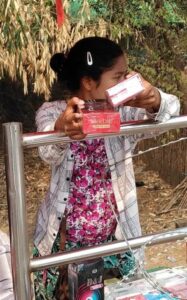
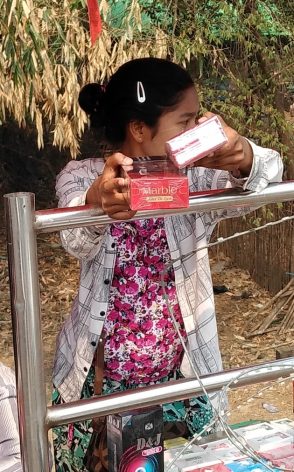
A Myanmar girl, displaced by war, sells cigarettes through the razor-wired border with Thailand near the frontier town of Mae Sot. Thailand is bracing for another influx of refugees. Credit: William Webb/lPS

A Myanmar girl, displaced by war, sells cigarettes through the razor-wired border with Thailand near the frontier town of Mae Sot. Thailand is bracing for another influx of refugees. Credit: William Webb/lPS

MAE SOT, Thailand, Mar 13 2024 (IPS) – The Maung family is rebuilding their lives in a foreign land. A freshly painted signboard with a play on the word Revolution declares their small restaurant is open for business, and breakfast features traditional Myanmar mohinga—rice noodles and fish soup.


Three years ago, the family of four was prospering in the central Myanmar city of Mandalay but suddenly everything changed. The military seized back power from the newly elected government, and thousands of people took to the streets in protest, including the Maungs. A brutal crackdown ensued across Myanmar, the father was arrested and their two restaurants seized.

Since the 2021 coup, the UN estimates some 2.4 million more people have been displaced by conflict across Myanmar, while 78,000 civilian properties, including homes, hospitals, schools, and places of worship, have been burnt or destroyed by the military.

The Maung family was wise to leave Myanmar when they could, and fortunate to survive the hazardous journey eastwards towards the border with Thailand. After spending a year in a border camp for IDPs run by the military wing of the Karen National Union (KNU) in eastern Kayin State, the family managed to cross into the Thai frontier town of Mae Sot to start afresh, even if they exist in a grey zone of legality alongside tens of thousands of others.

More waves of refugees are following in their footsteps.

“We have 750,000 IDPs in our territory,” said a senior official of the KNU, which has been waging the world’s longest civil war against successive Myanmar regimes since 1949. “A year ago, there were 500,000 to 600,000. Numbers are rising because the military is deliberately targeting civilians,” he told IPS in Mae Sot, asking not to be named.

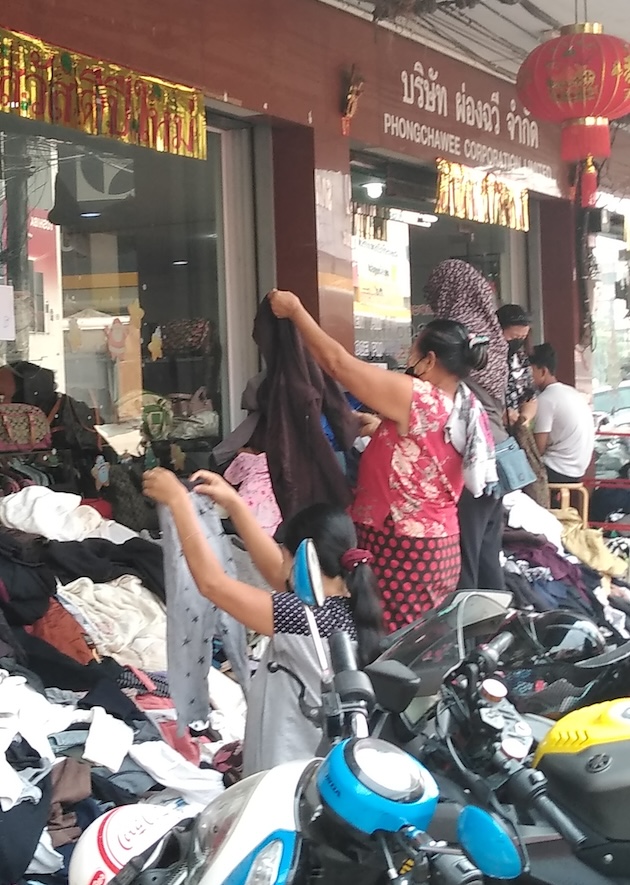
Myanmar refugees in Thailand pick out clothes piled in the street that have been donated in the border town of Mae Sot. Credit: William Webb/IPS

Myanmar refugees in Thailand pick out clothes piled in the street that have been donated in the border town of Mae Sot. Credit: William Webb/IPS

Against this background and wanting to preempt an influx, Thailand’s new coalition government announced its intention last month to open up a ‘humanitarian corridor’ into Myanmar to funnel aid to IDPs and keep them well away from the border.

Thailand’s military—the real arbiter of power in these border regions and holding sway over two parties in the coalition—is haunted by the spectre of past and present examples of chaos through conflict. In the 1980s, Thailand reluctantly hosted several hundred thousand Cambodian refugees, including remnants of the genocidal Khmer Rouge regime, on its eastern borders. Today it looks west and sees Bangladesh struggling to contain in camps some one million Rohingya refugees forced out of Myanmar in what the UN special rapporteur on human rights called a genocidal campaign by the Myanmar military.

But beyond the ‘humanitarian’ aspect, what has caused anger within the various groups fighting the Myanmar military as well as rights activists, is Thailand’s own admission that its humanitarian corridor proposal is aimed at drawing the regime’s State Administration Council (SAC) into a dialogue that would lead to a negotiated settlement with Myanmar’s diverse resistance forces.

Neither the KNU nor the parallel National Unity Government set up by ousted Myanmar lawmakers after the coup were consulted by Thailand, which received a green light from the Association of Southeast Asian Nations (ASEAN).

Under Thailand’s initiative, aid would be delivered initially to 20,000 IDPs by the Thai Red Cross and the Myanmar Red Cross (whose senior administrators are former military officers) and monitored by ASEAN’s Coordinating Centre for Humanitarian Assistance on Disaster Management, where the Myanmar junta also has a presence.

“Aid is used everywhere in the world as a political entry point,” the KNU official commented. “This is not a pure humanitarian issue. They want to bring the SAC out of isolation. This is very problematic for us.”

A senior NUG official, also based in Thailand, was similarly concerned by the political intentions behind the proposal.  “It’s a desperate measure by ASEAN seeking a semblance of negotiated peace and dialogue,” he told IPS.

The official doubted it would get off the ground in its present form without the support of the Karen forces that control large areas of Kayin State, nor without the full backing of the US.

The US values its long-held strategic ties with Thailand and its military, and Thai Foreign Minister Parnpree Bahiddha-Nukara returned from Washington last month, declaring that he had secured complete US support for the initiative, although the US public statement appeared more cautious.

Human rights activists and humanitarian workers on the Thai-Myanmar border remain highly sceptical of the initiative, denouncing it as a “weaponization of aid”.

Thailand, they note, has never officially recognized the refugee status of nearly 100,000 people living in nine UNHCR camps along the Thai-Myanmar border since the 1990s.

“This is not about providing humanitarian aid to the people of Myanmar. It is about giving a new lifeline to the junta to re-engage with ASEAN and everybody else,” commented Paul Greening, a former UN senior staff officer and now independent consultant in Mae Sot.

“Neighbours and other international actors, including the US and China, do not want the junta to fall. They do not want the junta to win but they do not want it to fall either. This is why they all want a ‘negotiated settlement’,” he said.

Igor Blazevic, a senior adviser at the Prague Civil Society Centre who previously worked in Myanmar, said a “carrot” was being held out to the Myanmar regime at a time when it was “seriously weakened and shaken” after losing large areas of territory to resistance forces both in Rakhine State in the west and in Shan State close to China.

“A political aim behind the ‘humanitarian initiative’ is the intention to treat genocidal power-usurpers in uniform as the inevitable and unavoidable key factor in Myanmar’s ‘stability’ and with combination of soft pressure and humanitarian incentives, try to force everybody else to surrender, in a soft way, to ongoing military dominance in politics and the economy,” Blazevic wrote in a commentary.

With the UN warning that nearly two million people in Myanmar are expected to fall into the “highest category of needs severity (catastrophic)” this year, the resistance is aware that they will come under intense international pressure not to reject the Thai initiative.

Recent developments indicate Thailand may rethink its proposal, however. It has opened channels with the KNU and the NUG to discuss their involvement in facilitating aid deliveries through Myanmar civil society organisations independent of the regime. Word has it that the Myanmar Red Cross is not that keen to be directly involved, knowing it is too close to the regime to be able to safely deliver aid to those who have suffered atrocities at its hands.

For the Maung family and their small eatery in Mae Sot, a dream would be to return to Mandalay and Myanmar in peace. But they have little hope of such an outcome, nor do they really want to remain in Thailand, along with over two million other Myanmar workers, classified as migrants, not refugees.

For the moment, life revolves around navigating Thailand’s complex and often corrupt system to secure papers that would give them a degree of legitimacy and enable them to move beyond Mae Sot and surrounding Tak Province. A possible lifeline is an ethnic Chinese branch of their family with members in Taiwan.

“Taiwan could be our future,” says the elder of two daughters, who still dreams of going to university. “I can learn Chinese,” she says, in excellent English.

IPS UN Bureau Report

  Source

UNWRA Chief Warns Agency’s Fate ‘Hangs in the Balance’

Aid, Civil Society, Development & Aid, Featured, Headlines, Humanitarian Emergencies, IPS UN: Inside the Glasshouse, Middle East & North Africa, Peace, Sustainable Development Goals, TerraViva United Nations

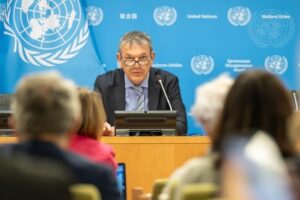
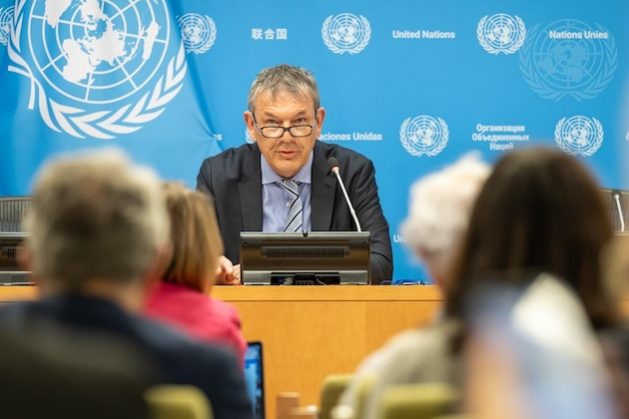
Philippe Lazzarini, Commissioner-General of the United Nations Relief and Works Agency for Palestine Refugees in the Near East (UNRWA), briefs reporters at UN Headquarters.

Philippe Lazzarini, Commissioner-General of the United Nations Relief and Works Agency for Palestine Refugees in the Near East (UNRWA), briefs reporters at UN Headquarters.

UNITED NATIONS, Mar 6 2024 (IPS) – UNRWA Commissioner-General Philippe Lazzarini asked the UN General Assembly to urge member states to support the organization’s mandate during this period of unprecedented crisis for the region and the agency. He also called for member states to facilitate a “long-overdue political process” for the two-state solution for Israel and Palestine. Only then, in this context, should UNRWA be allowed to transition.


He was speaking at an informal session of the General Assembly on the United Nations Relief and Works Agency for Palestinian Refugees in the Near East (UNRWA). This was convened to discuss the ongoing situation with UNRWA’s capacity as a humanitarian and human development agency in Gaza.

Despite its existence for 75 years, UNRWA’s presence was always intended to be temporary. “It is a stain on our collective conscience that for 75 years, UNRWA has had to fill a vacuum left by the lack of a political solution and genuine peace,” said Lazzarini.

The ongoing hostilities in the Gaza Strip and the resulting destruction of UNRWA facilities, which have disrupted humanitarian services in the region, have led to calls to seek alternatives that can deliver on the scale of the agency or to raise concern about whether other agencies can deliver the necessary humanitarian aid.

“UNRWA is facing a deliberate and concerted campaign to undermine its operations and ultimately end them,” said Lazzarini.

Lazzarini argued that dismantling UNRWA during the current crisis would be shortsighted, given that the agency was designed to provide public services such as education and primary healthcare in a region without state authority. “The notion that the Agency can be dismantled without violating a host of human rights and jeopardizing international peace and security is naïve at best,” he said.

Speaking at a press briefing that same day, Lazzarini told reporters, “We can only feel that the worst is yet to come.” He remarked that since January, aid delivery to Gaza has decreased by 50 percent. Since then, famine has become all but inevitable.

Remarking on the dual investigations into UNRWA’s operations, Lazzarini stated that the investigations were necessary as an accountability measure. These investigations were announced after it was revealed that he had terminated the contracts of 12 staff members who were allegedly involved in the October 7 attacks. Lazzarini added that the “swift decision” to terminate the contracts, as well as the investigations, would likely reflect the agency’s ability to follow through on recommendations from a risk management review.

Lazzarini admitted, however, that he had not anticipated the swift action that 16 donor countries took to suspend their funding in the wake of the allegations, which he revealed were conveyed to him in an oral manner.  “I have no regret,” he said, referring to his response to the allegations, “but to be honest, I did not expect that… over the weekend, 16 countries would take that decision.”

The UNRWA chief also indicated that most donor countries would consider resuming their support. For those donor countries, the pressure to pull support came from domestic or public opinion that seems divided over UNRWA rather than foreign policy considerations.

There is some promise that UNRWA will continue to deliver on its mandate with the help of donor states, as was seen with the European Commission’s decision to continue funding the agency, starting with a pledge of 50 million euros. However, this will only go partway into filling the gap of 450 million USD left by the 16 donor countries. Lazzarini warned that without additional funding, the agency would be in “uncharted territory” and would have “serious implications for global peace and security.”

The atrocities that were committed on and since October 7 have only resulted in increasing devastation and tragedy. The international community, as embodied by the General Assembly on Monday, seems largely united in their calls for a humanitarian ceasefire in Gaza and for the safe release of all hostages.

Yet the ongoing hostilities in the region have prevented the UN and its agencies from fulfilling their mandate to safely provide critical emergency aid. Five months on, there is a seeming lack of forward momentum within the Security Council to deliver a ceasefire resolution. UNRWA has been contending with compounding existential questions about its survival as an agency from hostile forces in the Gaza Strip and beyond who call for its dissolution.

IPS UN Bureau Report

  Source

Freedom of Speech Is Silenced in Nicaragua

Civil Society, Democracy, Editors’ Choice, Featured, Freedom of Expression, Headlines, Human Rights, Latin America & the Caribbean, Press Freedom, Regional Categories, TerraViva United Nations

Press Freedom

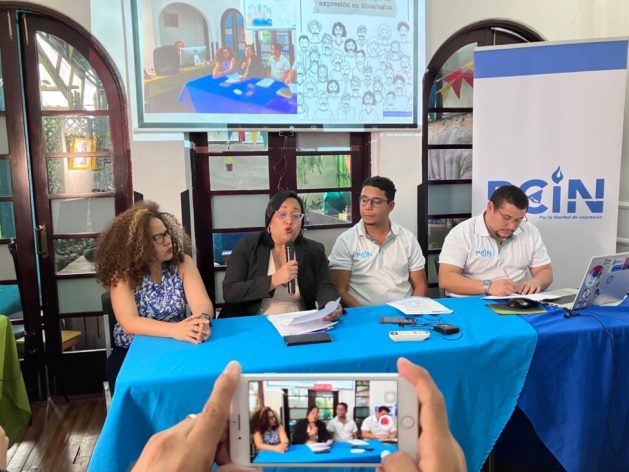
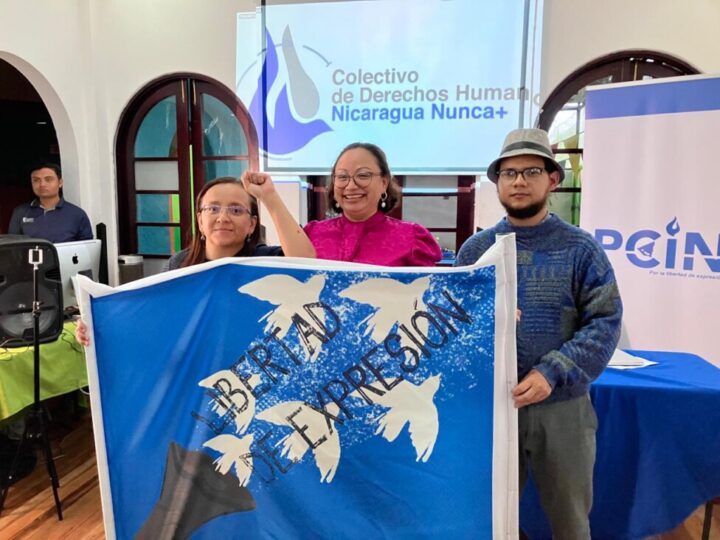
Abigail Hernández (left) appears at a press conference with journalist Wendy Quintero, a member of Independent Journalists and Communicators of Nicaragua at the headquarters of the Nicaragua Nunca Más Rights Collective. CREDIT: José Mendieta / IPS

Abigail Hernández (left) appears at a press conference with journalist Wendy Quintero, a member of Independent Journalists and Communicators of Nicaragua at the headquarters of the Nicaragua Nunca Más Rights Collective. CREDIT: José Mendieta / IPS

MANAGUA, Mar 5 2024 (IPS) – Almost six years after the outbreak of the April 2018 protests, there are no signs left in Nicaragua of the violence that reigned in those days. There is no graffiti on walls or banners with demands or opinions against the leftist regime that has ruled the country since 2007.


Nor are there newspapers or opinion programs or debates on radio and television, let alone press conferences or public rallies.

“The Ortega and Murillo regime’s repressive mechanisms have escalated to dramatic and unimaginable levels. A simple opinion issued on social networks or a criticism of the regime could land you in jail or exile.” — Martha Irene Sánchez

The city of Managua, the capital, is always bustling and active, with markets and shopping malls open at all hours; traffic is usually disorderly and police patrols roam the streets and avenues at all times.

At noon every day, on all radio and television stations, the tired, quiet voice of Vice President Rosario Murillo is heard giving the government’s news, social achievements and propaganda messages such as phrases of love and praise to God.

The program, which has no specific name, is broadcast from Channel 4, the historical property of the Sandinista National Liberation Front (FSLN), the ruling party, to which the other state media are linked. The private media outlets controlled by the presidential family are also connected, together with dozens of radio stations and portals on social networks.

It first emerged in 2007 as “a message from comrade Rosario, from the Communication and Citizenship Council of the People’s President.”

“Here we are, on Valentine’s Day, with love, friendship, and for us, love and peace, because it is with love and in peace that we can walk ahead, move forward, building the future of all, a fraternal future,” she said on Feb. 13.

Murillo has been Nicaragua’s vice president since she was appointed in 2016 by her husband, President Daniel Ortega, the veteran former guerrilla who has been in office since November 2006.

Murillo is also the regime’s spokesperson and the only authorized voice, among the population of 6.7 million inhabitants of this Central American country, who can speak publicly and freely about anything. No one else can do so.

Freedom of expression in Nicaragua is one of the most repressed and abused rights, said journalist Abigail Hernández, director of the Galería News platform.

Journalist and former political prisoner Lucía Pineda Úbau, together with Martha Sánchez, take part in a protest by Nicaraguan journalists exiled in Costa Rica. CREDIT: José Mendieta / IPS

Journalist and former political prisoner Lucía Pineda Úbau, together with Martha Sánchez, take part in a protest by Nicaraguan journalists exiled in Costa Rica. CREDIT: José Mendieta / IPS

Her opinion, tellingly sent via an encrypted messaging application, is based on experience: three years’ exile.

“The media and journalists are a good thermometer for measuring the quality of freedom of expression,” Hernández told IPS.

“When we have less and less access to sources of information, when they limit us from reporting from the streets, when we can’t take photos or videos freely, when we can’t do our work inside the country, it reveals that there is no freedom of expression,” she said.

She is part of a generation of 242 journalists who have had to go into exile since the 2018 protests, which began against Social Security reforms and ended in a bloodbath provoked by military and police forces, with more than 355 civilian deaths, according to the Inter-American Commission on Human Rights (IACHR).

Journalist Martha Irene Sánchez, director of the República 18 platform, holds similar views, also expressed from exile.

“The scenarios for exercising freedom of the press and freedom of expression in Nicaragua have not improved since 2018; on the contrary, we are encountering more and more hostility,” she told IPS.

She is also a member of Independent Journalists and Communicators of Nicaragua (PCIN), a union organization that emerged after the protests and all of whose members went into exile.

“The Ortega and Murillo regime’s repressive mechanisms have escalated to dramatic and unimaginable levels. A simple opinion issued on social networks or a criticism of the regime could land you in jail or exile,” Sánchez said.

A forum for the presentation of the report on freedom of expression and press freedom in Nicaragua, released in September 2023 in San José, Costa Rica. The panel included journalists from Nicaragua from the Connectas platform, including FLED director Guillermo Medrano, (second-right). CREDIT: José Mendieta / IPS

A forum for the presentation of the report on freedom of expression and press freedom in Nicaragua, released in September 2023 in San José, Costa Rica. The panel included journalists from Nicaragua from the Connectas platform, including FLED director Guillermo Medrano, (second-right). CREDIT: José Mendieta / IPS

She cited the example of Victor Ticay, a local journalist in Nandaime, a municipality in the northwestern department of Granada, who went out one day to cover a procession during the Catholic Holy Week of 2023.

The event had not been authorized by the police, whose agents interrupted the religious ceremony and Ticay filmed the parishioners running away from the patrol cars through the streets of the town.

He was arrested, charged with treason and spreading false news and sentenced to eight years in prison.

Guillermo Medrano, director of the Foundation for Freedom of Expression and Democracy (FLED), explained to IPS that between 2020 and 2021, the Nicaraguan regime passed a series of laws criminalizing the practice of journalism and freedom of expression.

A study that FLED released in September 2023 in San José, Costa Rica, a country bordering Nicaragua and the center of the country’s exile community, documented 1329 press freedom violations, mostly perpetrated by state agents in the 2018-2023 five-year period.

The actions were taken against 338 Nicaraguan journalists and 78 media outlets, between April 2018 and April 2023.

They included the police intervention of several media outlets such as 100% Noticias, Confidencial, Trinchera de la Noticia, Radio Darío and La Prensa, the last newspaper circulating in Nicaragua until August 2022.

According to Medrano, the Special Law on Cybercrime, passed in October 2020, provides for prison sentences for the use of information “which in normal democracies should be freely accessible to citizens and the public.”

In theory, the main objective of this legislation is the prevention, investigation, prosecution and punishment of crimes committed by means of information and communication technologies to the detriment of natural or legal persons.

The press freedom advocate also pointed out that the Ortega-Murillo administration, which controls all state institutions and branches of power, as well as the security forces, established the Law for the Defense of the Rights of the People to Independence, Sovereignty and Self-Determination for Peace, effective since Dec. 22, 2020.

This law gives discretion to judges and prosecutors in terms of the crime of “treason”, which orders the banishment and denationalization of the accused, as well as life imprisonment through a reform of the penal system.

More than 180 people have already been prosecuted under these laws and at least 22 journalists were stripped of their citizenship and banished in 2023.

“Under these laws, freedom of speech and the press has become a high-risk constitutional right for those who exercise it within Nicaragua,” Medrano denounced.

A report by the regional organization Voces del Sur says that Nicaragua ended 2023 with new forms of repression and threats to press freedom applied through banishment, confiscations, illegal detentions and harassment and surveillance of the families of journalists working in exile.

The outlook, the report warns, is of greater silence about social issues.

Nicaraguan journalists conduct interviews under risk of persecution or criminalization, denounced several reporters in San José, Costa Rica, in August 2023. CREDIT: José Mendieta / IPS

Nicaraguan journalists conduct interviews under risk of persecution or criminalization, denounced several reporters in San José, Costa Rica, in August 2023. CREDIT: José Mendieta / IPS

According to the report, between 2018 and the end of 2022, 54 media outlets disappeared, including 31 radio stations, 15 television channels and eight print media outlets. Of that total, 16 media outlets were confiscated, including La Prensa, the country’s main daily newspaper.

“Sources, even under conditions of anonymity, are harder and harder to find, and the saddest thing is that the State, through its officials, continues to be the main victimizer of citizens’ rights of expression and journalists’ press rights,” Medrano complained.

The non-governmental Human Rights Collective Nicaragua Nunca Más, made up of human rights defenders and activists in exile, states that the Ortega-Murillo administration “has carried out an unprecedented attack on freedom of expression in this country.”

The organization reports that of 28 resolutions of precautionary measures for journalists in Latin America, which have been issued since 2018 by the IACHR on freedom of expression, 15 have been issued for Nicaragua.

However, it says that “none of the precautionary measures” have been complied with by the State and, on the contrary, harassment against the targets has increased.

“And that reveals to us the seriousness of the problem of a small country with disproportionate and unacceptable restrictions on fundamental freedoms,” said one of the agency’s advocates, on condition of anonymity for security reasons.

These complaints find no responses within Nicaragua, because with the exception of Murillo, no one is authorized to answer, but can simply repeat the official discourse: “Nicaragua lives in peace and security.”

  Source

International Women’s Day, 2024Progress Hinges on Feminist Leadership

Civil Society, Democracy, Editors’ Choice, Featured, Gender, Global, Headlines, Human Rights, IPS UN: Inside the Glasshouse, TerraViva United Nations

Opinion

The following opinion piece is part of series to mark International Women’s Day, March 8.

PORT LOUIS, Mauritius, Mar 4 2024 (IPS) – Investing in inclusion requires more than electing and initiating women leaders. It requires a coordinated effort to change mindsets and systematically increase investments. This will allow feminist leaders, individually and collectively, to fully exercise their agency and counter targeted attacks on their safety and legitimacy.


A great deal of attention has been paid to the accomplishments of women in politics and society in recent years. Joan Carling, Francia Marquez, Maria Ressa, Amira Osman Hamed, and Narges Mohammadi have received global accolades for their vision and fearless activism.

Amid the pandemic, women leaders like Jacinda Ardern, Sanna Marin, Tsai Ing-Wen, and Angela Merkel outpaced their strongman counterparts by leading complex responses. During this period, the UN achieved gender parity in its senior leadership, including its national missions and peace operations, for the first time in history.

The leadership of women has been visible not just in institutions but also on the streets. Across the world, women human rights defenders have acted boldly for change despite severe restrictions. Movements such as #MeToo, #FreeSaudiWomen, #NiUnaMenos and #AbortoLegalYa are examples of women advancing systemic change for equality and justice. Women led peaceful demonstrations and civil disobedience actions as part of the Sudan uprising in 2018.

In 2022, the killing of Mahsa Amini sparked a large-scale and intersectional uprising for democracy. Across borders, Iranians demonstrated for ‘Women, Life, Freedom.’ They hit home the point our societies are incomplete if women are denied the right to participate in political, economic, and societal activities fully.

While the United States made headlines with its Supreme Court ruling restricting abortion rights in 2022, other countries like Ireland, San Marino, Colombia, and Mexico have turned the tide. They legalized abortion following years of struggling for their right to choose.

An uphill battle

Despite these achievements, there has been no respite in the attacks targeting women’s rights and their leadership. Civic space has never been worse since the launch of CIVICUS Monitor in 2018. 118 countries now face serious civic space restrictions. Only 2.1 percent of the world’s population lives in countries with open civic space. Intimidation, protest disruption, and detentions of protesters were the top violations documented in 2023.

These repressive strategies are extensively used to push back against women’s and LGBTQI+ people’s rights. Gender and sexuality remain at the centre of a culture war waged by a well-organised and funded international network of anti-rights forces leveraging these issues for political advantage.

South Korea’s national election in 2022 stands out as an example of how disinformation distorted the public and policy discourse against women’s rights. In his campaign, South Korea’s president-elect, Yoon Suk Yeol, actively legitimized the notion that moderate advances in gender equality were responsible for young men’s struggles in the current labour market. He pledged to abolish the Ministry for Gender Equality and Family and promised to increase punishments for the offence of making a false claim of sexual assault, a move likely aimed at making it harder for women to report real crimes.

But women are fighting back, in South Korea and elsewhere. Despite relentless anti-rights disinformation campaigns and owing to multi-year advocacy efforts, Indonesians passed a Sexual Violence Bill to criminalise forced marriage and sexual abuse and enhance protections for victims. In Spain, a new Law on the Guarantee of Sexual Freedom, based on the principle of consent, was passed to challenge widespread impunity for sexual and gender-based violence.

Women made up less than 34 percent of country negotiating teams at the COP27 climate conference, and only seven of the 110 world leaders were present. In response, gender equality was featured as a key theme during the COP28 climate conference last year.

A ‘Decision on Gender and Climate Change’, which lays the basis for future advancement of gender equality and women’s rights in future COP processes was adopted and 68 parties endorsed a Gender-Responsive Just Transitions & Climate Action Partnership, which includes a package of commitments on finance, data and equal opportunities.

Feminist leaders

In the recent past, several countries have elected or inaugurated their first-ever female political leaders. This includes Tanzania’s Samia Suluhu Hassan, Honduras’s Xiomara Castro, Slovenia’s Natasa Pirc Musar, and Peru’s Dina Boluarte. In Australia, a newly elected progressive government included a record number of women and brought the welcome promise of a U-turn on its predecessor’s policies of climate denial.

And yet, other contexts have provided a stark reminder that female leadership isn’t necessarily a victory for women, especially when feminist leadership principles aren’t at the fore. Examples include Hungary’s first female President, Katalin Novak, a close ally of authoritarian Prime Minister Viktor Orbán and a staunch supporter of his anti-gender policies. Italy’s first woman Prime Minister, Giorgia Meloni, has also, unfortunately, loudly touted anti-feminist values.

For generations, women have been subjected to rules they’ve had no role in making. Women’s movements all over the world have experienced the frustration of unsuccessfully calling for laws that benefit women. They have been struck down by the countries’ legislative bodies, made up mostly of men. Globally, women still have only three-quarters of the legal rights afforded to men. They continue to be grossly underrepresented in the places where decisions are made on issues that deeply affect them.

Invest in a feminist future

According to UN data, feminist organizations receive only 0.13% of official development assistance. Only five percent of government aid is focused on tackling violence against women and girls, with no country on track to eradicate intimate partner violence by 2030. If current trends continue, more than 340 million women and girls will still live in extreme poverty by 2030.

Close to one in four will experience moderate or severe food insecurity and as many as 236 million more women and girls will be food-insecure under a worst-case climate scenario. While progress has been made in girls’ education, women’s share of workplace management positions is estimated to remain below parity, even by 2050.

When CIVICUS interviewed Terry Ince from the CEDAW Committee of Trinidad and Tobago, she highlighted, “Women are running but not necessarily winning. To win, they would need financial and coordination support. It is not just about being in the room, but at the table, contributing, being listened to and having their ideas examined, pushed forward and implemented.”

There is a lot left to do to ensure greater representation at all levels. Only four women have been elected as president of the UN General Assembly in its 76-year history. The UN has never had a woman Secretary-General.

The 2024 International Women’s Day arrives with women heavily impacted by conflicts, crises, democratic erosion, and anti-rights regression. On the 8th of March, women will take to the streets in solidarity with those experiencing the brunt of regression. We collectively resist and take action and celebrate victories scored thanks to longstanding struggles.

The struggle for justice and progress will continue until we realize the dream of a healthier, safer and equitable world for all. To make this reality come true, we must invest in women and feminist future.

Lysa John is Secretary-General of CIVICUS, a global alliance of over 15,000 members working to strengthen citizen participation and defend civic freedoms. She has championed human rights and international mobilisation for over twenty-five years, starting her journey with grassroots organisations in India and subsequently spearheading trans-national campaigns for governance accountability. Her former roles include working as Global Campaign Director for Save the Children and Head of Outreach for the UN panel that drafted the blueprint for the Sustainable Development Goals. She can be reached through her LinkedIn page or X handle: @lysajohnSA.

IPS UN Bureau

  Source