Finland’s Education System Leads Globally

Civil Society, Education, Featured, Global, Global Governance, Headlines, Human Rights, IPS UN: Inside the Glasshouse, TerraViva United Nations
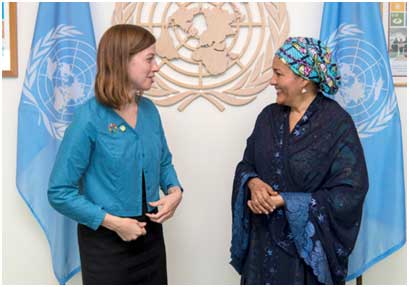
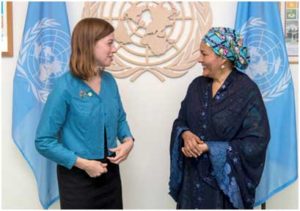
Deputy Secretary-General Amina Mohammed (right) meets with Li Andersson, Minister of Education of Finland.
18 July 2019. Credit: United Nations, New York

UNITED NATIONS, Jul 22 2019 (IPS) – Finland has garnered attention for its top-notch education, and the newly appointed Minister of Education for Finland is planning to continue with the success of her country’s education system through various and innovative approaches.


“In education, Finland has the lead according to many international comparisons,” Li Andersson, the newly appointed Minister of Education for Finland, said at a briefing at the Finnish consulate in New York on July 19.

Most recently, she pointed out, the London-based Economist ranked Finland as number one in delivering future-oriented skills through education.

“Thereby, Finland is best equipped to adapt education system to deliver skills for problem-solving and collaboration, as well as foster creativity, civic-awareness and participation,” she added.

The briefing was hosted by the Consulate General of Finland, with a guest speaker from Columbia University.

Andersson said investment in education is key to all of the successes “we have seen in Finnish society, so it is key for social cohesion, it is key for equality, and it is key for building economic progress and for economic growth.”

“The Finnish education system is one of the top performing education systems in the world,” she declared

Finland has been ranked as one of the happiest and successful countries in the world, and most recently having been ranked as the number one country for higher education by The Economist.

And in terms of data, in results released by the Programme for International Students Assessment (PISA), a test taken by pupils across the globe, Finland scored 550 points higher than any of their counterparts, including Sweden, Norway and the US, among others.

When asked whether the size of small schools that are abundant in Finland have anything to do with Finland’s success, Dr. Samuel Abrams, Director of the National Center for the Study of Privatization in Education at the Teachers College, Columbia University, told IPS: “I would not focus on the size of schools. That is not, as I said, a Finnish innovation”.

He said there has been a robust movement for small schools in the United States for a long time with many fine examples of excellent small public schools across the country.

“I merely brought up small schools as a part of the recipe for excellent schooling in Finland that may be threatened by financial pressure, generated in part by pension obligations”.

Because the pension obligations in an aging country like Finland are substantial, he said, budget cuts must be found. “Some of those budget cuts mean merging schools to achieve economies of scale.”

However, in terms of what other countries, such as the United States should learn from Finland, he had this to say: “We should follow Finland in testing only small samples of students rather than testing all students”.

“Our approach forces teachers to teach to the test. As we test all students in reading and math in grades 3-8, we generate undue stress for students, teachers, and parents alike”.

Moreover, he pointed out, “in focusing on reading and math, we crowd out time for history, science, music, art, crafts, and physical education. And students need those subjects as well as plenty of play for a well-rounded education.”

“Second, we should follow Finland in preparing teachers with high-quality master’s programs in pedagogical theory and practice.

Third, we should follow Finland in paying teachers well and giving them significant autonomy,” he added.

“Finally, we should follow Finland in funding our schools fairly. That means more money per student at schools in disadvantaged neighborhoods, not less. We base funding on property taxes, which means wealthy districts have significantly more money to spend per pupil than poor districts”.

None of this is rocket science. But that does not make it easy.

“We must follow in Finland’s path in altering the way we think about children and their future. This requires, one, thinking about child development through the eyes of the child, which means a well-rounded curriculum; two, reconceiving our social contract to ensure a high-quality education for all children; and three, esteeming teachers as pillars of the community.” Dr. Abrams concluded.

With that said, the education system in Finland has much room for improvement. “We see growing disparities in the learning results.” Andersson said, in terms of learning results.

“There is a difference between boys and girls and also some growing regional differences, and also a stronger difference where the pupils home background will affect the learning results more than before.”

“Inequality hampers growth and otherwise,” she added.

To combat these worrisome findings, Andersson and the Finnish government have set three main priorities to be tackled in the coming years.

“The first of these priorities is raising the educational level of the whole population.” Andersson said.

“We are also seeing a tendency where we are seeing the growing level of education has actually stopped.” She went on to cite that the generation of the 1970’s, and in Finland it is the current generation that has the highest level of education.

“The second priority of the government is reducing inequality gaps in education referring to what I said about earlier about the worrisome trends, and the third priority is focusing on continuous education…. learning should be something that we do all the time, and we should have the possibility to engage in all the time, no matter whether if we are working or outside working life or studying.”

For raising the level of education, Andersson plans on ensuring that all students have a degree on the upper secondary level and plans on raising the amounts of adults on the third educational level (post-secondary education) to 50% by 2030.

In order to implement this, Andersson intends on devising a Road Map, and a document that will reach Parliament.

She also highlighted the importance of addressing the equality gaps and strengthening the whole Finnish education system, from early childhood education to primary school.

She also intends on raising the compulsory education age to 18 years old. “16% of the overt generations in Finland are without a degree on the secondary level.” She noted.

“We know that the employment rate of people with only primary education backgrounds is around 40% at the moment, and that has been going down all the time.”

She cited the changing labor market, and how that calls for a change in the education system.

In terms of closing education gaps, Andersson cited a significant focus on early childhood development, as that is key.

Such actions to help assist this goal is to reduce group sizes for children over 3 years old and ensuring that every child has the right to at least 40 hours a week to early childhood education and care “no matter if their parents are working or unemployed.”

Andersson is also piloting a two- year preschool to see how it will affect participation rates in early childhood care, as well as to observe the effects it will have on learning results in primary education.

Furthermore, Andersson plans on providing support for maternity and childhood clinics.

For continuing education and the future of work, Andersson is unsure, as the labor market is drastically changing but noted that “It is clear that the knowledge requirement will grow.”

“Education is the best tool we have, and we should think of it as an investment not an expenditure.” She concluded.

She added that students should “just focus on things you’re motivated about, not too get too stressed, I think it is a shame there is a lot of pressure on the students now, with their stress with finances etc.”

But she offered encouragement and stated that students should “not think too much about what government is saying about how fast you should study and finally, “use the possibilities you have at the university”
 

How Governments Still Allow Violence Against Children

Civil Society, Development & Aid, Education, Featured, Global, Global Governance, Headlines, Human Rights, Inequity, IPS UN: Inside the Glasshouse, Poverty & SDGs, TerraViva United Nations

Opinion

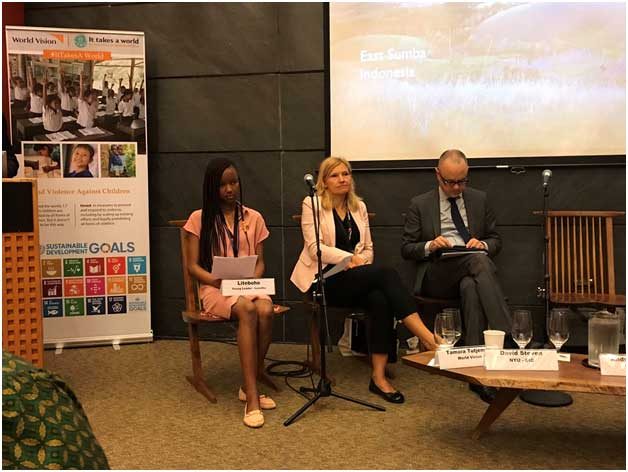
Tamara Tutnjevic Gorman is Policy Manager – Ending Violence against Children, World Vision

World Vision believes that it takes each and every one of us to end violence against children.

NEW YORK, Jul 16 2019 (IPS) – Despite what you might have heard, things are getting better, every year. We are making amazing progress on fighting diseases, reducing the preventable deaths of children, and investing huge amounts to advance medicine and knowledge and to create better living conditions.


However, this progress is too slow for some of the world’s most vulnerable children; those who have yet to experience the progress of the past 20 years. It’s hard to believe, but governments still allow violence against children to continue.

Approximately 1.7 billion children still experience some form of violence every year. To understand the reasons why, World Vision has investigated the commitments by 20 governments to address violence against children and has found that, while there has been tremendous progress in prohibiting violence, there are still too many gaps in legislation.

Cracks in laws, data, coordination, accountability and funding are becoming big gaps that ruin children’s lives and futures.

As a global community, we made exciting promises to end violence against all children 30 years ago when we adopted the United Nations Convention on the Rights of the Child. In those 30 years, we’ve developed laws and policies, come to better understanding about the complexity of violence and its forms, discovered and agreed to evidence-based solutions, and created a movement that has shone a spotlight on the issue.

We renewed our commitment to ending violence against children by committing to the Sustainable Development Goals four years ago. Yet, the inconsistent stats we have and self-reported data show that violence against children is not reducing at the pace necessary to meet the important target of ending all forms of violence against children.

This means today’s children, and their children, will live with violence’s life-long consequences – pushing them to life at the margins of society: severe health problems, difficulties acquiring an education and a decent job, and relationship issues. The lack of decisive action to end violence against children is simply not good enough.

Where legal bans exist, they do not yet cover all forms of violence. Ambitious declarations about National Plans of Action are not followed by the resources necessary to implement them. Fragmented initiatives are not enough to support victims, or more importantly, to ensure prevention.

There is some reporting on progress, but far too little new data to report on. And out of all the children experiencing violence, far too few have been consulted on the policies that affect their lives.

World Vision believes that it takes each and every one of us to end violence against children. A critical step in the right direction is for governments to make all forms of violence illegal and to put in place a comprehensive set of national laws and policies that provide for strong prevention and response measures.

The lack of commitment to zero tolerance is perhaps the most worrying. Government policies often turn a blind eye to socially or traditionally acceptable corporal punishment in schools, beating at home, child marriage and more.

Millions of children are unnecessarily drawn into a cycle of violence because of the failure to prevent it. When a child survives such violence and doesn’t get justice or appropriate support, the message they receive from authorities is that violence is permitted, or even condoned by those in power. This sends a powerful message that as society we have agreed to accept certain levels of violence.

Moreover, when families or communities experience crisis due to conflicts or natural disasters, the boundaries of what violence is considered acceptable tend to stretch. This makes it difficult to stop. Before we know it, violence can become a way of life. As a global community, we all must do more to plug the gaps that persist.

As governments at the High-Level Political Forum (July 16-19) present on progress so far and work on plans for the future, it is important that they address the seven cracks that have been identified in current efforts to end violence against children. This means they must commit to:

      1. Prohibiting all forms of violence against children in all settings.
      2. Investing in prevention programs and reporting mechanisms.
      3. Being a global champion for the prevention of violence against children.
      4. Increasing funding and transparency in budgets allocated to interventions to end violence against children.
      5. Prioritising and investing in regular data collection.
      6. Mandating, resourcing and planning for child consultations in policy development, reviews, monitoring and reporting.
      7. Increasing government delivery of community education and awareness campaigns.

    The 193 UN Member States have incredibly diverse energy, expertise and resources. We are calling for each and every one of them to join us and become champions for ending violence against children. It takes political leadership, and the time to drive action is now

    To read the full report Small Cracks, Big Gaps: How governments allow violence against children to persist click here.


    Prejudice and Discrimination, the Uncured Ills of Leprosy

    Civil Society, Democracy, Development & Aid, Editors’ Choice, Headlines, Health, Human Rights, Latin America & the Caribbean, Population, Regional Categories

    Health

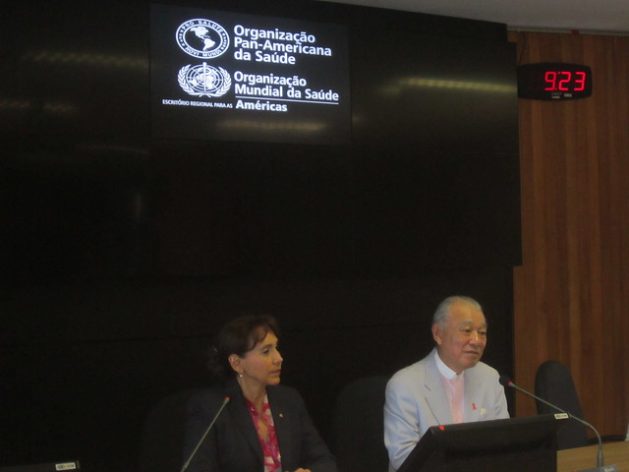
    Nippon Foundation President Yohei Sasakawa and Socorro Gross, Pan American Health Organisation representative in Brazil, hold a press conference in Brasilia at the end of a 10-day visit to this country by the Japanese activist who is also World Health Organisation Goodwill Ambassador for Leprosy Elimination. Credit: Mario Osava/IPS

    Nippon Foundation President Yohei Sasakawa and Socorro Gross, Pan American Health Organisation representative in Brazil, hold a press conference in Brasilia at the end of a 10-day visit to this country by the Japanese activist who is also World Health Organisation Goodwill Ambassador for Leprosy Elimination. Credit: Mario Osava/IPS

    BRASILIA, Jul 11 2019 (IPS) – “The ambulance team refused to take my sick friend to the hospital because he had had Hanseniasis years before,” said Yohei Sasakawa, president of the Nippon Foundation, at one of the meetings held during his Jul. 1-10 visit to Brazil.


    His friend was completely cured and had no visible effects of the disease, but in a small town everyone knows everything about their neighbours, he said.

    This didn’t happen in a poor country, but in the U.S. state of Texas, only about 20 years ago, Sasakawa pointed out to underline the damage caused by the discrimination suffered by people affected by Hansen’s Disease, better known as leprosy, as well as those who have already been cured, and their families.

    “The disease is curable, its social damage is not,” he said during a meeting with lawmaker Helder Salomão, chair of the Human Rights Commission in Brazil’s lower house of Congress, to ask for support in the fight against Hanseniasis, the official medical name for the disease in Brazil, where the use of the term leprosy has been banned because of the stereotypes and stigma surrounding it.

    The highlight of the mission of Sasakawa, who is also a World Health Organisation (WHO) Goodwill Ambassador for Leprosy Elimination, was a meeting on Monday Jul. 8 with President Jair Bolsonaro, who posted a message on Facebook during the meeting, which had nearly 700,000 hits as of Thursday Jul. 11.

    In the 13-and-a-half minute video, Bolsonaro, Sasakawa, Health Minister Luiz Mandetta and Women, Family and Human Rights Minister Damares Alves issued a call to the authorities, organisations and society as a whole to work together to eradicate the disease caused by the Mycobacterium Leprae bacillus.

    A preliminary agreement emerged from the dialogues held by the Japanese activist with members of the different branches of power in Brasilia, to hold a national meeting in 2020 to step up the fight against Hanseniasis and the discrimination and stigma faced by those affected by it and their families.

    The idea is a conference with a political dimension, with the participation of national authorities, state governors and mayors, as well as a technical dimension, said Carmelita Ribeiro Coriolano, coordinator of the Health Ministry’s Hanseniasis Programme. The Tokyo-based Nippon Foundation will sponsor the event.

    Brazil has the second highest incidence of Hansen’s Disease in the world, with 27,875 new cases in 2017, accounting for 12.75 percent of the world total, according to WHO. Only India has more new cases.

    The government established a National Strategy to Combat Hanseniasis, for the period 2019-2022, in line with the global strategy outlined by the WHO in 2016.

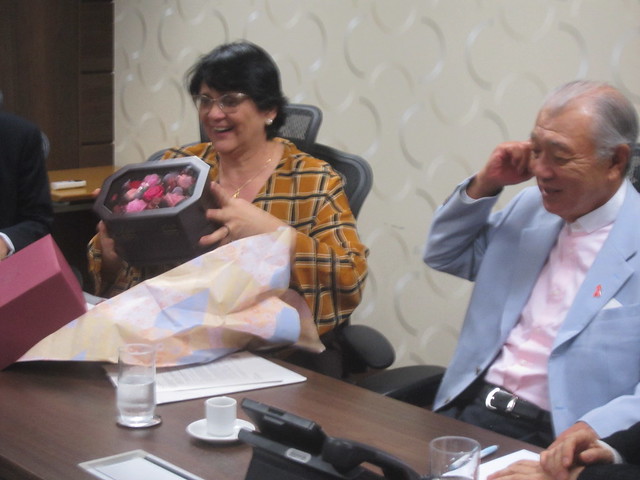
    Brazilian Minister of Women, Family and Human Rights Damares Alves receives a gift from Yohei Sasakawa, president of the Nippon Foundation, at the beginning of a meeting in Brasilia, in which the minister promised to strengthen assistance to those affected by Hansen's Disease, including the payment of compensation to patients who were isolated in leprosariums or leper colonies in the past. Credit: Mario Osava/IPS

    Brazilian Minister of Women, Family and Human Rights Damares Alves (L) receives a gift from Yohei Sasakawa, president of the Nippon Foundation, at the beginning of a meeting in Brasilia, in which the minister promised to strengthen assistance to those affected by Hansen’s Disease, including the payment of compensation to patients who were isolated in leprosariums or leper colonies in the past. Credit: Mario Osava/IPS

    Extensive training of the different actors involved in the treatment of the disease and plans at the state and municipal levels, tailored to local conditions, guide the efforts against Hansen’s Disease, focusing particularly on reducing cases that cause serious physical damage to children and on eliminating stigma and discrimination.

    Before his visit to Brasilia, Sasakawa, who has already come to Brazil more than 10 times as part of his mission against Hansen’s Disease, toured the states of Pará and Maranhão to discuss with regional and municipal authorities the obstacles and the advances made, in two of the regions with the highest prevalence rate.

    “In Brazil there is no lack of courses and training; the health professionals are sensitive and give special attention to Hanseniasis,” said Faustino Pinto, national coordinator of the Movement for the Reintegration of People Affected by Hanseniasis (MORHAN), who accompanied the Nippon Foundation delegation in Brasilia.

    “Promoting early diagnosis, to avoid serious physical damage, and providing better information to the public and physical rehabilitation to ensure a better working life for patients” are the most necessary measures, he told IPS.

    Pinto’s case illustrates the shortcomings in the health services. He was not diagnosed as being affected with Hansen’s Disease until the age of 18, nine years after he felt the first symptoms. It took five years of treatment to cure him, and he has serious damage to his hands and joints.

    His personal plight and the defence of the rights of the ill, former patients and their families were outlined in his Jun. 27 presentation in Geneva, during a special meeting on the disease, parallel to the 41st session of the Human Rights Council, the highest organ of the Office of the United Nations High Commissioner for Human Rights.

    Pinto is an eloquent advocate of the use of Hanseniasis or Hansen’s Disease, rather than leprosy, a term historically burdened with religious prejudice and stigma, which aggravates the suffering of patients and their families, but continues to be used by WHO, for example.

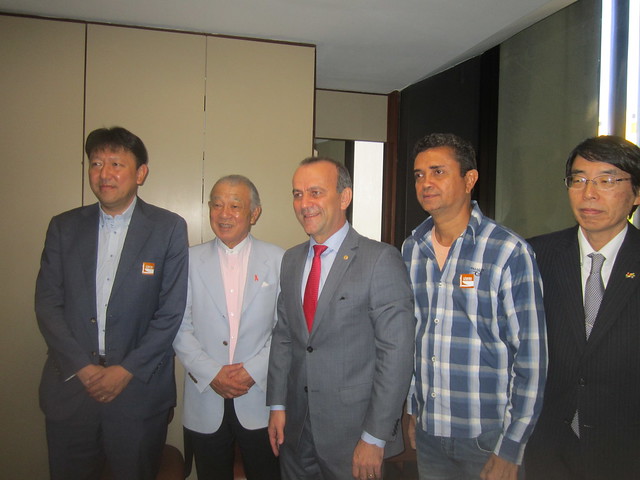
    Yohei Sasakawa (2nd-L), president of the Nippon Foundation, accompanied by two members of his delegation, took part in a meeting with Congressman Helder Salomão (C), chair of the Human Rights Commission of the Brazilian Chamber of Deputies, who pledged to support initiatives to eliminate leprosy in his country. Faustino Pinto (2nd-R), national coordinator of the Movement for the Reintegration of Persons Affected by Hanseniasis (MORHAN), also participated. Credit: Mario Osava/IPS

    Yohei Sasakawa (2nd-L), president of the Nippon Foundation, accompanied by two members of his delegation, took part in a meeting with Congressman Helder Salomão (C), chair of the Human Rights Commission of the Brazilian Chamber of Deputies, who pledged to support initiatives to eliminate leprosy in his country. Faustino Pinto (2nd-R), national coordinator of the Movement for the Reintegration of Persons Affected by Hanseniasis (MORHAN), also participated. Credit: Mario Osava/IPS

    Discrimination against people with the disease dates back to biblical times, when it was seen as a punishment from God, said Sasakawa during his meeting with Minister Damares Alves, a Baptist preacher who describes herself as “extremely Christian”.

    In India there are 114 laws that discriminate against current or former Hansen’s Disease patients, banning them from public transport or public places, among other “absurdities”, he said.

    In India, they argue that these are laws that are no longer applied, which justifies even less that they remain formally in force, he maintained during his meetings in Brasilia to which IPS had access.

    Prejudice and misinformation not only subject those affected by the disease to exclusion and unnecessary suffering, but also make it difficult to eradicate the disease by keeping patients from seeking medical care, activists warn.

    His over 40-year battle against Hansen’s Disease has led Sasakawa to the conclusion that it is crucial to fight against the stigma which is still rife in society.

    He pressed the United Nations General Assembly to adopt in 2010 the Resolution for the Elimination of Discrimination against Persons Affected by Leprosy and their Families.

    He said these attitudes and beliefs no longer make sense in the light of science, but persist nonetheless.

    Treatment making isolation for patients unnecessary in order to avoid contagion has been available since the 1940s, but forced isolation in leprosariums and leper colonies officially continued in a number of countries for decades.

    In Brazil, forced segregation officially lasted until 1976 and in practice until the following decade.

    With multi-drug treatment or polychemotherapy, introduced in Brazil in 1982, the cure became faster and more effective.

    Information is key to overcoming the problems surrounding this disease, according to Socorro Gross, the Pan American Health Organisation (PAHO) representative in Brazil who also held meetings with the Nippon Foundation delegation.

    “Communication is essential, the media has a decisive role to play” to ward off atavistic fears and to clarify that there is a sure cure for Hansen’s Disease, that it is not very contagious and that it ceases to be so shortly after a patient begins to receive treatment, Gross, a Costa Rican doctor with more than 30 years of experience with PAHO in several Latin American countries, told IPS.


    Right to Information in Latin America & the Caribbean

    Civil Society, Democracy, Featured, Headlines, Human Rights, Latin America & the Caribbean, Press Freedom, TerraViva United Nations

    Opinion

    Luis Felipe López-Calva is UN Assistant Secretary-General and UNDP Regional Director for Latin America and the Caribbean

    UNITED NATIONS, Jul 9 2019 (IPS) – Transparency is a critical element of making governance more effective. By making information available, it creates a foundation for greater accountability to citizens.


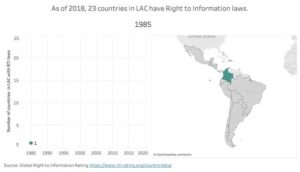
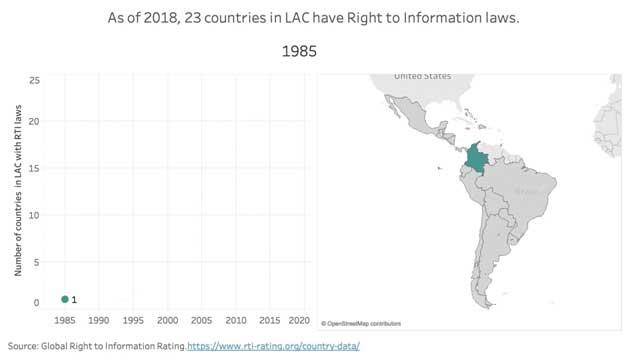
    In recent decades, transparency has been on the rise across Latin America and the Caribbean. According to data from the Global Right to Information Rating, 23 countries in LAC have laws securing citizens’ right to information.

    Colombia was the first country in the region to pass such a law in 1985, and Saint Kitts and Nevis was the most recent country to do so in 2018.

    While transparency is a necessary condition for promoting accountability, it is not a sufficient condition. We can think about transparency as a first step.

    While transparency makes information available, we also need publicity to make information accessible, and accountability mechanisms to make information actionable.

    Information, per se, is nothing without publicity and accountability. If information does not reach the interested audiences, its effect is negligible. Similarly, even if information reaches the public, if it does not lead to consequences, its effect is not only negligible but potentially harmful.

    For example, we have seen, unfortunately, many cases in our region where people can access detailed information about corruption cases, but nothing happens to those who are responsible. This leads to frustration and destroys trust.

    Luis Felipe López-Calva

    We can think about this progression from transparency to accountability as the “information value chain.” Recently, one way in which the information value chain has been broken in Latin America and the Caribbean is the intentional creation and spread of false information (what is known as “disinformation”).

    In many cases these pseudo-facts are created for political purposes and target specific audiences, with the intention to induce certain outcomes (for example, by influencing voting behavior).

    This system has been called the “fake news” industry—a term widely used by politicians in recent times. It’s important to note that false information can also be spread unintentionally (what is known as “misinformation”).

    The rise of disinformation and misinformation has been facilitated by the rise of technology. Technology—particularly the rise of social media and messaging apps—has reduced the cost of disseminating information to massive audiences.

    This has made the “publicity” industry more competitive and created a new social dynamic in which people often take access to information as equivalent to knowledge.

    While knowledge is difficult to build and constantly update, information has become easy to get, and public debates are increasingly based on false—and often deliberately false—information.

    Indeed, a recent study by scholars at MIT found that false news spreads much more rapidly than true news—and this effect is particularly salient for false political news (in comparison to false news about topics such as terrorism, natural disasters, science, urban legends, or financial information).

    According the 2018 Reuters Institute Digital News Report, citizens in LAC countries are facing high exposure to false information, and are very concerned about what news is real and what news is fake on the internet.

    In each of the four LAC countries included in the study (Brazil, Chile, Mexico, and Argentina), over 35% of respondents stated that they were exposed to completely made-up news in the last week—reaching as high as 43% of the sample in Mexico.

    Moreover, over 60% of respondents stated that they are very or extremely concerned about what is real and what is fake on the internet when it comes to news—reaching as high as 85% of the sample in Brazil.

    This high level of concern is consistent with recent experiences with political disinformation in the region—for example, the use of automated bots to influence public opinion in Brazil, Argentina, and Venezuela.

    This problem carries with it the concern for broader potential consequences such as deepening political polarization or the erosion of trust in the media. Indeed, over the past few decades years, the dissemination of false information by political parties and levels of political polarization are increasing in tandem in LAC.

    This is a challenge not only in LAC, but in many regions around the world. This global preoccupation was reflected in the theme chosen for this year’s World Press Freedom Day—which focused on journalism and elections in times of disinformation.

    Several of the countries in Latin America are holding presidential elections later this year: Argentina, Bolivia, Guatemala, and Uruguay. There is a concern in the region about how disinformation campaigns, coupled with microtargeting of political messages and sophisticated online advertising through social networks and online platforms, could affect the outcome of elections.

    There is a lot we can do in this area to protect the information value chain and the quality of elections—such as “clean campaign” agreements between political parties, the creation of independent fact-checking services, greater enforcement by social media companies, and the promotion of information literacy among citizens.

    In Latin America, these initiatives are still nascent, but they are growing. It is important to recognize, however, that combatting the challenge of disinformation campaigns will require the coordinated action of multiple stakeholders such as electoral courts, the media, civil society, academia and tech businesses (such as Facebook, Google, WhatsApp, and Twitter).

    Without a strong coalition of actors, it will be difficult to successfully repair the information value chain and achieve accountability.


    ​Media and Web Freedom Threatened in Sudan Turbulence

    Africa, Civil Society, Featured, Global Governance, Headlines, Human Rights, IPS UN: Inside the Glasshouse, Peace, Press Freedom, Regional Categories, TerraViva United Nations | Analysis

    Press Freedom

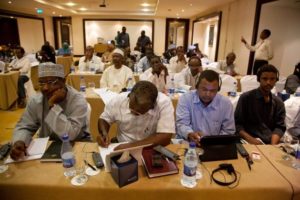
    The United Nations said the current internet shutdown in Sudan forms part of a larger effort to stifle the free expression and association of the Sudanese population, and to curtail the ongoing protests in the country. In this dated picture, Sudanese journalists attend a press conference. Courtesy: Albert González Farran /UNAMID

    UNITED NATIONS, Jul 9 2019 (IPS) – The United Nations has condemned an internet shutdown and the blocking of social media channels during Sudan’s political crisis, as fears persisted over a crackdown on media freedoms in the turbulent African country.


    The U.N.’s independent expert on the human rights situation in Sudan, Aristide Nononsi, and two other officials, said in a statement that web blocking by Zain-SDN and other internet providers was stifling the freedoms of expression and association.

    “In the past few weeks, we have continued to receive reports on internet blocking of social media platforms by the Transitional Military Council [TMC],” the experts said, referencing the TMC, which has run Sudan since the ouster of former president Omar al-Bashir in April.

    “The internet shut down is in clear violation of international human rights law and cannot be justified under any circumstances. We urge the authorities to immediately restore internet services.”

    The statement was co-signed by Clement Nyaletsossi Voule, the U.N.’s Special Rapporteur on rights to freedom of peaceful assembly and of association, and David Kaye, a special rapporteur Special Rapporteur on the promotion and protection of the right to freedom of opinion and expression .

    The three officials said mobile operator Zain-SDN was behind the “most extensive blocking scheme” and had closed access to all key social platforms, which are used to share news and to arrange protests. Other providers MTN, Sudatel and Kanartel had also cut web access, they said.

    “The internet shutdown forms part of a larger effort to stifle the free expression and association of the Sudanese population, and to curtail the ongoing protests,” the experts said in a statement on Monday.

    “Restricting or blocking access to internet services not only adversely affects the enjoyment of the rights to freedom of expression, assembly and participation, but it also has severe effects on protesters demands’ regarding economic and social rights.”

    Sudan’s military rulers ordered the internet blackout as a security measure on Jun. 3, when security forces also killed dozens of protesters as they cleared a sit-in outside the Defence Ministry in the centre of the capital, Khartoum.

    The web blackout has affected most ordinary users of mobile and fixed line connections and is reportedly harming the economy and humanitarian operations in the African nation of some 40 million people.

    Sudanese journalists have also raised concerns about the treatment of reporters during the ongoing political crisis.

    On Jun. 20, journalist Amar Mohamed Adam was arrested and detained by the Rapid Support Forces (RSF), a paramilitary outfit under the TMC, before being handed over to the intelligence services, according to the Sudanese Journalists Network.

    At the end of May, the TMC also ordered Qatar-based Al Jazeera Television offices in Khartoum closed, with officers from various Sudanese security branches turning up at the premises and seizing broadcast gear.

    Sherif Mansour, a regional coordinator for the Committee to Protect Journalists, a watchdog and campaign group, described a “worrying sign” designed “to suppress coverage of pro-democracy events”. He urged the TMC to “reverse course”.

    Protesters had been demanding the restoration of internet services as one of their conditions for getting back around the negotiation table with the TMC and forming a transitional administration made up of civilians and military officers.

    Hopes were raised of a breakthrough last week, after Sudan’s military chiefs and protest leaders announced they had struck a deal on the disputed issue of a new governing body in talks aimed at ending the country’s months-long political crisis

    The two sides reportedly agreed on a joint sovereign council to rule for a little over three years while elections are organised. Both sides say a diplomatic push by the United States and its Arab allies was key to ending a standoff that had raised fears of all-out civil war.


    Sri Lanka on Security Alert Long After Easter Bombings

    Asia-Pacific, Civil Society, Featured, Global, Global Governance, Headlines, Human Rights, IPS UN: Inside the Glasshouse, Peace, TerraViva United Nations

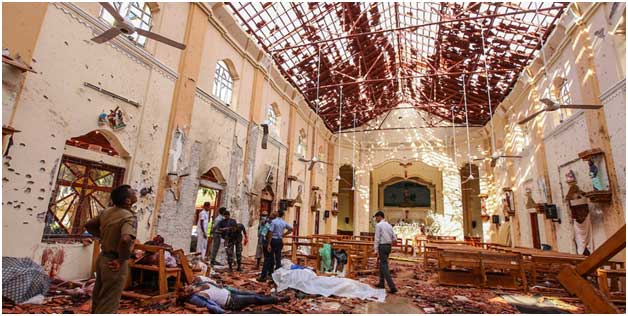
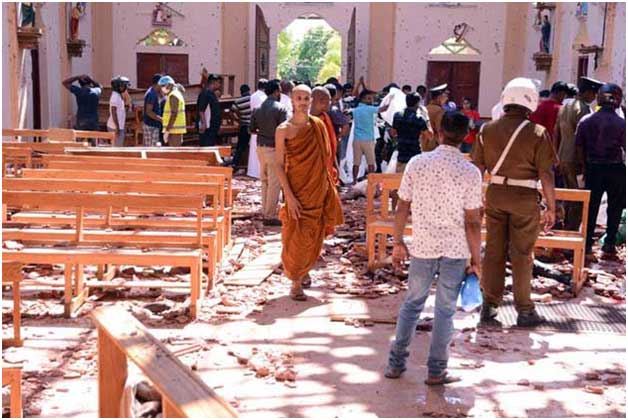
    NEW YORK, Jul 3 2019 (IPS) – Sri Lanka continues to be on a security alert long after the devastation caused by a string of bombings on Easter Sunday this year.

    Raisa Wickrematunge, Editor of Groundviews, told IPS: “There has been a tightening of security. There are now security checks being carried out outside hotels and shopping malls – either through scanners or bag and body searches”.


    “At the St Anthony’s Church, where the first blast occurred, there are bag and body searches conducted before worshippers can go inside, and bags are left outside the Church premises. Many churches and some schools have also increased their security.”

    Curfews were put into place and a social media ban was enacted temporarily, in order to prevent the graphic nature of the tragedies from being broadcast publicly. There has been much damage of the emotional and physical varieties in the once war ridden nation.

    For one thing, this attack was not expected by the Christian minority in Sri Lanka. Despite this, they have persevered.

    Father Rohan Dominic of the Claretian NGO told IPS: “For quite some time, there were attacks on the Muslim and Christian minorities by extremist Buddhists. In places, where the Buddhists were the majority, Christians lived in fear.”

    However, in a turn of events that left many in shock, one of the minority groups seemed to be the ones that initiated the attacks that occurred on Easter.

    All seven of the perpetrators allegedly belonged to a local Islamist group, National Thowheeth Jama’ath, according to government officials from the country.

    In response to this, there have been bans put in place for burqas and niqabs, traditional facial coverings worn by Muslims and people have been denied entrance into establishments, even while wearing hijabs.

    There were smaller bombings in Dematagoda and Dehiwala later on that same day. With a death toll of 290 people and 500 injured, domestic measures to protect the citizens were taken.

    After its 26 year long civil war between the Tamil and Sinhalese ethnic groups came to an end in 2009, conditions in Sri Lanka were mostly calm.

    However, on 21 April, 2019, the country erupted into violence. Three churches in the cities of Negombo, Batticaloa and Colombo, along with three hotels in the city of Colombo, were targeted in bombings by a group of seven Sri Lankan citizens.

    The churches were St. Sebastian’s Church, Shrine of St. Anthony Church and Zion Church and the hotels were Cinnamon Grand, Kingsbury Hotel and Shangri-La Hotel.

    Sri Lanka is a country that is primarily Buddhist with a large Hindu population and Christian and Muslim minorities.

    Father Dominic said that, “The Catholic Church in Sri Lanka was able to recover from the attack quickly and aided the survivors and the families of the victims by consoling and caring for them. The Church also has guided the Christian community at moments of anger and frustration in controlling their emotions and not to blame the Muslims. This position of the Church has helped to prevent violence and created common understanding and religious harmony.”

    According to Wickrematunge, there has been much help in helping the community adjust to life after the attacks and in restoring what has been lost.

    Other efforts have been led by organisations such as the Red Cross, Kind-hearted Lankans, the Archbishop of Colombo and the Church of the American Ceylon Mission in Batticaloa. There have also been crowdfunding efforts on popular websites like GoFundMe.

    Since the attacks have affected lives in a physical and emotional way, the state has given financial support to the affected as of 21 June.

    There has also been a trust fund set up for children who have lost family members to the attacks.

    Some of the industries affected, such as tourism, have been offered subsidized loans in order to help with paying employees. Psychological support and educational resources are being provided to citizens as well.

    While it has only been three months since the attacks affected the lives of many, steps towards rebuilding have been made and the future appears to be promising.