AFGHANISTAN: ‘The Doha Meeting Has Raised Concerns the UN Is Indirectly Legitimising the Taliban’

Asia-Pacific, Civil Society, Education, Featured, Gender, Headlines, Human Rights, Labour, Religion, TerraViva United Nations

Jul 10 2024 (IPS) –  
CIVICUS discusses the exclusion of women from international talks on Afghanistan currently being held in Qatar with Sima Samar, former chairperson of the Afghan Independent Human Rights Commission (AIHRC). The AIHRC is the Afghan national institution devoted to the promotion, protection and monitoring of human rights. Its status is now a matter of contention: on returning to power, the Taliban decreed its dissolution, but the AIHRC refuses to abide by the decision due to the illegitimate nature of the Taliban regime.


Sima Samar

The meeting between the Taliban, envoys from up to 25 countries and other stakeholders being hosted by the United Nations (UN) in Doha, Qatar, has sparked an international outcry because Afghan women haven’t been invited. This is the third such meeting but the first to include the Taliban, who aren’t internationally recognised as Afghanistan’s rulers. Rights activists have criticised the UN’s approach, saying it gives legitimacy to the Taliban and betrays its commitment to women’s rights. They are calling for gender apartheid to be recognised as an international crime and for sanctions to be imposed on those responsible.

What’s the purpose and relevance of the third Doha meeting on Afghanistan?

The third Doha meeting was convened following a UN Security Council resolution that mandated an independent assessment of the situation in Afghanistan, with the aim of facilitating Afghanistan’s reintegration into the international community and the UN. The appointed independent expert, a former Turkish diplomat, conducted a comprehensive assessment. While it acknowledged the Taliban’s human rights violations, particularly against women, it did not sufficiently address issues such as the persecution of minorities and the erosion of democratic processes.

The UN sees these meetings as part of a plan for a peaceful Afghanistan that respects human rights, particularly for women and girls, and is integrated into the global community. But the decision to exclude women from these critical discussions is deeply contradictory. By accepting the Taliban’s conditions for participation in the talks, the UN is undermining its commitment to promoting inclusivity and gender equality.

Why are rights groups criticising the meeting and what are their demands?

Rights groups have been highly critical of the UN’s approach to the meeting for a number of reasons. First, they have condemned the exclusion of women from the main discussions. This exclusion directly contradicted the UN’s commitment to gender mainstreaming and its resolutions advocating women’s participation in peace processes. Second, there was a significant lack of transparency about the agenda and proceedings of the meetings, particularly the separate women’s session that followed the main discussions. This opacity fuelled concerns about the effectiveness and sincerity of the engagement.

Critics say the meeting focused mainly on economic issues, ignoring important discussions on human rights and women’s rights. This has raised concerns the UN is indirectly legitimising the Taliban’s harsh policies. Rights groups want future meetings to be inclusive and transparent and ensure women’s voices are heard. They want the UN to stick to its rules and not agree to demands that violate human rights.

What’s the situation of Afghan women under the Taliban?

Since the Taliban came back to power, the situation for women in Afghanistan has deteriorated dramatically. Women have been almost completely removed from public life, allowed to work only in very limited fields such as health and primary education, and then only under strict conditions.

Afghanistan is the only country in the world that prohibits girls beyond 11 to 12 years old from receiving education. Even below that level, there are severe restrictions, including the imposition of the hijab on young girls and a curriculum increasingly focused on religious instruction, which threatens to radicalise the next generation.

Women working in any capacity face severe economic discrimination. Their salaries are capped at unsustainable levels, making it impossible for them to live independently. When female health workers went on strike over these unfair conditions, the Ministry of Public Health refused to engage in dialogue.

The Taliban’s systematic discrimination places women in an inferior position in all aspects of life, from education to employment, perpetuating a cycle of oppression and marginalisation. There is an obvious gap between the goals of the Doha meeting, which aim to achieve a peaceful Afghanistan with human rights for women and girls, and the harsh realities faced by Afghan women under Taliban rule.

What should the international community do to support Afghan women?

To support women’s rights in Afghanistan, the international community must take a firm stand against the Taliban’s policies.

First, the Taliban should not be recognised as a legitimate government until they comply with international human rights standards, including those relating to women’s rights. Second, existing sanctions against the Taliban should be strengthened to pressure them to comply with human rights norms. Third, the international community should hold the Taliban accountable for their crimes, including rights violations against women, through legal mechanisms and continuous advocacy.

The plight of Afghan women is not just a national issue, but a global one that affects the stability and peace of the entire region. Ignoring women’s suffering will only perpetuate conflict and undermine efforts to achieve sustainable peace and development. The international community has a moral obligation to ensure the protection of Afghan women’s rights and uphold the principles of justice and equality in any engagement with the Taliban.

What should be done to ensure women are included in future talks on Afghanistan?

To ensure the inclusion of women in future international talks, it is essential that their participation is mandated at every stage of the dialogue process. Women must be at the table for all discussions, as their exclusion fundamentally undermines the legitimacy and effectiveness of the talks.

The international community should strongly reject any conditions set by the Taliban that violate human rights principles, particularly those that exclude women. Transparency is also crucial. Agendas and outcomes of meetings should be openly shared to ensure inclusiveness and accountability.

Civic space in Afghanistan is rated ‘closed’ by the CIVICUS Monitor.

Get in touch with the Afghan Independent Human Rights Commission through its website or Facebook page, and follow @AfghanistanIHRC and @DrSimasamar on Twitter.

  Source

IRAQ: ‘Tolerance for Abuses Against LGBTQI+ People Has Now Been Made Explicit Through Legislation’

Civil Society, Crime & Justice, Featured, Gender, Gender Identity, Gender Violence, Headlines, Human Rights, LGBTQ, Middle East & North Africa, Religion, TerraViva United Nations

Jul 1 2024 (IPS) –  
CIVICUS discusses the criminalisation of same-sex relations in Iraq with Sarah Sanbar, researcher at Human Rights Watch’s Middle East and North Africa division.


Sarah Sanbar

The Iraqi parliament recently passed a law criminalising LGBTQI+ people, punishing same-sex relations with between 10 and 15 years in prison and transgender identities with sentences of one to three years. The original proposal included even harsher penalties, but lawmakers introduced amendments in response to strong criticism. Supporters claim the law upholds deeply held religious values, while critics condemn it for institutionalising discrimination and enabling serious human rights abuses.

What led to recent legislative changes criminalising LGBTQI+ people?

On 27 April 2024, the Iraqi parliament passed an amendment to the country’s 1988 anti-prostitution law, effectively criminalising same-sex relations and transgender identities. The amendment states that same-sex relations are punishable with between 10 and 15 years in prison, and provides for one to three years’ imprisonment for those who undergo or perform gender-affirming medical procedures.

The law also punishes those who ‘imitate women’ with a seven-year prison sentence and a fine of between 10 and 15 million Iraqi dinars (approx. US$7,700 to US$11,500) and criminalises the ‘promotion of homosexuality’, a vague and undefined expression.

The passing of this law follows years of steadily increasing hostile rhetoric against LGBTQI+ people. Prominent politicians and media personalities have consistently spread harmful stereotypes, tropes and disinformation. They often claim homosexuality is a western import that goes against traditional Iraqi values.

This rhetoric has increasingly translated into government action. For example, on 8 August 2023, the Communications and Media Commission issued a directive ordering all media outlets to replace the term ‘homosexuality’ with ‘sexual deviance’ in all published and broadcast language. The directive also banned the use of the word ‘gender’, which shows how the crackdown on LGBTQI+ rights is intertwined with broader issues, and is also used to target and silence women’s rights organisations working on gender-based violence.

Sadly, as in many other countries, LGBTQI+ people in Iraq are being used as political pawns and scapegoats to distract from the government’s failure to provide for its people. Tensions are growing between the more conservative and religious groups in society and government and those that take a more secular approach to governance. The fact that conservatives have gained increasing support in successive elections allows laws like this to be passed. Such a law probably wouldn’t have been passed even a few years ago.

What’s the situation of LGBTQI+ people in Iraq, and how do you expect it to change?

The situation of LGBTQI+ people is extremely unsafe. Threats to their physical safety, including harassment, assault, arbitrary detention, kidnappings and killings, come from society at large – including family and community members as well as strangers – and from armed groups and state personnel. Human Rights Watch has documented cases of abductions, rape, torture and killings by armed groups. Impunity is widespread, and the government’s failure to hold perpetrators accountable sends the message that this violence is acceptable.

With the passage of the new law, the already dire situation is expected to worsen. Tolerance for abuses has now been made explicit through legislation. As a result, an increase in violence is to be expected, along with an increase in the number of LGBTQI+ Iraqis fleeing the country to seek safety elsewhere. Unfortunately, it is becoming even harder for LGBTQI+ Iraqis to ensure their physical safety in the country, let alone lead fulfilling lives, find love, make friends and build links with others in their community.

What are the challenges facing Iraqi LGBTQI+ rights organisations?

The space for LGBTQI+ organisations in Iraq has long been extremely limited. For example, in May 2023, a court in the Kurdistan Region ordered the closure of Rasan, one of the few groups willing to publicly advocate for LGBTQI+ rights in the region. The reason the court gave for its closure was its activities ‘in the field of homosexuality’, and one piece of evidence cited was its use of rainbow colours in its logo.

Organisations such as Rasan have previously been targeted under vaguely worded morality and public indecency laws that restrict freedom of expression. By criminalising the ‘promotion of homosexuality’, the new law makes the work of LGBTQI+ organisations even more dangerous. Any action in support of LGBTQI+ rights could be perceived as ‘promoting homosexuality’, which could lead to activities being banned or organisations being shut down. It will be almost impossible for LGBTQI+ rights organisations to operate openly.

In addition, all civil society organisations in Iraq must register with the Directorate of NGOs, a process that includes submitting bylaws, lists of activities and sources of funding. But now, it is essentially impossible for LGBTQI+ organisations to operate transparently, because they can’t openly state their intention to support LGBTQI+ people without risking closure or prosecution. This leaves two options: stop working, or operate clandestinely with the risk of arrest hanging over them.

Given the restrictive legal and social environment, many organisations operate from abroad. IraQueer, one of the most prominent LGBTQI+ advocacy groups, is based in Sweden.

But despite the challenges, LGBTQI+ organisations continue to advocate for LGBTQI+ rights, help people fleeing persecution and work with foreign governments to put pressure on Iraq to roll back discriminatory policies. And they have made significant achievements, facilitating the safe passage of people fleeing persecution and broadening coalitions to advocate for LGBTQI+ rights internationally. Their perseverance in the face of adversity is inspiring.

What international support do local LGBTQI+ groups need?

Global organisations should use their capacity to sound the alarm and advocate for the repeal of the new law and the reversal of other discriminatory measures, and for impunity for violence against LGBTQI+ people in Iraq to be addressed.

An effective strategy could be to focus on human rights violations. Equal protection from violence and equal access to justice are required under international law, including the International Covenant on Civil and Political Rights and the Arab Charter on Human Rights, both of which Iraq has signed. Advocacy for LGBTQI+ rights as human rights can put greater pressure on the Iraqi government to fulfil its obligations.

It’s also essential to provide resources and support to local organisations in Iraq and in host countries where LGBTQI+ Iraqis seek refuge, to ensure people have access to basic needs and community support, and can live full lives without fear.

Civic space in Iraq is rated ‘closed’ by the CIVICUS Monitor.

Get in touch with Human Rights Watch through its website, and follow @hrw and @SarahSanbar on Twitter.

  Source

India’s Election: Cracks Start to Show in Authoritarian Rule

Asia-Pacific, Civil Society, Crime & Justice, Featured, Headlines, Human Rights, Press Freedom, Religion, TerraViva United Nations

Opinion

Credit: Himanshu Sharma/picture alliance via Getty Images

LONDON, Jun 7 2024 (IPS) – India’s Hindu nationalist strongman Narendra Modi has won his third prime ministerial term. But the result of the country’s April-to-June election fell short of the sweeping triumph that seemed within his grasp.

Modi’s Bharatiya Janata Party (BJP) has shed seats compared to the 2019 election, losing its parliamentary majority. Modi remains prime minister thanks to coalition partners. It’s a long way from the 400-seat supermajority Modi proclaimed he wanted – which would have given him power to rewrite the constitution.


The outcome may be that Modi faces more checks on his power. If so, that can only be good news for those he’s consistently attacked – including civil society and India’s Muslim minority.

Modi’s crackdown

Under Modi, in power since 2014, civic space conditions have deteriorated. India’s election was accompanied by the usual headlines about the country being the world’s largest democracy. But India’s democracy has long been underpinned by an active, vibrant and diverse civil society. Modi has sought to constrain this civic energy, seeing it as a hindrance to his highly centralised and personalised rule.

Modi’s government has repeatedly used repressive laws, including the draconian Unlawful Activities Prevention Act, to harass, intimidate and detain activists and journalists on fabricated charges. Law enforcement agencies have raided numerous civil society organisations and media companies. In October 2023, for example, police raided the homes of around 40 staff members of the NewsClick portal and detained its editor.

This was one of many attacks on media freedoms. Independent journalists routinely face harassment, intimidation, threats, violence, arrests and prosecution. Last year, the government banned a BBC documentary on Modi, followed by tax investigation raids on the corporation’s Indian offices.

The authorities have also used the Foreign Contribution Regulation Act to block access to international funding for civil society organisations, targeting those critical of their attacks on human rights. In 2020, the government amended the law to make it even stricter, extending powers to freeze bank accounts. Since the start of 2022, the authorities have cancelled registrations of almost 6,000 organisations.

The authorities have also unleashed violence against protesters. In 2019, citizenship legislation created a way for undocumented migrants to become Indian citizens – but only if they weren’t Muslim. Despite India’s secular constitution, the law introduced religious criteria into the determination of citizenship. The passage of this discriminatory law brought tens of thousands to the streets. Security forces responded with beatings, teargas and arrests, accompanied by internet shutdowns.

It was the same when farmers protested in 2020 and 2021, believing new farming laws would undermine their ability to make a living. The farmers ultimately triumphed, with Modi repealing the unpopular laws. But several farmers died as a result of the authorities’ heavy-handed response, including when a minister’s car ploughed into a crowd of protesters. Once again, the authorities shut down internet and mobile services, and police used batons and teargas and arrested many protesters.

As the new citizenship law made clear, those who have least access to rights are the ones most under attack. Muslims are the BJP’s favourite target, since it seeks to recast the country as an explicitly Hindu nation. The party’s politicians have consistently stoked anti-Muslim hatred, including over the wearing of hijabs, interfaith marriage and the protection of cows – a revered animal in Hinduism.

Modi has been accused of spreading anti-Muslim hate speech and conspiracy theories, including on the campaign trail. During the election, he called Muslims ‘infiltrators’ and alluded to India’s version of a narrative often advanced by far-right parties – that a minority population is out to replace the majority through a higher birthrate and the conversion of partners.

The BJP’s populist rhetoric has encouraged hatred and violence. In 2020, Delhi saw its worst riots in decades, sparked by violence at a protest against the citizenship law. Groups of Hindus and Muslims fought each other and 53 people were killed, most of them Muslims.

Top-down institutional violence followed the unilateral revocation of Jammu and Kashmir’s special autonomous status in 2019. The removal of constitutional protections for this Muslim-majority region was accompanied by a military occupation, curfew, public meeting ban, movement restrictions and one of the world’s longest-ever internet shutdowns. Indian government authorities have detained thousands of Kashmiri activists and criminalised countless journalists.

Disinformation thrives

Ahead of the election, the state detained key opposition politicians such as Delhi’s Chief Minister Arvind Kejriwal and froze opposition bank accounts, including of the main opposition party, Congress. Almost all politicians investigated by the government’s Enforcement Directorate are from the opposition.

Indian elections always take several weeks, given the huge logistical challenge of allowing up to 969 million people to vote. But this one, spread over 82 days, was unusually long. This allowed Modi to travel the country and make as many appearances as possible, representing a campaign that put his personality front and centre.

Disinformation was rife in the campaign. BJP politicians spread claims that Muslims were engaged in what they called a ‘vote jihad’ against Hindus, accompanied by accusations that the opposition would favour Muslims. Congress leader Rahul Gandhi was a particular target, with false allegations of links to China and Pakistan and doctored videos in circulation.

But despite the many challenges, the opposition coalition performed better than expected. The result suggests at least some are tired of the Modi personality cult and politics of polarisation. And for all the BJP’s attempts to emphasise economic success, many voters don’t feel better off. What matters to them are rising prices and unemployment, and they judged the incumbent accordingly.

It’s to be hoped the result leads to a change in style, with less divisive rhetoric and more emphasis on compromise and consensus building. That may be a tall order, but the opposition might now be better able to play its proper accountability role. Modi has lost his sheen of invincibility. For civil society, this could open up opportunities to push back and urge the government to stop its onslaught.

Andrew Firmin is CIVICUS Editor-in-Chief, co-director and writer for CIVICUS Lens and co-author of the State of Civil Society Report.

  Source

Greece: Another First for LGBTQI+ Rights

Civil Society, Crime & Justice, Europe, Featured, Gender, Gender Identity, Headlines, Human Rights, LGBTQ, Religion, TerraViva United Nations

Opinion

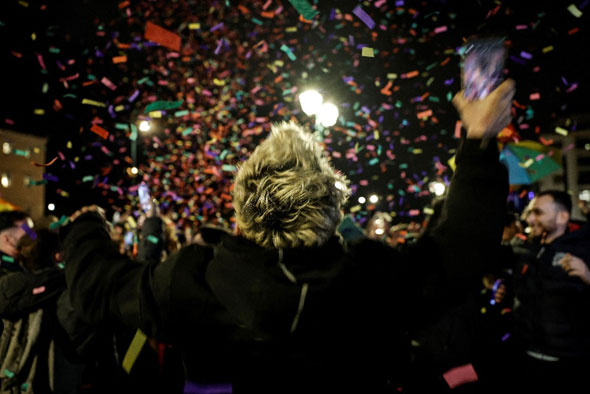
Credit: Louisa Gouliamaki/Reuters via Gallo Images

MONTEVIDEO, Uruguay, Mar 1 2024 (IPS) – After almost two decades of civil society campaigning, Greece’s parliament has passed a law enabling same-sex couples to marry and adopt children. It’s the first majority-Orthodox Christian country to realise marriage equality.


Equal marriage is now recognised in 36 countries, with Estonia last year becoming the first post-Soviet state to join the ranks. These notable firsts have however been accompanied by regression elsewhere, including in the country with the world’s biggest Orthodox Christian population, Russia.

SAME-SEX MARRIAGE AROUND THE WORLD

A long campaign

Debate on the rights of Greek same-sex couples dates back to 2006. That year and again in 2008, the centre-left PASOK party submitted bills to recognise unmarried couples, including same-sex ones. Neither made it through parliament, and a cohabitation law was eventually passed that didn’t include same-sex couples.

In 2008, LGBTQI+ rights activists exploited a loophole in a law that didn’t specify that marriage must involve a man and a woman. Despite instant backlash and legal threats, the mayor of the island of Tilos, a gay tourist destination, held a civil wedding ceremony for two same-sex couples. Courts soon annulled these weddings, but they helped put the issue on the agenda.

In the run-up to the 2009 election, the Lesbian and Gay Community of Greece sent candidates a questionnaire on LGBTQI+ rights. PASOK, which won the election, said it supported same-sex registered partnerships. But in office it dragged its heels.

LGBTQI+ activists took to regional and international human rights systems. They submitted shadow reports to the UN Human Rights Council’s review of Greece’s human rights record. In 2009, four gay couples brought two cases to the European Court of Human Rights (ECHR), stating that the restriction of civil unions to heterosexual couples amounted to unjustified discrimination.

In November 2013, the ECHR ruled that there was indeed discrimination, ordering the state to provide compensation. Within days, the PASOK-led government announced it would introduce a bill to extend civil unions to same-sex couples.

But time dragged. A year on, the government again said it was considering the change, but soon after, parliament was dissolved and snap elections were called for early 2015. Amid public anger at economic austerity measures imposed in response to Greece’s debt crisis, left-wing party Syriza won power.

Political change

The pace quickened under the Syriza-led government, and after a long and contentious December 2015 parliamentary debate, same-sex couples gained civil partnership rights. They still weren’t able to adopt or exercise parental rights over non-biological children, but the change was a vital first step. A year on, parliament further amended the law to extend some of the same rights as marriage, including labour rights.

LGBTQI+ rights activists made more gains during Syriza’s four years in power. In 2017, parliament passed a gender identity law enabling people to change gender on official documents without undergoing any medical procedure and allowing trans people to affirm their gender from 15 years onwards. Almost the entire political opposition voted against, including Kyriakos Mitsotakis, leader of the centre-right New Democracy party and current prime minister.

In June 2019, Prime Minister Alexis Tsipras promised his government would legalise same-sex marriage if it won the upcoming election. But he was defeated by New Democracy and its bill was shelved. It renewed its promise ahead of the 2023 election, but again New Democracy won.

In a surprise move, an unlikely champion introduced a same-sex marriage bill in January 2024: Prime Minister Mitsotakis, having consolidated his hold over the political right, now sought to make inroads into socially progressive territory.

On 15 February, several prominent New Democracy parliamentarians abstained or voted against the bill but opposition parties on the left compensated. Syriza lawmakers voted overwhelmingly for.

The religious factor

But powerful forces still oppose equality. According to a 2018 survey, Greece is Europe’s fourth most religious country. Around half of adults consider themselves ‘highly religious’ and 59 per cent say they believe in God with ‘absolute certainty’. Up to 98 per cent identify as Greek Orthodox Christians. For many, belonging to the church goes beyond religion – it’s bound up in Greek identity.

The church has fiercely resisted every victory of the women’s and LGBTQI+ rights movements. It’s been particularly belligerent towards the gender identity law. Church authorities condemned it as ‘a satanic deed’ and shared the same conspiracy theories as far-right groups.

With public opinion evenly divided, the debate on same-sex marriage was deeply polarising. Parliamentary debates saw a barrage of abusive language and hate speech. Far-right politicians claimed the bill was ‘anti-Christian’ and warned it would enable paedophiles. Church representatives insisted homosexuality was a ‘mortal sin’. The church insisted the bill would destroy the family. Priests propagated disinformation and threatened excommunication.

What – and where – next

As Equaldex’s Equality Index shows, the new law is way ahead of prevailing public attitudes. Activists will need to do much more work to shift public opinion to prevent regression and keep moving forward. But they’re optimistic this latest victory will help further normalise the presence of LGBTQI+ people and bring more social acceptance of diversity.

It matters too outside Greece, which is ahead of the curve among Orthodox-majority states – and could offer an example to follow.

Belarus, Russia and Moldova are the Orthodox-majority countries with the most hostile environments for LGBTQI+ people. Belarus and Russia have closed civic space, making it next to impossible to advocate for rights, and Russia has further intensified its repression of LGBTQI+ people as a matter of national identity during its full-scale invasion of Ukraine.

But Moldova, along with several other of Greece’s Orthodox-majority neighbours – Bulgaria, Montenegro and Romania – have relatively enabling civic space and active LGBTQI+ movements seeking change.

Activists in Greece will keep pushing for social change to match legal progress. And activists in neighbouring states will keep campaigning, knowing that, sustained advocacy can pay off even in hostile contexts. They’ll keep trying to force open political windows of opportunity so decades-sought change can finally materialise.

Inés M. Pousadela is CIVICUS Senior Research Specialist, co-director and writer for CIVICUS Lens and co-author of the State of Civil Society Report.

  Source

Hindu Woman Doctor Confident of Election In Pakistan Polls

Asia-Pacific, Democracy, Editors’ Choice, Education, Featured, Freedom of Expression, Gender, Headlines, Human Rights, Population, Religion, TerraViva United Nations, Women in Politics, Women’s Health

Women in Politics

On the campaign trail: Dr Saveera Parkash, a nominee for the Pakistan People’s Party. She is the first Hindu woman to run in Pakistan's general election Credit: Ashfaq Yusufzai/IPS

On the campaign trail: Dr Saveera Parkash, a nominee for the Pakistan People’s Party. She is the first Hindu woman to run in Pakistan’s general election Credit: Ashfaq Yusufzai/IPS

PESHAWAR, Jan 18 2024 (IPS) – A woman medical graduate from the Hindu community is making waves, as she is the first minority woman to contest the Pakistan Parliamentary election for a general seat, and she does so in the face of deep-rooted religious traditions and wealthy political opponents.


Dr Saveera Parkash, a nominee of the Pakistan People’s Party (PPP) for the February 8 polls, is sure of her victory despite her religion.

“I have been witnessing the support that I am getting from the Muslim-dominated district of Buner in Khyber Pakhtunkhwa province,” Parkash told IPS in an interview. 

“My slogan is addressing issues of pollution, women’s empowerment, gender equality, female representation, and their health issues, in addition to ensuring respect for all religions,” she elaborated.

Born to a Christian mother and Hindu father, she has lived in a Muslim-dominated community; therefore, interfaith harmony is on her wishlist.

“Interfaith harmony is extremely significant because we have seen enmity among different religious sects on flimsy grounds.”

“We have to inculcate a sense of brotherhood among all schools of thought and pave the way for lasting peace in the area. We have to respect our religious places and shun differences, as all religions advocate peace and harmony,” she says.

Candidates in Buner, one of the 36 districts of Khyber Pakhtunkhwa that remained thick with militants from 2007 to 2010, are likely to witness a hard contest as the women and youngsters have shown support for the first-ever minority female candidate.

The Khyber Pakhtunkhwa Assembly, one of Pakistan’s four provinces, has 145 elected members, 115 regular seats, 26 reserved for women, and 4 for non-Muslims.

Pakistan is home to 4.4 million Hindus, which is 2.4 percent of the total population.

Her father, a medical doctor and late leader of the PPP and twice Prime Minister Benazir Bhutto, who was assassinated by militants in December 2007 in the garrison city of Rawalpindi, inspire her, she says.

“While my ideal is Mother Teresa, my main focus will be women’s education. The overall literacy rate is 48 percent, but only 25 percent of females are literate; therefore, I want to spread awareness about the importance of women’s education,” she says.

Additionally, it is very important to end favoritism and nepotism and ensure merit in the appointment of teachers, especially women.

After completing medical education in July 2022, she saw the issues women visiting hospitals faced and decided to enter politics instead of continuing her career as a doctor, as she believed issues needed to be resolved at the policy level.

“We need more women doctors, nurses, and paramedics to encourage female patients to visit hospitals. Currently, the number of female health workers is extremely low, due to which most of the women don’t come to hospitals because they don’t want to be seen by male doctors,” she says.

“My big advantage is that I belong to a middle-class family, and the people will vote for me because I am approachable to my electorate.”

The promotion of women’s rights is her main objective.

“We have to scale up awareness regarding women’s rights to property inheritance and their right to education. I sense victory in the polls, as I know the people listen to me and would reject opponents for their bright future.”

So, how does she feel the run-up to the election is going?

“In our district, 75 percent of voters are under 30, and they are well-informed about the issues they are facing. I may be lacking wisdom and knowledge compared to senior politicians, but my sincerity will lead to my success,” says the 25-year-old, who routinely wears a headscarf.

Because she is trying to reach a young electorate, her campaigning includes the wide use of social media, apart from the traditional approaches of public meetings and house-to-house canvassing.

Highlighting corruption is also part of her election campaign.

At the moment, she is concentrating on a smooth run-up so she can win popular support in her constituency

“Voters in my constituency call me ‘sister’ and ‘daughter,’ which gives me immense strength,” she said.

Parkash said she wanted to follow in the footsteps of her father, Oam Prakash, a retired doctor, and serve the people.

Securing a space for women is vital for development, as they have been suppressed and neglected in all areas.

She said “serving humanity is in my blood” due to her medical background, highlighting that her dream to become an elected legislator stemmed from having experienced poor management and helplessness in government hospitals as a doctor.

Most people in the area endorse her candidacy, regardless of her Hinduism or political affiliation. Voters appreciate her bravery for challenging traditional policies

The Election Commission of Pakistan makes it mandatory for all political parties to award 5 percent of seats to women in general seats.

Political analyst Muhammad Zahir Shah, at the University of Peshawar, said that Parkash has created history by contesting the general election.

“We have been seeing women becoming members of the assembly on reserved seats. They don’t contest elections but are nominated by parties on the basis of the seats they win in the election,” Shah said.

In the past, some women have fought elections, but they were Muslim; therefore, they don’t draw as much media and public attention, but the case of Parkash is unprecedented.

She is well educated and belongs to the Hindu community while standing for vote in an area where 95 percent of the voters are Muslims.

“She is contesting on the PPP’s ticket, which isn’t a popular political party, but it seems that she will make her presence felt during the electioneering,” Shah said. Already, she has hit headlines, and if the election takes place in a fair and transparent manner, there is a greater likelihood that she will emerge victorious,” he said.

IPS UN Bureau Report

  Source

Iran, Back to the Grim Normal

Civil Society, Crime & Justice, Featured, Gender, Gender Violence, Headlines, Human Rights, Middle East & North Africa, Press Freedom, Religion, TerraViva United Nations

Opinion

Credit: Mike Segar/Reuters via Gallo Images

MONTEVIDEO, Uruguay, Jan 16 2024 (IPS) – Iran’s time of public rebellion has ended. The protesters marching, chanting, and dancing under the ‘Woman, Life, Freedom’ banner have long stopped. And shifting regional dynamics may play to the regime’s favour.


Protest wave repressed

The wave of protest against the theocratic regime started on 16 September 2022 and lasted far longer than anyone could have predicted. But by the one-year mark it had all but died down, its unprecedented scale and reach superseded by the unparalleled brutality of the crackdown.

The regime murdered hundreds of protesters, injured thousands and arrested tens of thousands. It subjected many to torture, sexual abuse and denial of medical treatment while in detention.

It weaponised the criminal justice system, holding express trials behind closed doors in ‘revolutionary courts’ presided over by clerics, with zero procedural guarantees. It sentenced hundreds – including journalists – to years in jail and handed out several death sentences. According to the UN Special Rapporteur on Iran, some of the human rights violations committed by the regime could constitute crimes against humanity.

Shortly after the first anniversary of the protests, on 6 October, it was announced that the 2023 Nobel Peace Prize had been awarded to Narges Mohammadi, an imprisoned Iranian woman activist with 20 years of struggle for democracy, human rights and women’s rights under her belt. Over the years, she’d been arrested 13 times, sentenced to 31 years in prison and 154 lashes, and been in prison three times. She received the news behind bars.

Ahead of the anniversary, afraid of protests returning, the theocratic regime put back on the streets the morality police whose intervention had resulted in Mahsa Amini’s death. Conservatives proposed a new ‘hijab and chastity’ law that would impose a stricter dress code and harsher penalties for violations.

The reinforcement of morality rules soon claimed its next victim. On 1 October, high school student Armita Garawand was left unconscious, reportedly assaulted by a hijab enforcer for not wearing a headscarf. She remained in a coma for several weeks before dying on 28 October. At her funeral mourners were assaulted and dozens were arrested, including well-known human rights lawyer Nasrin Sotoudeh.

Succession

Battered but unbeaten, the Iranian regime views upcoming legislative elections as part of its road to recovery. On 1 March, people will be called on to vote for all 290 members of the Islamic Consultative Assembly. The key battle will be over turnout, which was already down to 42 per cent in 2020 – the lowest since the 1979 revolution. That record could be shattered, as opposition and reformists call for abstention or boycott.

Along with parliamentary elections, in March Iran will hold elections for the Council of Experts, the body of clerics that appoints Iran’s Supreme Leader. The Council has recently faced criticism for its lax oversight of 84-year-old Supreme Leader Ayatollah Ali Khamenei’s performance, and might have to step in relatively soon.

In power since 1989, Khamenei is in a race against the clock. Bent on ensuring that the theocracy he largely built stands strong after he’s gone, he’s preparing his 54-year-old second son to succeed him. But the ongoing economic crisis may conspire against his plans. The cumulative impacts of international sanctions, fluctuating oil prices, mismanagement and rampant corruption have fuelled inflation and unemployment, and discontent runs high.

To prevent accumulated grievances from translating into mass protest, the regime will likely try to tread a fine line between displaying indestructible power and offering minor concessions.

Regional balance shifts

When the protests erupted international support poured in. People around the world showed solidarity with Iranian women and called on their governments to act. Early on, the USA imposed sanctions on the morality police and several senior leaders of the force and other security agencies. New sanctions by the European Union, UK and USA were announced on the eve of the anniversary of the protests.

On International Women’s Day in 2023, a group of Afghan and Iranian women launched the End Gender Apartheid campaign, which seeks recognition and condemnation of the two regimes as based on gender apartheid. They want the 1973 UN Convention on the Suppression and Punishment of the Crime of Apartheid, which so far applies only to racial hierarchies, extended to gender. The campaign wants this specific and extreme form of exclusion to be codified as a crime under international law so those responsible can be prosecuted and punished.

There was hope that such moves would foster action to hold those responsible to account. Civil society called for the creation of a dedicated accountability mechanism to work alongside the UN Special Rapporteur on Iran.

But on 7 October, as Armita lay in a coma, the paramilitary wings of Hamas launched their attacks into Israeli territory, and global attention shifted to this outrage and Israel’s murderous campaign of revenge. As a key source of support for Hamas, Iran was far from out of the spotlight – but condemnation of theocracy and gender apartheid now took a back seat to geopolitical considerations.

Khamenei publicly stated that Iran wasn’t involved in the 7 October attacks, and although he reiterated Iran’s political and moral support for Hamas, he reportedly told Hamas leader Ismail Haniyeh that Iran wouldn’t directly intervene unless it was attacked by Israel or the USA. But Iran’s leadership of the anti-Israeli and anti-western ‘Axis of Resistance’ and the key role it can play in either expanding or limiting the scope of the conflict means it will be included in any attempt to redefine the regional order, and could well emerge stronger.

Amid the chaos and in the search for security, the international community might be increasingly willing to look the other way. Iran’s search for international respectability saw a milestone in November, when it took advantage of other states’ lack of interest to claim the chair of the UN Human Rights Council’s Social Forum. The result was a largely empty room – but it remains the case that Iran succeeded in occupying institutional space to whitewash its blood-soaked image.

This mustn’t be allowed to happen. Iranian women mustn’t be left to their own devices. Iranian pro-democracy and human rights activists, both inside and outside Iran, need the support of the international community if they’re to have any chance.

Inés M. Pousadela is CIVICUS Senior Research Specialist, co-director and writer for CIVICUS Lens and co-author of the State of Civil Society Report.

  Source