From Truancy to Belonging: Why Safe Spaces Matter for Youth Well-Being

Asia-Pacific, Education, Gender, Headlines, Sustainable Development Goals, TerraViva United Nations, Youth, Youth Thought Leaders
Opinion

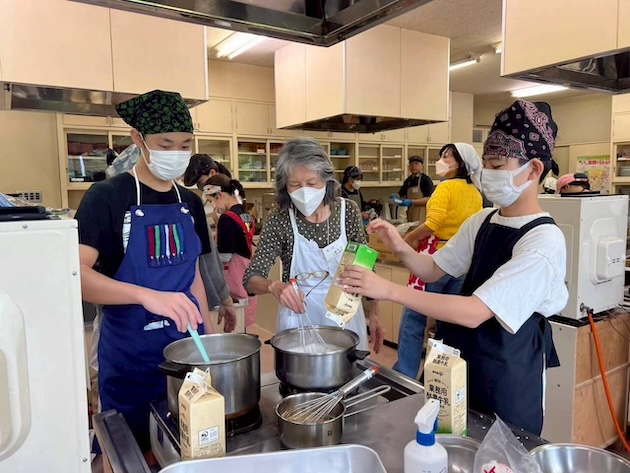
Cooking food to distribute free to children. The meals are made with food that is close to its expiry date. Workshop with Karuizawa Food Bank. Credit: Ippei Takemura

Cooking food to distribute free to children. The meals are made with food that is close to its expiry date. Workshop with Karuizawa Food Bank. Credit: Ippei Takemura

MIYAGI PREFECTURE, Japan, Mar 6 2026 (IPS) – I recently came across a statistic that stopped me in my tracks.


According to the World Health Organization (WHO), Japan has the highest suicide rate among the G7 countries. Even more alarming, suicide is the leading cause of death among people in their teens and twenties. Among elementary, junior high, and high school students, the most common factors linked to suicide are “school-related issues,” including academic pressure and difficulties with peer relationships.

At the same time, the number of children who do not attend school is rising every year. In 2023, Japan’s Ministry of Education reported that more than 340,000 elementary and junior high school students were chronically absent—a record high. These two realities are not separate problems. They are deeply connected.

Truancy is often misunderstood as a lack of motivation or discipline. In reality, it is rooted in complex emotional and psychological struggles that cannot be reduced to a single cause. Rather than treating truancy itself as the problem, society must ask a deeper question: Are we creating environments where young people feel safe, accepted, and understood?

I know this struggle firsthand. I began missing school just three days after entering junior high. My family had lived overseas for many years due to my parents’ work, and returning to Japan left me emotionally exhausted. I found comfort in playing online games with close friends I had made abroad, but while I was holding on to those connections, I missed the chance to build new ones at my new school. Before I realized it, I was caught in a cycle of frequent absences that lasted nearly three years.

What helped me break that cycle was not a dramatic intervention but a small and unexpected turning point. I joined a monthly, off-campus workshop focused on the Sustainable Development Goals (SDGs). To my surprise, students from my school were also participating. Because we shared a genuine interest in global issues, conversation came naturally as we worked together on projects. Eventually, we began spending time together outside the workshop. For the first time in a long while, I started looking forward to going to school again.

That experience taught me a powerful lesson: shared interests and common ground are the foundation of human connection.
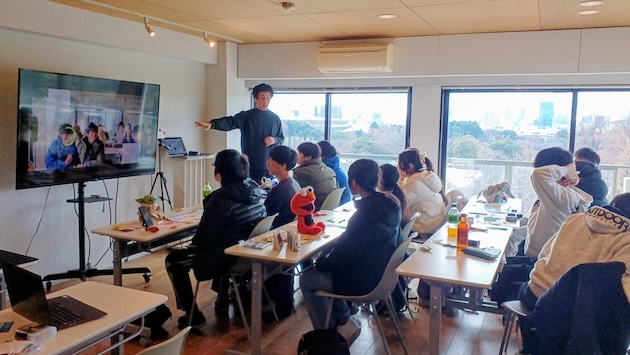
Learn IoT using your own toy; let's upcycle with a workshop with One Smile Foundation. Credit: Ippei Takemura

Learn about the Internet of Things (IoT) using a toy. ‘Let’s upcycle’ workshop with the One Smile Foundation. Credit: Ippei Takemura
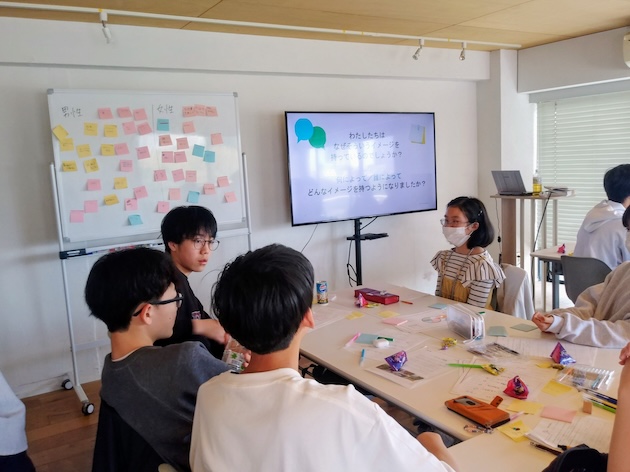
What’s the importance of gender in Japan? Workshop with Plan International, Japan. Credit: Ippei Takemura
What’s the importance of gender in Japan? Workshop with Plan International, Japan. Credit: Ippei Takemura

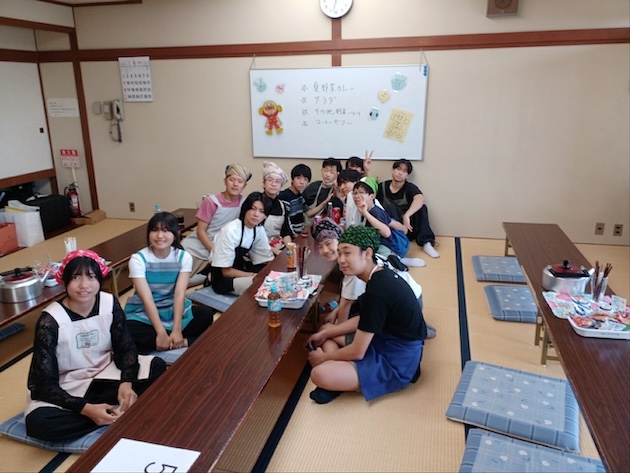
Provide children with free meals made with food that is close to its expiration date. Workshop with Karuizawa Food Bank. Credit: Ippei Takemura

Provide children with free meals made from food that is close to its expiry date. Workshop with Karuizawa Food Bank. Credit: Ippei Takemura

A place where someone feels safe and comfortable is different for everyone. Sociologist Ray Oldenburg describes this idea through the concept of a “Third Place”—a space that exists beyond home (the first place) and school or work (the second place). Third places allow people to relax, connect, and simply be themselves. Finding such a place was the catalyst that inspired me to want to create similar spaces for others.

Social connection is not optional for human beings. It is essential for mental and physical health, helping to reduce stress, strengthen cognitive function, and foster a sense of belonging. However, people connect at different speeds. Some are naturally outgoing, while others need time and distance before they feel ready to engage. A truly inclusive third place respects these differences.

Based on my experiences, I believe there are three key elements that make a third place successful. First, it must include both spaces for solitude and spaces for interaction, with a clear separation between the two. Some people need time to observe and feel comfortable before speaking. A quiet area allows them to exist without pressure and to join others when they are ready.

Second, there should be shared activities. When people gather around common interests—whether environmental issues, crafts, or sports—conversation becomes easier, and relationships develop more naturally.

Finally, many people struggle to take the first step socially. Having facilitators or mentors who can gently initiate activities or conversations can make a huge difference.

One place that embodies these principles is the Moriumius Summer Camp in Miyagi Prefecture, which I have attended since elementary school. In high school, I joined for the first time as a staff intern. The organizers intentionally build community by using shared work as a catalyst for connection.

Campers collaborate on everyday tasks such as cooking (photo ①), preparing fish, starting fires (photo ②), and cleaning. These shared responsibilities create trust and a sense of equality. Beyond that, participants can deepen relationships through activities aligned with their interests, including crafts (photo ③), marine sports, gardening, and farming. During one workshop, I befriended an elementary school student who was making a bamboo fishing rod and shaping slate into a knife. We connected naturally through our shared love of creating things. Because everyone at the camp already enjoys outdoor life, friendships form more easily—and shared hobbies strengthen them even further.
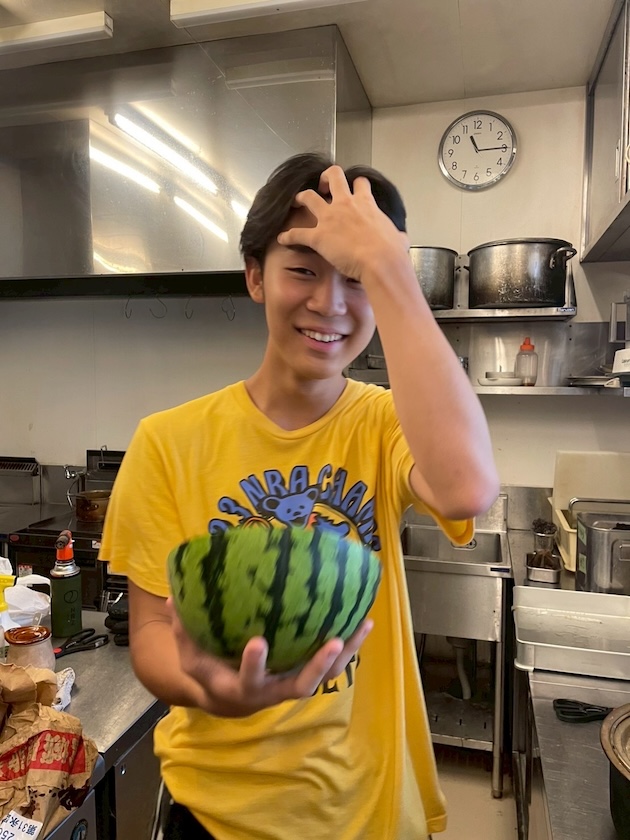
Campers help with Cooking (Photo 1). Credit: Ippei Takemura

Campers help with cooking. Credit: Ippei Takemura
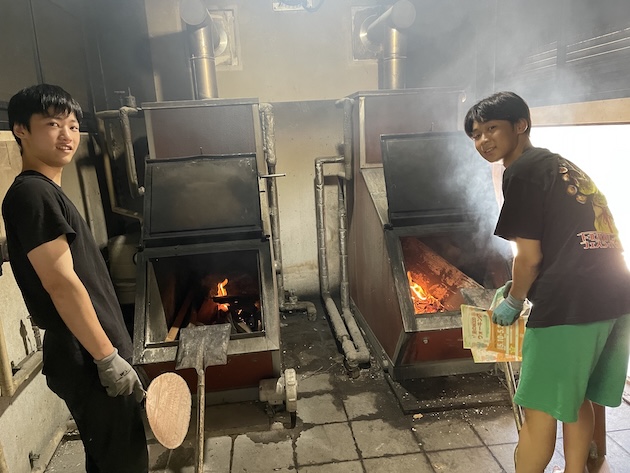
Campers can collaborate on starting fires and cleaning (photo②). Credit: Ippei Takemura

Campers can collaborate on starting fires and cleaning. Credit: Ippei Takemura
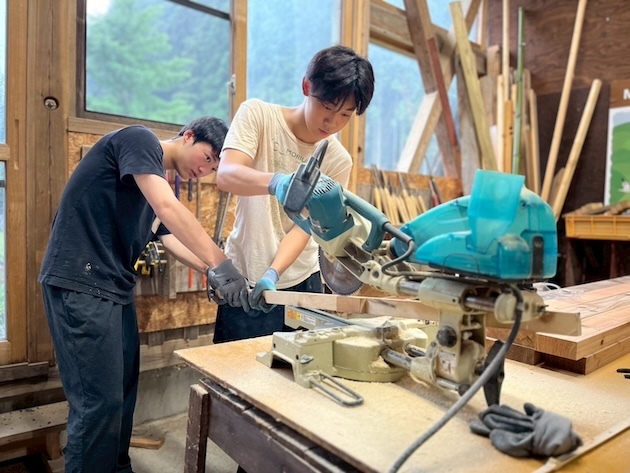
Participants can deepen relationships through activities aligned with their interests, including crafts (photo ②). Credit: Ippei Takemura

Participants can deepen relationships through activities aligned with their interests, including crafts. Credit: Ippei Takemura

A place can be more than just an escape. It can be the first step toward healing, renewed confidence, and hope. When young people find a space where they feel safe enough to be themselves, they often rediscover the courage to reconnect—with others, with learning, and with their own sense of possibility.

This is why I want to continue supporting the creation of spaces that can become “someone’s own place”—places where young people feel seen, valued, and free to grow at their own pace. Sometimes, finding the right space is all it takes for someone to realize that they belong.

Yet this need for belonging is not unique to one school or one country. Around the world, young people are facing increasing isolation, academic pressure, and mental health challenges. Rising youth suicide rates and growing school disengagement reflect a global crisis. When young people are left without spaces where they feel safe, heard, and supported, the consequences extend far beyond classrooms and households—they shape the future of entire societies.

Creating and protecting “third places,” therefore, is not merely a personal or local effort; it is a global responsibility. Governments, schools, communities, and international organizations must work together to invest in inclusive environments where young people can connect through shared interests, express themselves without fear, and rebuild a sense of belonging. Doing so directly supports the Sustainable Development Goals, particularly SDG 3 (Good Health and Well-Being) and SDG 4 (Quality Education), by addressing mental health, social inclusion, and equitable access to supportive learning spaces.

Every young person deserves a place where they feel safe enough to take their first step forward. By listening to youth voices and turning commitment into action, we can move from awareness to impact—and from isolation to hope. The future depends not only on how we educate young people but also on whether we give them places where they truly belong.

Edited by Dr Hanna Yoon

IPS UN Bureau Report

  Source

Heralding an Era of Religious Wars

Armed Conflicts, Civil Society, Democracy, Global, Headlines, International Justice, IPS UN: Inside the Glasshouse, TerraViva United Nations

Opinion

Heralding an Era of Religious Wars

Credit: Office of the High Commissioner for Human Rights (OHCHR)

NEW YORK, Mar 6 2026 (IPS) – In recent months, the language surrounding the escalating confrontation between the United States, Israel, and Iran has taken on a tone that should trouble anyone concerned with global peace.


Across television studios, online sermons, and political commentary, some American preachers and commentators have begun describing the conflict not merely as geopolitics or national security, but as a “holy war.”

Reporting in outlets such as The Guardian, along with coverage in other international media, has noted the growing number of Christian nationalist and Evangelical voices framing the Middle Eastern conflict in explicitly theological terms.

Certain Evangelical preachers in the United States have long interpreted tensions involving Israel through apocalyptic or biblical narratives. In these interpretations, the confrontation with Iran is sometimes presented as part of a divinely ordained struggle between good and evil.

In sermons broadcast online and amplified through social media, the war is described as a moment in which believers must stand with Israel in a battle perceived as spiritually consequential – even leading to ‘the rapture’.

The rhetoric is not limited to pulpits. Some former military figures and commentators have echoed similar themes, invoking civilizational language that portrays the confrontation with Iran as part of a broader clash between Judeo-Christian civilization and an Islamic adversary.

When such language enters strategic discourse, it transforms political conflict into something far more dangerous: a war imbued with sacred meaning.

History shows that once wars are framed as sacred struggles, compromise becomes nearly impossible. Political conflicts can, at least in theory, be negotiated. Holy wars, by contrast, are perceived as battles for divine truth. In that framing, negotiation is betrayal.

This phenomenon is not unique to the current Middle Eastern crisis. Religious legitimization of war has surfaced repeatedly in contemporary conflicts. At the outbreak of Russia’s full-scale invasion of Ukraine in 2022, for example, the head of the Russian Orthodox Church, Patriarch Kirill, framed the war in spiritual terms.

In sermons and public statements, he suggested the conflict represented a metaphysical struggle over the moral future of the Russian world. The language of spiritual warfare, cultural purification, and civilizational defence became intertwined with political justification for military action.

Such rhetoric matters. When religious authority sanctifies violence, it grants moral legitimacy to warfare and discourages dissent among believers. Faith communities that might otherwise advocate peace can become mobilized behind nationalistic or militaristic agendas.

We are therefore witnessing something deeply unsettling: the return of explicitly religious language to modern warfare. For decades after the Second World War, global diplomacy attempted—imperfectly but deliberately—to frame conflicts primarily in political and legal terms.

International institutions, treaties, and multilateral frameworks were designed to prevent precisely the kind of civilizational framing that once fueled centuries of bloodshed.

Yet the present moment suggests that these restraints are weakening. Wars are again being narrated as existential struggles between belief systems. Political leaders, clergy, and media personalities increasingly draw upon religious symbolism to rally support.

The danger is not simply rhetorical. When wars are sacralized, they risk becoming limitless conflicts, unconstrained by borders or diplomacy.

The Collapse of Multilateralism and the Silence of Faith Institutions

For years, I have written and spoken about the uneasy relationship between religion, global governance, and peacebuilding. In articles as well as in interviews and public lectures, I have repeatedly warned that governments and intergovernmental entities have failed to develop a coherent framework for engaging religions constructively in international affairs.

Faith-based organizations today are everywhere. They participate in humanitarian work, development programs, diplomacy initiatives, and interfaith dialogues. International institutions increasingly acknowledge the importance of religious actors in peacebuilding and development. Conferences, seminars, department programmes, global initiatives on “religion and …” or “faith and …” are not only commonplace, but proliferating.

Yet despite this apparent proliferation of engagement, the deeper structural problem remains unresolved: religious actors themselves remain profoundly fragmented, as are the political protagonists dealing with them.

Rather than forming robust alliances capable of confronting violence carried out in the name of religion, many faith organizations continue to operate within narrow institutional or theological boundaries. Interfaith initiatives exist, but they often remain symbolic—highly visible yet limited in their capacity to challenge political power or mobilize believers at scale.

I have argued that religious organizations too often underestimate their responsibility in shaping public narratives around conflict, and doing so together. When religion is invoked to legitimize violence, silence from religious leaders becomes complicity.

At the same time, the broader international system that might once have moderated such dynamics is itself under strain. The erosion of multilateralism has been one of the defining features of the past decade. International institutions that once served as mediators of global crises increasingly appear weakened or sidelined.

The United Nations Security Council remains gridlocked. International law is invoked selectively – if at all. Great-power competition has returned with renewed intensity. In such an environment, appeals to universal norms carry less weight.

Alongside this institutional weakening has come a worrying rise in authoritarianism worldwide. Governments across regions have adopted increasingly illiberal practices—restricting civil liberties, marginalizing minorities, and suppressing dissent. In many cases, religion is instrumentalized to reinforce nationalist narratives or legitimize political authority.

This combination—the decline of multilateral governance and the rise of politicized religion—creates a volatile global environment. Without strong international frameworks to mediate disputes, imperialist narratives and actions gain traction – as in Trump’s and Netanyahu’s war against Iran. Religion, ethnicity, and culture become tools through which political conflicts are interpreted and mobilized.

Faith-based organizations, despite their potential influence, have struggled to counter this trend effectively. Some remain focused on humanitarian services rather than confronting the ideological narratives that legitimize violence. Most hesitate to challenge political authorities with whom they maintain close relationships, and seek financial and/or political backing.

As a result, the global religious landscape today is marked by a paradox: religion is increasingly present in global discourse, yet its potential as a force for peace remains under-realized.

Islamophobia and the Seeds of a Wider Religious Conflict

Perhaps the most troubling dimension of the present moment is the resurgence of Islamophobia as a powerful political force in international discourse.

For more than two decades following the attacks of September 11, 2001, narratives portraying Islam as inherently linked to extremism became deeply embedded in political rhetoric and media representation across many Western societies.

Despite sustained efforts by scholars, religious leaders, and civil society actors to challenge these narratives, they continue to shape public perceptions.

In the context of the current confrontation with Iran, such narratives risk reinforcing the perception that the conflict is not merely geopolitical but civilizational. When Iran is framed not simply as a state actor but as a representative of a threatening Islamic force, the conflict becomes symbolically larger than any single nation.

The danger is clear: political wars are becoming interpreted as religious wars.

If such framing takes hold, the implications extend far beyond the Middle East. Conflicts that are perceived as religious struggles can mobilize believers across borders. They can radicalize communities, fuel sectarian polarization, and undermine the fragile coexistence of diverse religious populations.

History provides sobering examples. The European wars of religion in the sixteenth and seventeenth centuries devastated entire regions, entangling political power struggles with theological disputes. Once religious identity became intertwined with warfare, violence spread across kingdoms and empires.

Today’s globalized world is even more interconnected. Diaspora communities, digital media, and transnational networks allow narratives of conflict to circulate instantly across continents. A war perceived as targeting Islam could ignite tensions in communities thousands of miles away from the battlefield.

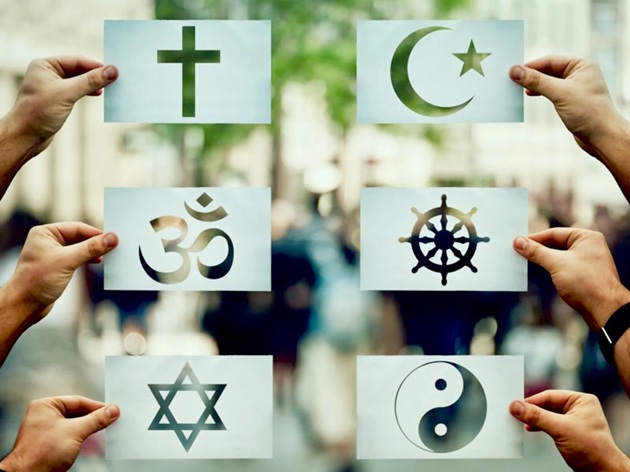
Similarly, religious nationalism in multiple regions—whether Christian, Jewish, Hindu, Buddhist, or Muslim—has been gaining strength in recent years. When one religiously framed conflict emerges, it can reinforce others. Narratives of civilizational struggle feed upon each other.

As the confrontation between the United States, Israel, and Iran becomes widely interpreted through a religious lens, the consequences may be profound. Christian–Muslim tensions, already strained in many contexts, could escalate dramatically. Such conflicts would not respect national borders. They would unfold within societies, across communities, and through global networks of believers.

Ironically, this escalation occurs at a time when religious leaders frequently emphasize the peace-promoting teachings of their traditions. Interfaith initiatives celebrate dialogue, coexistence, and shared values. Religious texts across traditions contain powerful injunctions toward compassion, justice, and reconciliation.

Yet these ideals remain fragile when confronted with political realities.

If religious institutions fail to challenge narratives that sanctify violence, they risk becoming spectators to a new era of religious conflict. Worse still, they may be drawn into it.

Are “Religions” Truly for Peace?

We may therefore be standing at the threshold of a profoundly dangerous historical moment.

Religious language is once again being used to justify war. Political conflicts are increasingly framed as civilizational struggles. Multilateral institutions that once mediated global disputes appear weakened. And faith communities—despite their moral authority—have yet to mount a unified challenge to the narratives that sacralize violence.

None of this means that religion inevitably leads to war. On the contrary, religious traditions contain some of humanity’s most powerful ethical teachings about peace, justice, and compassion. Faith communities have played vital roles in reconciliation processes, humanitarian action, and social movements for justice.

But these possibilities are not automatic. They depend on conscious choices by religious leaders, institutions, and believers.

If religious actors allow their traditions to be mobilized in support of political violence, then religion will become part of the problem rather than the solution.

The question confronting us today is therefore both urgent and uncomfortable.

At a moment when wars are increasingly described as sacred struggles, when geopolitical conflicts are interpreted through religious narratives, and when Islamophobia and other forms of religious prejudice continue to spread, we must ask ourselves: How are religions truly forces for peace?

Prof. Azza Karam, PhD. is President, Lead Integrity

IPS UN Bureau

  Source

International Women’s Day 2026: For Girls in Pakistan’s Tribal Belt, Women’s Sports Come at a Cost

Asia-Pacific, Civil Society, Editors’ Choice, Featured, Gender, Gender Violence, Headlines, Human Rights, Sustainable Development Goals, TerraViva United Nations, Youth

Gender

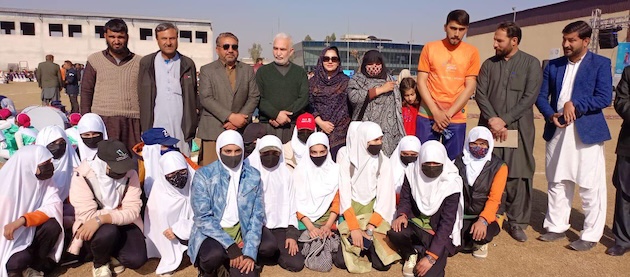
The photo shows an all-girls cricket team from Dir that made it to the finals of the inter-regional games, all without coaching, back in 2023. "Imagine what they can achieve with the right facilities and proper training," said Noorena Shams, also from Dir. Courtesy: Noorena Shams

The photo shows an all-girls cricket team from Dir that made it to the finals of the inter-regional games, all without coaching, back in 2023. “Imagine what they can achieve with the right facilities and proper training,” said Noorena Shams, also from Dir. Courtesy: Noorena Shams

KARACHI, Pakistan, Mar 4 2026 (IPS) – “I was very happy to see the way Aina Wazir was playing cricket,” says 28-year-old Noorena Shams, a professional squash player, when she saw the seven-year-old’s video. The clip, which spread rapidly across social media, drew widespread praise for the young girl’s remarkable talent.


But the events that unfolded were like reliving her past.

“It was like watching my younger self,” said Shams, who belongs to Dir, in Khyber Pakhtunkhwa (KP), bordering Afghanistan, close to where Aina lives in North Waziristan. Both are part of Pakistan’s tribal region.

“Aina, like me, does not have a father to fight the world for her,” she said quietly.

The video also caught the attention of Javed Afridi, CEO of Peshawar Zalmi, who expressed interest in inducting Aina into the upcoming Zalmi Women League. In a post on X, he requested her contact details, promising her cricket equipment and training facilities.

“We couldn’t have imagined the video would get so much attention,” said her cousin, requesting anonymity, speaking to IPS by phone from Shiga Zalwel Khel, a village along the Pakistan-Afghanistan border in North Waziristan. “We were overjoyed; it meant new opportunities and a brighter future for her.”

But the joy was short-lived.

Caught Between Militancy and Military

The video caught the attention of local militants.

Angered by the public display of a girl playing sport, the militants abducted Zafran Wazir—a local teacher who had filmed and uploaded the video with the family’s consent—and forced him to issue a public apology for violating “Islamic values and Pashtun traditions”. It has been reported that he was tortured.

The militants have warned the family that Aina cannot leave the village and that the girl must not accept any offers from anyone. “They said she can play cricket,” said her cousin, “But there should be no videos.”

“Ordinary people in the region are caught between a rock and a hard place—trapped between militant groups and the Pakistan army’s ongoing armed operations,” said Razia Mehsood, 36, a journalist from South Waziristan. “The Taliban tolerate no dissent, and our once-peaceful region is now scarred by landmines on the ground and quadcopters and drones overhead. People are living under constant psychological strain,” she added.

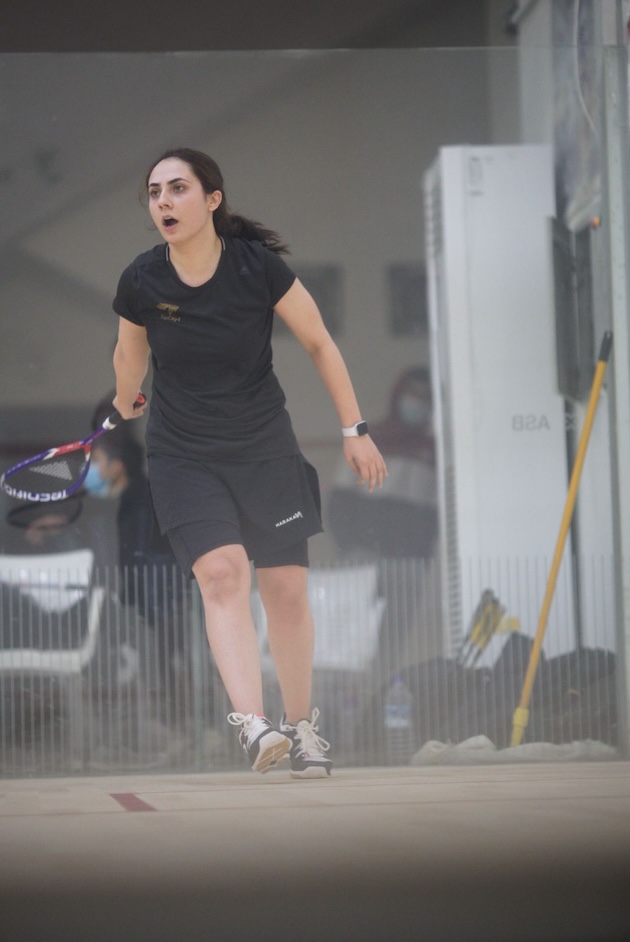
Noorena Shams, a professional squash player, has shown her support for Aina Wazir. Courtesy: Noorena Shams

Noorena Shams, a professional squash player, has shown her support for Aina Wazir. Courtesy: Noorena Shams

Defying the Odds

“I hope she [Aina] can leave the place,” said Maria Toorpakai, 35, the first tribal Pakistani woman who went to play in international squash tournaments, turning professional in 2007.

“Whenever there is a talented girl, every effort should be made to remove her from the toxic environment—even if it means a huge sacrifice from the family,” she said, who belongs to neighbouring South Waziristan but was speaking to IPS from Toronto, where she now resides.

Both Toorpakai and Shams had to leave their homes to escape relentless scrutiny. Belonging to a conservative and patriarchal region, they had to disguise themselves as boys to pursue sports.

Toorpakai cut her hair short, dressed like a boy, and renamed herself “Genghis Khan” to participate in competitive sports.

Shams, meanwhile, was hesitantly allowed to play badminton because it was deemed “more appropriate for young women”.

Despite her parents’ support, she watched boys playing in the only cricket club in Dir, founded by her father.

But theirs is not the only journey fraught with hurdles because of a patriarchal mindset and a rigid tribal background where women’s visibility itself is contested.

“The greatest tragedy is that women’s voices are silenced and excluded from representation, while traditions disguised as religion persist, tying honour and dishonour to women,” said Mehsood. Both Toorpakai and Shams know all this too well. Their families faced constant social rebuke and accusations for bringing dishonour to their villages and tribes, all for playing a sport.

They are not alone.

Athletes like Sadia Gul (former Pakistan No. 1 in squash), Tameen Khan (who in 2022 was Pakistan’s fastest female sprinter), and Salma Faiz (cricketer) relocated from districts including Bannu, D.I. Khan, and Karak to Peshawar, the provincial capital—not just for better opportunities but to escape constant scrutiny.

“If you’re lucky enough that your grandfather, father, or brother doesn’t put a stop to your dreams, then it will be your uncles,” said Salma Faiz, the only sister among six brothers. “And if not them, the neighbours will start counting the minutes you take to get home. They’ll question why you train under male coaches, who watches your matches, and even what you wear beneath your chador. And if it’s still not them, then the villagers will whisper behind your back or land at your doorstep, convincing your parents that girls shouldn’t play sports at all.”

Faiz endured opposition from her elder brother but never gave up cricket. She eventually got selected for the national women’s cricket team.

“Aina is fortunate to receive such overwhelming applause,” said Faiz, now 40, living in Peshawar and working as a lecturer in health and physical education at Shaheed Benazir Bhutto Women University.

“I urge her parents not to surrender to social pressure; they should stand by her and encourage her. She has extraordinary talent—I’ve seen the way she plays,” Faiz pointed out.

Safe Spaces for Women Athletes

Each of these women is now creating ways for their younger counterpart to access the opportunity they lacked.

Faiz has opened her home to girls from tribal regions pursuing sport. When space runs out, she arranges hostel accommodation to ensure they get a shot at opportunities that would likely never reach their village.

Toorpakai, through the Maria Toorpakai Foundation, has, over the years, built a strong network, providing safe spaces for young sportswomen from her region.

But now she wants to go beyond providing temporary support. Her vision to build a state-of-the-art Toorpakai Sports School—a residential facility where girls like Aina Wazir can train seriously, study properly, and live without fear—remains a dream.

“All I want from the state is six acres of land near Islamabad,” she said. “Far enough from tribal hostility but accessible to girls from across Pakistan and international coaches I intend to rope in. I can manage the rest. I can raise funds.”

For over two years, her proposal has been stalled by bureaucratic red tape. “It tells you everything,” she said. “The state simply isn’t interested.”

Shams, too, like Toorpakai, runs the Noorena Shams Foundation, currently supporting four women athletes by giving them a monthly stipend for their training, transport and rent. But if anyone else needs equipment, tuition fees, or house rent, her foundation is able to furnish those needs. She even helped construct two cricket pitches for Faiz’s university.

As the first female athlete elected to the executive committees of the Provincial Squash Association, the Sports Management Committee, the Olympic Association, and the Pakistan Cycling Federation, she has championed young athletes—especially sportswomen— ensuring their concerns are heard.

“I continue to bring to the table issues of athletes’ mental and physical health, the need for international-level coaching, the safety and harassment women face, and the importance of integrating competitive sports into school curricula.”

Using Religion to Quash Dreams

Social media may have provided Aina Wazir with a platform to showcase her talent, but it has also exposed her to hostility.

“We are not against a child playing cricket,” said 27-year-old Mufti Ijaz Ahmed, a religious scholar from South Waziristan. “But she must stop once she becomes a woman. It is against our traditions for women to run around in pants and shirts in public. It is vulgar. If Aina is allowed to do this, every girl will want to follow—and we cannot accept that.”

“The mera jism, meri marzi (my body, my choice) slogan will not work here,” Ahmed went on, referring to a popular slogan that has been chanted since March 8, 2018, and which came under heavy criticism for being a rebellion against the cultural values and Islam.

“Who is he to declare that Aina can’t play?” retorted an incensed Maria Toorpakai, who also serves on the International Olympic Committee’s (IOC) Women in Sport Commission. “Whenever a girl picks up a bat or a ball, Islam is said to be endangered,” she added.

“I would respect them if they confronted and condemned the real ills in my region—drug abuse, child marriage, bacha bazi (the exploitation of adolescent boys coerced into cross-dressing, dancing, and sexual abuse), and the spread of HIV and AIDS. Instead, they obsess over distorted ideas of honour and dishonour. They neither understand the world we live in nor the true essence of Islam. Moreover, they have done nothing for our people.”

National responsibility

Ultimately, she argued, the responsibility lies with the state. It cannot afford to look away while intimidation silences young girls with talent and ambition. It is not only a personal tragedy but also a national loss when talent in remote villages is stifled before it can surface.

“It is the government’s duty to deal firmly with such elements,” she said. “And if it cannot protect its daughters, then it must ask itself why it is in power at all.”

IPS UN Bureau Report

  Source

The Architecture of Hope Under Siege: One Year of Global Aid Dismantling

Civil Society, Climate Change, Development & Aid, Environment, Featured, Global, Headlines, Sustainable Development Goals, TerraViva United Nations

Opinion

The Architecture of Hope Under Siege: One Year of Global Aid Dismantling

Civil society organizations (CSOs) are non-state, not-for-profit, voluntary entities formed by people to address social, political, or environmental issues.

BOGOTA, Colombia, Mar 4 2026 (IPS) – A year has passed since a 90-day freeze on U.S. foreign assistance signaled the deepening of a structural dismantling of international solidarity. Today, the “existential threat” to the freedom of association I warned of in my report to last year’s General Assembly (A/80/219) is no longer a warning; it is a lived reality.


Thousands of civil society organizations (CSOs) worldwide have been reduced to their minimum or are completely vanishing, while others are forced into transformations that compromise their core missions. This is not only creating more victims of human rights violations but has also left prior victims alone.

For the freedom of association, the impact is devastating. The dismantling of USAID, the Bureau of Democracy, Human Rights and Labor (DRL), and other dedicated funds from other countries has cut the lifelines for NGOs that served as democratic watchdogs worldwide (Refugees International).

Therefore, this is not merely a budgetary shift but a coordinated attack on the infrastructure of dissent. In the U.S., for example, foundations and nonprofits are facing “three overlapping crises” (Maecenata Stiftung, Refugees International, other):

    • Policy Threats: Executive Orders targeting DEI and redefining “charitable” status to strip tax exemptions.

    • Organizational Targeting: Explicit vilification of networks like the Open Society Foundations and investigative letters targeting major funders like the Gates and Ford Foundations.

    • Mass Closings: Organizations are laying off up to 95% of staff, leading to a “generational funding collapse” of the humanitarian system.

In the meantime, worldwide we also see ultra-conservative anti-rights groups and autocratic regimes rushing to fill the vacuum left by established aid agencies. These groups are, among others, reshaping the global health landscape with actions that restrict reproductive rights and LGBTQI+ protections (The Guardian). In the Asia-Pacific region alone, 240 million young girls are facing a “coordinated global backlash” as programs focused on education and gender equality are the first to be cut (Women’s Agenda).

As I reported to the UN General Assembly last year, the right to association is an integral part of human nature. When states vilify aid as “criminal” or “corrupt,” they dismantle the lifelines that keep civic space alive (United Nations). We must restore a sustainable aid architecture that serves human dignity and the planet rather than private profit or political control.

But the impact on communities and individuals is far too grave. The data emerging in early 2026 is devastating. Since the 2025 freeze, researchers estimate the dismantling of U.S. foreign aid alone has already caused 750,000 deaths, over 60% of whom are children—a rate of 88 preventable deaths every hour (different sources).

Projections indicate that without restoration, 22.6 million people could die from preventable causes by 2030 (The Guardian).

The “hammer” thrown at the aid system has undone decades of progress:

    • Access to justice: Deeply affected by terminated grants funding for community violence intervention programs, legal assistance for crime victims from underserved communities, court-appointed advocates for children in cases of abuse or neglect, services for victims of hate crimes, shutting down the safety net for domestic violence survivors and closing of shelters and hotlines, etc. (CIJ, LLF).

    • Democracy and rule of law: Crisis in independent media and civil society reduces the critical voices that speak truth to the power and weakens checks and balances in democracies and hybrid regimes, while in authoritarian context the constraints of dissenting voices increases repression, especially against the most vulnerable groups (Global Democracy Coalition).

    • Human rights: global and regional mechanisms of human rights protections have seen drastic cuts of funding, which jeopardize the human rights protections worldwide. The OHCHR received a 16% cut of its budget for 2026 and several Human Rights Council mandates are also being defunded, many tied to HHRR violations investigations in authoritarian states (ISHR).

    • Global Health: Access to PrEP and life-saving HIV drugs has been halved for 80% of community organizations. Cholera deaths in the DRC alone surged by 361% in 2025 after essential water projects were halted (Oxfam).

    • Education: The abrupt cancellation of nearly 400 USAID-funded education programs in 58 countries risks leaving millions of children—predominantly girls and refugees—without access to quality learning (ETF).

    • Food Security: In West and Central Africa, 55 million people are expected to endure crisis levels of hunger, or worse by the end of the first semester of 2026, including over 13 million children are also expected to suffer from malnutrition during the year 2026 (WFP). In Afghanistan, monthly reach for emergency food aid plummeted from 5.6 million people to just 1 million (Refugees International).

Perhaps most alarming is the collapse of data collection systems. As USAID programs disappeared, so did the reporting requirements that tracked disease, death, and human rights violations (The Japan Times). We are entering a period where the true scale of suffering and needs may never be fully known (Refugees International).

Besides the cut of funding, the existential threat is also related to the reduction of possibilities of civil society organizations to collect new funding due to the increase of mis/disinformation about CSO work that lead to lack of trust in communities and therefore increases the shrinking civic space, already heavily affected by anti-NGO laws and persecution (Global aid freeze tracker).

We cannot allow a world without civil society. It is a world without hope, where the most vulnerable are left alone to face the most pressing human crises and wars. The international community must move beyond “business as usual” to restore a sustainable and just aid architecture that empowers civic engagement rather than advancing its suppression.

Gina Romero is UN Special Rapporteur, Freedom of Assembly and of Association.

IPS UN Bureau

  Source

Imagery, Algorithms, and the Ballot: What Takaichi’s Victory Says About Youth Politics in the Digital Age

Active Citizens, Asia-Pacific, Democracy, Development & Aid, Economy & Trade, Headlines, Labour, Peace, TerraViva United Nations, Youth, Youth Thought Leaders

Opinion

Imagery, Algorithms, and the Ballot: What Takaichi’s Victory Says About Youth Politics in the Digital Age

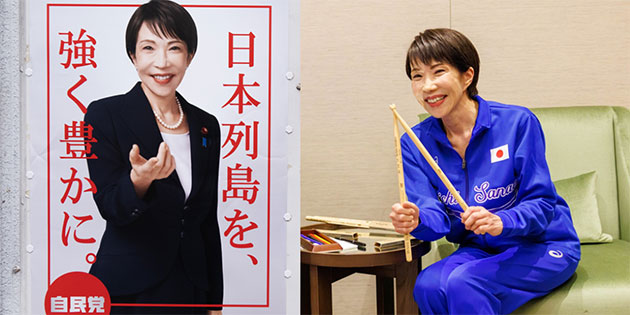
Image: Hiroshi-Mori-Stock / shutterstock.com and 内閣広報室 / Cabinet Public Affairs Office / Wiki Commons

Mar 3 2026 (IPS) –  
Sanae Takaichi’s electoral victory in February marks a historic turning point in Japanese politics. As Japan’s first female prime minister and the leader of a commanding parliamentary majority, she represents change in both symbolic and strategic terms. Conventional wisdom long held that younger Japanese voters leaned progressive, were sceptical of assertive security policies, and disengaged from ideological nationalism. Yet a segment of digitally active youth rallied behind a politician associated with constitutional revision, expanded defence capabilities, and a more unapologetic articulation of national identity. This shift cannot be reduced to a simple conservative swing. Rather, Takaichi’s rise reflects a deeper transformation in how democratic politics is constructed in the digital age: the growing power of imagery, digital mobilisation, and algorithm-driven branding in shaping political choice—particularly among younger voters.


Takaichi’s approval ratings among voters aged 18–29 approached 90 per cent in some surveys, far surpassing those of her predecessors. Youth turnout also rose, suggesting that Japanese youth are not politically apathetic. On the contrary, they are paying attention—but the nature of that engagement has changed. Viral images, short video clips, hashtags, and aesthetic cues travelled faster and farther than policy briefings. For many younger voters, engagement began—and sometimes ended—with the visual and emotional appeal of the candidate. This pattern is not uniquely Japanese. However, the scale of its impact in this election suggests that political communication has entered a new phase in which digital imagery can shape electoral outcomes as much as—or more than—substantive debate.

A New Phase of Digital Politics in Japan

In the months leading up to the election, Takaichi’s image proliferated across social media platforms. Supporters circulated clips highlighting her confident demeanour and historic candidacy. A cultural trend sometimes described as ‘sanakatsu’ or ‘sanae-mania’ framed political support as a form of fandom participation. Hashtags multiplied. ‘Mic-drop’ moments went viral. Even personal accessories—her handbags and ballpoint pens—became symbolic conversation pieces.

Political enthusiasm has always contained emotional and symbolic elements. What is new is the speed and scale at which digital platforms amplify them. Algorithms reward content that provokes reaction—admiration, anger, excitement. A charismatic clip often outperforms a detailed explanation of fiscal reform. For younger voters raised in scroll-based media environments, political information increasingly arrives as curated snippets. Policy complexity competes with—and often loses to—aesthetic immediacy.

Post-election surveys and interviews suggested that many first-time voters struggled to articulate specific policy distinctions between parties. Instead, they cited impressions—strength, change, decisiveness, novelty—suggesting that digital engagement does not automatically translate into policy literacy. Political identity can form through repeated exposure to imagery and narrative rather than sustained examination of legislative proposals. When campaigns are optimized for shareability, they are incentivized to simplify. Nuance compresses poorly into short-form video.

The Politics of Strength in an Age of Uncertainty

Japan’s younger generation has grown up amid prolonged economic stagnation, regional insecurity, and global volatility. China’s rise, tensions over Taiwan, North Korean missile launches, and persistent wage stagnation form the backdrop of their political participation. For many, the future feels uncertain and structurally constrained.

In such an environment, Takaichi’s assertive rhetoric carried emotional resonance. Her emphasis on strengthening national defence, revisiting aspects of the postwar settlement, and making Japan “strong and rich” projected clarity rather than ambiguity. Where institutional politics can appear technocratic or slow, decisive messaging offered the voters psychological reassurance.

At the core of her appeal is a narrative of restoring a ‘strong’ Japan. Calls for constitutional revision and expanded defence capabilities are framed as steps toward recovering national self-confidence. For younger Japanese fatigued by protracted historical disputes and what some perceive as externally imposed guilt, language emphasising pride and sovereignty resonates more readily than complex historical debates. This may not signal a rejection of peace. Rather, it may reflect a generational reframing of peace itself—understood not solely as pacifism, but as deterrence, defence capability, and strategic autonomy. Messages stressing ‘sovereignty’, ‘strength’, and ‘normal country’ can circulate more effectively in shareable digital formats than nuanced and complex historical analysis.

A Global Pattern: Virtual Branding, a Democratic Crossroads

Japan’s experience mirrors a broader transformation in democratic politics: the rise of virtual branding as the central organizing principle of electoral strategy. In earlier eras, campaigns revolved around party platforms and televised debates. Today, strategy increasingly begins with platform optimization. Campaigns are designed not only to persuade, but to perform within algorithmic systems. The guiding question is no longer only “What policies do we stand for?” but “What content travels?”

The election of Donald Trump in the United States illustrated how virtual media strategy can reshape political competition. Memorable slogans and emotionally charged posts dominated attention cycles, often eclipsing policy detail. Scholars have described this as “attention economics in action”: the candidate who captures digital attention shapes political reality before formal debate even begins. More recently, figures such as Zohran Mamdani have demonstrated how youth-centered digital branding can mobilize support with remarkable speed. Campaigns became participatory; supporters did not merely consume messaging but actively distributed political identity.

Takaichi’s recent victory reflects the evolving mechanics of digital democracy. Her leadership will ultimately be judged not by imagery but by governance — by whether her policies deliver economic stability, regional security, and social cohesion. The broader question, however, transcends any single administration. It means political decisions have migrated into digital environments optimised for speed and visual communication. In an age where images travel faster than ideas, democratic choice risks being guided more by what is seen than by what is discussed. In such an environment, political campaigns will be forced to adapt, and produce content that performs well within these algorithmic constraints. Over time, this may reshape voter expectations and politics will begin to resemble influencer culture. Campaigns that fail to master digital branding risk will appear outdated. Those that succeed can mobilize youth at scale.

Democracy has always balanced emotion and reason. The challenge today is ensuring that emotion does not eclipse reason entirely. The future of informed citizenship may depend on restoring that balance. This does not suggest that previous eras were immune to personality politics. What has changed is the proportion. The digital environment magnifies symbolic cues and compresses policy discussion. If democracies wish to maintain robust deliberation, they must consciously rebalance image and substance. This requires civic education focused on media literacy, virtual platform incentives that elevate substantive debate and political leadership willing to engage in depth, not just virality. And the responsibility is collective—voters, educators, media institutions, and candidates alike. The question facing democracies is whether this transformation can coexist with substantive deliberation or whether branding will increasingly overtake it.

Related articles:
Japan Stumbles: The Taiwan Fiasco
The New Takaichi Administration: Confronting Harsh Realities on the International Stage
Middle Powers After Davos

Ria Shibata is currently a Senior Research Fellow at the New Zealand Centre for Global Studies, and the Toda Peace Institute in Japan. She also serves as a Visiting Scholar at the University of Auckland. Her research focuses on identity-driven conflicts, reconciliation, nationalism and the role of historical memory in shaping interstate relations and regional stability in Northeast Asia.

This article was issued by the Toda Peace Institute and is being republished from the original with their permission.

IPS UN Bureau

  Source

A New World Order Where Might is Right

Armed Conflicts, Civil Society, Crime & Justice, Democracy, Featured, Global, Headlines, Human Rights, International Justice, IPS UN: Inside the Glasshouse, TerraViva United Nations

A New World Order Where Might is Right

Credit: Global Centre for the Responsibility to Protect

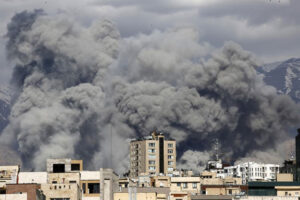
UNITED NATIONS, Mar 3 2026 (IPS) – As the build-up for a proposed “new world order” continues, a lingering question remains: will the country with the most powerful military reign supreme?

The United Nations remains politically impotent. The UN charter is in tatters. The sovereignty of nation states and their territorial integrity have been reduced to political mockery. And the law of the jungle prevails—be it Palestine, Ukraine, Venezuela or Iran.


What’s next: Colombia? Cuba? Greenland? North Korea?

The widespread condemnation of the ongoing conflicts – including charges of war crimes and genocide— has continue to fall on deaf ears.

UN Secretary-General Antonio Guterres told the Security Council that under Article 2 of the UN Charter, all member states shall “refrain in their international relations from the threat or use of force against the territorial integrity or political independence of any state.”

But is anybody out there listening?

Norman Solomon, executive director, Institute for Public Accuracy and national director, RootsAction.org, told IPS killing from the sky has long offered the sort of detachment that warfare on the ground can’t match. Far from its victims, air power remains the height of modernity

Reliance on overwhelming air power is key to what the U.S. is doing in tandem with Israel. Bombing from the skies while not attacking with ground forces is the ultimate way of killing without suffering many casualties.

This reduces political blowback at home in a political and media culture that values American lives but sees the lives of “others” as readily expendable, he pointed out.

“This flagrant war of shameless aggression, launched by the United States and Israel, cannot be contained — much less rolled back — by the typical diplomatic euphemisms and caution.”

The U.S. and Israeli governments, said Solomon, are too completely run by psychopathic leaders who adhere only to the “principle” that might makes right. If ever there were a time that the vaunted “international community” should step up and confront an alliance of reckless outlaw governments, this is it.

The European allies of the United States, he said, should stop their cowardly vagueness and finally step up to demand a halt to this aggression that is setting the Middle East tinderbox on fire. The EU should be threatening huge countermeasures against the United States and Israel unless that pair of sociopathic governments immediately halts their assault on Iran.

“Playing evasive games with Washington makes the leaders in London, Paris, Berlin and elsewhere accomplices to methodical ongoing war crimes”, declared Solomon, author of “War Made Invisible: How America Hides the Human Toll of Its Military Machine”

According to the Global Centre for the Responsibility to Protect, the US-Israeli act of aggression against Iran was undertaken in violation of international law and the UN Charter, as they exercised use of force without authorization from the UN Security Council (UNSC) or without a demonstrated threat to their security that would trigger the right to self-defense under Article 51 of the UN Charter.

“The attack came amid ongoing nuclear talks between the US and Iran and just hours after Oman’s Foreign Minister – a key mediator in the negotiations – shared details on progress achieved and announced that a breakthrough was near. The attack also mirrors the recent unlawful actions undertaken by the US in Venezuela on 3 January, culminating in the kidnapping of the head of state and setting in motion profound uncertainty for the region and the global order.”

Meanwhile, the Geneva-based UN refugee agency, the UNHCR, said it is deeply concerned about the escalation of conflict in the Middle East and its impact on civilians and further displacement in the region.

“Many affected countries already host millions of refugees and internally displaced people. Further violence risks overwhelming humanitarian capacities and placing additional pressure on host communities”.

“We echo the UN Secretary-General’s urgent call for dialogue and de-escalation, respect for human rights, the protection of civilians and full adherence to international law”.

James Jennings, President of Conscience International, told IPS the joint US-Israeli attack on Iran was misguided, illegal, and based on lies. It will retard, not advance, any future nuclear agreement, perhaps for decades.

It was illegal, he pointed out, because it violates both the US constitution and international law as enshrined in the UN Charter. It was based on lies because the nuclear watchdog groups have clearly indicated in essence that “There’s nothing to see here.”

“Trump regularly claims that June’s joint “Operation Midnight Hammer” obliterated Iran’s nuclear capability, yet his weak case for the current “Operation Epic Fury” war rests on the idea that perhaps someday in the future Iran might get a bomb. Several US administrations have worked diplomatically to prevent that, yet Trump tore the agreement up”.

Trump claims to be limited by no law, constitution, or the UN Charter. Guided only by his own morality, as he said recently, he followed Israel obediently in launching a massive war against a sleeping country of 92 million people, said Jennings.

“All the while, his amateur diplomats were negotiating deceptively for a compromise like Imperial Japan did in the run-up to the WW II Pearl Harbor attack. Ask the parents of the more than l00 schoolgirls killed on the first horrifying day of joint US-Israel bomb attacks at Minaj, Iran, and they will probably not see Mr. Trump as particularly moral”.

George W. Bush called himself “The Decider, so he foolishly decided to take the US into two unwinnable wars that most politicians in Washington, and even Trump himself, now consider monumental mistakes. Trump campaigned vigorously on keeping the US out of mistaken Middle East wars that became “Forever Wars,” said Jennings.

“Yet here he is being pulled around by the nose by Mr. Netanyahu. According to a classic rule when launching a war, one must recognize that two things cannot be changed: one is history and the other is geography. It is stunning that the leader of the United States is cavalier about going to war without understanding that or clearly stating the mission’s purpose or end game.”

Pundits and TV reporters are calling the attack on Iran “a war of choice,” said Jennings.

“Why not call it what it really is–a war of naked aggression? Nobody knows when will it end. Trump’s claim that the war will be over in a few days is a cruel joke. The other side gets a vote. Iran celebrated its 2,500th anniversary in 1971. Maybe people who have been around so long know a few things about survival,” declared Jennings.

IPS UN Bureau Report

  Source