



Trusted News Since 1995
A service for global professionals · Saturday, April 25, 2020 · 515,488,783 Articles · 3+ Million Readers
Latest News from the Malawi Diaspora
Trusted News Since 1995
A service for global professionals · Saturday, April 25, 2020 · 515,488,783 Articles · 3+ Million Readers
Civil Society, Development & Aid, Education, Featured, Global, Headlines, Health, Humanitarian Emergencies, TerraViva United Nations
Rev Liberato C. Bautista is assistant general secretary for United Nations and International Affairs of the United Methodist Board of Church and Society. He also serves as president of the Conference of Non-Governmental Organizations in Consultative Relationship with the United Nations.
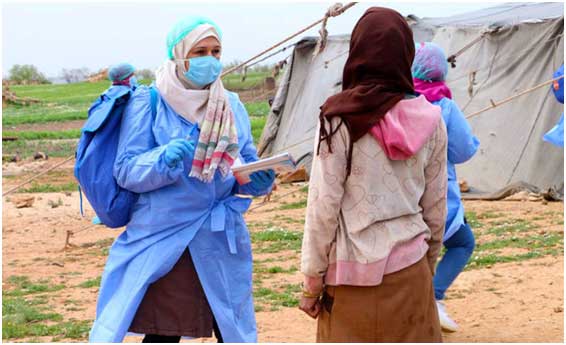
Coronavirus pandemic threatens crises-ravaged communities, UN appeals for global support. Credit: United Nations
– Since the founding of the United Nations in 1945, space for multilateral policy development and commitment has grown. Its growth in the global health field augurs well as we find ways to mitigate the spread of the novel coronavirus.
Multilateralism is a difficult word, often misconstrued to be about the global and not the local and daily life. Perception plays a major role in how the public perceives multilateralism. This is in part due to the complexity of modern global challenges, which are well beyond the capacity of any one state or even a small group of states to resolve by themselves.
The novel coronavirus pandemic may yet change this perception.
As the saying goes, all politics is local. My rejoinder to this is that one’s local is another’s global. The local and the global are simultaneous realities. United Methodist connectionalism is akin to multilateralism.
As a church, we address social issues central to the multilateral agenda, including health, migration, peace, climate, and concerns about global poverty, trading and commerce, sustainable development, social justice, women, children and gender justice, human rights, indigenous peoples, and more.
Holistic health, healing and wholeness are intrinsic to Methodism and its Wesleyan roots. John Wesley attended to both the care for the soul and for the biological body with his abundant tips and remedies for ailments during his time.
Throughout the United Methodist connection, we are doing advocacy on public health policies at national legislatures and multilateral settings. We are in global mission together for sustainable development and humanitarian assistance, building capacity for peoples and communities to manage their healthcare needs.
Our numerous United Methodist-affiliated clinics, hospitals, colleges and universities around the world are training medical, health, social work and pastoral care professionals.
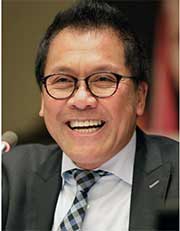
The Rev. Liberato Bautista. Credit: Marcelo Schneider, World Council of Churches
Human rights intrinsic to health, healing and wholeness
Global pandemics such as the novel coronavirus respect no sovereign boundaries or national allegiances. The coronavirus ravages all peoples across races and social classes, but its effects are more devastating on vulnerable populations everywhere and on struggling low- and middle-income economies around the world.
To mitigate the virulent spread of COVID-19, we are called by national authorities to stay at home, wash our hands, stay in place and practice physical distancing. These public health directives imply that we have houses to stay in, water to wash our hands, and some space where we can move around and still maintain six feet distance from each other.
When Philippine government officials issued the directive for Filipinos to stay at home, Norma Dollaga, a United Methodist deaconess and justice advocate from the Philippines, reacted through her Facebook page: “Stay at home. That’s for those who have homes. How about the homeless?”
The reality is that the human rights to health, housing and water, along with human mobility, have long been imperiled in many places around the world prior to COVID-19’s onslaught. Moreover, the health crisis has been used as an excuse in other parts of the world to grab power or tighten national security laws that are assaulting civil liberties and violating democratic rights.
Neither pandemic nor political or economic exigency can derogate from the enjoyment of fundamental human rights.
That the outbreak of COVID-19 started in Wuhan City in China has resulted in undue rise in racist and xenophobic acts especially against people of Chinese origin, or Asians in general. This is on top of an ongoing surge of populism and xenophobic nationalism around the world.
Health is wealth, fund it robustly
If health is wealth, it behooves peoples and their governments to protect it. Health care workers who are on the front line against this pandemic should have all the resources they need without begging for them.
A war may have been declared in the eradication of the novel coronavirus pandemic. But it is looking more like the deployment of war rhetoric and not the funding that real wars have received.
National budgets are moral documents. Health is the true common wealth that we must invest human and budgetary resources to. Yet we know that defense spending today far outweighs the puny investments from national coffers that health care urgently needs and strategically deserves.
Global collaboration is indispensable
The role of the U.N. in forging global cooperation is crucial, in times of crisis or calm. Global cooperation in the surveillance of emerging viruses and bacteria is necessary if pandemics are to be mitigated and diseases eradicated.
Coordinating this global collaboration and leading the development of a vaccine to treat the COVID-19 disease gives the public good reason to trust global institutions like World Health Organization. Think of the eradication of smallpox — and the ongoing programs to eventually eradicate polio and malaria — as examples of how global cooperation benefits us in our local daily lives.
To triumph over COVID-19, comprehensive cooperation is needed on many fronts — medical, pharmaceutical, healthcare workers, mental health providers, healthcare facilities. Public and private coordination is necessary in ensuring that the supply chain for much needed testing kits, ventilators, as well as personal protective equipment like N95 face masks, gloves, gowns, aprons, face shields and respirators remain unbroken.
A successful multilateral response requires a “whole-of-government,” “whole-of-society” and evidence-based public health approach. Mitigation works best when countries share expertise and scientific knowledge about threats to health, to climate, to populations and to peace and security.
Social inequalities imperil public health
The Commission on the Social Determinants of Health established by WHO in 2005 elaborated on the disastrous effects of social inequalities on people’s health. The intersections of physical, mental and social health, healing and wholeness are abundantly clear.
The commission’s 2008 final report stated: “The social determinants of health are the conditions in which people are born, grow, live, work and age. These circumstances are shaped by the distribution of money, power and resources at global, national and local levels.
The social determinants of health are mostly responsible for health inequities — the unfair and avoidable differences in health status seen within and between countries.”
The U.N. commemorates its 75th anniversary this year. It is an auspicious time to reaffirm support for its mandates, especially the securing of health for all peoples and the planet. A healthy population makes for a healthy planet.
Nongovernmental organizations, including faith-based organizations like our United Methodist representations at the U.N., are in a kairos moment to help achieve the U.N.’s mandates.
COVID-19 may have been virulent and will forever change the rules of social etiquette and socialization. But the novel coronavirus has done what multilateral negotiations have not done — pause globalization and its unbridled pursuit of profit and capital.
When the world reopens from the ravages of the virus, we have a momentous task not to return to, but to transform, global and local arrangements to protect humanity and the planet, at least from the ravages of pandemics and social inequalities.
It comforts me that not all contagions are deadly. Some are beneficial. Love and kindness are. So are hospitality, mercy and justice.
*This article 0riginally appeared in UM News”. The link follows: https://www.umnews.org/en/news/collaboration-can-help-eradicate-covid-19

Active Citizens, Development & Aid, Economy & Trade, Global, Headlines, Health, Humanitarian Emergencies, Labour, TerraViva United Nations
– The coronavirus (COVID-19) pandemic has created an unprecedented human and economic crisis. Governments are taking strong actions, enforcing quarantines to reduce contagion, testing populations, building emergency intensive care units. Governments have also launched large fiscal stimulus plans to protect jobs and the economy, as well as temporary social protection programs such as income/food support, subsidies to utilities and care services.
Isabel Ortiz
But in many countries, even stronger actions are needed if we are to protect lives and jobs. States must respond adequately to this public emergency. Citizens must question if the measures implemented by their governments are sufficient and adequate.
The following are important issues for citizens and civil society organizations (CSOs) to watch out at the country level:
Additionally, it is important for citizens and CSOs to push for the following measures at the global level:
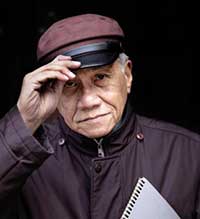
Walden Bello
The coronavirus pandemic has provided stark evidence of the weaknesses and extreme injustices of our world. We must not return to “normality”, a world where half of its population is living below the poverty line of $5.50 a day. We must move away from an inequitable model based on unregulated finance and corporate power, blind to harmful social and environmental impacts. We must back away from a system that disregards the work of health staff, cleaners, garbage collectors, farmers, and instead reward with huge salaries corporate managers, football players, and others who do not perform any essential activity. Now citizens have the opportunity to move forward.
As countries and enterprises recuperate from the crisis, they will have to rethink their economic model, including fewer links with global supply chains, and more links closer to home. It will be an important time for citizens and CSOs to press for “deglobalization”, making the domestic market again the center of gravity of the economy by preserving local production with decent jobs and green investments, and question global supply chains based on taking advantage of cheaper wages, lesser taxes and environmental regulations elsewhere.
Now is the time for citizens to ensure that world leaders forcefully respond to the COVID-19 crisis, in accordance with human rights. This time it cannot be like many earlier crisis experiences, where insufficient support was provided, or ended in the wrong hands, bailing out banks not the population. Citizens and CSOs have a very important role to play to ensure that governments respond to people.
Isabel Ortiz is Director of the Global Social Justice Program at the Initiative for Policy Dialogue, Columbia University, and former director of the International Labour Organization (ILO) and UNICEF.
Walden Bello is senior analyst at the Bangkok-based Focus on the Global South and the International Adjunct Professor of Sociology at the State University of New York at Binghamton.
Civil Society, Development & Aid, Featured, Global, Headlines, Health, Human Rights, Humanitarian Emergencies, Inequity, TerraViva United Nations
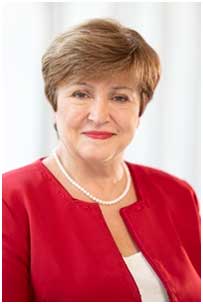
Kristalina Georgieva is the Managing Director of the International Monetary Fund (IMF)
– I have been saying for a while that this is a ‘crisis like no other.’ It is:
Credit: IMF
The outlook is dire. We expect global economic activity to decline on a scale we have not seen since the Great Depression.
This year 170 countries will see income per capita go down – only months ago we were projecting 160 economies to register positive per capita income growth.
Actions taken
Exceptional times call for exceptional action. In many ways, there has been a ‘response like no other’ from the IMF’s membership.
Governments all over the world have taken unprecedented action to fight the pandemic—to save lives, to protect their societies and economies. Fiscal measures so far have amounted to about $8 trillion and central banks have undertaken massive (in some cases, unlimited) liquidity injections.
For our part, the IMF has $1 trillion lending capacity – 4 times more than at the outset of the Global Financial Crisis—at the service of its 189 member countries. Recognizing the characteristics of this crisis—global and fast-moving such that early action is far more valuable and impactful—we have sought to maximize our capacity to provide financial resources quickly, especially for low-income members.
In this regard, we have strengthened our arsenal and taken exceptional measures in just these two months.
These actions include:
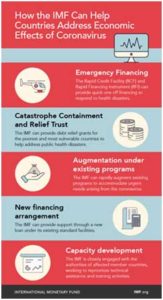
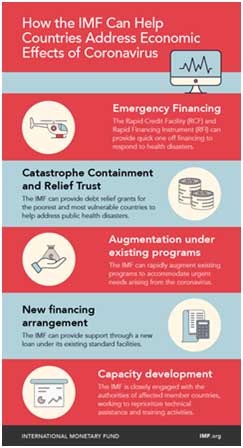
• Doubling the IMF’s emergency, rapid-disbursing capacity to meet expected demand of about $100 billion. 103 countries have approached us for emergency financing, and our Executive Board will have considered about half of these requests by the end of the month.
• Reforming our Catastrophe Containment and Relief Trust, to help 29 of our poorest and most vulnerable members—of which 23 are in Africa—through rapid debt service relief, and we are working with donors to increase our debt relief resources by $1.4 billion. Thanks to the generosity of the UK, Japan, Germany, the Netherlands, Singapore, and China, we are able to provide immediate relief to our poorest members.
• Aiming to triple our concessional funding via our Poverty Reduction and Growth Trust for the most vulnerable countries. We are seeking $17 billion in new loan resources and, in this respect, I am heartened by pledges from Japan, France, UK, Canada, and Australia promising commitments totaling $11.7 billion, taking us to about 70 percent of the resources needed towards this goal.
• Supporting a suspension of official bilateral debt repayments for the poorest countries through end 2020—a ground-breaking accord among G20 countries. This is worth about $12 billion to nations most in need. And calling for private sector creditors to participate on comparable terms—which could add a further $8 billion of relief.
• Establishing a new short-term liquidity line that can help countries strengthen economic stability and confidence.
Kristalina Georgieva
This is the package of actions that the International Monetary and Financial Committee endorsed last week at our virtual Spring Meetings.
It represents a powerful policy response. Above all, it enables the IMF to get immediate, ‘here and now’ support to countries and people in desperate need. Today.
Preventing a protracted recession
But there is much more to be done and now is the time to look ahead. To quote a great Canadian, Wayne Gretzky: “Skate to where the puck is going, not where it has been.”
We need to think hard about where this crisis is headed and how we can be ready to help our member countries, being mindful of both risks and opportunities. Just as we responded strongly in the initial phase of the crisis to avoid lasting scars for the global economy, we will be relentless in our efforts to avoid a painful, protracted recession.
I am particularly concerned about emerging markets and developing countries.
They have experienced the sharpest portfolio flow reversal on record, of about $100 billion. Those dependent on commodities have been further shocked by plummeting export prices. Tourism-dependent countries are experiencing a collapse of revenues, as are those relying on remittances for income support.
For emerging economies, the IMF can engage through our regular lending instruments, including those of a precautionary nature. This may require considerable resources if further market pressures arise.
To prevent them from spreading, we stand ready to deploy our full lending capacity and to mobilize all layers of the global financial safety net, including whether the use of SDRs could be more helpful.
For our poorest members, we need much more concessional financing. With the peak of the outbreak still ahead, many economies will require significant fiscal outlays to tackle the health crisis and minimize bankruptcies and job losses, while facing mounting external financing needs.
But more lending may not always be the best solution for every country. The crisis is adding to high debt burdens and many could find themselves on an unsustainable path.
We therefore need to contemplate new approaches, working closely with other international institutions, as well as the private sector, to help countries steer through this crisis and emerge more resilient.
And the IMF, like our member countries, may need to venture even further outside our comfort zone to consider whether exceptional measures might be needed in this exceptional crisis.
Preparing for recovery
To help lay the foundations for a strong recovery, our policy advice will need to adapt to evolving realities. We need to have a better understanding of the specific challenges, risks and tradeoffs facing every country as they gradually restart their economies.
Key questions include how long to maintain the extraordinary stimulus and unconventional policy measures, and how to unwind them; dealing with high unemployment and ‘lower-for-longer’ interest rates; preserving financial stability; and, where needed, facilitating sectoral adjustment and private sector debt workouts.
We also must not forget about long-standing challenges that require a collective response, such as reigniting trade as an engine for growth; sharing the benefits of fintech and digital transformation which have demonstrated their usefulness during this crisis; and combating climate change—where stimulus to reinforce the recovery could also be guided to advance a green and climate resilient economy.
Finally, in the new post-COVID-19 world, we simply cannot take social cohesion for granted. So, we must support countries’ efforts in calibrating their social policies to reduce inequality, protect vulnerable people, and promote access to opportunities for all.
This is a moment that tests our humanity. It must be met with solidarity.
There is much uncertainty about the shape of our future. But we can also embrace this crisis as an opportunity—to craft a different and better future together.
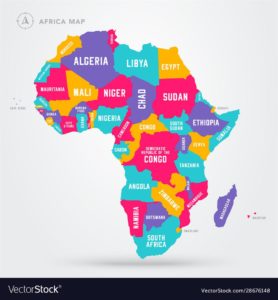
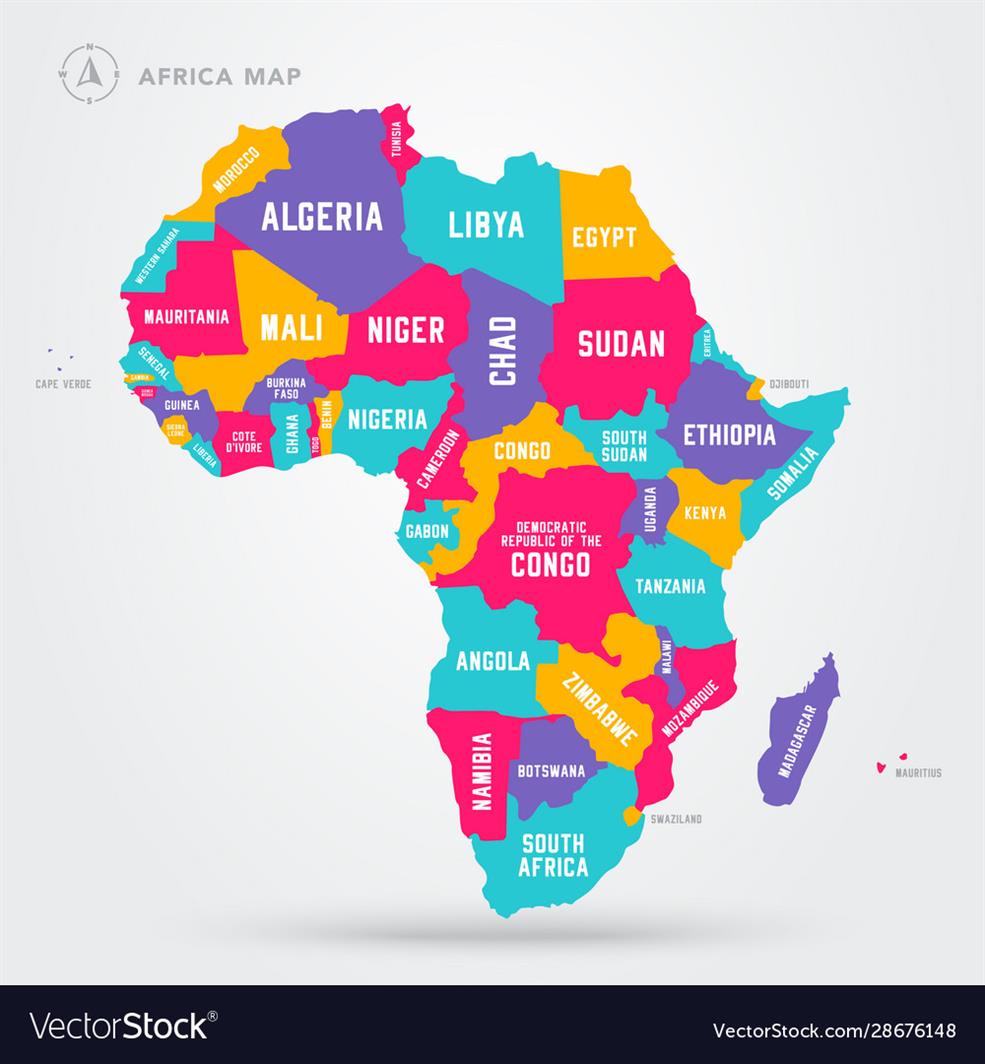
Africa emerges as one of the continents that civilization is rooted in its origin, without influence from other nations. John Henrik an African-American historian once said: “the first light of human consciousness and the world’s first civilization was in Africa”. However, several theories and historians dispute Henrik’s school of thought.
Many theories have penned down various conceptions about Africa which have conformed the mind of many into seeing Africa in an image which in reality is just a mirage. Here are some of the conceptions about Africa debunked:
1-Africa is riddled with diseases
Over time, Africa has been reported as a continent riddled with diseases. These reports have led people outside of Africa to have the notion that Africa is a disease-plagued continent. In 2001, George W. Bush said of Africa, “Africa is a nation that suffers from terrible disease”. Africa as every other nation has a disease that plagues its inhabitants but this itself is no proof that the continent harbours all kinds of diseases. Citing malaria as an instance, malaria takes millions of lives each year in Africa not because of the disease breeds in the air but because of a lack of access to childhood immunization and basic health care.
Nevertheless, battling Malaria has been a relentless effort in various countries in Africa and as such, more immunization programs and health care have been put in place to eradicate malaria. Moreso, Africa holds one of the world’s top continents that possesses natural medicine that cures illness.
2-Africa is always hot
Most travellers assume that it is always hot in Africa. True, there are certain countries in Africa that experience hot weather compared to other nations specifically countries situated in tropical West Africa. However, this doesn’t occur all year round. Africa is made up of rainforest, temperate woodland, cool coastal peninsulas, and high altitude mountains. Also, in the depths of the Sahara desert, the temperature becomes freezing at night. There are many countries in Africa during the winter that experience snow. Countries such as; South Africa, Morocco, Lesotho, Tunisia, and Algeria.
3-All Africans are dark-skinned
One of the most rampant stereotypes that people have of Africans, is that all Africans are dark-skinned. This ideology is untrue. Africans have different skin pigments and possess distinct shades of skin that cut across various tribes in various regions around the continent. Over time, people from other continents have migrated into Africa and as such mixed with Africans, making it their home and marrying into the African tribe. This has been in existence for generations and as such the descendants from these people have settled in the continent. A major example is South Africa. Some of the locals (Afrikaans) in South Africa are whites. Black is a race, it is not just associated with the colour of the skin.
4-Africa had no civilization in its history
Certain historic theories in the past have noted that Africa, before the Europeans’ influence, were barbarians. One of such popular historian is T. Carlos Jacques. In his book, “From Savages and Barbarians to primitives: Africa, Social typologies, and history in Eighteenth-Century French Philosophy,” he likened Africans as people of the stone age and painted a picture of them as barbarians and uncivilised humans. With these theories, people have developed the notion blacks were slaves and uneducated since the beginning of time, but with much pride this is false. African historians and other historian scholars have dug deep to discover that Africans were indeed educated and exposed. The ancient Moors and the Carthaginians who were Africans once ruled the markets of commerce in the world and built great empires with their knowledge of Art and Architecture.
5-All African countries are poor
Poverty is one of the problems many African countries struggle with. However, not all African countries are wallowing in poverty. Africa is one of the world’s most rich continents with natural resources which includes Gold, crude oil, coal, and cocoa amongst others. Countries like Botswana, South Africa, Algeria, Tunisia and Morocco rank in the top 100 out of 126 richest countries in the world as of 2019.
Civil Society, Development & Aid, Economy & Trade, Editors’ Choice, Featured, Food & Agriculture, Global Governance, Globalisation, Headlines, Human Rights, Labour, Latin America & the Caribbean, Migration & Refugees, North America, Regional Categories, TerraViva United Nations
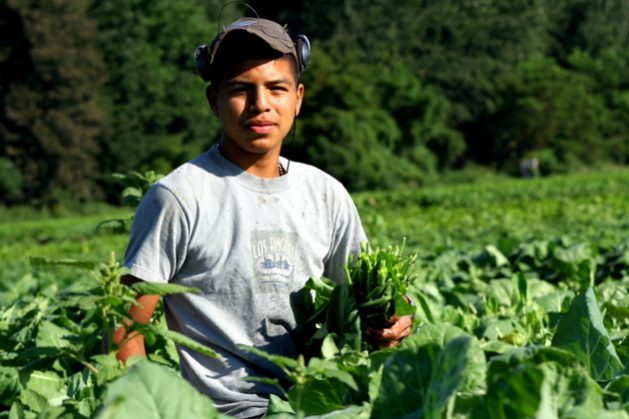
Considered essential to the U.S. economy, as Donald Trump himself now acknowledges, Mexico’s seasonal farmworkers are exposed to the coronavirus pandemic as they work in U.S. fields, which exacerbates violations of their rights, such as wage theft, fraud, and other abuses. CREDIT: Courtesy of MHP Salud
– As the high season for agricultural labour in the United States approaches, tens of thousands of migrant workers from Mexico are getting ready to head to the fields in their northern neighbour to carry out the work that ensures that food makes it to people’s tables.
Exposed to illegal charges for visa, transport and accommodation costs, labour exploitation, lack of access to basic services and unhealthy housing, Mexican seasonal workers driven from their homes by poverty must also now brave the risk of contagion.
Evy Peña, director of communications and development at the non-governmental Centro de los Derechos del Migrante (Migrant Rights Centre – CDM), told IPS from the city of Monterrey that the COVID-19 pandemic is exacerbating violations of the rights of migrant workers.
“Temporary visa programmes are rife with abuse, from the moment workers are recruited in their communities. They suffer fraud, they are offered jobs that don’t even exist in the United States. It’s a perverse system in which recruiters and employers have all the control. There are systemic flaws that will become more evident now,” the activist said.
In 1943, the United States created H2 visas for unskilled foreign workers, and in the 1980s it established H-2A categories for farm workers and H-2B categories for other work, such as landscaping, construction and hotel staff.
In 2019, Washington, which had already declared them “essential” to the economy, granted 191,171 H-2A and 73,557 H-2B visas to Mexican workers, and by January and February of this year had issued 27, 058 and 6,238, respectively.
Two emergencies converge
Now, the two countries are negotiating to send thousands of farmworkers within or outside of the H2 programme, starting this month, to ensure this year’s harvest in the U.S. The Mexican government has polled experts to determine the viability of the plan, IPS learned.
The migrant workers would come from Michoacan, Oaxaca, Zacatecas and the border states. The plan would put leftist President Andres Manuel López Obrador in good standing with his right-wing counterpart, Donald Trump; generate employment for rural workers in the midst of an economic crisis; and boost remittances to rural areas.
For his part, Trump, forced by a greater need for rural workers in the face of the pandemic and under pressure from agriculture, abandoned his anti-immigrant policy and on Apr. 1 even issued a call for the arrival of Mexican migrant workers.
“We want them to come in,” he said. “They’ve been there for years and years, and I’ve given the commitment to the farmers: They’re going to continue to come.”
U.S. authorities can extend H-2A visas for up to one year and the maximum period of stay is three years. After that, the holder must remain outside U.S. territory for at least three months to qualify for re-entry with the same permit.
On Apr. 15, Washington announced temporary changes allowing workers to switch employers and to stay longer than three years.
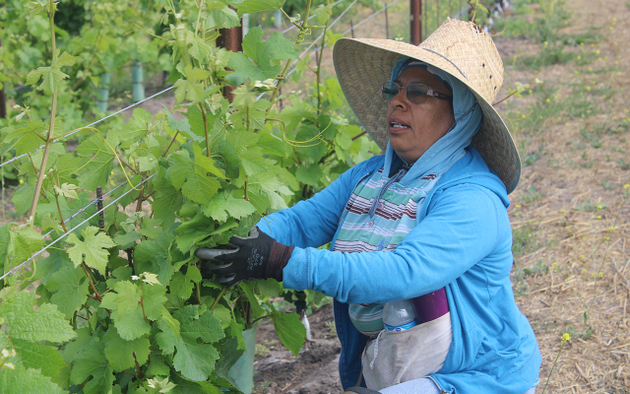
A Mexican migrant worker works at a vineyard in California, one of the U.S. states most dependent on seasonal labour from Mexico in agriculture, and which has now urged President Donald Trump to facilitate the arrival of guest workers from that country so crops are not lost. CREDIT: Kau Sirenio/En el Camino
The most numerous jobs are in fruit harvesting, general agricultural work such as planting and harvesting, and on tobacco plantations, according to the U.S. Department of Labor.
Migrant workers traditionally come from Mexican agricultural and border states and their main destinations are agricultural areas where there is a temporary or permanent shortage of labourers.
Jeremy McLean, policy and advocacy manager for the New York-based non-governmental organisation Justice in Motion, expressed concern about the conditions in which migrants work.
The way the system works, “it’s not going to be easy to follow recommendations for social distancing. Hundreds of thousands of people are going to come and won’t be able to follow these recommendations, and they will put themselves at risk. It could spell another wave of infection and transmission,” he warned IPS.
“This population group has no health services and no medical insurance. If they fall ill in a remote area, what help can they get?” he said from New York.
On Mar. 26, the U.S. Embassy in Mexico reported that it would process without a personal interview the applications of those whose visas had expired in the previous two years or who had not received them in that time, under pressure from U.S. agribusiness.
Trapped with no way out
The migrant workers’ odyssey begins in Mexico, where they are recruited by individual contractors – workers or former workers of a U.S. employer, fellow workers, relatives or friends, in their hometowns – or by private U.S. agencies.
Although article 28 of Mexico’s Federal Labour Law, in force since 1970 and overhauled in 2019, regulates the provision of services by workers hired within Mexico for work abroad, it is not enforced.
It requires that contracts be registered with the labour authorities and that a bond be deposited to guarantee compliance. It also holds the foreign contractor responsible for the costs of transport, repatriation, food for the worker and immigration, as well as the payment of full wages, compensation for occupational hazards and access to adequate housing.
In addition, it states that Mexican workers are entitled to social security benefits for foreigners in the country where they are offering their services.
Although the Mexican government could enforce article 28 of the law in order to safeguard the rights of migrant workers who enter and leave the United States under the visa programme, it has failed to do so.
In its recent report “Ripe for Reform: Abuse of Agricultural Workers in the H-2A Visa Program”, the bi-national CDM organisation reveals that migrant workers experience wage theft, health and safety violations, discrimination, and harassment as part of a human trafficking system.
Recruitment without oversight
For Mayela Blanco, a researcher at the non-governmental Centre for Studies in International Cooperation and Public Management, the problem is the lack of monitoring or inspections of recruiters and agencies.
“In Mexico there are still many gaps in the mechanisms for monitoring and inspecting recruitment. There is still fraud,” she told IPS. “How often do they inspect? How do they guarantee that things are working the way they’re supposed to?”
There are 433 registered placement agencies in the country, distributed in different states, according to data from the National Employment Service. For the transfer of labour abroad, there are nine – a small number considering the tens of thousands of visas issued in 2019.
For its part, the U.S. Department of Labor reports 239 licenced recruiters in that nation working for a handful of U.S. companies.
Data obtained by IPS indicates that Mexico’s Ministry of Labour only conducted 91 inspections in nine states from 2009 to 2019 and imposed 12 fines for a total of around 153,000 dollars. Some states with high levels of migrant workers were never visited by inspectors.
Furthermore, the records of the federal labour board do not contain any reports of violations of article 28.
Mexico is a party to the Fee-Charging Employment Agencies Convention 96 of the International Labour Organisation (ILO), which it violates due to non-compliance with the rights of temporary workers.
Peña stressed that there is still a gap between the U.S. and Mexico in labour protection and said workers are being left behind because of that gap.
“Countries like Mexico see temporary visas as a solution to labour migration and allow the exploitation of their citizens. The H2 programme is about labour migration and governments forget that bilateral solutions are needed,” she said.
In response to the pandemic and its risks, 37 organisations called on the U.S. government on Mar. 25 for adequate housing with quarantine facilities, safe transportation, testing for workers before they arrive in the United States, physical distancing on farms and paid treatment for those infected with COVID-19.
Blanco emphasised the lack of justice and reparation mechanisms. “The more visas issued, the greater the need for oversight. Mexico is perceived as a country of return or transit of migrants, but it should be recognised as a place of origin of temporary workers. And that is why it must comply with international labour laws,” she said.
McLean raised the need for a new U.S. law to guarantee the rights of migrant workers, who are essential to the economy, as underscored by the demand reinforced by the impact of COVID-19.
“We pushed for a law to cover all temporary visa programmes so that there would be more information, to avoid fraud and wage theft. But it is very difficult to get a commitment to immigration dialogue in the United States today,” he said.
But the ordeal that migrant workers face will not end with their work in the U.S. fields, because in October they will have to return to their hometowns, which will be even more impoverished due to the consequences of the health crisis, and with COVID-19 in all likelihood still posing a threat.







