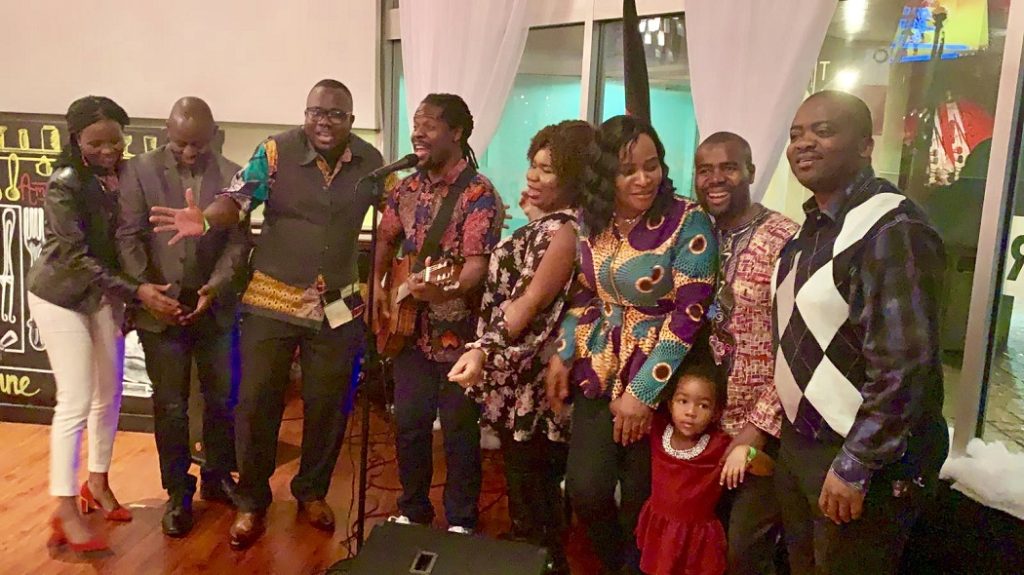
Electric does not even
come close to sum up an atmosphere that was experienced at the New England
Malawi Association-NEMA and Music Against Malaria-MAM event held at Tavola 153,
on 153 Market street downtown Hartford City, Connecticut, USA. A renowned Malawian
cultural music icon Code Sangala and the super star rising comic of the moment
Ian Phiri proved to the diverse audience of Malawians, Zambians, Americans and
Tanzanians who came out to support the show that disappointment is a word that
does not exist in their Lingual. It was truly a masterly display of art, a
synthesis of comedy and Malawian cultural music that gave birth to an
atmosphere so exhilarating and yet so cosy and ambient.
Patrons arrived at the
function pregnant with great expectations and indeed the artists lived up to
their billing. “I haven’t had such type of fun in a long time, this event
brought back fond memories, said one of the patrons Mr Acton Tsonga a resident
of Plainville Connecticut.
The night began with
remarks from the Chairperson of NEMA Mr Solomon Nkhalamba. In his speech he
echoed sentiments of the importance of a people working together.” Tonight, we
are here in line with one of the Associations objectives. We are proud to be a
united body of sons and daughters who celebrate and mourn together without
regard to tribal, regional, political, religious or other differences, but
rooted in one bond of Mother Malawi”. He continued to reiterate that NEMA
understands well the challenge malaria poses to children particularly those aged
five and under, “it is such a great honour to join hands with Music Against
Malaria in this fight and I urge diaspora Malawians to take this as a testament
that Malawians can make a difference in Malawi regardless of where they are,”
said Mr. Nkhalamba.
The stand-up comic Ian
Phiri took to the stage at exactly 19 hours and immediately sent the audience
into stitches, touched on subjects such as education, growing up in a Malawian
household in America, and on his personal life experiences as a husband and a
father.
The rest of the night
patrons were treated to authentic Malawian cultural music performed by non-other
than Mr CODE himself. He began his performance with Malawian folk songs and
golden oldies, but the highlight of night came when he began to perform hits
from his newly released album entitled Mizu. Songs such as Mukunama, Tithana
and many others kept patrons on their feet throughout the remaining allotted
time. It was a beautiful time of interaction, networking and camaraderie, all
for a great cause, said Mrs Thandy Mwawu who travelled over 140 miles to attend
the event. All proceeds realized are to be used in refurbishing a children’s
ward at a district hospital in Chikwawa. Chikwawa district is one of the
Malaria hotspots in Malawi.
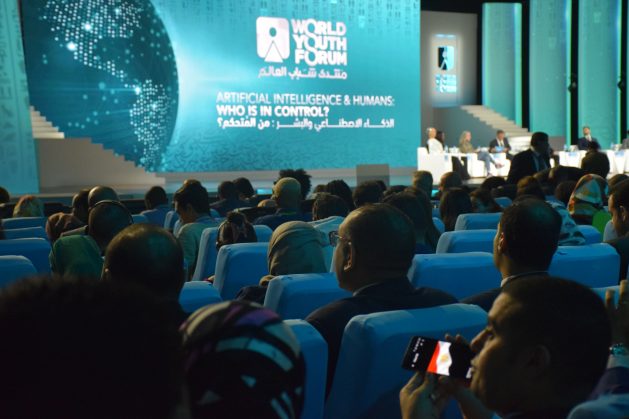
At the Global Youth Forum in Egypt thousands of youth attend a session on Artificial Intelligence and to hear Sophia — a humanoid robot capable of displaying humanlike expressions and interacting with people. Credit: Stella Paul/IPS
SHARM-EL-SHEIKH, Egypt, Dec 18 2019 (IPS) – On late Monday morning, a motley group of more than a thousand youth gathered in a hall in Sharm el-Sheikh, Egypt, to listen to Sophia — a humanoid robot capable of displaying humanlike expressions and interacting with people. Yahya Elghobashy, a computer science engineering student from Cairo, sat excitedly in the audience. A few meters away from him, also in the audience, was Abdel Fattah el-Sisi — the President of Egypt.
As Sophia and a panel of scientists on the stage spoke about Artificial Intelligence (AI), El-Sisi was seen listening attentively and taking notes while the young crowd around him squealed and took photos.
“It was very exciting that I was going to see and hear the world’s best humanoid robot and that the president himself was there,” Elghobashy revealed, a big smile on his face.
Since 2017, Egyptian president El-Sisi has been seen here at the World Youth Forum each year. The event is now the Arab world’s largest youth gathering, focusing on peace, culture and development.
The 3-day forum, which ended yesterday, Dec.17, drew nearly 8,000 people including 64 speakers and several hundred youth leaders from Africa, Asia, Europe, and the Americas. There was also a large contingent of government officials and ministers in attendance, which has been happening under the direct patronage of the president. The core theme of the event is “Egypt: where civilisations meet” – an effort to highlight the cultural diversity of the country to the world.
Technology and innovation in the spotlight
But the dominating subject of discussions at the forum this year was technology and innovation. Of the 20 sessions, half were centred around technology and artificial intelligence (AI), cyber security, industrial innovation and blockchain technologies and applications.
On Monday, Dec. 16, at the session on AI, youths were seen loudly cheering as Sophia the robot spoke. Designed by Hanson Robotics of Hong Kong, Sophia described herself as a robot who is here to assist in the fields of research, education, and entertainment, and help promote public discussion about AI.At the session, a panel of youth experts also talked passionately about ethics and the future of robotics. “You can build robots that are energy-efficient and also run on renewable energy,” said the humanoid robot to the cheering young crowd.
“This is very progressive that we are discussing advanced technology like AI here. As an engineering student, I think it especially encourages us to talk about what is most relevant to our life, our country and our future,” Elghobashy told IPS.
At a press conference later, El-Sisi assured people that the government was indeed paying attention to the developments at World Youth Forum and planned to bring cutting-edge technologies to the country’s youth for a better future.
“We will be launching a series of new universities teaching all relevant digital age sciences. We will also seek partnerships with international institutions to guarantee a high level of quality education,” El-Sisi said.
New technologies, risks and challenges
Besides the excitement of ground-breaking technologies, the forum also threw light on the risks and challenges of new technologies such asblockchain – a decentralised, distributed ledger that records the provenance of a digital asset. Cryptocurrency, like Bitcoin, is a perfect example of blockchain technology.
Challenges faced by various countries regarding blockchain due to the lack of national legislation in countries other than China and the United States was also a prominent talking point. This includes possible threats like blockchain being misused by terrorist organisations to sell oil, purchase weapons, and exchange digital currencies.
The missing technologies
Samia Khamis is a student of international relations in Amman, Jordan who traveled to the forum for the first time. “I came via Cairo, which is only an hour away from Jordan, but the moment I stepped out of the airport I could feel that the air pollution level is much higher than my country,” she told IPS.
Cairo is one of the world’s most polluted cities.According to NUMBEO – an air quality data monitor, residents of Cairo breathe in polluted air, with levels reaching as high as 85 percent.
According to Khamis, Egypt needs to develop technologies that could clear its sky which is “dark” because of pollution. “It is good that we are brining so many technologies on display here, but we need technologies that can make our environment better and our air clearer,” she said.
The forum’s closing ceremony took place on Tuesday night.
Lasse Juhl Morthorst* is a freelance writer and researcher. He mainly works on international politics, development, refugee- and human rights issues.
Credit: United Nations
COPENHAGEN, Dec 17 2019 (IPS) – According to political scientist Zaki Laïdi’s La tyrannie de l’urgence (The tyranny of emergency) from 1999, crisis and emergency situations leave no time for analysis, prevention or forecasting. As an immediate protective reflex, they prevent long-term solutions and pose a serious risk of jeopardising the future.
In emergency situations, participants lack perspective, and durable solutions to human problems are treated according to the logic of immediate results and expectations of direct outcomes.
The effects of globalisation’s deepening and fragmenting landscape highlights how governance with short-term efficiency has become normative when dealing with contemporary challenges.
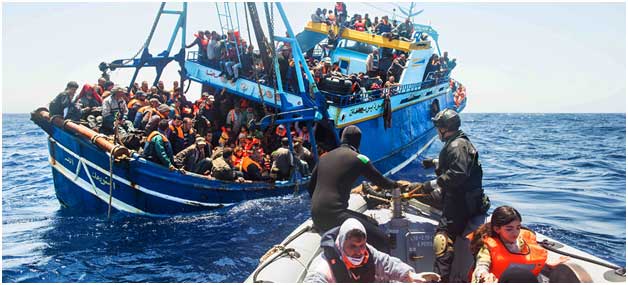
The so-called European refugee crisis from late 2014 and, if we buy its premise, its aftermath have come to symbolise such an emergency situation.
Contemporary political responses expose the electorate and the parties, who respectively gain and lose in the processes of globalisation.
This socio-political cleavage has allowed centre-right parties to take advantage of nationalistic values, with migration viewed through the lens of security – limitation of migration flows and the fight against terrorist groups – law and order, while the centre-left have had to bridge the working class’s fear of cheap labour and economic competition with the middle-class’s liberal socio-cultural preferences.
The European Union’s reaction towards the crisis and its aftermath cannot be seen as a political crisis reaction per se, since the solutions it initiated to manage migration built on existing legislation and practices, helping to consolidate these as routinising emergency in order to naturalise migration politics.
There is a clear political red line between addressing so-called root causes and managing migration by securing external borders and preventing movement of third-country nationals.
This is anchored in the European Commission’s comprehensive approach in the 1994 Communication to the Council, reconfirmed through the integrated approach at the 1999 European Council meeting in Tampere, and developed at the 2002 Seville meeting, where combating illegal migration and addressing root causes were top of the agenda.
What we are witnessing is rather a political crisis, which has lasted for more than a quarter of a century.
Lasse Juhl Morthorst
How did we get here?
As a result of a sceptical post-1973 oil crisis scenario, addressing root causes of migration emerged in the 1980s, with the aim of improving socio-economic conditions in the countries of migrants’ origin, to prevent unwanted migration towards Europe.
When the European Community was developing the single market, with the fluidity of the EU’s internal national borders to facilitate free internal mobility as an outcome, the fear of losing control of external migration became an increasing concern for member states.
The EU’s migration policies have, with their primary focus on securitisation, come to symbolise a harmful politicisation of humanitarianism, which seems to persist into the new Commission’s 2019-2024 period and very like beyond.
In the following years, little progress was made towards a unified European migration policy. As a result, the Commission proposed the idea of a comprehensive approach to migration in 1994.
This consisted of a threefold focus: action on migration pressure through third-country cooperation, controlling immigration to make it manageable and optimisation of integration policies for legal migrants.
The root cause approach was to be seen as a long-term humanitarian development solution to the migration ‘problem’. The ideas of cooperation and addressing root causes have become the popular political take on the EU’s migration challenges, which rhetorically attempt to circumvent the negative connotations of strict migration control and hostility.
Credit: United Nations
During the last decades, the EU has been searching for a new strategic rationalist raison d’être for its common asylum policy, through harmonisation of the EU asylum legal acts, the Common European Asylum System and attempting to solve the stalemate between member states and intra-institutionally, regarding the Dublin system’s tightening Gordian knot.
The EU has failed to solve the structural and systemic impasse in approaching migration flows, which will not end by continuing harshened border controls and security measures, earmarked development aid, externalisation processes or dubious bilateral agreements.
The EU’s migration policies have, with their primary focus on securitisation, come to symbolise a harmful politicisation of humanitarianism, which seems to persist into the new Commission’s 2019-2024 period and very like beyond.
Nothing new from Brussels?
Ursula von der Leyen’s new Commission is taking office in a situation shaped by vast global challenges of geopolitical turbulence and internal fragmentation, towards which she has proposed a rather pragmatic and strategic approach.
Through her manifesto and mission letters to the designated Commissioners, von der Leyen’s new ‘geopolitical Commission’ will focus on making the EU an outward-looking politically influential global powerhouse, which must protect the Union from omnipresent geopolitical and external value-based challenges.
She has proposed ‘a fresh start’ on European migration policy, via a new pact on migration and asylum, a relaunch of the Dublin reform and a new way of burden sharing (the Achilles heel of the Dublin reform).
In charge of this agenda will be Commission Vice-President for Promoting the European Way of Life Margaritis Schinas (Greece), who will work closely with Ylva Johansson (Sweden), the Commissioner for Home Affairs, and Development Commissioner Jutta Urpilainen (Finland).
There are clear tensions and ambiguity in von der Leyen’s agenda towards migration and development, which has toxically been coined with security politics, as it has to find a ‘common ground on migration by working towards a genuine European security union’.
The external dimensions of migration management are explicitly present in the mission letters to both Schinas and Johansson. In these letters, they are instructed to cooperate with the new High Representative of the Union for Foreign Affairs and Security Policy (Josep Borrell, Spain), to develop a ‘stronger cooperation with countries of origin and transit’ in the case of Johansson and ensure ‘the coherence of the external and internal dimensions of migration’ for Schinas.
The EU’s interaction with third countries and partnerships of border control are narrow and ultimately self-eroding.
Beyond the initial internal focus against the backdrop of the eurozone and financial crises, this aligns closely with the Juncker Commission’s focus on the external dimensions of migration.
In 2015, the European Union Emergency Trust Fund for Africa was founded to intensify cooperation with third countries. Migration is also, beyond the Trust Fund, a central element in EU foreign policy and it has further come to divide views in the debate regarding development policy.
It appears that the Union is proposing to work even more closely with partner countries to tackle human trafficking, secure borders, optimise effective returns and tackle root causes of migration through development initiatives. Schinas confirmed this at his hearing on 3 October 2019.
A reminder from the ‘field’
The collaboration with third countries regarding externalisation of borders is vastly problematic, since in some cases, as a trade-off through the funding of development aid earmarked for increased border control, it comes to support militias and authoritarian and hybrid governments.
A large amount of the support often ends up in quasi security organs of rebel groups, which have been seen continuously abusing human rights.
This can presently be witnessed in nations in the Sahel, Maghreb and MENA regions – where tight border control has led to the diversification of pre-colonial circular and reciprocal migrant routes into increasingly perilous areas and methods, along with the risk of promoting economic stagnation, recession and militia isolation.
The diversification of migration routes ultimately creates a favourable environment for the human smugglers that the Union is trying to eliminate.
The EU’s interaction with third countries and partnerships of border control are narrow and ultimately self-eroding. These policies do not tackle any root causes of migration; by aiding regional security units and military forces, they risk limiting democratic accountability and aggravating repression – some of the actual root causes of migration.
Agreements of principles and statements of intention do not compensate for the deflection of focus of an international community’s failure to get to grips with the need of today’s migrants for protection and recognition.
Von der Leyen’s agenda seems like an anachronistic reverberation of the unsuccessful policies introduced more than three decades ago, despite the opportunity to begin abolishing the tyranny of emergency.
*This article first appeared in International Politics and Society (IPS) published by the International Political Analysis Unit of the Friedrich-Ebert-Stiftung, Hiroshimastrasse 28, D-10785 Berlin.
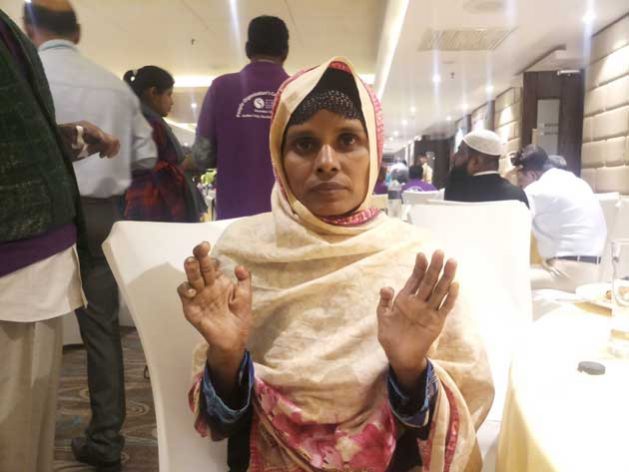
Feroza Begum, Leprosy activist. Credit: Rafiqul Islam / IPS
DHAKA, Bangladesh, Dec 12 2019 (IPS) – When Feroza Begum was first diagnosed with leprosy in 2006, it felt as though she had been struck by a thunderbolt due to the deep-seated prejudice in her society that the disease is a curse from Allah (God).
“ I was affected with leprosy disease, nobody accepted me (in the past). They had made me isolated. I cannot forget the plight I suffered at that time. Even my family was broken as I was left by my husband,” she told IPS. The 35-year old says she was ostracized and made to feel like a lesser person.
Feroza travelled about 200 kilometres from Bogura district to Dhaka, the capital city to attend the first-ever Conference of organizations of persons affected by leprosy. Feroza came to listen and talk to other people who had similar stories and also to engage with organizations that are fighting for an end to discrimination of people with leprosy.
“I got married in 2006 and a few days later, I was diagnosed as a leprosy patient’. She says after the diagnosis, members of her husband’s family started ignoring her. ‘They ignored me and did not talk to me and one day sometime in 2007 my husband divorced me and sent me back to my father’s home.”
After returning home, she started treatment with support from a local NGO and she eventually recovered from the Hansen disease. But as a result of the disease, she could not avoid disability.
Leprosy stigma in Communities
Although there is a stigma around leprosy in her society, Feroza is living with a disability and is leading a normal life. “Fighting stigma for a leprosy patient is a hard task in our society and leading a normal life is a challenging task too,” she added.
“Now my mother and I prepare mats and sell them in a local market. This is our only livelihood option but I never bow down to the stigma,” Feroza said.
Dr David Pahan, Country Director of Lepra Bangladesh, said Prime Minister Sheikh Hasina’s announcement of the ‘Zero Leprosy Initiative’ to eliminate the Hansen disease from the country by 2030 is commendable.
“Bringing leprosy patients into the mainstream of society is big for us as there is a negative perception about leprosy in our society,” he told IPS on the sidelines of the conference.
Now it is time for an Action Plan
Although the Zero Leprosy Initiative was announced, formulation of policies and action plans to eliminate leprosy is also a challenging task which lies ahead, he added.
Dr Pahan, who has been working on leprosy elimination since 1996, said leprosy patients must raise their voice together so that the authorities concerned take proper steps to bring them into the mainstream of society.
Dr David Pahan, Country Director of Lepra Bangladesh. Credit: Rafiqul Islam / IPS
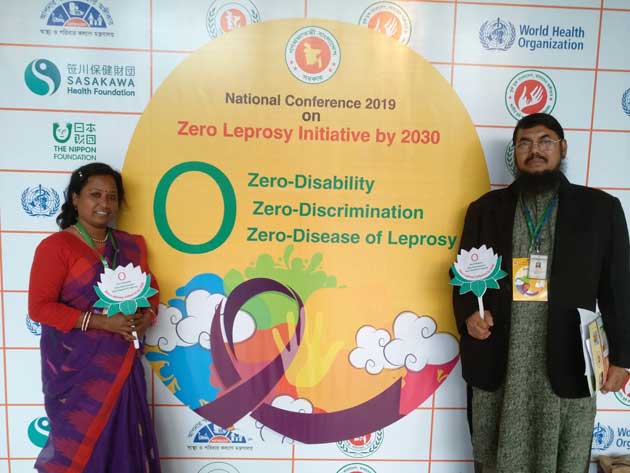
Close to 100 leprosy patients and representatives from several organizations working in the field of leprosy attended the landmark leprosy conference in Dhaka which was organized by members of the Leprosy and TB Coordinating Committee (LTCC) and People Organizations, with support from The Nippon Foundation and Sasakawa Health Foundation.
The conference allowed people from across the country to share their experiences about the long plight in the recovering period of the disease.
Bangladesh is still a high burden leprosy country. The registered prevalence of leprosy was 0.7 percent, 0.27 percent and 0.2 percent in 2000, 2010 and 2016 respectively, and stood at 0.19 per 10,000 population in 2018, according to official data. The data also shows that about 4,000 patients were detected per year in the country over the last few years, with this figure standing at 3,729 in 2018.
Access to resources limited
Sonia Prajapoti of HEED Bangladesh, a local NGO working on leprosy control, said the case of leprosy is highly prevalent among tea workers in Sylhet, Habiganj and Moulvibazar districts as they are not aware of the leprosy disease and have limited access to civic amenities.
She said a social awareness must be created among the tea workers to keep them free from leprosy, while the leprosy patients could be brought into the mainstream of society by increasing their social status, providing proper healthcare and creating working opportunities for them.
“Prime Minister Sheikh Hasina’s announcement of the ‘Zero Leprosy Initiative, will increase the voice of the people who have been working on leprosy elimination, and this will help them fight leprosy together,” said participant Shandha Mondal, district coordinator of local NGO Shalom (leprosy) in Meherpur.
Speaking as the chief guest at the conference, Chairman of The Nippon Foundation and WHO Goodwill Ambassador for Leprosy Elimination, Yohei Sasakawa, assured Bangladesh of continuing support of the implementation of ‘the Zero Leprosy Initiative’ which was announced by Prime Minister Sheikh Hasina and which aims to eliminate leprosy by 2030.
“The government has already announced the Zero Leprosy Initiative that will help eliminate the discrimination the leprosy patients have been facing,” he said.
“You, the leprosy patients, know better about the disease than doctors…your government is working to eliminate leprosy by 2030. And we are here to know how we can help your government fight leprosy,” Sasakawa said.
The Nippon Foundation and the Sasakawa Health Foundation of Japan organized a national conference on leprosy in Dhaka on December 11 under the theme “ZeRo leprosy initiative”.
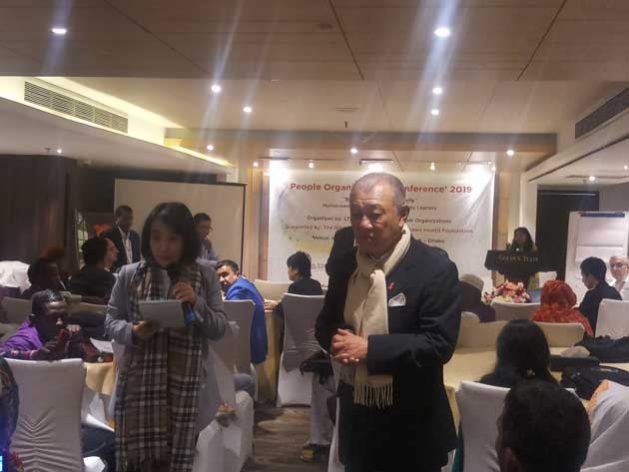
Chairman of the Nippon Foundation and Sasakawa Health Foundation in Japan Yohey Sasakawa speaking at the Conference of Organizations of Persons Affected by Leprosy in Dhaka, Bangladesh. Credit: Rafiqul Islam / IPS
DHAKA, Bangladesh, Dec 12 2019 (IPS) – Chairman of The Nippon Foundation and Sasakawa Health Foundation, Yohei Sasakawa, has assured Bangladesh of continuing support for the Zero Leprosy Initiative announced by the country’s Prime Minister, Sheikh Hasina, aimed at eliminating leprosy by 2030.
Sasakawa was speaking at the opening of the first ever meeting of organizations working on leprosy in Bangladesh.
“The government has already announced the Zero Leprosy Initiative that will help eliminate the discrimination the leprosy patients have been facing,” he told a conference in the country’s capital. Prime Minister Hasina on Wednesday (December 11) also addressed the conference and Sasakawa reminded activists that the country’s leader expressed her commitment to make Bangladesh free from leprosy in the next decade.
Several organizations working in the field of leprosy, like members from the Leprosy and TB Coordinating Committee (LTCC) and People Organizations with support from The Nippon Foundation and Sasakawa Health Foundation, are attending the gathering.
Bangladesh’s leprosy burden ranks fourth-highest in the world. Four thousand new cases are detected annually – an average of 11 to 12 cases per day over the last 10 years. Every year an estimated 3000 leprosy sufferers are affected by complications that require specialized treatment in hospital.
Although the the number of leprosy cases are declining, more than one-third of leprosy patients are facing the threat of permanent and progressive physical and social disability.
Govenment needs help
Calling upon the leprosy patents to extend their support to the government in this regard, Sasakawa said Bangladesh’s Ministry of Health could not fight leprosy alone.
Sasakawa, also a World Health Organisation (WHO) Goodwill Ambassador, said: “You, the leprosy patents, know better about the disease than doctors. Your government is working to eliminate leprosy by 2030. And we are here to learn how we can help your government fight leprosy.”
He asked the participants to play a strong role in eliminating leprosy in Bangladesh. “I hope you will convey the lessons you learnt from the conference today to your community.
“If you all raise voice together, it would be stronger. So, you have to be stronger to fight leprosy (in Bangladesh). Your support is important to reach the goal,” he said.
About his journey as WHO goodwill ambassador, Sasakawa said he has been working on fighting leprosy around the world for the last 40 years.
“I have been providing assistance to about 120 countries, while I have traveled to different parts of the world 700 times to help (leprosy patients),” he said. “No matter which country I visited, the plight of the leprosy patients is the same.”
Sasakawa said he came here to share his opinion and experiences on leprosy from his journey. “I am very happy seeing the faces of leprosy patients who are participating in the conference, as this is the first time … we have met together,” he added.
Highlighting the nature of leprosy patients, the Nippon Foundation chief said the people who get disabilities suffering from leprosy and those become disabled due to road accidents are not the same, because leprosy is an infectious disease.
“That’s why leprosy patients fear to meet and their communities also do not accept it,” he said.
Role of NGO’s in the fight against Leprosy-free world
Sasakawa also praised the role of the NGOs, including Lepra Bangladesh and the Damien Foundation, in fighting leprosy in the country.
Shandha Mondal, district coordinator of SHALOM (leprosy), a local NGO working in Meherpur, said Prime Minister Hasina’s announcement on the Zero Leprosy Initiative will increase the voice of the people who have been working on leprosy elimination, and this will help them fight leprosy together.
Motiur Rahman, a leprosy patient of Gazipur, said the prime minister always gives priority to leprosy patients. For example, he said he had sought accommodation from the Bangladesh premier and he received a house from the Government.
The participants attending the national conference said that the prime minister’s call to local pharmaceuticals to produce medicines and distribute among leprosy patients free of cost is really commendable.
Speaking at the National conference on Zero Leprosy Initiative 2030, Prime Minister Hasina said many Bangladeshi pharmaceutical companies export medicines, and she called on these companies to produce drugs for leprosy locally and distribute those among leprosy patients free of charge.
But, they said, the PM should also instruct the authorities concerned to launch a new programme and announce a special budget for leprosy. This would be more helpful in fighting leprosy in Bangladesh, they said.
The Nippon Foundation and the Sasakawa Health Foundation of Japan organized a national conference on leprosy in Dhaka on December 11 under the theme “ZeRo leprosy initiative”.
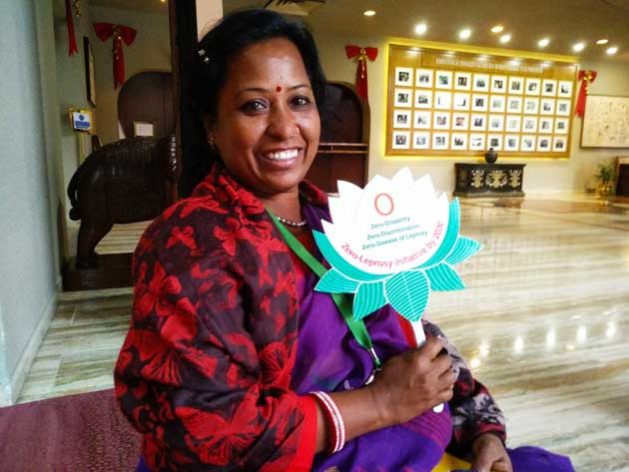
Sandhya Mandal – a community health worker working on leprosy in Meherpur district of Bangladesh. Credit: Stella Paul / IPS
DHAKA, Bangladesh, Dec 11 2019 (IPS) – Sandhya Mandal has never felt so vindicated. For the past four years, the 36-year-old community health worker from Meherpur – a rural district bordering India – has been traveling 50 km every day along dusty roads on an old motorbike, searching for leprosy patients who needed urgent treatment. But in her community, instead of compliments, neighbours and relatives raised questions about her work and her character. “They ask why I come home so late and what is this ‘work’ that I really do. Some even imply that I might be doing something like prostitution,” Mandal tells IPS.
However, Mandal – project manager at an NGO called Shalom, which works with the government to end leprosy, sat in an audience of diplomats, ministers and health experts from all over the country, listening to Sheikh Hasina – the prime minister of Bangladesh – at a national conference on leprosy. “Nobody can doubt me or my work now,” she says, proudly clutching the yellow invitation card she received from the organizers of the conference – her first to a national-level event.
Mandal has every reason to be in the conference: since 2015 she has searched and found over 300 new leprosy cases. In fact, in November this year, she found 10 new cases on a single day – the result of an intense door-to-door search in Gangni, a small town with a high rate of leprosy. “We opened our database of old patients and contacted each one of them individually. We asked them if they knew anyone around them who had leprosy. Nobody could give us any concrete information, so I went from one house to other and from morning to evening I covered 40 families,” she recalls the drill. It was hard and Mandal did not have any time to eat or drink. But by day-end, she had found eight adults and two children who had visible signs of leprosy. She arranged for all of them to visit the TB and Leprosy Clinic (TLC) in Meherpur, a facility run by the government.
Early detection in leprosy key
Early detection and early treatment are the key to complete cure for anyone affected by leprosy, tells Mujibur Rahaman – a doctor at the TLC Meherpur. “The treatment is free. We have enough medicines. But bringing the affected ones to the treatment facility remains the biggest challenge,” Rahman tells IPS. Bangladesh eliminated leprosy in 1998, but new cases continued to be detected. In 2018, 3 729 new leprosy cases were detected.
Earlier this week, in her opening speech at the national conference, Prime Minister Hasina asserted that Bangladesh was committed to become leprosy-free by 2030. According to Rahman, dedicated community workers like Sandhya Mandal are the key to realizing the zero-leprosy status.
“Identifying a new patient is one thing; convincing them to see a doctor is entirely different. It takes very different level of skills,” he adds.
Providing counseling services
Mandal throws a little light on that skill: every time she finds a villager with a suspicious white patch with numbness, she tells him that it is a skin disease that needs urgent medical attention. “I never tell him it’s leprosy because, only a doctor can declare that after a test and also, if I spoke of leprosy, it would shock the person as everyone is still afraid of the disease,” Mandal reveals.
Mandal also counsels and provides emotional support to the person after a doctor has confirmed his or her leprosy. “Women are more scared than men because they feel their husbands will abandon them if they find out about their sickness. They are also scared of how their community would react. I tell them that they must tell their husbands but explain that its curable. To the neighbours, they can say it is a skin disease. I hold their hands, spend time with them. It calms them and it also makes them feel confident,” she tells IPS.
Listening to the prime minister has been an inspiring experience, Mandal says. At present there are not enough community health workers on leprosy. For example, in her own NGO, there are just two health workers. So, to achieve zero-leprosy in the next 10 years, Bangladesh would need many more community health workers, she says. Equipping the field workers at the rural NGOs with a motorbike would also help, as transportation remains a huge challenge in the villages. If these gaps are plugged, there is no reason why Bangladesh could not be leprosy-free, she says. For those doubting her work, Mandal now has an answer: “Even the prime minister has shown an interest in leprosy, in our collective work. If anyone still doesn’t know why I work on leprosy for such long hours, they can ask the prime minister!”
The Nippon Foundation and the Sasakawa Health Foundation of Japan organized a national conference on leprosy in Dhaka on December 11 under the theme “ZeRo leprosy initiative”.