Maldives’ UN General Assembly Presidency Renews Hope for Small Island Developing States

Civil Society, Development & Aid, Economy & Trade, Featured, Global, Headlines, Human Rights, Inequity, TerraViva United Nations
Opinion

Taking Stock, Looking Forward. Credit UNESCO

JEDDAH, Saudi Arabia , Jun 23 2021 (IPS) – Earlier this month, Abdulla Shahid, the Maldives’ foreign minister, was elected President of the 76th Session of the United Nations General Assembly (UNGA), which commences in September.


This is the sixth time a candidate from a Small Island Developing State (SIDS) has been elected to steer the work of the UN’s highest policy-making organ during its 76-year history:

Rudy Insanally of Guyana became the first president of the General Assembly elected from the UN-SIDS category in 1993; followed by Saint Lucia’s Julian Hunte in 2003; Haya Rashed Al-Khalifa of Bahrain in 2006; and the late John William Ashe of Antigua and Barbuda in 2013, while Peter Thomson of Fiji, took the helm during the GA’s 71st session in 2016.

https://www.un.org/ohrlls/content/list-sids

It may seem surprising that such small nations have so frequently been named to this high position—the aggregate population of all SIDS is only 65 million, less than one percent of the global population—but the UN’s 38 SIDS constitute one fifth of the international organization’s total voting membership.

This position gives SIDS outsized power as a voting bloc, which they have wielded to great effect, perhaps most significantly when it comes to climate change, which as we will see has benefited the entire global community.

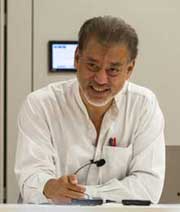
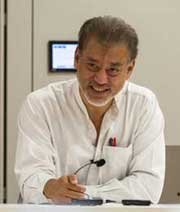
Abdulla Shahid. Credit: United Nations

Far from representing a monolithic group, SIDS hail from every region of the world and are home to dozens of languages and a wide variety of social and economic characteristics. Some, like Guyana and Belize, are not even islands, but they all share unique social, economic and environmental vulnerabilities (like size, remoteness, and limited resources base) that the UN has recognized a distinct group of developing countries since 1992.

They are also highly vulnerable to the impacts of climate change, like extreme weather, sea level rise, and biodiversity loss, making them natural allies in the fight to cut the greenhouse gas emissions responsible for the crisis.

In fact, in 1989, the Maldives hosted one of the first international conferences on sea level rise, a consequential event in the international climate change fight and the inspiration for the creation of the Alliance of Small Island States (AOSIS), which has been credited to establish the the United Nations Framework Convention on Climate Change in 1992 and winning the inclusion of the 1.5 degree Celsius temperature goal in the Paris climate accord in 2015, the latter during the Maldives chairmanship of the group.

SIDS have also shown critical leadership in the creation of the UN’s Sustainable Development Goals (SDGs).

In 2014, SIDS helped lead the negotiations, ultimately creating what is known as the SAMOA Pathway, a blueprint to ensure priorities of SIDS were reflected in the final 17 SDGs.

Before that, John William Ashe skillfully set the stage for the SDGs by working with larger countries to create a process for the SDGs that truly had global buy in.

All along, SIDS main argument that the specific challenges they face need to be given special consideration, and today a number of the SDGs do just that, including sustainable management of fisheries, aquaculture, and tourism. Such recognition was further solidified in 2015 as part of the Addis Ababa Action Agenda adopted at the UN Conference on Financing for Development and again that year in the Sendai Framework for Disaster Risk Reduction.
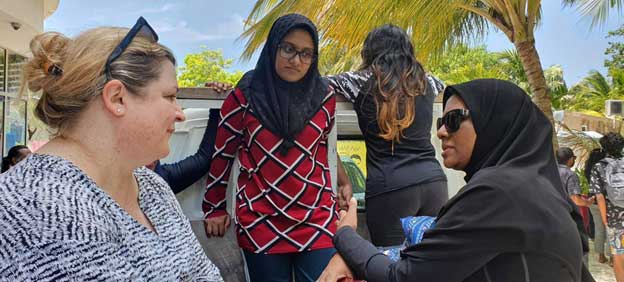
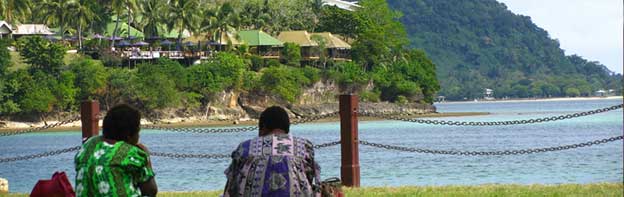
Catherine Haswell, the UN Resident Coordinator in the Maldives (left) meets a group of local women. May 2021. Credit: UN Maldives/Nasheeth Thoha

Unsurprisingly, another theme that has emerged in SIDS international diplomacy over the years is ocean conservation. In December 2017, under Peter Thomson’s leadership, the General Assembly decided to convene negotiations towards an international legally binding instrument under the UN Convention on the Law of the Sea (UNCLOS) on the conservation and sustainable use of marine biological diversity of areas beyond national jurisdiction, what is known as the high seas.

Thomson was also instrumental in developing the UN Ocean Conference that sets out to conserve and sustainably use ocean resources.

SIDS’ important endeavors during the General Assembly not only showcase the value of their contributions there, but of the GA itself, a place where all 193 UN countries, large and small, can elevate their concerns.

During the campaign for the post competing with Zalmai Rassoul, the candidate from Afghanistan, the Maldives’ Shahid launched “a presidency of hope”, noting that his priorities during the year-long presidency are to recover from the Covid-19 pandemic and rebuild economies better and greener.

“The General Assembly can boost efforts towards greater climate action” and “renew momentum” on issues of energy, biological diversity, sustainable fisheries, desertification and the oceans – that are at the heart of SIDS’ concerns.

The UN Secretary General Antonio Guterres, while welcoming the new President-elect Shahid commended his “selection of hope as the central theme in his vision statement” and noted that, “coming from a small island developing state, Mr. Shahid will bring unique insights to the 76th session of the General Assembly, as we prepare for COP26 in Glasgow in November.”

Shahid’s election, as with the SIDS leaders before him, not only offers new hope for islands, but the whole international community. At this precarious moment in history, it is truer than ever that by promoting the interests of SIDS, what we are really doing is protecting the future of mankind.

Ahmed Sareer was the Ambassador/ Permanent Representative of the Maldives to the United Nations from 2012 to 2017 and chairman of the Alliance of Small Island States from 2015 to 2017. He is presently serving at the General Secretariat of the Organization of Islamic Cooperation (OIC) based in Jeddah.
  Source

People Power: Why Mobilisations Matter Even in a Pandemic

Active Citizens, Civil Society, Featured, Global, Global Governance, Headlines, Human Rights, Inequity, TerraViva United Nations

Opinion

Credit: CIVICUS, global civil society alliance

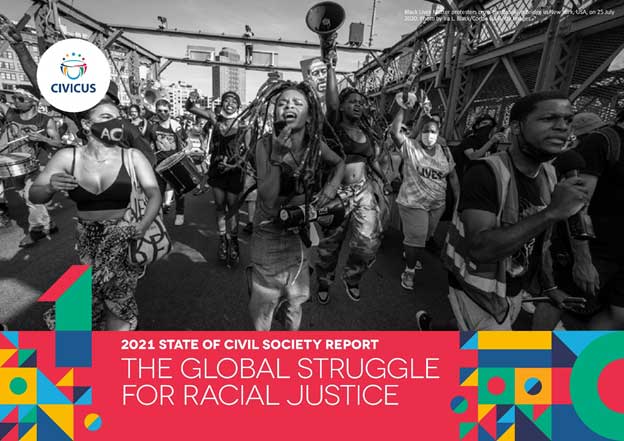
NEW YORK, May 26 2021 (IPS) – It has been one year since the police murder of George Floyd, an outrage that resonated around the world. The killing forced people to the streets, in the USA and on every inhabited continent, to demand respect for Black lives and Black rights, proving that protest was essential even during the pandemic.


The Black Lives Matter (BLM) demonstrations are the latest in a great global wave of protests that started with the Arab Spring 10 years ago and continue today, seen in the brave civil disobedience people are mounting against Myanmar’s military coup and the protests against Israeli violence in Palestine, with people taking to the streets around the world to show solidarity and demand an end to the killing.

Millions of people are protesting because they can see that protests lead to change – the trial of the officer responsible for George Floyd’s killing was an incredibly rare event that would likely not have happened without protest pressure – and because mass mobilisations often offer the only means of resistance to repressive governments.

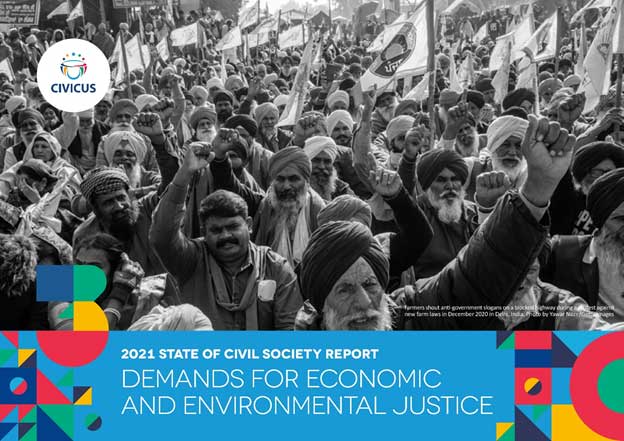
CIVICUS’s just-published 2021 State of Civil Society Report describes how decentralised movements for racial justice and gender equality are challenging exclusion and demanding a radical reckoning with systemic racism and patriarchy.

Threats posed by economic inequality and climate change are enabling people to connect across cultures, spurring mobilisations in many different countries. Today, not only in Myanmar and Palestine, but in Colombia, Lebanon and Thailand among many others, people are demanding economic opportunity, a real say in how they are governed, and an end to discrimination.

Much blood is being spilt in unwarranted violence against protesters by repressive security apparatuses acting on the behest of vested interests. Inarguably, the right to mobilise is being sharply contested because of its potential to redistribute power to the excluded.

Major political transformations in modern history have been catalysed through largely peaceful protests. Sustained mass mobilisations have resulted in significant rights victories including expansion of women’s right to vote, passing of essential civil rights laws, dismantling of military dictatorships, ending apartheid, and legalisation of same-sex marriage.

In the past year, despite the disruptions of COVID-19, populist demagogues have faced stiff resistance from people driven by a hunger for justice and democracy. In Brazil, thousands came out to the streets to protest against horrendous bungling by the Bolsonaro administration in its response to the COVID-19 pandemic which has resulted in a monumental loss of lives.

In India, thousands of farmers remain steadfastly defiant in camps outside Delhi to protest against hurriedly drawn-up laws designed to undermine their livelihoods and benefit big business supporters of Prime Minister Modi’s autocratic government.

In Russia, pro-democracy protests in several cities against the grand corruption of strongman President Putin have so alarmed him that he engineered the imprisonment of his most prominent political opponent. In Uganda, political opposition led protests have inspired people from all walks of life to stand up against President Museveni who’s been in power for 35 years.

In Belarus, protests by ordinary people displaying extraordinary courage helped bring international attention to an election stolen by Alexander Lukashenko, the first and only president the country has known since the present constitution was established in 1994.

Credit: CIVICUS

In the United States, the decentralised Black Lives Matter movement is spurring action on racial justice and the unprecedented prosecution of police officers engaged in racist acts of violence against Black people.

The movement not only helped dispatch a race-baiting disruptive president at the polls, it also had a deep impact beyond the United States by spotlighting racism in places as diverse as Colombia, the Netherlands, South Africa and the United Kingdom.

Notably, women-led movements are challenging gender stereotypes, exposing patterns of exclusion, and forging breakthroughs to lay the groundwork for fairer societies. Concerted street protests by women in Chile helped win a historic commitment to develop a new justice-oriented constitution by a gender-balanced constitutional assembly that will also include Indigenous people’s representation.

In Argentina, legislation to legalise abortion and protect women’s sexual and reproductive rights followed years of public mobilisations by the feminist movement.

Our research finds that, in country after country, young people are at the forefront of protest. Young people have taken ownership of climate change to make it a decisive issue of our time. The Fridays for Future movement which began with a picket in front of the Swedish parliament on school days now has supporters organising regular events to demand urgent political action on the climate crisis on all continents.

Present day movements are deriving strength by taking the shape of networks rather than pyramids, with multiple locally active leaders. Hong Kong’s ‘Water Revolution’ may have been repressed by China’s authoritarian might, but the metaphor of behaving like water – shapeless, mobile, adaptable – holds true for many contemporary movements.

Unsurprisingly, powerful people’s mobilisations are inviting sharp backlash. Protest leaders and organisers are often the first to be vilified through official propaganda and subjected to politically motivated prosecutions.

Many of the rights violations that CIVICUS has documented in recent years are in relation to suppression of protests. Persecution of dissenters, censorship and surveillance to stymie public mobilisations remains rife.

They are all part of a tussle between people joining together in numbers to demand transformative change, and forces determined to stop them. Yet, the principled courage of protesters who mobilise undeterred by repression continues to inspire.

Protests are about challenging and renegotiating power. To succeed they need solidarity and allies across the board. The responsibility to safeguard the right to peaceful assembly enshrined in the constitutions of most countries and in the international human rights framework rests with all of us. History shows us that when people come together as civil society great things are possible.

Mandeep Tiwana is Chief Programmes Officer at global civil society alliance CIVICUS.
The State of Civil Society Report 2021 can be found online here.

  Source

CORRECTED VERSION: Struggle for the Future of Food

Civil Society, Climate Change, Economy & Trade, Environment, Featured, Food & Agriculture, Food Security and Nutrition, Food Sustainability, Global, Global Governance, Natural Resources, TerraViva United Nations

Opinion

KUALA LUMPUR, Malaysia, May 10 2021 (IPS) – Producers and consumers seem helpless as food all over the world comes under fast growing corporate control. Such changes have also been worsening environmental collapse, social dislocation and the human condition.


Longer term perspective
The recent joint report – by the International Panel of Experts on Sustainable Food Systems (IPES-Food) and the ETC Action Group on Erosion, Technology and Concentration – is ominous, to say the least.

Jomo Kwame Sundaram

A Long Food Movement, principally authored by Pat Mooney with a team including IPES-Food Director Nick Jacobs, analyses how food systems are likely to evolve over the next quarter century with technological and other changes.

The report notes that ‘hi-tech’, data processing and asset management corporations have joined established agribusinesses in reshaping world food supply chains.

If current trends continue, the food system will be increasingly controlled by large transnational corporations (TNCs) at the expense of billions of farmers and consumers.

Big Ag weds Big Data
The Davos World Economic Forum’s (WEF) much touted ‘Fourth Industrial Revolution’ (IR4.0), promoting digitisation, is transforming food systems, accelerating concentration in corporate hands.

New apps enable better tracking across supply chains, while ‘precision farming’ now includes using drones to spray pesticides on targeted crops, reducing inputs and, potentially, farming costs. Agriculture is now second only to the military in drone use.

Digital giants are working with other TNCs to extend enabling ‘cloud computing’ infrastructure. Spreading as quickly as the infrastructure allows, new ‘digital ag’ technologies have been displacing farm labour.

Meanwhile, food data have become more commercially valuable, e.g., to meet consumer demand, Big Ag profits have also grown by creating ‘new needs’. Big data are already being used to manipulate consumer preferences.

With the pandemic, e-retail and food delivery services have grown even faster. Thus, e-commerce platforms have quickly become the world’s top retailers.

New ‘digital ag’ technologies are also undermining diverse, ecologically more appropriate food agriculture in favour of unsustainable monocropping. The threat is great as family farms still feed more than two-thirds of the world’s population.

IR4.0 not benign
Meanwhile, hi-tech and asset management firms have acquired significant shareholdings in food giants. Powerful conglomerates are integrating different business lines, increasing concentration while invoking competition and ‘creative disruption’.

The IPES-ETC study highlights new threats to farming and food security as IR4.0 proponents exert increasing influence. The report warns that giving Big Ag the ‘keys of the food system’ worsens food insecurity and other existential threats.

Powerful corporations will increase control of most world food supplies. Big Ag controlled supply chains will also be more vulnerable as great power rivalry and competition continue to displace multilateral cooperation.

There is no alternative?
But the report also presents a more optimistic vision for the next quarter century. In this alternative scenario, collaborative efforts, from the grassroots to the global level, empower social movements and civil society to resist.

New technologies are part of this vision, from small-scale drones for field monitoring to consumer apps for food safety and nutrient verification. But they would be cooperatively owned, open access and well regulated.

The report includes pragmatic strategies to cut three quarters of agriculture’s greenhouse gas emissions and shift US$4 trillion from Big Ag to agroecology and food sovereignty. These include “$720 billion in subsidies” and “$1.6 trillion in healthcare savings” due to malnutrition.

IPES-ETC also recommends taxing junk food, toxins, carbon emissions and TNC profits. It also urges criminal prosecution of those responsible for famine, malnutrition and environmental degradation.

Food security protocols are needed to supercede trade and intellectual property law, and not only for emergencies. But with food systems under growing stress, Big Ag solutions have proved attractive to worried policymakers who see no other way out.

Last chance to change course
Historically, natural resources were commonly or publicly shared. Water and land have long been sustainably used by farmers, fisherfolk and pastoralists. But market value has grown with ‘property rights’, especially with corporate acquisition.

Touted as the best means to achieve food security, corporate investments in recent decades have instead undermined remaining ‘traditional’ agrarian ecosystems.

Big Ag claims that the food, ecological and climate crises has to be addressed with its superior new technologies harnessing the finance, entrepreneurship and innovation only they can offer.

But in fact, they have failed, instead triggering more problems in their pursuit of profit. As the new food system and corporate trends consolidate, it will become increasingly difficult to change course. Very timely, A Long Food Movement is an urgent call to action for the long haul.

Food systems summit
According to Marchmont Communications, “writing on behalf of the UN Food Systems Summit secretariat”, the “Summit was originally announced on 16 October 2019 by UN Secretary-General António Guterres and was conceived following conversations with the joint leadership of the three Rome-based United Nations agencies…at the High-level Political Forum in July 2019”.

On 12 June 2019, ‘Inspiration Speaker’ David Nabarro announced to the annual EAT Stockholm conference that a World Food Systems Summit (WFSS) would be held in 2021. The following day, a Memorandum of Understanding (MOU) was signed between the World Economic Forum (WEF) and the Office of the UN Secretary-General.

It stirred up so much controversy that the MOU was later removed from the website of the WEF, hardly reputed for its modesty. Unsurprisingly, many believe that the WEF “pressed the Summit onto a reluctant UN Secretary-General”, and can be traced to its Food Systems Initiative.

Apparently, initial arrangements had bypassed the Rome-based UN food agencies, the Food and Agriculture Organization, the International Fund for Agricultural Development and the World Food Programme. Their heads were then consulted and brought on board in July 2019.

With so much at stake, representatives of food producers and consumers need to act urgently to prevent governments from allowing a UN sanctioned corporate takeover of global governance of food systems.

  Source

Struggle for the Future of Food

Civil Society, Climate Change, Economy & Trade, Environment, Featured, Food & Agriculture, Food Security and Nutrition, Food Sustainability, Global, Global Governance, Natural Resources, TerraViva United Nations

Opinion

KUALA LUMPUR, Malaysia, Apr 27 2021 (IPS) – Producers and consumers seem helpless as food all over the world comes under fast growing corporate control. Such changes have also been worsening environmental collapse, social dislocation and the human condition.

Longer term perspective
The recent joint report – by the International Panel of Experts on Sustainable Food Systems (IPES-Food) and the ETC Action Group on Erosion, Technology and Concentration – is ominous, to say the least.


Jomo Kwame Sundaram

A Long Food Movement, principally authored by Pat Mooney with a team including IPES-Food Director Nick Jacobs, analyses how food systems are likely to evolve over the next quarter century with technological and other changes.

The report notes that ‘hi-tech’, data processing and asset management corporations have joined established agribusinesses in reshaping world food supply chains.

If current trends continue, the food system will be increasingly controlled by large transnational corporations (TNCs) at the expense of billions of farmers and consumers.

Big Ag weds Big Data
The Davos World Economic Forum’s (WEF) much touted ‘Fourth Industrial Revolution’ (IR4.0), promoting digitisation, is transforming food systems, accelerating concentration in corporate hands.

New apps enable better tracking across supply chains, while ‘precision farming’ now includes using drones to spray pesticides on targeted crops, reducing inputs and, potentially, farming costs. Agriculture is now second only to the military in drone use.

Digital giants are working with other TNCs to extend enabling ‘cloud computing’ infrastructure. Spreading as quickly as the infrastructure allows, new ‘digital ag’ technologies have been displacing farm labour.

Meanwhile, food data have become more commercially valuable, e.g., to meet consumer demand, Big Ag profits have also grown by creating ‘new needs’. Big data are already being used to manipulate consumer preferences.

With the pandemic, e-retail and food delivery services have grown even faster. Thus, e-commerce platforms have quickly become the world’s top retailers.

New ‘digital ag’ technologies are also undermining diverse, ecologically more appropriate food agriculture in favour of unsustainable monocropping. The threat is great as family farms still feed more than two-thirds of the world’s population.

IR4.0 not benign
Meanwhile, hi-tech and asset management firms have acquired significant shareholdings in food giants. Powerful conglomerates are integrating different business lines, increasing concentration while invoking competition and ‘creative disruption’.

The IPES-ETC study highlights new threats to farming and food security as IR4.0 proponents exert increasing influence. The report warns that giving Big Ag the ‘keys of the food system’ worsens food insecurity and other existential threats.

Powerful corporations will increase control of most world food supplies. Big Ag controlled supply chains will also be more vulnerable as great power rivalry and competition continue to displace multilateral cooperation.

There is no alternative?
But the report also presents a more optimistic vision for the next quarter century. In this alternative scenario, collaborative efforts, from the grassroots to the global level, empower social movements and civil society to resist.

New technologies are part of this vision, from small-scale drones for field monitoring to consumer apps for food safety and nutrient verification. But they would be cooperatively owned, open access and well regulated.

The report includes pragmatic strategies to cut three quarters of agriculture’s greenhouse gas emissions and shift US$4 trillion from Big Ag to agroecology and food sovereignty. These include “$720 billion in subsidies” and “$1.6 trillion in healthcare savings” due to malnutrition.

IPES-ETC also recommends taxing junk food, toxins, carbon emissions and TNC profits. It also urges criminal prosecution of those responsible for famine, malnutrition and environmental degradation.

Food security protocols are needed to supercede trade and intellectual property law, and not only for emergencies. But with food systems under growing stress, Big Ag solutions have proved attractive to worried policymakers who see no other way out.

Last chance to change course
Historically, natural resources were commonly or publicly shared. Water and land have long been sustainably used by farmers, fisherfolk and pastoralists. But market value has grown with ‘property rights’, especially with corporate acquisition.

Touted as the best means to achieve food security, corporate investments in recent decades have instead undermined remaining ‘traditional’ agrarian ecosystems.

Big Ag claims that the food, ecological and climate crises has to be addressed with its superior new technologies harnessing the finance, entrepreneurship and innovation only they can offer.

But in fact, they have failed, instead triggering more problems in their pursuit of profit. As the new food system and corporate trends consolidate, it will become increasingly difficult to change course.

Proposed by the WEF, the UN Secretary-General’s Food Systems Summit later this year clearly seeks to promote corporate ‘solutions’. Very timely, A Long Food Movement is an urgent call to action for the long haul.

With so much at stake, representatives of food producers and consumers need to act urgently to prevent governments from allowing a UN sanctioned corporate takeover of global governance of food systems.

  Source

Studying Marine Life’s Brief Break from Human Noise

Biodiversity, Civil Society, Economy & Trade, Editors’ Choice, Environment, Featured, Global, Global Governance, Green Economy, Headlines, IPS UN: Inside the Glasshouse, TerraViva United Nations

Opinion

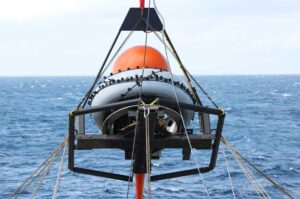
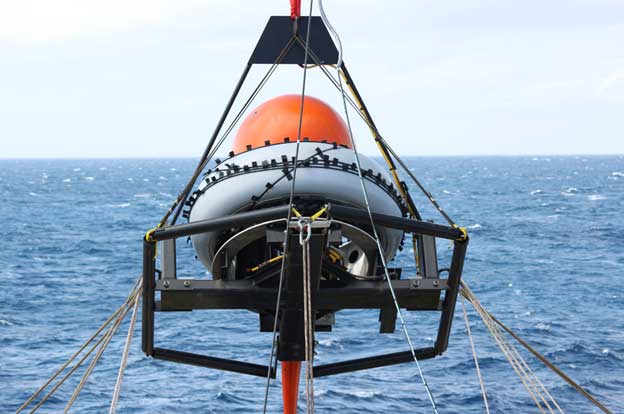
Hydrophone launch. Credit: The Comprehensive Nuclear-Test-Ban Treaty Organization (CTBTO)

NEW YORK, Apr 15 2021 (IPS) – Travel and economic slowdowns due to the COVID-19 pandemic have combined to brake shipping, seafloor exploration, and many other human activities in the ocean, creating a unique moment to begin a time-series study of the impacts of sound on marine life.


Our community of scientists has identified more than 200 non-military ocean hydrophones worldwide and hopes to make the most of the unprecedented opportunity to pool their recorded data into the 2020 quiet ocean assessment and to help monitor the ocean soundscape long into the future.

Our aim is a network of 500 hydrophones capturing the signals of whales and other marine life while assessing the racket levels of human activity. Combined with other sea life monitoring methods such as animal tagging, the work will help reveal the extent to which noise in “the Anthropocene seas” impacts ocean species, which depend on sound and natural sonar to mate, navigate and feed across the ocean.

Sound travels far in the ocean and a hydrophone can pick up low frequency signals from hundreds, even thousands of kilometres away.

Assessing the risks of underwater sound for marine life requires understanding what sound levels cause harmful effects and where in the ocean vulnerable animals may be exposed to sound exceeding these levels.

In 2011, experts began developing the International Quiet Ocean Experiment (IQOE), launched in 2015 with the International Quiet Ocean Experiment Science Plan. Among our goals: to create a time series of measurements of ambient sound in many ocean locations to reveal variability and changes in intensity and other properties of sound at a range of frequencies.

The plan also included designating 2022 “the Year of the Quiet Ocean.” Due to COVID-19, however, the oceans are unlikely to be as quiet as they were in April, 2020 for many decades to come.

COVID-19 reduced sound levels more than we dreamed possible. IQOE, therefore, is focusing project resources to encourage study of changes in sound levels and effects on organisms that occurred in 2020, based on observations from hundreds of hydrophones worldwide in 2019-2021.

Of the 231 non-military hydrophones identified to February 2021, the highest concentrations are found along the North American coasts — Atlantic, Pacific and Arctic — Hawaii, Europe, and Antarctica, with some scattered through the Asia-Pacific region.

Several have agreed to their geographic coordinates and other metadata being shown on the IQOE website (https://www.iqoe.org/systems).

Sparse, sporadic deployment of hydrophones and obstacles to integrating measurements have narrowly limited what we confidently know.

We are therefore creating a global data repository with contributors using standardized methods, tools and depths to measure and document ocean soundscapes and effects on the distribution and behavior of vocalizing animals.

New software, MANTA (at https://bit.ly/3cVNUox), developed by researchers across the USA and led by the University of New Hampshire, will help standardize ocean sound recording data from collaborators, facilitating its comparability, pooling and visualization.

As well, an Open Portal to Underwater Sound (OPUS), is being tested at Alfred Wegener Institute in Bremerhaven, Germany to promote the use of acoustic data collected worldwide, providing easy access to MANTA-processed data. The aggregated data will permit soundscape maps of entire oceans.

Meanwhile, scientists over the past decade have developed powerful methods to estimate the distribution and abundance of vocalizing animals using passive acoustic monitoring.

The fledgling hydrophone network contributes to the Global Ocean Observing System (GOOS), a network of observing assets monitoring currents, temperature, sea level, chemical pollution, litter, and other concerns worldwide.

Precious chance

Seldom has there been such a chance to collect quiet ocean data in the Anthropocene Seas. COVID-19 drastically decreased shipping, tourism and recreation, fishing and aquaculture, naval and coast guard exercises, offshore construction, port and channel dredging, and energy exploration and extraction. The concurrent price war that caused oil prices to dive to zero further quieted maritime energy activities.

The last comparable opportunity followed the terrorist attacks on the United States in September 2001, which disrupted not just air travel; they also led to a shipping slowdown and ocean noise reduction, prompting biologists to study stress hormone levels in endangered North Atlantic right whales in the Bay of Fundy.

With their 2001 data, research revealed higher September stress hormone levels over the next four years as the whales prepared to migrate to warmer southern waters where they calve, suggesting that the industrialized ocean causes chronic stress of animals.

We are on the way to timely, reliable, easily understood maps of ocean soundscapes, including the exceptional period of April 2020 when the COVID virus gave marine animals a brief break from human clatter.

Let’s learn from the COVID pause to help achieve safer operations for shipping industries, offshore energy operators, navies, and other users of the ocean.

Additional information about MANTA is available at https://bitbucket.org/CLO-BRP/manta-wiki/wiki/Home, and about the IQOE at https://bit.ly/3sDTkd

We invite parties in a position to help to join us in this global effort to assess the variability and trends of ocean sound and the effects of sound on marine life.

*Jesse Ausubel is the IQOE project originator and Director of the Program for the Human Environment at The Rockefeller University, New York City; Edward R. Urban Jr of the Scientific Committee on Oceanic Research is the IQOE Project Manager

  Source

Generation Equality: Women’s Leadership as a Catalyst for Change, Say 49 UN Women Envoys

Civil Society, Featured, Gender, Gender Violence, Global, Headlines, Human Rights, Poverty & SDGs, Sustainability, TerraViva United Nations

Opinion

This article has been co-authored and signed by 49 UN women Ambassadors*

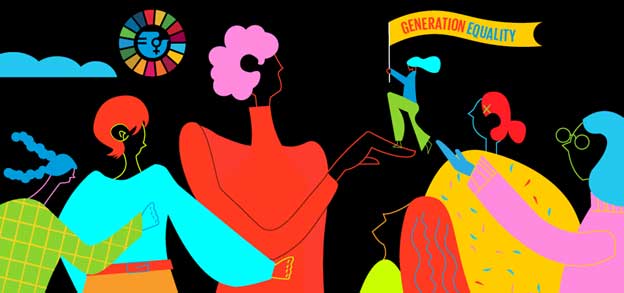
UN Women announces the theme for International Women’s Day, 8 March 2021 (IWD 2021) as, “Women in leadership: Achieving an equal future in a COVID-19 world. Credit: UN Women/Yihui Yuan

UNITED NATIONS, Apr 1 2021 (IPS) – March, women’s history month, closes with the Generation Equality Forum in Mexico and against the background of significant setbacks on the empowerment of women caused by the COVID-19 pandemic.


From our seats in the General Assembly and our screens at home we have seen it growing: the increase in deaths; gender-based, including intimate partner, violence; abuse of women and girls who speak out; the widening of the gender gap for access to digital technologies; the loss of jobs, the decrease of women’s participation in public life and decision-making; disrupted access to essential health care; increase in child marriage; and the diminished access to education.

Day by day in this yearlong battle against the pandemic we have seen how women are impacted twice: first by the virus, and then by its devastating secondary effects.

We are 49 women ambassadors representing countries from all regions of the world, and we believe that such a reality is simply intolerable. Here, we tell that story and what needs to be done to urgently recover the hard-won gains of recent years.

The COVID-19 crisis has a woman’s face.

The face of women nurses, doctors, scientists, care-givers, sanitation workers, and of those leading the response to the pandemic. Women are on the front line: As leaders delivering effectively with vision and care.

But also, as victims of structural vulnerabilities and of violence and abuse.

The “shadow pandemic” of exploitation and abuse, including domestic and intimate partner violence, should be a jarring wake-up call to us all. The latest WHO data show that 1 in 3 women experience intimate partner violence during their lifetime, while the UN reports that women with disabilities have four times the risk of experiencing sexual violence in comparison to women without disabilities.

Women will also bear the heaviest toll of the socio-economic impact of the pandemic because they often carry the responsibility for unpaid dependent care and are over-represented in jobs most affected by the crisis – hospitality, tourism, health, and trade.

The lack of women’s participation in society threatens to delay the achievement of the Sustainable Development Goals by 2030. Politically-motivated gender-based violence online and offline is a barrier to women’s ability to participate fully and equally in democratic processes.

Moreover, the persistently high rate of grave violations of women’s rights worldwide is appalling.

Against this background, this March, the UN Commission on the Status of Women (CSW) focused on two issues: fighting gender-based violence, and scaling up women’s full and effective participation at all levels and in all sectors.

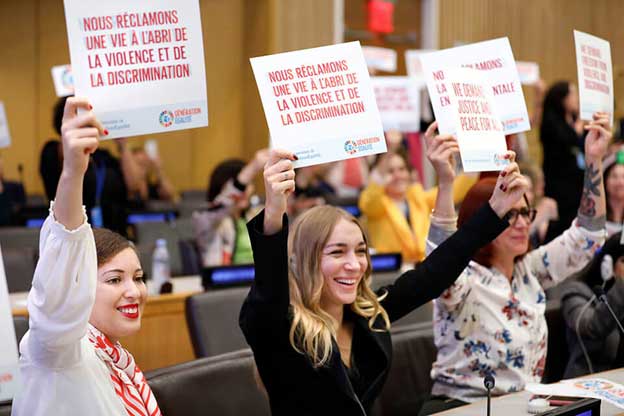
“Gender equality: From the Biarritz Partnership to the Beijing+25 Generation Equality* Forum”, hosted by France and Mexico ahead of the 74th session of the UN General Assembly, 2019. Photo: UN Women/Ryan Brown

Meaningful participation of women in politics, institutions and public life is the catalyst for that transformational change, which benefits society as a whole. Only four countries in the world have a parliament that is at least 50% women.

Worldwide only 25% of all parliamentarians are women. Women serve as heads of state or government in only 22 countries today, and 119 countries have never had a woman leader.

According to UNESCO, 30% of the world’s researchers are women. While 70% of the health and social care workforce are women, they make up only 25% of leaders in the global health sector.

Current projections show that if we continue at the current rate, gender equality in the highest positions of power will not be reached for another 130 years. These figures speak of unacceptable barriers and bottlenecks that continue to block women’s participation.

As the Secretary-General of the UN says, parity is ultimately a question of power. As women, we are often reluctant to use this word. But as women ambassadors at the UN, representing countries from around the world, it is a word we cannot and will not be too shy to use.

Power is not an end in itself: it is the power to change things, to act and have equal opportunities to compete. While as women Ambassadors we are still under-represented here in New York – only 25% of Permanent Representatives are women – we are committed to being a driving force to shift mindsets. We are long past the point where women should have to justify their seat at the table.

A large body of research and scientific literature provide unequivocal evidence of the value of integrating women’s perspectives in decision-making. Countries led by women are dealing with the pandemic more effectively than many others.

Peace processes and peace agreements mediated with the active participation of women are more durable and comprehensive. Yet women make up only 13% of negotiators, 6% of mediators and 6% of signatories in formal peace processes.

When women have equal opportunities in the labor force, economies can unlock trillions of dollars. Yet last year, the International Labor Organization found that women were 26% less likely to be employed than men. In 2020 only 7.4% of Fortune 500 companies were run by women.

Worldwide, women only make 77 cents for every dollar earned by men, while the gender gap in internet access grew from 11% in 2013 to 17% in 2019, reaching 43% in the least developed countries.

The so-called “motherhood penalty” pushes women into the informal economy, casual and part-time work. After slow but steady gains over the last few decades, COVID-19 has forced millions of women out of the formal labor market.

The solution to this will not occur spontaneously nor by magic. We need positive action. We need data disaggregated by sex and age so we can better analyze the scope of the problem; we need targeted policies and earmarked investments.

We have to strengthen support services for survivors of abuse, as well as prevent violence and end impunity. And we need to reduce the digital divide and promote access for women to information and public life.

We must rebalance the composition of decision-making bodies. We need to integrate gender into the design and implementation of recovery plans. We need to ensure the availability, accessibility, quality, and continuity of health services for women, including sexual and reproductive health services.

Social protection programmes should be gender responsive and account for the differential needs of women and girls. We need to promote access for women to decent work and overcome the choice between family and work that is too often imposed on women. Women should have targeted support for entrepreneurship and investment in education that guarantees equal access.

This should not only start with women, but with girls. Getting more girls into school, including back into school following the pandemic, improving the quality of education girls receive, and ensuring all girls get quality education: this will enable female empowerment and gender equality, which will be critical for the effective participation of future generations of women. We must make justice accessible to all women and end impunity for sexual violence.

This will also require role models. As women ambassadors, we bear testament to young generations of girls and women across the world showing that, like us, they can make it. No career and no goal are off-limits for them, as they are in all their diversities, nor beyond their capacities.

Parity is not a zero-sum game but a common cause and a pragmatic imperative. Men can be and are our allies in achieving parity. We look forward to continuing momentum on accelerating progress on achieving gender equality through the Generation Equality Forum and its Action Coalitions. Let us together set the stage for an inclusive, equal, global recovery. Let us make this generation “Generation Equality”.

There’s no more time to lose. We’ve lost enough to COVID already.

*List of participating Ambassadors, (including one Chargé d’affaires, a.i.) who co-authored this article (and the day they took office)

AFGHANISTAN H.E. Mrs. Adela Raz (8 March 2019); ALBANIA H.E. Ms. Besiana Kadare (30 June 2016); ANDORRA H.E. Mrs. Elisenda Vives Balmaña (3 November 2015); ANGOLA H.E. Ms. Maria de Jesus dos Reis Ferreira (21 May 2018); ARGENTINA H.E. Ms. María del Carmen Squeff (31 August 2020); BANGLADESH H.E. Ms. Rabab Fatima (6 December 2019); BARBADOS H.E. Ms. H. Elizabeth Thompson (30 August 2018); BHUTAN H.E. Ms. Doma Tshering (13 September 2017); BRUNEI DARUSSALAM H.E. Ms. Noor Qamar Sulaiman (18 February 2019); BULGARIA H.E. Ms. Lachezara Stoeva (17 February 2021); CHAD H.E. Ms. Ammo Aziza Baroud (11 December 2020); CZECH REPUBLIC H.E. Mrs. Marie Chatardová (2 August 2016); DOMINICA H.E. Ms. Loreen Ruth Bannis-Roberts (22 August 2016); EL SALVADOR H.E. Mrs. Egriselda Aracely González López (21 August 2019); ERITREA H.E. Ms. Sophia Tesfamariam (5 September 2019); GREECE H.E. Ms. Maria Theofili (13 September 2017) ; GRENADA H.E. Ms. Keisha A. McGuire (12 April 2016); GUYANA H.E. Mrs. Carolyn Rodrigues-Birkett (2 October 2020); HUNGARY H.E. Ms. Zsuzsanna Horváth (16 February 2021); IRELAND H.E. Ms. Geraldine Byrne Nason (18 August 2017); ITALY H.E. Ms. Mariangela Zappia (13 August 2018); JORDAN H.E. Ms. Sima Sami Bahous (22 August 2016); KYRGYZSTAN H.E. Ms. Mirgul Moldoisaeva (12 April 2016); LEBANON H.E. Ms. Amal Mudallali (15 January 2018); LITHUANIA H.E. Ms. Audra Plepytė (18 August 2017); MADAGASCAR Ms. Vero Henintsoa Andriamiarisoa (Chargé d’affaires, a.i.); MALDIVES H.E. Ms. Thilmeeza Hussain (21 May 2019); MALTA H.E. Mrs. Vanessa Frazier (6 January 2020) ; MARSHALL ISLANDS H.E. Ms. Amatlain Elizabeth Kabua (5 July 2016); MICRONESIA H.E. Mrs. Jane J. Chigiyal (2 December 2011); MONACO H.E. Ms. Isabelle F. Picco (11 September 2009); MONTENEGRO H.E. Mrs. Milica Pejanović Đurišić (21 May 2018); NAURU H.E. Ms. Margo Reminisse Deiye (27 November 2020); NETHERLANDS H.E. Ms. Yoka Brandt (2 September 2020); NORWAY H.E. Ms. Mona Juul (14 January 2019); PANAMA H.E. Ms. Markova Concepción Jaramillo (16 November 2020); POLAND H.E. Ms. Joanna Wronecka (19 December 2017); QATAR H.E. Sheikha Alya Ahmed Saif Al-Thani (24 October 2013) ;RWANDA H.E. Mrs. Valentine Rugwabiza (11 November 2016); SAINT VINCENT AND THE GRENADINES H.E. Ms. Inga Rhonda King (13 September 2013); SLOVENIA H.E. Ms. Darja Bavdaž Kuret (18 August 2017); SOUTH AFRICA H.E. Ms. Mathu Theda Joyini (22 January 2021); SURINAME H.E. Ms. Kitty Monique Sweeb (19 June 2019) ; SWEDEN H.E. Ms. Anna Karin Eneström (6 January 2020) ; SWITZERLAND H.E. Mrs. Pascale Baeriswyl (26 June 2020); TURKMENISTAN H.E. Mrs. Aksoltan. Ataeva (23 February 1995); UNITED ARAB EMIRATES H.E. Mrs. Lana Zaki Nusseibeh (18 September 2013); UNITED KINGDOM H.E. Dame Barbara Woodward (2 December 2020); UNITED STATES OF AMERICA H.E. Ms. Linda Thomas-Greenfield (25 February 2021)

  Source