Price and Power of Freedom: Celebrating Nelson Mandela International Day

Active Citizens, Civil Society, Democracy, Editors’ Choice, Featured, Headlines, Human Rights, Humanitarian Emergencies, Inequality, International Justice, Sustainable Development Goals, TerraViva United Nations

Human Rights

For to be free is not merely to cast off one’s chains, but to live in a way that respects and enhances the freedom of others. – Nelson Mandela
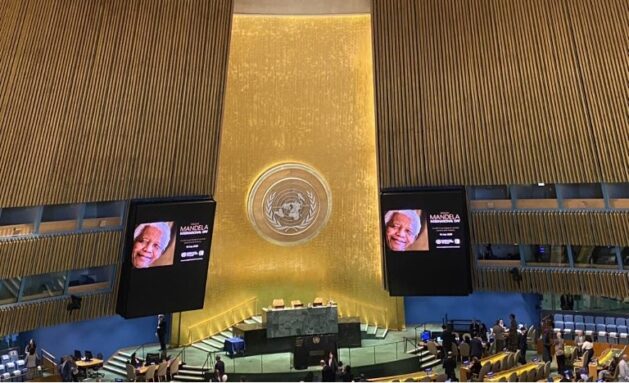
The General Assembly’s Plenary meeting on Nelson Mandela International Day. Credit: Jennifer Xin-Tsu Lin Levine/IPS

The General Assembly’s Plenary meeting on Nelson Mandela International Day. Credit: Jennifer Xin-Tsu Lin Levine/IPS

UNITED NATIONS, Jul 18 2025 (IPS) – The United Nations celebrated Nelson Mandela International Day in honor of the activist and politician’s lifelong commitment to peace and democracy.


At the 16th celebration of Nelson Mandela International Day, delegates, representatives and visitors alike reflected on the impact of South Africa’s first black president and leader in a fully representative democratic election.

The activist and politician, who spent 27 years in prison, was a staunch freedom fighter—arguing that freedom was not only an individual mission but also a collective responsibility and communal effort.

These principles were enshrined in the Nelson Mandela Rules, officially called the United Nations Standard Minimum Rules for the Treatment of Prisoners, a document protecting humane treatment of individuals without liberty. The document emphasizes respect for human dignity, prohibits torture and promotes fair and just conditions.

Although the Nelson Mandela Rules are “soft law” and not legally binding, the General Assembly has adopted them as universally agreed minimum standards. Many countries have incorporated the rules into domestic law, but many others have violated conditions of healthcare, solitary confinement and ethical working rights. Delegates and various speakers agreed that there was still much work to be done.

Nelson Mandela International Day, established in 2009 by the United Nations General Assembly and officially celebrated in 2010 on July 18th (President Mandela’s birthday), is a holiday encouraging all citizens around the world to engage positively in their communities.
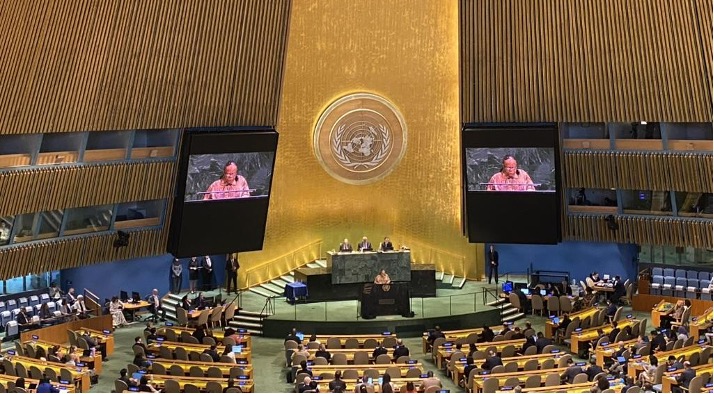
Dr. Naledi Pandor, chair of the Nelson Mandela Foundation, addresses the UN General Assembly Plenary on Nelson Mandela International Day. Credit: Jennifer Xin-Tsu Lin Levin/IPS

Dr. Naledi Pandor, chair of the Nelson Mandela Foundation, addresses the UN General Assembly Plenary on Nelson Mandela International Day. Credit: Jennifer Xin-Tsu Lin Levin/IPS

From annual volunteer events to the annual Mandela Prize, awarded to two laureates each year who have profoundly impacted their communities by serving humanity, speakers, including the award recipients, the Secretary-General and the chair of the Nelson Mandela Foundation, all reflected on Mandela’s legacy on their own lives and on the UN.

In Secretary-General António Guterres’ remarks to the General Assembly at their plenary meeting, he said, “Power is not a personal possession to be harbored. Power is about lifting others up; it’s about what we can achieve with one another and for one another. Power is about people.” He echoed Mandela’s belief in collective grassroots action to deliver power to the powerless, encouraging member states to bring these principles into practice.

Dr. Naledi Pandor, chair of the Nelson Mandela Foundation, similarly called for action against injustice and inequality. She recalled how the United Nations aided South Africa in ending apartheid as it “stood against apartheid domination, not through arms but through bringing its undeniable moral weight into combat against injustice. That boldness, that courage is needed more and more today.”
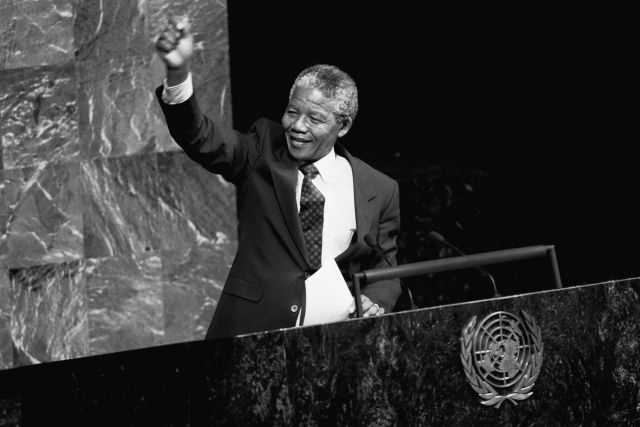
Nelson Mandela, then Deputy President of the African National Congress of South Africa, raises his fist in the air while addressing the Special Committee Against Apartheid in the General Assembly Hall, June 22, 1990. Global alliance CIVICUS commemorated Mandela Day with a reminder that many rights defenders are jailed and intimidated. Credit: UN Photo/Pernaca Sudhakaran

Nelson Mandela, then Deputy President of the African National Congress of South Africa, raises his fist in the air while addressing the Special Committee Against Apartheid in the General Assembly Hall, June 22, 1990. Credit: UN Photo/Pernaca Sudhakaran

Pandor went on to recall Mandela’s political views beyond South Africa—his demand for global equity extended to all, and reflecting on how he might feel about the current state of the world, she quoted his 1990 speech to the UN Special Committee Against Apartheid.

Mandela said, “We also take this opportunity to extend warm greetings to all others who fight for their liberation and their human rights, including the peoples of Palestine and Western Sahara. We commend their struggles to you, convinced that we are all moved by the fact that freedom is indivisible, convinced that the denial of the rights of one diminishes the freedom of others.”

Mandela was a strong supporter of Palestine, often comparing its struggle with South Africa’s. South Africa, even after his death, maintained close ties to Palestine and brought the case of genocide against Israel to the International Court of Justice (ICJ) in 2024.

The 2025 Nelson Mandela laureates, Brenda Reynolds of Saulteaux First Nation and Canada and Kennedy Odede of Kenya, both spoke about how Mandela inspired their respective work. Reynolds, a social worker by trade, led the establishment of a national, culturally grounded mental health initiative for survivors of Indian residential schools.

Reynolds described her work with survivors as an example of Mandela’s notion of moving forward from resentment towards progress—as people found peace with their experiences, they were able to recover and lift up their communities from oppression. She described this as a process of peacebuilding within people, saying, “peace begins with individuals, and from there, you can find peace within your family and within your communities.”

Odede, who founded Kenya’s largest grassroots movement, Shining Hope For Communities (SHOFCO), to empower struggling urban communities, shared how Mandela’s words and experience with struggle inspired him to build within his own life. He found creative ways to organize communities around simple things like soccer, providing hope to people in dire situations.

The representative for The Gambia, who spoke on behalf of the African states, called upon the UN to adhere to Mandela’s principles, particularly on poverty as a man-made horror that can and must be removed by actions of human beings. The representative warned of extreme poverty on the rise, centering the “developing countries and middle-income countries” suffering the most “with unemployment rates beyond records.”

He said, “It is time for solidarity, partnerships and genuine actions where they are most needed,” asserting that poverty and underdevelopment were huge perpetuators of racism, therefore continuing a vicious cycle that oppressed people.

The representative argued, “rising inequity and progressive discrimination are not inevitable; they are a result of decades of policies and dynamics emanating from colonialism, appetite, and discrimination.” Criticizing these practices as misaligned with the UN charter, he pushed the UN to renew their commitment to progressing social development by redistributing wealth.

As the world commemorates Nelson Mandela’s enduring legacy, the message resonating from this year’s observance is clear: his vision of freedom—rooted in dignity, justice and collective responsibility—demands more than remembrance; it requires action. From prison reform to poverty alleviation to indigenous healing to grassroots empowerment, Mandela’s ideals continue to challenge the global community to uphold humanity over power and compassion over indifference. In honoring his life, the UN and its member states are reminded that freedom is not static—it is a continual struggle, a shared pursuit and a moral obligation.

IPS UN Bureau Report

  Source

Sweet Hope to End Bitter Pills for Multidrug-Resistant Tuberculosis

Active Citizens, Africa, Civil Society, Development & Aid, Editors’ Choice, Featured, Headlines, Health, Human Rights, Humanitarian Emergencies, Sustainable Development Goals, TerraViva United Nations, Youth

Health

Rallying call to end TB by 2030. Credit: Busani Bafana/IPS

BULAWAYO, Jul 15 2025 (IPS) – Every day, Yondela Kolweni has to hold down her son, who screams and fights when it is time for his daily life-saving TB tablets—a painful reminder of her battle with the world’s top infectious killer disease.


“It is a fight I win feeling awful about what I have to do,” says Kolweni (30), a Cape Town resident and a TB survivor. “The tablets are bitter, and he spits them out most of the time, and that reminds me of the time I had to take the same pills.”

Kolweni’s five-year-old son is battling Multidrug Resistant TB (MDR TB), a vicious form of TB that is rising among children globally.

The global burden of MDR-TB among children and adolescents has increased from 1990 to 2019, particularly in regions with lower social and economic development levels, according to a recent study. In addition, the top three highest incidence rates of MDR TB in 2019 were recorded in Southern sub-Saharan Africa, Eastern Europe, and South Asia, while the top three highest rates of deaths in the same period were recorded in Southern, Central, and Eastern sub-Saharan Africa.

South Africa is one of 30 countries that account for 80 percent of all TB cases in the world and has the most cases of drug-resistant TB.

A Bitter Pill to Swallow

Kolweni’s son was diagnosed with MDR-TB five years ago, having tested positive for TB which has affected his grandmother and his mother. He was immediately on treatment, a drug cocktail that included moxifloxacin—a pill not for the yellow-livered.

“There were two medications he had to take, and there was one specifically, the yellow one, that he did not like, and with the color he knew what it was,” Kolweni told IPS in an interview, explaining a daily battle to get her son to take his meds.

It was down to a fight. She crushed the tablets, mixed them with a bit of water, and fed them through a syringe.

“We would sometimes hold him or wrap a towel around him so that we could feed him the medication, but he would still spit it out, which meant he was not taking the dosage he was meant to take,” said Kolweni. “We then came up with the idea to put his tablets in his yogurt, but that technique did not work because, being a smart kid, he took the bait but would soon spit out the medication.”

Moxifloxacin, an exceptionally bitter medicine, is one of the key drugs in the new all-oral treatment for multidrug-resistant tuberculosis (MDR TB). The treatment is a combination of the drugs Bedaquiline, Pretomanid, Linezolid and Moxifloxacin, known as BPaLM. The BPaLM regimen is specially formulated for children but is a bitter pill to swallow.

Sweet Medicine

But there is sweet hope. A new study, by Stellenbosch University and the TB Alliance, found that sweet, bitter-masked versions of Moxifloxacin significantly improve kids’ willingness to take the drug—easing the burden on parents and boosting treatment adherence.

Two formulations of moxifloxacin have been identified by children as tasting better than new generic versions of products currently on the market.

The results from the ChilPref ML study—a Unitaid-funded effort sponsored and led by Stellenbosch University in collaboration with TB Alliance—will help improve MDR TB treatment and adherence in children.

Dr. Graeme Hoddinott, of Stellenbosch University and the principal investigator of the study, notes that children cannot be treated in a humane manner for drug-resistant TB if the medicines taste so terrible that children refuse them or must be forced to take them.

Children diagnosed with drug-sensitive TB have good outcomes even within the four months because there is usually one tablet given, and there is a child-friendly formulation that dissolves easily to be given on a spoon or in a syringe, Hoddinott said. However, for drug-resistant TB, the situation is complicated. Most drugs for MDR TB are no longer used because of their toxicity and have been replaced by new drugs.

MDR-TB drugs are not child-friendly, Hoddinott admits. The active ingredient that kills TB in Moxifloxacin makes the pills incredibly bad tasting for children who have to take the medication daily for between six and nine months in cases of MDR TB.

“These drugs are incredibly bad tasting; they are genuinely awful to a point where adults who have been on extended TB treatment have been unable to administer the same drugs to their children because the smell evokes the time when they were sick,” Hoddinott told IPS. “It is a trauma to administer such bad-tasting drugs to a child, both for the parent and the child, particularly for the young children.”

The ChilPref study recruited just under 100 healthy children, ages 5–17, from two diverse settings in South Africa. The children evaluated flavor blends using a ‘swish and spit’ taste panel—tasting the medicine, which was dissolved in water, and then spitting it out without ingesting any of it.

Each child participant ranked the flavor blends among the three from each manufacturer and also rated the taste, smell and other characteristics of each. For moxifloxacin, there was a clear, strong preference for the new flavor blends (“bitter masker” and orange for Macleods, and strawberry and raspberry and tutti frutti for Micro Labs) over the existing commercially available flavors for both manufacturers. For Linezolid, there was no preference between the flavor blends.

“Ensuring children have access to effective and palatable TB treatments is a crucial step in improving adherence and treatment outcomes,” said Koteswara Rao Inabathina, one of the study’s authors and CMC Project Manager at TB Alliance.

“Through close collaboration with manufacturers, we have addressed critical unmet needs by developing practical solutions that make available and effective drug-resistant TB treatments not only accessible but also palatable and acceptable for children.”

The results of the ChilPref study showed that children preferred two new flavor blends of moxifloxacin, produced by Macleods Pharmaceuticals, India, and Micro Labs Pharmaceuticals, India. The results were communicated to the manufacturers, who are already updating their products.

“We are not surprised that a lot of kids did not like any of the tastings because we knew that they were horrible taste-wise, but we got a very clear signal for both manufacturers that the flavor blends we recommended were more preferred,” Hoddinott said. “We changed which flavor was going to market with relatively simple research.”

Dr. Cherise Scott, Senior Technical Manager at Unitaid, said the easier it was for children to take their medicines regularly, the more likely they were to complete their treatment successfully.

“We will not allow children to be neglected in global health responses simply because their needs are more complex.”

A Promising Treatment for MDR TB

As multi-drug-resistant TB transmission increases among children and adolescents, the development of new treatments is imperative, Hoddinott explained.

Moxifloxacin may also be increasingly used in the future for the treatment of drug-susceptible TB, which affects an estimated 1.2 million children globally each year.

Drug-resistant TB, has previously been one of the most difficult diseases to manage because of limited child-friendly treatment options, but scientists have made strides in developing new treatments for children, explains Dr. Anthony Garcia-Prats, one of the study authors and an associate professor at the University of Wisconsin-Madison.

“Now we are making sure that these medicines are appropriate for children, starting with an aspect that children and parents say is critical: taste,” Garcia-Prats said in a statement.

The new treatment is given when TB is either resistant to rifampicin, a critical first-line drug, or rifampicin and isoniazid, another first-line drug combination. These resistant strains are collectively referred to as RR/MDR-TB.

Annually there are an estimated 32,000 new cases of RR/MDR-TB among children 14 years and under—a population that is extremely sensitive to the taste of medicine, according to researchers.

This discovery could help improve adherence to TB medication and move a step closer towards the United Nations Sustainable Development Goal 3 to end TB by 2030.

“It is not a silver bullet,” Hoddinott cautions. “It does not solve everything, as people affected by TB still face many other challenges, and even the preferred flavor blends still do not taste nice. But, as part of the overall fight against TB in children, it’s an important step.”

Kolweni welcomes the development of masked TB medication.

“My experience with TB medication was not nice, and for children it is worse, and I think flavored tablets would make it easy for children to take, like  Gummies,” she said. “Every child loves flavors; even a suspension would be nice. My son would love it, and I will have no trouble getting him to take his medicine.”

Note: This article is brought to you by IPS Noram, in collaboration with INPS Japan and Soka Gakkai International, in consultative status with the UN’s Economic and Social Council (ECOSOC).

IPS UN Bureau Report

  Source

The Risks Artificial Intelligence Pose for the Global South

Armed Conflicts, Artificial Intelligence, Civil Society, Development & Aid, Featured, Headlines, Human Rights, Sustainable Development Goals, TerraViva United Nations

Artificial Intelligence

UN Secretary General António Guterres addresses the session “Strengthening multilateralism, economic - financial affairs and artificial intelligence” on July 6 at the 17th summit of BRICS in Rio de Janeiro. For the first time ever, artificial intelligence was a major topic of concern at the BRICS summit. Credit: UN Photo/Ana Carolina Fernandes

UN Secretary General António Guterres addresses the session “Strengthening multilateralism, economic – financial affairs and artificial intelligence” on July 6 at the 17th summit of BRICS in Rio de Janeiro. For the first time ever, artificial intelligence was a major topic of concern at the BRICS summit. Credit: UN Photo/Ana Carolina Fernandes

UNITED NATIONS, Jul 14 2025 (IPS) – Artificial intelligence (AI) is rapidly developing and leaving its mark across the globe. Yet the implementation of AI risks widening the gap between the Global North and South.


It is projected that the AI market’s global revenue will increase by 19.6 percent each year. By 2030, AI could contribute USD 15.7 trillion to the global economy. However, the increases to nations’ GDP will be unequally dispersed, with North America and China experiencing the most gains while the Global South gains far less.

The risks of AI to the Global South

Due to smaller capacities to fund research, development and implementation, fewer countries in the Global South are adopting AI technology. Access to affordable AI compute to train AI models is one of the AI field’s greatest barriers to entry in the Global South, according to the 2024 UN report, “Governing AI for Humanity.”

Further, AI is designed to create profitable market extraction that does not benefit the global majority, according to Vilas Dhar, President and Trustee of the Patrick J. McGovern Foundation. As countries in the Global North are AI’s primary investors, it is being developed to address their needs.

“The result is a quiet erosion of political and economic autonomy,” he said. “Without deliberate intervention, AI risks becoming a mechanism for reinforcing historical patterns of exploitation through technical means. It also risks losing the incredible value of diverse, globally minded inputs into designing our collective AI future.”

Across the world, people risk losing their jobs to AI, but many countries in the Global South are reliant on labor intensive industries, and AI poses a greater threat to increasing unemployment and poverty. Particularly children, women, youths, people with disabilities, older workers, creatives and people with jobs susceptible to automation are at risk.

According to Daron Acemoglu, professor at the Massachusetts Institute of Technology, labor-replacing AI poses a greater threat to workers in the developing world, as capital-intensive technology may not be useful in these nations where oftentimes capital is scarce and labor is abundant and cheap. Technology that prioritizes labor-intensive production is better suited to their comparative advantage.

“Because advanced economies have no reason to invest in such labor-intensive technologies, the trajectory of technological change will increasingly disfavor poor countries,” he said.

If these trends continue, these nations will experience increased unemployment and fall behind in the deployment of capital-intensive AI, due to limited financial resources and digital skill sets. More AI policies and guidelines, as well as education on data privacy and algorithmic bias, could assist in reducing this inequality.

Evidently, AI threatens to widen the gap between the Global North and South, as AI capacities are consolidated within a small group of institutions and regions. In Dhar’s view, AI will need to be designed to serve people and problems rather than be focused on profit maximization.

“If left unaddressed, this imbalance will cement a way of thinking about the world that mirrors the development of the Internet or social media – a process we do not want to replicate,” Dhar said.

Opportunities of the new technology

But the development of AI also poses opportunities for the Global South.

AI could design context-specific systems for local areas in the Global South that are not just based on the Global North, according to Dhar. “It can unlock new models of inclusion and resilience,” he said.

For example, AI could aid farmers in decision-making by informing them of weather and drought predictions using geospatial intelligence, as well as of marketing price information. AI could also help train farmers and other producers. It can also be used to improve education and healthcare in nations where these are major issues harming their populations and stunting development.

Acemoglu said that AI should be developed to complement rather than replace human labor for these benefits to become possible. “That will require forward-looking leadership on the part of policymakers,” he said.

AI in conflict

AI is also starting to make an appearance in conflict. In Ukraine, autonomous drones are being used, which are capable of tracking and engaging enemies, as well as BAD.2 model robot dogs, which are ground drones that can survey areas for enemies. Autonomous machine guns are also used, in which AI helps spot and target enemies.

The use of AI in conflict poses an ethical dilemma. AI could protect human lives on one side of the conflict but pose a great threat to the lives on the other end of the battlefield. This also raises the question of whether AI should be given the power to engage in harm.

But perhaps the use of AI can reduce the number of people engaging in conflicts harming developing countries and move these people to other sectors where they can realize more potential and aid their country’s economic development.

What international frameworks should do

Clear international frameworks must be established to prevent a rise in inequality and a greater gap between the Global North and South.

For the first time ever, AI was a major topic of discussion at the 17th BRICS summit, which serves as a coordination forum for nations from the Global South, in Rio de Janeiro. BRICS member countries signed the Leaders’ Declaration on Global Governance of Artificial Intelligence, which presents guidelines to ensure AI is developed and used responsibly to advance sustainability and inclusive growth.

The declaration called on members of the UN to promote including emerging markets and developing countries (EMDCs) and the Global South in decision-making regarding AI.

“New technologies must operate under a governance model that is fair, inclusive, and equitable. The development of AI must not become a privilege for a handful of countries, nor a tool of manipulation in the hands of millionaires,” Brazilian president Luiz Inácio Lula da Silva said at the summit.

However, the UN report “Governing AI for Humanity” found that 118 countries, most of which are in the Global South, were not part of a sample of non-UN AI governance initiatives, while seven countries, all of which are in the Global North, were included in all initiatives.

According to Dhar, global governance must create a more equitable distribution of power that entails sharing ownership and embedding the Global South at every level of institutions, agreements and investments, rather than simply for consultation. These nations must also be aided in building capacity, sharing infrastructure, scientific discovery and participation in creating global frameworks, he said.

In his remarks at the BRICS summit, UN Secretary-General António Guterres expressed his concern over the weaponization of AI and stressed the importance of AI governance that is focused on equity. He said in order for this to be done, the current “multipolar world” must be addressed.

“We cannot govern AI effectively—and fairly—without confronting deeper, structural imbalances in our global system,” Guterres said.

Dhar emphasized that the inclusion of every person in the conversation on AI is crucial to creating legitimate global technological governance.

The future of AI is being negotiated with immediacy and urgency,” Dhar said. “Whether it becomes a force for collective progress or a new vector for inequality depends on who is empowered to shape it.”

IPS UN Bureau Report

  Source

Conflict, Climate Change Push Migrants in Yemen to Return to Their Home Countries

Aid, Civil Society, Development & Aid, Editors’ Choice, Featured, Gender, Gender Violence, Human Rights, Humanitarian Emergencies, IPS UN: Inside the Glasshouse, Labour, Middle East & North Africa, Migration & Refugees, Sustainable Development Goals

Humanitarian Emergencies

People in Yemen impacted by war and climate shocks receive aid from the IOM. Photo credit: Majed Mohammed/IOM Yemen

People in Yemen impacted by war and climate shocks receive aid from the IOM. Photo credit: Majed Mohammed/IOM Yemen

UNITED NATIONS, Jul 13 2025 (IPS) – Yemen’s humanitarian crisis, driven by conflict, economic collapse and climate shocks, leaves migrants desperate to return to their home countries.


In March 2025, the Global Data Institute Displacement Tracking Matrix recorded that 1,234 non-Yemeni migrants left the country.

Once a critical transit and destination point, Yemen is unable to support incoming asylum seekers. Yemenis are struggling to survive amidst a decade-long conflict and worsening climate change impacts. Over 4.8 million people are internally displaced, and 20 million rely on aid.

Most migrants come from Ethiopia and Somalia, searching for safety or work in the Gulf countries. However, many become stranded in Yemen due to the harsh conditions and abuse.

The International Organization for Migration (IOM) found that in 2024, around 60,900 migrants arrived in Yemen with no means to survive. Subsequently, they are exposed to severe protection risks, including physical and sexual violence, exploitation, abduction, detention, and debt bondage.

“With limited humanitarian resources and few service providers on the ground, migrants often suffer from hunger, untreated medical conditions, and lack of shelter. Many are stranded without access to even the most basic services,” said the IOM to IPS.

“Meanwhile, public hostility toward migrants has increased, as they are increasingly viewed as competing with vulnerable Yemeni populations for scarce assistance. The ongoing conflict in Yemen further compounds these vulnerabilities, with migrants caught in airstrikes, exposed to explosive ordnance, and lacking access to safety.”

Women and girls are the most vulnerable group of migrants traveling through Yemen. They are disproportionately threatened with gender-based and sexual abuse.

“I’ve been beaten, detained, and exploited in Yemen,” said a 24-year-old Ethiopian woman to IOM. “Most nights, I went hungry. After everything that happened to me, I am happy to go back to my home and family.”

Severe climate impacts also make it increasingly difficult for both migrants and Yemenis to access food and water. Around 17.1 million Yemenis are struggling with food insecurity, and climate-related issues are only exacerbating this crisis.

The June 2025 Migration, Environment, and Climate Change (MECC) Country Report on Yemen by the IOM says that Yemen is the 12th most water-scarce country in the world. This significantly influences food insecurity, as rising temperatures caused by climate change create unpredictable rainfall.

In some areas, severe droughts are turning fertile farmland into arid deserts, forcing farmers to plant new crops or move in search of better conditions. Meanwhile, in other communities, heavy rain is sparking extreme flooding. Impacted areas are decimated by soil erosion and disease from contaminated water.

“Areas that used to experience heavy rainfall have now suffered from drought, and farmers have to adapt to this drought by either planting drought-resistant crops, changing their livelihoods, or migrating to another location. And some areas used to suffer from drought but now experience heavy rainfall, where the intensity of rainfall has led to the emergence of new diseases brought by floods,” said an official in the General Authority for Environmental Protection responsible for planning and information to the IOM.

Together, brutal conflict and a lack of access to vital necessities significantly limit migrants’ ability to return to their home countries. The IOM reported that in 2020, around 18,200 people risked their lives traveling by sea. Overcrowded vessels traversing rough waters often capsize, killing dozens on board.

For others, their journey back home leads them through heavily war-inflicted areas. Without proper assistance, migrants are left to navigate through dangerous frontlines, risking death from armed violence and landmines.

However, programs like the IOM’s Voluntary Humanitarian Return (VHR) aim to facilitate migrants’ safe return home. VHR is one of the only solutions for stranded migrants to voluntarily return in a safe and dignified manner.

So far, the IOM has helped 66 migrants safely return this year. This is a significant drop compared to the 5,200 individuals returned in 2024.

“IOM provides lifesaving protection and health service through Migrant Response Points (MRPs) in Aden, Sanaa and Marib and Community-based Care centers in Aden and Sanaa, as well as through mobile teams along the migratory routes funded by ECHO and UK FCDO,” said the IOM to IPS. “Since 2015, IOM has been facilitating Voluntary Humanitarian Return (VHR) as the only viable solution for stranded migrants who wish to return home voluntarily, safely, and with dignity.”

The IOM is backed by numerous groups such as the European Union, the King Salman Humanitarian Aid and Relief Centre (KSrelief), the US State Department’s Bureau of Population, Refugees and Migration, and the governments of Germany, France, Norway, and Finland. Unfortunately, despite widespread support for the program, more donations are urgently needed. The IOM is struggling to help migrants due to significant funding cuts.

“As migration flows continue to surge, the demand for safe and dignified return options for migrants has reached critical levels,” said Matt Huber, IOM’s former Chief of Mission in Yemen. “Without immediate funding support, the continuity of this vital programme is at risk, leaving thousands of vulnerable migrants stranded in precarious conditions with many experiencing serious protection violations.”

IPS UN Bureau Report

  Source

Bonn Climate Talks: Why World Needs to go Further, Faster, and Fairer

Climate Change, Climate Change Finance, Conferences, COP30, Environment, Featured, Headlines, TerraViva United Nations | Analysis

Climate Change

The June Climate Talks, SB62 under the UNFCCC, in Bonn 16-26 June, Photo Credit: UN Climate Chang/Lara Murillo

The June Climate Talks, SB62 under the UNFCCC, in Bonn 16-26 June, Photo Credit: UN Climate Chang/Lara Murillo

SRINAGAR & BONN, Jul 11 2025 (IPS) – This 62nd meeting of the Subsidiary Bodies (SB62) from June 16 to 26, 2025 revealed the persistent complexities and political tensions that continue to challenge multilateral climate governance. 


The United Nations Framework Convention on Climate Change (UNFCCC) convened its 62nd meeting of the Subsidiary Bodies (SB62) from June 16 to 26, 2025 – a critical juncture in the global climate negotiation process ahead of the 30th Conference of the Parties (COP30) set for November in Belém, Brazil.

Often referred to as a “mini-COP”, SB62 serves as a mid-year platform where negotiators and technical experts advance discussions on implementing the Paris Agreement and lay the groundwork for decisions at the COP.

While some progress was made on adaptation and procedural issues, key areas such as climate finance, technology, and scientific assessments remained contentious. Interviews with climate experts Jennifer Chow of the Environmental Defence Fund and Meredith Ryder-Rude shed light on systemic challenges within the UNFCCC process and offered insights into pathways for more effective climate action.

Jennifer Chow of the Environmental Defense Fund

Jennifer Chow of the Environmental Defense Fund

Deadlock That Foreshadowed the Tense and Fractious Atmosphere

The Bonn conference brought together government delegations, UN agencies, intergovernmental organisations, Indigenous and youth representatives, and civil society observers. The Subsidiary Body for Implementation (SBI) focused on operational matters including finance, capacity-building, and gender equality, while the Subsidiary Body for Scientific and Technological Advice (SBSTA) addressed scientific guidance and technical issues such as carbon markets under Article 6 of the Paris Agreement.

Brazil, as COP30 host, fielded the largest delegation with 173 provisional attendees, signalling its intent to influence the upcoming COP agenda. The Brazilian COP presidency outlined three priorities: reinforcing multilateralism, connecting climate regime outcomes with people’s everyday lives, and accelerating Paris Agreement implementation through institutional reforms.

Yet the meeting’s opening was marked by a two-day delay in adopting the agenda, largely due to disagreements over including discussions on developed countries’ finance obligations under Article 9.1 of the Paris Agreement. This early procedural deadlock foreshadowed the tense and fractious atmosphere permeating the conference.

How Scientific Discussions Remained Politically Sensitive

Adaptation emerged as a focal point, with negotiators agreeing on a refined list of global adaptation indicators, including measures related to access to financing — a key demand from developing countries. Steps were also taken toward transitioning the Adaptation Fund to operate exclusively under the Paris Agreement framework and clarifying loss and damage reporting procedures.

Nonetheless, the broader finance discussions exposed deep divides. The collective quantified goal (NCQG) of USD 300 billion, established at COP29 in Baku, continues to be a source of dissatisfaction, especially among developing nations seeking more predictable and adequate funding. These finance issues cut across multiple agenda items, influencing adaptation, transparency, and just transition talks.

Scientific discussions remained politically sensitive. Although the parties agreed to “take note” of recent scientific reports from the World Meteorological Organisation, stronger language expressing concern about current warming trends was blocked by some countries. This reflected ongoing sensitivity around acknowledging the Paris Agreement’s 1.5°C temperature limit.

Streamlining, Trust, and Effective Finance Delivery

In an exclusive interview with Inter Press Service, Jennifer Chow, Senior Director for Climate-Resilient Food Systems at the Environmental Defense Fund, highlighted structural challenges impeding UNFCCC efficiency and effectiveness:

“As is true for other multilateral processes, it is nearly impossible to address a growing list of issues efficiently without a concerted effort to prioritise, simplify approaches, and partner with others who may not require budgetary support. I think this is more pertinent to focus on than funding fluctuations.”

Chow claimed that the proliferation of agenda items and ballooning delegation sizes have complicated negotiations. “There are too many agenda items—and delegations have ballooned as a result. The secretariat and bureau could closely examine the COP, CMA, and SB agendas, propose streamlining, and develop a list of agenda items to sunset over the next two years, as some issues may no longer require negotiation. In some areas, constituted bodies can take up the work. Closing agenda items does not have to equal a lack of ambition.”

She also pointed to the trust deficit within the process.

“We can focus on giving more time for areas of convergence and less ‘unlimited’ time on issues where there is no consensus. Additionally, we need to give more leadership roles to Small Island Developing States (SIDS) and Least Developed Countries (LDCs). We have conflated progress review and rule-making, and renegotiating matters that were already agreed upon can erode trust.”

On countries’ climate plans, Chow stressed the need to prioritise implementation. “A plan is a plan. Evidence of implementation and progress towards 2030 commitments should be highlighted just as much as new 2035 commitments. Let’s not lose sight of the critical decade and sprint to 2030. Stronger implementation now will result in more ambitious plans later.”

Environmental Defense Fund's expert Meredith Ryder-Rude

Environmental Defense Fund’s expert Meredith Ryder-Rude

Meredith Ryder-Rude, also from the Environmental Defense Fund, shed light on the reasons behind stalled adaptation finance negotiations and the challenges of ensuring funds reach vulnerable communities.

“The recent negotiations stalled because the sticking point has historically been disagreement over which funding sources can be ‘counted’ towards adaptation finance goals. There is no disagreement over the urgent need for dramatically higher adaptation finance, but political and ideological differences remain over what types of funding from developed countries are truly delivering adaptation outcomes.”

She explained the complexity of adaptation finance integration.

“Guidance directs countries to mainstream adaptation in development, economic, and financial planning. Given distrust between parties and the severe impacts and costs involved, finding middle ground is difficult. Developed country budgets are tight, and those controlling funds are often not closely involved in climate discussions or understanding of multilateral climate funds, creating a big gap to bridge.”

On improving the effectiveness of finance delivery, Ryder-Rude highlighted the importance of capacity building in recipient countries. “One of the most critical ways to ensure climate finance reaches vulnerable communities effectively is increasing absorptive and financial management capacity at the local level. Funding levels have remained largely static for decades. We focus much on unlocking more funding—the supply side—but more attention is needed on the demand side.”

She pointed to promising models emerging from developing countries. “National-level organisations serve as aggregators managing multimillion-dollar grants from multilaterals and disbursing smaller grants to local community groups. They mentor these groups to increase independence and ability to manage larger sums over time. Eventually, local organisations can manage funding directly with donors. We need more small grant programmes, more national aggregators familiar with local contexts, and generally more trusting, flexible financing—especially for adaptation.”

Empowering most vulnerable remains critical to the UNFCCC’s future effectiveness

Meanwhile, with the world approaching the COP30 in Belém, Brazil, the outcomes of SB62 reveal both the urgency and difficulty of advancing ambitious climate action. Key issues expected to dominate the COP agenda include operationalising the new collective quantified goal for climate finance, finalising rules for carbon markets under Article 6, and translating adaptation frameworks into real-world support.

Countries were expected to submit updated Nationally Determined Contributions (NDCs) aligned with the 1.5°C target; however, nearly 95 percent missed the informal February 2025 deadline, raising concerns about political will and transparency.

Brazil’s presidency faces scrutiny over inclusiveness and transparency, especially regarding its proposed Circle of Finance Ministers tasked with developing a new climate finance roadmap. Questions about Belém’s capacity to host an effective COP add another layer of complexity.

Geopolitical challenges—including the notable absence of a formal U.S. delegation due to previous administration policies—further underscore the fragility of global climate leadership. In this context, rebuilding trust, streamlining negotiating processes, and empowering the most vulnerable remain critical to the UNFCCC’s future effectiveness.

IPS UN Bureau Report

  Source

HIV/AIDS Funding Crisis Risks Reversing Decades of Global Progress

Africa, Civil Society, Development & Aid, Editors’ Choice, Featured, Global, Headlines, Health, Human Rights, Humanitarian Emergencies, Sustainable Development Goals, TerraViva United Nations, Women’s Health

Health

About 9.2 million people across the world living with HIV were not receiving treatment in 2024, according to the UNAIDS report. At the launch of the report was Rev. Mbulelo Dyasi, Executive Director of SANARELA. Winnie Byanyima, UNAIDS Executive Director, Aaron Motsoaledi, Minister of Health of South Africa. Juwan Betty Wani, Programme Coordinator, Adolescents Girls and young women Network South Sudan. Helen Rees, Executive Director, Wits RHI. Credit: UNAIDS

About 9.2 million people across the world living with HIV were not receiving treatment in 2024, according to the UNAIDS report. At the launch of the report was Rev. Mbulelo Dyasi, Executive Director of SANARELA. Winnie Byanyima, UNAIDS Executive Director, Aaron Motsoaledi, Minister of Health of South Africa. Juwan Betty Wani, Programme Coordinator, Adolescents Girls and young women Network South Sudan. Helen Rees, Executive Director, Wits RHI. Credit: UNAIDS

UNITED NATIONS, Jul 10 2025 (IPS) – UNAIDS called the funding crisis a ticking time bomb, saying the impact of the US cuts to the President’s Emergency Plan for AIDS Relief (PEPFAR) could result in 4 million unnecessary AIDS-related deaths by 2029.


A historic withdrawal of global HIV/AIDS funding threatens to derail decades of hard-won progress in the fight against AIDS, according to UNAIDS’ annual report, entitled Aids, Crisis and the Power to Transform. This funding shortage – caused by sudden and massive cuts from international donors – is already dismantling frontline services, disrupting lifesaving treatments for millions and endangering countless lives in the world’s most vulnerable communities.

“This is not just a funding gap—it’s a ticking time bomb,” said UNAIDS Executive Director Winnie Byanyima.

Despite major strides in 2024, including a decrease in new HIV infections by 40 percent and a decrease in AIDS-related deaths by 56% since 2010, the onset of restricted international assistance, which makes up 80 percent of prevention in low- and middle-income countries, could have disastrous effects. The report, mostly researched at the end of 2024, concluded that the end of AIDS as a public health threat by 2030 was in sight.

However, in early 2025 the United States government announced “shifting foreign assistance strategies,” causing them to withdraw aid from organizations like the President’s Emergency Plan for AIDS Relief (PEPFAR), which had earlier promised 4.3 billion USD in 2025. PEPFAR is one of the primary HIV testing and treatment services in countries most affected. Such a drastic decision could have ripple effects, including pushing other major donor countries to revoke their aid. The report projected that if international funding permanently disappears, they expect an additional 6 million HIV infections and 4 million AIDS-related deaths by 2029.

At a Press Briefing, Assistant Secretary-General for UNAIDS Angeli Achrekar noted the importance of PEPFAR since its inception in 2003, calling it one of the most successful public health endeavors. She expressed hope that as the US lessens its support, other organizations and countries are able to take up the global promise of ending AIDS without eroding the gains already made.

Achrekar noted “acute shifts” in a weakening of commitment from countries less directly affected by HIV/AIDS since the US has pulled funding.

UNAIDS also reports a rising number of countries criminalizing populations most at risk of HIV – raising stigma and worsening gender-based violence and non-consensual sex, two of the highest HIV risk-enhancing behaviors. The report showed the primary groups who lacked care were child HIV infections and young women, which is likely related to government campaigns  “attacking HIV-related human rights, including for public health, with girls, women and people from key populations.”

These punitive laws include criminalization or prosecution based on general criminal laws of HIV exposure, criminalization of sex work, transgender people and same-sex sexual activity and possession of small amounts of drugs. These laws have been on the rise for the past few years, and in conjunction with limited funding, the results for HIV/AIDS-positive patients could be fatal.

Recently, scientific breakthroughs have been made regarding long-acting medicine to prevent HIV infection. Health workers have seen tremendous success, both with new technologies like annual injections and the potential for more growth in the form of monthly preventative tablets and in old prevention techniques like condom procurement and distribution and access to clean, safe needles for drug users. However, due to various global conflicts and wars, supply chains have been disrupted, often harming countries not in the thick of the altercation but reliant on products like PrEP, an HIV prevention medication.

Although many countries most afflicted with the AIDS crisis have stepped up, promising more national funding for the issue, and many community networks have doubled down on their efforts, the disruption of supply chains and the lack of international frontline health workers cannot be solved overnight. To entirely restructure how healthcare is provided takes time – something those with HIV do not always have.

Areas like sub-Saharan Africa, which in 2024 housed half of the 9.2 million people not receiving HIV treatment, have been particularly affected by the recent changes. The majority of child infections still occur there, and combinations of “debt distress, slow economic growth and underperforming tax systems” provide countries in sub-Saharan Africa with limited fiscal room to increase domestic funding for HIV.

Despite the loss of funding, significant progress has been made to protect essential HIV treatment gains. South Africa currently funds 77% of its AIDS response, and its 2025 budget review includes a 3.3% annual increase for HIV and tuberculosis programs over the next three years. As of December 2024, seven countries in sub-Saharan Africa have achieved the 95-95-95 targets established by UNAIDS: 95% of people living with HIV know their status, 95% of those are on treatment, and 95% of those on treatment are virally suppressed. UNAIDS emphasized the importance of this being scaled up to a global level.

Achrekar observed, referring to countries whose domestic funds towards AIDS have increased, that “prevention is the last thing that is prioritized, but we will never be able to turn off the tap of the new infections without focusing on prevention as well.”

She reiterated the importance of countries most affected by the HIV/AIDS crisis establishing self-sustaining health practices to ensure longevity in both prevention and treatment.

Achrekar praised the global South for their work in taking ownership of treatment while still calling upon the rest of the world to join.

She said, “The HIV response was forged in crisis, and it was built to be resilient. We need, and are calling for, global solidarity once again, to rebuild a nationally owned and led, sustainable and inclusive multi-sectoral HIV response.”

IPS UN Bureau Report

  Source