Climate Change Gets Its Day in Court

Asia-Pacific, Civil Society, Climate Action, Climate Change, Development & Aid, Environment, Featured, Global, Headlines, Human Rights, TerraViva United Nations

Opinion

Credit: Save the Children Vanuatu/Facebook

MONTEVIDEO, Uruguay, May 25 2023 (IPS) – As a matter of global justice, the climate crisis has rightfully made its way to the world’s highest court.

On 29 March 2023, the United Nations General Assembly (UNGA) unanimously adopted a resolution asking the International Court of Justice (ICJ) to issue an advisory opinion on the obligations of states on climate change. The initiative was led by the Pacific Island state of Vanuatu, one of several at risk of disappearing under rising sea levels. It was co-sponsored by 132 states and actively supported by networks of grassroots youth groups from the Pacific and around the world.


Civil society’s campaign

In 2019, a group of law students from the University of the South Pacific formed Pacific Islands Students Fighting Climate Change (PISFCC), a regional organisation with national chapters in Fiji, the Solomon Islands, Tonga and Vanuatu. PISFCC advocated with the Pacific Island Forum – the key regional body – to put the call for an ICJ opinion on its agenda. The government of Vanuatu announced it would seek this in September 2021, and Pacific civil society organisations (CSOs) formed an alliance – the Alliance for a Climate Justice Advisory Opinion – that has since grown to include CSOs and many others from around the world, including UN Special Rapporteurs and global experts.

The campaign made heavy use of social media, with people sharing their stories on the impacts of climate change and emphasising the importance of an ICJ opinion to help support calls for climate action, including climate litigation. It organised globally, sharing a toolkit used by activists around the world, and took to the streets locally. In Vanuatu, where it all started, children demonstrated in September 2022 to call attention to the impacts of climate change as their country’s single greatest development threat and express support for the call for an ICJ opinion.

In the run-up to the UNGA session that adopted the historic resolution, thousands of CSOs from around the world supported a letter calling for governments to back the vote.

[embedded content]

The ICJ’s role

The ICJ is made up of 15 judges elected by the UNGA and UN Security Council. It settles legal disputes between states and provides advisory opinions on legal questions referred to it by other parts of the UN system.

The questions posed to the ICJ aim to clarify the obligations of states under international law to protect the climate system and environment from human-induced greenhouse gas emissions. They also ask about the legal responsibilities of states that have caused significant environmental harm towards other states, particularly small islands, and towards current and future generations.

To provide its advisory opinion, the ICJ will have to interpret states’ obligations as outlined in the 1992 UN Framework Convention on Climate Change and the 2015 Paris Agreement as well as the Universal Declaration of Human Rights and a variety of international covenants and treaties. It may consider previous UNGA resolutions on climate change, such as the recent one recognising access to a clean, healthy and sustainable environment as a universal human right, and other resolutions by the UN Human Rights Council and reports by the Office of the UN High Commissioner of Human Rights and its independent human rights experts. It may also take into account decisions by UN treaty bodies and its own jurisprudence on climate and environmental matters.

Next steps

According to its statute, the ICJ can seek written statements from states or international organisations likely to have relevant information on the issue at hand. On 20 April, it communicated its decision to treat the UN and all its member states as ‘likely to be able to furnish information on the questions submitted to the Court’ and gave them six months to submit written statements, after which they will have three months to make written comments on statements made by other states or organisations.

Civil society doesn’t have any right to submit formal statements, so climate activists are urging as many people as possible to advocate towards their governments to make strong submissions that will lead to a progressive ICJ opinion. After submissions close, the ICJ is likely to take several months to deliberate, so its opinion may be expected at some point in 2024, likely towards the end of the year.

Advisory opinions aren’t binding. They don’t impose obligations on states. But they shape the global understanding of states’ obligations under international law and can motivate states to show their compliance with rising standards. An ICJ opinion could positively influence climate negotiations, pushing forward long-delayed initiatives on funding for loss and damage. It could encourage states to make more ambitious pledges to cut greenhouse gas emissions. It might also help raise awareness of the particular risks faced by small island states and provide arguments in favour of stronger climate action, helping climate advocates gain ground within governments.

A progressive advisory opinion could also help support domestic climate litigation: research shows that domestic courts are increasingly inclined to cite ICJ opinions and other sources of international law, including when it comes to determining climate issues.

The risk can’t be ruled out of a disappointing ICJ opinion merely reiterating the content of existing climate treaties without making any progress on states’ obligations. But climate activists find reasons to expect much more: many see this as a unique opportunity, brought about by their own persistent efforts, to advance climate justice and push for action that meets the scale of the crisis.

Inés M. Pousadela is CIVICUS Senior Research Specialist, co-director and writer for CIVICUS Lens and co-author of the State of Civil Society Report.
  Source

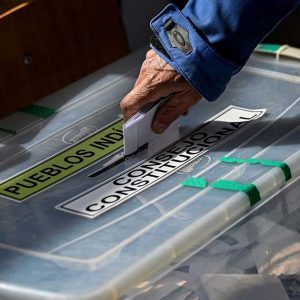
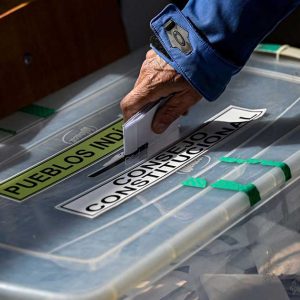
Chile: New Constitution in the Hands of the Far Right

Credit: Martín Bernetti/AFP via Getty Images

By Inés M. Pousadela
MONTEVIDEO, Uruguay, May 19 2023 (IPS)

On 7 May, Chileans went to the polls to choose a Constitutional Council that will produce a new constitution to replace the one bequeathed by the Pinochet dictatorship – and handed control to a far-right party that never wanted a constitution-making process in the first place.


This is the second attempt at constitutional change in two years. The first process was the most open and inclusive in Chile’s history. The resulting constitutional text, ambitious and progressive, was widely rejected in a referendum. It’s now far from certain that this latest, far less inclusive process will result in a new constitution that is accepted and adopted – and there’s a possibility that any new constitution could be worse than the one it replaces.

A long and winding road

Chile’s constitution-making process was born out of mass protests that erupted in October 2019, under the neoliberal administration of Sebastián Piñera. Protests only subsided when the leaders of major parties agreed to hold a referendum to ask people whether they wanted a new constitution and, if so, how it should be drafted.

In the vote in October 2020, almost 80 per cent of voters backed constitutional change, with a new constitution to be drafted by a directly elected Constitutional Assembly. In May 2021, the Constitutional Assembly was elected, with an innovative mechanism to ensure gender parity and reserved seats for Indigenous peoples. Amid great expectations, the plural and diverse body started a one-year journey towards a new constitution.

Pushed by the same winds of change, in December 2021 Chile elected its youngest and most unconventional president ever: former student protester Gabriel Boric. But things soon turned sideways, and support for the Constitutional Assembly – often criticised as made up of unskilled amateurs – declined steadily along with support for the new government.

In September 2022, a referendum resulted in an overwhelming rejection of the draft constitution. Although very progressive in its focus on gender and Indigenous rights, a common criticism was that the proposed constitution failed to offer much to advance basic social rights in a country characterised by heavy economic inequality and poor public services. Disinformation was also rife during the campaign.

The second attempt kicked off in January 2023, with Congress passing a law laying out a new process with a much more traditional format. Instead of the large number of independent representatives involved before, this handed control back to political parties. The timeframe was shortened, the assembly made smaller and the previous blank slate replaced by a series of agreed principles. The task of producing the first draft is in the hands of a Commission of Experts, with a technical body, the Technical Admissibility Committee, guarding compliance with a series of agreed principles. One of the few things that remained from the previous process was gender parity.

Starting in March, the Commission of Experts was given three months to produce a new draft, to be submitted to the Constitutional Council for debate and approval. A referendum will be held in December to either ratify or reject the new constitution.

Rise of the far right

Compared with the 2021 election for the Constitutional Convention, the election for the Constitutional Council was characterised by low levels of public engagement. A survey published in mid-April found that 48 per cent of respondents had little or no interest in the election and 62 per cent had little or no confidence in the constitution-making process. Polls also showed increasing dissatisfaction with the government: in late 2022, approval rates had plummeted to 27 per cent. This made an anti-government protest vote likely.

While the 2021 campaign focused on inequality, this time the focus was on rising crime, economic hardship and irregular migration, pivoting to security issues. The party that most strongly reflected and instrumentalised these concerns came out the winner.

The far-right Republican Party, led by defeated presidential candidate José Antonio Kast, received 35.4 per cent of the votes, winning 23 seats on the 50-member council. The government-backed Unity for Chile came second, with 28.6 per cent and 16 seats. The traditional right-wing alliance Safe Chile took 21 per cent of the vote and got 11 seats. No seats were won by the populist People’s Party and the centrist All for Chile alliance, led by the Christian Democratic Party. The political centre has vanished, with polarisation on the rise.

 
What to expect

The Expert Commission will deliver its draft proposal on 6 June and the Constitutional Council will then have five months to work on it, approving decisions with the votes of three-fifths of its members – meaning 31 votes will be needed to make decisions, and 21 will be enough to block them. This gives veto power to the Republican Party – and if it manages to work with the traditional right wing, they will be able to define the new constitution’s contents.

 
The chances of the new draft constitution being better than the old one are slim. In the best-case scenario, only cosmetic changes will be introduced. In the worst, an even more regressive text will result.

People will have the final say on 17 December. If they ratify the proposed text, Chile will adopt a constitution that is, at best, not much different from the existing one. If they reject it, Chileans will be stuck with the old constitution that many rose up against in 2019. Either way, a once-in-a-generation opportunity to expand the recognition of rights will have been lost, and it will fall on civil society to keep pushing for the recognition and protection of human rights.

Inés M. Pousadela is CIVICUS Senior Research Specialist, co-director and writer for CIVICUS Lens and co-author of the State of Civil Society Report.



!function(d,s,id){var js,fjs=d.getElementsByTagName(s)[0],p=/^http:/.test(d.location)?’http’:’https’;if(!d.getElementById(id)){js=d.createElement(s);js.id=id;js.src=p+’://platform.twitter.com/widgets.js’;fjs.parentNode.insertBefore(js,fjs);}}(document, ‘script’, ‘twitter-wjs’);  

Source

USAID Offers Protection to Journalists & NGOs Facing Defamation Lawsuits

By Thalif Deen
UNITED NATIONS, May 12 2023 (IPS)

The world’s news media — both under authoritarian regimes and democratic governments– continue to come under relentless attacks and political harassment.


“Freedom of the press is the foundation of democracy and justice. It gives all of us the facts we need to shape opinions and speak truth to power. But in every corner of the world, freedom of the press is under attack,” UN Secretary-General Antonio Guterres said on World Press Freedom Day May 3.

Journalists and media workers, he said, are directly targeted on and offline as they carry out their vital work. They are routinely harassed, intimidated, detained and imprisoned.

At least 67 media workers were killed in 2022 — a 50 per cent increase over the previous year. Nearly three quarters of women journalists have experienced violence online, and one in four have been threatened physically, according to the UN.

But there is also an increase in non-physical attacks, including defamation lawsuits against media organizations challenging their legitimate right to free expression.

The Washington-based US Agency for International Development (USAID) last week launched Reporters Shield, a new membership program that protects journalists around the world– who report in the public interest– from defamation lawsuits and legal threats.

Established as a U.S.-based nonprofit organization by the Organized Crime and Corruption Reporting Project (OCCRP) and the Cyrus R. Vance Center for International Justice, Reporters Shield has been described as “a first-of-its-kind global program that defends investigative reporting around the world from legal threats meant to silence critical voices”.

USAID, which has a long history of fostering the growth of independent media across the world, plans to work with Congress to contribute up to $9 million in seed funding for this groundbreaking new program to support media outside the United States, according to a May 2 press release.

In a statement released last week, USAID said investigative journalists and civil society organizations reporting in the public interest are increasingly facing lawsuits that aim to harass and silence them by burdening them with the cost and time of a legal defense until they abandon their stories or go out of business entirely.

Reporters Shield will help to reduce these risks through training and pre-publication review, as well as funding legal representation to fight lawsuits and other legal actions meant to intimidate and financially burden reporters.

In order to keep the program sustainable, member organizations participating in Reporters Shield will pay reasonable annual fees that are based on a variation of factors, including location of the outlet and how many stories they produce a year.

“To be considered for membership in Reporters Shield, an organization must be legally registered and focus primarily in news, public interest, and/or investigative reporting; publish reporting in print and/or online; have non-profit status or transparent ownership; be independent from political, commercial, or other undue influence or interference; and have editorial independence and adhere to professional editorial standards”.

Reporters Shield is accepting applications worldwide and will be reviewing them in a phased approach, with some regions receiving benefits in the coming months, and others added later this year and in 2024.

Interested organizations can find more information and apply for membership by visiting reporters-shield.org.

The development of Reporters Shield has been supported by the generous pro bono legal support of the law firms of Proskauer, Primmer Piper Eggleston & Cramer PC, and Weil, Gotshal & Manges LLP.

www.usaid.gov/democracy/reporters-shield.

Mandeep S. Tiwana, Chief Programmes Officer at CIVICUS, a global alliance of civil society organizations (CSOs), told IPS “these are hard times for media freedoms due to disinformation and attacks on civic space spurred by deepening authoritarianism, denigration of democracy through populism and consolidation of wealth by oligarchs”.

Uncovering serious human rights violations and high-level corruption, he pointed out, is becoming increasingly dangerous and costly for investigative journalists and civil society activists.

When few companies are ready to sign the Anti- Strategic Lawsuits Against Public Participation (SLAPP) pledge and crafty politicians are busy undermining the independence of judiciaries, this initiative comes at a critical time,” he declared.

According to the Anti-SLAPP pledge by Global Citizen, an international education and advocacy organization, strategic lawsuits against public participation, or SLAPPs, are not a legitimate business strategy for companies.

“The private sector thrives in functioning democratic societies, where the right to freedom of expression is a respected bedrock principle and where everyone can express their views without fear of intimidation or reprisal”.

“Lawsuits and legal tactics meant to silence civil organizations and human rights defenders aren’t just bad for societies, they’re also damaging to companies. When companies stifle free expression, they limit their ability to manage risk related to their operations and global supply chains.”

As companies that are committed to operating in societies where people are able to exercise fundamental rights, said Global Citizen, “we pledge to: define Strategic lawsuits against public participation, or SLAPPs, as both lawsuits and legal tactics that are designed to silence critics and abridge citizens’ ability to exercise fundamental rights.”

— Refrain from engaging in SLAPPs against human rights and environmental defenders and civil society organizations that support affected rights-holders.

— Recognize the critical role that civil society organizations and human rights defenders play in creating a profitable enabling environment for the private sector.

— Encourage partners and suppliers within our value chain to refrain from engaging in SLAPPs to silence legitimate activism.

IPS UN Bureau Report


!function(d,s,id){var js,fjs=d.getElementsByTagName(s)[0],p=/^http:/.test(d.location)?’http’:’https’;if(!d.getElementById(id)){js=d.createElement(s);js.id=id;js.src=p+’://platform.twitter.com/widgets.js’;fjs.parentNode.insertBefore(js,fjs);}}(document, ‘script’, ‘twitter-wjs’);  

Source

Uzbekistan: A President for Life?

Credit: Victor Drachev/AFP via Getty Images

By Andrew Firmin
LONDON, May 5 2023 (IPS)

Where will you be in 2040? For Uzbekistan’s President Shavkat Mirziyoyev, the answer is: in the Kuksaroy Presidential Palace. That’s the chief consequence of the referendum held in the Central Asian country on 30 April.

With dissent tightly controlled in conditions of closed civic space, there was no prospect of genuine debate, a campaign against, or a no vote.


Repression betrays image of reform

Mirziyoyev took over the presidency in 2016 following the death of Islam Karimov, president for 26 years. Karimov ruled with an iron fist; Mirziyoyev has tried to position himself as a reformer by comparison.

The government rightly won international recognition when Uzbekistan was declared free of the systemic child labour and forced labour that once plagued its cotton industry. The move came after extensive international civil society campaigning, with global action compensating for the inability of domestic civil society to mobilise, given severe civic space restrictions.

While that systemic problem has been addressed, undoubtedly abuses of labour rights remain. And these are far from the only human rights violations. When one of the proposed constitutional changes announced last July sparked furious protests, the repression that followed belied Mirziyoyev’s reformist image.

Among the proposed changes was a plan to amend the status of Uzbekistan’s Karakalpakstan region. Formally, it’s an autonomous republic with the right to secede. The surprise announcement that this special status would end brought rare mass protests in the regional capital, Nukus. When local police refused to intervene, central government flew over riot police, inflaming tensions and resulting in violent clashes.

A state of emergency was imposed, tightly restricting the circulation of information. Because of this, details are scarce, but it seems some protesters started fires and tried to occupy government buildings, and riot police reportedly responded with live ammunition and an array of other forms of violence. Several people were killed and over 500 were reported to have been detained. Many received long jail sentences.

The government quickly dropped its intended change, but otherwise took a hard line, claiming the protesters were foreign-backed provocateurs trying to destabilise the country. But what happened was down to the absence of democracy. The government announced the proposed change with no consultation. All other channels for expressing dissent being blocked, the only way people could communicate their disapproval was to take to the streets.

Civic space still closed

It remains the reality that very little independent media is tolerated and journalists and bloggers experience harassment and intimidation. Vague and broad laws against the spreading of ‘false information’ and defamation give the state ample powers to block websites, a regular occurrence.

Virtually no independent civil society is allowed; most organisations that present themselves as part of civil society are government entities. Independent organisations struggle to register, particularly when they have a human rights focus. New regulations passed in June 2022 give the state oversight of activities supported by foreign donors, further restricting the space for human rights work.

It’s been a long time since Uzbekistan held any kind of recognisably democratic vote. The only presidential election with a genuine opposition candidate was held in 1991. Mirziyoyev certainly hasn’t risked a competitive election: when he last stood for office, to win his second term in 2021, he faced four pro-government candidates.

A flawed vote and a self-serving outcome

The referendum’s reported turnout and voting totals were at around the same levels as for the non-competitive presidential elections: official figures stated that 90-plus per cent endorsed the changes on a turnout of almost 85 per cent.

Given the state’s total control, voting figures are hard to trust. Even if the numbers are taken at face value, election observers from the Organization for Security and Co-operation in Europe pointed out that the referendum was held ‘in an environment that fell short of political pluralism and competition’. There was a lack of genuine debate, with very little opportunity for people to put any case against approving the changes.

State officials and resources were mobilised to encourage a yes vote and local celebrities were deployed in rallies and concerts. State media played its usual role as a presidential mouthpiece, promoting the referendum as an exercise in enhancing rights and freedoms. Anonymous journalists reported that censorship had increased ahead of the vote and they’d been ordered to cover the referendum positively.

Mirziyoyev is clearly the one who benefits. The key change is the extension of presidential terms from five to seven years. Mirziyoyev’s existing two five-year terms are wiped from the count, leaving him eligible to serve two more. Mirziyoyev has taken the same approach as authoritarian leaders the world over of reworking constitutions to stay in power. It’s hardly the act of a reformer.

The president remains all-powerful, appointing all government and security force officials. Meanwhile there’s some new language about rights and a welcome abolition of the death penalty – but no hint of changes that will allow movement towards free and fair elections, real opposition parties, independent human rights organisations and free media.

The constitution’s new language about rights will mean nothing if democratic reform doesn’t follow. But change of this kind was always possible under the old constitution – it’s always been lack of political will at the top standing in the way, and that hasn’t changed.

Democratic nations, seeking to build bridges in Central Asia to offer a counter to the region’s historical connections with Russia, may well welcome the superficial signs of reform. A UK-based public relations firm was hired to help persuade them. But they should urge the president to go much further, follow up with genuine reforms, and allow for real political competition when he inevitably stands for his third term.

Andrew Firmin is CIVICUS Editor-in-Chief, co-director and writer for CIVICUS Lens and co-author of the State of Civil Society Report.


!function(d,s,id){var js,fjs=d.getElementsByTagName(s)[0],p=/^http:/.test(d.location)?’http’:’https’;if(!d.getElementById(id)){js=d.createElement(s);js.id=id;js.src=p+’://platform.twitter.com/widgets.js’;fjs.parentNode.insertBefore(js,fjs);}}(document, ‘script’, ‘twitter-wjs’);  

Source

UN Plan of Action on Safety of Journalists

Credit: Shutterstock
 
On World Press Freedom Day 2023, UNESCO will organize a special anniversary event at UN headquarters in New York, marking the 30 years since the UN General Assembly’s decision proclaiming an international day for press freedom.

This anniversary edition of World Press Freedom Day will include a full day of activities at the UN Headquarters on 2nd May. Partners from the media, academia, and civil society are invited to organize events in New York and around the world centered on this year’s theme.

By Audrey Azoulay
PARIS, May 1 2023 (IPS)

Freedom of the press is the cornerstone of democratic society. Without a debate of ideas, without verified facts, without diversity of perspectives, democracy is a shadow of itself; and World Press Freedom Day was established to remind us of this.


For the international community, it is first and foremost a question of combating the impunity that still surrounds crimes of which journalists are victims, with nearly nine out of ten murders of journalists going unpunished.

This, for instance, is the objective of the United Nations Plan of Action on the Safety of Journalists and the issue of Impunity, which UNESCO has been leading for ten years. It is also about ensuring that independent media can continue to exist.

With the digital revolution, the information landscape and its modes of production and distribution have been radically disrupted, jeopardizing the viability of independent professional media.

To ensure that information remains a common good in the digital age, our Member States, through the Windhoek +30 Declaration of 2021, have undertaken to support independent journalism, ensure greater transparency of online platforms, and develop media and information literacy.

We will not be able to do this without the actors who now have significant control over access to information: the digital platforms. This is why UNESCO held the “Internet for Trust” conference in February, as an essential step towards the development of principles to regulate digital platforms.

This is a fundamental issue, because it involves both protecting freedom of expression and fighting disinformation and hate speech. Thirty years after the first World Press Freedom Day, we can see how far we have come and how far we still have to go.

So, let this Day be an opportunity to renew our commitment, within international organizations, to defending journalists and, through them, press freedom.

Footnote: As the UN Organization responsible for defending and promoting freedom of expression, media independence and pluralism, UNESCO leads the organization of World Press Freedom Day each year.

This year’s celebration will be particularly special: the international community will mark the 30th anniversary of the proclamation of the Day by the United Nations General Assembly.

It will serve as an occasion to take stock of the global gains for press freedom secured by UNESCO and its partners in the past decades, as well as underline the new risks faced in the digital age.

IPS UN Bureau


!function(d,s,id){var js,fjs=d.getElementsByTagName(s)[0],p=/^http:/.test(d.location)?’http’:’https’;if(!d.getElementById(id)){js=d.createElement(s);js.id=id;js.src=p+’://platform.twitter.com/widgets.js’;fjs.parentNode.insertBefore(js,fjs);}}(document, ‘script’, ‘twitter-wjs’);  

Excerpt:

Audrey Azoulay is Director-General of UNESCO Source

A Proposal for a UN Freedom of Information Act Never Got Off the Ground

Credit: UNESCO Attribution 3.0 IGO
 
Celebrated every 3rd of May, this year’s theme for World Press Freedom Day will be “Shaping a Future of Rights: Freedom of Expression as a Driver for all other Human Rights.”  

By Thalif Deen
UNITED NATIONS, May 1 2023 (IPS)

The United Nations has consistently been a vociferous advocate of freedom of the press – and, most importantly, the right of journalists to report without fear of reprisals.

But regrettably, the UN is also one of most opaque institutions where transparency is never the norm.


Journalists, rarely if ever, were able to get any on-the-record comments or reactions from ambassadors, diplomats and senior UN officials because most of them follow the advice given to Brits during war-time censorship in the UK: “Be like Dad, Keep Mum”.

As Winston Churchill once remarked: “Diplomacy is the art of telling people ‘to go to hell’ in such a way that they ask for directions.”

But as a general rule, most ambassadors and diplomats did not tell us either to go to hell or heaven– but avoided all comments on politically-sensitive issues with the standard non-excuse: ”Sorry, we have to get clearance from our capital”.

But that “clearance” from their respective foreign ministries never came. Still, it was hard to beat a response from a tight-lipped Asian diplomat who told me: “No comment” – and as an after-thought, added: “And Don’t Quote Me on That”.

And most senior UN officials, on the other hand, never had even the basic courtesy or etiquette to respond to phone calls or email messages even with an acknowledgment. The lines of communications were mostly dead.

When I complained to the media-savvy Shashi Tharoor, a former UN Under-Secretary-General, head of the one-time Department of Public Information (DPI) and a prolific author, he was explicit in his response when he said that every UN official – “from an Under-Secretary-General to a window-washer”—has the right to express an opinion in his or her area of expertise.

The US Freedom of Information Act (FOIA), which dates back to 1967, has provided the public and mostly the press in the United States the right to request access to records from any federal agency—and has been described as “the law that keeps citizens in the know about their government”.

As a result, some of the newspaper scoops and insider information in the US mainstream media have come following requests from American journalists under the FOIA.

But a longstanding proposal for a FOIA at the United Nations has failed to get off the ground due largely to the inaction by the 193-member General Assembly, the UN’s highest policy making body, resulting in the lack of transparency in the inner workings of the UN and its Secretariat.

So has the proposal for a UN Special Envoy to deal with safety of journalists—dead on arrival (DOA).

Andreas Bummel, Executive Director, Democracy Without Borders, told IPS: the UN is an institution that exercises public authority directly and indirectly with over 30,000 working in the Secretariat (plus the UN system worldwide).

“As such, it needs to be accountable not only to its member states but to citizens and the public at large.

Establishing a proper freedom of information procedure at the UN will be an important tool to enhance this, declared Bummel, co-author of “A World Parliament: Governance and Democracy in the 21st Century.”

Martin S. Edwards, Professor and Chair, School of Diplomacy and International Relations at Seton Hall University in the US, told IPS: “I must admit I don’t know the legal angles here. This having been said, it’s pretty clear to me that the only way forward for the UN in an era of political division is greater transparency”

Greater efforts to “tell your story better” are not enough. You can’t advocate for “effective, accountable, and inclusive” institutions at the national level without it, within the UN system too. Things like access to information are an essential step in that direction, he added.

In the US, federal agencies are required to disclose any information requested under the FOIA unless it falls under one of nine exemptions which protect interests such as personal privacy, national security, and law enforcement.

In Australia, the legislation is known as Right2Know; in Bangladesh, the Right to Information (RTI) provides resources for those seeking to file a request with government agencies; in Japan, the Citizens’ Centre for Information Disclosure offers help to those interested in filing requests; in India, the Right to Information: a Citizen Gateway is the portal for RTI; Canada’s Access to Information Act came into force in 1983 and Kenya’s Access to Information Act was adopted in August 2016, according to the Centre for Law and Democracy (CLD).

And Sweden’s Freedom of the Press Act of 1766 has been described as the “oldest in the world.”

While FOIA covers access to federal government agency records, the Freedom of Information Law (FOIL) guarantees access to state and local government records. All 50 states in the US also have freedom of information laws that govern access to these documents, though the provisions of the state laws vary considerably.

The Paris-based UN Educational, Scientific and Cultural Organization (UNESCO), which is mandated to oversee press freedom, defines Freedom of Information (FOI) as the right to access information held by public bodies.

According to UNESCO, the FOI is an integral part of the fundamental right of freedom of expression, as recognized by Resolution 59 of the UN General Assembly adopted in 1946, as well as by Article 19 of the Universal Declaration of Human Rights (1948), which states that the fundamental right of freedom of expression encompasses the freedom to “to seek, receive and impart information and ideas through any media and regardless of frontiers”.

FOI has also been enshrined as a “freedom of expression” in other major international instruments, including the International Covenant on Civil and Political Rights (1966) and the American Convention on Human Rights (1969).

In an interview with IPS back in 2017, Samir Sanbar, a former UN Assistant Secretary-General who headed the one-time Department of Public Information (DPI), said the right to information is an integral part of U.N. principles.

But providing that right—even the basic information available in the public domain– has been stymied both by member states and the UN bureaucracy, he added.

He pointed out that the need to “inform the peoples” is implicitly indicated in the UN Charter.

But implementing it was “a basic issue I had experienced throughout my work, with both certain government officials– including those publicly claiming open channels– and many senior U.N. Secretariat colleagues”.

Those who believed “Information is Power” were very hesitant, to what they perceived was sharing their authority with a wider public, said Sanbar who served under five different UN Secretaries-General.

“It was most evident that when I launched the now uncontested website www.un.org, a number of powerful Under-Secretaries-General (USGs) and Permanent Representatives cautioned me against “telling everyone what was happening” (in the UN system) and refused to authorize any funds.”

“I had to raise a team of DPI volunteers in my office, operating from within the existing budget, to go ahead and eventually offer computers loaned from an outside source, to certain delegations to realize it was more convenient for them to access news releases than having to send one of their staffers daily to the building to collect material from the third floor.“

Eventually, everyone joined in, and the site became one of the ten best official sites worldwide.

“We had a similar difficulty in prodding for International World Press Freedom Day through the General Assembly. It seems that even those with the best of intentions– since delegates represent official governments that view free press with cautious monitoring– are usually weary of opening a potentially vulnerable issue,” said Sanbar, author of the book “Inside the U.N. in a Leaderless World’.

This article contains excerpts from a 2021 book on the United Nations—largely a collection of political anecdotes– titled “No Comment – and Don’t Quote Me on That,” available on Amazon. The link to Amazon via the author’s website follows: https://www.rodericgrigson.com/no-comment-by-thalif-deen/

IPS UN Bureau Report


!function(d,s,id){var js,fjs=d.getElementsByTagName(s)[0],p=/^http:/.test(d.location)?’http’:’https’;if(!d.getElementById(id)){js=d.createElement(s);js.id=id;js.src=p+’://platform.twitter.com/widgets.js’;fjs.parentNode.insertBefore(js,fjs);}}(document, ‘script’, ‘twitter-wjs’);  

Source