Public Development Banks Can’t Drag Their Feet When It Comes to Building a Sustainable Future

Civil Society, Climate Action, COVID-19, Democracy, Development & Aid, Economy & Trade, Environment, Gender, Global, Headlines, Human Rights, Inequality, Sustainability, TerraViva United Nations

Opinion

Civil society organisations at the Finance in Common Summit. Credit: Noel Emmanuel Zako

ABIDJAN, Ivory Coast , Oct 21 2022 (IPS) – A coalition of civil society organisations is demanding public development banks (PDBs) to take radical and innovative steps to tackle human rights violations and environmental destruction. No project funded by PDBs should come at the expenses of vulnerable groups, the environment and collective liberties, but should instead embody the voices of communities, democratic values and environmental justice.


The demands, part of a collective statement signed by more than 50 civil society organisations, come as over 450 PDBs gather in Abidjan, Ivory Coast, from October 19th, for a third international summit, dubbed Finance in Common.

The COVID-19 pandemic and climate emergency, coupled with human rights violations and increasing risks for activists worldwide, is bringing the need to change current practices into even sharper focus. While public development banks may drag their feet on addressing intersecting and structural inequalities, civil society organisations are taking actions aimed at creating dignified livelihoods by embedding development with concrete affirmative measures towards climate, social, gender, and racial justice.

PDBs cannot be reluctant to act. They need to hit the target when it comes to supporting the transformation of economies and financial systems towards sustainability and addressing the most pressing needs of citizens worldwide – from food systems to increasing support for a just transition towards truly sustainable energy sources. PDBs must recognise that public services are the foundation of fair and just societies, rather than encouraging their privatisation and keep austerity narratives alive.

9 out of 10 people live in countries where civic freedoms are severely restricted, and with an environmental activist killed every two days on average over the past decade, development banks have an obligation to recognize and incorporate human rights in their plans and actions, following a “do not harm” duty.
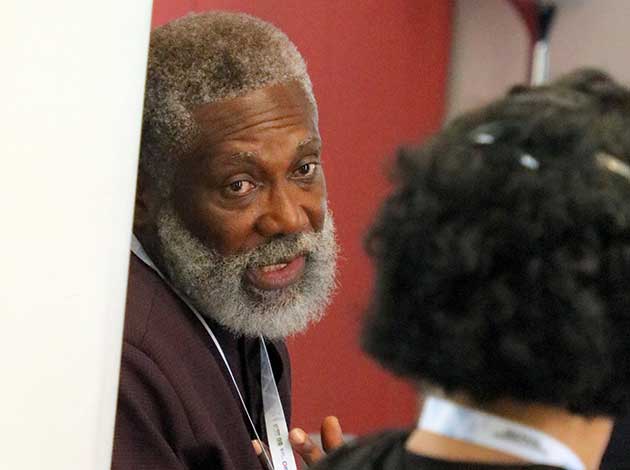
Civil society organisations at the Finance in Common Summit. Credit: Noel Emmanuel Zako

Communities cannot be left out of the door. They need to be given the space to play the rightful role of driving forces in the answers to today’s global challenges, without them PDBs will move backwards rather than forward – and this means more environmental degradation, less democratic participation, and to put it bluntly an even greater crisis than the one we are facing today. And nobody needs that.

The recommendations in the collective civil society statement emerge from a three-year process of engagement and exchange, involving civil society networks in an effort to shape PDBs policies and projects. You can find some of their words and messages below.

As the call for accountability grows, the Finance in Common summits are an opportunity for PDBs to show moral leadership and help remedy the lack of long-term collaborations with civil society, communities and indigenous groups, threatening to curtail development narratives and practices.

Here’s the messages from civil society organisations from around the globe directed at public development banks.

Oluseyi Oyebisi, Executive Director of Nigeria Network of NGOs (NNNGO) the Nigerian national network of 3,700 NGOs said: “The Sahara and Sahel countries especially have been facing the most serious security crisis in their history linked with climate change, social justice and inequalities in the region. Marked by strong economic (lack of opportunities especially for young people), social (limitation of equitable access to basic social services) and climatic vulnerabilities, the region has some of the lowest human development indicators in the world – even before the covid pandemic. Access to affected populations is limited in some localities due to three main factors: the security situation, the poor state of infrastructures and difficult geographic conditions. PDBs must prioritise civil society organisations and Communities initiatives supporting state programs of decentralization, security sector reforms and reconciliation. This will help reduce the vulnerability of populations and prevent violent extremism.”

Mavalow Christelle Kalhoule, Forus Chair and President of Spong, the NGO network of Burkina Faso said: “Development projects shape our world; from the ways we navigate our cities to how rural landscapes are being transformed. Ultimately, they impact the ways we interact with one another, with plants and animals, with other countries and with the food on our plates. The decisions taken by public development banks are therefore existential. Such responsibility comes with an even greater one to include communities directly concerned by development projects, those whose air, water and everyday lives are affected for generations to come. For this to happen, public development banks must reinforce their long-term efforts to create dialogue with civil society organisations, social movements and indigenous communities in order to fortify the democratic principles of their work. We encourage them to listen, to ask and to cooperate in innovative ways so that development stays true to its original definition of progress and positive change; a collective, participative and fair process and a word which has a meaning not for a few, but for all.”

Tity Agbahey, Africa Regional Coordinator, Coalition for human rights in development said: “Many in civil society have expressed concerns about Finance in Common as a space run by elites, that fails to be truly inclusive. It is a space where the mainstream top-down approach to development, instead of being challenged, is further reinforced. Once again, the leaders of the public development banks gathered at this Summit will be taking decisions on key issues without listening to those most affected by their projects and the real development experts: local communities, human rights defenders, Indigenous Peoples, feminist groups, civil society. They will speak about “sustainability”, while ignoring the protests against austerity policies and rising debt. They will speak about “human rights”, while ignoring those denouncing human rights violations in the context of their projects. They will speak about “green and just transition”, while continuing to support projects that contribute to climate change.”

Comlan Julien AGBESSI, Regional Coordinator of the Network of National NGO Platforms of West Africa (REPAOC), a regional coalition of 15 national civil society platforms said: “Regardless of how they are perceived by the public authorities in the various countries, non-governmental organisations (NGOs) contribute to covering the aspects and spaces not reached or insufficiently reached by national development programmes. Despite the undeniable impact of their actions on the living conditions of populations, NGOs remain the poor cousins of donor funding, apart from the support of certain philanthropic or charitable organisations. In such a context of scarce funding opportunities, aggravated by the health crisis due to COVID-19 and the subsequent economic crisis, Pooled Finance, which is in fact a paradigm shift, appears to be a lifeline for CSOs. This is why REPAOC welcomes the commitments made by both the Public Development Banks and the Multilateral Development Banks to directly support CSO projects and programmes in the same way as they usually do with governments and the private sector. Through the partnership agreements that we hope and pray for between CSOs and banks, the latter can be assured that the actions that will be envisaged for the benefit of rural and urban communities will certainly reach them with the guarantees of accountability that their new CSO partners offer”.

Frank Vanaerschot, Director of Counter Balance, said: “As one of this year’s organisers of the Finance in Common Summit, the EIB will brag about the billions it invests in development. The truth is the bank will be pushing the EU’s own commercial interests and promoting the use of public money for development in the Global South to guarantee profits for private investors. Reducing inequalities will be second-place at best. The EIB is also co-hosting the summit despite systemic human rights violations in projects it finances from Nepal to Kenya. Instead, the EIB and other public banks should work to empower local communities by investing in the public services needed for human rights to be respected, such as publicly owned and governed healthcare and education – not on putting corporate profits above all else.”

Stephanie Amoako, Senior Policy Associate at Accountability Counsel said: “PDBs must be accountable to the communities impacted by their projects. All PDBs need to have an effective accountability mechanism to address concerns with projects and should commit to preventing and fully remediating any harm to communities”.

Jyotsna Mohan Singh, Regional Coordinator, Asia Development Alliance said: “PDBs should have a normative core; they should start with the rights framework. This means grounding all safeguards into all the various rights frameworks that already exist. There are rights instruments for indigenous people, the elderly, women, youth, and people living with disability. They are part and parcel of a whole host of both global conventions and regional conventions. Their approach should be grounded in those rights, then it will be on a very firm footing.

Asian governments need to support, implement, and apply strict environmental laws and regulations for all PDBs projects. The first step is to disseminate public information and conduct open and effective environmental impact assessments for all these projects, as well as strategic environmental assessments for infrastructure and cross-border projects.”

IPS UN Bureau

  Source

Activists Call Out 11 Muslim Member States to Repeal Death Penalty for Blasphemy

Civil Society, Crime & Justice, Featured, Global, Headlines, Human Rights, IPS UN: Inside the Glasshouse, Religion, TerraViva United Nations

Opinion

Organization of Islamic Cooperation (OIC) headquartered in Jeddah, Saudi Arabia

LOS ANGELES / WASHINGTON DC, Oct 21 2022 (IPS) – Eleven out of 57 members of the Organization of Islamic Cooperation (OIC) still sanction the death penalty for blasphemy and apostasy, silencing their citizens and emboldening violence by non-state actors.


For the past 70 years, Article 18 of the United Nations Declaration of Human Rights has condemned capital punishment for religious offenses, a global standard shared during our recent visit to the UN headquarters in New York.

As a prelude to the UN General Assembly (UNGA) high-level meetings in mid-September, we led the International Religious Freedom (IRF) Roundtable Campaign to Eliminate Blasphemy and Apostasy Laws, urging UN members to stand in strong support during two paramount resolutions calling for an end to the death penalty and extrajudicial killings.

We urge the insertion of language codifying the death penalty never being imposed as a sanction for non-violent conduct such as blasphemy and apostasy. The effort produced an encouraging response by Nigerian third committee officials who renewed their commitment to freedom of religion or belief by supporting embedded language in both the moratorium on the death penalty and a resolution on renouncing the death penalty for extrajudicial killings.

In the days that followed our visit, the world has witnessed the outrage of human rights activists and concerned global citizens with the death of Masha Amini, an Iranian Muslim woman who was arrested and subsequently died in the custody of Iranian morality police for a violation of the Islamic Republic of Iran’s compulsory hijab mandate.

Brutal cases like these will only cease when government officials in Iran, and other egregious human rights violators, listen to the cries of their people and uphold globally recognized human rights declarations. These include statutes supporting international religious freedom or belief, and the repeal of apostasy and blasphemy laws.

When most countries around the world and the majority of Muslim nations are taking concrete steps to abolish capital punishment for perceived religious offenses such as blasphemy and apostasy, some refuse to modernize their legislation, thus branding themselves as the worst violators of internationally recognized basic human rights.

This staunch obsession with upholding persecutory laws and implementing the harshest of punishments, violates religious freedoms – the right to life and the right to freedom of religion or belief. This misinterpretation of scripture is an abuse of Islam, tarnishing the image of Muslims around the world and a disregard to Gods mercy, a belief that transcends faith orientation.

The multidisciplinary and multifaith delegation from the International Religious Freedom (IRF) Campaign urged UN members, including: Luxemburg, Canada, and Sri Lanka, to raise their voices loudly in favor of embedded international religious freedom language in two resolutions which will come up for a vote during the UNGA in November.

Penholders Australia and Costa Rica are calling for a moratorium on the death penalty which is only supported by the IRF Campaign with the addition of specific language ensuring the death penalty never be imposed for non-violent conduct such as apostasy or blasphemy.

Likewise, Finland, as penholder for the UNGA resolution on extrajudicial executions, is being asked by global advocates to add language on freedom of religion or belief, emphasizing the necessity for States to take effective measures to repeal laws currently allowing the death penalty for religious offences, such as criminalization of conversion and expression of religion or belief as a preventative measure.

Article 18 of the United Nations Declaration of Human Rights is clear – everyone has the right to freedom of religion or belief. Yet, 11 States today maintain the death penalty for apostasy and blasphemy. We raise the voices of the voiceless, such as Pakistani woman Aneeqa Ateeq who was sentenced to death for blasphemy in January 2022 after being manipulated into a religious debate online by a man who she romantically refused.

Also, an 83-year-old Somali man, Hassan Tohow Fidow, who was sentenced to death for blasphemy by an al-Shabaab militant court and subsequently horrifically executed by firing squad; and a 22-year-old Nigerian Islamic gospel singer Yahaya Sharif-Aminu who was sentenced to death for blasphemy because one of his songs allegedly praised an Imam higher than the Prophet.

As an outcome of our UN advocacy, we pray that the 11 Muslim member states—Afghanistan, Brunei, Iran, Maldives, Mauritania, Nigeria, Pakistan, Qatar, Saudi Arabia, Somalia, and Yemen– join in the common-sense repeal of the death penalty for blasphemy and apostasy as a great step toward becoming civilized nations.

The majority of OIC member nations who do not sanction the death penalty for religious offenses should be regarded as examples of modernity and humanity and their path to restore and uphold basic human rights should be replicated.

The Qur’an says, “There shall be no compulsion in religion; the right way has become distinct from the wrong way.” (Qur’an 2:256). Likewise, we read passages like 18:26:, “And say, ‘The truth is from your Lord. Whoever wills – let him believe. And whoever wills – let him disbelieve,” and “whoever among you renounces their own faith and dies a disbeliever, their deeds will become void in this life and in the Hereafter (Qur’an 2:217).”

The holy book, which serves as a moral compass for the laws in OIC member nations, upholds the right to freedom of religion or belief which has been recognized by the OIC majority.

As has been recently witnessed in Iran, when civil society activates around globally recognized human rights, the world takes note. The OIC asserts its purpose “to preserve and promote the foundational Islamic values of peace, compassion, tolerance, equality, justice and human dignity” and “to promote human rights and fundamental freedoms, good governance, rule of law, democracy, and accountability”.

To that end, with the passage of both critical UN resolutions, OIC members will face the controversial and politically sensitive task of calling out other OIC colleagues who continue to violate human rights by imposing the death sentence upon individuals for exercising their right to freedom of thought, conscience, and religion.

We assert that it is a societal problem as much as it is a reflection of the deficiency of democratic values and principles.

Embedding international religious freedom language in both resolutions calling for the repeal of the death penalty will be strengthened with the strong support of the 46 OIC nations and other human rights champion nations in the days ahead.

We are encouraged by Saudi Arabian scholar, Dr. Mohammad Al-Issa of the Muslim World Alliance, who travels the world sharing the unanimously approved Charter of Makkah – a document affirming differences among people and beliefs as part of God’s will and wisdom.

Our collective voice must be unwavering in its call and commitment to repeal the death penalty for blasphemy and apostasy as a primary step towards upholding theologies of love and compassion, building toward human flourishing.

Dr. Christine M. Sequenzia, MDiv is co-chair IRF Campaign to Eliminate Blasphemy and Apostasy Laws; Soraya M. Deen, Esq. is lawyer, community organizer, founder, Muslim Women Speakers, and co-chair International Religious Freedom (IRF) Women’s Working Group

IPS UN Bureau

  Source

Persons with Disabilities Integral Players in Determining Innovative Solutions to Fully Inclusive Societies

Asia-Pacific, Civil Society, Development & Aid, Headlines, Health, Human Rights, Labour, TerraViva United Nations

Opinion

BANGKOK, Thailand, Oct 14 2022 (IPS) – Ten years ago, the Asia-Pacific region came together and designed the world’s first set of disability-specific development goals: the Incheon Strategy to “Make the Right Real” for Persons with Disabilities. This week, we meet again to assess how the governments have delivered on their commitments, to secure those gains and develop the innovative solutions needed to achieve fully inclusive societies.


Armida Salsiah Alisjahbana

Ministers, government officials, persons with disabilities, civil society and private sector allies from across Asia and the Pacific will gather from 19 to 21 October in Jakarta to mark the birth of a new era for 700 million persons with disabilities and proclaim a fourth Asian and Pacific Decade of Persons with Disabilities.

Our region is unique, having already declared three decades to protect and uphold the rights of persons with disabilities; 44 Asian and Pacific governments have ratified the Convention on the Rights of Persons with Disabilities; and we celebrate achievements in the development of disability laws, policies, strategies and programmes.

Today, we have more parliamentarians and policymakers with disabilities. Their everyday business is national decision-making. They also monitor policy implementation. We find them active across the Asia-Pacific region: Australia, Bangladesh, China, Japan, Kazakhstan, Malaysia, the Marshall Islands, the Republic of Korea, Singapore, Thailand and Türkiye. They have promoted inclusive public procurement to support disability-inclusive businesses and accessible facilities, advanced sign language interpretation in media programmes and parliamentary sessions, focused policy attention on overlooked groups, and directed numerous policy initiatives towards inclusion.

Less visible but no less important are local-level elected politicians with disabilities in India, Japan and the Republic of Korea. Indonesia witnessed 42 candidates with disabilities standing in the last election. Grassroot disability organizations have emerged as rapid responders to emerging issues such as COVID-19 and other crises. Organizations of and for persons with disabilities in Bangladesh have distinguished themselves in disability-inclusive COVID-19 responses, and created programmes to support persons with psychosocial disabilities and autism.

The past decade saw the emergence of private sector leadership in disability-inclusive business. Wipro, headquartered in India, pioneers disability inclusion in its multinational growth strategy. This is a pillar of Wipro’s diversity and inclusion initiatives. Employees with disabilities are at the core of designing and delivering Wipro digital services.

Yet, there is always more unfinished business to address.

Even though we applaud the increasing participation of persons with disabilities in policymaking, there are still only eight persons with disabilities for every 1,000 parliamentarians in the region.

On the right to work, 3 in 4 persons with disabilities are not employed, while 7 in 10 persons with disabilities do not enjoy any form of social protection.

This sobering picture points to the need for disability-specific and disability-inclusive policies and their sustained implementation in partnership with women and men with disabilities.

One of the first steps to inclusion is recognizing the rights of persons with disabilities. This model focuses on the person and their dignity, aspirations, individuality and value as a human being. As such, government offices, banks and public transportation and spaces must be made accessible for persons with diverse disabilities. To this end, governments in the region have conducted accessibility audits of government buildings and public transportation stations. Partnerships with the private sector have led to reasonable accommodations at work, promoting employment in a variety of sectors.

Despite the thrust of the Incheon Strategy on data collection and analysis, persons with disabilities still are often left out of official data because the questions that allow for disaggregation are excluded from surveys and accommodations are not made to ensure their participation. This reflects a continued lack of policy priority and budgetary allocations. To create evidence-based policies, we need reliable and comparable data disaggregated by disability status, sex and geographic location.

There is hope in the technology leap to 5G in the Asia-Pacific region. The implications for the empowerment of persons are limitless: from digital access, e-health care and assistive devices at affordable prices to remote learning and working, and exercising the right to vote. This is a critical moment to ensure disability-inclusive digitalization.

We live in a world of volatile change. A disability-inclusive approach to shape this world would benefit everyone, particularly in a rapidly ageing Asia-Pacific region where everyone’s contributions will matter. As we stand on the precipice of a fourth Asian and Pacific Decade of Persons with Disabilities it remains our duty to insist on a paradigm shift to celebrate diversity and disability inclusion. When we dismantle barriers and persons with disabilities surge ahead, everyone benefits.

Armida Salsiah Alisjahbana is an Under-Secretary-General of the United Nations and Executive Secretary of the Economic and Social Commission for Asia and the Pacific (ESCAP)

IPS UN Bureau

  Source

Journalists, Under Threat, Need Safe Refuge Through Special Emergency Visas

Active Citizens, Civil Society, Democracy, Featured, Global, Headlines, Human Rights, IPS UN: Inside the Glasshouse, Press Freedom, TerraViva United Nations

Opinion

A video journalist covers a news event. Credit Unsplash/Jovaughn Stephens
 
Journalists and media workers are facing “increasing politicization” of their work and threats to their freedom to simply do their jobs, that are “growing by the day”, said UN Secretary-General Antonio Guterres, marking World Press Freedom Day, May 2022

NEW YORK, Oct 4 2022 (IPS) – “This woman sitting next to me, Maria Ressa, is a Nobel laureate and a convicted criminal,” said barrister Amal Clooney, who co-leads the international legal team representing Ressa. The founder of news website Rappler, Ressa has been targeted with a barrage of legal charges intended to stop her journalism in the Philippines.


During a conversation hosted by the Committee to Protect Journalists (CPJ) on the sidelines of the UN General Assembly high-level week, which concluded September 26, Clooney revealed that Ressa faces the possibility of imminent imprisonment in the Philippines.

“The only thing standing between her and a prison cell is one decision from the Philippines Supreme Court that could come as soon as in 21 days’ time,” said Clooney to an audience of news leaders, diplomats, and advocates.

She then appealed for prosecutors to drop the baseless charges and for newly elected President Ferdinand Marcos Jr. to issue a pardon. In May, CPJ wrote to Marcos requesting that he urgently take concrete steps to undo former President Rodrigo Duterte’s long campaign of intimidation and harassment of the press.

The conversation, led by CPJ President Jodie Ginsberg, also explored the broader misuse of laws increasingly deployed to silence the press across the world. Clooney and Ressa are both past recipients of CPJ’s Gwen Ifill Press Freedom award for their extraordinary and sustained achievement in the cause of press freedom.

UNGA week also served to gather legal experts, diplomats, and activists to discuss the plight of journalists forced to flee their homes and the responsibility of governments to provide safe refuge through special emergency visas.

During a high-level side-event hosted by the Czech Republic, CPJ’s Ginsberg joined Czech Foreign Minister Jan Lipavsky and deputy chairs of the High Level Panel of Legal Experts on Media Freedom to make the case for these visas.

CPJ has advocated for such visas in the past in line with recommendations by members of the Media Freedom Coalition, a group of 52 governments that support press freedom.

Ginsberg’s message: Governments must create special emergency visas for journalists to allow them to quickly evacuate and relocate to safety. The visas should be granted to individuals who are at risk due to their work keeping the public informed.

As Ginsberg noted, across the world, from Afghanistan to Nicaragua and Belarus to Myanmar, CPJ has worked on hundreds of cases of such journalists seeking safe refuge. There is no time to waste.

Journalists forced to flee often try to continue reporting in exile. Panelist Roman Anin, an exiled investigative journalist who runs news website iStories, shared his story of moving his newsroom out of Russia.

“When the war started, we had a choice between three options, either stay in Russia and stop our work, stay in Russia, continue our work and end up in jail, or relocate the newsroom,” he said. Anin said that in spite of the hardship of the relocation, his newsroom has been able to reach Russian audiences with stories on alleged war crimes committed in Ukraine.

Anin’s experience, and CPJ’s own work helping many other displaced journalists, demonstrate how critical it is for governments to prioritize emergency visas for swift relocation and safety. Refusing to do so not only impacts the lives of individual journalists, it is a blow to free expression and access to information globally.

In solidarity,

Gypsy Guillén Kaiser is CPJ Advocacy and Communications Director.

IPS UN Bureau

  Source

Uyghur Violations a Litmus Test for Global Governance & Rules-based International Order

Asia-Pacific, Civil Society, Crime & Justice, Democracy, Featured, Global Geopolitics, Global Governance, Headlines, Human Rights, TerraViva United Nations

Opinion

Protesters in Washington, DC, march against the alleged killing of Uyghur Muslims. June 2022. Credit: Unsplash/Kuzzat Altay

NEW YORK, Oct 3 2022 (IPS) – This week is a momentous one for the world’s premier human rights body. At stake is a resolution to decide whether the UN Human Rights Council in Geneva can hold a debate on a recently released UN report.


The report concludes that rights violations by China’s government in its Xinjiang region ‘may constitute international crimes, in particular crimes against humanity’.

Unsurprisingly, China’s government is doing everything in its power to scotch plans for a debate on the report’s contents. Its tactics include intimidating smaller states, spreading disinformation and politicising genuine human rights concerns – the very thing the Human Rights Council was set up to overcome.

The historic report, which affirms that the rights of Xinjiang’s Uyghur Muslim population are being violated through an industrial-level programme of mass incarceration, systemic torture and sexual violence, attracted huge controversy before it was released on 31 August 2022, minutes before the end of the term of the outgoing High Commissioner for Human Rights, Michelle Bachelet.

The report was supposedly ready in September 2021 but so great was the pressure exerted by the Chinese state that it took almost another year for it to be aired. Absurdly, the 46-page report includes a 122 page annex in the form of a rebuttal issued by China, rejecting the findings and calling into question the mandate of the Office of the High Commissioner for Human Rights.

The Office of the High Commissioner has asserted that the report is based on a rigorous review of documentary evidence with its credibility assessed in accordance with standard human rights methodology. The report’s recommendations are pretty straightforward: prompt steps should be taken to release all people arbitrarily imprisoned in Xinjiang, a full legal review of national security and counter-terrorism policies should be undertaken, and an official investigation should be carried into allegations of human rights violations in camps and detention facilities.

Nevertheless, a proposed resolution to hold a debate on the report’s contents in early 2023 is facing severe headwinds. A number of states inside and outside the Human Rights Council, united by their shared history of impunity for rampant human rights abuses – such as Cuba, Egypt, Laos, North Korea, Pakistan, Saudi Arabia, Syria and Venezuela – have already rallied to China’s defence in informal negotiations on the brief resolution.

What is most worrying is that China appears to be leaning on smaller states that make up the 47-member Human Rights Council by inverting arguments about politicisation of global human rights issues and projecting itself as the victim of a Western conspiracy to undermine its sovereignty.

If China were to have its way, it would be a huge setback for the Human Rights Council, which was conceived in 2006 as a representative body of states designed to overcome the flaws of ‘declining credibility and lack of professionalism’ that marred the work of the body it replaced, the UN Commission on Human Rights.

Former UN Secretary-General Kofi Annan, in his ground-breaking In Larger Freedom report, lamented that states sought membership ‘not to strengthen human rights but to protect themselves against criticism or to criticize others’.

Human Rights Council members are expected to uphold the highest standards in the protection and promotion of human rights. But our research at CIVICUS shows that eight of the Council’s 47 members have the worst possible civic space conditions for human rights defenders and their organisations to exist. In these countries – Cameroon, China, Cuba, Eritrea, Libya, Sudan, United Arab Emirates and Uzbekistan – human rights are routinely abused and anyone with the temerity to speak truth to power is relentlessly persecuted.

Regimes that serially abuse human rights may be motivated to block findings of investigations being aired on the international stage, but the international community has a collective responsibility to the victims. Civil society groups are urging Human Rights Council members to stand firm on the call for a debate on the China report.

Human Rights Council member states that assert the importance of human rights and democracy in their foreign policy are expected to vote in favour. Nevertheless, the influence of regional and geo-political blocs within the Council mean that the issue will essentially be settled by the decisions of states such as Argentina, Armenia, Benin, Brazil, Côte d’Ivoire, Gabon, Honduras, India, Indonesia, Malawi, Malaysia, Mexico, Paraguay, Senegal, Ukraine and Qatar.

China will undoubtedly pressure these states to try to get them to oppose or abstain in any vote that seeks to advance justice for the Uyghur people.

The stakes are particularly high for China’s mercurial leader, Xi Jinping, who is seeking to anoint himself as president for a third term – after abolishing term limits in 2018 – at the Chinese Communist Party’s Congress, which begins on 16 October.

Recognition of the systematic abuses to which Xi’s administration has subjected the Uyghur people would be considered an international affront to his growing power.

If China were to prevail at the Human Rights Council, it would be another blow to the legitimacy of the UN, which is already reeling from the UN Security Council’s inability to overcome Russia’s permanent member veto to block action on the invasion of Ukraine. So much – for the UN’s reputation, and for the hope that human rights violators, however powerful, will be held to account – is resting on the vote.

Mandeep S. Tiwana, is chief programmes officer and representative to the United Nations at global civil society alliance, CIVICUS.

IPS UN Bureau

  Source

Reasonable Left, Irresponsible Right: & the Future of Social Democracy

Civil Society, Democracy, Featured, Global, Global Governance, Headlines, Human Rights, TerraViva United Nations

Opinion

Credit: Pexels via

VIENNA, Sep 28 2022 (IPS) – With no shortage of catastrophes in the past 15 years worldwide — the democratic left is stepping up to provide stability amid the storm.

Throughout the history of mankind, there have been catastrophes. In modern times, there have also been media representations of catastrophe, including worked-up or even imagined catastrophes.


More than 60 years ago, the German author Friedrich Sieburg wrote about the ‘lust for doom’, which, strangely enough, has a tremendous appeal especially in eras perceived as stable: ‘The everyday life of democracy with its dreary problems is boring, but the impending catastrophes are highly interesting.’

Now that we have had no shortage of real catastrophes in the past 15 years, we no longer have to conjure them up. First came the global financial crisis, which threatened to topple banks and other financial institutions — even states — as if houses of cards.

Later the pandemic arrived and then the military invasion of the second largest country in Europe by the largest. Its shockwaves are devastating half the world, with energy crisis, broken supply chains, price explosion, food shortages, impoverishment and destitution.

Robert Misik

And all the time comes the onrushing climate catastrophe, whose consequences are already apparent and which intersects with the current geopolitical crisis. The global electricity markets are going crazy because there is a lack of gas from Russia, but also because the rivers are drying up, the hydroelectric power plants are empty and nuclear power plants have to be shut down because the cooling water in the rivers is becoming too scarce — even the coal-fired plants are having problems where coal can no longer be shipped.

In any case, disaster is not now something we frivolously imagine because we are bored. It is there — very real for many and at least felt by most. Not only does it colour political debates but an atmosphere of pessimism, insecurity and fear has settled over most societies.

This is so even, perhaps especially, in the affluent societies of the west, which had become accustomed to stability and relative prosperity. A sentiment is spreading: the whole machinery no longer works, it is broken — and the political elites have no plan.

The left choosing stability

Against this backdrop, while the left is trying to develop programmes and instruments to master the crises, to stem the decline in prosperity and the social costs for ordinary people, those on the hard right are betting on things getting even worse, playing up catastrophe.

They hope this will benefit them, that they can thereby achieve electoral success — as with the right-wing radicals in Sweden recently or the right-wing bloc in Italy over the weekend.

It’s no surprise, then, that the far-right contenders paint the ‘elite’ and its networks in dark colours. They rummage through supposedly suppressed news and hidden secrets. They identify, to their satisfaction, how the powerful secure their dominance and say all this is connected. They imagine themselves as if detectives smugly putting pieces of the political puzzle together, in the manner of a latter-day Hercule Poirot.

It is not a completely new phenomenon to offer such a fundamental critique of ‘the system’. What is astonishing is that the far right has hijacked what used to be a prerogative of Marxist intellectuals — and of those activists who imagined a terminal catastrophe would some day issue in a socialist millennium.

Right-wing propaganda has appropriated elements of left-wing critical thinking — the questioning of the conventional and familiar, of the all-too-obvious, and the healthy suspicion of power. Amazingly, the motifs of the enlightenment have been subverted to serve conspiracy theories and fanaticism, in the cause of authoritarianism and nationalism.

The democratic left, in sharp contrast, sees its task today, grosso modo, as providing stability amid the storm. Of course, this is true where it is in government. But it in most cases it also has this reflex of responsibility where it is in opposition.

This has consequences. The left sometimes finds itself defending the status quo, against its deterioration. It knows it cannot score points with simple answers but has to work out complex plans whose realisation is tough.

This liberal left has always stood for freedom, democracy, the rule of law — for social equality and against hierarchy and fascist temptations. The Russian president, Vladimir Putin, has however drawn his country back into despotism in recent decades, aligned with an ideology of expansionism.

While the radical right (and some pro-Russian hard leftists) propose to kneel to Putin, the democratic left supports Ukraine’s right to self-defence and an independent path.

Russia’s imperialism has been met with sanctions from liberal Europe and north America, rebutted in turn in an economic quasi-war with the help of the ‘weapon’ of gas and oil. Yet in a multipolar and chaotic world where not all are on their side, progressives find themselves having to balance decisiveness and prudence.

Now their own economies must be stabilised and protected, and their societies, because the supply of energy and the functioning of the critical infrastructure has a much broader social centrality. This includes changes in the design of energy markets, which simply no longer function when panic on the markets leads to price explosions of 600 or even 1,000 per cent.

The colonisation of lifeworlds by market ideology has however meant that even the essential goods of everyday infrastructure have been left to the mercy of the markets. Energy suppliers which get into trouble have thus to be bailed out by governments.

The dangers of ‘politics without a project’

The effects of inflation are also different from what we know from economics textbooks. Classic inflation occurs when there is a boom, an economy reaches the limits of its capacity and there is more or less full employment. Then asset owners lose, while borrowers gain. But above all, workers and employees do not really lose out: prices rise but so do wages.

Classical inflation is characterised by a wage-price spiral in which real wages rise along with them. Historically, wage earners lost out primarily because of anti-inflationary policies, not because of inflation.

Today, however, inflation is not the result of a boom but an economic shock: it is imported, primarily due to higher energy prices and supply problems. Many companies too are groaning under their energy overheads, as they cannot fully pass on the cost increase to consumers. This in turn will mean workers will not be able to make up fully for price increases through wage rises.

The unions will fight but it will be very difficult to avoid real wage losses. Low wage increases lead to impoverishment and a decline in aggregate demand but high wage increases would lead to more bankruptcies and thus more unemployment.

The most likely result will be a combination of misfortune — a marked recession plus high inflation. Government will have to intervene with price controls, by dramatically accelerating the shift to renewable energy, by providing payments to the most vulnerable segments of the population, by accepting further budget deficits.

None of these solutions will be perfect. We must be careful not to enter a new era of depoliticised pragmatism — a ‘politics without a project’, to borrow an old formulation from a famous German book edited by the legendary Suhrkamp publisher Siegfried Unseld 30 years ago. But there will tend to be no grand design to policy, just muddling through.

Public debates will be characterised by a certain confusion, as we are already observing. On the one hand, most citizens want clear and focused plans, but at the same time they know that there are no easy, simplistic answers.

A pandering left-wing populism is therefore not an attractive alternative. It is not only a too-narrow preaching to the converted but also there is a broad swath of potential support among liberal and left citizens for a politics of reason and responsibility.

In times of such uncertainty, we do not need trumpeters and bullshiters. We need people who can be trusted to do the best they can to sort things out.

Robert Misik is a writer and essayist. He publishes in many German-language newspapers and magazines, including Die Zeit and Die Tageszeitung.

Source: International Politics and Society is published by the Global and European Policy Unit of the Friedrich-Ebert-Stiftung, Hiroshimastrasse 28, D-10785 Berlin.

IPS UN Bureau

  Source