Guess Who’s Behind Paralysis on COVID19 in the UN Committee on World Food Security

Aid, Civil Society, COVID-19, Economy & Trade, Food and Agriculture, Food Security and Nutrition, Global, Headlines, Human Rights, Humanitarian Emergencies, IPS UN: Inside the Glasshouse, TerraViva United Nations

Opinion

ROME, Oct 19 2021 (IPS) – ‘COVID 19 has multiplied hunger and malnutrition challenges. We need transformative action!’ The first speaker at the UN Committee on World Food Security’s (CFS) 49th Plenary Session, the Secretary-General of the United Nations, turned the spotlight on the disastrous impacts of the pandemic that have afflicted communities around the world for close to two years.

Nora McKeon

He was echoed by the presenter of the 2021 edition of the State of Food Security and Nutrition in the World for whom ‘COVID is only the tip of the iceberg’, while keynote speaker, Jeffry Sachs, emphasized the multifaceted nature of the crisis, with chronic poverty and conflict at the center.

Delegation after delegation took the virtual floor to share their concerns: Kenya speaking for the Africa Group, Colombia, Cuba, Costa Rica, Norway, Morocco, Peru, Spain, Indonesia, Mexico, Malaysia, Mali, Cape Verde, South Africa, Uganda, Saint Lucia and more. The impacts of Covid 19 on food security and nutrition are heavy and lasting. The vulnerable are the most effected, within and between countries. Covid has deepened and exacerbated existing structural fragilities and injustices in our food systems. Its causes are multisectoral and cannot be treated in a siloed way.

‘Multilateralism, solidarity and cooperation are key to the way forward’, the President of ECOSOC added, and ‘the CFS is a unique multilateral forum because it brings all the actors together in the name of the right to food’. The text adopted at the end of Day 1 summarized all of these contributions, and deepened concern by drawing attention to the possibility of recurrent pandemics.

With this kind of an opening one could have expected a standing ovation when it was proposed, the following day, that the CFS put together a globally coordinated policy response to the impacts of COVID 19 on food security and nutrition and a proposed precautionary approach towards possible future shocks of this kind.

This proposal was a long time in the building. For a year and a half the CFS’s Civil Society and Indigenous Peoples’ Mechanism (CSM) had been documenting the experience and proposals of its constituencies and communities and bringing this evidence from the ground into the global debate. Earlier this year an informal ‘Group of Committed’ governments and other CFS participants had come together to push for the CFS to take determined action. How could it fail to live up to its mandate in the face of the most serious threat to global food security the world has faced since the 2007-2008 food crisis?

Just a week before CFS49 the Group of Committed had held a seminar where evidence and proposals for global policy action were presented by national governments, regional and local authorities, small-scale food producers, the urban food insecure, along with UN agencies, the Special Rapporteur on the Right to Food, and the CFS’s own High-Level Panel of Experts.

The seminar demonstrated that action is being taken by different actors and authorities at local, national and regional levels, while UN agencies have developed and adopted relevant policy instruments and programmes in their respective sectors. What has been missing thus far is a way of putting the different perspectives and initiatives together into a multisectoral, multilaterally coordinated approach. Filling this gap was the proposal that was put on the table in CFS49.

‘We need a globally coherent and coordinated response to support governments’ efforts and the CFS is the appropriate place for this to happen,’ the Ambassador of Mali had exhorted in his opening address.

So what about the standing ovation? The proposal was supported by countries from the Global South led by African countries, the most affected by injustice in access to vaccines, dependency on food imports, and indebtedness, but including also Mexico, Peru, Morocco, the CSM and the Special Rapporteur on the Right to Food. ‘This is the place to deal with COVID!’ he said. ‘It is the priority food issue today. It wasn’t addressed by the UN Food Systems Summit. The CFS has the mandate and the tools, and the other UN agencies are highly committed to cooperate.’

But, incredibly and unacceptably, the proposal did not pass. It was blocked on specious, procedural grounds by a steamroller coalition of big commodity exporters who push back on any possible limitation that might be placed on global trade in the name of human rights, equity, environmental concerns: the US, Canada, Argentina, Brazil, Russia. The EU, shamefully, was silent.

The implications for inclusive multilateralism, democracy, the needed radical transformation of our food systems are severe. ‘A key barrier to transformation is interference from corporations,’ stated the delegate of Mexico. ‘Governments need to assume their role as agents of change, regulators of food systems, and protectors of the planet, but we can’t do it alone. Global attention is needed and the CFS is the right place for it.’

But The CFS is being held hostage. The arrogance with which a few are ignoring reality, evidence and urgency is leading to an unacceptable increase in the violation of the human rights of the many. Patience is wearing thin. ‘If I’m in this room it’s to honor the concerns of those most affected in my region,’ a member of the Group of Committed asserted in the aftermath of the session.

And the people of her region, along with others from around the world, are raising their voices ever more loudly, as in the counter mobilization to transform corporate food systems organized last July in parallel to the Pre-Summit of the UNFSS [hyperlink]. Radical food system transformation is being built from the ground up and the CFS, however handicapped, is the most resounding global echo chamber for people’s claims.
  Source

Winning the Human Race, Together

Armed Conflicts, Civil Society, Climate Change, COVID-19, Development & Aid, Education, Education Cannot Wait. Future of Education is here, Environment, Gender, Global, Headlines, Health, Human Rights, Humanitarian Emergencies, Migration & Refugees, Poverty & SDGs, TerraViva United Nations

Opinion

NEW YORK, Oct 14 2021 (IPS) – “Now is the time for a stronger, more networked and inclusive multilateral system anchored in the United Nations,” said UN Secretary-General António Guterres in his latest report “Our Common Agenda.” Indeed, there is a fork in the road: we can either choose to breakdown or to breakthrough.


Yasmine Sherif

Making this moral choice and adopting this legal imperative is more relevant today than ever. The estimated 75 million children and adolescents caught in emergencies and protracted crisis who suffer from disrupted education has now dramatically increased from 75 million to 128 million due to the pandemic. These vulnerable girls and boys are now the ones left furthest behind in some of the world’s toughest contexts, in Afghanistan, the Middle East, Sub-Saharan Africa and South America.

The current education financing gap amounts to US$1.48 billion for low- and middle-income countries. A gap that is increasingly widening. In reviving the multilateralism that is so urgently needed, the UN Secretary-General will convene a crucial, timely summit on Transforming Education in 2022.

Despite all that we do, despite all our investments, we cannot win ‘the human race’ unless we invest in our fellow human beings, now. It is the children and young people impacted by armed conflicts, climate-crisis induced disasters, forced displacement and protracted crises who are in a sprint against time, with their lives and futures on the line.

We can no longer let “an entire generation facing irreversible losses be left behind in the ruins of armed conflicts, in protracted refuge, on a planet whose climate-change threatens us all,” as the UN Special Envoy for Global Education and Chair of Education Cannot Wait’s High-Level Steering Group, The Rt. Hon. Gordon Brown stated at the launch of Education Cannot Wait’s Annual Results Report: Winning the Human Race, on 5 October 2021.

Education is the foundation, the DNA and the absolute prerequisite for achieving all other Sustainable Human Development Goals and Universal Human Rights. Education means investments in the limitless possibilities of human potential: the workforce, governance, gender-equality, justice, peace and security.

“Access to quality education is key to addressing 21st century challenges, including accelerating the fight to end poverty and climate change,” says The LEGO Foundation’s new CEO, Anne-Birgitte Albrectsen, in this month’s ECW Newsletter high-level interview.

The time has come to connect the dots between individual human beings and our collective humanity and life on this planet. We are now investing more and more in Mother Earth through significant climate change financing. We must now also invest in the human beings populating the planet. The correlation between the positive impact of education upon on all aspects of life on the planet is indispensable and inescapable.

    Higher education levels lead to higher concern for the environment, and adaptation to climate change. If education progress is stalled, it could lead to a 20% increase in disaster-related fatalities per decade.
    Education is the one unique investment that can prevent conflict and forced displacement. High levels of secondary school enrollment have been shown to be associated with an increase a country’s level of stability and peace and reduce crime and violence.
    Every additional year of schooling reduces an adolescent boy’s risk of becoming involved in conflict by 20 percent. This effect reflects both education’s economic benefits and its role in social cohesion and national identity.
    Conversely, lack of education often leads to political disempowerment and regression to group allegiances. Across 22 countries in sub-Saharan Africa, sub-national regions with very low average education had a 50 per cent probability of experiencing the onset of conflict within 21 years, while the corresponding interval for regions with very high average education was 346 years.
    Education is also the most secure means of ending extreme poverty. For nations, each additional year of schooling can add up to 18 per cent to GDP per capita. For individuals, one more year of education brings a 10 per cent increase in personal income. If all children were to learn basic reading skills, the impact would be 171 million fewer people living in extreme poverty. *Footnotes below.

Education Cannot Wait is a multilateral global UN fund. Our Annual Results Report of 2020, Winning the Human Race, launched at the UN in Geneva this month, testifies to what we can achieve when we think and act multilaterally: when we connect the dots, become one, and act for all.

Through multilateralism, we reached more than 29 million crisis-affected girls and boys in 2020 alone through ECW’s COVID-19 emergency response, working with our strategic partners, including host governments, our 21 donors, UNICEF, UNHCR, UNESCO, UNDP, WFP, our civil society partners, such as INEE, Jesuit Refugee Service, AVSI, Save the Children, Plan International, Norwegian Refugee Council, International Rescue Committee and numerous local civil society organizations across 34 countries. Through joint programming, we were also able to jointly deliver quality education to more than 4.6 million children and youth, of whom 51% were girls and adolescent girls, 38% were refugees – all while we increased ECW allocations to children and youth with disabilities.

This is made possible because ODA governments, private sector and philanthropic partners are scaling up their support for the catalytic ECW global fund whereby their investments are part of multilateral efforts that work as closely as possible to those we serve, establishing links conducive to numerous, diverse SDGs and human rights. The full list of our 21 generous donor partners can be found at the end of this Newsletter.

In connection with the UNGA week this year, ECW strategic donors advancing multilateralism, such as Germany, the United States, the European Union/European Commission, France, The LEGO Foundation and Porticus took giant steps and committed $138.1 million to ECW, bringing the total resources mobilized thus far in 2021 alone to $156.1 million and the total since ECW’s inception to $1.85 billion ($827 million mobilized for the Trust Fund; and, over $1 billion worth of programmes aligned with ECW MYRPs, as leveraged by ECW with partners).

Furthermore, the Global Hub for Education in Emergencies celebrated its new collective space under the ECW umbrella in Geneva, thanks to Switzerland which is the second biggest UN capital for humanitarian and development actors after New York City. The Global Hub brings together NGOs, the UN, academia, foundations, and governments to inspire more commitment and resources to quality education for those left furthest behind in emergencies and protracted crisis.

Multilateralism through the United Nations works.

Still, this is just the start of a major global effort to work through the multilateral coordination system to reach those left furthest behind and bring education from the margins to the center. Based on empirical evidence, ECW calls for an additional $1 billion to contribute to an innovative model that has proven to work.

Political leaders, governments, private sector, UN and civil society – all part of ECW’s multilateral UN system – recognize that education is a precondition for achieving the Sustainable Development Goals and Universal Human Rights. Together, we think long-term and act now. Together, we connect the dots and see things from afar and within. Together, we work on what the world needs most right now: A Common Agenda to Win the Human Race.

Yasmine Sherif is Director,
Education Cannot Wait
The UN Global Fund for Education in Emergencies and Protracted Crises

  Source

Leprosy has a Cure, so has Prejudice, says Miss Universe for Brazil

Civil Society, Development & Aid, Featured, Gender, Headlines, Health, Human Rights, Inequity, TerraViva United Nations

Human Rights

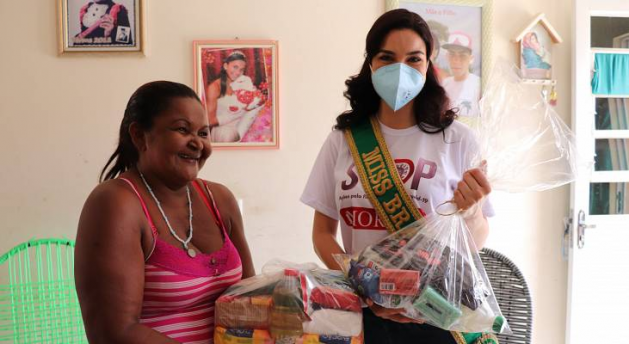
Julia Gama, Miss Brazil Universe working with Morhan to deliver food baskets to people affected by Hansen’s disease, with support from the Sasakawa Health Foundation. Credit: Morhan

NAIROBI, KENYA, Sep 29 2021 (IPS) – A new dawn has come, and it was through the work of Yohei Sasakawa, the WHO Goodwill Ambassador for Leprosy Elimination, that those affected by leprosy now had a voice to speak for themselves.


So said Faustino Pinto, a person affected by leprosy and Vice National Coordinator of Movement for the Reintegration of People Affected by Hansen’s disease (Morhan), at a webinar with the theme ‘Hansen’s Disease/Leprosy as Human Rights issue’.

Sasakawa, who is also the chairperson of the Nippon Foundation, and Dr Alice Cruz, UN Special Rapporteur on the Elimination of Discrimination against Persons Affected by Leprosy, addressed the webinar. Guests included Caroline Teixeira, Miss World Brazil 2021 and Julia Gama, Miss Universe Brazil 2020. The Sasakawa Health Foundation, in collaboration with Morhan, were co-conveners. The event forms part of a 10-month-long campaign dubbed ‘Do not Forget Leprosy’.

The celebrity guests applauded his sentiments.

Faustino Pinto, a person affected by leprosy and Vice National Coordinator of Morhan. Credit: Joyce Chimbi

Gama, also working with Morhan, told IPS: “Hansen’s disease has a cure, and I believe so does prejudice. I will use my voice to ensure that those who were silenced are heard. I believe togetherness is our strength, and together we can eradicate Hansen’s disease.”

Pinto praised Sasakawa for his lifelong commitment to improving the lives of those affected by the disease.

“We were taught to just accept what we were told: Take the medicine, keep the appointments, open your mouth to check if you did take the medicine, do not abandon the treatment,” says Pinto. This changed when Sasakawa became involved.

Pinto appealed for those affected by leprosy to be heard, seen, and involved in efforts towards zero leprosy.

He lauded the Sasakawa and the Foundation “for always talking about us and including us in the debate” and for “truly listening to us and giving us a voice”. It is this voice that Pinto used to appeal to the global community, saying, “Don’t Forget Hansen’s Disease. Don’t Forget Us.”

At the heart of discussions was the bid to draw the world’s attention to a disease in equal measure, a medical and social problem. Furthermore, the meeting was a key platform where participants were urged to approach leprosy as a human’s rights issue.

While concerted efforts have today led to less than one case of leprosy in a population of 10 000 people as per WHO estimates, with at least 200 000 new cases reported annually, experts say leprosy is still very much a concern.

“There are more than one billion people in the world living with disabilities, including persons affected by leprosy. We need to create an inclusive society where everyone can have an education, find work, and get married if they want to. People have passion and motivation. Often, all they lack is opportunity,” says Sasakawa.

Governments efforts to respond to COVID-19 is believed to have setback the progress towards zero leprosy.

“Persons affected by leprosy face multiple discrimination. They are often discriminated against on various grounds – like leprosy, but also gender, age, poverty, disability, sexuality, and race. They also struggle with violence from the State and society and with interpersonal violence,” says Cruz.

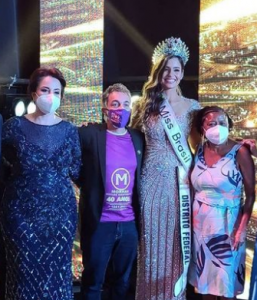
Caroline Teixeira, Miss World Brazil, with Morhan’s national coordinators Artur Custódio (centre) and Lucimar Batista (right), and the director of the National Beauty Contest and Morhan volunteer, Marina Fontes (left). Credit: Morhan

“There is such ability and potential in the world, and to have everyone participate in society will create a truly wonderful future. That is why it is important for persons affected by leprosy to have confidence and speak out,” Sasakawa emphasises.

“To support them, Sasakawa Health Foundation and The Nippon Foundation are helping them to build up their organisational capacity. I would like to see a society in which everyone is active, able to express their opinions to the authorities with confidence, and their contribution is valued,” he adds.

Over ten months, the campaign, which leverages Sasakawa’s 20th anniversary as Goodwill Ambassador, will raise awareness of why the world should stay focused on leprosy.

“It was a great honour to be chosen Miss World Brazil and thus become an ambassador of the fight against Hansen’s disease in Brazil, the country with the highest incidence of the disease in the world,” Teixeira told IPS.

“In the coming days, I will be part of a Morhan delegation visiting several cities in the north of the country, sensitising governments to action in defence of the rights of persons affected. We will certainly unite many voices so that Hansen’s disease is not forgotten,” she says.

Nevertheless, left untreated, leprosy can result in permanent disability. Worldwide, three to four million people live with some form of disability due to leprosy, as per WHO estimates.

There is growing concern that COVID-19 and the fear of discrimination could further prevent people from visiting hospitals, leading to diagnosis and treatment delays.

As it is, WHO’s 2020 statistics show an estimated 40 percent drop in the detection of new leprosy cases, which, experts warn, will lead to increased transmission of leprosy and more cases of disability.

Discrimination and stigma remain a primary concern for Sasakawa. He decries that “people who should be part of society remain isolated in colonies facing hardships. The more you look into it, the more you see the restrictions they live under, including legal restrictions in some cases. Is it not strange that someone cured of a disease cannot take their place in society?”

“I belatedly realised that if the human rights aspect wasn’t addressed, then elimination of leprosy in a true sense would not be possible. I would like to create a society where everyone feels fully engaged, able to express their opinions, and appreciated. The coming era must be one of diversity, and for that, we need social inclusion.”

  Source

Delivering On the Promise of Health For All Must Include Gender Equality and SRHR

Civil Society, COVID-19, Development & Aid, Gender, Global, Headlines, Health, Human Rights, Humanitarian Emergencies, Inequity, Labour, Poverty & SDGs, TerraViva United Nations, Women’s Health

Opinion

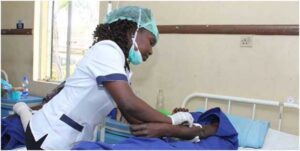
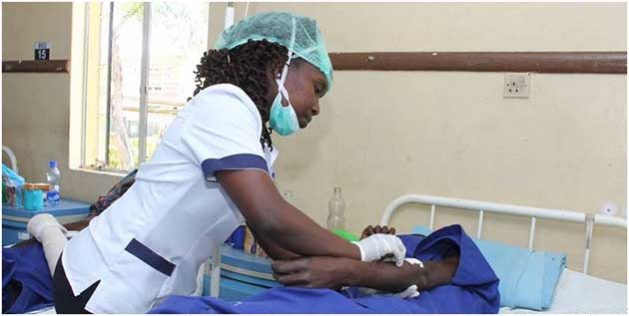
Health workers are at the frontlines in the fight against the new Corona Virus. Credit: John Njoroge

NEW YORK, Sep 29 2021 (IPS) – Gender-responsive universal health coverage (UHC) has the proven potential to transform the health and lives of billions of people, particularly girls and women, in all their intersecting identities. At tomorrow’s kick-off to the 2023 UN High-Level Meeting (HLM) on UHC, Member States and stakeholders will review progress made on the 2019 HLM’s commitments and set a roadmap to achieve UHC by 2030. We, as the co-convening organizations of the Alliance for Gender Equality and UHC, call on Member States to safeguard gender equality and sexual and reproductive health and rights (SRHR) as part of UHC implementation, especially in light of the gendered impacts of the COVID-19 pandemic.


To move forward, it is crucial to remember our cumulative past promises. In 2019, Member States adopted a Political Declaration that contained strong commitments to ensure universal access to SRHR, including family planning; mainstreaming a gender perspective across health systems; and increasing the meaningful representation, engagement, and empowerment of all women in the health workforce. Further, 58 countries put forward a joint statement that argued that investing in SRHR is affordable, cost-saving, and integral for UHC. These commitments were the result of the advocacy and hard work of civil society organizations, including members of the Alliance for Gender Equality and UHC, and set out a clear path on the steps needed to make gender-responsive UHC a reality.

However, following the 2019 HLM, the deadly and devastating COVID-19 pandemic drastically changed how individuals around the globe could access essential health services. Fundamental human rights, including hard-won gains made for UHC, SRHR, and gender equality, are now at risk as health and social services are strained and political attention is diverted. The protracted pandemic underscores how gender-responsive UHC is more important than ever.

We call on Member States to renew the commitments made in 2019 and affirm that delivering on the promise of health for all is only possible by way of gender-responsive UHC.

To truly deliver gender-responsive UHC, we offer the following five recommendations:

1. Design policies and programs with an intersectional lens that places SRHR and girls and women — in all their diversity — at the center of UHC design and implementation. To be effective, UHC must recognize and respond to the needs of women in all their intersecting identities, including by explicitly addressing the ways in which race, ethnicity, age, ability, migrant status, gender identity, sexual orientation, class, and caste multiply risk and impact health outcomes. What’s more, COVID-19 has deepened inequalities for marginalized populations, and special attention is needed, now more than ever, to deliver UHC for those pushed furthest behind.

2. Ensure UHC includes comprehensive SRH services, and provide access to SRH services for all individuals throughout the life course. These services must be free of stigma, discrimination, coercion, and violence, and they must be integrated, high quality, affordable, accessible, and acceptable. The World Health Organization (WHO) provides guidance in the UHC Compendium of interventions and supporting documents for what this can look like. The pandemic has given way to multiple interruptions to SRHR care. For example, an estimated 12 million women may have been unable to access family planning services due to the pandemic. COVID-19 response and recovery and UHC implementation must address these issues.

3. Prioritize, collect, and utilize disaggregated data, especially gender-disaggregated data. UHC policy and planning can only be gender-responsive when informed by data that are disaggregated by gender and other social characteristics. In the current pandemic, not all countries are reporting disaggregated data on infections and mortality from COVID-19 to the WHO, and most countries have not implemented a gendered policy response. In June 2021, only 50% of 199 countries reported data disaggregated by sex on COVID-19 infections and/or deaths in the previous month.1 The number of countries reporting sex-disaggregated statistics has also decreased over the course of the pandemic. Without this information, decision-makers are unable to base policies on evidence affirming how to address the health needs of all genders — a critical lesson for UHC.

4. Foster gender equality in the health and care workforce and catalyze women’s leadership. The approach to the health and care workforce in the pandemic has frequently not applied a gender lens, ignoring the fact that women are 70% of the global health workforce and powerful drivers of health services. Gender inequities in the health workforce were present long before the pandemic, with the majority of female health workers in lower-status, low-paid roles and sectors, often in insecure conditions and facing harassment on a regular basis. Moreover, although women have played a critical role in the pandemic response — from vaccine design to health service delivery — they have been marginalized in leadership on pandemic decision-making from parliamentary to community levels. In fact, 85% of national COVID-19 task forces have majority male membership. Urgent investment in safe, decent, and equal work for women health workers, as well as equal footing for women in leadership and decision-making roles, must be central to the delivery of UHC.

5. Back commitments to advancing SRHR, gender equality, and civil society engagement in UHC design and implementation with necessary funding and accountability. Now is the time to invest in health and the care economy, particularly in UHC. Governments everywhere are facing fiscal constraints from the pandemic. UHC is a critical part of investing in and building back resilient health and social systems to avoid catastrophic spending on future pandemics and global health emergencies. UHC must be designed intentionally, with appropriate accountability mechanisms, to reduce inequalities between and within countries — and especially gender inequality, which undermines social and economic rights and resilience.

We, along with our civil society partners in the Alliance for Gender Equality and UHC, stand ready to work hand-in-hand with governments, the UN, and all stakeholders to act on these recommendations on the road to the 2023 HLM on UHC. At this point in the COVID-19 pandemic, there is no time to waste in making the promise of health for all a reality, and this can only be achieved through gender-responsive UHC that centers gender equality and SRHR.

The authors are Ann Keeling of Women in Global Health, Divya Mathew of Women Deliver, Deepa Venkatachalam of Sama Resource Group for Women and Health, and Chantal Umuhoza of Spectra Rwanda. These four organizations are the co-conveners of the Alliance for Gender Equality and Universal Health Coverage.

1 Global Health 50/50 (globalhealth5050.org)

  Source

White Privilege: What It Is, What It Means and Why Understanding It Matters

Civil Society, Headlines, Human Rights

Human Rights

Why is racial inequality perceivably so resistant to transformation? Some say it is because of a failure to acknowledge and confront white privilege. . Credit: Gerry Lauzon / Flickr Creative Commons CC BY 2.0.

Why is racial inequality perceivably so resistant to transformation? Some say it is because of a failure to acknowledge and confront white privilege. . Credit: Gerry Lauzon / Flickr Creative Commons CC BY 2.0.

Sep 15 2021 (IPS) – A prestigious, private school in Pretoria, South Africa, recently became a site of protest. Black learners and parents accused Cornwall Hill College of rejecting calls to make its whites-only board more representative of its diverse learner body.


In response, a right wing South African youth group called Bittereinders (the Bitter Enders), held an anti-transformation protest.“Unhappy? build your own schools,” was the response from one member.

Why is racial inequality perceivably so resistant to transformation? Some say it is because of a failure to acknowledge and confront white privilege.

The police killing of George Floyd in the US city of Minneapolis in 2020 ignited a wave of protests across the globe and intense discussions of anti-black racism.

Focusing the discussion on the individual is especially effective for the purposes of anti-racist teaching and advocacy. Unpacking how whiteness operates to bestow privilege may allow us to understand how ‘others’ are systematically denied those same rights

From France to Colombia and South Africa, demonstrators used the term ‘white privilege’ as a means of challenging people to confront the racial disparities evident in their own countries.

Amid the demonstrations, a group of international scholars brought together at the Center for Advanced Study in the Behavioral Sciences at Stanford University in 2020 began discussing whether the concept of ‘white privilege’ is useful for addressing systemic racial inequalities across national contexts.

Although it is clear that the term has become popular across diverse contexts, some have argued against it. They say that the term ‘white privilege’ reinforces stereotypes, reifies conceptualisations of race, antagonises potential allies and creates even greater resistance to change.

As movements for racial justice have become more global in scope, the term has circulated across national boundaries. However, it does not always translate well to these new contexts.

A history

The term white privilege originated in the US in the 1980s, referring to both the obvious and the hidden advantages afforded to white people by systemic forms of racial injustice. Unlike terms such as “racial injustice” and “systemic racial bias”, the idea of privilege centres the discussion around individuals.

Focusing the discussion on the individual is especially effective for the purposes of anti-racist teaching and advocacy. Unpacking how whiteness operates to bestow privilege may allow us to understand how ‘others’ are systematically denied those same rights.

By the mid-2000s, the term white privilege had been adopted by many educators and activists in the US. They were seeking to call attention to the myriad ways in which whites, regardless of their class, benefit from white supremacy and are, therefore, implicated in maintaining the system. For whites in the US, where many live in racially homogeneous communities, the concept of white privilege could spark individual self-reflection and motivate individual political action.

While scholars in some other countries have recently used the term to elucidate systemic patterns of inequality in their own societies, in other countries scholars have been more dubious about the concept.

In South Africa, white privilege is the legacy of apartheid, which subjugated and devalued anyone whose skin colour was not white. Despite the political dismantling of apartheid, white privilege persists. Calls to transform racialised organisations are viewed as threats by white people who, correctly, hear demands for racial justice as an end to white privilege.

In France, use of the term white privilege is relatively recent, introduced in the late 2000s by social scientists. The concept is particularly accurate to describe the legacies of slavery and colonial politics. And it captures the experience of structural racism many inhabitants of France’s social-housing neighbourhoods have shared.

Yet, with growing acceptance of the concept, there has also been resistance. Some decry “white privilege” as creeping Americanisation, ill-fit to France’s liberal tradition and universalism.

Others, echoing critics in the US, argue that a sole focus on racial inequity may entrench, rather than repair, racial divisions in the country. For example, the use of ‘white privilege’ can backfire when it fails to resonate with whites disadvantaged by class, gender or religion. Consequently, the term can, at times, elicit defensive reactions and increased denial of racial disparities.

Race as a political category

Constructions of whiteness and its associated privileges are shaped by different – sometimes contradictory – histories of racial discrimination and racial justice activism. This is because understandings of race and racial categories, as socially constructed categories, remain inconsistent and unequally salient across space and time.

For example, a person from North Africa, from the Indian sub-continent or from Oceania could be considered ‘white’ – in spite of a dark complexion – in many contexts.

Race as a political category is loaded with the histories of racial extermination and racist politics in some places and less so in others. In France ‘white privilege’ could be perceived as provocative because it challenges the French universalist narrative and the modern conception of citizenship and a common will.

Thus, discussions of the material consequences of ‘race’ as a category may occur more openly outside of Western Europe, in Africa and the Americas where native populations were exterminated, enslaved and subjected to various forms of social and political exclusion.

Still, the question of who counts as ‘white’, ‘coloured’, ‘black’, or indigenous remains deeply contested across the globe. As do the explanations for the disparate outcomes and treatment of people in these socially, and sometimes legally, constructed categories. Hence whiteness, and the privileges associated with membership in such a category, remains contextually defined.

For example, an individual of European descent may be treated differently based on where they are in the world. But, this does not negate the fact that someone of Black African origin will often be treated worse than a similarly situated person of European origin in many countries. White privilege persists, even in the absence of any universal definition of “white”.

Toward a goal of racial justice

There have been countless moves to maintain the status quo, such as the Cornwall Hill College anti-transformation protest, You Silence We Amplify, and the U.S. capital insurgency.

Privilege is directly contingent on disfranchisement, measured in terms of who does and does not have access and opportunity. In countries with histories of white supremacy, the meaning of white privilege may seem self-evident to many. But for others there and in other countries, the term may prompt new questions and challenges.

Although the concept of ‘white privilege’ has proved valuable to people advocating for social change in different national contexts, there is also resistance in many countries to the notion that white people are uniquely ‘privileged’ by their race. Some critics seem unwilling to dismantle white supremacy whereas others point to the limitations of ‘white privilege’ to capture the full range of inequalities that shape people’s lives.

A transnational movement for racial justice requires a shared commitment to ending racial inequality across national boundaries. It also requires a sensitivity to the specific, local conditions in which race and racism touch the everyday lives of people.

The concept of ‘white privilege’ remains useful when presented in ways that both resonate with individuals and shed light on structural causes of racial inequality. Then, it has the potential to motivate those with advantages to combat injustices. It can undermine movements for racial justice, however, when it fails to raise awareness of the historical, structural, and political forces that confer some groups advantages over others based on skin colour, phenotype, hair texture and other physical characteristics attributed to ‘race.’

What is clear is that, as a tool for advocacy, ‘white privilege’ cannot be an end but rather a beginning, one of many concepts that can lead individuals toward a critique of systemic racism and global anti-blackness.The Conversation

Nuraan Davids, Professor of Philosophy of Education, Stellenbosch University; Karolyn Tyson, Professor, University of North Carolina at Chapel Hill; Kevin Driscoll, Assistant Professor of Media Studies, University of Virginia; Magali Della Sudda, Research scientist, Sciences Po Bordeaux; Veronica Terriquez, Associate professor, UCLA Luskin School of Public Affairs, and Vivian Zayas, Professor of Psychology, Cornell University

This article is republished from The Conversation under a Creative Commons license. Read the original article.

  Source

“Time Is A-Wasting”: Making the Case for CEDAW Ratification by the United States

Civil Society, Featured, Gender, Global, Headlines, Human Rights, IPS UN: Inside the Glasshouse, TerraViva United Nations

Opinion

Credit: UN Women

NEW YORK, Sep 7 2021 (IPS) – The U.S. is one of only a handful of countries that has yet to ratify the Convention on the Elimination of Discrimination against Women (CEDAW), rendering it “strange bedfellows” with Sudan, Somalia, Iran, Tonga, and Palau.


Twenty years ago, after Harold Koh*, made a clear foreign policy case for ratification, we develop three more reasons as to why now—during the Biden Administration— the U.S. is at a critical moment to finally ratify the CEDAW.

1) A New Public Reckoning: Advancing our Domestic Policy on Gender and Race Intersectionality

For four decades, Congress failed to rally enough votes to ratify the CEDAW, but today, social justice movements are building new momentum like never before.

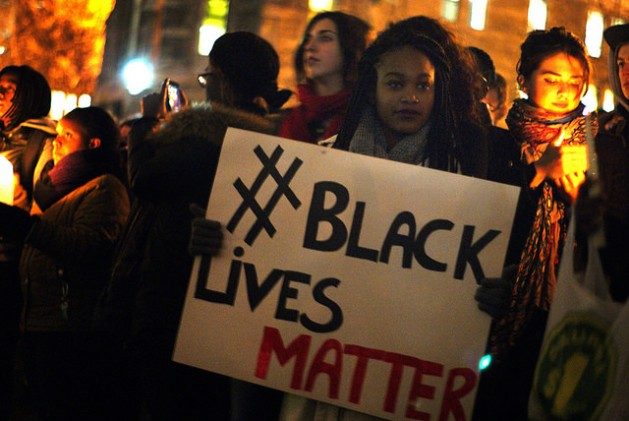
At a time of a public reckoning spawned by the Black Lives Matter (BLM) and #MeToo Movements, the Convention represents an important vehicle to address institutional and structural sexism through an intersectional lens.

As Harold Koh argued in 2002, “a country’s ratification of the CEDAW is one of the surest indicators of the strength of its commitment to internalize the universal norm of gender equality into its domestic laws.”

The potential for the CEDAW to inspire necessary change in the US directly relates to some of the United States’ current policy objectives.

The National Strategy for the COVID-19 Response and Pandemic Preparedness (2021) illustrates the Administration’s commitment to place women and girls at the center of global recovery. The Rescue Plan recognizes that COVID-19 has exacerbated domestic violence and sexual assault, thereby creating a “shadow pandemic.”

As the Biden Administration looks toward the reauthorization of the Violence against Women Act (VAWA), it must now look to the horizon—to the ratification of the CEDAW. Ratifying the Convention will give the Biden Administration significantly more legitimacy in its effort to end violence against women and would demonstrate the solidarity needed to achieve this goal.

As President Biden himself stated, the renewal of the VAWA “should not be a Democratic or Republican issue—it’s about standing up against the abuse of power and preventing violence.”

Our data analysis of the State Party Reports to the CEDAW Committee from 2016 to 2020 reveals a significant focus by the CEDAW Committee on two issues that are central to the Biden Administration and to the United States’ national security and foreign policy in general: (1) violence against women; and (2) an intersectional focus on gender.

In every Concluding Observation across all five years between 2016 and 2020 (107 countries reported to the CEDAW Committee during this period), the CEDAW Committee mentioned intersectionality and gender-based violence 100 percent of the time.

2) Ratification of the CEDAW is part of the U.S.’s Transformative Power Arsenal: From Soft Power, Smart Power, to Transformative Power

In response to global challenges, CEDAW continues to be one of the standard-setting policy tools to advance gender and intersectional equality and we address this in our analysis of CEDAW’s impact on drafting domestic legislation, national constitutions, judicial decision making and in changing the national conversations and public discourse in countries in the Arab region.

As Ambassador Melanne Verveer, one of the authors, testified before Congress in 2010: “[I]t is true many countries do not live up to that treaty, but we know how effectively that lever is for rights advocates to seize and to use effectively to bring about the kind of consistent application of the principles of the treaty to their own lives.”

3) The Women Peace and Security and its Linkages to CEDAW

The Women, Peace, and Security (“WPS”) agenda is one gender issue that has near total bipartisan support, as demonstrated by over a decade of concerted legislative efforts by both Democrats and Republicans.

We explore how the United States’ strong bipartisan commitment to the WPS agenda and how its global security goals can be advanced by ratifying the CEDAW. From the United Kingdom to Afghanistan, the CEDAW has played a role in strengthening commitments to the WPS agenda.

The United States has emerged as a global leader in WPS, both by spearheading U.N. Security Council Resolutions to condemn sexual violence against women and girls in armed conflict, and by codifying its commitment to pursuing the WPS agenda in domestic law.

Former U.S. Secretary of State Condoleezza Rice introduced what later became Security Council Resolution 1820 (2008). In proposing this Resolution, Secretary Rice confirmed that sexual violence against women in conflict was an imperative which the U.N. Security Council was charged to address.

A year later, Security Council Resolution (SCR) 1888, introduced by then Secretary of State Hillary Clinton, reaffirmed Secretary Rice’s premise, acknowledged that the CEDAW is inextricably connected to women’s security.

The U.S. needs to leverage the bipartisan support for the WPS agenda to piggyback support for the Convention. After all, global security is in our best national interest.

In 2020, during the 75th Anniversary of the U.N., the CEDAW Concluding Observations for Afghanistan, the Congo, and Zimbabwe had sections dedicated specifically to WPS, providing substantial suggestions for improvement in state action in this issue area.

For instance, the CEDAW Committee observed in detail that “Afghan women are systematically excluded from formal peace negotiations, such as the 2018 Kabul Process and the negotiations that followed the conference held in Geneva in 2018.”

Today as we bear witness to the fall of Afghanistan, history will judge us on how we protect the rights of women and girls in Afghanistan.

As we fight the forces of a pandemic, the global and domestic recovery will be measured by whether it created greater gender and racial equity.

Ultimately, the arc of American engagement, both in foreign and domestic policy, must bend toward ratifying the CEDAW. After decades of lawmakers failing to muster the political will for ratification, the demand for change has now reached a fever pitch both nationally and globally.

The Biden administration must rally bipartisan support to ratify the CEDAW as a tool to advancing the human rights of women around the world. In then- Senator Biden’s words in 2002, “Time is a Wasting” for the U.S. ratification of the CEDAW.

This summary is excerpted from the article by Rangita de Silva de Alwis, faculty at Penn Law and Hillary Rodham Clinton Fellow on Gender Equity at GIWPS, Georgetown (2020-2021); and Ambassador Melanne Verveer, the first U.S. Ambassador for Global Women’s Issues. Rangita thanks Dean Theodore Ruger, Dean of Penn Law for his support in writing the paper.

*Footnote: On September 10th, Columbia Law School’s Journal of Transnational Law will convene a High Level Roundtable highlighting “Time Is A-Wasting”: Making the Case for CEDAW Ratification by the United States by Professor Rangita de Silva de Alwis and Ambassador Melanne Verveer to be published in Volume 60 of the Columbia Law School’s Journal of Transnational Law. The goal of the High-Level Roundtable is to raise national attention to elevate the importance of the CEDAW ratification ahead of the 76th Session of the UN General Assembly.

Commentators will be led by Harold Hongju Koh– former Dean of Yale Law School, Sterling Professor of Law, former Legal Adviser and Assistant Secretary of State for Democracy, Human Rights and Labor, currently Senior Advisor in the Office of the Legal Adviser, U.S. State Department for the Biden Administration and repeat witness before Congress on behalf of the CEDAW.

The Roundtable will be opened with a welcome by Dean Gillian Lester, Dean of Columbia Law School. More information on remote participation in the Roundtable can be found here: Roundtable landing page

  Source