Is the USA Fit to Rejoin the UN Human Rights Council?

Civil Society, Democracy, Featured, Global, Headlines, Human Rights, North America, TerraViva United Nations

Opinion

Emily Standfield is CIVICUS Member and data volunteer.
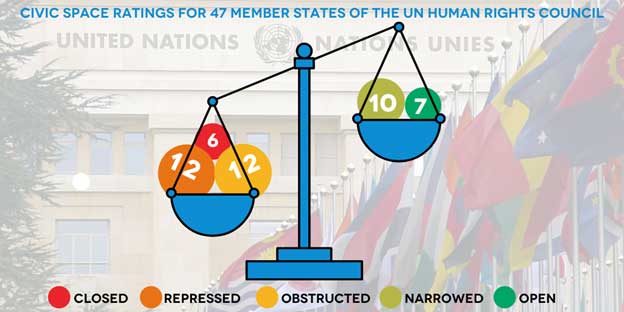
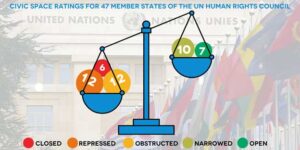
National civic space ratings from the CIVICUS Monitor, which uses up-to-date information and indicators to assess the state of freedom of association, peaceful assembly and expression for all UN Member States. Credit: CIVICUS Monitor

TORONTO, Canada, Feb 24 2021 (IPS) – A month into Joe Biden’s presidency, the U.S. has rejoined nearly all the multilateral institutions and international commitments that it withdrew from under Trump. These include the World Health Organization and the Paris Climate Accords.


Most recently, on February 8th, the U.S. announced it would also rejoin the United Nations Human Rights Council (HRC) as an observer. The U.S.’ role in the human rights forum looks different than it did four years ago in light of its recent track record on civil liberties.

The HRC has two primary functions: to draft and adopt new standards for human rights and to conduct investigations into specific human rights issues. In 2018, U.S. Ambassador to the UN Nikki Haley and U.S. Secretary of State Mike Pompeo announced that the U.S. would be leaving the HRC, claiming that it was a barrier to any genuine global human rights protection. The U.S. had two primary grievances.

First, that the HRC has an “unconscionable” and “chronic bias” against Israel. And second, that the HRC’s membership criteria allows chronic human rights abusers to have a seat on the Council. Neither of which are entirely baseless claims.

Israel remains the only country-specific agenda item covered at every HRC meeting and Russia, China, and Eritrea — to name a few — all currently hold seats on the Council and have some of the worst human rights records in the world.

Emily Standfield. Credit: CIVICUS

On Monday, the HRC’s 47 member states met for its 46th session, it’s third time meeting since the beginning of the pandemic. The further decline of political and civil rights as enshrined in international law will be an unavoidable hot topic.

The CIVICUS Monitor which rates UN member states’ track records of upholding the legal tenets of freedom of expression, freedom of peaceful assembly and freedom of association finds that 30 of the Council’s full member states routinely and severely restrict these rights.

And in the case of its newest observer state, the USA was recently downgraded to the Monitor’s third worst civic space rating of ‘Obstructed’. The body is a long way off from adequately representing its values.

In the case of the USA, the rating change and decline in rights is reflected by the police response to the Black Lives Matter (BLM) protest movement. During protests in 2020, law enforcement detained thousands of demonstrators, used teargas and projectiles to disperse crowds, and attacked journalists, despite the fact that most wore media credentials.

President Trump and other authority figures encouraged police officers to respond forcefully and, in some cases, requested such violent actions for their own benefit. In a perfect example of this, the Attorney General ordered the use of teargas against peaceful protesters so that President Trump could have a photo-op in front of a church.

While the BLM protests may have made the decline in civic freedoms abundantly clear, this rating change represents a longer deterioration of political and civil rights.

In response, in June the HRC unanimously passed a mandate that called for a report on ‘systemic racism’ targeted at individuals of African descent. Philonise Floyd, the brother of George Floyd, whose murder at the hands of white police officers began the mass protests, called on the human rights body to examine the U.S.’ history of racial injustice and police brutality.

In the end, the final resolution passed by the HRC called for an investigation of systemic racism globally and regrettably did not single out the U.S.

While Biden has rejoined the HRC as an observer, the U.S. must win elections in October 2021 if it wants to regain its seat on the Council. In 2019, Biden said, “American leadership on human rights must begin at home” and — in some ways — it has.

The BLM protests have sparked a degree of state and local level police reform, and Biden has made a commitment to achieving racial equity. While the U.S. should focus on improving freedoms within its borders, it should also not exempt itself from becoming a full member of the HRC again in October.

Former President Barack Obama ran for a seat on the Council because he believed the U.S. could do more to advance human rights as a member of the body. This turned out to be true— the U.S. supported the creation of several important international commissions of inquiry to investigate human rights violations.

If the rationale by Trump was that leaving the council would do more for human rights than holding a seat, it’s clear that this has not come to fruition. Whether it is freedom of speech or the right to peacefully protest, today more of the world’s population lives in ‘Closed’, ‘Repressed’ or ‘Obstructed’ countries as compared to four years ago, finds the CIVICUS Monitor.

Leadership is needed at the UN Human Rights Council on these issues, but it must come from those that have a full seat at the table and have a demonstrated track record of upholding their commitments. The U.S. is currently disqualified on both accounts. Credibility and moral leadership must come from somewhere else.

Instead, the U.S. must support other member states that are leading by example on these issues. Seven members of the HRC — Denmark, Germany, Uruguay, Netherlands, Marshall Islands, and Czechia — are rated ‘Open’ by the CIVICUS Monitor, the highest civic space rating a country can achieve.

These countries are adequately representing the values that the HRC is committed to defending. While there are surely other issues at the HRC that the U.S. will prove influential, the country is far from the inspirational example it often likes to present itself on these world stages.

At the current session of the HRC, which began on February 22nd, the U.S. should champion these members who have made meaningful progress on civil liberties and be prepared to take a backseat on issues that it so obviously falls short on.

  Source

Is This The End of Myanmar’s Quasi-Democracy?

Asia-Pacific, Civil Society, Crime & Justice, Democracy, Featured, Headlines, Human Rights, Migration & Refugees, TerraViva United Nations

NEW DELHI, India, Feb 22 2021 (IPS) – On February 1st, 2021 the military of Myanmar overthrew the country’s democratic government in a coup d’etat followed by arresting more than 40 government officials including Aung San Suu Kyi. The military declared a year-long state of emergency under the rule of it’s Commander-in-Chief Senior General Min Aung Hlaing. Troops took over the streets, a night-time curfew has been put into force. Tens of thousands of protestors have taken to the streets across Myanmar, in what is seen as the biggest street protests in more than a decade. The anti-coup demonstrators are undeterred by police attacks and increasing violence from the security forces.


Yasmin Ullah

According to this list, the military has arrested multiple members of civil society, including activists, writers, musicians, filmmakers. Monitoring group Assistance Association for Political Prisoners said “more than 384 people have been detained, in a wave of mostly night-time arrests”.

The first known casualty of the coup, Mya Thwe Thwe Khaing died on February 9 when a police officer opened fire with live ammunition, hitting her in the head while she was protesting in Naypyidaw. Two more protestors were killed in the city of Mandalay, marking Myanmmar’s bloodiest day since the military seized power. Myanmar’s minority community fears renewed violence after the military coup.

United Nations Secretary General António Guterres condemned the use of deadly violence in Myanmar, “The use of lethal force, intimidation & harassment against peaceful demonstrators is unacceptable. Everyone has a right to peaceful assembly. I call on all parties to respect election results and return to civilian rule,” António Guterres said.

The military in Myanmar alleges that the recent landslide election win by Aung San Suu Kyi was marred by fraud. Following the coup, the military has already announced replacements for a number of ministers.

Witnesses in Mandalay reported seeing soldiers from the 33rd Light Infantry Division, which led the deadly campaign against Rohingya Muslims in Rakhine state in 2017. The United Nations Special Rapporteur, Tom Andrews said, “The 33rd Light Infantry Division was reportedly involved in the lethal attacks in Mandalay today – the same division responsible for mass atrocity crimes against the Rohingya in 2017. A dangerous escalation by the junta in what appears to be a war against the people of Myanmar.”

“The very idea of Aung San Suu Kyi taking the trip to Hague at the end of 2019 to defend the actions of the military spoke volume about who she is as a person, and where she stands in her understanding of how democratic transition in Myanmar should progress,” says Yasmin Ullah, a Rohingya Social Justice Activist to IPS News.

“We have had three coups so far since 1962, and that memory still lives very deeply with a lot of Myanmar citizens. The pain and hurt that comes with it still reminds them of the glory that the country could never actually achieve.

“We have lived under a military regime for decades, without unifying, without taking to the streets, and making it known to the world that we reject this unconstitutional ceasing of power. The citizens are out on the streets because they will not have another chance at this, people are done with the fact that they will have to live under a culture of impunity where the military is untouched,” says Yasmin.

Following the coup in Myanmar, Washington has imposed sanctions on the military, urging other U.N members to follow suit. The UK too announced asset freezes and travel bans on three generals in Myanmar and is also going to be putting in place new measures to prevent UK aid. Singapore warned that there will be “serious adverse consequences” for Myanmar if the situation there continues to escalate. The European Union’s foreign affairs chief Joseph Borrell urged the military and “all security forces in Myanmar to immediately stop violence against civilians.”

Rights group Human Rights Watch in its report, Myanmar, Sanctions, and Human Rights said, “it supports the use of certain types of sanctions – including targeted sanctions and travel bans, and restrictions on military, trade, financial, economic, and other relations – as a means to condemn situations involving grave widespread human rights abuses or humanitarian law violations, to assert pressure to end those abuses, to hold those responsible to account, and as a means to deter other parties from becoming complicit in abuses.”

“We are calling on the United Nations Security Council to impose a global arms embargo. Separately, the UN General Assembly can also endorse individual governments or regional organizations imposing unilateral sanctions on Myanmar’s military, something the General Assembly has done in the past (e.g., during South Africa during apartheid.), the report stated.

International rights defenders have expressed concerns over grave human rights violations in Myanmar following the Feb. 1 military coup. “What we are witnessing in Myanmar didn’t just suddenly happen. You cannot leave the perpetrators of grave crimes under international law on the loose and then act surprised when they trample human rights again,” said Amnesty International’s Deputy Director of Advocacy Sherine Tadros.

“It was already ingrained in us Rohingyas to be intimidated, to fear the military, to fear authority, because that has always been the tactics used on us. The same kind of tactics we see now – the psychological warfare, night raids, shooting of people, arbitrary arrest, restrictions of movements – all of the things that the protestors are dealing with right now have been used on every single ethinic community and the Rohingyas,” says Yasmin.

It’s been thirty-three years since the uprising in 1988 in Myanmar against the military dictatorship, also known as the 8-8-88 Movement. The armed forces continued to rule until 2011, when a new government began a return to civilian rule. The military’s current threat to revoke the constitution only revealed the fact that it is willing to overturn any political – democratic system when its interests are threatened.

“Without a real change and reform within Myanmar to the very foundation to rip off the military power because they have infested different parts of the country that makes Myanmar what it is, without doing that there is no democracy that could take place,” says Yasmin.

The author is a journalist and filmmaker based out of New Delhi. She hosts a weekly online show called The Sania Farooqui Show where Muslim women from around the world are invited to share their views.

  Source

Sri Lanka’s Deteriorating Human Rights Situation Raises Multiple Alarms

Armed Conflicts, Asia-Pacific, Civil Society, Crime & Justice, Featured, Headlines, Health, Human Rights, Humanitarian Emergencies, Religion, TerraViva United Nations

Shreen Saroor

NEW DELHI, India, Feb 1 2021 (IPS) – A decade has passed since the end of Sri Lanka’s civil war between the government and the LTTE, where at least 100,000 people were killed in the over three-decade long conflict. Families of victims of enforced disappearances continue to seek justice, the government is yet to end impunity and put accountability for crimes under international law and human rights violation and abuses in its transitional justice process.


In a recent United Nations Human Rights Office of The High Commissioner report, UN High Commissioner for Human Rights Michelle Bachelet stressed that the failure to deal with the past continues to have devastating effects on tens of thousands of families in Sri Lanka, who are still waiting for justice, reparations – and the truth about the fate of their loved ones. The report warns that the failure of Sri Lanka to address past violations has significantly “ heightened the risk of human rights violations being repeated.”

“Sri Lanka’s current trajectory sets the scene for the recurrence of the policies and practices that gave rise to grave human rights violations.” The report also flags the pattern of intensified surveillance and harassment of civil society organizations, human rights defenders and victims, and a shrinking space for independent media.

“I see the OHCHR report as something that will give more oxygen to continue our many struggles, especially for truth and justice,” says Sri Lanka based human rights activist Shreen Saroor to IPS News. The report has articulated the lack of access to justice and the need for accountability very well. It is robust on militarisation and deep securitisation of Sri Lanka and calls for rigorous vetting and demilitarization with a warning of grave consequences if failed, says Shreen.

“Michelle Bachelet’s criticism on surveillance on CSOs and shrinking space for dissent and the abuses of Prevention of Terrorism Act (PTA) and International Covenant on Civil and Political Rights (ICCPR) Act are alarming. However in order to prevent another round of conflict, the report should emphasize more on the ongoing attacks against countries’ religious minorities,” says Shreen.

Earlier in december 2020, Muslims in Sri Lanka were outraged over the forced cremation of a 20-day-old COVID-19 victim against the family’s wishes. Sri Lanka has been flagged for ignoring the World Health Organization’s (WHO) guidelines which permits both burial and cremations.

In a country where minorities are marginalized and discriminated against, Muslims who fall victim to COVID-19 are unjustly prevented from being laid to rest in accordance with their religious beliefs and are forcibly cremated, said Amnesty International in a statement. Sri Lanka is one of the few countries in the world which has made cremations mandatory for people who have died or are suspected of having died from COVID-19. The rights group urged the Sri Lankan Government to not forget that “ it has a duty to ensure all people in Sri Lanka are treated equitably. COVID-19 does not discriminate on grounds of ethnic, political or religious differences, and nor should the Government of Sri Lanka.”

“Many of us who have witnessed continuous minority rights violations over three decades in Sri Lanka, it is important for OHCHR to take on the issue of growing Sinhala Buddhist majoritarianism and the extreme nationalism that has been mentioned in the OHCHR report.

“It is time for OHCHR to come up with an early prevention strategy, so that another bloody war or religious violence in this country is prevented,” says Shreen.

Human Rights Watch in its recently released 93-page report, Open Wounds and Mounting Dangers: Blocking Accountability for Grave Abuses in Sri Lanka, examines the efforts by the government of President Gotabaya Rajapaksa to thwart justice in seven prominent human rights cases.

“The Sri Lankan government’s assault on justice increases the risk of human rights abuses today and in the future,” said John Fisher, Geneva Director at Human Rights Watch. “The UN Human Rights Council should adopt a resolution at its upcoming session that demonstrates to the Rajapaksa administration that the world won’t ignore its abuses and offers hope of justice to victims’ families, the report stated.

In 2018, just before and during the ongoing session of the UNHRC, Sri Lankan authorities made several announcements to signify their commitments to pledges made in the October 2015 resolution on justice and accountability for abuses during Sri Lanka’s civil war.

President Gotabaya Rajapaksha months into his tenure in November 2019, made several changes including replacing the 19th Amendment of the Sri Lankan Constitution, which was enacted to limit excessive executive power and facilitate independent institutions including the judiciary with the 20th Amendment, which consolidated power in the executive and nullified the independent commissions mainly Sri Lanka’s Human Rights Commissions and Office of the Missing Persons. “Rajapaksa appointed people implicated in war crimes and other serious violations to senior administration positions,” said Shreen.

In February 2020 Sri Lanka withdrew itself from the 2019 UN resolution on post-war accountability and reconciliation, which is scheduled to be taken up in the upcoming session.

Sri Lanka’s main Tamil political parties are now urging for an international probe, and in a joint letter addressed to members of the UN Human Rights Council said, “It is now time for Member States to acknowledge that there is no scope for a domestic process that can genuinely deal with accountability in Sri Lanka.”

According to this report, Sri Lanka is in discussion with India and other countries for support to counter the Core Group’s move which could lead to targeted sanctions, asset freezes and travel bans against alleged perpetrators of grave human rights violations and abuses in the March session of the UN Human Rights Council in Geneva.

The author is a journalist and filmmaker based out of New Delhi. She hosts a weekly online show called The Sania Farooqui Show where Muslim women from around the world are invited to share their views.

  Source

Mining giant Rio Tinto Face Environmental, Human Rights Complaint in Papua New Guinea

Active Citizens, Asia-Pacific, Crime & Justice, Development & Aid, Environment, Featured, Food & Agriculture, Headlines, Health, Human Rights, Indigenous Rights, Natural Resources, Regional Categories, TerraViva United Nations, Water & Sanitation

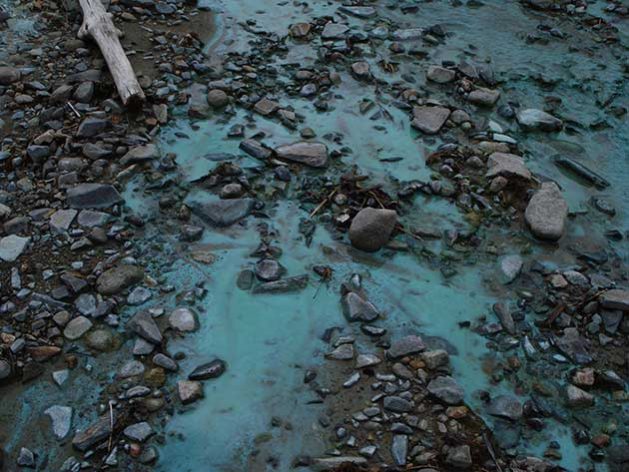
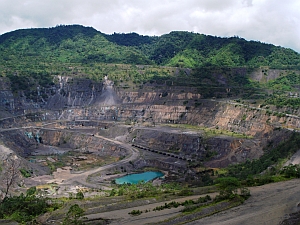
Contamination of rivers and streams by mine waste in the vicinity of the Panguna copper mine in the Autonomous Region of Bougainville, Papua New Guinea. Credit: Catherine Wilson

CANBERRA, Australia, Jan 4 2021 (IPS) – Local communities in the vicinity of the abandoned Panguna copper mine, have taken decisive action to hold the global mining multinational, Rio Tinto, accountable for alleged environmental and human rights violations during the mine’s operations between 1972 and 1989.


The mine operated in the mountains of central Bougainville in Papua New Guinea until 1989.

The complaint by 156 residents was lodged with the Australian Government in September by Australia’s Human Rights Law Centre and subsequently accepted in November, paving the way for a non-judicial mediation process.

“We and the communities we are working with have now entered into a formal conciliation process with Rio Tinto facilitated by the Australian OECD National Contact Point and talks with the company will begin very shortly,” Keren Adams, Legal Director at the Human Rights Law Centre in Melbourne told IPS.

Rio Tinto was the majority owner of the Panguna mine through its operating company, Bougainville Copper Ltd, with a 53.8 percent stake. However, 17 years after it began production in 1972, anger among indigenous landowners about contaminated rivers and streams, the devastation of customary land and inequity in distributing the extractive venture’s profits and benefits triggered an armed rebellion in 1989. After the mine’s power supply was destroyed by sabotage, Rio Tinto fled Bougainville Island and the site became derelict during the decade long civil war which followed.

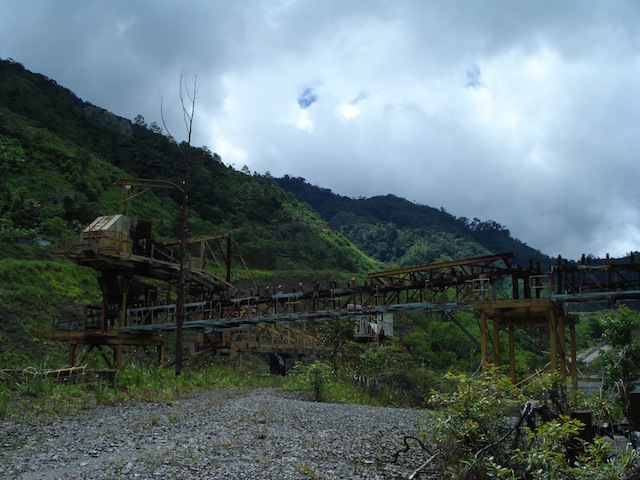
The mine area, which is still controlled by the tribal Mekamui Government of Unity, comprising former rebel leaders, hasn’t been decommissioned and the environmental legacy of its former operations never addressed.

Now, according to the complaint, “copper pollution from the mine pit and tailings continues to flow into local rivers … The Jaba-Kawerong river valley downstream of the mine resembles a moonscape with vast mounds of grey tailings waste and rock stretching almost 40 km downstream to the coast. Levees constructed at the time of the mine’s operation are now collapsing, threatening nearby villages.”

Gutted mine machinery and infrastructure are scattered across the site of the Panguna mine in the mountains of Central Bougainville, an autonomous region in Papua New Guinea. Credit: Catherine Wilson/IPS

There are further claims that contamination of waterways and land is causing long-term health problems amongst the indigenous population, such as skin diseases, diarrhoea, respiratory illnesses, and pregnancy complications.

Helen Hakena, Director of the Leitana Nehan Women’s Development Agency in Bougainville’s main town of Buka, fully supports the action taken by her fellow islanders.

“It is long overdue. It is going to be very important because it was the big issue which caused the Bougainville conflict. It will lay to rest the grievances which caused so much suffering for our people,” Hakena told IPS.

The Bougainville civil war, triggered by the uprising at the mine, led to a death toll of 15,000-20,000 people.

The people of Bougainville believe that Rio Tinto has breached the OECD Guidelines for Multinational Enterprises by failing both to take action to mitigate foreseeable environmental, health and safety-related impacts at the mine and respect the human rights of the communities affected by its extractive activities. The Human Rights Law Centre claims that “the mine pollution continues to infringe nearly all the economic, social and cultural rights of these indigenous communities, including their rights to food, water, health, housing and an adequate standard of living.”

“While we do not wholly accept the claims in the complaint, we are aware of deteriorating mining infrastructure at the site and surrounding areas and acknowledge that there are environmental and human rights considerations,” Rio Tinto responded in a public statement.

“Accepting the AusNCP’s ‘good offices’ shows that we take this complaint seriously and remain ready to enter into discussions with the communities that have filed the complaint, along with other relevant communities around the Panguna mine site, and other relevant parties, such as Bougainville Copper Ltd, the Autonomous Bougainville Government and PNG Government,” the statement continued.

In 2016, Rio Tinto divested its interest in Bougainville Copper Ltd, the operating company, and its shares were acquired by the PNG and Bougainville governments. Simultaneously, the corporate giant announced that it rejected corporate responsibility for any environmental impacts or damage.

Panguna mine’s copper and gold await political settlement before extraction can resume. Credit: Catherine Wilson/IPS

Mineral exploration in Bougainville in the 1960s, followed by the construction of the Panguna open-cut copper mine, occurred when the island region was under Australian administration. It would subsequently become a massive source of internal revenue Papua New Guinea, which was granted Independence in 1975. During its lifetime, the Panguna mine generated about US$2 billion in revenue and accounted for 44 percent of the nation’s exports.

The mining agreement negotiated between the Australian Government and Conzinc Rio Tinto Australia in the 1960s didn’t include any significant environmental regulations or liability of the company for rehabilitation of areas affected by mining.

There has been no definitive environmental assessment of the Panguna site since it was forced to shut down. However, about 300,000 tonnes of ore and water were excavated at the mine every day. In 1989, an independent report by Applied Geology Associates in New Zealand noted that significant amounts of copper and other heavy metals were leaching from the mine and waste rock dumps and flowing into the Kawerong River. Today, the water in some rivers and streams in the mine area is a luminescent blue, a sign of copper contamination.

Bougainville residents’ action comes at the end of a challenging year for Rio Tinto. It is still reeling from revelations earlier this year that its operations destroyed historically significant Aboriginal sacred sites, estimated to be 46,000 years old, in the vicinity of its iron ore mine in the Pilbara region of Western Australia. The company’s CEO, Jean-Sebastien Jacques, has subsequently resigned.

Nevertheless, Adams is optimistic about the corporate giant’s willingness to engage with Bougainville and PNG stakeholders.

“In the first instance, we hope that this non-judicial process will help to facilitate discussions to explore whether Rio Tinto will make these commitments to address the impacts of its operations. If not, then the communities will be asking the Australian OECD National Contact Point to investigate the complaint and make findings about whether Rio Tinto has breached its human rights and environmental obligations,” the Human Rights Law Centre’s Legal Director said. A full investigation, if required, could take up to a year.

Ultimately, the islanders are seeking specific outcomes. These include Rio Tinto’s serious engagement with them to identify solutions to the urgent environmental and human rights issues; funding for an independent environmental and human rights impact assessment of the mine; and contributions to a substantial independently managed fund to enable long term rehabilitation programs.

Otherwise, Australia’s Human Rights Law Centre predicts that “given the limited resources of the PNG and Bougainville governments, it is almost inevitable that if no action is taken by Rio Tinto, the environmental damage currently being caused by the tailings waste will continue and worsen.”

  Source

USA Downgraded as Civil Liberties Deteriorate Across the Americas

Active Citizens, Civil Society, Environment, Global, Headlines, Human Rights, TerraViva United Nations

Opinion

Débora Leão is a Civic Space Researcher at CIVICUS, the global civil society alliance. She has a Master of Public Policy degree. Prior to joining CIVICUS, Débora worked on advocacy and research related to civic participation, urban development and climate justice.

 
Suraj K. Sazawal serves on the board to Defending Rights & Dissent and is co-author of ‘Civil Society Under Strain’, the first book to explore how the War on Terror impacted civil society and hurt humanitarian aid.

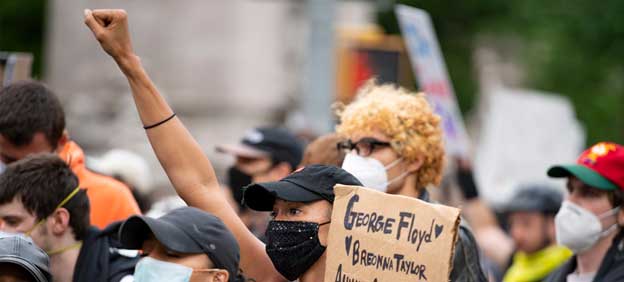
Protests in New York City against racism and police violence, following the death of George Floyd. Credit: UN Photo/Evan Schneider

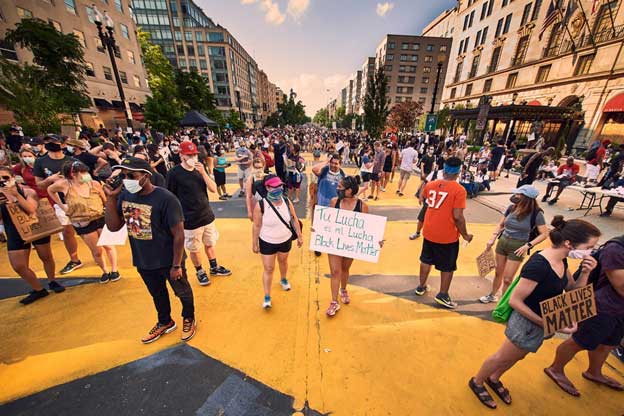
São Paulo/ Washington DC, Dec 15 2020 (IPS) – Few images better illustrate the recent decline in civil liberties in the United States than that of peaceful protesters near the White House being violently dispersed so Donald Trump could stage a photo-op.


Moments before the president emerged from his bunker on June 1 to hold a bible outside a boarded-up church, federal officers indiscriminately fired tear gas at people who had gathered in Lafayette Park to protest about the police killing of George Floyd. This was far from an isolated incident: nationwide protests against systemic racism and police brutality have been met with widespread police violence.

Since May, the CIVICUS Monitor, an online platform that tracks fundamental freedoms across 196 countries, documented dozens of incidents where law enforcement officers, dressed in riot gear and armed with military grade-equipment, responded to Black Lives Matter protests with excessive force. These include officers driving vehicles at crowds of protesters and firing tear gas canisters and other projectiles at unarmed people, leaving at least 20 people partially blinded.

Throughout the year, journalists and health workers, clearly marked as such while covering the protests, have been harassed and assaulted. In one incident caught on live TV, a news reporter and camera operator from Louisville, Kentucky were shot by police with pepper balls while covering protests over the police killing of Breona Taylor.

This sustained repression of protests and an increased crackdown on fundamental freedoms led to the USA’s civic space rating being downgraded from ‘narrowed’ to ‘obstructed’ in our new report, People Power Under Attack 2020.

This disproportionate response by law enforcement officers to protesters goes beyond what is acceptable practice when policing protests, even during an emergency. Under international law, people have a right to assemble freely. Any restrictions to this right must be proportionate and necessary to address an emergency or reestablish public order.

The systematic use of excessive force and tactics such as kettling and mass arrests to enforce curfews raise troubling questions about the role of law enforcement agencies in responding to mass protests. The use of such tactics is contradictory to the alleged goal of maintaining public safety and health as they escalated tensions and prevented people from dispersing in a peaceful manner.

Even more concerning, they relocated protesters from open, outdoor spaces to police stations and other indoor facilities that often lack adequate space to allow for distancing, placing people at heightened risk for exposure to COVID-19.

Black Lives Matter Protest June 2020 Washington, DC. Credit: Geoff Livingston // creative commons

While recent brutality against protests for racial justice is concerning, the decline in basic freedoms in the USA began before this crackdown. The repression seen in 2020 was preceded by a wave of legislation limiting people’s rights to protest.

In recent years, several states enacted restrictive laws which, for example, criminalise protests near so-called critical infrastructure like oil pipelines, or limit demonstrations on school and university campuses. Increased penalties for trespassing and property damage are designed to intimidate and punish climate justice activists and organisations that speak out against fossil fuels.

In the wake of Black Lives Matter protests, some of the ‘anti-protest’ bills introduced this year seem particularly cruel, for instance, by proposing to make people convicted of minor federal offences during protests ineligible for pandemic-related unemployment benefits.

Growing disregard for protest rights underscores wider intolerance for dissent. In parallel with restrictions on the freedom of peaceful assembly, the USA also saw an increase in attacks against the media, even before Black Lives Matter demonstrations erupted. Over the past three years, the CIVICUS Monitor has documented the frequent harassment of journalists by the authorities and civilians while covering political rallies or when conducting interviews.

Correspondents critical of the Trump administration or reporting on the humanitarian crisis in the USA/Mexico border region sometimes faced retaliation; documents obtained by ‘NBC 7 Investigates’ in 2019 showed the US government created a database of journalists who covered the migrant caravan and activists who were part of it, in some cases placing alerts on their passports.

In January 2020 a journalist was barred from accompanying Secretary of State Mike Pompeo in an official trip to Europe after Pompeo objected to the questions by another reporter from the same outlet.

The harsh treatment of people wanting to express themselves and the decline of civil liberties is part of a broader global decline in fundamental freedoms. Our new report shows less than four percent of the world’s population live in countries that respect the freedoms of association, peaceful assembly and expression.

Each country’s civic space is rated in one of five categories: ‘open, ‘narrowed, ‘obstructed,’ ‘restricted,’ or ‘closed’. The USA was one of 11 countries downgraded from its previous rating.

In the Americas, three other countries showed significant declines: Chile and Ecuador were downgraded to ‘obstructed’ and Costa Rica’s rating changed to ‘narrowed’. In the first two countries, as with the USA, rating changes reflected unnecessary and disproportionate crackdowns on mass protest movements.

Violations of protest rights were common across the region, with detention of protesters and excessive use of force among the top five violations of civic freedoms recorded this year. In addition, the Americas continue to be a dangerous place for those who dare to stand up for fundamental rights: across the world, 60 percent of human rights defenders killed in 2020 came from this region.

Stopping the erosion of fundamental freedoms requires a robust response. Governments must take steps to repeal legislation restricting the freedoms of association, peaceful assembly and expression and make sure those who violate these freedoms are held accountable.

In the USA, the incoming Biden administration must actively work to reverse the narrowing of civic space. To rebuild trust between people and law enforcement, for instance, the Department of Justice should investigate misconduct and discriminatory practices at local police departments.

The authorities must engage with civil society and human rights defenders to create an environment where they are able to fulfil their vital roles and hold officials accountable.

  Source

Intellectual Property Monopolies Block Vaccine Access

Civil Society, Development & Aid, Economy & Trade, Featured, Global, Headlines, Health, Human Rights, Humanitarian Emergencies, Poverty & SDGs, TerraViva United Nations

Opinion

SYDNEY and KUALA LUMPUR, Dec 15 2020 (IPS) – Just before the World Health Assembly (WHA), an 18 May open letter by world leaders and experts urged governments to ensure that all COVID-19 vaccines, treatments and tests are patent-free, fairly distributed and available to all, free of charge.


Pious promises
Leaders of Italy, France, Germany, Norway and the European Commission called for the vaccine to be “produced by the world, for the whole world” as a “global public good of the 21st century”, while China’s President Xi promised a vaccine developed by China would be a “global public good”.

Anis Chowdhury

The United Nations Secretary-General also insisted on access to all when available. The WHA unanimously agreed that vaccines, treatments and tests are global public goods, but was vague on the implications.

As COVID vaccines have become available, nearly 70 poor countries are left out. Many more people will be infected and may die without vaccinations, warns the People’s Vaccine Alliance, advocating equitable and low-cost access.

As the rich and powerful secure access, poor countries will leave out most people as only one in ten can be vaccinated in 2021, making a mockery of the Sustainable Development Goals’ over-arching principle of ‘leaving no one behind’.

Waiving WTO rules
The authors of “Want Vaccines Fast? Suspend Intellectual Property Rights (IPR) argue that IPR are the main stumbling block. Meanwhile, South Africa and India have proposed that the World Trade Organization (WTO) temporarily waive its Trade-Related Aspects of Intellectual Property Rights (TRIPS) rules limiting access to COVID-19 medicines, tools, equipment and vaccines.

The proposal – welcomed by the WHO Director-General and supported by nearly 100 governments and many civil society organisations around the world – goes beyond the Doha Declaration’s limited flexibilities for national emergencies and circumstances of extreme urgency.

Jomo Kwame Sundaram

But Brazil, one of the worst hit countries, opposes the proposal, together with the US, the EU, the UK, Switzerland, Norway, Canada, Australia and Japan, insisting the Doha Declaration is sufficient.

The empire fights back
The US insists that IP protection is best to ensure “swift delivery” while the EU claims there is “no indication that IPR issues have been a genuine barrier … to COVID-19-related medicines and technologies” as the UK dismisses the proposal as “an extreme measure to address an unproven problem”.

The Federation of Pharmaceutical Manufacturers and Associations Director-General claims it “would jeopardize future medical innovation, making us more vulnerable to other diseases”, while The Wall Street Journal denounced it as “A Global Covid Vaccine Heist”, warning “their effort would harm everyone, including the poor”.

Citing AstraZeneca’s agreement with the Serum Institute of India (SII) and Brazilian companies, other opponents assert that voluntary mechanisms should suffice, insisting the public-private COVAX initiative ensures fair and equitable access.

But the US has refused to join COVAX, part of the WHO-blessed, donor-funded Access to COVID-19 Tools Accelerator (ACT-A), ostensibly committed to “equitable global access to innovative tools for COVID-19 for all”.

Intellectual property fraud
The Doha Declaration only covers patents, ignoring proprietary technology to safely manufacture vaccines. Meanwhile, there is not enough interest, let alone capacity among leading pharmaceutical companies to produce enough vaccines, safely and affordably, for everyone before 2024.

Despite the Doha Declaration, developing countries are still under great pressure from the EU and the US. The rules allowing ‘compulsory licensing’ are very restrictive, with countries required to separately negotiate contracts with companies for specific amounts, periods and purposes, deterring and thus often bypassing those with limited financial and legal capacities.

South Africa cited the examples of Regeneron and Eli Lilly, which have already committed most of their COVID-19 antibody cocktail drugs to the US. In India, Pfizer has legally blocked alternative pneumococcal vaccines from Médecins Sans Frontières (MSF). In South Korea, Pfizer has forced SK Bioscience to stop producing its pneumococcal conjugate vaccine (PCV).

To be sure, patents are not necessary for innovation, with the Harvard Business Review showing IPR law actually stifling it. Meanwhile, The Economist has condemned patent trolling, which has reduced venture capital investment in start-ups and R&D spending, especially by small firms.

Public subsidies
Like most other life-saving drugs and vaccines, COVID-19 vaccines and treatment technologies owe much to public investment. Even the Trump administration provided US$10.5 billion to vaccine development companies.

Moderna’s vaccine emerged from a partnership with the National Institute of Health (NIH). Research at the NIH, Defence Department and federally funded university laboratories have been crucial for rapid US vaccine development.

Pfizer has received a US$455 million German government grant and nearly US$6 billion in US and EU purchase commitments. AstraZeneca received more than £84 million (US$111 million) from the UK government, and more than US$2 billion from the US and EU for research and via purchase orders.

But although public funding for most medicine and vaccine development is the norm, Big Pharma typically keeps the monopoly profits they enjoy from the IPR they retain.

Voluntary mechanisms inadequate
COVAX seeks to procure two billion vaccine doses, to be shared “equally” between rich and poor countries, but has only reserved 700,000 vaccine doses so far, while the poorest countries, with 1.7 billion people, cannot afford a single deal. Meanwhile, rich countries have secured six billion doses for themselves.

Thus, even if and when COVAX procures its targeted two billion vaccine doses, less than a billion will go to poor countries. If the vaccine requires two doses, as many – including Gavi, the Vaccine Alliance – assume, this will only be enough for less than half a billion people.

Meanwhile, ACT-A’s diagnostics work seeks to procure 500 million tests, only a small fraction of what is required. Even if fully financed, which is not the case, this is only a partial solution at best.

But with the massive funding shortfall, even these modest targets will not be reached. To date, only US$5 billion of the US$43 billion needed for poor countries in 2021 has been raised.

Profitable philanthropy
As of mid-October, while 18 generic pharmaceutical companies had signed up, not a single major drug company had joined WHO’s COVID-19 Technology Access Pool (C-TAP) to encourage industry contributions of IP, technologies and data to scale up worldwide sharing and production of all such needs.

Meanwhile, a few companies have ‘voluntarily’ given up some IPR, if only temporarily. Moderna has promised to license its COVID-19 related patents to other vaccine manufacturers, and not enforce its own patents. But their pledge is limited, allowing it to enforce its patents “post pandemic”, as defined by Moderna.

Besides profiting from licensing in the longer term, Moderna’s pledge will enable it to grow the new mRNA market its business is based on, by establishing and promoting a transformational drug therapy platform, yielding gains for years to come.

AstraZeneca has announced that its vaccine, researched at Oxford University, will be available at cost in some locations, but only until July 2021. Meanwhile, Eli Lilly has agreed, with the Gates Foundation, to supply – without demanding royalties from low- and middle-income countries – its (still experimental) COVID-19 antibody treatment, but did not specify how many doses.

Indeed, as Proudhon warned almost two centuries ago, ‘property is theft’.

  Source